




No CrossRef data available.
Aspectual Posture Verb Constructions in Dutch
Published online by Cambridge University Press: 07 September 2005
Abstract
This paper discusses the auxiliated posture verb constructions in Dutch (liggen/zitten/staan+te+V ‘sit/lie/stand to V’) that have progressive, durative, or habitual interpretation. My analysis, based on a large corpus of written texts, reveals, first of all, that to a large extent these constructions follow the regular (that is, non-aspectual) use of the three cardinal posture verbs as basic locational verbs. Second, the corpus used for the present study reveals clear experientially based patterns in the type of verbs that occur in the auxiliated posture verb construction. The data suggest that, at least in the written language, the construction has retained a link with the postural (or by extension, the locational) source. This sheds light on some clear semantic differences between the auxiliated posture verb constructions and another common progressive construction in Dutch, aan het V zijn ‘be at the V-inf’. The paper also briefly considers the progressive construction lopen+te+V ‘run to V’, showing that it is less grammaticalized and still predominantly tied to motion events.I would like to thank the anonymous referees of this journal for their comments on a previous version of this paper. Responsibility for any remaining inaccuracies is, of course, mine.
Information
- Type
- ARTICLES
- Information
- Copyright
- © 2005 Society for Germanic Linguistics
1. Introduction: Progressive Constructions in Dutch.
As one may read in virtually any Dutch grammar, progressive aspect can be expressed in a variety of ways. Apart from the base form, the two most common constructions are illustrated in the following examples:

The English glosses for the cardinal posture verb (CPV) progressive will be of the type CPV to V. This should be understood as the equivalent of English be+Ving, which in the context of posture can be translated as sitting and Ving, standing and Ving, or lying and Ving. As can be seen in these examples, as well as some other examples quoted in this paper, the posture verbs are fully inflected, just like any other main verb. The posture verbs, as well as lopen ‘run’, are strong verbs having a vowel change in the past forms.
Although in both cases, the non-finite complement expresses an ongoing activity, syntactically these constructions are quite different. In the construction in 1 (henceforth PREP-PROGRESSIVE), the semantically light verb zijn ‘be’ is followed by the abstract locational preposition aan ‘at’, which takes a definite noun phrase as a complement with the nominalized infinitival verb as its head.2
For a syntactic discussion of the aan het V construction, see Booij 2002.
The difference between the pos- and the prep-progressive seems obvious, as the posture verbs are lexically more precise in specifying the agent's posture. However, this need not always be so, as illustrated by the examples in 3.3
Unless stated otherwise, all examples have been drawn from the INL corpus on which the present study is based (see p. 187 below for more information on the corpus used). Some minor editing may have been done to avoid irrelevant complications.

In contexts where the agent's posture is no longer at issue and actually quite incompatible with the activity expressed by the complement verb, the pos- and prep-progressives have become interchangeable. Brisau (1969:75) explicitly states: “the fact that [the verbs] can be easily substituted for one another when they are not in a context, points to their being subordinate to the main verb in meaning: primarily they serve to indicate aspect.” Similarly, the Algemene Nederlandse Spraakkunst (ANS)—the standard comprehensive grammar of Dutch—comments on non-postural uses of the pos-progressives as follows: “De betekenis van deze hulpwerkwoorden […] is echter soms verzwakt tot ‘bezig zijn met’ […]. Zinnen als deze hebben vaak een ondertoon van irritatie en komen vooral in gesproken taal voor” (Haeseryn et al. 1997:973). (The meaning of these auxiliaries has often weakened to ‘be occupied with’ [ML: that is, progressive]. Sentences such as these often indicate irritation and occur mainly in spoken language.)4
The ANS is also available in electronic form (E-ANS) at (last accessed May 30, 2005): <http://oase.uci.kun.nl/~ans/>.
The ANS still leaves room for some semantic specificity, but relegated to the connotational domain, or that of register. According to Leys (1985:275–276), constructions in which the CPV no longer refers to posture have the meaning of een zich bevinden ‘being somewhere’, and consequently have become synonymous with the construction with zijn ‘be’. Boogaart (1991) follows Leys in grouping both under the heading locational.5
Boogaart's grouping is justified given that his goal is to distinguish between these two constructions on the one hand, and the base form that is also often used with the progressive meaning, on the other.
From a cognitive point of view, I would like to defend the idea that these constructions are not mere formal and/or stylistic variations. Consequently, while they may be interchangeable in some contexts, this cannot be done without a change in meaning, and the choice may not be as free as Ebert suggests. At the same time, the semantic differences between the pos- and prep-progressive are not the major concern of the present article.6
In its discussion of the pos-progressives, the ANS mentions two other constructions. The first uses the verb hangen ‘hang’, as in De was hangt te drogen ‘The laundry hangs to dry’. This construction is not dealt with in this article because it has not really grammaticalized in the way that the three other posture verbs have. It is restricted to cases where the agent is indeed suspended. The second construction mentioned in the ANS involves the (general) motion verb lopen ‘run’, as in Hij loopt de hele tijd te zingen, literally ‘He runs all the time to sing’ (= ‘He is singing all the time’). The lopen+te+V construction does merit some analysis, especially in contrast to the (more frequent) pos-progressives. It is discussed briefly at the end of this article, but my main focus remains on the liggen/zitten/staan+te+V constructions, which have a much wider coverage and, logically, a higher degree of grammaticalization.
The present analysis of the pos-progressive builds on previous elaborate analyses of Dutch posture verbs (Van Oosten 1986, Lemmens 2002). I demonstrate that these constructions, at least as used in the written register, retain a link with the verbs' locational source semantics. Thus, the analysis developed here is similar to Lødrup's (2000:122) syntactic analysis of Norwegian CPV och V constructions: “it has often been pointed out that the positional verbs […] are used to express progressive aspect […]. However, they are not really gram-maticalized, they keep their literal meaning, and they may be modified, for example by a locative.” She does not clarify what exactly she means by “literal meaning” (her study focuses on the syntactic status of the different types of pseudo-coordination); this is a central point of the present article. In particular, examining the type of agent used in the pos-progressive, as well as the type of complement verb that figures in the construction, reveals that, for written language, the construction retains a link with the verb's source semantics, which explains semantic differences between the pos- and pres-progressives.
The data underlying the present study have been drawn from the largest computerized Dutch corpora freely available to researchers, at the Instituut voor Nederlandse Lexicologie, Leiden.7
For more information, see <http://www.inl.nl>. The use of the INL corpora is gratefully acknowledged.
While the Belgian and Netherlandic corpora used here are not fully comparable, there is no significant regional difference in frequency for the three constructions. The normalized frequencies (averaged per 1 million words) in the Netherlandic (N) and Belgian (B) subcorpora being 27.01 (N) versus 23.01 (B) for zitten+te+V; 6.91 (N) versus 6.14 (N) for liggen+te+V; and 25.65 (N) versus 25.31 (B) for staan+te+V. The absence of any significant difference is somewhat unexpected, judging from my own intuitions and comments by Northern Dutch speakers on some of the Belgian Dutch examples that I have cited elsewhere. This result may be due to the regional differences being leveled out in written language.
All occurrences of zitten, liggen, and staan have been excerpted from this subcorpus. Table 1 provides an overview of the number of attestations retrieved, setting the progressive constructions apart from the nonaspectual uses. The row percentages indicate the relative distribution within the aspectual or the non-aspectual uses.

As these figures clearly indicate, the progressive constructions constitute only a small portion of the total: 1.1% for liggen+te+V, 1.8% for staan+te+V, and 2.4% for zitten+te+V. Further comments on the results in table 1 are provided in section 3.1.
The remainder of this article is structured as follows. In the next section, I briefly describe the auxiliation process itself. The main part of the paper, section 3, presents a more detailed analysis of the pos-progressive as attested in the corpus, discussing the general distribution of the different progressives and the type of figure (section 3.1), the type of complement verb (section 3.2), and some other semantic particulars as reflected in the use of temporal, aspectual, and locational modifiers (section 3.3).9
The term complement verb is not entirely correct given that it can be regarded as the main verb of the sentence in an auxiliated construction. For ease of formulation, however, I continue to use this term.
2. From Postural to Aspectual.
The grammaticalization of posture verb constructions with aspectual value, often also referred to as auxiliation, has not gone unnoticed in the literature, where it has been shown to be a recurrent pattern in many (unrelated) languages (see, for example, Heine 1991, Bybee et al. 1994, Kuteva 1999). Characterizing the pos- and prep-progressive constructions as locational, as do Leys (1985) and Boogaart (1991), reflects the (generally accepted) idea that the origin of progressive constructions often lies in morphemes and/or constructions having a locational meaning (see, for example, Comrie 1976 or Bertinetto et al. 2000). The pos-progressive that contains a specific locational verb is a salient exponent of such locational constructions.10
Obviously, the syntactic patterns of the pos-progressive differ across languages, even within the Germanic family. Most Germanic languages have a coordination pattern (CPV and V); for example, Swedish. Dutch seems to be the only language within the family that has evolved toward a different pattern with te+infinitive (see Van Pottelberghe 2002 for an interesting diachronic account). Leys (1985) mentions that some Dutch and Flemish dialects still have the coordination pattern, but I do not discuss these here.
Kuteva (1999:192) argues that the prerequisite for auxiliation is that the posture verbs are used as “the unmarked/canonical encodings of position of physical objects in space.” The intuitively appealing logic behind this approach is that the posture verbs must first lose their “postural” semantics, so that they are able to encode the location of any entity, animate or inanimate. Kuteva supports this hypothesis with data from European and non-European sources. Here I do not deal with the question of whether Dutch has followed the same path of auxiliation; this issue requires a careful diachronic study, which, while certainly called for, is beyond the scope of the present paper. However, it can be mentioned in passing that Song's (2002:378) analysis of Korean progressive posture verb constructions challenges Kuteva's claim, as the Korean equivalent of the verb lie “cannot encode the spatial position of inanimate entities although it has already been pressed into service to express progressive aspect.”
Whatever the evolutionary path of the auxiliation of Dutch posture verbs, it cannot be denied that they are the habitual encoding of an entity's location. In fact, their use is essentially obligatory when one wants to express location of an animate or inanimate entity; the general verb zijn ‘be’ is usually unacceptable (unlike in English or in French), as evidenced by the following examples.11
On the inter-Germanic differences in the use of posture verbs, see also Lemmens 1995. While zijn is unacceptable in these sentences, the more formal expression zich bevinden ‘be found’ is generally acceptable, but less common.

Many progressive uses of Dutch posture verbs are a logical extension of their basic locational sense. As a result, the inanimacy of the subject in the examples in 5 is not to be attributed to the auxiliation process as such, but to the use of staan, liggen, and zitten as default locational verbs.

Example 5a illustrates the use of staan to describe a situation in which an entity is resting on its base (sta-vlak ‘stand-side’, as Van den Hoek 1971 neologistically terms it).12
Notice further the metonymy in this example, as it is obviously not the truck itself doing the unloading.
Since my major concern here is the grammaticalized status of the aspectual constructions, I do not discuss the logic of these locational uses in detail here; see Van Oosten 1986 and Lemmens 2002 for further discussion.
The next section presents a more detailed discussion of the aspectual constructions in their own right, by looking more closely at, among other things, the types of verbs that occur in this construction. I show that even in cases when there is no further reference to posture, the locational source semantics determines, to a certain extent, the use of CPV-constructions. These cases provide the key to understanding the difference between pos- and prep-progressives.
3. A Corpus-Based Analysis of Pos-Progressives.
3.1. General Distribution of the CPV+te+infinitive Construction.
Comparing the frequency of the aspectual uses of the CPV+te+V construction to its regular uses (see table 1 above), one notices that the overall frequency ranking is comparable for both, staan > zitten > liggen, with staan occurring more then twice as often as liggen.14
Four cases combining different CPVs (such as wie niet voortdurend staat, zit of ligt te konverseren ‘who not continuously stands, sits, or lies to converse’) have been omitted; hence the total of 1,369 instead of 1,373.
Newman and Rice (2004)—a source of inspiration for the present article—present a similar corpus-based analysis for English posture verbs in three different constructions: (i) verb-particle constructions (sit down, stand up, and lie down), (ii) simultaneous conjunctions (CPVing and Ving, as in sitting and reading), and (iii) consecutive conjunctions (CPVed PART and Ved, as in stood up and walked out). Newman and Rice regard (i) and (ii) as stative uses and (iii) as a dynamic use, as the CPV codes the onset of an action sequence. The frequency ranking for (i) and (ii) in the British National Corpus (BNC) is sit > stand > lie, and for (iii) the frequency ranking is stand > sit > lie. In other words, for the stative uses (i) and (ii), sit is more frequent; for the dynamic CPV and Ved, stand is much more frequent. For the two conjoined constructions, a higher frequency is aligned with the collocation of a greater range of verbs.
Newman and Rice see a possible experiential motivation for this distribution that can be related to grammaticalization patterns in other languages. Sitting is the most relaxed, comfortable posture associated with many social events (eating, drinking, etc.) and intellectual activities (deskwork, reading, etc.). A standing posture, by contrast, requires much more muscular effort and is usually maintained for a short period of time only. It is nevertheless still relatively frequent, since it is the starting posture for common activities such as walking and running, and it is also the posture often associated with other common activities such as giving speeches. Finally, a lying posture has a more limited purpose (sleeping, resting, etc.), and may have a negative connotation often associated with weakness, decay, or death. The higher frequency of stand up observed for the dynamic consecutive conjunction can be attributed to the fact that standing up is often the starting point of the event chain. It is thus very close to the inchoative use of Dutch staan, as in Wat staat er te gebeuren? which literally translates as ‘What stands to happen?’ (or ‘What is about to happen?’).15
Such inchoative (or ingressive) uses of staan have not been included in the present study, since it focuses on progressive constructions.
How can we explain the difference in frequency ranking in Dutch data presented in table 1? One may argue that this difference is due to differences in register, since the BNC, the main corpus on which Newman and Rice base their frequency count, also contains spoken data.16
I thank one of the anonymous reviewers for drawing my attention to this methodological issue.
The Dutch data parallel the BNC data in its low frequency of liggen for both aspectual and non-aspectual uses. It is possible that this parallel is again due to the fact that a lying posture allows only a small range of activities and is associated with inactivity, as illustrated below. At the same time, note the high frequency of staan for both categories, which may lend support to the claim made by Van Oosten 1986 and Lemmens 2002 that Dutch staan is associated with a default position for both humans and inanimates much more than English stand is. Recall that to describe an object resting on its base Dutch always uses staan. Interestingly, and in line with the frequency differences observed here, English allows the verb sit in this context. Consider the following contrast in the way Dutch and English may express the location of a computer on a desk:

In English, the verb sit emphasizes the inactivity (hence Newman's [2002] term for this usage inactivity sit), whereas no such meaning is present in the Dutch construction with staan; it simply encodes the default posture for computers (on their base). Note that to render such an inactivity reading, Dutch can actually have a stacked staan te staan construction, often with other modal particles added, as shown in 7.

A similar type of “stacking” is possible with liggen te liggen and zitten te zitten, but all three are relatively uncommon (for example, the corpus used for this study does not contain any such examples).
Returning to the higher frequency of Dutch staan, I argue that this is due to the verb being strongly associated with the entity's canonical and/or functional position when engaged in an activity. The next section discusses in more detail the range of activities that occur with each verb.
Before we turn to the complement verbs, let us briefly look at the distribution of the agent in these aspectual constructions. As table 2 shows, the aspectual construction is restricted primarily to a human agent (83.8% in total), as opposed to the non-aspectual uses, which are not restricted in this way (approximately 25%). However, this is not so much due to the CPV as such (inanimate subjects being obviously quite common in the non-aspectual uses), but rather to the semantics of the progressive itself which has an overall preference for animate agents. Indicative in this respect is that the prep-progressive construction aan het V zijn ‘be at the V’, where zijn ‘be’ does not impose any thematic restrictions on its subject, has a similar preference for a human agent (73% of a total of 1,040 occurrences in the INL corpus). At the same time, 65% of the pos-progressives with a human subject are used to refer to posture, as opposed to approximately 10–15% in non-aspectual use.

Notice, however, that the overall high percentage of human agent is not observed with respect to liggen: 46.2% of the INL examples have an inanimate subject. The reason for this should be clear from the foregoing discussion of the overall frequency hierarchy (see table 1): for humans, it is quite difficult to be engaged in an activity while lying (and as we shall see, the range of possible activities is more limited too). Thus, human subjects are expected to occur less frequently with liggen. In addition, liggen is the default locational verb that expresses the positioning of ships, symmetrical objects, substances, and geotopographical locations (cities, countries, etc.), all of which are well represented in the corpus. Table 2 also confirms some other typical patterns for the non-aspectual uses of CPVs, such as the common use of zitten for small animals (rabbits, frogs, etc.), birds, and insects (see Lemmens 2002).
3.2. Verb Complements of the CPV+te+infinitive Construction.
Once again inspired by the corpus study in Newman and Rice 2004, I also investigated the complement verbs that occur in pos-progressives. In addition to the bodily posture meaning, CPVs involve “inherent stative semantics or temporal ‘unboundedness' of the verb situation” (Kuteva 1999:206).17
Kuteva uses the term stative in the sense of temporally unbounded, as opposed to Vendler (1967) or Comrie (1976), who use this term to refer to verbs that express states, and thus, as a rule, are incompatible with the progressive, as in *I am believing or *I am seeing you under the table.

When looking at the Dutch complement verbs occurring in the pos-progressive, one notices that the frequency ranking presented in table 1 (staan > zitten > liggen) correlates with a wider choice of complement verb types, as shown in table 3.18
The total of complement verb types is not the mere sum of the individual counts, since complement verbs occurring with two or more posture verbs, such as wachten ‘wait’, have been counted only once.

One of the results that stands out very clearly is that for all three constructions the verb wachten ‘wait’ is most frequent. This is of course fully in line with the durative semantics of the posture verbs and with our experience that waiting is usually done while sitting, standing, or lying (in that order of frequency). Strikingly, the verb wachten has not been attested in the prep-progressive (aan het V zijn ‘be at the V’) in a total of 1,040 occurrences drawn from the same corpus. It is possible in principle to say Ik ben aan het wachten ‘I am at the wait-INF’ (an informal search on the Internet produced a number of examples). Yet there seems to be a strong preference for using the pos-progressive instead, which supports the strength of the experiential association.
There is a distinct drop in frequency—by one-half—for both staan and zitten when they occur with the second verb kijken ‘watch’. (The two verbs wachten and kijken account for 401 attestations, or almost 30% of the total.) That the frequency of this verb occurring with liggen is considerably lower (only 3 attestations, 1.6%) comes as no surprise: it is a posture from which one's visual perception is quite limited.
The high frequency of kijken with staan and (less so) zitten may be explained as follows. First, the verb is the prototypical expression of what can be regarded as our most prominent perceptional activity, automatically activated when not sleeping (so mostly when standing or sitting); yet, in itself, a relatively passive activity, and thus in full accord with the posture progressive. Second, the construction staan te kijken frequently occurs in two idiomatic contexts. In one context, it has the metaphorical meaning ‘be surprised’, as in the following examples:

This sentence refers to the fact that in competitive games between Belgium and the Netherlands dealing with language, it is mostly the Flemish teams who win. The surprise referred to here has to do with the commonly held belief (false but sadly enough still nurtured by some) that the Belgian variant of Dutch is “substandard”. As a native speaker of the latter, I thought this example too nice to be excluded.
The two examples illustrate the two syntactic construction types that typically have this meaning: (i) ADJ staan te kijken with the adjective expressing the strange look on the beholder's face (as in vreemd or raar both meaning ‘strange, weird’), and (ii) ergens van staan kijken, literally ‘from somewhere stand to watch’, where the locative somewhere refers to the origin of the surprise, and mostly does so anaphorically (as er[van] ‘thereof’ does in 8b above).
The other idiomatic usage of staan te kijken that plays a role here is a reference to inactivity: someone standing and watching is often associated with that person not engaging in any action, usually in these contexts evaluated negatively. It can roughly be considered as the equivalent of English stand around doing nothing.
The third factor motivating the suitability of kijken, this time as a complement of zitten, is that we often sit and watch all kinds of performances, such as plays, films, concerts, television programs, etc. A more detailed discussion of such social activities is presented below.
Table 4 also shows that apart from the high frequencies of the typical combinations discussed above, the frequency of the other verbs, when taken individually, drops sharply. The second verb that occurs with liggen is slapen ‘sleep’, which comes as no surprise. After that, the frequency of combinations drops to six and lower. Thus, while the pattern of the pos-progressive is in principle relatively open and productive (within some limits as outlined here), the frequency count clearly shows that there are typical combinations that seem to have acquired strong unit status. From an encoding perspective, then, this means that these units will have a greater chance of being selected than other constructions available to the Dutch speaker, as was illustrated above for the contexts of ongoing waiting: the unit zitten/liggen/staan te wachten is well-entrenched, which makes it the most likely candidate for selection, much more than the aan het wachten zijn alternative.
Grouping the individual verbs in larger semantic classes, as does table 5, further reveals interesting experiential patterns. The different classes confirm the general stative (and typically atelic) character of the verbs that occur in the pos-progressive, because they revolve around states, cognition processes, rest, etc. The largest class is that of stative verbs. Here, this term is used to refer to (i) verbs that express the meaning of being located statically, such as is the case for standing, hitchhiking, posing, birds brooding, etc., or (ii) a number of otherwise hard to classify verbs that express a (temporary) state, such as N/ADJ zijn ‘be N/ADJ’. Also, “waiting” has been included in this class, which of course affects the overall frequency of the class.

More interesting are some of the other groupings that confirm patterns observed in earlier analyses of posture verbs.20
See, among others, Van Oosten 1984, Serra Borneto 1996, Lemmens 2002, Newman 2002, Newman and Rice 2004.
This is similar to what Talmy (2000) has termed self-contained motion, although his concern is more with the figure not changing location (as opposed to “translational motion”) rather than its posture. Notice further that basically any activity (selling, scrubbing, etc.) involves motion one way or another, but included in our class of motion events are only those verbs generally considered genuine motion verbs.
staan
trappelen ‘trample’, dringen ‘jostle’, springen ‘jump’, dansen ‘dance’, aanschuiven ‘line up’, draaien ‘turn’, trillen ‘tremble’, wankelen ‘wobble’, wiebelen ‘wiggle’, schommelen ‘swing’, etc. (46 types, 152 tokens)
zitten
springen ‘jump’, aankomen ‘arrive’, trappelen ‘trample’, draaien ‘turn’, knikken ‘nod’, etc. (14 types, 43 tokens)
liggen
rollen ‘roll’, woelen/draaien ‘toss/turn’ (in bed), spartelen/kronkelen ‘squirm/squiggle’, drijven/deinen ‘float/bob’, etc. (10 types; 15 tokens)
The verb liggen is compatible with verbs expressing motion that can cooccur with lying. Floating objects also occur in this construction (but not in the two others), since floating objects will naturally assume a horizontal posture, which, as pointed out earlier, also explains why liggen is the default verb used to describe the positioning of ships (see example 5b).
The motion verbs that can occur with staan often include in their conceptual structure the notion of maintaining an upright position, as well as using one's feet as in dancing, trampling, etc. Such verbs may also express balance-related notions, such as wobbling or tottering, which are strongly associated with the standing posture. A related case, included not in the group of motion events but in that of play, concerns sports such as tennis, football, or hockey, where being on one's feet seems to be the salient posture throughout the game. This explains the existence of constructions such as staan te voetballen, staan te tennissen, staan te hockeyen ‘stand to play football/tennis/hockey’, as in 9.

In sum, staan+te+V can be used in reference to TRANSLATIONAL MOTION events where the moving entity changes its actual location, but these contexts generally involve what could be termed a dynamicized standing posture, that is, the agent is moving around but saliently maintains a standing posture.22
The term translational motion (in addition to self-contained motion, see note 21) is also borrowed from Talmy 2000.
The motion verbs one finds with zitten mostly refer to body part motion as well, such as nod or gesture, or those compatible with a sitting posture, as in zitten te fietsen ‘sit to cycle’. Some motion verbs (springen ‘jump’ and aankomen ‘arrive’) seem to be in conflict with zitten. However, this conflict is only apparent, since these verbs are used in a metaphorical sense: zitten te springen means ‘be impatient to act’ and probably derives from the fact that impatient people eager to start doing something may often be described as “jumping” up and down on their chair. Also, many of the self-contained motion verbs—that is, verbs describing situations where the agent does not really change its location such as dringen ‘jostle’, trappelen ‘trample’, springen ‘jump’—are used in this sense when they occur with staan. It is no coincidence that verbs with the meaning ‘be anxious’ (either as a metaphorical extension, or as their basic meaning, such as popelen ‘be anxious’ whose motion sense has been lost) do not occur with liggen, since it is not the position associated with eagerness and readiness for action.
The case of zitten aan te komen ‘sit to arrive’ is more complicated. A typical example is provided in 10.

The arrival is, as in all the other nine occurrences of this construction, metaphorical. Notice that the aspectual nature is quite complex: arriving is generally an achievement verb (punctual), yet in this context it has become an ongoing event. Strictly speaking, it is still a progressive, yet the nature of the event leads to an ingressive interpretation as well (‘is about to’).
The only cases found in INL in which the actual motion is truly incompatible with sitting is example 3a above, to which we can add the personally attested 3c, both repeated here for convenience, as well as another example drawn from the Internet (using WebCorp).23
See <http://www.webcorp.org.uk/> (last accessed May 30, 2005).

The example in 12 is noteworthy, since it contains aspectual zitten (combined with the motion verb hollen ‘run’), as well as locational zitten (not necessarily exclusively postural, although sitting is pretty much the normal posture when in the train). Given that zitten is the most apostural of the three verbs, it seems natural that precisely this verb acquires various dynamic senses. Liggen and staan retain most of their postural semantics, even if the latter is already somewhat more tolerant to nonpostural uses.
This is in line with what one finds in other languages as well. Heine et al. (1991) observe that while grammaticalization toward progressive, durative, or habitual markers is found with all three posture verbs, the ones expressing the concept of sitting seem to be the most common, followed by lie-verbs, and then by stand-verbs.24
Paul Roberge (personal communication) indicates that in Afrikaans, lê ‘lie’ is the basic verb for the progressive.

At present, however, uses of zitten combined with translational motion verbs as in the examples above—where virtually nothing remains of the static nature of zitten, and where it merely indicates progressive aspect— are still relatively infrequent and indicative of a more informal register.
The Internet is generally a good source for informal language, yet a search via WebCorp did not yield many such cases. An informal Google search for the strings zitten/zit/zat/zaten te V returned a number of examples. While more limited than the WebCorp's interface, the results may suggest a certain pattern of ongoing grammaticalization worthy of further exploration. The total number of hits is still limited, but in many cases the complement verb means either ‘to run’ (lopen/rennen/hollen) or ‘to walk’ (wandelen).
In contrast, no results have been found for other more specific verbs of human (self-propelled) translational motion, such as stappen ‘step, walk’, tuimelen ‘tumble’, hinkelen ‘hop’, or manken ‘limp’. This does not mean that combinations with these verbs would be completely unacceptable, but they are clearly rare, which suggests that the construction is still fairly limited in scope and restricted to the most typical verbs of walking/running. Moreover, often these combinations include the particle rond ‘around’. This particle converts the true translational motion into one occurring (repetitively) within a certain location. The repetitive character of the motion, as well as the motion not really progressing to its endpoint, is what often gives these constructions their negative connotation (see the quote from the ANS above).25
As Newman and Rice (2004) show, the particle around is also quite typical for the English V and V construction, such as sitting around and doing nothing.
The Google search also yielded some examples of zitten te vliegen ‘sit to fly’. However, these were restricted to insects or birds—for which zitten is the default posture and flying their proto-movement, such as walking/running is for humans—or cases where people are flying virtually, using a flight simulator, and are thus seated. One interesting case, found in a report written by a ten-year-old girl, concerned Harry Potter flying in his friend's magic car: hij zit in de auto en zit te vliegen ‘he sits in a car and sits to fly’. Here too, the agent is seated while flying. In addition, one may justifiably wonder to what extent the use of zitten te vliegen is triggered by the use of zitten in the preceding clause.
The fact that this is a child's report may be important. A brief count of pos-progressives in other children's narratives (the frog story data, see Berman and Slobin 1996 and Verhoeven and Strömqvist 2004) by children of 5, 7, and 9 years old, shows that zitten is far more frequent (22 or 67%) than liggen (6 or 18%) or staan (5 or 15%). These figures should be interpreted with caution, given the small sample, as well as the fact that two important characters in the story are a frog and a dog whose default posture is expressed by zitten. Nevertheless, the higher frequency of the verb, as well as its higher number of different verb complements (13, as opposed to four for staan and two for liggen), invite the hypothesis that children may be more sensitive to the apostural use of zitten, and may thus overgeneralize its use. For example, a narrator may use it in contexts in which the figure's posture is in conflict with that expressed by zitten; for example, a standing boy who zit te schreeuwen ‘sits to yell’.
A final point worth mentioning with respect to zitten and motion events is that the verb can also be used in other constructions, without a te+V complement, to express motion. Consider the following Internet examples:26
Examples 14a–c are from <http://www.moov.nl/index2.php/gzone/ookopmij>, <www.moviedb.nl>, and <www.deboekenplank.nl/naslag/aut/b/brown_d.htm>, respectively.

The common expressions achter iemand aanzitten, literally ‘sit behind at someone’, iemand achterna zitten, literally ‘sit someone behind-after’, and iemand op de hielen zitten, literally ‘sit someone on the heels’—almost untranslatable because of their complex particle constructions—require motion verbs in English, such as chase or follow. The closest English equivalent is the expression be after someone. Dutch has some true motion verbs that more congruently express such follow-events; for example, volgen ‘follow’ or achter iemand aanhollen/aanlopen ‘run after somebody’. The idioms with zitten are often used to profile the closeness of the chase, a logical extension of the notion of contact that is incorporated into the semantics of zitten (see Lemmens 2002:114ff.). The aspectual construction illustrated in 12 above is an example of such idiomatic use.
Returning to the groupings in table 5, we observe another pattern that is more clearly reflected in the verb complements for zitten, that is, that most of our everyday activities involve sitting. These activities can be grouped as follows:
- [bull ] Social interaction (eating, drinking, talking, meeting, negotiating, etc.)
- [bull ] Cognitive activities (reading, thinking, brooding, meditating, etc.)
- [bull ] Creative activities (writing, typing, etc.; knitting, sewing, etc.)
- [bull ] Visual/auditory perception (watching television, a play; listening, etc.)
None of these activities requires strong physical strain, yet some effort (physical and cognitive) is required over a longer period of time. The sitting posture is optimal, as it permits activity while in a comfortable position. I suggest the term ACTIVE REST to denote the notion strongly associated with zitten.
Verbs from the visual or auditory domain can also occur with staan, yet these verbs are slightly different from those occurring with zitten, as they all express the emission by the entity itself. Such verbs belong to a separate category of emission verbs and describe events such as shining, glittering, prancing, and showing off. That these verbs occur more frequently with staan finds an experiential grounding as well: standing entities are more easily perceived by others (compare with English stand out and outstanding).
A final note on the grouping presented in table 5 concerns some of the patterns found with liggen that reflect the verb's strong association with inactivity (lying being the typical posture for complete rest) and decay (lying being the typical posture when dead or ill). Thus, it is not surprising that complements of this verb include verbs such as rotten ‘rot’, roesten ‘rust’, beschimmelen ‘getting moldy’, and niets doen ‘doing nothing’, whose meanings center around these notions. Mostly, these situations are evaluated negatively, which may explain the use of liggen te V to convey the speaker's negative attitude, as in Lig niet te zeuren!, literally ‘lie not to whine’, that is ‘Stop whining!’, where the verb typically expresses a speech activity, such as whining or complaining. Intuitively, this usage feels more typical of Northern Dutch—in Belgian Dutch zitten would be more common—but the corpus used in this study does not allow verification of this intuition.
To conclude, the types of complement verbs that occur in the pos-progressive are largely compatible with the posture verbs’ stative semantics. Moreover, the collocational clusters reveal some typical, experientially grounded associations, which strengthens the idea that the range of verbs occurring in these constructions is not as random as it may appear (and, in fact, quite different from the range of verbs that occurs in the prep-progressive). Staan has the widest range of verb complements, a fact attributable to (i) it being the default posture for humans and many inanimate objects, and (ii) it being the starting posture for activity. At the same time, zitten appears to be most permissive, allowing true translational motion verbs as its complements, in line with the stronger apostural character of the verb. Additional data from the Internet and from children's narratives suggest some ongoing grammaticalization, a hypothesis to be pursued further. It has been observed that the use of zitten in combination with a translational motion verb is facilitated by use of the particle rond ‘around’, deemphasizing the translational character of the motion. This brings us to another aspect of the pos-progressive that has not been discussed, namely, the occurrence of other adverbial or aspectual modifiers. This issue is addressed in the next section.
3.3. Durative and Locative Semantics of the Pos-Progressive.
This section presents a short discussion of various modifiers that occur in the pos-progressive. As I show below, the distribution of temporal and aspectual modifiers may shed light on the differences between the pos-progressive and the prep-progressive aan het V zijn ‘be at the V’. Although a full comparison is beyond the scope of this paper, some observations are worth considering for the sake of completeness.
Kuteva (1999:209) observes that auxiliated posture verb constructions often contain temporal adverbial phrases, such as all the time, all day long, etc., that emphasize the durative or progressive aspect, and states that such adverbials are “redundant rather than necessary.” Table 6 provides an overview of the temporal and aspectual modifiers found in the pos-progressive in our corpus (the percentages are computed relative to the total number of pos-progressives).

The results indeed suggest that these adverbials are redundant: only 12.2% (167) of the 1,373 cases have a durative modifier that can take the form of an aspectual marker, such as nog ‘still’, or a temporal marker, such as de hele dag ‘all day’ or jarenlang ‘for years’. In other words, the posture verb seems to do all the work in this domain. In a similar vein, the low percentage of momentary modifiers, such as op dat moment ‘at that moment’, can be attributed to the conflict between punctuality expressed by the modifier and duration expressed by the verb. Note, however, that in the prep-progressive—where no such salient durative focus can be attributed to the general verb zijn ‘be’—the ratio of durative modifiers is not much higher (16%), although momentary modifiers are somewhat more frequent here than in the pos-progressive (11% versus 4.4%). The frequencies of repetitive modifiers, such as vaak ‘often’, elke dag ‘every day’, and of general temporal modifiers that merely specify a certain time frame, such as gisteren ‘yesterday’ or vorig jaar ‘last year’, are also comparable. In short, these aspectual and temporal modifiers are not particularly revealing, at least not in our data selection, although they do contribute to the general characterization of the two progressive constructions.
Another type of modification worth investigating is the presence of locational modifiers. When posture verbs are used as non-aspectual locational verbs, a locational complement is compulsory, as shown in 15a. In contrast, with the aspectual usage it is optional, as in 15b.

Despite its optional character, a locational complement is still expressed in 44% (601) of the aspectual constructions, which is relatively high, especially when compared to the 12% of locational modifiers that occur in the prep-progressive.
In the case of other types of modifiers occurring in the pos-progressive, they mostly concern a modifier pertaining to the figure or to the manner in which the action is carried out, which is more closely associated with the figure than with the action expressed by the complement verb. In contrast, the modifiers found in prep-progressives typically apply to the event expressed by the complement verb and the speed with which it evolves.
Taken together, these observations support the claim that the pos-progressive is still very much tied to the verb's stative and locational character. Therefore, this construction is more typical in contexts where the action is viewed from a wider perspective, situated within the location at hand or as part of the setting. In contrast, the prep-progressive focuses on the action itself.
4. Lopen+te+V: A More Dynamic Alternative.
While our main focus is on the pos-progressives, the construction lopen+te+V ‘run to V’ deserves a brief description. ANS treats this construction on a par with the three posture verb constructions, which is not completely unjustified as its usage does overlap to some degree with the others. Below is a typical example from the corpus.

However, the construction with lopen is considerably more restricted than the pos-progressives. First, it is markedly less frequent than the posprogressives: only 98 examples are found in the corpus (little over half the frequency of liggen+te+V). Second, it requires an agentive subject: 100% of the examples contain a human or an animate subject. Third, there is a strong tendency for the complement verb to express a motion event: in 61.2% of the cases, the complement verb expresses either a motion event (as in the two examples above), or an event in which motion is implied. A typical case of the latter is the combination with certain sport activities (16%), such as lopen te voetballen ‘run to play soccer’ or lopen te hockeyen ‘run to play hockey’, which has also been attested for the staan+te+V construction (see examples 3b and 9 above).
In other words, the semantic bleaching has gone less far for lopen+te+V, as the latter retains an even stronger link with the source semantics of lopen (animate motion). However, this does not mean it cannot be used in contexts where no (real) motion is at issue, as in 17.

What distinguishes these uses of the lopen+te+V construction from those with liggen, zitten, or staan is that the former strongly imply multiple occurrences of the event over a given time span, mostly marked as having continued for quite some time (which may be a subjective interpretation of the speaker). Example 17 is a good illustration: it expresses how for years many people have been going to, most likely, different doctors on different occasions. The use of multiple agents is quite common for the lopen+te+V construction, and there is also a higher percentage of durational modifiers (as in all the examples cited so far), namely, 24.4% as opposed to 12.2% for the pos-progressives. For the cases where there is no real motion involved, this percentage nearly doubles to 43%.
To sum up, as a logical extension of the dynamic motion event expressed by lopen, the general tendency is for lopen+te+V to emphasize combined iterative and durative aspect more than the pos-progressives do. This tendency is reflected in the use of aspectual modifiers, and particularly in the choice of complement verbs, generally restricted to either motion verbs or verbs expressing an activity that is part of a larger motion event. Among complement verbs that do not refer to motion, the most common are speech act verbs and verbs of social interaction with negative connotation (16 out of 28 non-motion events, or 57%). For example, people are said to be running around and screaming or yelling at one another, or getting angry at each other. Such uses of “negative” speech act verbs have also been found in the pos-progressive (see some comments above), but they are markedly less frequent.
Two reasons can be suggested for these verbs being more common in the lopen+te+V construction. First, within the smaller scope of the semantics of the construction itself, there is often the idea that these fights, arguments, and the like are reciprocal and/or accumulative, which is consistent with the durative-iterative nature of the construction. Second, in a larger perspective, and as indicated by ANS (see the quotation in section 1), the construction tends to have a negative connotation. This is certainly true for these speech acts, but applies to most other complement verbs as well, as, for example, in 17 above, where dokteren, literally ‘to doctor’, clearly has a negative connotation, as opposed to a more neutral expression such as naar de dokter gaan ‘go to a doctor’.
A final note pertaining to the lopen+te+V construction concerns a regional difference. Intuitively, the construction is felt to be more common in the Netherlandic variant of Dutch than in the Belgian. As mentioned above, the corpus does not allow for a systematic evaluation of these differences, yet a partial comparison is possible by examining the texts of two newspapers, similar in size, over a period of two months: the Belgian newspaper De Standaard and the Dutch newspaper NRC Handelsblad. While caution is called for, given the small number of tokens, the difference is striking: three cases found in the Belgian newspaper versus 16 in the Netherlandic newspaper. In terms of normalized frequency (per 1 million words), this is a ratio of 1.15 to 4.74, which is a considerable difference. This is not surprising, since in Netherlandic Dutch, lopen has become the default verb for normal human self-propelled motion (walking), whereas in Belgian Dutch, it saliently refers to rapid self-propelled motion (running), gaan ‘go’ being the neutral verb for walking.27
This difference is bound to give rise to humorous misunderstandings, as I have experienced myself. Some years ago, a Dutch colleague of mine used the phrase lopen naar het station ‘lopen to the station’ to which I replied—at that time insufficiently alerted to the regional difference—that there was still ample time to catch the train and no need to run, a reply that completely puzzled my interlocutor since, to his knowledge, he had never implied that we should run.
5. Conclusion.
Many uses of the pos-progressive in Dutch should not be attributed to the auxiliation process, since they contain CPVs as default location verbs that are used obligatorily when referring to an entity's location. The corpus-based analysis of the progressive constructions has confirmed the patterns for non-aspectual uses as discussed in, for instance, Van Oosten 1986 and Lemmens 2002. A further analysis of complement verbs that occur in the pos-progressive revealed that their selection follows clear patterns, many of which can be accounted for in terms of our everyday experience. In line with what has been observed for other, unrelated languages, the Dutch data show that zitten is the verb that has gone furthest in its semantic bleaching, and its grammaticalization is probably still continuing. Finally, other elements in the construction (or in the wider context) contribute to the stative, locational character of the pos-progressive, setting it apart from the prep-progressive on the one hand, and from the lopen+te+V construction on the other. This indicates that even in contexts where the different constructions seem interchangeable, they are not semantically identical, as they impose their own construal on the event.
Due to limited corpus material, the results of the present study essentially reflect what is true for written language, and they may be slightly different for the spoken register, as is suggested by the limited exploration of (informal) data obtained from the Internet and children's stories. However, even in these samples, the general patterns seem to be confirmed. A more careful contrastive analysis of such register differences as well as regional differences is clearly worth pursuing to arrive at an even better understanding of the use of progressive posture verb constructions.
References
Berman Ruth A., and
Dan I. Slobin (eds.).
1994.
Relating events in narrative: A crosslinguistic developmental study.
Hillsdale, NJ:
Lawrence Erlbaum Associates.
Bertinetto Pier Marco,
Karen H. Ebert, and
Casper de Groot.
2000.
The progressive in Europe.
Dahl 2000,
517–
558.
Boogaart Ronny.
1991.
Progressive aspect in Dutch.
Linguistics in the Netherlands, ed. by
Frank Drijkoningen and
Ans van Kemenade,
1–
9.
Amsterdam:
John Benjamins.
Booij Geert.
2002.
Constructional idioms, morphology, and the Dutch lexicon.
Journal of Germanic Linguistics
14.
301–
329.Google Scholar
Brisau André.
1969.
English progressive tenses and their Dutch equivalents.
Studia Germanica Gandensia
11.
73–
85.Google Scholar
Bybee Joan L.,
Revere Perkins, and
William Pagliuca.
1994.
The evolution of grammar: Tense, aspect and modality.
Chicago:
University of Chicago Press.
Comrie Bernard.
1976.
Aspect.
Cambridge:
Cambridge University Press.
Dahl Östen (ed.).
2000.
Tense and aspect in the languages of Europe.
Berlin:
Mouton de Gruyter.
Ebert Karen H.
2000.
Progressive markers in Germanic languages.
Dahl 2000,
605–
653.
Haeseryn Walter,
Kirsten Romijn
Guido Geerts
Jaap de Rooij and
Maarten C. van den Toorn.
1997.
Algemene Nederlandse Spraakkunst. Tweede, geheel herziene druk.
Groningen and Deurne:
Martinus Nijhoffuitgevers/Wolters Plantyn.
Heine Bernd,
Ulrike Claudi and
Friederike Hünnemeyer.
1991.
Grammaticalization: A conceptual framework.
Chicago:
University of Chicago Press.
Lemmens Maarten.
2002.
The semantic network of Dutch posture verbs.
Newman 2002,
103–
139.
Lemmens Maarten.
2005.
Motion and location: Toward a cognitive typology.
Parcours, détour, contour (Travaux du CIEREC, 117), ed. by
Geneviève Girard,
223–
242.
Saint-Etienne:
Publications de l'Université St. Etienne.
Leys Odilon.
1985.
De konstruktie staan te + infinitief en verwante konstrukties.
Verslagen en Mededelingen van de Koninklijke Akademie voor Nederlandse Taal- en Letterkunde
3.
265–
277.Google Scholar
Newman John (ed.).
2002.
The linguistics of sitting, standing, and lying.
Amsterdam:
John Benjamins.
Newman John, and
Sally Rice.
2004.
English sit, stand, and lie: Patterns of usage and their experiential motivations.
Cognitive Linguistics
15.
351–
396.Google Scholar
Serra Borneto Carlo.
1996.
Liegen and stehen in German: A study in horizontality and verticality.
Cognitive linguistics in the Redwoods, ed. by
Eugene Casad,
458–
505.
Berlin:
Mouton de Gruyter.
Song Jae Jung.
2002.
The posture verbs in Korean.
Newman 2002,
359–
385.
Talmy Leonard.
2000.
Toward a cognitive semantics
(2 vols.).
Cambridge, MA:
MIT Press.
Van den Toorn Maarten C.
1972.
Over de semantische kenmerken van staan, liggen en zitten.
De Nieuwe Taalgids
6.
459–
464.Google Scholar
Van Oosten Jeanne.
1986.
Sitting, standing and lying in Dutch: A cognitive approach to the distribution of the verbs zitten, staan, and liggen.
Dutch linguistics at Berkeley, ed. by
Jeanne van Oosten and
John Snapper,
137–
160.
Berkeley:
University of California Press.
Van Pottelberghe Jeroen.
2002.
Nederlandse progressiefconstructies met werkwoorden van lichaamshouding.
Nederlandse Taalkunde
7.
142–
174.Google Scholar
Vendler Zeno.
1967.
Linguistics in philosophy.
Ithaca, NY:
Cornell University Press.
Verhoeven Ludo, and
Sven Strömqvist (eds).
2004.
Relating events in narratives: Typological and contextual perspectives.
Mahwah, NJ:
Lawrence Erlbaum Associates.

Table 1. CPV+te+inf versus other uses of Dutch CPVs.
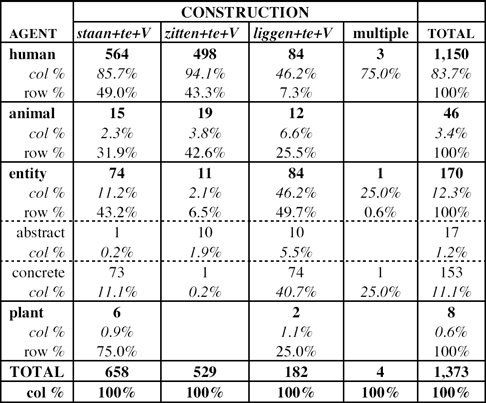
Table 2. Distribution of subject types for the CPV-progressive.

Table 3. Range of complement verb types.

Table 4. Complement verbs for CPV-progressives (with N≥10).
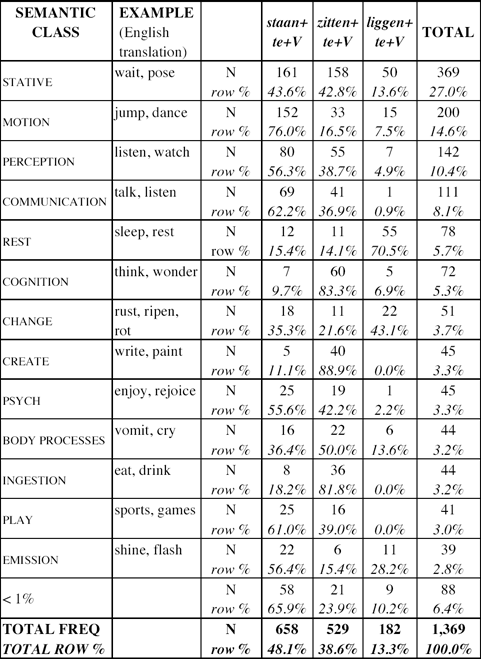
Table 5. Most frequent verb classes for CPV-progressives.

Table 6. Aspectual and temporal adverbials expressing duration.
 You have
Access
- 32
- Cited by