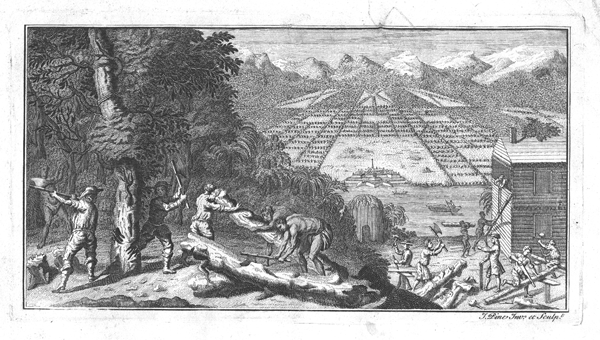
Printed in London before settlers had set foot in Georgia, John Pine's 1732 engraving of Savannah reveals the natural abundance and vast potential that many imagined awaited them in a colony that then existed only on paper (figure 1). Pine (1690–1756), a friend of William Hogarth and a fellow master of visual signs, designed and engraved the original; yet he had never seen for himself the land between the Savannah and Altamaha Rivers recently granted to the Trustees for Establishing the Colony of Georgia in America.Footnote 1 The Georgia trustees and their supporters had little direct evidence about the colony but, in an era of imperial expansion and mercantilist competition, expected it to be a promised land of fertile soil, salutary climate, and abundant flora.Footnote 2 Pine's idealized image was included with documents authorizing agents to solicit funds for “Encouraging and Improving Agriculture” in the colony, dependent as it was on charitable contributions, as laid out in the trustees’ charter.Footnote 3 The print, showing Georgia's potential for growing a variety of rare and valuable plants, was designed to attract subscribers. And, it did, for many prominent men contributed funds to the project. Of the subscribers, the members of the London Society of Apothecaries shared the broader sense of opportunity that surrounded the early days of the colony, but they also brought to the project a particular agenda to link Georgia to their Chelsea Physic Garden and the increasingly competitive London medical marketplace. The apothecaries offered to help establish Georgia as a place to grow the plants they had come to see as essential to the linked goals of medical self-sufficiency and commercial success. The ways they succeeded and failed in this endeavor had consequences not only for the Georgia colony and its inhabitants but also for Britons around the world, as concerns about medicines, plants, and health became inextricably linked to the pursuit of state power.
View of the Georgia Trustees’ garden, 1732.

The idealism (or perhaps foolishness) illustrated by Pine's engraving—that the trustees and their allies, the apothecaries, could grow whatever plants they wished regardless of the colony's environmental conditions—ran up against ecological and geopolitical realities in Georgia. In the background of Pine's scene, mountains convey the specious sense that settlers would find themselves in a lush, protected valley. In the foreground, men are shown clearing land by felling a forest dense with useful trees: pine for masts; oak, walnut, cypress, and cedar for lumber. Small boats ply the waters of the Savannah River in front of a fort, while workers erect a two-story cabin. At the center of the engraving, a large open space has been set aside for an experimental garden in which settlers will produce useful, rare, and profitable crops.Footnote 4 This garden was at the heart of the plan to encourage agriculture in Georgia. Any planter in the colony was entitled to receive young plants free of charge from the public nursery, which was established in 1734 on ten acres of dry, sandy bluff east of the settlement.Footnote 5 The prominence of this space in Pine's work reflects the garden's significance within the mercantilist economy of the British Atlantic world. What precisely would grow there, however, remained a topic of debate that prompted schemes ranging from sericulture to the cultivation of plants used in the production of medicine. Efforts to grow medicinal plants in Georgia followed a long tradition of agricultural experimentation in the colonies. At the same time, the attention to medicines reflects the ongoing integration of laboratory medicine with medical botany in the British medicine trade and their elevation to urgent matters of state concern in the first half of the eighteenth century.
Though the experimental garden in Georgia would lie fallow within two decades of its establishment, such apparent failure ought not to obscure the fact that the project made sense to those involved and that their actions on account of these—admittedly mistaken—calculations represented a bridge toward fuller state support for botany. For the Society of Apothecaries, as for other institutions that spanned the realms of knowledge production and trade, a political economy combining science, commerce, and state power made sense, since medicine manufacture at the society's laboratory had for decades depended on customers affiliated with the British state. That several apothecaries articulated such a vision linking medical botany and the British medicine trade—and did so decades before Joseph Banks (1743–1820) formalized his neo-mercantilist plan of improving Britain's economic self-sufficiency by applying science to imperial policy—adds weight to why an exploration of a brief experiment is both necessary and telling.Footnote 6 Banks is usually credited with institutionalizing a system of state-sponsored botany and plant collection, but the rhetoric of mercantilist competition and economic development can already be seen in the decision to cultivate medicinal plants in Georgia and in appeals for funding the Chelsea Physic Garden in the wake of the venture. The connection between the two gardens helps root the development of the bureaucratic, state-sponsored botany of the late eighteenth and early nineteenth centuries in an attention to medicinal plants and the medicine trade nearly half a century earlier.Footnote 7
The eventual abandonment of the Georgia garden, in contrast to the survival of the Chelsea Physic Garden, reframes the development of state-supported botany as fitful and speculative in the face of a changing market for plants and the products made from them. As early as the 1720s, Chelsea's gardeners directed their plant cultivation toward solving problems of economy, and in 1732 they proposed to configure the Georgia Trustees’ garden in a similar way. They sought first to find valuable medicinal plants in Spanish territory, then grow them in the colony, and ultimately use them to manufacture medicines in London. Rather than for the pursuit of natural history knowledge alone, the motivations behind these gardens were commercial and represented an effort to support profitable agriculture within the mercantilist legal regime that organized transatlantic trade. The Georgia enterprise is too often relegated to the margins of British history as a mercantilist failure or flight of philanthropic fancy.Footnote 8 The experimental garden did not fulfill the apothecaries’ dreams, but this disappointment neither erased the goal of drug cultivation nor the necessity of it. As overseas warfare and a maturing plantation complex increased both desire and need for remedies over subsequent decades, state officials, botanists, merchants, and imperial agents all began to recognize medicine manufacture as a component of empire on a global scale.
The utility of this history is not in locating the origin of economic botany in Georgia but rather in identifying its development within the political-economic context. The seventeenth century had witnessed a dramatic expansion in drug imports to England, while the sophistication, capitalization, and scale of medicine manufacturing improved in the eighteenth. As a result, medicine exports from Britain rose exponentially for most of the century, buoyed by a competitive medical marketplace at home and new patients among military and enslaved populations abroad.Footnote 9 The plants that apothecaries hoped to grow in Georgia remained scarce in the British territories while they were also in high demand for producing medicines sought by the armed forces and trading companies.Footnote 10 Because of the constant shortage, medicinal plants carried great importance to the state as well as to manufacturers and individual consumers. Europeans searched for new sources of medicines not only to line their pockets but also to make their countries medically self-sufficient, thereby decreasing the flow of bullion to foreign powers with access to rare medicinal plants. The experimental garden in Georgia offered such an opportunity because of its perceived climate. Supporters hoped to break the Spanish monopoly on several of the most popular drugs of the day, Jesuit's bark (of the genus Cinchona), contrayerva (most likely Dorstenia contrajerva), and ipecacuanha (Carapichea ipecacuanha or Uragoga ipecacuanha). These three were the chief treatments for the malaria, dysentery, yellow fever, and sexually transmitted diseases that plagued Britons at home and abroad.Footnote 11 The ensuing effort to grow medicinal plants in Georgia drew together a broad set of institutional and individual partners—members of the peerage, the English East India Company, the South Sea Company, the Royal Society, and the Society of Apothecaries—who were beginning to recognize the profits to be had from medicine, especially when it appeared vital to the state's ability to wage war on its European competitors.
That the gardens were intended to grow plants used for making medicines can often be overlooked within the scholarship on the intersections of early modern science and commerce. The central role played by natural products in early modern global trade has been well established by scholars of political economy and of science.Footnote 12 Likewise, though often in separate conversations, historians have turned their attention to the trade in medicines and medicinal plants.Footnote 13 These conversations come together in the Georgia and Chelsea gardens to demonstrate the practical as well as intellectual value of medicinal plants in the eighteenth-century Atlantic world. As Harold Cook wrote and others have shown, natural history and medicine were “big science,” attracting significant investment in terms of capital, manpower, and infrastructure throughout Europe. The drive to understand the natural world and bend it toward the project of improving the human condition animated networks of thousands of individuals, countless research hours, and significant budgets. European botanical gardens were “the largest research laboratories of the day,” according to Cook, where facts of nature were generated based on specimens brought from around the globe by the networks of empire.Footnote 14 Scholars have also begun to explore the impact of commerce on the development of natural history.Footnote 15 Yet establishing a plant-based empire depended not only on natural history but also on medicine manufacturing and the medicinal plants it required. Garden schemes in Europe and soon in the Americas and Asia began emphasizing using plants to make things, specifically medicines.
As efforts by the Society of Apothecaries to tie their medicine trade to the state and new efforts to cultivate medicinal plants in South Asia demonstrate, the experimental garden in Savannah was part of a longer-term pattern rather than an anomalous mistake by an idealistic group.Footnote 16 In the wake of their contributions to the garden in Savannah, the apothecaries sought patrons within the state to ensure their company's continued operation and soon were selling more medicines to the Royal Navy and the East India Company. Appeals for funds for the Chelsea Physic Garden in the 1750s built on rhetoric connecting botany, especially the study of medicinal plants, to military fiscalism that had been honed during the apothecaries’ work with the Georgia Trustees in the 1730s. From this perspective, a moment that has often been framed as imperial folly or a failure of agricultural innovation in the Lower South now appears part of the process by which the state and botany and medicine manufacture became tied, prefiguring what would follow at Kew and other gardens in the nineteenth century.
The Society of Apothecaries in a Changing Medical Marketplace
That members of the Society of Apothecaries found themselves collaborating on a transatlantic garden project with the Georgia Trustees would not have seemed fanciful by the 1730s. During the seventeenth century, many apothecaries, such as James Petiver (1665–1718) and Samuel Doody (1656–1706), had cultivated long-distance ties to gather natural history specimens and medical information.Footnote 17 By the time the apothecaries contributed to the subscription for encouraging Georgia's agriculture, they had operated a botanical garden at Chelsea along the River Thames for more than half a century. The Chelsea Physic Garden had not always been a hub of exchange, but in the 1730s it overcame financial difficulties to boast international connections that enriched the society's renown and capacity to make medicines. The apothecaries contributed a model for the Savannah experimental garden based on their participation in the burgeoning British medicine trade and experience managing the Chelsea garden, where connections between empire, medicine, and trade were already being made.
Sweeping changes to the Chelsea garden's operation in the early eighteenth century brought the apothecaries’ study of botany closer to their other business of making medicines. This was a process many hoped would benefit from the garden at Savannah. From its establishment in 1676, the Chelsea garden served as a site of botanical exchange, experimentation, and learning under the society's auspices. It was not the first botanical garden in the British Isles—it followed ones at Oxford (1621) and Edinburgh (1670)—but because there was no comparable garden for the study of plants near London, it held tremendous value for those concerned with the study of botany in the area. Among these were apothecaries who remained members of the society despite the declining perks of admission into the livery company. The garden was a place to teach apprentices about the medicinal uses of plants and a source of raw materials for the society's laboratory. It boasted an array of native and foreign plants and by the 1680s was a source of delight for visitors. A young Hans Sloane (1660–1753) studied at Chelsea as its renown spread across Europe.Footnote 18 Yet in the following decade, the cost of maintaining the garden grew so burdensome for the apothecaries struggling to retain their share of the medicine trade that it descended into a period of neglect lasting nearly three decades.Footnote 19 Weeds crept among the vines and shrubs in the absence of effective oversight or a unifying purpose for the garden.
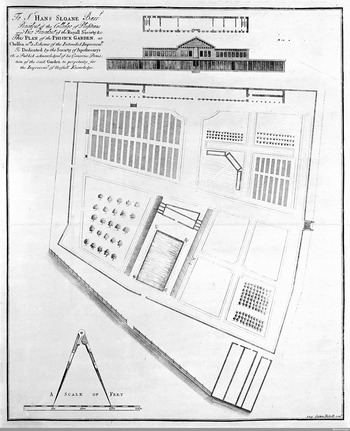
All that changed with the reinvigorated attention to economic matters implemented by Hans Sloane in the 1720s. From his early days studying at the garden, Sloane had maintained an interest in collecting and cataloguing nature, first during his career as a physician and then as secretary and later president of the Royal Society. He had worked to revitalize the Royal Society in the early eighteenth century by expanding its collections and more carefully managing its finances, and then turned a similar eye toward the Chelsea garden. He purchased Chelsea Manor in 1713, leased the garden property to the society in perpetuity beginning in 1722, improved its management, and shifted its collections toward plants with wider usefulness to concerns of empire and medicine (figure 2).Footnote 20 The agreement with the Society of Apothecaries ensured that the garden would be kept for their scientific and commercial purposes, but it also accelerated the pace of botanical work that needed to occur there. To fulfill Sloane's rent, the apothecaries agreed to submit to the Royal Society a total of two thousand plants in annual installments of fifty unique specimens. The plants were to be “well dryed and preserved,” grown “in the said Garden the same year,” and catalogued in such a way “so as the Specimens of such Plants be different or specifically distinct and no one offered twice.”Footnote 21 Sloane's lease thereby necessitated more robust identification, cataloguing, and preservation procedures at Chelsea beginning in the 1720s—a dramatic reversal for a garden that had fallen into disuse since 1690. The stipulation that specimens be unique impelled new exploration and cultivation that could be publicized in the Philosophical Transactions or applied to making medicines. The arrangement provided a future for the garden and a collection of specimens for the Royal Society, and it linked knowledge production to what was beginning to resemble economic botany under the new management at Chelsea.Footnote 22 To take over as head gardener, Sloane hired Philip Miller (1691–1771), described by a contemporary as one “to go forward with a curiosity and genious superior to most of his profession”Footnote 23; under his leadership, the garden became a hub in long-distance networks. Miller moved the garden away from being simply a tool for society members to learn about herbs and opened it to a wider commerce in plants with perceived benefits for the public good.
Plan of Improvements to the Chelsea Physic Garden, 1725.

Record-keeping practices drawn from the world of commerce now enabled those in charge of the garden to yoke the knowledge production occurring within its walls to the medicine trade that was becoming more profitable, but also more competitive, in the early eighteenth century. Medicines, like a bolt of cloth or a bottle of perfume, were manufactures made from natural products that were exported to benefit Britain's balance of trade and the health of Britons living overseas. Manufacturing came to be seen as a duty to the nation as political economists touted the advantages of importing raw materials and exporting finished goods.Footnote 24 Though only a small fraction of total British manufacturing exports in the eighteenth century, medicine exports grew exponentially during the century as a result of a commercializing medical marketplace at home, labor concerns abroad, and new expectations of medicine's effectiveness against disease.Footnote 25 Increasing production and rising demand together meant that medicinal plants, the raw materials of medicine manufacture, were constantly needed in London.Footnote 26
The supply of medicinal plants was a concern for the Society of Apothecaries because of its tenuous position in London's early eighteenth-century medical marketplace. A series of challenges to the society's authority over the half century before the Georgia project reflected a broad trend of deregulation in the medicine trade, which pushed the apothecaries to expand their institution's capacity for manufacturing and botanical study.Footnote 27 Originally chartered as a licensing company for vendors of medicines in London, its regulatory powers did not last long into the next century, but its members defended their commercial privileges and built a steady medicine trade to a range of customers.Footnote 28 The first decade of the eighteenth century saw two events that pushed the society to become principally a maker and vendor of medicines itself. First, in 1703, the Lords of the Admiralty decided to purchase medicines for the Royal Navy from the society rather than from the rival College of Physicians. The output of the apothecaries’ laboratory seemed to offer advantages in price, quality, and portability compared to the physicians’ galenical medicines in the wake of disastrous mortality during the Nine Years’ War (1688–1697).Footnote 29 Second, the outcome of the Rose case in 1704, whereby the House of Lords gave apothecaries the legal privilege to prescribe medicines, marked a temporary end to the ongoing contest between physicians and apothecaries to regulate London's medical marketplace.Footnote 30
These developments positioned the society to assume a larger role in the provision of medicines in London, but they also endangered the society's traditional authority over the trade. There had been a long history of competition in the medicine trade, and its further deregulation in these decades, illustrated by the Rose case, accelerated it. A range of druggists, chemists, and merchants outside of the apothecaries’ official ranks began to challenge their business and status, in some cases operating on a larger scale and offering lower prices.Footnote 31 Yet in a medical marketplace undergoing long-term processes of commercialization and industrialization, opportunities existed for the apothecaries to improve their fortunes by connecting the manufacture of medicines to the study of botany through the production of both knowledge and goods occurring at their garden and laboratory.Footnote 32
As a livery company struggling to retain its standing in the London medical marketplace, the Society of Apothecaries began to amass a significant collection of rare plants and botanical expertise in the 1720s, thanks to Philip Miller's work at Chelsea. Miller's initial tasks were to expand the number of plants growing in the garden, experiment with gardening techniques, and study medicinal plants. An overriding concern for matters of economy unified these tasks. In an attempt to solve the shortage of oak for the hulls of navy ships by finding alternative timber sources, for example, Miller oversaw the introduction of American conifers to the gardens of the English gentry.Footnote 33 He also studied the production of madder dye in Holland, publishing a pamphlet in 1758 to encourage its cultivation in Britain as a source of employment to reduce the poor rate.Footnote 34 Contemporaries like the Swedish botanist Pehr Kalm soon regarded Chelsea as the finest garden in Europe, on account of the collections Miller had amassed.Footnote 35 Authorities at the Society of Apothecaries recognized the benefits accruing to their institution from Miller's networks. He frequently exchanged cuttings and seeds from the garden for foreign specimens, and encouraged correspondents to donate plants for cultivation or preservation in exchange for plants of their choosing from the garden's beds. Miller's system brought previously unidentified specimens to the garden from across the globe.Footnote 36
Miller borrowed from commercial accounting practices to keep track of the specimens arriving at the garden from across North America, China, India, and the West Indies.Footnote 37 On a daily basis, such a system helped him manage the garden; on a broader scale, it improved the garden's position within developing local and long-distance markets for medicinal plants. Miller assigned each plant in the garden a unique number on an index stick that referred to its entry in a “true & compleat Catalogue of all Trees Shrubbs flowers roots & plants then growing in the said garden with an account of what have been lost & what acquired or brought in that year & by whom & whose means & favour.”Footnote 38 As suggested by its title, this catalogue provided in a commercial style detailed accounts of from where and by whom plants came to Chelsea. Later versions were even organized in double-entry bookkeeping style with debtor and credit sides.Footnote 39 Miller's system of inventory management reflected types of record-keeping used in other sectors of the English economy where participation in long-distance trade or reliance on partnerships necessitated more accurate and formal accounting practices.Footnote 40 Thanks to these methods, the apothecaries presented 3,900 specimens to the Royal Society from 1722 to 1799, with numerous first cultivations and only a few duplicate plants among them.Footnote 41 This practice was important in the short term for the apothecaries to keep their lease on the garden property, but in the longer term it represented a new pattern of convergence in the society's botanical, medicinal, and imperial aims.
Miller's success in institutionalizing routines of economic botany at Chelsea brought the garden closer to the Society of Apothecaries’ medicine trade, which, in the early eighteenth century, was similarly expanding in scale and becoming more global in scope. Faced with the society's declining authority around the turn of the century, its members had shifted its resources toward manufacturing capacity to reach the demand for medicines they believed existed in London and among the state's armed forces and trading companies. The society's laboratory near Blackfriars featured more than fifteen hundred square feet of working space and was held in high regard by contemporaries. Two joint-stock subscriptions funded the large-scale manufacture of medicines at the laboratory, enabling profits to be distributed among shareholders. The first, the Laboratory Stock, was founded in 1676 as a voluntary association of apothecaries to make chemical medicines at their joint expense. Soon it encompassed sales to members and non-members alike. While some medicines from the laboratory were already going to the armed forces in the 1690s, it was not until 1703 that the formal contract to supply the Royal Navy arrived at the society after a 1701 vote in the House of Commons to raise a large number of men for the army and navy. Following rearmament in the early years of the eighteenth century, a second stock, the Navy Stock, was founded to supply institutions with which the society had contracts, notably the Royal Navy, the East India Company, and local hospitals.Footnote 42 A variety of chemical and galenical medicines—tinctures, pills, powders, and salts, mercurials, and opiates—were made at the Blackfriars laboratory; routines of quality and price control were implemented there that, as at Chelsea, mirrored practices often employed elsewhere in the world of trade.Footnote 43 What began as a way to supply members with quality medicines soon grew into one of the largest manufacturers of medicines in London.
Meanwhile, consumers had put more trust in medicines to prevent and treat disease, spurring producers to look overseas for potentially profitable drugs. Health itself was increasingly understood as a commodity to be bought and sold in an open market.Footnote 44 Advances in chemistry in the later seventeenth century prompted the adoption of new mineral, metallic, and chemical medicines, as well as the introduction of laboratory-produced ingredients, such as aqua fortis, calomel, antimony, and Glauber's salt, into the corpus of popular medicines like those produced at the apothecaries’ laboratory.Footnote 45 While many of the medicines offered for sale did not fundamentally differ from those that had been available in previous centuries, the manner in which they were manufactured, regulated, and distributed had changed. Consumers of health-related products now expected to purchase efficacious medicines at more affordable prices in a medical marketplace devoid of much of its traditional hierarchy and bustling with many more manufacturers.
As the society's membership and regulatory abilities declined in a more competitive marketplace, shareholders could rely on annual profits from sales to the Royal Navy and East India Company via the Navy Stock.Footnote 46 Founded in 1703 with a capital stock of £6,000 collected from the liverymen of the society, who quickly bought all available subscriptions, the stock initially generated so few profits that the managers considered abolishing it in the following decades. Shipments of raw materials for the laboratory went unpaid, and so too did medicines sent by the apothecaries to hospital ships and ports across the globe. The apothecaries’ laboratory struggled to turn a profit at the same time as the Chelsea Physic Garden moldered in a state of relative neglect.Footnote 47 Then, just as the garden received a literal new lease on life in the 1720s, Navy Stock dividends, too, began to improve. The threatening international political situation perceived during the years around 1730, coupled with a lingering distrust of a standing army, led many to place their trust in the maritime power of the Royal Navy. More orders for medicine followed, and, when the Walpole government warmed to the idea of a permanent standing army later in the decade, even more business arrived for the apothecaries.Footnote 48 As the national debt mounted under the burden of propagating colonial warfare, state officials applied health considerations to the problem of manpower; disease typically accounted for a higher portion of military mortality than injuries sustained in battle.Footnote 49 The diffusion of an ontological view of disease had created the expectation that medicines could treat the ailments of a wide range of bodies across different geographies.Footnote 50 Larger colonial populations susceptible to the threat of disease and greater confidence that medicines designed to treat them would possess some efficacy gave the apothecaries an opportunity to supply the markets offered by the armed forces and trading companies. It also incentivized the search for plants that could be used in these medicinal preparations.
As plants arrived at Chelsea to be recorded in Miller's ledgers, medicines made in the society's laboratory were entered into manufacturing logs before flowing out in the opposite direction to sailors, soldiers, and trading company employees in faraway places. While Miller joined the apothecaries to networks of empire through plant exchange at Chelsea, they forged new business connections with the Royal Navy at their laboratory that also depended on rare, medicinal plants. The plant exchange occurring at the Chelsea garden in concert with the medicine production at the laboratory helped ensure the Society of Apothecaries’ continued relevance in the medical marketplace of eighteenth-century London. When the Georgia Trustees sought a profitable agricultural model for their colony across the Atlantic, they could look to the rehabilitation of the apothecaries’ garden and laboratory. The Chelsea garden seemed like a model the trustees would wish to emulate, based on its recent success. To the apothecaries, Georgia offered the prospect of improving the availability of drugs believed necessary for keeping patients alive, which would, by extension, benefit their trade. At the start of the 1730s, the possibilities for Georgia, although still only ink marks on paper, seemed bountiful.
The Transatlantic Business of Botany
Philip Miller shared with Carl Linnaeus, his more famous rival, an interest in botany relevant to a global understanding of national political economy.Footnote 51 Miller connected the economic concerns of the Society of Apothecaries to the wider political-economic concerns of colonial administrators, merchants, and speculators. Gardens for industrial or economic pursuits figured prominently in mercantilist political economies across Europe. Colonial crop-trial gardens similar to the one in Georgia appeared throughout the French empire in the 1730s and 1740s.Footnote 52 A livery company engaged in the medicine trade perhaps seems an unlikely subscriber to such a scheme, but the apothecaries’ experience in long-distance plant transfers and medicine manufacture enabled them to shape plans for agricultural experimentation in Georgia with a goal of producing rare medicinal plants often difficult to obtain at any price.Footnote 53 These plants, it was expected, would not only provide operating funds for the colony and income for settlers but would also support the apothecaries’ infrastructure for making and selling medicines. At the heart of the subscription for “Encouraging and Improving Agriculture” in Georgia was as an experimental garden to test which plants would be best suited to the local climate and then to distribute seeds of those plants to the colonists for their own gardens. Such a project reflected what Miller had implemented at Chelsea over the previous decade. Additionally, the project offered an opportunity to answer a question that had loomed for decades over plans to settle the land south of Carolina: what, precisely, would the colony produce? This political economic problem was both local—for the settlers trying to survive in a new place—and imperial—for supporters trying to justify their investments.
Many people, the trustees among them, had for years believed Georgia’ climate to be “so much kinder, and the Soil so much more fruitful” than that in England and generally entertained a rosy view of the colonial environment. Georgia's location on the 33rd parallel north (that of the Garden of Eden, according to some) further convinced supporters that the colony could produce the semitropical products desired in England. That many of the plants had never been successfully cultivated in nearby colonies did not discourage them.Footnote 54 Such a view dated back decades to earlier efforts to colonize the land south of Carolina. Many have pointed out the influence of the sugar islands on the development of South Carolina and Georgia, so it is not surprising that interested parties thought the environments would support similar flora. In 1717, Robert Montgomery (1680–1731) received a grant to the territory between the Altamaha and Savannah rivers, which he considered “the Most delightful Country of the Universe.”Footnote 55 Such optimistic hopes for Georgia's climate, reaching as far back as the Spanish explorer Hernando De Soto, who had visited the region almost two centuries earlier, now found renewed expression with the apothecaries.
The proposal in 1732 to establish a garden for experimenting with a variety of rare plants aligned with the vision of a lush, productive Georgia landscape presented in John Pine's engraving because it also reflected the economic incentives offered by an expanding medicine trade in London. Miller's insistence on finding medicinal plants for Georgia set off a hunt for specimens to transplant; the new garden was increasingly described as a means of challenging the Spanish monopoly on a number of American plants of economic significance. Achieving self-sufficiency in natural resources remained high on the list of national priorities during this period.Footnote 56 There was, of course, a long history of bioprospecting in Spanish territories before the eighteenth century, but the idea reappeared at this moment and in this context as a result of an imperial marketplace where medicines were manufactured and consumed on an unprecedented scale.Footnote 57 A desire to find new sources of raw materials to aid domestic industry had long been a pillar of balance of trade political economy.Footnote 58 The Georgia Trustees envisioned the “necessitous and starving” put to work “to naturalize as much as we can the Products of other Countries; especially such as we purchase of Foreigners with ready Money”; those products would no longer be luxuries in Britain and manufactures made from them would come cheaper. Plants grown in Georgia would link these differing visions for the colony by providing employment for the colonists and generating commodities to “supply a rich Manufacture to their Mother-Country.”Footnote 59 Since the trustees had banned the use of enslaved laborers, however, plants grown in Georgia would have to be ones that did not require large labor forces to harvest at a profitable scale, unlike tobacco and rice grown to the north.
The subscribers for “Encouraging and Improving Agriculture” in Georgia envisioned a grand experimental farm of five hundred acres yielding a variety of commodities to support their dreams for the colony and its inhabitants.Footnote 60 This shared vision is an early example of the type of agricultural innovation that Joyce Chaplin has identified in the Lower South throughout the later eighteenth century. It was a confident pursuit, backed by a variety of institutional expertise and funding.Footnote 61 Promotional materials indicated the belief that Georgia's climate could support a range of plants unable to be grown elsewhere in the British colonies.Footnote 62 From this perspective, the problem was only one of proper selection. Rice and indigo, for example, required more capital and labor than early settlers could muster. Tobacco, a possible alternative, faced low prices in the 1730s. At first the trustees wished to introduce sericulture, but a group headed by Sloane and Miller instead proposed medicinal plants to break the Spanish monopoly on American drugs.Footnote 63 With input from the apothecaries, the trustees shifted their focus to medicinal plants that were compact, high value, and expensive to obtain elsewhere. Parcels of snakeroot, sassafras, contrayerva, shumack, and China root arrived for consideration.Footnote 64 They soon envisioned these plants growing among a profusion of oranges, olives, apples, pears, figs, vines, pomegranates, cotton, coffee, tea, and bamboo.Footnote 65 Yet they also realized that individuals could not be relied on to diversify local agriculture; few would be willing to try unfamiliar crops for fear of financial loss if they failed to yield a harvest. The trustees decided that attempts at new cultivation would require continuing assistance of the Society of Apothecaries to ensure that a variety of plants would be grown in the experimental garden, distinguishing their plan from the dominant systems of monoculture that typified the southern colonies.Footnote 66
It is difficult to overestimate the contemporary desire for these medicinal plants. Growing species valuable to medicine manufacture in a British colony instead of importing them from the Spanish viceroyalties offered an opportunity to achieve medical self-sufficiency at home. Britons had already witnessed the beneficial effects when a monopoly on a foreign drug fell apart. After the Jesuits’ monopoly on Peruvian bark (cinchona, Jesuit's bark) was broken in the 1670s, the drug became more affordable in England and so more popular. A mass market for cinchona emerged during the early eighteenth century. English merchants were soon trading significant quantities of the bark, a point of concern for Spanish officials.Footnote 67 Yet, in the 1730s the bark did not grow in British territory and still had to be imported.
Nor was this project the first time that investors envisioned medicinal plants as an export crop for the North American colonies. Before tobacco and sugar surpassed it, sassafras, a treatment for syphilis, returned profits to English settlements in the early seventeenth century.Footnote 68 The drugs the subscribers now desired, notably ipecacuanha, sarsaparilla (of the genus Smilax), Jesuit's bark, and contrayerva, numbered among the most popular medicines at the time and ones that in some cases (mainly cinchona) were efficacious in reducing deaths from malaria. Malaria had spread throughout the Atlantic world in the late seventeenth century, creating more demand for treatments of intermittent fevers. These remedies appeared throughout the manufacturing recipe books of apothecaries, chemists, and druggists; they were frequent topics of conversation in their overseas correspondence and filled their medicine chests. Pills, elixirs, tinctures, and unguents made from these plants lined the shelves of retail shops, while piles of the roots filled storerooms and laboratories across London.Footnote 69 Military officials and plantation owners as well as a range of ordinary people with money to spend on their health turned to such medicines in hopes of staving off death in the Atlantic world. Strictly speaking, many of these medicines were ineffective, but hindsight obscures the reality that some did offer curative potential and many more had placebo effects or simply stimulated the body's senses in salutary ways.
The experimental garden in Georgia seemingly arrived at the right time for the apothecaries and trustees to take advantage of increased spending on medicines and the continued scarcity of many key ingredients. Before any of the plants could fill the laboratories and warehouses of London's medicine manufacturers, however, the apothecaries and trustees first had to establish the garden and fill it with rare species. To that end, they raised funds for sending a botanist across the Atlantic to identify, preserve, and transport plants in the field while navigating the barriers set up by colonial governments to prevent this from occurring. Their first choice was William Houstoun (b. 1695), a surgeon and botanist who had trained under Herman Boerhaave at Leyden (Leiden, Netherlands), been elected a fellow of the Royal Society of London, and served as a surgeon for the South Sea Company, during which time he collected plants in the Spanish Main. His exploits included smuggling a sample of contrayerva, the famed Spanish anti-poison, to the Royal Society, and transplanting a sample of jalap, a purgative, to Jamaica. Unfortunately, a group of unruly hogs destroyed the jalap crop and along with it Houstoun's hopes of breaking the Spanish monopoly on the popular drug.Footnote 70 Nevertheless, Philip Miller credited Houstoun with introducing nearly fifty plants from Spanish America to England.Footnote 71
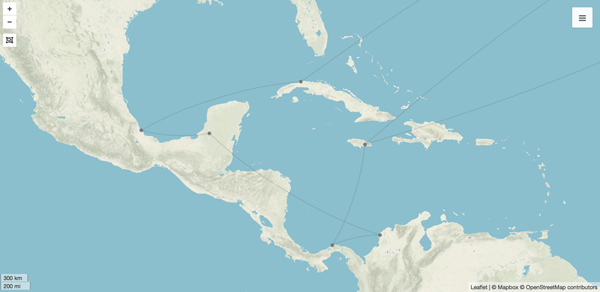
The ink on Houstoun's contract had barely dried when the trustees instructed him to sail to Jamaica; from there he was to make four expeditions to the Spanish settlements of Cartagena, Porto Bello, Campeche, and Vera Cruz over the course of two years before taking up residence in Georgia to oversee the garden. At each stop, agents of the South Sea Company would facilitate his access to the countryside via their trading factories in the Spanish ports established under the terms of the asiento permitting British merchants to sell African captives in Spanish America. From the beginning of the agreement, employees of the South Sea Company used it as an opportunity to smuggle natural commodities out of the Spanish territories to which they suddenly had uncharacteristic access. Houstoun never had a chance try his hand again at bio-espionage, because he died soon after reaching Kingston in August 1733.Footnote 72
The apothecaries and trustees promptly dispatched Robert Millar, an itinerant Scottish surgeon with connections to Chelsea, to the Caribbean as Houstoun's successor. He arrived safely in Kingston and secured passage on a South Sea Company ship to Porto Bello and Panama in May 1734 but was unable to procure any samples of Jesuit's bark as instructed (figure 3).Footnote 73 Eight months later, he wrote that he had collected several ipecacuanha plants near Ayapel, in present-day Colombia, some of which he then transplanted in two gardens in Jamaica, leaving the rest at the company factory at Cartagena. A third expedition in late 1735 took Millar to Campeche, where he claimed to have “transplanted Some hundred's of [contrayerva] Plants in to Boxes in Order to preserve them.”Footnote 74 Next, he sailed aboard a Spanish ship for Vera Cruz, where the commander of the annual trade fleet (the New Spain flota), Don Manuel López Pintado, refused his entry to the port from where he had hoped to scour the surrounding country for jalap, cochineal, and several other drugs. Company agents were of no assistance this time; Millar was deported on a Spanish man-of-war to Havana, where he boarded the Constant bound for England with no specimens in hand.Footnote 75
Robert Millar's travels in the Caribbean, 1734–1739.

In spite of Millar's lack of tangible results, the trustees raised more subscriptions in the summer of 1736 to continue the project for an additional two years.Footnote 76 That they did so shows an eagerness from subscribers to believe that bioprospecting would still turn out to be a worthwhile venture. Millar returned to Kingston in February 1737 to check on the plants he had left there, hoping to resume his search around Vera Cruz. But no amount of negotiation could persuade the viceroy of Mexico to grant him permission to do so. Dejected, sick, and exhausted, Millar returned to Kingston in 1738.Footnote 77 He had spent the greater part of four years bioprospecting in Spanish America with little to show for it. The trustees, tired of seeing “no fruits of the expence we had been at,” refused to pay his transit to Georgia to tend the garden. Millar instead returned to London without setting foot in the colony. The trustees did not renew his contract when it expired in 1738.Footnote 78
These decisions effectively terminated the trustees’ investment in bioprospecting for medicinal plants and their collaboration with the Society of Apothecaries. They lamented that Millar “gave us no satisfactory Account of the roots plants &c he was employed to collect in America for Georgia” and realized that many of the medicinal plants they desired, especially Jesuit's bark, would likely never grow in their garden. Besides a few parcels of seeds that arrived at Chelsea, none of the plants from Spanish America desired by the investors reached their intended destinations. Medicinal plants remained difficult to find and cultivate compared to other plants of economic significance. Friends of the Georgia colony sent useful plants from Europe to Savannah, and olive trees, currant vines, caper plants, Neapolitan chestnuts, and raisins were also grown in the absence of the medicinal plants Millar had been paid to find.Footnote 79
The experimental garden designed to benefit the Society of Apothecaries’ study of botany and medicine production, as well as the trustees’ budget, also had daily importance for the people attempting to find a living in Georgia. Within a month of arriving with Georgia's first English settlers at Yamacraw Bluff on 12 February 1733, James Oglethorpe (1696–1785), a leading trustee and architect of the settlement plan, had picked a ten-acre location where the ground was subsequently turned up and vegetables planted for subsistence farming. Some of the best soil on the bluff was reserved for experimentation with tropical and subtropical plants.Footnote 80 The garden was formally established in 1734, and observers soon noted “many curious Herbs,” which typically denoted drugs, growing there.Footnote 81 By the autumn of 1735, “several West Indian physical plants” had taken to a well-sheltered section of the garden at the base of the bluff.Footnote 82 For a time, then, it appeared that the garden would provide valuable plants to the settlers as intended; but, deceived by years of promotional literature, the trustees had underestimated the hardships of agriculture in Georgia. Many of the fantasies, such as the one of a promised land south of Carolina perpetuated by the Swiss settlement entrepreneur Jean Pierre Purry, were quickly dispelled. Peter Gordon, among the first settlers on the ship Ann, wrote, “Many were led into errors by this fallacious account which has been found by experience to have very little truth.” Those who arrived in Georgia with “minds puffed up with mighty hopes and expectations of success” soon stood disillusioned.Footnote 83 That Millar's bioprospecting expeditions contributed few if any medicinal plants to the garden hurt the settlers’ chances of developing a cash crop. An agricultural staple that would open up European markets and provide for the settlement's success had yet to be found.
The garden's failure to produce the promised prosperity made it a convenient target for growing discontent among the settlers, especially as indigo cultivation using enslaved labor caught on in South Carolina. Hugh Anderson, inspector of the garden, criticized the trustees for their depiction of the colony's agricultural potential, writing in 1738 “that the land is not so fruitfull as represented”; the colonists thus needed to “continue to be supported by the Trustees till some stable Manufacture takes place.”Footnote 84 Anderson soon joined those settlers who left Georgia, mainly for South Carolina, looking to improve their economic prospects. These “malcontents” complained that the garden had been situated upon “a large Hill of dry Sand” so that plants had no hope of surviving.Footnote 85 They also bemoaned the prohibition on enslaved African laborers, whom they considered as “essentially necessary to the Cultivation of Georgia, as Axes, Hoes, or any other Utensil of Agriculture” required in the pine barrens and swamps around Savannah.Footnote 86 One settler, Thomas Stephens, thought the point “as clear as Light itself.”Footnote 87
In the summer of 1740, words escalated to violence. A group of men were alleged to have broken into the garden on a Sunday, knocked down the fence, threatened the gardener, and assaulted his wife.Footnote 88 In the aftermath of the incident, the gardener, Joseph Fitzwalter, spent much of his time in the tavern “where he naturally takes most delight,” William Stephens wrote to the trustees. While Fitzwalter tended pints rather than plants, observers noted that the garden sat “grievously neglected” by its caretakers.Footnote 89 These outbursts of rhetoric and violence against symbols of the Trustees’ authority illustrate the challenges of transplanting non-native plants in Georgia and the consequences of failure.Footnote 90
Medicinal plants did not become a panacea for Georgia's unprofitability, despite the success of connecting botany to medicine manufacture at the Chelsea Physic Garden. The trustees continued to devote funds to maintaining the garden in Georgia after the collaboration with the apothecaries ended, but rising costs, failing crops, and mismanaged money led to a dire situation by 1740 that neither backing from Parliament nor bills of exchange drawn on the Bank of England could fix. The colony remained so unprofitable that Parliament supplied 90 percent of its funding until 1752.Footnote 91
During the 1740s, some colonists still harbored optimism for agriculture in Georgia, particularly with regard to indigo and cotton, crops that required large labor forces.Footnote 92 Robert Millar had reported that indigo “will grow very well in Georgia,” and since the 1730s others had been similarly upbeat about the prospects of growing cotton.Footnote 93 Philip Miller sent a shipment of plant samples, including some cotton seeds, to Savannah for the garden in November 1733, and enthusiasm for cotton continued to increase.Footnote 94 William Stephens and Patrick Graham experimented with cotton plants in 1740 and 1741, but on their own plots rather than at the garden.Footnote 95 The subscribers to the fund for “Encouraging and Improving Agriculture” in Georgia had misjudged needing a public nursery to encourage agricultural experimentation. The desire to cultivate useful plants survived in Georgia outside the ambit of the trustees and with a definition of “useful” that did not fit within the vision imposed by the Society of Apothecaries. After Georgia became a royal colony in 1752, many crop trials withered as rice and indigo plantations based on enslaved labor spread through the countryside. New inequalities of wealth and power followed close behind.Footnote 96 The experimental garden at Savannah stood abandoned; it was cleared in 1760. A gas works operated on the site for more than a century from the 1850s, contaminating the soil. More recently, the garden's ten acres have been the subject of hopeful plans for mixed-use redevelopment that include a farmer's market.Footnote 97
Medicinal plants that could generate large returns without high yields offered the prospect of profit even in the absence of enslaved labor. Without plants or a reliable infrastructure, however, those expectations of prosperity foundered, and the garden at Savannah could not match the productivity of its sister garden at Chelsea. The Georgia experimental garden came to embody the colonists’ frustrations with the trustees and the limitations of bioprospecting in the eighteenth-century Atlantic world. Yet it also established new expectations about the value of medicinal plants and the importance of medicines among institutions connected to the state. Despite its eventual abandonment, the garden provided an example of how economic botany could incorporate medicines within a mercantilist framework.Footnote 98 Initially, there was little reason to predict the garden would fail; the demand for medicinal plants appeared strong enough to attract multiple subscriptions to the project. Even this support, however, could not overcome the logistical problems of gathering samples and growing them.
Designing a Botanical Future
The brief history of the experimental garden at Savannah demonstrates one possible configuration of botany, political economy, medicine, and settlement—a constellation of interests that would come into closer orbit during the second half of the eighteenth century. After the apothecaries’ contributions to the Georgia garden project ceased, their attention returned to plant cultivation and medicine manufacture in London. Yet the familiar questions of profitability and funding remained at the start of the 1750s. The society continued to face increasing competition from other purveyors of medicine even as demand for British medicines grew as a result of European and colonial wars, the expansion of plantation agriculture, and growing colonial populations. Recognizing the importance of institutions of military fiscalism for the apothecaries’ business, Philip Miller portrayed the Chelsea Physic Garden and its contributions to the production of medicines as essential to the British state's ability to wage war against its European rivals. State and trading-company officials had begun to emerge as key patrons of botany and medicine, disciplines that they saw as increasingly relevant to their own political-economic goals. As a result, they began to pay more attention to botanical gardens, especially those with medicinal plants, across the globe.Footnote 99 This attention did not go unnoticed. As a young man idling around Chelsea in the early 1760s, Joseph Banks observed Miller's attempts to align the garden closer to the economic and political aims of the state.Footnote 100 The successes and failures at Chelsea in the decades following the Georgia garden project provided an example of the institutional arrangements necessary for economic botany that would soon follow.
The botanical future of Chelsea, like that of the experimental garden in Savannah, depended on medicinal plants and the promise of health they implied. Maintaining health continued to be a pressing issue for the armed forces and trading companies. Through the 1750s, the British Army, Royal Navy, and East India Company faced the challenge of keeping fit for service the tens of thousands of men required to wage war on multiple colonial fronts. The availability of medicines was a constant worry for company and state officials as the populations under their care swelled in these years. Death from disease, more than other combat deaths, hurt morale and national prestige at home, in addition to causing labor shortages in the field, making it an urgent concern.Footnote 101 Men serving abroad thus provided an opportunity for merchants of medicines to sell their products in bulk to populations who were often sick or wounded. Medicine exports from London to overseas destinations rose dramatically from just over 100,000 pounds (lbs.) in 1730 to nearly 570,000 pounds in 1754 and more than 700,000 pounds in 1760, while at the Society of Apothecaries navy orders reached new highs after 1754.Footnote 102 The resumption of colonial warfare on a global scale seemed to portend good fortune for merchants of medicines.
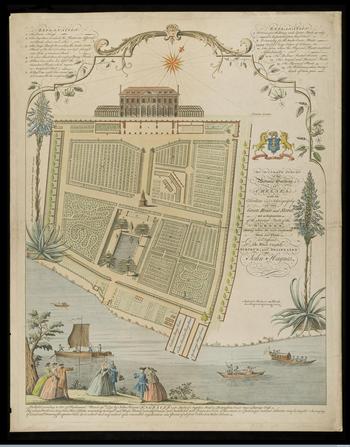
Yet a bustling trade belied the financial shortfalls of the Chelsea Physic Garden. In the 1750s, it faced uncertain support from its patrons. Membership in the society had continued to wane in the preceding decades, meaning less money for the garden's budget. Diminishing membership presented a systemic problem within a medical marketplace experiencing increasing scope and scale; other London livery companies, too, struggled with similar problems of dwindling membership and revenue.Footnote 103 In the seventeenth century, most who practiced as an apothecary in or around London became members of the society and thereby, in small part, supported the garden through their dues. As more apothecaries worked outside the society's ranks, shrinking the annual revenue, Miller feared that, without additional funding, “the Garden may be given up,” perhaps recalling the fate that befell the garden in Savannah.Footnote 104 In 1753, a year after the Georgia Trustees relinquished their charter, the Chelsea garden's finances were indeed in a worrisome situation. Operating the garden that had expanded in size and contents since the 1730s, along with its overseas networks, did not come cheaply (figure 4). Funding had come from the society's coffers as well as from a range of individuals affiliated with the study of botany and the medicine trade in London, including prominent merchants of medicines.Footnote 105 These were men who would have benefited from the types of knowledge production occurring at Chelsea. Miller's success over the past twenty years meant that he was held in high esteem by many of “the principal people in the land,” according to Pehr Kalm.Footnote 106 Miller now turned these connections toward maintaining the garden. The apothecaries’ laboratory already profited from business with the Royal Navy, and Chelsea would move in that direction as well.
The Chelsea Physic Garden in the 1750s.

For the survival of his garden, Miller sought to make the botany occurring within its walls appear indispensable to the political economy of a growing empire—a move that underscores the ongoing process by which the medicine trade and economic botany were integrated into formulations of imperial power. The desire to cultivate medicinal plants in Georgia had been couched in terms familiar to British mercantilists, but Miller took this line of reasoning one step further. In 1753, he wrote to George Parker (ca. 1697–1764), the second earl of Macclesfield, a horticultural enthusiast, fellow of the Royal Society, and politician. Miller portrayed the Chelsea Physic Garden as vital to Britain's medical superiority vis-à-vis its European competitors in hope of guaranteeing future financial support. British medicine, he argued, conferred a military advantage over its rivals that would not be possible without the study of useful plants occurring at Chelsea. Without gardens supported “at the expence of the Public”Footnote 107 to conduct botany, Miller warned, British medicine would fall behind that of Holland, France, and principalities in Germany and Italy that all maintained productive gardens. In other words, Miller elaborated a theory of political economy wherein medical prowess begat military success as a result of publicly funded scientific pursuits. Other European states had already come to similar conclusions. In 1751, only two years earlier, the Spanish Crown began to directly manage the transatlantic cinchona trade and thereby affirmed the national importance of medical botany. That forms of knowledge production were increasingly defined as state interests represented a shift for Enlightenment philosophers devoted to an ideal of cosmopolitan science.Footnote 108
The apothecaries had already been weathering this period of uncertainty in their membership by following a version of Miller's argument. Navy orders rose to new heights during the Seven Years’ War, and dividends from the Navy Stock reached 20 percent in these years. Sales to the East India Company increased as well in the wake of recent overseas victories.Footnote 109 In 1766, the Society of Apothecaries received a nominal monopoly to supply medicines for the trading season based on the quality of its medicines. The company directors admitted that prices of the society's medicines “exceed those of other persons,” but the “certainty of being supplied by them with the best sorts” motivated their decision to contract with the apothecaries. Surgeons and officials in India shared this sentiment, expressing a desire for compound medicines from the apothecaries’ laboratory.Footnote 110 The crucible of war brought to pass Miller's vision of a botanical garden connected to medicine manufacture that benefited the public good by improving the health of the British armed forces. The Navy Stock continued to expand in the following decades, and gardens filled with native and foreign plants dotted the London landscape. Enthusiasm for useful plants in England had become so pronounced by 1766 that Parliament passed an act making the theft and destruction of such plants a felony punishable by transportation.Footnote 111 In 1770 the Chelsea Physic Garden came under the supervision of a new committee composed of those in charge of the navy and laboratory stocks, who were even more interested in the garden's bottom line.Footnote 112 Miller ceased his duties as head gardener in February 1771 shortly before his death, and his largely personal system of plant exchange began to be overhauled in favor of a more bureaucratic collection system like the one that Joseph Banks would put in place at Kew Gardens between 1783 and 1820.Footnote 113
Banks's idea for a global network of experimental gardens reproduced at a larger scale the agricultural experimentation that had been attempted at the gardens in Savannah and Chelsea. During visits from Oxford to his mother's house at 22 Paradise Row near the east corner of the Chelsea Physic Garden, he had learned the names of plants and acquired his fascination with acclimatizing and exchanging foreign plants from Miller in the early 1760s.Footnote 114 In 1774, three years after Miller's death, Banks purchased the private herbarium that Miller had amassed during his tenure at Chelsea. The collection was integrated into Banks's own herbarium, which has since passed to the collections of the British Museum.Footnote 115 State officials had already accomplished some of the mercantilist goals for medicinal plants elaborated in the gardens at Chelsea and Savannah as drugs from Spanish America arrived in England after the Seven Years’ War.Footnote 116 Medicinal plants previously found only in Spanish territory also began to grow across the Lower South, both deliberately and as the result of gradual dispersal. Advertisements for pinkroot (Spigelia), a popular remedy for parasites and worms, appeared in the Georgia Gazette in the 1760s, and the plant was traded by Montgomery and Bird of Augusta into the 1790s. Camphor, too, was said to be growing in Savannah and as far north as Augusta.Footnote 117 Jesuit's bark, however, remained elusive and achieved large-scale, state-sponsored cultivation only in the nineteenth century.Footnote 118
The system of state-sponsored economic botany recognizable to many historians began to take shape in the late eighteenth century as Banks sent out amateurs and trained gardeners at royal expense to gather specimens for the growing collections at Kew. Expansion of the British medicine trade alongside the significant labor demands of the British state and its trading companies had made long-standing questions of medicine and economic utility more pressing. Botany took on even greater political-economic importance after the loss in 1783 of the North American colonies with their supply of plantation provisions. Officials in the Caribbean searched for new crops; at the same time, East India Company officials, seeking to revitalize their profits in India through agricultural improvement, established gardens at Calcutta, Madras, Bombay, and St. Helena by 1790. These gardens contained “such useful plants as are to be found here for Medicinal purposes as well as objects of Commerce,” and were intended to lessen dependence on imported European medicines and simultaneously generate revenue for the East India Company. Medicinal plants remained central to company aims for its South Asian gardens into the next century.Footnote 119 By the early nineteenth century, gardens had become symbols of royal authority and engines of economic development within the empire, based on ideas that had been developed and tested throughout the previous centuries in places such as Savannah and Chelsea.Footnote 120
The bureaucratic model that gradually emerged from the milieu of botany, mercantilism, and the medicine trade encouraged a muscular form of economic botany supporting a much broader system of botanical production and consumption in the nineteenth century. Rarely, however, are the gardens at Chelsea or Savannah mentioned alongside the better-known botanical stations of later eras. Philip Miller's appeals for funding in the 1750s illustrate that by the mid-eighteenth century, conceptions of imperial success were already formulated in terms of health amid the mortality of numerous wars and colonization projects.Footnote 121 While medicinal plants did not take root as quickly as many had hoped, the idea of establishing experimental farms in the American colonies persisted in the colonial era as a way to learn about indigenous plants and native soils.Footnote 122 Efforts to encourage the growth of medicinal plants in Europe's colonies around the world reflected the goals of earlier gardens, even as they increasingly came under the direction of state authorities or those sponsored by European governments by the end of the eighteenth century. The plant transfers (of tea, breadfruit, cotton, and cinchona, for example) that typically comprise the histories of British economic botany suggest what could be possible in a state-supported system. In the first half of the eighteenth century, by comparison, the kind of commercialized botany envisioned at the Society of Apothecaries had not reached that level of formalization, productivity, or breadth; but in emphasizing medicinal plants, its proponents heralded concepts of self-sufficiency and competition to justify long-distance experiments in agriculture.
Conclusion
Despite the centrality of medicinal plants to its plan, the garden at Savannah designed by the Georgia Trustees and Society of Apothecaries is most often remembered for something else entirely: cotton. The story of this moment of transatlantic exchange has become distorted among the broader histories of more successful or large-scale colonial agriculture. The experimental garden remains a favorite origin story for the rise of a cotton industry in Georgia and in the United States more broadly. Given the role that cotton played in shaping global history, efforts by historians to locate the birth of this crop are understandable, and the story of this enterprise linking a colonial landscape and a European botanical garden provides a compelling narrative.Footnote 123 Early twentieth-century accounts popularized the idea that the cotton seeds sent by Philip Miller to Savannah in 1733 became what one calls the “parent stock of upland cotton—the ordinary cotton of the United States.”Footnote 124 More recent texts suggest that this origin story remains alive and well within the popular imagination.Footnote 125 One problem is that this story is likely inaccurate.Footnote 126 The other, larger problem is that the persistence of this story falsely gives an aura of inevitability to what was only one of many experiments with plants in the colony. Cotton did eventually become the staple that Georgia lacked, but under a different labor regime than the trustees had envisioned. The narrative around cotton obscures the resources devoted to medicinal plants in the initial scheme.Footnote 127
The attention given medicinal plants in the eighteenth-century Atlantic world reflected an expanding medicine trade that appeared crucial to commercial agriculture and state interests. Already in the 1730s a range of people envisioned a system of botany that would make medicinal plants more available for manufacturers, provide returns for investors, and solve a core political-economic problem, the balance of trade. Access to drugs from British colonies rather than Spanish, French, or Dutch ones would ensure medical self-sufficiency for the agents of empire that depended on British medicines. It would also ensure the survival of the Society of Apothecaries and its Chelsea Physic Garden in an increasingly competitive and open medical marketplace as the monopoly privileges of the society's membership faded. The priorities of botanical study at this time depended on the medicine trade and health demands of an enlarging imperial state. That such an arrangement already operated in the eighteenth century serves as a reminder of the violent and ecologically disruptive origins of commercialized medicine and scientific inquiry in the early modern world.
Before Kew Gardens, the Chelsea Physic Garden served as Britain's botanical hub, linking plant transfers and manufacturing concerns. Slowly, through agricultural trials like those implemented under Philip Miller, the garden inched closer to the British state. Later experiments with plants saw more hands-on direction from the state or the East India Company in formal botanical gardens operated by employees or bureaucrats rather than settlers or medical men.Footnote 128 The attempt to grow medicinal plants in Georgia illustrates how the medicine trade would shape the botanical empires of the following century. Joseph Banks's bureaucratic system became an obvious expression of the position of plants at the intersection of commerce, science, and political economy but was not the first time such ideas traversed the Atlantic world. The Chelsea Physic Garden and the garden of the Georgia Trustees also demonstrate the many possibilities for colonial agriculture, without the enslaved labor and bureaucratic direction that would soon come to define economic botany and result in the well-known stories of cotton, breadfruit, and tea. While these earlier gardens are often remembered as noteworthy failures or mere curiosities, their legacy instead lies in the models of economic botany and medicine supply that sprouted from the mercantilist ambitions they embodied.