


United States Supreme Court Justice Louis Brandeis famously remarked that “sunlight is the best disinfectant” when arguing that opening up the policymaking process to public scrutiny is the best way to remove corruption and restrain self-dealing by politicians. The logic of the argument is straightforward. Transparency, defined as the ability of the principal (voters) to observe the agent's (delegate's) behavior and the consequences of the agent's decisions, aligns the interests of the two actors and allows the principal to hold the agent accountable, which reduces corruption and improves public service delivery (Prat Reference Prat2005). These outcomes result from individual delegates changing behavior in response to transparency (the incentive effect) or voters replacing a delegate with someone more likely to act in their interest (the selection effect, Humpreys and Weinstein 2007). Most importantly, both mechanisms depend upon the delegates’ responsiveness to the threat of electoral sanctioning from voters. There is also evidence that politicians respond to greater transparency with better performance. Better access to information seems to force politicians to respond more appropriately to citizen demands, both in developed (Alt, Lassen, and Skilling 2002) and developing countries (Besley and Burgess Reference Besley and Burgess2002; Besley, Pande, and Rao 2006; Brunetti and Weder Reference Brunetti and Weder2003).
Recently, some have argued that although responsiveness to voters may not exist in authoritarian regimes, transparency of policymaking in national legislatures may increase responsiveness to stakeholders, such as nongovernmental organizations (NGOs) or local media, thus leading to the same beneficial effects (Kaufman and Bellver 2005; Smulovitz and Perruzzotti Reference Smulovitz and Peruzzotti2000). The logic that transparency initiatives can travel to authoritarian settings, however, assumes that legislators in authoritarian systems serve the same role as those in electoral democracies and have analogous incentives—an assumption that contradicts the emerging work on authoritarian institutions, which shows that legislatures in nondemocratic systems are primarily a forum for contained exchange between the authoritarian leadership and potential opposition. These exchanges may involve direct benefits to particular legislators (Blaydes Reference Blaydes2006; Lust-Okar Reference Lust-Okar2006) or a limited say in policymaking (Boix and Svolik Reference Boix and Svolik2010; Gandhi Reference Gandhi2009; Svolik Reference Svolik2009; Wright Reference Wright2008). Ultimately, however, the idea is to resolve policy disputes using “controlled bargaining” without allowing them to spill over into public debate and perhaps inflame popular sentiments (Gandhi Reference Gandhi2009, 78–79; Gandhi and Przeworski Reference Gandhi and Przeworski2006). Although voters/constituents are not unimportant in this process, their primary role is as observers of the interactions between parliamentary delegates and regime leaders. To maintain regime stability, the authoritarian leadership would prefer the voting public to believe that the preferences of legislators and the regime are aligned. We argue in the following that transparency, under these conditions, may have adverse consequences. One such effect may be that once-active legislators, who serve the complicated dual role of representing their local constituencies’ interests while providing valuable information to top central leaders, may curtail their activities and behave in a more conformist manner out of fear that public knowledge of divisions among policymakers could create instability.
Consequently, transparency in authoritarian assemblies may have two contradictory effects, and it is unclear which of these effects will dominate ex ante. It will certainly shed light on the murky politics and trade-offs involved in authoritarian assemblies, and may help tone down illicit bargains and political self-dealing by exposing these activities to the public. At the same time, transparency in the absence of a strong electoral mechanism to sanction the behavior of legislators could actually curtail other forms of participation that have been shown to be associated with regime survival, peace, and economic growth (Gandhi Reference Gandhi2009; Geddes Reference Geddes2006; Wright Reference Wright2008). Rolling out initiatives to increase legislative transparency without considering and testing the magnitude of these adverse effects could lead to self-defeating interventions.
We address this puzzle with a randomized experiment that tests the effect of transparency on the behavior of 463 delegates in the National Assembly of the single-party state of Vietnam (or VNA) in order to determine whether transparency interventions can improve delegate performance in authoritarian parliaments. To this end, we cooperated with VietnamNet, Vietnam's highest profile online newspaper, to create a political column called “Delegates of the National Assembly.” Under this column, we developed individual web sites for 144 randomly selected delegates, where we posted legislative debates, query transcripts, and scorecards, updating them in real time throughout the sixth legislative session.
Anticipating our results, we find no evidence for a direct effect of the transparency treatment on delegate performance; however, delegates subjected to high treatment intensity, because of higher Internet subscription rates in their provinces, demonstrate robust evidence of curtailed activity in the query sessions, avoiding participating in legislative activities that could embarrass regime leaders. Specifically, when the Internet subscription rate is about 8% (the level observed in Vietnam's two major cities), we find that treated delegates ask significantly fewer questions and reduce their direct criticism of ministers more than 12% below that from the delegates in the control group. These more speculative downstream findings shed a powerful light on how policy is constructed in authoritarian settings, and should caution us about adverse consequences of exporting transparency without electoral sanctioning.
In addition, treated delegates were 10% less likely to be reelected than the control group in the 2011 VNA election. Further analysis reveals that the lower reelection rates result primarily from elite punishment, as treated delegates were less likely to be renominated or were placed in more difficult-to-win electoral districts. We find no evidence of voter responsiveness to the transparency treatment, indicating that transparency initiatives play a fundamentally different role in an authoritarian context, and that elections are one means by which authoritarian regimes choose to structure elite political power sharing.
The article is organized as follows. The first section discusses the extant literature on transparency and the spread of transparency initiatives to authoritarian countries. The second section provides information on the research context in the VNA. The third section provides a more thorough discussion of the experimental protocol. The next three sections analyze the experimental results. The fourth describes the direct effects, the fifth discusses intensity of treatment effects, and the sixth looks closely at the downstream effects on delegate success in the 2011 VNA election.
TRANSPARENCY AND POLITICAL PERFORMANCE
There is a strong theoretical basis for the argument that electoral democracy can prove an insufficient foundation for holding politicians accountable in the presence of an uninformed electorate. Buchanan (Reference Buchanan1989) demonstrated that when voters lack information, they are unable to effectively sanction the behavior of politicians, who can use the opportunity to engage in corruption, self-dealing, or catering to more informed constituents (Besley and Burgess Reference Besley and Burgess2002). Among the most important links between transparency and improvement in public sector performance, particularly in developing democracies, is the theoretical role that transparency can play in improving electoral democracy. Because politicians value holding office, they have an incentive to serve their constituencies’ interests and behave honestly, because if they do not, voters may turn against them (Barro Reference Barro1973; Ferejohn Reference Ferejohn1986). Uninformed voters, however, are handicapped in their attempts to police and sanction the actions of their agents in public office (Buchanan Reference Buchanan1989). As a result, in nontransparent environments, the accountability between the principals (voters) and their agents (politicians) is much weaker (Alt, Lassen, and Skilling Reference Alt, Lassen and Skilling2002; Besley and Burgess Reference Besley and Burgess2002; Lassen Reference Lassen2005).
Humphreys and Weinstein (Reference Humphreys and Weinstein2007) delineate two separate hypotheses linking transparency to legislator performance. They first refer to the incentive hypothesis, the notion that increased openness forces delegates to perform better in order to win over voters in an electoral democracy. This is distinguished from the selection hypothesis, which takes place a bit further downstream, which states that increased transparency enables voters to choose better candidates for office—tossing out the laggards and selecting delegates who are more likely to act with the constituency's interests in mind (Besley Reference Besley2005; Besley and Prat Reference Besley and Prat2006).
A number of studies have found empirical support for most of the nodes in the causal chain linking transparency to improved delegate behavior. First, there is observational evidence that well-informed voters act to hold their agents accountable. More informed voters are more likely to turn out for elections (Lassen Reference Lassen2005) and ensure that the fruits of the political process are brought home to their localities (Strömberg Reference Strömberg2004). There is also evidence that politicians respond to greater transparency with better performance. Better access to information seems to force politicians to respond more appropriately to citizen demands, both in developed (Alt, Lassen, and Skilling Reference Alt, Lassen and Skilling2002) and developing countries (Besley and Burgess Reference Besley and Burgess2002; Besley, Pande, and Rao Reference Besley, Pande and Rao2006; Brunetti and Weder Reference Brunetti and Weder2003).
Despite the impressive array of work demonstrating the benefits of transparency, there is by no means a consensus on the matter. An alternative literature has struggled to identify the micrologic between increased openness, the actions of citizens, and public sector performance (Bauhr and Grimes Reference Bauhr and Grimes2011; Golden and Picci Reference Golden and Picci2008). Another set of scholars worry that increased media attention can damage incumbent performance by providing the opportunity for politicians to pander for votes, rather than working to enact the most socially beneficial legislation (Canes-Wrone, Herron, and Shotts Reference Canes-Wrone, Herron and Shotts2001; Datta Reference Datta2008; Maskin and Tirole Reference Maskin and Tirole2004).
Experimental Evidence on Transparency Interventions
Although well executed and informative, the observational studies cited both in favor of transparency and against it have limitations that inhibit causal inference and the ability to extrapolate actionable policy lessons. Simultaneity bias haunts direct causal identification. For instance, it is possible that voters who care deeply about better public goods delivery make more effort to inform themselves about politician behavior. Unobserved heterogeneity is also a threat, as the same features that make a state more open to diverse media outlets can also lead to better selection of politicians. Of course, these problems are inherent in most work, and many of these articles are quite careful about causal identification. More importantly, from a policy standpoint, the observational work cited previously offers little insight into what can be done to improve political transparency going forward. Both media penetration and informed voters are the result of long-term, multifaceted historical processes, but what opportunities are available to countries and localities not blessed with such endowments?
To this end, a new literature has begun to use experimental approaches to better sort out the relationship between policy changes that increase transparency and political performance. Carey (Reference Carey2010) shows that groups of students placed under laboratory conditions responded to openness with more generosity to their peers. Humphreys and Weinstein (Reference Humphreys and Weinstein2007) take a slightly different tack by randomizing which Ugandan parliamentarians were treated with a scorecard of information recording their attendance, participation, legislative initiatives, and contact with their constituencies. In a pilot analysis, the authors found that treated delegates were 50% more likely to participate in subsequent parliamentary sessions. Evidence has also been identified for the selection hypothesis. Voters supplied with criminal histories (Banarjee et al. Reference Banarjee, Green, Green and Pande2010), district budget allocation data (Paler Reference Paler2011), and information about incumbent corruption (Chong et al. Reference Chong, De La O, Karlan and Wantchekon2010), responded by punishing and rewarding politicians accurately based on the new information.
Exporting Transparency to Authoritarian Regimes
The growing number of experimental studies on transparency are encouraging, but all take place in the context of an electoral democracy. Even Uganda, which is coded as only “partially free” on the most recent Freedom House Index, has held multiple, competitive elections. How might such experiments fare in nondemocratic or competitive authoritarian regimes, where the relationship between citizens and voters is less understood? This is becoming an increasingly relevant question as more and more authoritarian regimes adopt transparency initiatives at the behest of foreign donors. The strength of the theoretical arguments for increased transparency has impacted a number a number of international organizations and NGOs, which seek to improve public service delivery in developing country settings by funding interventions that enhance the transparency of policymaking, particularly in national legislatures. In authoritarian settings, practitioners have speculated that transparency may achieve these positive benefits even in the absence of a functioning electoral democracy. Though their number is difficult to measure precisely, McGee and Gaventa (Reference McGee and Gaventa2010), in a review of such projects for the Institute of Development Studies, estimated the number of transparency initiatives to be in the thousands (3), noting that such interventions have increased in the past decade, “as key ways to address both developmental failures and democratic deficits (1).”
Better information about political behavior may allow media and civil society to report on political abuses and embarrass political leaders, creating “millions of auditors” (Kaufman 2004, 21), as a substitute for direct accountability through elections and voters (Peruzzotti and Smulovitz Reference Peruzzotti and Cataline2006; Smulovitz and Perruzzotti Reference Smulovitz and Peruzzotti2000). This logic builds off the fire alarm style of public monitoring first emphasized by McCubbins and Schwartz (Reference McCubbins and Schwartz1984). In complex economic and social systems, it can be costly and inefficient for central government officials to perform police-patrol-style monitoring, in which agents personally inspect every action made by subordinate government officials and delegates. An alternative strategy is to move to a fire alarm approach, where citizens or media “pull the alarm” when they see wrongdoing. This allows the central government to respond to the abuse without the cost of daily inspection of every subordinate government activity. For fire alarm monitoring to be successful, however, states must increase the openness of information to citizens so they can play this monitoring role. However, this approach relies on the untested assumption that alternative mechanisms can substitute for downward accountability to citizens through elections (Joshi Reference Joshi, McGee and GaventaSussex2010). Two variants of this assumption are employed by practitioners. A weak version suggests that public shaming creates a sufficient incentive for the subordinate actors (delegates) to change their behavior. A stronger version of the assumption is that electoral accountability can be replaced by upward accountability to elite government officials, assuming that, once alerted, central officials will punish self-dealing and corruption. This same logic lies behind the Chinese government's decision to enact its own Open Governance Initiative (OGI) with assistance from the Yale Law Center (Horsley Reference Horsley2008; Ma and Wu Reference Ma and Wu2011). Although the OGI was initiated by the Chinese state itself and applies to subordinate officials, international donors have also sought to export the logic of this approach to legislatures, arguing that the public shaming of parliamentary delegates or the threat of central punishment will incentivize delegates to change their behavior (Joshi Reference Joshi, McGee and GaventaSussex2010). In short, there is a belief that the incentive effect of transparency can still apply even in polities that have nonfunctioning or highly flawed electoral systems (Bauhr and Grimes Reference Bauhr and Grimes2011, 1).Footnote 1
However, based on the arguments of transparency skeptics as well as research on authoritarian legislatures, there is reason to believe that the logic linking transparency to parliamentary performance does not travel well to authoritarian settings, even in quasi-democratic institutions, such as hegemonic regimes with universally elected national legislatures (Lindstedt and Naurin Reference Lindstedt and Naurin2010). The critical difference is that nominally democratic institutions may serve a starkly different role in authoritarian countries (Gandhi and Lust-Okar Reference Gandhi and Lust-Okar2009), even though they carry the same names. It is a well-known fact that the vast majority of authoritarian regimes have legislatures and elections. Hegemonic party and single-party regimes accounted for more than 60% of the nondemocracies in 2006 (Magaloni and Kricheli Reference Magaloni and Kricheli2010), and virtually all those countries had national legislatures during the post-Cold War period. Monarchies and personalist regimes are also likely to have parliaments (Wright Reference Wright2008). Elections are similarly widespread. Between 2000 and 2008, of the 172 existing independent states with a population greater than 500,000, only six countries failed to hold some form of direct national election (Hyde and Marinov Reference Hyde and Marinov2012).Not only is the proliferation of elections and parliaments widespread, but also empirical analyses have consistently shown that authoritarian regimes with elections perform better on a range of critical outcome variables than authoritarian states that have yet to adopt them. Contributors to this literature have demonstrated a strong association between having a national legislature and regime longevity, reduced violence, and economic growth (Gandhi Reference Gandhi2009; Gandhi and Przeworski Reference Gandhi and Przeworski2007; Gandhi and Vreeland Reference Gandhi and Vreeland2004; Geddes Reference Geddes2006; Wright Reference Wright2008). The benefits of nominally democratic institutions in authoritarian regimes have rarely been attributed to increased delegate–voter linkage. Authors in the authoritarian institutions literature argue that the use of elections and assemblies has a separate set of causal logics (Gandhi and Lust-Okar Reference Gandhi and Lust-Okar2009) that involve either signaling or co-optation of a potential opposition.
Signaling theories suggest that elections can deliver supermajorities for regime-backed candidates, thus bolstering their own legitimacy and preventing the opposition from mounting a challenge (Geddes Reference Geddes2006; Magaloni Reference Magaloni2007; Simpser Reference Simpser2005). Co-optation theorists, in contrast, argue that authoritarians relying too heavily on repression for survival become dependent on their security apparatus (e.g., police force or military), which carries out the state's heavy-handed enforcement. Maintaining authority in this manner places a large share of resources in the hands of security elites, who could turn against the regime leaders down the road (Gandhi Reference Gandhi2009; Haber Reference Haber, Weingast and Wittman2006). Co-optation theorists therefore argue that a less dangerous long-term strategy is to allow groups from outside the inner circle to have a formal say in the policymaking process through the use of quasi-democratic institutions. Elections allow leaders to identify the most popular local notables or potential opposition forces (Boix and Svolik Reference Boix and Svolik2007). Once they are identified, the dictator can placate these elites by giving them some say over policymaking (Gandhi Reference Gandhi2009; Gandhi and Przeworski Reference Gandhi and Przeworski2006; Reference Gandhi and Przeworski2007) and/or access to rents (Lust-Okar Reference Lust-Okar2006) through membership in a national parliament. For co-optation theorists, formal legislatures are more effective than simply negotiating directly with outside groups, because the co-optation takes place in a more stable, institutionalized environment than would be the case in an informal, ad hoc arrangement. In terms of the role of the co-opted legislators, although they may be highly active, the primary role of national parliaments is to serve as forums where “demands can be revealed without appearing as acts of resistance . . . and where the resulting agreements can be dressed in a legalistic form and publicized as such” (Gandhi and Przeworski Reference Gandhi and Przeworski2007, 1282). Thus, a critical feature of the co-optation theory is that disagreements by delegates and important sectors of society can be presented in a controlled and unthreatening manner that will not generate larger protests.
If the positive benefits associated with legislatures are due to this co-optive exchange, transparency could potentially undermine the delicate balance worked out between leaders and potential opposition. More transparency could allow intense and volatile debates to spill outside of the contained forum and into environments where it is more difficult to identify solutions through side deals and particularistic payments. Delegates may find it more difficult to criticize regime leaders and provide their honest opinions on state initiatives when they fear that their arguments could have adverse consequences. For instance, regime leaders may be open to direct criticism in a closed forum, but may fear the damage such criticism could do to their legitimacy if heard by a larger audience.
There is formal theoretical support for this conjecture. Andrea Prat (Reference Prat2005) has demonstrated that when the outcomes of an agent's acts are observable (e.g., televised news reports of activities in a national parliament), but the relationship between actions and outcomes is better understood by the agent (legislator or politician) than the principal (voter) (i.e., understanding of how policy pronouncements made in parliaments are shaped into legislation), more transparency could actually lead the agent to engage in conformist behavior and refrain from actions that could yield better outcomes. Prat argues that this is the motivation behind executive privilege in the United States and other countries, where it is feared that open access to discussions by those counseling key decision makers may damage their ability to be frank and candid. As evidence of this effect, Naurin (Reference Naurin2007) shows that transparency reforms indeed had a conforming effect on representatives at the European Council, who feared that the negotiations between lobbyists and politicians would become public. In fact, policymakers are keenly aware of this problem. Countries that have adopted open information codes specifically separate information about the decision-making process and the final decision. In most countries, citizens cannot request the working papers and recommendations underlying a public decision until after the decision has been implemented, so that the leaders can receive honest counsel during the decision-making process (Frankel Reference Frankel2001).
Prat was primarily interested in how transparency limited the candid information provided by corporate boards to chief executives, but his adverse consequences hypotheses is a helpful guide to considering when and how transparency will be effective more generally. In settings where agents (legislators) understand the complex art of policymaking better than the principals (voters) and feel the need to engage in types of negotiations that would be publicly embarrassing, transparency may lead to less effective activity.
If the co-optation theorists are right, there is a critical difference in the way we should conceptualize the behavior of legislators in democratic and in authoritarian parliaments. Adopting the Prat language, in a democratic legislature, the legislator is the agent and the voter the principal. Thus, the actions taken by the legislator are meant to be observed directly and responded to by voters. As noted earlier, transparency in a democratic setting can have socially beneficial or perverse effects, such as political pandering, although the empirical literature has tended to show that the incentive and selection effects of transparency overpower the negative responses. Regardless of what actions the legislator takes, however, in democracies there is thought to be a direct signal between politician and voter.Footnote 2
We argue that in an authoritarian assembly, as described by the co-optation literature, the signaling relationship becomes more complex. In the messy and secretive world of authoritarian bargaining, concessions to potential opposition requires a delicate dance in which authoritarian leaders must be made aware of the demands of the group and benefit from alternative sources of information, but leaders fear that agreeing openly to such demands may inspire other groups, or may reveal regime weakness to the population or potential threats. Under these settings, co-opted delegates, like their democratic counterpart, sends a signal through their legislative actions, but the key recipient of the signal is the authoritarian ruling party or dictator. The voting public under an authoritarian regime is relegated to an observer of the signaling relationship between the legislator and the ruling party. Voters play a far less important role in how delegates will actually behave, but their understanding of activities in the legislature still has important implications for the specific actions taken by delegates. To maintain regime stability, the authoritarian leadership would prefer the voting public to believe that the preferences of the legislators and the regime are aligned.
Legislators, in order to retain their connections to top leaders and opportunities for promotion to government positions, as well as avoiding punishment for breach of the implicit agreement, have an incentive to make sure their behavior in an authoritarian parliament is in line with the expectations of the ruling party/dictator. As a result, they will make an effort to participate frequently and provide honest advice to the leaders, which provides crucial information to authoritarian regimes on policy choices and decisions that will help them maintain power. In a closed or shielded setting, this advice may be quite critical, but will nonetheless provide useful information. For instance, delegates may talk about dissatisfaction with socioeconomic policy in their provinces that, if unaddressed, could lead to greater problems or unrest. Both citizens and leaders benefit from this exchange. As a result, in a nontransparent authoritarian assembly, delegates will be rewarded both for the level of effort they display and for the quality of the information they provide.
Opening up a legislative session to transparency under authoritarian conditions, however, could undermine this important channel of information. Because legislators must worry about how their statements are observed by voters and whether or not they appear in line with regime policy, their ability to provide honest advice to top leaders will be compromised, and they are likely, as Prat (Reference Prat2005) put it, to behave in a conformist manner. In the case of Vietnam, where 70% of delegates do not speak during query sessions, conformist behavior implies not asking any questions that might criticize or embarrass top leaders. Thus, shining a light on legislative activity may actually force potential opposition to curtail their demands and leaders to remain more recalcitrant in their concessions.
Conformist behavior, however, can be logically separated from the level of participation or effort. Because dictators will want delegates to publicly demonstrate that the assembly is aligned with the regime, delegates may increase legislative effort that is not critical of regime leaders in the presence of transparency. However, at the same time, they may limit the amount of dangerous information provided in their legislative sessions. Our empirical analysis, therefore, seeks to separate “quality and sensitivity” of information from “nonsensitive effort” in order to understand the true impact of transparency. Therefore, we divide the incentive hypothesis, proffered for democratic states in the preceding, into two alternative hypotheses for authoritarian legislators:
H1.Transparency will lead to a reduction in the amount of critical or sensitive activities engaged in by delegates during legislative sessions (the adverse consequences hypothesis)
H2.Transparency will increase the amount of visible effort by legislators in nonsensitive activities (the nonsensitive effort hypothesis).
These hypotheses apply solely to the incentive for changes in delegate behavior, but it is important to consider the impact of transparency from the perspective of the authoritarian leader as well. Because the authoritarian leader is worried about regime stability, a transparency intervention also has the effect of raising the value of the delegate's behavior to the leadership. In other words, transparency increases the authoritarian regime's incentive to buy a particular delegate's silence on sensitive or destabilizing issues. The price of silence may be public goods for the local district, promises of renomination to the VNA, or career advancement. Under conditions of transparency, leaders also have an incentive to buy legislators' proactive support and endorsement on all other issues. In sum, we expect that participants in a co-optive exchange might be rewarded for living up to the relationship (i.e., through effective query participation and information provision). Contrariwise, delegates should be punished by authoritarian leaders when they receive the benefits of the arrangement (e.g., service in the VNA and role in policymaking), but fail to live up to the terms of the agreement (i.e., use their position in a manner that might threaten regime stability). Hence, in contrast to democratic systems, we propose two selection hypotheses that acknowledge the power of central authoritarian elites:
H3.In the presence of transparency, delegates who remain silent and do not engage in sensitive activity will be rewarded by the leadership. Delegates who do otherwise will be punished.
H4.In the presence of transparency, delegates who display effort in nonsensitive activities will be rewarded by the leadership. Delegates who do otherwise will be punished.
Although the conduct and results of authoritarian elections are often controlled or manipulated by the ruling elites, there is wide variation in the competitiveness of authoritarian elections and the role that voters can play in altering results (Gehlbach and Keefer Reference Gehlbach and Keefer2011; Hyde and Marinov Reference Hyde and Marinov2012). For our experiment, it is important to note that Vietnam has universal elections and candidate-to-seat ratios in electoral districts that range between 1.5 and 2, implying that there is a possibility that delegates can lose. Indeed, previous research has indicated that before the experiment there was a strong and robust relationship between delegate activity and the competitiveness of elections in their district (Malesky and Schuler Reference Malesky and Schuler2010). The vote share a delegate received in the 2007 election was significantly and negatively correlated with delegate participation, criticism, and representation of constituency in the query sessions.Footnote 3 The strong relationship between vote share and activity is important because it offers the intriguing possibility of responsiveness to voters in an authoritarian regime. In short, even in an authoritarian setting, voters can still respond to candidates, by turning out and voting, or by protesting through spoiled ballots. Whether voters decide to respond or not depends on two factors: (1) how much they think their responses matter for the election outcome; and (2) the activity of the delegate in the legislative session. It is possible that voters may reward candidates who represent their interests in query sessions and legislative debates. To capture this, we propose the following voter responsiveness hypothesis:
H5.In the presence of transparency, voters will respond positively to delegates who display any effort, whether sensitive or nonsensitive.
LEGISLATIVE SESSIONS IN THE VIETNAMESE NATIONAL ASSEMBLY
Our randomized transparency experiment was performed upon the delegates of the twelfth VNA (2007–11). Although the structure and activity of the VNA do not differ too dramatically from those of other authoritarian parliaments, an understanding of the details of the members and their responsibilities is important for interpreting the experimental results. The twelfth VNA consisted of 493 delegates, who represented 182 electoral districts based in Vietnam's 63 provinces. These delegates ran for election in districts against competitors that were organized by the provincial election board (controlled by the provincial party committee) and elected through universal elections (voted on by provincial voters). It is difficult to know how much the delegates act in the interest of either of these two groups, both of whom influence their election prospects. As hypothesized, we expect central leaders, local officials, and voters to obtain two types of information from the treatment: (1) the correspondence between the opinions of regime leaders and delegates and (2) the level of effort engaged in by their delegates.
Delegates can be distinguished based on their nomination status. About 153 are central nominees, meaning they were nominated by government, party, and military institutions in Hanoi, but were sent to provincial electoral districts to run for election. Therefore, they nominally represent the interests of the province where they were sent, even though they may never have visited that area. Central nominees are often designated for leadership positions in the VNA and thus are placed in easier-to-win districts with lower candidate-to-seat ratios and low competition (Malesky and Schuler Reference Malesky and Schuler2011). Three hundred forty delegates are local nominees, meaning they are either local officials or other notables (researchers, educators, doctors, businessmen), who were nominated by provincial election boards, live in the province, and are expected to represent local interests.
VNA delegates perform two primary public duties during legislative sessions. First, they participate in public debates on legislation, which typically take place in the first few weeks of the month-long sessions. Second, delegates are allowed to query cabinet members directly, which takes place over a two-day period near the end of the month-long session. The two activities differ not just in form, but also in quality. Participation in legislative debates is a far less sensitive activity, rarely leading to direct contradiction or embarrassment of top leaders, which is certainly possible in query sessions. Legislative debates involve a more perfunctory level of participation. Delegates with personal expertise on topics of discussion are expected to offer their insights on the draft legislation. Because of this fundamental difference, we predict that the incentives of delegates in the presence of transparency will be quite different for legislative debates versus query sessions. Transparency may motivate delegates to increase participation in legislative debate sessions along the lines of H2, where they can demonstrate visible “effort” without embarrassing regime leaders and threatening their positions. Transparency during query sessions, however, will be far more likely to reflect the adverse consequences hypothesis H1, with delegates restricting the number and proportion of sensitive queries.
Participation in Legislative Debates
Legislative debates allow delegates to put forth ideas on specific draft laws. These ideas are then compiled and reported to the Standing Committee of the VNA. If the law is to be decided on during that session, the Standing Committee reports these comments to a drafting committee for consideration before the final version of the law is drafted. For laws to be decided in upcoming sessions, the ideas are given to the drafting committee for review before the law is submitted to the VNA for a vote in future sessions.
Thus, all comments during the debates are related to a specific law or report. In the June 2010 session, the full assembly convened to consider 16 bills, which included the Law on Food Safety and the Law on Mineral Resources. Of the bills that were debated, 10 were passed during that session, whereas six were left to be decided in a subsequent session (Voice of Vietnam News 2010). Because the debates focus on the bills, no ministers or government officials are questioned directly. Instead, the chair or one of the deputy chairs of the VNA will set the guidelines of the discussion, sometimes followed by a report by one of the chairs of the VNA's 10 substantive committees. The draft law is then opened up for comment by the delegates.
Because of the focus on legislation, speeches in these sessions demand familiarity with the subject and require significant research on the part of the delegate. A typical comment heard during the debates would be one that Hồ Thị Thu Hằng (from Vĩnh Long) offered on the Law on Food Safety:
Problem number three, a new article in the draft law is that that there will be five ministries and sectors participating in the safety checks while the Ministry of Health will have the responsibility before the government to unify the state food safety inspections. Scattered in articles 62, 63, and 64 in the draft law are the offices that will be responsible for each step. I think that management will be difficult to unify. . . . I think it will make it easier for the Ministry of Health to implement and easier for their cooperation with the other offices if the law states when the random inspections and reports will take place.
This comment is representative of the general tenor of the debates, as recorded in VNA transcripts.Footnote 4 Although they can be critical of the proposed legislation, they do not focus on holding the government or specific leaders accountable. They also demonstrate that the delegates have read the laws in great detail, which requires significant effort. However, because these comments do not challenge any specific ministers, they are not evidence of the willingness of delegates to challenge the central authorities. The only exceptions are the debates on reviewing the state's performance in meeting previous socioeconomic targets as well as developing future targets. Despite these instances of direct criticism, of the 738 pages of transcripts from the June 2010 session, 642 pages were devoted to discussing specific bills with only 94 devoted to the socioeconomic targets.
Participation in Query Sessions
The VNA query sessions have been conducted twice a year since the ratification of the 1992 Constitution, which sought to give the VNA a greater role in policymaking. In contrast to legislative sessions, comments made during the query sessions directly question government officials. Of the 1,260 questions asked during the seven VNA sessions held between 2007 and 2011, only 197, or 15%, specifically mentioned a piece of legislation. Even then, the legislation was not usually mentioned in order to suggest a change to the law, but rather as evidence to hold the minister accountable. Although policy is not made during these sessions, delegates present grievances from different regions and sectors of society directly to the ministers. Sometimes the questions can become quite pointed. In an extreme case, a minister has been forced to resign, such as when Minister of Transportation Đào Đình Bình stepped down after failing to defend his role in a major corruption scandal. In 2003, a delegate requested a vote of no confidence after a particularly poor performance by the Minister of Education (Salomon Reference Salomon, Balme and Sidel2007).
Although some questions are clearly more critical than others (see Malesky and Schuler Reference Malesky and Schuler2010 for examples), even mild queries bring a degree of public pressure to bear upon the ministers in the hot seat. The following query was put forward by Cao Thành Văn (from Bạc Liêu) during the questioning of the Minister of Information and Communication:
For my third question, it is a common occurrence that phone customers are incorrectly charged for service, both for mobile phones and landlines, but no one knows who to petition because all the evidence customers can bring forward is not seen as evidence. Please Mr. Minister, does the Ministry worry about this issue and are there any solutions to create equality for the customers? Thank you Mr. Minister.
Although this passage was coded as “uncritical” because it did not directly impugn the performance of the Minister, Ministry, or Government, it did force the minister to commit to a solution or admit that, as of yet, he did not have one. In this instance, Lê Doãn Hợp, the minister, failed to answer the questions during his first response. Then, several minutes later, Cao Thành Văn rose to reiterate his query. Hợp acknowledged that he did not have any information about the issue and called on the other VNA delegates to provide him with details on overcharging. As this exchange shows, even when the delegates are not directly critiquing cabinet members, their questions put them under pressure and can lead to public embarrassment.
Given the differences between the two types of participation in legislative sessions, it is clear that speeches in legislative debates more accurately represent delegate effort on nonsensitive activities, whereas query sessions are far more likely to play the role of benign criticism and sensitive participation expected by co-optation theorists. Legislative debates ask delegates to perform their legislative duties, requiring them to put a great deal of work into reading the draft laws and providing competent criticism of the drafts. However, in contrast to the query sessions, no central official is directly questioned during these sessions, making it unlikely that the delegates will feel any pressure from above to curtail their comments. During the query sessions, however, delegates must possess the willingness to challenge an official, even when this might put them at odds with a higher-ranking official. Thus, in our empirical analysis, we treat participation in legislative sessions as evidence of nonsensitive effort, whereas query session participation is treated as a measure of participation on sensitive activities, in order to assess H1 and H2 separately.
Given the dangers of transparency for an authoritarian regime that we discussed earlier, it is critical to examine the reasons the Vietnamese government would allow query sessions and public transcripts of legislative activity at all. The answer is best explained by contributors to the literature on power sharing in authoritarian regimes, as query sessions are an example of the arrangements they believe are so important for authoritarian survival (Boix and Svolik Reference Boix and Svolik2010; Gehlbach and Keefer Reference Gehlbach and Keefer2011; Svolik Reference Svolik2009). By giving space to criticize policy, the center can credibly claim to be allowing genuine, if limited, power sharing. By using this option, delegates can cause damage to the center, and thus have some restraining power on leadership excess. Nevertheless, the co-opted elites who exercise this option may not be punished. In equilibrium, the elite must have the option to criticize the center in a damaging way in order for the power sharing to remain credible. However, to ensure the maintenance of stability, which is the other component of co-optation, the center must have the ability to punish those delegates when criticism leaks into the public or threatens the regime. Therefore, we should see rare cases where delegates miscalculate, launch damaging attacks on the center, and are subsequently punished. But the severity of the punishment will be tempered by the need to maintain the power-sharing relationship. Before a transparency intervention, the query session fulfilled this task extremely well.
Citizens’ Knowledge of Legislative Sessions
The two-week-long sessions have attained greater prominence in the broader public eye ever since the VCP began televising parts of them in the mid-1990s. Although most Vietnamese do not watch the full sessions, many pay attention to the highlights that are shown on evening news programs and discussed in Vietnam's numerous newspapers. As a consequence, large proportions of Vietnamese claimed to be familiar with the query sessions in a recent survey (UNDP 2012).Footnote 5
However, highlights do not necessarily give voters a clear idea of what their delegates are doing, and do not represent a threat to regime stability, for three reasons. First, news programs tend to focus on the most interesting speeches and debates, leaving a large portion of the interactions uncovered. Transcripts of queries and responses are posted on the VNA web site after each session, but these are not presented in an easy-to-find location and have wildly differing titles. Moreover, the transcripts are posted in Word files of two hundred pages or more that make it difficult for citizens to identify quickly what their delegates said. Given that delegate votes on individual bills are not made public, the lack of a systematic account of delegate performance during the query sessions means that voters have almost no way of knowing what delegates are up to in Hanoi. Second, though some stinging criticisms make it to the media, the regime still has methods at its disposal to suppress many powerful criticisms, particularly by pressuring the state-owned media to suppress coverage of the more inflammatory delegates. Vietnamese journalists are informed on a weekly basis of which stories can and cannot be covered (Heng Reference Heng and Marr1998; Reference Heng and Hock Guan2004). It is not uncommon for particularly sensitive query sessions and performances by leading officials to be added to the list of forbidden subjects. Third, under the current method of disseminating information on VNA activity, citizens have no way to monitor the performance of any particular delegate. They only see a quick briefing of highlight reel statements.
The benefit of our treatment, however, was that it made all the information publically available in an easily accessible and measurable format. Visitors to our pages on the VietnamNet web site could select the delegates they wanted to view, read direct transcripts from the sessions, and compare their own delegates to others in the VNA using our prepared tables. Before our project, the only way to tally the performance of an individual delegate was to trawl through the hundreds of pages of publicly available transcripts of the sessions, a process that took us over a month with the aid of several research assistants.
EXPERIMENTAL DESIGN
Our experiment was launched in January 2010, which was 4 months before the sixth session of the VNA. It was carried out by VietnamNet, the major online newspaper in the country. Vietnam's Internet penetration is increasing rapidly and currently reaches more than 24 million people, or 27.1% of the population, a rate that is higher than the world's average. Online newspapers have surpassed printed newspapers in terms of readership and advertising revenue in the country. VietnamNet is already the leading online newspaper and by far the most read outlet for political news. The French ambassador, Hervé Bolot, commented in early 2010 that “Online newspapers like VietnamNet have really changed the media” of the country.
In collaboration with the newspaper, our main intervention launched individual web sites on VietnamNet for randomly selected delegates in the VNA to inform citizens daily about these delegates’ legislative activities. For this experiment, the newspaper launched a major political column called Đại Biểu Quốc Hội (or Delegates of the National Assembly),Footnote 6 which introduced the selected delegates. The selection of delegates into the program was randomized. Members of the VCP Politburo, who were not expected to respond to the intervention because of their high positions, were removed from the initial list of 493 delegates. Among the remaining delegates, 144 were randomly selected for the experiment by having their individual web sites posted. Besides these randomly selected candidates, the newspapers added five well-known delegates to boost the reputation of the web site. These delegates were dropped from all subsequent analysis. The experiment was implemented in two phases. The introduction phase started in mid-January 2010 and completed in mid-May 2010, just before the beginning of the VNA's sixth session. The Reporting Phase was conducted in parallel with the VNA's session and completed when the session ended in mid-June 2010.
During the 4 months of the introduction phase, the newspaper introduced two delegates each day on their political homepage and launched their individual web sites. These websites presented photos, news articles, and the background of the delegates (see sample in supplemental Online Appendix 2 available at http://www.journals.cambridge.org/psr2012014). All selected delegates were presented with the opportunity to have an interview with a VietnamNet reporter posted on their web sites, but only 59 delegates allowed themselves to be interviewed. Being posted prominently on the main political home page of VietnamNet, the column gained popularity quickly. During the introduction phase, there were 1.3 million page views of the column, originating from provinces throughout the country. Over 800,000 visitors clicked through to look at individual delegate pages.
The experiment moved to the reporting phase when the VNA started its session. To commence this phase, the newspaper hand-delivered a letter to each of the 144 treated delegates with the following wording:
VietnamNet Online Newspaper is pleased to inform you that your personal web page on our Column “Delegates of the National Assembly” is followed by a large audience. You can access your web site here: http://daibieuquochoi.vietnamnet.vn/delegatename. We will continue to update all your speeches and queries to your web site daily. This web site will provide information about the quantity and content of your speeches and queries in this session. The purpose of this web site is for constituents to know the importance of the query session and understand your efforts in promoting the interests of your constituents.
At the same time, the newspaper put a scorecard on each delegate's web site that showed performance in terms of (i) the total number of legislative speeches and queries that the delegate made; (ii) the number of queries by the delegate that were critical of government policies; (iii) the number of queries by the delegate that were relevant to the interests of the delegate's constituents, province, and profession; and (iv) a comparison of the delegates’ performance on these indicators with the highest, average, and lowest delegates. The delegates’ performance scorecards were updated daily (see supplemental Online Appendix 4). The newspaper also published an overall chart on its political home page that showed the participation of the treated delegates, updated daily (see supplemental Online Appendix 3).
No selected delegates demanded to drop out or objected to our treatment, at least openly.Footnote 7 Nevertheless, many of them turned down our offer to be interviewed by VietnamNet, regardless of its status as a prominent political media outlet. This cool reception indicates a sharp contrast to democratic politics, where politicians often look for media opportunities to communicate with voters.
Balance between Treatment and Control Groups
To ensure balance in our randomization, we stratified the sample frame of 462 delegates on the four variables that have been previously shown to determine who speaks in the query sessions. These variables included (1) whether the delegate was centrally or locally nominated; (2) fulltime status; (3) whether the delegate was over the age of 65 (past retirement age), and (4) the delegate's historical activity measured by how many questions they asked in previous sessions (Malesky and Schuler Reference Malesky and Schuler2010).
Table 1 shows the result of our randomization with p-values and t-scores, based on t-tests comparing means of unequal variance between the treatment and control group for each variable. Positive t-scores indicate a higher mean score for the untreated group, whereas negative t-scores indicate a lower t-score for the untreated group. The table indicates that balance was achieved on all of the stratification variables, which was expected.
Balance and Descriptive Statistics

Our experiment was conducted between the November 2009 and June 2010 assembly sessions. Prior to November 2009, there were four query sessions for the twelfth VNA, conducted in November 2007, May 2008, November 2008, and June 2009. Table 1 also shows that we were able to achieve balance in terms of activity in the first five pretreatment query sessions, with the untreated delegates somewhat less likely to speak than treated delegates, but not at levels of commonly accepted significance. However, of slightly greater concern is that members of our control group were significantly more likely to be in provinces with greater central transfers and were more likely to have won with a larger percentage of the vote share in the 2007 election. These small deviations were expected, however, given the small sample size for the treatment and the fact that there are only 63 provinces, which complicates balance in covariates measured at that level.Footnote 8
Possible Uniqueness of the Sixth Session
An additional empirical concern with the experiment is that the treated sixth VNA session may have been fundamentally different from previous sessions for reasons beyond our experiment. Most strikingly, the 11th Party Congress took place in 2011. It is thought to be commonplace that political activity is restrained in the year before the Congress, as politicians and bureaucrats jockey for high-level party appointments and shy away from activities that might bring negative attention to them. Qualitatively, the sixth session of the VNA actually appeared slightly more active than previous sessions, when the VNA voted to reject a resolution (20% abstain; 38% in favor; 42% against), sponsored by the Prime Minister, to build a $56 billion high-speed railway down the coast of the country. Putting aside the merits of the proposal, this was the first time that the VNA rejected a piece of legislation sponsored by either the Prime Minister or President, and was immediately dubbed historic by the participants in the debate (Ninh Reference Ninh2010).
Quantitatively, the session does not appear to be very different from previous sessions. Table 2 demonstrates that this session was well within the range of activity shown in previous sessions. In terms of quantity of activity, the sixth session ranked in the lower half; the number of questions asked averaged about 0.37 questions per delegate, but those delegates who spoke asked over three questions each. In terms of the quality of activity, the session was similar to previous sessions. The percentage of critical questions asked (31.46%), those using the name of their province (14.83%), and those employing the word “voter” or “constituency” in a query (16.11%) were not out of the ordinary relative to other sessions.Footnote 9
Summary Statistics by Session

a Or making at least one speech during the debates. Detailed coding rules for critical and local questions can be found at http://dvn.iq.harvard.edu/dvn/dv/emalesky in the Nodding or Needling archive.
Table 2 also helps make an important point. In the sessions before our treatment, only a third of the delegates spoke and only a third of the speaking delegates dared criticize top central leaders. When we speak of conformist behavior under the adverse consequences hypotheses, therefore, the empirical evidence indicates that delegates should conform to the median behavior, which is to remain silent.
DIRECT EFFECTS OF TRANSPARENCY TREATMENT
The direct effects of the experiment indicate that the transparency intervention did not lead to improved delegate performance or activity. Although some treated delegates did speak more, they were counterbalanced by an equal number of delegates who decreased their speaking behavior. Because of space constraints, we focus our attention in the experimental analysis on three dependent variables: (1) how many questions a delegate asked during the sixth query session (H1); (2) the share of those questions that were critical of the government, a ministry, or a particular minister (H1);Footnote 10 and (3) how many speeches a delegate gave during the legislative debates (H2). Local and constituency-based questions were analyzed, but do not offer substantively distinct results.
We employ a difference-in-differences estimator to observe how the treatment may have altered delegates’ performance, given their behavior in previous sessions. This approach offers the most rigorous test possible, as it rules out the possibility that the average treatment effect may be driven by a few historically active delegates, who were randomly assigned to the treatment group, as could happen with a single-shot difference-in-level analysis.Footnote 11 Differences are calculated in three ways. In the first set of results, we examine the difference between delegate activity in the June 2010 session (Session 6) and the immediately previous November 2009 session (Session 5) (see Table 3, Panel A). Although these results are telling, there is a possibility that activity in Session 5 may have been deviant. Therefore, in the second set of results, we examined the difference between delegate participation in the June 2010 session and an average score on each dependent variable from the previous five query sessions (Table 3, Panel B). Finally, there is a possibility that delegates’ areas of expertise influence their decisions to query ministers. For instance, scientists may feel more comfortable addressing science and technology issues than economic issues. To address this possibility, in the third set of results, we measured the difference between the delegates’ speeches in the June 2010 session (Session 6) and an average of their level of activity with the same ministers in the previous sessions (Table 3, Panel C). Five ministers were questioned in the sixth session: The Ministers of Rural Development; Finance; Transportation; and Culture, Sports, and Tourism, and the Deputy Prime Minister.Footnote 12 Caution should be taken with the similar minister analyses, however, as the total number of questions asked is very small, so small movements can appear to have quite large effects.Footnote 13
Direct Effects of Controlled Experiment on Query Session Participation

Notes: This table depicts the results of the randomized field-experiment across two different dependent variables and four different types of analyses. The dependent variables in Panels B–D are (1) number of questions asked by a delegate; (2) percentage of queries that were critical of ministers, ministries, or the national government. Analysis was divided into three separate tests: (A) difference in differences between Session 6 and Session 5; (B) difference in differences between Session 6 and average questions asked in Sessions 1 through 5; (C) difference in differences between queried ministers in Session 6 and similar ministers in Sessions 1 through 5. OLS coefficients are displayed with robust standard errors, clustered at provincial level, in parentheses. (D) Average treatment effect in Session 6. OLS coefficients are displayed with robust standard errors, clustered at provincial level, in parentheses. Models 1 and 2 of each panel display the unadjusted average treatment effect. Models 3 and 4 add fixed effects for the four stratification variables used in the randomization process: (1) nomination status; (2) full time vs. part time; (3) retirement age; (4) previous activity). Models 5 and 6 add an intensity of treatment control, based on whether the subject agreed to have his or her interview posted on Vietnamnet before the query session.
*** p < .01, ** p < .05, * p < .1
Each panel contains six models. Models 1 and 2 calculate the direct effects of the experiment without control variables. It is important to observe that the average treatment effect is not significantly different from zero in any of the specifications. These results are interesting, but slightly incorrect, as they do not include the stratification variables from the randomization exercise. In Models 3 and 4, we add control variables for the first three stratification categories to ensure that our results are robust within delegate type. The fourth stratification variable of previous activity is addressed automatically by the difference-in-differences estimator. Again, the treatment effect is not significantly different from zero in any specification.
Another concern is that the treatment may actually be conditional on delegate type. Consequently, we reran all three difference-in-differences analyses, allowing for interactions between the treatment and stratification variables. In addition, we interacted the treatment with vote share in the 2007 election. Although vote share was not a stratification variable, its robust effect on delegate participation led us to wonder whether delegates might respond differently to the treatment if they must compete for votes, rather than if they had a guaranteed a safe seat. The nonresults of these models are displayed in Online Appendices 7–9. With one minor exception, the conditional effects were all nonsignificant and substantively small. The exception occurred in the questions to similar ministers (Online Appendix 7, Models 2 and 6), where we found that that treated local nominees asked significantly fewer questions and critical queries, whereas treated central nominees asked about one-third more questions, but were not significantly more critical than the control group. As noted earlier, we should be cautious about interpreting too much from these results, as the effects are substantively small, are not robust, and occur in the most fragile specification. In sum, there is no compelling evidence for any of the transparency hypotheses in the entire sample of VNA delegates or among subsamples of delegate types, where we might have expected heterogeneous treatment effects.
INTENSITY OF TREATMENT EFFECTS
Models 5 and 6 in Table 4 explore the intensity of our experimental treatment. As we noted previously, only 59 of the 143 treated delegates allowed their interviews to be posted on the VietnamNet web site as part of the experiment's first stage, whereas all delegates were subjected to the scorecard posting. The interview stage was a necessary part of the experiment in order to build the website's credibility and receive permission from national authorities. Nevertheless, because the interviews were available for several months before the onset of the query session, it is possible that these delegates received an exceptionally strong treatment, as more viewers were familiar with them. Moreover, the interviews provided greater context for the scorecards and may have attracted more viewers while the query session was taking place. If this was the case, we should expect the interviewed delegates to receive higher treatment dosage and therefore to have more pronounced effects.
Determinants of Page Views for Treated Delegates

Note: Dependent variable is hundreds of total page views on delegates’ main pages, scorecards, and interview pages. OLS coefficients displayed with robust standard errors, clustered at province level, in parentheses.
*** p < .01, ** p < .05, * p < .1.
Although there is not a significant treatment effect for the number of questions asked, the effect of the interviews on the percentage of critical questions is striking. Interviewed delegates asked 4.3% fewer critical questions between sessions 5 and 6 and 5.4% fewer critical questions than their historical average, compared to the control group. In the similar minister analysis in Panel C, we find that when controlling for interviewed delegates, treated delegates ask about one less question than previously, compared to the control group.
These findings appear supportive of H1, as greater exposure to the treatment may have led delegates to conform and behave less critically in parliament. Unfortunately, the fact that delegates had the option to decline the interview stage creates a problematic selection effect. Delegates may have only agreed to the interview with the knowledge that they were unlikely to take part actively in the sixth query session. Delegates planning to be active may have shunned the higher profile. This selection process would be unobservable ex ante and would generate the same type of results as increased treatment dosage. To correctly analyze intensity of treatment, we need a better measure of intensity that predates and is orthogonal to the treatment.
Internet Penetration as a Predetermined and Orthogonal Measure of Intensity
The nature of our experiment allowed for the possibility that some delegates received a stronger treatment than others. This would occur as more visitors were drawn to a particular delegate's web page, thereby exposing him/her to a higher-level of scrutiny than peers in the treatment group. Under the democratic version of the incentive hypothesis, we would expect that increased exposure to the treatment would lead to more participation in query sessions. If transparency during the policymaking process curtails participation (H1), we should find the reduction to be highest on more heavily exposed delegates.
Although it is the most direct measure, judging the level of exposure to the treatment by clicks on a delegate's page is unfortunately endogenous to the quality and quantity of a delegate's query session performance. Hit counts could increase for particular delegates if readers rushed to read sensitive, critical, or even humorous statements in their entirety. To avoid confusing dosage with popularity, we interact the treatment with the level of Internet penetration in each province in 2009, as the proportion of the Vietnamese population who read online newspapers varies dramatically across Vietnam.Footnote 14 Consequently, our treatment intensity also varies across delegates, as their constituents are located in different provinces with varying levels of Internet penetration and therefore varying levels of access to their delegates’ web pages. This variation allows us to observe the effects of different treatment intensities and is an appropriate measure for our analysis, as the infrastructure and number of Internet subscriptions predate the 2010 experiment.Footnote 15 The approach sheds a powerful light on authoritarian politics, but is more speculative, as Internet penetration was not randomly assigned.
In Table 4, we provide the results of a regression of the number of total page views for a particular delegate on our measure of Internet penetration. Total page views include hits on the delegate's introductory page, interview page, and scorecard. Among treated delegates, the average page views were 6,300, with the most popular delegate receiving 60,000 hits and a few delegates receiving no hits at all. Although we display the aggregate number, our findings are robust to regressing hits on each page separately. Model 1 provides the bivariate analysis. Model 2 controls for whether the delegate agreed to be interviewed. Model 3 controls for the number of questions asked by a delegate in Session 6 to address the endogeneity of page views. Model 4 adds individual-level control variables, Model 5 adds provincial structural controls that are plausibly correlated with both internet penetration and page views (GDP per capita, population, and whether the province is a national-level city), and Model 6 drops two outliers who received exceedingly low page views and therefore have a great deal of influence on the regression line (as measured by their Cook's D statistics).
There are a few things to note about Table 4. First, in the fully specified model, the relationship between Internet penetration and page views is very strong. Each 1% increase in Internet penetration increases page views by about 1,900 hits. Thus, we can conclude that delegates in areas with higher Internet access are more likely to face greater scrutiny of their participation from friends, co-workers, and local leaders. Second, agreeing to be interviewed increased scrutiny on individual delegates. Interviewed delegates received 14,900 more hits than other treated delegates. Finally, page views alone cannot be used in a regression model, as they are clearly endogenous to the activity of delegates in the sixth session. Each question a delegate asked drew an additional 1,300 viewers to their page.
Conditional Effect of Treatment and Internet Penetration
Using Internet penetration as a measure of treatment intensity, we interact it with the treatment in Table 5. We present the two difference-in-differences analyses from before: (1) the change between the fifth and the sixth sessions and (2) the change between the delegate average in previous sessions and the sixth session.Footnote 16 We also use the same dependent variables of questions asked and share of critical queries. Three models are displayed for each dependent analysis. The first model uses only the component variables and the multiplicative interaction, the second model controls for stratification variables, and the third model allows for provincial covariates.
Intensity of Treatment Effect (Interaction between Treatment and Internet Penetration)

Notes: This table depicts the results of the controlled field experiment on two different dependent variables. In this analysis, the treatment is interacted with Internet penetration to derive an orthogonal intensity of treatment effect. The dependent variables are (1) number of questions asked by a delegate; (2) percentage of queries that were critical of ministers, ministries, or the national government. Panel A uses difference in difference between Session 6 and Session 5. Panel B analyzes difference in differences between average questions and Session 6. All analyses used OLS on the first differences between sessions. Robust standard errors, clustered at provincial level, are shown in parentheses. The first model in each set is unadjusted, the second model controls for individual-level stratification variables, and the third model controls for provincial covariates that are potentially associated with Internet penetration.
*** p < .01, ** p < .05, * p < .1
Control Variables
Although our treatment is randomly assigned, Internet penetration is not, leading to the possibility that our results could be an artifact of omitted variable bias. Consequently, it is important to control for variables that may be associated with both Internet penetration and increased (or decreased) participation in the VNA. These include (1) a dummy variable for whether the locality is designated as one of Vietnam's five national-level cities, and therefore a populous, dense, and technologically advanced urban center; (2) GDP per capita, to capture provincial wealth; (3) population, measured in millions of citizens; (4) transfers as a percentage of locally produced revenue, which gauges the dependence of a province on central beneficence and has been shown to affect delegate participation (Malesky and Schuler Reference Malesky and Schuler2010) and local-level market orientation (Malesky and Taussig Reference Malesky and Taussig2009); and (5) the quality of provincial governance, as measured by the Vietnamese Provincial Competitiveness Index, an annual ranking of economic governance for private sector development in the country, measuring such issues as corruption, property rights protection, and local transparency (Malesky Reference Malesky2009).
Results
In Table 5, we illustrate that in the query sessions, Internet penetration significantly magnifies the impact of the treatment in a negative direction for the number of questions asked and the percentage of critical queries. These results appear to be robust across specifications.
Substantively, each additional Internet subscription per 100 citizens is associated with a 0.18 reduction in the number of questions asked in the treated group and a 1.9% decrease in the percentage of critical queries between the fifth and sixth sessions. Thus, when Internet penetration is about 8% (the level observed in Hanoi and Ho Chi Minh City), we find that treated delegates ask a full question less and reduce their criticism more than 12% below the delegates in the control group—a highly significant difference, as measured by the t-value over 6. When we compare the treatment intensity between the sixth session and average participation in Models 9 and 10, we see similar though slightly less pronounced results. Here, the effect is a reduction of about 0.6 questions and 0.8% less criticism in the fully specified model.
The component terms in the interaction are not robustly significant, but are uniformly positively signed. Nevertheless, we cannot say definitively that the transparency or Internet penetration has an independent effect on delegate participation. Figure 1 provides a graphic illustration of the predicted effects from the four fully specified models. Triangles depict the marginal effect of treatment at different levels of Internet penetration, whereas range bars show 90% confidence intervals. The graphs show clearly that at low levels of Internet penetration, treatment has no impact on delegate behavior, but at high levels of Internet penetration, the treatment effect is large and significant.Footnote 17
Intensity of Treatment Effect
Note: Displays the marginal effect of treatment on number of critical questions asked and percentage of critical questions, based on internet penetration, which impacts the intensity experienced by delegates. The panels are derived from the fully-specified models (4, 8, 9, and 10) in Table 5. Triangles demonstrate marginal effects. with range bars representing 90% Confidence Intervals.

The results of the treatment-intensity analysis could lead to several interpretations. Based solely on the performance in the query sessions, delegates appear to behave according to the adverse consequences hypothesis (H1). Delegates receiving the strongest exposure to the “Delegates of the National Assembly” web page were the most likely to curtail their activities and criticism of national policy and top leaders. Transparency forced them to behave in a conforming manner, as they feared their comments may be revealed to the public. Such revelations may have led to public unrest and damaged the co-optive exchange worked out between delegates and the leadership.
Further analysis reveals that the three alternative measures of treatment intensity (urban share, college students, and state employment) demonstrate a similar pattern in all specifications. Although the findings are only statistically significant when it comes to the number of questions asked for urbanization and college share, the robustness of the pattern is telling.Footnote 18 The interaction between the treatment and intensity measure is always negative and sizable, indicating that increased exposure reduces the willingness of delegates to participate and criticize. This is strong evidence for the adverse consequences hypothesis.
TRANSPARENCY AND EFFORT ON NONSENSITIVE EFFORT
To test H2, we employed the same experimental setup, with the number of speeches in legislative debates as our dependent variable. Unfortunately, historical transcripts for all sessions are not available for the legislative debate sessions, ruling out the difference-in-differences estimators that we employed in the query sessions. Nevertheless, we still can compare the average treatment effect on treated and untreated delegates during the sixth session. As Table 6 (Model 1) shows, we once again find there is no direct effect of participation on treated delegates. Taking into the account the intensity of treatment effect and controlling for provincial-level determinants in Model 4, we find that H2 is supported. Although the treatment has no discernible effect at low levels of Internet penetration, each 10% increase in Internet penetration leads to an additional episode of speech by a treated delegate.
Intensity of Treatment Effect on Delegates' Legislation Debate Speeches in Session 6

Notes: This table depicts the results of the controlled field experiment on legislative speech behavior in Session 6. In this analysis, the treatment is interacted with internet penetration to derive an intensity-of-treatment effect. Robust standard errors, clustered at provincial level, are shown in parentheses. The first model is unadjusted, the second model adds the interaction, the third model controls for individual-level stratification variables, and the final model controls for provincial covariates that are potentially associated with Internet penetration.
*** p < .01, ** p < .05, * p < .1.
In sum, we find that VNA delegates do improve their visible effort when subjected to transparency, although this activity is less likely to broach sensitive topics. It is important to note that these effects are substantively smaller than the effect on the quality of participation. Delegates do appear motivated by transparency to provide more effort, but their level of effort is parameterized by their expertise and understanding of the legislative issues under discussion.
THE ELECTORAL IMPACT OF TRANSPARENCY
The underlying assumption of our experiment was that transparency may be less effective in settings where the threat of electoral sanctioning is weak. Although voters play a role in hypotheses H1 to H4, we have assumed that they are primarily observers of intra-elite exchanges. In H5, however, we allowed a more direct role of voters in responding to the activities of their VNA delegates. In this section, we subject H5 to empirical testing by evaluating the impact of our transparency experiment on the probability of reelection to the VNA.
But as Malesky and Schuler (Reference Malesky and Schuler2011) acknowledge, there are reasons to be cautious that democratic, electoral logic can be imposed even on the competitive VNA elections. Although there is universal voting, the election of candidates is a highly politicized process, with candidates favored by the regime receiving special accommodations that make their pathway to election easier. Provincial election boards, made up of local leaders and members of the Vietnamese Fatherland Front, are charged with selecting local candidates and organizing the electoral districts. As such, they have an important influence on who is elected and by what margin. Centrally nominated candidates, those nominated from central government and party branches in Hanoi, who are sent to compete in provinces, are placed in districts with lower candidate-to-seat ratios and weaker competition (Malesky and Schuler Reference Malesky and Schuler2011). Well-known local nominees also receive such benefits in certain provinces. The enormous power of provincial election boards to determine the level of opportunity available for a candidate calls into question the level of responsiveness of a particular delegate to voters. What we may be observing in the relationship between vote share and level of participation is responsiveness to provincial or central leaders rather than voters.Footnote 19 Whether responsiveness to voters or leaders matters more can be teased out with microdata on performance in the 2011 election.
In addition, the 2011 VNA election also provides an opportunity to observe the reward and punishment features of the co-optive relationship between delegates and central leaders. First, co-optation is not a one-way street where central or provincial elites grant limited power sharing. Delegates have responsibilities as well. There is a reward element to the co-optive relationship. Because the experimental treatment raised the cost of delegate silence to central elites, there may be evidence that central leaders rewarded delegates who promised to stay silent over the course of the treatment (H3) or who increased their level of nonsensitive participation (H4).Footnote 20 If delegates do allow disputes to escape the contained forum (i.e., by continuing to speak up in the presence of our experiment), however, there is a strong possibility that they will be punished for their transgressions.
Before we dive into the analysis, it is critical to use caution in the interpretation of the electoral results. Punishment and reward hinge on the miscalculation of delegates in response to treatment. Delegates who understood the treatment intensity they were facing appropriately should have self-censored in the query session. As a result, the subset of delegates who are at risk of punishment is quite small and not randomly assigned. Another way to think about this is through the methodological lens of post-treatment effects. The experimental treatment has a direct effect on the delegate's activity in the query session and an indirect effect, which may be countervailing, through its influence on punishment. Consequently, our results in identifying punishment should not be the final word on this subject. It can be hoped to provide a springboard for other scholars who want to isolate the effect of punishment more directly in their own research designs.
Table 7 shows the results of the electoral analysis. In Panel 1, we study the direct electoral results using three dependent variables: (1.1) whether the delegates were renominated by central or local authorities to run as incumbents; (1.2) whether the renominated delegates were selected by voters to return to their seats; and (1.3) the vote shares of winning candidates (shares are not reported for losing candidates). Three models are provided for each dependent variable. Model 1 provides the direct treatment effect, controlling for the stratification variables (central nominee, full time, age). Model 2 and Model 3 interact the treatment with the number of legislative speeches and questions asked by the delegates, in order to see how post-treatment behavior affected electoral results.
Electoral Rewards, Punishment, and Voter Behavior in 2011

Notes: This table provides the results of 36 regression models studying the downstream impact of our transparency experiment on delegates' electoral results in 2011. Panel 1 studies the direct electoral results using three dependent variables: 1.1. Whether a delegate was renominated to run for office; 1.2. Whether a delegate was reelected if renominated; and 1.3. The vote share of renominated delegates. Panel 2 studies whether elite punishment or reward played a role in delegate success using three dependent variables: 2.1. Number of seats available in district/number of candidates competing (four possible probabilities: .5, .6, .67, .75); 2.2. An 11-point scale measuring the strength of competition faced by delegates in their electoral districts (see Malesky and Schuler Reference Malesky and Schuler2011 for coding details); 2.2. Whether a delegate was promoted to a high-ranking position in the NA or a ministry after the election. Panel 3 provides information on the revealed preferences of voters, using 3.1. The share of spoiled ballots; 3.2. Turnout in the candidate's electoral district, reported by the NA election commission; 3.3. Turnout in the candidate's electoral district reported by voters in the district, using UNDP's PAPI survey (UNDP 2012). Panel 4 further probes voter opinions on their NA delegate using the PAPI survey: 4.1. Voter is confident in NA delegate; 4.2. Voter watched the most recent NA query session highlights on TV; 4.3. Voter is able to name the VNA delegates in his or her district. Three models are provided for each dependent variable. Model 1 provides the direct treatment effect, controlling for the stratification variables (central nominee, fulltime, age). Model 2 interacts the treatment with the number of debate speeches made by the delegate to see how post-treatment behavior affected results. Model 3 interacts the treatment with the number of questions asked by the delegate to see how post-treatment behavior affected results. Regressions in panels 1.1, 1.2, 2.3 employ probit specifications and report marginal probabilities. Regression in 2.1 employs an oprobit analysis to address the four different possible seats/candidates values. All other models employ OLS. Robust standard errors, clustered at the electoral district level, are in parentheses.
*** p < .01, ** p < .05, * p < .1.
a P is the predicted probability of failure (receiving a 1) when all covariates are held to their mean.
The coefficient on Model 1 for each dependent variable shows the average effect of this treatment, taking into account the diverse responses of the delegates. In sum, the general equilibrium effect of the transparency treatment is strongly negative. Treated delegates were 9.5% less likely than control delegates to be renominated for seats. Treated delegates who were renominated were 4.6% less likely to be reelected and retain their seats. The probability of election is not significant, because the baseline probability of reelection for renominated incumbents is 92%. The net effect, however, is that treated delegates were about 10% less likely to retain office than their peers in the control group, a statistically significant finding. Despite the fact that many treated delegates actually curtailed their behavior from previous sessions and most delegates increased their visible effort, these tactics were not enough. Their enhanced visibility was still threatening enough for regime and provincial leaders to keep them out of office. Treatment, however, did not appear to have a significant net effect on the vote share for the winning delegates.
Further analysis in Model 2 and Model 3 extends this finding by interacting the treatment with the number of legislative speeches and questions asked in the query section.Footnote 21 We find very little evidence that post-treatment behavior affected the electoral results, with one notable exception—vote share. Here, we find that the interaction between treatment and question-asking is significant and negative, whereas the component term on treatment is insignificant (albeit positive). This implies that delegates who did not curtail their sensitive questions and criticisms in the presence of transparency received significantly smaller shares of votes than their silent peers (about 6% less for each question asked). Also note that delegates in the nontreatment group actually received about 4.8% larger vote shares for each question asked, which indicates that the normal rules of co-optation continued to operate in the nontreatment group.
Why do treated delegates who did not curtail their behavior receive smaller vote shares? These findings are in line with the co-optation theory's predictions about the adverse consequences of transparency. Query participation in a nontransparent setting is rewarded, but in the presence of transparency, delegates who do not behave in a conformist manner are singled out for punishment, as we hypothesized in H3. Clearly, there is no evidence that visible effort is rewarded, as we hypothesized in H4. Alternatively, others may see this as evidence of voter responsiveness to the treatment, indicating some level of pluralism in Vietnamese elections after the vetting stage.
In Panels 2–4 of Table 7, we seek to disentangle these alternative mechanisms: reward and punishment versus voter responsiveness (H5). Panel 2 studies whether punishment or reward from leaders played a role in delegate success, using three dependent variables that measure how elites manipulated reelection to the VNA and future promotions: (2.1) number of seats available in a district divided by the number of candidates competing (four possible probabilities: 0.5, 0.6, 0.67, 0.75); (2.2) an 11-point scale measuring whether delegates were placed against stronger (famous and/or high-ranking) competition in their electoral districts (see Malesky and Schuler Reference Malesky and Schuler2011 for coding details); (2.3) whether a delegate was promoted to a high-ranking position in the VNA or a ministry after the election. Panel 3 provides information on the revealed behavior of voters, using (3.1) the share of spoiled ballots in each electoral district; (3.2) turnout in the candidate's electoral district, reported by the VNA Election Commission; (3.3) turnout in the candidate's electoral district self-reported by voters in the district, using aggregations of the 14,000 respondents in UNDP's PAPI survey (UNDP 2012).Footnote 22 Panel 4 further probes voter opinions on their VNA delegate using the PAPI survey: (4.1) voter is confident in the VNA; (4.2) voter watched the most recent NA query session highlights on TV; (4.3) voter is able to name the VNA delegates in his or her district.
Our findings provide no evidence for a direct impact of voters on the electoral results. Voters in districts with treated delegates are no more likely to turn out for election, spoil ballots in protest, or provide any indication that they are more familiar with or have more confidence in the VNA. The only exception is that voters are more likely to know the names of their representatives if the delegate was treated and participated in the legislative debates, indicating that nonsensitive effort was indeed visible to Vietnamese citizens.
However, we find compelling evidence of leaders punishing and rewarding delegates for upholding the co-optive bargain. Treated delegates tended to be placed in easier-to-win districts, as measured by the seats-to-candidates ratio. Calculating the substantive effects of the ordered probit model reveals that treated delegates were 6% less likely to be placed in districts with a 50% probability of victory and 12% more likely to be placed in districts with a 67% probability of victory. This provides tentative (and highly speculative) evidence for H3 that central officials tried to buy off complicity of treated delegates by offering greater opportunities for legislative victory. Nevertheless, in line with H6, when this bargain was not upheld and treated delegates spoke up during the session, they found themselves saddled with more challenging electoral placements. For each question asked during the query session, a delegate had a 3% higher probability of being placed in one of the most difficult-to-win districts, where there were twice as many candidates as seats. These same delegates were 5% less likely to be placed in one of the easier-to-win (67% probability) districts. Interestingly, nontreated delegates who continued to speak were actually rewarded slightly, with each question gaining them a 2% higher probability of being placed in an easy district.
Moving beyond the electoral domain to further probe the punishment/reward hypotheses, we find further evidence of the use of promotion to leadership positions in the VNA or ministries as a reward incentive. The coefficient on treated delegates is positive, but nonsignificant, so there is only the slimmest of evidence for preemptive reward. Nevertheless, for each question a delegate asked, the marginal probability of promotion to higher office declined by nearly 5% from the baseline probability of 22%. Again, this provides tentative evidence for H3—when delegates did not uphold the co-optive bargain, central officials chose to punish their transgressions.
In sum, our electoral results provide little evidence for voter responsiveness, as proposed in the literature on transparency experiments in democratic countries. Rather, we find further evidence that authoritarian parliaments are primarily a forum for co-optive exchange. What our analysis reveals, which previous literature has overlooked, is that these institutions also provide a mechanism for enforcing the co-optive agreement between delegates and central officials, by allowing central officials to manipulate electoral rules and typical promotion processes in order to reward compliant delegates or punish nonconformists.
CONCLUSION
In this article, we designed a randomized experiment to test whether transparency initiatives can be exported to authoritarian regimes and provide the same beneficial effects observed in democratic contexts. A randomly selected treatment group of 144 delegates from the VNA had transcripts and scorecards from the sixth legislative query session posted on the web site of the country's most popular online newspaper, VietnamNet. The treatment was extremely strong, drawing over 1.3 million page views and over 800,000 hits to specific delegate pages.
Our experiment provides little evidence of direct transparency effects. With this online intervention, however, we were able to use the Internet penetration rate of a province as a measure of intensity of treatment. Surprisingly, we learned that treated delegates in provinces with high Internet penetration were significantly more likely to curtail their participation in the VNA query sessions. That is, the higher the exposure to transparency, the more likely a delegate was to behave in a conformist manner. Moreover, treated delegates who did not conform were the most likely to be punished through removal from office in the next election or a lack of promotion to higher office.Alternative interpretations of the interactions between treatment and Internet penetration are possible beyond treatment intensity. Specifically, our experiment is consistent with a story of elite bargaining between central and local leaders. One candidate hypothesis is that Internet access is proxying for central beneficence to particular locales. Consequently, provinces that receive more central largess are more likely to squelch the participation of their delegates in questioning leaders, whereas underprivileged provinces are more likely to allow their delegates to complain. We tested this alternative by exchanging transfers and GDP per capita for Internet penetration in the interaction, but results were not statistically different from zero.Footnote 23 A second alternative is that appointments to leadership roles in provinces with high Internet penetration, including the five national-level cities, their neighbors, and a few booming industrial provinces, are more prestigious and lucrative. As a result, leaders in those areas may have been more carefully vetted before being allowed to assume their positions. In addition, leaders of provinces with high Internet penetration more often currently hold and have greater probability of promotion to elite central positions.Footnote 24 Their personal aspirations may lead them to quiet their delegates in the presence of transparency, and punish them when they do not conform (Sheng Reference Sheng2009). Although this story is intriguing, we do not have the data to test it separately.
It is also worth noting that our experiment was designed to capture the partial equilibrium effect on observable delegate behavior in query and legislative sessions. It is entirely possible that with these avenues closed off, motivated delegates switched to less visible activities, such as informal caucusing with other delegates or top officials. Thus, the general equilibrium effects on policy choices and representation remain unobservable, although we do observe the negative effects on electoral outcomes. Unprecedented access to the VNA would be necessary to know for certain. This omission, however, does not obviate the importance of our finding that transparency can have perverse consequences, as informal caucusing is less efficient than the query session at generating information and limited policy sharing privileges delegates with preexisting relationships with officials and does not provide the organizational structure of a particular minister and agenda for discussion.
As a result, the findings of this experiment should make us cautious about the export of transparency to authoritarian systems, where similarly named institutions play vastly different roles in the polity. Moreover, it underscores the general lessons of the new, influential work in development economics, which asserts that cookie-cutter approaches to economic development and democratic transition are not feasible, and that interventions must be subjected to the strict scrutiny of randomized evaluations before full-scale implementation. Our results demonstrate that transparency interventions in nondemocratic systems can have adverse consequences for how delegates represent their constituencies. Caution should precede all legislative transparency programs in authoritarian countries.
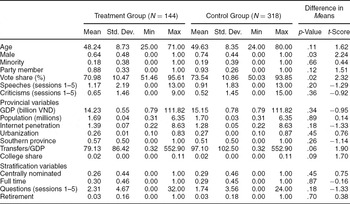
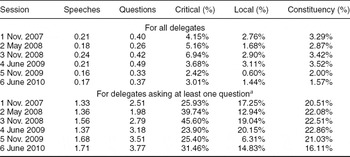
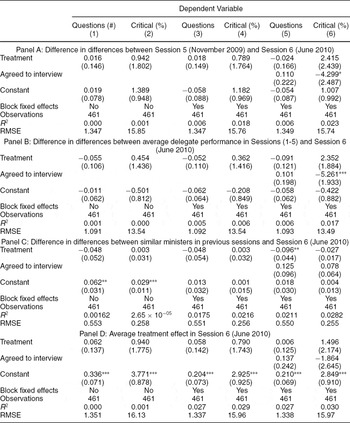
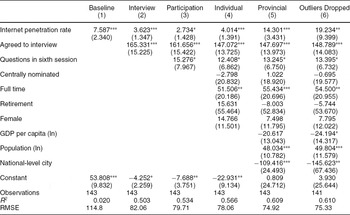
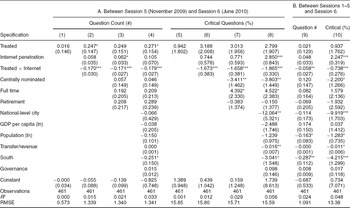
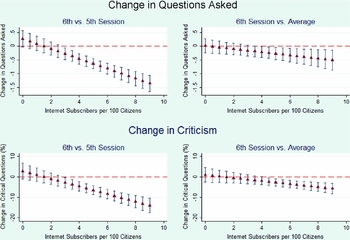
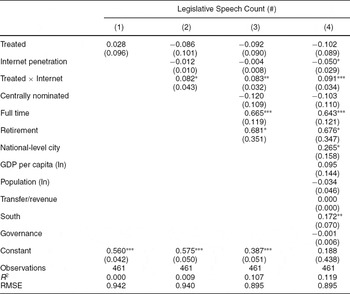
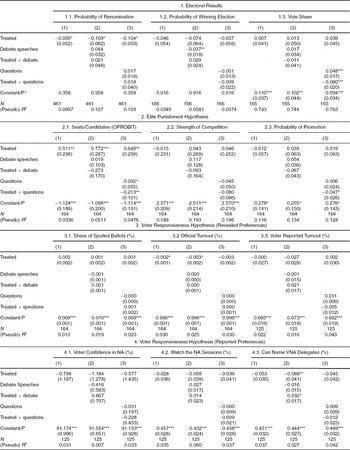




Comments
No Comments have been published for this article.