

Introduction
The intestinal microbiota is defined as the consortium of all micro-organisms (i.e., bacteria, fungi, protozoa and viruses) inhabiting the gastrointestinal (GI) tract. Molecular–phylogenetic studies have revealed that the intestinal microbiota of mammals is highly diverse, harboring several hundred to over a thousand bacterial phylotypes (Frank et al. , Reference Frank, Amand, Feldman, Boedeker, Harpaz and Pace2007; Handl et al. , Reference Handl, Dowd, Garcia-Mazcorro, Steiner and Suchodolski2011; Swanson et al. , Reference Swanson, Dowd, Suchodolski, Middelbos, Vester, Barry and Fahey2011). The mammalian intestine harbors 1010–1014 micro-organisms, approximately 10 times the number of host cells. The resident microbiota provides many health benefits to the host. For example, resident microbes are able to help fend off invading pathogens. They aid in digestive processes and harvest energy from the diet that can be utilized by the host, thereby providing nutritional support for enterocytes. Furthermore, the presence of enteral microbiota is an important trigger for the development and constant stimulation of the immune system.
Molecular approaches have improved our understanding of the composition, the dynamics and the functionality of the intestinal ecosystem in many mammalian species, including the cat (Eckburg et al. , Reference Eckburg, Bik, Bernstein, Purdom, Dethlefsen, Sargent, Gill, Nelson and Relman2005, Desai et al. , Reference Desai, Musil, Carr and Hill2008; Ritchie et al. , Reference Ritchie, Steiner and Suchodolski2008, Reference Ritchie, Burke, Garcia-Mazcorro, Steiner and Suchodolski2010). Various studies in humans and other animal species have revealed how the microbiota is influenced by diet, antimicrobials, and is altered in chronic intestinal inflammation (Johnston et al. , Reference Johnston, Lamport, BallŠvre and Batt2000; Eckburg et al. , Reference Eckburg, Bik, Bernstein, Purdom, Dethlefsen, Sargent, Gill, Nelson and Relman2005; Dethlefsen et al. , Reference Dethlefsen, Huse, Sogin and Relman2008; Suchodolski et al. , Reference Suchodolski, Dowd, Westermarck, Steiner, Wolcott, Spillmann and Harmoinen2009; Gronvold et al. , Reference Gronvold, L'Abee-Lund, Sorum, Skancke, Yannarell and Mackie2010). Molecular–phylogenetic information about the effect of these environmental factors on intestinal microbiota in cats is still limited; however, several recently published studies have characterized the impact of age, nutritional intervention and GI disease on feline gut microbiota consortia (Inness et al. , Reference Inness, McCartney, Khoo, Gross and Gibson2007; Abecia et al. , Reference Abecia, Hoyles, Khoo, Frantz and McCartney2010; Barry et al. , Reference Barry, Wojcicki, Middelbos, Vester, Swanson and Fahey2010; Jia et al. , Reference Jia, Frantz, Khoo, Gibson, Rastall and McCartney2011a; Hart et al. , Reference Hart, Suchodolski, Steiner and Webb2012). This article will review previous work characterizing the GI microbiome of cats.
Role of the GI microbiota in cats
The GI microbiota has attracted investigators for decades due to its potential etiopathologic role in host health and disease. Many studies in humans and other animal species have suggested that various diseases are associated with alterations of the GI microbiota. Specific enteropathogens have been recognized in cats (e.g., Campylobacter spp. and Salmonella), yet because most of them are found in similar frequency in healthy animals, the cause–effect relations remain elusive (Queen et al. , Reference Queen, Marks and Farver2012). Chronic enteropathies, such as inflammatory bowel disease (IBD) have been associated with changes in the proportions of specific bacterial groups, especially Enterobacteriaceae and Desulfovibrio spp. in some studies (Inness et al. , Reference Inness, McCartney, Khoo, Gross and Gibson2007; Janeczko et al. , Reference Janeczko, Atwater, Bogel, Greiter-Wilke, Gerold, Baumgart, Bender, McDonough, McDonough, Goldstein and Simpson2008). Conversely, some recent clinical studies suggest that the administration of specific bacterial strains or products intended to alter the intestinal microbiota (i.e., probiotics, prebiotics, or synbiotics) have the potential to improve the frequency and/or duration of diarrhea in a subset of cats with specific acute or chronic GI diseases (Bybee et al. , Reference Bybee, Scorza and Lappin2011; Hart et al. , Reference Hart, Suchodolski, Steiner and Webb2012). While the cat is an obligate carnivore, most commercial feline diets contain moderate quantities of carbohydrates. Furthermore, soluble fiber sources added to the diet (i.e., prebiotics) have been associated with changes in fecal characteristics and metabolites in healthy cats that are hypothesized to improve GI health (Vester et al. , Reference Vester, Dalsing, Middelbos, Apanavicius, Lubbs and Swanson2009; Barry et al. , Reference Barry, Wojcicki, Middelbos, Vester, Swanson and Fahey2010). However, the role of these dietary compounds in acute and chronic intestinal inflammation requires further research as limited information is available in clinical patients (Abecia et al. , Reference Abecia, Hoyles, Khoo, Frantz and McCartney2010). In humans and mouse models, a plethora of other extra-intestinal diseases have been associated with the intestinal microbiota. These include diabetes mellitus (Caricilli et al. , Reference Caricilli, Picardi, de Abreu, Ueno, Prada, Ropelle, Hirabara, Castoldi, Vieira, Camara, Curi, Carvalheira and Saad2011), stress (Bailey et al. , Reference Bailey, Dowd, Parry, Galley, Schauer and Lyte2010), and asthma (van Nimwegen et al. , Reference Van Nimwegen, Penders, Stobberingh, Postma, Koppelman, Kerkhof, Reijmerink, Dompeling, van den Brandt, Ferreira, Mommers and Thijs2011). While these diseases also occur in cats, the role of the feline intestinal microbiota has not yet been investigated. It is recognized that differences in microbiota on a phylogenetic and also functional level exist among the various animal species, and more studies are needed to understand the contributions of the microbiota to digestion, immunology and nutrition in every animal species.
Composition of the GI microbiota
Studies in the pre-sequencing era
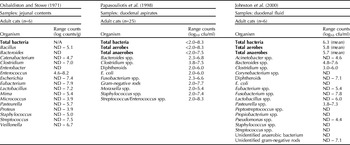
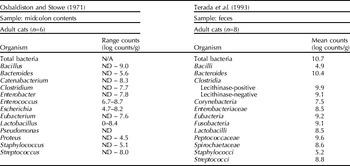
Traditional culture-based studies have provided fundamental insights into the GI microbial ecology of cats. Several studies have evaluated the bacterial composition of the proximal part of the small intestine, the colon and feces (Osbaldiston and Stowe, Reference Osbaldiston and Stowe1971; Terada et al. , Reference Terada, Hara, Kato, Kimura, Fujimori, Hara, Maruyama and Mitsuoka1993; Sparkes et al. , Reference Sparkes, Papasouliotis, Sunvold, Werrett, Clarke, Jones, Gruffydd-Jones and Reinhart1998a, Reference Sparkes, Papasouliotis, Sunvold, Werrett, Gruffydd-Jones, Egan, Gruffydd-Jones and Reinhart1998b; Johnston et al. , Reference Johnston, Lamport, BallŠvre and Batt2000, Reference Johnston, Swift, Forster-van Hijfte, Rutgers, Lamport, Ballevre and Batt2001). Tables 1 and 2 summarize the results of those studies. Bacteroides spp., Clostridium spp., Enterococcus spp., Streptococcus spp., Fusobacteria spp., and Eubacteria spp. are the most commonly isolated bacterial groups from the feline GI tract. In general, the microbiota increases in abundance along the GI tract, progressing from stomach to colon. Anaerobic bacterial groups predominate in the distal portions of the GI tract, whereas a more equal distribution of aerobic and anaerobic bacteria is observed in the proximal portions of the GI tract. This distribution of bacterial groups is similar to those observed in humans and other animal species including dogs, a finding that highlights the genetic and environmental factors that play a major role in shaping the host microbiota (Simpson et al. , Reference Simpson, Martineau, Jones, Ballam and Mackie2002; Palmer et al. , Reference Palmer, Bik, DiGiulio, Relman and Brown2007). However, a culture-based study has suggested that the small intestines of cats harbor relatively higher numbers of total bacteria (105–108 total bacterial colony-forming units (cfu)/ml), with a higher proportion of obligate anaerobic bacteria, when compared with humans and dogs (Johnston et al. , Reference Johnston, Swift, Forster-van Hijfte, Rutgers, Lamport, Ballevre and Batt2001).
The microbiota present in the feline small intestine based on culture

Data are cited from Osbaldiston and Stowe (Reference Osbaldiston and Stowe1971), Papasouliotis et al. (Reference Sparkes, Papasouliotis, Sunvold, Werrett, Gruffydd-Jones, Egan, Gruffydd-Jones and Reinhart1998), and Johnston et al. (Reference Johnston, Lamport, BallŠvre and Batt2000). N/A: data were not available, ND: organism was not detected.
The microbiota present in the feline large intestine based on culture

Data are cited from Osbaldiston and Stowe (Reference Osbaldiston and Stowe1971) and Terada et al. (Reference Terada, Hara, Kato, Kimura, Fujimori, Hara, Maruyama and Mitsuoka1993).
N/A: data were not available, ND: organism was not detected.
Studies involving molecular methods
Until recently, traditional bacterial culture was the most commonly used method for describing the bacterial groups present in the GI tract of cats. However, because the majority of intestinal bacteria cannot be cultured, a cultivation-based method underestimates total bacterial numbers, and does not allow identification of the majority of bacterial groups present in the GI tract. The recent advances in molecular sequencing technologies have revealed that the mammalian GI tract harbors a highly complex microbial ecosystem, comprising several hundred bacterial genera. Molecular tools allow the identification of previously uncharacterized intestinal microbes and these techniques are also able to provide information about the functionality of the microbiome by means of metagenomics (Swanson et al. , Reference Swanson, Dowd, Suchodolski, Middelbos, Vester, Barry and Fahey2011; Tun et al. , Reference Tun, Brar, Khin, Jun, Hui, Dowd and Leung2012).
Various methods are available for the characterization of the intestinal microbiota. It is important to understand that all of these methods have strengths and limitations. Ideally, all of these approaches can be used in a complimentary fashion. There is often a discrepancy between the reported abundance of bacterial groups among the various sequencing studies and also when compared with fluorescence in situ hybridization (FISH) or metagenomics studies (i.e., Firmicutes versus Bacteroidetes versus Actinobacteria; see below). It is reasonable to attribute some of these differences, as those between FISH- and PCR-based methods, to differences in technology, with the most likely explanation being that the various methods have different sensitivities and specificities for the examined bacterial groups. For example, sequencing studies in one laboratory may employ different DNA extraction protocols and PCR primers (Baker et al. , Reference Baker, Smith and Cowan2003; Zoetendal et al. , Reference Zoetendal, Collier, Koike, Mackie and Gaskins2004). Storage conditions may also cause alterations in sample quality (Ott et al. , Reference Ott, Musfeldt, Timmis, Hampe, Wenderoth and Schreiber2004). Quantitative PCR assays will have bias due to exponential amplification of targets and also because various bacterial phylotypes may have different copy numbers of the 16S rRNA gene, causing preferential amplification of some bacterial groups (Rastogi et al. , Reference Rastogi, Wu, Dasgupta and Fox2009). However, all molecular methods are generally reproducible within one laboratory, allowing one to draw meaningful conclusions about feline microbiota changes within individual studies. More detailed information about these techniques is provided elsewhere (Suchodolski, Reference Suchodolski2011). Furthermore, most studies report the analysis of fecal samples, due to their ease of non-invasive collection. Nevertheless, studies have shown that the composition of the GI microbiota varies between anatomical sites (i.e., duodenum versus colon versus feces) and also luminal versus mucosa-adherent tissues (Ott et al. , Reference Ott, Musfeldt, Timmis, Hampe, Wenderoth and Schreiber2004; Suchodolski et al. , Reference Suchodolski, Ruaux, Steiner, Fetz and Williams2005, Reference Suchodolski, Camacho and Steiner2008; Ritchie et al. , Reference Ritchie, Steiner and Suchodolski2008). Because of the above-mentioned limitations, caution should be taken when interpreting the reported proportions or abundances of specific bacterial groups across different studies and different methods.
Studies using FISH
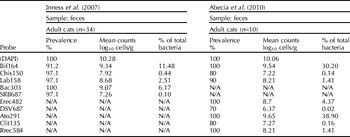
FISH allows quantifying bacteria directly by using fluorescent-labeled oligonucleotide probes that target the 16S rRNA. FISH is currently considered to be the most useful method for an accurate quantification of bacterial groups. It can also add information about the morphology and the spatial distribution of the organism (Amann et al. , Reference Amann, Ludwig and Schleifer1995; Moter and Göbel, Reference Moter and Göbel2000; Zoetendal et al. , Reference Zoetendal, Collier, Koike, Mackie and Gaskins2004; Swidsinski et al. , Reference Swidsinski, Weber, Loening-Baucke, Hale and Lochs2005). Unfortunately, this technique is labor intense, and FISH probes need to be designed for the specific bacterial groups of interest. Therefore, FISH is not a high-throughput method and typically is not used for studies involving many samples. However, studies using FISH are providing valuable information about the abundance of total bacteria as well as the abundance of specific bacterial groups in the feline intestine (Table 3). These studies have shown that the total bacterial count is approximately 10.5 log10 cells/gram of feces (Abecia et al. , Reference Abecia, Hoyles, Khoo, Frantz and McCartney2010; Jia et al. , Reference Jia, Frantz, Khoo, Gibson, Rastall and McCartney2011a). The Atopobium group (probe Ato291) including Coriobacteriaceae, the Clostridium cluster XIVa, and the lactic acid bacteria including Bifidobacteria were reported as the most abundant groups in the intestine of kittens and geriatric cats (Abecia et al. , Reference Abecia, Hoyles, Khoo, Frantz and McCartney2010; Jia et al. , Reference Jia, Frantz, Khoo, Gibson, Rastall and McCartney2011a, Reference Jia, Frantz, Khoo, Gibson, Rastall and McCartney2011b). Similar results for most bacterial groups were also observed in fecal samples of adult cats and cats with IBD (Inness et al. , Reference Inness, McCartney, Khoo, Gross and Gibson2007; Abecia et al. , Reference Abecia, Hoyles, Khoo, Frantz and McCartney2010). However, Bifidobacteria varied to some extent between these latter studies. In the study by Inness et al. (Reference Inness, McCartney, Khoo, Gross and Gibson2007), Bifidobacteria accounted for approximately 11% of total bacteria, while Abecia et al. (Reference Abecia, Hoyles, Khoo, Frantz and McCartney2010) reported Bifidobacteria as accounting for approximately 30% of total counts in healthy adult cats (Inness et al. , Reference Inness, McCartney, Khoo, Gross and Gibson2007; Abecia et al. , Reference Abecia, Hoyles, Khoo, Frantz and McCartney2010). Of particular interest is that these commonly used probes identify between 40% (Jia et al. , Reference Jia, Frantz, Khoo, Gibson, Rastall and McCartney2011a) and 74% (Abecia et al. , Reference Abecia, Hoyles, Khoo, Frantz and McCartney2010) of total bacterial counts (i.e., counts obtained with the fluorescent dye DAPI). This suggests that additional probes that are able to detect the remaining percentage of bacterial groups will need to be designed, to provide a more complete numerical coverage of the feline intestinal microbiota. Recent sequencing studies have revealed additional groups, and these sequences will aid in the design of FISH probes.
Composition of the GI microbiota based on FISH analysis

Data are cited from Inness et al. (Reference Inness, McCartney, Khoo, Gross and Gibson2007) and Abecia et al. (Reference Abecia, Hoyles, Khoo, Frantz and McCartney2010). N/A: data were not available. Oligonucleotide probes (details of each probe are cited from Inness et al. Reference Inness, McCartney, Khoo, Gross and Gibson2007; Abecia et al. , Reference Abecia, Hoyles, Khoo, Frantz and McCartney2010) – DAPI: all bacteria (nucleic acid stain) Bif164: most Bifidobacterium spp., Parascardovia denticolens; Chis150: Clostridium histolyticum group (comprises organisms belonging to Clostridium clusters I and II); Lab158: most Lactobacillus, Leuconostoc, and Weissella spp., Lactococcus lactis, all Vagococcus, Enterococcus, Melisococcus, Tetragenococcus, Catellicoccus, Pediococcus, Paralactobacillus spp.; Bac303: most Bacteroides sensu stricto, Prevotella spp., all Parabacteroides spp., Barnesiella spp. and Odoribacter splanchnicus; SRB687: Desulfovibrio spp.; Erec482: most members of Clostridium cluster XIVa, Syntrophococcus sucromutan, Bacteroides galacturonicus and Bacteroides xylanolyticus, Lachnospira pectinschiza, Clostridium saccharolyticum; DSV687: most Desulfovibrionales (excluding Lawsonia), many Desulfuromonales; Ato291: Atopobium, Collinsella, Eggerthella, Coriobacterium and Cryptobacterium spp.; Clit135: Clostridium lituseburense group (includes C. difficile); Rrec584: Roseburia spp. and Eubacterium rectale (subset of Clostridium cluster XIVa).
Studies by sequence-based approaches
These methods, targeting specific highly conserved bacterial genes with universal bacterial primers, have been applied to overcome the limitations of culture-based methods for the evaluation of feline microbial ecology. Sequencing methods, either based on the construction of 16S rRNA gene clone libraries or recent high-throughput methods such as 454-pyrosequencing or Illumina sequencing, have allowed the identification of previously uncharacterized bacterial groups. Furthermore, these techniques allow a semi-quantitative assessment of the intestinal microbiota, as the data are expressed as each specific bacterial group as the percentage of all obtained sequences. These sequencing results typically correlate well with confirmatory qPCR analysis. However, there are also potential drawbacks of these methods when using universal bacterial primers. For example, there is evidence that certain bacterial groups (i.e., G+C rich bacteria, Actinobacteria) are underrepresented in 16S rRNA gene sequencing studies (Krogius-Kurikka et al. , Reference Krogius-Kurikka, Kassinen, Paulin, Corander, Mäkivuokko, Tuimala and Palva2009; Ritchie et al. , Reference Ritchie, Burke, Garcia-Mazcorro, Steiner and Suchodolski2010). This universal primer issue has been discussed extensively, and the use of multiple primer sets has been suggested (Baker et al. , Reference Baker, Smith and Cowan2003; Dethlefsen et al. , Reference Dethlefsen, Huse, Sogin and Relman2008).
A study employing traditional Sanger sequencing on constructed 16S rRNA gene clone libraries reported five bacterial phyla in the feline GI tract (Ritchie et al. , Reference Ritchie, Steiner and Suchodolski2008). In this study, Firmicutes was the most abundant phylum (68% of clones) in the feces of conventionally raised cats, followed by Proteobacteria (14%), Bacteroidetes (10%), Fusobacteria (5%), and Actinobacteria (4%). Within the phylum Firmicutes, Clostridiales was the most prevalent bacterial order, representing 40% of clones. Clostridium cluster XIVa was the most abundant member of the Clostridiales (Ritchie et al. , Reference Ritchie, Steiner and Suchodolski2008). This study also revealed differences in the composition along the small and large intestine. Another study also demonstrated that a universal primer approach underestimates the prevalence of Bifidobacterium spp. in feline fecal samples, and for best characterization of specific bacterial groups of interest it may be useful to employ group-specific primers (Ritchie et al. , Reference Ritchie, Burke, Garcia-Mazcorro, Steiner and Suchodolski2010). Another gene target used for the characterization of the intestinal microbiota is the 60 kDa chaperonin (cpn60) gene (Desai et al. , Reference Desai, Musil, Carr and Hill2008). In this study, Firmicutes was also the most abundant phylum (41 and 72% of clones from indoor and outdoor cats, respectively), followed by Actinobacteria, Bacteroidetes, and Proteobacteria (Desai et al. , Reference Desai, Musil, Carr and Hill2008).
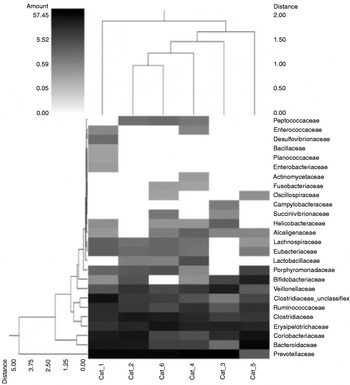
Recently, high-throughput 454-pyrosequencing has been employed for the characterization of the feline GI microbiota. Handl et al. (Reference Handl, Dowd, Garcia-Mazcorro, Steiner and Suchodolski2011) reported Firmicutes (92% of sequences) as the most abundant phylum, followed by Actinobacteria (7.3%), Bacteroidetes (0.45%), and Fusobacteria (0.04%). Within the phylum Firmicutes, the most abundant bacterial class was Clostridia (65%), followed by Erysipelotrichi (13%), and Bacilli (9%). The class Clostridia was dominated by the Clostridium clusters XIVa and XI, and Ruminococcus. The class Bacilli consisted mostly of the order Lactobacillales, which was dominated by the genera Enterococcus and Lactobacillus. The class Erysipelotrichia consisted only of the order Erysipelotrichales, which mainly comprised the genera Turicibacter, Catenibacterium, and Coprobacillus. Another study revealed similar distributions of microbial groups in fecal samples of cats (Desai et al. , Reference Desai, Musil, Carr and Hill2008; Garcia-Mazcorro et al. , Reference Garcia-Mazcorro, Lanerie, Dowd, Paddock, Grützner, Steiner, Ivanek and Suchodolski2011). In contrast, a recent 454-pyrosequencing study performed in our laboratory revealed that the phylum Bacteroidetes was the most abundant phylum in fecal samples of five healthy pet cats (unpublished data; Fig. 1). The families Bacteroidaceae and Prevotellaceae (phylum Bacteroidetes), and Coriobacteriaceae (members of the phylum Actinobacteria) accounted for approximately 50% of all sequences, followed by Firmicutes (29% of sequences) (Fig. 1).
Dual hierarchal dendogram based on the predominant bacterial families in the GI tract of healthy household cats (454-pyrosequencing of the V4–V6 region of the 16S rRNA gene; unpublished data). The heatmap represents the relative percentage of each family within each sample with legend presented at the top left of the figure. In this study, sequences of the Bacteroidetes and Actinobacteria phyla were the most abundant representatives.

Metagenomics
High-throughput sequencing platforms enable a metagenomics approach (i.e., shotgun sequencing of genomic DNA). This approach yields identification of host and microbial genes present in a sample, and offers an opportunity to assess the functional aspects of the microbiota (Gill et al. , Reference Gill, Pop, Deboy, Eckburg, Turnbaugh, Samuel, Gordon, Relman, Fraser-Liggett and Nelson2006). These techniques are very valuable, but due to the current expense of shotgun sequencing, most studies performed yielded only a relatively superficial coverage of the microbiome. Recently, two studies were reported that elucidated the feline intestinal metagenome. One study on pooled fecal samples from five healthy house-hold cats analyzed a total of 152,494 sequences (Tun et al. , Reference Tun, Brar, Khin, Jun, Hui, Dowd and Leung2012). The results revealed that the Bacteroides/Chlorobi group was the most predominant phylum (68%), followed by Firmicutes (13%), Proteobacteria (6%), Actinobacteria (1.2%), and Fusobacteria (0.7%). Within the phylum Bacteroides/Chlorobi, the order Bacteroidetes was the most abundant, while within the Firmicutes, the most abundant bacterial class was Clostridia (65%), followed by Bacilli, and Mollicutes. Another study analyzed a total of 4,192,192 sequences from 12 individual fecal samples from four healthy research colony cats fed three diets (Barry, Reference Barry2010) and reported the Bacteroidetes/Chlorobi group (36.1%) and Firmicutes (36.3%) as the predominant phyla, followed by Proteobacteria (12.4%) and Actinobacteria (7.7%), according to the metagenomics analysis platform MG-RAST.
The metagenomic approach also allows characterizing the microbial genes present. Microbial carbohydrate and protein metabolism accounted for approximately 13 and 9% of the feline metagenome, respectively (Tun et al. , Reference Tun, Brar, Khin, Jun, Hui, Dowd and Leung2012). Other major functional metabolic categories included DNA metabolism (8% of the metagenome), virulence factors (7%), and amino acid metabolism (6%) (Tun et al. , Reference Tun, Brar, Khin, Jun, Hui, Dowd and Leung2012). Barry (Reference Barry2010) reported that carbohydrates (15%); clustering-based subsystems (14%); protein metabolism (8%); amino acids and derivatives (8%); cell wall and capsule (7%); DNA metabolism (7%); virulence (6%); and cofactors, vitamins, prosthetic groups and pigments (6%), were the major functional metabolic categories present. Clearly, more studies with deeper coverage of the metagenome are warranted in samples from cats with GI disease.
Inter-species and inter-animal differences
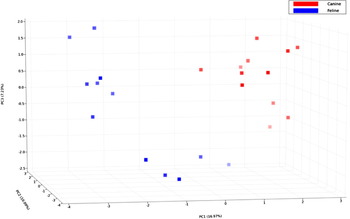
Of interest from an ecological perspective and also from interventional aspect is how the intestinal microbiota of cats differs from those of other animal species and also between individual cats. A study involving 106 individuals representing 60 mammalian species showed that microbial communities clustered by host diet and phylogeny, indicating significant differences between different animal species (Ley et al. , Reference Ley, Hamady, Lozupone, Turnbaugh, Ramey, Bircher, Schlegel, Tucker, Schrenzel, Knight and Gordon2008). In a study using pyrosequencing of the 16S rRNA gene, we compared the microbial communities of dogs and cats (n=12 each) and observed that the feline microbiome appears to be more diverse than the canine microbiome (Handl et al. , Reference Handl, Dowd, Garcia-Mazcorro, Steiner and Suchodolski2011). Furthermore, bacterial communities of cats and dogs clustered separately (Fig. 2). However, no particular bacterial groups were significantly associated with either dogs or cats, suggesting that these observed differences between dogs and cats are represented mainly at a bacterial species or strain level.
Principal coordinate analysis plots (PCoA) based on the unweighted Unifrac distance metric illustrating differences in microbial communities present in the GI tract of cats and dogs. Each dot represents the bacterial community of one individual animal. A clear separation was observed by animal species. The data indicate that canine and feline intestinal microbiota differ on a species and/or strain level (PCoA analysis was based on sequences generated by Handl et al. , Reference Handl, Dowd, Garcia-Mazcorro, Steiner and Suchodolski2011).

It is also obvious that the environment influences the intestinal microbiota. Studies using traditional culture methods reported a comparable microbial composition between healthy household cats and research colony cats (Johnston et al. , Reference Johnston, Swift, Forster-van Hijfte, Rutgers, Lamport, Ballevre and Batt2001). Recent comparative universal gene studies, however, reported differences in microbial composition between conventional cats and one SPF cat (Ritchie et al. , Reference Ritchie, Steiner and Suchodolski2008), and between indoor cats and outdoor cats (Desai et al. , Reference Desai, Musil, Carr and Hill2008). Other studies also reported a high inter-individual variation in microbiota composition between cats. In one study, a high percentage of cats harbored the same genera, but only a minor percentage of these cats harbored the same Bifidobacterium and Lactobacillus species (Ritchie et al. , Reference Ritchie, Burke, Garcia-Mazcorro, Steiner and Suchodolski2010). Desai et al. also demonstrated that individual cats have a unique abundance of bacterial groups (Desai et al. , Reference Desai, Musil, Carr and Hill2008). Figure 1 illustrates the inter-individual differences of the most abundant bacterial families in fecal samples of healthy household cats based on 454-pyrosequencing of the 16S rRNA gene.
Development of GI microbiota
The GI tract of neonates is sterile, but immediately after birth, a life-long process of colonization by foreign micro-organisms is initiated (Round and Mazmanian, Reference Round and Mazmanian2009). Newborn kittens acquire their commensal microbes from the maternal vaginal and fecal and environmental surroundings. Within 24 h after birth, bacterial abundance in fecal samples of kittens has reached levels comparable to those of adults (Buddington and Paulsen, Reference Buddington, Paulsen, Carey and Reinhart1998). The general makeup of the intestinal microbiota is relatively similar to that of adults; however, some modifications in the quantitative and the qualitative composition occur over the first few weeks to months of life. A recent study evaluated the development of the fecal microbiota of kittens from 4 weeks to 9 months of age, and observed higher species diversity but also a more variable microbial profile in 4-week-old kittens compared to weaned kittens at 8 weeks of age (Jia et al. , Reference Jia, Frantz, Khoo, Gibson, Rastall and McCartney2011b). Furthermore, microbiota changes were also observed in relation to diet succession in these growing kittens (Jia et al. , Reference Jia, Frantz, Khoo, Gibson, Rastall and McCartney2011b). In kittens 8, 12, and 16 weeks of age, Hooda et al. (unpublished data) reported that Firmicutes was the predominant phylum (70–80% of sequences), followed by moderate Actinobacteria and Fusobacteria populations, and low Proteobacteria and Bacteroidetes populations. The microbial community of kittens was greatly impacted by diet in that study. In general, kittens fed a high-protein, low-carbohydrate diet had greater Fusobacteria (12.6% versus 0.1%; P<0.001) and Proteobacteria (3.4% versus 0.5%; P<0.001) populations and lower Actinobacteria (5.9% versus 24.4%; P<0.001) populations than kittens fed a moderate-protein, moderate-carbohydrate diet.
The intestinal microbiome of adult cats is believed to remain relatively stable over time, but is influenced by diet, especially protein and fiber content. While data from human and dog studies suggest that the microbiota of geriatric individuals undergoes some modifications (Benno et al. , Reference Benno, Nakao, Uchida and Mitsuoka1992; Woodmansey, Reference Woodmansey2007), only limited data are available for cats. It is obvious that microbiome changes with age could have an impact on the metabolic activity of the microbes to aid in digestive functions. One study in geriatric cats has revealed that a complex ecosystem is present in older cats, with Coriobacteriaceae (phylum Actinobacteria), Clostridium cluster XIV, Bifidobacteria and lactic acid bacteria being the dominant groups in feces (Jia et al. , Reference Jia, Frantz, Khoo, Gibson, Rastall and McCartney2011a).
Enteropathogens
Diarrhea is one of the most common reasons for cats to be presented to a veterinarian, and infectious causes are typically high on the differential list. Specific enteropathogens, such as Tritrichomonas foetus, Giardia spp., Cryptosporidium spp., enterotoxigenic Clostridium perfringens, Clostridium difficileM, Salmonella spp., and Campylobacter jejuni, have all been associated with GI disease in cats. Several of these potential enteropathogens are commensals in the GI tract and have been isolated at similar frequencies from diarrheic and non-diarrheic animals (e.g., C. perfringens and C. difficile) (Queen et al. , Reference Queen, Marks and Farver2012). This complicates the clinical interpretation when presumptive enteropathogens are identified based on their presence in feces alone, as the isolation of those organisms from cats does not always indicate the cause for the GI disease. Recently, the American College of Veterinary Internal Medicine (ACVIM) released a consensus statement on the diagnosis, epidemiology, treatment, and control of the primary enteropathogenic bacteria in cats (Marks et al. , Reference Marks, Rankin, Byrne and Weese2011). In this statement, C. difficile, C. perfringens, C. jejuni, Salmonella spp., and Escherichia coli are listed as being associated with intestinal disease. However, the presence of these organisms does not always correlate with the presence of disease, and care should be taken to not over interpret the isolation of these organisms.
C. difficile is a Gram-positive, spore-forming, anaerobic bacillus that is of critical importance in human medicine, as an increasing number of severe C. difficile infections are reported in hospitalized patients (e.g., pseudomembranous colitis) (Bartlett, Reference Bartlett2009). The virulence of C. difficile is associated with the presence of genes that code for toxins, most notably toxin A (an enterotoxin; tcd A) and toxin B (a cytotoxin; tcd B). The pathophysiology and role of C. difficile in feline enteric disease is much less clear. Isolation rates of C. difficile range between 0 and 21% of cats in the general feline population, and 9 and 38% in cats in veterinary hospitals (Marks et al. , Reference Marks, Rankin, Byrne and Weese2011). The diarrhea incidence often does not differ between cats negative for C. difficile and cats that are carriers of this organism (Clooten et al. , Reference Clooten, Kruth, Arroyo and Weese2008).
C. perfringens is a Gram-positive, spore-forming, anaerobic bacillus that is a common inhabitant of the intestinal tract, and an important pathogen responsible for a wide spectrum of human and veterinary diseases. The main virulence factors associated with C. perfringens-associated diarrhea is an enterotoxin (CPEClostridium perfringens enterotoxin) encoded by the cpe gene. CPE induces its toxicity by interaction with intestinal tight junctions, affecting transmembrane pores and leading to alterations in epithelial permeability. C. perfringens is a normal commensal of the feline intestine, with reported isolation rates of up to 63% of healthy cats (Queen et al. , Reference Queen, Marks and Farver2012). Toxigenic C. perfringens (i.e., strains that possess the cpe gene) can be found by PCR in up to 35% of healthy cats (our unpublished data). However, the enterotoxin CPE has been detected in only 1.9% (Queen et al. , Reference Queen, Marks and Farver2012) to 6% (our unpublished data) of healthy cats, and in 4.1% (Queen et al. , Reference Queen, Marks and Farver2012) to 7.2% (our unpublished data) of cats with diarrhea. The overall prevalence of either C. perfringens or toxigenic C. perfringens strains or the presence of CPE is not significantly different between healthy cats and cats with diarrhea. Therefore, further studies are required to understand the role of this organism and its virulence factor in feline enteric diseases.
Salmonella spp. are Gram-negative, non-spore-forming, motile bacilli. Salmonella spp.-related diarrhea is caused by alternating the phosphorylation status of tight junctions resulting in disruption of epithelial barrier function (Viswanathan et al. , Reference Viswanathan, Hodges and Hecht2009). Salmonella spp. have been isolated from kittens, healthy adult cats, and diseased adult cats at rates up to 51.4, 1.7, and 8.6%, respectively (Van Immerseel et al. , Reference Van Immerseel, Pasmans, De Buck, Rychlik, Hradecka, Collard, Wildemauwe, Heyndrickx, Ducatelle and Haesebrouck2004). While Salmonella spp. are considered pathogens for cats, many infections are subclinical and many healthy cats are shedders. There appear to be a variety of strains that differ in their virulence. Because of the high isolation rate of Salmonella in cats, the mere isolation of these organisms from a diarrheic cat does not prove causation (Marks et al. , Reference Marks, Rankin, Byrne and Weese2011). In cases of uncomplicated diarrhea, only supportive therapy is recommended.
Campylobacter spp. are Gram-negative, curved, motile rods. The genus Campylobacter encompasses many species and is considered normal flora of cats. In fact, a recent study using PCR reported that 100% of healthy cats harbored Campylobacter spp. (Queen et al. , Reference Queen, Marks and Farver2012). Campylobacter helveticus appears to be the predominant species in the intestine of healthy cats (Suchodolski et al., Reference Suchodolski, Xenoulis, Paddock, Steiner and Jergens2010a, Reference Suchodolski, Gossett, Aicher, Heilmann, Xenoulis and Steiner2010b; Queen et al. , Reference Queen, Marks and Farver2012). However, the recognized pathogen C. jejuni is rarely identified, with a typical prevalence of up to 7% (Queen et al. , Reference Queen, Marks and Farver2012).
Other bacterial groups that have been associated with GI diseases, but are considered normal flora of cats, include E. coli and Helicobacter spp. Most strains of E. coli are commensals, but enterotoxigenic, enteropathogenic and enterohemorrhagic strains have been associated with intestinal disease (Beutin, Reference Beutin1999). The cat intestine harbors various Helicobacter spp., including Helicobater felis, Helicobater heilmannii, and Helicobater baculiformis. In contrast, Helicobater pylori, which is associated with gastritis in humans, has not been detected in household cats. Because of the lack of understanding in terms of disease mechanisms and host interactions, the clinical role of those bacteria remains unclear.
Non-specific alterations of GI microbiota
Alterations in the abundance or the composition of intestinal microbiota are considered an important factor in the pathogenesis of GI diseases. Disturbances may result in a dysregulation of adaptive immune responses, and lead to inflammation and/or reduced activity against infection (Round and Mazmanian, Reference Round and Mazmanian2009). Furthermore, microbial disturbances may result in functional changes of the intestine, leading to altered intestinal permeability, changes in metabolic functions (e.g., deconjugation of bile acids and reduced carbohydrate utilization) that lead to malabsorption and maldigestion. Known consequences of dysbiosis are well recognized in humans, where microbial alterations are associated with GI disorders such as small intestinal bacteria overgrowth (SIBO) or IBD. In humans, SIBO is defined as a heterogeneous syndrome characterized by an increased number and/or abnormal type of bacteria in the small intestine (typically >105 cfu/ml of small intestinal content) (Bures et al. , Reference Bures, Cyrany, Kohoutova, Förstl, Rejchrt, Kvetina, Vorisek and Kopacova2010). The syndrome SIBO per se is not recognized in cats, which have high duodenal bacterial counts (105–108 cfu/ml), and no differences in abundance of bacteria have been observed between healthy and affected cats (Johnston et al. , Reference Johnston, Swift, Forster-van Hijfte, Rutgers, Lamport, Ballevre and Batt2001). However, it is well recognized that some cats with chronic diarrhea will respond clinically to antimicrobial treatment, and therefore may be presumptively diagnosed with antibiotic-responsive diarrhea or small intestinal dysbiosis. The latter two terms are currently used synonymously for cats that suffer with a syndrome that resembles SIBO in humans.
There are several consequences of bacterial dysbiosis that may cause intestinal disease (Hall, Reference Hall2011). For example, bacterial deconjugation of bile acids may lead to malabsorption of fat and lipid-soluble vitamins (Donaldson, Reference Donaldson1965; Tabaqchali and Booth, Reference Tabaqchali and Booth1967; Shindo et al. , Reference Shindo, Machida, Koide, Fukumura and Yamazaki1998). Also, some bacteria produce toxic agents such as ammonia, d-lactate, endotoxin (LPS Lipopolysaccharide), and enterotoxin. Those toxins and bacterial metabolites may cause histological damage to epithelial cells, alterations in membrane permeability, and ultimately lead to inflammation, diarrhea, and malabsorption (McClane, Reference McClane1996). Also, competition for nutrients and vitamins between host and bacteria, and also between beneficial and harmful bacteria can reduce substrates available for the host (Welkos et al. , Reference Welkos, Toskes and Baer1981). Depletions in vitamin B12 and also increases in d-lactate are potential consequences of intestinal dysbiosis in cats (Packer et al. , Reference Packer, Moore, Chang, Zello, Abeysekara, Naylor, Steiner, Suchodolski and O'Brien2012).
Chronic enteropathies
IBD is defined as an inflammation of the GI tract with persistent or recurrent GI signs (Simpson and Jergens, Reference Simpson and Jergens2011). A combination of altered intestinal microbial ecosystem, an underlying genetic susceptibility of the host, and dietary and/or environmental factors are suspected to be the main contributing factors in the pathogenesis of IBD. Recent advances in microbiome research have allowed a deeper understanding of compositional changes in IBD, although only a few studies are available in cats, and most data have been reported for humans or dogs (Frank et al. , Reference Frank, Amand, Feldman, Boedeker, Harpaz and Pace2007; Packey and Sartor, Reference Packey and Sartor2009). Studies using sequencing techniques have revealed that microbiota changes in human IBD typically involve a lower abundance of Firmicutes and Bacteroides, and a higher abundance of Proteobacteria compared to healthy individuals (Seksik, Reference Seksik2010). Similar changes have also been observed in canine IBD (Xenoulis et al. , Reference Xenoulis, Palculict, Allenspach, Steiner, Van House and Suchodolski2008; Suchodolski et al., Reference Suchodolski, Xenoulis, Paddock, Steiner and Jergens2010a, Reference Suchodolski, Gossett, Aicher, Heilmann, Xenoulis and Steiner2010b). While sequencing methods have not been reported for the characterization of feline IBD, a study using FISH has revealed an increase in Enterobacteriaceae in duodenal biopsies of cats with IBD (Janeczko et al. , Reference Janeczko, Atwater, Bogel, Greiter-Wilke, Gerold, Baumgart, Bender, McDonough, McDonough, Goldstein and Simpson2008). Furthermore, a relationship between increased bacterial numbers and the severity of histological inflammation was observed. Several studies compared the fecal microbiota between cats with IBD and healthy control cats. In one study, cats with IBD had lower FISH counts for total bacteria, Bacteroides spp., and Bifidobacterium spp., but higher counts of Desulfovibrio spp. compared to healthy cats (Inness et al. , Reference Inness, McCartney, Khoo, Gross and Gibson2007). Desulfovibrio spp. are a sulphate-reducing bacterial group and are able to produce hydrogen sulphide, which may be associated with the pathogenesis of feline IBD. However, another study did not identify significant differences in FISH counts between cats with IBD and controls, although the same bacterial groups were targeted (Abecia et al. , Reference Abecia, Hoyles, Khoo, Frantz and McCartney2010).
Functional aspects of the feline GI microbiome
The metabolic functions of micro-organisms are assumed to be one of the main evolutionary driving forces behind the coevolution of GI microbiota with their host (Van den Abbeele et al. , Reference Van den Abbeele, Van de Wiele, Verstraete and Possemiers2011). Various studies have shown that specific bacterial populations provide nutritional benefits to the host. The primary end products of bacterial fermentation of non-digestible dietary fibers, such as short-chain fatty acids (SCFA), have been the center of attention due to their anti-inflammatory effects and their importance as an energy source for intestinal epithelial cells. Studies in humans have revealed associations between fecal SCFA concentrations and GI disorders such as IBD and colorectal cancer (O'Keefe et al. , Reference O'Keefe, Ou, Aufreiter, O'Connor, Sharma, Sepulveda, Fukuwatari, Shibata and Mawhinney2009), and SCFA are thought to confer a protective role against further disease progress (Hamer et al. , Reference Hamer, Jonkers, Venema, Vanhoutvin, Troost and Brummer2008). Similarly, studies in cats have revealed the importance of SCFA for proper intestinal function, demonstrating their impact on colonic motility and energy source (Brosey et al. , Reference Brosey, Hill and Scott2000; Rondeau et al. , Reference Rondeau, Meltzer, Michel, McManus and Washabau2003).
Several nutritional studies in research cats have evaluated the impact of feeding of various fiber sources or prebiotics on fecal SCFA concentrations and bacterial populations (Sunvold et al. , Reference Sunvold, Titgemeyer, Bourquin, Fahey and Reinhart1994; Barry et al. , Reference Barry, Wojcicki, Middelbos, Vester, Swanson and Fahey2010; Kanakupt et al. , Reference Kanakupt, Vester Boler, Dunsford and Fahey2011). Short-chain fructo-oligosaccharides (scFOS) and galactooligosaccharides (GOS), both established prebiotics in humans, have recently been tested for their prebiotic potential in cats. Using qPCR, Barry et al. (Reference Barry, Wojcicki, Middelbos, Vester, Swanson and Fahey2010) reported increased bifidobacteria and decreased E. coli populations in adult cats fed 4% scFOS compared to those fed control diets or 4% pectin. In cats fed scFOS, fecal butyrate was also increased compared to those fed the control diet. In that study, cats fed 4% pectin had greater fecal C. perfringens, E. coli, and lactobacilli populations and fecal acetate, propionate, butyrate, and total SCFA concentrations compared to cats fed the control diet. Kanakupt et al. (Reference Kanakupt, Vester Boler, Dunsford and Fahey2011) reported similar results in cats fed 0.5% scFOS, 0.5% GOS, or 0.5% scFOS+0.5% GOS, with all three treatments increasing fecal bifidobacteria populations compared to controls, as assessed by qPCR. Cats fed scFOS+GOS also had increased fecal acetate, butyrate, and total SCFA concentrations.
While the results above are promising, similar studies using high-throughput techniques are needed to assess changes to the entire microbiome on a phylogenetic and functional level. More research is also required to identify other potential prebiotics, determine effective prebiotic dose, and test their efficacy in clinical populations. Very limited information is available about associations between intestinal SCFA concentrations and feline GI disorders. In contrast to studies in humans and dogs, there is still limited information available on the extent of intestinal dysbiosis in feline GI disease. This area deserves future attention, as it is likely that an intestinal dysbiosis, characterized by similar changes in intestinal bacterial groups as observed in human or canine GI disease (i.e., reductions in Clostridium clusters IV and XIVa), would have an impact on SCFA concentrations (Hansen et al. , Reference Hansen, Gulati and Sartor2010).
Fungi, protozoa, archaea, viruses
Bacteria are by far the most abundant constituents of the mammalian GI tract. However, it is now recognized that the gut harbors a highly diverse population of fungal organisms, protozoa, archaea, viruses, and bacteriophages. FISH and shotgun sequencing studies of human and canine fecal DNA have estimated the abundance of fungal organisms and archaea as <2% of total microbiota (Scanlan and Marchesi, Reference Scanlan and Marchesi2008; Swanson et al. , Reference Swanson, Dowd, Suchodolski, Middelbos, Vester, Barry and Fahey2011). A recent metagenomic approach estimated that the feline GI microbiota constitutes 0.02% fungi, 0.09% archaea, and 0.09% viruses (Tun et al. , Reference Tun, Brar, Khin, Jun, Hui, Dowd and Leung2012). The detected viruses were 99% bacteriophages (Tun et al. , Reference Tun, Brar, Khin, Jun, Hui, Dowd and Leung2012). Data from another feline metagenomics project were quite similar, with fungi, archaea, and viruses constituting approximately 0.3, 1, and 0.25% of the sequences, respectively (Barry, Reference Barry2010). Using archaea-specific primers, we recently evaluated fecal samples of 10 healthy cats (Suchodolski, Reference Suchodolski2011; Suchodolski et al. , Reference Suchodolski, Steinberg, Butterfield and Steiner2011). The most commonly observed archaeal phyla were Crenarchaeota and Euryarchaeota, and the most abundant families were Desulfurococcaceae (54.8% of all sequences), Methanobacteriaceae (40.6%), Methanosarcinaceae (5.0%), and Halobacteriaceae (2.7%). Fungi were described using pyrosequencing of the fungal 18S rRNA gene in pooled fecal samples of cats (Handl et al. , Reference Handl, Dowd, Garcia-Mazcorro, Steiner and Suchodolski2011), with Aspergillus and Saccharomyces being the most abundant fungal genera. Clearly, more work is required in characterizing inter-individual differences in fungal and archaeal phylotypes, and how these are affected by dietary influences and their role in GI health and disease.
Future directions
As mentioned above, quantitative and qualitative alterations of intestinal microbiota are deeply associated with the etiopathogenesis of feline intestinal diseases. It is clear that a balanced GI microbiota ecosystem is crucial to promote feline GI health. However, it still remains to be determined whether the observed disturbances of GI microbiota are a cause or the result of the disease process. To answer this complex question, a better understanding of host–bacterial interactions and functional aspects of the microbiota is necessary.
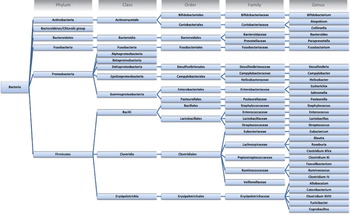
We have made great progress in understanding ecological principles of the intestinal microbiota in various animal species. However, our understanding of the feline microbiota is still rudimentary. The continuing affordability of high-throughput sequencing technology (e.g., 454- pyrosequencing, Illumina, and Ion Torrent) will allow us to gain a better insight into how the microbiota is influenced by dietary and environmental factors on a phylogenetic and metagenomic level. However, to better understand the host–microbes interactions, we will also need to explore changes in microbial metabolic functions, and also host responses through transcriptomics. This will require multi-center studies with experts in the field of veterinary gastroenterology, nutrition, molecular sciences, and bioinformatics. Furthermore, we need to more accurately quantify the bacterial groups in the feline GI tract. The results of pyrosequencing have yielded a good estimate of the various bacterial groups present in the GI tract (Fig. 3). These sequence data are now available and should allow for the design of FISH probes that would be a useful tool to more accurately quantify the various bacterial populations. Further studies are also needed to explore the mucosa-adherent microbiota in various GI disorders in more detail. And finally, we should attempt to explore the intestinal microbiome in cats with various extra-alimentary diseases that have been associated with alterations of intestinal microbiota, such as diabetes mellitus (Caricilli et al. , Reference Caricilli, Picardi, de Abreu, Ueno, Prada, Ropelle, Hirabara, Castoldi, Vieira, Camara, Curi, Carvalheira and Saad2011), stress (Bailey et al. , Reference Bailey, Dowd, Parry, Galley, Schauer and Lyte2010), and asthma (van Nimwegen et al. , Reference Van Nimwegen, Penders, Stobberingh, Postma, Koppelman, Kerkhof, Reijmerink, Dompeling, van den Brandt, Ferreira, Mommers and Thijs2011). All of this information will be useful to design dietary or environmental strategies that may alter the intestinal microbiota, on a phylogenetic or functional level, resulting in a beneficial outcome for the host.
Taxonomic lineages summarizing the predominant bacterial groups identified in the feline GI tract using molecular methods (Inness et al. , Reference Inness, McCartney, Khoo, Gross and Gibson2007; Desai et al. , Reference Desai, Musil, Carr and Hill2008; Ritchie et al. , Reference Ritchie, Steiner and Suchodolski2008; Abecia et al. , Reference Abecia, Hoyles, Khoo, Frantz and McCartney2010; Handl et al. , Reference Handl, Dowd, Garcia-Mazcorro, Steiner and Suchodolski2011; Tun et al. , Reference Tun, Brar, Khin, Jun, Hui, Dowd and Leung2012).