Statement of the Problem
In December 2019, the outbreak of coronavirus disease 2019 (COVID-19) in China quickly became a worldwide threat and the World Health Organization (WHO) declared the COVID-19 outbreak a “Global Pandemic” on March 11, 2020. It had enormous consequences at various levels, from physical and mental situations to the social and political consequences and economic concerns. Health-care workers are at the front line during an epidemic and are at greater risk for their physical and mental health. Reference Cullen, Gulati and Kelly1–Reference Kisely, Warren and McMahon3 Furthermore, this is an unprecedented scenario for most hospitals throughout the world, with many challenges in various aspects of health care, including health concepts, adequate protective measures and equipment, the expansion of the intensive care unit, and more. Thus, it is essential to closely monitor health-care providers and identify potential sources and consequences of distress to improve their status and even further to limit long-term negative psychological effects. Reference Wu, Fang and Guan4 Health-care providers are considered as vital resources in every public health system. Their health and safety are essential not only for the continuous and safe care of the patient but also for controlling any outbreak of the disease. Reference Lee, Kang and Cho5,Reference Maunder, Hunter and Vincent6 Every nursing personnel is considered as one of the most important members of the crisis team with the aim to achieve the best possible level of health for individuals and the community involved in the crisis. Reference Hassmiller and Cozine7,Reference Goodwin8 According to the reported results of the other studies, health-care providers who are at the forefront of COVID-19 patients experience greater risk for mental health problems such as fear and anxiety, depression, insomnia, and stress. Front-line physicians and nursing personnel with no specialization in infectious diseases had more challenges when adapting to a completely new work in these stressful situations. Reference Liu, Yang and Zhang9 According to a report from the Iranian Nursing Organization, as of August 19, 2021, a total of 140 Iranian nurses died, and 128,000 infected by COVID-19. However, disaster programs in hospitals are very extensive and effective to establish an incident command center, direct material, and personnel resources and follow up on patients, and few organizations have been assessed the needs and fears of health-care providers in response to such disasters.
A complex emergency program would not be completed without nurses’ compliance and cooperation. Reference Good10 Thus, understanding the psychological issues that prepare nursing personnel to face the challenges of responding to disasters with confidence and a sense of support is the first step in developing emergency response programs. This study aimed to investigate the level of fear of nurses working in COVID-19 hospitals about continuing to work in biological urgency present in the first encounter with patients and the fourth week after.
Methods
This study was considered a cross-sectional study that assessed the level of fear of nurses in the selected hospitals in Tehran, Iran. These hospitals participated in the medical response to the COVID-19 pandemic in 2020. First, the approval process of this study was done by the ethics committee. The questionnaire used in this research was organized in 2 parts. The first part of the questionnaire includes questions about demographic variables. The second part was measuring the level of fear of attending the ward with a numerical scale of fear rating as an 11-point Likert scale (0 score shows a lack of fear, and a score of 10 shows the maximum fear level). The content of the questionnaire was approved by 10 faculty members.
In this study, quota and random sampling were used. First, the number of nurses working in this group of hospitals was determined and the number of samples was determined using the Morgan table sample size calculator. Then, sampling was done by simple random method and according to the number of nurses in each hospital. A total of 345 questionnaires were distributed among nurses and 308 of them answered (response rate was 89.27%). Inclusion criteria included at least 1 y of clinical work experience, work in a hospital as a nurse for at least 6 mo, no managerial positions in the resume, willingness to cooperate, no chronic physical or mental illness, and no history of use of psychotropic drugs, which were measured in the form of a self-declaration. Exclusion criteria included unwillingness to cooperate. The questionnaire was completed by the same nurses after 4 wk. Conscious consent was obtained from the participants to participate in the study, and the participants were assured that their information would remain confidential to the researcher. Data analysis was performed by paired t-test and chi-squared.
Results
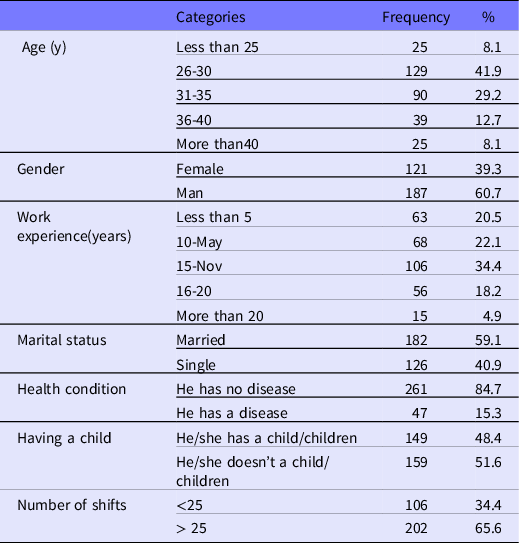
This study was carried out on 308 nurses who were exposed to COVID-19 patients. A total of 121 nurses (39.3%) were female, and 187 nurses (60.7%) were male. The participants in this study were 24-45 y old and most of them were in the average age of 26-30 y. A total of 261 nurses (84.7%) had no history of the underlying disease and 47 nurses (15.3%) had an underlying disease. In terms of work experience, 106 nurses (34.4%) had working experience 11-15 y, most of the participants had more than 25 working shifts in 1 mo (65.6%) and were childless (51.6%) and married (59.1%) (Table 1).
Demographic information of the participants

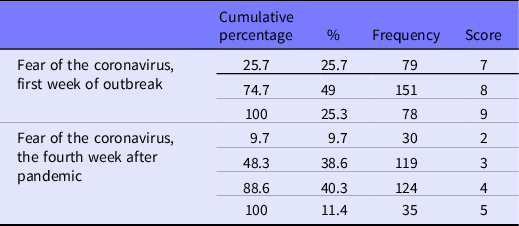
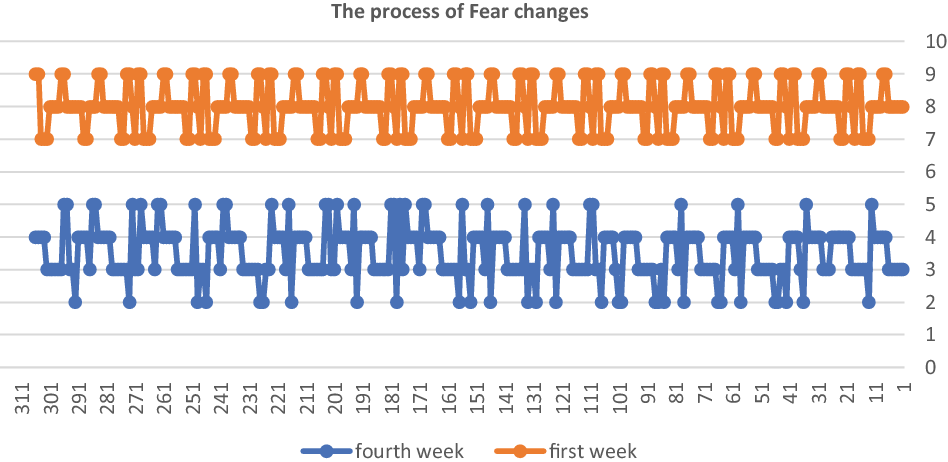
Fear of COVID-19 was questioned in a range of 0 to 10. A score of 10 means the highest level of fear, and a score of 0 indicates the absence of fear. According to the results, the highest percentage of fear in the first week of work with patients with COVID-19 was related to the score of 8 (the frequency of 151), and the highest level of fear in the fourth week of work with patients with COVID-19 was related to the score of 4 (the frequency of 124) (Table 2; Figure 1).
Fear of the coronavirus in the first week and the fourth week after exposure to COVID-19 patients

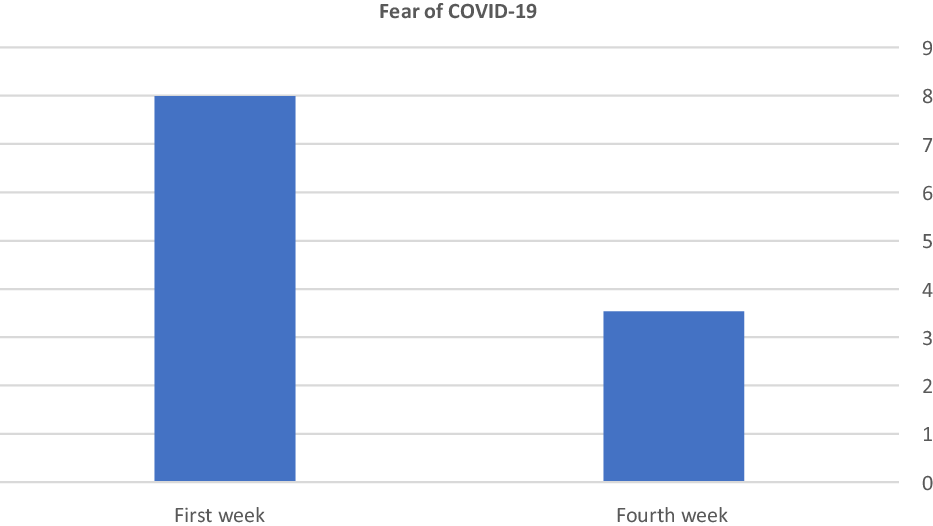
Investigation of the trend of nurses’ fear in the first week and the fourth week after exposure.

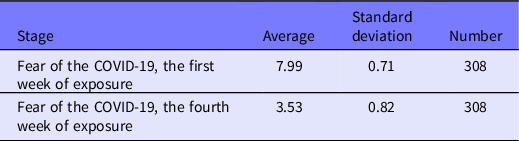
According to the results of paired t-test, the mean of nurses’ fears in the first week were statistically significantly higher than the fourth week (P < 0.001) (Table 3; Figure 2).
Investigation of paired t-test, fear of COVID-19 in the first week and the fourth week after exposure

Note: Paired T-test: P <0.001 (Sig), df = 307, t = 73.10.
Mean nurses’ fear of the exposure to COVID-19 patients in the first week and the fourth week thereafter.

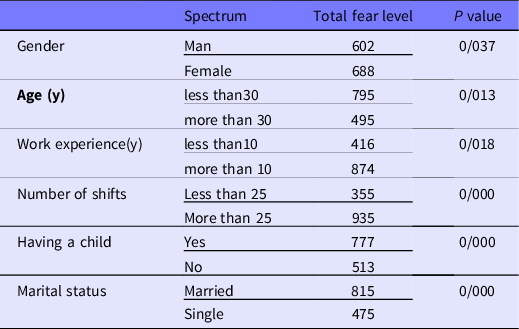
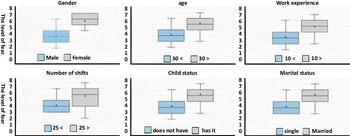
According to the results of the chi-squared test in examining the relationship between demographic variables and participants’ fear of in close contact with COVID-19 patients, there was a statistically significant difference between a fear score of men and women (P = 0.037) and the level of fear among women was more than men. As well, there was a statistically significant difference between the age group of older or younger than 30 y in close contact with COVID-19 patients and the level of fear was higher in the group of less than 30 y (P = 0.013).
There was a statistically significant difference in terms of fear in close contact with COVID-19 patients in the component of work experience between nurses with more and less than 10 years of work experience and nurses with more than 10 years of experience more fear (P = 0.0180). There was a statistically significant difference between the shift component less than 25 and more than 25 in close contact with COVID-19 patients and the level of fear was higher in the number of shifts greater than 25 (P = 0.000). In the component of having a child, there was a statistically significant difference between nurses who had children and those who did not have children in terms of fear in patients with COVID-19, and nurses who had children experienced more fear (P < 0.001). There was a statistically significant difference between married and single nurses in close contact with COVID-19 patients, and the level of fear in married nurses was higher than single ones (P < 0.001) (Table 4; Figure 3).
Factors affecting the level of fear of participants in close contact with COVID-19 patients

The relationship between demographic variables and the level of fear of participants in close contact with COVID-19 patients.

Discussion
According to the results, health-care workers, especially nurses, in close contact with COVID-19 patients experienced fear associated with the disease. The rate of reactions varies from 1 nurse to another, and different variables had statistically significant effects on it. Some of the most important factors include the severity of the virus outbreak, the pathogenicity of the virus, the unfamiliarity with the virus, the inability to control the status quo, the more involvement of more nurses vulnerable to the virus, and significant media had increased the level of fear of disease at the onset of the new COVID-19 pandemic.
So that, the trend of fear changes in the first week and the fourth week after the outbreak of the disease showed a significant reduction in nurses’ fear. The decrease in the level of fear within a month could be because of the initial assessment of the severity of the crisis and understanding the situation ahead reduced initial confusion and uncertainty, dealing with the current situation and relative control of the pandemic. Other reasons included increasing the preparedness of nurses and taking mitigation strategies in these hospitals within a month. Other reasons were the front-line nurses are at risk of physical and mental damage during an epidemic. This study aimed to investigate the level of nurses’ fear in COVID-19 central hospitals in Iran. The study is cross-sectional. The questionnaire was designed in 2 parts (demographic and the level of fear). The sampling method was quota and random. A total of 345 questionnaires were distributed (the response rate was 89.27%). The questionnaires were completed by the same nurses after 4 weeks. A total of 121 nurses (39.3%) were female. Most participants were in the 26-30 y group. paired t-test showed the mean fear of COVID-19 in the first and the fourth weeks was significant (P increasing access to personal protective equipment, increasing diagnostic tests, better identification of transmission routes, improving the training of nurses in self-protection, disease awareness, and prevention could be other reasons). Also, the development of standard instructions of the Ministry of Health to control the follow-up and control of infection and the obligation to comply with hospitals might be regarded. We found a significant difference between demographic variables (gender, age, work experience, marital status, number of working shifts, and having children) and a score of fear.
According to the review of the literature, nurses’ reactions to work during biological disasters were not well described. Few studies have focused on nurses’ concerns, fears, and anxieties and their experiences in natural disasters or war situations. Reference Secor-Turner and O’Boyle11 According to Ursano et al., a predictive stressful situation for potential disasters was described that may be a chronic stressor on disaster managers, police, and firefighters. Reference Ursano, Fullerton, McCaughey, Ursano, McCaughey and Fullerton12
Predicted stress could be increased with fear of contamination, such as the use of biological weapons and risks related to the health status of nurses and their families. This predicted stress was adjusted by assessing the person of the severity of the threat. Previous experience of a biological disaster is considered as a variable that may protect in such events. The results of this research were consistent with the present study regarding having a level of fear and stress and also adjusting it in case of assessment of the severity of the crisis. Durham et al. during a study concluded that of the 79 emergency response workers, including firefighters, emergency technicians, nurses, other hospital staff, and police officers involved with the victims of an apartment complex explosion, 52% experienced a significant fear level of personal safety. Reference Durham, McCammon and Allison13 A group of nurses participated in this study who were in direct contact with patients and were familiar with the consequences of the disease despite its unknowingness. Its results were consistent with this study about the level of fear in the face of critical situations. Norwood et al. classified the psychological consequences of biological events with a terrorist purpose into 3 stages: pre-attack, immediate post-attack, and moderate to long-term recovery after the attack. They concluded that proper preparation before an attack determines the psychological and social consequences, and that lack of training can lead to a disordered and inefficient reaction that increases fear, decreases self-esteem and can lead to a cascade of negative effects. Nurses may experience fear for their personal safety. Reference Holloway, Norwood and Fullerton14 That study investigated the psychological consequences that nurses experience following a biological event, including fear and anxiety, and its results are consistent with the results of the present study.
Sun et al. reported the psychological experiences of nurses caring for COVID-19 patients and classified them into 4 categories. The first category is negative emotions in the early stages, including fatigue, discomfort, and helplessness due to overwork, fear, anxiety, and anxiety of patients and family members; the second category is adaptation styles including psychological and life adjustment, humanitarian works, team support, and rational cognition. The third category includes an increase in love and gratitude, the promotion of professional responsibility, and self-reflection. The fourth category includes positive emotions that occur simultaneously with negative emotions. Reference Sun, Wei and Shi15 This study was performed in the first month of the COVID-19 pandemic, and there was a significant relationship between this study and our research regarding the presence of negative emotions such as fear and anxiety in the early stages.
Zerbini et al. concluded that nurses working in COVID-19 wards were affected by the consequences of emotional illnesses. The greater workload and longer duration of direct contact with COVID-19 patients may be the reason for this matter. Reference Zerbini, Ebigo and Reicherts16 The results of that study are consistent with our research.
Liu et al. concluded that health-care providers have been challenged by working in a completely new situation, job burnout due to excessive and prolonged working hours and protective equipment, fear of infecting themselves and others, feeling unable to handle patients’ conditions, and managing relationships in these stressful situations. Reference Liu, Luo and Haase17 The results of this study referred to the feeling of fear of infection as one of the consequences of the COVID-19 crisis in health-care providers and are consistent with our research.
Conclusions
Health-care providers have shown resilience and a spirit of professional sacrifice to overcome problems. Nurses are expected to provide physical care and emotional and psychological support to patients and their families during biological events. Thus, strategies should be considered to support nurses and much attention should be paid to their physical, psychological, and emotional issues. It is essential to use strategies to optimize safe working conditions and minimize psychological harm, such as psychological support and recreational opportunities, as well as regular and intensive training for all health-care providers to improve preparedness and effectiveness in crisis management. Therefore, it is suggested that more studies be conducted to explain the causes of fear and measure fear in different periods.
Limitations
Sampling was performed in nurses of all hospitals of a special group in Tehran. Therefore, it cannot be generalized to all Iranian nurses.