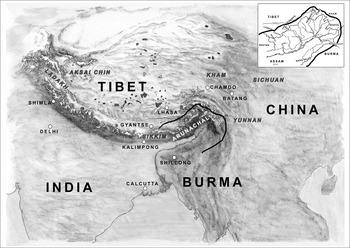
Sometime in 2014, the archives of Arunachal Pradesh, an Indian state in the far eastern Himalayas, were earmarked to move into new premises in Itanagar, the state capital. Away from the old archive (a small, ramshackle building that risked flooding during the rains), its collections would now find a better home, more insulated against the Arunachali climate. The new building would accommodate equipment to preserve the archives and archivists and visitors would have space to do their work. There was yet little sign of these scholars. A glance at the visitors’ logbook showed but short, infrequent visits by a dozen individuals over the years. Yet, for researchers who do visit the Arunachal Pradesh State Archives, the rewards can be great. Thousands of government documents are gathered there. In their majority, they have never been opened since their transfer. Many pertain to the first decades after India's independence, when Arunachal was the North-East Frontier Agency (NEFA) and stood under Delhi's direct control (Figure 1).
Arunachal and the Himalayas

One document constantly surfaces in these archives: the tour diary. Unwrapping the bundles of red cloth protecting the files from sun and dust reveals hundreds of them, written by government officials as they made their way through NEFA with increasing regularity – most often on foot. Sometimes these diaries are grouped into a single file; more often, though, they come on their own. Marking them apart are their months of redaction, their author's administrative posting, and sometimes the area covered. These diaries all have one thing in common: they are all, without exception, government documents.
This article is about these tour diaries and what they can tell us about the period, roughly between the start of the twentieth century and the early 1960s, when the Indian state began to incorporate NEFA into India.Footnote 1 Tour diaries exemplified a certain form of governance in the Himalayas, distinct (though not isolated) from the rest of India: a frontier governance that stemmed from a state presence that remained itinerant, seasonal, and personalized well into the independence period, and which rested on a distinctive repertoire of practices and ideologies. Many of these re-purposed imperial tools in the service of post-colonial state-making, as David Ludden has hypothesized.Footnote 2 Diary-writing and its associated activity, touring, were the central buttresses of this frontier governance. To demonstrate this, it is not the contents of the diary but the artefact itself that I shall examine. I thereby seek to connect the history of borderlands with growing interdisciplinary conversations on the material culture of the state as embodied through paperwork. To paraphrase Ben Kafka, I set out to look at the diary, not through it.Footnote 3
Located between Bhutan, Tibet, Assam, and Burma, Arunachal belongs to a part of the world that has only recently come under sustained historical enquiry. Western scholarship long constructed the Himalayas as a place beyond history, kept beyond the pale by the absence of direct colonial rule, a land where the state and politics had not made a mark. New perspectives are now challenging these Orientalist, ahistorical tropes, however.Footnote 4 This is partly thanks to scholarship on borderlands, attentive to the production of space – notably through ‘process geographies’ that emphasize movement, openness, and circulation over fixity and territoryFootnote 5 – but also to the specificities of the state at the border and the complexities of state–society relations.Footnote 6 Interdisciplinary engagement with the Himalayas’ history is thus growing.Footnote 7 Yet, we still know little about the history of the Himalayas east of Bhutan. This reflects the marginalization of north-eastern India in the study of South Asia until recently, and the difficulties non-government researchers faced in accessing the region until the 2000s. Another factor was the isolation of local research, traditionally pursued by the government, from the wider scholarly community. The abundance of tour diaries on the easternmost Himalayas thus offers us pathways into their history.
One of these pathways is to draw on tour diaries as an important if flawed primary source on state expansion, as I have done elsewhere.Footnote 8 Here, my intention is to investigate the dynamics of diary-making – how diaries were produced, how they circulated, how they were used – and how these practices helped shape distinctive forms of state-making in the Himalayas. The classical Weberian account of state-making emphasizes the centrality of the rise of bureaucracy, buttressed by writing. Far from an innocuous piece of paper, the document is presented as a key technology for organizational co-ordination, control, and ‘domination through knowledge’Footnote 9 – a notion endorsed by studies of the Raj's ‘investigative modalities’, from village records to censuses.Footnote 10
A more layered understanding of paperwork has recently augmented these instrumental analyses. It envisions documents not as mere tools of bureaucracy but as constitutive of it.Footnote 11 Matthew Hull demonstrates that petitions, reports, or office manuals are far more than text. As ‘graphic artefacts’, they mediate government communication and action and underpin bureaucratic sociability. Their material quality, the ways in which they are perused, the language they employ, their circulation, all participate in making and remaking collective networks, within the bureaucracy and with the outside world.Footnote 12 To understand ‘the everyday work of the colonial state’ in India,Footnote 13 scholars therefore need to look at genres of paperwork (from pamphlets and royal letters to reports, attestations, and records), and at the technologies and practices surrounding them. For it was the space–time compressing qualities of circulating paper that, in many ways, made the East India Company an effective empire.Footnote 14 The British Raj was a ‘Document Raj’.Footnote 15
In short, exploring ‘the social life of things’ should extend to governmental paperwork, since it lies at the heart of the daily, constantly negotiated practice of state-making.Footnote 16 This article suggests that, for much of the twentieth century, the ‘government of paper’ often took a specific shape in the eastern Himalayas: that of the tour diary.Footnote 17 These were not private reflections written during one's spare time but the compulsory output of any administrative tour, duly submitted to the hierarchy upon one's return. Often assorted with more reflective notes on the tour as a whole, the perceived insights of tour diaries were used by higher Indian authorities to determine general or more localized policy changes.
As such, diary-writing played a major role in the transformation of the Assam–Tibet–Burma borderlands into a part of India. In their content, their use, their historical evolution, tour diaries embodied the contingent, spatially uneven, and fractured nature of Indian state-making at the border. Even more importantly, they revealed the importance, for state-making, of process geographies stemming from the circulation of paperwork. Transmitted whole or extracted into policy files, diaries tied lone officers together in a distinctive community of practice, policies, and ideas – preserving the fiction of the frontier state as a coherent whole in these uncertain circumstances.
I
An examination of tour diaries and state-making must start with diary-writing's twin bureaucratic practice: touring. The latter belonged to an arsenal of practices of rule in colonial locales, but its relative importance for governance was predicated on a particular context – the regions where colonial state presence was yet paltry or uneven. Touring was thus especially important in the early decades of colonial rule in inland Africa, from the Sudan or northern Nigeria prior to indirect rule to French possessions.Footnote 18 In South Asia, its prevalence was especially marked on the North-West Frontier and in Assam.Footnote 19 Touring, in other words, was an activity particularly associated with the frontier, that is with a space of state expansion and uneven rule .
Practised in the Assam highlands before their piecemeal annexation and afterwards on an annual or regular basis, tours enabled colonial officials to interact with local inhabitants and assert authority in the absence of direct or intensive administration. Mules, boats, and vehicles were of limited use in the highlands, and most tours took place on foot. Ideally, officials departed at dawn and set up camp near a village early enough in the day to meet its inhabitants. Forced labour was central to colonial touring logistics. Government parties needed villagers to porter supplies, gear, and weapons, to build walkable tracks – indigenous ones were often considered too dangerous – or to prepare camp. Heightening the need for manpower was the fact that many tours, especially in the initial decades of colonial rule, had a punitive element – some were ‘pacification campaigns’, others flag-carrying ‘promenades’ meant to impress and intimidate. Touring officials were hence often accompanied by para-military outfits, like the Assam Rifles. Moreover, information had to be gathered to claim and possess an area – its geography ascertained and named, for instance.Footnote 20 Tours were thus essential to the incipient information order that Raj officials strove to establish on their north-eastern frontier.Footnote 21 So salient were they as a governance feature that, on the Burma border, Mizos talked of the ‘crazy, wandering sap (British man)’.Footnote 22
British India's north-eastern ‘frontier’ was therefore defined as such through a certain form of official movement across the landscape. The bodies in motion of the colonial officer, his porters, and riflemen acted as claims of rule even as state presence remained unconsolidated and contested. Another bureaucratic activity had to intervene to turn touring into an instrument of state-making and frontiering, however: writing. And, in more cases than one, frontier touring became intertwined with a particular genre of writing: the diary.Footnote 23
As part of the ‘literature of the encounter’ between Europeans and the unknown, alien environments of colonized places, diary-writing had an old association with colonialism.Footnote 24 As a governance tool, however, diaries were conspicuous for their focus on frontier regions, from northern Nigeria to the highlands of north-eastern India. Touring existed elsewhere in colonial India, but less conspicuously and without generating a specific paper trail. When the East India Company sent Francis Jenkins to survey newly conquered Assam in the 1830s, he returned with diaries.Footnote 25 When tours later became prevalent in the annexed Naga and Mizo areas, diaries became a regular feature of the governmental paper trail for the Assam highlands. The inception of tour diaries hence accompanied and bolstered colonial expansion in the region.
That this was so is not entirely surprising. Diary-writing was eminently suited to the fact-finding and administrative goals of frontier tours, serving both as a daily record of a tour and as a repository of knowledge not available through other means. While much has been written on maps, the difficult terrain of the highlands made bird's-eye views often irrelevant. With their entries covering daily marches separately, diaries provided information of a more concrete nature to officials: the time it actually took to reach a point on the map, for instance, or the direction to take in order to do so.Footnote 26 Equally important was their role in gathering ethnographic information and objectifying the human landscape of the hills, whether to map alliances and zones of resistance or taxation patterns.Footnote 27 In short, the itinerant governance that characterized and indeed made colonial frontiers like north-eastern India emerged through touring and diary-writing. These interlinked practices would particularly define the Himalayas north of Assam – and they would reach their apogee there not in the colonial period, but after India's independence.
Official diary-writing in NEFA began in a low-key fashion. The first identifiable government diary for the region dates from 1909, when ‘non-interference’ was the Raj's official policy there. Efforts to locate trade routes to China had given way in the late nineteenth century to a colonial perception that direct control would not yield enough economic benefits to warrant the cost of administration. It was not just that the eastern Himalayas’ rugged, jungle-clad, humid environment presented a formidable impediment; colonial discourse also framed their inhabitants as primitive, isolated, anarchical tribes, antithetical to the civilized, capitalist space of the Assam plains – indeed, a threat to it.Footnote 28 An Inner Line enclosing areas of regular administration had consequently been drawn at a distance from the foothills. The ‘Outer Line’ of notional British territory was even fuzzier: none existed east of the Dibang River. For the colonial state, the Inner Line and non-interference policies were to protect Assam by strictly regulating interaction between hills and plains. Clashes were regular, for colonial rule over the Assam plain deprived the highlands’ inhabitants of their resource base and reshaped interaction patterns between hills and plains. It also created the very notion of ‘tribe’.Footnote 29 Officials responded to ‘raids’ on the plains by sending in punitive expeditions into the Himalayas.
By 1908, Noel Williamson, the official tasked with keeping watch over the eastern Himalayas, was chafing at his superiors’ reluctance to countenance extending administration there. He began to tour the hills, returning with proposals to build roads and tax certain villages to make them ‘realise they were within British territory’.Footnote 30 It was at that juncture that tour diaries first surfaced. The timing of their appearance and Williamson's activism suggests that diary-keeping was a means to collect raw information to bolster pro-expansion arguments and, should they be successful, to serve it.Footnote 31
In 1910, London and Delhi accepted, for the first time, the possibility of assuming ‘loose control’ over the eastern Himalayas. Fears of Qing China's expansionism lay behind this reluctant decision. Three survey missions were sent to the Lohit, Siang, and Subansiri Valleys.Footnote 32 Whether tour diaries were written during these so-called Abor, Miri, and Mishmi Missions is not clear. The paper trail they left behind consists of expedition reports in pamphlet form – suggesting that diary-writing, though likely practised, was not yet seen as producing texts useful in their own right, but rather needed to be translated into a more productive communication form.
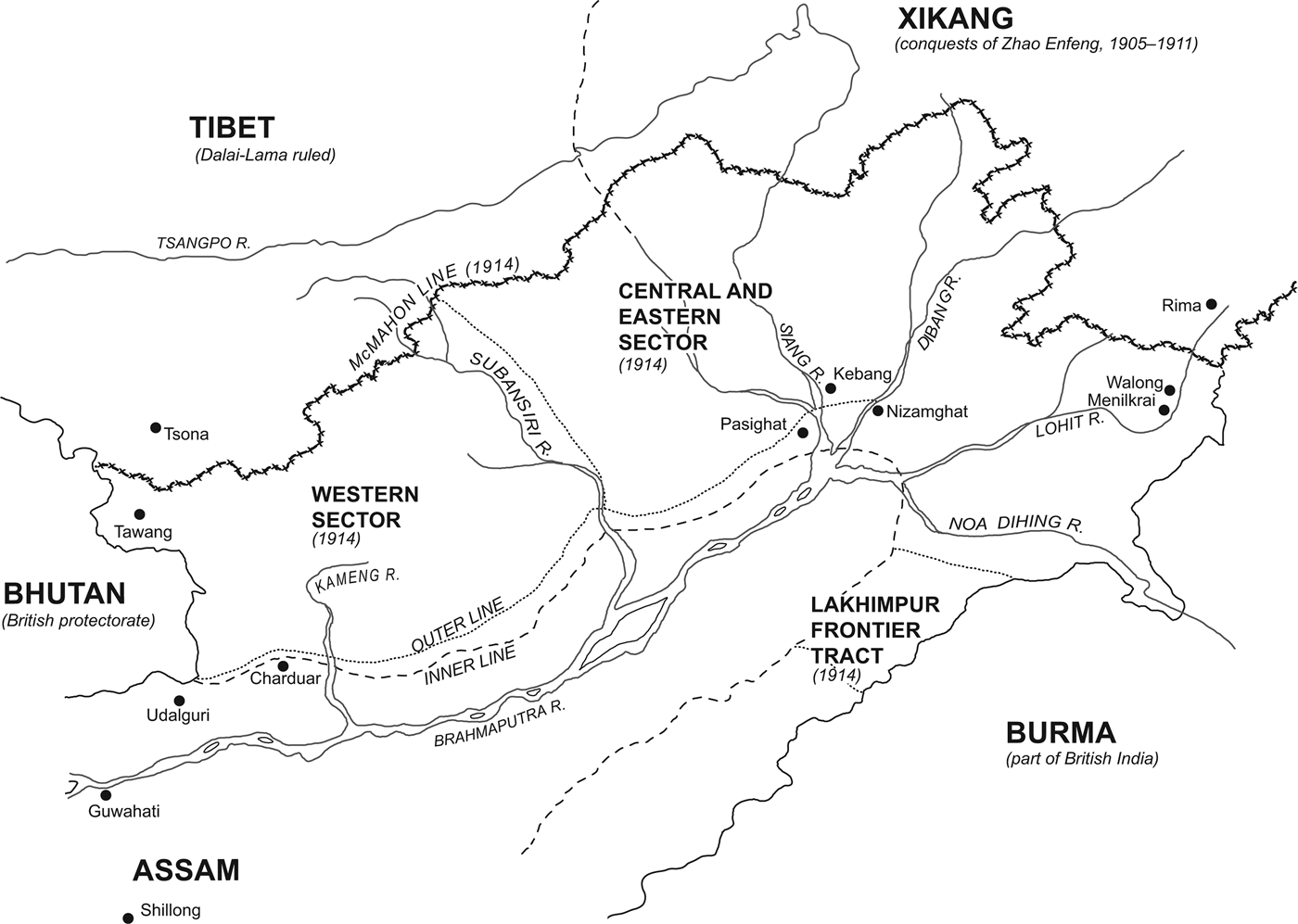
In 1914, Tibetan and British Indian representatives signed a boundary agreement regarding the eastern Himalayas, placing the international border near the edge of the Tibetan plateau. The assumption was that British India would now bring the mountains north of Assam under ‘loose control’. The region was divided into territorial sectors and a small administration set up (Figure 2). This momentum proved short-lived: with the fall of the Qing and the onset of the First World War, Delhi and London lost interest in the eastern Himalayas. The ‘McMahon Line’ remained unrealized.
The eastern Himalayas, c. 1919

Policy reversals did not lead to the demise of the tour diary. The handful of frontier officials continued to produce them, having wrested permission from their superiors to undertake ‘the bare minimum’ of touring necessary to ensure ‘the security of the plains’.Footnote 33 Tour diaries appear, at that stage, to have been the dominant form of administrative paper trail, perhaps because they stood in the grey zone between formal and informal government paperwork. Yet given their reduced circulation, their impact was minimal. In the absence of official orders to administer the hills, they likely became a storehouse of information – data to be retrieved once Delhi and London had recognized the frontier's importance, and put to the use of governance.
The tribulations of official diary-writing in the early 1900s hint at some characteristics that would define state power in the eastern Himalayas in the course of the century. The state had a certain quality at the frontier. If bureaucracy and administration evoke fixity and permanence, in NEFA they were anything but that. Touring and its graphic traces bore witness that itinerancy, seasonality, and personalization characterized state presence in the region to an unusual extent. In a context where the administration was skeleton-like and the territory claimed as big as Austria, touring offered the primary means to stay in touch with the eastern Himalayas and assert the Raj's sovereign pretensions. Until the 1940s, no outpost existed beyond the foothills. Even after their multiplication in the 1950s, outposts would remain small and scattered. Until the mid-1940s, tours tended to be infrequent expeditions, often undertaken with a punitive or flag-carrying element. Porters – initially outsiders, later local recruits, forced or otherwise – formed the bulk of a touring party.Footnote 34
This itinerant governance was also a seasonal one. For a frontier official – and this would remain the case well into the second half of the twentieth century – professional life followed two markedly different work rhythms: the rhythms of touring, whose primary beat was the daily march, concluded with the diary-writing ritual; and the less clear rhythms of office work back at the station. The distinction between the two rhythms was even more salient for mapping onto distinct temporal and climatic contexts. North-eastern India is one of the wettest parts of the world. For much of the year, travel was restricted, and sometimes impossible. Touring and diaries primarily belonged to the time of the dry season, when the skies were reasonably clear.
Diaries also betrayed a certain bottom-up governance dynamic driven by, and mediated through, ground considerations, interests, and personalities rather than orders from above – even as it took inspiration from experiences and situations elsewhere. It was Williamson's dogged activism that produced the first tour diaries on NEFA, and it was his successors’ expansionismFootnote 35 – manifested in continued diary-writing and entreaties to their superiors to show interest in the frontier – that helped maintain a thin administrative thread of knowledge about NEFA in the early twentieth century.
Finally, the irruption of these tour diaries around 1909 and their continuation, after 1914, as the most ordinary government document, betray the waxing and waning of Indian state expansion. Diaries first appeared amidst a general surge of correspondence and discussions on India's eastern Himalayan frontier, at a juncture when the British Indian state seemed poised to extend direct control over the region. And when higher-level discussions around the eastern Himalayas died out a few years later, they remained. What marked the eastern Himalayas as a frontier space was not merely the friction of terrain or the Inner Line, but also a peculiar state presence, underpinned by touring and writing practices. Indeed, itinerancy and personalization would be made a principle of state-making at a time where, elsewhere in India, one might have conversely expected (at least in principle) more impersonal, bureaucratized forms of rule – as the generalization and systematization of official diary-writing in the 1940s and 1950s will now show.
II
As dominant as tour diaries were in early twentieth-century government documentation on the eastern Himalayas, they only contributed to a very small overall output. The Arunachal archives’ tour diaries section does not comprise all the government diaries ever written but it gives a reasonable estimate of their historical spread. Until 1938, only one bundle of diaries is recorded. By contrast, three bundles can be retrieved for 1940–5. From 1946 onwards, and particularly after 1950, production accelerates. By 1952, multiple bundles are necessary to hold the diaries from one calendar year, and these crop up everywhere else in the archive. Further, before 1940 tour diaries were almost invariably written by one or two post-holders, the political officer (PO) for the Sadiya Frontier Tract and, to a limited extent, his Balipara Frontier Tract counterpart. By the 1940s, however, new designations start appearing in the diaries’ title: assistant political officer (APO) Pasighat, APO Lohit Valley, PO Tirap, special officer Subansiri. The acceleration of official tour diary production was thus qualitative as well as quantitative. Something was afoot on India's eastern Himalayan frontier in the mid-1940s.
That something was the Second World War. Initially, the conflict had stalled plans to revive Indian expansion into the region, but Japan's conquest of Burma in 1942 turned north-eastern India into the key supply base for besieged Nationalist China and a major frontline. The eastern Himalayas’ newfound geo-strategic importance revived competing Sino-Indian interests in the region. When, in 1943, Indian authorities discovered – alerted through a frontier official's tour diary – that Lhasa was deepening its reach south of the border, a consensus materialized: India had to resume, decisively, its expansion in the eastern Himalayas. Touring acquired unprecedented momentum, sustained by the creation of new positions to shore up frontier administration – starting with that of adviser to the governor of Assam, whose holder was to spearhead expansion while remaining outside the purview of the Assam provincial government. The first incumbent, an official with a long experience of frontier service, quickly sent his new recruits on exploratory tours of the main Himalayan valleys.Footnote 36
Tour diaries began to multiply, to grow longer, and to spread across multiple months. They also underwent subtler changes. The exploratory focus of earlier times was now accompanied by an attention to concrete ways of implementing administrative expansion. Touring officials began to note the spots suitable for permanent outposts, husbandry, or settled cultivation.Footnote 37 The gathering of ethnographic information accelerated, helped by the appointment of men like the anthropologist Christoph von Fürer-Haimendorf.Footnote 38 Diaries were now more frequently accompanied by notes and appendices containing geographic and demographic information – lists of villages or local notables on a given route, discussions of living conditions – or conclusions on indigenous cultural practices.Footnote 39 They were also full of policy recommendations for further expansion.
These shifts in the tour diaries’ emphasis, in the type, diversity, and density of information recorded, in the web of administrative communications enclosing and reverberating with them, suggest they were now used in higher administrative levels both to discern the possibilities for state expansion and to refine how it was to happen. Talk of respecting ‘[India's] obligations…towards the Monbas and others’Footnote 40 and of fostering ‘a contented, loyal population’ was gradually replacing the language of punishment. In 1945, an official called George Walker produced a ‘post-war reconstruction plan for Sadiya Frontier Tract’, detailing proposals for administrative consolidation, agricultural expansion, and educational and healthcare policies. Now held in Walker's private files at the British Library, the blueprint comes with a series of tour diaries mentioning, for instance, villagers’ demand for schools. This suggests that these diaries formed at least some of the source material for Walker's proposals.Footnote 41
In the event, the end of the Second World War and India's independence caused state expansion to wane yet again. Faced with the transfer of power, London was reluctant to commit further resources to the eastern Himalayas, while the Chinese civil war led India's new authorities to conclude the region had lost its strategic vulnerability. It was in 1950 that the expansion momentum resumed, for good. Two crises occurred that year. In August, a major earthquake struck. As Indian officials undertook relief and rehabilitation in the region, they came into unprecedented contact with local inhabitants. Then, in the winter, Communist China advanced into Tibet and annexed it. Delhi now had to reckon with a powerful neighbour on its Himalayan border – a border China had never explicitly recognized. Hitherto disunited on the question of NEFA's importance, central authorities began to support proponents of its definitive incorporation into India. It was at that juncture that tour diaries assumed a central role. Born as an instrument of non-interference before 1940, diary-writing was to become the linchpin of a frontier governance meant to incorporate the region into the aspiring Indian nation-state – in a stark example of the repurposing of imperial tools for nationalist purposes.Footnote 42
A cursory glance at the administrative paper trail shows that India's incorporation attempts had acquired lasting momentum. From five-year plan-related estimates or annual administration reports to topic-specific files, correspondence, and documentation proliferated after 1950. A ‘revolution in paperwork’ was coalescing for the eastern Himalayas, manifest not just in this proliferation but also in the fast-expanding range of preoccupations evinced in administrative plans and discussions.Footnote 43 There were files on relief and rehabilitation operations; on archaeological excavations; on Republic Day celebrations; on the adjustment of divisional boundaries; on the creation of post offices.Footnote 44
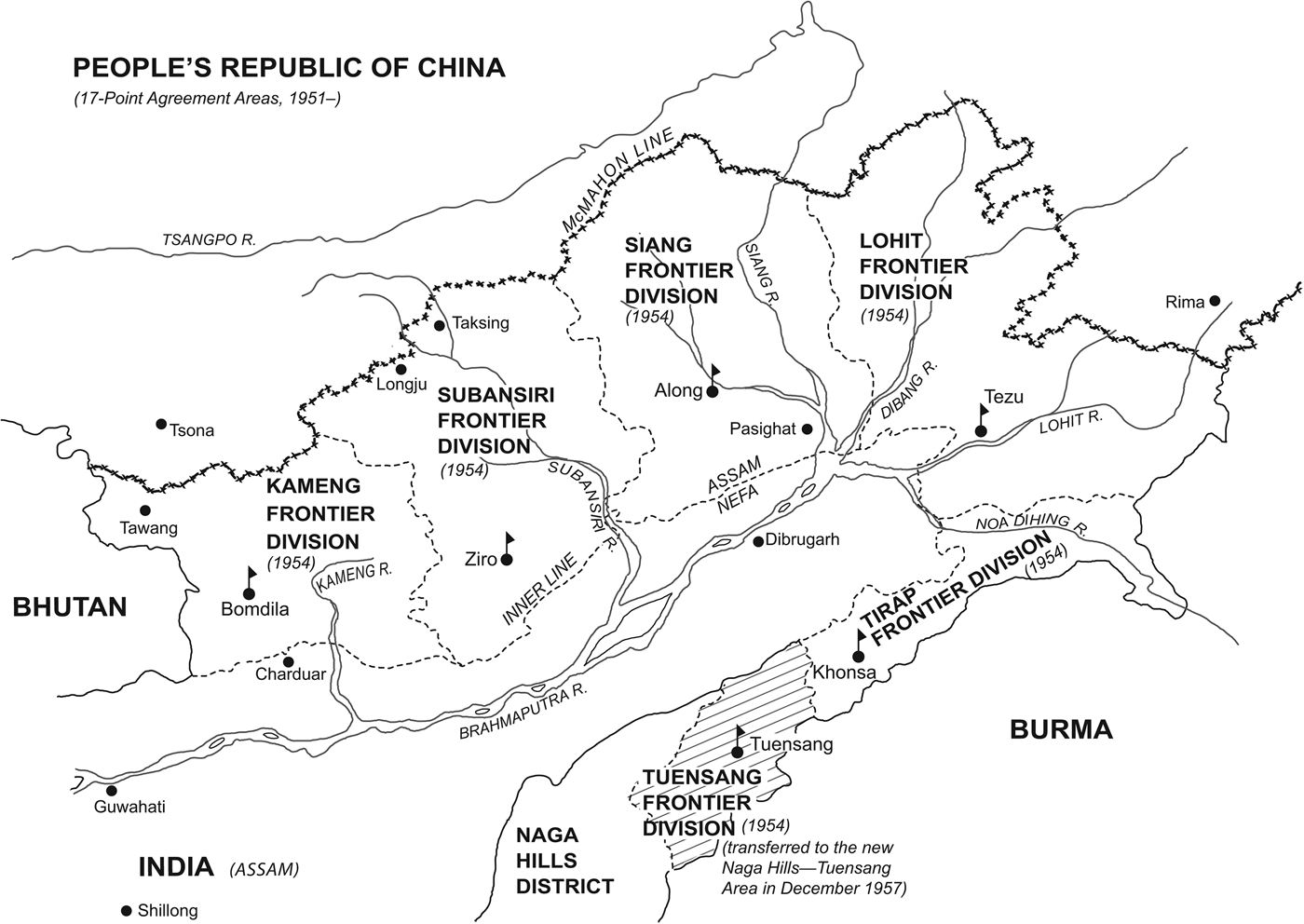
Tour diaries had not disappeared. On the contrary, their growth paralleled that of the overall documentary output – so much so that many are now filed in their own section of the Arunachal archives’ catalogue. By 1952, dozens of them were filed in any given year. Here again, their titles serve as clues to the evolution and consolidation of Indian state presence in the eastern Himalayas. The most frequent diary authors were administrative officials. The increasing variety of their designations, always territorial, testifies to the consolidation of frontier administration into a proper cadre, and to the territorial organization that accompanied it. By the mid-1950s, NEFA counted five POs, each overseeing one Frontier Division and counting several APOs under them.Footnote 45 Under the Single Line Administration system, POs were based in the Frontier Division's headquarters, with APOs either assisting them on site or posted across the division. Smaller administrative circles came under area or base superintendents. Tibetan-speaking areas were further served by a special official, the assistant Tibetan agent. The move of divisional headquarters to inland locations beyond the Inner Line after 1950 enabled officials to undertake more varied tours than in the past (Figure 3).
The eastern Himalayas, c. 1954

Even more striking was the appearance of tour diaries written by a different type of frontier official: agricultural inspectors, engineers, and officers; surgeons, malaria inspectors, veterinarians, and medical officers; development commissioners, statisticians, and transport superintendents; education officers and school inspectors; philologists, research officers, directors of excavation, language officers, and museum curators. These diaries hinted that state-making on India's eastern Himalayan frontier had not merely gathered pace and consistency, but also that its nature and balance was changing. The shift from military promenades to ‘beneficent activities’ was seemingly happening.Footnote 46
At play in this evolution were the significant constraints Indian frontier administrators battled against. Climate and terrain still presented huge obstacles and, given finite state resources, material, financial, and personnel shortages remained. The acquiescence of NEFA's inhabitants was essential to entrenching Indian state presence, especially if it was to endure year-long, rain or no rain. Violent coercion had proved costly, inefficient, counter-productive and sometimes impossible. If some Himalayan inhabitants were ready to countenance an Indian official's presence, it was because they could negotiate with it and demand tangible goods and benefits from it. Moreover, Indian authorities considered the real threat to Indian sovereignty in NEFA to be not a Chinese military invasion, but the risk that locals might look towards China. To elicit people's co-operation and ensure they would not be tempted to cross to the other side, Indian state presence should somehow be seen as beneficial. Development, welfare, and cultural activities therefore became central to state territorialization. A ‘NEFA Philosophy’ was formulated under the leadership of the anthropologist Verrier Elwin. The eastern Himalayas were to enter modernity without assimilating into the rest of India. Their inhabitants’ own ‘genius’ would be respected, and the Inner Line would stay. The policy betrayed India's adaptation to its vulnerable position in the eastern Himalayas.Footnote 47
III
Tour diaries stood at the centre of the frontier administration's functioning after 1947. Waves of outpost creation in the 1950s had not diminished the need for touring, far from it. The eastern Himalayas were huge and sparsely populated. Even in the early 1960s, some areas remained outside regular administration. Where outposts existed, the areas to administer were huge, poorly known, with settlements spread over thousands of square kilometres. In this context, touring remained the key duty of frontier staff, the cornerstone of their work even at the office. Siang officials spent over half of September–November 1953 on tour, covering 107 to 141 miles a month. Between April and June 1953, the Subansiri PO reported touring almost every day of the month.Footnote 48
As touring intensified, so did its associated documentary and communication trail, which consolidated in the process. Until the 1950s, diary-writing does not seem to have been the necessary way of recording or formalizing tour-related information and experiences. The first adviser to the governor had produced notes and reports on his tours, but none of his diaries ostensibly survive in the official archive. Fürer-Haimendorf, who explored the Subansiri in 1943–4, did write diaries; but they are held in his private papers rather than in administrative records. This suggests that the fledging frontier administration was still feeling its way around communication and documentary protocols surrounding touring. Increasingly, however, diary-writing became the central graphic process during tours. Other forms of ‘bureaucratic literacy’,Footnote 49 including ethnographic and policy notes, came to be anchored around it. Tour diaries entries might look like this:
26 December 1955.
Interpreters were busy with a burial and did not turn up. A certain tribal had died the night before on the road and his relatives did not do anything for his burial. So the others did it and there was going to be a kebang [village council] to decide what step would have to be taken against the relatives.
So we decided to pay a visit to the school. As usual it was a miserable bamboo construction apparently on the verge of collapse. There were also the usual untidiness and the unkempt appearance in the students. Only three or four beds were clean and tidy and these belonged to Nepali boys. Classes were going on and Sri. Trivedi tested some in Hindi.
Administrative communication followed a well-trodden path: upon his return, the administrative official forwarded his diaries to his direct superior, the PO for an APO, the adviser to the governor for POs, and Elwin for research staff. The senior official scrutinized the diary for ethnographic details or novel information, routine problems and broader governance issues, policy or improvement suggestions, and clues on the author's professional performance or behaviour. Senior officials would give advice in response to concerns voiced in the diaries and point out perceived mistakes and failings, either through an individual communication or a directive to the staff concerned.
Relevant passages, and sometimes entire diaries, were then copied and circulated in the administrative circles.Footnote 50 Diary entries pointing to the need for routine adjustments, like repairing a rotten bridge or replenishing salt supplies, were extracted to the relevant administrative division. So were the author's small-scale, specific suggestions if deemed beneficial. More ambitious ideas or serious problems were further scrutinized at higher administrative levels. The diary author was often asked for details or concrete proposals, or even for a special report. The relevant diary and its associated documentation were then sent up the administrative hierarchy for consideration, sometimes all the way to Delhi.Footnote 51
The raw material of the tour diary and its associated note thus served as a kernel of information and ideas to build on. Informative, critical, or speculative, their perceived insights informed priority areas, and frequently led to new policies or initiatives. A diary extract insisting on the parlous state of a dispensary led to the governor's direct involvement to resolve the question and improve the authorities’ healthcare strategy, which several diaries insisted was crucial to ensuring popular goodwill.Footnote 52 An entry reporting that food shortages led to poor school attendance ushered a decree that no schools should be launched in an area unless food supplies were secure. A touring official's discovery of mismanagement cases in post-earthquake rehabilitation led to an investigation.Footnote 53 Later on, Elwin's policy instructions were devised on the basis of tour diaries, for instance regarding the promotion of pottery-making.Footnote 54 Most importantly, diary extracts on Lhasa's activities south of Tawang had travelled all the way to the Indian foreign secretary in 1942–3, the first spark in persuading London and Delhi to resume state expansion in NEFA in the 1940s.Footnote 55
Margin annotations in tour diaries and the manner of their follow-up consequently form interpretative shortcuts in understanding the changing preoccupations of Indian authorities as they sought to expand in NEFA. Early diaries showed that senior officials’ attentions tended to focus on narrow issues, betraying their need to find a bearing in the yet unfathomable space of the frontier. Particularly tracked were distances between villages, their names, sizes, and eventual relocation, and the identity of their perceived notables. Diaries of the time were replete with information concerning the route taken and the state of the path; the names of villages mentioned were often cross-checked against other information, or presumably draft maps of the frontier.Footnote 56 A 1943 diary was almost exclusively mined for mentions of Chinese nationals, betraying contemporary anxieties about the wartime alliance with China and its consequences for Indian frontier sovereignty – revealing the potential gap between what local officials felt was worth noting highlighting, and perhaps acting on, and senior authorities’ own assessment and priorities.Footnote 57 After 1950, margin annotations intensified, multiplied in themes, and generated more intra-administrative discussion – hinting at the expanding notion and attempted reach of state-making.
As the central role of tours and associated diaries in frontier governance consolidated, they also became subject to greater top-down oversight. The state-making ambitions of senior authorities widened, and certain officials’ diary-writing practices were found wanting. Some failed to give information relevant to the NEFA Philosophy's implementation, like the state of agriculture, cottage industries, and education, or the characteristics of indigenous festivals.Footnote 58 Other diaries were found too short on detailed information, too ‘business-like’, to help devise development schemes. The governor consequently issued diary-specific orders, asking that touring officials spend more time discussing all matters concerning each village encountered, from agricultural, healthcare, and educational conditions to local problems.Footnote 59
Yet tour diaries continued to display great unevenness from one officer to the next, causing senior officials to produce ever more formal instructions concerning them. In 1957, they combined all directives ever set out for frontier administration into a Policy of the government of India for the administration of NEFA, ‘a continuous narrative’ to be studied ‘very seriously…in detail and with the greatest care’.Footnote 60 Thrown in the mix of discussions on ‘the right approach’, religion, intermarriage, language, and cultural matters was an entire chapter on tours and tour diaries.
Diaries, it was argued, were ‘a permanent record of the life of the Agency’. Accordingly, they should be prepared with the greatest attention. Their ultimate goal was to help the authorities identify ‘a sound and timely line of action’ by providing ‘as full a picture as possible of the state of affairs’ in any given part of NEFA. The themes to be covered by each daily entry were extensive. For each village encountered, senior authorities henceforth expected to learn about:
(1) Present population (2) agricultural condition and food situation (3) state of health, sanitation and water supply (4) state of education (5) attitude towards Government (6) internal cooperation within the village (7) present condition of arts and crafts (8) general economic progress or retrogression (9) any urgent need as experienced or expressed by the people.
Ethnographic or research-related remarks (which were much encouraged) should be placed in an appended note at the end of the diary. Additionally, POs and APOs were expected to compose a note consisting of policy recommendations. Now that state expansion had found its pace, they also had a duty to note ‘how contact with the administration and the outside world is affecting the tribal way of life, social customs, religion, dress, furnishing of houses, implements used, manners, morals and…Any tendency to begging or evidence of pauperization and growth of the mercenary spirit.’ What Shillong did not wish to know was the number of times officials enjoyed a cup of tea, how sore their calves were after a march or – God forbid – ‘every occasion on which the writer took an aspirin tablet’.Footnote 61
IV
Beyond their lateral dissemination, diary extracts thus travelled vertically, reaching, with each degree of importance, a higher level in Indian frontier governance – from the Himalayan Frontier Division itself to the administrative capital in Shillong, and sometimes as far as the External Affairs Ministry in Delhi. Documents simultaneously flowed in the other direction, bringing directives, corrections, and new initiatives to bear on officials’ work, with the tour diary as a benchmark of their application. Actions taken in accordance with a diary were reported on and tagged alongside it.Footnote 62 Just as letrados used writing to impose a semblance of order on the Latin American city, India's Himalayan frontier was made and re-made through the wor(l)d of diary-writing.Footnote 63 In their circulation, their adherence to common aesthetics, and their insertion within a regulated division of labour, diaries stood at the heart of a web of communication that not only made frontier governance possible, but also created and maintained social relations between individual officersFootnote 64 – nurturing a certain conception of the state as a tangible entity in the process.
Tangibility was crucial since the post-colonial Indian state remained marked by fragmentation, contingency, and vulnerability in the eastern Himalayas. Frontier governance tended to be reactive, its expansion more due to extraneous crises than to internal momentum. Even with an expanded administrative cadre, administration remained thinly spread; indeed, attempts to shore up numbers were balanced against the risk that this would overwhelm inhabitants and threaten state–society relations.Footnote 65 Governance was semi-nomadic, so that touring officials spent long periods of time away from their colleagues. Vertically, too, the Indian state appeared friable. Relations between the Assam provincial government (within whose territory NEFA constitutionally fell) and frontier administration were poor. There were frictions between the External Affairs Ministry, in charge of NEFA, and other ministries. Defence and military authorities remained uninterested in the frontier for much of the 1950s. Even after the Lhasa Uprising of 1959 led to the arrival of the Indian army in NEFA, military–civil relations remained unstable.Footnote 66
The tour diary stood at the heart of these tensions. As a graphic artefact, its key characteristic was arguably its liminality. Diaries are often associated with self-articulation, with the private sphere rather than the governmental realm.Footnote 67 Even those written by statesmen or civil servants are seen to reveal something secret, something that would reveal the shadow workings of the state beyond official documents.Footnote 68 In NEFA, however, they were government papers. Their output was increasingly directed and made compulsory by senior authorities, and they were written as part of frontier officials’ professional life. One might say they were part of the job description.
And yet they remained diaries, works in which the subjectivity, the individuality of the writer, remained. Unlike most files, which follow relatively anonymized or standardized communication codes where dozens of signatures abound, diaries had a clear author. They were filed under the frontier official's individual title, and often under his name. The diary itself was written, from start to finish, by the same person, and was meant to represent (together with its appended notes) a complete picture of a self-contained event, the tour. As a prose text, it stands out for the constant recurrence of the first person singular, that ‘I’ otherwise often conspicuously absent from other government documents.Footnote 69 Margin annotations or forwarding letters were but additions to an artefact that was, in itself, fully formed already, and which clearly bore the mark of its author.
Accordingly, no two diaries look the same. Some officials wrote terse diaries, containing only minimal information and betraying little curiosity towards NEFA. Some wrote textured anecdotes of their encounters with locals. Some obsessively recorded ethnographic details they thought they detected, turning some diary entries into genealogical/clan trees or mini-précis of local terminology. Some focused on the difficulties of hiking through the hills. Some waxed lyrical about the landscape, or used their diary as an opportunity for self-reflection and enquiry. Some were drawn to architecture, others to cultural practices. Some wrote matter-of-factly, others betrayed a keen sense of humour.Footnote 70
Bureaucracy is premised on the dehumanization or displacement of the author, the individual behind the official.Footnote 71 The aesthetic of paperwork is meant to collectivize, to disperse responsibility, accountability, and agency.Footnote 72 Yet here was a genre of government writing where a state official might well, for a moment, stop reporting on the presence of Naga insurgents or a dispute between two villages to muse on the beauties of nature and the meaning of life:
The blue hills with their green satin blouses heaved in the new freshness left by the dripping rain from the branches of trees and the floating snow-white clouds served as an enticing transparent veil. The clouds were not satisfied with this illusion but turned the scene into a flowing bridal robe that nature wore and showed the streams lines of her voluptuous and pretty body…This reminds me that a situation exists by its own right and the customary line drawn between right and wrong are the efforts of a fragile and tired mind to set up a code of monotony to adjust to a mechanical life so that we may live in a cycle of repetition.Footnote 73
In this regard, tour diaries stood out as an ambiguous form of governance artefacts. At once administrative and deeply personal, they transcended the distinction between the private and the governmental, impersonal bureaucracy and the individual. Here was a type of government archive where the civil servant's humanity, his inner life and turmoil, was never far below the surface.
Through their idiosyncrasies, diaries revealed a singular characteristic of the Indian state at the frontier: an extreme personalization that endured well into the independence period. NEFA's inhabitants did not encounter the state as such. What they saw and grappled with was an individual official – accompanied by an array of porters and perhaps by Assam Rifles, but still an individual, generally male. ‘The state’ was a man who might have to be carried to the nearest village after passing out from malaria, village elders arriving from all around the neighbourhood to check on him;Footnote 74 a man who might have to crawl on all fours to cross an exposed mountain ridge;Footnote 75 whose legs could be swollen and bloody, covered in leeches and dim dam bites;Footnote 76 but also a man wont to go into theological digressions concerning ‘the real teachings of Christ’. ‘The state’ was the political officer to whom all matters within the division could be taken, from dispensing justice to deciding on a pay rise. ‘The state’ was a man who might speak the local language but more often depended on an indigenous political interpreter to communicate and stand in for him.Footnote 77
That the state could acquire a different aspect in translation can be detected through anecdotes. When senior authorities asked touring officers to spread the patriotic slogan ‘Jai Hind’ (Victory to India), the expression took root in unintended ways. In Tirap, Jai Hind came to designate frontier officials themselves: villagers learnt to watch out for the next visit of the Jai Hind.Footnote 78 Before the Jai Hinds, however, people in parts of NEFA had given personal nicknames to touring officials, under which some of them – like ‘Jembo’, Peter James – are still vividly remembered today. It is this personalization that can be detected in the tour diary's materiality and content, full of anecdotes showing the importance, for state–society relations, of an official's personal relationship with local people.
By embedding the diary in a circulatory network of oral and written communication, frontier administration sought to contain the state fragmentation and personalization it signalled; indeed, it sought to transcend them. Whether whole or as an extract in a file, the diary's circulation served to disseminate responsibility and initiative – the diary was the product of a single author, but its potential relevance was the decision of many. Diary-based communication marked NEFA as a singular space and gave a semblance of coherence and unity to the Indian state, preventing officials from acting or feeling like loose electrons. Put differently, process geographies centred on touring officers and their diaries were central to the production of space and state in NEFA. In the 1950s to 1960s even more than in colonial times, the twin movement (i.e. the motion and rhythm) of bodies and texts defined both an itinerant type of post-colonial governance and the frontier itself – marking the eastern Himalayas as a space of distinctive state-making.
The efforts of senior authorities to elicit ‘proper’ diaries from their subordinates should be read in this light. Turning the diary into a reliable instrument of governance was difficult, for authorities and staff on the ground did not necessarily agree on what constituted useful or necessary information. Senior officials railed against ‘verbose, boring…self-centred rather than tribal-centred’ diaries, against writers jotting down ‘every time they have a cup of tea or a sip of beer’, against ‘purple passages about sunsets’, against daily entries filled with the ‘self-pity or self-conscious heroism’ of Himalayan touring. Their exasperation betrayed a search for a coherent, controlled, yet elusive, form of state-making.
Tour diaries also exemplify the NEFA administration's hope to crack the geo-physical and cultural codes of the eastern Himalayas, this land India claimed as its own. After the Second World War, and particularly with Elwin's appointment in 1953, the NEFA administration turned into a heightened version of the ‘ethnographic state’, its information-gathering and classificatory ambitions magnified by the self-representation of frontier officials as state- and nation-builders. Tour diaries formed an essential building block of the so-called NEFA Philosophy. Hence, Shillong's constant appeals to touring staff to provide ‘a complete picture of things’ and ‘definite proposals or decision(s)’, so that diaries would not be ‘of academic interest only’.Footnote 79
Yet that search was equally elusive. Tour diaries recurrently betrayed the limits of knowledge and its interpretation. Accumulating factual, stable information about the frontier was a challenge for many frontier officials, who were not native to NEFA until the start of the 1960s and encountered a linguistic and cultural environment often far removed from their own background. Language, staff turn-over, the important role played by local interpreters with their own worldviews and interests, and even practical issues like exhaustion at the end of a long march all came into play. So was the fact that, apart from the potential bias of the diary-writer – senior officials sometimes remonstrated against this – the visit of a Jai Hind was by definition extra-ordinary. Information repeatedly revealed its slippery nature, for instance in the difficulties of conducting reliable demographic surveys.Footnote 80 Outbreaks of violence too exposed the interpretative conundrum of frontier administration. As such, for all the insistence on making them reflect a benchmark for necessary action, tour diaries only served to undermine the Weberian faith in writing as a tool of control.Footnote 81 In the last resort, their liminality also stemmed from senior authorities’ ever-present hesitation between the necessity of personalization and the vision of integration. These oscillations and uncertainties meant that, well into the 1960s, Indian state-making on the frontier would remain imbued with a nagging sense of vulnerability.
V
If the file is ‘the workhorse’ of the bureaucracy, in NEFA it often arose from, or was buttressed by, a tour diary.Footnote 82 In their historical development, their materiality, their language, their usage in day-to-day administration, these diaries illuminate historical and spatial change on one of modern India's most contested frontiers. Stock narratives of the incorporation of the eastern Himalayas into independent India present it as an inexorable process, or conversely argue that the Indian state woefully neglected the region until the 1962 Sino-Indian War. Neither narrative appears satisfying from the vantage point of the tour diary. State power in NEFA was fragmented, fragile, polysemic. State-making could wax and wane, and shift in emphasis from a repertoire of violence to research and development, and then (as we shall see briefly) back to a military-heavy focus. Top-down dynamics intersected with bottom-up ones. ‘The state’ spoke with different voices. It also wandered, was vulnerable to seasons, and was all too dependent on the skills and personalities of individual officials – and this, well into independence. Finally, the process geographies that underpinned it were ever unsettled.
Tour diaries embodied and shaped these dimensions of the state. Their geographic spread reveals the spatial dimension of state expansion, as NEFA authorities chose – not necessarily with confidence – where to expand, how far, how deep, and how frequently to visit afterwards. Their temporal spread, both as discrete artefacts and in the length and timing of the tours described, reveals the specific temporality of Indian Himalayan state-making, and indeed moulded it through the daily ritual of diary-writing while on tour. Tour diaries also bring to the fore the role of the individual, the frontier official, and his relation to the group or the institution – a personalization necessary and yet to be kept, with difficulty, in check. Finally, the very challenges scholars face in learning about the eastern Himalayas and its inhabitants through tour diaries are productive, for the tour diary's limitations as a source help us think through the blind spots of state power. In a sense, then, NEFA tour diaries represented the everyday life of the state in the eastern Himalayas, at its lowest, most fragmented, most vulnerable level – the artefact par excellence, but also, by default, of frontier governance.
Following India's disastrous military defeat in the 1962 Sino-Indian War, NEFA's formal incorporation into India accelerated. Militarization superseded the NEFA Philosophy, the Home Ministry took over administrative duties from the External Affairs Ministry, and NEFA became a union territory detached from Assam in 1972 (and eventually a state). Further investigation into the Arunachal archives, as well as anthropological approaches, would be necessary to investigate how state-making and paperwork have co-evolved since. Tour diaries still belong to the arsenal of writing genres in various state bureaucracies in north-east India today, including Arunachal, but they have seemingly lost their centrality in them.Footnote 83
It is tempting to think of diaries as the mere mediator of an early phase of state-making. At a deeper level, however, they reveal the specificities of bureaucratic material culture and practices that both shape, and are shaped by, the frontier – in this case India's Himalayan frontier. Investigating the generation and circulation of paperwork or potential shifts in writing regimes in different borderlands (for example in colonial Africa, where touring and its associated documentary practices are still poorly known) might therefore add to scholarly discussions on how the state operates ‘at the border’. For, as much as through maps, regulations, and routes, the frontier was made through writing.