Introduction
In a protestant religious middle school in Mezőtúr, a small town in the center of the Great Plain in southeastern Hungary, students are sitting in a special literature class that prepares them for a four-day class trip to Romania. The teacher poses a question to them about what comes to their mind first when they hear the expression “without borders” (határtalanul). One responds that it makes her think of the free movement of people and the free circulation of ideas. Another says that it reminds her of how they can now freely go to visit Hungarian relatives in areas of neighboring Romania that used to belong to Hungary. The teacher strongly reinforces this latter point, adding that those territories “used to be part of Hungary for much longer than the time since they have not been.”Footnote 1
Then she draws students’ attention to a quote she has put on the board: “I want to feel boundless love for my homeland.” The Hungarian word for boundless is the same as borderless (i.e., “without borders”) and is often used in ways that exploit the double entendre. This is the case with this quote, which is a line from a 1970s pop song titled “Határtalanul” (Without borders) by the singer-songwriter József Dinnyés, a prominent member of the Hungarian beat generation who is often referred to as the Hungarian Bob Dylan. The lyrics imply that the Hungarian homeland reaches beyond the country’s borders to encompass Hungarian ethnic minorities in neighboring countries, and this is precisely why the song was censored during state socialism. Any mention of ethnic minorities outside Hungary, even the purely poetic questioning of borders, was then politically controversial, a potential provocation to “socialist brother countries” given the historically contested nature of these borders and a long history of ethnic strife in the region. In the literature class, the teacher concludes the discussion by telling students that she hopes they will also develop boundless-borderless love for their homeland during their trip to Transylvania, Romania. These thirteen-year-old seventh graders are embarking on this journey as part of an extensive government program, dubbed Határtalanul (“Without Borders”), to former territories of Hungary that the country lost after World War I.
This student mobility program offers unique insight into how public schools have become an ideological battleground for populist politics. It shows how cross-border heritage tourism serves to bolster national identity by establishing strong cultural ties to ethnic diaspora communities that live beyond the nation-state’s territorial borders. National borders in Central and Eastern Europe were repeatedly and often violently redrawn in the twentieth century and have remained disputed ever since. Various ethnic groups were forcefully relocated across borders and subjected to discrimination and stringent assimilationist policies in their new home countries following both world wars.
European integration and the accession of ten formerly socialist countries from Eastern Europe to the European Union in 2004 and 2007 were meant to dispel remaining tensions over borders and the incongruity between territorial borders and the boundaries of ethnic communities. But, ironically, fading national borders enabled the construction of new cultural and political practices that not only helped to reestablish relations with cross-border ethnic diasporas but also increasingly used these communities to redefine the nation in the ethnic majority country. In countries like Hungary this process has been instrumental in eliciting a shift from a civic to a strongly ethnic definition of national identity, contributing significantly to the rise of nationalist populism since 2010.Footnote 2 Heritage tourism remains a key cultural and economic practice—especially in Poland, Hungary, and Germany (Marschall Reference Marschall2016; Peleikis Reference Peleikis, Freitag and Oppen2010)—that symbolically questions current national borders, emphasizes shared ethnicity as the chief source of national belonging, and aims to increase the viability of ethnic enclave economies in countries where the given ethnic group is a minority.
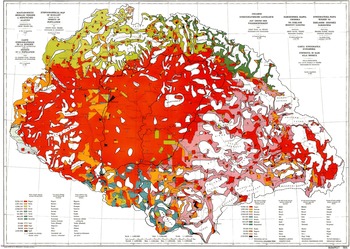
Within this broader framework, my analysis demonstrates how Hungary’s right-wing populist government mobilizes heritage tourism in public schools to shift the national imagination for new generations. It also highlights how this objective is implemented through policies that are not entirely top-down and coercive but grant agency to participants, enabling the incorporation of grassroots nationalist and populist sentiments as well. I will focus on the large-scale Határtalanul program that the Hungarian government introduced in 2010, the year that marked a brisk populist turn in Hungarian politics. This program encourages and financially supports middle school and high school students to take organized class trips to areas of neighboring countries (Romania, Slovakia, Serbia, Croatia, and Ukraine) that belonged to the Hungarian state before the Treaty of Trianon was implemented in 1920 (figure 1).Footnote 3 Between 2013 and 2019, about three hundred thousand students participated in the program, nearly 30 percent of the targeted age cohort.
“Carte Rouge” – “Red Map” prepared by Hungary for the peace talks in Trianon. An ethnic map of Hungary based on the density of the population according to the census of 1910. Source: Pál Teleki, public domain, via Wikimedia commons.

This program is significant because it demonstrates the elaborate propaganda toolkit of populist governments that often exploits ground-up tactics and targets young, malleable minds. It shows how the Hungarian government utilizes the public education system to reengineer the meaning of the nation by promoting a narrow and exclusionary ethnic understanding of cultural membership and by selectively overemphasizing Hungarian heritage in regions that have had multiethnic, multi-religious, and multicultural histories for centuries. The program also highlights how market practices such as tourism are embraced and mobilized for ideological purposes. The Hungarian government also views its subsidies for heritage tourism as an important way to support Hungarian ethnic enclave economies in neighboring countries, which can contribute to their economic security and overall stability.
I acquired a unique data set from the Hungarian Ministry of Human Resources, through a long and arduous process of appealing to the Hungarian Freedom of Information Act. The set contains detailed information about all the class trips (N=2374) that took place between 2013 and 2016. Schools need to submit a comprehensive application package to obtain funding from the program, which includes, among other things, a specific thematic focus, a detailed itinerary, and an agenda for preparatory meetings before and follow-up meetings after the trip. The summary of these items as well as data about the amount of funding the government awarded to each school make up the bulk of the information in the data set. Based on my initial analysis of this aggregate data, I took a random sample of thirty trips for each year between 2013 and 2016, stratified by the destination country and the location of the applicant school (Budapest versus the countryside). I obtained the entire dossier for each of these trips, including the original application, the final report, and a wealth of supporting documents that constitute the empirical basis of my analysis here.
The article first explains why the Hungarian case is theoretically and comparatively informative and how heritage tourism assumes an ideological role in public education. Then, it analyzes the government’s symbolic framing of the program around a new national identity and how this is translated into an institutional framework. The next section contrasts the government’s perspective with the school’s narratives, showing how participants navigate and shape the program through three main narrative frames: a quest for ethnic kin and symbolic reappropriation of ethnic Hungarian heritage sites; immersion in a mythical and distant past; and continuous flirting with radical nationalist symbols. These frames highlight how the government’s framework leaves room for exploiting grassroots and popular nationalism present in schools to complement and enhance the program, pushing it in a more radical direction. The discussion section that follows reflects on how reliably students’ and teachers’ orientations toward the trips can be surmised from the reports. The analysis concludes by assessing student travel programs’ importance as a political instrument for remaking a new generation’s national imagination in Hungary and beyond.
Heritage Tourism, Nation-Building, and Public Education
Public schools are one of the central institutions in which the social order is reproduced. They play an essential role in shaping students’ habitus, their taken-for-granted life worlds (Bourdieu and Passeron Reference Bourdieu and Passeron1990; Feldman Reference Feldman2008: 2). In modern states public schools have also functioned as key instruments of nation-building, especially in the wake of the spread of universal, obligatory, and free-of-charge education (Gellner Reference Gellner1983). Public schools as political means of nationalization were particularly important in crumbling multi-ethnic empires that struggled to transform themselves into nation-states in the late nineteenth century. This was emphatically true in Central and Eastern Europe, where majority and minority ethnic groups often clashed over issues of language use and education. Hungary was among the countries that aggressively used the public school system to nationalize—to Hungarianize—ethnic minorities living under Hungarian rule in the late nineteenth and early twentieth centuries (Brubaker et al. Reference Brubaker, Feischmidt, Fox and Grancea2006).
Public schools have also been a place where the nation is imagined, and students are socialized into imagined national communities (Anderson Reference Anderson2006). Even with the steady rise of globalization, national content has been preserved in school curricula and textbooks continue to deploy nationalist narratives throughout the world (Lerch, Russell, and Ramirez Reference Lerch, Russell and Ramirez2017). Yet, research on how today’s schools inculcate ideas of nationhood and national belonging into students has been confined to a few narrow areas: the study of history education and textbooks (e.g., Dierkes Reference Dierkes2010; Jaskulowski et al. Reference Jaskułowski, Majewski and Surmiak2018; Lerch, Russell, and Ramirez Reference Lerch, Russell and Ramirez2017; Tormey Reference Tormey2006; Schissler and Soysal Reference Schissler and Soysal2005), and to a lesser extent, school ceremonies and similar performances of nationhood in educational settings (Lomsky-Feder Reference Lomsky‐Feder2004; Reference Lomsky‐Feder2011; Millei and Lappalainen Reference Millei and Lappalainen2020). More recently, attention has shifted to civics classes and citizenship education (Bénéï Reference Bénéï2005; Gholami Reference Gholami2017; Miller-Idriss Reference Miller-Idriss2009), and exploring how these are now conceptualized and designed as vehicles for immigrant incorporation (Osler Reference Osler2011; Siebers Reference Siebers2019).
But broader pedagogical practices or extracurricular activities are rarely investigated within the framework of nation-building. Field trips, for instance, long a staple in primary and secondary education, have received little attention from this perspective (DeWitt and Storksdieck Reference DeWitt and Storksdieck2008; Michalkó, Rátz, and Keszeg Reference Michalkó, Rátz and Keszeg2016; Rátz, Michalkó, and Keszeg Reference Rátz, Michalkó and Keszeg2020). The only notable exception is Israel, where a “culture of trips” developed and has been understood as central to forming Israeli national identity. There, school trips and hiking tours (El Haj Reference El-Haj2001; Feldman Reference Feldman2002; Reference Feldman2008; Katriel Reference Katriel1995; Kelner Reference Kelner2010) are incorporated into the educational system in both school and out-of-school settings. They serve as a form of secular pilgrimage, reaffirming a sense of belonging and physically reconnecting participants to the land of Israel (Katriel Reference Katriel1995; Feldman Reference Feldman2008).
Simultaneously, interest in ethnic tourism, often closely coupled with heritage tourism, has been on the rise. Studies explore how the politics of ethnicity was catapulted into the marketplace, turning ethnic groups into business ventures, or “ethnopreneurs” (Comaroff and Comaroff Reference Comaroff and Comaroff2009; Surak Reference Surak2010). As a result, we see the proliferation of ethnic products and ethnic marketing, the rapid expansion of heritage industries, and genealogical tourism. The significant growth of Jewish heritage tourism in post-socialist Central and Eastern Europe is part of this larger trend (Lehrer Reference Lehrer2013). But genealogical tourism is also linked to ethnic diaspora populations who develop various forms of “homeland nationalism” (Brubaker Reference Brubaker1996) through reconnecting with their ancestors’ homeland (e.g., Bhandari Reference Bhandari2016; Carter Reference Carter, Coles and Timothy2004; Hughes and Allen Reference Hughes and Allen2010). A variant of this literature deals with the commercialization of national distinctiveness and heritage by focusing on the spread of nation-branding and its entanglement with globalization and neoliberal corporatization (Aronczyk Reference Aronczyk2013; Reference Aronczyk, Wherry and Woodward2019; Bandelj and Wherry Reference Bandelj and Wherry2011; Kania-Lundholm Reference Kania‐Lundholm2014; Kowalski Reference Kowalski, Bandelj and Wherry2011; Rivera Reference Rivera2008).
The Hungarian case of state-sponsored heritage tourism is theoretically interesting because it helps to connect and advance these literatures. On one hand, it shows how, in a neoliberal manner, the state harnesses market practices like heritage tourism to promote a new understanding of the nation in public schools. While there is growing literature on how heritage tourism feeds various national identity discourses, these works focus primarily on mass tourism and rarely investigate the role it can play in educating public school students about national belonging. My main argument is that the informal and experiential character of tourist travel, combined with heritage tourism’s performative and affective power (Edensor Reference Edensor2001; Reference Edensor2007; Sumartojo Reference Sumartojo2016), creates fertile ground for the incorporation and institutional validation of vernacular histories and popular forms of nationalism. The analysis thereby contributes to developing perspectives that cross-pollinate dominant but divergent approaches to nation-building: the macrohistorical strand focusing on state practices, and micro-analytical scholarship on everyday and banal nationalism.Footnote 4
On the other hand, the Hungarian case expands our understanding of ethnic heritage tourism by highlighting that diaspora tourists are not necessarily gravitating only toward a nation-state, homeland, or sacred center. Diaspora tourism can also move in the opposite direction, as tourists travel from their nation-state to territories in other countries that are seen as homes to their ethnic kin. This form of diaspora tourism may be particularly common in former empires (e.g., Russia, Turkey) and nation-states that lost significant territories, which they feel resentful about and try to reappropriate through cultural practices like heritage tourism. Cross-border heritage tourism thus underscores the importance of ethnic diaspora communities in defining the symbolic value of national territories and the pliable boundaries of the nation-state (Brubaker and Kim Reference Brubaker and Kim2011; Kim Reference Kim2016; Lainer-Vos Reference Lainer-Vos2013). The Hungarian case also illuminates transborder diaspora populations that were created by shifting international borders rather than the much more frequently studied examples that emerged through migration (Pogonyi Reference Pogonyi2015).
The Határtalanul student mobility program was formally established by a Parliamentary decree on 21 October 2010 (101/2010 (X.21.) OGY). This decree simultaneously mandated the introduction of a national public school Memorial Day on 4 June to celebrate a newly minted national holiday, the so-called National Unity Day (Nemzeti Összetartozás Napja) in commemoration of the 1920 Treaty of Trianon. It also called for a new cultural institution, “The House of Hungarians,” to function as an information and cultural center showcasing the life of Hungarian transborder and diaspora communities while coordinating and providing curricular support for mobility and other educational programs. That the travel program was launched as part of a larger package of new legislation clearly signaled the government’s intention to fundamentally rethink and retool its relationship to ethnic Hungarians beyond state borders. The measures of the decree contribute to what the government calls a new “politics of the nation” (nemzetpolitika), which requires a new vision for defining the relationship between polity and nation, and a long-term policy strategy (nemzetpolitika stratégia) for determining how transborder and diaspora communities fit into this new concept of the nation.Footnote 5
The status of ethnic Hungarian minorities in neighboring countries has played a central and divisive role in Hungarian politics in the post-1989 period, regardless of the political orientations of ruling governments (for overviews, see Bárdi Reference Bárdi, Kántor, Ieda, Vizi and Halász2004; Csergő Reference Csergő2007; Hatvany Reference Hatvany2006; Pogonyi Reference Pogonyi2011; Waterbury Reference Waterbury2006). The Fidesz party government, however, brought a radical shift to this policy area after it returned to power in 2010 by defining these communities as an integral part of the Hungarian polity. New policies have moved from simply expressing solidarity and providing economic and cultural support to promoting closer incorporation of ethnic Hungarians into the nation. This led the state, in 2011, to extend to them citizenship and voting rights in Hungary’s parliamentary elections (Pogonyi Reference Pogonyi2017).Footnote 6 Since 2010, the government has significantly intensified “the attempt to institutionalize a Hungarian nation which transcends state boundaries and includes not just the citizens of Hungary-proper, but all the ethnic Hungarian minorities living on the territory of the former Austro-Hungarian Monarchy” (Pap Reference Pap2013: 25).
The student travel program lies at the intersection of this new “transnational” nation-building project and educational policy. The Határtalanul program consists of three distinct grant competitions that schools can apply to annually. My study focuses on the largest and most inclusive program, which targets thirteen-year-old “seventh grade” students in middle schools. In fact, the long-term aspiration of the Határtalanul program has been to have the entire cohort of Hungary’s thirteen-year-old students take an organized class trip to a Hungarian heritage site in neighboring countries. That cohort is seen as key to implementing the program’s general principle that every (homeland) Hungarian student should have the opportunity to take a class trip to visit ethnic kin communities in neighboring countries at least once during their public-school education (Csete Reference Csete2011: 7). No similar schemes or government subsidies exist for sponsoring students of these age groups to travel to other foreign countries.
The ultimate political goal of the program is to foster national consciousness across borders and educate young Hungarians that territorial borders of the state and the nation do not necessarily overlap. It promotes the idea that ethnic Hungarians beyond the border should be viewed as part of the Hungarian nation, and their habitat as part of Hungary’s past, and that “motherland” (anyaország) Hungarians owe a special responsibility to these diaspora communities that suffered from ethnic discrimination in the post-World War II era.
Örs Csete,Footnote 7 Határtalanul’s main architect and first director, saw the widespread lack of knowledge about transborder Hungarians as an urgent reason for establishing the program (Csete Reference Csete2011). He argued that this ignorance was the product of forty years of forced silence under state socialism, when the peace treaties that ended the two world wars—the 1920 Treaty of Trianon and the 1947 Paris Peace Treaty that reinstated the Trianon borders—were treated as taboo subjects. If these events were discussed at all, on the pages of history textbooks for instance, they always had to be portrayed as just punishment for Hungary’s fascist, irredentist, and oppressive activities. As a result, in Csete’s view, generations of Hungarians today have known close to nothing about Hungarians in the “external homeland” (külhoni magyarok).
His intention was to raise awareness about the geographic fragmentation of ethnic Hungarian communities as a legacy of Hungary’s twentieth-century history, especially because still roughly a quarter of all ethnic Hungarians are born and live outside of Hungary proper (ibid.: 11). The first step toward a new idea of a nation that transcends this geographical fragmentation lies in the “removal of borders” (határtalanítás). This signifies, according to Csete, “the multiplicity of symbolic and concrete activities that completely disregard or overstep, so to speak, state borders and generate connections between people, organizations, and institutions. These are the kinds of activities that work against spatial fragmentation and connect members of the nation spiritually without any, anyways totally unrealistic, (physical) change of borders” (ibid.: 12). The Határtalanul project has been devised to put these ideas into practice by creating a “subject knowledge enhancement (tudásbeviteli) program that facilitates national unification, targeting young generations and providing them an opportunity to learn about these issues through lived experience” (ibid.: 15).
Another more indirect aim of the program is to promote tourism to these areas inhabited by ethnic kin, especially to Transylvania in Romania. There, ethnically based heritage tourism has deeper roots and can be developed into a viable ethnic enclave industry. The Hungarian government has been offering significant grants and subsidies to ethnic Hungarian businesses in this field. The long-term hope for Határtalanul trips is that they will sow the seeds of interest among members of a new generation, who will later return to those same areas as regular tourists.Footnote 8
Tourism to former Hungarian territories, first and foremost Transylvania, began in the mid-1970s and was linked chiefly to the so-called Dance House movement, a folk revival that by the 1980s had grown into a significant counter-cultural social movement (Csurgó et al. Reference Csurgó, Jánosi, Juhász, Sirutavičius, Pintilescu, Apor, Apor and Horváth2018; Feischmidt Reference Feischmidt and Feischmidt2005; Reference Feischmidt2008; Kürti Reference Kürti2001). Transylvania became a prime destination for movement members, who flocked to rural areas in search of authentic folk heritage (peasant songs, dance music, traditional performance techniques, living handicraft traditions) uncorrupted by socialist modernization. From the 1980s onward, travel to these areas was also linked to political dissident groups in (mainland) Hungary that organized trips to deliver aid and donations to deprived communities as a show of solidarity to Hungarian minorities that suffered harsh discrimination under Ceausescu’s dictatorship.Footnote 9 Charity-related activities remained an important motive for regular travel to Transylvania after 1989 (Zakariás Reference Zakariás2018). Similarly, in the early 2000s some civil society organizations, like the Rákóczi Union (Rákóczi Szövetség), started organizing student exchange trips that brought ethnic Hungarian high school students from neighboring countries to Hungary to celebrate, for instance, national holidays with Hungarians. After the collapse of state socialism, religious tourism rapidly developed as a niche, since Transylvania is home to an iconic Catholic pilgrimage site in Şumuleu Ciuc (Csíksomlyó). There, the Christian festival of Pentecost attracts between fifty and a hundred thousand attendees each year, making it one of the largest annual gatherings in all of Romania (Feischmidt Reference Feischmidt2008; Ilyés Reference Ilyés2013).Footnote 10
It is in this larger context of expanding tourism that promoters of Határtalanul emphasized the potential multiplier effects for small businesses in the hospitality industry both within Hungary and in the “external homeland.” These include travel agencies, bus companies specializing in travel to Hungarian populated areas of neighboring countries, motel and B&B owners, tour guides, local Hungarian-owned restaurants, and other food venues. Moreover, Hungarian schools in neighboring countries, many of which have been constructed or renovated with the Hungarian government’s financial support, lease their dormitories for lodging visiting school groups. The resulting earnings can be reinvested to maintain and operate the schools, thus increasing the long-term stability of these important Hungarian institutions (Csete Reference Csete2011: 29).
Class Trips as Framed by the Government
The Határtalanul mobility program is expertly designed and carefully managed. The methodical framing, as well as the elaborate application and reporting requirements seem to ensure the trips have the desired ideological impact without making the program overly prescriptive or rigid. Though only a small fraction of school applications are rejected, the application process is competitive and makes serious demands on schools that apply. This is in line with the neoliberal disposition of the program: schools should not take for granted that they will be funded and should work hard to show they deserve the money and will be eminently accountable for how they spend it.
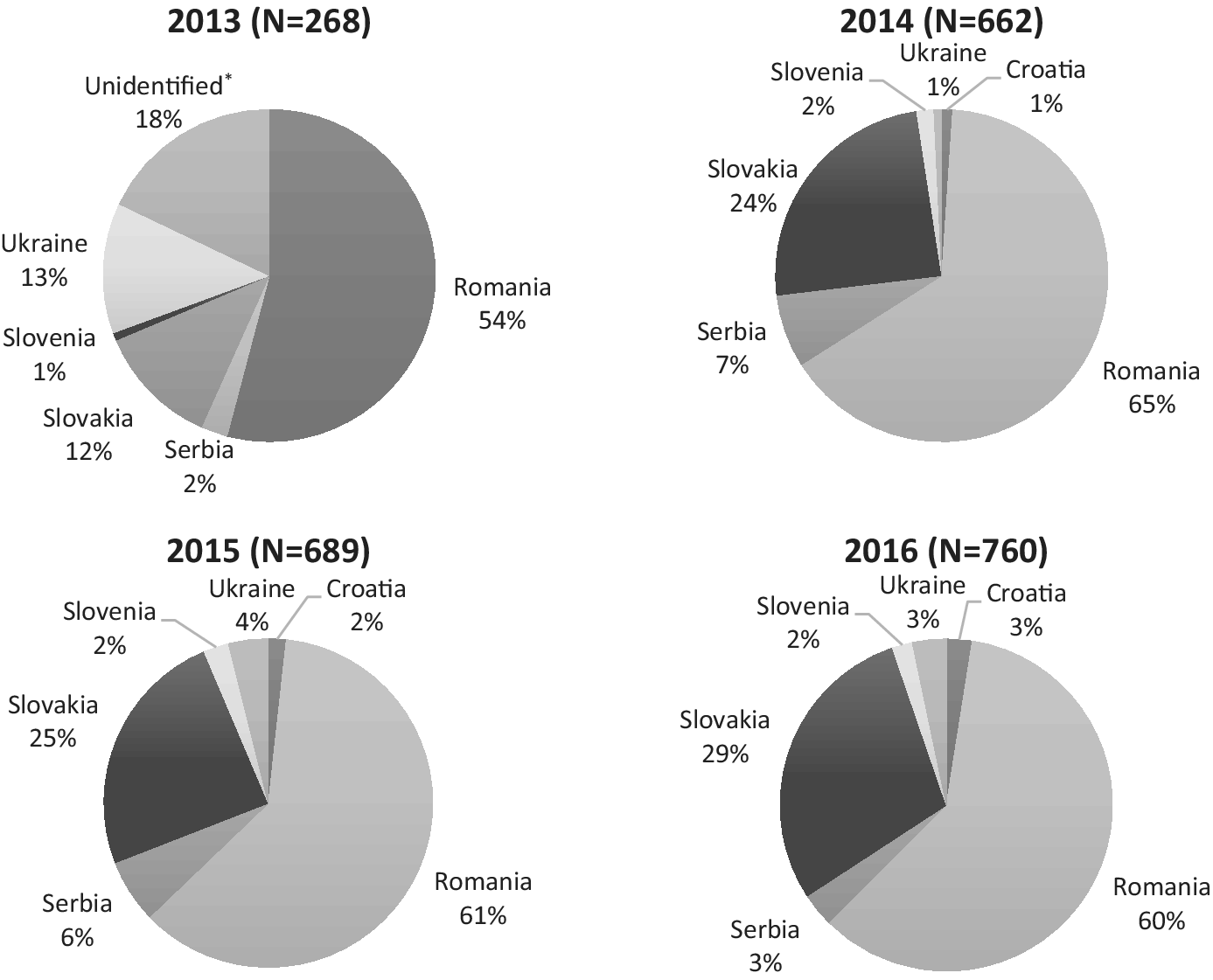
Trips typically last from three to five days and are structured around a distinct theme such as visits to the birthplaces, workplaces, or final resting places of important Hungarian literary figures across Transylvania; follow in the footsteps of “great Hungarians”; tour memorial sites of the 1848–1849 revolution; delve into folk art and music heritage; map sites of mythic legends in Transylvania; or discover traditional mining towns in Slovakia. Applications must include a detailed daily schedule that specifies the group’s morning, afternoon, and evening routines. They also need to indicate if the activities involve interaction with local Hungarian communities (e.g., joint activities with students from the same age group, participation in local holiday celebrations, or contributions to the local community’s well-being). This aspect is highly incentivized to increase the “experiential value” of the trips by promoting active socialization between homeland and transborder Hungarians (figure 2).
Class trips by destination 2013–2016. The summary data for 2013 did not specify the destination country of the class trips. Destination country was determined based on the short descriptions of each trip. For unidentified cases, the short descriptions did not contain sufficient information to ascertain the destination country.

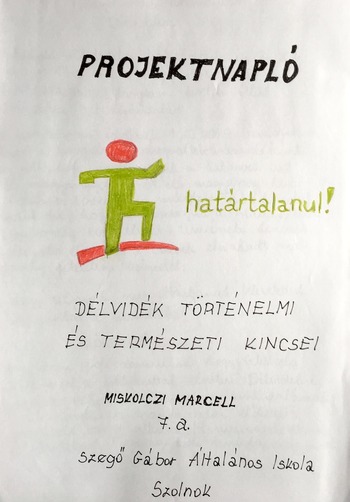
The program imposes no specific thematic requirements on the trips, which stems from the program’s neoliberal attitude. Its creators put their faith in a corporate branding approach to foster participation, rather than simple top-down, administrative enforcement of meticulously predefined and closely censored political agendas. A corporate-style logo that shows a stylized figure stepping over a border is prominently displayed on all program materials and at program-related events (figure 3).Footnote 11 Its use by the funded schools is mandated, especially in media coverage about class trips. Örs Csete underscores that the program aims to attract students and not deter them. Thus, for example, it would be counterproductive to make the trips mandatory. Instead,
the aim is to create a buzz among these young people that projects these class trips to the external homeland as a trendy thing, the school celebration of national unity as a youthful community event, and the House of Hungarians as a cool, cutting-edge place. As far as the class trips are concerned the “Határtalanul” label has already grown into a new brand. The class trips are self-generating and when successful, more and more students will want to travel, especially if the trips are going to be supplemented by other projects (grants, competitions, endorsement by celebrities) and be publicized using social media platforms popular among young people (Facebook, YouTube, etc.) (Csete Reference Csete2011: 21).
Official program logo and hand-drawn logo on a student diary. Source: ha-13-01-175.

In other words, schools and students should not be forced to participate, and should instead feel that, if they do not engage in the program, they will miss out on something “fun, cool, and meaningful.” The very idea of travel and class trips as means of spreading new visions of national belonging reflects this branding philosophy. Class trips promise to be particularly effective because students, almost by definition, return from school trips satisfied, regardless of the destination, since “the very fact that they can get away from home generates excitement” (ibid.: 25). This premise applies even though the trips are conceived as study trips rather than mere recreational ventures, which emphasizes the experiential acquisition of knowledge.
That said, the application process, expected outcomes, and reporting are highly regulated. Schools are required to organize preparatory classes prior to the trip and evaluation sessions after, submit detailed photographic documentation of the trip’s key activities, submit samples of students’ travel diaries, and prepare a two-minute summary video of their travel experiences. Schools also must arrange for media coverage of their trip in local newspapers or radio and television.
In addition to these core requirements, schools are encouraged, though not formally required, to take on some optional responsibilities. Most importantly, these involve integrating the class experience into celebrations of the aforementioned “National Unity Day,” 4 June. Schools are also urged to organize information sessions in which they will promote the trip to their school’s younger students so as to motivate them to apply to the program when they become eligible. All the core and optional activities as well as expenses must be painstakingly documented in the final report, resulting in a sizeable dossier.
Government support of Határtalanul covers the full costs of travel and accommodation for grant recipients. This counts as generous support in an otherwise severely underfunded public educational system. It makes a significant difference especially for smaller schools in rural and underdeveloped areas, which would otherwise be unable to finance comparable class trips. This is probably, in part, why the program is popular among public schools and many schools apply recurrently, even though the administrative burdens applications inflict on them must have some deterring effect. The substantial financial support and the elaborate requirements make schools eager to prove that their trip will be edifying by cramming the program with educational and ritual activities.
Class Trips on the Road: School Narratives of Traveling “Without Borders”
How do schools adapt the government’s framework? Here I will map and analyze the central themes that emerge from the school reports for the random sample of 120 class trips for which I obtained full dossiers. They identify three key narrative frames around which the trips’ activities were consolidated and which appear consistent over the years. The first shows the practices through which the trips assume a narrow and exclusionary ethnic focus and highlight how ritualistic affirmations of ethnic Hungarian identity constitute the core of the activities, even though the program does not explicitly prescribed them. The second frame reveals how trips foreground a “frozen” distant and mythical Hungarian past, carefully avoiding any critical confrontation with the twentieth century’s violent history and firmly ignoring the present situation of transborder ethnic kin communities. The third frame highlights how the program allows grassroots radical nationalism to seep into the classroom and public education. A final section will discuss how these frames illuminate the ways in which the class trips function as vehicles for political indoctrination.
In Search of Ethnic Kin and Ritual Reappropriations of Ethnic Hungarian Sites
All the territories in which key destinations of the class trips are found have been historically multi-ethnic, multi-lingual, and multi-religious, including those areas that still have or once had majority ethnic Hungarian populations (see also Pap Reference Pap2013). Yet, the tours almost uniformly and exclusively focus on the Hungarian aspects and heritage of these destinations. They carefully ignore or edit out any details of the environment that would entail interaction with other ethnic groups and cultures.
For instance, nearly all settlements, from small villages to large cities in Transylvania, normally have names from three different languages—Hungarian, Romanian, and German—reflecting their ethnically mixed populations. Nonetheless, the schools use only the Hungarian names of the settlements and various landscapes in their official materials, and clearly in interactions with the students as well.Footnote 12 This is true not just for Transylvania but also for trips to other neighboring countries. A typical moment during the preparations for trips is to consult the map of the area the itinerary will cover (e.g., ha-13-01-207). As a general rule, these maps are only in Hungarian, which is not always practical because at the destinations, such as in Slovakia, bilingual signs are often severely restricted or outright banned. Moreover, school documentation often does not even refer to these regions as being in a foreign country, but instead uses old, pre-World War I Hungarian designations: Upper Lands (Felvidék) for Slovak, and Southern Lands (Délvidék) for Serbian destinations. These terms carry strong historical and political connotations, since they identify these areas as parts of the Kingdom of Hungary. Their usage was mostly purged from public discourse after World War II. Although the categories lived on informally, they appeared only recently in official parlance or in public schools.
In general, the adjective “Transylvanian” is treated as a synonym of “Hungarian.” When students are asked to list famous Transylvanian writers, artists, politicians, or public intellectuals in preparatory exercises, or as part of assignments before trips, they are expected to generate names of Hungarian personalities. A popular stop on the class trips to Transylvania is the Hajongard (Házsongárd, Hasengarten) cemetery in Cluj-Napoca (Kolozsvár). It is massive, covering some 14 hectares, and is considered one of the city’s most picturesque sites. It was established in the late sixteenth century in response to a plague epidemic and was always a public cemetery, providing a final resting place to residents regardless of ethnicity or religion. School visits to the cemetery often involve an assignment during which students are divided into groups and given names of famous Transylvanian writers, whose graves they are to find on their own and record their inscriptions or photograph them as proof of success (e.g., ha-13-01-142). The schools’ lists always include only Hungarian writers, ignoring famous Romanian writers and other public figures buried in the cemetery.
In addition to educational exercises, the trips are packed with ritual activities that all serve to symbolically reclaim pieces of Transylvania, Slovakia, and Serbia as Hungarian. These effectively leverage the performative and affective capacity of heritage tourism (Edensor Reference Edensor2001; Reference Edensor2007; Sumartojo Reference Sumartojo2016). They connect ethnic identity with space, sensory experience, and affect. Even if the repetitive performances are often habitual and unreflexive (Edensor Reference Edensor2007), they exert a strong emotional pull over students. About 60 percent of the photos enclosed in the final school reports record such moments. Ritual activities often occur several times a day and range from laying wreaths decorated with the Hungarian flag, to placing ribbons in the red-white-green tricolor of the Hungarian flag, to reciting poems by the Hungarian poet whose statute or grave they honor and singing the Hungarian national anthemFootnote 13 and the SzeklerFootnote 14 anthem which, along with the Szekler flag, have generated numerous ethnopolitical controversies in Romania. The sites for these ritual exercises typically encompass plaques, homes, memorials, statues, and graves of Hungarian historical figures and events, though they sometimes include curious lieu de mémoire (Nora Reference Nora and Goldhammer1996), such as the favorite pear tree of the iconic nineteenth-century poet Sándor Petőfi, who died in the 1848–1849 revolution.
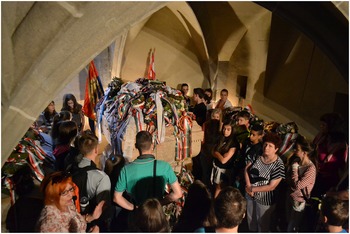
The physicality of the sites and the materiality of the markers framed by collective singing and declamation of poems are harnessed to turn Hungarian identity into a deeply emotional and almost mythical experience. As one teacher notes in their final report: after laying the wreath and singing the national anthem in the crypt of Francis II RákócziFootnote 15 in Košice (Kassa), Slovakia (figure 4), “We all felt that history, the Hungarian national past touched our souls” (ha-13-01-133). Likewise, a student describes in his diary a visit to the thirteenth-century Romanesque church of Arača (Aracs) in Serbia: “When we were there, we sang the national anthem to the memory of our ancestors. I felt the power of the past in all my bones. There was a curious, unspeakable silence in the ether that I can still vividly recall. This memory will remain with me forever” (ha-13-01-175). And on a trip to the graves of the martyrs of the 1848–1849 revolution and war of independence in Arad, Romania, a student remarked: “It was heart-wrenching to see the many Hungarian memorials that are visited by many people who come to lay wreaths. This way we could really experience the idea of belonging together as a nation. We could experience this beyond words” (ha-13-01-162).
Laying wreath with the Hungarian tricolor at the tomb of Rákóczi in Kassa (Košice), Slovakia. Source: ha-13-01-133.

Besides reappropriating sites as Hungarian in ritual performances, a common motif runs through especially the preparatory phase of the program: the suggestion that students are not really going to a foreign country but will visit an extension of Hungary. In a radio interview on a local station in Szolnok, a mid-size city near Budapest, the reporter chats with some students and their class teacher who are about to embark on a trip to Serbia, which they consistently refer to as Southern Lands (Délvidék). The teacher explains that the goal of the tour is “to discover Hungary beyond the border” and “introduce students to the culture and situation of the Hungarian population that was torn away from us” (ha-13-01-175). Her ultimate hope is that with these class trips students will eventually learn what it means “to travel from the home to the homeland” (“otthonról haza megyünk”). Incidentally, this phrase is also the business motto of one of the travel agencies, Csillagösvény, that specializes in offering package tours and providing grant-writing assistance to interested schools.Footnote 16
The fuzzy line between home and abroad is captured by another teacher’s statement underlining how important it is for “the first foreign trip that students take to lead them to the territories of historical Hungary” (ha-13-01-228). In the project diary, the teacher also talked about how the excitement at going to Transylvania was mixed with the challenges of properly preparing students for the trip, some of whom had never crossed the Hungarian border before. The big question was, the teacher added, “whether we could successfully convey to them that we will not be traveling to Romania, but to Transylvania, and we will meet Hungarians who are just like us. It is often said that the storm of history had scattered us, but despite this the Hungarians of the Carpathian Basin belong to one and the same nation and this unity cannot be called into question by any other ethnic group (népcsoport)” (ha-13-01-228).
And students were indeed trying to wrap their head around this idea. One noted in his diary: “We really learned an awful lot [on the trip], among other things, the fact that Hungary has a border with itself” (ha-13-01-175). Another classmate made a similar point in highly emotional terms: “This trip took us to a seemingly unknown country, but we had to realize to what extent their life is also our life … now I no longer dare to call them ‘Serbs’ [referring to Hungarian minorities in Serbia] because they are also Hungarian, truly Hungarian in their faith and soul … in the future I will also strive to live as a true (igaz) Hungarian.” (ha-13-01-175). Some students said this was the best thing about the trip: “What I liked most about the trip is that we went abroad, but it still felt like as if we had been at home” (ha-13-01-265).
Because the Határtalanul mobility program was ultimately established to foster a sense of national belonging between homeland and transborder Hungarians, the class trips are expected to include activities through which students engage with local ethnic kin communities. This mostly takes place in the form of visiting local Hungarian schools or orphanages and spending time with students of the same age group. The interactions involve semi-structured group conversations at the local school about how everyday school routines (e.g., subjects, grading, vacations) in a minority Hungarian school in Transylvania or Slovakia compare with those in Hungary. Schools also often bring small in-kind donations, especially Hungarian-language books. At times, local Hungarian students join the visitors on a walking tour of the host city. But most often, joint programs consist of some mix of folk dancing, singing folk songs, and playing a team sport, usually soccer. These interactions are highly ritualized and ceremonial, and thus often quite awkward. There is only minimal unstructured time for more informal exchanges between the travelers and local Hungarian teens. Visiting Hungarian students develop contradictory attitudes from these encounters, showing a tendency to simultaneously romanticize and Orientalize their experiences. They tend to perceive diaspora Hungarians as “better”: more authentic, more proud, more bona fide Hungarians, yet they are often taken aback by signs of economic underdevelopment and poverty in neighboring countries.
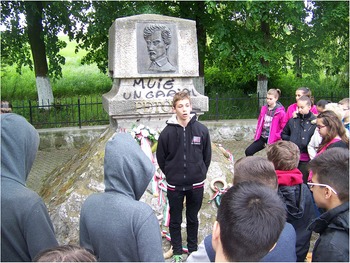
The trips are in fact characterized by stark ethnic insularity. Contact with members of ethnic groups other than Hungarian is not encouraged and, due to the design of the trips, is almost completely eschewed. As a result, groups end up having only chance encounters with Romanians, Serbs, or Slovaks. These often turn out to be uneasy experiences that reinforce negative stereotypes about the ethnic majority and their tense relations with Hungarian minorities.Footnote 17 This is in part because these impromptu interactions mostly occur in prominent public places where Hungarian visitors perform ceremonies to symbolically reclaim elements of the cityscape, which non-Hungarian locals perceive as an affront. One such incident took place in Arad in Transylvania at the memorial to the martyrs of the 1848 revolution, where one school group was booed by Romanian spectators, which quite disturbed students (hat-14-01-510). In another case, students laid a wreath in Albești (Fehéregyháza) at the bust statue of Hungary’s most famous nineteenth-century poet, Sándor Petőfi, who also perished in the 1848 revolution, that was defaced by obscene Romanian graffiti (ha-13-01-265, figure 5).
Student reciting a poem in front of Petőfi’s statute covered in Romanian-language graffiti (“Hungary sucks”). Source: ha-13-01-265.

In Search of a Distant and Mythical Hungarian Past
The historical periods evoked by the destinations similarly reinforce the ethnic insularity and one-sided narrative of the trips. They combine the narrow focus on Hungarian ethnicity with an attention to events and sites that reference a distant past, eliciting uncritical and uncontroversial interpretations. The overwhelming majority of the trips target highly canonized sites linked to historical figures and events that span the sixteenth through the nineteenth centuries, and steer clear of the contentious history of the twentieth century beyond the break-up of the Austro-Hungarian Monarchy.Footnote 18 The historical heritage these trips highlight does not simply transmit some “invented history” (Hobsbawm and Ranger Reference Hobsbawm and Ranger1983). Rather, the trips frequently focus on historical periods and events for which fact and fiction are hard to separate. Legends, miracles, and folk ballads are treated as an inherent part of historical memory, which lends a mythic quality and experience to historical consciousness and ethnic identity while anchoring them in space.Footnote 19 The class trips thus serve as vehicles for reterritorializing the national (and especially ethnic) imagination by reconstructing mythic landscapes: they reconnect legends to concrete physical sites and places.
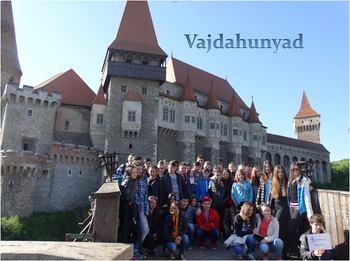
Sites that students typically visit include famous medieval castles of the Voivodes and Princes of Transylvania (e.g., Hunyadi, Bethlen, Thököly, Rákóczi) and of other prominent aristocratic families (e.g., the Károlyis); churches of various denominations (mostly built during the Middle Ages); battle sites of the 1848–1849 revolution and war of independence; graveyards of fallen and executed revolutionaries and naturally deceased notable Hungarians; the homes and mansions of literary figures, politicians, and public intellectuals; and the so-called “thousand-year border” Footnote 20 in Ghimeș (Gyimes), Romania (figure 6).
Class photo at Huneadora castle (Vajdahunyad castle) in Transylvania, Romania. Source: hat 15-05-0348.

However, class trips are driven by an eager search for not simply a distant past but a past enriched with myths, legends, ballads, and folk tales that unfold over breathtaking magical landscapes. Many of the destinations, especially in Transylvania, are indeed excellent wellsprings of colorful and eventful tales. A teacher aptly articulates the pedagogical rationale behind focusing on legends: “Legends have educational value because they deal with resourcefulness, persistence, love, historical moments, courage, and the love of nature. In these regions, places, castles, and saints have legends. Through legends we can get closer to the soul of people who live there, to their ways of thinking and their history” (hat-14-01-0156).
In the Anglophone world, Bram Stroker’s Gothic horror novel Dracula and its countless adaptations are the most likely (and probably the only) association triggered by the mention of Transylvania. There is in fact thriving Dracula tourism to several sites linked to Dracula’s real and fictional travels. These include the Bran Castle (Castelul Bran, Törcsvár), considered the home of Dracula; the city of Sighisoara (Segesvár), where the house in which Vlad, the Impaler was born can be found; and the city of Brașov (Brassó, Kronstadt) where Vlad led raids against Saxon merchants (Hovi Reference Hovi2014). In the 1990s there were ambitious plans to build a massive Dracula theme park, though the idea was eventually dropped for fear it would impart an unfavorable image of Romania to visitors. Even though the original Dracula novel had Hungarian connections, and Sighisoara (Segesvár) is a popular stop on the class trips, students do not visit the city to see Vlad’s home but rather to remember one of the key battles of the 1848–1849 revolution, a decisive defeat by the Russians.Footnote 21
Instead, Hungarians are in pursuit of their own ethnic legends. There are class trips organized entirely around historical, religious, and folk legends that are associated with the visited regions. Students sometimes receive assignments that ask them to invent and write up a legend on their own (e.g., ha-13-01-125). Many of the scenic natural sites that serve as regular stops on the trips are steeped in myths and legends. For instance, the Killer Lake (Lacul Rosu, Gyilkos-tó) in the Eastern Carpathians in Hargitha county is a natural dam lake that was formed by a landslide due to an earthquake in 1838. But when Hungarian students visit, they recount a folk ballad that offers a much more poetic version of the origins of the lake. According to the ballad, a beautiful young Hungarian woman, Eszter Fazekas, was snatched by a local bandit who took her into the mountains and tried to coerce her into marrying him. In her despair, Eszter shouted to the mountains for help. They responded with loud thunder and lightning and dumped rocks and debris on the area, killing both Eszter and the bandit, as well as a local shepherd with all his sheep. The collapsed slope blocked the canyon river and the lake was formed. The barren tops of pine trees that used to grow on the slopes can still be seen sticking out of the lake. Students are told that when visitors looked closely at the surface of the water on a sunny day, they might see Eszter’s green eyes looking back at them.
Cracking the Door Open for Radical Nationalism
As noted earlier, the mobility program does not contain specific prescriptions regarding the thematic content of the trips. It provides no ready-made templates for fostering a new vision of the Hungarian nation that transcends state boundaries and incorporates diaspora communities. This contrasts sharply with how ideological programming in public schools worked under state socialism, when ideological expectations were handed down as top-down directives and deviations from the standard model were rarely tolerated.
Yet, that the mobility program does not require uniform ways of promoting the idea of a “borderless” ethnic nation does not imply that it has no normative political aspirations. The Határtalanul program, for instance, also opens the door for radical nationalist tropes. It does so seemingly by oversight and indifference: it does not discourage schools from engaging in radical nationalist clichés and does not sanction such content in any way. Rather, it canalizes and institutionalizes ground-up popular sentiments that can often come from individual teachers or local tour guides who privately entertain radical nationalist beliefs.
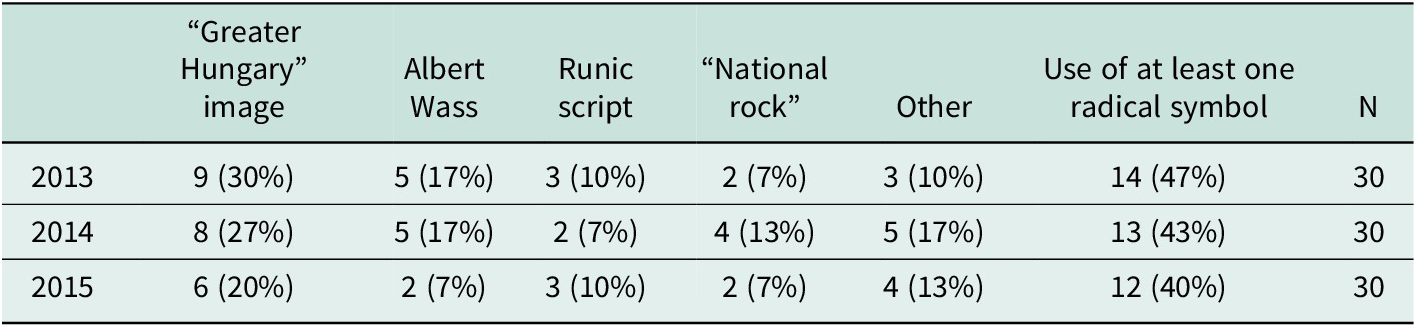
It is not always easy to draw a clear line between “mainstream” and “radical” nationalism (Miller-Idriss Reference Miller-Idriss2018; Reference Miller-Idriss, Fielitz and Thurston2019), but in Hungary a particular set of symbols and themes is closely associated with a radical nationalist milieu.Footnote 22 In the context of these school trips, radical nationalist symbols relate primarily to interwar irredentist propaganda and cultural iconography that were absent from public schools before 2010. These symbols were tabooed in official contexts until 2010 but they have been widely known and are increasingly widespread in popular culture. I identified and traced four key symbols in the dossiers of the class trips: the uncritical use of revisionist Trianon propaganda material from the interwar period, references to the work of the Transylvanian writer and Romanian war criminal Albert Wass, the use of songs and lyrics by so-called “national rock” bands, and the propagation of “Transylvanian” Runic script among the students.Footnote 23 Table 1 shows the frequencies (and percentage value in the representative annual samples) with which these radical symbols were incorporated into class trip curriculums. It reveals that each year about half of the classes used at least one radical symbol during their trip.Footnote 24 The irredentist “Greater Hungary” image was the most commonly occurring example, followed by references to the life and work of Albert Wass. While, as table 1 indicates, these radical symbols did not completely dominate the trips, the frequency and manner of their use must still be interpreted as alarming. The evocation of these symbols was inconceivable in public school classroom environments before 2010, and they have no place in any formal educational context, unless they are critically examined. School-based activities related to these trips have played a crucial role in normalizing the presence of these symbols in public schools. Let me discuss some examples of how these symbols were used on trips and why they are radical nationalist in nature.
Use of radical nationalist symbols on class trips.*

* The 2016 figures are not reported here because some missing data are still petitioned under a Freedom of Information Law Request
Radical nationalism is allowed to penetrate the class trips partly through the institutional link that was created between the program and the celebration of National Unity Day to commemorate the Treaty of Trianon and promote the idea of an ethno-national community with transborder Hungarians (Feischmidt Reference Feischmidt2020). Schools follow no uniform script for celebrating this event, but the Határtalanul program expects—even if it does not formally require—participating schools to incorporate their class trip experience into their celebration of the holiday.
The establishment of this holiday is not the main problem, per se. The Treaty of Trianon was a radical turning point that had devastating consequences for Hungarian history, and it must be carefully examined, critically analyzed, publicly discussed, and remembered. But rather than being an occasion for thorough evaluation and critical reflection, the new holiday has served to recycle a simplistic victim narrative from the interwar period. There is no politically untainted vocabulary (visual or verbal) to talk about the causes and consequences of this event, in large part because the topic could not be openly discussed under state socialism. The post-1989 period has been dominated by a loud backlash against this political silencing, which has revived bitter resentments over the partitioning of the country after World War I.
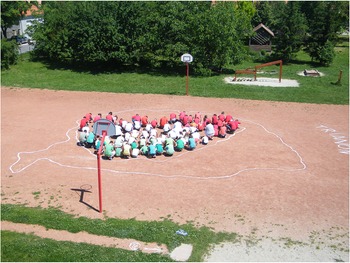
In most cases, class trips introduce radical nationalist motifs through materials used to explain how ethnic Hungarian communities emerged after the Treaty of Trianon drastically redrew the country’s borders. In preparatory classes, teachers frequently rely on various maps and images that represent “Greater Hungary” with its pre-1920 borders. At times, students literally perform “Greater Hungary” at holiday celebrations or as part of a trip activity with transborder students. They usually group together wearing red, white, and green T-shirts in the school gym or the outdoor sports field to form a Greater-Hungary shape with the Hungarian tricolor (e.g., ha-13-01-175, ha 13-01-213, hat-14-01-0510, hat-15-05-0452, see figure 7). A few dossiers include photos of flower beds in the shape of Greater Hungary planted in public squares of local municipalities (e.g., ha-13-01-213). This motif is a visual trope that was widespread in Hungary during the interwar years.
Students taking the shape of today’s Hungary within Greater Hungary. Source: hat-14-01-0510.

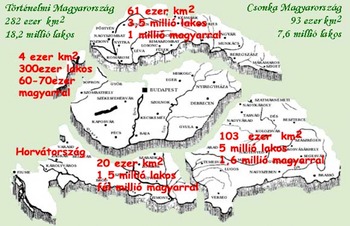
In the interwar period the outline of “Greater Hungary” became the visual symbol that most effectively encapsulated the perceived atrocity of Trianon (Molnár Reference Molnár2021). But simultaneously, this image came to signify the aggressive irredentism of Hungarian politics between the world wars. This is why its use became taboo during the state socialist period and it remains controversial today (see ibid. on changing historical uses of the image). Moreover, “Greater Hungary” images shown as illustrations in class presentations are often the very images used by the interwar political propaganda machinery of the government and other organizations demanding reinstatement of the old borders (figure 8). This detail is never revealed to students, nor do the presentations ever explore the causes or varying views of the events. They narrowly focus on their consequences—the massive territorial, economic, and population losses, as well as the loss of natural resources, urban centers, and vital infrastructure—to emphasize that injustice was inflicted on Hungary. In 2013, for example, 30 percent of all the schools used “Greater Hungary” images while preparing students for the trip. In that year’s sample, in only one school, from Budapest, did the teacher’s presentation about Trianon adopt a somewhat more critical approach, in the form of a discussion of competing explanations for the treaty’s causes and complexities (ha-13-01-219).
Reprint of an interwar propaganda postcard used in preparatory class. Source: hat-15-05-0348.

The second most common item that infuses class trips with radical nationalism is the presence of the Transylvanian writer Albert Wass. Of the thirty schools in both 2013 and 2014, 17 percent included in their itinerary a visit to either his former home or his grave in Transylvania, learned about his work and legacy during preparatory and evaluation sessions, and incorporated excerpts from his work into the program they performed at the school on National Unity Day.
Wass was condemned as a war criminal in Romania in 1946 and escaped to the West, settling eventually in Florida in the United States in 1951. He was sentenced to death for inciting a Hungarian military unit to massacre a Romanian orthodox presbyter, his family, their Hungarian maid, and a handful of local Romanians and Jewish merchants in 1940 when parts of Transylvania were reclaimed by Hungary. Wass denied the charges and the United States refused three separate Romanian requests that he be extradited. But his death sentence was not revoked either in Romania or Hungary after the end of state socialism. Despite repeated requests for a retrial, he was never rehabilitated and could not return to Europe. He ended his own life at the age of ninety in Florida in 1998. Although he was a leading figure in the cultural and literary life of émigré Hungarians in the United States, he was virtually unknown to Hungarian audiences until the collapse of state socialism because until then his books were not published in Hungary (and were banned in Romania). His popularity skyrocketed in the post-1989 era and a cult-like following developed around him, while his reception remained polarized and politically contentious.Footnote 25 Wass’ relative prominence on the school trips is a tell-tale sign of how the trips uncritically introduce radical nationalism to school children.
But even if one grants him some benefit of the doubt regarding his conviction as a war criminal and just looks at his oeuvre, they will find that his works are peppered with irredentism, ethnocentrism, chauvinism, and anti-Semitism. For instance, his monumental historical novel Kard és kasza (Sword and scythe) tells the story of successive generations of a Hungarian aristocratic family who lived in the Transylvanian plain from the eleventh to the twentieth centuries, drawing on Wass’s own family history. The book ruminates over the responsibility of Hungarian landowner aristocrats who permitted more and more Romanian peasants to settle in Transylvania and work their land until they began to outnumber ethnic Hungarians and irrevocably changed the region’s ethnic composition. Another of his popular novels, Adjátok vissza a hegyeimet! (Give me back my mountains!), written in 1949, was added to the National Basic Curriculum in 2020 despite its unconcealed anti-Semitism, attesting to the growing normalization of radical nationalist content in public education. Class trips that embrace Wass do so with no reflection on his controversial involvement in World War II or the political ideology grounding his work.
Thirdly, radical nationalist symbolism crops up in the type of music used as soundtracks to the two-minute video diaries of the trips that each school must submit as part of their final report. It is also sometimes performed during preparatory and information sessions, as well as the 4 June celebrations of National Unity Day. The music in question is from Hungarian rock bands that play a recent genre of political rock music labeled “national rock,” which has strong roots in the skinhead music scene and can be loosely understood as the local equivalent of white power music (Feischmidt and Pulay Reference Feischmidt and Pulay2017; Kürti Reference Kürti2012; Lange Reference Lange2018). The genre emerged around 2000 and has rapidly gained in popularity. It uses rock instrumentation, and its lyrics focus on national history and expressions of patriotism. They are often inspired by military and folk songs and embrace radical nationalist, irredentist, anti-Roma, anti-Semitic content. Music from well-known national rock bands such as Ismerős Arcok (Familiar faces), Szkítia (Scythia), and Kárpátia (Carpathia) accompanied the trips of several schools. The song “Without You” from Ismerős Arcok—where “you” refers to transborder ethnic Hungarians—served as a soundtrack to one school’s video diary, with its recurring chorus, “No matter what happens while we live and die/we will always share the same blood” (ha-13-01-142). Another school played Szkítia’s piece entitled “Trianon” at their National Unity Day ceremony, with its unequivocally irredentist lament:
Many of these bands, especially Szkítia, perform in a folk-rock style, and students sometimes believe that these songs are actually folk music (e.g., ha-13-01-175). The above excerpts from lyrics used on the trips unabashedly espouse “blood-and-soil” nationalism with racist overtones.
Szekler Runes or Szekler script is another marker of radical nationalist influence lurking over the trips. The Szekler Runic alphabet is said to be a Rune-like script, similar in appearance to Nordic runes, that was used in ninth-century Transylvania. This script is a source of political controversy because it pits popular belief, according to which it proves the ancient origins of Hungarians as an ethnic group, against academic scholars who have largely questioned it as a legitimate object of linguistic and historical research; some have even dismissed it as a hoax dating from the Middle Ages. Runes enjoyed popularity in interwar right-wing circles and the Scouts movement, and as such were suppressed during state socialism. Its popularity was revived in the Hungarian diaspora in the United States and then in Hungary by amateur linguists and historians.
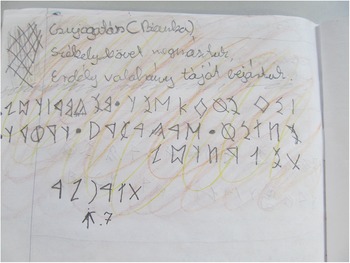
In popular culture, Runic writing has seen a spectacular revival in the past two decades. Almost all radical nationalist websites are “bilingual”; runic calligraphy is a popular motif in garment design; children learn it in after-school programs; and many villages and small towns in Hungary now display the name of the settlement in Runic script below the official Hungarian sign. Popular interest in Runic script is also linked to the exploration of other, related mythic origin stories of Hungarians, including presumed links to Huns, Scythians, and Sumerians. School children are especially drawn to Runic writing because to them it feels like a cool secret code, a cipher. On the trips Runic script is used to make the educational aspects of the trips more fun. Study quizzes about the trips include exercises with Runes, or students are instructed to search for examples of Runic signs during the trip (ha-13-01-113, ha-13-01-162, figure 9).
Runic script in a student diary. Source: ha 13-01-162.

Discussion
One concern to consider about the materials schools included in the trip dossiers is whether they exhibit any selection bias. The program’s intentions are clearly communicated by the government, and schools and teachers who prepare the applications and reports are well aware of them. Hence, it is not terribly surprising that the final reports contain narratives that fall in line with government expectations. Yet, every year there were a few trips in the sample that did not just resound the ideological cornerstones of the program. Sometimes they focused on an ecological project, or their activities were dominated by playful programs with a long-time partner school in Serbia, as opposed to being studded with the usual visits to museums, churches, memorials, and cemeteries. These outlier cases show that applications that did not perfectly fit the ideological mold were not automatically rejected. Rejection rates have in fact been low (below 5 percent) and most are rejected for failing to meet formal requirements such as submitting specified official documents. As the section on radicalism suggests, there is also some variation in the extent to which the trips are doctrinaire and didactically political.
One could still argue, though, that samples from student diaries, for example, were handpicked to demonstrate that the trips were successful in meeting the program’s ultimate objective: increasing awareness about transborder Hungarians while embracing them as part of the Hungarian nation. But the dossiers include a fair number of student diaries that merely enumerate trivial details with little evaluative commentary: the stops on the trip, the food they ate (e.g., “We had soup and meat with apricot for dinner.” “We had a tasty breakfast.”), when they went to bed and woke up. At times, students share anecdotes about silly situations (getting stuck in an elevator), pranks they played on each other at the hostel (spraying whipped cream into the palms of sleeping classmates and cracking up when they woke up), or that they spent the evening doing karaoke, playing foosball and pool late into the night (hat-15-05-0632).
Rather than a set of carefully curated student essays, then, the dossiers seem to reveal that schools, and the teachers who have to compile the reports, are overburdened by the extensive reporting requirements. The sheer amount of paperwork and certifications schools have to produce for the final report leave teachers little time and energy to dwell on the supporting materials. They seem to have tried to include a bundle of evidence from the trip, sometimes ad hoc, to document principally that the money they received was indeed spent on the activities they proposed in the original application. The enclosed visual materials illustrate this fittingly. Typically, seventy to a hundred photos from a trip are enclosed with the dossier on a CD. It is unclear who exactly took them, or whether they are from the same person or different people, from teachers or students, or both. The selection always includes photos that are repetitive and not at all informative, or are terribly out of focus and poorly composed. It seems nobody thought about or had the time to painstakingly sort through the photos to generate a compelling visual diary. This again supports the assumption that not everything that normally makes it into a dossier is selected solely to meet the funder’s ideological expectations.
Another important concern can be raised about the long-term impact of the program. Although empirically testing their effectiveness is beyond the scope of this research, studies of Birthright Israel tours, which share similarities with the Határtalanul program, have shown that such trips exert tangible effects on participants (Kelner Reference Kelner2010; Saxe and Chazan Reference Saxe and Chazan2008). The trips may have been filled to the brim with educational activities and moral imperatives toward transborder ethnic kin, but there is little direct evidence that these thirteen-year-old students really absorbed, or always genuinely identified with, the lessons they were spoon-fed. In fact, there is some evidence to the contrary. For instance, in a longer interview with a teacher and three students at a local radio station, the reporter was prodding the three girls to talk about what they learned about Transylvania on their trip. But they mostly just nervously giggled and struggled to recall any meaningful experiences from the official program. They only lit up when they could talk about the informal fun they had on their journey: staying up late, pulling each other’s leg, or sharing the adventure of a foreign trip with their school friends. Pap (Reference Pap2013) similarly found in interviews he conducted with high school students after their trip that while their informal experiences were vivid, they perceived the hefty study-related activities as more of a drag.
Still, although students may not readily recall all the informational minutiae of the trips, they do seem to take away the general frames about Trianon and the idea of a nation that reaches beyond state borders. The above examples also signal students’ strong emotional involvement, and they overwhelmingly report a positive impression of their trip, which they will remember as a memorable and pleasant school experience.
Conclusion
This article has drawn attention to how extracurricular activities in public schools like field trips and student travel serve as important means of political socialization. They are practices through which the nation can be actively reimagined for new generations. The use of tourism, with its focus on the leisurely consumption of places and people (Böröcz Reference Böröcz1996), is also a clever way to cloak political objectives vis-à-vis students. By using the Hungarian Határtalanul program as a case study, my research demonstrates how the government mobilizes heritage tourism to introduce new ideas into public schools about national belonging, about a “borderless,” ethnically homogenous nation that embraces ethnic diaspora communities and reclaims ethnic Hungarian heritage sites in neighboring countries as a reminder of Hungary’s grandeur and ethnic superiority before the dissolution of the Austro-Hungarian Empire.
My analysis reconstructs the legislative, institutional, and interpretive framework that defines the program’s objectives and parameters, highlighting its voluntaristic and neoliberal features. By juxtaposing this framework with the school’s narratives, it demonstrates how the relatively lax control over the trips’ content, in tandem with the government’s reliance on heritage tourism’s informal, experiential, and affective power, can offer grassroots radicalism an entry point into public education, enabling the normalization and institutionalization of radical nationalism. I identify three key narrative frames that schools invoke to facilitate this process: (1) a zealous search for Hungarian ethnic kin and material heritage in neighboring countries, which creates ethnic insularity in a multi-ethnic environment while recycling a one-dimensional victim narrative about Hungary’s territorial losses; (2) a focus on vernacular histories inscribed in mythic landscapes that reconnect legends to concrete physical sites and places beyond state borders; and (3) radical nationalist symbols that openly celebrate irredentism.
Tourism plays an “organic role in the making of peoples, in the manufacturing of places and the manipulation of pasts” (Bhandari Reference Bhandari2016: 925). The Hungarian case thus highlights the general significance of how heritage tourism can introduce popular forms of nationalism into public education and thereby foster their institutionalization, how ethnic diaspora communities continue to shape the symbolic boundaries of the nation, and how new forms of “borderless” nationalism reinvent irredentism as a cultural and economic practice, especially where people continue to resent the demise of former empires. The power of mythic pasts and landscapes that transcend territorial borders cannot be overstated in these tragic times, when Russia and Ukraine are fighting a war over parts of a land that Russia claims has always belonged to her.
Acknowledgments
Research for this article was made possible in part by fellowships from the American Academy in Berlin, ACLS, and the Institute for Advanced Study in Princeton. I greatly benefitted from comments and suggestions from participants at the NYU Culture Workshop, especially from Iddo Tavory and Paul DiMaggio, at the Social Science Seminar of the Institute for Advanced Study in Princeton, and at an invited lecture in the Department of Sociology at the University of Amsterdam. I am also indebted to the CSSH editors and anonymous reviewers for their generous and insightful comments and to Ágnes Szanyi for research assistance.