Introduction
In his book Discussion of Medicine (Yi shuo 醫 說), dated 1189 CE, a physician named Zhang Gao 張 杲 (fl. late twelfth century) describes the following medical encounter:
In former times, there was a Buddhist monk who contracted a disease with symptoms resembling leprosy. [Unlike leprosy] when the monk's disease progressed it did not cause skin ulcers or sores. Instead, each morning the monk shed about a pint of white skin. It looked somewhat like snake slough. A doctor told him that this condition was caused by excess consumption of roasted and fried food. The physician prescribed the Detoxifying Realgar Pellet of the Pharmacy's Formulary. The monk took three or four doses and was cured. (Yi shou, vol. 1, 3:41–42)
This quotation does not stand out as innovative in its diagnosis or treatment among other medical discussion from the Song dynasty (960–1279 CE). Yet there is something unique in the quotation: an allusion to the Imperial Pharmacy, a medical institution established during the Northern Song (960–1127).Footnote 1 This imperial institution impacted the lives of commoners and physicians alike. The Detoxifying Realgar Pellet (Jiedu xionghuang wan 解 毒 雄 黃 丸) that the attending doctor prescribed for the monk's disease was, according to the record, listed in the Imperial Pharmacy's formulary.Footnote 2 When we examine Song dynasty medical formularies compiled before the publication of the Imperial Pharmacy's formulary we find no record of this prescription. The Pharmacy prepared and sold these pellets, as it did a wide range of other medicines. Although the text is not specific on this point, we can assume that the monk bought the Detoxifying Realgar Pellet in a ready-made pre-packed form at one of the branches of the Imperial Pharmacy.
In our era we take certain things for granted. A drugstore or a pharmacy is one of those conveniences that we presume we cannot do without. When we need to alleviate a headache or a backache, we simply go to the nearest drugstore and buy the medication we require. It was not so easy to obtain drugs even a century ago, let alone a millennium ago. Or was it?
In the pre-modern era, patients rarely obtained medications themselves. Instead, they relied on traditional healers, the majority of whom either collected medicinal herbs in the wild or acquired them in markets from an array of drug-sellers. Accordingly, there was no guarantee of a reliable and continuous supply of all known drugs. Moreover, the quality of available medications was often questionable. Doctors had to prescribe, in large part, seasonably available drugs, not necessarily those best suited for the treatment of the patient's specific medical condition. In other words, pharmacies that could have solved such problems were not typical in the settings of traditional medicine. In China during the Song dynasty (960–1279), however, things were different.
This paper discusses a fascinating, though largely overlooked, event in the history of medicine in general, and in the history of medicine in China in particular.Footnote 3 It presents the story of the establishment of the first government sponsored and operated public pharmacy or apothecary in China.Footnote 4 This pharmacy was probably the first such institution in the history of human civilization in terms of scale and complexity. According to surviving records, the Imperial Pharmacy, which was established in 1076, existed in various forms at least until the seventeenth century. At the time it was established the Pharmacy was a government sponsored, operated, and regulated institution designed to control the drug market; only later was it transformed into a more medically oriented institution. The main question that we have to ask is what prompted Song officials to persuade the emperor to promote the establishment of such an elaborate and costly imperial office, one that was not deemed essential for previous governments and dynasties? Second, we should ask what was the social and medical environment that brought about this institution? Lastly, we need to ask what was the impact of such an institution, if any, on medical practice in China?
Given extant data, it seems that the Song government established the Imperial Pharmacy for two reasons, to monopolize and regulate contemporary drug markets as part of Wang Anshi's economic and administrative reforms, and to fight epidemics. Initially, the Pharmacy was part of a wider imperial policy set to limit the power and the impact of the plutocrats who manipulated market forces to their advantage. Over a number of decades the Pharmacy evolved, adopting unique business strategies to cope with changing environments and economic conditions. It was a profitable government office while at the same time Song officials deemed it an institution for benefiting the people. During these decades, the Pharmacy expanded its operations to produce and sell pre-prepared and pre-packaged medicines.
The Pharmacy's sale of simples and pre-prepared packaged medications along with the publication of the Pharmacy's formulary must have altered the existing medical environment, initially in the capital district and later, once it expanded, in other localities as well. Initiated physicians must have been aware of the Pharmacy's existence and its benefits even if only by reading the government's printing of the Pharmacy's formulary. However, when we read medical literature and prefaces to medical texts from the twelfth century we find only a few records that mention this institution. In other words, contrary to one's expectations that the imperial government's sponsorship and promotion of the Pharmacy would be a welcome edition by medical practitioners, we find instead almost complete disregard. I suggest that the availability of pre-prepared packaged medicines enabled broader usage of prescriptions even by uninitiated healers, which in turn prompted the Song physicians to change their clinical practice by increasingly focusing on the disorder's underlying doctrines and theories. In this way they demarcated themselves from other types of healers.Footnote 5
In what follows I will first provide some basic terminology and background information for this article. Next I will describe the establishment of the Imperial Pharmacy, its evolution, its internal organization, its transformations during the twelfth century – when it expanded to include dozens of branches throughout China – and the publication of its formulary. Lastly, I will finish by discussing the unique reaction of Song physicians to the Pharmacy.
Pharmacy, Drugs, and Formulas
Before we go any further we need to clarify the meaning of some terms at the core of this paper – “pharmacy,” “drug,” and “formula.” These terms carry special meaning within the Chinese context. The word “pharmacy” is sometimes confusing and has more than one meaning. According to the Oxford English Dictionary, the word pharmacy has four meanings. The relevant two for our case are, “The art or practice of collecting, preparing, and dispensing drugs, especially for medicinal purposes; the making or compounding of medicines; the occupation of a druggist or pharmaceutical chemist,” and “A place where medicines are prepared or dispensed; a drug-store or dispensary.”Footnote 6
Scholars of the history of pharmacy define three tiers of the term pharmacy (Cowen and Helfand Reference Chang1990, 11–12). The first has to do with the making and selling of drugs – including purchasing, preparing, storing, and finally, dispensing the drugs. Historically, these activities were performed by a variety of functionaries; not until one separate establishment performed all these activities can there be said to have been a pharmacy. The second tier of the pharmacy's definition is that of the knowledge of drugs, or in other words, the study of pharmaceutics or of materia medica. This level is concerned with the effects that drugs have on the human body. The third level has to do with the contribution of experimental science to improve and develop medications, which brings us into the modern era. This paper focuses only on the first tier of the definition. Although the second one is also applicable to Chinese medicine, especially during the Song dynasty, I will only briefly touch upon it, as it is not relevant to this article's central argument.
Before discussing the state of the pharmacy in China, a few words on the pharmacy in the West during the corresponding era are in order. Private pharmacies or drugstores existed in the city of Baghdad from the ninth century CE. Similar practices transferred to European nations in contact with the Islamic world, such as Spain and southern Italy. In Sicily the practice of pharmacy was codified as a separate practice for the first time during the mid-thirteenth century. By the late thirteenth century, pharmacies were organized into guilds that were separate from those of physicians. From this point on, privately run pharmacies became common in southern Europe (Higby Reference Higby and Gennaro2000, 8–9; Sonnedecker Reference Sonnedecker1986, 56–58).
Like “pharmacy,” the term “drug” must also be carefully defined when discussing Chinese medicine in order to highlight key differences from the Western conception. In modern Western terminology and in the Oxford English Dictionary a drug is defined as: “An original, simple, medicinal substance, organic or inorganic, whether used by itself in its natural condition or prepared by art, or as an ingredient in a medicine or medicament.”
In the realm of traditional Chinese medicine, there are two distinct terms which fall under the broad Western term of “drug.” One is conventionally termed in the literature as “drug” (yao 藥) and the second as “formula” (fang 方). The former refers to a “simple,” if we apply the Western term, namely a specific singular medicinal material (originating from plants, animals, or minerals), which can be applied in treatment of disorders. Drugs, in Chinese medicine, can come either in crude or prepared form. Crude drug, literally translated – fresh drug (shengyao 生 藥), is the medicinal material in its natural form. A processed or prepared drug (shuyao 熟 藥) is a medicinal material that underwent some preparation in order to enhance preservation or alter its medicinal properties.Footnote 7
More often than not, Chinese physicians avoided administering individual crude or processed drugs one at a time. Instead, they combined a number of drugs, either crude or processed, together to create a “formula.” By doing so they believed that, on the one hand, they could counter the excessive adverse effects caused by administering a single drug, and on the other hand, they could enhance their therapeutic effect to exceed that of a simple. Already in the earliest medical writings, these formulas became the basic tokens used in medical practice (Harper Reference Harper1998).Footnote 8 Nevertheless, physicians rarely prescribed the formulas as they appeared in medical manuals; instead they adjusted them to fit the specific disorder pattern of the patient. In other words, they prescribed a “preparation” (ji 劑) by regulating the dosage, the volume, and sometimes even the ingredients of the formula.Footnote 9
Prior to the establishment of the Pharmacy, patients and doctors obtained drugs and other therapeutic materials at local markets or at private drug shops. This, of course, limited the variety of available drugs to whatever merchants and peddlers happened to be selling at the time, depending on the vagaries of seasonal and market availability. Furthermore, drugs sold in the free market were susceptible to price fluctuation due to the varying seasonal availability of drug materials and price manipulation by large producers or suppliers of drugs. With only a limited array of drugs at hand at any given time, physicians were restricted in their medical treatment. Often, they could only prescribe those formulas that included available drugs, not the best possible medication.
Originally, the Imperial Pharmacy sold individual drugs to patients according to doctors' formulas or prescriptions. The patients would then take these drugs home and prepare the prescription according to specific instructions. Often they would place the individual drugs together in a pot of water, and boil the mixture in order to make an infusion (tang 湯), which they then drank. Later on, the Pharmacy began to sell “pre-packaged preparations” (heji 和 劑), something akin to ready-made patent medications, in addition to the individual drugs.Footnote 10 This new line of products, which not only transferred the responsibility for and power over preparations from the physician to the patient, but also standardized and centralized the disbursement of medications, had a major impact on medical practice. This change in the medical realm may have triggered the unwelcoming reaction by contemporary physicians as will be discussed in the latter part of this article.
The Song Dynasty Context
The Song dynasty (960–1279) was a unique period of major transformations in all aspects of life. According to the noted historian of Chinese culture, Jacques Gernet:
There is not a single sector of political, social, or economic life in the eleventh to thirteenth centuries, which does not show evidence of radical change in comparison with earlier ages. It is not simply a matter of a change in scale (increase in population, general expansion of production, development of internal and external trade) but of a change of character. Political habits, society, the relations between classes, the armies, the relations between town and country, and economic patterns are quite different from what they had been in the aristocratic, still half-medieval Tang empire. A New World had been born whose basic characteristics are already those of the China of modern times. (Gernet Reference Gernet, Foster and Hartman1985, 300)
One of the most striking changes during the Song dynasty is the stark increase in population. According to recent studies the population at the end of the Northern Song (960–1127) stood at over one hundred million people, a sharp increase from a peak of approximately sixty million during the Tang dynasty (618–907) (Ho Reference Ho1967). This was not only a change in magnitude. During the Northern Song, China's population balance shifted dramatically from the north – the traditional heartland of Chinese civilization – to the south (Elvin Reference Elvin1973, 204–209; Bielenstein Reference Bielenstein1987; Hartwell Reference Hartwell1982).
The growth in population began in a process of migration from the north, torn by war and social unrest during the second half of the Tang and the Five Dynasties (907–960) eras. Rice cultivation, which provided an unprecedented abundance of food in the south, fueled the migration process further, as many commoners headed south hoping for better economic prospects. In a sense, the demographic shift of population to the south and the rise of rice production and consumption that accompanied it, laid the basis for a whole series of social and economic changes that shaped Chinese society from the Northern Song on (Bray Reference Bray1986; Ho Reference Ho1956).
The concentration of population and economic strength away from the political center of gravity stimulated the first significant large-scale long-distance trade in Chinese history, and the first large-scale cities of nonpolitical character (Shiba Reference Haeger1975, 13–48). The Northern Song experienced an unprecedented growth of cities and a multiplication of smaller market-centers in the countryside. The growth of commerce affected the social distribution of wealth, which in turn changed the avenues of access to power and influence. As a new, more tolerant attitude toward trade and merchants emerged, commercially generated wealth became a legitimate means of access to education, which in turn enabled greater accessibility to success in civil service examinations and admittance to official positions. This new social mobility reinforced the linkage between government and society and consequently shaped imperial policy (Ebrey Reference Ebrey1988; Kracke Reference Kracke1947; Hartwell Reference Hartwell1982; Lee Reference Lee1985; Hymes Reference Hymes1986; Chaffee Reference Chaffee1995).
The Northern Song dynasty, especially from the middle of the eleventh century on, was a period of government activism. Changes occurred in the civil service, in the imperial education and examination system, and in agriculture and economics. One of the most noted aspects of the Northern Song government intervention was “economic activism.” I borrow the term “economic activism” from Paul Smith who states that it is “first, a propensity to participate in the commercial economy both directly, through monopolies and government enterprises, and indirectly, through commercial taxation; and second, a commitment to the use of state power both to promote economic activity and to increase the government's share of the economy's total resources” (Smith Reference Smith, Hymes and Schirokauer1993, 77). One of the most celebrated and debated eras of changes and reforms during the Song dynasty was the last four decades of the eleventh century and the first two decades of the twelfth. During that period, the scholar-official Wang Anshi 王 安 石 (1021–1086), who served as Grand Councilor during the years 1069–1074 and 1075–1076, instituted wide-ranging reforms of the state's structure. Historians have referred to these reforms as the New Policies of Wang Anshi. These reforms shaped the political and economic landscape of the Northern Song dynasty until its demise (Teng Reference Teng and Kinugawa1989, 545–566; Liu Reference Liu1959). Wang's policies were abolished following his departure from politics but were reinstated and again removed a couple of times before the end of the Northern Song in 1127.
One of Wang's main concerns about the economy of his era had to do with the role played by the great merchants, whom he labeled the “engrossers” (jianbing 兼 並). These plutocrats, according to Wang, manipulated the markets' prices by buying products cheaply when in abundance and selling them at a higher price when the market dwindled, thereby accumulating great wealth (Smith Reference Smith, Hymes and Schirokauer1993, 84–88; Bol Reference Bol1992, 249–250; Oberst 1996, 111–194). For example, an edict dating to 1072 lamented that “traveling merchants from all over the empire who bring goods to the capital are put in great distress by the ‘engrossing houses’ and many must sell at a loss and go out of business” (Song huiyao jigao [hereafter SHY], shihuo, 37.14a). In order to fight these engrossers and as part of the “economic activism” of the New Policies, Wang implemented a new economic policy titled the Market Exchange System (Shiyi fa 市 易 法) in 1072.Footnote 11 It was a system of state monopolies, aimed at neutralizing the monopolist and manipulative powers of the large merchant families by assuming the function of wholesale distributor. These agencies were supposed to regulate prices to benefit the common people.
A set of new government offices, Market Exchange Offices (Shiyi wu 市 易 務), which intervened in commercial activity, implemented the Market Exchange System policy. The government established these offices in the capital and in other major cities to control and set the prices of mercantile goods, to stabilize markets by buying excess produce during harvest seasons and selling during times of shortage, and to make loans to small merchants so that the larger ones could not drive them out of business (Hucker Reference Hucker1985, 426). Market Exchange officials purchased specific products indigenous to particular regions and redistributed them for sale in other regions. This system helped the government to maintain the flow of essential goods to all parts of the empire, to stabilize prices, to make a profit, and to curb the power of the great merchants who, until this time, had dominated markets. Wang's objective was to attain a more equitable distribution of the national wealth by creating a well-balanced supply and demand in national and local markets. This objective was not limited to the drug market. Another example of such an agency was the Ever-Normal Granaries (Changping cang 常 平 倉), designed to regulate grain prices by buying when in abundance and selling at a regulated set price when in shortage (SHY, shihuo, 37.14a).Footnote 12 Although we have no definite record that the Imperial Pharmacy was part of Wang's mission to use government control to regulate the markets, it fits the pattern of action and Wang's government established it in 1076, at the end of the New Policies period.
Epidemics may have also played a role in the establishment of the Pharmacy. Epidemics had been a continuous issue for the Song government, ever since a wave of ten epidemics erupted over fifteen years from 1045 to 1060 (Goldschmidt Reference Goldschmidt2007; idem forthcoming). Initially, the Northern Song government reacted by providing food and medications for the affected regions. Additionally, in the years following the epidemics, the government sponsored a large-scale project of revising, printing, and promulgating medical books. I propose that it is within this context of the mid-eleventh century wave of epidemics, as well as later epidemics, that Wang decided that a government monopoly controlling the drug market was essential to ensure a continuous and stable supply of drugs. Although surviving records do not provide conclusive evidence to support or disprove this hypothesis, collaborative evidence from Wang Anshi's other reforms puts it on firm ground.
The Imperial Pharmacy
In the sixth month of 1076, the imperial Northern Song government expanded the scope of its Market Exchange System by establishing a new institution – the Office of Selling Drugs (Maiyao suo 賣 藥 所).Footnote 13 This institution was the precursor of what later became the Imperial Pharmacy (Heji ju 和 劑 局, literally, “Bureau of Prepared Prescriptions”).Footnote 14 The Office of Selling Drugs, as its title indicates, was designed primarily as an economic institution with the goal of regulating markets. Unlike other government monopolies established as part of the Market Exchange System, the government established the Office of Selling Drugs (i.e., the Pharmacy) under the authority of the Imperial Medical Service (Taiyi ju 太 醫 局). The Office of Selling Drugs was an elaborate institution serving various functions as its alternative name hints – the Office of Processing Drugs (Shuyao suo 熟 藥 所). First and foremost, this office served as an agency for preparing and stocking an inventory of drugs, ready for sale at regulated pre-set prices. At the same time, it served as subsidiary of the Imperial Medical Service ready to dispense medication whenever large-scale epidemics erupted.
Initially the Pharmacy served as a centrally monitored and controlled drug market for the capital district only. Given the chaotic state of the drug market during the eleventh century, the establishment of this office probably enhanced the government's crackdown on quacks and charlatans who often prescribed and sold fake drugs. The Pharmacy lowered the prices of drugs, essentially limiting the market share and, at times, even driving out of business the large merchants who monopolized the drug markets (Tang 2001, 83). Shen Gua 沈 括 (1031–1095), one of the most prominent scholar-officials of the Northern Song, proclaimed that “During this time, the prices of [Pharmacy's] drugs were one-third lower than the market prices. Each year the Census Bureau spent 100,000 strings of cash.Footnote 15 All the people of the court praised it [i.e., the Pharmacy]. When the forefathers originally established the Pharmacy, it was a benevolent institution” (Huimin yaoju ji; see also Guixin za zhi, 423–424).
As far as we know the Imperial Medical Service did not instruct physicians serving in official positions to use drugs purchased from the Pharmacy, the only exception being in times of large-scale epidemics when medicines were distributed free of charge. In spite of keeping the prices of drugs below market value, the Pharmacy proved to be a flourishing business. In the first year of its existence it made “a profit of one hundred percent” (SHY, zhiguan, 27.42). Another imperial record states that the Pharmacy's earnings stood at no less than 25,000 strings of cash for the first year (Xu zizhi tongjian changbian [hereafter CB], 289.10b; Qing bo zazhi jiaozhu, 12). The Pharmacy's sales flourished and in 1079, only three years after its establishment, its earnings had grown to 30,000 strings of cash (CB, 297.3b). In 1113, its total earnings ballooned to 400,000 strings of cash (Tiewei shan congtan, 6.85; Qing bo zazhi jiaozhu, 515). This sum was roughly one percent of the total earnings of the imperial government during this period which stood at around 48 million strings of cash. Just for the sake of comparison, the total annual earnings of another much more prominent and long-standing state monopoly, the Spices and Alum Monopoly, came to about one million strings of cash during this period.Footnote 16
This formidable governmental income from selling drugs at the Pharmacy did not go without criticism from the ranks of scholar-officials. Later writers, who commented on the Pharmacy's role in society and politics, proclaimed that profits hindered this institution from fulfilling what they perceived as its original destiny of benefiting the people (ibid.). It seems, however, that their claims were probably motivated by changing political scenes rather than concrete claims since the Pharmacy, at least in its early years, was predominantly an economically oriented institution that stabilized drug prices and supply. Only later, during the early twelfth century, did it shift toward becoming a medical entity servicing and benefiting the people in addition to, but not instead of, making a profit.
The imperial office of the Pharmacy was composed of two sections as its original titles suggest – a “factory” and a drugstore. The first, the Office of Processing Drugs, was responsible for transforming fresh or crude drugs into prepared form. The second section, the Office of Selling Drugs, was responsible for selling the prepared drugs to customers. We should first focus on the Pharmacy's function of processing drugs, meaning that certain preparation methods are applied to the crude or raw drugs in order to enhance their effects and to make them more durable.
Processing drugs, according to Chinese medicine, has two goals. The first is to enhance the potency or modify the specific action or actions of the medicinal material. For example, a fried drug may be regarded as hotter in its effect than the same drug in its fresh or crude form. Other common processing techniques may cause a drug to affect specifically a certain visceral system of functions in the body or enhance a specific therapeutic effect such as drying.Footnote 17 This change is achieved usually by processing the drug via baking, frying, roasting, or cooking with a reagent such as wine, vinegar, brine, or ginger, just to name a few. In other cases, the processing is limited to different drying methods. It is important to note that from a modern pharmaceutical perspective, the mere slicing of medicinal material to pieces increases its surface area, thus increasing its potency since more active material can be released while boiling the drugs in water to make the infusion for the patient to drink. The second goal in processing a drug is to make it more durable. According to traditional Chinese medical compilations, fresh drugs, especially from plant origin, tend to dry up and lose potency. The processing of the crude drugs helps preserve their potency for a longer duration than their original form (Unschuld Reference Unschuld1986, 239–251). Once the processing stage was completed, officials packed and sealed the drugs and transferred them to the drugstore.
The Office of Selling Drugs, the second section of the Pharmacy, stored the sealed packages for sale by imperial officials. It is unclear whether or not the Pharmacy's officials, who were not necessarily physicians, served any function in diagnosing patients or prescribing drugs, as was common in private pharmacies during the Song dynasty and still is at present (Fan 1943, 1: 37–38). It is more likely that physicians who were not employed at the Pharmacy prescribed medications for patients who then purchased the medicine at the Pharmacy.Footnote 18 Another possibility is that patients came to obtain medications based on their personal know-how. Surviving records do not mention any restrictions regarding who could purchase drugs at the Pharmacy.
The operations of the Imperial Pharmacy required additional mechanisms to obtain the drug materials needed to mass-produce the drugs and compounds it sold at the drugstores. In order to ensure a steady and continuous supply of raw materials for the Pharmacy's factory the government employed at least two procedures. The first was based on tributes or taxes. The government devised laws requiring each region to contribute or send to the Pharmacy a designated yearly quota of the types of locally grown, harvested, or mined medicinal plants, animals, or minerals. The quantities and the types of drug materials varied from region to region. Sample records of the yearly tribute quotas of raw materials appear in Wang Cun's 王 存 (1023–1101) Treatise of Nine Regions during the Yuanfeng Reign Period (1077–1085) (Yuanfeng jiuyu zhi; Bin tui lu; see also Shi 1994, 103–104). In some cases, insensitive officials kept on collecting the “fresh drugs” even when the consequences for the people or the environment were dire. For example, when a quota of cow's gall bladder had to be met during the early 1110s, imperial officials forced farmers to slaughter all their livestock leaving them with no means of support (Xian yan chang tan 53.7–8).
Although the tribute or tax system was efficient, it did not meet the required quantities of drug materials. Purchasing drug materials from local merchants, local drug growers, or drug collectors constituted the second procedure for acquiring “fresh drugs.” To handle those transactions, the government established the Office of Miscellaneous Purchases (Zamai wu 雜 買 務) under the authority of the Court of the Imperial Treasury (Taifu si 太 府 寺) (SHY, zhiguan, 27.1b; SHY, li, 17.87b). This office employed officials in charge of purchasing “fresh drugs” for the Pharmacy. Those officials, according to the records, were supposed to differentiate between authentic and fake drug material and between similar or identical drugs originating from different geographical regions. This office received detailed and updated data from the Pharmacy regarding the needed drug material and found the suppliers who could meet the demand. Price considerations also played an important role. Sometimes the purchase of drug materials, unless critical to replenish stock of a certain drug, was postponed in order to obtain them at a better price. The officials of this office were also in contact with drug growers, advising them on what they should grow and when, by assuring them of future purchases (SHY, zhiguan, 27.17 and 27.21).
Wang Anshi's reforms, which brought about the creation of the Pharmacy, lasted less than two decades. After Wang left the political scene, his rivals, headed by Sima Guang 司 馬 光 (1019–1086), abolished most of his reforms. Even though the reforms were reinstated less than a decade later, they did not carry over the capacity and the integrity of Wang's plan. The Imperial Pharmacy, however, was not affected by the termination of Wang's reforms. It seems that its contribution to the welfare of the people and to the government's coffers made it too important an office to eliminate. In the following decades when the New Policies were reinstated and abolished alternatively, the Pharmacy flourished.
The Pharmacy was not only a profitable imperial institution, it also enabled the government to claim benevolence since it aided people in dire times and demonstrated the emperor's concern about the welfare of the population. This was especially true given the increase in epidemics during the eleventh century (Goldschmidt Reference Goldschmidt2007). Indeed, according to various government records, the Pharmacy played an active role in battling epidemics by compounding and manufacturing large quantities of specific formulas, according to directions issued by the Imperial Physician's office. These medicinal formulas were then distributed in the affected regions free of charge. For example, in 1094 an epidemic raged through the capital district. The emperor, following a tour of the region, dispatched medical officials from the Pharmacy to diagnose the epidemic and prescribe drug medications. Similar cases occurred during the 1090s when the Imperial Medical Service dispensed drugs from the Pharmacy to treat widespread diseases and epidemics (SHY, zhiguan, 22.38a; SHY, zhiguan, 27.15b; SHY, shihuo, 59.5–6).Footnote 19 The imperial intent to present the Pharmacy as an institution that promoted public-health became more evident during the first decades of the twelfth century, when its official title was changed.
Expanding the Pharmacy's Operations
The Imperial Pharmacy did not change during the first twenty-five years of its existence. In 1103, however, the government ordered the two sections of the Pharmacy to become independent departments each bearing a new title: the factory – the Office of Producing and Combining Drugs (Xiuhe yaosuo 修 合 藥 所); and the drugstore – the Office of Selling Drugs (Chu maiyao suo 出 賣 藥 所).Footnote 20 Under this new organization, the Pharmacy maintained a total of seven offices in the capital: two sites for preparing the drugs and five sites for selling the drugs (Song shi [hereafter SS], 165.3907; Tiewei shan congtan 6.85). Although the number of facilities increased probably boosting production and sales, the Pharmacy's functions and products remained the same: processing simples and selling only processed drugs.
After almost three decades of operation, government officials finally began to acknowledge the beneficial effects of the Pharmacy. During 1103, the Vice Director in the Secretariat-Chancellery (Zhongshe menxia shilang 中 書 門 下 侍 郎), He Zhizhong 何 執 中 (1044–1117), submitted a memorial to the court stating, “since the benefits of the Pharmacy are so great, it will be proper to promote it by establishing a branch everywhere that already has a Market Exchange Office” (SHY, zhiguan, 27.17b). In other words, He suggested that the government should permit a larger number of towns and cities to establish local satellite branches of the Pharmacy. Based on the evidence we have, it is difficult to be sure if the government accepted He's recommendation or not. However, many Ming dynasty (1368–1644) local gazetteers recorded the existence of a Pharmacy at the prefecture and county level. Moreover, some of these records mention that the local branch of the Pharmacy was established during the Song dynasty.Footnote 21 One record mentions the expansion to seven local facilities during the period of the Chongning reign (1102–1106) and mentions that the capital cities of each prefecture had to set up a local Pharmacy (Huizhou fuzhi, vol. 1, 180–181). This concurs with an imperial edict dating to 1109 that states:
All the circuits' capitals and prefectures, as in earlier times, have re-established the Office of Preparing Drugs. Continuing the earlier practice, they appointed a Supervisory Official from the Pawnbroking Office to manage concurrently [the purchase of] raw materials for processing drugs. If there is an unfilled position [in an office], then the relevant Imperial Pharmacy and Office of Producing and Combining Drugs should deal with the matter. (SHY, zhiguan, 27.19b-20a)
Based on this evidence, as well as scattered references from Song-dynasty local gazetteers (described below), we can conclude that branches of the Pharmacy were opened at the prefecture and county levels. Unfortunately, we do not have records stating exactly how many branches were established during this specific period nor how many existed during other eras of the Song dynasty (Wan and Lu 1987, 33). It is important to note that these local branches of the Pharmacy sold individual drugs furnished by the two factories located at the capital, Kaifeng, or at the Circuit capital.
In 1114, the supervising office of the Pharmacy was changed to the Court of the Imperial Treasury (SHY, zhiguan, 27.21–22; SS, 165.3907–3909). This may indicate the rising status of the Pharmacy since it became a subsidiary of the Ministry of Treasury rather than the Imperial Medical Service. It may also indicate that the Pharmacy continued its economic function of regulating the drug market and generating imperial revenues. Besides the change in bureaucratic affiliation, the Pharmacy's name was also changed to the Bureau for Benefiting the People (Huimin ju 惠 民 局). Consequently, the name of the factory department was also changed to the Bureau of Medical Drugs and Compounding Pre-Packaged Prescriptions (Yiyao heji ju 醫 藥 和 劑 局) (SHY, zhiguan, 27.21).
Originally designed to keep a stable supply of drugs to make the formulas prescribed by physicians, the new title of the Pharmacy's factory came to emphasize the sale of pre-packaged preparations. The Pharmacy, in addition to producing and selling only prepared drugs as was the case in the early years, began to prepare and sell pre-packaged prescriptions in ready-made easy-to-consume forms, such as pills or powders. Selling pre-packaged prescriptions was not new, as evident from pre-Song dynasty formularies. However, given the extent of the Pharmacy's operations and the concurrent printing of its formulary, which listed the prescriptions on sale, this change probably widely impacted the way patients bought medicine. Essentially, it diminished the need to consult a physician prior to purchasing medicine, centralizing a certain amount of medical “power” in the hands of the State and outflanking, intentionally or not, the professional purview of physicians. It is possible that the Pharmacy's change in focus resulted from the need to find a new line of products differing from the prepared drugs on sale at the local branches of the Pharmacy.
The addition of the phrase “benefiting the people” to the new title of the drugstore suggests its new goal, which by now was radically different from the original objective. Upon its establishment in 1076, the Pharmacy served as an economic tool designed to control the drug market and its prices. By 1114, the Pharmacy claimed to focus on benefiting the people and not merely on selling drugs and regulating the market. This change relates to Emperor Huizong's conception of the virtues of the sage emperor and how he strived to become one (Goldschmidt Reference Goldschmidt, Ebrey and Bickford2006).
Emperor Huizong (r. 1101–1126) was essentially the last emperor of the Northern Song dynasty.Footnote 22 He followed the path set by his predecessors by showing interest in medicine, but he went further than they had by taking it upon himself to change its role in society and in the government. The change of the Pharmacy's objective, from economic control to benefiting the people, was one of Huizong's many reforms in medicine. His self-proclaimed goal was to change the perception of medicine in the eyes of the elite. Accordingly, Huizong's government established a new and prestigious medical university to function in addition to the existing medical school. Huizong's government also added official medical positions, thereby luring the sons of the elite to study and practice medicine. To promote the health of the people and to prevent the outbreak of epidemics, he created public hospitals and cemeteries for those who could not afford burial costs. Lastly, in addition to changing the Pharmacy's objective, Huizong's government established new branches of the Imperial Pharmacy to provide regulated medications at stable prices (Goldschmidt Reference Goldschmidt and Xiaoyuan2005).
The Pharmacy after the Loss of the North (1127)
The enormous costs of responding to military pressure from the north by the Jurchen forces during the 1120s led the Northern Song government to redistribute its resources, which also affected the Pharmacy system (Wan and Lu 1987, 33). Eventually, when the Jurchens invaded North China and established Jin Empire rule there in 1127, the Pharmacy, like many other imperial institutions, ceased to function at least temporarily.
During the final years of the Northern Song dynasty the effects of the turmoil in the north, as well as internal unrest, were already felt. The historical evidence for this period is inconsistent, but, apparently, the government reduced the Pharmacy's budget. One document even suggests that the operation had been halted in 1122 (SS, 165.3907). Another record mentions that Hanlin physicians instructed the Pharmacy's branch in the Lin'an prefecture (present day Hangzhou) to dispense medications to treat diseases among the common people (SHY, zhiguan, 36.97).
It seems that the Jurchen Empire adopted many of its predecessor's institutions. Interestingly, in 1154 the Jurchen government issued an edict ordering the Pharmacy to be re-established in its capital (Jin shi, 5.103). More research is needed to paint a detailed history of the Pharmacy during the Jin dynasty; its fortunes under their rule, however, are beyond the scope of this study.
Once the Jurchen Empire conquered North China in 1127, the Song court fled southward. A few years after relocating to the south, in 1136, the new Southern Song emperor Gaozong (r. 1127–1162) issued an edict ordering the re-establishment of the Imperial Pharmacy system under the supervision of the Imperial Medical Service, not only in Lin'an, the new capital of the Southern Song, but also throughout the empire. The edict ordered that the new facilities should follow the same organization as the old ones in Kaifeng, the capital of the Northern Song (SHY, zhiguan, 27.66). It seems that the Pharmacy's benefits were so widely recognized that Emperor Gaozong, in spite of limited economic resources, chose to re-establish it as soon as possible. In 1148, the Pharmacy's name was changed to the Bureau for Benefiting the People in Great Harmony (Taiping huimin ju 太 平 惠 民 局), and its supervising office was once again the Court of the Imperial Treasury (Yu hai, 63.25a; SHY, zhiguan, 27.67). Shortly thereafter, local branches were also re-established and the Pharmacy service flourished. In 1151, the Pharmacy's expansion reached more than seventy drugstores scattered throughout southern China – i.e., the region governed by the Southern Song dynasty (Wan and Lu 1987, 34).
Imperial Vision or Reality?
The evidence presented so far consists mostly of government documents of various sorts. The problem with such records is that they usually depict the officially intended or desired picture rather than the actual state of affairs. Thus, a skeptic might claim that the Imperial Pharmacy was a wonderful and elaborate government initiative that never materialized outside the capital. However, non-imperial and local evidence indicates that the Imperial Pharmacy was thriving in a number of localities. This evidence reflects the real situation, not an invention made up to promote imperial ambitions or intentions. Local records of various types reveal a substantial amount of historical evidence of regional branches of the Pharmacy, even including discussion about the Pharmacy's functions and actions. One example of such a record comes from the Southern Song capital of Lin'an. It states that in 1135 five branches of the Pharmacy were established at the following locations:
The South branch is [located] in front of the Three Departments office. The West branch is [located] at Zhong'an [street or market], north of the bridge. The North branch is located west of the market and south of the mill. The southern external branch is located at the Zhejiang Pavilion, and the northern external branch is located at the northern outer wall of the city. (Xianchun linan zhi, 9.2a-b. A similar record appears in Meng liang lu, 9.77)
This evidence, as well as additional records from other localities, indicates that branches of the Pharmacy operated in many locations within one city.Footnote 23
Additional evidence that the Pharmacy existed in fact comes from independent private jottings (biji 筆 記), often compiled by retired scholar-officials. Quite a number of the surviving records mention the existence of the Pharmacy. One such example is the short note written by Shen Gua, who served at a number of official positions but wrote this document during his retirement at Dream Brook, in present day Jiangsu province (Meng qi 夢 溪, also read Meng xi).
The Imperial Pharmacy at that time produced drugs. It had a Work Superintendent, a Gate Guard, and Drug Officials (guanyao 官 藥). When the drugs were ready, it distributed them. Inside and out there were seven locations that sold the drugs. Each of these seven locations had a Supervisory Official. (Huimin yaoju ji)
Meng Yuanlao's Depictions of the Splendors of Kaifeng offers further evidence of the Pharmacy's existence. Meng, also a retired official, depicted his memories of Kaifeng after the loss of the North to the Jurchens. He stated: “The Southern Branch of the Pharmacy was located on the street going south from the Imperial University's south gate” (Dongjing menghua lu, 2.37). Some of these privately compiled sources even criticize the function and existence of the Pharmacy, giving further support that this institution actually existed (Guixin za zhi, bie ji shang, pp. 423–425 and Chui jian lu, wai ji, pp. 14b-15a).
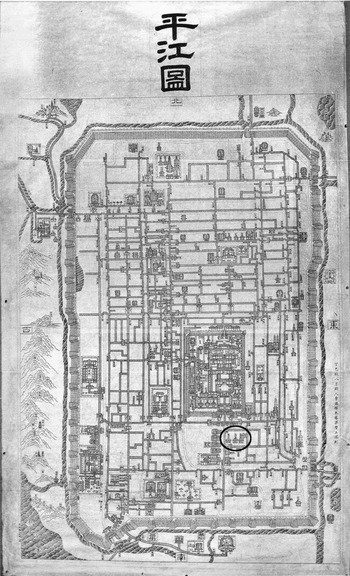
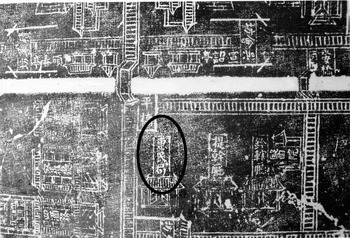
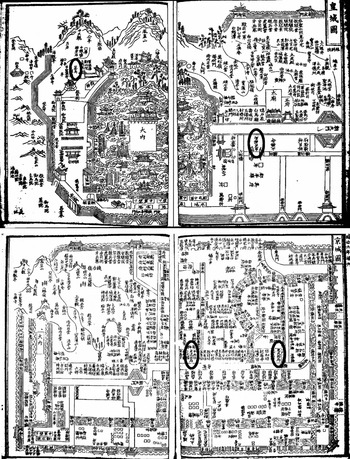
The most compelling pieces of evidence are actually visual ones. There are surviving maps of two cities – Pingjiang (present-day Suzhou) and Lin'an (present-day Hangzhou) – dating to the Southern Song dynasty (1127–1279). The map depicting Pingjiang was carved onto a stone stele in 1229 and has survived to the present (see fig. 1).Footnote 24 The map of Lin'an survived as part of the local gazetteer. The location of a Pharmacy is marked in each of the maps. The detail of the map of Pingjiang includes a specific mention of the name of the Pharmacy, “Huimin ju 惠 民 局” (fig. 2). The map of Lin'an includes four relevant references, one to a Drug Bureau (yaoju 藥 局), one to a Southern Bureau of the Pharmacy (huimin nanju 惠 民 南 局), one to a Northern Bureau of the Pharmacy (huimin beiju 惠 民 北 局), and one to a Western Bureau of the Pharmacy (huimin xiju 惠 民 西 局) (fig. 3). If we cross-reference the locations noted on this map to the contents of Shen Gua's document quoted above, we find correspondence between the textual and the visual description.
Map of the city of Pingjiang (Suzhou) dating to 1229 (Cao, et al. Reference Cao1990, 81). The black oval marks the area surrounding the Pharmacy's location, which is shown in detail in fig. 2.

Detail of the map of city of Pingjiang (Suzhou). The black oval indicates the location of the Pharmacy according to its title Huimin ju. (Reproduced with permission from Fu, Li, and Lin 1999, 107.)

Two maps of the city Lin'an (Hangzhou) dating to the Southern Song dynasty. Four black ovals mark the locations of the Pharmacy (Xianchun linan zhi 1830, 1. 5–6). These maps also appear in more accessible editions: Xianchun linan zhi 1970, 1. 5–6, and Unschuld Reference Unschuld2000, 48–49.

In summary, the above evidence, both textual and visual, suggests that the Pharmacy was more than a fancy of imperial officials located in the capital. If we extrapolate from the surviving non-official lines of evidence, we can conclude with some confidence that the Pharmacy did exist beyond the borders of the capital district, with branches in many localities.
The Pharmacy's Operation and the Problem of Fake Drugs
One of the most intriguing aspects of the Pharmacy's history was its day-to-day operation. Although the available surviving evidence provides only limited information, we do have imperial documents and edicts delineating the official perception of how the Pharmacy should operate. These records allude to a sophisticated institution stressing what we may call “quality control” and “customer service.” The mere textual aspiration of such goals, which were surely as ambitious and often as unattainable then as they are now, is a new development in Chinese public health. We can't help but wonder why it cropped up when it did. Unfortunately, there is no surviving evidence to corroborate whether or not these ambitious goals were ever implemented, much less achieved. Furthermore, these edicts were compiled and issued during the 1130s to the 1150s, when the Pharmacy had already been functioning for more than half a century. Below I will describe the apparently ideal operation that the government expected from the Pharmacy and its officials.
The series of government edicts elaborately depict how the government wished the Pharmacy to operate (SHY, zhiguan, 27.66–68). The underlying theme of all these edicts was that the Pharmacy should produce the best products and provide the best service. We find an instance where an official record states that it should serve people in distress whenever they arrive at its gates regardless of the time. Even in the middle of the night, the Pharmacy's officials should dispense drugs to those in distress; otherwise, they will be flogged or fined (SHY, zhiguan, 27.66 and 27.67a). One of those edicts even states that unjustified absence from work should be punished severely. Another edict says that in cases where an inspection shows that certain drugs are not in stock at a certain location, the official in charge should be flogged a hundred times (SHY, zhiguan, 27.66a). The edicts also specify how to manage the funds and store the drugs, as well as what hours the Pharmacy should operate.
Another aspect of the Pharmacy's operations had to do with changing drug markets, namely advances in agricultural technology and expansion of both internal and external trade (Shiba Reference Elvin1970; Shiba Reference Haeger1975). These changes impacted drug trade and drug markets in a number of ways. First, drugs that had been unrecorded in the literature previously became available for clinical use. Additionally, in some cases, identical herbal drugs originating from different regions with different climates were sold side by side in the marketplace. This created a problem since the different regions of origin led to variations in concentration of active ingredients, thus varying their therapeutic effect. Second, given expanding markets, an extensive long-distance drug trade evolved. Supply and demand affected the availability and the prices of drugs in these new markets. Entrepreneurs took advantage of the situation, manipulating prices and even selling fake drugs when they could not obtain genuine ones (Fu 1993, 191–196; Wang 1993). Finally, farmers began to grow medicinal herbs substituting drugs that in the past were collected in the wild. The variations in concentration of active ingredients in these drugs caused variations in their therapeutic effect.
One way the government attempted to deal with this situation prior to the establishment of the Imperial Pharmacy was to compile a new materia medica collection – the Illustrated Materia Medica (Bencao tujing 本 草 圖 經), to aid in discerning the differences between fake and genuine drugs. In 1057, Su Song 蘇 頌 (1020–1101),Footnote 25 the head of a group of scholars and doctors who compiled the new materia medica, describes in the preface the reasons for launching a new project and the contemporary state of the field:
The information it [the Kaibao Materia Medica] contained concerning harmless or medicinally effective [drugs], cold or warm nature [of drugs], and sweet or bitter sapor [of drugs], can be called detailed and complete. However, the products from all regions come from different climates [hence possess different treatment potential]. They carry many names and are classified under various categories. Therefore, it is difficult to tell when one receives fake drugs. For example, people take the drug Cnidium MonnierieFootnote 26 to be the seedling of the plant Ligusticum Wallichii, or Anemarrhena Asphodeloides is incorrectly passed off as Ginseng.Footnote 27 Even the people of antiquity worried about this [problem], let alone modern practitioners who obtain their drugs from the markets. The markets get their drugs from people of the countryside who collect the plants at random seasons. If a practitioner uses these drugs without continually investigating their origin, and [at the same time] wishes to attack disease, isn't it likely he will fail? (Illustrated Materia Medica, preface; Okanishi 1969, 1216)
It seems that two major issues concerned Su. First, contemporary doctors were not aware that drugs from different regions produced different effects on patients. Second, the number of non-authentic and even fake drugs had increased due to the expanding markets. The solution, according to Su, was to let physicians understand the innate characteristics of drugs arising from geographical origin, season of harvest, and the specific part of the plant from which they came. Su cautioned his colleagues to pay attention to the origin of each drug and its characteristics in order to assure the desired treatment without adverse reactions. Later in the preface, Su claims that in order to solve the fake-drug problem as well as that of drugs bearing the same name but originating from different geographical regions, he compiled a new comprehensive materia medica with unique contemporary illustrations to set a standard for drugs.
The compilation of this materia medica did not solve the problem of non-authentic and fake drugs. Two decades later the Pharmacy confronted this same issue. The expansion of the profitable drug market, as the data on the Pharmacy's income suggests, opened the door to many types of opportunists to sell drugs on the black market. This fact only exacerbated the problem. The solution to the problem was tripartite. First, make sure that fake drugs, and even low-quality drugs, would not find their way into the Pharmacy's processing facility. Second, ensure that nobody would use the Pharmacy's brand name to sell drugs outside its facilities. Lastly, ascertain that none of the Pharmacy's high-quality drugs would be stolen and sold to the public at unregulated prices.
In order to deal with the first aspect, the Song government established in 1114 a unique office aimed to ensure the quality of the drugs.Footnote 28 The office, titled the Office of Purchasing Crude Drugs (Shoumai yaocai suo 收 買 藥 材 所), was responsible for checking the quality and the authenticity of the drug materials bought by the Pharmacy (Taiping huimin hejiju fang, preface, 1).Footnote 29
Surviving imperial edicts suggest that the Pharmacy coped with, or at least was supposed to cope with, the latter two aspects of ensuring the authenticity of drugs by applying strict procedures that may be comparable to present-day practices. The Pharmacy's factory prepared drugs precisely to official standards that were pre-set and closely monitored and supervised by imperial officials (SHY, zhiguan, 27.67a-b; Taiping huimin hejiju fang, preface, 1; Wan and Lu 1987, 34–35). The processed drugs were packed and officials applied a seal on each package to guarantee that its contents were checked and that no one tampered with it. The seal indicated the contents of the package and the date of packaging. This process was designed to prevent both the sale of fake drugs by corrupt officials within the Pharmacy's facilities and the illegal sale of the high-quality drugs outside these facilities (Fan 1943, 2:34–38). There were apparently two types of seals, one for the factory department and one for the drugstore, as the following record shows in detail: “[The Court] ordered the Pharmacy [to have] a seal. The Processing Facility's seal was to include four characters. Each of the four Locations of Selling Drugs was to have a seal that included six characters” (SHY, zhiguan, 27.66b-67a). The stamping of the seals ensured not only authenticity but was also probably intended to simplify the handling of the packages in the store and to ensure that drugs were not kept beyond a certain duration following their production (SHY, zhiguan, 27.66).
One of the most interesting features of the Pharmacy was the government's emphasis on not selling old or stale drugs. According to one of the edicts, the government appointed officials who should periodically check the conduct of the Pharmacy's branches:
Regarding the Pharmacy, a decree was issued to the Ministry of Revenue to appoint officials to investigate [the Pharmacy's conduct]. [If these officials should find] stale, damaged, or old drugs they must destroy them. The reason for this action is that Lin Jue 林 覺, the Vice Director of the Court of the Imperial Treasury, reported that Specially-appointed Administrators fearing for loss of compensation were not willing to obey the written decree that requested them to [destroy the drugs]. (SHY, zhiguan, 27.67b)
In spite of imperial sincere attempts to design or impose an outstanding system, reality turned out to be quite different. Many times, fraud occurred with officials finding ways to circumvent the system. Surviving records suggest that Pharmacy's officials sometimes substituted low-grade drugs for high-quality Pharmacy drugs and then forged the labels of drug packages to conceal their actions. These officials probably then sold these high-grade drugs on the free market for profit (SHY, zhiguan, 22.67a).
Another example of misconduct in the Pharmacy appears in a short record compiled by Shen Gua. In his short note on the Pharmacy, Shen claimed that originally the Pharmacy was an institution that fulfilled its goals by selling drugs at below-market prices and aiding the people. Both officials and commoners praised the Pharmacy as being benevolent and proclaimed that it lived up to its lofty expectations. However, in time malpractice became common:
Fraud appeared everywhere. Again and again, officials and trainees stole drugs to the point of substituting hide glue (Gelitanum Asini) for Camphor, and [in other cases] taifu 台 附 for aconite (Radix Aconiti Carmichaelii).Footnote 30 They collected [profits] as traitors or thieves. No one in the court realized this. It was impossible to reform them.
Whenever a [new medicine] was ready, it all went to courtiers and powerful people. Although [the pharmacies] were designated “for public benefit,” not the slightest bit [of what they produced] reached the public. (Huimin yaoju ji)
In conclusion, it seems that the actual operations of the Pharmacy may not have lived up to the government's aspirations. The following record dated to the second half of the thirteenth century depicts the contemporary state of affairs. According to some writers, the actual operations of the Pharmacy were a far cry from the Northern Song government's intentions:
The court established the Imperial Medical Bureau's Bureau for Benefiting the People as the means by which they thought of attaining beneficial relief along with the harmonious settings of supporting benevolence and longevity. At present, [however], the Bureau for Benefiting the People uses expensive crude drug material and the drug prices are cheap. Although the name of the office was preserved, in reality its essence has vanished. Therefore, the people of the capital [sarcastically] titled the Bureau for Benefiting the People [i.e., the Pharmacy's store] as the Bureau of Aiding Officials. They also [sarcastically] titled the Bureau of Mixing Prescriptions as the Bureau of Harmonizing Officials. (Chui jian lu (waiji), 14b-15a)
The Formulary of the Pharmacy
We might expect that an imperial office established to control the prices of drugs and set standards for processing them should keep detailed lists of drugs, their prices, and logs of their processing. However, there are no surviving records dating to the Pharmacy's initial years that provide such information or even allude to the existence of such data. Furthermore, we also cannot find any surviving document, or even a mention of such record, listing medications on sale in the Pharmacy and their recommended methods of application for the Pharmacy's customers. The only record we have states that during the Yuanfeng reign era (1078–1085) the Imperial Medical Service collected formulas from skilled physicians, formulas that were not included in previously published formularies. The Imperial Medical Service then, according to this record, tested these formulas in order to determine their efficacy (Taiping huimin hejiju fang, preface; Okanishi 1969, 774–775). The formulas that proved to be efficacious were recorded and the drugs used to make the formulas were put on sale in the Pharmacy. At the same time, the Imperial Medical Service compiled a formulary, titled the Formulary of the Imperial Medical Service (Taiyiju fang 太 醫 局 方). This five-chapter manuscript with one additional chapter containing a table of contents, listed formulas and the symptoms they treated. The same source that testifies to the existence of this manual also claims that it was subsequently distributed throughout the empire (Junzhai dushu zhi, vol. 2, 299). However, we have no other record of this formulary, which indicates that perhaps it was never printed.
During 1107–1108, a group of scholars headed by a prominent official Chen Shiwen 陳 師 文 scrutinized the Formulary of the Imperial Medical Service. They concluded that the sources of the formulas were not clear and that the book included errors and inconsistencies bearing on the preparation of drugs and on the efficacy of treatments (Taiping huimin hejiju fang, preface; Okanishi 1969, 774–775). Consequently, another group of physicians, headed by a distinguished physician Chen Cheng 陳 承, revised and updated the “listings of drugs or formulas” of the Pharmacy and compiled a new formulary.Footnote 31 The need to revise the existing list was a result, probably, of the changes in the Pharmacy, namely the transition from selling simples to selling pre-packaged preparations (i.e., prescriptions). The transition took place during the first and second decades of the twelfth century. The title of the book was also changed to Revised Formulary of the Imperial Pharmacy (Jiaozheng hejiju fang 校 正 和 劑 局 方, in short the Revised Formulary).Footnote 32 The revised book, like the first, listed the pre-prepared medications on sale at the Pharmacy, arranged into five chapters (juan), with one additional chapter serving as a table of contents. The extant version we have categorizes the 297 prescriptions, which were sold by the Pharmacy, into twenty-one types. This version for the first time was printed in large quantities and distributed to all prefectures (Ma 1990, 177; Zhang 1998, 103–104).
The Revised Formulary focused on the symptoms treated by each of the Pharmacy's prescriptions. It rarely discussed additional aspects of medical diagnosis or treatment, ignoring theoretical aspects such as Yin-yang or the Five Phases. Moreover, its authors did not discuss how to differentiate the patient's pattern of disease and the consequent need to determine the appropriate formula that treats this pattern. Nor did it discuss how to adjust the formula's ingredients and their dosage according to the patient's specific condition.Footnote 33 Given these characteristics, which greatly differ from the common practice in contemporary Song formularies, it seems that the Pharmacy's formulary was not intended for a medical audience but rather toward an audience of customers who had no medical background but could purchase prescriptions off the shelf by matching them to their symptoms.
In 1151, the Pharmacy's formulary was revised and republished. Its title was also changed to suit the new title of the Pharmacy, namely the Formulary of the Pharmacy Service for Benefiting the People in an Era of Great Peace (Taiping huimin hejiju fang 太 平 惠 民 和 濟 局 方). Sometime during the years 1208–1252, the formulary was revised once again and expanded to include ten chapters, five more than in the previous edition (Ma 1990, 177–178; Zhang 1998, 103–104).
It is plausible to assume that the publication of the formulary and its wide distribution facilitated the use of prescriptions. For example, prescriptions sold at the Pharmacy were used to treat poor patients at the Peace and Relief Hospital during the reign of emperor Huizong (SHY, shihuo, 60.9b and 68.140a). The ease of purchasing prepared prescriptions from the Pharmacy by using the information in the formulary encouraged the hospital's doctors to skip the lengthy process of adjusting a formula to the needs of a patient. The treatment may not have been the best possible one, but it was readily available, convenient to use, and cheap.
The Pharmacy and Medical Practice
So far we have seen that the Pharmacy existed in the Northern Song capital of Kaifeng from 1076 and in the Southern Song capital of Lin'an after the loss of the North. Furthermore, it functioned outside the capital in a number of prefectures during the twelfth century. The business of the Pharmacy was promoted by the government, especially after it sponsored, printed, and promulgated its formulary. The operations of the Pharmacy must have changed the medical environment. First, it provided a larger selection of drugs then ever before and at regulated prices. Additionally, preparing drugs before selling them in the Pharmacy prolonged their shelf life and enhanced the variety of the inventory making it less susceptible to the impact of climatic changes or trade problems. The Pharmacy also sold pre-packaged preparations, making the consumption of medicines easier. With some of these medications patients no longer needed to go home and cook their medicine; they could just consume the ready-made preparations (such as powders, ointments, or pills) on sale at the Pharmacy. This form of prepared medication existed long before the establishment of the Pharmacy, but given the number of its branches and the extent of its manufacturing facilities this form of medication probably became much more widespread and popular.
We have one final issue to address, namely, what indeed was the impact of the Imperial Pharmacy on the medical practice of Chinese physicians? Intuitively, it seems that the establishment of the Pharmacy enhanced the physicians' working environment. In other words, it seems that the Pharmacy's existence should have created a new and, from our modern-day perspective, better working environment for practicing physicians. In order to investigate this issue, I decided to canvass medical literature for references to the Pharmacy from the date of its establishment. The existence of digital databases makes this endeavor easier and more precise. The one I used in this study, Zhonghua yidian 中 華 醫 典 (2001), includes more than 700 medical titles.Footnote 34 I searched the database for mention of the Pharmacy's various titles as well as for mention of its formulary's title. The search focused on texts from the Song, Jin, and Yuan dynasties. The results of this analysis are quite unexpected.
A search through an extensive number of selections from the writings of physicians, medical officials, or other officials who wrote medical works or prefaces to such books, revealed that there were very few cases where authors referred to the Pharmacy. Moreover, those references that do mention the Pharmacy, discuss only its formulary never the Pharmacy's title or name. In contrast, other non-medical records provide ample reference to the Pharmacy, its name and functions, locations, its merit, and contribution to the fight against epidemics.Footnote 35
These puzzling results require further examination. We need to explain why physicians did not mention this presumably beneficial institution in their writings, whereas other scholars mentioned and discussed its merits and shortcomings. In order to do so we need to get a glimpse of Song dynasty medical practice. A fine example of medical practice during this era appears in the contents of a unique book compiled in 1132 by Xu Shuwei 許 叔 微, Ninety Discussions on Cold Damage (Shanghan jiushi lun 傷 寒 九 十 論). This book was the first Chinese medical book devoted solely to detailing medical case histories.Footnote 36 As the title suggests, Xu's intention was to enhance the understanding of diagnosis and treatment of a unique type of medical disorder, Cold Damage disorders (shanghan 傷 寒).Footnote 37 For our needs, however, we will focus on the doctor-patient interaction as depicted in one case history.
Case Number 9: Differentiating a Case of Bleeding from the Navel:
A female patient had contracted cold damage disorder a few days earlier. Her throat was dry. She had irritating thirst. The pulse was stringy and fine. Doctors used the sweating method on her. Consequently, she began to bleed from the nose. Shortly thereafter, her navel began to bleed. Her doctors panicked and fled.
I said: “The cause for these symptoms is drastic sweating of the Immature Yin circulation tract.” In general, it is not appropriate to use a sweating method when the manifestation type corresponds to the ShaoyinFootnote 38 circulation tract. ZhongjingFootnote 39 said: “drastic sweating of the Shaoyin tract is bound to set the blood in motion.” When someone does not know how to follow this path, [blood] will come out from the mouth, nose, ears, and eyes. This is due to a controversion in the upper part of the body and exhaustion [of qi] in the lower part. This is difficult to heal. Zhongjing said: “There exists no way to treat this, no formula to help.” I prescribed Ginger Aconite Decoction 薑 附 湯. After few doses the bleeding stopped. Following gentle sweating the patient became well again (Shanghan jiushi lun, case no. 9, p. 5).
In this case history, Xu details the important symptoms for his diagnosis. Although he does not spell out directly the patient's pattern of pathology, the reader can presume that the patient is affected by Cold Damage disorder that was exacerbated due to the wrong application of excessive sweating therapy. Based on this diagnosis, for which Xu provides support by quoting the third century canon, the Treatise on Cold Damage and Miscellaneous Disorders 傷 寒 雜 病 論, he prescribes the Ginger and Aconite Root Decoction to treat the condition (Goldschmidt Reference Goldschmidt1999, 105–111). What Xu does not mention is the existence of the Pharmacy. This is true in all ninety case histories included in the book. Furthermore, Xu does not mention the Pharmacy even once in the other three books he compiled.Footnote 40
Xu was not alone; the medical encounter presented at the beginning of this article tells the same story. Zhang Gao in his description does not mention the Pharmacy, alluding only to its formulary. This oversight or disregard of the Pharmacy is true in the majority of medical works written during this era. If indeed the Pharmacy changed the way medicine was practiced we would expect to find some hints of its existence or its services in the writings of Xu and other physicians, but we do not. Instead we find an almost total disregard for the existence of this imperial institution.
While we do not find direct references to the Pharmacy in medical writings during the late eleventh and early twelfth centuries, we do find several interesting remarks concerning drug therapy. These comments, appearing in medical texts and in prefaces to such texts, point toward several topics related to drug therapy including: incorrect usage of drugs, misapplication of medical doctrines in clinical practice, erroneous diagnoses of disorders, and application of wrong therapeutic techniques. Following are some examples of such comments admonishing against the uneducated use and prescription of drugs in medical books of this era.
One example comes from a medical official – Ai Sheng 艾 晟. In 1108, Ai wrote a preface to the most extensive materia medica work compiled and published to that date, the Materia Medica for Urgent Need, Classified and Verified from the Classics and Histories (Jing shi zhenglei beiji bencao 經 史 證 類 備 急 本 草; see Ma 1990, 276). In his preface Ai seriously criticizes the medical practices of his era. He begins harshly: “diseases are not necessarily capable of killing people, [however, presently] there are many cases of drugs killing people.” He then describes the common clinical practice saying:
The physicians of the present generation do not thoroughly study the basic warming or cooling characteristics [of drugs] or their slow versus rapid effects. They increase or decrease [specific drug in a prescription] using undisciplined reasoning. They use this [undisciplined knowledge] to treat disorders. If they are not lucky their patients are in grave danger. At other times, they succeed in their treatment. How is this different from grabbing a spear and stabbing a person sleeping in his bed? (Okanishi 1969, 1235)
Not to leave the reader without hope following this grim picture, he offers a solution. He says:
We ought to study and think about this [problem]. If we will use books to study these doctrines, use illustrations to examine their [drugs], authenticity, and formularies to seek their effectiveness, there is no need to be poisoned seventy times to know drugs and no need to break one's arm three times to know medicine. (ibid.)Footnote 41
Here Ai actually tells his readers what should be done and whom to trust. The only way of practicing medicine is by understanding the ancient classical doctrines and understanding how to apply them in prescribing drugs.
Emperor Huizong (r. 1101–1126), in a preface he wrote to the greatest formulary of the Song dynasty the Medical Encyclopedia: A Sagely Benefaction of the Zhenghe Reign Period (Zhenghe sheng ji zong lu 政 和 聖 濟 總 錄), also complained about the problematic state of medical practice. He claimed that the number of non-initiated healers had grown significantly. These healers were not proficient in the classical doctrines. Instead, they stressed formulas that alleviated symptoms and disregarded patient-centered classical medicine.
I [the emperor] feel sympathy for the stasis of the great way and its accumulated [faulty] common customs, for the prolonged illnesses of my people, and for the undisciplined practices of incompetent healers whose study is not extensive and whose knowledge is unenlightened. The regularities of the Five Phases and the transformations of the six qi, none of these physicians searches for their hidden meaning. None of these doctors attempts to estimate their further implications. By ignoring small details like the climate and changes of heat and coldness, they may cause great harm to the patient [literally: The day is cold or the day is hot, changes in heat and coldness, even the tiniest of errors can become a major mistake after a thousand miles].
If there is excess, they supplemented it, if there is insufficiency they decreased it. At will they used techniques, prescribing herbs and minerals together. Those [of their patients] who died prematurely are half. [This situation is] unbearable indeed! (Okanishi 1969, 797–798)
The fact that an emperor bothered to discuss the problem of incorrect diagnosis and prescription of medications may hint at the scope of the problem. Unfortunately, Huizong does not specify the reasons for the problem.
Standing above all are the admonitions made by Kou Zongshi 寇 宗 奭 (fl. 1111–1117) during the second decade of the twelfth century.Footnote 42 Kou, who held the low-ranking official title of a Gentleman for Fostering Uprightness (Chengzhi lang 承 直 郎), was a distinguished physician and served at the Imperial Pharmacy as a purchaser of drug materials. This makes Kou's case all the more interesting since he was personally familiar with the Pharmacy. Kou fails to mention the Pharmacy's title even once in his unique materia medica collection, Dilatations on Materia Medica (Bencao yanyi 本 草 衍 義), published in 1119. Moreover, he cites the Pharmacy's formulary merely three times in his book. Kou does, however, spell out harsh criticism on uneducated drug usage. In the second chapter of his preface, Kou warns against the usage of prepared prescriptions or set formulas, which, as discussed earlier, were produced and sold by the Imperial Pharmacy, saying:
If this is so [that people differ in their ways of life and customs and consequently their disorders differ] then prescribing a medication according to [fixed] formulas and using them on a broad basis is surely negligent. (Bencao yanyi, 2.12)
Following this warning, Kou continues his discussion of the misuse of medications. He finishes the same chapter using a unique metaphor asserting that his contemporaries do not realize the dangers involved in the application of drugs:
Using drugs is like sentencing [a defendant in a trial]. In sentencing there is no room for error, since errors affect human life. Using drugs is similar. One error can be the difference between life and death. However, in sentencing there is an interrogation by an official. When the interrogation is completed there is a deliberation and then the crime is set down in writing. It would seem that in human fate there could be only one death; one cannot be brought to life again, so they must be this assiduous.
Present-day physicians, as soon as they arrive at a patient's household, they prescribe drugs according to whatever [symptoms] they see. . .. Some of the mediocre and lowly medical practitioners impulsively and wildly prescribe infusion. . . To kill a patient in this manner, how easy! (Ibid., 2.16)
Kou is criticizing existing medical practices, more precisely, the wanton prescription of medications. He alludes to cases in which physicians, or self-proclaimed physicians, recklessly prescribed medication based only on symptoms they observed. It was probably the Pharmacy's existence that enabled or enhanced such practices, especially following the publication of its formulary, which listed the prescription on sale along with the symptoms they treat. This type of medical practice, according to Kou, is doomed to inflict much more harm than good, or in his words, “To kill a patient in this manner, how easy!”
What stands out when one reads Kou's materia medica is the astounding fact that, although he served as an official in charge of purchasing drug materials for the Pharmacy for a number of years, he mentions the Pharmacy's formulary only three times in his work (ibid., 4.23, 5.27–28, 5.34). When he mentions the Pharmacy's formulary, it is only while discussing some minor issues related to specific drugs especially in comparison to their traits as listed in the formulary. Why did Kou ignore the institution where he served as an official? Why not inform his readers about the great advantages the Pharmacy provides for physicians and patients such as the constant supply of a wide variety of drugs neither fake nor overpriced? The truth is that we do not know. We can only speculate on the reason, especially in conjunction with other records.
So far we have seen a number of authors complain about the practices of uneducated healers or doctors during the early twelfth century. None of them mention the Pharmacy in general nor its possible role in aiding these uneducated practices in particular. We need additional evidence to decide whether or not the Pharmacy and its formulary indeed promoted these practices. This evidence comes approximately a century and a half later.
This last example is by a physician who directly criticized the Pharmacy's formulary and its effect on medicine. Zhu Zhenheng 朱 震 亨 (1281–1358), one of the most famous doctors of his era, compiled in 1347 a book titled Elaborations on the Pharmacy's Formulary (Jufang fahui 局 方 發 揮). In the first paragraph of his book, he presents the role of the Pharmacy and the effects of its formulary on both patients and physicians before he casts his criticism:
The Formulary of the Pharmacy is a book.
It is possible according to it to diagnose and make a formula, which in turn are made of simples. [Thus] there is no need to seek a physician, and there is no need for his skill in preparing a formula. All that is required is to pay for a prepared pill or medicinal powder. [In this way], diseases and pains can be cured and alleviated.
From the Song dynasty to the present, imperial and local officials protected it [the Pharmacy's formulary] and used it as a method; Physicians transmitted it as a profession; Patients made it unique as if it was the foundation of life; the common people studied it as an established custom.
Only humble me has doubts [regarding the usefulness of this] formulary. How can this be?
The people of antiquity applied the four methods of examination when discussing medicine. They also said that physicians have intention [yi 意]. They said so of physicians since, although their handed-down teachings are precise and their scholastic attainments deep, when a situation [of a patient] demands it, they make changes [and adapt their practice to the patient's condition]. This is like the [skills of a] general who faces the enemy or the skills of a ship captain at sea. If he [the doctor] does not exhaust the wondrous ways of the gentleman [junzi], who always return to the middle grounds [and does not go by the book], how could he without shame be called a physician?
At present, then, [doctors] collect efficacious formulas of people of the past, to respond to the endless disorders of people of the present. How is it different from carving a mark on the side of one's boat to indicate the place where one's sword has dropped into the water, or to find a horse according to a drawing, hoping these [formulas] accidentally hits/treats [the disorder], it is difficult indeed! (Jufang fahui, 1.942)
In the above quotation we find the most detailed and specific criticism of the Pharmacy's formulary. This record may also be read as an indirect criticism of the Pharmacy itself. Since Zhu lived almost two centuries after the Song government established the Pharmacy, he enjoyed the benefit of hindsight. What he describes in this quotation is the impact of the formulary and how officials, physicians, and the common people perceived and used it. The description is quite clear. Looking back, Zhu claims that the formulary of the Pharmacy enabled uninitiated people to prescribe medication based on visible symptoms only. Zhu advocates against the formulary and claims that what separates the good doctor from the uninitiated one is the ability to adapt the formula to the exact condition of the patient. This, in turn, is carried out by correct diagnosis and the understanding of the underlying condition of the patient, which cannot be done without full understanding of the classical medical doctrines.
Contrary to what we might think, it seems that contemporary Song physicians did not have high regard for the Pharmacy. They either ignored it in their writings or criticized its conceivable consequences. They probably could not have publicly sounded direct criticism against the Pharmacy, since an imperial institution was at stake, but given the above evidence it seems that Song dynasty physicians did not approve of the Pharmacy. They did, however, include in their writings stern warnings against the uneducated usage and application of drugs, which the Pharmacy's operations may have enabled. This suggests that they perceived the Pharmacy as a threat rather than an advantage. We can infer from their writings that the change in the medical environment was not beneficial for doctors. Charlatans and even educated patients could read the Pharmacy's formulary and accordingly prescribe medication to patients or to themselves based on prepared prescriptions sold at the Pharmacy. What seems to have been the educated physicians' response was to stress the one aspect of medicine in which they had an advantage, namely classical medical doctrines and their influence on the diagnosis and treatment of a patient. This, along with the expanding imperially sponsored and regulated medical education system, brought these doctrines to the center of medical discussion (Goldschmidt forthcoming; Zhang 1988). These changes, in turn, provided a background for the integration of classical medical doctrines with contemporary Song drug therapy.
Conclusion
The Imperial Pharmacy, established in 1076, was originally part of Wang Anshi's reforms; it was one manifestation of an attempt to impose imperial control over various contemporary private commercial monopolies such as grains and salt, designed to lower the prices of these goods, and to generate revenues for the imperial coffers. Additionally, the Pharmacy was designed as a governmental instrument to aid the population in times of epidemics, similar to the role played by imperial granaries during times of famine. In fact, the Pharmacy was the first imperial medical institution designed to serve the general public and not solely the court. A few decades after its establishment, the Pharmacy expanded its operations, opening additional branches in the capital as well as in various prefectures and districts. This was part of emperor Huizong's patronage and promotion of medicine. The Pharmacy, which originally sold only single prepared drugs, began during this era to sell pre-packaged preparations. These medicines in the form of pellets, ointments, powders, or potions along with the publication of the Pharmacy's formulary, made medical treatment easier and more accessible to consumers without the need to go to a doctor. The formulary supplied the treatment guidelines and the Pharmacy sold the specified medication to the patient.
Emperors and officials alike regarded the Pharmacy as an important institution, for both its profitability and its role in fighting epidemics. These were probably the two most essential reasons that it persisted beyond the limited period of Wang Anshi's reforms. Even after the defeat at the hands of the Jurchens in 1127 and the loss of the north, the Southern Song dynasty re-established the Pharmacy and expanded its operation in many localities. In North China, it seems that even the Jurchens have re-established the Pharmacy's operation.
Nevertheless, it seems that not all were happy with the Pharmacy. The one sector that should have welcomed the Pharmacy, the physicians, stayed mum with regard to this institution. It seems that the existence of the Pharmacy, and especially the sale of pre-packaged preparations, changed the environment in which physicians practiced by making it more competitive. The combination of the readily available pre-prepared medications and the Pharmacy's formulary may have created a golden opportunity for uneducated healers to treat patients. The educated physicians' response to these changes, so it would seem, was to issue warnings against the uneducated application of drugs and medicine. It may or may not be a coincidence that during that same era, educated physicians attempted to compete by using classical knowledge as the basis for medical practice. In this way they distinguished themselves from the uninitiated healers who possessed no command of the revered knowledge of the ancient canons, and reasserted themselves as the only competent authorities over patients and their illnesses.
Acknowledgements
This study was partially funded by a Dan David Prize Scholarship for Doctoral and Postdoctoral Students. I thank the three anonymous readers of this paper for their helpful comments. All errors or omissions are my responsibility alone.
Abbreviations
- BJXSDG
Biji xiaoshuo daguan
- CB
Xu zizhi tongjian changbian
- CSJC
Congshu jicheng chubian
- SHY
Song huiyao jigao
- SKQS
Yingyin wenyuange siku quanshu
- SS
Song shi