


Introduction
One of the most dominant characteristics of natural ice is that it contains enclosed gas bubbles. Gas trapped in bubbles of glacier ice may be of different origins, depending on the processes responsible for the formation of the ice. In regions with very cold climates where the surface temperature is always below the freezing point, ice is formed by sintering of ice crystals. Air is trapped between the crystals, and the composition of the gas in such cavities is expected to be uniform and similar to that of the atmosphere. If melt water is involved in the sintering process, it is to be expected that the gas contained in the ice will have a different composition. Water in equilibrium with air at 0°C and s.t.p. dissolves 2.9% (volume) gases. Assuming that the gases are insoluble in the ice (Scholander and others, 1953) they will separate from the water during freezing and form bubbles. Gas content and gas composition depend mainly on the velocity of the freezing process and on the diffusion constants ?f the different air components (Bari and Hallett, 1974).
In ice formed by sintering of cold snow it would appear that the composition of the enclosed gases represents the composition of the atmosphere at the time when the ice was formed, and that this composition and the quantity of the gas remain constant, since diffusion may be considered to be insignificant. This, of course, is only true if the snow grains do not contain significant amounts of dissolved gases and if there is no selective adsorption of gas components at the snow surfaces.
In searching for ancient air, many glaciologists have made gas analysis on ice samples from Greenland and Antarctica (Scholander and others, 1961; Matsuo and Miyake, 1966; Alder and others, 1969; Raynaud and Delmas, 1977). A component of special interest is the CO2. The CO2 content of our present atmosphere is increasing due to the burning of fossil fuel (Oeschger and others, 1975). It would be of great importance to know if the CO2 content has been changing during the last 100 000 years and if so, what climatic effects resulted from these changes. The CO2 extracted from old ice may also be used for 14C-dating, assuming that the isotopic composition of the CO2 in the ice represents that of the atmosphere at the time of enclosure. The second application may be considered as established (Oeschger and others, 1976), but the search for the CO2 content of ancient air is still going on. CO2 is not only a very interesting component but is also difficult to measure. For CO2, assumptions concerning enclosure and preservation are less certain than for N2, O2, or Ar. A method to extract and to measure the CO2 enclosed in ice is described in the next section. The results of our analysis show that, particularly as regards CO2, the assumption of gas-free ice crystals in precipitation does not hold.
Experimental methods
Extraction of the gases
There are several methods available for extracting the gases from an ice sample. These include:
-
Melting the ice sample in a vacuum-tight container and pumping off the gases during or after the melting process.
-
Grinding an ice sample at low temperature in a vacuum container, so that a proportion of the air bubbles are opened and the gases may be pumped off (Coachman and others, 1956).
-
Sublimation of an ice sample at low temperature. The water molecules are absorbed on an absorber, the gas molecules can be extracted (Raynaud and Delmas, 1977; Raynaud and Lorius, 1977).
-
Extraction of the air of a few single air bubbles by a micro syringe (Coachman and others, 1956).
We have mainly used the first method. A schematic diagram of the apparatus is shown in Figure 1. Before each extraction, the whole extraction line is evacuated for 14 h to a pressure of less than 10-5 bar. A sample of 100 to 500 g of ice is placed into the container A at a temperature of — 20°C. The container is connected to the extraction line and is evacuated for 30 min at a sample temperature of — 15°C. For special samples with large specific surface areas (snow) sample and container are flushed during this step with 10-2 bar purified helium. The helium is extracted for gas analysis to check for adsorption phenomena. In the next step the ice is melted by an external infra-red lamp, and the gases are pumped continuously by a Toepler pump into the gas sample container H. The removal of the water vapour is done in three steps. The cooling traps B and D are reflux coolers, B is kept at 1 to 2°C with an ice–water mixture, D is cooled with refrigerated alcohol to a temperature slightly above the freezing point. In this part of the system, water vapour serves as carrier for the gas transport. Cooling trap F is kept at a temperature of — 78°C. The flux is regulated with valve E. To avoid a loss of soluble gases in trap F, the ice collected there is transferred back into container A two to three times during an extraction by evaporation–condensation. The automatic Toepler pump has a piston volume of 0.75 1. The gas can either be sampled in a glass flask or be directly transferred into the gas chromatograph. The ice sample is melted in about 60 min and most of the gases are extracted during this time. After the melting has been terminated, a magnetic stirrer is switched on and the extraction continued for a further 400 min. The composition of the extracted gas is analysed and the CO2/N2 ratio is measured several times during each extraction. The pH-value of the melt water is measured continuously during the extraction process. The results of a typical extraction process are shown in Figure 2. With the exception of the CO2, the composition of the gases during the extraction docs not change significantly. The CO2, however, shows a much slower extraction rate than all the other gases. We tried to accelerate the degassing of CO2 in the following ways:
-
i. by varying the speed of the magnetic stirrer,
-
ii. by boiling the melt water at about 20°C,
-
iii. by acidifying the melt water to a pH-value of less than 2.
The degassing rate seems to depend only on the intensity of stirring. This peculiar behaviour of the CO2 cannot solely be explained by a smaller diffusion constant. It is possible that only part of the CO2 is present in the gas bubbles and is Hushed out with the escaping gases, and that the remainder is dissolved in the ice between or in the crystals. To analyse only the gases enclosed in the bubbles, we constructed an apparatus to grind ice samples under vacuum. The grinder 1 is schematically shown in Figure 1. It is an ordinary milling tool of 10 cm diameter. A ferrofluidic rotary seal is used. The ice sample container and the container for the ground ice are made of glass so that the grinding operation can be observed. The milling tool is rotated at 150 r.p.m. The obtained ice grains have the form of small lamellae with a diameter of approximately 5 × 10⁻² cm and a thickness of about 10-2 cm. The grinder is connected to the extraction line. The released gases are transferred by the Toepler pump into the gas sample container or into the gas chromatograph, and after the ice sample has been ground, the gas composition is analysed. Afterwards the ground ice is melted and the gas is extracted as described above. A typical sample size for the grinder is 150 g. As we still have scaling problems, the results obtained from the grinding apparatus must be considered as preliminary.
Apparatus for gas extraction. A: container. B: cooling trap. C: container for ice–water mixture. D: reflux cooler. E: valve. F: cooling trap. G: Toepler pump. H: gas sample container. I: grinder.

Results of a typical extraction process. - - - total of extracted air; –––– total of extracted CO 2; — · — pH.

Analysis of the extracted gases
We use a gas chromatograph, specially constructed for our purpose. Purified helium (99.999 6%) with a flow rate of 35 ml/min is used as carrier gas. Two separation columns are used, both filled with molecular sieve 5A. One adsorbs the CO2 at room temperature, the second adsorbs all the other components at — 195°C. The CO2 is released by heating the first column in two minutes from room temperature to 300°C. Afterwards the second column is heated at a constant heating rate from — 195°C to room temperature in 18 min. The different components are released step by step. A helium ionization detector is used. The ionization source is 10 mCi of 63Ni. The sensitivities of the gas chromatograph are

Results
Temperate ice
As mentioned in the Introduction we do not expect the gases to have atmospheric composition in ice samples originating from temperate glaciers (ice in local equilibrium with water inclusions). In Table I some typical values are presented for comparison. Most of the ice samples were collected with a hand coring auger from between 1 and 4 m below the glacier surface. Exceptionally, the two samples from Ewigschneefeld (Swiss Alps) were collected 29 m below the surface with an electromechanical drill. The samples were transported to and stored at the laboratory in the frozen state. To reduce the risk of contamination by CO2, no dry ice was used for refrigeration purposes.
Analysis of gases in temperate ice

Gold ice
Natural ice at temperatures below 0°C is not necessarily formed by dry sintering. Experience shows that only in regions where the mean annual air temperature is below —24°C can any melting at the snow surface during summer be excluded. Of our samples (collected at station Crete (Greenland), on the Colle Gnifetti (Swiss Alps), and at Camp Century (north Greenland), Table II) only those from station Crête can be expected to be free from melt layers. The cores from Colle Gnifetti originate from a location with an ice temperature of — 14°C, and show distinct melt layers. For the gas analysis, however, samples without visible layers have been used. The samples from Crête and Colle Gnifetti have been analysed within one year of their collection. The cores were kept frozen, again without the use of dry ice. The samples from Camp Century were collected in 1967, and the gas analysis was made in 1977. These samples have also never been in contact with dry ice. All four samples from the Camp Century core originate from the bottom part of the drill hole, just a few metres above the bedrock. The ice shows layers and dust bands, and we do not suppose our results to be representative of the whole core, however, measurements on different parts of this core made in other laboratories (Raynaud and Delmas, 1977; Raynaud and Lorius, 1977) yield similar results.
Analysis of gases in cold ice

Precipitation
Hitherto the search for ancient air in cold ice has been based on the assumption that a negligible amount of air is dissolved in snowflakes. On further consideration this assumption seems questionable. For the case where small supercooled water droplets freeze very fast on contact with an ice surface, the gases dissolved in the droplets may be enclosed in very small bubbles (Maeno and Kuroiwa, 1967). Scholander was well aware of this possibility, but his measurements on freshly fallen snow showed no measurable amounts of gas (Scholander and others, 1961).
Our measurements (Table III) show that the total gas content is indeed very small, but that the CO 2 is so enriched that this component is not at all negligible compared with the CO2 content of natural cold ice. All snow samples were collected in Switzerland. It is planned to measure the gas content also on snow samples with less industrial pollution from Greenland and Antarctica.
Analysis of gases in snow samples

For comparison, results of the gas analysis on two hailstones are shown in Table IV. The gas composition indicates that the process of gas enclosure is in part due to “geometric inclusion” of atmospheric air, and in part to a separation and inclusion of air originally dissolved in supercooled water droplets.
Analysis of gases in hailstones

Single crystal
By courtesy of the laboratory for solid state physics of the Eidgenössische Technische Hochschule, Zürich, Switzerland, we obtained a single ice crystal grown in the laboratory in 1974. The single crystal was of cylindrical shape with a diameter of 10 cm. We cut two discs off the crystal. Sample 1 was taken from the disc that had had one face exposed to the atmosphere for considerable time. Sample 2 was taken from the outer part of the adjoining disc, and sample 3 from its inner part. The following CO2 contents were determined:

The CO2 content is significantly higher in the front disc, but there is no difference between the outer and the inner part of the second disc.
Discussion
In melting an ice sample it is possible that the dust particles in the melt water produce contamination by hydrogen carbonates and carbonates. We cannot exclude the possibility that part of the CO2 extracted from an ice sample originates from such contamination, but we can estimate upper limits which show that the contribution is small. Ice in the central parts of the large polar ice sheets is very clean. Traces of calcium carbonate might be able to release CO2 in chemical reactions, but if all the calcium that has been detected in ice samples from Crête (Langway, 1977) were present in the form of carbonates CaCO3, concentration would be in the order of magnitude of 0.01 p.p.m. mole fraction. The CO2 content in the ice from Crête is approximately 0.2 p.p.m. (Table II; 0.25 ml CO2/kg ice = 0.2 p.p.m.), so that a possible contribution by carbonates could only account for 5% of the CO2 in the ice of the interior of ice sheets.
The results of the pH-measurements during CO2 extraction support this estimate and are valid for all samples. Figure 3 shows the equilibrium relation between pH-value, alkalinity, and the amount of CO2 dissolved in the water. The alkalinity is defined as the monovalent cation concentration minus the monovalent anion concentration. The pH-value of the melt water before CO2 extraction starts, and the pH-value after the extraction is completed, determine the alkalinity and the amount of CO2 extracted. The dash–dotted curve in Figure 3 shows that the measured pH-value during the extraction is in good agreement with that calculated, bearing in mind, that the de-gassing is not an equilibrium process. The alkalinity given by the pH-value after extraction has been completed allows us to estimate the upper limit of CO2 originating from dissolution of dust particles. If this pH-value is less than 8, the maximum contamination is approximately 0.002 ml CO2/kg ice. A further confirmation is obtained by bringing the melt water into equilibrium with the atmosphere.
Most surprising is the high CO2 content of the single crystal, which is of the same order of magnitude as the CO2 content of natural polycrystalline ice. Mainly as a result of this observation, we hypothesize that the major part of the CO2 in ice is enclosed within the crystals. Adsorption of CO2 onto the sample surfaces, especially of snow and firn samples, and the enclosure of CO2 between the grain boundaries must not be neglected, but enclosure in the crystals seems to be dominant. Gas can be enclosed in a single crystal in different ways, e.g. as micro-bubbles or molecularly dissolved. If the gas is present as micro-bubbles or as another kind of gross impurity, the enclosure occurred during formation of the ice. Purification by zone melting should eliminate such CO2 very effectively. Since the ice sample analysed by us had been zone melted five times, and since the CO2 content was still of the same order of magnitude as the content of natural polycrystalline ice, the presence of CO2 in the form of micro-bubbles or other gross impurities seem unlikely. If the CO2 is molecularly dissolved in the ice crystal, it may have partially been enclosed during ice formation, but it may also have diffused later into the ice. For molecular dissolution it is probable that an equilibrium concentration exists for a given temperature and a given partial pressure of ambient CO2. The time necessary to reach the equilibrium concentration depends on the size of the ice sample and on the (unknown) diffusion constant of CO2 in ice.
Total amount of CO2 in water as a function of pH and the alkalinity as parameter. - - - atm: total amount of CO2 present in the water in equilibrium with the atmosphere (760 ton and 0.033% CO2); —·— typical extraction process.

We assume the equilibrium concentration at a temperature of — 20°C and at a CO2 pressure of 3 × 10⁻⁴bar (partial pressure of atmospheric CO2 at sea-level) to be equal to the mean value of CO2 concentrations of ice samples formed and stored at approximately —20°C. A concentration of about 0.1 ml CO2/kg ice is obtained. We cannot draw any conclusions about a dependence of the equilibrium concentration on ice temperature from our experiments.
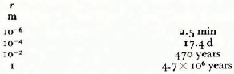
The consequences of an equilibrium concentration for the CO2 content of natural ice depend strongly on the diffusion constant of CO2 in ice. To discuss at least qualitatively some of the consequences, we assume in the following that this diffusion constant is equal to the self-diffusion constant of ice, namely D = 2 × 10-15 m2 s-1 (Hobbs, 1974). The time required to reach 90% of the equilibrium concentration in an ice sphere of radius r is (Crank, 1975, p. 92)

The times calculated for the various radii are given in Table V. Firn and snow grains of 1 mm diameter stored at a constant CO2 partial pressure and at a constant temperature would reach equilibrium in CO2 concentration in approximately one year. Our snow samples have only been stored for a few days or a few weeks and thus cannot be expected to show a uniform CO2 content (see Table III), However, the fact that the CO2 contents after a couple of weeks still vary considerably indicates that the assumed diffusion constant must be considered as an upper limit.
Times for CO2 concentration to reach 90% of equilibrium concentration
In a cold dry-snow zone, e.g. at “Byrd” station (Antarctica), small firn grains are in contact with atmospheric air during centuries before they sinter to ice. For samples from the lower part of the firn or from the ice at such a location, we therefore expect a uniform CO2 content, even if the diffusion constant were smaller than assumed by one or two orders of magnitude. For a location where summer melting is possible, e.g. Camp Century, ice lenses of different thickness may be formed at the surface and therefore a uniform CO2 content does not seem probable. Measurements made by Raynaud and Delmas (1977) show indeed that the CO2 contents of ice samples from Camp Century vary more than those of samples from “Byrd” station.
In ice samples from the terminus of a temperate glacier, CO2 concentrations far below the estimated equilibrium concentration are measured (Berner, unpublished). If internal melt water is produced in a piece of ice, the CO2 diffuses into the melt water until equilibrium is reached. According to our estimates the water would have in equilibrium a concentration six times bigger than the concentration in ice. The loss of internal melt water results therefore in a depletion of CO2.
Ice samples from the ablation zone of a temperate glacier show an anticorrelation between CO2 content and crystal size. Other authors also found a relation between impurities and crystal size (Harrison and Raymond, 1976). We thought at first that this might indicate that the CO2 is located preferentially in crystal boundaries, but this anticorrelation only exists in temperate ice and is caused there by the fact that going down-glacier more and more internal melt water is produced and lost, and independently of this the crystal size is growing, i.e. we have no evidence that the CO2 is preferential located in the crystal boundaries.
At the end of this discussion, we would like to return to our hypothesis and try to make a comparison with the results of a permeation experiment. Hemmingsen (1959) has measured the permeation P of CO2 through thin plates of polycrystalline ice. He obtained values between 0.3 × 10⁻¹⁵ and 1 × 10-15 m2 s-1 atm-1 for a temperature of — 9.5°C. If we assume that our hypothetic equilibrium concentration of CO2 in ice is linearly depending on the partial pressure of CO2 (Henry’s law), the quantity F of permeating gas is calculated by the formula (Amerongen, 1946)

where D is the diffusivity, s the solubility of CO2 in ice, F the area and d the thickness of the plate, t the time, and p 1 and p 2 the partial pressures of CO2 on the two sides of the plate. According to Henry’s law the concentration of 0.1 ml CO2/kg ice at a partial pressure of 3 × 10⁻⁴ bar corresponds to a solubility of 0.3 m3 CO2/m3 atm. With this we obtain for the permeation P = 0.6 × 10⁻¹⁵ m2 s-1 atm-1 which can be compared with Hemmingsen’s value.
Conclusions
CO2 in natural ice is present partly in the gas of the air bubbles. Another, and in most cases greater, part of it is dissolved in the ice.
It is probable that a local equilibrium is reached between the CO2 dissolved in the ice and the CO2 of the surroundings and of the air bubbles.
The CO2 content of ancient air is neither directly preserved in the total CO2 concentration nor in the CO2 concentration in the bubbles.
Possibly the CO2 content of ancient air may at least be estimated if the solubility and the diffusion constant of CO2 in ice are known as a function of temperature.
Acknowledgements
We would like to thank Professor H. Oeschger for making our measurements possible and for many valuable discussions. We are grateful to Dr J. H. Bilgram who provided us with the single crystal. This work was supported by the Schweizerischer Nationalfonds zur Förderung der Wissenschaftliche Forschung. The samples from polar regions were made available in connection with GISP (Greenland Ice Sheet Programme).
Discussion
J. PODZIMEK: Do you have some information about the snowfall during which the samples were taken? It is well known from atmospheric chemistry that the very articulated snow crystals or the crystals with frozen droplets might contain much higher concentrations of gaseous substances than large crystals of simple geometry.
B. STAUFFER: We did not make crystallographic investigations, but we guess that the snow-flakes were all dendritic.
J. KLINGER: I did not understand if the single crystal had been exposed to a CO2 atmosphere before doing the measurement.
STAUFFER: The single crystal was exposed to the atmosphere for approximately three years, but never to a surrounding enriched in CO2.
KLINGER: I would like to comment on the paper of Hemmingsen you cited: it is a very old paper; the measurements of permeation were done on “ice-windows” which were polycrystals. There is a lot of dispersion in the experimental results probably due to a varying quantity of preferential pathways along grain boundaries. I did not succeed in exploiting the result quantitatively, but I suppose that the bulk diffusion constant is of the order of magnitude you mentioned or even lower.
STAUFFER: I agree that the assumed diffusion constant of 2 × 10-15 m2 s-1 is probably an upper limit.
J. G. PAREN: Your suggestion that all ice that has been kept for long enough (depending on the configuration of ice–air interfaces) attains a uniform gaseous CO2 concentration is most interesting. Large variations in CO2 level for deep ice in Camp Century and “Byrd” station ice have been reported—both variations between different cores taken from the same site and difference in mean concentrations between Greenland and the Antarctic (Raynaud and Delmas, 1977). Do you see such differences as reflecting real differences in CO2 or carbonate content, or do you think that the variation is still due to experimental uncertainty? Does your suggestion of uniform CO2 level in the ice depend on a uniform magnitude of the partial pressure of CO2 in the atmosphere? If so, do you think it will be possible to estimate the CO2 content of ancient atmospheres by the measured CO2 levels in the ice.
STAUFFER: The amount of CO2 dissolved in ice that is in equilibrium with its surrounding depends certainly on the partial pressure of CO2 and most probably on the ice temperature. Therefore we do not expect a uniform CO2 content in all ice. We would only expect that samples taken from different depths of a firn layer in a dry-snow zone would show the same CO2 content. It is certainly noteworthy that the CO2 values measured by Raynaud and Delmas at “Byrd” station, which is the only site in a dry snow zone for which there are measurements, vary much less than measurements on samples taken from warmer environments.



