



1. Introduction
Two of the famous unsolved problems in number theory are the Gauss circle problem and the Dirichlet divisor problem. Let  $d(n)$ denotes the number of positive divisors of
 $n$. The Dirichlet divisor problem aims at finding the optimal error bound on
 $\sum_{n\leq x}d(n)$.
Almost all of the improvements on the error term of  $\sum_{n\leq x}d(n)$ rely on a formula of Voronoï [Reference Voronoï63], now bearing his name, and specifically known as the Voronoï summation formula. For example, Voronoï himself used his result to improve the error bound from
 $O(\sqrt{x})$ to
 $O(x^{1/3}\log(x))$. A more general version of this formula, studied by Voronoï himself, involves a test function
 $\phi$ satisfying certain conditions, and is a representation of
 $\sum_{n\leq x}d(n)\phi(n)$. Putting further restrictions on
 $\phi$, one can even obtain a Voronoï summation formula for the infinite series
 $\sum_{n=1}^{\infty}d(n)\phi(n)$ in which case the formula takes the form
 \begin{align}
\sum_{n=1}^{\infty}d(n)\phi(n)&=\int_{0}^{\infty}(2\gamma+\log(t))\phi(t)\mathrm{d} t+2\pi\sum_{n=1}^{\infty}d(n)\int_{0}^{\infty}\phi(t)\nonumber\\
&\quad \times\left(\dfrac{2}{\pi}K_{0}(4\pi\sqrt{nt})-Y_{0}(4\pi\sqrt{nt})\right)\mathrm{d} t,
\end{align}
where  $\gamma $ is Euler’s constant and
 $Y_{\nu}(\xi)$ is the Bessel function of the second kind of order
 $\nu$ defined by [Reference Watson64, p. 64, Equation (1)]
 $Y_{\nu}(\xi)=(J_{\nu}(\xi)\cos(\pi \nu)-J_{-\nu}(\xi))/\sin(\pi \nu)$ for
 $\nu\notin\mathbb{Z}$, and by
 $Y_{n}(\xi)=\lim_{\nu\to n}Y_{\nu}(\xi)$ for
 $n\in\mathbb{Z}$, and where
 $J_{\nu}(\xi)$ is the Bessel function of the first kind of order
 $\nu$ defined by [Reference Watson64, p. 40]
 \begin{equation}
J_{\nu}(\xi):=\sum_{m=0}^{\infty}\frac{(-1)^m(\xi/2)^{2m+\nu}}{m!\Gamma(m+1+\nu)}, \quad |\xi| \lt \infty.
\end{equation}
Moreover,  $K_{\nu}(\xi)$ is the modified Bessel function of the second kind of order
 $\nu$ defined by [Reference Watson64, p. 78, eq. (6)]
 \begin{equation}
K_{\nu}(\xi):=\frac{\pi}{2}\frac{\left(I_{-\nu}(\xi)-I_{\nu}(\xi)\right)}{\sin(\pi \nu)}\;\text{for}\; \nu\in\mathbb{C}\backslash\mathbb{Z},\;\text{and}\;
K_{n}(\xi):=\lim_{\nu\to n}K_{\nu}(\xi)\;\text{for}\;n\in\mathbb{Z},
\end{equation}
where  $I_{\nu}(\xi)$ is the modified Bessel function of the first kind and is defined by
 \begin{equation}
I_{\nu}(\xi):=
\begin{cases}
e^{-\frac{1}{2}\pi \nu i}J_{\nu}(e^{\frac{1}{2}\pi i}\xi), & \text{if}\ -\pi \lt \ \text{arg}\ \xi\leq\frac{\pi}{2},\\
e^{\frac{3}{2}\pi \nu i}J_{\nu}(e^{-\frac{3}{2}\pi i}\xi), & \text{if}\ \frac{\pi}{2} \lt \ \text{arg}\ \xi\leq \pi.
\end{cases}
\end{equation}
The reader is referred to the excellent survey articles [Reference Berndt, Kim and Zaharescu9, Reference Popov48] on this topic.
Different authors have obtained different conditions of varying generality and applicability under which (1.1) is valid, for example, (1.1) holds if  $\phi:\mathbb{R}\to\mathbb{C}$ is a smooth compactly supported function on
 $(0, \infty)$.
A generalization of (1.1) for the generalized divisor function  $\sigma_s(n):=\sum_{d|n}d^s$ can be obtained by letting (The interchange of the order of limit and summation can be justified under certain extra hypotheses on
 $\phi$ than the ones given in [Reference Berndt, Dixit, Roy and Zaharescu7, Theorem 6.3]. For example, it is definitely valid for
 $\phi$ belonging to the Schwartz class)
 $\beta\to\infty$ in [Reference Berndt, Dixit, Roy and Zaharescu7, Theorem 6.3], thereby obtaining
 \begin{align}
\sum_{n=1}^{\infty}\sigma_{-s}(n)\phi(n)&=-\frac{1}{2}\phi(0+)\zeta(s)+\int_{0}^{\beta}(\zeta(1+s)+t^{-s}\zeta(1-s))\phi(t)\, dt\nonumber\\
&\quad+2\pi\sum_{n=1}^{\infty}\sigma_{-s}(n)n^{\frac{s}{2}}\int_{0}^{\beta}t^{-\frac{s}{2}}\phi(t)
\bigg\{\!\!\left(\frac{2}{\pi}K_{s}(4\pi\sqrt{nt})-Y_{s}(4\pi\sqrt{nt})\right)\nonumber\\
&\quad\times\cos\left(\frac{\pi s}{2}\right)-J_{s}(4\pi\sqrt{n t})\sin\left(\frac{\pi s}{2}\right)\bigg\}\, dt.\end{align}
where  $-1/2 \lt \textrm{Re}(s) \lt 1/2$ and
 $\phi$ satisfies certain conditions, for example, see [Reference Berndt, Dixit, Roy and Zaharescu7, Equation (6.9)]. This formula, in turn, was recently generalized in [Reference Dixit, Maji, Vatwani, Chorge, Dixit and Srivastava21, Theorem 2.4] for
 $\sigma_z^{(k)}(n):=\sum_{d^k|n}d^z$, where
 $k\in\mathbb{N}$, and where
 $\phi$ is a function belonging to the Schwartz class.
Besides playing a vital role in improving the error estimates in the lattice point problems, such as the Dirichlet divisor problem, the Voronoï summation formulas (1.1) and (1.5) are also useful in obtaining some important modular transformations. For example, the special case of (1.5) when  $\phi(x)=e^{-xy}, \textrm{Re}(y) \gt 0$, and
 $s$ is an odd integer, encapsulates the modular transformations satisfied by Eisenstein series on
 $\textrm{SL}_2(\mathbb{Z})$ and their Eichler integrals; see [Reference Dixit, Kesarwani and Kumar20] for more details. Also, the case
 $\phi(x)=e^{-xy}$ of (1.1) is used in the study of moments of the Riemann zeta function
 $\zeta(s)$; see [Reference Bettin and Conrey11] for the same.
A formula of the type (1.1) or (1.5) for the series  $\sum_{n=1}^{\infty}a(n)\phi(n)$ (or, for that matter, for
 $\sum_{n\leq x}a(n)\phi(n)$), where
 $a(n)$ is some arithmetic function,
 $\phi$ satisfies certain hypotheses, and whose right-hand side involves an infinite series of an integral transform of
 $\phi$ is called the Voronoï summation formula for
 $a(n)$. Today such formulas are known to exist for a large class of arithmetic functions. The reader is referred to the excellent survey [Reference Miller and Schmid41] on this topic, as well as for a recent survey [Reference Berndt, Dixit, Gupta and Zaharescu6].
Among other things, this paper aims at obtaining a Voronoï summation formula for an arithmetic function whose Dirichlet series evaluates to a quotient (or reciprocal) of the Riemann zeta function in a certain half-plane. It is clear that the non-trivial zeros of the zeta function ought to then play a vital role. In Theorems 2.8, 2.9, and 2.1, we obtain such formulas for the square of the divisor function  $d^{2}(n)$, the Möbius function
 $\mu(n)$, and the Liouville function
 $\lambda(n)$, respectively. Let
 $n=p_1^{a_1}p_2^{a_2}\cdots p_k^{a_k}$, where
 $p_i, 1\leq i\leq k$ are distinct primes. Then the latter two functions are defined by
 \begin{align*}
\mu(n):=\begin{cases}
1,\text{if}\;n=1,\\
(-1)^k,\text{if}\; a_1=\cdots=a_k=1,\\
0,\text{else},
\end{cases}\text{and}\;
\lambda(n):=(-1)^{a_1+a_2+\cdots+a_k}.
\end{align*}
For Re $(s) \gt 1$, the Dirichlet series of
 $\lambda(n), \mu(n)$, and
 $d^2(n)$ are, respectively, given by
 \begin{equation}
\sum_{n=1}^{\infty}\frac{\lambda(n)}{n^s}=\frac{\zeta(2s)}{\zeta(s)},
\sum_{n=1}^{\infty}\frac{\mu(n)}{n^s}=\frac{1}{\zeta(s)}, and
\sum_{n=1}^{\infty}\frac{d^2(n)}{n^s}=\frac{\zeta^4(s)}{\zeta(2s)}.
\end{equation}
Let  $E(x)$ denotes the error term in the asymptotic estimate of
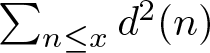 $\sum_{n\leq x}d^2(n)$. Several articles have been written on refining
 $E(x)$. The current best upper bound on
 $E(x)$ is by Jia and Sankaranarayanan [Reference Jia and Sankaranarayanan34] who proved that
 $E(x)=O\left(x^{1/2}\log^5(x)\right)$ whereas Chandrasekharan and Narasimhan [Reference Chandrasekharan and Narasimhan14] have shown that
 $E(x)=\Omega_{\pm}(x^{1/4})$. See [Reference Jia and Sankaranarayanan34], [Reference Robles and Roy57, p. 438] for the history on this topic. It would be nice to see if the Voronoï summation formula that we have obtained for
 $d^2(n)$ in Theorem 2.8 below could be used for improving
 $E(x)$.
Our formula for  $d^{2}(n)$ respects the operation of squaring in the sense that the kernel associated to the integral transform of the test function
 $\phi$ contains two copies of
 $\frac{2}{\pi}K_0\big(4\sqrt{x}\big)-Y_0\big(4\sqrt{x})$ in its triple integral representation; see Theorem 2.8 below. The corresponding formulas for
 $\lambda(n)$ and
 $\mu(n)$ given in Theorems 2.1 and 2.9 have simple kernels involving the sine function.
As far as the Möbius function is concerned, certain identities of such kind are known. For example. let  $\tilde{\phi}(x)$ and
 $\tilde{\psi}(x)$ be a pair of reciprocal functions in the cosine kernel, that is,
 \begin{equation}
\tilde{\psi}(x)=\frac{2}{\sqrt{\pi}}\int_{0}^{\infty}\tilde{\phi}(u)\cos(2ux)\mathrm{d} u,\quad \tilde{\phi}(x)=\frac{2}{\sqrt{\pi}}\int_{0}^{\infty}\tilde{\psi}(u)\cos(2ux)\mathrm{d} u.
\end{equation}
Let
 \begin{equation}
Z_1(s)=\frac{1}{\Gamma(s)}\int_{0}^{\infty}x^{s-1}\tilde{\phi}(x)\mathrm{d} x,\quad Z_2(s)=\frac{1}{\Gamma(s)}\int_{0}^{\infty}x^{s-1}\tilde{\psi}(x)\mathrm{d} x
\end{equation}
be the normalized Mellin transforms of  $\tilde{\phi}$ and
 $\tilde{\psi}$, respectively. Then an identity indicated by Ramanujan to Hardy and Littlewood [Reference Hardy and Littlewood29, p. 160, Equation (2.535)] reads
 \begin{align}
\sqrt{\alpha}\sum_{n=1}^{\infty}\tfrac{\mu(n)}{n}\tilde{\phi}\left(\tfrac{\alpha}{n}\right)-\sqrt{\beta}\sum_{n=1}^{\infty}\tfrac{\mu(n)}{n}\tilde{\psi}\left(\tfrac{\beta}{n}\right)&=\tfrac{1}{\sqrt{\alpha}}\sum_{\rho}\tfrac{\Gamma(1-\rho)Z_1(1-\rho)\alpha^{\rho}}{\zeta'(\rho)}\nonumber\\
&= -\tfrac{1}{\sqrt{\beta}}\sum_{\rho}\tfrac{\Gamma(1-\rho)Z_2(1-\rho)\beta^{\rho}}{\zeta'(\rho)} ,
\end{align}
where  $\alpha\beta=\pi$, and where
 $\rho$ denotes a non-trivial zero of
 $\zeta(s)$. The special case
 $\tilde{\phi}(x)=\tilde{\psi}(x)=e^{-x^2}$, again due to Ramanujan, and discussed in [Reference Hardy and Littlewood29, p. 158, Equation (2.516)], which has received a renewed attention in recent years [Reference Agarwal, Garg and Maji1, Reference Chirre and Gonek15, Reference Dixit19, Reference Gupta and Vatwani27, Reference Kühn, Robles and Roy35] is
 \begin{align}
\sqrt{\alpha}\sum_{n=1}^{\infty}\frac{\mu(n)}{n}e^{-\alpha^2/n^2}-\sqrt{\beta}\sum_{n=1}^{\infty}\frac{\mu(n)}{n}e^{-\beta^2/n^2}
&=\frac{1}{2\sqrt{\alpha}}\sum_{\rho}\frac{\Gamma((1-\rho)/2)}{\zeta^{'}(\rho)}\alpha^{\rho}\nonumber\\
&=-\frac{1}{2\sqrt{\beta}}\sum_{\rho}\frac{\Gamma((1-\rho)/2)}{\zeta^{'}(\rho)}\beta^{\rho}.
\end{align}
Here, the series over the non-trivial zeros are not yet known to be convergent in the usual sense. For  $m\in\mathbb{Z}$, let
 $\rho_m:=\beta_m+i\gamma_m$ denote the
 $m^{\textrm{th}}$ non-trivial zero of
 $\zeta(s)$, where
 $\rho_{-m}=\beta_m-i\gamma_m$. If we bracket the terms of the series in such a way that the terms for which
 \begin{equation*}
|\gamma_m-\gamma'_m| \lt \exp\left(-c\gamma_m/\log(\gamma_m)\right)+\exp\left(-c\gamma'_m/\log(\gamma'_m)\right),
\end{equation*}
where  $c \gt 0$, are included in the same bracket, then the series converges; see [Reference Titchmarsh and Heath-Brown60, p. 220]. It is believed that the series are not merely convergent but rather rapidly convergent and so bracketing may not be required. However, this is unproven as of now, even upon the assumption of the Riemann Hypothesis (RH). The bracketing requirement can be expressed by rephrasing the series
 $\sum_{\rho}\frac{\Gamma((1-\rho)/2)}{\zeta^{'}(\rho)}\alpha^{\rho}$ in the form
 $\lim_{T_n\to\infty}\sum_{|\gamma_m| \lt T_n}\frac{\Gamma((1-\rho_m)/2)}{\zeta^{'}(\rho_m)}\alpha^{\rho_m}$, where,
 $\{T_n\}$ is a sequence tending to infinity such that
 $|T_n-\gamma_m| \gt \exp{(-A\gamma_m/\log(\gamma_m))}$ for every ordinate
 $\gamma_m$ of a zero of
 $s$ [Reference Titchmarsh and Heath-Brown60, p. 219].
The Voronoï summation formula for  $\mu(n)$ that we obtain in Theorem 2.9 gives (1.9) (and hence (1.10)) as special cases. This formula as well as most of our results in this paper involve infinite series over the non-trivial zeros of
 $\zeta(s)$ for which we use the same notation, that is,
 $\lim_{T_n\to\infty}\sum_{|\gamma_m| \lt T_n}$ to indicate bracketing with
 $\{T_n\}$ being a certain sequence.
While both the infinite series occurring in (1.1) contain the same arithmetic function  $d(n)$ (and likewise,
 $\sigma_{-s}(n)$ in the case of (1.5)), this is not true in general. In the case of
 $\lambda(n)$, the corresponding function we get is the function
 $c(n)$ defined by
 \begin{equation}
\sum_{n=1}^{\infty}\frac{c(n)}{n^{s}}:=\frac{\zeta(2s-1)}{\zeta(s)}
\end{equation}
where Re $(s) \gt 1$. The series is absolutely convergent in this half-plane. It is easy to see that
 \begin{equation}
c(n)=m\mu(k)\;\text{if}\;n=m^2k,\text{where}\;k\;\text{is squarefree}.
\end{equation}
Moreover, since  $|\mu(k)|=\mu^{2}(k)$, in the same half-plane, we have
 \begin{equation}
\sum_{n=1}^{\infty}\frac{|c(n)|}{n^{s}}=\sum_{m=1}^{\infty}\frac{m\cdot\mu^{2}(k)}{(m^{2}k)^s}=\zeta(2s-1)\prod_{p\,\text{prime}}\left(1+p^{-s}\right)\
=\frac{\zeta(s)\zeta(2s-1)}{\zeta(2s)}.
\end{equation}
In the course of proving the Voronoï summation formula for  $\lambda(n)$, that is, Theorem 2.1, we need to evaluate certain infinite series involving
 $c(n)$. For example, we prove that
 \begin{equation}
\sum_{n=1}^{\infty}\frac{c(n)}{n}=\frac{1}{2},\quad\sum_{n=1}^{\infty}\frac{c(n)\log n}{n}=-\frac{\gamma}{2}.
\end{equation}
An interesting feature here is that one needs to make use of the Vinogradov–Korobov zero-free region for  $\zeta(s)$ [Reference Korobov36, Reference Vinogradov62] to evaluate them. The standard zero-free region is not sufficient. See Theorems 4.1 and 4.2. Note that both series in (1.14) are conditionally convergent. Several interesting corollaries of the Voronoï summation formula give interesting transformations for series involving
 $c(n)$ and
 $\lambda(n)$. See Corollaries 2.2–2.5.
Also, in the expression for  $\sum_{n=1}^{\infty}d^2(n)\phi(n)$ that we obtain in the Voronoï summation formula for
 $d^2(n)$, that is, Theorem 2.8, we encounter another arithmetic function
 $b(n)$ which is defined by
 \begin{equation*}\sum_{n=1}^{\infty}\frac{b(n)}{n^{s}}:=\frac{\zeta^4(s)}{\zeta(2s-1)}(\textrm{Re}(s) \gt 1).\end{equation*}
As shown in Lemma 5.1,  $b(n)$ is multiplicative and for
 $n=p^k$, where
 $p$ is a prime and
 $k\geq0$,
 \begin{equation}
b(p^k)=\binom{k+3}{3}-p\binom{k+1}{3}.
\end{equation}
In his seminal work, Voronoï obtained the identity [Reference Voronoï63, Equation (5), (6)] (see also [Reference Ramanujan55, p. 254])
 \begin{equation}
2\sum_{n=1}^{\infty}d(n)K_{0}(4\pi\sqrt{nx})=\frac{x}{\pi^2}\sum_{n=1}^{\infty}\frac{d(n)\log(x/n)}{x^2-n^2}-\frac{\gamma}{2}-\left(\frac{1}{4}+\frac{1}{4\pi^2x}\right)\log(x)-\frac{\log(2\pi)}{2\pi^2x},
\end{equation}
where  $|\arg(x)| \lt \pi$. It can be derived from (1.1) by letting
 $\phi(t)=K_0(4\pi\sqrt{tx})$. An application of this identity is in obtaining the following identity of Koshliakov [Reference Koshliakov37, Equation (5)], which is, in turn, used to derive a simpler proof of the Voronoï summation formula for
 $d(n)$ [Reference Koshliakov37]:
 \begin{align}
&2\sum_{n=1}^{\infty}d(n)\left(K_{0}\left(4\pi e^{\frac{i\pi}{4}}\sqrt{nx}\right)+K_{0}\left(4\pi e^{-\frac{i\pi}{4}}\sqrt{nx}\right)\right)=-\gamma-\frac{1}{2}\log x-\frac{1}{4\pi x}\nonumber\\
&\qquad+\frac{x}{\pi}\sum_{n=1}^{\infty}\frac{d(n)}{x^2+n^2},
\end{align}
where  $x\in\mathbb{C}\backslash\{z\in\mathbb{C}: \textrm{Re}(z)=0\}$. Soni [Reference Soni58] proved that both (1.16) and (1.17) are equivalent to (1.1). Another important identity associated with
 $d(n)$, and termed as Koshliakov’s formula [Reference Berndt, Lee, Sohn and Alladi10] (see [Reference Koshliakov37]), is
 \begin{equation}
\gamma-\log\left(\dfrac{4\pi}{x}\right)+4\sum_{n=1}^{\infty}d(n)K_0(2\pi
nx)=\dfrac{1}{x}\left(\gamma-\log(4\pi x)+4\sum_{n=1}^{\infty}d(n)K_0\left(\dfrac{2\pi n}{x}\right)\right),
\end{equation}
where Re $(x) \gt 0$. Observe that the arguments of the modified Bessel function occurring in the series on the left-hand sides of (1.16) and (1.18) involve
 $\sqrt{x}$ and
 $x$, respectively. It is known [Reference Soni58] that (1.18) is also equivalent to (1.1).
A generalization of (1.16) in the setting of  $\sigma_{-s}(n)$ was given by Cohen [Reference Cohen16, Theorem 3.4] who proved that for
 $x \gt 0$ and
 $s\notin\mathbb{Z}$, where
 $\textrm{Re}(s)\geq 0$ (As mentioned in [Reference Cohen16], the condition
 $\sigma\geq 0$ is not restrictive since
 $K_{-s}(w)=K_s(w)$ implies that the left-hand side of (1.19) is invariant if we replace
 $s$ by
 $-s$), and
 $k\in\mathbb{Z}$ such that
 $k\geq\lfloor\left(\textrm{Re}(s)+1\right)/2\rfloor$,
 \begin{align}
&8\pi x^{s/2}\sum_{n=1}^{\infty}\sigma_{-s}(n)n^{s/2}K_{s}(4\pi\sqrt{n x})=
A(s, x)\zeta(s)+B(s, x)\zeta(s+1)\nonumber\\
&\quad+\frac{2}{\sin\left(\pi s/2\right)}\left(\sum_{1\leq j\leq k}\zeta(2j)\zeta(2j-s)x^{2j-1}+x^{2k+1}\sum_{n=1}^{\infty}\sigma_{-s}(n)\frac{n^{s-2k}-x^{s-2k}}{n^2-x^2}\right),\end{align}
where  $A(s, x)=\frac{x^{s-1}}{\sin\left(\pi s/2\right)}-(2\pi)^{1-s}\Gamma(s)$ and
 $B(s, x)=\frac{2}{x}(2\pi)^{-s-1}\Gamma(s+1)-\frac{\pi x^{s}}{\cos\left(\pi s/2\right)}$. Equation (1.17) can also be generalized in this setting; see [Reference Berndt, Dixit, Roy and Zaharescu7, p. 844, Equation (7.3)].
Lastly, (1.18) can also be generalized to get what is known as the Ramanujan–Guinand formula [Reference Ramanujan55, p. 253], [Reference Guinand26], [Reference Dixit18, Theorem 1.2], namely, for Re $(x) \gt 0$,
 \begin{align}
&(\pi x)^{-s/2}\Gamma\left(\frac{s}{2}\right)\zeta(s)+(\pi x)^{s/2}\Gamma\left(\frac{-s}{2}\right)\zeta(-s)+4\sum_{n=1}^{\infty}\sigma_{-s}(n)n^{s/2}K_{s/2}(2\pi nx)\nonumber\\
&=\frac{1}{x}\left((\pi /x)^{-s/2}\Gamma\left(\frac{s}{2}\right)\zeta(s)+(\pi/ x)^{s/2}\Gamma\left(\frac{-s}{2}\right)\zeta(-s)\right.\nonumber\\
&\qquad+4\sum_{n=1}^{\infty}\sigma_{-s}(n)n^{s/2}K_{s/2}\left.\left(\frac{2\pi n}{x}\right)\right).\end{align}
This has a connection with the Fourier expansion of non-holomorphic Eisenstein series on  $\textrm{SL}_2\left(\mathbb{Z}\right)$ and its functional equation; see [Reference Cohen16, p. 60]. Note that Koshliakov’s formula (1.18) can be viewed as the Ramanujan–Guinand formula corresponding to
 $d(n)$.
One may wonder how the underlying strategy for deriving the Voronoï-Ramanujan-Cohen identity (1.16) or Cohen’s identity (1.19) differs from that used for proving Koshliakov’s formula (1.18) or the Ramanujan–Guinand formula (1.20), as all of the identities in these formulas involve infinite series of the modified Bessel function but with different arguments. The answer is, (1.16) or (1.19) entails the asymmetric form of the functional equation of  $\zeta(w)$ in their derivations, that is, [Reference Titchmarsh and Heath-Brown60, p. 24],
 \begin{equation}
\Gamma(w)\zeta(w)=\frac{1}{2}(2\pi)^w\zeta(1-w)\sec\left(\frac{\pi w}{2}\right)
\end{equation}
whereas (1.18) or (1.20) requires the symmetric form of the functional equation, namely,
 \begin{equation}
\pi^{-\frac{w}{2}}\Gamma\left(\frac{w}{2}\right)\zeta(w)=\pi^{-\frac{(1-w)}{2}}\Gamma\left(\frac{1-w}{2}\right)\zeta(1-w).
\end{equation}
For example, using [Reference Oberhettinger45, p. 115, Formula 11.1], for  $c=\textrm{Re}(z) \gt \pm\frac{1}{2}\textrm{Re}(s)$,
 \begin{equation*}
\frac{1}{2\pi i}\int_{(c)}\Gamma\left(z-\frac{s}{2}\right)\Gamma\left(z+\frac{s}{2}\right)(4\pi^2nx)^{-z}\mathrm{d} z=2K_s(4\pi\sqrt{nx}),
\end{equation*}
(where, here, and throughout the paper, by  $\int_{(c)}$, we mean
 $\int_{c-i\infty}^{c+i\infty}$), we see that
 \begin{align*}
\sum_{n=1}^{\infty}\sigma_{-s}(n)n^{s/2}K_{s}(4\pi\sqrt{n x})&=\frac{1}{4\pi i}\int_{(c)}\Gamma\left(z-\frac{s}{2}\right)\Gamma\left(z+\frac{s}{2}\right)\left(\sum_{n=1}^{\infty}\frac{\sigma_{-s}(n)n^{s/2}}{n^{z}}\right)\nonumber\\
&\quad\times(4\pi^2x)^{-z}\mathrm{d} z\nonumber\\
&=\frac{1}{4\pi i}\int_{(c)}\Gamma\left(z-\frac{s}{2}\right)\Gamma\left(z+\frac{s}{2}\right)\zeta\left(z-\frac{s}{2}\right)\zeta\left(z+\frac{s}{2}\right)\nonumber\\
&\quad\times(4\pi^2x)^{-z}\mathrm{d} z,
\end{align*}
provided, we now take  $c=\textrm{Re}(z) \gt 1\pm\frac{1}{2}\textrm{Re}(s)$. In the last step, we used the well-known result
 $\sum_{n=1}^{\infty}\sigma_{-s}(n)n^{s/2-z}=\zeta\left(z-\frac{s}{2}\right)\zeta\left(z+\frac{s}{2}\right)$. The last integral can now be transformed using (1.21). But if we consider the series occurring on the left-hand side of (1.20), then performing a calculation similar to the above, for
 $c=\textrm{Re}(z) \gt \pm\frac{1}{2}\textrm{Re}(s)$,
 \begin{align*}
\sum_{n=1}^{\infty}\sigma_{-s}(n)n^{s/2}K_{s/2}(2\pi nx)&=\frac{1}{8\pi i}\int_{(c)}\Gamma\left(\frac{z}{2}-\frac{s}{4}\right)\zeta\left(z-\frac{s}{2}\right)\Gamma\left(\frac{z}{2}+\frac{s}{4}\right)\zeta\left(z+\frac{s}{2}\right)\nonumber\\
&\quad\times(\pi x)^{-z}\mathrm{d} z,
\end{align*}
which needs (1.22) for simplifying the integrand.
With this in mind, one may obtain new identities of these kinds by working with different arithmetic functions. Following the terminology in [Reference Banerjee and Maji4] and [Reference Banerjee and Khurana3], we call identities of the type (1.16) or (1.5) as Cohen-type identities. Also, we term those of the type (1.18) or (1.20) as Ramanujan–Guinand-type identities.
Our second goal of this paper is to obtain Cohen-type and Ramanujan–Guinand-type identities, whenever possible, for functions whose Dirichlet series can be represented as quotients of the Riemann zeta function. While we again concentrate on  $\lambda(n)$ and
 $d^2(n)$, we also obtain such identities for
 $\sigma_a(n)\sigma_b(n)$. These can be seen in Theorems 2.6, 2.7, 2.9, 2.11, and 2.13 and Corollaries 2.12 and 2.14. In Remark 3, we explain why one cannot obtain such identities for
 $\mu(n)$.
We emphasize that there are very few studies on infinite series involving  $\sigma_a(n)\sigma_b(n)$. Wigert [Reference Wigert67] undertook a brief study of
 $\sum_{n=1}^{\infty}\sigma_{-1}(n)\sigma_{-\alpha}(n)e^{-nx}$, where
 $\alpha \gt 3$, and obtained a transformation for it [Reference Wigert67, Equation (8)]. In their recent work in string theory, Dorigoni and Treilis [Reference Dorigoni and Treilis22, Equation (4.29)] encountered the series
 $\sum_{n=1}^{\infty}\sigma_{a}(n)\sigma_{b}(n)n^{-(a+b)/2}K_{a/2}(2nx)K_{b/2}(2nx)$, which is the exact series that we transform, thereby obtaining the Ramanujan–Guinand identity for
 $\sigma_a(n)\sigma_b(n)$. Indeed, the Laplace equation considered by Dorigoni and Treilis, for which the exact solution is the non-perturbative part of the Fourier zero-mode sector, has precisely this series as its inhomogeneous part [Reference Dorigoni and Treilis22, pp. 36–37]. This showcases the importance of such series not only in number theory but also in physics. It is our hope that other series, such as the ones in (2.11), will eventually find their use in similar analyses.
We now come to the third and the last goal of our paper, namely, obtaining results on oscillations of certain weighted sums involving the arithmetic functions  $\mu(n), \lambda(n)$, and of the error term corresponding to the Riesz-type sum associated with
 $d^{2}(n)$.
Historically, people have been interested in studying oscillations of functions associated to  $ \mu(n), \lambda(n)$, and
 $d(n)$, namely,
 $\frac{1}{\sqrt{x}}\sum_{n\leq x}\mu(n)$,
 $\frac{1}{\sqrt{x}}\sum_{n\leq x}\lambda(n)$, and
 $\frac{1}{x^{1/4}}\left(\sum_{n\leq x}d(n)-x\log(x)-(2\gamma-1)x\right)$ as
 $x\to\infty$. For example, Ingham [Reference Ingham32] showed that
 \begin{align*}
\underline{\lim}_{x\to\infty}\frac{\sum_{n\leq x}\mu(n)}{\sqrt{x}}=-\infty\;\text{and}\;\overline{\lim}_{x\to\infty}\frac{\sum_{n\leq x}\mu(n)}{\sqrt{x}}=\infty
\end{align*}
assuming RH and the Linear Independence Conjecture (LI), which states that the positive imaginary ordinates of the zeros of  $\zeta(s)$ are linearly independent over
 $\mathbb{Q}$.
Using a method similar to the one that we have used for deriving our Voronoï summation formulas, we obtain oscillation results on the weighted sums of  $\mu(n)$ and
 $\lambda(n)$, where the weights are functions of Riesz and Schwartz type. For the corresponding Riesz-type sum on
 $d^2(n)$, we obtain a result on the oscillation of its error term. These results are stated and proved in Section 8.
2. Main results
2.1. Results on the Liouville function  $\lambda(n)$

Let  $s=\sigma+it$. Let
 $\Phi(s)$ be holomorphic in
 $-1 \lt \operatorname{Re} s=\sigma \lt 2$ except for a possible pole of order two or less at
 $s=0$, and such that
 \begin{equation}
\Phi(\sigma+it)\ll t^{-1-\delta}\text{as}\ t\rightarrow\pm\infty
\end{equation}
for some  $\delta \gt 0$ and
 $-1 \lt \sigma \lt 2$.
Theorem 2.1. Let  $\lambda(n)$ denotes the Liouville function and recall the expression for
 $c(n)$ from (1.12). For
 $0 \lt \sigma \lt 2$, define
 $\phi(x):=\frac{1}{2\pi i}\int_{\sigma-i\infty}^{\sigma+i\infty}\Phi(s)x^{-s}\mathrm{d} s$, where
 $\Phi(s)$ satisfies (2.1) and the condition before (2.1). For
 $m\in\mathbb{Z}$, let
 $\rho_m:=\beta_m+i\gamma_m$ denotes the
 $m^{\textrm{th}}$ non-trivial zero of
 $\zeta(s)$, where
 $\rho_{-m}=\beta_m-i\gamma_m$. Assume that the non-trivial zeros of
 $\zeta(s)$ are simple. Then there exists a sequence of numbers
 $\{T_n\}_{n=1}^\infty$ with
 $T_n\to\infty$ such that
 \begin{equation}
\begin{aligned}
\sum_{n=1}^{\infty}\lambda(n)\phi(n)&=\frac{1}{2\zeta(\frac{1}{2})}\int_{0}^{\infty}\frac{\phi(x)}{\sqrt{x}}\mathrm{d} x+ \lim_{T_n\to\infty}\sum_{|\gamma_m| \lt T_n}\frac{\zeta(2\rho_m)}{\zeta'(\rho_m)}\int_{0}^{\infty}\phi(x)x^{\rho_m-1}\mathrm{d} x\\
&\quad+\sqrt{2}\sum_{n=1}^{\infty}\frac{c(n)}{\sqrt{n}}\int_{0}^{\infty}\frac{\phi(x)}{\sqrt{x}}\sin\bigg(\frac{\pi nx}{2}+\frac{\pi}{4}\bigg)\mathrm{d} x.
\end{aligned}
\end{equation}
The convergence of the last series on the right-hand side of the above equation follows by tracing its proof, beginning with (4.9), obtaining (4.10) through the Lebesgue dominated convergence theorem, and then proceeding with (4.20), (4.22), (4.31), and (4.33), in that order, via the arguments given in them.
Remark 1. We allow  $\Phi(s)$ to have a pole at
 $s=0$ in order to accommodate well-known functions
 $\phi$ belonging to the Schwartz class, such as
 $e^{-x}$ and
 $K_0(x)$, as well as the functions used to construct Riesz sums.
Corollary 2.2. Let  $y \gt 0$. Under the assumptions of Theorem 2.1, we have
 \begin{align}
\sum_{n=1}^{\infty}\lambda(n)e^{-ny}&=
\frac{\sqrt{\pi}}{2\sqrt{y}\zeta\left(\frac{1}{2}\right)}+ \lim_{T_n\to\infty}\sum_{|\gamma_m| \lt T_n}\frac{\zeta(2\rho_m)\Gamma(\rho_m)}{\zeta'(\rho_m)}y^{-\rho_m}\nonumber\\
&\quad+\sqrt{\pi}\sum_{n=1}^{\infty}\frac{c(n)}{\sqrt{n}}\frac{\sqrt{\sqrt{4y^2+\pi^2n^2}-2y}+\sqrt{\sqrt{4y^2+\pi^2n^2}+2y}}{\sqrt{4y^2+\pi^2n^2}}.\end{align}
In addition, if we assume RH and the absolute convergence of the above series over the non-trivial zeros of  $\zeta(s)$, then, as
 $y\to0^{+}$,
 \begin{equation}
\sum_{n=1}^{\infty}\lambda(n)e^{-ny}=O\left(\frac{1}{\sqrt{y}}\right).
\end{equation}
Corollary 2.3. Let  $y \gt 0$ and
 $I_{s}(\xi)$ be defined in (1.4). Under the assumptions of Theorem 2.1, we have
 \begin{align}
\sum_{n=1}^{\infty}\lambda(n)e^{-n^2y}&=
\frac{\Gamma\left(\frac{5}{4}\right)}{y^{\frac{1}{4}}\zeta\left(\frac{1}{2}\right)}+ \frac{1}{2}\lim_{T_n\to\infty}\sum_{|\gamma_m| \lt T_n}\frac{\zeta(2\rho_m)}{\zeta'(\rho_m)}\Gamma\left(\frac{\rho_m}{2}\right)y^{-\frac{\rho_m}{2}}\nonumber\\
&\quad+\frac{\pi^{3/2}}{4\sqrt{y}}\sum_{n=1}^{\infty}c(n)e^{-\frac{\pi^2n^2}{32y}}\left(I_{-\frac{1}{4}}\left(\frac{\pi^2n^2}{32y}\right)+I_{\frac{1}{4}}\left(\frac{\pi^2n^2}{32y}\right)\right).\end{align}
In addition, if we assume RH and the absolute convergence of the above series over the non-trivial zeros of  $\zeta(s)$, then, as
 $y\to0^{+}$,
 \begin{equation}
\sum_{n=1}^{\infty}\lambda(n)e^{-n^2y}=O\left(\frac{1}{y^{1/4}}\right).
\end{equation}
Corollary 2.4. Let  $K_{s}(\xi)$ be defined in (1.3) and let
 $y \gt 0$. Under the assumptions of Theorem 2.1, we have
 \begin{align}
\sum_{n=1}^{\infty}\lambda(n)K_0(ny)&=\frac{2\sqrt{2}}{\sqrt{y}\zeta\left(\frac{1}{2}\right)}\Gamma^{2}\left(\frac{5}{4}\right)+ \frac{1}{4}\lim_{T_n\to\infty}\sum_{|\gamma_m| \lt T_n}\frac{\zeta(2\rho_m)}{\zeta'(\rho_m)}\Gamma^{2}\left(\frac{\rho_m}{2}\right)\left(\frac{2}{y}\right)^{\rho_m}\nonumber\\
&\quad+\pi^{\frac{3}{2}}\sum_{n=1}^{\infty}\frac{c(n)}{\sqrt{n}(\pi^2n^2+4y^2)^{\frac{1}{4}}}{}_2F_{1}\left(\frac{1}{2},\frac{1}{2};1;\frac{1}{2}+\frac{\pi n}{2\sqrt{\pi^2n^2+4y^2}}\right).\end{align}
In addition, if we assume RH and the absolute convergence of the above series over the non-trivial zeros of  $\zeta(s)$, then, as
 $y\to0^{+}$,
 \begin{equation}
\sum_{n=1}^{\infty}\lambda(n)K_0(ny)=O\left(\frac{1}{\sqrt{y}}\right).
\end{equation}
Corollary 2.5. Let  $J_s(\xi)$ be defined in (1.2) and let
 $y \gt 0$. Under the assumptions of Theorem 2.1,
 \begin{align}
\sum_{n\leq y}\lambda(n)\left(1-\tfrac{n}{y}\right)^{\frac{1}{2}}
&=\frac{\pi \sqrt{y}}{4\zeta\left(\frac{1}{2}\right)}+\frac{1}{2}\sqrt{\pi }\lim_{T_n\to\infty}\sum_{|\gamma_m| \lt T_n}\frac{\zeta(2\rho_m)}{\zeta'(\rho_m)}\frac{\Gamma(\rho_m)}{\Gamma\left(\rho_m+\frac{3}{2}\right)}y^{\rho_m}\nonumber\\
&\qquad +\frac{\pi \sqrt{y}}{2}\sum_{n=1}^{\infty}\frac{c(n)}{\sqrt{n}}\bigg\{J_{0}\left(\frac{\pi n y}{4}\right)\left(\sin\left(\frac{\pi n y}{4}\right)+\cos\left(\frac{\pi n y}{4}\right)\right)+\nonumber\\
&\quad\times J_{1}\left(\frac{\pi n y}{4}\right)\left(\sin\left(\frac{\pi n y}{4}\right)-\cos\left(\frac{\pi n y}{4}\right)\right)\bigg\}.\end{align}
In addition, if we assume RH and the absolute convergence of the above series over the non-trivial zeros of  $\zeta(s)$, then, as
 $y\to\infty$,
 \begin{equation}
\sum_{n\leq y}\lambda(n)\left(1-\tfrac{n}{y}\right)^{\frac{1}{2}}=O\left(\sqrt{y}\right).
\end{equation}
We now obtain the Cohen-type identity associated with  $\lambda(n)$.
Theorem 2.6. Let  $x \gt 0$ and let
 $c(n)$ be given in (1.12). For
 $m\in\mathbb{Z}$, let
 $\rho_m:=\beta_m+i\gamma_m$ denotes the
 $m^{\textrm{th}}$ non-trivial zero of
 $\zeta(s)$, where
 $\rho_{-m}=\beta_m-i\gamma_m$. Assume that the non-trivial zeros of
 $\zeta(s)$ are simple. Then there exists a sequence of numbers
 $\{T_n\}_{n=1}^\infty$ with
 $T_n\to\infty$ such that
 \begin{align}
\sum_{n=1}^{\infty}\frac{\lambda(n)}{n(x^2+n^2)}&=-\pi x^{-5/2}\sum_{n=1}^{\infty}\frac{c(n)}{\sqrt{2n}}e^{-\pi n x/2}-\frac{\pi x^{-5/2}}{2\sqrt{2}\zeta\left(\frac{1}{2}\right)}\nonumber\\
&\quad+\frac{2\pi^2}{x^2}\lim_{T_n\to\infty}\sum_{|\gamma_m| \lt T_n}\frac{\zeta(2\rho_m-1)\Gamma(2\rho_m-1)}{\zeta'(\rho_m)\Gamma(\rho_m)(2\pi x)^{\rho_m}}.
\end{align}
We conclude this subsection by stating the Ramanujan–Guinand-type identity associated with  $\lambda(n)$.
Theorem 2.7. There exists a sequence of numbers  $\{T_n\}_{n=1}^\infty$ with
 $T_n\to\infty$ such that
 \begin{align}
\frac{x}{2}\sum_{n=1}^{\infty}n\lambda(n)e^{-\pi n^2x^2/4}&=\frac{1}{4\sqrt{2}x^2}\sum_{n=1}^{\infty}nc(n)e^{-\pi n^2/(8x^2)}\left(K_{1/4}\bigg(\frac{\pi n^2}{8x^2}\bigg)+K_{3/4}\bigg(\frac{\pi n^2}{8x^2}\bigg)\right)\nonumber\\
&\quad+\frac{\pi^{1/4}}{2\sqrt{x}\Gamma\left(\frac{1}{4}\right)\zeta\left(\frac{1}{2}\right)}+\lim_{T_n\to\infty}\sum_{|\gamma_m| \lt T_n}\frac{\zeta(2\rho_m)}{\zeta'(\rho_m)}\frac{\Gamma(\rho_m)}{\Gamma\left(\rho_m/2\right)}\nonumber\\
&\quad\times(\sqrt{\pi} x)^{-\rho_m}.\end{align}
2.2. Results on the square of the divisor function
$d^{2}(n)$

Let  $s=\sigma+it$. Let
 $\Phi(s)$ be a holomorphic function in the strip (Unlike in Theorem 2.1, we do not allow the function
 $\Phi(s)$ in Theorem 2.8 to have a pole at
 $s=0$ so as to not compromise on the elegance of the result, but, in principle, this can be done)
 $-1 \lt \operatorname{Re} s=\sigma \lt 2$ and such that
 \begin{equation}
\Phi({\sigma}+it)\ll t^{-3-\delta}
\end{equation}
as  $t\to \infty$ for some
 $\delta \gt 0$ and
 $-1 \lt {\sigma} \lt 2$.
Theorem 2.8. Let  $d(n)$ be the divisor function and recall the expression for
 $b(n)$ from (1.15). For
 $-1 \lt \sigma \lt 2$, define
 $\phi(x):=\frac{1}{2\pi i}\int_{\sigma-i\infty}^{\sigma+i\infty}\Phi(s)x^{-s}\mathrm{d} s$, where
 $\Phi(s)$ satisfies the aforementioned conditions. For
 $m\in\mathbb{Z}$, let
 $\rho_m:=\beta_m+i\gamma_m$ denotes the
 $m^{\textrm{th}}$ non-trivial zero of
 $\zeta(s)$, where
 $\rho_{-m}=\beta_m-i\gamma_m$. Assume that the non-trivial zeros of
 $\zeta(s)$ are simple. Then there exists a sequence of numbers
 $\{T_n\}_{n=1}^\infty$ with
 $T_n\to\infty$ such that
 \begin{equation}
\begin{aligned}
\sum_{n=1}^{\infty}d^2(n)\phi(n)
&=\int_{0}^{\infty}(A_0+A_1\log(x)+A_2\log^2(x)+A_3\log^3(x))\phi(x)\mathrm{d} x\\
&\quad+\lim_{T_n\to\infty}\sum_{|\gamma_m|\leq T_n}\frac{\zeta^4(\frac{\rho_m}{2})}{2\zeta'(\rho_m)}\int_{0}^{\infty}\phi(x)x^{\frac{\rho_m}{2}-1}dx\\
&\quad +\frac{4}{\pi^2}\sum_{n=1}^{\infty}\frac{b(n)}{n}\int_{0}^{\infty}\int_{0}^{\infty}\int_{0}^{\infty}\bigg(\frac{2}{\pi}K_0\big(4\sqrt{x}\big)-Y_0\big(4\sqrt{x}\big)\bigg)\\
&\qquad\times\bigg(\frac{2}{\pi}K_0\big(4\sqrt{y}\big)-Y_0\big(4\sqrt{y}\big)\bigg)\times\frac{\phi(z)}{z}\cos\bigg(\frac{2\sqrt{xy}}{\pi\sqrt{nz}}\bigg)
{\mathrm{d} z \mathrm{d} x \mathrm{d} y},
\end{aligned}
\end{equation}
where
 \begin{align}
A_0 & =\frac{1}{\pi^8}\big(24 \gamma^3 \pi^6 - 72 \gamma\pi^6 \gamma_1 + 12 \pi^6 \gamma_2- 432 \gamma^2 \pi^4 \zeta'(2)+288 \pi^4 \gamma_1 \zeta'(2) \nonumber\\
&\quad \!+\! 3456 \gamma \pi^2 \zeta'(2)^2 \!-\! 10368 \zeta'(2)^3 \!-\! 288 \gamma \pi^4 \zeta''(2)\!+\! 1728 \pi^2 \zeta'(2) \zeta''(2)\!-\!48\pi^4\zeta'''(2)\big),\nonumber\\
A_1 & =\frac{1}{\pi^8}\left(36 \gamma^2 \pi^6- 24 \pi^6 \gamma_1 - 288 \gamma \pi^4\zeta'(2)+ 864 \pi^2 \zeta'(2)^2 - 72 \pi^4\zeta''(2)\right),\nonumber\\
A_2 & = \frac{1}{\pi^8}\left(12 \gamma \pi^6 - 36 \pi^4 \zeta'(2)\right),\nonumber\\
A_3 & =\frac{1}{\pi^2},\end{align}
with  $\gamma_1$ being the first Stieltjes constant.
Remark 2. Although the hypotheses of Theorem 2.8 do not allow us to take  $\phi(x)$ to be the characteristic function of the interval
 $[1,x]$, where
 $x \gt 1$, heuristically, if we choose
 $\phi$ to be so, then the main term of our result turns out to be exactly the one given by Ramanujan [Reference Ramanujan54], namely (Our
 $A_0, A_1, A_2$ and
 $A_3$ are respectively
 $D, C, B$ and
 $A$ of Ramanujan),
 $A_0x+A_1x\log(x)+A_2x\log^2(x)+A_3x\log^{3}(x)$.
2.3. Results on the Möbius function
$\mu(n)$

Let  $s=\sigma+it$. Let
 $\Phi(s)$ be holomorphic in
 $-1 \lt \operatorname{Re} s=\sigma \lt 2$ except for a possible simple pole at
 $s=0$, and such that
 \begin{equation}
\Phi(\sigma+it)\ll t^{-1-\delta}
\end{equation}
as  $t\to \pm\infty$ for some
 $\delta \gt 0$ and
 $-1 \lt \delta \lt 2$.
Theorem 2.9. For  $0 \lt \sigma \lt 2$, define
 $\phi(x):=\frac{1}{2\pi i}\int_{\sigma-i\infty}^{\sigma+i\infty}\Phi(s)x^{-s}\mathrm{d} s$, where
 $\Phi(s)$ satisfies the aforementioned conditions. For
 $m\in\mathbb{Z}$, let
 $\rho_m:=\beta_m+i\gamma_m$ denotes the
 $m^{\textrm{th}}$ non-trivial zero of
 $\zeta(s)$, where
 $\rho_{-m}=\beta_m-i\gamma_m$. Assume that the non-trivial zeros of
 $\zeta(s)$ are simple. Then there exists a sequence of numbers
 $\{T_n\}_{n=1}^\infty$ with
 $T_n\to\infty$ such that
 \begin{equation*}
\begin{aligned}
\sum_{n=1}^{\infty}\mu(n)\phi(n)&= -2k+\lim_{T_n\to \infty}\sum_{|\gamma_m| \lt T_n}\frac{1}{\zeta'(\rho_m)}\int_{0}^{\infty}\phi(x)x^{\rho_m-1}\mathrm{d} x-4\sum_{n=1}^{\infty}\frac{\mu(n)}{n}\\
&\quad\times\int_{0}^{\infty}(\phi(t)-k)\bigg(\frac{\sin^2(\pi/nt)}{t}\bigg)\mathrm{d} t, \end{aligned}
\end{equation*}
where  $k$ is the residue of
 $\Phi(s)$ at
 $s=0$.
In Section 7, we briefly sketch the proof of the above theorem since it is similar to that of Theorem 2.1, and since the latter is proved in complete detail in Section 4.2.
Corollary 2.10. Ramanujan’s identity (1.9) holds.
Remark 3. One does not get Ramanujan–Guinand-type and Cohen-type identities for  $\mu(n)$ since the corresponding integrals
 $\frac{1}{2\pi i}\int_{(c)}\frac{x^{-s}\mathrm{d} s}{\pi^{-s/2}\Gamma(s/2)\zeta(s)}$ and
 $\frac{1}{2\pi i}\int_{(d)}\frac{x^{-s}\mathrm{d} s}{\Gamma(s)\zeta(s)}$ diverge along any vertical line.
2.4. Cohen- and Ramanujan–Guinand-type identities for
$\sigma_a(n)\sigma_b(n)$

Although we do not venture (In principle, this can, of course, be done, and a formula generalizing that for  $d^2(n)$, that is, (2.14) can be derived; however, it is quite complicated and hence we refrain from going in that direction) into deriving the Voronoï summation formula for
 $\sigma_a(n)\sigma_b(n)$, we do obtain the Cohen-type identity as well as the analogue of Ramanujan–Guinand identity for this arithmetic function.
Before stating the Cohen-type identity for  $\sigma_a(n)\sigma_b(n)$, we need to define an arithmetic function
 $C_{a, b}(n)$ occurring in our formulas below. It is defined by means of the Dirichlet series
 \begin{equation}
\sum_{n=1}^{\infty}\frac{C_{a, b}(n)}{n^s}:=\frac{\zeta(s)\zeta(s-a)\zeta(s-b)\zeta(s-a-b)}{\zeta(2s-a-b-1)}(\textrm{Re}(s) \gt \eta),
\end{equation}
where
 \begin{equation}
\eta:=\max{\{1,1+\operatorname{Re}(a),1+\operatorname{Re}(b),1+\operatorname{Re}(a+b),1+\operatorname{Re}(a+b)/2\}}.
\end{equation}
We now give an expression for  $C_{a, b}(n)$ as the Dirichlet convolution of two familiar functions. Write the right-hand side of (2.17) as
 \begin{align}
&\frac{\zeta(s)\zeta(s-a)\zeta(s-b)\zeta(s-a-b)}{\zeta(2s-a-b-1)}\nonumber\\
&\qquad\qquad=\frac{\zeta(s)\zeta(s-a)\zeta(s-b)\zeta(s-a-b)}{\zeta(2s-a-b)}\cdot\frac{\zeta(2s-a-b)}{\zeta(2s-a-b-1)}.
\end{align}
Now for  $\textrm{Re}(s) \gt \eta$, we have [Reference Titchmarsh and Heath-Brown60, p. 8, Equation (1.3.3)],
 \begin{equation}
\frac{\zeta(s)\zeta(s-a)\zeta(s-b)\zeta(s-a-b)}{\zeta(2s-a-b)}=\sum_{n=1}^{\infty}\frac{\sigma_a(n)\sigma_b(n)}{n^s}.
\end{equation}
Moreover, if  $\phi^{-1}$ denotes the Dirichlet inverse of the Euler totient function
 $\phi$, then, for Re
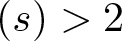 $(s) \gt 2$, we have
 $\sum_{n=1}^{\infty}\phi^{-1}(n)n^{-s}=\zeta(s)/\zeta(s-1)$, whence, for Re
 $(s) \gt \eta$,
 \begin{align*}
\frac{\zeta(2s-a-b)}{\zeta(2s-a-b-1)}=\sum_{n=1}^{\infty}\frac{\kappa_{a,b}(n)}{n^s},
\end{align*}
where
 \begin{equation}
\kappa_{a,b}(n)=\begin{cases}
m^{a+b}\phi^{-1}(m),\text{if}\;n=m^2,\\
0,\text{else}.
\end{cases}
\end{equation}
Thus, from (2.19)–(2.21), we see that
 \begin{equation}
C_{a,b}(n)=\left(\sigma_a\sigma_b*\kappa_{a,b}\right)(n).
\end{equation}
Theorem 2.11. Let  $-1 \lt \textrm{Re}(a), \textrm{Re}(b), \textrm{Re}(a-b), \textrm{Re}(a+b) \lt 1$, and
 $x \gt 0$. Let
 $C_{a,b}(n)$ be given in (2.22). Let
 $f(s):=\Gamma(s)\zeta(s)$. For
 $m\in\mathbb{Z}$, let
 $\rho_m:=\beta_m+i\gamma_m$ denotes the
 $m^{\textrm{th}}$ non-trivial zero of
 $\zeta(s)$, where
 $\rho_{-m}=\beta_m-i\gamma_m$. Assume that the non-trivial zeros of
 $\zeta(s)$ are simple. Then there exists a sequence of numbers
 $\{T_n\}_{n=1}^\infty$ with
 $T_n\to\infty$ such that
 \begin{align}
&\sum_{n=1}^{\infty}{\sigma_{a}(n)\sigma_{b}(n)}\frac{x\big(x^{-a}-n^{-a}\big)\big(x^{-b}-n^{-b}\big)}{x^2-n^2}\nonumber\\
&=32\pi x^{\frac{1-a-b}{2}} \sin\left(\frac{\pi a}{2}\right)\sin\left(\frac{\pi b}{2}\right)\sum_{n=1}^{\infty}\frac{C_{a, b}(n) }{n^{\frac{a+b-1}{2}}}\bigg(K_{a-1}\Big(4\pi\sqrt{nx}\Big)K_{b}\Big(4\pi\sqrt{nx}\Big)\nonumber\\
&\quad+K_{b-1}\Big(4\pi\sqrt{nx}\Big)K_{a}\Big(4\pi\sqrt{nx}\Big)+\frac{(a+b-1)}{4\pi\sqrt{nx}}K_{b}\Big(4\pi\sqrt{nx}\Big)K_{a}\Big(4\pi\sqrt{nx}\Big)\bigg)\nonumber\\
&\quad -2(2\pi)^{a+b}\sin\left(\frac{\pi a}{2}\right)\sin\left(\frac{\pi b}{2}\right)\left(\sum_{k=0}^{1}\left(R_k(x)+ R_{k+a}(x)+R_{k+b}(x)+R_{k+a+b}(x)\right)\right.\nonumber\\
&\left.
\quad+\lim_{T_n\to\infty}\sum_{|\gamma_m| \lt T_n}R_{\rho_m,a,b}(x)\right),\end{align}
where
 \begin{align}
R_0(x)\!&=\!\frac{-f(-a)f(-b)f(-a-b)}{2f(-a-b-1)},
R_a(x)=\frac{-f(a)f(a-b)f(-b)}{2f(a-b-1)}(4\pi^2x)^{-a},\nonumber\\
R_b(x)\!&=\!\frac{-f(b)f(b-a)f(-a)}{2f(b-a-1)}(4\pi^2x)^{-b},
R_{a+b}(x)\!=\!\frac{-f(a+b)f(a)f(b)}{2f(a+b-1)}(4\pi^2x)^{-b-a},\nonumber\\
R_1(x)\!&=\!{f(1-a)f(1-b)}(4\pi^2x)^{-1},
R_{1+a}(x)=f(1+a)f(1-b)(4\pi^2x)^{-1-a},\nonumber\\
R_{1+b}(x)\!&=\!f(1+b)f(1-a)(4\pi^2x)^{-1-b},
R_{1+a+b}(x)\!=\!f(1+a)f(1+b)(4\pi^2x)^{-1-a-b},\end{align}
and
 \begin{align}
&R_{\rho_m,a,b}(x)\nonumber\\
&=\frac{f((1\!+\!\rho_m\!+\!a\!+\!b)/2)f((1\!+\!\rho_m\!-\!a\!+\!b)/2)f((1\!+\!\rho_m\!+\!a\!-\!b)/2)f((1\!+\!\rho_m\!-\!a\!-\!b)/2)}{2\zeta'(\rho_m)\Gamma(\rho_m)(4\pi^2x)^{\frac{\rho_m\!+\!1\!+\!a\!+\!b}{2}}}.
\end{align}
As a corollary, we get the Cohen-type identity for  $d^2(n)$.
Corollary 2.12. Let  $x \gt 0$. Recall the notation for the non-trivial zeros of
 $\zeta(s)$ from Theorem 2.11 and assume that they are simple. Let
 $C_{a, b}(n)$ be defined in (2.17), or equivalently, by (2.22). Then there exists a sequence of numbers
 $\{T_n\}_{n=1}^\infty$ with
 $T_n\to\infty$ such that
 \begin{align}
\sum_{n=1}^{\infty}d^2(n)\frac{x\log^2(x/n)}{x^2-n^2}&= 8\pi^3\sqrt{x}\sum_{n=1}^{\infty}\sqrt{n}C_{0,0}(n)\bigg(2K_0(4\pi\sqrt{nx})K_1(4\pi\sqrt{nx})\nonumber\\
&\quad-\frac{K_0^2(4\pi\sqrt{nx})}{4 \pi\sqrt{nx}}\bigg)\nonumber\\
&\quad-\frac{\pi^2}{2}\left(4R_0(x)+4R_1(x)+\lim_{T_n\to\infty}\sum_{|\gamma_m| \lt T_n}R_{\rho_m,0,0}(x)\right),\end{align}
where
 \begin{align*}
R_{\rho_m,0,0}(x)=\frac{\Gamma^{4}\left(\frac{1+\rho_m}{2}\right)\zeta^{4}\left(\frac{1+\rho_m}{2}\right)}{2\zeta'(\rho_m)\Gamma(\rho_m)(4\pi^2x)^{\frac{\rho_m+1}{2}}},
R_{1}(x)=\frac{\log^{2}(4\pi^2x)}{4\pi^2x},
\end{align*}
and
 \begin{align*}
R_{0}(x)&=\frac{\pi^2}{4}+3\log^{2}(2)-72\log(A)+6(\gamma+12\log(A))(12\log(A)-\log(2\pi))\nonumber\\
&\quad+\log(\pi)\log(64\pi^3)+\frac{3}{4}\log(x)\left(4\gamma+48\log(A)-4\log(2\pi)+\log(x)\right)-6\gamma_1+\nonumber\\
&\quad 36\zeta''(-1),
\end{align*}
with  $A$ being the Glaisher–Kinkelin constant.
Remark 4. The above identity should be compared with (1.16). Also, for  $a=b=0$, the arithmetic function
 $C_{a,b}(n)$ can be written in an alternative form, namely,
 $C_{0,0}(n)=b(n)$, where
 $b(1)=1$, and for primes p,
 $b(p^k)$ is defined in (1.15).
We now state the Ramanujan–Guinand identity for  $\sigma_a(n)\sigma_b(n)$.
Theorem 2.13. Let  $a,b\in\mathbb{C}$ and
 $x \gt 0$. Let
 $C_{a, b}(n)$ be defined by (2.17). Let
 $g(s):=\Gamma(s/2)\zeta(s)$. For
 $m\in\mathbb{Z}$, let
 $\rho_m:=\beta_m+i\gamma_m$ denotes the
 $m^{\textrm{th}}$ non-trivial zero of
 $\zeta(s)$, where
 $\rho_{-m}=\beta_m-i\gamma_m$. Assume that the non-trivial zeros of
 $\zeta(s)$ are simple. Then there exists a sequence of numbers
 $\{T_n\}_{n=1}^\infty$ with
 $T_n\to\infty$ such that
 \begin{align}
\frac{8}{x^{\frac{a+b}{2}}}\sum_{n=1}^{\infty}\frac{\sigma_{a}(n)\sigma_{b}(n)}{n^{(a+b)/2}} & K_{\frac{a}{2}}(2nx)K_{\frac{b}{2}}(2nx)
\nonumber\\
&=\frac{2^{\frac{3-a-b}{2}}}{\pi^{a+b+1}}\sum_{n=1}^{\infty}\frac{C_{-a,-b}(n)}{n}G_{4, \, \, 2}^{0, \, \, 4} \left(\begin{matrix}
\frac{1}{2}, \frac{1-a}{2}, \frac{1-b}{2}, \frac{1-a-b}{2}\\
\frac{1-a-b}{4}, \frac{3-a-b}{4}
\end{matrix} \Bigg| \, \frac{x^2}{4n^2\pi^4} \right)\nonumber\\
&\quad+\sum_{k=0}^{1}\left(R_k(x)+ R_{k+a}(x)+R_{k+b}(x)+R_{k+a+b}(x)\right) \nonumber\\
&\quad+\lim_{T_n\to\infty}\sum_{|\gamma_m| \lt T_n}R_{\frac{\rho_m+a+b}{2}}(x),
\end{align}
where  $G_{4, \, \, 2}^{0, \, \, 4} $ is the Meijer
 $G$-function defined in (3.3), and
 \begin{align}
R_0(x)&=-g(-a)g(-b), \; R_a(x)=-g(a)g(-b)x^{-a},\nonumber\\
R_b(x)&=-g(b)g(-a)x^{-b} \; R_{a+b}(x)=-g(a)g(b)x^{-a-b},\nonumber\\
R_1(x)&=\frac{\sqrt{\pi}g(1-a)g(1-b)g(1-a-b)}{g(2-a-b)x}, \; R_{1+a}(x)=\frac{\sqrt{\pi}g(1+a)g(1+a-b)g(1-b)}{g(2+a-b)x^{1+a}},\nonumber\\
R_{1+b}(x)&=\frac{\sqrt{\pi}g(1+b)g(1+b-a)g(1-a)}{g(2+b-a)x^{1+b}}, \; R_{1+a+b}(x)=\frac{\sqrt{\pi}g(1+a+b)g(1+a)g(1+b)}{g(2+a+b)x^{1+a+b}},\end{align}
and
 \begin{align}
R_{\frac{\rho_m+a+b}{2}}(x)&=\frac{1}{2\Gamma\left(\frac{\rho_m}{2}\right)\zeta'(\rho_m)x^{\frac{\rho_m+a+b}{2}}}g\left(\frac{\rho_m+a+b}{2}\right)g\left(\frac{\rho_m-a+b}{2}\right)\nonumber\\
& \quad g\left(\frac{\rho_m+a-b}{2}\right)g\left(\frac{\rho_m-a-b}{2}\right).
\end{align}
Remark 5. As mentioned in the introduction, the series on the left-hand side of (2.27) has recently turned up in the work of Dorigoni and Treilis [Reference Dorigoni and Treilis22] in string theory.
The following corollary gives the corresponding Ramanujan–Guinand identity for  $d^{2}(n)$.
Corollary 2.14. Under the same hypotheses in Theorem 2.13, we have
 \begin{align*}
&4\left(\gamma-\log\left(\tfrac{4\pi^2}{x}\right)\right)^2+8\sum_{n=1}^{\infty}d^{2}(n)K_{0}^{2}(2nx)\nonumber\\
&=\frac{2^{3/2}}{\pi}\sum_{n=1}^{\infty}\frac{C_{0,0}(n)}{n}G_{4, \, \, 2}^{0, \, \, 4} \left(\begin{matrix}
\frac{1}{2}, \frac{1}{2}, \frac{1}{2}, \frac{1}{2}\\
\frac{1}{4}, \frac{3}{4}
\end{matrix} \Bigg| \, \frac{x^2}{4n^2\pi^4} \right)\nonumber\\
& \quad+4\tilde{R}_1(x)+\lim_{T_n\to\infty}\sum_{|\gamma_m| \lt T_n}\frac{\Gamma^{4}(\rho_m/4)\zeta^4(\rho_m/2)}{2\Gamma\left(\frac{\rho_m}{2}\right)\zeta'(\rho_m)}x^{-\rho_m/2},
\end{align*}
where  $x\tilde{R}_1(x)$ is a complicated cubic polynomial in
 $\log(x)$.
Remark 6. The left-hand side of Corollary 2.14 should be compared with that of (1.18).
Remark 7. The Meijer  $G$-function occurring in Theorem 2.13 can be represented as a double integral involving the
 $K$-Bessel function. Indeed, using [Reference Erdélyi, Magnus, Oberhettinger and Tricomi23, p. 417] and [Reference Prudnikov, Brychkov and Marichev51, p. 621, Formula (39)], we see that
 \begin{align*}
&G_{4, \, \, 2}^{0, \, \, 4} \left(\begin{matrix}
\frac{1}{2}, \frac{1-a}{2}, \frac{1-b}{2}, \frac{1-a-b}{2}\\
\frac{1-a-b}{4}, \frac{3-a-b}{4}
\end{matrix} \Bigg| \, y \right)=\sqrt{y}G_{4, \, \, 2}^{0, \, \, 4} \left(\begin{matrix}
0, \frac{-a}{2}, \frac{-b}{2}, \frac{-a-b}{2}\\
\frac{-a-b-1}{4}, \frac{1-a-b}{4}
\end{matrix} \Bigg| \, y \right)\nonumber\\
&=\frac{2\sin\left(\pi\left(\frac{1-a-b}{4}\right)\right)}{\pi y^{(a+b+1)/2}}\int_{0}^{1}\int_{0}^{1}\frac{(1-x)^{\frac{-3-a-b}{4}}(1-t)^{\frac{a+b-1}{4}}}{xt^{1+\frac{a+b}{2}}}\left\{\tfrac{(2a-1)}{4}K_{\frac{a-b}{2}}\left(\tfrac{2}{\sqrt{txy}}\right)\right.\nonumber\\
&\left.+\quad\tfrac{1}{\sqrt{txy}}K_{1+\frac{a-b}{2}}\left(\tfrac{2}{\sqrt{txy}}\right)\right\}\mathrm{d} x\mathrm{d} t.
\end{align*}
3. Preliminaries
Stirling’s formula for the Gamma function in the vertical strip  $p\leq\sigma\leq q$ is given by [Reference Copson17, p. 224]
 \begin{equation}
|\Gamma(\sigma+it)|=\sqrt{2\pi}|t|^{\sigma-\frac{1}{2}}e^{-\frac{1}{2}\pi |t|}\left(1+O\left(\frac{1}{|t|}\right)\right)(|t|\to \infty)
\end{equation}
Theorem 3.1. (Parseval’s formula [Reference Paris and Kaminski47, p. 83, Equation (3.1.13)])
Let  $F(s)$ and
 $G(s)$ be the Mellin transforms of
 $f(x)$ and
 $g(x)$, respectively. If
 $F(1-s)$ and
 $G(s)$ have a common strip of analyticity, then for any vertical line
 $\textrm{Re}(s)=c$ in the common strip, we have
 \begin{equation}
\frac{1}{2 \pi i} \int_{(c)} G(s) F(1-s) ds = \int_{0}^\infty f(t) g(t) dt,
\end{equation}
under the assumption that the integral on the right-hand side exists and the conditions  $t^{c-1} g(t) \in L[0, \infty)$ and
 $F(1-c-it) \in L(-\infty, \infty)$ hold.
Let  $m,n,p,q$ be integers such that
 $0\leq m \leq q$,
 $0\leq n \leq p$. Let
 $a_1, \ldots, a_p, b_1, \ldots, b_q\in\mathbb{C}$ such that
 $a_i - b_j \not\in \mathbb{N}$ for
 $1 \leq i \leq n$ and
 $1 \leq j \leq m$. Then the Meijer
 $G$-function is defined by [Reference Prudnikov, Brychkov and Marichev51, p. 617, 8.2.1].
 \begin{align}
G_{p,q}^{\,m,n} & \!\left( \,\begin{matrix} a_1,\ldots , a_p \\ b_1, \ldots b_m, b_{m+1}, \ldots, b_q \end{matrix} \; \Big| z \right) := \frac{1}{2 \pi i} \nonumber\\
&\quad\times\int_L \frac{\prod_{j=1}^m \Gamma(b_j
+ w) \prod_{j=1}^n \Gamma(1 - a_j -w) z^{-w} } {\prod_{j=m+1}^q \Gamma(1 - b_j - w) \prod_{j=n+1}^p \Gamma(a_j + w)}\, dw,
\end{align}
where  $L$ goes from
 $-i \infty$ to
 $+i \infty$ and separates the poles of
 $\Gamma(1-a_j-w)$ from the poles of
 $\Gamma(b_j+w)$.
4. Proofs of the results on
$\lambda(n)$

Before proving Theorem 2.1, we derive some crucial lemmas in the following subsection. These lemmas are interesting in themselves.
4.1. Infinite series evaluation using the Vinogradov–Korobov zero-free region
Recall the definition of  $c(n)$ from (1.11). In the Voronoï summation formula for
 $\lambda(n)$ given in Theorem 2.1, we crucially require the exact evaluation of the Dirichlet series of
 $c(n)$ at
 $s=1$. If we let
 $s\to 1$ on both sides of (1.11) and formally interchange the order of limit and summation on the left-hand side, we do get a correct evaluation. However, the rigorous justification of this result is delicate and requires the use of the Vinogradov–Korobov zero-free region. This is exactly what is done next.
Theorem 4.1. Let  $c(n)$ be given by (1.12). We have
 \begin{equation}
\sum_{n=1}^{\infty}\frac{c(n)}{n}=\frac{1}{2}.
\end{equation}
Proof. From (1.11), we have  $\sum_{n=1}^{\infty}c(n)/n^{1+w}=\zeta(1+2w)/\zeta(1+w) $ for
 $\operatorname{Re} w \gt 0.$ From [Reference Montgomery and Vaughan42, p. 140, Corollary 5.3], for
 $T$ large enough,
 $1 \lt x \lt T$, and
 $\sigma_0 \gt 0$ (to be chosen later),
 \begin{equation}
\sum_{n\leq x}\frac{c(n)}{n}=\frac{1}{2\pi i}\int_{\sigma_0-i T}^{\sigma_0+i T}\frac{\zeta(1+2w)}{\zeta(1+w)}\frac{x^w}{w}\mathrm{d} w+R,
\end{equation}
where
 \begin{equation*}R\ll\sum_{x/2 \lt n \lt 2x\atop n\neq x}\frac{|c(n)|}{n}\min\bigg( 1,\frac{x}{T|x-n|}\bigg)+\frac{4^{\sigma_0}+x^{\sigma_0}}{T}\sum_{n=1}^{\infty}\frac{|c(n)|}{n^{1+\sigma_0}}.\end{equation*}
Now we first approximate the error term  $R$. Using (1.13), we see that
 \begin{equation*}\sum_{n=1}^{\infty}\frac{|c(n)|}{n^{1+\sigma_0}}= \frac{\zeta(1+\sigma_0)\zeta(1+2\sigma_0)}{\zeta(2+2\sigma_0)}\ll\frac{1}{\sigma^2_0}\end{equation*}
as  $\sigma_0\to 0^+.$ As
 $c(n)\ll \sqrt{n}$, we have
 $\sum_{x/2 \lt n \lt 2x\atop n\neq x}\frac{|c(n)|}{n}\min\bigg( 1,\frac{x}{T|x-n|}\bigg)\ll \frac{\sqrt{x}\log x}{T}$. Thus,
 $
R\ll \frac{x^{\sigma_0}}{T \sigma^2_0}+\frac{\sqrt{x}\log x}{T}.
$ We take
 $\sigma_0=\frac{1}{\log x}$ to get
 $R\ll \frac{\sqrt{x}\log x}{T}. $ Now we will compute
 $ I=\int_{\sigma_0-i T}^{\sigma_0+i T}\frac{\zeta(1+2w)}{\zeta(1+w)}\frac{x^w}{w}\mathrm{d} w.$
From Vinogradov–Korobov zero-free region (Since  $c(n)=\Omega(\sqrt{n})$, the standard zero-free region does not suffice here) [Reference Korobov36, Reference Vinogradov62], we know that
 $\zeta(1+w)$ has no zeros when
 $\sigma\geq-\frac{c}{\log^{2/3}(t)(\log\log(t))^{1/3}}$ for some
 $c \gt 0$. (For state-of-the-art results on how large
 $c$ can be, the reader is referred to a recent article by Mossinghoff, Trudgian, and Yang [Reference Mossinghoff, Trudgian and Yang43].)
We construct the contour  $[\sigma_0-iT, \sigma_0+iT, \sigma_1+iT, \sigma_1-iT]$, where
 $\sigma_1=-\frac{c}{\log^{2/3}(T)(\log\log(T))^{1/3}}$, so that the rectangle formed by the contour completely stays in the Vinogradov–Korobov zero-free region. Invoking the residue theorem and taking into account the simple pole of the integrand at
 $w=0$, we have
 \begin{align}
I&=\text{Res}_{w=0}\left(\frac{\zeta(1+2w)}{\zeta(1+w)}\frac{x^w}{w}\right)+\int_{\sigma_0+i T}^{\sigma_1+i T}\frac{\zeta(1+2w)}{\zeta(1+w)}\frac{x^w}{w}\mathrm{d} w\nonumber\\
&\quad+\int_{\sigma_1+i T}^{\sigma_1-i T}\frac{\zeta(1+2w)}{\zeta(1+w)}\frac{x^w}{w}\mathrm{d} w+\int_{\sigma_1-i T}^{\sigma_0-i T}\frac{\zeta(1+2w)}{\zeta(1+w)}\frac{x^w}{w}\mathrm{d} w.
\end{align}
Using the Laurent series expansions of  $\zeta(1+2w)$ and
 $\zeta(1+w)$ around
 $w=0$, it is easy to see that
 \begin{equation}
\text{Res}_{w=0}\left(\frac{\zeta(1+2w)}{\zeta(1+w)}\frac{x^w}{w}\right)=\frac{1}{2}.
\end{equation}
In the given region of integration, we have [Reference Titchmarsh and Heath-Brown60, p. 136]
 \begin{equation}
\frac{1}{\zeta(1+\sigma+it)}\ll\log^{\frac{2}{3}}(t)(\log\log(t))^{\frac{1}{3}}
\end{equation}
Also, from [Reference Richert56, p. 98], for  $-1/2\leq\sigma\leq0, t\geq2$,
 \begin{equation}
|\zeta(1+\sigma+it)| \lt c_1t^{100(-\sigma)^{\frac{3}{2}}}
\log^{\frac{2}{3}}(t)
\end{equation}
for some  $c_1 \gt 0$. Since
 $-\sigma \lt \frac{c}{\log^{2/3}(t)(\log\log(t))^{1/3}}$, we see that
 $|\zeta(1+\sigma+it)|\ll\log^{\eta}(t)$ for some
 $\eta \gt 0$. Thus, combining (4.5) and (4.6), we get
 \begin{equation}
\frac{\zeta(1+2w)}{\zeta(1+w)}\ll \log^{\kappa} t
\end{equation}
for some  $\kappa \gt 0$. Hence
 \begin{equation*}
\int_{\sigma_0+i T}^{\sigma_1+i T}\frac{\zeta(1+2w)}{\zeta(1+w)}\frac{x^w}{w}\mathrm{d} w\ll \frac{\log^{\kappa} T}{T}x^{\sigma_0}(\sigma_0-\sigma_1)\ll \frac{\log^{\kappa} T}{T}.
\end{equation*}
Similarly,  $\int_{\sigma_1-i T}^{\sigma_0-i T}\frac{\zeta(1+2w)}{\zeta(1+w)}\frac{x^w}{w}\mathrm{d} w\ll \frac{\log^{\kappa} T}{T}.$ Now we compute
 $
\int_{\sigma_1-i T}^{\sigma_1+i T}\frac{\zeta(1+2w)}{\zeta(1+w)}\frac{x^w}{w}\mathrm{d} w.
$ Using (4.7), we obtain
 \begin{equation}
\begin{aligned}
\int_{\sigma_1-i T}^{\sigma_1+i T}\frac{\zeta(1+2w)}{\zeta(1+w)}\frac{x^w}{w}\mathrm{d} w
\ll x^{\frac{-c_1}{\log^{2/3}(T)(\log\log(T))^{1/3}}}\log^{\kappa+1}(T)
\end{aligned}
\end{equation}
We now choose  $x=\exp(\log^{4/5}T)$. Then from (4.2), (4.3), and (4.4),
 \begin{align*}
\sum_{n\leq x}\frac{c(n)}{n}&=\frac{1}{2}+O\bigg( \frac{2\log^{\kappa} T}{T}+\frac{\log^{\kappa+1}T}{\exp\left(c_1\log^{2/15}(T)(\log\log(T))^{-1/3}\right)}\nonumber\\
&+\frac{\exp(0.5\log^{4/5}T)\log T}{T} \bigg).
\end{align*}
Thus taking the limit  $T\to \infty$, we arrive at (4.1).
Theorem 4.2. With  $c(n)$ given by (1.12), we have
 \begin{equation*}\sum_{n=1}^{\infty}\frac{c(n)\log n}{n}=-\frac{\gamma}{2}.\end{equation*}
Proof. Let Re $(s) \gt 1$. Differentiating both sides of (1.11) with respect to
 $s$, we see that
 \begin{equation*}
-\sum_{n=1}^{\infty}\frac{c(n)\log n}{n^s}=-\frac{\zeta'(s)\zeta(2s-1)}{\zeta^2(s)}+\frac{2\zeta'(2s-1)}{\zeta(s)}.
\end{equation*}
One needs to again use [Reference Montgomery and Vaughan42, p. 140, Corollary 5.3] and the Vinogradov–Korobov zero-free region along with the bounds (4.5), (4.6), as well as the bound on  $\zeta'(1+w)/\zeta(1+w)$ given in [Reference Titchmarsh and Heath-Brown60, p. 136] so that
 \begin{equation*}
-\frac{\zeta'(1+w)\zeta(1+2w)}{\zeta^2(1+w)}+\frac{2\zeta'(1+2w)}{\zeta(1+w)}\ll \log^\kappa t,
\end{equation*}
for some  $\kappa \gt 0$. Since the rest of the proof follows the same technique as that of Theorem 4.1, we arrive at
 $
-\sum_{n=1}^{\infty}c(n)\log n/n=\lim_{w\to 0}w\bigg(-\zeta'(1+w)\zeta(1+2w)/\zeta^2(1+w)+2\zeta'(1+2w)/\zeta(1+w)\bigg)x^w/w=\gamma/2.
$
4.2. The Voronoi summation formula for
$\lambda(n)$

Theorem 2.1 is proved here. Let  $\tau$ be a number satisfying
 $0 \lt \tau \lt \min{(\delta, 1/8)}$, where
 $\delta \gt 0$ is the number occurring in (2.1).
Define the integral  $I$ by
 \begin{equation}
I:=\frac{1}{2\pi i}\int_{(1+\tau)}\frac{\zeta(2s)}{\zeta(s)}\Phi(s)\mathrm{d} s.
\end{equation}
The integral is well-defined since for large enough  $|t|$,
 $\Phi(\sigma+it)\ll t^{-1-\delta}$ and for a fixed
 $\sigma \gt 1$, we have
 $\zeta(2\sigma+2it)/\zeta(\sigma+it)=O_{\sigma}(1)$. Therefore,
 \begin{equation}
\begin{aligned}
I=\frac{1}{2\pi i}\int_{(1+\tau)}\frac{\zeta(2s)}{\zeta(s)}\Phi(s)\mathrm{d} s=\sum_{n=1}^{\infty}\frac{\lambda(n)}{2\pi i}\int_{(1+\tau)}\Phi(s)n^{-s}\mathrm{d} s
=\sum_{n=1}^{\infty}\lambda(n)\phi(n),
\end{aligned}
\end{equation}
where the interchange in the order of summation and integration can be justified using the dominated convergence theorem.
We would like to shift the line of integration to  $\operatorname{Re} s=-\tau$, use the functional equation of
 $\zeta(s)$, and then employ the change of variable
 $s\to1-s$ so as to be able to write the resulting shifted integral as an infinite sum.
Let  $T$ be a sufficiently large number. Form the sequence
 $\{\tilde{T}_n\}_{n=0}^{\infty}$ defined by
 $\tilde{T}_0=T$ and
 $\tilde{T}_n=\tilde{T}_{n-1}+\tilde{T}_{n-1}^{1/3}$ for
 $n\geq1$. It is not difficult to see that
 $\{\tilde{T}_n\}_{n=1}^{\infty}\to\infty$. From [Reference Inoue33, Lemma 1] (see also [Reference Ramachandra and Sankaranarayanan53, Theorem 2] or [Reference Basak, Robles and Zaharescu5, Lemma 2.8]), there exists a sequence
 $ \{T_n\}_{n=1}^{\infty}$ with
 $T_n\in[\tilde{T}_{n-1}, \tilde{T}_n]$ such that
 \begin{equation}
\frac{1}{\zeta(\sigma+i T_n)}\ll T_n^\epsilon
\end{equation}
for any  $\epsilon \gt 0$ and
 $1/2\leq \sigma \leq 2$. From (1.22),
 \begin{equation}
\zeta(s)=\chi(s)\zeta(1-s),
\end{equation}
where  $\chi(s):=\pi^{s-\frac{1}{2}}\Gamma\left(\frac{1-s}{2}\right)/\Gamma\left(\frac{s}{2}\right)$. Now (3.1) implies
 \begin{equation}
\chi(\sigma+it)\sim t^{1/2-\sigma}.
\end{equation}
This, along with (4.12), implies that for  $-1\leq\sigma\leq1/2$,
 $1/\zeta(\sigma+i T_n)\ll T_n^{\sigma-\frac{1}{2}+\epsilon}\ll T_n^{\epsilon}$. In conclusion,
 \begin{equation}
\frac{1}{\zeta(\sigma+i T_n)}\ll T_{n}^\epsilon,
\end{equation}
for any  $\epsilon \gt 0$ and
 $-1\leq \sigma \leq 2$.
Construct the rectangular contour  $[1+\tau-iT_n, 1+\tau+iT_n, -\tau+iT_n, -\tau-iT_n]$, where
 $T_n$ is a number belonging to the sequence
 $\{T_m\}_{m=1}^{\infty}$ constructed above. Inside the contour lie the pole of the integrand at
 $0$ (due to
 $\Phi(s)$), the simple pole at
 $1/2$ (due to
 $\zeta(2s)$), as well as the simple poles due to the non-trivial zeros of
 $\zeta(s)$ (assuming the simplicity of the zeros). Let
 $\rho_m$ denotes the
 $m^{\textrm{th}}$ non-trivial zero of
 $\zeta(s)$. Then, by the residue theorem,
 \begin{align}
&\left[ \int_{1+\tau-i T_n}^{1+\tau+i T_n}+ \int_{1+\tau+i T_n}^{-\tau+i T_n}+ \int_{-\tau+i T_n}^{-\tau-i T_n}+\int_{-\tau-i T_n}^{1+\tau-i T_n}\right]\frac{\zeta(2s)}{\zeta(s)}\Phi(s)\mathrm{d} s \nonumber\\
&= 2\pi i\left(R_{0}+R_{1/2}+\sum_{|\gamma_m| \lt T_n}R_{\rho_m}\right),
\end{align}
where  $R_a$ denotes the residue of the integrand
 $\frac{\zeta(2s)}{\zeta(s)}\Phi(s)$ at the pole
 $a$.
Let us analyse the integrals along the horizontal segments as  $T_n\to\infty$. For
 $1/2\leq\sigma \lt 3$, we have
 \begin{equation}
\zeta(\sigma+i T)\ll T^{1/4},
\end{equation}
as  $T\to \infty$, which follows from the bound [Reference Titchmarsh and Heath-Brown60, p. 96, Equation (5.1.8)]
 $\zeta\left(\frac{1}{2}+iT\right)=O\left(T^{1/4}\right)$ and the Phragmén–Lindelöf principle. Moreover, for
 $0\leq\sigma \lt 1/2$, we use (4.12), (4.13), and (4.16) to get
 $\zeta(\sigma+i T)\ll T^{3/4-\sigma}\ll T^{3/4}$. Now for
 $-1/4 \lt \sigma \lt 0$, we have [Reference Titchmarsh and Heath-Brown60, p. 95, Equation (5.1.3)],
 $\zeta(\sigma+i T)\ll T^{1/2-\sigma}\ll T^{3/4}$. Combining the last two bounds, for
 $-1/4 \lt \sigma \lt 1/2$, we have
 \begin{equation}
\zeta(\sigma+i T)\ll T^{3/4},
\end{equation}
as  $T\to\infty$. Thus, from (4.16) and (4.17),
 \begin{equation*}
\begin{aligned}
\left|\int_{1+\tau+i T_n}^{-\tau+i T_n}\frac{\zeta(2s)}{\zeta(s)}\Phi(s)\mathrm{d} s\right|
&=\left|\int_{-\tau}^{1+\tau}\frac{\zeta(2u+2i T_n)}{\zeta(u+i T_n)}\Phi(u+i T_n)\mathrm{d} u\right|\\
&\leq\left|\int_{-\tau}^{1/4}\frac{\zeta(2u+2i T_n)}{\zeta(u+i T_n)}\Phi(u+i T_n)\mathrm{d} u\right|\\
&\quad +\left|\int_{1/4}^{1+\tau}\frac{\zeta(2u+2i T_n)}{\zeta(u+i T_n)}\Phi(u+i T_n)\mathrm{d} u\right|\\
&\ll\int_{-\tau}^{1/4}T_n^{3/4}T_n^{\epsilon}T_n^{-1-\delta}\mathrm{d} u +\int_{1/4}^{1+\tau}T_n^{1/4}T_n^{\epsilon}T_{n}^{-1-\delta}\mathrm{d} u.
\end{aligned}
\end{equation*}
Now choose  $\epsilon=\delta$ so that
 \begin{align*}
\lim_{T_n\to\infty}\int_{1/4}^{1+\tau}T_n^{1/4}T_n^{\epsilon}T_{n}^{-1-\delta}\mathrm{d} u= \lim_{T_n\to\infty}\left(\frac{3}{4}+\tau\right)T_n^{-3/4}=0,
\end{align*}
and  $\int_{-\tau}^{1/4}T_n^{3/4}T_n^{\epsilon}T_n^{-1-\delta}\mathrm{d} u\ll T_n^{-1/4}$ so that
 $\lim_{T_n\to\infty} \int_{-\tau}^{1/4}T_n^{1/2-2u}T_n^{\epsilon}T_n^{-1-\delta}\mathrm{d} u=0$. Therefore,
 \begin{align*}
\lim_{T_n\to\infty}\int_{1+\tau+i T_n}^{-\tau+i T_n}\frac{\zeta(2s)}{\zeta(s)}\Phi(s)\mathrm{d} s=0.
\end{align*}
Similarly, the integral along  $[-\tau-iT_n, 1+\tau-i T_n]$ can be shown to approach zero as
 $T_n\to\infty$. Moreover, observe that using the functional equation (4.12), we have, on the line Re
 $(s)=-\tau$,
 $\zeta(2s)/\zeta(s)\ll_{\tau}t^{\tau}$, which, along with the hypothesis
 $\Phi(s)\ll t^{-1-\delta}$ and the fact that
 $\tau \lt \delta$, implies
 \begin{equation}
\int_{(-\tau)}\frac{\zeta(2s)}{\zeta(s)}\Phi(s)\mathrm{d} s\ll 1.
\end{equation}
Thus, from (4.9), (4.15), (4.18), and the functional equation (4.12), we see that
 \begin{equation}
I=\frac{1}{2\pi i}\int_{(-\tau)}\frac{\zeta(2s)}{\zeta(s)}\Phi(s)\mathrm{d} s+R_{0}+R_{1/2}+\lim_{T_n\to\infty}\sum_{|\gamma_m| \lt T_n}R_{\rho_m}
\end{equation}
 \begin{align}
&=\frac{1}{2\pi i}\int_{(-\tau)}\frac{\zeta(1-2s)\Gamma(\frac{1}{2}-s)\Gamma(\frac{s}{2})}{\zeta(1-s)\Gamma(s)\Gamma(\frac{1-s}{2})}\Phi(s)\pi^{s}\mathrm{d} s+R_{0}+R_{1/2}+\lim_{T_n\to\infty}\sum_{|\gamma_m| \lt T_n}R_{\rho_m}\nonumber\\
&=\frac{1}{2\pi i}\int_{(1+\tau)}\frac{\zeta(2s-1)\Gamma(s-\frac{1}{2})\Gamma(\frac{1-s}{2})}{\zeta(s)\Gamma(1-s)\Gamma(\frac{s}{2})}\Phi(1-s)\pi^{1-s}\mathrm{d} s+R_{0}+R_{1/2}\nonumber\\
&\quad+\lim_{T_n\to\infty}\sum_{|\gamma_m| \lt T_n}R_{\rho_m},
\end{align}
where we employed the change of variable  $s\to 1-s$. It is easy to see that
 \begin{align}
R_{\frac{1}{2}}&=\lim_{s\to \frac{1}{2}}\bigg(s-\frac{1}{2}\bigg)\frac{\zeta(2s)}{\zeta(s)}\Phi(s)=\lim_{s\to \frac{1}{2}}\bigg(s-\frac{1}{2}\bigg)\frac{\zeta(2s)}{\zeta(s)}\int_{0}^{\infty}\phi(x)x^{s-1}\mathrm{d} x \nonumber\\
&=\frac{1}{2\zeta(\frac{1}{2})}\int_{0}^{\infty}\frac{\phi(x)}{\sqrt{x}}\mathrm{d} x,\nonumber\\
R_{\rho_m}&= \lim_{s\to \rho_m}(s-\rho_m)\frac{\zeta(2s)}{\zeta(s)}\Phi(s)=\lim_{s\to \rho_m}(s-\rho_m)\frac{\zeta(2s)}{\zeta(s)}\int_{0}^{\infty}\phi(x)x^{s-1}\mathrm{d} x\nonumber\\
&=\frac{\zeta(2\rho_m)}{\zeta'(\rho_m)}\int_{0}^{\infty}\phi(x)x^{\rho_m-1}\mathrm{d} x,\nonumber\\
R_0&=\textrm{Res}_{s=0}\frac{\zeta(2s)}{\zeta(s)}\Phi(s),
\end{align}
where, in the first two residue calculations, we invoked the Mellin inversion theorem [Reference McLachlan40, p. 341, Theorem 1]. We choose to simplify the expression for  $R_0$ at the end.
It remains to analyse the integral on the right-hand side of (4.20), which we denote by  $I_1$. Observe that using (1.11), we have
 \begin{align}
I_1
&=\frac{\pi}{2\pi i}\sum_{n=1}^{\infty}c(n)\int_{(1+\tau)}\frac{\Gamma(s-\frac{1}{2})\Gamma(\frac{1-s}{2})}{\Gamma(1-s)\Gamma(\frac{s}{2})}\Phi(1-s)(\pi n)^{-s}\mathrm{d} s\nonumber\\
&=\frac{\sqrt{\pi}}{2\pi i}\sum_{n=1}^{\infty}c(n)\int_{(1+\tau)}\Gamma\bigg(s-\frac{1}{2}\bigg)\sin\bigg(\frac{\pi s}{2}\bigg)\Phi(1-s)2^s(\pi n)^{-s}\mathrm{d} s\nonumber\\
&=\sqrt{\pi} \sum_{n=1}^{\infty}c(n)J\left(\frac{\pi n}{2}\right),
\end{align}
where  $J(x):=\frac{1}{2\pi i}\int_{(1+\tau)}\Gamma\left(s-\frac{1}{2}\right)\sin\left(\frac{\pi s}{2}\right)\Phi(1-s)x^{-s}\mathrm{d} s.$ The interchange of the order of summation and integration can be justified using the dominated convergence theorem. We would like to express
 $J(x)$ as a real integral using Parseval’s formula (3.2). However, from the conditions on
 $\Phi$, it can be seen that
 $\Phi(1-s)$ is analytic in
 $-1 \lt \textrm{Re}(s) \lt 1$ whereas
 $\Gamma\left(s-\frac{1}{2}\right)\sin\left(\frac{\pi s}{2}\right)x^{-s}$ is analytic in
 $-1/2 \lt \textrm{Re}(s) \lt 1/2$. Hence the Parseval formula is inapplicable as Re
 $(s) \gt 1$ in the definition of
 $J(x)$. To address this issue, we shift the line of integration to from Re
 $(s)=1+\tau$ to Re
 $(s)=-\tau$, and then employ change of variable
 $s$ to
 $1-s$ as will be seen below.
Using the reflection formula for the Gamma function and (3.1), it is easy to see that as  $t\to\pm\infty$,
 \begin{equation}
\Gamma\bigg(s-\frac{1}{2}\bigg)\sin\bigg(\frac{\pi s}{2}\bigg)\ll t^{\sigma-1}.
\end{equation}
Also,  $\Phi(1-s)\ll t^{-1-\delta}$. This implies that the integrals along the horizontal segments tend to zero as
 $t\to\pm\infty$. Therefore, by Cauchy’s residue theorem,
 \begin{align}
J(x)&=\frac{1}{2\pi i}\int_{(-\tau)}\Gamma\bigg(s-\frac{1}{2}\bigg)\sin\bigg(\frac{\pi s}{2}\bigg)\Phi(1-s)x^{-s}\mathrm{d} s+\tilde{R}_{\frac{1}{2}}(x)+\tilde{R}_1(x)\nonumber\\
&=\frac{1}{2\pi i}\int_{(1+\tau)}\Gamma\bigg(\frac{1}{2}-s\bigg)\cos\bigg(\frac{\pi s}{2}\bigg)\Phi(s)x^{s-1}\mathrm{d} s+\tilde{R}_{\frac{1}{2}}(x)+\tilde{R}_1(x),\end{align}
where  $\tilde{R}_a(x)$ denotes the residue of the integrand
 $\Gamma\left(s-\frac{1}{2}\right)\sin\left(\frac{\pi s}{2}\right)\Phi(1-s)x^{-s}$ at the pole
 $a$, and where, in the last step, we made the change of variable
 $s\to1-s$.
We now justify the applicability of Parseval’s formula to the integral on the last line of (4.24). Let  $F(s)=\Gamma\left(s-\frac{1}{2}\right)\sin\left(\frac{\pi s}{2}\right)x^{-s}$ and
 $G(s)=\Phi(s)$. Firstly, the line of integration of the integral on the right-hand side of (4.24) lies in the common strip of analyticity of
 $F(1-s)$ and
 $G(s)$, that is,
 $1/2 \lt \textrm{Re}(s) \lt 3/2$. Moreover, it is clear from (4.23) that
 $F(-\tau-it)\in L(-\infty,\infty)$, and also, the fact that
 $\Phi(s)$ is holomorphic in
 $0 \lt \textrm{Re}(s) \lt 2$ implies
 $t^{\tau}\phi(t)\in L(0, \infty)$. Hence by Parseval’s formula 3.2,
 \begin{align}
\frac{1}{2\pi i}\int_{(1+\tau)}\Gamma\bigg(\frac{1}{2}-s\bigg)\cos\bigg(\frac{\pi s}{2}\bigg)\Phi(s)x^{s-1}\mathrm{d} s&=\int_{0}^{\infty}\phi(t)\Bigg(\sin\bigg(t x+\frac{\pi}{4}\bigg){(tx)}^{-1/2}\nonumber\\
&\quad-\frac{(tx)^{-1/2}}{\sqrt{2}}\Bigg)\mathrm{d} t,
\end{align}
since
 \begin{equation}
\frac{1}{2\pi i}\int_{(-\tau)}F(s)t^{-s}\mathrm{d} s=\sin\bigg(tx +\frac{\pi}{4}\bigg)(xt)^{-1/2}-\frac{(xt)^{-1/2}}{\sqrt{2}},
\end{equation}
which is what we set out to prove next. Employing the change of variable  $s=w+1/2$, we have
 \begin{align}
&\frac{1}{2\pi i}\int_{(-\tau)}\Gamma\bigg(s-\frac{1}{2}\bigg)\sin\bigg(\frac{\pi s}{2}\bigg)t^{-s}\mathrm{d} s\nonumber\\
&=\frac{t^{-1/2}}{\sqrt{2}}\left\{\frac{1}{2\pi i}\int_{(-\tau-\frac{1}{2})}\Gamma(w)\sin\bigg(\frac{\pi w}{2}\bigg)t^{-w}\mathrm{d} w\right.\nonumber\\
&\left.\quad+\frac{1}{2\pi i}\int_{(-\tau-\frac{1}{2})}\Gamma(w)\cos\bigg(\frac{\pi w}{2}\bigg)t^{-w}\mathrm{d} w\right\}.\end{align}
Now we know that for  $-1/2 \lt \textrm{Re}(\xi) \lt 1/2$,
 \begin{equation}
\frac{1}{2\pi i}\int_{(\textrm{Re}(\xi))}\Gamma(w)\sin\bigg(\frac{\pi w}{2}\bigg)t^{-w}\mathrm{d} w=\sin(t),
\end{equation}
and for  $0 \lt \textrm{Re}(\xi) \lt 1/2$,
 \begin{equation}
\frac{1}{2\pi i}\int_{(\textrm{Re}(\xi))}\Gamma(w)\cos\bigg(\frac{\pi w}{2}\bigg)t^{-w}\mathrm{d} w=\cos(t).
\end{equation}
Thus, in order to use both (4.28) and (4.29) in (4.27), we need to shift the line of integration from Re $(w)=-\tau-1/2$ to
 $0 \lt \textrm{Re}(w)=\lambda \lt 1/2$ in each of the integrals on the right-hand side of (4.27). While this produces no poles for the first integral, we do have to consider the contribution of pole at
 $w=0$ for the second integral, at which the residue is
 $1$. Since the integrals along the horizontal segments in each of the integrals go to zero as
 $T\to\infty$, combining all of this and finally replacing
 $t$ by
 $xt$, we obtain (4.26). Further,
 \begin{equation}
\tilde{R}_{\frac{1}{2}}(x)=\frac{x^{-1/2}}{\sqrt{2}}\Phi\bigg(\frac{1}{2}\bigg).
\end{equation}
Hence from (4.24), (4.25), and (4.30), we have
 \begin{align*}
J(x)&=\int_{0}^{\infty}\phi(t)\Bigg(\sin\bigg(t x+\frac{\pi}{4}\bigg){(tx)}^{-1/2}-\frac{(tx)^{-1/2}}{\sqrt{2}}\Bigg)\mathrm{d} t+\frac{x^{-1/2}}{\sqrt{2}}\Phi\bigg(\frac{1}{2}\bigg)+\tilde{R}_1(x)\nonumber\\
&=x^{-1/2}\int_{0}^{\infty}\frac{\phi(t)}{\sqrt{t}}\sin\bigg(t x+\frac{\pi}{4}\bigg)\mathrm{d} t+\tilde{R}_1(x),
\end{align*}
since  $\Phi(1/2)=\int_{0}^{\infty}\phi(t)/\sqrt{t}\mathrm{d} t$. Along with the definition of
 $\tilde{R}_1(x)$, this gives
 \begin{equation}
\begin{aligned}
J\bigg(\frac{\pi n}{2}\bigg)&=\sqrt{\frac{2}{\pi n}}\int_{0}^{\infty}\frac{\phi(t)}{\sqrt{t}}\sin\bigg(\frac{\pi nt}{2} +\frac{\pi}{4}\bigg)\mathrm{d} t+\operatorname{Res}_{s=1}\Gamma\bigg(s-\frac{1}{2}\bigg)\sin\bigg(\frac{\pi s}{2}\bigg)\\
&\quad\times\Phi(1-s)\bigg(\frac{\pi n}{2}\bigg)^{-s} \\
&=\sqrt{\frac{2}{\pi n}}\int_{0}^{\infty}\frac{\phi(t)}{\sqrt{t}}\sin\bigg(\frac{\pi nt}{2} +\frac{\pi}{4}\bigg)\mathrm{d} t-\frac{2}{\pi n}\operatorname{Res}_{s=0}\Gamma\bigg(\frac{1}{2}-s\bigg)\cos\bigg(\frac{\pi s}{2}\bigg)\\
&\quad\times \Phi(s)\bigg(\frac{\pi n}{2}\bigg)^{s}.
\end{aligned}
\end{equation}
We now evaluate the residue on the extreme right-hand side of the above equation. As  $s\to0$, the standard power series expansions of the Gamma function, cosine, and the power function give
 \begin{equation*}
\Gamma\bigg(\frac{1}{2}-s\bigg)\cos\bigg(\frac{\pi s}{2}\bigg)\bigg(\frac{\pi n}{2}\bigg)^{s}=\sqrt{\pi}\bigg\{1+\bigg(\log n+\log\left(\frac{\pi}{2}\right)-\psi\bigg(\frac{1} {2}\bigg)\bigg)s+O(|s|^2)\bigg\},
\end{equation*}
where  $\psi(s)$ is the digamma function. Since we have assumed
 $\Phi(s)$ has at most a double pole at
 $s=0$, let
 $\Phi(s)=\sum_{m=-2}^{\infty}a_m s^m$. Then it can be seen that
 \begin{align}
&\textrm{Res}_{s=0}\Gamma\bigg(\frac{1}{2}-s\bigg)\cos\bigg(\frac{\pi s}{2}\bigg)\Phi(s)\bigg(\frac{\pi n}{2}\bigg)^{s} \nonumber\\
&\quad =\sqrt{\pi}\bigg(a_{-2}\bigg(\log n+\log\left(\frac{\pi}{2}\right)-\psi\bigg(\frac{1} {2}\bigg)\bigg)+a_{-1}\bigg).
\end{align}
Therefore, from (4.22), (4.31), and (4.32),
 \begin{align}
I_1&=\sqrt{2}\sum_{n=1}^{\infty}\frac{c(n)}{\sqrt{n}}\int_{0}^{\infty}\frac{\phi(t)}{\sqrt{t}}\sin\bigg(\frac{\pi nt}{2} +\frac{\pi}{4}\bigg)\mathrm{d} t\nonumber\\
&\quad-2\sum_{n=1}^{\infty}\frac{c(n)}{n}\bigg(a_{-2}\bigg(\log n+\log\left(\frac{\pi}{2}\right)-\psi\bigg(\frac{1} {2}\bigg)\bigg)+a_{-1}\bigg)\nonumber\\
&=\sqrt{2}\sum_{n=1}^{\infty}\frac{c(n)}{\sqrt{n}}\int_{0}^{\infty}\frac{\phi(t)}{\sqrt{t}}\sin\bigg(\frac{\pi nt}{2} +\frac{\pi}{4}\bigg)\mathrm{d} t-\log(2\pi)\cdot a_{-2}-a_{-1},\end{align}
where, in the last step, we used Theorems 4.1, 4.2, and the fact [Reference Gradshteyn and Ryzhik25, p. 905, formula 8.366.2] that  $\psi(1/2)=-\gamma-2\log(2)$. Thus from (4.20)–(4.22) and (4.33),
 \begin{align}
I&=\sqrt{2}\sum_{n=1}^{\infty}\frac{c(n)}{\sqrt{n}}\int_{0}^{\infty}\frac{\phi(t)}{\sqrt{t}}\sin\bigg(\frac{\pi nt}{2} +\frac{\pi}{4}\bigg)\mathrm{d} t-\log(2\pi)\cdot a_{-2}-a_{-1}\nonumber\\
&\quad+\frac{1}{2\zeta(\frac{1}{2})}\int_{0}^{\infty}\frac{\phi(x)}{\sqrt{x}}\mathrm{d} x+\lim_{T_n\to\infty}\sum_{|\gamma_m| \lt T_n}\frac{\zeta(2\rho_m)}{\zeta'(\rho_m)}\int_{0}^{\infty}\phi(x)x^{\rho_m-1}\mathrm{d} x+R_0.\end{align}
The only thing remaining now is to evaluate the expression for  $R_0$ given in (4.21). To that end, as
 $s\to0$, we have from [Reference Titchmarsh and Heath-Brown60, pp. 19–20, Equations (2.4.3), (2.4.5)],
 $\zeta(s)=-\frac{1}{2}-\frac{1}{2}\log(2\pi)s+O(|s|^2)$, which implies
 $\frac{\zeta(2s)}{\zeta(s)}=1+\log(2\pi)s+O(|s|^{2})$, thus
 $R_0$ is the coefficient of
 $s^{-1}$ in
 $
\left(1+\log(2\pi)s+O(|s|^{2})\right)\left(\frac{a_{-2}}{s^2}+\frac{a_{-1}}{s}+O(1)\right).
$ This implies
 $R_0=\log(2\pi)\cdot a_{-2}+a_{-1}$. Substituting this expression in (4.34) , simplifying, and equating the resulting expression for
 $I$ with the right-hand side of (4.10), we arrive at (2.2).
4.3. Corollaries of the Voronoi summation formula
Corollary 2.2
Let Re $(s) \gt 0$ and
 $y \gt 0$. Let
 $\Phi(s)=\Gamma(s)y^{-s}$ in Theorem 2.1. Firstly,
 $\Phi(s)$ satisfies the conditions given before the statement of Theorem 2.1 and has a simple pole at
 $s=0$. Secondly,
 $\phi(x)=e^{-xy}$. Also, the following is easily verified:
 \begin{align*}
\int_{0}^{\infty}\frac{\phi(x)}{\sqrt{x}}\mathrm{d} x=\frac{\sqrt{\pi}}{\sqrt{y}},\int_{0}^{\infty}\phi(x)x^{\rho_m-1}\mathrm{d} x=\frac{\Gamma(\rho_m)}{y^{\rho_m}}.
\end{align*}
Next,
 \begin{align*}
\int_{0}^{\infty}\frac{\phi(x)}{\sqrt{x}}\sin\bigg(\frac{\pi nx}{2}+\frac{\pi}{4}\bigg)\mathrm{d} x&=\frac{1}{\sqrt{2}}\left(\int_{0}^{\infty}\frac{e^{-xy}}{\sqrt{x}}\sin\bigg(\frac{\pi nx}{2}\bigg)\mathrm{d} x\right.\nonumber\\
&\left.\quad+\int_{0}^{\infty}\frac{e^{-xy}}{\sqrt{x}}\cos\bigg(\frac{\pi nx}{2}\bigg)\mathrm{d} x\right)\nonumber\\
&=\frac{\sqrt{\pi}}{2}\frac{\left(\sqrt{\sqrt{y^2+\frac{\pi^2n^2}{4}}-y}+\sqrt{\sqrt{y^2+\frac{\pi^2n^2}{4}}+y}\right)}{\sqrt{y^2+\frac{\pi^2n^2}{4}}},
\end{align*}
where, in the second step, we used the integral evaluations [Reference Gradshteyn and Ryzhik25, p. 499, Equations 3.944.13, 3.944.14] with  $\mu=1/2, n=0, \beta=y$, and
 $b=\pi n/2$. Using all of these evaluations, we arrive at (2.3).
To prove (2.4), we first observe that as  $n\to\infty$,
 \begin{align*}
\frac{\sqrt{\sqrt{4y^2+\pi^2n^2}-2y}+\sqrt{\sqrt{4y^2+\pi^2n^2}+2y}}{\sqrt{4y^2+\pi^2n^2}}=\frac{2}{\sqrt{\pi n}}+O_y\left(\frac{1}{n^{5/2}}\right),
\end{align*}
where the big-O involves terms with positive powers of  $y$. Therefore, using (4.1), we see that as
 $y\to0^{+}$,
 \begin{align*}
\sqrt{\pi}\sum_{n=1}^{\infty}\frac{c(n)}{\sqrt{n}}\frac{\sqrt{\sqrt{4y^2+\pi^2n^2}-2y}+\sqrt{\sqrt{4y^2+\pi^2n^2}+2y}}{\sqrt{4y^2+\pi^2n^2}}=O(1).
\end{align*}
Since we assume the RH and the absolute convergence of  $\lim_{T_n\to\infty}\sum_{|\gamma_m| \lt T_n}\frac{\zeta(2\rho_m)\Gamma(\rho_m)}{\zeta'(\rho_m)}y^{-\rho_m}$, we see that
 \begin{align*}
\lim_{T_n\to\infty}\sum_{|\gamma_m| \lt T_n}\frac{\zeta(2\rho_m)\Gamma(\rho_m)}{\zeta'(\rho_m)}y^{-\rho_m}\ll y^{-1/2}\sum_{\rho_m}\left|\frac{\zeta(2\rho_m)\Gamma(\rho_m)}{\zeta'(\rho_m)}\right|=O(y^{-1/2}).
\end{align*}
Corollary 2.3
Let Re $(s) \gt 0$ and
 $y \gt 0$. Let
 $\Phi(s)=\frac{1}{2}\Gamma\left(\frac{s}{2}\right)y^{-\frac{s}{2}}$ in Theorem 2.1 so that
 $\phi(x)=e^{-x^2y}$. We refrain from giving the details since they are similar to that of Corollary 2.2; instead, we only show below how one obtains the evaluation
 \begin{equation}
\int_{0}^{\infty}\frac{e^{-x^2y}}{\sqrt{x}} \sin\bigg(\frac{\pi nx}{2}+\frac{\pi}{4}\bigg)\mathrm{d} x=\frac{\pi^{3/2}\sqrt{n}}{4\sqrt{2y}}e^{-\frac{\pi^2n^2}{32y}}\left(I_{-\frac{1}{4}}\left(\frac{\pi^2n^2}{32y}\right)+I_{\frac{1}{4}}\left(\frac{\pi^2n^2}{32y}\right)\right).
\end{equation}
Let  $\mu=1/2, \beta=y$, and
 $c=\pi n/2$ in [Reference Gradshteyn and Ryzhik25, p. 503, formula 3.952.7] to get
 \begin{equation}
\int_{0}^{\infty}\frac{e^{-x^2y}}{\sqrt{x}}\sin\left(\frac{\pi n x}{2}\right)\, dx=\frac{\pi n}{4y^{3/4}}\Gamma\left(\frac{3}{4}\right)e^{-\frac{\pi^2n^2}{16y}}{}_1F_{1}\left(\frac{3}{4};\frac{3}{2};\frac{\pi^2n^2}{16y}\right).
\end{equation}
Now from [Reference Rainville52, p. 126, Theorem 43], for  $2a$ not equal to a negative odd integer,
 \begin{align*}
e^{-z}{}_1F_{1}(a;2a;2z)&={}_0F_{1}\left(-;a+\tfrac{1}{2};\tfrac{z^2}{4}\right)
=\Gamma\left(a+\frac{1}{2}\right)\left(\frac{z}{2}\right)^{\frac{1}{2}-a}I_{a-\frac{1}{2}}(z),
\end{align*}
where the second equality follows from (1.2) and (1.4). Using the above equation with  $a=3/4$ and
 $z=\pi^2n^2/(32y)$ and using the resultant in (4.36), we arrive at
 \begin{equation}
\int_{0}^{\infty}\frac{e^{-x^2y}}{\sqrt{x}}\sin\left(\frac{\pi n x}{2}\right)\, dx
=\frac{\pi^{3/2}\sqrt{n}}{4\sqrt{y}}e^{-\frac{\pi^2n^2}{32y}}I_{\frac{1}{4}}\left(\frac{\pi^2n^2}{32y}\right).
\end{equation}
Similarly letting  $\mu=1/2, \beta=y$, and
 $c=\pi n/2$ in [Reference Gradshteyn and Ryzhik25, p. 503, formula 3.952.8], we get
 \begin{equation}
\int_{0}^{\infty}\frac{e^{-x^2y}}{\sqrt{x}}\cos\left(\frac{\pi n x}{2}\right)\, dx
=\frac{\pi^{3/2}\sqrt{n}}{4\sqrt{y}}e^{-\frac{\pi^2n^2}{32y}}I_{-\frac{1}{4}}\left(\frac{\pi^2n^2}{32y}\right).
\end{equation}
Therefore, (4.37) and (4.38) result in (4.35), which, in turn, leads to (2.5).
Using the asymptotic expansion of the modified Bessel function of the second kind [Reference Watson64, p. 203, Equation (7.23.3)], it can be checked that as  $n\to\infty$,
 \begin{align*}
e^{-\frac{\pi^2n^2}{32y}}\left(I_{-\frac{1}{4}}\left(\frac{\pi^2n^2}{32y}\right)+I_{\frac{1}{4}}\left(\frac{\pi^2n^2}{32y}\right)\right)=\frac{8\sqrt{y}}{\pi^{3/2}n}\left(1+O_{y}\left(\frac{1}{n^2}\right)\right),
\end{align*}
where the big-O term involves positive powers of  $y$. Along with (4.1), this implies that
 \begin{align*}
\frac{\pi^{3/2}}{4\sqrt{y}}\sum_{n=1}^{\infty}c(n)e^{-\frac{\pi^2n^2}{32y}}\left(I_{-\frac{1}{4}}\left(\frac{\pi^2n^2}{32y}\right)+I_{\frac{1}{4}}\left(\frac{\pi^2n^2}{32y}\right)\right)=O(1),
\end{align*}
which leads to (2.6), following the analysis similar to that done for obtaining (2.4).
Corollary 2.4
Let Re $(s) \gt 0$ and
 $y \gt 0$, and let
 $\Phi(s):=2^{s-2}y^{-s}\Gamma^{2}\left(\frac{s}{2}\right)$ in Theorem 2.1. Then
 $\Phi(s)$ has a second-order pole at
 $s=0$, and it satisfies the conditions given before the statement of Theorem 2.1. Also, from [Reference Oberhettinger45, p. 196, formula 5.39], we have
 $\phi(x)=K_{0}(xy)$. Next,
 \begin{align*}
\int_{0}^{\infty}\frac{\phi(x)}{\sqrt{x}}\mathrm{d} x=\frac{4\sqrt{2}}{\sqrt{y}}\Gamma^{2}\left(\frac{5}{4}\right),
\int_{0}^{\infty}\phi(x)x^{\rho_m-1}\mathrm{d} x=2^{\rho_m-2}y^{-\rho_m}\Gamma^{2}\left(\frac{\rho_m}{2}\right).
\end{align*}
Thus we will be done with proving (2.7) provided we show that
 \begin{align}
&\int_{0}^{\infty}\frac{\phi(x)}{\sqrt{x}}\sin\bigg(\frac{\pi nx}{2}+\frac{\pi}{4}\bigg)\mathrm{d} x \nonumber\\
&\quad =\frac{\pi^{\frac{3}{2}}}{\sqrt{2}(\pi^2n^2+4y^2)^{\frac{1}{4}}}{}_2F_{1}\left(\frac{1}{2},\frac{1}{2};1;\frac{1}{2}+\frac{\pi n}{2\sqrt{\pi^2n^2+4y^2}}\right).
\end{align}
To that end, using [Reference Gradshteyn and Ryzhik25, p. 731, formulas 6.699.3, 6.699.4], we have
 \begin{equation}
\int_{0}^{\infty}\frac{\phi(x)}{\sqrt{x}}\sin\bigg(\frac{\pi nx}{2}\bigg)\mathrm{d} x=\frac{\pi n}{(2y)^{3/2}}\Gamma^{2}\left(\frac{3}{4}\right){}_2F_{1}\left(\frac{3}{4},\frac{3}{4};\frac{3}{2};-\frac{\pi^2n^2}{4y^2}\right),
\end{equation}
 \begin{equation}
\int_{0}^{\infty}\frac{\phi(x)}{\sqrt{x}}\cos\bigg(\frac{\pi nx}{2}\bigg)\mathrm{d} x=\frac{1 }{2^{3/2}\sqrt{y}}\Gamma^{2}\left(\frac{1}{4}\right){}_2F_{1}\left(\frac{1}{4},\frac{1}{4};\frac{1}{2};-\frac{\pi^2n^2}{4y^2}\right).
\end{equation}
Using [Reference Andrews, Askey and Roy2, p. 176, Exercise 1(e)], with  $a=b=1/4$, we obtain
 \begin{align}
&2\sqrt{x}\Gamma^{2}\left(\frac{3}{4}\right){}_2F_{1}\left(\frac{3}{4}, \frac{3}{4};\frac{3}{2};-x\right)+\Gamma^{2}\left(\frac{1}{4}\right){}_2F_{1}\left(\frac{1}{4}, \frac{1}{4};\frac{1}{2};-x\right)\nonumber\\
&=\frac{2\pi^{3/2}}{(1+x)^{1/4}}{}_2F_{1}\left(\frac{1}{2}, \frac{1}{2};1;\frac{1}{2}+\frac{1}{2}\sqrt{\frac{x}{1+x}}\right).
\end{align}
Similarly, one can derive (see, for example, [65]) (It is to be noted that the notation for the complete elliptic integral used here is such that  $K(k)=\frac{\pi}{2}{}_2F_{1}\left(\frac{1}{2},\frac{1}{2};1;k\right)$, which is different from the conventional notation whereby we have
 $K(k)=\frac{\pi}{2}{}_2F_{1}\left(\frac{1}{2},\frac{1}{2};1;k^2\right)$)
 \begin{align}
{}_2F_{1}\left(\frac{3}{4}, \frac{3}{4};\frac{3}{2};-x\right)&=\frac{(1+x)^{-1/4}}{4\sqrt{\pi x}}\Gamma^{2}\left(\frac{1}{4}\right)\left\{{}_2F_{1}\left(\frac{1}{2}, \frac{1}{2};1;\frac{1}{2}+\frac{1}{2}\sqrt{\frac{x}{1+x}}\right)\right.\nonumber\\
&\left.\quad-{}_2F_{1}\left(\frac{1}{2}, \frac{1}{2};1;\frac{1}{2}-\frac{1}{2}\sqrt{\frac{x}{1+x}}\right)\right\}.
\end{align}
From (4.42) and (4.43), it is easy to derive
 \begin{align}
& 2\sqrt{x}\Gamma^{2}\left(\frac{3}{4}\right){}_2F_{1}\left(\frac{3}{4}, \frac{3}{4};\frac{3}{2};-x\right)+\Gamma^{2}\left(\frac{1}{4}\right){}_2F_{1}\left(\frac{1}{4}, \frac{1}{4};\frac{1}{2};-x\right)\nonumber\\
&=\frac{2\pi^{3/2}}{(1+x)^{1/4}}{}_2F_{1}\left(\frac{1}{2}, \frac{1}{2};1;\frac{1}{2}+\frac{1}{2}\sqrt{\frac{x}{1+x}}\right).
\end{align}
Now let  $x=\pi^2n^2/(4y^2)$ in (4.44), divide both sides by
 $2^{3/2}\sqrt{y}$, and then compare the left-hand side of the resulting equation with the right-hand side of the equation obtained by adding the corresponding sides of (4.40) and (4.41). This establishes (4.39), which completes the proof of (2.7).
To prove (2.8), observe that as  $n\to\infty$,
 \begin{align*}
\frac{1}{(\pi^2n^2+4y^2)^{\frac{1}{4}}}{}_2F_{1}\left(\frac{1}{2},\frac{1}{2};1;\frac{1}{2}+\frac{\pi n}{2\sqrt{\pi^2n^2+4y^2}}\right)=\frac{2\log\left(4\pi n/y\right)}{\pi^{3/2}\sqrt{n}}+O_y\left(n^{-5/2}\right),
\end{align*}
where the big-O term involves positive powers of  $y$. Using Theorems 4.1 and 4.2, we see that as
 $y\to0$,
 \begin{align*}
\pi^{\frac{3}{2}}\sum_{n=1}^{\infty}\frac{c(n)}{\sqrt{n}(\pi^2n^2+4y^2)^{\frac{1}{4}}}{}_2F_{1}\left(\frac{1}{2},\frac{1}{2};1;\frac{1}{2}+\frac{\pi n}{2\sqrt{\pi^2n^2+4y^2}}\right)=O\left(\frac{1}{\sqrt{y}}\right).
\end{align*}
Now RH and the assumption on the absolute convergence of the series in (2.7) involving the non-trivial zeros of  $\zeta(s)$ imply (2.8).
Corollary 2.5
Let Re $(s) \gt 0$,
 $y \gt 0$, and let
 $\Phi(s):=\frac{\sqrt{\pi}y^{s+\frac{1}{2}}\Gamma(s)}{2\Gamma\left(s+\frac{3}{2}\right)}$. Then
 $\Phi(s)$ has a simple pole at
 $s=0$. Also from [Reference Oberhettinger45, p. 195, formula 5.35],
 $\phi(x)=(y-x)^{1/2}$ if
 $x \lt y$, and
 $0$ else. Then
 \begin{equation}
\int_{0}^{\infty}\frac{\phi(x)}{\sqrt{x}}\mathrm{d} x=\frac{\pi y}{2},
\int_{0}^{\infty}\phi(x)x^{\rho_m-1}\mathrm{d} x=\frac{\sqrt{\pi}y^{\rho_m+\frac{1}{2}}\Gamma(\rho_m)}{2\Gamma\left(\rho_m+\frac{3}{2}\right)}.
\end{equation}
We next show
 \begin{align}
\int_{0}^{\infty}\frac{\phi(x)}{\sqrt{x}}\sin\bigg(\frac{\pi nx}{2}+\frac{\pi}{4}\bigg)\mathrm{d} x&=\frac{\pi y}{2\sqrt{2}}\bigg\{J_{0}\left(\frac{\pi n y}{4}\right)\left(\sin\left(\frac{\pi n y}{4}\right)+\cos\left(\frac{\pi n y}{4}\right)\right)\nonumber\\
&\quad+J_{1}\left(\frac{\pi n y}{4}\right)\left(\sin\left(\frac{\pi n y}{4}\right)-\cos\left(\frac{\pi n y}{4}\right)\right)\bigg\}.\end{align}
To that end, letting  $\alpha=1/2, \beta=3/2, b=\pi n/2, \delta=1$ in [Reference Prudnikov, Brychkov and Marichev49, p. 391, Formula 2.5.7.1], one finds that
 \begin{align}
\int_{0}^{y}x^{-1/2}(y-x)^{1/2}\sin\left(\frac{\pi nx}{2}\right)\, dx&=-\frac{i\pi y}{4}\left\{{}_1F_{1}\left(\frac{1}{2};2;\frac{i\pi n y}{2}\right)\right.\nonumber\\
&\left.\quad-{}_1F_{1}\left(\frac{1}{2};2;-\frac{i\pi n y}{2}\right)\right\}.
\end{align}
Now using [Reference Prudnikov, Brychkov and Marichev51, p. 580, Formula 7.11.2.12], one can see that
 \begin{equation}
{}_1F_{1}\left(\frac{1}{2};2;iz\right)-{}_1F_{1}\left(\frac{1}{2};2;-iz\right)=2i\left(J_0\left(\frac{z}{2}\right)\sin\left(\frac{z}{2}\right)-J_1\left(\frac{z}{2}\right)\cos\left(\frac{z}{2}\right)\right).
\end{equation}
Therefore, from (4.47) and (4.48),
 \begin{align*}
&\int_{0}^{y}x^{-1/2}(y-x)^{1/2}\sin\left(\frac{\pi nx}{2}\right)\, dx=
\frac{\pi y}{2}\left(J_0\left(\frac{\pi ny}{4}\right)\sin\left(\frac{\pi n y}{4}\right)-J_1\left(\frac{\pi n y}{4}\right)\right.\nonumber\\
&\quad\times\cos\left(\frac{\pi n y}{4}\right)
\end{align*}
Similarly using [Reference Prudnikov, Brychkov and Marichev49, p. 391, Formula 2.5.7.1] with  $\alpha=1/2, \beta=3/2, b=\pi n/2, \delta=0$, it can be seen that
 \begin{align*}
&\int_{0}^{y}x^{-1/2}(y-x)^{1/2}\cos\left(\frac{\pi nx}{2}\right)\, dx=
\frac{\pi y}{2}\left(J_0\left(\frac{\pi ny}{4}\right)\cos\left(\frac{\pi n y}{4}\right)+J_1\left(\frac{\pi n y}{4}\right)\right.\nonumber\\
&\left.\quad\times\sin\left(\frac{\pi n y}{4}\right)\right).
\end{align*}
The above two equations establish (4.46). Now use (4.45) and (4.46) in Theorem 2.1 and divide both sides of the resulting equation by  $\sqrt{y}$ to arrive at (2.9).
To prove (2.10), we first note the well-known asymptotic expansion of  $J_{\nu}(z)$ [Reference Watson64, p. 199] as
 $|z|\to\infty$:
 \begin{align*}
J_{\nu}(z)&\sim\sqrt{\frac{2}{\pi z}}\left(\cos\left(w\right)\sum_{n=0}^{\infty}\frac{(-1)^n(\nu,2n)}{(2z)^{2n}}-\sin\left(w\right)\sum_{n=0}^{\infty}\frac{(-1)^n(\nu,2n+1)}{(2z)^{2n+1}}\right),\\
& \quad (|\arg(z)| \lt \pi),
\end{align*}
where  $w=z-\frac{1}{2}\pi\nu-\frac{1}{4}\pi$ and
 $(\nu, n)=\frac{\Gamma(\nu+n+1/2)}{\Gamma(n+1)\Gamma(\nu-n+1/2)}$. Then a simple calculation implies that as
 $n\to\infty$,
 \begin{align*}
& J_{0}\left(\frac{\pi n y}{4}\right)\left(\sin\left(\frac{\pi n y}{4}\right)+\cos\left(\frac{\pi n y}{4}\right)\right)+J_{1}\left(\frac{\pi n y}{4}\right)\left(\sin\left(\frac{\pi n y}{4}\right)-\cos\left(\frac{\pi n y}{4}\right)\right)\\
&=\frac{4}{\pi\sqrt{ny}}\left(1+O_{y}\left(n^{-\frac{3}{2}}\right)\right),
\end{align*}
where the big-O term involves terms with negative powers of  $y$. Thus, using Theorem 4.1, as
 $y\to\infty$,
 \begin{align*}
&\tfrac{\pi \sqrt{y}}{2}\sum_{n=1}^{\infty}\tfrac{c(n)}{\sqrt{n}}\left\{J_{0}\left(\tfrac{\pi n y}{4}\right)\left(\sin\left(\tfrac{\pi n y}{4}\right)+\cos\left(\tfrac{\pi n y}{4}\right)\right)+J_{1}\left(\tfrac{\pi n y}{4}\right)\left(\sin\left(\tfrac{\pi n y}{4}\right)-\cos\left(\tfrac{\pi n y}{4}\right)\right)\right\}\\
&=1+O\left(\tfrac{1}{y}\right).
\end{align*}
Now RH and the assumption on the absolute convergence of the series in (2.9) involving the non-trivial zeros of  $\zeta(s)$ imply (2.10).
4.4. Cohen-type identity for
$\lambda(n)$

Theorem 2.6 is proved here. Let  $c=\textrm{Re}(s) \gt 1$. We do this by evaluating the integral
 \begin{equation}
I:=\frac{1}{2\pi i}\int_{(c)}\frac{\Gamma(2s-1)\zeta(2s-1)}{\Gamma(s)\zeta(s)}(2\pi x)^{-s}\mathrm{d} s
\end{equation}
in two different ways. On the one hand, using (1.11), one sees that
 \begin{equation}
I
=\frac{1}{2\pi\sqrt{2x}}\sum_{n=1}^{\infty}\frac{c(n)}{\sqrt{n}}e^{-\pi n x/2}.
\end{equation}
On the other hand, using (1.21) twice, we have  $
I=\frac{1}{4\pi^2i}\int_{(c)}\frac{\zeta(2-2s)x^{-s}}{2\sin\left(\frac{\pi s}{2}\right)\zeta(1-s)}\mathrm{d} s.
$ Next, in order to use the fact that for Re
 $(s) \lt 0$,
 $\sum_{n=1}^{\infty}\lambda(n)n^{s-1}=\zeta(2-2s)/\zeta(1-s)$, we shift the line of integration from
 $c=\textrm{Re}(s) \gt 1$ to
 $-2 \lt c'=\textrm{Re}(s) \lt 0$ by constructing a rectangular contour
 $[c-iT_n, c+iT_n, c'+iT_n, c'-iT_n, c-iT_n]$, where
 $\{T_n\}_{n=1}^{\infty}$ is the sequence constructed in the proof of Theorem 2.1, which gives (4.11). Along with (3.1), this shows that the integrals along the horizontal segments tend to zero as
 $n\to\infty$. The residues of the poles of the integrand in (4.49) at
 $1/2$ (due to
 $\Gamma(2s-1)$) and at the non-trivial zeros of
 $\zeta(s)$ at
 $s=\rho_m, m\in\mathbb{Z}$, are given by
 \begin{equation}
R_{1/2}=\frac{-1}{4\pi\sqrt{2x}\zeta(1/2)},\quad
R_{\rho_m}=\frac{\zeta(2\rho_m-1)\Gamma(2\rho_m-1)}{\zeta'(\rho_m)\Gamma(\rho_m)}(2\pi x)^{-\rho_m}.
\end{equation}
Therefore, by the residue theorem,
 \begin{equation}
I
=\frac{1}{2\pi}\sum_{n=1}^{\infty}\frac{\lambda(n)}{n}\frac{1}{2\pi i}\int_{(c')}\frac{(x/n)^{-s}\mathrm{d} s}{2\sin\left(\frac{\pi s}{2}\right)}+R_{1/2}+\lim_{T_n\to\infty}\sum_{|\gamma_m| \lt T_n}R_{\rho_m}.
\end{equation}
In order to use the well-known formula,  $\frac{1}{2\pi i}\int_{(\textrm{Re}(s))}\frac{x^{-s}\mathrm{d} s}{2\sin\left(\frac{\pi s}{2}\right)}=\frac{1}{\pi(1+x^2)}$, which is valid for
 $0 \lt $Re
 $(s) \lt 2$, we again shift the line of integration from Re
 $(s)=c'$ to
 $0 \lt $Re
 $(s) \lt 2$, consider the contribution of the pole at
 $s=0$, thereby obtaining
 $\frac{1}{2\pi i}\int_{(c')}\frac{x^{-s}\mathrm{d} s}{2\sin\left(\frac{\pi s}{2}\right)}=\frac{1}{\pi(1+x^2)}-\frac{1}{\pi}$. Hence,
 \begin{equation}
I=\frac{-x^2}{2\pi^2}\sum_{n=1}^{\infty}\frac{\lambda(n)}{n(x^2+n^2)}+R_{1/2}+\lim_{T_n\to\infty}\sum_{|\gamma_m| \lt T_n}R_{\rho_m}.
\end{equation}
Now (2.11) follows from equating the expressions for  $I$ in (4.50) and (4.53) and using (4.51).
4.5. Ramanujan–Guinand-type identity for
$\lambda(n)$

Before proving (2.12), we begin with a lemma.
Lemma 4.3. For  $c=\textrm{Re}(s) \lt 1/2$, we have
 \begin{align*}
\frac{1}{2\pi i}\int_{(c)}\frac{\Gamma(\frac{1}{2}-s)}{\Gamma(\frac{1-s}{2})}t^{-s}\mathrm{d} s=\frac{\exp{\left(-\tfrac{1}{8t^2}\right)}}{4\sqrt{2}\pi t^2}\left(K_{\frac{1}{4}}\left(\frac{1}{8t^2}\right)+K_{\frac{3}{4}}\left(\frac{1}{8t^2}\right)\right).
\end{align*}
Proof. From [Reference Prudnikov, Brychkov and Marichev51, p. 666, formula, 8.4.23.4], for Re $(s) \lt -|\textrm{Re}(\nu)|$,
 \begin{align*}
\int_{0}^{\infty}x^{s-1}e^{-1/(2x)}K_{\nu}\left(\frac{1}{2x}\right)\mathrm{d} x=\frac{\sqrt{\pi}\Gamma(\nu-s)\Gamma(-\nu-s)}{\Gamma\left(\frac{1}{2}-s\right)}.
\end{align*}
Employ the change of variable  $x=4t^2$, then replace of
 $s$ by
 $s/2$ to obtain, for Re
 $(s) \lt -2|\textrm{Re}(\nu)|$,
 \begin{equation}
\int_{0}^{\infty}t^{s-1}\exp{\left(-\frac{1}{8t^2}\right)}K_{\nu}\left(\frac{1}{8t^2}\right)\mathrm{d} t=\frac{\sqrt{\pi}\Gamma\left(\nu-\frac{s}{2}\right)\Gamma\left(-\nu-\frac{s}{2}\right)}{2^{s+1}\Gamma\left(\frac{1-s}{2}\right)}.
\end{equation}
Use (4.54) with  $\nu=1/4$, and then with
 $\nu=3/4$, add the resulting equations so that for Re
 $(s) \lt -3/2$,
 \begin{align*}
&\int_{0}^{\infty}t^{s-1}\exp{\left(-\frac{1}{8t^2}\right)}\left(K_{\frac{1}{4}}\left(\frac{1}{8t^2}\right)+K_{\frac{3}{4}}\left(\frac{1}{8t^2}\right)\right)\mathrm{d} t\\
&=\frac{\sqrt{\pi}}{2^{s+1}}\frac{\Gamma\left(\frac{1}{4}-\frac{s}{2}\right)\Gamma\left(-\frac{1}{4}-\frac{s}{2}\right)+\Gamma\left(\frac{3}{4}-\frac{s}{2}\right)\Gamma\left(-\frac{3}{4}-\frac{s}{2}\right)}{\Gamma\left(\frac{1-s}{2}\right)}.
\end{align*}
Now replace  $s$ by
 $s-2$, divide both sides by
 $4\sqrt{2}\pi$, then use the Mellin inversion to obtain the result.
Theorem 2.7
We evaluate
 \begin{equation*}
\begin{aligned}
I(x):=\frac{1}{2\pi i}\int_{(3/2)}\frac{\pi^{-s}\zeta(2s)\Gamma(s)}{\pi^{-s/2}\zeta(s)\Gamma(s/2)}x^{-s}ds
\end{aligned}
\end{equation*}
in two different ways. On one hand, use (1.6) to get
 \begin{equation}
I(x)=\sum_{n=1}^{\infty}\frac{\lambda(n)}{2\pi i}\int_{(3/2)}\frac{\Gamma(s)}{\Gamma(s/2)}(\sqrt{\pi}nx)^{-s}ds=\frac{x}{2}\sum_{n=1}^{\infty}n\lambda(n){e^{-\pi(xn)^2/4}},
\end{equation}
using the duplication formula for the gamma function. On the other hand, we can shift the line of integration to Re $(s)=-1/2$, and evaluate
 $I(x)$ using the residue theorem. As done in the proof of Theorem 2.1, there exists an infinite sequence
 $\{T_n\}_{n=0}^{\infty}$ such that
 \begin{equation*}\lim_{T_n\to\infty}\int_{-1/2\pm i T_n}^{3/2\pm i T_n}\frac{\pi^{-(1-2s)/2}\zeta(1-2s)\Gamma(\frac{1-2s}{2})}{\pi^{-(1-s)/2}\zeta(1-s)\Gamma(\frac{1-s}{2})}x^{-s}ds=0.\end{equation*}
Hence invoking the residue theorem, using the symmetric form of the functional equation of  $\zeta(s)$, considering the contributions of the poles at
 $1/2$ and at the non-trivial zeros
 $\rho_m$ of
 $\zeta(s)$, and using (1.11) in the second step below, we find that
 \begin{equation}
\begin{aligned}
I(x)&=\frac{1}{2\pi i}\int_{(-1/2)}\frac{\pi^{-(1-2s)/2}\zeta(1-2s)\Gamma(\frac{1-2s}{2})}{\pi^{-(1-s)/2}\zeta(1-s)\Gamma(\frac{1-s}{2})}x^{-s}ds+R(x)\\
&=\sum_{n=1}^{\infty}\frac{c(n)}{n}\frac{1}{2\pi i}\int_{(-1/2)}\frac{\Gamma(\frac{1-2s}{2})}{\Gamma(\frac{1-s}{2})}\bigg(\frac{x}{\sqrt{\pi}n}\bigg)^{-s}ds+R(x),
\end{aligned}
\end{equation}
where  $
R(x)=\frac{\pi^{1/4}}{2\sqrt{x}\Gamma\left(\frac{1}{4}\right)\zeta\left(\frac{1}{2}\right)}+\lim_{T_n\to\infty}\sum_{|\gamma_m| \lt T_n}\frac{\zeta(2\rho_m)\Gamma(\rho_m)}{\zeta'(\rho_m)\Gamma(\frac{\rho_m}{2})}(\sqrt{\pi}x)^{-\rho_m}.
$ The result now follows from invoking Lemma 4.3 in (4.56) and then equating the resulting right-hand side with that of (4.55).
Remark 8. Theorem 2.7 can also be proved from the Voronoï summation formula for  $\lambda(n)$, that is, Theorem 2.1, by choosing
 $\phi(y)=\frac{1}{2}xye^{-\pi x^2y^2/4}$.
5. Proofs of the Voronoi summation formula for
$d^{2}(n)$

We begin with some lemmas.
Lemma 5.1. For  $\operatorname{Re}(s) \gt 1$, let
 \begin{equation*}\frac{\zeta^4(s)}{\zeta(2s-1)}=\sum_{n=1}^{\infty}\frac{b(n)}{n^{s}}.\end{equation*}
Then  $b(1)=1$, and at prime powers
 $p^k, k\geq0$,
 $b(p^k)$ is given by (1.15).
Proof. For Re $(s) \gt 1$,
 $\zeta^4(s)=\sum_{n=1}^{\infty}d_4(n)n^{-s},$ where
 $d_4(n)$ is the number of ways in which
 $n$ can be written as a product of
 $4$ positive integers. Also,
 $1/\zeta(2s-1)=\sum_{n=1}^{\infty}a(n)n^{-s},$ where
 $
a(n)=m\mu(m)$ if
 $n=m^2$, and
 $0$ otherwise, and Re
 $(s) \gt 1$. Since these two Dirichlet series converge absolutely in
 $\operatorname{Re} s \gt 1$, so does that of
 $b(n)$, and we have
 $b(n)=(a*d_4)(n)$. Since both
 $a$ and
 $d_4$ are multiplicative, so is
 $b(n)$. Hence,
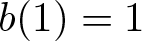 $b(1)=1$, and
 $b$ is completely determined from its values at prime powers. We now evaluate
 $d_4(p^k), k\geq0$. Let
 $p^k=a_1a_2a_3a_4$. Then
 $a_i=p^{x_i}, x_i\geq0$, for
 $1\leq i\leq 4$, so that
 $k=x_1+x_2+x_3+x_4$. Since the number of weak compositions (A weak composition of
 $m$ is a composition of
 $m$ in which
 $0$ is allowed to be a part) of
 $k$ into exactly
 $r$ parts is given by
 $\binom{k+r-1}{r-1}$, it follows that
 $d_4(p^k)=\binom{k+3}{3}$. Thus,
 $b(p^k)=\sum_{d|p^k}a(d)d_4(p^k/d)=d_4(p^k)+p\mu(p)d_4(p^{k-2})=\binom{k+3}{3}-p\binom{k+1}{3}.
$
Lemma 5.2. For  $0 \lt \operatorname{Re}(w) \lt 1/8$,
 \begin{equation}
\int_{0}^{\infty}y^{w-1}\Bigg(\frac{2}{\pi}K_0\big(4y^{1/4}\big)-Y_0\big(4y^{1/4}\big)\Bigg)\mathrm{d} y=\frac{{\Gamma}^2(w)}{{\Gamma}^2(\frac{1}{2}-w)},
\end{equation}
and the integral converges absolutely in this range.
Proof. This follows from the standard evaluations [Reference Oberhettinger45, p. 115, formula 11.1; p. 93, formula 10.2], namely, for Re $(s) \gt \pm$ Re
 $(z)$ and
 $a \gt 0$,
 \begin{equation*}
\int_{0}^{\infty}x^{s-1}K_{z}(ax)\mathrm{d} x=2^{s-2}a^{-s}\Gamma\left(\frac{s-z}{2}\right)\Gamma\left(\frac{s+z}{2}\right),
\end{equation*}
and, for  $\pm$Re
 $(z) \lt $Re
 $(s) \lt \frac{3}{2}$,
 \begin{equation*}
\int_{0}^{\infty}x^{s-1}Y_{z}(ax)\mathrm{d} x=-\frac{1}{\pi}2^{s-1}a^{-s}\cos\left(\frac{1}{2}\pi(s-z)\right)\Gamma\left(\frac{s-z}{2}\right)\Gamma\left(\frac{s+z}{2}\right).
\end{equation*}
Now  $K_0(x)\ll x^{-1/2}$ and
 $Y_0(x)\ll x^{-1/2}$ as
 $x\to\infty$ and for any
 $\epsilon \gt 0$ we have
 $K_0(x)\ll x^{-\epsilon}$ and
 $Y_0(x)\ll x^{-\epsilon}$ as
 $x\to 0^{+}$. Thus, the integral in (5.1) converges absolutely for
 $0 \lt \operatorname{Re}(w) \lt 1/8$.
Lemma 5.3. Define  $g(x)$ to be
 \begin{equation}
g(x):=\frac{1}{2\pi i}\int_{(c)}\frac{\Gamma(\frac{1}{2}-w)\Gamma(1-w)}{\Gamma(w-\frac{1}{4})\Gamma(w+\frac{1}{4})}\Phi(1-2w)x^{-w}\mathrm{d} w,
\end{equation}
where  $\Phi(s)$ is a function satisfying (2.13) and
 $-\frac{1}{8}-\frac{\delta}{4} \lt c=\textrm{Re}(s) \lt \frac{1}{8}$. Then, with
 $\phi$ defined in the statement of Theorem 2.8, we have
 \begin{equation}
g(x)=\int_{0}^{\infty}\frac{\phi(t)}{t\sqrt{2\pi x}}\cos\left(\frac{4}{t^{1/2}x^{1/4}} \right)\mathrm{d} t.
\end{equation}
Proof. With  $w=\sigma+it$, Stirling’s formula (3.1) implies
 \begin{equation}
\frac{\Gamma(\frac{1}{2}-w)\Gamma(1-w)}{\Gamma(w-\frac{1}{4})\Gamma(w+\frac{1}{4})}\ll t^{\frac{3}{2}-4\sigma},
\end{equation}
and hence, with the help of (2.13),
 \begin{equation}
\frac{\Gamma(\frac{1}{2}-w)\Gamma(1-w)}{\Gamma(w-\frac{1}{4})\Gamma(w+\frac{1}{4})}\Phi(1-2w)\ll t^{-3/2-\delta-4\sigma}
\end{equation}
as  $t \to \infty.$ We first show that
 $g(x)$ converges absolutely when
 $c \gt -1/8-\delta/4$, and conditionally in the strip
 $-3/8-\delta/4 \lt c\leq-1/8-\delta/4.$
Let  $w=\sigma+it$, where
 $\sigma \gt -1/8-\delta/4$, and then use the bound in (5.5) to get
 \begin{align}
&\int_{-\infty}^{\infty}\left|\frac{\Gamma(\frac{1}{2}-\sigma-it)\Gamma(1-\sigma-it)}{\Gamma(\sigma-\frac{1}{4}+it)\Gamma(\sigma+\frac{1}{4}+it)}\Phi(1-2\sigma-2 it)x^{-\sigma-it}\right|\, dt\nonumber\\
&\leq\left[\int_{-1}^{1}+\int_{-\infty}^{-1}+\int_{1}^{\infty}\right]\left|\frac{\Gamma(\frac{1}{2}-\sigma-it)\Gamma(1-\sigma-it)}{\Gamma(\sigma-\frac{1}{4}+it)\Gamma(\sigma+\frac{1}{4}+it)}\Phi(1-2\sigma-2 it)x^{-\sigma-it}\right|\, dt\nonumber\\
& \lt \infty.
\end{align}
This implies that  $g(x)$ converges absolutely for
 $c \gt -1/8-\delta/4$. The conditional convergence of
 $g(x)$ in the strip
 $-3/8-\delta/4 \lt \sigma\leq-1/8-\delta/4$ is now explained. The idea is to construct a rectangular contour
 $[\eta-iT, c-iT, c+iT, \eta+iT]$, where we need to see how far to the left we can take the vertical segment
 $[\eta-iT, \eta+iT]$ so that
 $\int_{c-i\infty}^{c+i\infty}=\int_{\eta-i\infty}^{\eta+i\infty}$. This will happen provided the integrals along the horizontal segments tend to zero as
 $T\to\infty$ and there are no poles within the rectangular contour (More generally,
 $\int_{\eta-i\infty}^{\eta+i\infty}$ is well-defined if, in addition to the integrals along the horizontal segments tending to zero, there are finitely many poles inside the contour). We claim that
 $\eta \gt -3/8-\delta/4$.
From (2.13),  $\Phi(1-2w)$ is holomorphic in
 $-1/2 \lt \textrm{Re}(w) \lt 1$. So, as long as
 $-1/2 \lt \eta \lt \sigma\leq-1/8-\delta/4$, there are no poles of the integrand inside the contour. The integrals along the horizontal segments tend to zero as
 $T\to\infty$ since, for example,
 \begin{equation}
\frac{1}{2\pi i}\int_{\eta+iT}^{c+iT}\frac{\Gamma(\frac{1}{2}-w)\Gamma(1-w)}{\Gamma(w-\frac{1}{4})\Gamma(w+\frac{1}{4})}\Phi(1-2w)x^{-w}\mathrm{d} w\ll T^{-\frac{3}{2}-\delta-4\eta}\int_{\eta}^{c}x^{-\sigma}\, d\sigma
\end{equation}
Thus, we need  $\eta \gt -3/8-\delta/4$. This establishes the conditional convergence of
 $g(x)$ in the strip
 $-3/8-\delta/4 \lt \sigma\leq-1/8-\delta/4$.
Let (We enforce the restriction  $c \lt 1/8$ since this condition appears in the evaluation of the integral in (5.19) while using Hardy’s result for simplifying the kernel in the proof of Theorem 2.8)
 $-1/8-\delta/4 \lt c \lt 1/8$. From (5.4), it is seen that the integral
 $\frac{1}{2\pi i}\int_{(c)}\frac{\Gamma(\frac{1}{2}-w)\Gamma(1-w)}{\Gamma(w-\frac{1}{4})\Gamma(w+\frac{1}{4})}x^{-w}\mathrm{d} w$ is absolutely convergent for
 $c \gt 5/8.$ But the line of integration in (5.2) is such that
 $c=\textrm{Re}(w) \lt 1/8$. The condition Re
 $(w) \gt 5/8$ is necessary to satisfy the hypotheses of Parseval’s formula, that is, Theorem 3.1, which is what we intend to apply to the integral in (5.2). Hence we first shift the line of integration to
 $\textrm{Re}(w)=5/7( \gt 5/8)$. Showing that the integrals along the horizontal segments approach zero as the height of the rectangular contour tends to
 $\pm \infty$ and considering the contribution of the pole of the integrand at
 $w=1/2$, by Cauchy’s residue theorem, we get
 \begin{equation}
\begin{aligned}
g(x)&=\frac{1}{2\pi i}\int_{(5/7)}\frac{\Gamma(\frac{1}{2}-w)\Gamma(1-w)}{\Gamma(w-\frac{1}{4})\Gamma(w+\frac{1}{4})}\Phi(1-2w)x^{-w}\mathrm{d} w+x^{-1/2}\frac{\sqrt{\pi}\Phi(0)}{\Gamma(1/4)\Gamma(3/4)}\\
&=\frac{1}{2\pi i}\int_{(-3/7)}\frac{\Gamma(\frac{s}{2})\Gamma\left(\frac{1+s}{2}\right)x^{-\frac{(1-s)}{2}}}{2\Gamma\left(\frac{1}{4}-\frac{s}{2}\right)\Gamma\left(\frac{3}{4}-\frac{s}{2}\right)}\Phi(s)\mathrm{d} s+x^{-1/2}\frac{\sqrt{\pi}\Phi(0)}{\Gamma(1/4)\Gamma(3/4)},
\end{aligned}
\end{equation}
where, in the last step, we made a change of variable  $w=(1-s)/2$. To apply Parseval’s formula, we now show that the hypotheses of Theorem 3.1 are satisfied. Let
 $F(s)=\frac{\Gamma(\frac{1-s}{2})\Gamma\left(1-\frac{s}{2}\right)x^{-s/2}}{2\Gamma\left(\frac{s}{2}-\frac{1}{4}\right)\Gamma\left(\frac{s}{2}+\frac{1}{4}\right)}$ and
 $G(s)=\Phi(s)$. First of all, the line of integration
 $\textrm{Re}(s)=-3/7$ lies in the common strip of analyticity of
 $F(1-s)$ and
 $G(s)$. Next, (5.4) implies
 $F(10/7-it)\in L(-\infty, \infty)$. Moreover,
 $\int_{0}^{\infty}t^{-10/7}|\phi(t)|\mathrm{d} t \lt \infty$ since
 $\phi(t)=O(t^{1-\epsilon})$ as
 $t\to0^{+}$ and
 $\phi(t)=O(t^{-2+\epsilon})$ as
 $t\to\infty$. The latter, in turn, follows from the fact that
 $\Phi(s)$ is holomorphic in
 $-1 \lt \textrm{Re}(s) \lt 2$. Thus, invoking Theorem 3.1, we see that
 \begin{equation}
\frac{x^{-1/2}}{4\pi i}\int_{(-3/7)}\frac{\Gamma(\frac{s}{2})\Gamma\left(\frac{1+s}{2}\right)}{\Gamma\left(\frac{1}{4}-\frac{s}{2}\right)\Gamma\left(\frac{3}{4}-\frac{s}{2}\right)}\Phi(s)x^{s/2}\mathrm{d} s=\int_{0}^{\infty}P_x(t)\phi(t)\mathrm{d} t,
\end{equation}
where  $
P_x(t):= \frac{1}{2\pi i}\int_{(10/7)}F(s)t^{-s}\mathrm{d} s
=
\frac{1}{2\pi i}\int_{(5/7)}\frac{\Gamma(\frac{1}{2}-w)\Gamma(1-w)}{\Gamma(w-\frac{1}{4})\Gamma(w+\frac{1}{4})}(t^2x)^{-w}\mathrm{d} w.
$
We now evaluate  $P_x(t)$. To express it in terms of well-known functions, we need to shift the line of integration to
 $3/8 \lt \lambda=\textrm{Re}(w) \lt 1/2$. The residue theorem then gives
 \begin{equation}
P_x(t)
=\frac{1}{2\pi i}\int_{(\lambda)}\frac{\Gamma(\frac{1}{2}-w)\Gamma(1-w)}{\Gamma(w-\frac{1}{4})\Gamma(w+\frac{1}{4})}(t^2x)^{-w}\mathrm{d} w-\frac{\sqrt{\pi}x^{-1/2}}{t\Gamma(1/4)\Gamma(3/4)},
\end{equation}
where the justification of the fact that for the integrals along the horizontal segments of the rectangular contour  $[\lambda-iT, 5/7-iT, 5/7+iT, \lambda+iT]$ tend to zero, as
 $T\to\infty$, is given below.
Let  $w=\sigma+iT$, where
 $\lambda \lt \sigma \lt 5/7$. From (5.4), as
 $T\to\infty$, we have
 \begin{align*}
\frac{1}{2\pi i}\int_{\lambda+iT}^{5/7+iT} \frac{\Gamma(\frac{1}{2}-w)\Gamma(1-w)}{\Gamma(w-\frac{1}{4})\Gamma(w+\frac{1}{4})}(t^2x)^{-w}\, dw&\ll T^{\frac{3}{2}-4\lambda}\int_{\lambda}^{5/7}(t^2x)^{-\sigma}\, d\sigma.
\end{align*}
Hence, as long as  $\frac{3}{2}-4\lambda \lt 0$, that is,
 $\lambda \gt 3/8$, we have
 \begin{align*}
\lim_{T\to\infty}\frac{1}{2\pi i}\int_{\lambda+iT}^{5/7+iT} \frac{\Gamma(\frac{1}{2}-w)\Gamma(1-w)}{\Gamma(w-\frac{1}{4})\Gamma(w+\frac{1}{4})}(t^2x)^{-w}\, dw=0.
\end{align*}
Similarly, we can show that the integral along the horizontal segment  $[\lambda-iT, 5/7-iT]$ goes to zero as
 $T\to\infty$. Next, we show
 \begin{equation}
\frac{1}{2\pi i}\int_{(\lambda)}\frac{\Gamma(\frac{1}{2}-w)\Gamma(1-w)}{\Gamma(w-\frac{1}{4})\Gamma(w+\frac{1}{4})}x^{-w}\mathrm{d} w=\frac{\cos\left(4x^{-1/4}\right)}{\sqrt{2\pi x}}.
\end{equation}
Replacing  $w$ and
 $t$ in (4.29) by
 $2-4w$ and
 $4x^{-1/4}$, respectively, we see that for
 $3/8 \lt \lambda=\textrm{Re}(w) \lt 1/2$,
 \begin{equation}
\frac{1}{2\pi i}\int_{(\lambda)}-\Gamma(2-4w)\cos(2\pi w)2^{8w-2}x^{-w}\mathrm{d} w=\frac{\cos\left(4x^{-1/4}\right)}{\sqrt{x}}.
\end{equation}
Using the Gauss multiplication formula [Reference Temme59, p. 52]  $\prod_{k=1}^{m}\Gamma\left(z+\frac{k-1}{m}\right)=(2\pi)^{\frac{1}{2}(m-1)}m^{\frac{1}{2}-mz}\Gamma(mz)$ with
 $m=4$ and
 $z=1/2-w$, and the reflection formula for the Gamma function, the integrand in (5.12) simplifies to
 $\frac{\sqrt{2\pi}\Gamma(\frac{1}{2}-w)\Gamma(1-w)}{\Gamma(w-\frac{1}{4})\Gamma(w+\frac{1}{4})}$, whence (5.11) follows. Hence from (5.10) and (5.11),
 \begin{align*}
P_x(t)=\frac{\cos\left(4t^{-1/2}x^{-1/4}\right)}{t\sqrt{2\pi x}}-\frac{\sqrt{\pi}x^{-1/2}}{t\Gamma(1/4)\Gamma(3/4)},
\end{align*}
which, along with (5.8) and (5.9), leads to
 \begin{align*}
g(x)&=\int_{0}^{\infty}\phi(t)\Bigg(\frac{\cos(4 t^{-1/2}x^{-1/4})}{t\sqrt{2\pi x}}-\frac{x^{-1/2}}{t}\frac{\sqrt{\pi}}{\Gamma(1/4)\Gamma(3/4)} \Bigg)\mathrm{d} t+\frac{\Phi(0)\sqrt{\pi}x^{-1/2}}{\Gamma(1/4)\Gamma(3/4)}\nonumber\\
&=\int_{0}^{\infty}\phi(t)\Bigg(\frac{\cos(4 t^{-1/2}x^{-1/4})}{t\sqrt{2\pi x}}-\frac{x^{-1/2}}{t}\frac{\sqrt{\pi}}{\Gamma(1/4)\Gamma(3/4)} \Bigg)\mathrm{d} t \nonumber\\
&\quad +\frac{\sqrt{\pi}x^{-1/2}}{\Gamma(1/4)\Gamma(3/4)}\int_{0}^{\infty}\frac{\phi(t)}{t}\mathrm{d} t\nonumber\\
&=\int_{0}^{\infty}\phi(t)\frac{\cos(4 t^{-1/2}x^{-1/4})}{t\sqrt{2\pi x}}\mathrm{d} t,
\end{align*}
where in the second step we used the fact that  $\Phi(s)=\int_{0}^{\infty}t^{s-1}\phi(t)\mathrm{d} t$ for any
 $s$ such that
 $-1 \lt \textrm{Re}(s) \lt 2$. This completes the proof.
We are now ready to prove the Voronoï summation formula for  $d^{2}(n)$.
Theorem 2.8
Let  $\tau$ be a number satisfying
 $0 \lt \tau \lt \delta/2$, where
 $\delta \gt 0$ is the number occurring in (2.13). Define
 \begin{equation*}
I:=\frac{1}{2\pi i}\int_{(1+\tau)}\frac{\zeta^4(s)}{\zeta(2s)}\Phi(s)\mathrm{d} s.
\end{equation*}
Using the fact that for Re $(s) \gt 1$,
 $\zeta^4(s)/\zeta(2s)=\sum_{n=1}^{\infty}d^2(n)n^{-s}$ (which follows by letting
 $a=b=0$ in (2.20)), and proceeding along the similar lines as (4.10), we obtain
 \begin{equation}
I=\sum_{n=1}^{\infty}d^2(n)\phi(n).
\end{equation}
We now to shift the line of integration to  $-\tau=\operatorname{Re} s \lt 0$ by constructing the contour
 $[1+\tau-iT_n, 1+\tau+iT_n, -\tau+iT_n, -\tau-iT_n]$, where
 $T_n$ is a number which belongs to the sequence
 $\{T_m\}_{m=1}^{\infty}$ constructed in the proof of Theorem 2.1. We first study the behaviour of the integrals along the horizontal segments
 $-\tau+i T_n$ to
 $1+\tau+i T_n$ for large values of
 $T_n$. From (2.13), (4.14), (4.16), and (4.17),
 \begin{equation*}
\begin{aligned}
\left| \int_{1+\tau+i T_n }^{-\tau+i T_n}\frac{\zeta^4(s)}{\zeta(2s)}\Phi(s)\mathrm{d} s\right|
&=\left|\int_{-\tau}^{1+\tau}\frac{\zeta^4(u+i T_n)}{\zeta(2u+2i T_n)}\Phi(u+i T_n)\mathrm{d} u\right|\\
&\leq\left|\int_{-\tau}^{1/2}\frac{\zeta^4(u+i T_n)}{\zeta(2u+2i T_n)}\Phi(u+i T_n)\mathrm{d} u\right|\\
&\quad +\left|\int_{1/2}^{1+\tau}\frac{\zeta^4(u+i T_n)}{\zeta(2u+2i T_n)}\Phi(u+i T_n)\mathrm{d} u\right|\\
&\leq\int_{-\tau}^{1/2}T_n^{3}T_n^{\epsilon}T_n^{-3-\delta}\mathrm{d} u +\int_{1/2}^{1+\tau}T_n^{1}T_n^{\epsilon}T_{n}^{-3-\delta}du.
\end{aligned}
\end{equation*}
Now choose  $\epsilon=\delta/2$ so that
 $\lim_{T_n\to\infty}\int_{-\tau}^{1/2}T_n^{3}T_n^{\epsilon}T_n^{-3-\delta}\mathrm{d} u=0$. Also,
 $\lim_{T_n\to\infty}\int_{1/2}^{1+\tau}T_n^{1}T_n^{\epsilon}T_{n}^{-3-\delta}du=0$. In conclusion,
 $\lim_{T_n\to\infty}\int_{1+\tau+i T_n }^{-\tau+i T_n}\frac{\zeta^4(s)}{\zeta(2s)}\Phi(s)\mathrm{d} s=0$. Similarly, one can show that the integral along the horizontal segment
 $[-\tau-i T_n, 1+\tau-i T_n]$ approaches zero as
 $T_n\to\infty.$ Therefore, by the residue theorem,
 \begin{equation}
\begin{aligned}
I=\frac{1}{2\pi i}\int_{(-\tau)}\frac{\zeta^4(s)}{\zeta(2s)}\Phi(s)\mathrm{d} s+R_1+\lim_{T_n\to\infty}\sum_{|\gamma_m| \lt T_n}R_{\frac{\rho_m}{2}},
\end{aligned}
\end{equation}
where  $R_a$ denotes the residue of the integrand
 $\zeta^4(s)\Phi(s)/\zeta(2s)$ at
 $s=a$.
 \begin{align}
R_1&=\frac{1}{6}\lim_{s\to 1}\frac{d^3}{ds^3}(s-1)^4\frac{\zeta^4(s)}{\zeta(2s)}\Phi(s)\nonumber\\
&=\frac{1}{\pi^8}\bigg[\Phi(1)\big(24 \gamma^3 \pi^6 - 72 \gamma\pi^6 \gamma_1 + 12 \pi^6 \gamma_2- 432 \gamma^2 \pi^4 \zeta'(2)+288 \pi^4 \gamma_1 \zeta'(2) \nonumber\\
&\quad + 3456 \gamma\pi^2 (\zeta'(2))^2- 10368 (\zeta'(2))^3\nonumber\\
&\quad- 288 \gamma \pi^4 \zeta''(2)+ 1728 \pi^2 \zeta'(2) \zeta''(2)-48\pi^4\zeta'''(2) \big)+\Phi'(1)\big(36 \gamma^2 \pi^6- 24 \pi^6 \gamma_1 \nonumber\\
&\quad - 288 \gamma\pi^4\zeta'(2)\nonumber\\
&\quad+ 864 \pi^2 (\zeta'(2))^2 -
72 \pi^4\zeta''(2) \big)+\Phi''(1)\left(
12 \gamma \pi^6 -
36 \pi^4 \zeta'(2)\right)+\pi^6\Phi'''(1)\bigg]\nonumber\\
&=\int_{0}^{\infty}(A_0+A_1\log x+A_2\log^2 x+A_3\log^3 x)\phi(x)\mathrm{d} x,\end{align}
where  $A_0, A_1, A_2$, and
 $A_3$ are defined in (2.15). The last step is now justified. The Mellin inversion theorem [Reference McLachlan40, p. 341, Theorem 1] implies
 $\Phi(s)=\int_{0}^{\infty}x^{s-1}\phi(x)\mathrm{d} x$ in
 $-1 \lt \textrm{Re}(s) \lt 2$. Owing to the fact that this integral is analytic in the given vertical strip, we can also differentiate this equation under the integral sign with respect to
 $s$. In particular, this gives
 \begin{align*}\Phi(1)&=\int_{0}^{\infty}\phi(x)\mathrm{d} x, \Phi'(1)=\int_{0}^{\infty}\phi(x)\log(x)\mathrm{d} x,
\Phi''(1)=\int_{0}^{\infty}\phi(x)\log^2(x)\mathrm{d} x, \\
\Phi'''(1)&=\int_{0}^{\infty}\phi(x)\log^3(x)\mathrm{d} x,\end{align*}
which justifies the last step. Also, if  $\rho_m$ is the
 $m$th non-trivial zero of
 $\zeta(s)$, then
 \begin{equation}
\begin{aligned}
R_{\frac{\rho_m}{2}}=\lim_{s\to\frac{\rho_m}{2}}\frac{\zeta^4(s)}{\zeta(2s)}\int_{0}^{\infty}\phi(x)x^{s-1}dx=\frac{\zeta^4(\frac{\rho_m}{2})}{2\zeta'(\rho_m)}\int_{0}^{\infty}\phi(x)x^{\frac{\rho_m}{2}-1}dx.
\end{aligned}
\end{equation}
It remains to evaluate the integral  $\frac{1}{2\pi i}\int_{(-\tau)}\zeta^4(s)\Phi(s)/\zeta(2s)\mathrm{d} s$. To that end, using (4.12), we have
 \begin{align}
\frac{1}{2\pi i}\int_{(-\tau)}\frac{\zeta^4(s)}{\zeta(2s)}\Phi(s)\mathrm{d} s&=\frac{\pi^{-3/2}}{2\pi i}\int_{(-\tau)}\frac{\zeta^4(1-s)}{\zeta(1-2s)}\frac{\Gamma^4(\frac{1-s}{2})}{\Gamma^4(\frac{s}{2})}\frac{\Gamma(s)}{\Gamma(\frac{1}{2}-s)}\Phi(s)\pi^{2s}\mathrm{d} s\nonumber\\
&=\frac{\pi^{-3/2}}{2\pi i}\int_{(1+\tau)}\frac{\zeta^4(s)}{\zeta(2s-1)}\frac{\Gamma^4(\frac{s}{2})}{\Gamma^4(\frac{1-s}{2})}\frac{\Gamma(1-s)}{\Gamma(s-\frac{1}{2})}\nonumber\\
&\quad \times\Phi(1-s)\pi^{2(1-s)}\mathrm{d} s\nonumber\\
&=\frac{\pi^{1/2}}{2\pi i}\sum_{n=1}^{\infty}b(n)\int_{(1+\tau)}\frac{\Gamma^4(\frac{s}{2})}{\Gamma^4(\frac{1-s}{2})}\frac{\Gamma(1-s)}{\Gamma(s-\frac{1}{2})} \nonumber\\
&\quad \times \Phi(1-s)(\pi^2 n)^{-s}\mathrm{d} s,
\end{align}
where, in the last step, we invoked Lemma (5.1) and interchanged the order of summation and integration using absolute and uniform convergence. Indeed, this follows from the fact that Re $(s) \gt 1$ and from (3.1), (2.13), and the choice of
 $\tau$, namely,
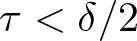 $\tau \lt \delta/2$. Now let
 \begin{equation}
M(t):=\frac{1}{2\pi i}\int_{(1+\tau)}\frac{\Gamma^4(\frac{s}{2})}{\Gamma^4(\frac{1-s}{2})}\frac{\Gamma(1-s)}{\Gamma(s-\frac{1}{2})}\Phi(1-s)t^{-s}\mathrm{d} s.
\end{equation}
By the change of variable  $s=2w$ and an application of the duplication formula, we have
 \begin{equation}
\begin{aligned}
M(t)&=\frac{2^{5/2}}{2\pi i}\int_{(\frac{1+\tau}{2})}\frac{\Gamma^4(w)}{\Gamma^4\left(\frac{1}{2}-w\right)}\frac{\Gamma\left(\frac{1}{2}-w\right)}{\Gamma\left(w-\frac{1}{4}\right)}\frac{\Gamma(1-w)}{\Gamma\left(w+\frac{1}{4}\right)}\Phi(1-2w)(4t)^{-2w}\mathrm{d} w.\\
\end{aligned}
\end{equation}
The main task now is to express  $M(t)$ as a (multiple) integral whose integrand consists of
 $\phi$ and well-known functions. Even though it looks like the extension of the usual version of Parseval’s formula for three functions would be applicable in this situation, one can see that it is, in fact, difficult to apply. This is where a variant of such a formula due to G. H. Hardy comes in very handy.
By extending Theorems A and C in [Reference Hardy28] to  $p$ functions, Hardy derived a result [Reference Hardy28, p. 91] in the same paper whose special case for
 $p=3$ is
 \begin{align*}
\frac{1}{2\pi i}\int_{(c)}f_1(w)f_2(w)f_3(w)t^{-w}\mathrm{d} w=\int_{0}^{\infty}\int_{0}^{\infty}\phi_1(x)\phi_2(y)\phi_3\left(\frac{t}{xy}\right)\frac{\mathrm{d} x\mathrm{d} y}{xy}.
\end{align*}
The conditions on  $f_j, \phi_j, 1\leq j\leq 3$, which make the above result valid, are extensions of the conditions given for the two functions in Theorem A of [Reference Hardy28]. We use this result with
 $\phi_1(x)=\phi_2(x)=\frac{2}{\pi}K_0\big(4x^{1/4}\big)-Y_0\big(4x^{1/4}\big)$ and
 $\phi_3(x)=g(x)$, where
 $g$ is the function in (5.3),
 $\alpha=\epsilon, \beta=-1/8-\delta/4, \gamma=1/2$, and (We changed Hardy’s notation
 $\delta$ to
 $\delta'$ so as to not get confused with our delta stemming from (2.13))
 $\delta'=1/8$, and then employ Lemmas 5.2 and 5.3. Upon simplification, this gives
 \begin{align}
M(t)&=\frac{1}{\sqrt{\pi}}\int_{0}^{\infty}\int_{0}^{\infty}\bigg(\frac{2}{\pi}K_0\big(4x^{1/4}\big)-Y_0\big(4x^{1/4}\big)\bigg)\bigg(\frac{2}{\pi}K_0\big(4y^{1/4}\big)-Y_0\big(4y^{1/4}\big)\bigg)\nonumber\\ &\quad\times\int_{0}^{\infty}\frac{\phi(z)}{tz}\cos\left(\frac{2(xy)^{1/4}}{\sqrt{tz}}\right)
\frac{\mathrm{d} z \mathrm{d} x \mathrm{d} y}{\sqrt{xy}}\nonumber\\
&=\frac{4}{\sqrt{\pi}}\int_{0}^{\infty}\int_{0}^{\infty}\int_{0}^{\infty}\bigg(\frac{2}{\pi}K_0\big(4\sqrt{x}\big)-Y_0\big(4\sqrt{x}\big)\bigg) \nonumber\\
&\quad \times \bigg(\frac{2}{\pi}K_0\big(4\sqrt{y}\big)-Y_0\big(4\sqrt{y}\big)\bigg)\frac{\phi(z)}{tz}\cos\bigg(\frac{2\sqrt{xy}}{\sqrt{tz}}\bigg)
{\mathrm{d} z \mathrm{d} x \mathrm{d} y},
\end{align}
where, in the last step, we replaced  $x$ and
 $y$ by
 $x^2$ and
 $y^2$. Therefore, from (5.17), (5.18), and (5.20),
 \begin{align}
\frac{1}{2\pi i}\int_{(-\tau)}\frac{\zeta^4(s)}{\zeta(2s)}\Phi(s)\mathrm{d} s&=\frac{4}{\pi^2 }\sum_{n=1}^{\infty}\frac{b(n)}{n}\int_{0}^{\infty}\int_{0}^{\infty}\int_{0}^{\infty}\bigg(\frac{2}{\pi}K_0\big(4\sqrt{x}\big)-Y_0\big(4\sqrt{x}\big)\bigg)\nonumber\\
&\quad\times\bigg(\frac{2}{\pi}K_0\big(4\sqrt{y}\big)-Y_0\big(4\sqrt{y}\big)\bigg)\frac{\phi(z)}{z}\cos\bigg(\frac{2\sqrt{xy}}{\pi\sqrt{nz}}\bigg)
{\mathrm{d} z \mathrm{d} x \mathrm{d} y}.\end{align}
Finally, from (5.13), (5.14), (5.15), (5.16), and (5.21), we arrive at (2.14).
6. Proofs of the results on
$\sigma_a(n)\sigma_b(n)$

6.1. Cohen-type identity for
$\sigma_a(n)\sigma_b(n)$

Before we embark upon the proof of Theorem 2.11, we need the following two lemmas.
Lemma 6.1. Let  $x\in\mathbb{C}, |x|\neq1$, and
 $-1 \lt \textrm{Re}(a), \textrm{Re}(b), \textrm{Re}(a-b), \textrm{Re}(a+b) \lt 1$. Define
 $I(x)$ by
 \begin{equation*}
I(x)=\frac{1}{2\pi i}\int_{(c)}\frac{\sec\big(\frac{\pi}{2}s\big)\sec(\frac{\pi}{2}(s-a))\sec(\frac{\pi}{2}(s-b))\sec(\frac{\pi}{2}(s-a-b))}{\sec(\frac{\pi}{2}(2s-a-b-1))}x^{-s} \mathrm{d} s,
\end{equation*}
where  $\max{\{-1, -1+\textrm{Re}(a), -1+\textrm{Re}(b), -1+\textrm{Re}(a+b)\}} \lt c=\textrm{Re}(s) \lt \min{\{1, 1+\textrm{Re}(a), 1+\textrm{Re}(b), 1+\textrm{Re}(a+b)\}}$. Then
 \begin{align*}
I(x)=\frac{2}{\pi}\textrm{cosec}\left(\frac{\pi a}{2}\right)\textrm{cosec}\left(\frac{\pi b}{2}\right)\frac{x(x^{-a}-1)(x^{-b}-1)}{x^2-1}.
\end{align*}
Proof. Assume  $|x| \lt 1$. Construct a rectangular contour
 $[c-iT, c+iT, -N+iT, -N-iT, c-iT]$, where
 \begin{align*}
&\max{\left\{-2m-3, -2m-3+a, -2m-3+b, -2m-3+a+b\right\}} \\
&\quad \times \lt N \lt \min{\left\{-2m-1, -2m-1+a, -2m-1+b, -2m-1+a+b\right\}}
\end{align*}
for  $m\geq0$ and apply Cauchy’s residue theorem. This leads to
 \begin{align*}
I(x)&=\frac{1}{2\pi i}\int_{-N-i\infty}^{-N+i\infty}\frac{\sec\big(\frac{\pi}{2}s\big)\sec(\frac{\pi}{2}(s-a))\sec(\frac{\pi}{2}(s-b))\sec(\frac{\pi}{2}(s-a-b))}{\sec(\frac{\pi}{2}(2s-a-b-1))}x^{-s} \mathrm{d} s\nonumber\\
&\quad+\sum_{n=0}^{m}\left(R_{-2n-1}+R_{-2n-1+a}+R_{-2n-1+b}+R_{-2n-1+a+b}\right),
\end{align*}
where  $R_{-2n-1+u}=\pm2x^{1-u}\textrm{cosec}\left(\frac{\pi a}{2}\right)\textrm{cosec}\left(\frac{\pi b}{2}\right)x^{2n}/\pi$, where
 $u$ takes the values
 $0, a, b$, or
 $a+b$, and we take the minus sign when
 $u=0$ or
 $a+b$ and the plus sign when
 $u=a$ or
 $b$. The result then follows for
 $|x| \lt 1$ by letting
 $N\to\infty$. Now if
 $|x| \gt 1$, we shift the line of integration to
 $+\infty$, and proceed similarly.
To the best of our knowledge, the following evaluation of Meijer  $G$-function (defined in (3.3)) is new.
Lemma 6.2. For  $c=\textrm{Re}(s) \gt \max{\{0, \textrm{Re}(a), \textrm{Re}(b), \textrm{Re}(a+b)\}}$,
 \begin{align}
&\frac{1}{2\pi i}\int_{(c)}\frac{\Gamma(s)\Gamma(s-a)\Gamma(s-b)\Gamma(s-a-b)}{\Gamma\left(s-\frac{a+b+1}{2}\right)\Gamma\left(s-\frac{a+b}{2}\right)}z^{-s}\mathrm{d} s\nonumber\\ &=G_{2, \, \, 4}^{4, \, \, 0} \left(\begin{matrix}
\frac{-a-b}{2}, \frac{-a-b-1}{2}\\
0, -a, -b, -a-b
\end{matrix} \Bigg| \, z \right)\nonumber\\
&=\frac{1}{\sqrt{\pi}}z^{\frac{1-a-b}{2}}\left(\vphantom{+\frac{(a+b-1)}{\sqrt{z}}K_{a}(\sqrt{z})K_{b}(\sqrt{z})}K_{a-1}(\sqrt{z})K_{b}(\sqrt{z})+K_{b-1}(\sqrt{z})K_{a}(\sqrt{z}) \right. \nonumber\\
&\quad \left.+\frac{(a+b-1)}{\sqrt{z}}K_{a}(\sqrt{z})K_{b}(\sqrt{z})\right).
\end{align}
Proof. The first equality follows from the definition of Meijer  $G$-function. Now it is known [66] that
 \begin{equation}
G_{2, \, \, 4}^{4, \, \, 0} \left(\begin{matrix}
A, A+\frac{1}{2}\\
B, C, 2A-C, 2A-B
\end{matrix} \Bigg| \, z \right)=\frac{2}{\sqrt{\pi}}z^{A}K_{B-C}(\sqrt{z})K_{B+C-2A}(\sqrt{z}).
\end{equation}
Let  $A=\frac{-a-b}{2}, B=0$ and
 $C=-a$. Then the resulting Meijer
 $G$-function differs from the one in (6.1) only in one of the top parameters, with the difference between them being
 $1$. To address this issue, we use the identity [Reference Prudnikov, Brychkov and Marichev51, p. 621, Formula (37)], namely, for
 $n\leq p-1$,
 \begin{align*}
&G_{p, \, \, q}^{m, \, \, n} \left(\begin{matrix}
a_1,\cdots,a_n, a_{n+1},\cdots, a_p-1\\
b_1,\cdots,b_m, b_{m+1},\cdots, b_q
\end{matrix} \Bigg| \, z \right)\\
&=-z^{a_p} \frac{d}{dz}\left[z^{1-a_p}G_{p, \, \, q}^{m, \, \, n} \left(\begin{matrix}
a_1,\cdots,a_n, a_{n+1},\cdots, a_p\\
b_1,\cdots,b_m, b_{m+1},\cdots, b_q
\end{matrix} \Bigg| \, z \right)\right].
\end{align*}
Therefore letting  $m=4, n=0, p=2, q=4$, and
 $a_p=(1-a-b)/2$ in the above identity, and using (6.2) in the second step, we derive the second equality in (6.1), where, in the last step, one needs to use the standard formula for the differentiation of the
 $K$-Bessel function [Reference Gradshteyn and Ryzhik25, p. 929, 8.486.11], namely,
 $\frac{d}{dw}K_{\nu}(w)=-\frac{1}{2}\left(K_{\nu-1}(w)+K_{\nu+1}(w)\right)$. This completes the proof.
Armed with these results, we are now ready to prove the Cohen-type identity for  $\sigma_a(n)\sigma_b(n)$.
Theorem 2.11
We assume
 \begin{align*}
&\max{\{-1, -1+\textrm{Re}(a), -1+\textrm{Re}(b), -1+\textrm{Re}(a+b)\}} \\
& \lt c \lt \min{\left\{0, \textrm{Re}(a), \textrm{Re}(b), \textrm{Re}(a+b), \textrm{Re}\left(\tfrac{a+b+1}{2}\right)\right\}}.
\end{align*}
The above strip is of positive width because of the conditions on  $a$ and
 $b$ given in the hypotheses. Let
 \begin{equation*}
S(a, b, x):=\sum_{n=1}^{\infty}{\sigma_{a}(n)\sigma_{b}(n)}\frac{x\big(x^{-a}-n^{-a}\big)\big(x^{-b}-n^{-b}\big)}{x^2-n^2}.
\end{equation*}
Then an application of  $\sigma_{s}(n)=\sigma_{-s}(n)n^s$ in the first step and Lemma 6.1 in the second leads to
 \begin{align*}
S(a, b, x)&=\sum_{n=1}^{\infty}\frac{\sigma_{-a}(n)\sigma_{-b}(n)}{n}\frac{\frac{x}{n}\left(\left(\frac{x}{n}\right)^{-a}-1\right)\left(\left(\frac{x}{n}\right)^{-b}-1\right)}{\frac{x^2}{n^2}-1}\nonumber\\
&=\frac{\pi}{2}\sin\left(\frac{\pi a}{2}\right)\sin\left(\frac{\pi b}{2}\right)\sum_{n=1}^{\infty}\frac{\sigma_{-a}(n)\sigma_{-b}(n)}{n}\nonumber\\
&\quad\times\frac{1}{2\pi i}\int_{(c)}\frac{\sec\big(\frac{\pi}{2}s\big)\sec(\frac{\pi}{2}(s-a))\sec(\frac{\pi}{2}(s-b))\sec(\frac{\pi}{2}(s-a-b))}{\sec(\frac{\pi}{2}(2s-a-b-1))}\\
&\quad \times \left(\frac{x}{n}\right)^{-s} \mathrm{d} s\nonumber\\
&=\frac{\pi}{2}\sin\left(\frac{\pi a}{2}\right)\sin\left(\frac{\pi b}{2}\right)\frac{1}{2\pi i}\int_{(c)}\sum_{n=1}^{\infty}\frac{\sigma_{-a}(n)\sigma_{-b}(n)}{n^{1-s}}\nonumber\\
&\quad\times\frac{\sec\big(\frac{\pi}{2}s\big)\sec(\frac{\pi}{2}(s-a))\sec(\frac{\pi}{2}(s-b))\sec(\frac{\pi}{2}(s-a-b))}{\sec(\frac{\pi}{2}(2s-a-b-1))}x^{-s} \mathrm{d} s\nonumber\\
&=\frac{\pi}{2}\sin\left(\frac{\pi a}{2}\right)\sin\left(\frac{\pi b}{2}\right)\nonumber\\
&\quad\times\frac{1}{2\pi i}\int_{(c)}\frac{\zeta(1-s)\zeta(1-s+a)\zeta(1-s+b)\zeta(1-s+a+b)}{\zeta(2-2s+a+b)}\nonumber\\
&\quad\times\frac{\sec\big(\frac{\pi}{2}s\big)\sec(\frac{\pi}{2}(s-a))\sec(\frac{\pi}{2}(s-b))\sec(\frac{\pi}{2}(s-a-b))}{\sec(\frac{\pi}{2}(2s-a-b-1))}x^{-s} \mathrm{d} s,
\end{align*}
where we interchanged the order of summation and integration because of the uniform convergence of the associated series in the above strip, and where we used (2.20) in the last step.
Next, use (1.21) for each of the zeta functions occurring in the integrand and simplify to obtain
 \begin{align*}
S(a, b, x)&=2(2\pi)^{a+b}\sin\left(\frac{\pi a}{2}\right)\sin\left(\frac{\pi b}{2}\right)\frac{1}{2\pi i}\int_{(c)}\frac{\Gamma(s)\Gamma(s-a)\Gamma(s-b)\Gamma(s-a-b)}{\Gamma(2s-a-b-1)}\nonumber\\
&\quad\times\frac{\zeta(s)\zeta(s-a)\zeta(s-b)\zeta(s-a-b)}{\zeta(2s-a-b-1)}(4\pi^2x)^{-s}\mathrm{d} s.
\end{align*}
Now we wish to invoke (2.17). It necessitates shifting the line of integration from Re $(s)=c$ to Re
 $(s)=\eta$, where
 $\eta$ is defined in (2.18). Clearly, Stirling’s formula (3.1) implies that the integrals along the horizontal segments tend to zero as the height of the rectangular contour approaches
 $\infty$. The integrand has simple poles at
 $s=0, a, b, a+b$ (due to the gamma functions), at
 $s=1, 1+a, 1+b, 1+a+b$ (due to the zeta functions), and at the non-trivial zeros of
 $\zeta(2s-a-b-1)$ at
 $s=(1+\rho_m+a+b)/2$, where
 $\rho_m$ are the non-trivial zeros of
 $\zeta(s)$. (Here we have assumed the simplicity of the zeros.)
The residues at these poles can be easily calculated to be the ones given in (2.24) and (2.25). Therefore, invoking the residue theorem, expressing the quotient of zeta functions by the left-hand side of (2.17) and interchanging the order of summation and integration, we find that
 \begin{align*}
S(a, b, x)&= 2(2\pi)^{a+b}\sin\left(\tfrac{\pi a}{2}\right)\sin\left(\tfrac{\pi b}{2}\right)\\
&\times \Bigg\{\sum_{n=1}^{\infty}C_{a, b}(n)\frac{1}{2\pi i}\int_{(\eta)}\frac{\Gamma(s)\Gamma(s-a)\Gamma(s-b)\Gamma(s-a-b)}{\Gamma(2s-a-b-1)}\left(4\pi^2nx\right)^{-s}\mathrm{d} s\nonumber\\
&\quad-\Bigg(\sum_{k=0}^{1}R_k(x)+ R_{k+a}(x)+R_{k+b}(x)+R_{k+a+b}(x)\\
&\quad +\lim_{T_n\to\infty}\sum_{|\gamma_m| \lt T_n}R_{\rho_m,a,b}(x)\Bigg)\Bigg\}.
\end{align*}
Corollary 2.12
Divide both sides of (2.23) by  $ab$ and then let
 $a\to0$ and
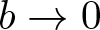 $b\to0$. Using the fact that
 $\sigma_s(n)n^{-\frac{s}{2}}=O\left(n^{\frac{1}{2}|\textrm{Re}(s)|+\epsilon}\right)$, it is easily seen that the series on the left-hand side of (2.23) is uniformly convergent in any compact interval of
 $(-1, 1)$, viewed as a function of the complex variable
 $a$ or
 $b$. Hence we can interchange the order of limits and summation. The same can be done on the right-hand side as well. This leads to (2.12) upon simplification (The residue
 $R_0(x)$ in this case was calculated using Mathematica).
6.2. Ramanujan–Guinand-type identity for
$\sigma_a(n)\sigma_b(n)$

We prove Theorem 2.13 in this subsection. Let  $b=c=2$ and then
 $\alpha=s-a/2-b/2, \mu=a/2, \nu=b/3$ in [Reference Prudnikov, Brychkov and Marichev50, p. 384, formula 2.16.33.1] so that for
 $c=\textrm{Re}(s) \gt \max{\{0, \textrm{Re}(a), \textrm{Re}(b), \textrm{Re}(a+b)\}}$,
 \begin{equation*}
\begin{aligned}
\frac{1}{2\pi i} \int_{(c)}\frac{\Gamma(\frac{s}{2})\Gamma(\frac{s-a}{2})\Gamma(\frac{s-b}{2})\Gamma(\frac{s-a-b}{2})}{\Gamma(\frac{2s-a-b}{2})}x^{-s}\mathrm{d} s=8x^{(-a-b)/2}K_{a/2}(2x)K_{b/2}(2x).
\end{aligned}
\end{equation*}
Now let  $c=\textrm{Re}(s) \gt 1+\max{(0, \textrm{Re}(a), \textrm{Re}(b), \textrm{Re}(a+b))}$ and define
 \begin{equation}
I(x)\!:=\! \frac{1}{2\pi i}\int_{(c)}\frac{\Gamma(\frac{s}{2})\zeta(s)\Gamma(\frac{s-a}{2})\zeta(s-a)\Gamma(\frac{s-b}{2})\zeta(s-b)\Gamma(\frac{s-a-b}{2})\zeta(s-a-b)}{\Gamma(\frac{2s-a-b}{2})\zeta(2s-a-b)}x^{-s}\mathrm{d} s.
\end{equation}
Then, using (2.20), we have
 \begin{align*}
I(x)=8x^{(-a-b)/2}\sum_{n=1}^{\infty}\frac{\sigma_{a}(n)\sigma_{b}(n)}{n^{(a+b)/2}}K_{a/2}(2nx)K_{b/2}(2nx).
\end{align*}
On the other hand, invoking (1.22) in the first step, we get
 \begin{align*}
&I(x)=\frac{\pi^{-a-b-\frac{3}{2}}}{2\pi i}\\
&\times\int_{(c)}\frac{\Gamma\left(\frac{1-s}{2}\right)\zeta(1-s)\Gamma\left(\frac{1-s+a}{2}\right)\zeta(1-s+a)\Gamma\left(\frac{1-s+b}{2}\right)\zeta(1-s+b)\Gamma\left(\frac{1-s+a+b}{2}\right)\zeta(1-s+a+b)}{\Gamma\left(\frac{1-2s+a+b}{2}\right)\zeta(1-2s+a+b)\pi^{-2s}x^{s}}\mathrm{d} s.
\end{align*}
Now shift the line of integration to  $c'=\textrm{Re}(s) \lt \min{(0, \textrm{Re}(a), \textrm{Re}(b), \textrm{Re}((a+b)/2), \textrm{Re}(a+b))}$ so as to be able to use (2.17), consider the contributions of the poles at
 $(\rho_m+a+b)/2$, and at
 $k, k+a, k+b$, and
 $k+a+b$, where
 $k=0$ or
 $1$, and invoke the residue theorem to get
 \begin{align*}
I(x)&=\pi^{-a-b-\frac{3}{2}}\sum_{n=1}^{\infty}\frac{C_{-a, -b}(n)}{n}\frac{1}{2\pi i}\int_{(c')}\frac{\Gamma\left(\frac{1-s}{2}\right)\Gamma\left(\frac{1-s+a}{2}\right)\Gamma\left(\frac{1-s+b}{2}\right)\Gamma\left(\frac{1-s+a+b}{2}\right)}{\Gamma\left(\frac{1-2s+a+b}{2}\right)}\\
&\quad \times \left(\frac{x}{\pi^2n}\right)^{-s}\mathrm{d} s +R(x)\nonumber\\
&=\frac{\pi^{-a-b-1}}{2^{\frac{a+b-3}{2}}}\sum_{n=1}^{\infty}\frac{C_{-a, -b}(n)}{n} \nonumber\\
&\quad \times \frac{1}{2\pi i}\int_{(\frac{c'}{2})}\frac{\Gamma\left(\frac{1}{2}-w\right)\Gamma\left(\frac{1+a}{2}-w\right)\Gamma\left(\frac{1+b}{2}-w\right)\Gamma\left(\frac{1+a+b}{2}-w\right)}{\Gamma\left(\frac{1+a+b}{4}-w\right)\Gamma\left(\frac{3+a+b}{4}-w\right)} \nonumber\\
&\quad \times \left(\frac{x^2}{4\pi^4n^2}\right)^{-w}\mathrm{d} w + R(x),
\end{align*}
where  $R(x)$ is the sum of the residues in (2.28) and (2.29). In the last step, we used the duplication formula and then employed the change of variable
 $s=2w$. The integral in the last step can be easily seen to be the Meijer
 $G$-function claimed in (2.27), which completes the proof.
Corollary 2.14
Let  $a=b=0$ in Theorem 2.13. We found using Mathematica that
 $x$ times the residue
 $\tilde{R}_1(x)$ is a polynomial in
 $\log(x)$. Although it can be explicitly written down, we avoid giving it here as it is quite complicated.
7. Proofs of Theorem 2.9 and Ramanujan’s identity (1.9)
Theorem 2.9
Using the Mellin inversion formula, we get  $\Phi(s)=\int_{0}^{\infty}\phi(x)x^{s-1}\mathrm{d} x $ for
 $\operatorname{Re} s \gt 0$ and
 $\Phi(s)=\int_{0}^{\infty}(\phi(x)-k)x^{s-1}\mathrm{d} x $ for
 $-1 \lt \operatorname{Re} s \lt 0$, where
 $k$ is the residue of
 $\Phi(s)$ at
 $s=0$.
Choose  $\tau$ such that
 $0 \lt \tau \lt \delta$, where
 $\delta$ is the number defined in (2.16), and define
 \begin{equation}
I:=\frac{1}{2\pi i}\int_{(1+\tau)}\frac{\Phi(s)}{\zeta(s)}\mathrm{d} s.
\end{equation}
Then, on one hand,
 \begin{equation*}
\begin{aligned}
I=\frac{1}{2\pi i}\int_{(1+\tau)}\frac{\Phi(s)}{\zeta(s)}\mathrm{d} s=\sum_{n=1}^{\infty}\mu(n)\frac{1}{2\pi i}\int_{(1+\tau)}\Phi(s)n^{-s}\mathrm{d} s
=\sum_{n=1}^{\infty}\mu(n)\phi(n).
\end{aligned}
\end{equation*}
If we now shift the line of integration to Re $(s)=-\tau$, and choose the sequence
 $\{T_n\}$ as in Theorem 2.1, so that the integrals along the horizontal segments go to zero. Then by Cauchy’s residue theorem, we have
 \begin{equation}
I=\frac{1}{2\pi i}\int_{(-\tau)}\frac{\Phi(s)}{\zeta(s)}\mathrm{d} s+\operatorname{Res}_{s=0}\frac{\Phi(s)}{\zeta(s)}+\lim_{T_n\to \infty}\sum_{|\gamma_m| \lt T_n}\frac{1}{\zeta'(\rho_m)}\int_{0}^{\infty}\phi(x)x^{\rho_m-1}\mathrm{d} x.
\end{equation}
 \begin{equation}
\sum_{n=1}^{\infty}\mu(n)\phi(n)=\frac{1}{2\pi i}\int_{(-\tau)}\frac{\Phi(s)}{\zeta(s)}\mathrm{d} s-2k+\lim_{T_n\to \infty}\sum_{|\gamma_m| \lt T_n}\frac{1}{\zeta'(\rho_m)}\int_{0}^{\infty}\phi(x)x^{\rho_m-1}\mathrm{d} x.
\end{equation}
With a fair amount of calculation using Parseval’s formula (3.2), one can see that
 \begin{equation}
\frac{1}{2\pi i}\int_{(-\tau)}\frac{\Phi(s)}{\zeta(s)}\mathrm{d} s=4\sum_{n=1}^{\infty}\frac{\mu(n)}{n}\int_{0}^{\infty}(\phi(t)-k)\bigg(\frac{\cos^2(\pi/nt)-1}{t}\bigg)\mathrm{d} t,
\end{equation}
which, along with (7.3), completes the proof.
We prove Corollary 2.10 here. Let  $\phi(x)=\frac{\sqrt{a}}{x}\tilde\phi(\frac{a}{x})$ in Theorem 2.9, where
 $\tilde{\phi}$ is chosen so that the hypotheses of Theorem 2.9 are satisfied, and, in addition, there is no residue of
 $\Phi(s)$ at
 $s=0$, that is,
 $k$ in Theorem 2.9 is equal to
 $0$. Then
 \begin{align*}
&\sqrt{a}\sum_{n=1}^{\infty}\frac{\mu(n)}{n}\tilde\phi\left(\frac{a}{n}\right)+4\sum_{n=1}^{\infty}\frac{\mu(n)}{n}\int_{0}^{\infty}\frac{\sqrt{a}}{t^2}\tilde\phi\left(\frac{a}{t}\right)\sin^2\left(\frac{\pi}{nt}\right)\mathrm{d} t\\
&\quad = \lim_{T_n\to \infty}\sum_{|\gamma_m| \lt T_n}\frac{1}{\zeta'(\rho_m)}\int_{0}^{\infty}\frac{\sqrt{a}}{x}\tilde\phi\left(\frac{a}{x}\right)x^{\rho_m-1}\mathrm{d} x.
\end{align*}
Employ change of variables  $t\to a/t$ and
 $x\to a/x$ in the two integrals and use the elementary identity
 $2\sin^{2}(\theta)=1-\cos(2\theta)$ so that
 \begin{align*}
&\sqrt{a}\sum_{n=1}^{\infty}\frac{\mu(n)}{n}\tilde\phi\left(\frac{a}{n}\right)+\frac{2}{\sqrt{a}}\sum_{n=1}^{\infty}\frac{\mu(n)}{n}\int_{0}^{\infty}\tilde\phi(t)\left(1-\cos\left(\frac{2\pi t}{a n}\right)\right)\mathrm{d} t\\
&\quad = \lim_{T_n\to \infty}\sum_{|\gamma_m| \lt T_n}\frac{a^{\rho_m-1/2}}{\zeta'(\rho_m)}\int_{0}^{\infty}\tilde\phi\left(x\right)x^{-\rho_m}\mathrm{d} x.
\end{align*}
From the hypotheses given before (1.9), the integral  $
\frac{2}{\sqrt{\pi}}\int_{0}^{\infty}\tilde\phi(u)\cos(2 u x)\mathrm{d} u$ exists; hence defining it to be
 $\tilde{\psi}(x)$, then employing it and the prime number theorem in the form
 $\sum_{n=1}^{\infty}\mu(n)/n=0$, we find
 \begin{align*}
&\sqrt{\alpha}\sum_{n=1}^{\infty}\frac{\mu(n)}{n}\tilde\phi\left(\frac{\alpha}{n}\right)-\frac{\sqrt{\pi}}{\sqrt{\alpha}}\sum_{n=1}^{\infty}\frac{\mu(n)}{n}\tilde{\psi}\left(\frac{\pi}{\alpha n}\right) \\
&\quad = \lim_{T_n\to \infty}\sum_{|\gamma_m| \lt T_n}\frac{\alpha^{\rho_m-1/2}}{\zeta'(\rho_m)}\Gamma\left(1-\rho_m\right)Z_1\left(1-\rho_m\right).
\end{align*}
Now let  $\beta=\pi/\alpha$ and use (1.8) to arrive at the first equality in (1.9). The second follows by swapping
 $\alpha$ and
 $\beta$ in the first and using the second integral in (1.7).
8. Oscillations of Riesz sums
Throughout this section, we assume RH and the simplicity of the zeros of  $\zeta(s)$. The Gonek–Hejhal conjecture [Reference Gonek24, Reference Hejhal, Aubert, Bombieri and Goldfeld31] (see also [Reference Ng44, Equation (3)] states that for
 $k\in\mathbb{R}$,
 \begin{equation}
\sum_{|\gamma_m|\leq T}\frac{1}{|\zeta'(\rho_m)|^{2k}}\asymp T(\log T)^{(k-1)^2}.
\end{equation}
In particular, we have  $\sum_{|\gamma_m|\leq T}\frac{1}{|\zeta'(\rho_m)|}\asymp T(\log T)^{1/4}.$ The conjecture is still open but Heap, Li, and Zhao [Reference Heap, Li and Zhao30] have proved the conjectured lower bound in (8.1) for all fractional
 $k\geq0$, assuming RH and the simplicity of the zeros; in particular, for
 $k=1/2$, we have
 \begin{equation}
\sum_{|\gamma_m|\leq T}\frac{1}{|\zeta'(\rho_m)|}\gg T(\log T)^{1/4}.
\end{equation}
The special case  $k=1/2$ of a recent result of Bui, Florea, and Milinovich [Reference Bui, Florea and Milinovich12, Theorem 1.1] implies that for any
 $\delta \gt 0$, we have
 $
\sum_{\gamma_m\in \mathcal{F_T}}\frac{1}{|\zeta'(\rho_m)|}\ll T^{1+\delta},
$ where
 \begin{equation*}
\mathcal{F}_T=\bigg\{\gamma\in (T,2 T]:|\gamma-\gamma'|\gg \frac{1}{\log T}\text{for any other ordinate}\gamma'\bigg\}.
\end{equation*}
Since there is no non-trivial zero of  $\zeta(s)$ with
 $|\gamma_m| \lt 14$, if
 $\mathcal{F}=\sqcup_{k=0}^{\lfloor\log_2(T)\rfloor}\mathcal{F}_{T/2^k}$, then for any
 $\delta \gt 0$,
 $\sum\limits_{|\gamma_m|\leq T\atop \gamma_m\in \mathcal{F}}\frac{1}{|\zeta'(\rho_m)|}\ll T^{1+\delta}\log T.$ The set of excluded zeros whose ordinates do not belong to the family
 $\mathcal{F}$ conjecturally has an arbitrarily small proportion [Reference Bui, Florea and Milinovich12, p. 2682]. Thus, we can assume that for any
 $\epsilon \gt 0$,
 \begin{equation}
\sum_{|\gamma_m|\leq T}\frac{1}{|\zeta'(\rho_m)|}\ll T^{1+\epsilon}.
\end{equation}
We note that the above conjecture is weaker than the Gonek–Hejhal conjecture.
To prepare ourselves for stating and proving the main results, we begin with some lemmas.
Lemma 8.1. For  $\operatorname{Re}(s) \gt 0$,
 $\operatorname{Re}(k) \gt -1 $, and
 $y \gt 0$,
 \begin{equation*}
\int_{0}^{y}\bigg(1-\frac{x}{y}\bigg)^kx^{s-1}\mathrm{d} x=y^s\frac{\Gamma(s)\Gamma(k+1)}{\Gamma(s+k+1)}.
\end{equation*}
Proof. Substitute  $x=y t$ and use the evaluation of Euler’s beta integral.
We will also need the following corollary of the well-known Kronecker Theorem [Reference Cassels13, Theorem IV, p. 53].
Lemma 8.2. ([Reference Maksimova39, Theorem B])
Let  $\{\alpha_n\}_{n=1}^{N}$ be
 $N$ real numbers linearly independent over
 $\mathbb{Q}$ and
 $\{\beta_n\}_{n=1}^{N}$ be
 $N$ arbitrary real numbers. Then for any
 $\epsilon \gt 0$, there exists an arbitrary large positive real number
 $t$ such that
 $||\alpha_nt-\beta_n|| \lt \epsilon$ for all
 $1\leq n\leq N$, where
 $||x||$ denotes the distance of
 $x$ from the nearest integer.
Using Lemma 8.2, we obtain the following result.
Lemma 8.3. Let  $\{C_n\}_{n=1}^{\infty}$ be an infinite sequence of complex numbers such that
 $\sum_{n=1}^{\infty}|C_n|=S \lt \infty.$ Let
 $\{\alpha_n\}_{n=1}^{\infty}$ be a sequence of real numbers that are linearly independent over
 $\mathbb{Q}$. Then we have
 \begin{align*}
\limsup_{x\to \infty}\sum_{n=1}^{\infty}\big(C_n\exp(xi \alpha_n)+\bar C_n\exp(-xi \alpha_n) \big)&=2S,\nonumber\\
\liminf_{x\to \infty}\sum_{n=1}^{\infty}\big(C_n\exp(xi \alpha_n)+\bar C_n\exp(-xi \alpha_n) \big)&=-2S.
\end{align*}
Proof. Let  $C_n=|C_n|\exp(i \theta_n)$. Thus,
 $C_n\exp(xi \alpha_n)+\bar C_n\exp(-xi \alpha_n)=2|C_n|\cos(\theta_n+x\alpha_n).$ Fix
 $N$ such that
 $\sum_{n \gt N}|C_n| \lt \epsilon$. Since
 $\{\alpha_n\}_{n=1}^{N}$ are linearly independent over
 $\mathbb{Q}$, from Kronecker’s theorem (Lemma 8.2) for any
 $\epsilon \gt 0$, we can find an arbitrarily large number
 $x$ such that
 $\left|\left|x\frac{\alpha_n}{2\pi}+\frac{\theta_n}{2\pi}\right|\right| \lt \frac{\epsilon}{2\pi}$, where
 $||x||$ denotes the distance of
 $x$ from the nearest integer. Thus
 $2\pi k-\epsilon \lt x\alpha_n+\theta_n\leq 2\pi k+\epsilon$ for some integer
 $k.$ Thus
 $\cos(x\alpha_n+\theta_n)=1+O(\epsilon^2)$ for all
 $n\leq N.$ So we get
 \begin{equation*}
\begin{aligned}
&\sum_{n=1}^{\infty}\big(C_n\exp(xi \alpha_n)+\bar C_n\exp(-xi \alpha_n) \big) \\
&=2\sum_{n\leq N}|C_n|(1+O(\epsilon^2))+2\sum_{n \gt N}|C_n|\cos(x\alpha_n+\theta_n)\\
&=2\sum_{n\leq N}|C_n|+O\bigg(\sum_{n\leq N}|C_n|\epsilon^2)\bigg)+2\sum_{n \gt N}|C_n|\cos(x\alpha_n+\theta_n)\\
&= 2\sum_{n\leq N}|C_n|+O(S\epsilon^2))+O(\epsilon)=2S+O(\epsilon).
\end{aligned}
\end{equation*}
Since  $\sum_{n=1}^{\infty}\left|2C_n\cos(\theta_n+x\alpha_n)\right|\leq2S$, we have
 $\limsup_{x\to \infty}\sum_{n=1}^{\infty}\big(C_n\exp(xi \alpha_n)+\bar C_n\exp(-xi \alpha_n) \big)=2S. $ Also, for any
 $\epsilon \gt 0$, we can find an arbitrarily large number
 $x$ such that
 $\left|\left|x\frac{\alpha_n}{2\pi}+\frac{\theta_n-\pi}{2\pi}\right|\right| \lt \frac{\epsilon}{2\pi}.$ For such
 $x$, we have
 $|\cos(x\alpha_n+\theta_n)+1| \lt \epsilon$. Using a similar method as shown above, it can be seen that
 $\liminf_{x\to \infty}\sum_{n=1}^{\infty}\big(C_n\exp(xi \alpha_n)+\bar C_n\exp(-xi \alpha_n) \big)=-2S. $
Lemma 8.4. Let  $\delta \gt 0$. Assuming RH and (8.3), as
 $\delta\to0$, we have
 \begin{equation}
A:=\sum_{\gamma_m}\frac{1}{|\zeta'(\rho_m)||\rho_m|^{1+\delta}}\asymp \frac{1}{\delta},
\end{equation}
 \begin{equation}
B:=\sum_{\gamma_m}\frac{|\zeta(2\rho_m)|}{|\zeta'(\rho_m)||\rho_m|^{1+\delta}}\asymp \frac{1}{\delta},
\end{equation}
and
 \begin{equation}
C:=\sum_{\gamma_m}\frac{|\zeta^4(\rho_m/2)|}{|\zeta'(\rho_m)||\rho_m|^{2+\delta}}\asymp \frac{1}{\delta}.
\end{equation}
Proof. Let  $S(T):=\sum_{0 \lt \gamma_m\leq T}\frac{1}{|\zeta'(\rho_m)|}.$ Since
 $S(t)$ is an increasing function, we have
 $\mathrm{d} S(t)\geq0.$ Writing the sum
 $A$ as an integral and then performing integration by parts, we see that
 \begin{equation*}
\begin{aligned}
A&=2\sum_{\gamma_m \gt 0}\frac{1}{|\zeta'(\rho_m)||\rho_m|^{1+\delta}}=2\int_{1}^{\infty}\frac{\mathrm{d} S(t)}{(\frac{1}{4}+t^2)^{\frac{1+\delta}{2}}}\asymp\int_{1}^{\infty}\frac{\mathrm{d} S(t)}{t^{1+\delta}}=\frac{S(t)}{t^{1+\delta}}\bigg|_{1}^{\infty}\\
&\quad +(1+\delta)\int_{1}^{\infty}\frac{S(t)}{t^{2+\delta}}\mathrm{d} t.
\end{aligned}
\end{equation*}
To obtain the upper bound, we use (8.3) with  $\epsilon=\delta/2$ so as to get
 \begin{equation}
A\ll \frac{t^{1+\epsilon}}{t^{1+\delta}}\bigg|_{1}^{\infty}+(1+\delta)\int_{1}^{\infty}\frac{t^{1+\epsilon}}{t^{2+\delta}}\mathrm{d} t=\frac{1}{t^{\delta/2}}\bigg|_{1}^{\infty}+(1+\delta)\int_{1}^{\infty}\frac{1}{t^{1+\delta/2}}\mathrm{d} t\asymp\frac{1}{\delta}.
\end{equation}
Thus we have  $A\ll\delta^{-1}$. To prove the lower bound, using (The conjecture is still open but assuming RH), we have
 \begin{equation}
\begin{aligned}
A &\gg \frac{t\log^{1/4}t}{t^{1+\delta}}\bigg|_{1}^{\infty}+(1+\delta)\int_{1}^{\infty}\frac{t\log^{1/4}t}{t^{2+\delta}}\mathrm{d} t=\frac{\log^{1/4}t}{t^{\delta}}\bigg|_{1}^{\infty}\\
&\quad +(1+\delta)\int_{1}^{\infty}\frac{\log^{1/4}t}{t^{1+\delta}}\mathrm{d} t\asymp \frac{1}{\delta}.
\end{aligned}
\end{equation}
From (8.7) and (8.8), we conclude that  $A\asymp \frac{1}{\delta}.$
Next, we prove that  $B\asymp\delta^{-1}.$ We know from the results of Titchmarch [Reference Titchmarsh61] and Littlewood [Reference Littlewood38, Theorem 1] that for any given
 $\epsilon \gt 0$,
 $\zeta(1+i t)\ll t^\epsilon$ and
 $\zeta(1+i t)\gg t^{-\epsilon}.$ Taking
 $\epsilon=\delta/2$ and analysing the sum
 $B$ in a similar way as
 $A$, we see that
 \begin{equation*}
\begin{aligned}
B=\sum_{\gamma_m}\frac{|\zeta(2\rho_m)|}{|\zeta'(\rho_m)||\rho_m|^{1+\delta}}\asymp\int_{1}^{\infty}|\zeta(1+2i t)|\frac{\mathrm{d} S(t)}{t^{1+\delta}}\ll \int_{1}^{\infty}\frac{\mathrm{d} S(t)}{t^{1+\delta-\epsilon}}\ll \int_{1}^{\infty}\frac{\mathrm{d} S(t)}{t^{1+\delta/2}},
\end{aligned}
\end{equation*}
thereby leading to  $B\ll \delta^{-1}.$ We prove the lower bound as follows:
 \begin{equation*}
\begin{aligned}
B=\sum_{\gamma_m}\frac{|\zeta(2\rho_m)|}{|\zeta'(\rho_m)||\rho_m|^{1+\delta}}\asymp\int_{1}^{\infty}|\zeta(1+2i t)|\frac{\mathrm{d} S(t)}{t^{1+\delta}}\gg\int_{1}^{\infty}\frac{\mathrm{d} S(t)}{t^{1+3\delta/2}}\gg\frac{1}{\delta}.
\end{aligned}
\end{equation*}
We now prove  $C\asymp\delta^{-1}.$ Note that
 \begin{equation*}
\begin{aligned}
C=\sum_{\gamma_m \gt 0}\frac{|\zeta^4(\rho_m/2)|}{|\zeta'(\rho_m)||\rho_m|^{2+\delta}}\asymp\int_{1}^{\infty}\bigg|\zeta^4\bigg(\frac{1}{4}+\frac{i t}{2}\bigg)\bigg|\frac{\mathrm{d} S(t)}{t^{2+\delta}}.
\end{aligned}
\end{equation*}
Using the fact  $\zeta(s)\asymp t^{\frac{1}{2}-\sigma}\zeta(1-s)$, we have
 $\zeta(1/4+i t)\asymp t^{1/4}\zeta(3/4-i t).$ Using RH, Titchmarsh [Reference Titchmarsh and Heath-Brown60, p. 337, Equations (14.2.5), (14.2.6)] proved that
 $\zeta(3/4-i t)\ll t^{\epsilon}$ and
 $\zeta(3/4-i t)\gg t^{-\epsilon}.$ Thus
 $\zeta(1/4+i t)\ll t^{1/4+\epsilon}$ and
 $\zeta(1/4+i t)\gg t^{1/4-\epsilon}.$ Thus we have
 $\zeta^4(1/4+i t)\ll t^{1+4\epsilon}$ and
 $\zeta^4(1/4+i t)\gg t^{1-4\epsilon}$. We choose
 $\epsilon=\delta/8.$ Thus we have,
 \begin{equation*}
C\asymp \int_{1}^{\infty}\bigg|\zeta^4\bigg(\frac{1}{4}+\frac{i t}{2}\bigg)\bigg|\frac{\mathrm{d} S(t)}{t^{2+\delta}}\ll\int_{1}^{\infty}\frac{\mathrm{d} S(t)}{t^{1+\delta-4\epsilon}}=\int_{1}^{\infty}\frac{\mathrm{d} S(t)}{t^{1+\delta/2}} \ll \frac{1}{\delta}
\end{equation*}
and
 \begin{equation*}
C\asymp \int_{1}^{\infty}\bigg|\zeta^4\bigg(\frac{1}{4}+\frac{i t}{2}\bigg)\bigg|\frac{\mathrm{d} S(t)}{t^{2+\delta}}\gg\int_{1}^{\infty}\frac{\mathrm{d} S(t)}{t^{1+3\delta/2}} \gg \frac{1}{\delta}.
\end{equation*}
Thus  $C\asymp \frac{1}{\delta}$.
Theorem 8.5. Let  $\delta \gt 0$. Assume RH, simplicity of the non-trivial zeros of
 $\zeta(s)$, Equation (8.3), and the Linear Independence conjecture. Then there exists an absolute positive constant
 $c$ such that for all sufficiently small
 $\delta$,
 \begin{equation}
\limsup_{y\to \infty} \sum_{n\leq y}\frac{\mu(n)(1-n/y)^\delta}{\sqrt{y}}\geq\frac{c}{\delta}\textrm{and}
\liminf_{y\to \infty} \sum_{n\leq y}\frac{\mu(n)(1-n/y)^\delta}{\sqrt{y}}\leq-\frac{c}{\delta}.
\end{equation}
Proof. In 7.3, we take
 \begin{equation}
\phi(x)=
\begin{cases}
\left(1-\frac{x}{y}\right)^{\delta}&\text {if}\ x\leq y,\\
0 &\text{otherwise}.
\end{cases}
\end{equation}
For a fixed  $a \gt 0$ as
 $|s| \gt 1$, we have
 \begin{equation}
\frac{\Gamma(s)}{\Gamma(s+a)}\asymp\frac{1}{s^a}+O\bigg(\frac{1}{s^{a+1}}\bigg).
\end{equation}
 \begin{equation*}
\begin{aligned}
\frac{1}{\zeta'(\rho_m)}\int_{0}^{y}\bigg(1-\frac{x}{y}\bigg)^\delta x^{\rho_m-1}\mathrm{d} x&=\frac{y^{\rho_m}}{\zeta'(\rho_m)}\frac{\Gamma(1+\delta)\Gamma(\rho_m)}{\Gamma(1+\rho_m+\delta)} =\frac{y^{\rho_m}}{\zeta'(\rho_m)}\frac{\Gamma(1+\delta)}{\rho_m^{1+\delta}} \\
&\quad + O\bigg(\frac{\sqrt{y}}{\zeta'(\rho_m)\rho_m^2}\bigg).
\end{aligned}
\end{equation*}
Since, using the ideas in the proof of Lemma 8.3 and under the same hypotheses, it is evident that the series  $\sum\limits_{\rho_m}\frac{1}{\left|\zeta'(\rho_m)\rho_m^2\right|}$ converges, we get
 $\sum_{\gamma_m}\frac{1}{\zeta'(\rho_m)}\int_{0}^{y}\left(1-\frac{x}{y}\right)^\delta x^{\rho_m-1}\mathrm{d} x=\sqrt{y}\sum_{\gamma_m}\frac{y^{i \gamma_m}}{\zeta'(\rho_m)}\frac{\Gamma(1+\delta)}{\rho_m^{1+\delta}} + O(\sqrt{y})$. Now we apply Lemma 8.3 with
 $x=\log y$,
 $C_m=\rho^{-\delta-1}_m/\zeta'(\rho_m)$, assume the Linear Independence conjecture so that we can let
 $\alpha_m=\gamma_m, m \gt 0$, and use (8.4) to obtain
 \begin{equation}
\limsup_{y\to\infty}\sum_{\gamma_m}\frac{y^{i\gamma_m}}{\rho_m^{1+\delta}\zeta'(\rho_m)}\geq\frac{c'}{\delta}
\text{and}
\liminf_{y\to\infty}\sum_{\gamma_m}\frac{y^{i\gamma_m}}{\rho_m^{1+\delta}\zeta'(\rho_m)}\leq-\frac{c'}{\delta}
\end{equation}
for some absolute constant  $c' \gt 0.$ The Mellin transform of
 $\phi(x)$ is
 $
\Phi(s)=y^s\frac{\Gamma(1+\delta)\Gamma(s)}{\Gamma(1+\delta+s)}
$ and
 \begin{equation*}
\int_{(-\tau)}\frac{\Phi(s)}{\zeta(s)}\mathrm{d} s\ll \int_{(-\tau)}\bigg|\frac{\Phi(s)}{\zeta(s)}\bigg| |\mathrm{d} s|\ll y^{-\tau}\int_{(-\tau)}\bigg|\frac{\Gamma(1+\delta)\Gamma(s)}{\Gamma(1+\delta+s)\zeta(s)}\bigg||\mathrm{d} s|=O(y^{-\tau}).
\end{equation*}
Moreover, the residue of  $\Phi(s)$ at
 $s=0$ is
 $1$. Therefore, Equation (7.3) becomes
 \begin{equation*}
\begin{aligned}
\sum_{n\leq y}\mu(n)(1-n/y)^\delta&= \lim_{T_n\to \infty}\sum_{|\gamma_m| \lt T_n}\sqrt{y}\frac{y^{i \gamma_m}}{\zeta'(\rho_m)}\frac{\Gamma(1+\delta)}{\rho_m^{1+\delta}} + O(\sqrt{y})-2+O(y^{-\tau}).
\end{aligned}
\end{equation*}
Dividing both sides by  $\sqrt{y}$, we get
 $ \frac{1}{\sqrt{y}}\sum_{n\leq y}\mu(n)(1-n/y)^{\delta}= \lim_{T_n\to \infty}\sum_{|\gamma_m| \lt T_n}\frac{y^{i \gamma_m}}{\zeta'(\rho_m)}\frac{\Gamma(1+\delta)}{\rho_m^{1+\delta}} + O(1)$, which, along with (8.12), implies (8.9).
Theorem 8.6. Let  $\delta \gt 0$. Assume RH, simplicity of the non-trivial zeros of
 $\zeta(s)$, Equation (8.3), and the Linear Independence conjecture. Then there exists an absolute positive constant
 $c$ such that for all sufficiently small
 $\delta$,
 \begin{equation}
\limsup_{y\to \infty} \sum_{n\leq y}\frac{\lambda(n)(1-n/y)^\delta}{\sqrt{y}}\geq\frac{c}{\delta}\textrm{and}
\liminf_{y\to \infty} \sum_{n\leq y}\frac{\lambda(n)(1-n/y)^\delta}{\sqrt{y}}\leq-\frac{c}{\delta}.
\end{equation}
Proof. From (4.10), (4.19), and (4.21), for a small positive  $\tau$,
 \begin{align*}
\sum_{n=1}^{\infty}\lambda(n)\phi(n)&=\frac{1}{2\pi i}\int_{(-\tau)}\frac{\zeta(2s)}{\zeta(s)}\Phi(s)\mathrm{d} s+\textrm{Res}_{s=0}\frac{\zeta(2s)}{\zeta(s)}\Phi(s)+\frac{\Phi\left(\frac{1}{2}\right)}{2\zeta(\frac{1}{2})}\\
&\quad +\lim_{T_n\to\infty}\sum_{|\gamma_m| \lt T_n}\frac{\zeta(2\rho_m)\Phi(\rho_m)}{\zeta'(\rho_m)}.
\end{align*}
Let  $\phi$ be defined in (8.10). From Lemma 8.1 and (8.11),
 \begin{equation*}
\begin{aligned}
&\frac{\zeta(2\rho_m)}{\zeta'(\rho_m)}\int_{0}^{y}\bigg(1-\frac{x}{y}\bigg)^\delta x^{\rho_m-1}\mathrm{d} x=y^{\rho_m}\frac{\zeta(2\rho_m)}{\zeta'(\rho_m)}\frac{\Gamma(1+\delta)\Gamma(\rho_m)}{\Gamma(1+\rho_m+\delta)} \\
&\asymp y^{\rho_m}\frac{\zeta(2\rho_m)}{\zeta'(\rho_m)}\frac{\Gamma(1+\delta)}{\rho_m^{1+\delta}} + O\bigg(\sqrt{y}\frac{\zeta(2\rho_m)}{\zeta'(\rho_m)\rho_m^2}\bigg).
\end{aligned}
\end{equation*}
Lemma 8.3 with  $C_m=\rho^{-\delta-1}_m\zeta(2\rho_m)/\zeta'(\rho_m)$,
 $\alpha_m=\gamma_m$ for
 $m \gt 0$ and
 $x=\log y$, and (8.5) give
 \begin{equation}
\limsup_{y\to\infty}\sum_{m=1}^{\infty}y^{i\gamma_m}\frac{\zeta(2\rho_m)}{\rho_m^{1+\delta}\zeta'(\rho_m)}\geq\frac{c'}{\delta}\text{and}\liminf_{y\to\infty}\sum_{m=1}^{\infty}y^{i\gamma_m}\frac{\zeta(2\rho_m)}{\rho_m^{1+\delta}\zeta'(\rho_m)}\leq-\frac{c'}{\delta}
\end{equation}
for some absolute constant  $c' \gt 0.$ Moreover,
 \begin{align*}
\int_{(-\tau)}\frac{\zeta(2s)}{\zeta(s)}\Phi(s)\mathrm{d} s &\ll \int_{(-\tau)}\bigg|\frac{\zeta(2s)}{\zeta(s)}\bigg||\Phi(s)||\mathrm{d} s|\\
&\ll y^{-\tau}\int_{(-\tau)}\bigg|\frac{\Gamma(1+\delta)\Gamma(s)\zeta(2s)}{\Gamma(1+k+s)\zeta(s)}\bigg||\mathrm{d} s|=O(y^{-\tau}).
\end{align*}
Also  $\operatorname{Res}_{s=0}\frac{\zeta(2s)}{\zeta(s)}\Phi(s)=1$. So
 \begin{equation*}
\begin{aligned}
\sum_{n\leq y}\lambda(n)\bigg(1-\frac{n}{y}\bigg)^\delta&=\frac{y^{1/2}}{2\zeta(\frac{1}{2})}\frac{\Gamma(1/2)\Gamma(1+\delta)}{\Gamma(1+\delta+1/2)}\\
&\quad + \lim_{T_n\to \infty}\sqrt{y}\sum_{|\gamma_m| \lt T_n}y^{i \gamma_m}\frac{\zeta(2\rho_m)}{\zeta'(\rho_m)}\frac{\Gamma(1+\delta)}{\rho_m^{1+\delta}} \\
&\quad+ O\left(\sqrt{y}\right)+O(y^{-\tau})+1.
\end{aligned}
\end{equation*}
Dividing both sides by  $\sqrt{y}$, we get
 $\sum_{n\leq y}\frac{\lambda(n)(1-n/y)^{\delta}}{\sqrt{y}}= \lim_{T_n\to \infty}\sum_{|\gamma_m| \lt T_n}\frac{y^{i \gamma_m}}{\zeta'(\rho_m)}\frac{\Gamma(1+\delta)}{\rho_m^{1+\delta}} + O(1)$, which, along with (8.14), implies (8.13).
Theorem 8.7. Let  $\delta \gt 0$. Assume RH, simplicity of the non-trivial zeros of
 $\zeta(s)$, Equation (8.3), and the Linear Independence conjecture. Then there exists an absolute positive constant
 $c$ such that for all sufficiently small
 $\delta$,
 \begin{align*}
&\limsup_{y\to \infty}\frac{\sum_{n\leq y}d^2(n)(1-n/y)^{1+\delta}-g(y)}{y^{1/4}}\geq\frac{c}{\delta} \
\text{and}\\
& \liminf_{y\to \infty}\frac{\sum_{n\leq y}d^2(n)(1-n/y)^{1+\delta}-g(y)}{y^{1/4}}\leq-\frac{c}{\delta},
\end{align*}
where  $g(y):=\frac{y}{2+\delta}\sum_{j=0}^{3}B_{\delta, j}(y), B_{\delta, j}(y):=A_j\int_{0}^y\left(1-x/y\right)^{1+\delta}\log^{j}(x)\mathrm{d} x$ for
 $0\leq j\leq 3$, with
 $A_j, 1\leq j\leq 3$, defined in (2.15).
Proof. In Theorem 2.8, we considered  $\Phi(s)$ to be holomorphic in
 $-1 \lt \textrm{Re}(s) \lt 2$ since we were explicitly evaluating the integral
 $\int_{(-\tau)}\frac{\zeta^4(s)}{\zeta(2s)}\Phi(s)\mathrm{d} s$ to be the sum on the right-hand side of (2.14), and had we allowed
 $\Phi(s)$ to have a pole at
 $s=0$, computing this would have been unwieldy. However, in what follows, we allow
 $\Phi(s)$ to have a simple pole at
 $s=0$ because we are only estimating the integral over Re
 $(s)=-\tau$. We thus have to consider the contribution of the residue at this additional pole, and because of this, and (5.13), (5.14), and (5.15), for a small positive
 $\tau$,
 \begin{align*}
\sum_{n=1}^{\infty}d^2(n)\phi(n)&=\frac{1}{2\pi i}\int_{(-\tau)}\frac{\zeta^4(s)}{\zeta(2s)}\Phi(s)\mathrm{d} s+\int_{0}^{\infty}(A_0+A_1\log(x)+A_2\log^2( x)\\
&\quad +A_3\log^3(x))\phi(x)\mathrm{d} x+\textrm{Res}_{s=0}\frac{\zeta^4(s)}{\zeta(2s)}\Phi(s)\\
&\quad +\lim_{T_n\to\infty}\sum_{|\gamma_m| \lt T_n}\frac{\zeta^4(\rho_m)\Phi(\rho_m)}{\zeta(2\rho_m)},
\end{align*}
where  $A_0, A_1, A_2$, and
 $A_3$ are defined in (2.15). In the above identity, let
 \begin{equation*}
\phi(x)=
\begin{cases}
\left(1-\frac{x}{y}\right)^{1+\delta}&\text {if}\ x\leq y,\\
0 &\text{otherwise}.
\end{cases}
\end{equation*}
Now
 \begin{equation*}
\begin{aligned}
\frac{\zeta^4(\frac{\rho_m}{2})}{\zeta'(\rho_m)}\int_{0}^{y}\bigg(1-\frac{x}{y}\bigg)^{1+\delta}x^{\frac{\rho_m}{2}-1}\mathrm{d} x&=\frac{\zeta^4(\frac{\rho_m}{2})}{\zeta'(\rho_m)}y^{\rho_m/2}\frac{\Gamma(2+\delta)\Gamma(\rho_m/2)}{\Gamma(2+\delta+\rho_m/2)}\\
&=y^{1/4}\frac{\zeta^4(\frac{\rho_m}{2})\Gamma(2+\delta)}{\zeta'(\rho_m)(\rho_m/2)^{2+\delta}}y^{i \gamma_m/2}\\
&\quad +O\bigg(y^{1/4}\frac{\zeta^4(\frac{\rho_m}{2})}{\zeta'(\rho_m)\rho_m^3}\bigg).
\end{aligned}
\end{equation*}
Also,  $
\operatorname{Res}_{s=0}\frac{\zeta^4(s)}{\zeta(2s)}\Phi(s)=\operatorname{Res}_{s=0}\frac{\zeta^4(s)}{\zeta(2s)}y^s \frac{\Gamma(\delta+2)\Gamma(s)}{\Gamma(s+\delta+2)}=-\frac{1}{8}.
$ So we get
 \begin{equation*}
\begin{aligned}
\sum_{n\leq y}d^2(n)\bigg(1-\frac{n}{y}\bigg)^{1+\delta}&=g(y)-\frac{1}{8}+\lim_{T_n\to \infty}\sum_{|\gamma_m|\leq T_n}y^{1/4}\frac{2^{2+\delta}\zeta^4(\frac{\rho_m}{2})}{\zeta'(\rho_m)\rho_m^{2+\delta}}y^{i \gamma_m/2}\\
&\quad +O\bigg(y^{1/4}\frac{\zeta^4(\frac{\rho_m}{2})}{\zeta'(\rho_m)\rho_m^3}\bigg).
\end{aligned}
\end{equation*}
Dividing both sides by  $y^{1/4}$, we get
 \begin{equation*}
\begin{aligned}
\frac{\sum_{n\leq y}d^2(n)(1-n/y)^{1+\delta}-g(y)}{y^{1/4}}=
\lim_{T_n\to \infty}\sum_{|\gamma_m|\leq T_n}\frac{2^{2+\delta}\zeta^4(\frac{\rho_m}{2})}{\zeta'(\rho_m)\rho_m^{2+\delta}}y^{i \gamma_m/2}+O(1).
\end{aligned}
\end{equation*}
Using (8.6) and ideas similar to those used to prove Theorems 8.5 and 8.6, we see that the claim is proved.
Remark 9. We note that  $g(y)/y$ is a cubic polynomial in
 $\log(y)$.
9. Concluding remarks
Koshliakov [Reference Koshliakov37] devised an ingenious method to derive the Voronoï summation for  $\sum_{\alpha \lt n \lt \beta}d(n)\phi(n)$, where
 $0 \lt \alpha \lt \beta, \alpha,\beta\notin\mathbb{Z},$ and
 $\phi$ is analytic inside a closed contour containing
 $[\alpha, \beta]$. This technique requires only the functional equation of
 $\zeta(s)$ and the Cauchy residue theorem. It was adapted in [Reference Berndt, Dixit, Roy and Zaharescu7, Theorem 6.1] and then in [Reference Dixit, Maji, Vatwani, Chorge, Dixit and Srivastava21, Theorem 2.2] to handle the corresponding formulas for
 $\sigma_s(n)$ and
 $\sigma_s^{(k)}(n)$ respectively. In his method, Koshliakov starts from the identity (1.17) (which, as mentioned in the introduction, results from (1.16) by replacing
 $x$ by
 $ix$ and
 $-ix$ and adding the resulting two identities), replaces
 $x$ by
 $iz$ and
 $-iz$ in (1.17), adds the corresponding sides of the two identities, applies the functional equation of
 $\zeta(s)$, and then analyses a certain contour integral to arrive at the Voronoï summation formula.
Unfortunately, we were unable to adapt this technique for the arithmetic functions we have considered in our paper. For example, consider the case of  $d^{2}(n)$. We do have the analogue of (1.16), namely, (2.26). However, if we replace
 $x$ in there by
 $ix$ and
 $-ix$, and add the resulting two identities to obtain a corresponding analogue of (1.17), the problem is that the resulting series of the non-trivial zeros of
 $\zeta(s)$ diverges. However, if one is able to modify this step and thereby circumvent this obstacle, one may be able to obtain the Voronoï summation not only for
 $\sum_{\alpha \lt n \lt \beta}d^2(n)\phi(n)$, but also for
 $\sum_{\alpha \lt n \lt \beta}\sigma_a(n)\sigma_b(n)\phi(n)$. Then one may as well try out the same in the setting of
 $\lambda(n)$ for which, again, the analogue of (1.16) exists, namely, (2.11). This definitely seems to be a worthwhile problem to try.
It is certainly possible to apply the techniques used in this paper to find Voronoï summation formulas for some other arithmetic functions whose Dirichlet series are quotients of the Riemann zeta function.
Consider, for example, the characteristic function of square-free integers  $|\mu(n)|$ whose Dirichlet series is
 $\zeta(s)/\zeta(2s)$. Let
 $s=\sigma+it$. Let
 $\Phi(s)$ be holomorphic in
 $-2 \lt \operatorname{Re} s=\sigma \lt 2$, and such that
 \begin{equation}
\Phi(\sigma+it)\ll t^{-1-\delta}\text{as}t\to \pm\infty
\end{equation}
for some  $\delta \gt 0$ and
 $-2 \lt \sigma \lt 2$. Let
 $\tilde{c}(n)$ be defined by
 \begin{equation*}
\tilde{c}(n):=\sum_{d^2|n}d\mu(d).
\end{equation*}
Let  $C(z)$ and
 $S(z)$ be the Fresnel integrals defined by [Reference Olver, Lozier, Boisvert and Clark46, p. 160, Formulas 7.2.7, 7.2.8]
 \begin{equation}
C(z):=\int_{0}^{z}\cos\left(\frac{1}{2}\pi t^2\right)\, dt,S(z):=\int_{0}^{z}\sin\left(\frac{1}{2}\pi t^2\right)\, dt.
\end{equation}
For  $-2 \lt \sigma \lt 2$, define
 $\phi(x):=\frac{1}{2\pi i}\int_{\sigma-i\infty}^{\sigma+i\infty}\Phi(s)x^{-s}\mathrm{d} s$. For
 $m\in\mathbb{Z}$, let
 $\rho_m:=\beta_m+i\gamma_m$ denotes the
 $m^{\textrm{th}}$ non-trivial zero of
 $\zeta(s)$, where
 $\rho_{-m}=\beta_m-i\gamma_m$. Assume that the non-trivial zeros of
 $\zeta(s)$ are simple. Then it can be shown that there exists a sequence of numbers
 $\{T_n\}_{n=1}^\infty$ with
 $T_n\to\infty$ such that
 \begin{align*}
\sum_{n=1}^{\infty}|\mu(n)|\phi(n)&=\frac{6}{\pi^2}\int_{0}^{\infty}\phi(x)\, dx-\frac{1}{24\zeta'(-2)}\int_{0}^{\infty}\frac{\phi(x)}{x^2}\, dx\\
&\quad +\frac{1}{2}\lim_{T_n\to\infty}\sum_{|\gamma_m| \lt T_n}\frac{\zeta\left(\frac{\rho_m}{2}\right)}{\zeta'(\rho_m)}\int_{0}^{\infty}\phi(x)x^{\frac{\rho_m}{2}-1}\, dx\nonumber\\
&\quad+\frac{2}{\sqrt{\pi}}\frac{\tilde{c}(n)}{n}\int_{0}^{\infty}\left(\cos(2x)C\left(\frac{2\sqrt{x}}{\sqrt{\pi}}\right) \right.\\
&\quad \left.+\sin(2x)S\left(\frac{2\sqrt{x}}{\sqrt{\pi}}\right)\right)\phi\left(\frac{\pi x}{4 n}\right)\,\frac{dx}{\sqrt{x}}.
\end{align*}
We refrain from giving a proof of this result since the details are similar to the ones proved in this paper.
However, it is not always possible to find Voronoï summation formulas with respect to a general test function  $\phi$ for all arithmetic functions whose Dirichlet series are quotients of the zeta function using our techniques, as can be seen by considering, for example, the Jordan totient function (and hence, Euler’s totient function).
It would also be important to obtain analogues of our summation formulas and identities of Ramanujan–Guinand type and Cohen type for different  $L$-functions. For example, Berndt, Kim, and Zaharescu [Reference Berndt, Kim and Zaharescu8] derived the Ramanujan–Guinand-type formula for the twisted divisor function
 $d_{\chi}(n):=\sum_{d|n}\chi(d)$, where
 $\chi$ is an even primitive Dirichlet character, and is used to show that when
 $\chi$ is real,
 $L(1, \chi) \gt 0$.
In Section 8, we obtained results on oscillations of the Riesz sums associated with  $\lambda(n), \mu(n)$, and
 $d^2(n)$. One may derive similar results associated with the test function
 $e^{-xy}$ using similar ideas.
Acknowledgements
The authors sincerely thank the referee for various important suggestions that improved the quality of the paper. They also thank Timothy Trudgian, M. Ram Murty, Andrés Chirre, Nathan Ng, Arindam Roy, Nicolas Robles, and Rahul Kumar for their help. The second author is supported by the Swarnajayanti Fellowship grant SB/SJF/2021-22/08 of ANRF (Govt. of India) and by the N Rama Rao chair professorship at IIT Gandhinagar. The first author is a postdoctoral fellow funded by the same grant. Both the authors thank ANRF for the support.



