Ebstein’s anomaly is a rare CHD that accounts for less than 1% of all CHD. In Ebstein’s anomaly, the hinge points of the septal and posterior leaflets of the tricuspid valves are displaced towards the apical part of the ventricle due to incomplete delamination, leading to a mismatch of the true atrioventricular annulus and functional annulus. Displacement of the leaflets of the tricuspid valve divides the right ventricle into an atrialised and a functional portion.Reference Attenhofer Jost, Connolly, Dearani, Edwards and Danielson1,Reference Geerdink and Kapusta2 This condition is associated with structural anomalies, as well as electrical conduction anomalies.Reference Attenhofer Jost, Connolly, O’Leary, Warnes, Tajik and Seward3 The age of onset of symptoms associated with haemodynamic changes is related to the degree of leaflet tethering, apical displacement, severity of tricuspid valve regurgitation, and degree of functional hypoplasia of the right ventricle. Although cyanosis and heart failure dominate the clinical picture in neonates and children with Ebstein’s anomaly, arrhythmias are the leading cause of symptoms in adolescents and adults.Reference Attenhofer Jost, Connolly, Dearani, Edwards and Danielson1,Reference Celermajer, Bull and Till4,Reference Philip Saul5 Arrhythmias are usually present in up to 80% of patients, while 17–42% of patients with Ebstein’s anomaly have accessory pathways, 29% have multiple accessory pathways, and 7–8% have Mahaim potentials.Reference Roten, Lukac and Groot6,Reference Kanter7
Delamination of tricuspid valve leaflets leads to the presence of muscular or specialised tissue remnants through the atrioventricular groove, resulting in accessory pathways between the atria and ventricle, especially localised in the posteroseptal and posterolateral regions, that are often multiple.Reference Philip Saul5,Reference Reich, Auld, Hulse, Sullivan and Campbell8 The incidence of atriofascicular fibres and atrioventricular nodal re-entrant tachycardia is also reported to be higher than in the overall population.Reference Reich, Auld, Hulse, Sullivan and Campbell8,Reference Walsh9 In addition to the accessory pathways, an enlarged right atrium, due to tricuspid regurgitation and incisional scars related to previous surgeries, creates substrates for atrial re-entries and ectopic tachycardia.Reference Hassan, Tan and Aung10 Ventricular tachycardia may also originate from the atrialised portion of the ventricle or as a result of the haemodynamic effects of the structural abnormality.Reference Walsh9
This ideal environment is a real challenge for any kind of tachycardia in the field of electrophysiology. Enlarged and thin-walled areas in the right atrium, variable localisation of the anatomic and functional atrioventricular groove, and pseudo-accessory pathway potentials are the leading factors responsible for difficult ablation procedures in the case of various arrhythmia mechanisms.Reference Philip Saul5,Reference Orczykowski, Derejko and Bodalski11 Although tachycardia in Ebstein’s anomaly is generally present during adulthood, paediatric, and even neonatal, cases may occur. Data on paediatric Ebstein ablation are limited with regard to the adult population; therefore, we sought to describe our almost two decades of experience with catheter ablation in children with Ebstein’s anomaly.
Methods
All records for patients with Ebstein’s anomaly who underwent catheter ablation at our centre between January 2019 and January 2002 were reviewed retrospectively. Data of these patients included demographics and relevant clinical characteristics, echocardiographic findings, associated cardiac anomalies, surgical interventions, reason for ablation, ablation site, energy source, use of three-dimensional electro-anatomical mapping system, procedure and fluoroscopy times, ablation results, presence of recurrence, and follow-up results. Telephone interviews were conducted for those who were lost to follow-up. The local ethics committee approved the study.
Echocardiographic evaluation
Ebstein’s anomaly was diagnosed using transthoracic echocardiography. The Mayo Clinic criteria for diagnosis were used and included apical displacement of the septal tricuspid valve leaflet from the insertion of the anterior leaflet of the mitral valve by more than 0.8 cm/m2 body surface area in systole, a redundant, sail-like anterior tricuspid valve leaflet, often tethered to the right ventricular free wall, and an “atrialised” right ventricle.Reference Shiina, Seward, Edwards, Hagler and Tajik12 Doppler and colour flow imaging techniques were used to grade degree of tricuspid regurgitation as mild, moderate, or severe.
Procedure
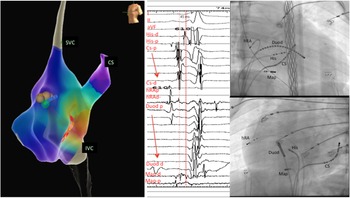
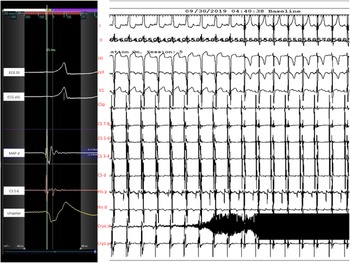
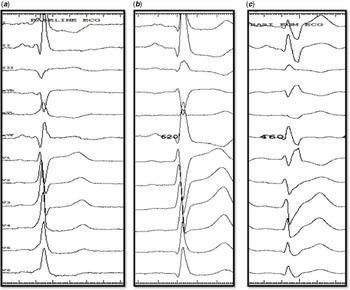
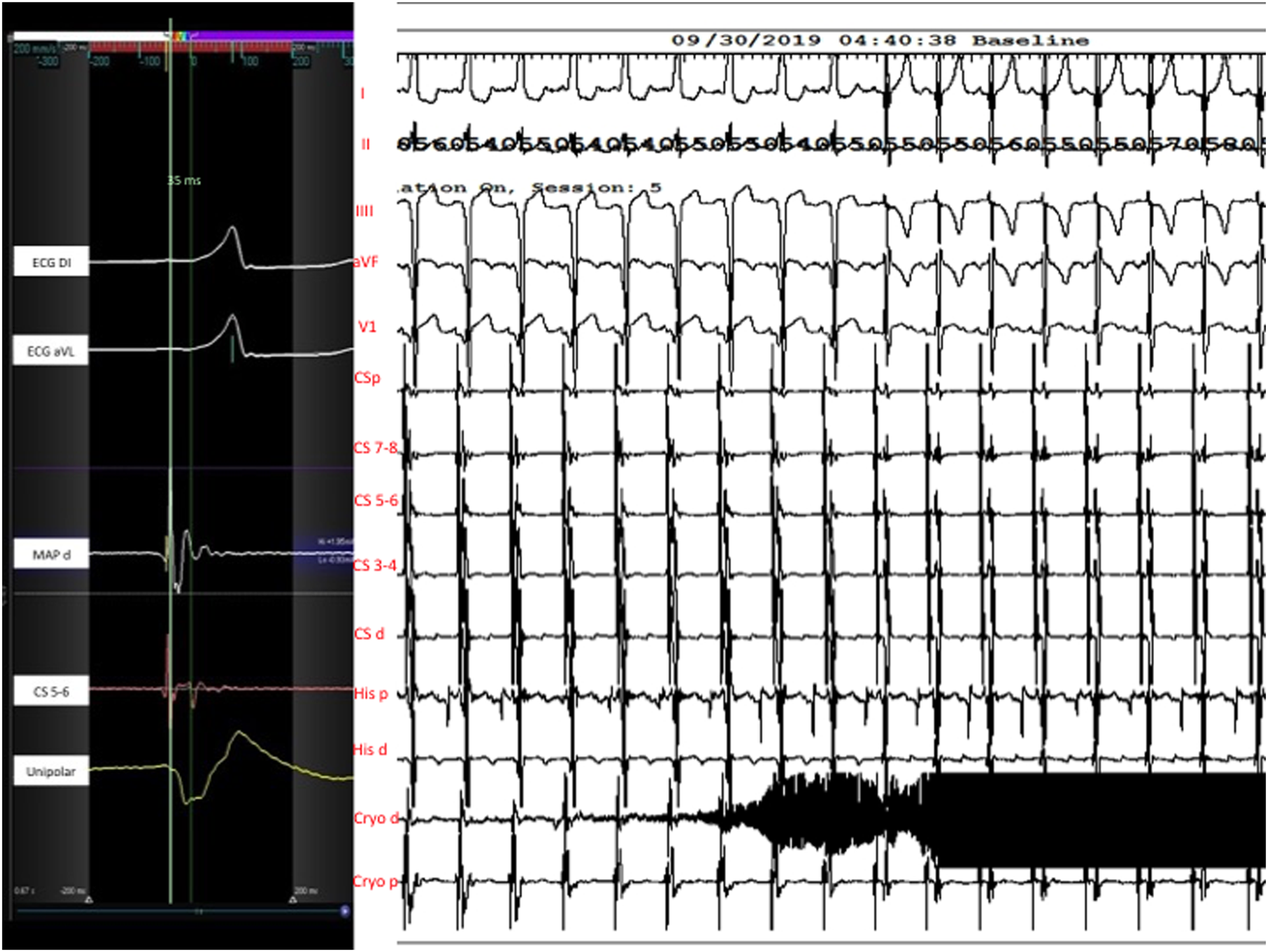
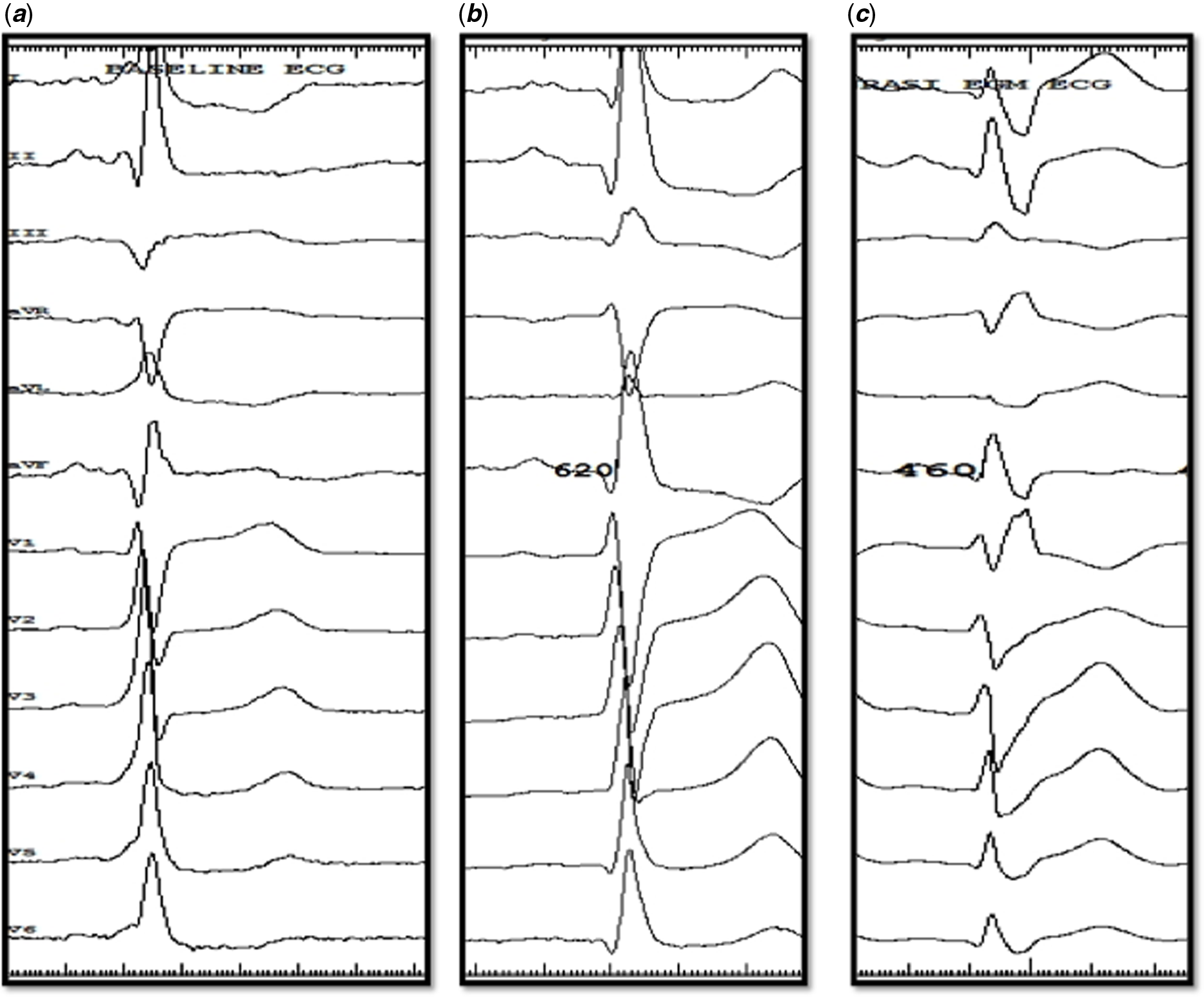
Indication for ablation was made in all patients with symptomatic palpitations and documented tachycardia. Electrophysiological studies were performed while patients were in fasted and sedated state. All patients provided signed informed consent prior to the ablation procedure. All antiarrhythmic drugs were discontinued for five half-lives of each drug before the procedure. Intracardiac bipolar electrograms, as well as 12-lead electrocardiograms, were recorded digitally. All measurements were performed using on-screen electronic callipers at a sweep speed of 100–200 mm/s and gain setting of 0.1–0.2 mV/cm. The EP-TRACER/70 (Cardiotek Netherlands) was used for the first consecutive 22 procedures, and the remaining procedures were performed with the WorkMate ClarisTM EP system (St. Jude Medical, St. Paul, MN, USA). The three-dimensional mapping CARTO XP or CARTO 3 systems (Biosense Webster, Inc., Diamond Bar, CA, USA) or the EnSite™ NavX Precision system (St. Jude Medical, St. Paul, MN, USA) were used in some patients. A reference decapolar catheter was placed into the coronary sinus from the femoral vein; in two patients, coronary sinus catheterisation could not be accomplished; therefore, a trans-oesophageal quadripolar catheter was used as the reference catheter in one patient. For the other patient, a decapolar catheter was placed in the atria in a stable fashion. Decapolar diagnostic catheters were placed in a high atrial position, and his potential recordings were obtained with an additional or the same decapolar catheter, depending on patient body weight. Radiofrequency ablations were performed using a 7Fr steerable multi-curve ablation catheter (Marinr MCXL, Medtronic, Inc., Minneapolis, MN, USA) or irrigated tip catheter (FlexAbility™ cardiac ablation catheter, Sensor Enabled™, Abbott Medical, St. Paul, MN, USA). Cryoablation was performed with 6-mm and 8-mm tip F3 curve cryoablation catheters (Medtronic Inc. Minneapolis, MN, USA). The ablation point was targeted to the true atrioventricular groove for the accessory pathway ablation procedures, so we aimed to have smaller A and larger V on distal recordings, and larger A and smaller V on proximal recordings of the ablation catheters (Fig 1), along with a QS pattern on unipolar recordings (Fig 2). Radiofrequency ablation was applied at 55–60 oC, 50 W, with irrigated catheters at 45 degrees, 35 W for 120 seconds at the target point. Cryoablation was performed for four to six lesions using the freeze-thaw-freeze approach; each lesion was treated for 240 seconds with some exceptions. Evidence of elimination of the accessory pathway was determined by both pacing manoeuvres and the presence of right bundle branch block on 12-lead ECG recordings, especially for multiple accessory pathways (Fig 3).
Patient with multiple accessory pathway (AP). Activation mapping presented continuous activity and earliest ventricular activity in the posterior to posteroseptal area, that is, −45 ms earlier than surface delta wave. Ablation catheters have smaller A and larger V on distal, and larger A and smaller V on proximal electrode recordings to assure a true atrioventricular groove.
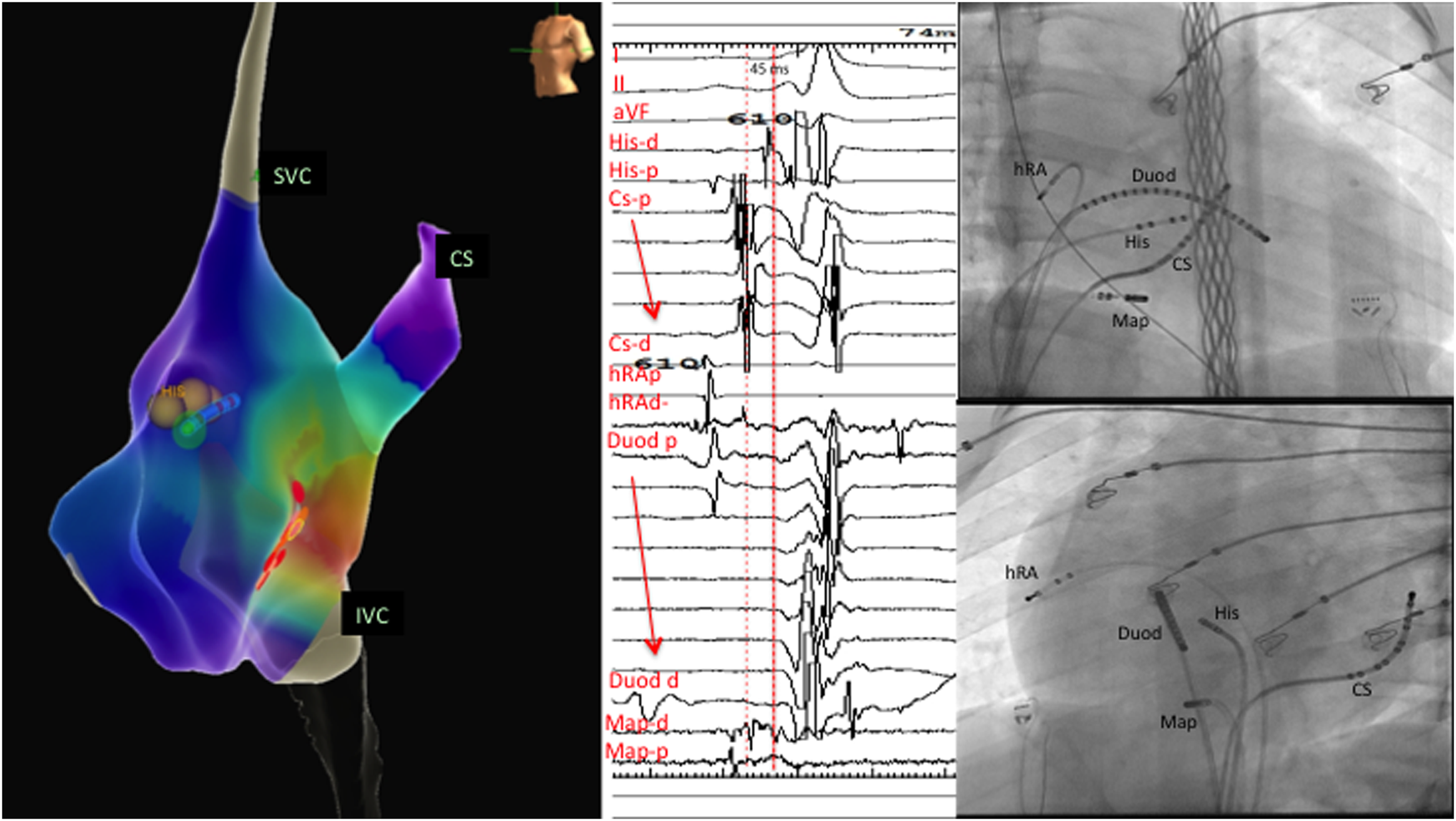
Distal electrode of mapping catheter reveals continuous activity in the posteroseptal region. Ventricular activity −35 ms earlier compared to surface ECG. Unipolar recording shows a nice QS pattern. Ablation was successful with a 6-mm tip, F3 curve cryoablation catheter.
ECG of patients with multiple accessory pathways: ( a ) pre-procedural recording with delta wave and ( b ) delta wave disappears after first accessory pathway (AP) ablation in the posteroseptal region. Note that right bundle branch block (RBBB) is still not visible. ( c ) Elimination of second AP localised in the posterolateral region to unmask RBBB, which is a typical finding in most cases with Ebstein’s anomaly.
Results
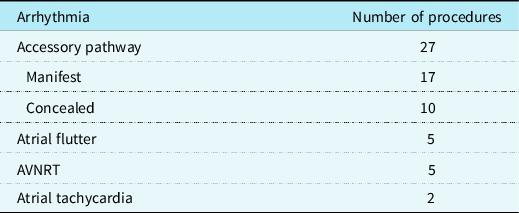
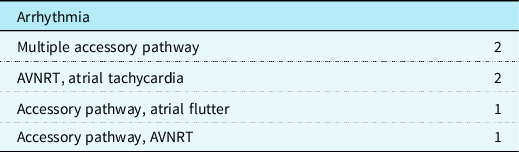
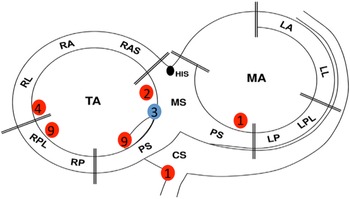
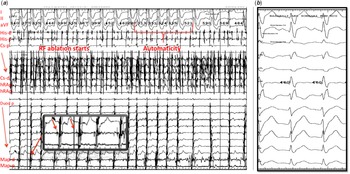
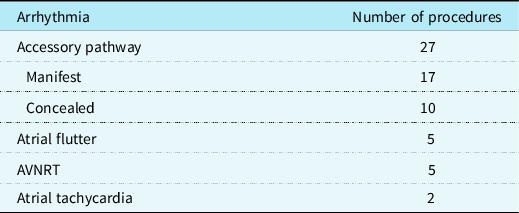
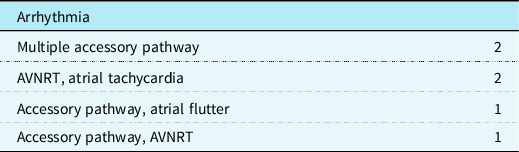
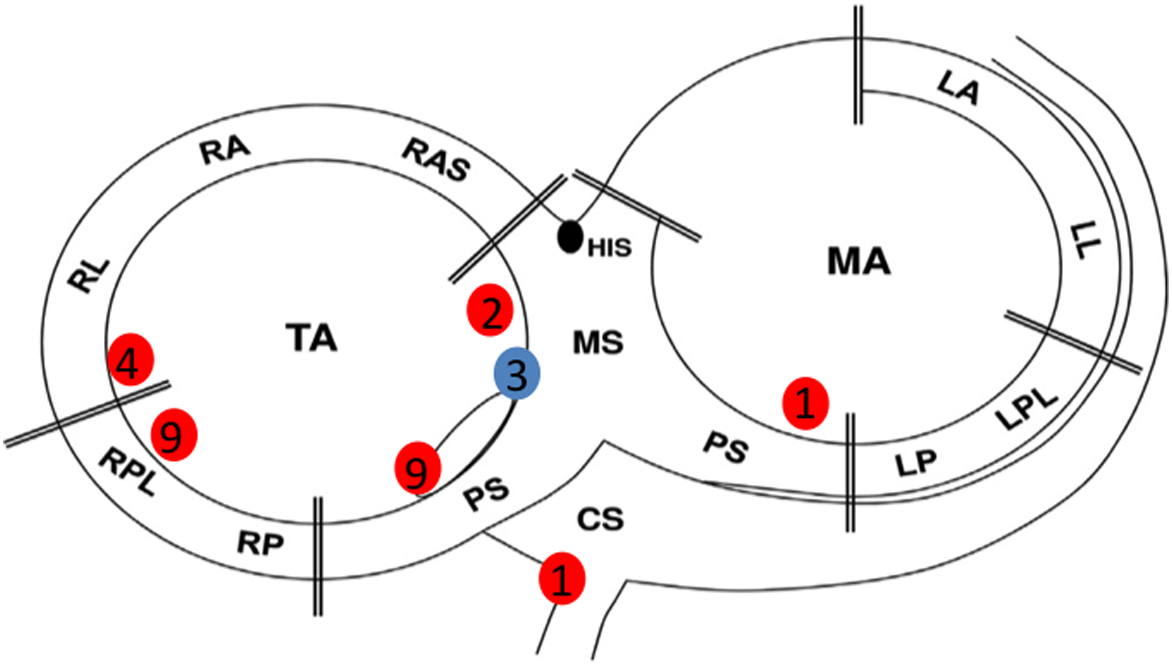
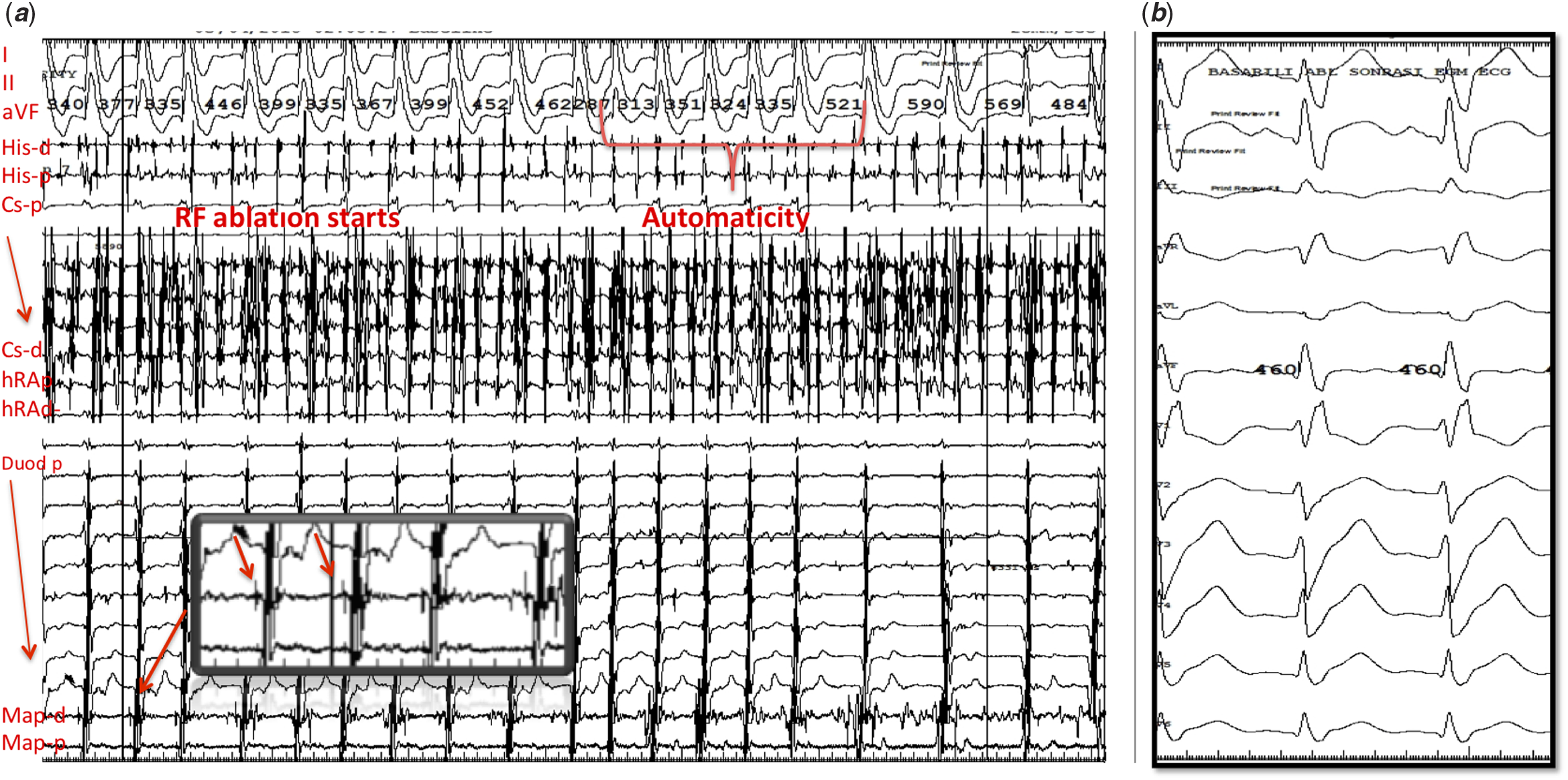
Between 2019 and 2000, 89 patients were diagnosed with Ebstein’s anomaly by echocardiography. The medical records of 84 patients were available. A total of 26 (30.9%) patients with Ebstein’s anomaly underwent ablation procedures and were included in the study. The median age at presentation was 14 (range, 4–17) years and median body weight was 42 (range, 15–74) kg. The severity of tricuspid regurgitation was mild in 11 (45%), moderate in 7 (29%), and severe in 4 (16%) patients; 2 patients had prosthetic tricuspid valves. Associated cardiac defects were present in six (25%) patients and five (21%) patients had previous surgical repair. Two patients had ventricular septal defect, two had patent ductus arteriosus, and another two had atrial septal defects. Thirty-three procedures, due to recurrences, were applied in these patients. Three procedures were required in one patient (after successful ablation of accessory pathways located in posteroseptal region of right atria, recurrent ablation performed for accessory pathways, and 2 years later, a third ablation procedure was performed for atrial tachycardia and atrioventricular nodal reentrant tachycardia). Three-dimensional mapping systems were applied in 22/33 of the procedures. Accessory pathways were observed in the majority (n = 27) of procedures, whereas atrial flutter was observed in five, atrioventricular nodal reentrant tachycardia in five, and atrial tachycardia in two procedures (Table 1). Multiple accessory pathways (in two patients) and coexistent arrhythmia were observed (in one patient Wolf Parkinson White [WPW] with flutter, focal atrial tachycardia, and atrioventricular nodal reentrant tachycardia) in some patients during the same procedures (Table 2). Accessory pathways were commonly localised in the right posteroseptal (n = 10 patients), right posterolateral (n = 14 patients), septal (n = two patients), and left posteroseptal (n = one patient) regions. One patient with a left posteroseptal accessory pathway had an L-transposition of the great arteries with Ebstein’s anomaly of the tricuspid valve. Ten patients had concealed accessory pathways, 17 patients had manifest accessory pathways, and 2 had decremental conduction properties (Mahaim accessory pathways). Fig 4 illustrates accessory pathway localisation and the source of energy used for ablation procedures. Mahaim potentials are illustrated in Fig 5.
Underlying arrhythmias in Ebstein anomaly.
Procedures of multiple arrhythmia mechanisms.
Localisation of accessory pathways.
( a ) Ablation of a Mahaim accessory pathway by determining the Mahaim potential at the right lateral region during atrial fibrillation episode induced by catheter manipulation repeatedly and necessitating multiple cardioversions. ( b ) Restoration of sinus rhythm after successful cardioversion with RBBB. Arrows.
All ablation attempts related to accessory pathways were successful; recurrence was observed in five (18.5%) accessory pathway ablations. Long-term follow-up was achieved in all patients, with a median of 6.26 (range, 1–17) years after the first procedure. The 1-year, 4-year, and 5-year arrhythmia recurrence rates were 15, 19, and 19%, respectively. Recurrence was observed in a posterolateral location in one patient and posteroseptal locations in four patients. Recurrences depending on the energy or catheter choice and localisation were one for cryoablation in the posteroseptal region (1/2), one for irrigated saline infusion in the posteroseptal region (1/7), and the remaining with standard radiofrequency ablation catheters (3/17) at two posteroseptal and one posterolateral region. Intraprocedural recurrence was observed in three cases, all at the posterolateral position. For the intraprocedural recurrences, bonus lesions were applied in two patients from the more atrial/ventricular part of the accessory pathway, while, for the remaining patients, the catheter was replaced with an irrigated saline catheter. There were no post-procedural recurrences observed in any of the patients with intraprocedural recurrences. Ablations with saline-irrigated infusions were preferred in nine of the procedures; three were recurrent cases and two were atrial flutter. There was only one recurrence observed in ablations for accessory pathways performed with saline-irrigated catheters in the posteroseptal region. A steerable long sheath was used during three accessory pathway ablation procedures: two at the posterolateral and one at the posteroseptal position. Two of the procedures were recurrent cases. There were no reoccurrences detected in these cases.
Ablation for atrial flutter was performed in five procedures for four patients. All patients in this group had a prior history of cardiovascular surgery except one. Tricuspid valve replacement was performed in two patients and valve repair for the remaining one. Scar-related macro re-entry was observed in four procedures and cava tricuspid isthmus-dependent re-entry was documented in three procedures. The non-operated patient presented with cava tricuspid isthmus-dependent re-entry and was ablated successfully. In one patient with multiple re-entries, there were two different macro re-entries that were both scar- and cava tricuspid isthmus-related. In this patient, the scar-related re-entry could be ablated successfully in the posterolateral region of right atria. Although ablation was unsuccessful in the cava tricuspid isthmus-dependent macro re-entry, arrhythmia control was achieved during follow-up. In that particular patient, cava tricuspid isthmus line ablation attempted completion by passing into right ventricle through the mechanical atrioventricular valve. Although energy delivered by irrigated tip catheters formed both the atrial and ventricular sides of the valve, tissue under the ring of the valve could not be ablated successfully. Malfunction of the mechanical valve was not detected after the procedure and for 2 years of follow-up. In the remaining two patients with a history of surgery, ablation attempts were unsuccessful.
Ablation for focal atrial tachycardia was performed in one patient, as a coexistent arrhythmia originating from terminal crest of right atria was successfully ablated. The other case of atrial tachycardia originating from the septal region of atria could not be ablated successfully due to risk of atrioventricular block.
The preferred energy for ablation was radiofrequency for most of the procedures; however, cryoablation was applied on only five occasions. Cryoablation was preferred for posteroseptal and midseptal localisation for accessory pathways, and for slow pathway ablation in one atypical and two typical atrioventricular nodal reentrant tachycardia cases. Only one recurrence was observed in a patient with an accessory pathway with a posteroseptal localisation. In that particular patient, the accessory pathway was probably epicardially located because, during cryo-energy delivery, the accessory pathway disappeared after 15 seconds of energy given for 360 seconds in the first episode. Thereafter, elimination of the accessory pathway could be achieved by switching directly to saline-irrigated radiofrequency ablation.
No permanent or life-threatening complications were observed in these patients. Two (6%) transient complications were observed during the procedures, and these complications occurred during atrioventricular nodal reentrant tachycardia ablations with cryo-energy as a temporary atrioventricular block that disappeared following cessation of cryoablation.
Discussion
This report describes the procedural characteristics and long-term outcomes of patients with Ebstein’s anomaly who underwent ablation procedures for different types of arrhythmias. Although studies on the ablation results of adult patients with Ebstein’s anomaly and arrhythmias have been reported,Reference Hebe13,Reference Chang, Wang and Chiu14 limited studies are available in children with Ebstein’s anomaly.Reference Reich, Auld, Hulse, Sullivan and Campbell8,Reference Delhaas, Sarvaas and Rijlaarsdam15 Although the prevalence of accessory pathways does not change over time, atrial dilatation, incisional scars, maze, and ablation procedures may lead to an increased incidence of atrial arrhythmias, with increasing age.Reference Hassan, Tan and Aung10 Multiple accessory pathways were reported at a rate of 3.1–13.8% during ablations in patients with WPW syndrome 16. Incidence of multiple accessory pathways increase up to 29% in patients with Ebstein’s anomaly. Unlike these data in the present study, we observed much lower incidence (7%) of multiple accessory pathways, but experienced coexistent arrhythmia in 15% of the cases, as expected in this environment suitable for development of arrhythmia.
Different pathologic features of the right atrium led to lower ablation success and higher recurrence rates. Pathologic examinations of patients with Ebstein’s anomaly revealed that the presence of an atrioventricular groove ridge is associated with accessory pathways, especially in close relation with the right coronary artery.Reference Marcondes, Sanders, Del Nido and Walsh16 The ridge region is a difficult target for catheter stabilisation and may require additional equipment to obtain successful results. This ridge is located in the posterior and septal part of the atrioventricular groove and is reported to have microscopic muscular connections between the atria and ventricle.Reference Roten, Lukac and Groot6,Reference Lev, Gibson and Miller17 As mentioned by Sacher et al,Reference Sacher, Wright and Tedrow18 steerable sheaths improve stability, and irrigated tip catheters safely deliver more energy to the tissue. Regarding our clinical experience in this study, although we preferred long and steerable sheaths on rare occasions, these items may facilitate the procedure, especially in large atria or in the case of posterolateral or free wall localisation. In two cases, these sheaths enabled successful ablation when catheters could not be stabilised in particular regions. Besides, we did not observed any recurrences in that particular group of patients, which may be related to the stable catheter position that enables precise and deeper lesions. But in this is retrospective study with limited number of procedures, we did not have the opportunity to perform a statistical analysis of this data.
The recurrence rate for the accessory pathways was observed to be 80% in the posteroseptal region. A high incidence of recurrences in that particular region may be related to the preventive approach in children, with approximately 3% at risk for development of atrioventricular block, and the nature of the localisation, even in structurally normal hearts, with the high incidence of recurrences (14%).Reference Calkins, Yong and Miller19
Tall and broad P waves, a prolonged PR interval, and right bundle branch block pattern are common features of electrocardiographs in Ebstein’s anomaly, and the absence of right bundle branch block in sinus rhythm is an indicator of the presence of an ipsilateral accessory pathway.Reference Ueshima, Nakamura, Takeno, Miyake and Takemura20 In patients with multiple accessory pathways, which are not a rare situation in Ebstein’s anomaly, after successful ablation of an accessory pathway, electrophysiologists should seek development of right bundle branch block. In cases such as those demonstrated in Fig 3, after ablation of an accessory pathway, the electrocardiogram may present with a prolonged PR interval, but this situation does not rule out the elimination of all accessory pathways. During ablation procedures, especially for patients with Ebstein’s anomaly after each successful ablation, electrophysiologic study should again be performed, not only to evaluate success, but also to evaluate for concealed accessory pathways and coexistent arrhythmia, as we observed in 15% of our cases. As a part of an accessory pathways, Mahaim (atriofascicular) pathways are also reported in the literature.Reference Ueshima, Nakamura, Takeno, Miyake and Takemura20 As we experienced and presented in Fig 5, these types of potential substrates should be evaluated, and due to decremental conduction properties, special attention should be given to detect these types of phenomena.
As previously reported by Wei et al, the prevention of recurrences may also be achieved by the creation of lesions that are closer to the anatomic atrioventricular groove. The true and anatomic atrioventricular grooves may be identified by intracardiac potentials or echocardiography in complex anatomy.Reference Vukmirovic, Peichl and Kautzner21 Intracardiac echocardiographic catheters may be large for small-sized children but would be helpful in appropriate situations. This is why we aimed to have smaller A and larger V on distal recordings, and larger A and smaller V on proximal recordings of ablation catheters with larger atrial potentials, as seen in Fig 1.Reference Wei, Zhan and Xue22 Additionally, the presence of broad bands of muscle running within the atrium that are not related to accessory pathways have been reported by Marcondes et al Reference Marcondes, Sanders, Del Nido and Walsh16 They can lead to unusual local potentials and early activation areas that create confusion when using activation mapping systems.
A substrate of epicardial accessory pathway conduction around the coronary vein was also documented by MarcondesReference Marcondes, Sanders, Del Nido and Walsh16 in pathologic specimens of patients with Ebstein’s anomaly. This finding may be another factor responsible for the high recurrence rate in this particular group of patients, as we experienced 80% of the recurrences in that particular region. Using irrigated tip catheters may overcome this situation, although we also experienced only one recurrence (of seven procedures) with irrigated tip catheters in the posteroseptal region. The localisation of the pathway was not of concern regarding the preference for irrigated tip catheters, as energy was applied in the posterolateral, free wall, and posteroseptal regions, even with a coronary sinus localisation, without any complications. The safety and efficacy of irrigated tip catheters have been shown in previous studies, even in the paediatric age group.Reference Gulletta, Tsiachris and Radinovic23 Irrigated tip catheters create deeper lesions that are a desired effect of the catheter but may cause undesirable complications related to the coronary arteries. The close relation of the right coronary artery with the ridge present in the right atrium of patients with Ebstein’s anomaly may lead to coronary lesions during irrigated tip energy application. It is known that arterial injury is directly proportional to the vessel-catheter distance and inversely to the size of the artery. Close attention should be taken, in especially in young patients. This undesirable effect may be prevented by the implementation of a power-controlled conservative protocol.Reference Gulletta, Tsiachris and Radinovic23 We followed patients with changes on 12-lead electrocardiogram due to coronary injury, and coronary artery angiography was not required in any of the cases. The operator should consider that, even without symptoms, coronary artery damage may occur. We did not experience such a complication in that particular region, but also, we did not perform routine coronary artery angiography, since none of the patients had the clinical picture or electrocardiographic changes referring to coronary injury or myocardial ischemia.
Cryoablation has been shown to be safe and efficient for the ablation of accessory pathways, especially those close to the normal conduction tissues, septal regions, and parahisian area.Reference Liang, Wang and Liang24,Reference Gaita, Haissaguerre and Giustetto25 Cryoablation has additional advantages beside safety, such as adherence to the tissue. Adherence of the catheter provides stability at the target point. This may be important for both the parahisian and posteroseptal regions by preventing complications due to movement of the catheter, and in places where it is difficult to stabilise the catheter, such as a posterolateral or free wall localisation. We preferred cryoablation for the posteroseptal region and atrioventricular nodal reentrant tachycardia ablations. Although recurrences seem to be slightly higher,Reference Bar-Cohen, Cecchin, Alexander, Berul, Triedman and Walsh26 due to safety concerns, we prefer to use cryoablation as much as possible in the paediatric age group.
In children with Ebstein anomaly, arrhythmias related to the accessory pathways are much more common. However, atrial arrhythmias are rare compared to the adult population, although these types of arrhythmias may develop during childhood, especially in post-operative patients and patients with severe tricuspid regurgitation leading to right atrial enlargement. Prophylactic ablation during surgery is recommended in adolescents and adults undergoing surgery for structural problems; however, there is not enough data for this procedure in neonates and infants.Reference Mavroudis, Stulak and Ad27 In our series, we had five procedures with atrial flutter. Most of the patients were operated on and two had tricuspid valve replacement with mechanical valves. Cava tricuspid isthmus line ablation could not be completed in these patients due to loss of tissue contact beneath the mechanical valve that led to unsuccessful ablation procedures. In such patients undergoing mechanic valve replacement, surgical ablation may be performed, especially for the cava tricuspid isthmus, even if they are asymptomatic. Besides anatomical boundaries due to mechanical valves, mapping procedures in previous eras were insufficient when compared to today’s technology. Multipolar mapping catheters developed by several companies enable much more detailed information about scar tissues and arrhythmia substrates, providing successful ablation procedures for these patients with enlarged atria with potential substrates for re-entries.Reference Anter, Tschabrunn and Josephson28
Conclusion
Although almost all types of arrhythmias may be seen in children with Ebstein’s anomaly due to the nature of the disease, arrhythmias related to accessory pathways are much more common. Ablation of accessory pathways has high success rates, but also relatively high recurrence rates, whereas ablation of atrial arrhythmias has lower success rates, especially in operated patients.
Acknowledgements
None.
Financial support
None.
Conflict of interest
None.