Introduction
Chile is a small country with an important and well-established tradition of researching traditional music. As in other countries, folk music has been one of the most important keys with which to interpret culture. This scholarly concept emerged in Chile only during the last decade of the nineteenth century, thanks to the work of the German philologist and ethnographer, Rodolfo Lenz (1863–1938). The emergence and subsequent consolidation of radio (between 1922 and 1940), the end of World War II, and the advent of reformist governments helped create the view of folk music as a crucial link to the past (Da Costa Reference Da Costa Garcia2009). Folk music then became an instrumental tool for cultural modernisation and for understanding the so-called national soul. This sort of process also occurred in other countries, such as Mexico (Toledo Reference Toledo2017), Brazil (Vilhena Reference Vilhena1997; Stroud Reference Stroud2008), and Argentina (Kuss Reference Kuss2001; Fischman Reference Fischman, Bendix and Hasan-Rokem2012), the main effect being to change folklore into an “untouchable concept” for humanities and social sciences (as Carlos Miñana Reference Miñana2000 has brilliantly shown).
Compared to the case in other South American countries, Chilean folk studies (ChFS) had an early start. In 1894, Lenz published the first known book on Chile’s folk music, Sobre la Poesía Popular Impresa de Santiago de Chile: Contribución al Folklore Chileno [Popular Printed Poetry in Santiago de Chile: A Contribution to the Study of Chilean Folklore]. His work developed through the publication of Ensayo de Programa para Estudios de Folklore Chileno [Essay Programme for Chilean Folk Studies] in Reference Lenz1905, and became complete with the founding of the Chilean Folk Society in 1909. Apparently, this was the first such society in Latin America, and it remained active until 1922 (Dannemann Reference Dannemann2002:20). In his 1905 publication, Lenz wrote a chapter entitled “Ethnology and Folklore” in which, for the very first time, he gave a genealogy of the concept of folklore in Europe and provided a brief agenda for local folk music study. He defined folklore as a science that studies the habits of a human society and tries to comprehend the national and popular soul.
Lenz promoted the study of folklore as a positive practice for the nation, for national identity, and for the development of science. In a letter addressed to the dean of the University of Chile, he commented that the “soul of the people” was an attractive ethnological matter that must be studied as a “patriotic” task. Such ideas demonstrate that Lenz understood his work and that of the folklore society as a duty to society, not as something for the elite or academia. Nevertheless, the German philologist saw that the promotion of folklore would professionalise scientific activity, by promoting literary honesty, proven truths, “scientific usefulness,” and methods that respect popular material, and by regularising, for example, awards to teachers (Lenz Reference Lenz1905:3).
Taking the work of Lenz and the Chilean Folklore Society as a starting point, this paper presents an historical overview of traditional music studies in Chile.Footnote 1 It establishes the different stages and offers a critical view of the field’s historical development. Then, it analyses the concept of “tradition” described in 123 dissertations on folk culture and traditional music written between 1990 and 2020, to demonstrate that studies have changed over time from scientific to humanistic approaches. Although I do not discuss theoretical differences between folk, traditional, and popular music, I consider folk-culture as a traditional-based practice, in that ideas, objects, or facts considered to be “folk” or “traditional” are, or at least can be, transmitted through oral means involving shared experiences.Footnote 2 Behind this understanding is a belief in Charles Seeger’s idea that folk and traditional music can be understood as “a source of social history” (Seeger Reference Seeger and Ware1940:317).
Itineraries of Folk Studies and Folk Music Studies
In 2002, Manuel Dannemann, the most important Chilean theorist and folk music researcher of the twentieth century after Lenz, established periods for the history of ChFS (Dannemann Reference Dannemann2002 and Reference Dannemann1960:203–206). The last hundred years is summarised below, with the names rephrased and some dates adjusted:
1. Chilean Folk Society (1909–1922)
Dannemann called this era the “scientific period.” Along with the creation of the society, a dozen poets, writers, and scholars published the work in the first Chilean journal—which they created— called Archivos del Folklore Chileno (Pereira Reference Pereira Salas1952; Vega Reference Vega1960).Footnote 3 The Archivos del Folklore Chileno was the first journal about tangible and intangible cultural heritage, meaning the products and processes of local culture orally preserved and passed on through the generations, such as legends, crafts, cuisine, songs, dance, music, drama, literature and others. Other reports were published in magazines devoted to poetry, linguistics, and literature until the 1940s, when folklore was established as a discipline at the University of Chile (1941), with an emphasis on collected and transcribed music. As Parra acknowledges (Reference Parra2017), the Chilean Folk Society emerged in the midst of a nationalist appeal to culture that was heavily influenced by Chile’s centennial celebrations in 1910. Its main goal was to make education “more Chilean” by integrating the notion of “tradition” and “popular” and the Chilean production of knowledge (see Torres Reference Torres2005; León and Ramos Reference León and Ramos2011).
The work of the Society was original because it adapted the contents and methods of ethnology, and produced important results until the middle of the century. Donoso (Reference Donoso Fritz2006:34) emphasises that this work promoted the concept of orally-transmitted folklore, mixing mestizo and “non-popular” or “non-high-class” elements. Carlos Vega (Reference Vega1960), the most important Latin American musicologist during the first half of the twentieth century, held that the Society had promoted the first organised programme to incorporate material and non-material elements, thereby integrating the theoretical, abstract, or non-tangible German tradition with the material, concrete, and object-centred English tradition of folklore (the latter embracing legends, refrains, tales, rhymes, jokes, myths, and so on). Thus, the Society broadened its focus from the study of music alone to the literature of manners, memorialisation, and chronicles; philosophy and history; and ethnology and philology. Music, though, became a tangential study, or was confusingly mixed with literature and art (Pereira Reference Pereira Salas1952:14), a circumstance that persisted in Chilean folklore scholarship throughout the twentieth century.
One group of texts deserves to be considered pioneering thanks to their anthropological perspective. In addition to Lenz’s studies, these texts include work by Lizana (Reference Lizana1912), Barahona (Reference Barahona1913), and Parraguez (Reference Parraguez1913) on traditional songs, along with the reconstructions of songs and dances by Camila Bari (Reference Bari1929) and Luís Sandoval (Reference Sandoval1937). Stimulated by the Society, later contributions by Balmaceda and Kloss (c. Reference Balmaceda and c1920) and Acevedo Hernández (Reference Acevedo Hernández1933, Reference Antonio1939) focused on popular songs. In 1943, the Chilean Folkloric Association was created by important local figures such as Margot Loyola, María Luisa Sepúlveda, Pepita Turina, Emilia Garnham, Camila Bari, Aureliano Oyarzún, and Sady Zañartu.
2. University research (1943–1973)
This period comprised the beginning of systematic collecting, archiving, and analysing music within ChFS. The work done by researchers based at the University of Chile and the Pontifical Catholic University was remarkable, unfolding the previously neglected world of traditional music through courses, workshops, fieldwork projects, journals, and the creation of the Popular Art Museum. Even more important was the establishment of the Folk Studies Institute in 1943, which generated the first cultural policy on folk music, which was applied until around 1970. Thanks to this, local folk and traditional music studies consolidated their presence in the university, opening a new epoch that would last until Augusto Pinochet’s coup d’état in 1973.
3. Latin American perspectives (1973–1990)
During Pinochet’s regime, music studies in Chile were silenced. Nonetheless, Dannemann promoted an international Latin American effort to study folk music, including “folklore missions” held by the Inter-American Institute of Ethnomusicology and Folklore in 1977. During this time, the concept of folklore was slowly replaced by the notion of traditional culture, using an approach that emphasised the study of the “lore” more than the “folk” when considering music (Donoso and Tapia Reference Donoso and Tapia2017). It was not coincidental that this change took place almost concurrently with the growth of global attention to folk studies, such as was witnessed when the International Folk Music Council (IFMC) changed its name to the International Council for Traditional Music (ICTM) in 1981.
4. Interdisciplinary approaches (1990–2020)
Scholars interested in ChFS began to relate more closely to the social sciences and, especially, the humanities, marking the emergence of an interdisciplinary focus. Some conferences were held between 1985 and 2002 that signalled interdisciplinarity, and the Archives of Chilean Folklore were reissued between 2002 and 2008. Popular culture made a comeback as Women’s studies began to collaborate on projects that involved systematic, historical, and cultural analyses. There were two parallel approaches to studying music, one focused on the traditional as a type of behaviour or object, and the other closely relating traditional music to heritage and patrimony. Both approaches can be critiqued as capitalist and tourism-oriented, contrasting anthropological and “music in everyday life” approaches where traditional heritage and expressive culture are not considered static but rather dynamic constructs.
Critical Perspectives on Chilean Folk Studies
So far, I have shown that until the 1970s ChFS maintained the ethnological and philological approach to research promoted by Lenz while incorporating some more humanistic perspectives. The studies that were published used at least three different approaches, which I summarise from Pereira (Reference Pereira Salas1952:15):
-
a) Collectionism—centred on chronicles, memorialising, and compiling music from the sixteenth to the nineteenth centuries (Amédée Frézier, Albert Friedenthal, Antonio Alba, and Ismael Parraguez);
-
b) Historical research—comprising monographs that speak indirectly about folklore (Barahona Reference Barahona1913; Hernández Reference Hernández1928; Pereira Reference Salas and Eugenio1941; Garrido Reference Garrido1943);
-
c) Musicological research—using a methodology focused on the analysis of scores and recordings, leading scholars to the rise of two folk-influenced symphonic styles: nationalism (represented by Pedro Humberto Allende) and indigenism (Carlos Isamitt), both styles present throughout the century in the work of composers such as Jorge Urrutia, Alfonso Letelier, María Luisa Sepúlveda, Adolfo Allende, Pablo Garrido, Australia Acuña, and Carlos Lavín.
All three approaches commonly defined traditional music by the type of community from which it came (Dannemann Reference Dannemann1962:31), not by its use. During the twentieth century, most publications focused on methodological aspects or the materiality of objects (such as scores, transcriptions, or recordings) rather than the processes of orally-preserved culture (de Certeau Reference de Certeau and Rendall1984). As in other countries, music was understood in Chile as a type of rural artifact that must be saved from destruction during the modernisation process: it must be collected and archived before it, as “popular antiquities,” disappeared. As Pereira (Reference Pereira Salas1952) explained, literature and fine arts were more commonly researched than music, a circumstance that did not change in the second half of the century. Torres (Reference Torres2005) clarifies the point that the study of traditional music was made through a lens of national identity but executed by academics who aimed to construct a canon of folk music objects:
The relationship with the national and the popular has been a constant in our cultural history, expressed in different situations and perspectives. One of [these perspectives], maybe the most important, is the one that homologues the popular with the national, subsumed under the status of folklore, a folklorization operation in which popular cultures and national identity are melted into a single identity. In this process of national legitimization of the popular, actions taken from the academic world were decisive. Its main antecedents are folk studies published since the late nineteenth century…. [This process] will operate as a reference or model of urban artistic movements with folk roots, of vital importance in the integration of a myriad of local popular music in national life.
(Torres Reference Torres2005:9)Why did the study of music have a scarce presence in ChFS? It was the result of a diverse and sometimes confusing use of the concepts of “tradition,” “folk/folkloric,” and “popular,” but also because of a marked preference for facts over processes.
Although the concept of folk music in Chile is still in use—as folclore musical—concepts such as traditional music (música tradicional or folclórica), folk music (música folclórica), and popular music (música popular) overlap. The music industry established a concept of folk in the 1930s defined as traditional sounds from the countryside. This concept was used until the 1980s, when the idea of traditional cultures (culturas tradicionales) partially replaced “folk,” in turn replaced by the concept of popular culture in the 1990s. Research on the cueca chilena, the most studied local genre that evolved around 1882, shows that the use of categories depends directly on the music industry, on journalism, cultural policies, and musicians, hence a genre must be studied in its totality, including its history, not just its elements (Spencer Reference Spencer Espinosa2017:63–66). This is one of the reasons ChFS was pushed towards the humanities, where interdisciplinarity allowed room for the coexistence of different concepts.
Scholars began to consider the whole process of creation, production, arrangement, and performance, taking the music industry’s viewpoint rather than relying on the traditional poiesis or the temporality practiced by musicians. Scholarship became etic rather than emic in orientation. This led to the idea that there was a linear movement of music from rural to urban, from urban to artist, and from artist to recording. The main result of this formulation was an emphasis on consumption, but at the expense or minimisation of the processes involved in the transmission of expressive culture (Reyes Reference Reyes Schramm2009; Löfgren Reference Löfgren, Bendix and Hasan‐Rokem2012). Thus, the unstable character of music folklore—one of its fundamental values (Noyes Reference Noyes, Bendix and Hasan‐Rokem2012)—was not studied from an historical or musicological standpoint, but only from the point when it became mass produced.
This development had three methodological consequences. First, similarly to Western classical music commentaries, it placed emphasis on musicians’ skills, their techniques, vocality, use of harmony, and performance to the exclusion of amateur experience. In reaction to this practice, Turino (Reference Turino2008:32–33) points to the importance of studying participatory performances of folklore because they share values and create an ethos where each individual contribution is part of the overall performance’s success. The industry approach also had a racial dimension: Díaz (Reference Díaz2013) suggests that indigenous music was not considered part of folklore, eventually becoming an “anti-paradigm” that needed to be corrected through ethnography.
Second, there was a Hispanic-centred bias in the choice of “survivor melodies” and music chosen to be recorded or collected. In this conception, the Hispanic was understood as the foundation of the national. Chile’s Central Valley was considered the axis of musical development, rendering invisible indigenous manifestations, and casting “the shadow of history and the national cultural project” (Torres Reference Torres2005:10).
Third, there was little study of lyrics. In fact, there is as yet no study that addresses the message and intertextuality—the corpus of political, cultural, and social ideas that underlies lyrics within the folk music tradition. Some timid efforts have been made, such as by Loyola (Reference Loyola2007), Figueroa (Reference Figueroa Torres2006, Reference Figueroa Torres2010, Reference Figueroa Torres2015), and Salinas (Reference Salinas, Gazmuri and Sagredo2006), preceded by Advis et al. (Reference Advis and González1994, Reference Advis, Cáceres and González1998). However, these studies do not provide a general view of content from a long-term perspective, with the exception of Acevedo Hernández (Reference Acevedo Hernández1953) and González Marabolí (Claro et al. Reference Valdés, Samuel and Cifuentes1994).
The above confusion of concepts and consideration of facts over processes prevented, whether totally or partially, the study of five dimensions of scholarship that I consider important. The first is the ideologies and techniques involved in collecting music, as Grebe (Reference Grebe1976), Catalán and Torres (Reference Catalán and Torres1983), Rondón (Reference Rondón2001), and Torres (Reference Torres2005) note. The second is the issues of aurality, authenticity, and social purification created by the sacred or “untouchable” character of rural folklore (Miñana Reference Miñana2000; Ochoa Reference Ochoa2006). The third is the mediation of technology (Ochoa Reference Ochoa2002; León and Ramos Reference León and Ramos2011), especially the processes of creation in recording studios and the existence of session musicians used in RCA and EMI Odeón anthologies and collections (Valdebenito Reference Valdebenito2012). Fourth is the study of reception and listening, in terms of critical responses to concerts, recordings, or the reception of accounts in books, journals, newspapers, letters, and diaries. But the most important absence in scholarship of the second part of the twentieth century was the study or analysis of live performance. Recent studies on cumbia (Karmy Reference Karmy2013), tango (Karmy and Molina Reference Karmy and Molina2012), cueca (Spencer Reference Spencer-Espinosa and Vargas2013, Reference Spencer Espinosa2017), and guitar playing (Valdebenito Reference Valdebenito2012) have shown the enormous scholarly possibilities that such studies illuminate.
Folk Music: Data for the Past Thirty Years
In the past thirty years, few texts have evaluated the scientific production of folklore from a long-term perspective. Before 1990, this sort of work was carried out by historian Eugenio Pereira Salas (Reference Pereira Salas1945, Reference Pereira Salas1952, Reference Pereira Salas1959); writer Juan Uribe Echeverría (Reference Echeverría, Juan and Ocaranza1982, with Juan Prado); folklorists Margot Loyola (Reference Loyola1980) and Gabriela Pizarro (Reference Pizarro Soto1987); and theorist Manuel Dannemann (Reference Dannemann1960; see also Reference Dannemann1978) (these being the best-known scholars of this material). Yet, since 1990, only a few texts have tried to include production in its entirety. Those that have include the work of Fidel Sepúlveda (Reference Sepúlveda Llanos1998), Manuel Dannemann (Reference Dannemann2002), Rodrigo Torres (Reference Torres2005), and Karen Donoso with Carolina Tapia (Reference Donoso and Tapia2017).
There is, though, a large corpus of knowledge production on folklore found in theses from the past thirty years. Hence, in the following section I present a brief summary of my ongoing research on traditional music dissertations in Chile completed between 1990 and 2020, in order to give a general perspective of ChFS scholarly activities in recent times.Footnote 4 My team and I have analysed more than 320 undergraduate and postgraduate dissertations that declare a concern for or focus on folk and/or traditional music. The disciplines of these scholars range from anthropology, communication, cultural studies, Latin American history, pedagogy, sociology, and literature/linguistics to arts—architecture, dance, aesthetics, music studies, theatre, and heritage studies. This is the first article to explore this material, and provides an opportunity to gauge the state of research, to see how topics and methodologies used in ChFS have been reinterpreted, and to elucidate how the concept of tradition has changed over time.
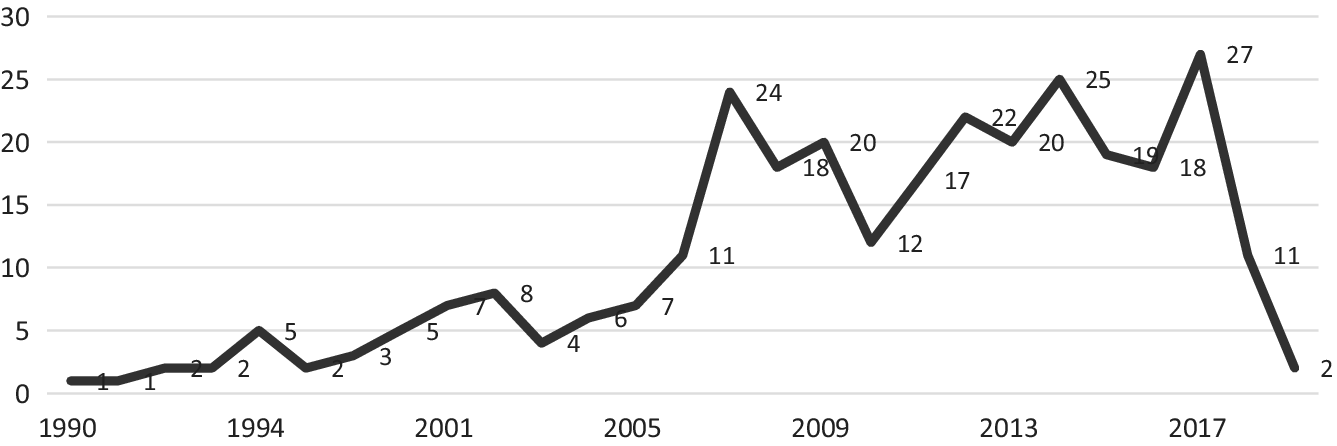
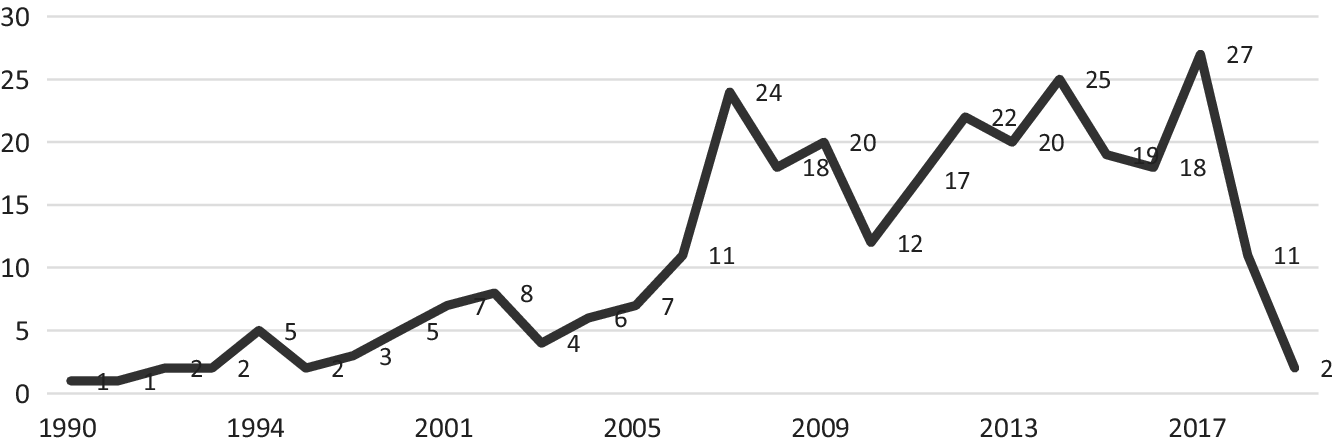
We have located 320 MA and PhD dissertations written and/or published (in print or electronic formats) from both inside and outside Chile, between 1928 and 2020; of these, 299 were completed between 1990 and 2020. We have used three criteria to filter our sample: first, that the thesis must contain the term “folclore” or “folclore chileno” in a general sense, not discriminating on the basis of approach, concepts, ideology, or philosophical orientation. All dissertations passed this first filter. From our research findings, we created a table giving the frequency of “theses on folklore” (Figure 1), and conclude that the study of traditional and folk music in Chile has clearly expanded.
Number of dissertations, 1990–2020 (N = 299).
Second, we identified theses that mention the specific term “traditional music” or any of its variants. A review of abstracts and indexes revealed variants such as “traditional music genres” (géneros musicales folclóricos), “indigenous music” (músicas indígenas o tradicionales), “ancestral tradition,” or “oral music”—all used as synonyms for the traditional. Deleting theses that did not use theses or similar terms decreased the sample size from 320 to 229. Third, we eliminated all theses in which, though the title or abstract referred to “traditional music,” the topic was not discussed in the introduction, body, or conclusion. We also had to eliminate theses that were not available for inspection due to restrictions. This step filtered out 109 theses, reducing the sample to 123, and allowing us to compile seven tables that summarise the state of research on traditional music in Chile.
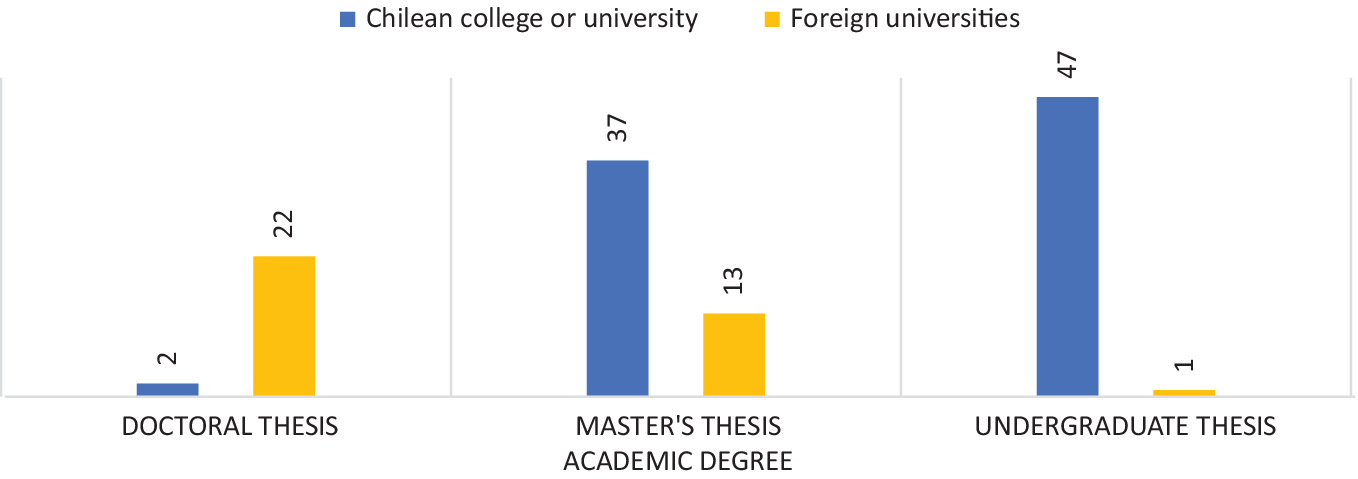
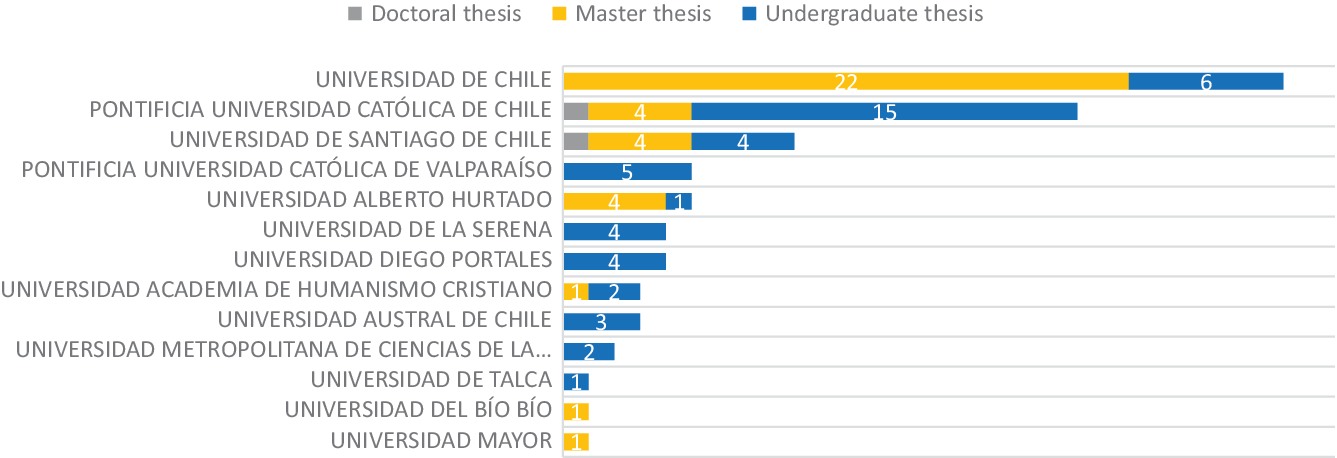
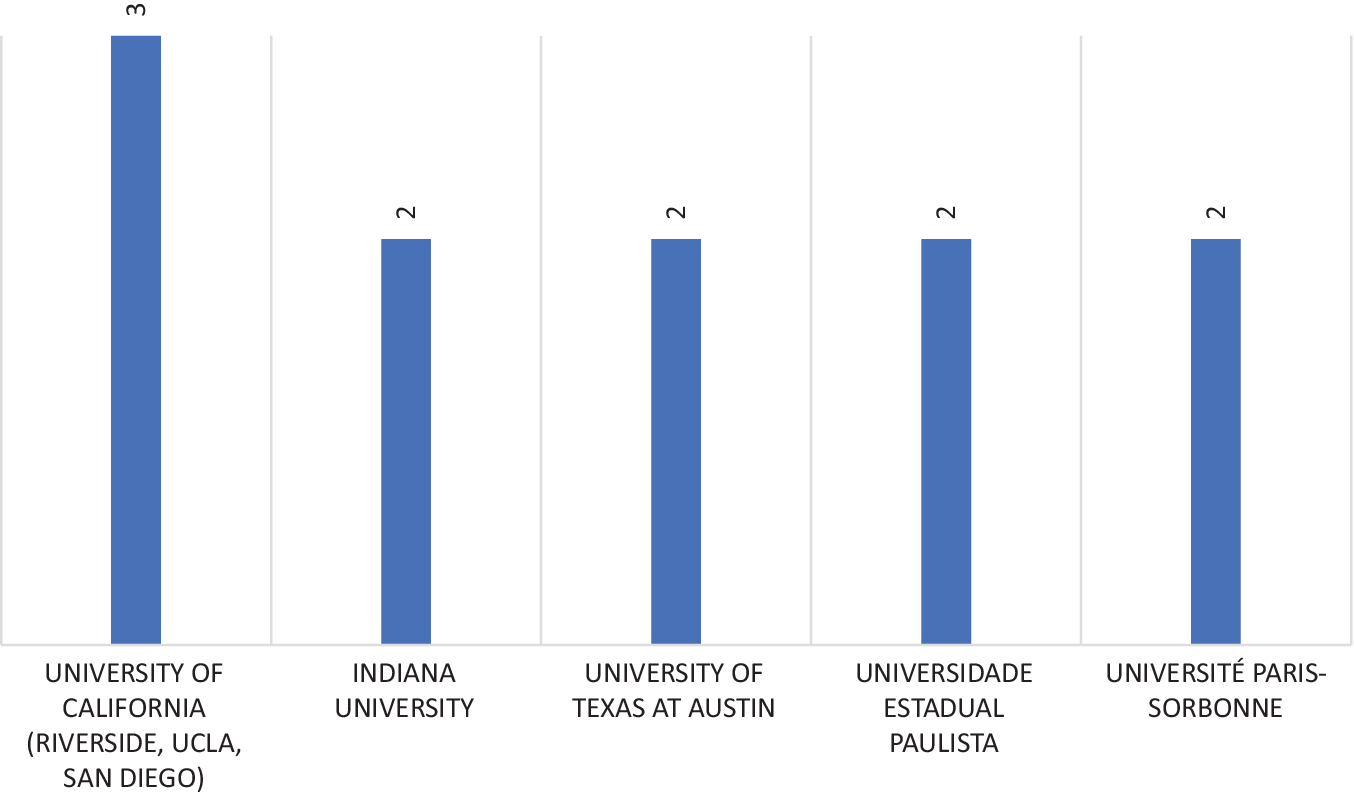
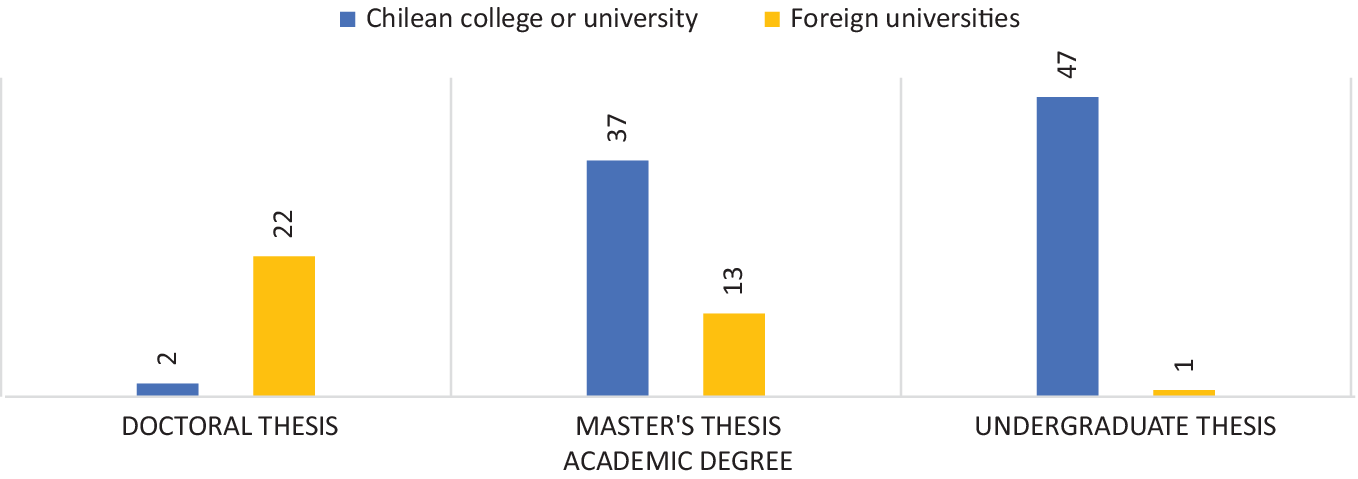
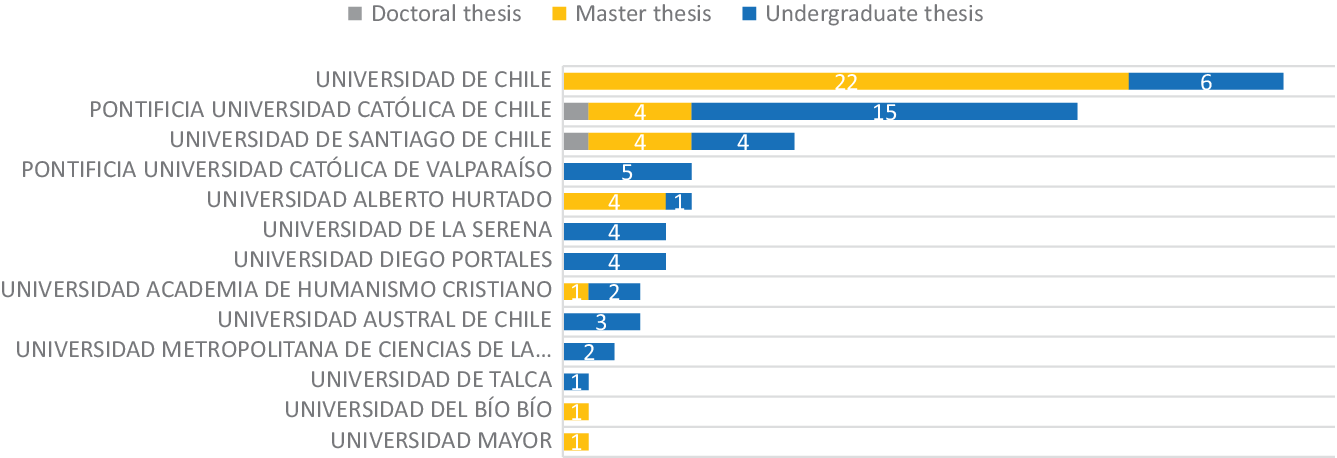
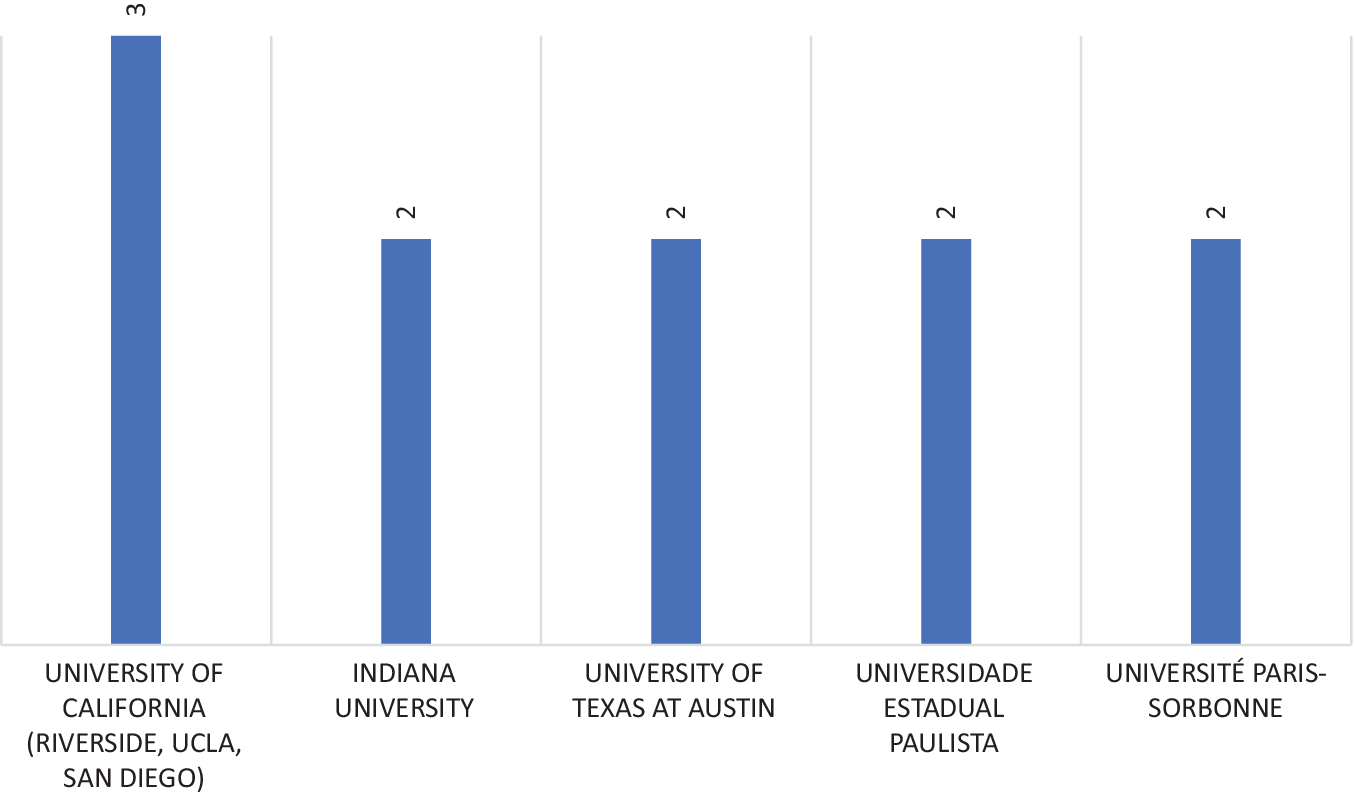
Figure 2 reveals that almost all doctoral theses were completed outside Chile, but practically all MA theses were completed inside Chile. Some 86 of the 123 theses were carried out at a Chilean college or university (69.6%), including the University of Chile, Pontifical Catholic University, University of Santiago, University Alberto Hurtado, and Pontifical Catholic University of Valparaíso. These were also completed at some American colleges and universities (see Figures 3 and 4).
Chilean vs. Outside Institutions, according to academic degree (N = 122)
Completed dissertations according to academic degree and university (N = 86).
Main international universities.
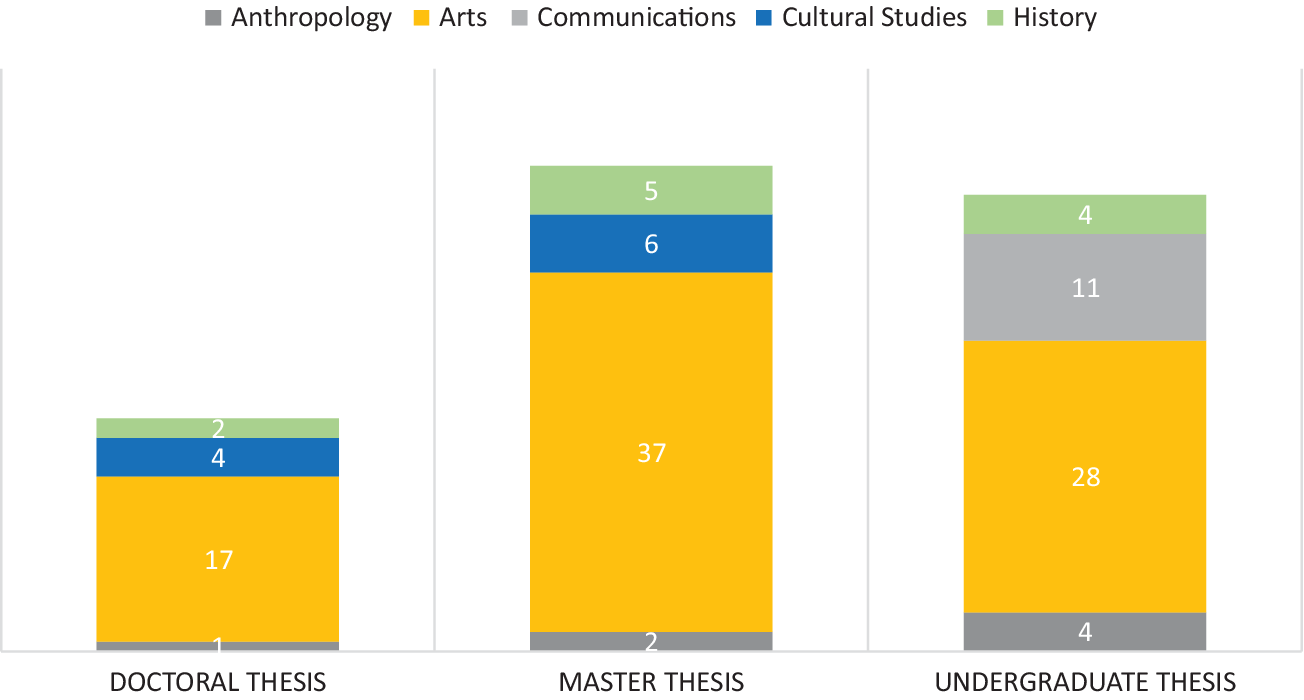
Another factor is the academic study programme in which theses were completed, according to academic level. Figure 5 uses UNESCO fields of study indicators to show the distribution.
Fields of knowledge or orientation of the PhD (N = 121).
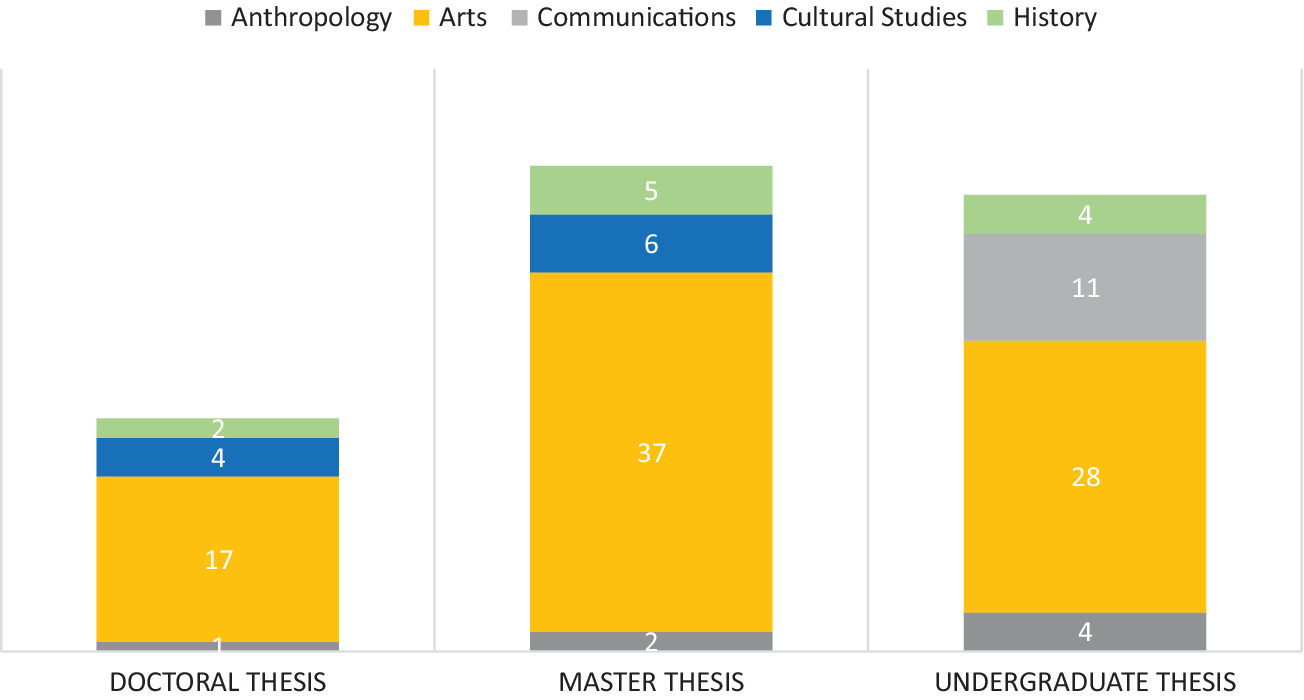
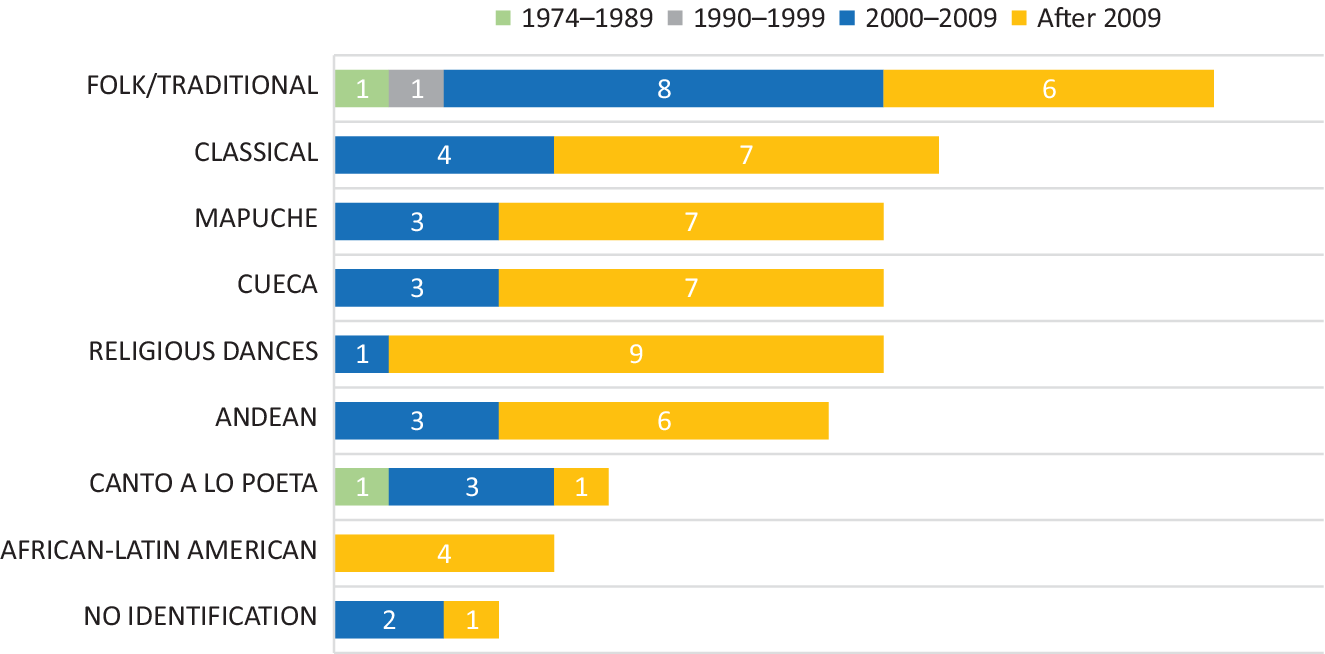
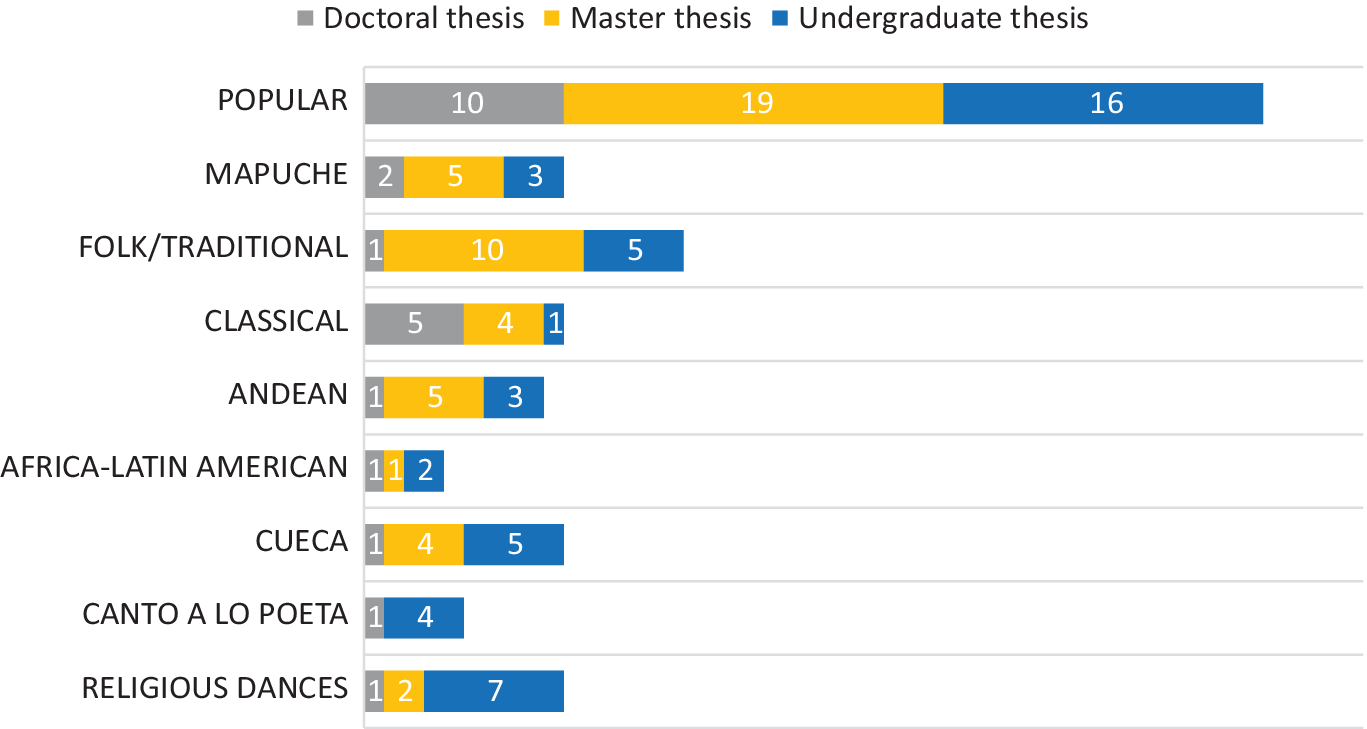
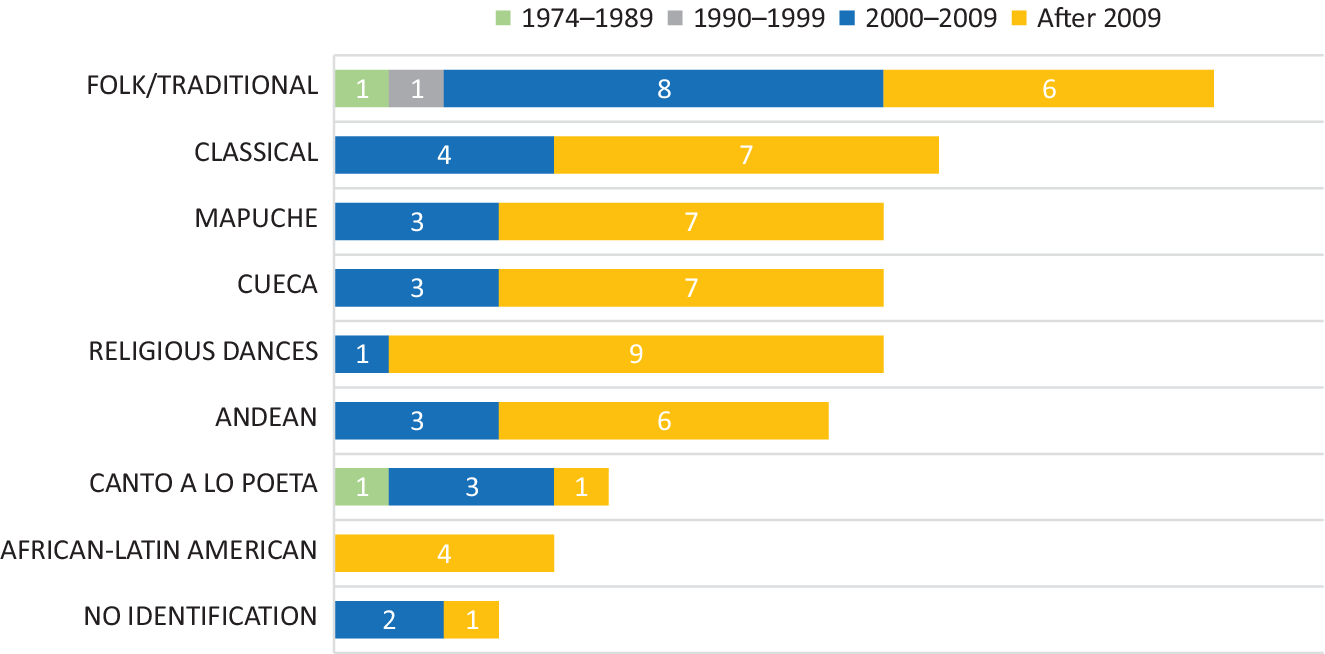
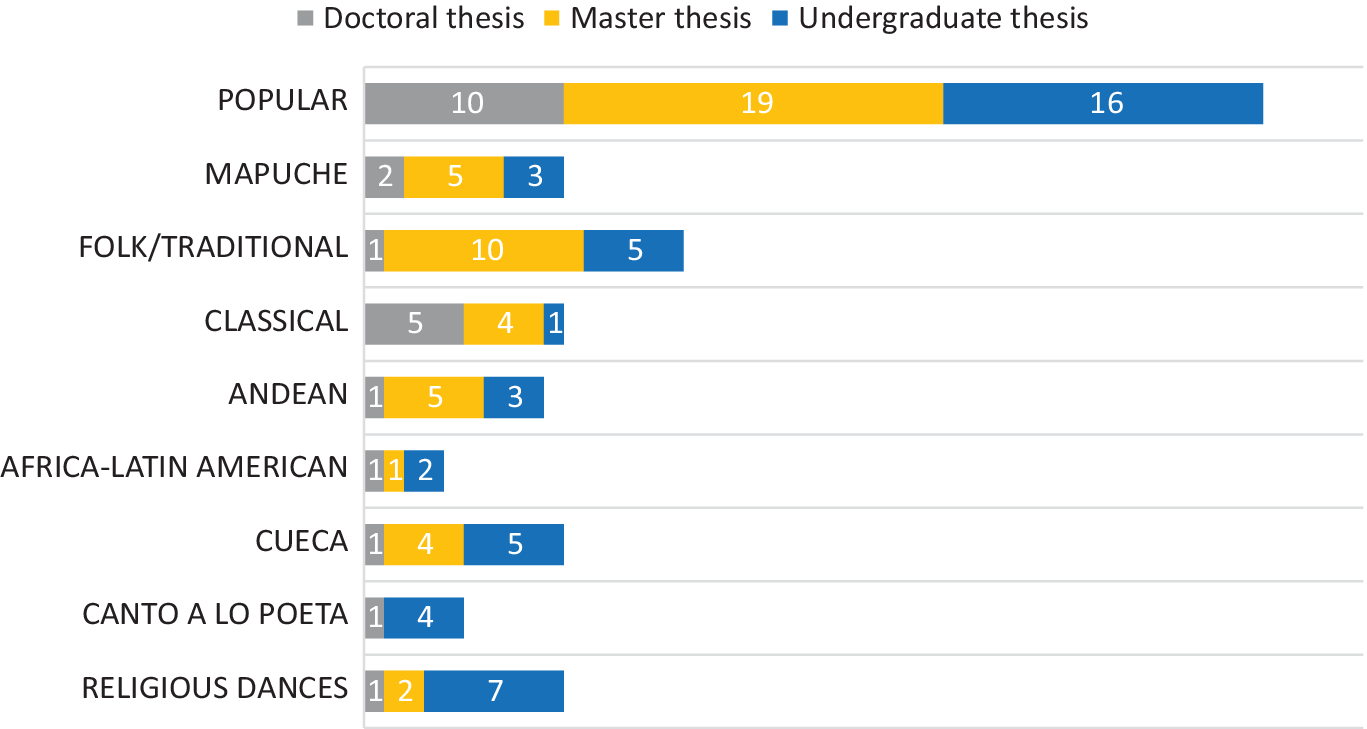
Figure 6 shows how forms, styles, and genres have been studied over time, and Figure 7 determines how scholarly focus changes according to MA or PhD work. The most important observation is that the study of popular music dominates, this being understood as the result of the industrialisation, massification, and modernisation of traditional and folkloric styles and repertoires. Overall, in MAs there remains a slight inclination towards studying the traditional and folkloric, but this effect decreases or disappears completely in PhD research (Figure 7).
Forms, styles, and genres, according to time (N = 78).
Forms, styles, and genres, according to academic degree (N = 119).
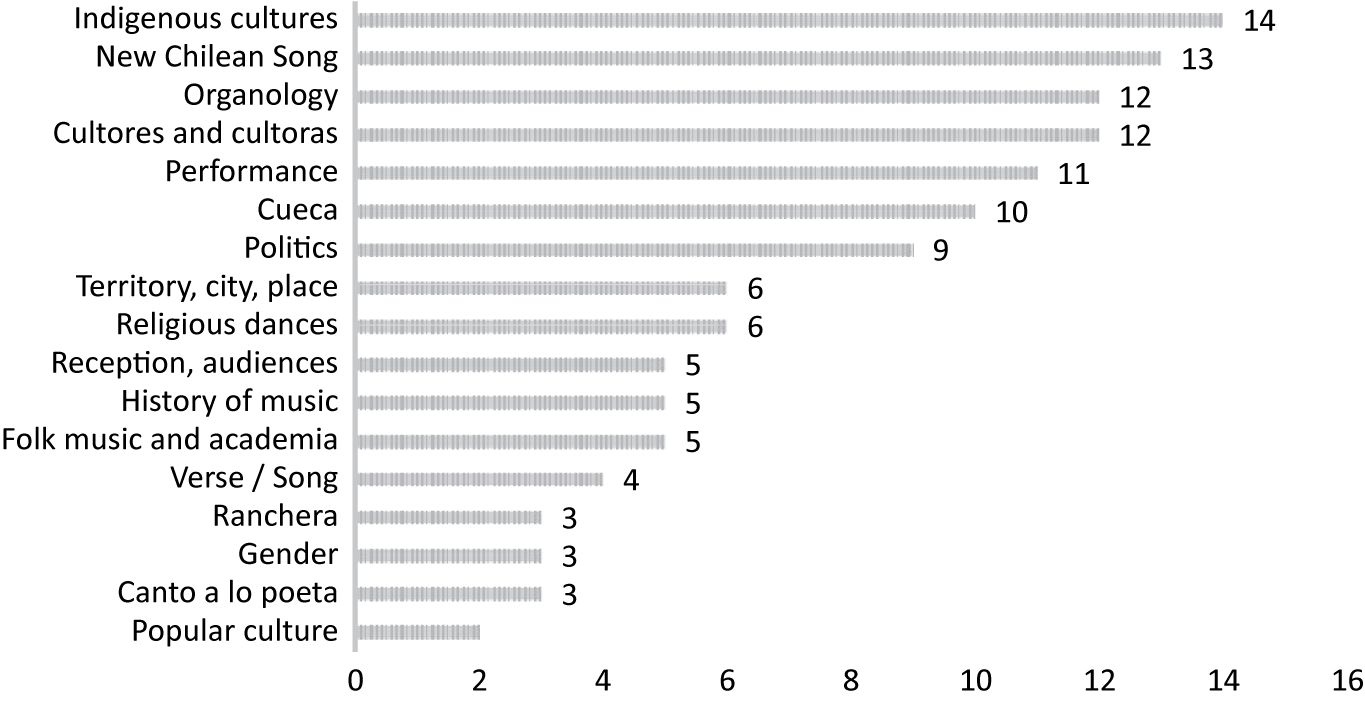
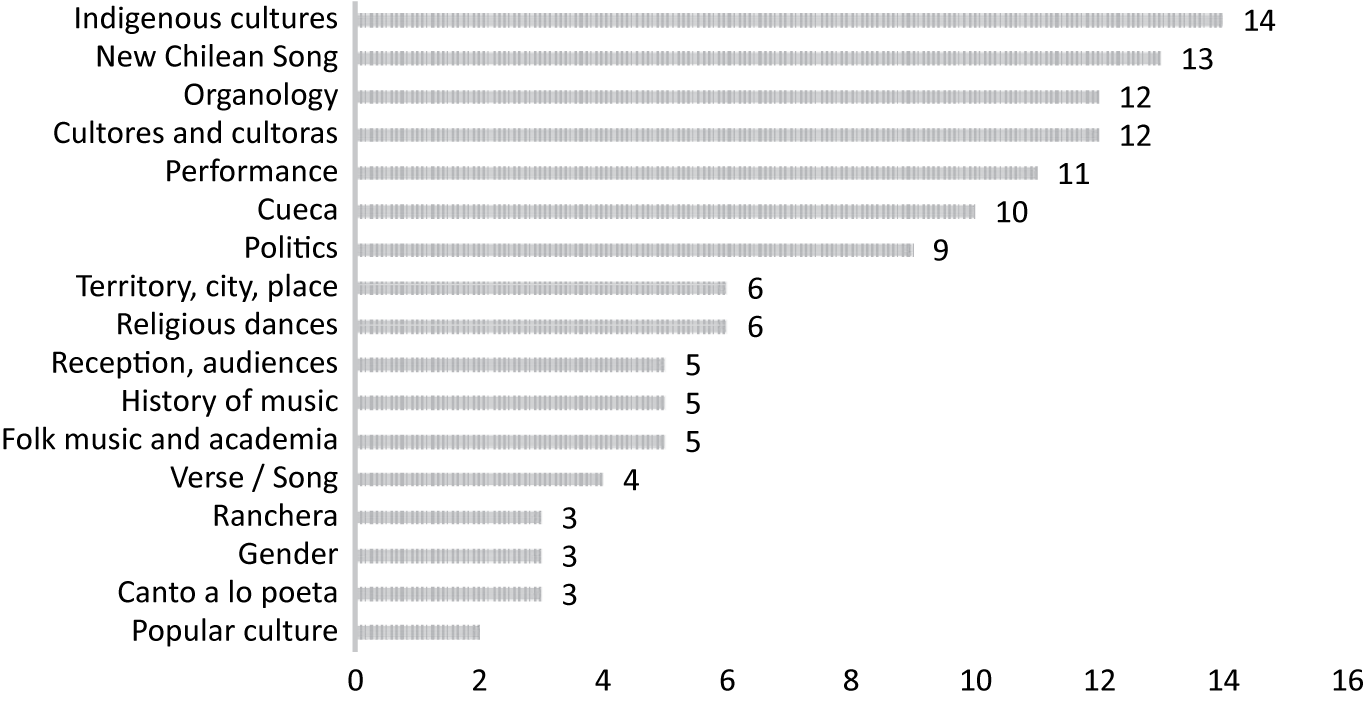
Finally, analysis of the research topics or objectives, although difficult to summarise, reveals that musicians, singers, or cultor make up the majority in terms of scholarly focus, as well as an interest in describing complete historical periods. Other common topics include identity and organology (see Figure 8).
Research topics or focuses (N = 123).
The tables show that the study of traditional music, historically defined as collectionistic historic and musicological, has experienced a significant change, reflecting an opening of the field towards popular music, as well as the introduction of qualitative methodologies, history of instruments and people’s lives, and a gradual interdisciplinary influence. However, behind these changes sits a deeper change: the presence and use of the concept of tradition.
The Concept of Tradition
The concept of “tradition,” from Latin traditio, traditionis (delivery, transmission), began to be used in the late eighteenth century to designate and study processes of oral transmission. At times, though, it was used with derogatory connotations. It was not until the twentieth century that there began to be a differentiation between orality and literature, long after the development of the printing press in the sixteenth century and illustration technology in the eighteenth (Gelbart Reference Gelbart2007:153). Until the twentieth century, oral tradition referred to a set of religious rites, namely those of the Catholic Reformation that had been established to differentiate the printed word of God from the spoken words used in the mass. Later, “tradition” was used in Europe as means for understanding nineteenth-century culture and to create discourses and imaginaries of what constituted the national (Gelbart Reference Gelbart2007). As the twentieth century dawned, the concept of “tradition” fused with publishing (via musical scores) and the commercial music industry (via recordings).
In the 1970s, the concepts of tradition and folklore separated (Gelbart Reference Gelbart2007:153). However, in Latin America, the terms tradicional, oral, anónimo, and popular continued to be used alternately or overlappingly, causing great confusion (Fischman Reference Fischman, Bendix and Hasan-Rokem2012:276). Regional folklore studies later incorporated focuses stemming from communication and semiotics, accepting the idea that folklore constituted not only a way of belonging to a social group, but rather, also, a behaviour (see Dannemann Reference Dannemann1962). By the 1990s, the concept of folklore was replaced by that of tradition, and was only used by a limited number of academics. According to Fischman (Reference Fischman, Bendix and Hasan-Rokem2012:279), this change was due to cultural criticism, which managed to impose the concept of cultura popular over that of folclore.
Similarly to Europe and America, student research in Chile included the concepts of tradition and folklore in a disorganised fashion. For this reason, we embarked on a second reading of the 123 theses in order to determine how the concept of tradition (folclore) was used. We examined abstracts, introductions and conclusions, and, in a third of the total, the entire thesis. Our main discovery was that in almost all cases, the concept of folk music (folclore musical) was subsumed by the concept of tradition. This made it clear to us that the idea of folk music is still considered a behaviour, not a concept, a phenomenon Dannemann discussed back in 1960. The same consideration does not apply to the idea of tradition (tradición), which operates as a general notion within which folklore can be included or understood. In other words, tradition is general but folk is particular. Based on our examination, we asked what uses and connotations the concept of tradition has had during the past thirty years of research, and found four overall ways to understand the concept:
1. General, abstract. An encompassing idea of tradition, commonly abstract, that refers to oral transmission processes which are understood as a fundamental substratum for musical or sound practice. The concept of sound we use here, described as “traditional sound” (sonido tradicional), usually implies some event or concrete behaviour that allows transmission. Although general, this definition is less Western in orientation and more appropriate for theses that explore music, ritual, ceremonies, and indigenous celebrations. This conception of music has a broader scope than “traditional music,” often aligning with the social base of culture, especially as culture relates to notions of memory (memoria) and collected values (acervo). The concept of tradition in this understanding has a universalist purpose and is oriented to the community, at times with a de-colonialising perspective. In terms of literature, it is ambiguous, poetic, elaborate (floreado), and, at times unclear. Theoretically, it resembles what Castelo-Branco considers tradition to be, as an “interpretative key” (Reference Castelo-Branco and Castelo-Branco2010:887) for music in culture, that is to say, “sets of beliefs and practices that are transmitted across generations to form a context that then become a framework for subsequent cultural activity and interpretation” (Beard and Gloag Reference Beard, Gloag, Beard and Gloag2005:185).
2. Specific. A model of the past, being understood as a distant past that was or is still transmitted orally. Here, the past operates as a pattern of stability for a society and/or culture where music or dance is performed. However, this past is at times not entirely a matter of cognitive understanding, but is considered mystic and imperceptible, ancestral, immemorial, or perpetual knowledge. In this sense, it resembles the idea of tradition as a way of interpreting a past that “continuously changes” (Shils, in Handler and Linnekin Reference Handler and Linnekin1984:274). The theses that employ this notion can be divided into two types. A first group is critically and/or politically focused, contrasting tradition with modernisation. These prioritise concepts of authenticity, nation, hybridisation, oral transmission, and popular culture. The conceptualisation of tradition is descriptive of or functional to the main arguments. There are, for example, more than ten theses focused on the New Chilean Song movement (Nueva Canción Chilena) that follow this approach. A second group links to the idea of heritage, according to which tradition is a cultural legacy necessary to be sustained. These theses indirectly adhere to the idea of survival (supervivencias), archives, and the continuity of certain repertories or lyrics/melodies, and use a more prescriptive and linear notion of tradition.
3. Narrative, narration. Tradition is a narrative or discourse about orally-transmitted knowledge. The idea of tradition is a verbal or written construct that operates on a semantic or linguistical level. Here the imaginary takes on higher importance (at times attached to the idea of an imagined community) in the sense that tradition is created by stories that shape it from literature; that is to say, from texts that are cultural artefacts. This idea, generally speaking, resembles Foucault’s commentary (Reference Foucault2011:33), according to which tradition is a concept that provides “a singular time statute to a set of phenomena that are successive and identical (or at least analogous),” on which a debate is based “without interruption” on the origin and on novelty, isolated “on a foundation of permanence.” Foucault, though, warned that such discourse takes shape in the interstices of history (Reference Foucault2011:49–56), which is to say, that representations of the past which remain possess a distance or noise in respect to the events or objects they relate to.
4. Undefined, unclear. A totalising and ambiguous concept. Here, tradition is a pre-fabricated and apparently well-articulated structure that serves as a unifying entity for ideas of memory, orality, or cultural values. This conception leads to an ambiguous mode of interpreting tradition, in which its meaning is omitted so that it can be aligned with any transcendent thing (in folklore, culture, history, inheritance, memory, and so on), using “tradition” as an adjective, verb, or noun. In the majority of cases, the theses in this category do not question the concept, but rather show an awareness that it is a term that allows comparison with other ideas. This use of the concept belongs primarily to theses in communication or journalism studies, where tradition is more a desire than a reality, more prescriptive than descriptive.
Some of the four approaches can, in some cases, operate at the same time, but never all at the same time. In effect, research on traditional music by younger generations constantly looks at the past, but does so selectively.
Conclusion
This paper has established a roadmap for understanding the history of ChFS over the past hundred years, with particular attention to what has been written during the past thirty years. The ethnological-scientific concept inherited from the Chilean Folk Society, which was founded in 1909, and especially the legacy of Rodolfo Lenz, had a sustained impact which lasted until the 1990s, when a more interdisciplinary and humanistic-focused research approach arose. I would like to conclude by adding three further ideas.
First, the study of traditional and folk music in Chile has clearly changed and expanded. If, as I have shown, until the 1970s the basic lines of research were historical, collecting, and musicological, now the types of topics covered have increased to embrace a diverse spectrum of issues and themes, demonstrating interdisciplinarity and greater concerns for the actual subject of research, rather than for the facts or goods produced by the subject. Methodologically, an interest in bounded subjects, observable through case studies, is apparent, particularly among young scholars who are looking to find specific explanations for focused problems. Also, most research has employed qualitative than quantitative strategies to analyse, so we can say that clearly, young scholars also record and collect, but not with the intention of eternal preservation. Rather, they seek to analyse the social functions of music, which requires an ample approach to traditional music and folk events. Therefore, what Barros and Dannemann called the search for “scientific truth” (Reference Dannemann1960) has today been translated with reference to the humanistic question of the uses of traditional music. This represents a major change from object to process: from what to how and for whom traditional music is created and spread. However, this does not mean earlier assumptions have been entirely left behind. Old narratives that locate folk music as a source of identity still have relevance, as does the division between academic and didactic knowledge—a division that still inhibits dialogue between academics and practitioners. As Mendívil (Reference Mendívil2018) points out, local ethnographers collect but also construct the history and narrative of traditional music, in Chile as in other Latin American countries.
Second, in contrast to thirty years ago, those who write on folklore are not students of education, but rather social science and humanities students. This explains the progressive abandonment of didactic-choreographic foci on music that remains common in undergraduate studies. Music has become a legitimate object of study in humanistic and scientific fields that focus on culture, and this results in a more conscientious study of music in its wider cultural contexts. In this sense, the growth in fields such as sociology, psychology, social work, history, and anthropology has brought about the incorporation of new topics relating to music and performance, the body, memory, ethnicity, the colonial experience, multiculturalism, human rights, and popular culture. In addition, the acceptance of such a variety of topics connecting with music, co-directed by those with knowledge of sound, has imbricated the use of qualitative methodologies for gathering data, including the use of individual and group interviews and participant observation. At the same time, this has encouraged musicologists to reflect on the use of archived sources, whether directly (through scores or the descriptions of musical sounds) or indirectly (through chronicles and documents that describe the uses of sound, as sonic landscapes and aurality). Taken together, these developments have significantly renovated the studies of music in Chile, including those based in folklore.
Third, the concept of tradition operates on at least four different levels of meaning: as an abstract concept, as a model of the past, as narrative, and/or as a vague umbrella term linked to functionalism. Within each level, nonetheless, tradition moves from the general to the specific, that is, through deduction, as a unifying concept for other ideas or driving forces that, more than containing behaviour, explain it. Nevertheless, the use of tradition as a scholarly mechanism is often confused or overlaps with other concepts, resulting in ambiguity, since “tradition” can be used in the form of a verb, an adjective, or a noun. The ambiguity reveals a lack of historical perspective on the concept in Chilean research, especially in extended projects such as theses. The concept of tradition, then, is used in a prescriptive way than that of folklore, and frequently describes behaviour or, at times, objects.