Editors' note
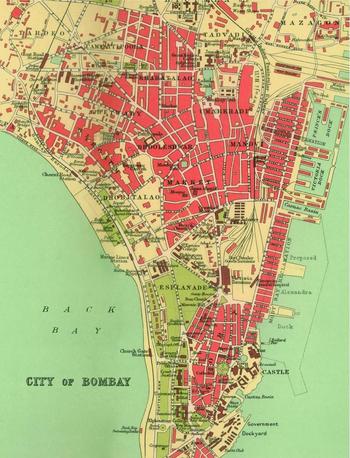
Rajnarayan Chandavarkar—Fellow of Trinity College and Reader in History at the University of Cambridge—passed away on 23 April 2006. In addition to a rich legacy of books and articles that were published in his lifetime, he left behind an enormous amount of manuscript material, much of which was ready for publication. A selection of this material was published in his posthumous History, Culture and the Indian City (Cambridge University Press, 2009), but new manuscripts continue to come to light. His wife, Jennifer Davis, recently found this essay among his effects. There is good reason to believe that Raj felt it was ready for publication. Therefore, we publish this essay almost exactly as it appears in his typescript, only correcting typos and minor errors, and adding a map. The editors would like to thank David Washbrook and Jennifer Davis for proofing this article, Uttara Shahani and Binney Hare for researching and adapting the map, and Francoise Davis for the photograph of Raj.
Introduction
Sometime between early July and early September 1947, the months on either side of lndia's midnight hour, Dr Keshavlal Raghunath VaidyaFootnote 1 was murdered. Three months after his disappearance was first noted in July, the Government of Bombay asked the city's Commissioner of Police to provide a report on his officers’ investigations. But, the detective inspector at Maharbouri police station reported, in the absence of the people from C. P. Tank RoadFootnote 2 coming forward to give information to the police, the case had been closed.Footnote 3 And, as a senior officer of the Criminal Investigation Department confessed, the police had ‘no clue to trace the assailants’.Footnote 4
Ironically, Dr Vaidya himself had been an increasingly active police informant in the months before his death. Indeed, as the local police noted, ‘he was given all the facilities to pick up persons against whom he had furnished information to the police’.Footnote 5 Dr Vaidya had been especially helpful in providing information about the dreaded gang of Mansen Gora Gandhi, ‘the king of Maharbouri and the leader of 250 dadas (toughs)’.Footnote 6 However, at the time of Dr Vaidya's disappearance, the police had been investigating complaints about his own activities as an extortionist and blackmailer in the neighbourhood of C. P. Tank. In July 1947, when the news of Dr Vaidya's disappearance first became known, local police officers began to distance themselves from their informant. Inspector Rane admitted that he had made a number of arrests on the basis of the doctor's information but declared that he did not know his informant's antecedents and that, in any case, the latter ‘does not appear to be a reliable man.Footnote 7 The Special Branch suggested that the sub-inspector at Maharbouri where the doctor had ‘acted as an informant re: goondas, gamblers etc’ would be able to offer ‘a better report’.Footnote 8 But on July 6, the sub-inspector claimed that, ‘I have not even seen this man and do not know anything about him.’Footnote 9 Officers at the local police station now rushed to deny his acquaintance.Footnote 10 Yet as details of his activities emerged, it became clear that he could scarcely have sustained them without the knowledge, even the connivance, and, perhaps, the partnership of some local policemen.
Map of lower Bombay City, circa 1931. Source: Adapted from plate 54, ‘Back Bay, City of Bombay’, in The Imperial Gazetteer of India, Vol. xxvi (Oxford: Clarendon Press, 1931).

Dr Vaidya described himself as ‘a Hindu Brahman’ and ‘a native of Vadwan state, Kathiawar’. Although he styled himself as a ‘doctor’, the nature and quality of his skills in the medical profession are open to doubt. Some local residents, who might not have cared how the medical establishment regarded him, simply described him as a ‘quack’. He declared himself to be an Ayurvedic practitioner and, on arriving in Bombay, he had opened the Swaminarayan Dawakhana (medical dispensary) at his home in the Gora Gandhi Building, ‘opposite Pinjrapol Gully, near Madhav Baug’. His landlord, it turned out, was Mansen Gora Gandhi, the boss of Maharbouri, about whose habits, manners, and customs Dr Vaidya began informing the police. On occasion, he claimed to be both ‘an ayurvedic practitioner and astrologer’. The name, ‘Vaidya’, was, of course, an honorific and a professional title as well as a caste or family name. By styling himself as ‘Vaidya’ or ‘Vaidyaraj’, he also laid genealogical claim to the specialist skills and knowledge of Ayurvedic medical systems. Nonetheless, as the cloth merchant, Devichand Jethalal, testified, ‘he always used to sit in my shop and grumble that he could not do any business in his dispensary’.Footnote 11 He had arrived in the Maharbouri area of Bombay in about 1942. But his arrival in the city is shrouded in as much mystery as his departure five years later. It was believed locally that the Vaidya had arrived from Karachi. Some local shopkeepers and traders claimed that he had fled that city, ‘when he found the place rather unsafe for him on account of his activities of blackmailing people’.Footnote 12 Not just his past, but also his role in Bombay, his professional skills, and his very name and identity are layered with ambiguity.
Like many (though clearly not all) of his neighbours and contemporaries, we can do no more than speculate about who murdered the Vaidya, why or, indeed, when. There can be little doubt that the Vaidya had provided most of his neighbours with a motive. By informing on the local toughs, hooch kings, and gamblers, and apparently seeking to profit from it, the Vaidya clearly put himself in peril. Local policemen who perhaps had a stake in his rackets or facilitated his activities may have preferred to remove him from the scene when matters became too hot to handle. Indeed, if the Vaidya was capable of breathtaking boldness, it would also appear that he was often given to overreaching himself. By inviting a flood of complaints and effortlessly accumulating enemies, his behaviour and its consequences threatened to expose the involvement of his collaborators. The Special Branch had begun to seek explanations from the Maharbouri police station only after Harishchandra Bhosle, ‘a civil supply watcher’ (a guard at a warehouse for rationed goods intended for public distribution), complained to his employers that the Vaidya had been attempting to extort money from him. Only a few days before the Vaidya's disappearance, the Additional Director of Civil Supplies had alerted the police headquarters about his blackmailing habit and even suggested that Bhosle was ‘frightened’ and should be given ‘necessary protection’.Footnote 13 Although in response to Special Branch inquiries, several policemen in Maharbouri disclaimed any knowledge of the Vaidya at this stage, he continued to threaten Bhosle. We might expect that the fact that these inquiries were being conducted would have made the Vaidya's collaborators in the local police station acutely aware of his lack of discretion and more than a little nervous about their loose cannon. A few weeks earlier the Vaidya had threatened Bhosle's uncle, Vithal, and then provided the police with information that led to his arrest. The ‘frightened’ Bhosle was one of the last people to see the Vaidya alive. He was also one of the first to reveal that Keshavlal Raghunath had ‘gone out of Bombay’ and that his rooms had been ‘closed for the last 6 to 7 days’.Footnote 14
The riddles that enwrapped the life and death of Keshavlal Raghunath Vaidya provide a pathway to the social geography of the city and the social organization of the neighbourhood: to the use and appropriation of space, to the quality of neighbourliness, and to the construction of power and creation of locality in twentieth-century Bombay. Terms like ‘neighbourhood’ or ‘community’ have often nudged historians and social scientists towards an assumption of their homogeneity or even of an inherent social harmony within them. Neighbourhoods and communities are often endowed with a moral consensus. In some accounts, neighbourhoods are anthropomorphized. They acquire a distinct personality, create local subjectivities, and generate or forge commonalities by virtue of neighbourliness. However, collectivities, shared values, and a sense of mutuality were not necessarily predicated upon proximity. Indeed, to a large extent, close connections and interdependencies may be fostered most extensively in neighbourhoods in which they have become integral to the survival strategies of their inhabitants. In these conditions, local residents are often forced to draw heavily upon their affinities of friendship, kin, occupation, village, and neighbourhood. Yet it is precisely in these conditions that social relations are most explicitly characterized by competition and conflict. It is by recognizing how far the social relations of a neighbourhood are constituted by antagonisms and conflicts, rather than by assuming a natural harmony, that it might be possible to discern and calibrate more accurately whether and how far bonds of commonality are forged within them. The creation of neighbourhood solidarities is often an elusive but, in a fundamental sense, an explicitly political process.Footnote 15
Through the various vicissitudes of urban studies, including the recent emphasis on specifically urban cultural practice, the assumption of Indian exceptionalism has proved highly resilient. In a seminal article written in 1960, David Pocock wore the distinction between the urban and the rural in Indian sociology to the point of obliteration and then concluded that the urban merely manifested the essential features of lndian social life in their purest form.Footnote 16 The legacy of this essentialism is to be found in the continued association of the mohollas and wadis with ‘peasants in cities’ and in the characterization of urban neighbourhoods in oxymorons like ‘urban village communities’ or ‘rural cities’.Footnote 17 Similarly, the centrality of caste as an organizing principle of the social life of the neighbourhoods has often been taken for granted. This legacy has led to a tendency to interpret the social organization of mohollas in the light of functionalist models of social control, in which their social relations and political outcomes are expressed in terms of the power, patronage, and control of local magnates, neighbourhood leaders, and caste elders. Once the assumption of Indian exceptionalism is set aside, however, it becomes easier to see that there were numerous locations of power and influence in the neighbourhood, some of them deriving from patterns of association and all of them subject to the constraints of reciprocity and contestation. The social organization of the neighbourhood—indeed, the identification and substantiation of locality as a lived space—is continually negotiated between these diverse and often conflicting modes of power.
I
Keshavlal Raghunath Vaidya gave his address as the Gora Gandhi Building, Cowasji Patel Tank Road, ‘opposite Pinjrapol Gully, near Madhav Baug’. Pinjrapol was the city's cattle pound, where cows, protected from slaughter, were sometimes left to die when they became old and infirm. Madhav Baug, however, lent an air of respectability to the Vaidya's address. The temples of Madhav Baug boasted some of the city's leading merchants and public figures among their trustees. It was often a site for society weddings among Hindus. The district of Bhuleshwar, which lay to the south of Cowasji Patel Tank Road, contained the highest number of temples in the city. But the neighbourhood exemplified Bombay's diverse, anarchic, and protean character. Here, according to the Census, ‘the Mahomedan and the Hindu predominate together’.Footnote 18 The streets behind the main thoroughfares were densely settled. In the early twentieth century, buildings in the streets around the Pinjrapol were, according to one report, ‘sub-divided’ into more than 50 ‘holdings’.Footnote 19 About one-third of the district's residents lived in a single room shared with at least ten other people. Kumbharwada (literally, the potter's precinct), to the north of Cowasji Patel Tank Road, comprised another warren of crowded lanes, packed with single storeyed ‘chawls’ or tenements. The district was home to people of several religions and the echo of innumerable languages resonated through the streets. Kumbharwada was, however, among the poorest districts in the city. To the north of Falkland Road, which ran through the centre of the district and extended westwards to Tardeo, and to the east of Kumbharwada in Null Bazaar and Khara Talao, was a concentration of Muslim residents. There were nearly a dozen mosques around Null Bazaar.
Maharbouri, over which Mansen Gora Gandhi reigned, was the name used for the jurisdiction of its police station. Few residents in the area used the term to identify their locality. They sometimes defined the neighbourhood as Kumbharwada or Gulalwadi, Pinjrapol or C. P. Tank and sometimes by particular streets such as Sutar Gully or Khetwadi Main Road. For the police, Maharbouri often appeared impenetrable, perhaps, in Scotts’ phrase, even ‘illegible’. For instance, officials knew the streets immediately to the north of C. P. Tank Road, and the city's maps marked them, as 1st and 2nd Carpenter streets, but local residents referred to them by their literal translation as Sutar Gully. As a police district, the area had increasingly acquired a reputation for roughness. Its police station was equipped with one of the largest ‘lock-ups’ in the city, where the police could incarcerate those whom they had arrested, at least in the short term. In 1908, over 4,000 people passed through the Maharbouri prison, whereas most of the remaining seven lock-ups confined fewer than 1,000 prisoners.Footnote 20 During the 1930s and 1940s, and especially between 1946–47, in the period preceding the partition of India, Maharbouri witnessed ferocious communal violence between Hindus and Muslims. Occasionally, this took the form of street fighting between groups of Hindus and Muslims, but more commonly, it consisted of stray assaults on passers-by, who, having drifted into a strange street or neighbourhood, were identified by their assailants as belonging to the other religious group.Footnote 21 Falkland Road led into the city's red light district, where the brothels registered under the Contagious Diseases Act operated. In the mid-nineteenth century, Maharbouri was sometimes described as a part of Girgaum, but by the middle of the twentieth century, the high caste, often Brahman, residents of Girgaum placed a clear conceptual distance between themselves and Maharbouri. They looked out towards the Arabian Sea at Chaupati; Maharbouri occupied the deeper recesses of Girgaum's hinterland. In the 1940s, the merchants and shopkeepers who provided statements to the police about the Vaidya preferred to make it clear that it was their ‘servants’, and not themselves, who were his neighbours.
The Maharbouri police district was located in the heart of what, in the early nineteenth century, the British had called ‘the native town’. There had always been some measure of segregation in the eighteenth-century Fort between, in Burnell's phrase, ‘its two distinct limits, the English and the Black’.Footnote 22 When the fire of 1803 destroyed a large part of the existing town, the East India Company's governors took the opportunity to move the bazaars out of the Fort. The Town Repair Committee of 1803 represented the first systematic attempt at town planning and it proved no more effective than the numerous blueprints drawn up, subverted, and implemented in the two centuries that have followed. The native town was now built at distance determined by the range of the Company's cannons. However, racial segregation in early nineteenth century Bombay was qualified, in comparison with the towns of Calcutta and Madras, by the weakness of the Company and the dependence of its traders upon the collaboration of Indian merchants.Footnote 23 Bhuleshwar, Kumbharwada, and Khara Talao lay at the heart of this native town.
From the mid-nineteenth century onwards, Indian elites began to move out of the native town either towards the sea in Girgaum and Chaupati or further afield to Malabar and Cumballa Hills, Breach Candy, and Mahalaxmi. Wealth, rather than race, religion or caste alone, increasingly defined residential patterns in the city. Within the native town, divisions between its richer and its poorer areas, however blurred, now became increasingly apparent. Girgaum, Khetwadi, and Fanaswadi increasingly became the suburbs of the Marathi-speaking middle classes. The wealthy merchants often lived in the neighbourhood around their markets on Kalbadevi Road and Sheikh Memon Street, which were said in the 1870s to contain ‘the greater part of the accumulated riches of Bombay’.Footnote 24 On the other hand, Kumbharwada was ‘a shamefully neglected district’ where the people were ‘generally poor and the house owners portion off the floors of their houses into as many rooms as possible’, while Goghari Moholla, a block to the east of Pinjrapol, was ‘an indescribably filthy quarter of milk sellers’.Footnote 25
However, social segregation was always more fervently imagined, by planners and residents alike, than it was consistently effected in practice. As the architect, D. Gostling, told one town planning committee in the 1880s, not even the British fully escaped the embrace of Bombay's anarchic, jostling mix. ‘A good many middle-class Europeans,’ he said, ‘live in Tarwadi and Byculla. Poor Europeans live in the same class of houses as poor natives . . . The rich and poor have always lived together—the former in the principal, the latter in the back streets—and always will.’Footnote 26 The areas of the city in which the dramas of the life and death of the Vaidya were played out—Kumbharwada, Bhuleshwar, Kamathipura, and Khara Talao—were where some of the city's highest mortality rates were recorded during the plague epidemic of the 1890s and early 1900s.Footnote 27 The epidemic stirred the planners yet again. It encouraged them once more to enshrine the separation of social classes as the orthodoxy of town planning. The Back Bay reclamations and ‘the whole of the foreshore from the Hornby Vellard northward up to the Bandra Creek’, they imagined, ‘affords suitable sites for the residence of the best class’. In their vision, the poor, on the other hand, would be accommodated primarily ‘in the east, north-east and central portions of the island, in the vicinity of the docks, factories and workshops’.Footnote 28 In these ways, the slums of the poor would be sealed off from the enclaves of the rich. But these plans came to nothing. At most, they may have helped to accentuate the tendencies already at work by which class divisions overlaid patterns of residence. For the most part, however, segregation, whether on the basis of race or class, could not readily be effected in Bombay.
From the 1870s onwards, cotton mills were constructed in greater numbers to the north of the native town. Land was cheaper than in the native town and it was relatively plentiful. The construction of railway lines linking the city to the mainland and extending into the Gangetic plain and into the Deccan facilitated the location of these mills in the paddy fields and coconut groves to the north. Increasingly, some of the residents of the native town moved northwards in the hope of finding work in the mills and to escape rising rents and increasing congestion. From the 1880s onwards, the mill owners themselves sought to recruit labour from among more recent migrants to the city, primarily from the coastal districts of the Konkan, the arid tracts of the Deccan, and, increasingly, from the north Indian plains. The mill village or Girangaon, as it was known to its inhabitants, expanded rapidly in the late nineteenth century. By 1925, when about 200,00 people depended primarily on the mills for their employment, 90 per cent of mill workers lived within a 15-minute walk of their place of work.Footnote 29 This growing concentration in Girangaon of mills and ancillary workshops, mill workers, and job seekers reflected in part the cost and scarcity of transport and housing in the city. But it was also the case that inhospitable and sometimes arbitrarily changing conditions and hours of work, uncertain and irregular employment, and low wages made it essential for workers to live near their place of work.Footnote 30
Consequently, the social organization of the neighbourhood in Girangaon was shaped by its relationship with the workplace. To this, it is important to add another dimension. The vast majority of the city's inhabitants were migrants. In 1921, about 84 per cent of the city's population had been born outside Bombay.Footnote 31 The predominant pattern was for young men to come to the city in search of wages, generally leaving their families behind in the village to look after their holdings. They came to the city to work and often returned to their village in old age, and in periods of sickness or unemployment, and, of course, each year to help with the harvest.Footnote 32 For many working class families, the purpose of migration was to enhance the family's resources in order to enable them to hold on to their stake in the village, not generally for the individual to escape from its clutches.Footnote 33 It was a matter of the utmost significance for the social relations of Girangaon that migration was driven not by social mobility but by poverty. This pattern of predominantly male migration, determined in part by the absence of large, stable employers of female labour, ensured that the city was largely a male space. Until the mid-twentieth century, there were at least two men for every woman living in the city.
Migrants to the city travelled within the framework of their caste, kinship, and village connections. They came to the city along already established routes. It was with the help of relatives and friends, co-villagers, and caste fellows that they tried to find work, shelter, and credit in the city. For most workers this pattern of migration thus forged a nexus of social connections which integrated not only the rural and urban economy, but also workplace and neighbourhood. It provided the means by which the working class neighbourhoods were constituted and, indeed, often shaped the organization of work. For most migrants, these social connections provided the basis of their welfare protection in times of crisis. To be known in the neighbourhood eased workers’ paths in raising credit in a period of unemployment or sickness, and in finding shelter when they could no longer pay their rents. It enabled them to organize to defend their wages or conditions of work or to protect their jobs when they went on strike.Footnote 34
In important respects the relationship between neighbourhood and the context of work was quite different in the native town. Patterns of employment were more diverse and often even less regular than in Girangaon. Those who worked in the cloth markets and other bazaars in the native town or in some specialist trades, for instance the milk sellers in Goghari moholla or the kincob workers in Bhuleshwar, often found themselves highly dependent on the favour and protection of their employers and patrons. Caste and kinship connections at times could appear to govern their lives rather strongly. Those who relied upon casual labour often exercised little power over their contractors, mukkadams, and jobbers, except perhaps to put pressure on them through their shared connections of caste, kinship, and village.Footnote 35 Newly arrived migrants from the United Provinces or Madras, who lacked extensive links in Bombay or distress migrants who had lost their rural connections, had fewer options both in relation to work and within the social networks of the neighbourhoods and depended more heavily, as a result, on their patrons. Thus, as Burnett Hurst observes, ‘Pardeshis [foreigners, but a term used for migrants from the United Provinces] “hang together” more than other castes.’Footnote 36 In general, the most marginalized groups in the city, whether as a result of caste and ethnic exclusion or as a consequence of their position in the labour market, tended to retain the most tightly knit and coherent caste connections. This variable pattern of cohesion and laxity in caste and neighbourhood connections, kinship, and village networks suggests that they were suffused with relationships of exploitation and competition. For all the surface cohesiveness that they might reveal, they also constituted arenas within and around which the poor competed for jobs, credit, and shelter. Clients resented and resisted their patrons and bosses feared the disloyalty of their followers, even as they strove to profit from the latter's dependence upon them.
The physical structure of the city's neighbourhoods, both in Girangaon and in the poorer, interior districts of the native town, ensured that the distinction between private and public space was sometimes worn to the point of obliteration. Social life often acquired an essentially public quality. This was the consequence in part of proximity and overcrowding. The residents of the city's chawls often spilled out into the verandahs, the wadis, and the streets. In view of this overcrowding, the Census commissioner in 1931 found ‘nothing remarkable in the fact’ that ‘the streets are used at night as sleeping places’, for three-quarters of the city's population lived in single-room tenements in which ‘the average floor space available for each occupant cannot be more than what can be covered by a small mat’.Footnote 37 It also followed from the patterns of building and settlement: although Girangaon was by no means among the most densely inhabited areas of the city in the early twentieth century, its ramshackle, jerry-built chawls were often, like those in Kumbharwada or Khara Talao or Bhuleshwar in the native town, packed closely into spaces between streets and municipal thoroughfares. Since land was expensive, tenurial conditions were complex, and, most crucially, returns on rentals for the poor were invariably low, builders filled their sites with chawls and squeezed into them as many tenements as they could. They also sought to economize on the quality of materials and construction, and on the provision of sanitation. From the late nineteenth century on, observers noted ‘the sacrifice in durability’ in these buildings. Chawls that boasted more than the most minimal plumbing were, as if for their hubris, subjected to ‘the speedy dilapidation of timber frame buildings’ as ‘the constant soaking from the washing places produces rapid rot of pillars and posts’.Footnote 38 (Nonetheless, several of these older chawls have endured better than more recent attempts to build low-rent accommodation for the poor.)
Chawls were usually one- or two-storeyed buildings in which rooms ran off an ambulatory corridor or verandah. Common washing facilities and lavatories were located at one end of the corridor. Taps were scarce and quickly ran dry in the summer, and often became a flashpoint of conflict between neighbours. Overcrowding of chawls and the rooms within them made it even harder to gain access to the tap. Anxiety about the water running out or the fear that they would not get to work on time added an edge to the often frenzied competition among neighbours for their moment at the tap. Indeed, in their petitions of complaint to the police, the merchants of C. P. Tank frequently complained that Keshavlal Raghunath Vaidya, instead of ‘preparing medicine’ as he professed to be doing, was ‘always designing quarrels amongst the people [in the neighbourhood] for his personal gain’. He was, they noted, especially given to picking quarrels with ‘domestic servants at the water tap’.Footnote 39 Water probably generated more feuding, enmity, and violence than any other aspect of chawl life. The tap should douse cold water upon any romantic assumptions about the natural warmth and camaraderie of neighbourhood life. In fact, fighting around the water pipes in the chawls contributed to a steady flow of assault cases to the city's police courts.Footnote 40 These quotidian conflicts were an expression of the extent to which relations of exploitation and competition were built into the institution of localities and through which neighbourhoods were constituted.
II
In the mid-1940s, Keshavlal Raghunath Vaidya began to provide the police with information about the dadas who operated in the neighbourhood of C. P. Tank and in particular about the gang of Mansen Gora Gandhi, his own landlord. In 1946 and 1947, he described how Gora Gandhi and his dadas had ‘committed serious offences such as stabbing, arson and looting during the recent communal riots’.Footnote 41 The local police were convinced that the Vaidya ‘was really out to get the trouble mongers’.Footnote 42
The dada was a ubiquitous figure in the streets and neighbourhoods of the city. He was featured, even celebrated, in the cinema and caricatured in advertisements. In the context of the neighbourhood's social economy, the role of the dada often appeared indispensable. The dada, essentially a title for a neighbourhood leader, was often abjured in public discourse for his association with roughness and violence. A contemporary social observer of the city characterized the dada as a ‘hooligan, who lives by intimidation’ and who ‘is both lazy and dangerous’.Footnote 43 For Hindus, he was always a Muslim. For employers in the 1930s and 1940s, he was invariably a communist. For the leaders of the communist trade unions that dominated the city, the dada was a strike-breaker. In fact, dada was a term of respect. Although everybody tried to dissociate themselves from dadas, one trade unionist declared ‘I know personally that Dadas like to be called Dadas.’Footnote 44 Respected for their physical strength, their fearlessness, and their ability to get things done, dadas were often called in by landlords to collect rents, by creditors to recover debts, by politicians to acquire votes, by trade unionists to organize strikes, and by employers to break them. Some acted as landlords, creditors or labour contractors in their own right. Several developed flourishing political careers. As Govind Phansekar, the boss of Prabhadevi in the 1960s, recalled, ‘I also had the reputation of being a dada and a goonda. So what is wrong with that? . . . See the way to do it was, however big a leader he may be, if he comes in your way, you must hit him.’Footnote 45 In this sense, ‘dada’ was properly a reputation for physical prowess and for getting things done. In 1929, Balubhai T. Desai, a local Congress leader, noted that dadas acquired their reputation for ‘controlling the hooligans’, that is, for making them follow his wishes, ‘by rendering services to the hooligans and protecting them, giving grain to them and really of course controlling them . . . Some of these Dadas are rich.’ Indeed, in order to protect their followers effectively, in order to bribe or bail them out of trouble, they needed to ‘have a fair acquaintance with the lower officials of the police’Footnote 46 as well as, depending on the scale of their activities, to command substantial resources. Dadas sought to perform a range of services within the neighbourhood: to get young men jobs, to secure medical help for their neighbours, and to rescue their friends from the clutches of the police or the grip of other institutions of the state. Necessarily, dadas sometimes entertained connections with the police, neighbourhood patrons, more powerful and prominent bosses, and politicians.
Mansen Gora Gandhi cut such a figure in Maharbouri. The Vaidya's description of the Gora Gandhi gang offers an ethnography of dadas and more generally of roughness and crime in the city. Certainly, his account tells us something about the networks and the range of enterprises through which dadas constructed their power. At another level, his fragmentary accounts deploy familiar conventions in customary narratives of the lives and activities of dadas. He delineated types of activities and styles of behaviour with which dadas would have been readily associated in the minds of his neighbours and most of the residents of the city, and, indeed, to which many policemen would themselves have subscribed. The Vaidya's narratives also took care to suggest that the police (or individual policemen) might have been implicated in Gora Gandhi's activities. He appeared thereby to suggest that he was himself too well connected and influential to fear reprisals from the lower ranks of the police. At times, he conveyed his own standing by suggesting that he had powerful protectors himself. His willingness to identify how some dada networks reached out to prominent Congress leaders only reinforced this impression. Occasionally, he took care to indicate that the city police, its specialist anti-gambling squad or other superior units had acted on his information and raided the shops and premises of those against whom he had complained. Not only had the city's senior police officers relied upon his information, but it had yielded positive results and in some cases led to prosecutions, which were usually ‘pending’ in the courts. The Vaidya’ s narrative thus contained a hint of menace for his audience.
The Gora Gandhi gang, according to the Vaidya, had three, possibly four, distinct branches. One group was led by Pandarinath, the boss of the 1st and 2nd Sutar gullies. He ‘does dadagiri’ and in particular ran some unlicensed betting houses. He lived at the comer of 2nd Sutar Gully and owned a washing shop that employed some 50 or 60 people. His ‘right-hand man’ was said to another tough called Guru. In May 1947, Guru had, with the help of two constables, threatened Dinkar, a hotelkeeper in the locality. The implication was that the local police, especially in its lower ranks, had been suborned and integrated into Gora Gandhi's extortion and gambling rackets. Datta, another follower of Pandarinath, who also lived in 2nd Sutar Gully, had been ‘a leader of the gangs which took part in the riots since 1st September 1946’. Indeed, Datta, in this account, had played ‘an active part in stabbings and lootings’ that occurred in Khetwadi Main Road, the Sutar gullies, C. P. Tank Road, and Golpitha junctions during the communal violence of March 1947. The Vaidya named several toughs, associated with Pandarinath, who had led their own gangs in assaulting Muslims in the area during the riots, who had practised blackmail and extortion, and who had terrorized local residents and shopkeepers. Wasu, another prominent follower of Pandarinath, for instance, had recently attacked Maganlal, the rationing inspector, the kind of official whom the police and the provincial government would have felt particularly obliged to protect so soon after rationing had been reintroduced. ‘There are several others,’ the Vaidya informed the police, ‘whose names I do not know.’ They were, he reported, usually to be found in the evenings under a banian tree near the Hanuman temple at Sutar Gully. ‘They are all known to the Maharbouri Police,’ he asserted confidently. ‘I can identify them all. They feed the Police.’ As a result, were able to move about freely, even during the hours of curfew imposed during the communal riots of 1946–47.
Another set of dadas was based in 1st Pinjrapol Gully. There was the improbably named Rosy, who owned a soda shop on the comer of Pinjrapol 1st Street, where he sold liquor, prohibited in Bombay at the time, to ‘known customers’. Pratap ran a couple of gambling dens, one of which was immediately above Rosy's soda shop. According to the Vaidya, he had a ‘kept mistress’ whom he shared with ‘two or three others’. He habituated Rosy's soda shop and Homi's cold drink shop in 1st Pinjrapol Lane. Together with Vithal Polishwala, ‘a notorious mawali’, he ‘leads a gang which is mainly responsible for looting in Pinjrapol 1st Lane’. During the riots of 1946–47, they specialized in removing ‘valuables from the persons of the victims’. Munshi, his companion, was ‘a notorious gambler’ and ‘the heartiest friend of Mansen Gora Gandhi, always sitting in the soda shop’, seemingly the favourite haunt of the local toughs. The jeweller, Indori, was their fence and ‘habitual receiver of stolen property’ and another regular at Rosy's soda shop. On the basis of information provided by the Vaidya, the police had raided his shop and he was currently being prosecuted. As a consequence of these raids on the shops of Indori and another associate, Gora Gandhi and his companions, Nanu Masalawala and Shambhu Cyclewallah, ‘threatened me with death for informing the Police about their activities in satta [gambling]’. But the Vaidya had resources of his own. He sought the protection of Rao BahadurFootnote 47 Makanlal who had arranged for his protection by ‘deputing policemen from Maharbouri Police Station’, the very station whose constables in the Vaidya's account had been implicated in the gang's activities and were seemingly being ‘fed’ by the dadas of the area.
Nanu Masalawala was the boss of 2nd and 3rd Pinjrapol lanes and, according to the Vaidya, ‘the heart of Mansen Gora Gandhi’. Clearly, in the Vaidya's estimation his landlord had a large and accommodating heart or was blessed with at least two. Nanu was reported to have ‘about 50 dadas working under him’. His principal activity was gambling, mainly in a numbers racket. During the riots, Nanu's dadas ‘came out with dangerous weapons and killed Mahomedans’. Nanu's own gambling rackets operated from at least 34 dens in Maharbouri alone. Keshavlal duly enumerated the leading figures of Nanu's gang. Most of them were said to write satta chits or collect them, and they all appeared to have been implicated in violence, robbery, and murder during the communal riots of 1946–47. For instance, ‘Punjabi’ was often found standing at the comer of 2nd Pinjrapol Lane, near Pyarelal's pan shop. Along with three ‘mawalis’, he kept watch for the ‘sattawallas’ and warned them if the police approached (that is, the policemen who were not already being ‘fed’ by them). In the communal riots, Keshavlal alleged, he had murdered five or six Muslims. ‘When any Muslim enters the Hindu locality on CP Tank Road,’ wrote Keshavlal, ‘he deals them the first blow.’ In addition, Punjabi sometimes posed as a police officer of the Criminal Investigation Department and often claimed that ‘he has great influence with the CID’. For good measure, the Vaidya added, Punjabi ‘is addicted to drinks and likes carnal intercourse with young boys’. Chimanlal Mancharam Bhatt, popularly known as Guru, had a telephone and was known to receive telephone calls from important public figures, including a prominent Congressman and Gandhian, Jai Prakash Narayan, by now a leading figure in the Socialist Party. Nanu Masalawala paid the telephone bills. Indeed, Keshavlal suggested, the telephone was used for relaying messages to both the Congress and the Socialist Party. When any of his associates were arrested, Keshavlal went on, ‘Nanu Masalawala gets them released on bail from the Police Station. If he fails, Pandarinath succeeds. If Pandarinath fails, Mansen succeeds in getting them released.’
Significantly, Gora Gandhi and his followers did not rule Maharbouri autonomously of wider networks of influence and power. Nanu Masalawala and his associate, Chimanlal, were, in the Vaidya’s account, intimately connected to key figures in the Congress and the Socialist Party. One of their ‘divankhanas’, where satta bets were taken, was said to be owned by ‘one Kakubhai, a leader of the Arya Samaj’, a North Indian Hindu revivalist organization, which had a weak presence in Bombay. Most political networks in the city between 1930 and the early 1960s seemed to lead to S. K. Patil, the leading figure of the city's Congress Party. Not surprisingly, then, it appeared from the Vaidya's account that ‘Mr S. K. Patil, President of the BPCC [Bombay Pradesh Congress Committee] knows Mansen Gandhi very well.’ Indeed, the famous Keshav dada Borkar, who dominated Ghorapdeo in the mill districts, was known since the early 1930s as ‘the right-hand man’ of S. K. Patil.Footnote 48 The dominant political figures in the city had thus depended on innumerable alliances with a whole range of neighbourhood bosses.
In addition, there were two other branches of Gora Gandhi's gang. In Kumbharwada's 2nd and 3rd lanes, reigned Sakharam Dada, a friend of Gora's. He ran a network of 40 gambling dens that took bets for a numbers racket. ‘It is likely,’ Keshavlal told the police a little speculatively, ‘that bombs will be found’ in Sakharam's establishments. The other leading dada in Gora Gandhi's network was Shambhu Cyclewallah. Shambhu, who had once threatened the Vaidya, lived in Khattar Gully, which came to be known by his name, because of his betting shop. In addition to his betting establishments, Shambhu owned the shop, perhaps the retail outlet, of the Jai Hind Soap Factory.
Mansen Gora Gandhi, in this narrative, always commanded the capacity to orchestrate action among his dadas. Thus, in early September 1946, as the communal riots began, Gora held a meeting in Pandarinath's house in 2nd Sutar Gully to which he ‘called all the Dadas’ and gave ‘instructions about the assault of and defence against the Mahomedan invaders’. Gora was arrested and, the Vaidya pointed out, soon after he was released, riots broke out on 30 March, implying that they occurred at his instigation. Two months later, according to the Vaidya, ‘Mansen Gora Gandhi was sitting in the Maha Kali Hindu Hotel with his friends, when he ordered Pandarinath to pull the pole of the tram car in front of Islampura.’ The tram came to a halt and Gora Gandhi's men attacked and injured the Muslims passengers. The Vaidya declared that he had informed the Anti-Gambling squad about Gora Gandhi. In fact, displaying the reach of his own influence, he declared that he had written to the home member of the Government of Bombay. Inquiries, he told the Maharbouri police, were already being made and the police had already raided some of Gora Gandhi's gambling dens. The Vaidya was, of course, providing the Maharbouri police station with a reason to act swiftly before the initiatives of the city police or even of the Bombay Government exposed their neglect or even their sluggishness. If they needed a reason to act against Gora Gandhi and his followers, it was simply the case that these dadas ‘are responsible for all the trouble during all these riots’ and that ‘the public has to suffer on account of these dadas’.
Significantly, the Vaidya's narrative made no association between the dadas among Gora Gandhi's followers and akhadas (gymnasiums). Yet akhadas carried a considerable symbolic importance for dadas. They featured prominently in most accounts of dadas, including their own self-representations. Young men brought together at an akhada, trained in stick-play and the use of lathis, could sometimes be mobilized for violence, neighbourhood defence, the breaking or enforcing of strikes, the assertion of local dominance or wider political and electoral campaigns. Though akhadas were often characterized in polite circles as centres of roughness—‘the rendezvous of riff-raff and hooligans’—their association with physical culture, health, and self-help lent them a measure of respectability. Not only did dadas value these signs of respectability, but the ‘respectable’ did not abjure akhadas altogether. Some boasted quite elaborate organization, commanded substantial resources, advertised meetings of their committees in the press, and published reports of the outcome of their elections. Political leaders and public figures sometimes attended their annual competitions and some contested elections to their committees. It was because of the importance of the akhada for dadas and their assertion of local dominance that the mill workers, soon after the general strike of 1928, punished Keshav dada Borkar for his strike-breaking and anti-communist activities by wrecking his gymnasium in Ghorapdeo and parading the lathis, iron rods, and gymnastic paraphernalia around the mill district.Footnote 49 In 1929, the police conducted a census of the akhadas in the city. They counted 141 but, since most gymnasiums were minimally organized and had no more than a fleeting existence, this figure probably identified the tip of the iceberg. Nobody was quite sure about what lay beneath the waterline. Akhadas would have existed in the vicinity of C. P. Tank and it is very likely that many of Gora Gandhi's dadas would have been associated with them.
The Vaidya's narrative of neighbourhood life in C. P. Tank also helps to sketch its urban landscape and its significant landmarks. It demonstrates in particular that localities as lived spaces have been subjectively perceived, and their multiple boundaries are, for that very reason, opaque and overlapping. Obviously, they do not conform to administrative boundaries. They show little respect for the principles of organization upon which the state or the police depend. Their political and moral economies roam freely across, and demarcate, different geographies of space, greater or lesser, than those identified by the state or by the taxonomies of contemporary observers or urban sociologists. The frequently manifested tendency to rename streets, exemplified perhaps by the renaming of Khattar Gully after Shambhu Cyclewallah's betting shops, suggests more broadly that this moral and political economy often appeared inscrutable or ‘illegible’ to the state or even to those who viewed it from the vantage point of a different locality. Yet there was no singular or shared political and moral economy in which the locality as a whole, constituted as it was by conflict and relationships of exploitation and competition, participated or to which its residents subscribed evenly. As the Vaidya walked his city, he identified and attributed considerable importance to particular landmarks: Rosy's soda shop, Homi Kennani's cold drinks depot, Rajaram Ramdhan's or Pyarerlal's pan shop, Shambhu Cyclewallah's or Pratap's gambling dens and so on. At the same time, it was far from clear that his neighbours would have constructed their social geography of the neighbourhood and mapped its landscape in identical terms, although they would have been aware of these prominent landmarks.
Finally, the Vaidya's narrative reveals that social and commercial networks of the locality extended through the structure of power in the city and beyond, and were not constructed from parochial materials alone. Gora Gandhi as well as the dadas of the locality played a vital role in the legal and commercial economy of the city even as they presided over the gambling dens, black market rackets, and brothels that made up its parallel economy. Moreover, and crucially, they appear to have been intimately connected to the police. So, of course, were their antagonists, including the Vaidya himself. The police appeared at times to constitute a resource that neighbourhood bosses might recruit or deploy in their struggle for precedence, profit, and power in the locality and sometimes in wider political arenas. At yet another level, the dadas of the neighbourhood were intimately linked to larger political networks. Gora Gandhi's close association with S. K. Patil, the city's Congress boss, was paralleled by that of Keshav dada Borkar in Byculla and Ghorapdeo to the north. The organization of the Congress, from its revival in the city during the 1930s until at least the general elections of 1967, depended heavily upon the influence and political skill of S. K. Patil. In turn, Patil's political empire in Bombay was built upon a dense network of alliances in the streets and the neighbourhoods of the city. The local implications of these wider networks of power and their extensive reach merit further consideration.
III
The Vaidya’ s chronicle of everyday life in Maharbouri is by no means the only available account. By the end of June 1947, an alternative picture of the neighbourhood had begun to emerge. On the basis of the Vaidya's information, the police had arrested several men who ‘belonged to the gang of Mansen Gora Gandhi’ as well as a number of others who did not.Footnote 50 Yet as the additional director of civil supplies commented in a letter to the commissioner of police on 27 June, ‘The so-called informants often blackmail people in the locality. In fact, they are the real goondas who deserve to be looked [at] after [being investigated] by the Police.’Footnote 51 In other words, a police informer, by establishing his reputation as such, could use his status to weave his own web of power in the neighbourhood. To situate the Vaidya's narrative fully in its context, we need to ask why the police relied systematically and, indeed, widely upon ‘informants’. It is also important to scrutinize more closely how the Vaidya came to establish his special relationship with the police.
The colonial state in India was reluctant to invest heavily in its police force. The purpose of its rule was to hold together a system which enabled it to extract and deploy Indian resources for Britain's international commercial and strategic interests. Good governance or the protection of its subjects were scarcely leading principles of imperial statecraft. The Bombay city police operated on stagnant, often shrinking, budgets and lacked sufficient manpower. In their daily operations, the police depended upon developing connections in the neighbourhood, both to detect crime and to maintain public order. As they became embedded in the social and political networks of the neighbourhood, the police became increasingly responsive to influences within them, which in turn were largely autonomous of their own internal structure of command. This local influence was not simply exercised by the powerbrokers and dadas of the neighbourhood. The poorer inhabitants of the neighbourhoods could also deploy their personal and social ties or their caste and kinship connections with the police to help them secure protection or advancement. Throughout the nineteenth and early twentieth centuries, the police encountered and responded to varied and conflicting sets of social pressures that played freely upon their own ranks. In other words, the police constituted yet another resource upon which various social groups could draw, albeit unequally, in the negotiation of power in the neighbourhood.Footnote 52
These constraints tightened during the 1940s. The opportunities of the war economy led to a revival of the cotton textile industry and to increased commercial activity in the city. Bombay was the major supply centre and principal port for the allied war effort in the Middle East as well as in the Southeast Asian theatre. The opportunities and incentives offered by the war brought an influx of migrants to the city. Its population grew rapidly, and the fragile control that the police exercised in the city as well as their limited knowledge of its neighbourhoods were stretched and exposed. It is, of course, indicative that, as it became apparent that they had been possibly misled by the Vaidya, the police presented themselves as the passive recipients, even victims, of his doubtful information. Having arrested ‘a number of people . . . on the information of the Vaidya’, as one police inspector recounted, they were ‘subsequently released, there being no sufficient grounds to keep them under detention’.Footnote 53
Furthermore, in ensuring that the Indian economy continued to supply the war effort adequately, the colonial state become concerned to direct it more closely.Footnote 54 Step by step in the 1940s, the colonial state established a bureaucratic monopoly over the cloth and grain trades. Its intervention in production and distribution quickly distorted the market. Its most disastrous consequences were manifested in the Bengal famine of 1943. The colonial state recognized that it was vital to ensure that the bureaucratic monopoly on trade did not in turn create massive shortages, whether of cloth or foodstuffs. In relation to textiles, the colonial state attempted to restrict the proportion of the industry's capacity that could be devoted to supplying military needs. The effect of state intervention was to create incentives for hoarding and deepened the inflationary spiral. By restricting production or hoarding goods, merchants and mill owners, like grain dealers, could push up prices, release their stocks through the black market and maximize their profits. The rationing of grain and cloth ensured a measure of control but it also provided further opportunities for trade in the black economy. These opportunities for speculation, profit, and illegal trade were especially concentrated in cities like Bombay. Thus, Devichand Jethalal, the cloth merchant in Gangawala building, in whose shop the Vaidya would sit and ‘grumble’ about his lack of patients, complained that his friend suddenly one day accused him of ‘doing black market business’ and demanded that ‘I should pay him to keep his mouth shut’. A few days later, ‘some unknown person’, possibly a policeman, came to the shop and warned him that the police would raid his premises unless he paid off Keshavlal Raghunath.Footnote 55 Devichand Jethalal's predicament was by no means unique. Numerous merchants and shopkeepers in the 1940s profited from the black market and lived in fear of prosecution and blackmail as a result.
This explosion of commercial opportunity, speculation, and profiteering in the context of increasing state regulation obscured the already hazy line that demarcated the legal economy from the criminal. The accompanying influx of new social groups into the city, combined with the commercial disruption, severely undermined existing relationships of power and control in the neighbourhoods. Not surprisingly, for the state the 1940s became a decade of political disorder in the city. Gandhi announced the start of the ‘Quit India’ movement in the city in 1942. In 1946, the naval mutiny in the docks was among the events which, in a minor key, demonstrated to the British that they would have to set a final deadline for dismantling the remnants of their empire.Footnote 56 Nothing demonstrated the scale of ‘disorder’ more fully than the communal riots of 1946–47. In a city that prided itself on its open and secular character, communal riots had been largely limited to specific areas or even neighbourhoods. In November 1946, violence consumed the whole city and manifested itself without apparent limit or economy.Footnote 57
In 1946 the Congress was elected to power in Bombay, in provincial elections held on a limited franchise under the colonial constitution. Among its first initiatives was to bring back prohibition and to extend the regulation of gambling. For the overstretched police force, prohibition became as difficult to enforce as a regime of licensed gambling. At one level, it threatened to expose the connections between the police and some of the neighbourhood networks upon which they depended. At another level, it created new instruments by which dadas could expand their commercial activities and entrench their local power. In seeking to regulate public morality, broadly in line with Gandhian precepts, the provincial Congress government exacerbated the growing problems of public order. In the aftermath of the communal riots of 1946, anxious to maintain control in the transition to independence, the Congress sought to acquire greater legislative powers to impose order on the neighbourhoods. On the eve of independence, the Congress drew upon the ‘emergency powers’ ordinances developed by the colonial state to suppress the Gandhian civil disobedience movement of the 1930s. This ordinance had granted the commissioner of police and the magistracy the power to extern ‘bad characters’ from the city. In the mid-1920s, the colonial state had passed such a ‘Goonda’ Act in Bengal. In the 1920s and 1930s, it periodically considered placing this ordinance permanently on the statute book in Bombay. However, the Government of Bombay hesitated, both because they feared it would provoke a storm of protest and because, once passed, its provisions might be nullified by the reluctance of juries to convict.Footnote 58 The Congress in power had fewer qualms. It introduced and ensured the passage of the Public Security Measures Act and, in addition, encouraged respectable and responsible citizens to provide information that might lead to the externment of ‘goondas’.
The passing of the ‘Goonda’ Act in Bombay expanded the opportunities for the Vaidya to become a police informer. As a petition from a dozen traders and residents of C. P. Tank to the Commissioner of Police argued, it gave him ‘the means to get people arrested who quarrelled with him’.Footnote 59 The commissioner of police would be pleased, the petitioners added archly, ‘to see that his name as a police informant brings him money’. In effect he had become ‘a licensed leader [dada]’. By giving him the licence to act, the police had created ‘a great danger to the business community and the residents of the locality’, while at the same time, they complained, ‘Mr. Vaidya is minting money and blackmailing the poor and the rich in a way detrimental to state and society.’ The ‘Goonda’ Act had fortuitously provided the Vaidya with a livelihood precisely when his medical practice had failed to yield either patients or an income. The petitioners’ account placed the practices of everyday life in C. P. Tank and its environs in a new light. The petitioners provided a detailed description of the Vaidya's methods.
At base, it was relatively simple. He would threaten to report residents and shopkeepers to the police if they did not pay for his silence. He would engage in quarrels with domestic servants ‘at the water tap’ and with ‘businessmen’ for refusing ‘to give him anything on credit’. By threatening to report these ‘businessmen’ to the police for involvement in the riots or for operating on the ‘black market’, he would extort money from them. ‘Business people, like the poor,’ wrote the petitioners, ‘are afraid of the police.’ They knew, they said, that the Vaidya ‘is the man of the Police and has got arrested many innocent persons’. Having had them arrested, he would often approach their relatives and offer to get the prisoners released for a certain fee. Sometimes, it was said, ‘he obtains certain signatures of imaginary persons’ on a letter that appeared to report an individual's offences under the Public Security Measures Act. The Vaidya would then approach his mark with the letter and promise to ‘exercise his influence with the Police’ in order to ‘ensure that no harm would be done to them’ in exchange for a certain sum.Footnote 60 As Nanalal Lalji Mehta, a hardware merchant from 2nd Pinjrapol Lane, elaborated in a separate statement, ‘As the police acted on his information, he became bold and started demanding and collecting money’, no doubt at a higher rate.Footnote 61 The petitioners noted, however, that the Vaidya had mounted a campaign against gamblers, which was ‘no doubt praiseworthy on his part’. But he took this action, they observed, ‘not as a social reformer’ but rather only when ‘he did not get regular instalments from the gamblers’. In addition, the Vaidya, despite his high-minded stance against gambling, had some dubious enterprises of his own. He controlled a brothel which was run by somebody simply called ‘Master’ at 74 C. P. Tank Road, two houses down the street from his own, and from whom he received ‘a handsome payment’. The Vaidya, they added for good measure, was ‘also a drunkard and a debaucherer’.Footnote 62
Once the Civil Supplies office had complained to the Commissioner of Police at the end of June about the extortion rackets in Maharbouri, and the local police had been put under increasing pressure to explain what was going on, they began to collect evidence incriminating the Vaidya with such speed that it appeared to betray their previous neglect. Statements and petitions began to accumulate from traders, shopkeepers, and residents about the Vaidya's everyday practices of extortion, blackmail, and intimidation. Rakhapchand Kanhayyalal Indori, the jeweller whom the Vaidya alleged had acted as a fence for the Gora Gandhi gang, reported that Keshavlal, ‘who poses himself as a Police Informant’, had threatened to ‘involve me in some false criminal case . . . if I did not pay him’. The Vaidya had seemingly engineered his arrest under the Public Security Measures Act. Yet after Indori was discharged and returned to his shop, the Vaidya resumed his demand for money and his threats.Footnote 63 Homi Jamshed Kermani, who owned the ‘cold drink depot’ in 1st Pinjrapol Lane, reported that the Vaidya had ‘told me that he would send me to a “school” unless he was allowed to consume wine in the shop premises’. When Homi had gone to the police station to complain, ‘a number of police in plain clothes . . . visited my shop and made enquiries about me’. Since the Vaidya had succeeded in getting ‘so many people arrested and detained’ by the police, ‘I really apprehend that I may be his victim as well.’Footnote 64 Rajaram Ramdhan, the pan shop owner at the corner of Pinjrapol 1st Lane, had been arrested following false allegations made by the Vaidya. On the day after Rajaram's release, after six weeks in jail, the Vaidya came to his shop and told him that if he did not ensure that the Vaidya was kept satisfied, he would have to return to prison, which would now be for a period of six months. In fact, he ‘told me that he had already arranged for my arrest and detention again’.Footnote 65
Like intermediaries in many fields of activity, the Vaidya's effectiveness depended on his ability to convince the police that he had special access to information about the dadas of his neighbourhood and their ramifying connections and entrepreneurial interests, while, at the same time, creating the impression in the neighbourhood that the police would do his bidding. Obviously, he could not have created and sustained this impression of his own influence with the police without the complicity of at least some members of the force. When Harishchandra Bhosle, the watcher at the Civil Supplies depot, had first informed his employer about the Vaidya’s extortionate demands, he had noted that ‘as almost all police people favour him, I am not complaining to the police station’.Footnote 66 Policemen (or men impersonating police officers) would, as we have seen, turn up at the premises of shopkeepers whom the Vaidya had threatened and appear to interrogate them. Sometimes, policemen accompanied the Vaidya on his visits. Mangalgauri Vyas and Sharada Mehta complained that he appeared on their doorstep at 10 pm on the night of 14 June with ‘a police inspector, not in uniform, and 3 policemen of the C. I. D.’ and ‘started inquiring in a most impertinent way about who lived at that address’.Footnote 67
It is probable that some policemen shared in the proceeds of the Vaidya's extortion in return for their cooperation. But it is unlikely that the Vaidya and his collaborators in the local police station could have sustained this campaign of extortion simply by securing the services of a few policemen at the local station. The Vaidya also took care to make the local police aware of his wider connections. Sometimes he implied that he was in touch with some senior or specialist police officers and, at others, that his reach extended to the higher echelons of the administration and to politicians. In either case, these hints about his ability to secure favours from the powerful mirrored his efforts to display his influence with the local police to the residents and merchants of the locality. For some policemen the Vaidya's connections with the higher ranks of the police force and with politicians and cabinet ministers must have created the apprehension that he could damage their careers, just as it suggested the possibility that he could secure their advancement. In his own statements to the police about the Gora Gandhi gang, the Vaidya had taken pains to comment on the way some policemen were in the pay of the dadas, to indicate his contacts with specialized and centrally controlled intelligence units that dealt with gambling and corruption, and to demonstrate that he could readily locate some of the leading political figures of the day on his map of Gora Gandhi's networks. Inspector Rane at Maharbouri Police Station, for instance, noted meaningfully on one occasion that the Vaidya had given information to, and clearly knew, Inspector Kadam of the Anti-Gambling Squad.Footnote 68 It would have been reasonable for the Maharbouri police and local residents alike to infer that only the most powerful and best connected of citizens could both smear the police and take on, without hesitation, the king of Maharbouri and his 250 dadas. The Vaidya himself took care to state explicitly not only that he had made complaints to the Anti-Gambling Squad and even the home member of the Bombay government about the activities of the Gora Gandhi gang but also that the police had investigated many of his complaints and even raided some of the local gambling dens. If the central, specialist units of the City Police and the provincial government took his complaints seriously, the local police could only ignore him at their own peril.
Some ten days after the Vaidya's disappearance, Sub-inspector V. G. Sahasrabudhe of Maharbouri Police Station, who had taken some of the Vaidya's most recent statements, provided an account of their exchanges. Sahasrabudhe's account provides an insight into the relationship between the police and their informants; in particular, it lays bare how isolated the local police were within the district of their jurisdiction. The sub-inspector described how he had been ordered by Inspector Honawar to record the Vaidya's statement on 14 June and then ‘to arrest the persons against whom he [the Vaidya] was making specific allegations’.Footnote 69 The sub-inspector duly accompanied the Vaidya to C. P. Tank Road along with four or five police constables in plain clothes. For the Vaidya, it was clearly good for business to be seen in the neighbourhood with a substantial contingent of policemen. ‘He moved all over the locality,’ reported Sahasrabudhe, ‘but he could not show me a single shady character.’ When the police decided to give up and return to the station, the Vaidya ‘suddenly pointed out a person and asked me to arrest him. I told him it would be illegal to arrest him without any reason.’ The Vaidya was unable to name the person he had so dramatically identified. However, he claimed that the person was ‘one of the three Ghatis’Footnote 70 whom he had mentioned in a list of people who kept dangerous weapons and assaulted Muslims during the communal riots of 1946–47. ‘I found,’ noted the sub-inspector, ‘that he [the Vaidya] was not knowing him [the accused] at all’ but since he had alleged that the latter was one of the ‘rioters’, ‘I had no alternative but to arrest him.’
Four days later, on 18 June, the sub-inspector and the Vaidya set off on their peregrinations once more. This time their tour of C. P. Tank Road lasted about two hours. The Vaidya pointed out a number of ‘the haunting places of the goondas’ but he could ‘not show me a single person’. As Sahasrabudhe's impatience grew, the Vaidya began to dash ‘up and down some buildings’ and still failed to find any of those whom he had accused. Then, ‘on three or four occasions, he suddenly showed me some passers-by and asked me to arrest them, but when I reminded him of his statement, he had to leave the idea’. Eventually, he pointed out one ‘Bhau Sharma’ and claimed he was ‘one of the three Ghatis’. Clearly, the Vaidya had come to the conclusion that this was the only reliable means of persuading the sub-inspector to make an arrest. Sahasrabudhe arrested the man but it quickly became apparent that the Vaidya did not know his name.
Finally, on 26 June, the Vaidya came to the police station to report that Pratap, who ran gambling dens in 1st Pinjrapol Lane and had led a gang of looters during the communal riots, was at home and could therefore be arrested. Sahasrabudhe accompanied him but found that ‘the only occupant was a woman, who was a Punjabi from her appearance’. The Vaidya claimed that she was ‘Pratap's kept mistress’. However, her connection to Pratap seemed at best remote and could not precisely be established. In any event, she told them that, so far as she knew, Pratap had ‘left Bombay long ago’ and there was clearly nobody else in the room. The Vaidya then suggested that ‘we should move about in the locality’. He clearly enjoyed his excursions with the sub-inspector: nothing could have conveyed his connections with the police more clearly to the residents of the locality than to be seen frequently with its officers, apparently on a mission to root out crime and vice in the neighbourhood. But the sub-inspector had had enough: ‘I asked him to give me a definite address, as his information had proved to be bogus’ and then returned to the station, never to see his companion again. The sub-inspector's summary of his investigations laid bare the Vaidya's methods of operation:
During the course of my enquiries, I found that Mr Vaidya was not knowing the persons against whom he had complained. On the contrary, Mr Vaidya used to ask me to stop certain passers-by and ask their names. All the time Mr Vaidya used to tell me that he had a great influence in the Home Department, Special Branch C. I. D. and the anti-Corruption Branch. He also used to introduce himself to the residents of the locality as a ‘Police ka admi hai’Footnote 71 . . . the people in general knew Mr Vaidya and avoided him on sight. The tenants in the building used to go inside their room and lock the doors at his approach.Footnote 72
If Sahasrabudhe's testimony on 10 July had exposed the Vaidya's methods, and revealed the shaky foundations on which his ethnography had been built, his additional statement, recorded on the following day, raised questions about his own role in the neighbourhood. In this statement, Sahasrabudhe admitted that he had accompanied the Vaidya on his nocturnal visit to Mangalgauri Vyas and Sharada Mehta in the Sonawala Building. According to Sahasrabudhe, the Vaidya asked ‘some lady about the bad characters’. When she denied knowing them, the Vaidya was persistent and declared that ‘he had powers to arrest anybody’. At this point, reported the sub-inspector, ‘I intervened and told him that this was objectionable.’ But the Vaidya ‘went further’. The ‘lady’, Sahasrabudhe noted, did not lodge a complaint and she was not ‘threatened, insulted or maltreated in my presence’. When the Vaidya was ‘about to threaten’ her, ‘I had promptly objected and prevented him from doing so.’Footnote 73 However, it turned out that the Vaidya had not randomly ‘asked some lady’ about ‘the bad characters’ but had gone to the rooms of the two women after 10 pm on the night of 14 June, accompanied by a police officer in plain clothes and ‘two or three C.I.D. men’. In fact, this had been the Vaidya's second visit to the women in Sonawala Building. Earlier that evening, he threatened Mangalgauri Vyas that he would get her and members of her family into trouble with the law, if she did not give him the information that he needed ‘about certain persons that I do not know’. When he returned with the policemen, ‘he was again rude and made similar threats’.Footnote 74 Similarly, the Vaidya had threatened Sharada Mehta, on his first visit on 14 June, that he would ‘get my husband arrested’. She had, she said, already ‘heard from other persons that this Vaidya had got arrested several persons from the locality’. When the Vaidya returned later that night along with his police party, she would have regarded his arrival with trepidation. The Vaidya duly repeated his threats. Both women testified that the police had intervened at this point and ‘stopped him saying anything more’.Footnote 75
It remains a matter of conjecture whether the Vaidya pursued the two women because he perceived them as easy prey or because he was conducting an undisclosed local vendetta or whether they were in fact connected with Gora Gandhi, the dadas of Maharbouri, the traders of C. P. Tank, or indeed the unnamed ‘bad characters’.Footnote 76 Sahasrabudhe's narrative illustrates just how deeply the relationship between the police and their informants was marked by fantasy and rumour, gossip and gullibility, deception and delusion. For the police, the maintenance of public order depended in part on picking up hints and retelling stories, including those that sometimes appeared to have no more than the most tenuous relationship to reality. Which accounts, reports, and testimonies the police gave credence to and which they treated with scepticism was determined by local circumstance, particular contingencies, and, indeed, the balance of power and influence within the neighbourhood. Fantasy, rumour, and gossip were also vital ingredients in the informant's testimonies. In the case of the Vaidya, for instance, it is possible that he invested something of himself in his descriptions of some of the villains of Maharbouri. They sometimes appeared to take a form or play a role that he imagined for himself. For instance, ‘Punjabi’ had an identity almost as ambiguous and flexible as ‘the Vaidya’. Like the Vaidya, Punjabi was said to pose as a CID officer or proclaim his influence with the police. The Vaidya claimed that Punjabi drank heavily, just as he was described by the merchants of C. P. Tank Road as ‘a drunkard and debaucherer’. Although nobody alleged the Vaidya ‘likes carnal intercourse with young boys’, as he had claimed about Punjabi, several testimonies highlighted his sexual exploitation in his connection with ‘Master's brothel’, while there were some suggestions that his own domestic arrangements resembled those which he attributed to Pratap. Without a certain mix of fantasy and malice, it might have been impossible for the Vaidya to marshal, and maintain a steady flow of such information to the police. Without some institutional susceptibility to rumour, gossip, and deception, the police would have remained isolated in the neighbourhood, unable to deploy the stories that they were told.
The speed with which the police turned from placing sufficient reliance on the Vaidya's testimony so as to arrest those whom he nominated to developing a narrative which cast him as a blackmailer and extortionist is astonishing. Perhaps it had been prompted by the Vaidya's own excesses which may have led his own allies at Maharbouri Police Station to abandon him. It was probably driven more crucially by the flow of increasingly awkward questions from the Directorate of Civil Supplies and the Special Branch to the Maharbouri police. This external intervention tilted the balance in the relationship between the local police, neighbourhood toughs, and informants in C. P. Tank Road against the Vaidya. The close and highly conflictual relationship between each of them ensured that it was not enough for the police to simply change their mind about which account was the most plausible. Once the Vaidya disappeared, an alternative, comprehensive, and consistent narrative had to be swiftly assembled. The testimonies that they received from the Gora Gandhi gang and from merchants and shopkeepers who had been implicated in its network facilitated the production of this alternative narrative. Significantly, Gora Gandhi remained largely silent as the events in Maharbouri unfolded. He neither refuted the Vaidya's allegations and smears nor did he and his associates rush to offer a statement to the police. Occasionally, he was said to have threatened to assault the Vaidya, but curiously he did not even bother to eject his nemesis from his building. That he stood aloof from the fray may suggest his power and his confidence in his own standing and influence. But it may also suggest that he had wisely decided not to participate in a process that might incriminate him. Perhaps, Gora Gandhi was secure in the protection he had from his own political bosses in the Congress. Perhaps he simply believed that silence befitted the dignity of ‘the king of Maharbouri’. The testimonies of the shopkeepers and local residents about the Vaidya's own local activities lead us to doubt the solidity of his evidence about the activities and interests of the dadas of Maharbouri. Conversely, however, the account of the Vaidya's extortionate practices, put together so swiftly after his disappearance by the local police, shopkeepers, and residents upon whom he preyed and who had an interest in his removal from the neighbourhood, scarcely renders it more reliable. Fiction and fantasy ran though each account. However, together, they help to capture and distil some of the ways in which the neighbourhood was inhabited and its social relations as experienced by urban dwellers in Bombay and indeed elsewhere.
IV
With the provincial government's appropriation of powers to extern ‘goondas’ from the city of Bombay in the mid-1940s, the police became increasingly receptive to information from the citizenry about the misdemeanours of their neighbours. The Special Branch of the Criminal Investigation Department opened a unit to deal with ‘goondas’ and called it ‘G’ branch. By the early 1950s, a police officer assigned to ‘G’ branch noted that ‘allegations of a general nature against goonda elements . . . are pouring into this office’.Footnote 77 Frequently, this information was insufficient to prosecute, sometimes even to trace, the accused. In any event, the city's residents now became prolific producers of petitions and letters of complaints. A wide range of allegations flowed freely from every corner of the city. Underlying these allegations were a wide variety of domestic and neighbourhood conflicts, ranging from rivalries between rent collectors trespassing on each other's patches to marital disputes.Footnote 78 Allegations about ‘a gang of housebreakers, pick pocketers and thieves’ who had diversified into prostitution and bootlegging developed from a dispute over a tailor's shop.Footnote 79 Mohammed Azam, the manager of the Third Class Waiting Shed at Bombay Central Railway Station, who had fallen ‘in love with a girl by name of Durgabai’ and had visited her at a brothel in Kamathipura for eight years, now wanted to rescue her from the brothel-keeper, Malappa.Footnote 80 Vishnu Narayan Vengurlekar, a clerk in the Standard Mills and the secretary of the ‘clerks committee’ of the Congress union, wanted the police to break up the activities of a gang of ‘gamblers and bootleggers’ in the hope of rescuing his son from their ‘clutches’.Footnote 81 Harishchandra Yeshwantrao, an engineer in the Mazagaon Docks, complained that his wife had abandoned their child and himself, and ‘absconded’ with ‘a paramour’, who ‘deals in illicit liquor and at times forces her to trade upon herself to fill in his own coffers’ and hoped that his wife's lover might be expelled from the city. For good measure, he added his mother-in-law to the package for she was ‘kept’ as ‘the mistress’ of ‘a rich Marwadi’ at Churchgate and was responsible for ‘aiding and abetting’ his wife to ‘abscond’.Footnote 82
Needless to say, there are no letters from women seeking to deploy the ‘G’ branch in their efforts to control the sexuality of men. Nonetheless, attempts to use the police as a resource to assert dominance, resist control or expand commerce in the neighbourhood were not unique to Maharbouri. Nor was the range of violence, malice, extortion, and entrepreneurship revealed by the Vaidya and the Gora Gandhi gang confined to their own immediate circle.
Similarly, the peculiar mix of fantasy, rumour, and malice that characterized the relationship between the Vaidya and the police was frequently repeated. For instance, Marutirao Chavan was a ‘social worker’ at Fanaswadi who had taken up a diligent correspondence with the Special Branch in the wake of the Public Security Measures Act. Most recently, he had sent the Bombay police a telegram from Poona ordering them to arrest Keshav dada Borkar, now an elected representative of the Congress Party on the city's Municipal Corporation. According to police intelligence, Chavan acquired the trust and respect of illiterate people by appearing to conduct a correspondence with and dispatch orders to government officials and the police. After a while, he would charge a fee for writing letters on their behalf then, at the next stage, he would explain that he needed more money to bribe recalcitrant policemen into effecting the arrests he had ordered.Footnote 83 The inspector of the G branch deconstructed Chavan's telegram. By adding ‘Congress leader’ after Borkar's name, he observed, and ‘by ordering the police to arrest the Congress leader by sending a telegram only . . . he wants to impress some people . . . that he is a big person’. Chavan even added that he would be leaving for Satara and would return after ten days, noted the Inspector, ‘as if it is necessary [because of his great importance] to know his movements’. If the police ‘started entertaining him’, warned the Inspector, ‘he would take undue advantage of our courtesy to dupe poor illiterate persons and may extort money from them’.Footnote 84 As the petitions and letters poured into the Special Branch office, they revealed that Bombay's citizens had invested in the legislation about public security in the hope that they would gain the power to expel their neighbours from the city. This process reflects the extent to which neighbourhoods were constituted by competition and exploitation, rivalry, and conflict.
V
The accretion of narratives about Keshavlal Raghunath Vaidya's sojourn in Bombay city, between approximately 1942 and 1947, mapped the social landscape of his neighbourhood and laid bare the complex web of relationships by which it was constituted. The social landscape delineated by the doctor's tale, as well as by the sundry tales about the doctor, were not unique. The figures who inhabited it, the roles they adopted or were assigned, as well as the relationships of clientage, enterprise, and violence in which they participated, would have been recognizable to their contemporaries in other neighbourhoods of Bombay and, indeed, in numerous other cities in India and around the world. Necessarily, the nature, patterns, and idioms of these relationships, as well as the social landscape of particular neighbourhoods, were inflected by circumstances, practices, and economies that were specific to the locality. The social relationships and networks that the doctor's tale disclosed are neither simply reproduced everywhere nor can they be characterized as somehow ‘representative’ of Indian cities. The story of the Vaidya's activities in Bombay nonetheless captures important aspects of the urban experience in twentieth-century India. In particular, the Vaidya's own testimonies for the police are among the most detailed, and plausible, ethnographies that we have of the nexus of muscle, profit, and power through which dadas built their empires of street and locality, and the mix of dominance, enterprise, and politics through which the networks of the neighbourhood were constituted.
The Vaidya's sojourn in Bombay entered the archives both because his life as an informer intersected with attempts by the police to maintain a semblance of order during an increasingly turbulent time and because they were required to investigate his mysterious, and probably not unrelated, disappearance and death. The police investigation into his death, prompted by the police commissioner's inquiries into the relationship between the Maharbouri Police Station and their informer, appears to have been as listless as their response to his information once seemed credulous. Nonetheless, the relationship between the police and the Vaidya in the 1940s yields at least three distinct narratives about the neighbourhood. Each narrative is vitiated, indeed compromised, by the particular interests and engagement of the storytellers. Each narrator is in turn implicated in the events, and often in some reprehensible, shaming or even illegal activity, by at least parts of other tales.
The doctor's tale, primarily an ethnography of everyday life in the neighbourhood, was sold to the police, as the Vaidya sought to establish himself with prejudice and profit as an informer. Obviously, his narrative was coloured by the purpose of its telling. On one level, the Vaidya, like most informers, was likely to have told the local police what he hoped they wanted to hear or what he anticipated they would find most plausible. It is possible that the terms of his description of the dadas of the neighbourhood reflected, in some measure, the law enforcers’ perceptions of roughness and violence in the city. It is likely, too, that the police created the dadas they desired, often in a form already firmly etched on the public imagination. At one level, nothing more clearly demonstrates the need for a police force or fortifies the case for expanding its resources than the existence of an underworld of bad characters from whose depredations it dutifully protects the city's law-abiding inhabitants. On another level, an old and conventional assumption of policing was that Indian cities harboured a discrete class of ‘bad characters’ who were responsible for most of their crime and disorder. At moments of ‘large-scale disorder’, as P. A. Kelly, the commissioner of police in Bombay put it in 1926, ‘the scum of the city . . . swarm to the surface’ and ‘openly burn and loot and murder and cause incalculable damage’. The maintenance of public order at times of ‘political, communal and industrial unrest’ turned, in this argument on the ability of the police to get ‘the bad characters’ ‘under complete control in normal times’.Footnote 85 Accordingly, the police had maintained a register of ‘bad characters’ since at least the turn of the twentieth century. Yet already by 1910, the registers were ‘in the utmost confusion’ and contained the names of some who had ‘led an honest livelihood for years, or have disappeared or have long since died’.Footnote 86 Nonetheless, the police continued to act on the basis of these registers, for instance, by rounding-up ‘bad characters’ during communal riots.Footnote 87 By operating as if they knew their ‘bad characters’, the police helped to generate a widespread suspicion in the public imagination that ‘large-scale disorder’ reflected the failure or unwillingness of the police to act against the perpetrators whom they knew or could readily identify. In part, the dada was the product of this interplay between police practice and public expectation.
Not surprisingly, therefore, the Vaidya's account of the neighbourhood toughs focused upon those activities which on the eve of independence most concerned the city's police: the communal riots which raged intermittently in 1946 and 1947, and the gambling dens and liquor shops, both of which had become the subject of prohibitive legislation passed by the post-war provincial Congress Ministry. The Vaidya's own account disclosed his own instinct for fantasy and malice, and his taste for gossip and rumour. Perhaps, fantasy and gullibility, the capacity for deception and self-delusion, a susceptibility to gossip and rumour, and the malice to deploy this volatile mix is an indispensable characteristic of the police informer. Sober and sceptical appraisal is less likely to appeal to a police force in search of quick results in moments of crisis. In any case, it is impossible to read the Vaidya's account without recognizing the possibility of the complicity of at least some of the policemen of Maharbouri police station in his activities or the likelihood that it was precisely this complicity that led them to search for alternative accounts of both the Vaidya and the neighbourhood.
Significantly, Sub-inspector Sahasrabudhe's testimony about the Vaidya's methods, recorded after the latter's disappearance, suggests that the doctor's tale was largely a figment of his own active and malicious imagination. But if it was this apparent to the sub-inspector, who recorded his statements, that the Vaidya's narrative was simply an elaborate fiction, why were the police willing to act so briskly upon his information until merely a few days before his disappearance? The fact that so many policemen at Maharbouri rushed, generally with more speed than conviction, to distance themselves from the Vaidya, as soon as questions began to rain down upon them from headquarters, further suggests their complicity in his activities, both as an informer and in the methods, including blackmail and extortion, by which he gathered his information. Such complicity necessarily compromised the policemen's tale, both in the period when they rushed forward to arrest ‘bad characters’ and ‘goondas’ at his behest, despite their failure to secure convictions, and after they moved to discredit his testimonies. In this light, Sahasrabudhe's chronicle of his peregrinations around the neighbourhood with the Vaidya would appear to be at least as compromised as the latter's narrative. Significantly, Sahasrabudhe admitted that he had accompanied the Vaidya on his menacing late-night visit to Mangalgauri Vyas and Sharada Mehta on 14 June. The policemen's tale, it turns out, was just as unreliable as the doctor's.
Remarkably, the merchants’ tales—the third narrative about the C. P. Tank neighbourhood in the 1940s—were gathered up by the police at the end of June 1947. The timing is significant, because it began soon after the Additional Director of Civil Supplies had complained to the police commissioner about the Maharbouri Police Station's relationship with their informers, and the disappearance of the Vaidya. By accumulating evidence of the Vaidya’ s activities as a blackmailer and extortionist, the Maharbouri police were seeking, in part, to distance themselves from him, just as his indiscriminate attempts at extortion had begun to draw the attention of the Police Commissioner to their relationship with their informer. As they collected statements from the traders and shopkeepers of C. P. Tank and its environs, the police could be seen to be preparing, if necessary, to prosecute the Vaidya. On the other hand, it was also apparent from the Vaidya's narrative that some of the traders and shopkeepers in the area were themselves associated with Gora Gandhi and his followers. Obviously, the Vaidya’ s extortion rackets would have impinged upon and, indeed, constituted a challenge to Gora Gandhi's influence and interests in the neighbourhood. For the traders of C. P. Tank, the Vaidya's enterprising and extortionate interventions must have seemed likely to threaten the delicate alliances, the balance of power, and business arrangements of the neighbourhood. No less than Gora Gandhi, the traders also had an interest, even an incentive, to rid the neighbourhood of the doctor. The merchants’ tales, like the policemen's and the doctor's, were shaped by their own involvement in the neighbourhood's nexus of muscle, commerce, and power. These conflicting narratives, however tainted, nonetheless provide us with a set of representations about the networks, institutions, and relationships that constituted the urban neighbourhood. The narrators were drawn from across the whole spectrum of local residents. Each tale served at certain points to negate, undermine or contradict the other. The contradictions between them more fully exposed the unreliability of each. Yet these contradictions might be interpreted, like the violence through which they were sometimes played out, as an expression of the conflicts and antagonisms, the relationships of competition and exploitation, through which the neighbourhood was constituted.
For historians and social scientists, the neighbourhood has been closely associated with notions of community and, accordingly, with social harmony and moral and ideological consensus. The functionalist antecedents of urban sociology have continued to mark the investigation of the neighbourhood. Neighbourhoods, thus, have appeared to derive their coherence from the moral consensus they were believed to produce, from the supposedly shared ‘urban’ experience of their inhabitants to their competition for resources with other neighbourhoods, factions, and social groups. While it was assumed that urban life was inherently heterogeneous, neighbourhoods yielded homogeneity and consensus, in this functionalist logic, through models of social control, centred on patronage, factionalism or cultural tradition. Yet just as the roughness of the neighbourhood was integral to the operations of larger institutions and structures of ‘respectability’, so it appears that social control has been more readily recognized by historians than enforced by local patrons. Frequently, the social harmony and moral consensus that social scientists perceived within neighbourhoods and local ‘communities’ were merely an expression of dominance and control. Since assertions of dominance generally provoked challenge, moments of harmony and control were, by their very nature, fleeting. It is not intended to suggest, in a gloomy, misanthropic argument, that residents were incapable of combining, but rather that their solidarities had to be forged through the complex negotiation of difference. They did not flow naturally from the simple fact of proximity.Footnote 88
Moreover, as the various narratives of the dramatic and mysterious events in C.P. Tank Road in 1947 suggest, the rivalries and conflicts of the neighbourhood were rarely contained within them. They stretched out into the upper reaches of the state and into wider political arenas. The distinction between roughness and respectability was in fact often obliterated in the everyday life of the neighbourhood, however fervently it was maintained in public discourse. The police depended on the collaboration of hooligans, toughs, and blackmailers. Rakhapchand Indori, the goldsmith at 1st Pinjrapol Lane, had ‘always been a peaceful and law-abiding citizen’ as well as a receiver of stolen property for the likes of Rosy, Munshi, and others. In the city's commerce as in its politics, those who operated within the framework of the law closely interacted with and profited from those who were believed to habitually transgress it. Similarly, the view from the street corner does not suggest that a distinction between the urban poor (who inhabit a space of doubtful legality and localism) and elites (who operate within formal political and economic domains and around the institutions of the state) can readily be sustained.Footnote 89 Neighbourhood bosses and their rivals drew upon wider political alliances to consolidate or enhance their local position. Political parties and prominent national leaders built their constituencies upon a grid of alliances often centred upon the dadas of the neighbourhood. In 1947, as colonial autocracy gave way in India to elections based on universal adult suffrage, the Vaidya's life and death in Bombay provides an insight into the local materials from which India's democracy was to be fashioned over the next half century. By the end of the twentieth century, those whose power and influence in the neighbourhood had enabled them to become arbiters of the local domain now reached increasingly into the loftiest heights of the state, and drew upon its power to expand their local influence and protect their local autonomy.Footnote 90
Rajnarayan Chandavarkar, 1953–2006.