

4.1 Allocating Gifts
The humanitarian sector facilitates the flow of money, goods, or services to people in dire need and tries ‘to be as fair as possible in an unfair world’.Footnote 1 In neoclassical economics – the doctrine that has conditioned humanitarianism for more than a century – the key concern is the allocation of resources with maximum efficiency, based on information, including prices, transmitted by markets. This tends to reinforce the prevailing pattern of distribution, which is seen as an ‘equilibrium’ in accordance with the common good. Such a pattern does not address inequalities and needs, and is indifferent to an individual’s claim to a right of subsistence.Footnote 2 Donor decisions, on the other hand, are driven less by notions of efficiency and more by an emotional response to aid appeals; political, religious, or communal affiliations; or what they consider to be appropriate and fair. Humanitarian organisations are bound to consider such preferences in any given crisis, while at the same time recognising what impact allocation decisions have as moral statement and what they might mean for future donor behaviour.Footnote 3
The sphere of charity is thus a subsidiary market that lacks a price mechanism which would facilitate basic transactions, and that is only loosely linked to the final destination of relief goods. The market for donations, which calibrates sponsor motivation and information provided by aid organisations and the media, depends generally on discretionary sums. This volatile market for contributions is not supported by a comparably efficient mechanism informing aid organisations about which needs to address. On the contrary, a prevailing disaster tends to prevent recipients from being able to offer money in exchange for provisions (and thus from sending the usual signals that a market needs to function). The relief effort lacks the clearing mechanism of regular markets and depends primarily on reports from activists and the press.
Donors generally find it difficult to assess and compare the effectiveness and efficiency of voluntary organisations in allocating relief, although low overheads, presence on the ground, and the ability to elicit further funding are seen as important ‘selling points’. At the same time, while working on emergencies, aid agencies confront uncertainties far exceeding those of ordinary markets. Organisations may have to ‘second-guess the needs of the beneficiaries’,Footnote 4 rely primarily on trust, and establish their own targeting priorities. This includes attempts to internalise human suffering into economic calculations as a ‘deprivation cost’; utilising planning and controlling instruments (such as the ‘Public Equitable Allocation of Resources Log’) and individual needs assessment tools (such as the mid-upper arm circumference tape); and the creation of other relief metrics and algorithms.Footnote 5
Efficient versus Engaging Allocation
The basic problem of humanitarianism resembles that of economics-at-large, namely, the differential of scarce resources and the wants that exceed them. However, while the economy proper is construed as settling down to a relative equilibrium, humanitarianism suffers from an overall mismatch between inelastic, morally charged subsistence requirements, and the means to satisfy them. As a result, many needs remain unaddressed, resulting in suffering and death. Under such circumstances, any effort by donors or humanitarian organisations carries with it an ‘awesome responsibility’ in view of the ‘moral opportunity costs’ that arise when some people are privileged as beneficiaries over others with similar needs.Footnote 6
Although choices are inevitable, the only aspect that surfaces is usually the positive allocation decision. A large body of research suggests that the actual severity of a humanitarian cause is a secondary criterion. More significant are media attention, the perceived merits of potential recipients, and even more so the self-interest and herd behaviour of donors. A project idea that appears appropriate and manageable for a particular organisation tends to outweigh the concern of that organisation over beneficiaries.Footnote 7 Practices of screening affected people and identifying potential recipients vary widely, although vulnerable children and mothers are frequently among those chosen. At the same time, aid agencies throughout history have sometimes misinterpreted the needs of recipients and delivered inappropriate goods. Similarly, donors have burdened relief transactions with complicated demands and unsolicited items.
Against such tendencies, a recently developed ‘Greatest Good Donation Calculator’ seeks to educate contributors about the advantages of giving cash over gifts-in-kind.Footnote 8 In addition, an ‘effective altruism’ movement, based on a consequentialist utilitarian theory of ethics, has called for recasting humanitarian aid with a focus on (1) how many people benefit from an initiative and to what extent; (2) best practices; (3) everyday calamities, underserved places, and most needy causes, rather than simply major disasters; (4) genuine contributions and avoidance of bandwagon effects; and (5) weighing risks and potential gains.Footnote 9 However, these strategies are not new and are typical of the organised humanitarianism of the early and mid-twentieth century.
A study of how Médecins Sans Frontières (MSF) justifies the opening, closing, or restructuring of projects illustrates different contemporary approaches. Three types of legitimation were found to prevail. The first was based on statistical comparison and resembles the mass-oriented perspective taken by organised humanitarianism and the effective altruism movement. However, it was found to be of limited applicability. The other two are reference to one’s organisational mission and identity, and solidarity with and advocacy on behalf of destitute communities. Both are self-centred or relational, founded on a deontological (i.e., rule-based) understanding of ethics. They can be traced back to earlier humanitarian campaigns, but are particularly reflective of present-day expressive humanitarianism. As both identity and solidarity entail bias towards a status quo orientation of humanitarian commitments, a balanced approach has been advocated in which the inclination of fieldworkers to ‘go native’ is regularly challenged by the distanced attitude of headquarters of aid organisations.Footnote 10
The logic of fieldwork and disaster response correlates with the ‘rule of rescue’, namely, focusing on identifiable individuals rather than maximising abstract aid. The rule stresses the agility and effectiveness of concrete humanitarian efforts over their cost and efficiency in the long view. From a situational perspective, the question of alternative resource allocation may appear as a ‘lack of moral concern’. However, humanitarian organisations generally need to find a balance between deontological and consequential approaches when planning relief efforts.Footnote 11 Famines hold an intermediate position on the urgency continuum. They are usually attributed in part to natural causes, but tend to have a more complex character than such sudden-onset disasters as earthquakes, storms, or floods.
Humanitarian Logistics, Nutrition, and Their Pull-Effect
Prompted by failures after the 2004 Indian Ocean tsunami, humanitarian logistics has become a field of increased research and social engineering. Issues discussed include inter-agency trust and product-centred cluster formation; lessons that may be learned from commercial logistics and humanitarian–private partnerships; the integration of relief and development programmes; examples of good practice; the seamless transition between in-kind and cash modalities of relief (turning beneficiaries into customers); return of investment for emergency preparedness (i.e., conserving money through a well-planned relief infrastructure); and providing services in a businesslike manner.Footnote 12 This agenda correlates with the displacement of social nutrition approaches by apolitical and medicalising ones over the past two decades. There has been a shift from providing ordinary foodstuffs to delivering therapeutical nutrition (such as high-energy biscuits) for malnourished people. Feeding programmes are no longer based on patronage, but on anthropometric indicators.Footnote 13
Logistics research frequently points out that 60–80 per cent of the budget of aid organisations is consumed by logistics.Footnote 14 However, these figures include not only delivery costs, but also the purchase of relief goods. Recent studies have found that among logistics expenses, procurement costs ranged from 84 per cent for the Red Cross to 28 per cent for Action Contre la Faim, reflecting different organisational structures, mission profiles, and procurement sources.Footnote 15
Apart from the asymmetry of its gift economy, famine relief presents a unique logistical challenge as it tends to operate in peripheral areas where there is inadequate infrastructure and a lack of time and opportunity for systematic capacity-building. Therefore, it is frequently based on a combination of commercial models with rapid, less cost-sensitive military contingency management and needs-based approaches. Critical factors for an effective response are structural flexibility, coordination, and the management of disparate information, particularly the utilisation of local knowledge and resources.Footnote 16
Material supplies are generally provided to recipients at delivery nodes (including distribution points, soup kitchens, feeding centres, etc.). Arranging for pick-up, beyond what supply chain management regards as the ‘last mile’, is left to the ultimate beneficiary, who needs to retrieve provisions at the aid organisation’s chosen distribution site. The confusion of delivery stations with ‘demand points’ is indicative of the prevailing moral economy and of the technocratic leanness of certain logistics frames.Footnote 17 Market-based solutions, cash transfer programmes, or the availability of individual delivery services influence distribution, but still presuppose a functioning infrastructure and efforts by recipients, sometimes considerable, to obtain the goods needed. Little discussed is how the improvement of food security, something evident as one moves up the aid chain, exerts a pull-effect on recipients. Thus, the last mile for aid agencies is frequently the second mile to the source of supplies for those in need, and can take them across their homeland, to neighbouring countries, and across the sea (directly and as a domino effect).
The moral dilemmas thereby created are a trade-off between logistic costs and the proportionality of relief, or efficiency and fairness. There is a bias towards depreciating material standards with distance from the centre, and the ‘creative’ disruption caused by the pull of relief and the imagination of a better life may go along with both voluntary and forced migration. Aid organisations also need to consider the impact of their allocations on donor behaviour, such as the request for speedy disbursal or demands for privileging certain groups of recipients. The history of ‘humanitarian practices as practices’ in the field is one that includes the complicity of humanitarian efforts with acts of ‘systemic violence’.Footnote 18
4.2 Fostering Local Efforts: Ireland
The partial Irish potato failure of autumn 1845 marked the beginning of the Great Famine. Although the catastrophe had been alleviated by local charity (supplemented by a few overseas donations), public works programmes, and the government purchase and sale of Indian corn, there was worse to come. In the following season, the new Whig government was unwilling to interfere with the almost complete failure of the potato crop. Not only did officials refuse to interfere with the food market, but they also tightened the rules governing public works. While the public works scheme expanded rapidly in the winter of 1846/7, it proved to be ineffective, demoralising, and tremendously expensive. Offsetting those costs through local taxation remained a treasury pipe dream.
Voluntary soup relief preceded the soup provision programme that Westminster later adopted. It was a stop-gap during a period of policy adjustment in the spring of 1847, when neither food nor wages were forthcoming from the government. While different forms of charity – partly collaborative and partly antagonistic – coexisted, the largest of such organisations, the British Relief Association (BRA), was in fact a proxy of the government responsible for stimulating local Irish relief committees by assisting them in the acquisition of foodstuffs. Quaker and independent committees also attempted to sell tickets for meals to local benefactors, or to the hungry themselves, but they saw the need for gratuitous relief as well. Money that was collected and sent to Ireland underpinned this economy of provision. However, the Catholic Church and private donors also forwarded cash to parish priests and others in the stricken area, and sometimes directly to the starving poor. Concrete relief allocation caused shifts in the population and, in turn, shaped demands for aid. The search for food, other relief, and ultimately improved living conditions either in England or North America also increased the pressure on donors to provide shelter for displaced people, even if it were under their own roofs.
Aid for Sale: The BRA
In February 1847, James Crawford Caffin, captain of one of the first relief ships the BRA sent to Ireland, presented the admiralty with graphic accounts of distress on the country’s south-western headland. The captain concluded by noting that autopsies of people who had starved to death revealed that ‘the inner membrane of the stomach turns into a white mucus, as if nature had supported herself upon herself, until exhaustion of all the humours of the system has taken place’. He only parenthetically mentioned his own cargo of foodstuffs and did not say that he was engaged by a humanitarian organisation that was prepared to do work on the ground. Instead, he simply requested gratuitous relief for the distressed people.Footnote 19
When a London newspaper published the captain’s letter, the BRA reacted immediately. In a Letter to the Editor, its chairman pointed out in defense of the BRA that the captain’s ship had been laden with goods from a committee advised by the BRA. Additional cargoes, he asserted, had been placed under the management of their agent on site. He explained it in this way in order to do ‘justice to the efforts of the British Association, and for the satisfaction of the humane feelings of the public’.Footnote 20 On a later occasion, when the captain delivered a different cargo, a newspaper published another letter of his in which he thanked the head of the tiny London-based United Relief Association (URA) for supplying him with £10 in cash, ‘for really the demands upon my own purse were so many and great, that I should soon be a beggar, or else have to steel my heart against the misery and woe around me’. Once again, Caffin urged the provision of gratuitous relief, a practice to which the URA, but not the BRA, was committed.Footnote 21
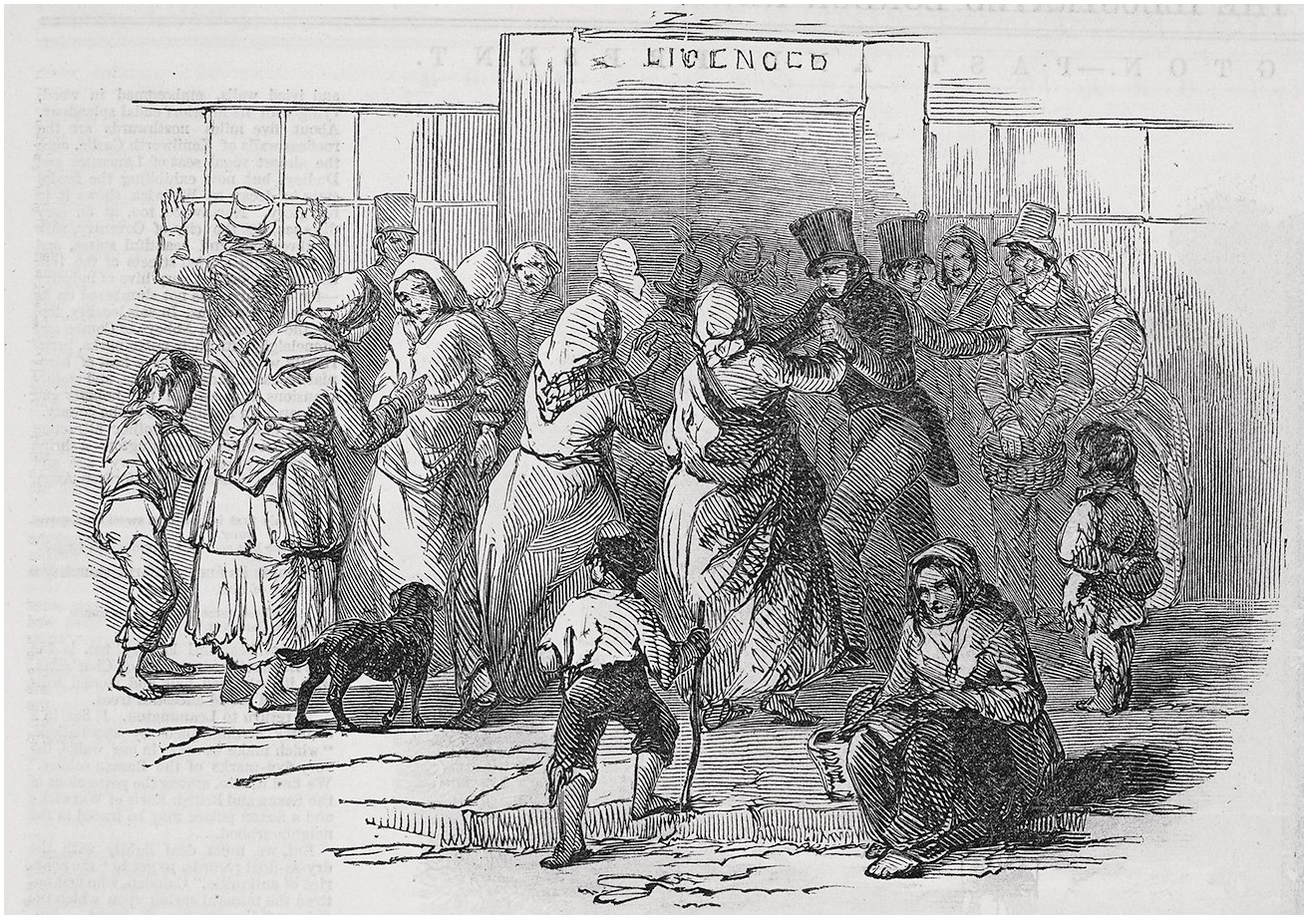
The BRA was assigned the relief of remote parishes in western and southern Ireland in collaboration with local committees. It utilised existing administrative and logistic structures, and generally duplicated government standards. Treasury instructions ‘to consider the operations of the [BRA] Committee as identical … with the Government operations’ reveal its semi-official character.Footnote 22 The BRA’s mission was not saving lives as such, but correcting market failures and developing commercial structures in remote areas in ways that would not ‘come into competition with our merchants and upset all their calculations’.Footnote 23 The means to achieve this were two-fold: supply side intervention in shipping foodstuffs to Ireland and their distribution through a network of depots; and stabilisation of the demand on the market for food by facilitating local charitable action (Figure 4.1). In fact, what the BRA did was sell provisions at cost to local relief committees which, in turn, allocated these for gratis distribution to families in distress who lacked a breadwinner.Footnote 24
Government sale of Indian corn at Cork, London Illustrated News, 4 Apr. 1846.
In this way, British aid utilised Irish charities to bridge the gap that remained between the demand of people who could afford to pay for food, and those whose vital need for sustenance still existed, regardless of market ‘equilibrium’. Such an arrangement was intended to multiply the resources available to relieve distress, thereby maximising their impact as follows: revenues from the sale of food would enable the purchase of further relief goods, while at the same time local charities, who knew the deserving poor, would handle the distribution of relief, thus putting donations to work in the most efficient way. These goals were all achieved. The proceeds from the sale of food (and, on a much smaller scale, seed) by the BRA in Ireland were spent for additional relief, while reports of abuse were rare.Footnote 25
However, this approach was not without difficulties. When the BRA sent their first fieldworker, Henry Cooke Harston, then on leave from the Royal Navy, to the area west of Cork in January 1847, their instructions cautioned that ‘in the present excited state of men’s minds exaggeration and misrepresentation must prevail to an unusual extent’.Footnote 26 Thus, even after the harrowing report of the two deputies from Skibbereen that led to the establishment of the BRA, the organisation still gravely underestimated the famine.Footnote 27 While Harston’s communication in the following months concerned technical matters regarding the campaign, he noted in dismay that half the population in his area was beyond recovery and doomed to die.Footnote 28 Another fieldworker informed headquarters that the distress had ‘reached such degree of lamentable extremes, that it becomes above the power of exaggeration and misrepresentation’, adding that ‘you may now believe anything which you hear and read, because what I actually see surpasses what I ever read of past and present calamities’.Footnote 29 Although its agents provided the BRA committee with a more realistic understanding of the famine, there was no revision of the approach. Instead, the BRA gave fieldworkers the following striking instructions:
The funds … being thus insufficient to secure the result which would be wished, it is most desirable to economize them as far as practicable. Urgent cases, of necessity must, it is true, be provided for at all hazards; but it must be always remembered that caution to economy … will be the best security against the general spread of famine throughout the country. The object of your mission being the early relief of distress[.]Footnote 30
BRA personnel on the ground were told that finite resources were not to be expended on those whose prospects of survival were uncertain. The instructions pointed out that while the ‘essential duty of an agent’ was to sell provisions to local committees at cost, the BRA also authorised them to make gifts of aid up to the value of one-tenth of local subscriptions. Should any ‘extraordinary’ additional grant be advisable, the agent was to justify his recommendation in a letter to London.Footnote 31 These new guidelines were liberal compared to those given to the first agent, which limited him to selling provisions to relief committees ‘for cash only’.Footnote 32
Despite the sales philosophy, grants became the dominant form of relief distributed by the BRA. While information on unsettled purchases is lacking, it seems such cases were retrospectively treated as grants. The UK government provided infrastructural support, including reimbursement of freight charges. Since other overhead costs were low, the £391,700 in donations that the BRA received for Ireland largely corresponded to the prime cost of aid. Provisions for more than two-thirds of this amount were distributed free of charge. Food and seed sold in Ireland yielded approximately £125,000. Moreover, since Irish relief committees defrayed only two-fifths of the costs of foodstuffs sold, the UK government paid for the rest, showing the discrepancy between on-site sales projections and receipts. Due to the dire conditions in Ireland, the BRA became more generous and instituted alternative procedures. However, despite the failure of the plan to sell provisions to the affected communities, the income generated allowed the BRA to mount the final phase of its relief effort. Beginning in autumn 1847, the organisation spent more than £123,000 to feed and clothe school children in the most distressed areas of Ireland.Footnote 33
Initially, the BRA was determined never to distribute money to ‘parties relieved’, assuming that cash could easily be abused and that it would have an inflationary tendency, whereas supplying food would have the opposite effect.Footnote 34 The BRA’s earliest instructions reformulated this as pertaining to ‘applicants for relief’. Agents were ordered to find places where cash grants might be appropriate and identify trustworthy people for the administration of the funds.Footnote 35 Subsequently, £7,250 in cash was transferred to certain national Irish relief organisations, along with another £10,000 in conjunction with a request by the government for allocation of the Queen’s Letter Fund to the General Central Relief Committee for All Ireland (GCRC). Small grants of money to local relief committees and their representatives amounted to £3,692.Footnote 36
A striking example of how important voluntary contributions were to official agencies, and the cynicism of the prevailing policy, may be seen in a request Treasury Secretary Trevelyan made to the BRA. Recounting the mental and physical suffering of officers involved in relief work (and anticipating Captain Caffin’s second letter), he suggested the following:
It would be a great act of charity, not only to the people themselves, but to our officers, who often have to witness the dreadful distress of the people without being able to afford them any immediate relief, if you would place at the absolute disposal of such of our Inspecting Officers as you have entire confidence in, moderate sums of money (say £100 at a time), to be employed by them entirely at their discretion.Footnote 37
Despite the BRA’s close interaction with Trevelyan and its customary compliance with government directives, the request was initially dismissed. When it was brought up again after a few weeks, the BRA granted £50 worth of provisions to each government inspector and the same to its own agents.Footnote 38
Earmarking for particular localities proved complicated for the BRA, but it had the potential of attracting more donors. The organisation’s distribution key, according to which one-sixth of the collection went to Scotland and five-sixths to Ireland, was not to everyone’s satisfaction: some asked for a different ratio or preferred to give money to only one cause. Keeping track of such matters in accounting and reporting to the public would have been an intricate task. Instead, the BRA acknowledged individual contributors and the designated recipients of their gifts in advertised lists of donors, but they made sure that Scotland’s one-sixth share included any amounts specifically contributed for that country.Footnote 39
Narrower earmarking was not very common. While the BRA stated that contributions for certain districts would strictly be observed,Footnote 40 the organisation did not live up to its own standard. This is illustrated by an anonymous Irish landlord’s gift of £1,000 to the poor of Skibbereen.Footnote 41 When the Skibbereen Relief Committee requested that the sum be dispersed, they were told that the BRA had shipped provisions to neighbouring ports, the distribution of which was delayed, but underway. In addition, they were informed that the BRA had ‘no power to transmit to you the sums of money you ask for’.Footnote 42
Richard B. Townsend, one of the former Skibbereen deputies to London, made the affair public and demanded to know by what right the BRA had withheld the money, diverting it for general purposes while continuing to sell provisions in Skibbereen. He listed the ways in which this action was disastrous: relief was delayed; the cash sum would have made the Skibbereen Relief Committee eligible for a government grant doubling the amount; the public announcement of the gift most likely caused donations to be sent to other places, which, at the same time, might be recipients ‘of that which ought to be ours!’ – all with potentially fatal consequences for Skibbereen.Footnote 43 In fact, mortality in the Skibbereen workhouse was the highest in Ireland at the time, reflecting the destitution of the surrounding area.Footnote 44 In a subsequent letter, Townsend appealed to his correspondent’s ‘own sense of Justice’, while asserting that the Skibbereeners’ belief in their entitlement was unimpaired by the distress that they endured. While Townsend realised that the BRA had the advantage, he claimed the moral high ground for not letting philanthropic wrong-doing pass without reproach. ‘We have right’, he insisted, and requested the £1,000 for Skibbereen.Footnote 45
The letter caused the BRA to ascertain the intention of the donor and explain to him the chosen mode of allocation. However, while this was happening, the committee ordered the allotment of £1,000 in weekly instalments of £100 worth of provisions, half of which was to be given to the Skibbereen Relief Committee, and the other half to neighbouring parishes that were selected because of their historical attachment to Skibbereen.Footnote 46 The Skibbereeners acquiesced and passed a vote of gratitude, although one of their members criticised the arrangement for ‘justice but by halves’.Footnote 47 The identity of the donor was not revealed at the time, despite Townsend’s awareness that it was the young Lord Dufferin, author of a pamphlet about the famine in Skibbereen.Footnote 48 However, through a British bank, the BRA consulted Frederick Pigou, a confidant of Dufferin. On being informed that the chairman of the Skibbereen union had approved the BRA model, Pigou declared his perfect satisfaction.Footnote 49
Soup Kitchens
During the Irish Famine, a well-known charity body determined it would strive ‘to exercise great caution in furnishing gratuitous supplies of food; to endeavour to call forth and assist local exertions … and to seek to economise the consumption of bread-stuffs, by promoting the establishment of soup shops.’Footnote 50 What sounds like a government declaration was in fact a mission statement by the Society of Friends. Soup kitchens set up in times of distress were a Quaker hallmark deployed at the end of 1846 along with other local groups.Footnote 51 A Quaker kitchen opened on 7 November of that year in the city of Clonmel, and on the same day an independent soup kitchen began operating in Skibbereen.Footnote 52 These may have been the first large establishments of their kind. Earlier examples include a soup kitchen in Kilcoe parish, not far from the Skibbereen neighbourhood, which was already operating in September 1846.Footnote 53
In the official relief work documentation of the period, the word ‘soup’ first appears in the description of a meeting the home secretary and Trevelyan had with the two deputies from Skibbereen.Footnote 54 At the time, a request for permission to open soup shops with local taxpayer’s money by their poor-law union was declined.Footnote 55 Instead, by the end of December 1846, a government agent had incorporated the local soup committee into a public–private partnership that set a precedent for Ireland. The arrangement doubled local subscriptions, included officials, and used the services of a policeman to fortify a humanitarian space to ensure that ‘the articles purchased for the soup are actually put into it, that it is distributed at twelve o’clock precisely’.Footnote 56
At the beginning of 1847, the Central Relief Committee (CRC), which had been formed as a Quaker umbrella organisation for Ireland, opened a model kitchen in Dublin that sold an average of 1,000 bowls of soup daily until the end of July, when complimentary government provisions had curbed the demand. In the Quaker shop, one penny gave the poor a quart of soup, and another halfpenny added bread. Nearly 50 per cent of the rations ‘sold’ were purchased with coupons from benefactors who distributed them among the poor at their own discretion (see Figure 4.2). The CRC supported in its efforts by a local collection covered more than one-third of the expenses. They reported frequent visits by observers from similar establishments across the country who wanted to study their operation.Footnote 57
Famine tokens, 1846/7.

The CRC helped in the establishment of such soup facilities by others, assisting with boilers and money, and importing provisions. They emphasised the many grants that they had given to women, whom they regarded as their most efficient social workers, and regretted their want of proper stores and reliable agents. The storage problem and the trouble of arranging transportation within Ireland were solved in connection with the goods sent to the CRC from the USA throughout the spring and summer of 1847. Modelled on an arrangement with the BRA, the government allowed the CRC to transfer incoming supplies to the nearest commissariat depot (at public expense), crediting these shipments at their current market value. The sum could then be used to pick up foodstuffs from any other government depot. This system, based on a substructure of escorted food transports along waterways and major roads (railways were still in their infancy), lasted until late summer, by which time the depots were empty. The CRC then sold aid supplies that continued to arrive and used the proceeds as discretionary funds.Footnote 58
The government itself turned to soup kitchens as the cheapest way of feeding people and as ‘economising our meal’, in the sense of offering the best possible nourishment with limited funds.Footnote 59 Medical experts provided advice regarding the comparative nutritional value of different foodstuffs (which was to be considered when comparing prices) and the necessity of a varied diet.Footnote 60 Soup kitchens also solved the problem of sweetcorn consumption, with which the Irish were unfamiliar. Another major advantage of a soup facility was that a simple ‘indulgent’ administration sufficed, as a person presenting themself for a meal which they receive in their own mug served as a means test to ensure the neediest were being served.Footnote 61 According to a contemporary assessment, serving cooked food, compared to handing out staples for home preparation, reduced the number of claimants by more than one-third, suggesting issues of pride and accessibility.Footnote 62 In addition, soup kitchens provided jobs for women.Footnote 63 However, according to one report, preparing so much soup brought about a ‘great slaughter amongst the poor people’s cows’. Thus, adding meat to the soup, due to the urgency of the moment, unfortunately deprived the same people of milk and butter.Footnote 64
The government wanted to have the ‘soup system’ run by relief committees operating across Ireland by the beginning of 1847. However, officials realised that any scheme depending on voluntary contributions would be inadequate to sustain the starving population.Footnote 65 Nevertheless, as the public works programme became increasingly dysfunctional and threatened to interfere with the sowing season, soup kitchens were seen as a viable alternative. In February, Parliament adopted them as a way to feed up to three million people on a daily basis. Thus, between May and September 1847, the self-defined ‘night watchman state’ demonstrated its logistic capacity.Footnote 66 According to the analysis of Skibbereen’s physician, Daniel Donovan, not only had the public soup act provided people with essential nourishment, but it had also proved to be ‘the best cure for Irish fever’, as the often deadly famine diseases were then called.Footnote 67 The soup programme was not only appreciated in Ireland at the time; today there is widespread agreement that it provided the most effective transfer of entitlements. It is also believed that had it been implemented over a longer period, it would have significantly lowered mortality. However, the provision of soup, offering subsistence without requiring any return in labour, and with only the minor discomfort of having to consume one’s meal in a public place, was incompatible with the austere moral economy of UK elites. It was, therefore, restricted to a seasonal measure that was to terminate with the upcoming harvest.Footnote 68
The BRA’s role in this connection was to prepare for the policy shift from public works to the government-sponsored feeding programme. They were to make foodstuffs available in the remote south and west, particularly in kitchens set up by local committees. With the implementation of the government soup act in May 1847, voluntary aid was shut down.Footnote 69 As the BRA only accepted as partners relief bodies that adhered to official guidelines and submitted their applications through government officers, it reinforced state control of local charities, which was also based on the match-funding of voluntary collections with public grants (after mid-December 1846, such grants had been doubled, occasionally tripled).Footnote 70
Fundraising for Ireland at the beginning of 1847 inspired Alexis Soyer, Victorian London’s celebrated French chef, to create a soup based on food science to provide maximum nutrition at minimal cost, and to raise funds for a model kitchen. The government was interested in Soyer’s plan and provided him with a soup house in Dublin that had been designed for mass feeding. It incorporated calculated flows of people, spoons chained to the tables, and a rigorous time regime – anticipating later shop floor management.Footnote 71
Some of the local press described the opening ceremony, at which high society congregated with the suffering poor, as an imperial spectacle that subjected the latter to a ‘pitiless gaze’, outraging ‘every principle of humanity’.Footnote 72 For a five shilling admission fee, one could watch charitable ladies serve paupers food. Although the proceeds were put to good use, a newspaper condemned the procedure as akin to the inspection of animals in a zoo at feeding time. Nevertheless, it was hoped that the fees collected would be of some benefit to those ‘beggar-actors’ whose humiliating performance had raised them.Footnote 73 Whatever one may think of Soyer’s moral balance or his recipes (which included oysters, a cheap food at the time), his combination of applied science, personal showmanship, and spectacle for donors transcended nineteenth-century philanthropy and perhaps the Irish context. A British officer in Dublin commented at the time that, while Soyer would be successful anywhere in the world, his success was impossible to foresee, as the Irish were ‘a strange nation, they hate every thing new, and they must have any change thro’ their own people and in their own way’.Footnote 74
The Quakers created a soup distinguished by a high proportion of meat – six-fold that which was called for in Soyer’s recipe.Footnote 75 However, like government aid, most Quaker relief ceased by late summer 1847, or took on other forms. When faced in early 1848 with the question of whether to reopen their soup shops, the Quakers found that people in the surrounding area were too exhausted to serve as organisers and workers in such a project. Despite the Quakers’ charitable tradition, the CRC emphasised that they had no experience in the humanitarian undertaking upon which they had embarked, and that the underdevelopment of Ireland posed its greatest problem: the country lacked a middle class able to administer relief and a commercial infrastructure for the distribution of food. The organisation eventually spent some of its funds for development projects, conceding that using money raised for emergency relief to fund a permanent object posed an ethical dilemma.Footnote 76
Money and Aid-in-Kind
British charity in the 1840s favoured the distribution of aid-in-kind. In the USA, the abundance of grain resulted in the adoption of a similar policy, making a virtue – providing humanitarian aid – out of a necessity – getting rid of agricultural surplus. Both countries shipped much needed provisions to Ireland. Staple foodstuffs were sometimes sent directly by their producers.Footnote 77 Collections, particularly in religious communities, resulted in donations of jewellery, clocks, a marble statue of the blessed virgin, and other such items, although they were not always readily convertible to cash. After a few weeks of such collection, the Irish College in Rome estimated it had received up to £300 worth of precious objects.Footnote 78 However, a diamond ring that was said to cost £100 in England could only be sold for £20 in Rome, and so (like the marble statue) was forwarded to Dublin in expectation of a better price.Footnote 79 It is unclear whether the offer of 2,000 cubic palms (37 m³) of fine breccia Gregoriana marble, to be sold in Italy or Ireland, ever was accepted.Footnote 80 At the same time, worthless devotional items were forwarded to the Vatican, since they were believed to ‘demonstrate great charity’.Footnote 81
Most importantly, there were separate collections of clothing. Alongside money, second-hand apparel played a large role in charitable drives, although some of it was likely to join the original clothing of the beneficiaries in a pawn shop. With reference to such divestment, an Irish landlady suggested that ‘whatever clothing is sent, ought to be of a very peculiar pattern or colour, and marked in a very conspicuous way, so as to be unsaleable’.Footnote 82 Necessity also led to the reuse of empty food sacks as material for making clothes.Footnote 83
Most inedible gifts had to be converted into cash to be of any use. The provision of aid was thus dependent on financial transactions and frequently on valuta exchange. Sometimes this involved consecutive operations, such as when the Vatican gathered funds in various currencies and sent the proceeds to Ireland. At the same time, the notion of round sums or specific collection results clashed with the market principle, where fixed wholesale quantities of foodstuffs were traded at constantly fluctuating prices.Footnote 84
While most relief monies were used for the purchase of supplies, cash was occasionally given directly to recipients in distressed Irish localities in order to strengthen their buying power, as Sen would later also recommend. Although these sums were too small to have any significant effect on the importation of food, the entitlements enabled individuals to meet their own needs for sustenance or help some of those around them. Money was a decentralised and flexible form of relief, flowing through a variety of direct and indirect channels.
Such relief typified how churches in the Irish homeland forwarded domestic and foreign donations. Aid arrived at all levels of the hierarchy, although larger amounts and contributions from distant lands were often received at the highest level. Thus, the Catholic prelates of Ireland became recipients of funds conveyed to them for use either at their own discretion, or as earmarked sums. Church officials are also said to have significantly contributed from their own pockets.Footnote 85 Generally, the four archbishops of Ireland divided the money they received among the country’s twenty-four bishops, who passed it on to more than 1,000 parish priests and heads of church institutions. For more rapid dissemination, the archbishops also provided aid directly to the local clergy.Footnote 86
Vertical distribution was complemented by a horizontal plan. Daniel Murray, archbishop of Dublin, and William Crolly, primate of all Ireland and archbishop of Armagh, were often charged with distributing Catholic welfare across the country. Both transferred funds designated for Catholic distribution to Michael Slattery and John MacHale, their colleagues in the most afflicted sees of Cashel and Tuam in the south and west of Ireland. They were praised for the fairness with which they shared incoming aid.Footnote 87 However, both Murray and Crolly were politically conservative, prioritising interdenominational co-operation in their approach to famine relief. They feared that targeting aid towards Catholics ‘would seem to the public as too exclusive, and as having but little of the spirit of the good Samaritan in it; and perhaps even cramp the benevolence of protestants to us’, or, even worse, serve as a model for ‘other influential persons, who will refuse to give relief to the Catholic poor’.Footnote 88 They, therefore, tended to forward those donations that were not explicitly designated for Catholic distribution through broader relief channels.Footnote 89
Although such diversion of ‘Catholic money’ was internally controversial and at times criticised in the press,Footnote 90 no open dispute arose. Murray had handed over the collection of London Catholics to the GCRC, where he was a key figure.Footnote 91 He hoped the same distribution would be done in the case of Vatican collections, but ultimately yielded to Slattery and MacHale, who challenged the ‘great tendency to set aside the bishops in favour of mixed boards and government officials’.Footnote 92 Cullen later asserted from Rome that the Vatican had hoped for distribution through the Church and that they were glad the donation had not been allowed to pass into ‘government management’.Footnote 93 However, some bishops did forward money to local relief committees, rather than to their priests.Footnote 94 Parish priests were the customary recipients of money grants by the GCRC, but were expected to see that distribution took place across denominational lines. In many instances, the channels that were used are unclear, since the secretary of the GCRC was simultaneously involved in distribution through the Catholic hierarchy.Footnote 95
Parish priests gave the alms that they received to the poor of their flocks and to other sufferers at their own discretion. The extent to which they did this by means of money, food coupons, and material aid such as foodstuffs, clothes, and even coffins is unknown. In any case, the cash flow did sometimes reach those suffering from hunger. At the same time, there are many reports that people stopped using coffins during the famine, or adopted a frugal variation with a hinged bottom that made it reusable, illustrating the descent into a moral economy of survival.Footnote 96
Whereas Vatican instructions generally took a needs-based approach to relief,Footnote 97 its own disbursement among Irish prelates went from providing centralised aid to dealing personally with bishops and certain monastic and ecclesiastical institutions. Although the intention of aiding the most distressed areas remained, the actual distribution showed moral support for all of Ireland and reflected regional differences in suffering to a lesser extent. For example, the money the Holy See sent between April and July 1847 benefitted each of the Irish bishops and archbishops, the former in the amount of £50–150, the latter ranging from £150 to £300.Footnote 98
The Comité de secours pour l’Irlande had a more targeted approach, initially focusing on the most afflicted sees of Cashel and Tuam. However, on recommendation of Redmund O’Carroll, president of the Irish branch of the Society of St Vincent de Paul (SVP), the Comité included five northern dioceses to their list of beneficiaries, applying a formula according to which 40 per cent of their funds went to the south, 30 per cent to the west, and another 30 per cent to the north of Ireland.Footnote 99 Thus, they took into account the fact that the provinces around Dublin to the east were not a major famine area, but they did distribute aid to the less affected north of Ireland. The French reliance on a single informant illustrates the problem of making rational allocation decisions from a distance.
By contrast, SVP donations supported existing and newly established branch organisations that were mainly in Dublin and the south of Ireland. They were part of an effort at the time to roll back the ‘New Reformation’ in Ireland. The choice of certain rural locations for SVP expansion, like Dingle and West Schull, was geared to counter the evangelical ‘traffickers in human souls’ there, as was claimed.Footnote 100 In Schull, the Congregation of the Mission encouraged the establishment of an SVP chapter ‘with a promise of pecuniary aid’ from SVP headquarters in Dublin.Footnote 101 Dingle also received regular allotments from the Vatican.Footnote 102 Catholic donors showed particular interest in places where there was religious rivalry and the presence of ‘Soupers’, as Protestant proselytes or proselytisers were called because of their alledged trade in faith and food. However, even the Catholic Church began to use food as a tool for securing its flock and winning back ‘perverts’.Footnote 103 Such food conflicts tended to arise in impoverished locations, although sectarian competition in a country strongly divided along religious lines and with a dominant Protestant minority culture was a factor.
Efficient and safe ways of forwarding donations was a frequently discussed issue. Sometimes, cash was simply carried from one place to another. For example, the Irish College in Rome recruited a student who was returning home, to carry thirty-four silver medals back to Ireland.Footnote 104 In general, funds were conveyed across borders by bills of exchange (see Figure 4.3). However, this well-established method had its drawbacks. Bills of exchange presupposed brokers, trustworthy networks, and maturity periods that delayed the disbursal of relief funds.Footnote 105 As financial institutions abroad often had no commercial relations with Ireland, transactions were frequently conducted through London banks.Footnote 106 This roundabout method occasioned additional costs and time delays. Bills of exchange also depended on the proper working of two financial systems. A recipient of French aid via a bill of exchange had to postpone cashing a voucher for two weeks because the ‘pressure for money’ was so great in Dublin that the face amount could not be obtained on its stated due date without incurring a substantial bank fee.Footnote 107 That the recipient in this case chose to wait two weeks for the full amount shows that the larger sum was of more value to him than receiving less money immediately, despite the high mortality rate at the time.
Bill of exchange for £421.1.10 from Father Anthony Fahey, Buenos Aires, 1847.

Within Ireland, relief funds were often transferred by postal or bank money order, a system that apparently worked well. Complaints, like a rector’s grievance that the Skibbereen post office was out of cash for a period, or the Dingle Presentation Convent’s problems with receiving the donations sent to them, were exceptions.Footnote 108
While foreign banks generally profitted from transactions involving relief funds, the BRA was governed by a ‘cabinet of bankers’ based in London who offered their services gratis.Footnote 109 English Catholics used the Commercial Bank, which also appears to have provided its assistance at no charge.Footnote 110 The same was true of the Paris-based bank of Luc Callaghan, used by the Comité de secours pour l’Irlande, and of the SVP’s bank, which charged neither commission nor exchange fees.Footnote 111 There were also banks in Ireland that transferred money for the relief of the poor at no cost.Footnote 112 The trustees of the Indian Relief Fund thanked the directors of the Bank of Ireland for cashing their bills without charge, ‘although at six months date’.Footnote 113 Thus, in many cases, transaction costs for aid agencies were minimal due to the free provision of bank services. This is in agreement with attempts to keep overheads low. Examples of private support are free rent for relief organisations, not charging for labour,Footnote 114 no commissions, and not seeking profit, while government subsidies were generally reimbursement for transportation costs. In addition, the government contributed to reduced transaction costs by making its food depot infrastructure available to private charities.
Domestic and Overseas Migration
Aid efforts, whether public or private, set people in motion, with both desired and unintended consequences. Some soup kitchens distributed food by cart in their neighbourhood. Invalid’s diets were sent to the homes of the sick, anticipating modern ‘meals-on-wheels’, although finding volunteers who dared to go near the sick was a challenge.Footnote 115 Despite such services, the soup kitchen model generally required people to line up and sometimes walk long distances for a daily meal, which presupposes greater mobility than a monetary distribution system.
The conviction that ‘people for distances round will come in to partake of the benefit’ functioned as a means test, but also caused an uprooted population to resettle wherever aid was available.Footnote 116 Thus, whereas the overall population of Ireland sharply declined during the Great Famine, the four largest cities continued to grow.Footnote 117 Even a ‘“relief” town’ – as a contemporary journalist called it – like Skibbereen experienced a continuous influx from the countryside that stabilised the total number of inhabitants in the winter of 1847, despite exceptional mortality.Footnote 118 Locals complained that the misery of their town was multiplied by the paupers who flocked in from surrounding areas.Footnote 119 Similarly, benevolent circles in Cork were alarmed by Skibbereen sending its poor over to their city. The suspicion that charitable funds were misappropriated in hiring carriages to dispose of the destitute caused particular indignation. It made a newspaper demand (and receive) a ‘strong and unequivocal contradiction’ of such an ‘ungrateful return’ by a people who owed much to Cork and the regional press.Footnote 120 Further up the aid chain, British philanthropists also felt ‘ungratefully treated’ when they learned that Irish relief committees were shipping their destitute to them.Footnote 121
Skibbereen played a conspicuous role in the exportation of misery, with an elaborate scheme reflective of their moral economy. The three target groups for their emigration programme were healthy men seeking work, women and children who had someone in England who could maintain them, and elderly people of Irish background unjustly returned by British authorities ‘for support on a people who never derived any benefit from their labour’.Footnote 122 In a Letter to the Editor, accounting for the donations entrusted to him, Townsend declared that he was to give £5 ‘towards helping a few heads of families to go over to England to shew the Times that Paddy loves his good English fare too well not to go there when he can, and earn for his poor, empty, hungry stomach some of his bread and cheese, and take a crotchet out of his gamut’.Footnote 123
Some Skibbereen emigrants were sent by coach via Cork to a steamer headed for London, but most embarked directly at the local County Cork harbour of Baltimore. Two individuals established the emigration scheme by the end of November 1846: Donovan, who used the income from his workhouse vaccination contract to redeem indispensable clothing from pawn and buy biscuits for the journey, and a ship and mill owner who provided free passage to Newport, South Wales. Adverse winds, a captain who fell ill, and provisions that were only enough for seven days made one of the first ships, carrying 113 paupers, strand near Cork. After a five weeks journey, the ‘floating pest-house’ reached its destination, five of its passengers dying upon arrival. The journey also generated one of the few reports hinting at sexual exploitation by relief workers during the Great Irish Famine. The mate and the sailors on the ship, while otherwise treating passengers unkindly, were said to have ‘become familiar with some of the girls, whom they took with them to the forecastle’. Sustaining the newcomers became an additional task for the Newport Irish Relief Fund.Footnote 124 Such problems were not reported from other Skibbereen ship passages, but the misery of Irish emigrant ships in the North Atlantic during the late 1840s was notorious.
When the steady flow of emigrants became known to the administrator of the Skibbereen food depot, he reported that funds designated for poor relief were being diverted for the shipment of ‘wretched naked creatures’ to England and Wales.Footnote 125 While landlords in many cases were glad to defray the emigration expenses of their tenants, and although there was a general suspicion that relief committees were shipping their clients off to Liverpool, the account from Skibbereen was exceptional in suggesting an actual misappropriation of funds.Footnote 126 A later investigation into the ‘deportation of paupers’ from Skibbereen to England concluded that public monies had not been applied.Footnote 127 However, the police report on the matter reveals a local enterprise with semi-official traits: Donovan had privately received £10 from the poor law guardians, which he used together with money of his own to send 500 paupers from Skibbereen and its surrounding areas to England. A private shipowner had gratuitously supplied two vessels for this purpose, and the government commissary provided a supply of biscuits for the passage at cost.Footnote 128 The fact that Donovan was a prominent, well-thought-of relief worker, whose diaries with glimpses of the distress in Skibbereen were circulated widely in the press, may have caused objections to how the exodus was financed to be dropped.
The migration of paupers and others from Ireland affected England, the British dominions (particularly Canada), and the USA. The influx of famine refugees launched relief operations wherever they disembarked. It also resulted in criss-cross migration, as poor-law unions in England deported Irish paupers back to their origin. The GCRC, which otherwise disregarded Dublin, made a special £400 grant to the lord mayor of Dublin on their behalf.Footnote 129
Liverpool was greatly affected, as large numbers of famine refugees poured into the city until 1853. In 1847 alone, more than 116,000 paupers arrived from Ireland, in addition to more than 180,000 transmigrants to North America (the cost of passage to the New World being a maximum of £4). It is estimated that 5,500 famine refugees died of typhus, dysentery, and diarrhoea in Liverpool that year, making the city known as the ‘cemetery of Ireland’. The epidemics spread by disease also raised the mortality rate among other sectors of the population.Footnote 130 Estimates of deaths in Great Britain brought about by the Irish Famine range from 10,000 to 15,000 for the year 1847 alone, to 150,000 for the late 1840s.Footnote 131 A Cork newspaper recognised the generally kind reception that refugees received in English towns, which it interpreted as a gesture of appreciation: ‘The Famine that has driven swarms of our people to Liverpool for instance has enriched its merchants; their [export] profits upon food consumed in Ireland might be reckoned by the million.’Footnote 132 Even in inland cities such as Birmingham, collections for those back in Ireland competed with the needs of Irish newcomers in English towns – something that especially affected the Catholic communities. Thus, in the beginning of February 1847, 200 refugees were being cared for daily at the bishop’s house, and many others at the convent.Footnote 133 The poor families aided at the time by English branches of the SVP were mainly Irish.Footnote 134
In North America, famine migration also caused donors to open their doors to the new arrivals. As fares were lowest to Canada (as little as £1½), ships bound there were greatly overcrowded and wretched.Footnote 135 In Quebec, approximately one-sixth of all passengers who came ashore from Ireland in 1847 died shortly after arrival. Many more had already perished at sea. Grosse Île, the quarantine station for those entering Canada, was unprepared for the mass influx of migrants and became a symbol for the plight of the famine refugees.Footnote 136 Charitable Irish societies assisted the newcomers in many places, and new societies such as the Hibernian Benevolent Emigrant Society of Chicago or the Irish Emigrant Society of Detroit were founded in response to the famine migration.Footnote 137 However, the social and medical problems caused by this influx also called forth an estrangement between the refugees and their host population that contributed to the drying up of transatlantic charity during the latter part of 1847 and to tightened immigration policies.Footnote 138 Strum suggests that, in hindsight, various leaders of Irish famine relief appear to have developed hostile attitudes and turned into nativists.Footnote 139 In many ways, nineteenth-century society in the UK, Europe, and the world at large was unprepared for the sustained relief effort that would have been needed to significantly mitigate the Great Irish Famine, thus illustrating the limits of ad hoc humanitarian efforts.
4.3 Live and Let Die: Soviet Russia
Providing famine relief in Soviet Russia between 1921 and 1923 posed a multitude of challenges to foreign organisations. Concerns about the misuse of aid, paralleled by the inevitable necessity of collaborating with Soviet agencies, made more difficult a situation that was already financially and logistically complicated. Continuous negotiations with Soviet authorities were necessary during the whole operation to keep things running smoothly. This often led to conflicts, especially on a local level, partly because of personal and ideological animosities and mistrust, and partly because details of the 1921 Riga agreement were unknown in the Russian provinces.Footnote 140
Apart from control of distribution, a major concern of organisations providing foreign relief to Russia was logistical questions. There was hardly enough capacity in the Baltic ports to unload large cargoes. Moreover, they were blocked by ice all winter, so that Black Sea ports had to be used instead. The Russian railway network was in disrepair. A transport from Riga to the famine region of Saratov was estimated to take fifteen days, but in December 1921 took thirty days. In February 1922, travel came to a complete standstill due to weather conditions and fuel shortages.Footnote 141 The train system proved to be a bottleneck in relief operations, no matter how well planned, and conflicts arose between different organisations about cargo space.Footnote 142 During the winter season, many areas most severely affected by the famine could only be reached with sleighs drawn by horses or camels. A trip of under 300 km could take up to seven days. In many famine regions, more than 90 per cent of the livestock had died, so that even this outmoded form of transportation was often unavailable.Footnote 143
As organisations sought to keep the number of their staffers as low as possible, each fieldworker – mostly young and often unprepared for the job – had to shoulder an enormous workload and great responsibility. A number of the men (only Quakers accepted female relief workers) experienced what was referred to as ‘famine shock’ when facing the horrors of starvation. Several cases of nervous breakdowns and alcohol abuse ensued.Footnote 144 In addition, poor hygienic conditions – trains, for example, were described as ‘lice-infested death traps’ – impeded operations and threatened aid workers’ lives.Footnote 145
Those who were responsible for planning and coordination went through a similar collision with reality. Their previous work in Central and Eastern Europe made them profoundly underestimate the gravity of the situation in Russia. What had been planned often proved unrealistic and inadequate. The idea of concentrating the distribution of food in big cities – presupposing that refugees would flock there – was revised after representatives of the organisations began operating from the country and sent in their reports from the Volga area (see Figure 2.2).Footnote 146 When Hoover, in answer to Gorky’s appeal, committed to feeding one million children, he assumed that each Soviet citizen was receiving a daily, state-financed meal, so that a supplementary ration would suffice. It was only during the Riga negotiations that this misunderstanding was corrected.Footnote 147 The Save the Children Fund (SCF) also realised that the portion distributed was often the only food people would eat that day. Their general plan of systematic feeding had to be adjusted when they learned this and other facts on the ground.Footnote 148 Attempts were made to take current research into account and prepare meals constituting a balanced diet. However, it was practically impossible to arrange such things as individual nutrition cards and customised diets. Methods of assessing the degree of malnutrition, like the Pelidisi table that had been tried in Central Europe, could seldom be applied under Russian conditions: there were too many victims, too few doctors, and a lack of time.Footnote 149
Organising Famine Relief
When planning and distributing aid to Russia, organisations drew on their prior experience in European relief operations after the Great War, and on British imperial expertise battling famines in India. Hoover continued to support the European Relief Council (ERC) that had united major US aid agencies during post-war operations under the banner of the American Relief Administration (ARA) as the main distribution entity. He favoured forms of allocation that were tested and proven, including a warehouse and kitchen system, the establishment of local committees to provide assistance, and the food remittance programme. The British colonial system of famine relief helped coordinate various agencies across large territories and the spatial organisation of relief centres, both of which were effective under Russian conditions.Footnote 150 The British also took a ‘Victorian approach’ to aid that was similar to ARA relief ideals and can be summarised as ‘keep[ing] people alive without making them dependent’. Accordingly, former colonial administrators, like Sir Benjamin Robertson and Lord George Curzon, as widely respected famine experts, influenced not only the work of British agencies, but also that of the ARA and Nansen’s International Committee for Russian Relief (ICRR).Footnote 151
The famine region was divided early on in order to avoid under- and over-supply. The ARA appointed more than a dozen district supervisors, each responsible for a specific area. Organisations like the SCF and the Quakers worked in the same manner, but on a much smaller scale. For example, SCF established ten sub-bases, headed by British supervisors, in villages and small towns around its headquarters in Saratov.Footnote 152 Communication between districts and headquarters took place via cables and letters. The ARA set up its own carrier service, paralleling the Russian postal service, and would transmit more than 50,000 telegrams during the relief operation.Footnote 153
Distributing agencies further divided the afflicted area into spheres of influence. This forestalled conflicts and enabled smaller organisations to retain a certain independence, something that was valuable in their fundraising and public relations campaigns. Thus, the Saratov province was divided between the ARA, on the one hand, and the SCF and the International Save the Children Union (ISCU), on the other, giving the USA responsibility for the zone east of the Volga, while the Europeans took the western part. The Quakers proceeded in a similar way in their assigned territory in the Samara province: after a split backed by Hoover, British Friends covered the western part of the Buzuluk District, while the American Friends Service Committee (AFSC) took over the eastern part, receiving their supplies from the ARA.Footnote 154
Such zones of influence had to be adjusted to new conditions from time to time. When British Quakers extended their adult feeding programme in 1922, the ARA supported them and concentrated resources accordingly. Similarly, when a Swedish Red Cross (SRC) team arrived in Samara in December 1921, the ARA, which was already present, assigned them a specific field of operation, extending it in the months that followed as Swedish resources increased.Footnote 155 For the ARA, in its role as the main distributing agency, such co-operative agreements meant that resources could be saved. However, moral dilemmas also arose, when smaller actors fuelled expectations, which they were not able to meet. For example, when the Volga Relief Society (VRS) withdrew from the Saratov province in September 1922, an ARA officer reported that he now felt ‘morally bound to continue support to the German colonists’ whom the VRS had aided before.Footnote 156
A decentralised system of distribution, as well as the establishment and provisioning of camps and hospitals for refugees, was also meant to forestall, arrest, and reverse migration from villages to towns, and from the Volga region to Ukraine and Siberia. The ‘imperial anxieties’ of ‘famine wanderers’ were evident in the recommendations of former colonial administrators,Footnote 157 but a cover of the journal Soviet Russia showed similar concerns. Beneath a poster depicting hungry peasants heading westwards, a caption explained that the Friends of Soviet Russia (FSR) sent food and tractors ‘in order to maintain these masses at their post’.Footnote 158
A widespread net of warehouse and food depots also proved necessary, since any interruption of supply was generally due to transportation difficulties. In fact, transport was the biggest problem at the beginning of the relief operation, and it prevented an early extension of the feeding programme. The distribution of reduced rations to a greater number of people had been considered, but it proved infeasible, as the ration being provided already constituted an ‘irreducible minimum’. The chief of the SCF operation in Saratov described how warehouses in Riga were stocked to full capacity in late 1921 ‘as far as financial means were available’ because it was expected that the port would be inaccessible during the winter months. In the Volga region, winter threatened to cut off the supply to the most affected areas, where the population depended on river transport since they were far away from railheads. Depots there were stocked as much as possible in order to guarantee an uninterrupted supply of food. It was equally important that provisions be balanced, that is, ‘the correct proportion one to another of different foodstuffs required for our menus’.Footnote 159
The ARA food remittance programme, a further development of its popular and successful food remittance programme that had been used in Central Europe, was introduced in October 1921 as an alternative instrument of famine relief. People outside Russia could donate a food package with a US$10 remittance at any ARA office (see Figure 4.4). Needy individuals or groups in Russia could then collect the parcels from a local ARA warehouse.Footnote 160
Packing ARA food remittances in Moscow, 1922. In contrast to previous remittance programmes, food parcels were now packed in the affected country.

Initially, Soviet officials mistrusted this form of relief, as they had little control over the beneficiaries. They feared that people with relatives or friends abroad (who were already suspect for that reason) would profit, whereas committed communists may be left empty-handed. In addition, parcels might be used for speculative transactions. To prevent that, a limit of five parcels for individuals and fifty for groups was imposed, and each addressee had to sign a form stating that they would not sell any of the contents.Footnote 161 Donors were told that the estimated US$2.25 per package profit from the food remittance programme would be invested in a child relief campaign. Another positive argument was that the availability of more food – whether or not it was received by a needy person – would lead to an easing of the local market.
However, critics voiced moral concerns that such a programme might result in an unjust distribution of relief. For example, Jewish organisations and individuals were over-represented on the private donor side, which meant that regions in Ukraine and Belarus with large Jewish minorities would receive a substantial share of the packages.Footnote 162 In order to organise the distribution, the ARA had to build up delivery stations in these regions, although some were technically outside the famine zones.Footnote 163 ARA supervisors in districts where few people had emigrated to Europe or the USA in the decades before complained that inhabitants received no food parcels simply because they had no kinship connections beyond Russia. Thus, the ARA was forced to supply these areas with more general food aid.Footnote 164
While organised robberies and large-scale embezzling were exceptions, internal reports and anecdotal evidence reveal many incidents of diversion.Footnote 165 These included thefts by harbour and transport workers, desk clerks demanding illegal charges for releasing remittances, Russians claiming the rations of dead relatives, attempts to obtain parcels with falsified documents, local committee members giving family and friends advantages, kitchen personnel eating food intended to feed children, and the seed grain being consumed as food.Footnote 166
Some relief workers were also operating for personal gain. Already in December 1921, an ARA officer noted that employees were ‘purchasing furs, diamonds and other things, evidently with an idea that they will personally profit by these investments’.Footnote 167 In February 1922, Soviet authorities thwarted an ARA employee’s attempt to smuggle several kilos of gold and twenty-six carats of diamonds out of the country. While an incident involving goods of such high value was exceptional, this was not an isolated case.Footnote 168 In view of the widespread habit of relief workers using their salary to buy valuable goods at bargain prices, a pro-communist US journalist questioned ‘whether the millions of loot they are taking out of the country isn’t more than their relief’.Footnote 169
Having a privileged position also brought social advantages to foreign relief workers. In Moscow and Petrograd, ‘plebeian Americans of no importance at home’ gained the status of celebrities, as an ARA observer noted.Footnote 170 Numerous relief workers carried on intimate affairs with local women, relations that could entail sexual exploitation. An older ARA man commented prosaically that ‘one does not have to pay much for women who are starving and some of our boys are making the most of the market’.Footnote 171 No less than thirty ARA men married during their service, most of them bringing their ‘famine bride’ back to the USA.Footnote 172 Nansen’s representative in Ukraine, the later Norwegian Nazi leader Vidkun Quisling, married two women during his tour of humanitarian service, one of them only 17 years old.Footnote 173
Kitchens and Food
In urban centres like Saratov, warehouses and a basic kitchen infrastructure were already in place when the foreign aid workers arrived. It was reminiscent of earlier years when parts of the population were fed in public kitchens.Footnote 174 However, the situation in the cities was not as devastating as in the surrounding rural areas. Robertson, after his inspection of the SCF feeding programme, observed that 35,000 of the 250,000 children being supported were city residents. He proposed that this number be reduced and the resources be better used in the countryside.Footnote 175
The kitchens run by ARA, SCF, the Quakers, and other organisations including Soviet authorities varied in size. They were feeding between two dozen children per day in some villages, and several thousand in larger cities. In the Saratov region, the SCF had approximately 400 kitchens by January 1921, serving an average of 500 children.Footnote 176 The staff in many kitchens, was compensated in part on a commission basis, receiving a stipulated number of rations for themselves after they had fed a specific number of children. Other Russians employed by foreign organisations often received parts of their salary in the form of food as well, a so-called paiok.Footnote 177
When provisions finally reached the famine regions, often far behind schedule, ‘much ground [still had] to be covered before the food could enter the children’s mouth’.Footnote 178 As feeding everybody was impossible, lists dividing famine victims into different categories were made, a practice adopted from colonial experience.Footnote 179 ARA, SCF, and the Quakers co-operated with local committees for that purpose, but recruiting reliable agents in Russia was sometimes difficult. A considerable number of the local elites had vanished in the social upheavals of the revolution or because of the famine; others suffered greatly from hunger themselves. Unlike in Poland and Hungary, it was difficult to find individuals in whom the population, the relief organisations, and the authorities would place their trust.Footnote 180
The ARA sought to influence the make-up of these committees, a right they had fought hard for during the Riga negotiations, where Soviet representatives vehemently opposed this request.Footnote 181 Determining who was on the committees was important to prevent abuse and make sure that relief goods were targeted ‘without regards to politics, race and religion’, and to silence critics at home. The SCF, however, assumed that the compilation of detailed lists and the organisation of single food kitchens were ‘of course … done by the local authorities’.Footnote 182 Robertson indicated in his report that the Russian recommendations regarding those who should be fed must be verified, ‘but the numbers are so large that Mr. Webster [Laurence Webster, head of the SCF operation] has practically to take it on trust that the Committee recommends the most deserving cases’.Footnote 183 Meanwhile, SCF officials limited themselves to functioning as a ‘court of appeal’ in cases of complaints.Footnote 184 A regular inspection of all kitchens was impossible due to a lack of personnel; both the SCF and the ARA employed Russians for this task. Unannounced inspections and the threat to immediately close any institution that was badly run proved to be ‘the most effective weapon of control’.Footnote 185
In the case of SCF relief, each child selected was given a ticket for two months, with numbers representing a daily ration that were cut off when entering the kitchen. If ticketed children did not show up and food remained, others without a ticket who were waiting outside received the leftovers. The ARA implemented a similar system. British Quakers based their child feeding programme on a division of the villages in their relief area into four categories. Depending on the estimated need, either 30, 20, 15, or 10 per cent of the children were fed. In contrast to both the ARA and the SCF, the British Friends’ Emergency and War Victims Relief Committee (FEWVRC) did not use their own forms to gather information about the children chosen by local committees, but relied completely on Russian authorities to do this, at least in some villages. Even Nansen, often criticised as gullible, was apparently uneasy about such an arrangement.Footnote 186
The SRC used slightly different geographical targeting methods when planning for the allocation of food in the limited area for which they were responsible. With the help of Soviet statistics, the current economic conditions in different villages were compared with their state in 1914, generally by measuring numbers of livestock. If wealth had declined by 75 per cent, three out of four inhabitants were to receive food. Accordingly, in the village of Voskresenska, where wealth had declined by 70 per cent, the proposed food entitlement comprised seven out of ten. However, Robertson’s report from the famine region suggested instead that a local moral economy prevailed, according to which the food was shared in such a way that the whole population received a 70 per cent ration.Footnote 187
Some feared that a focus on the neediest could be counterproductive or even unethical. A Mennonite relief worker pointed out that because of inadequate supply and a lack of means testing, his organisation was ‘feeding all of the thieves, vagabonds, the shiftless, the lazy poor, while the good people who had struggled and saved and put themselves on rations, had to go on eating their black bread’. He questioned whether it would not be wiser to support those who knew how to help themselves, not the least because this group ‘must ultimately take care of the poor’.Footnote 188
Gifts from government stores to SCF, the British Quakers, and Nansen ‘complicate[d] the work of distribution’, as Robertson pointed out. He referred especially to the delivery of large amounts of herring from Norway, but also cited 200 t of lime juice from British government stores that took up valuable cargo space when transported to Saratov. Robertson considered it obvious that something of this nature should be distributed in Moscow or Petrograd instead. Other deliveries, like chilled meat from Australia, had to be consumed before the frost was gone, requiring changes to be made in the standard rations.Footnote 189 The Nansen mission received a variety of food donations at different times, all of which had to be integrated in the menus. This made the development of standardised feeding plans, something most organisations tried to achieve, a difficult task.
When the SCF opened its first kitchen at the end of October 1921, local authorities were invited to test three types of soup that were to be offered in rotation. Each ration contained 720 calories and was prepared with regard to nutritional value as well as cost, transportation, and shelf-life.Footnote 190 These dishes were served in the form of a half-litre bowl of soup based on flour and either rice or beans, and served with bread. The Russian officials present made several suggestions for changes, mostly based on the assumption that Russian children would neither accept the soup nor the unfamiliar white bread. Webster rejected any changes as ‘not practical’ and claimed later a broad acceptance of the foreign meals by the children.Footnote 191
Nevertheless, the lack of dark bread in the rations was a constant source of complaint. A Soviet functionary commented to an ARA relief worker that while he understood that the rations were composed according to scientific standards, the peasants simply wanted their black bread.Footnote 192 On the other hand, exotic products like condensed milk and cacao became symbols not only of foreign relief, but of the unknown Western world, and were dearly missed when the organisations withdrew from Russia.Footnote 193
The ARA’s main export was corn in its raw state and Hoover argued that ‘nearly double the food values can be delivered in corn as could be delivered in wheat for the same money’.Footnote 194 Critics suggested that corn would provide inadequate relief, as Russian peasants were neither used to it nor able to prepare it properly. As was the case in Ireland in 1845, corn was unknown in Russia at the time, and so instructions on how to use it had to be conveyed in supplementary information campaigns.Footnote 195 Despite the lack of grain mills, the consummation of raw corn only led to a few cases of discomfort, as Russians improvised and found ways to prepare it. In the end, even former critics acknowledged the success of the ‘corn campaign’.Footnote 196
To Feed or Not to Feed
Partly out of conviction, but also as a concession to potential donors and political enemies, the ARA, the SCF, and other organisations originally limited their relief mission to children, even though exceptions were made in the field for pregnant women, nursing mothers, and patients in hospital.Footnote 197 At the beginning of the relief mission, when the ARA was requested to help adults, their standard reply was that they were ‘authorized to feed and clothe only children’.Footnote 198 In Russia, however, this caused unexpected dilemmas, both with respect to morals and to effectiveness.
From the start, British and US Quakers opposed the ‘children only’ policy. Even though they, too, prioritised children, they felt that targeting only this group was a fatal error.Footnote 199 They feared the situation would deteriorate ‘if we allow the farming population … either to die or to run away’, and they reported that ‘where children are being fed … the families from contiguous neighbourhoods emigrate into those cities and desert their children’.Footnote 200 British experts considered feeding adults essential to prevent further migration and secure the manpower to plant and bring in the next harvest. The Spectator criticised limiting the aid clientele to children early on, maintaining that a child saved, with its parents lost, was but ‘a lonely atom in the world’.Footnote 201 Around the same time, ARA representatives in Russia came to the same conclusion and recommended feeding both children and adults.Footnote 202
The food remittance programme that was introduced soon afterwards could not solve this problem completely, as it did not always support the neediest people. For this reason, the ARA initiated an adult feeding programme, mainly financed with funds the Congress had granted and by Soviet gold. While in March 1922, fewer than 10,000 adults were being supported, by June the number had risen to 4.5 million. More adults than children were already being provided for in April. Adult feeding reached a peak of 6.3 million recipients in August, then quickly dropped to less than 100,000 in October. One reason for the decline was a conflict between the ARA and the Soviet government over the export of grain.Footnote 203
The SCF, although children were its eponymous target, could not avoid dealing with the question after Robertson’s report on the famine region stated that ‘a most serious problem was being presented by the keeping alive of children, whilst the adult population was being allowed to dwindle from starvation to death’.Footnote 204 Robertson also drew attention to the questionable practise that, according to the standardised system, the same amount of nourishment was provided to a young person of 14 as to a four-year-old child, and that 15-year-olds were considered adults and received nothing.Footnote 205
While the statutes of the SCF did not permit feeding adults with its own financial resources, the ‘vital necessity’ for this was acknowledged early on.Footnote 206 The dilemma was addressed indirectly, but with a moral undertone. For example, an SCF press release told of a little girl who tried to smuggle food out of a feeding centre. When caught, she exclaimed, ‘How can you expect me to eat all this when mother at home has not had a bite for two days?’Footnote 207 Reports like this prepared SCF supporters for a compromise. Beginning in January 1922, the SCF carried out an adult feeding programme in Saratov on behalf of Britain’s Russian Famine Relief Fund (RFRF). In addition, the SCF served as a distribution agency for relief goods donated to the Nansen organisation, such as cod liver oil and the herring from Norway. In contrast to the child feeding programme, adult provisions, often consisting of corn, were generally distributed as fortnightly or monthly rations. In mid-1922, the SCF also took over some of the ARA food aid clients in the Saratov region, so that it was feeding approximately 250,000 adults and the same number of children. By July 1922, for the first time, the SCF was supporting more adults (375,000) than children (300,000), before the programme was dropped that autumn. As Webster admitted, adult feeding was especially necessary ‘during the arduous time of harvesting’.Footnote 208
According to one crucial rule in the child feeding programmes of ARA and SCF, meals had to be consumed in the kitchens (see Figure 4.5). Robertson regarded this principle as indispensable because, on the one hand, misuse had to be avoided, and, on the other, the caloric requirements that medical research considered basic had to be met. If rations were split, a child might die, and previously donated food would have been wasted.Footnote 209 However, the SCF soon granted exceptions for home consumption if it was very cold or wet, or if a child was ill or had no adequate clothing.Footnote 210
ARA feeding station for children in a former palace, 1922. Note the ARA posters in the background.

While the SCF promised that exceptions to the eating-on-premises rule would only affect one-tenth of the children, the British Quakers rejected Robertson’s kitchen doctrine as ‘a practical impossibility’, admitting that, contrary to their original plan, most children did not eat in the kitchen. Arthur Watts, who organised FEWVRC relief in Buzuluk, enumerated the disadvantages of the kitchens: personnel consumed a large part of the food, theft caused provisions to dwindle, and the soup distributed ‘was generally speaking too thin’.Footnote 211 In reaction, the Quakers abandoned the kitchen strategy and concentrated on the distribution of dry rations instead – also because ‘many of the most needy could not possibly come to kitchens’.Footnote 212
Local circumstances prevented other rules aimed at efficiency from being adopted. When an ARA inspector criticised the uncoordinated opening hours of a kitchen and recommended the introduction of shifts for different groups of children, the local staff replied that this would be impossible, as in their remote area most of the families did not own watches or clocks, but relied instead on the sun.Footnote 213
By contrast to previous relief operations in Central Europe, feeding programmes in Russia were accompanied by medical services. This proved necessary, as people did not only die from starvation, but also from hunger-related diseases like typhus, dysentery, and cholera. In addition, existing hospitals lacked basic equipment, and many nurses and doctors were themselves struggling for survival. The ARA, therefore, assigned a chief physician to each district. In addition, a medical division, well-equipped with funds and supplies from the American Red Cross (ARC) and the US War Department, began operations in November 1921. Feeding programmes for hospital staff complemented these efforts.Footnote 214 In the case of SCF, the Quakers, and other agencies, medical relief depended on donations that often consisted of army surplus; their programmes were not as well established as those of the ARA and ARC. A welcome contribution was soap, handed out to children in SCF kitchens and in hospitals.Footnote 215 The German Red Cross, for its part, focused solely on providing medical assistance, as a ‘defence against the danger of epidemics from the east’ (Abwehr der Seuchengefahr aus dem Osten – the title of the government fund that financed the mission).Footnote 216
Efficiency and Compassion
In the age of organised humanitarianism, dilemmas caused by the tension between a businesslike relief philosophy, on the one hand, and humanitarian compassion and moral considerations, on the other, were inevitable, both on an agency and an individual level. To implement such a gigantic operation as providing relief to starving Russia, rules had to be strictly observed, since any deviation from an established routine would cost time, money, and ultimately human lives. Efficiency had to be given top priority when organising relief for millions of people; individual fates could not be taken into consideration.
For this reason, a large organisation like the ARA was ambivalent about collaborating with organisations that worked on a smaller scale, and towards the many individuals who offered their help in the form of donations, campaigns, or services. ARA staff repeatedly deplored the waste of resources that they believed little campaigns and donations entailed, considering them only symbolic gestures measured against the enormity of the famine.Footnote 217 Well-meaning donors with special wishes took time and consideration from the ARA staff. However, ARA archives reveal a willingness to process even odd requests and suggestions (e.g., a proposal to drive herds of Siberian reindeer to the famine region).Footnote 218 The service attitude of the ARA staff was particularly evident in the beginning, exhibiting a strong wish not to offend anyone. When an exiled Russian professor requested that ARA convey sugar worth US$250 to his colleagues in Russia (instead of the regular remittance parcels), it created an enormous paper trail in which Hoover and other key officers became involved until it was declared that ‘we must not under any circumstances attempt to vary our food remittance program’.Footnote 219
Donations in kind were also routinely refused, as ‘the expense of handling and collecting same for shipping is too expensive’.Footnote 220 However, the risk of this policy was that some potential donors might feel offended when their offer was not accepted. Such individuals received a form letter in which the ARA, ‘though not unmindful of the generosity which prompted it’, recommended that they sell the items and contribute the proceeds in the form of food remittances.Footnote 221 Alternatively, they were advised to donate the goods to the AFSC or other organisations. It was not always understood that such a policy made sense from an economic point of view, and some donors may have felt deprived of the ‘warm glow’ they thought that they deserved.
Unlike the ARA, both the FEWVRC and the AFSC gratefully accepted all sorts of gifts in kind. The ARA saw this as intentional ‘amateurism’, whose consequences ‘professional’ organisations would have to suffer in the end. As an ARA staff member, not without a tinge of irony, put it:
I greatly fear that when the various radical groups and the Quakers have failed to secure much more than enough to pay the freight on a shipload of grain, we will have to come to the front, as usual, and find them the money to go on with, thus exhibiting a Christian spirit which they will neither understand nor acknowledge.Footnote 222
Regarding the FEWVRC, Nansen’s supervisors criticised the ‘Quaker way’ in the field as too lax and gullible.Footnote 223 In replying to this accusation, Ruth Fry explained that ‘our plan of believing the people and giving them to understand that we expect them to be entirely upright and honest has been rewarded by their behaving very well’.Footnote 224 The Quakers, for their part, were critical of other relief agencies for preferring ex-militaries as relief workers. When one of this group was assigned to the FEWVRC unit, complaints were raised that it was difficult to ‘fit a militarist’ who did not understand and appreciate their approach into the Friends’ work. ‘So long as people do not mind being sworn at the whole day and driven like slaves he could do excellent work, but this is not our way.’Footnote 225 Similar judgements were voiced about nurses who had received their training in the military.Footnote 226
Despite different relief cultures, most fieldworkers saw no alternative to a rational structuring of humanitarian aid and the ensuing disregard of individual fate.Footnote 227 However, in practice, this principle caused moral conflicts and psychological problems. Like many others, a Mennonite relief worker recounted how ‘distasteful’ the necessary selection of the ‘most needy’ was.Footnote 228
At headquarters, it was realised that it was difficult for relief workers to be confronted with ‘destitute cases which do not come under the classification of the relief work they are doing’.Footnote 229 When they were forced to turn down people who were obviously in need, the idea that they were doing good was often extinguished. Many of them ‘spent a considerable amount of money from their private incomes’ on remittance parcels, so that they could at least support Russian acquaintances or colleagues.Footnote 230 Even small amounts that they could use as they saw fit had ‘the result of distinctly strengthening their morale’, as an ARA official wrote in a letter of thanks to the Jewish Joint Distribution Committee (JDC), which had just conveyed such discretionary funds to two ARA supervisors.Footnote 231 Similarly, when an ARA district office received 500 packages to distribute at will, a relief worker described the excitement it caused: ‘Every man with whom I came into contact urged (some pleaded) for permission to use a portion of these remittances.’Footnote 232
Despite their cultivated image as businesslike administrators, sources reveal numerous cases of ARA staff members acting contrary to any organisational logic and following their own moral convictions. The criteria for those exceptions appear arbitrary, although heart-wrenching letters from children had a good chance of succeeding.Footnote 233 In other cases, exceptions were made less due to individual moral considerations than because ARA’s reputation might be at stake. For example, creating the small Special Funds for the Relief of Individual Cases of Suffering was a way to reply to appeals from scientists of worldwide renown. It was worried that turning down such requests would put ‘the ARA in the light of cold-bloodedness’.Footnote 234
More than Food: Communist Relief
The Workers’ International Relief (WIR) and its national affiliates differed from other agencies in their approach, as they aimed not only to support distressed people, but the Soviet system itself.Footnote 235 In contrast to ‘bourgeois philanthropic societies’, the WIR combined delivering food and clothing with aid for reconstruction (i.e., development, in today’s terms), thereby targeting the root causes of famine.Footnote 236
The implementation of communist relief from abroad went through different phases. A major part of cash donations during the first months was used to purchase food that was shipped to Russia and delivered to local WIR administrators, who co-operated closely with Soviet authorities. Already by December 1921 the WIR claimed to be feeding more than 200,000 people, having collected US$900,000 via national affiliates worldwide, with at least one-third coming from its US branch, namely, the FSR.Footnote 237 As in the case of other organisations, relief was centred in specific geographic areas.Footnote 238
After the first wave of food aid, efforts concentrated on children, and national branches collected money for orphans’ homes. The quarters provided for this purpose by the Soviet government were often said to be estates of former noble families. Staff, food, and maintenance were financed by donations.Footnote 239 By the end of 1922, the FSR alone claimed to have funded ten such homes, each supporting at least 100 orphans.Footnote 240 The focus on children was believed to attract donors outside the reach of communist organisations. However, it was emphasised that the WIR – in contrast to other organisations – offered a long-term solution for the welfare of the children in the programme, rather than temporarily feeding a large number.Footnote 241 Other forms of aid were already being discussed by the end of 1921, including ‘productive assistance’ in the form of agricultural machinery and expertise, as well as innovative business ventures that combined famine relief with the reconstruction of local economies.Footnote 242 It was argued that ‘food and clothing can only alleviate the suffering engendered by the famine, but they cannot exterminate the roots of famine in Russia’.Footnote 243
For that reason, the FSR established an Agricultural Relief Unit, which in May 1922 sent twenty tractors and other material to Russia (see Figure 4.6).Footnote 244 The shipment was accompanied by a team of agricultural workers and a doctor, along with food and medicine for half a year. While the main task was the ‘actual production of food on a large scale’, an educational aspect was also built into the programme. Qualified Russians should be taught ‘American methods’ of modern machine farming, not only through learning by doing, but also via ‘several thousand feet of educational moving picture films’ that the US comrades brought with them.Footnote 245

At the Third World Congress of the WIR, held in summer 1922 in Berlin, delegates from more than a dozen countries decided that they would overcome ‘superficial, philanthropic means of relief’ by ‘reviving the productive forces of Soviet Russia’.Footnote 246 During the coming months, the WIR received concessions for several agricultural and industrial ventures in Soviet Russia, including a fishery in Volgograd, a number of agricultural holdings (the biggest one run by the US tractor team), and factories. Officially non-profit companies, these businesses worked under the direction of WIR according to capitalist methods, the expected surplus to be used for famine relief.Footnote 247
In the spirit of Lenin’s New Economic Policy, Western workers were invited to invest in this relief project by buying Workers’ Bonds, which were advertised as ‘furthering reconstruction in the famine areas’.Footnote 248 Most of these ventures had limited success: the surplus of the farms run by WIR was feeding a few hundred people at the most. Mismanagement on the part of WIR administrators in Russia made the situation worse and led to the termination of the programme in 1923.Footnote 249 Most shares of the Workers’ Bond remained unsold, and only one similar initiative to help rebuild Russia’s garment industry saw moderate success.Footnote 250
Don’t Mourn: Organise
On an organisational level, the inequalities of power and financial means within humanitarian alliances led to friction, something that was intensified by the diversity of relief cultures and interests. These conflicts concerned economic resources, fundraising, and an agency’s influence on the management and distribution of relief. A more general source of disagreement was the extent to which a provider would adapt to organised humanitarianism and modern forms of fundraising and relief work. Organisations that were progressive in this regard, like the ARA and the SCF, felt that they had to drag their more old-fashioned collaborating partners along with them.Footnote 251
In the USA, the difference between major and minor players was particularly striking. Despite assuring others that they had no desire ‘to monopolize Russian relief’, ARA officials were openly in favour of centralising aid work under one national roof and showed little understanding for affiliated organisations wishing to preserve independent relief operations, cultures, and goals.Footnote 252 This resulted in conflicts with the AFSC and the JDC, the only two affiliated organisations that operated their own relief programmes in Russia and Ukraine, respectively. While many Quakers criticised the decision to work under the ARA as a sell-out of their ideals, the JDC was dissatisfied with the mode of distribution and the lack of public acknowledgement of relief financed by the Jewish community.Footnote 253 The ARA denounced the JDC for wanting to impose ‘a religious discrimination in the delivery of relief’, and argued further that feeding predominately Jews with JDC money would ‘reflect adversely’ upon this group in Russia and Ukraine, bringing on them the ‘displeasure of the government’ and the hate of the population, ‘with possible resulting pogroms’.Footnote 254 The ARA was so concerned about this that it excluded Jews when staffing its Russian unit.Footnote 255 As a compromise, an urban orientation for JDC aid was later agreed upon, since the Jewish population was concentrated in cities and towns.Footnote 256
The fact that some affiliated organisations had their own well-defined groups of donors and recipients caused difficulties for the ARA because Hoover was obliged to administer impartial relief – independent of ethnic, religious, or social background. In addition, attempting to fulfil earmarked conditions meant an increased workload. Accordingly, the ARA complained that ‘the superimposing of details by other organizations outside of the ARA puts a strain upon our staff’. Instead, they recommended that funds collected be given directly to the ARA without conditions.Footnote 257
Arguments against sectarian targeting were supported by the experience of American Mennonite Relief (AMR). They initially used so-called bulk sales from the ARA to support their brethren in Russia, so that food worth US$500 or more was to be distributed according to the wishes of the purchaser, but under the condition that one-quarter was to be retained by the ARA for general relief. In hindsight, the AMR criticised this programme:
Local problems soon showed that one could not distribute any large quantity of food to one group of people in a village, ignoring the other groups, without getting into serious trouble. There had always been considerable race feeling, and the local officials would never have tolerated any relief program which was limited to helping the Mennonites. Several of the other relief organizations were very much handicapped in their attempts to do effective relief work, largely because they ignored political and racial problems.Footnote 258
While the conflict with the JDC and the example of the AMR illustrate the tension between the principle of impartial relief and sectarian commitments, relations between the ARA and AFSC were marred by other issues as well. Hoover had aspired to a ‘united national relief front’. Thus, he commanded the AFSC to terminate its co-operation with the British Quakers, a request that was met with resistance. Another disagreement arose over the question of how to deal with ‘red-minded’ fundraising groups. Hoover reproached them for ‘using the Quakers as a cloak’ in an attempt to ‘undermine’ the ARA.Footnote 259 In the end, the AFSC reluctantly agreed to submit to the ARA and the Riga agreement. In compensation, they were given their own relief area. In this way, a certain amount of independence was preserved and ensued no open quarrel with Hoover or his critics.
While in the USA, the existence of an umbrella organisation such as the ARA was considered ‘a hindrance to the smaller agencies’,Footnote 260 in Europe, Nansen’s ICRR, despite its original ambitions, was almost at an end. Due to a lack of resources, they could hardly claim leadership or wield the power to coordinate affiliated organisations, depending rather on the money of financially strong British organisations to keep running the operation. The same donor organisations began to question the efficiency of the ICRR in early 1922 and a few months later considered it a burden.Footnote 261
In March 1922, L. B. Golden, SCF representative, inspected the office of the Nansen mission in Geneva. He was accompanied by a professor of economic history who had recently returned from a visit to Russia. The latter’s verdict was scathing, describing the main office as ‘at least as worthy of condemnation’ as the ‘utterly inefficient’ branch in Moscow, and suggested ‘a speedy conclusion’. This harsh judgement culminated in the allegation that a ‘great wastage of human life must certainly result from such a state of things’.Footnote 262 Golden’s report was equally critical. He described Nansen’s organisation as ‘perfectly hopeless’ and ‘ridiculous’ and recommended that not only the SCF, but the Quakers and the RFRF, should also ‘stop any further subsidies’.Footnote 263 However, criticism of the ICRR was to be kept from the public in order not to hurt the relief campaign or Nansen himself, who was held in high regard personally and offered an honorary position.Footnote 264 This shows striking similarity to the ARA staff’s criticism of the ICRR as inadequate and internally derided it as ‘Nansen Promissory Relief Operation’, while at the same time expressing their respect for its leader as a person.Footnote 265 To avoid a public break, the British organisations granted financial support for a gradual liquidation of the Nansen mission, which was to cease operations by the end of 1922, and signed new agreements with the Soviet government.Footnote 266
4.4 Relief, Rehabilitation, and Resettlement: Ethiopia
The process of deploying famine relief in Ethiopia in the mid-1980s was shaped by geo-political factors. Both the Ethiopian government and the liberation movements in Tigray and Eritrea sought to use international aid for political and military advantage. In general, aid was monitored by the government Relief and Rehabilitation Commission (RRC), while the Eritrean Relief Association (ERA) and Relief Society of Tigray (REST) oversaw distribution in the insurgent regions. Concerns about the possible misappropriation of aid on all sides influenced the allocation practices of donors during the famine. Reluctance on the part of foreign governments to work directly with the RRC meant that approximately two-thirds of all international aid was earmarked for distribution to specific beneficiaries by voluntary agencies, despite objections from the RRC.Footnote 267 Sidestepping the Mengistu regime in this fashion was a way for foreign governments to assure their own taxpayers that money was reaching those who needed it, and not being diverted for military purposes. Similarly, support from large donors for cross-border feeding operations in Eritrea and Tigray was only forthcoming because such support was channelled through consortia like the Emergency Relief Desk (ERD), which served as a ‘neutral screen’.Footnote 268
Logistical problems of getting supplies to affected areas was a key consideration for all involved in the relief effort. Most food aid entered Ethiopia via the Assab docks, although Massawa and Djibouti also played a role. Offloading at the Port of Assab was a recurrent source of tension between donors and the Mengistu regime. In 1985, an international airlift was begun. It transported nearly 15 per cent of all food aid, but trucking was the main method of in-country distribution (see Figure 4.7). Building up a reliable transportation fleet – including maintenance and repair teams – was therefore central to relief operations. The distribution of an increasing proportion of food aid through voluntary channels from early 1985 on led many organisations to establish or rapidly expand their own trucking operations, resulting in a total of more than 600 trucks on the road.Footnote 269 From December 1984 until May 1985, food aid was distributed at the rate of 45,000 t per month – four times what the UN had previously estimated was possible.Footnote 270 In Eritrea and Tigray, a trucking consortium created in 1983 with War on Want as the lead agency complemented the cross-border work of the ERD.Footnote 271

Earmarking aid to voluntary organisations or to different regions of the country was the customary practice of donor governments, much to the displeasure of UN representative Jansson.Footnote 272 The voluntary agencies then divided the country into spheres of influence. The UK Save the Children, for example, was dominant in Korem and the adjacent area of Wollo, while Oxfam UK covered other parts of Wollo, and the Lutherans worked mostly in the south-west. The US organisation Catholic Relief Services (CRS) led relief work in the northern regions of Eritrea and Tigray.Footnote 273 There were major coordination problems as a result of such earmarking and, according to one evaluation, it ‘probably contributed to the undersupply of some of the worst affected areas during 1985’.Footnote 274 A major challenge was to ensure that adequate supplies reached areas beyond government control because the Ethiopian government sought to use starvation as a weapon in its conflict with the liberation fronts. The crisis led large numbers of refugees to flee across the border to Sudan.
Working in Government-Controlled Ethiopia
The scale of the crisis in 1984–5 placed a great strain on the capacity of voluntary agencies as they tried to manage aid in Ethiopia. Many of their programmes went from specialised intensive feeding, health care, or development schemes to large-scale general food ration distribution, something that previously had been the RRC’s responsibility.Footnote 275 Oxfam, for example, earmarked £21.7 million for emergency relief in Ethiopia and Sudan in a twelve-month period, beginning in late 1984, a ‘scale of activity completely unprecedented’ in its history.Footnote 276 Organisations hurried to increase the number of expatriate and locally recruited staff. From October, the usually half-empty Hilton Hotel in Addis Ababa found itself fully booked by relief workers, government officials, and journalists; its swimming pool, cocktail lounge, and burger bar providing a stark contrast to work in the field.Footnote 277
The RRC, headed by Dawit Wolde Giorgis from 1983 until his defection to the USA in December 1985, had a complex relationship with international donors. Although relief was earmarked for distribution by voluntary agencies, donors could not entirely avoid RRC control, as every organisation engaging in relief or rehabilitation had to adhere to a lengthy set of rules and monitoring arrangements.Footnote 278 Dealing with the scores of international agencies who wanted to work in Ethiopia was difficult for the RRC leadership, who perceived many foreign aid ground personnel as having ‘condescending’ and ‘self-righteous’ attitudes. Overall, the Mengistu regime distrusted Western organisations, looking upon them – in Dawit’s words – as ‘imperialist agencies or religious organisations that dampened the militant spirit of the people’.Footnote 279 Throughout the famine, the Ethiopian government remained reluctant to publicly acknowledge international aid, particularly that coming from the USA.Footnote 280 It did, however, station an RRC representative in New York to connect with donors and to try to improve relationships with voluntary aid agencies. RRC staff in the field also earned the respect of foreign aid workers, despite chronic budgetary and administrative problems. CARE, for example, stated that the RRC had been ‘cooperative, responsive, and genuinely helpful in removing bottlenecks and solving problems’.Footnote 281
Increased pressure to accelerate the distribution of funds contributed to ‘genuine moral and management problems’ for already overburdened voluntary organisations. They discussed the ‘terrible temptation to be expedient rather than effective’ presented by such an influx of money, admitting that by radically modifying their operations, they would be at risk of ending up over their heads.Footnote 282 The complex nature of the crisis encouraged the formation and growth of aid consortia or ‘super agencies’. For example, the Joint Relief Operation (JRO) of the Ethiopian Red Cross and the International Committee of the Red Cross (ICRC) had been operating since 1980, but their work scaled up enormously when, in 1985, they supported 720,000 people. Similarly, in October 1984, the Churches Drought Action for Africa/Ethiopia (CDAA) was formed as an ecumenical consortium of Lutheran and Roman Catholic organisations working in collaboration with their counterparts in Ethiopia. In 1985 and 1986, this consortium, headed by CRS, distributed over one-fifth of all food aid in government-controlled Ethiopia, reaching an estimated two million people.Footnote 283 Four organisations acted as lead agencies in different parts of the country, delivering relief directly or subcontracting its distribution with other groups. The consortium comprised twenty-six organisations in total.Footnote 284 As it was not an agency, CDAA declined to register with the RRC. However, its close connection with the US government (which supplied most of its funding) and its large central secretariat was a source of ongoing tension with the Ethiopian government.Footnote 285
A further development was the arrival of some twenty-five aid agencies that were either previously unknown in Ethiopia (including CARE) or entirely new to the relief business (such as Band Aid and USA for Africa). After October 1984, having a programme in Ethiopia appeared to be ‘a prerequisite for any respectable international aid agency’.Footnote 286 As part of this trend, some agencies that had previously limited themselves to coordinating tasks became operational. For example, the umbrella organisation Christian Relief and Development Association (CRDA), established during the famine of 1974, set up seventeen emergency feeding shelters and appealed successfully to the international donor community to fund a fleet of sixty-five trucks.Footnote 287 By February 1985, the CRDA had more than doubled its staff from twelve to twenty-eight.Footnote 288 This change of direction attracted criticism from some of the larger consortium members, who felt that the CRDA was encroaching on their territory. Oxfam was particularly critical.Footnote 289 In December 1985, the CRDA was forced to shut down all programmes, except for its trucking activities, after agencies including Save the Children and the Irish aid organisation Concern threatened to leave the network.Footnote 290
Band Aid, which began as a fundraising venture, quickly moved into the provision of relief because its founder, activist Bob Geldof, was reluctant to transfer funds to existing aid agencies (see Figure 4.8). He visited Ethiopia and Sudan in January 1985 to compile a shopping list of relief supplies that his new organisation could source and ship from the UK.Footnote 291 However, in order to reach those who needed help, Geldof had little choice but to tap into the established network of aid agencies already working on the ground. In Addis Ababa, Gus O’Keefe, head of the CRDA, became an important go-between. The CRDA worked with its members to identify high-priority supplies; over US$5 million of Band Aid money was eventually channelled through the CRDA.Footnote 292
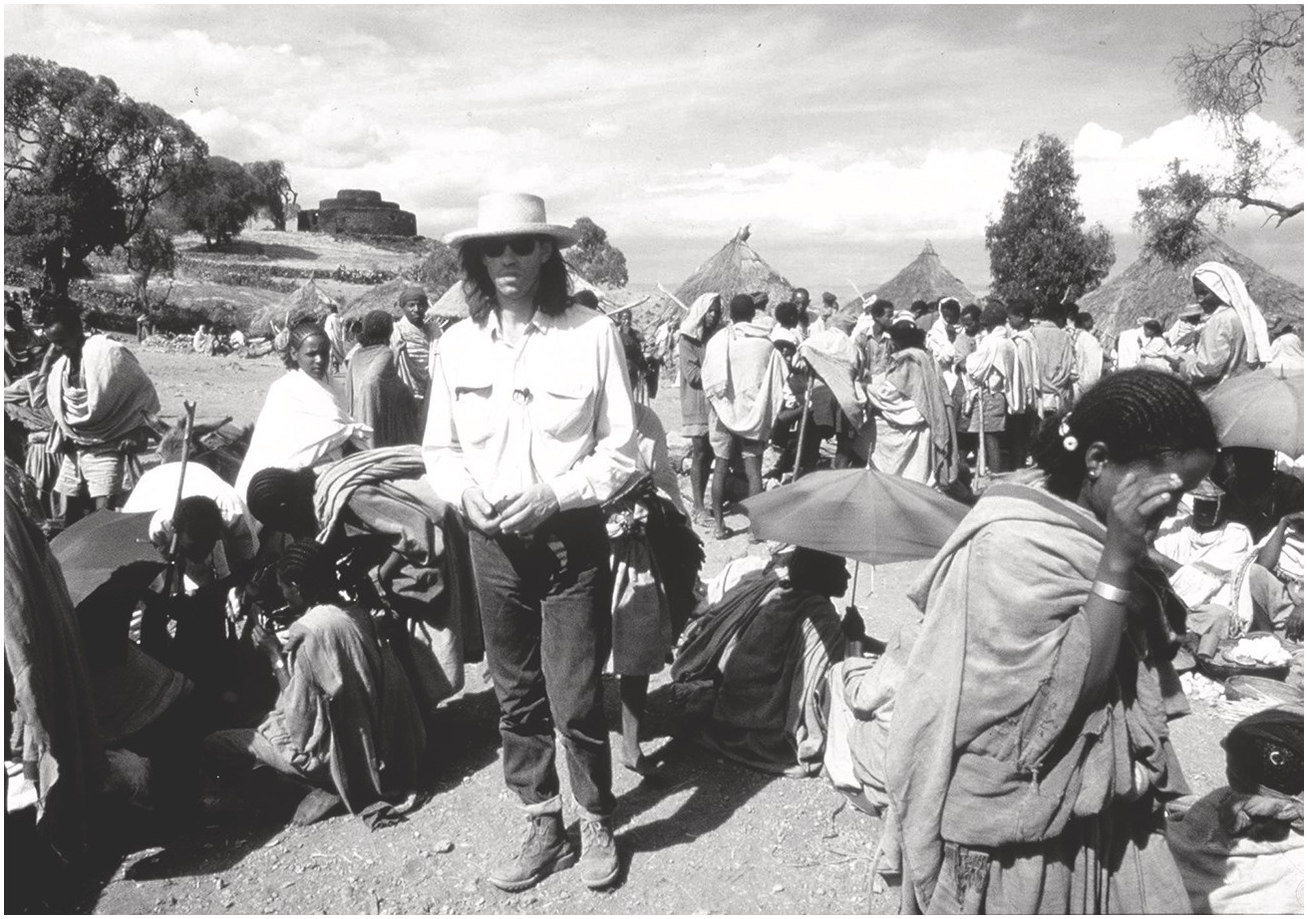
Key to the evolving Band Aid operation was a group of volunteers with little experience in relief work. They were led by Kevin and Penny Jenden, whose professional background was in architecture and anthropology. Band Aid spent an initial £8 million directly on supplies. The first plane containing Land Rovers, high-protein biscuits, tents, and dried milk in bags marked ‘Love from Band Aid’ arrived in Ethiopia in March 1985.Footnote 293 Frustrated by the high cost of shipping, Band Aid leased a fleet of vessels to carry goods to Africa and transported approximately 100,000 t of food, tents, medical equipment, and vehicles over the course of an eighteen-month operation.Footnote 294 Such action was part of Band Aid’s ‘gung-ho attitude, which meant we suggested a lot of stuff that regular charities couldn’t – or wouldn’t – do’.Footnote 295 A number of other organisations, ranging from Oxfam to small voluntary and church groups, benefitted from the free shipping Band Aid offered.Footnote 296
Despite some criticism about the contents of the shipments, Band Aid generally avoided the pitfalls faced by other inexperienced donor efforts, such as the Daily Mirror ‘Mercy Flights’, which became notorious for sending inappropriate goods.Footnote 297 Although the amateur status of Geldof’s team was well-known and drew the scorn of aid circles, Geldof defended it vigorously, stating that it ‘is really quite simple. Rank amateurs can grasp things quickly.’Footnote 298 Critics, including Jansson, felt that Band Aid should have concentrated on fundraising and left distribution to established agencies.Footnote 299
The creation of the UN Office of Emergency Operations in Ethiopia (OEOE) was an important step for the West in regaining the confidence of Ethiopian authorities. Jansson appointed an NGO officer and the OEOE took on the role of mediating between the RRC and foreign organisations. As Jansson saw it, both sides ‘sometimes needed reminding that each needed the other just as much’.Footnote 300 However, critics accused the office of being too close to the Ethiopian government to be able to challenge it effectively. The OEOE held the RRC in far greater esteem than USAID officials would have liked.Footnote 301 Restrictions on aid organisations were strengthened during 1985, and the number of expatriate relief workers allowed into the country remained a major point of contention.Footnote 302
Concerns over possible misallocation of aid were paramount for many organisations, even if there was muted criticism of the Ethiopian government. In December 1984, War on Want publicly aired its apprehensions that food aid was being diverted to feed the Ethiopian military, and that the Derg was seeking to use starvation in rebel-held areas as a tactic of the ongoing civil war. George Galloway, the general secretary of the War on Want was aware that other agencies saw his radical development organisation as ‘rocking the boat’, but he justified this stance, saying ‘I think there comes a time, when to pretend that the famine relief effort is going well is to do a disservice to those people in Ethiopia who are in most need.’Footnote 303 The ICRC, protected in part by a status agreement with the Ethiopian government and its links to the Ethiopian Red Cross, was also more outspoken than many organisations about aid being diverted to the army or forced resettlement programmes.Footnote 304 In February 1985, the ICRC director for operational activities warned donors, ‘Either you just want to send a lot of food to the country, or you really want to help the starving. In the second case, what is happening is unacceptable.’Footnote 305
Allocating Aid to Rebel-Held Areas
A central moral challenge for humanitarian agencies was how to ensure that people living outside government-controlled areas received relief, without also compromising those agencies’ ability to work in Ethiopia proper. Estimates varied widely, but some organisations suggested that 60–80 per cent of those affected by the famine in 1984–5 were living in regions controlled by the liberation fronts, while Christian Aid, a more cautious organisation, calculated that the figure was more likely less than half.Footnote 306 The failure to make adequate provisions for Tigray and Eritrea saw growing numbers of refugees flee to Sudan. Beginning in late 1984, at least 200,000 Tigrayans crossed the Sudanese border, their movements organised by REST. This included 80,000 during October and November 1984 alone.Footnote 307 As major donors were persuaded of the humanitarian needs of the areas under the insurgency, supplies began flowing to the contested regions through Sudan, and later also from areas controlled by the Ethiopian government via the new ‘Food for the North’ initiative.Footnote 308
Throughout 1983 and 1984, a group of church-based Western agencies – notably Christian Aid, Norwegian Interchurch Aid, and Dutch Interchurch Aid – called for relief assistance to Tigray and Eritrea through REST and ERA.Footnote 309 In 1983, Dutch Interchurch Aid led a five-agency consortium that secured a one-time allocation of the European Economic Community (EEC) emergency grain for Eritrea; however, applications for additional grants in the following year were repeatedly rejected. Supporting the rebel-held areas was deemed ‘too political’ for many donors.Footnote 310 In Britain, for example, Foreign Office members suggested that their country had to keep its distance from such groups in public, even if the UK gave some aid in secret via partners.Footnote 311 Likewise, UN agencies and officials in Ethiopia avoided direct contact with the liberation fronts and their aid organisations. Relief assistance was vital to the relationship between the liberation fronts and the population in the areas they controlled, and because of this, both fronts pursued a policy of ensuring that ERA and REST maintained oversight over relief distributions.Footnote 312
Non-operational consortia had less to lose from speaking out about the famine in Eritrea and Tigray than agencies on the ground did. European church organisations and the liberation fronts were not natural allies, but the consortium did hold together, apparently through the strong moral convictions of its partners.Footnote 313 Christian Aid, for example, identified a moral imperative to provide relief to Eritrea and Tigray because ‘as the Government of Ethiopia has no intention of reaching these people, we feel we have to try’.Footnote 314 The organisation criticised the EEC for stressing the difficulties of providing aid more than it did the needs of the population. Between April 1983 and February 1985, Christian Aid directed over 90 per cent of the approximately £5 million it raised for the Ethiopian famine to the disputed regions of Eritrea and Tigray.Footnote 315 ERD members kept up the pressure on donor governments, the UN, and the EEC to increase aid to Eritrea and Tigray, or at least to support the safe passage of provisions from Sudan into the rebel-held areas.Footnote 316 Christian Aid threatened the UK aid minister that if there was no change in EEC policy, they would go public with the story of delays, noting ‘we have a responsibility not only to the people dying but also to our supporters who have given so much to our appeals’.Footnote 317
While ERD faced pressure to be a more ‘vocal solidarity movement’ than most of its members were comfortable with, War on Want was an open supporter of the two liberation fronts, the Tigray People’s Liberation Front (TPLF) and Eritrean People’s Liberation Front (EPLF).Footnote 318 War on Want engaged in high-level diplomacy around the issue of safe passage, suggesting the formation of an international commission headed by Willy Brandt to mediate between the Mengistu regime and the liberation fronts. Such calls were ignored because of the Ethiopian government’s refusal to recognise the rebel movements, which it regarded as ‘bandits’ and ‘terrorists’.Footnote 319 Moreover, War on Want’s close connection to the rebel forces cost the scheme its credibility. Band Aid also dealt directly with the rebel aid agencies; spending US$10 million on the purchase and transport of food, medical supplies, and other relief items for ERA, and US$1.8 million for REST, from 1985 to 1990.Footnote 320
Despite the needs of Tigray and Eritrea, many of the international organisations working in government-controlled areas, including UNICEF and CARE, chose not to become involved in cross-border provisioning in order to protect their work elsewhere.Footnote 321 In UNICEF’s case, this stemmed from a rigid application of UN respect for sovereignty, perhaps because Addis Ababa, as the home of the UN Economic Commission on Africa (ECA) and the Organisation of African Unity, ‘was of unusual importance to the UN system’.Footnote 322 CARE appears to have been driven by fears over staff being expelled from the country. Approached informally by USAID to consider getting involved in cross-border work, CARE Ethiopia’s representative threatened to request an immediate transfer if the New York headquarters approved this plan, assuring headquarters he was ‘not trying to be melodramatic’.Footnote 323 Reporting back from her visit to Ethiopia in April 1985, a representative from CARE headquarters agreed that involvement in such a scheme would jeopardise its work by ‘politically tainting us’. By that time, CARE lobbyists were seeking to persuade the US government that both the cross-border and ‘mercy-corridor’ schemes should take lower priority than food for Gonder, Wollo, Showa, and Sidama in Ethiopia.Footnote 324 In the UK, Save the Children was concerned that Christian Aid’s public support for Eritrea and Tigray might damage the organisation by association in the eyes of Ethiopian officials.Footnote 325 World Vision had at first refused to help Eritrea for fear of provoking the displeasure of Ethiopian authorities; but its leadership had a change of heart, stating that ‘We had to make a choice and we tried to serve the most people in the best way.’Footnote 326
After the media storm of October 1984, key donor governments, while still maintaining their official neutrality, were drawn into supporting a clandestine cross-border feeding operation in a move that quietly disregarded Ethiopian sovereignty.Footnote 327 The Ethiopian government was prepared to turn a blind eye to some food and relief supplies entering via Sudan on the condition that the agencies involved give no publicity to their work.Footnote 328 Responsibility for this cross-border operation was shared between the ERD, the Catholic Secretariat (an umbrella body of Catholic relief agencies), and the ICRC. In early 1985, the ICRC was the only agency consistently able to reach people in the so-called grey areas of the north that neither side controlled. Drawing heavily on US government funding, the ICRC set up feeding stations in Tigray, Eritrea, and in provinces bordering those regions; distributing 2,000 t of food a month in 1985. Consciously avoiding publicity, the ERD was for donor governments a ‘quiet buffer’ that was seen as legitimate, if unorthodox.Footnote 329 Oxfam and Oxfam America channelled large amounts of food aid through REST on a strictly ‘off the record’ basis.Footnote 330 Most organisations adopted a pragmatic approach, preferring to settle for ‘low key, ad hoc arrangements’ rather than force the issue with the Derg and risk jeopardising their operations. In fact, the ICRC rejected the British government’s offer of raising the issue of safe passage with its Ethiopian counterpart. The ICRC’s ties with the Ethiopian Red Cross also enabled it to circumvent the RRC in other ways.Footnote 331
In the summer of 1985, supplies began flowing to the contested regions via the ‘Food for the North’ agreement signed between US and Ethiopian officials. Funded by USAID and channelled by CRS in Eritrea and by World Vision in Tigray, 36,000 t of aid were distributed in Eritrea and 15,000 t in Tigray from August 1985 to December 1986. Critics, however, argued that the supplies were supporting a pacification programme. Thus, USAID assistance flowed to these contested regions both through the ERD cross-border scheme and the Food for the North initiative, an apparently contradictory position that has been interpreted as giving humanitarian concerns priority over diplomatic ones. However, the Derg’s willingness to tolerate aid reaching rebel-held areas fluctuated over the course of relief operations from 1984 to 1986, sometimes yielding to diplomatic pressure before hardening its stance again. There were also immense practical difficulties involved in cross-border relief, as the Ethiopian air force considered aid convoys legitimate military targets. As a result, it might take five-times longer for relief to reach the hungry than it would have in peacetime.Footnote 332 In return, rebel groups sometimes attacked aid convoys; both CRS and Red Cross shipments were periodically targets of TPLF guerrillas.Footnote 333
Food and Feeding
From 1984 to 1986, approximately 1.5 million tonnes of emergency food aid reached Ethiopia. Most came from bilateral and multilateral donors. Privately funded shipments by voluntary organisations accounted for only about 6 per cent of food aid in 1985–6.Footnote 334 However, the initiative and symbolism of sending food was important. In August 1984, frustrated by the lack of an official response from any major donor nation or UN agency, Oxfam, in partnership with Norwegian Church Aid and Redd Barna (Norway’s Save the Children), took the unusual step of privately funding a grain shipment to Ethiopia, hoping to thereby shame international donors into taking action.Footnote 335 Similarly, an important and well-publicised aspect of the international response, when it came, was the launching of a food airlift to remote regions. By December 1984, 5,000 t of supplies had been airlifted.Footnote 336 This commitment was reflected in the language of expressive relief, such as the ‘Feed the World’ refrain of Band Aid.
Overall, the proportion of food aid distributed by voluntary organisations grew from approximately half of the total food aid at the start of the crisis to over 80 per cent by the end of 1985. Most of this aid was distributed in the form of dry rations to families registered through peasant associations. Individuals reported to a distribution centre once a month, returning to their homes on foot bearing their parcels.Footnote 337 In addition, rehabilitation programmes provided other gifts-in-kind, including seeds, tools, and livestock, and some longer-term development aid was also undertaken as a response to the famine. The CDAA consortium, for example, operated 100 distribution centres under its Nutrition Intervention Programme, allocating monthly rations of oil, cereal, and dried milk to families with children under five. The Red Cross JRO administered monthly rations of oil, flour, and beans through seventeen distribution points in Eritrea, twelve in Tigray, and nine in Wollo in government-controlled Ethiopia, accounting for about 8 per cent of all food aid distributed.Footnote 338 Oxfam’s Tony Vaux later reflected that in some areas such as Tigray where grain was available for purchase, monetary disbursements would have been a more effective way to increase people’s entitlements, but that aid agencies went to extraordinary lengths to ensure that food was distributed instead of cash.Footnote 339
In addition to these feeding programmes, which were designed to keep people in their homes and villages, other food and medical care was provided via a network of camps (so-called relief shelters) across Ethiopia, Eritrea, and Tigray (see Figure 4.9). At the height of the relief efforts in April 1985, over half a million people were receiving aid at shelters – once again mainly as dry rations, while the same number continued to gather in unofficial camps in the vicinity of these shelters.Footnote 340 The shelters were supplied with Oxfam’s specialised child feeding kits and prefabricated water tanks. Oxfam had also recently worked with scientists at Oxford Polytechnic and Fox’s Biscuits to develop and manufacture a high energy child feeding product; the ‘Oxfam biscuit’, and the famine in Ethiopia was its first widespread test.Footnote 341 Migration to shelters was a last resort for famine-stricken people and reflected the failure of other distribution methods. Women and children were disproportionately represented there. Supplementary feeding and medical care programmes that targeted severely malnourished groups, mainly children and nursing mothers, were run by agencies including Oxfam, Save the Children, MSF, and the Red Cross JRO.Footnote 342
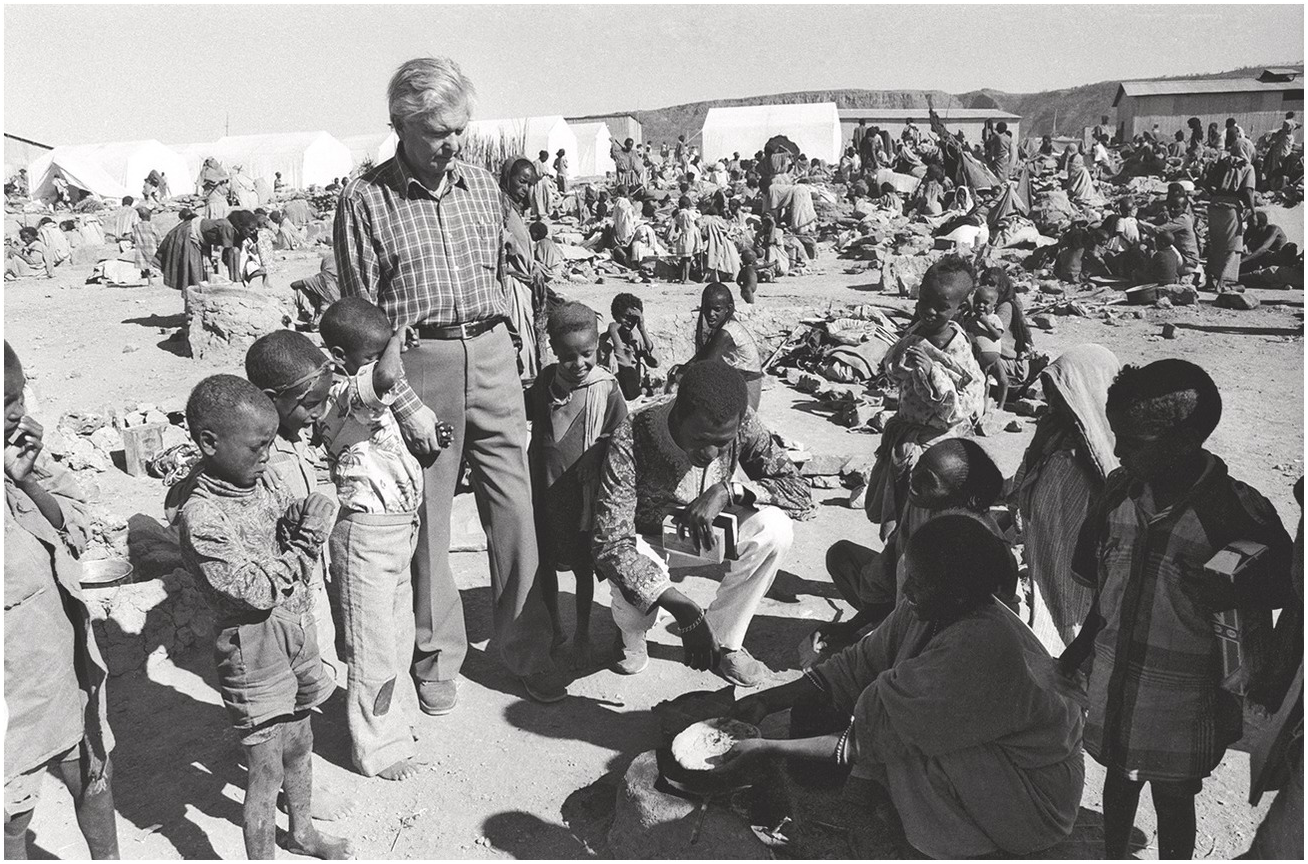
However, the food provided by aid programmes was not always compatible with the tastes or usual diets of recipients. This point was raised by Manu Dibango, a musician from Cameroon who was featured on the Tam Tam pour l’Ethiopie record, after a visit to Korem in January 1985. African newspapers also warned that there was a danger that recipients of food aid might develop foreign tastes and become a market for Western surpluses after the danger of famine was over.Footnote 343 This concern, however, was not held in the West, and contrasted with the widespread desire of the European public to see the EEC’s mountains of stockpiled food used to alleviate hunger in Africa. All agencies routinely received and rejected offers of food donations, such as the several tonnes of a ‘macaroni/rice product’ that a New Jersey company wished to donate to CARE; it was politely declined.Footnote 344 CARE’s field officer in Ethiopia was conscious that whatever the benefits of a collection of goods-in-kind for positive public relations in the USA, these were likely to be offset by negative publicity in the international press about ‘white elephant aid’, as well as the possibility of outright rejection by recipients.Footnote 345
Vaux has suggested that Oxfam’s early response was ‘characterized by an inappropriate “refugee camp” ideology’.Footnote 346 An issue with supplementary feeding was that effective aid operations were geared to the distribution of basic rations. Many observers have stated that food and transport resources intended for humanitarian purposes were diverted from famine relief to resettlement,Footnote 347 as in areas where there was no major food distributing agency, like in Wollo. Visiting northern Ethiopia in July 1985, Vaux examined UN records that showed most relief grain was being earmarked for resettlers.Footnote 348 This meant that supplementary food intended for children was diverted to families, creating an incentive for families to keep children in the low-weight category that qualified them for help. Accordingly, Oxfam’s work in the region of Wollo shifted from supplementary nutritional feeding to distributing basic rations as well.
As the immediate famine crisis came under control, numbers in the relief camps gradually declined to approximately 15,000 by the end of 1985. Shelters were phased out as the transportation situation improved.Footnote 349 However, the closure of the camps was problematic for several reasons. There is evidence that the Mengistu regime sought to reduce the numbers of those in relief camps as part of a strategy to swell the population available for resettlement. For example, the premature closing of the famine relief camp at Ibenat in April 1985 that led to the forced expulsion of 36,000 people was rare in that it made headlines around the world and resulted in strong protests to the Ethiopian government. In an unusual move, the government responded by reopening the camp, claiming that a ‘mistake’ had been made.Footnote 350 As the relief camps in Ethiopia grew smaller, such protests ensured that UN monitors would be present at future closures.Footnote 351 Scenes from the relief camps also made for good television, serving as a public relations opportunity for aid agencies concerned with promoting their activities and soliciting additional funds. Oxfam’s medical adviser was reluctant to shut down its supplementary feeding programme in Wollo because the operation had the positive effect ‘of putting Oxfam nurses in the front line, and thus satisfied a public relations need’.Footnote 352
Resettlement
The Ethiopian policy of emergency resettlement was the most controversial aspect of famine relief in 1984–5, causing aid agencies to face a moral and economic dilemma. Was it better to speak out about abuses of aid and jeopardise the wider relief effort, or remain silent and appear to condone the government’s actions? Should one aid those forcibly resettled and appear complicit in the government’s action or turn one’s back and leave vulnerable migrants without support? Journalist Peter Gill notes that this question ‘divided the international aid community down the middle’.Footnote 353 The movement of people from drought-prone and ecologically degraded regions in the north to more fertile areas in the south-west of the country had long been advocated by agricultural experts and the World Bank, and small-scale initiatives of this kind had been developed in the 1970s.Footnote 354 However, the resettlement scheme that the Derg launched in November 1984 as its major response to the famine was also a political strategy aimed at depriving rebel forces of their support base. Although ostensibly voluntary, the programme was, in fact, coercive, as officials were required to meet high quotas. Moreover, the preference for relocating able-bodied men resulted in the separation of families.Footnote 355 Prospective settlers might also register voluntarily, but if they changed their minds, they were unable to withdraw from the programme. Settlers who were interviewed likened the reception centres to which they had been initially lured, to ‘rat traps’ where food was used to ensnare people, rendering the ‘concept of individual will almost meaningless’.Footnote 356
By January 1986, almost 600,000 people had been relocated, largely by means of Soviet transport. Resettlement was hampered by a serious lack of preparation at the receiving sites. By 1985, the programme was coming under sustained criticism from abroad.Footnote 357 The figures are disputed, but as many as 300,000 people may have died in the process of resettlement, often because the forced migrants were too weak from famine to travel, and because of inadequate support at their destination. Despite the ICRC’s requests that it be allowed to investigate humanitarian conditions and trace missing persons, the agency was repeatedly denied access to resettlement camps in 1985 and 1986.Footnote 358
Most large donors, including the British, West German, and US governments, refused to support resettlement. Publicly, USAID declared the scheme a development programme rather than relief work, but in private officials went further and expressed concern about human rights.Footnote 359 Neighbouring African governments were more supportive, apparently prepared to accept the claim that resettlement was the only alternative to long-term food aid dependency.Footnote 360 The resettlement programme was largely suspended between June and September of 1985, but in November of that year the Italian and Canadian governments announced that they would support resettlement, although Canada provided only a small financial contribution. Italy gave US$150 million over the next few years, as part of its wider, controversial programme of aid to the Horn of Africa.
Resettlement placed huge pressure on the moral economy of aid, with most voluntary organisations preferring a policy of discretion and behind-the-scenes lobbying to public protests over abuses. However, a range of organisations investigated the realities of resettlement and sought to raise global awareness of the manipulation of aid by the Ethiopian regime. They included Cultural Survival (USA), Survival International (UK), Berliner Missionswerk (West Germany), and MSF (France), as well as the ICRC.Footnote 361 Cultural Survival, a research organisation founded by social scientists at Harvard University, produced a study based on interviews with 270 refugees in six camps in Sudan. Their report was widely cited as evidence of abuse by organisations such as MSF, although it was loudly discredited by others, including Ethiopian researcher Richard Pankhurst, who dismissed it as based on ‘hearsay’.Footnote 362 There was some coverage in broadsheet newspapers, but the story did not make it on to the television networks because footage of settlers being abused was lacking.Footnote 363
The major operational aid organisations also remained sceptical of some human rights research, seeing it as politically motivated, but were in turn criticised for downplaying the difficulties that they faced in allocating aid in the field. Survival International, for example, accused British aid agencies of boycotting meetings organised in London to discuss the research into resettlement in order ‘to avoid confronting the issue’.Footnote 364 Alula Pankhurst argued that the campaign against resettlement had created unwarranted comparisons between what was happening in Ethiopia and emotive examples from history, including Stalinist deportations, Nazi persecution, and Khmer Rouge atrocities in Cambodia, while the polarised depictions of resettlement as either a voluntary famine relief measure, or a systematic forced relocation scheme, were equally misleading.Footnote 365
A concern of most international aid workers was not to jeopardise relief work elsewhere by open confrontation. In Ethiopia, CRDA members were reluctant to either fully support or outright condemn resettlement. In February 1985, CRDA’s O’Keefe briefed Christian Aid in London, claiming that while he had heard rumours about forced resettlement, he had also witnessed people voluntarily walking to relocation depots.Footnote 366 By May, CRDA members decided that although they would refuse to provide transportation, they would consider humanitarian requests in support of resettled people.Footnote 367
In addition, there were concerns that airing doubts would negatively affect support for Ethiopian relief among the donating public in the West. The British ambassador in Addis Ababa warned a television journalist that drawing attention to the problems of resettlement could be detrimental to public attitudes and contrary to her goal of keeping the cause in the headlines.Footnote 368 Critics accused aid organisations like Oxfam, whose contributions had doubled because of the famine, of being driven by financial considerations. The human rights organisation Article 19 later claimed that in order to maintain their increased levels of funding ‘it was necessary for relief agencies to remain active in Ethiopia, and therefore not to risk expulsion’.Footnote 369
Behind the scenes, however, major aid agencies were worried about the implementation of the resettlement programme. In February 1985, Oxfam and Save the Children sent a joint statement to Jansson expressing their concern that resources were being misappropriated.Footnote 370 Later that year, the two organisations discovered that their trucks were being forcibly commandeered on a number of occasions to transport settlers. Rather than comment publicly, they protested informally to the RRC. Oxfam felt that ‘representations rather than public protest are more effective’.Footnote 371 Similarly, in a private meeting of Western ambassadors and aid organisations in Addis Ababa in September 1985, Jack Finucane of Concern spoke of the ‘horrible’ conditions of resettlement, the widespread failure to prepare the sites, and the estimated mortality rate of 15–20 per cent. He later denied these claims and refused to go on record with the declaration.Footnote 372 In May 1985, Christian Aid admitted ‘hard thinking’ about its policy in the face of the 500,000 people who were living in resettlement areas, and the fact that several local church groups had already begun helping those in need.Footnote 373 Similarly, in September, CRDA issued a statement that rejected compulsory population movement, but suggested that it was dedicated to assisting the Ethiopian people wherever they are in need, and could ‘achieve more by involvement rather than by boycotting’ the resettlement in general.Footnote 374
For MSF, however, refusal to take part in the silence that other organisations considered expedient was integral to its commitment to ‘témoignage over discretion’ established since the Biafra crisis. MSF volunteers in Ethiopia sought to expose the tactics of using food to lure famine victims to transit camps. One MSF method was to work with the Western press when no other aid agencies were prepared to go on the record. In November 1985, Michel Fizsbin, the representative of MSF in Ethiopia, was the only member of a voluntary organisation willing to be cited in a Sunday Times exposé about the abuses of resettlement.Footnote 375 Rony Brauman, then president of MSF, continued to repeat these allegations, stating at a press conference in Paris, ‘Aid is not being used to save, but to oppress.’Footnote 376 Matters came to a head when the RRC sent a letter terminating the Ethiopian operations of MSF France immediately. It cited ‘politically motivated false allegations’ and refusal to follow norms and procedures like other voluntary organisations. Approximately thirty expatriate workers from MSF France were forced to leave; all MSF assets were frozen, and local staff found themselves without a job and fearing for their safety.Footnote 377
While MSF’s moral stance on resettlement put pressure on other organisations to defend their positions, few agreed with MSF, and they saw the dire consequences of speaking out. A copy of an open letter sent by MSF to all aid organisations working in Ethiopia was telexed to New York by CARE’s Ethiopia representative as an example of ‘the perils of error’.Footnote 378 British aid organisations held an emergency meeting in London to discuss the crisis. Their conclusion was that MSF had taken their protest too far.Footnote 379 Oxfam urged the need to keep the issue in perspective, since the resettlement programme was only affecting about 5 per cent of the population. Moreover, Oxfam felt it had to ‘tread carefully’ to protect its other projects in Ethiopia, which it concluded were not worth sacrificing to ‘an issue of great emotional appeal’.Footnote 380 In a communication to the Ethiopian ambassador in December 1985, Oxfam expressed concern over forcible resettlement in Wollo, but generally limited its criticism to the ‘haste, scale and timing’ of the latest phase.Footnote 381
Historian Eleanor Davey suggests that the French model of sans frontiérisme, with its emphasis on crisis relief, stood in contrast to a British model of development.Footnote 382 While MSF dedicated itself to the twin principles of providing aid and speaking out, most other organisations, including Oxfam, prioritised the humanitarian objective and saw principles as ‘a hindrance rather than a help’.Footnote 383 There was also no support from UN agencies or donor governments. Jansson was dismissive of the MSF protest, characterising those taking part as young, immature, and ‘highly excitable, reacting emotionally’ to events.Footnote 384 While donors, including the US government, were wary of Mengistu’s manipulation of aid and opposed to resettlement, they would have had difficulties withholding famine relief on political grounds because ‘the newly fashionable post-Band Aid humanitarianism demanded action in Ethiopia’.Footnote 385
Moreover, the crisis exacerbated a growing rift between MSF France and MSF Belgium. The Belgian section made a unanimous decision to continue working in Ethiopia, some members considering their French colleagues to have exaggerated their claims.Footnote 386 This dispute stemmed in part from the strong anti-communist stance taken at the time by MSF leaders that resulted in the formation of its short-lived political arm, Liberté Sans Frontières. The abuses of power by the Mengistu administration typified the form of government this think tank was created to combat: a totalitarian regime hiding behind a Third World façade. In France, the president of Action Internationale Contre la Faim (AICF) condemned MSF for abandoning the people of Ethiopia, arguing that it was harder to stay than leave and watch the tragedy ‘play out in silence’.Footnote 387
In an internal report aimed at rebutting the accusations of abuse, CARE noted that it preferred to work towards ‘solving problems and resolving difficulties’ with the government of Ethiopia, rather than ‘publicly airing these and endangering the lives and future of poor Ethiopians’ – an apparent rebuke of MSF’s course of action. CARE and several other agencies sought to reclaim the moral high ground from those who preferred the tactic of ‘public excoriation of the Marxist government’, while at the same time downplaying the extent of the contradictions their organisations faced working in Ethiopia. Thus, CARE concluded that its famine relief and development activities had been carried out ‘without compromising CARE’s principles’.Footnote 388 Similarly, InterAction later issued a statement on behalf of a number of its members calling the MSF claims ‘affrontery to truth’.Footnote 389
While most organisations preferred to avoid working in such a situation, others believed the needs of the resettled peoples outweighed their own misgivings over the way the displaced population had been moved. Ethiopian churches and missions were among the first to become involved, followed in May 1985 by Secours Populaire Français and Menschen für Menschen. Although USAID had issued a prohibition on relief to government-run resettlement camps, CRS defied this and operated US-funded feeding programmes in some locations.Footnote 390 Concern Worldwide began working in resettlement areas in November 1985. Band Aid was initially sceptical about funding such work, fearing its involvement would be interpreted as condoning resettlement. However, it came to see participation as a way of persuading other donor agencies to engage in rehabilitation and development in resettled communities. In 1986–90, Band Aid funded an RRC–Concern project supporting people in twenty villages who had been resettled from Wollo.Footnote 391
Rehabilitation and Newcomers to Aid
The second half of 1985 marked a shift in the allocation priorities of some voluntary organisations and major donors from emergency feeding to rehabilitation. In March of that year, a UN donor conference held in Geneva made it clear that there was considerable reluctance to meet Ethiopia’s development needs. However, one month later the Canadian government announced a CA$25 million fund for ‘recovery’ in Africa, earmarking CA$18 million for voluntary organisations.Footnote 392 CRDA successfully appealed to international donors for a rehabilitation programme that eventually distributed over 8,000 tonnes of seed, 100,000 tools, and 2,400 oxen through member agencies.Footnote 393 Nevertheless, the provision of seed, tools, and fertiliser proved to be inadequate, often arriving too late to make a difference. Thus, while harvests in 1985 were greater than 1984, they were still below normal.
There have been numerous attempts to historicise celebrity humanitarianism as a cultural phenomenon. However, analysis and discussion of the grant-making policy of the newcomers to humanitarian activity, Band Aid and USA for Africa, is limited. The new trusts attempted to shape the wider humanitarian sector in their own image through aid allocation, prioritising collaboration, and consensus, while integrating rehabilitation, research, and long-term development work.
By summer 1985, many of those involved with USA for Africa began to recognise that their efforts were too late to contribute much to the emergency feeding phase of the relief operation. In June, Harry Belafonte and the USA for Africa team embarked on a fact-finding mission to Ethiopia. They arrived with a planeload of supplies on a tour carefully stage-managed by Derg officials.Footnote 394 The US visitors were not told that instead of famine victims, the patients they were taken to see in a hospital were casualties of the civil war. Their subsequent tour of Tanzania, Sudan, and Kenya was well-received by the local press. Belafonte and the other (predominantly black) performers were welcomed and commended, but their African hosts maintained a detached attitude to US relief more broadly.Footnote 395
USA for Africa shifted its activities towards providing medical supplies, implementing vehicle repair systems, and allocating funds for long-term recovery. Its board apportioned 35 per cent of its funds for emergency relief, 55 per cent for development, and 10 per cent for hunger in the USA. Director Marty Rogol recalled that ‘what [we] did not want to get into was the traditional foundation game where we sort of sat up there on Mount Olympus and people would come and beg us for money and do the traditional proposals’.Footnote 396 USA for Africa expected organisations working in countries where it had programmes to jointly decide on relief and rehabilitation priorities.Footnote 397 A liaison agency appointed in each country collected individual proposals, ranked and rated them, and submitted recommendations to the umbrella body, InterAction. The effectiveness of the system varied greatly, and it may have created more inter-agency dissention than it avoided. In Ethiopia, concern was raised that USA for Africa threatened the fragile relationship between foreign organisations and the RRC by circumventing the government in the grant allocation process.Footnote 398 A problem was the lack of a USA for Africa representative in Ethiopia, which contrasted unfavourably with the Band Aid position, whose staff member in Addis Ababa was said to have an excellent relationship with the RRC.Footnote 399
In October 1985, Geldof and Kevin Jenden embarked on a two-week tour, paid for by the London Times, across the Sahel region of Africa. Their goal was to identify funding priorities and see how Band Aid money had been spent in Ethiopia and Sudan.Footnote 400 There was growing unrest about Band Aid’s management at the time, with a widespread sense among aid organisations that it was ‘ludicrous for Geldof and his group of amateurs to set up a network of complex programmes from scratch’.Footnote 401 The British government had privately sounded out agencies for their views of Band Aid. The results were described as ‘fairly horrific’.Footnote 402 Geldof was apparently not an easy man for the aid agencies to work with, and they were not impressed by the red-tape cutting, ‘rock ‘n’ roll’ attitude of the Band Aid Trust, which was ‘both envied and suspect’.Footnote 403
Nonetheless, building personal relationships with Band Aid staff was a conscious strategy on the part of voluntary organisations keen to get a share of this money. One of the last actions of outgoing Oxfam director Guy Stringer in July 1985 was to write to Geldof, praising his ‘superb initiative, brilliantly carried through’ and stating that Oxfam was at Band Aid’s service.Footnote 404 CARE’s New York headquarters sent an urgent telex to its field offices ahead of the Africa tour, alerting its staff to this new ‘VIP donor organisation’ and requesting they ‘extend all courtesies’ to Geldof.Footnote 405 Some aid personnel were reluctant to be pulled away from their work to be lectured at by a rock star – even one with lots of money to spend. Still more controversial was the request that one voluntary organisation in each country in which Band Aid operated should chair a committee of their peers to prioritise proposals by consensus.Footnote 406 Although wary of voluntary organisations, Band Aid distrusted donor governments and UN agencies even more.
Repeated calls for Band Aid to set up ‘appropriate administrative structures’ were heeded when Penny Jenden, Band Aid’s director, appointed an advisory board that Geldof boasted was the most ‘over-qualified’ body ever assembled.Footnote 407 Headed by Brian Walker, a former executive director of Oxfam, it consisted of leading academics and development experts.Footnote 408 This action marked the start of greater co-operation between Geldof’s staff and certain agencies, notably Oxfam. Moreover, Band Aid began to reach out to a wider group of voluntary aid organisations, including Concern, CARE, War on Want, ERA, and the Disasters Emergency Committee.Footnote 409 By summer 1986, Band Aid’s advisory board had reviewed over 700 applications for funding. Many were ill-thought-out schemes or poorly prepared applications, and 450 were rejected outright. There was apparently an assumption that the newcomers to aid would be something of ‘a soft touch’, as Walker put it.Footnote 410 The focus on long-term development goals was welcomed, but Band Aid continued to be criticised for the length of time it was taking to vet proposals. Successful projects included small-scale water-well schemes, micro-dams, market gardens, grain banks, grinding mills, training programmes, and support for village-level agriculture or industry, particularly for women. A significant proportion of the grants awarded went to African-based voluntary groups.Footnote 411
International food aid became a moral economic battleground in Ethiopia in 1984–6. Government and rebel forces alike sought to manipulate food aid for political and military gain, forcing donors to adapt allocation strategies that included earmarking relief for distribution via voluntary organisations and creating consortia to interpose additional administrative layers between donor and recipient. Aid organisations already working in Ethiopia were protective of their areas of operation, looking with suspicion on newcomers to aid and previously non-operational bodies that expanded their reach during the crisis. Targeting decisions were also influenced by considerations of what would be seen as newsworthy by the media covering the famine. Thus, feeding shelters, supplementary nutrition programmes, and dramatic air drops were more camera-friendly than the distribution of monthly rations or cash disbursements. In addition, organisations had to balance responding to the needs of famine-affected communities, on the one hand, against appearing to condone the abuses of aid, on the other. Most of the larger voluntary organisations were unwilling to compromise their programmes on moral or economic grounds, preferring discretion with regard to the Ethiopian government – or, as some would have put it, complicity – over defiance.
4.5 Targeting Aid: Realities on the Ground across Two Centuries
Delivering relief and allocating aid to Ireland, Soviet Russia, and Ethiopia posed major moral, economic, and logistic challenges to the voluntary organisations involved. While historians of humanitarianism rarely examine relief on the ground in detail, doing so allows us to identify commonalities over time, moments of change, and present a nuanced understanding of aid.Footnote 412 Soup kitchens and camps operated under trying conditions may dominate the public’s image of famine relief, but over two centuries the reality has involved a great deal of routine bureaucratic administration: calculations of dry rations and scientific calorie counting; compiling and checking lists of recipients; mapping networks of distribution points and arranging transport; negotiating with other organisations, governments, and local partners; and monitoring, evaluating, and writing project reports.
Suspicious Minds
While philanthropy played a significant role in all three cases we examined, the bulk of food aid was derived from government stores of grain or largely financed by the public sector, even when it was delivered or allocated by voluntary agencies. In Ireland, the BRA acted as a proxy for UK government relief, with freight costs and other overhead expenses covered by Britain. During the famine in Soviet Russia, allocations by the US Congress through the ARA accounted for the major part of foodstuffs delivered. In Ethiopia, the US government was again the largest donor of aid, followed by the EEC and its member nations, although both had been slow to react to reports of the impending crisis, and there were significant time lapses between pledges of aid and the delivery of the goods.
In each instance studied, famine allocation decisions took place in a climate of suspicion and mistrust. Across our cases, aid agencies faced allegations that their services did more harm than good. Relief during the Great Irish Famine was influenced by the crude racial stereotyping of Irish recipients on the part of the British quasi-colonial government and underpinned by an inflexible political economy that saw dependency as the inevitable outcome of generous aid. The need for collaboration between Soviet authorities and major donors, particularly the USA, was likewise complicated by ideological tensions and criticism that aid would reinforce the Russian Revolution. The ARA was able to ensure a great degree of control in negotiations with the Bolshevik regime; other organisations, however, were less successful in this regard. In Ethiopia, two-thirds of all international aid was earmarked for distribution to beneficiaries by voluntary agencies, bypassing the widely reviled Mengistu regime. Here, the administration of relief took place against a backdrop of frequent press reports of the diversion of food aid. Different relief programmes were accused of helping the Derg and its hurtful resettlement scheme, or undermining the sovereignty of Ethiopia and bolstering the civil war.
Recipient authorities also viewed aid motives with suspicion. US donors to Ireland felt the British sometimes questioned their intentions, while parts of the Catholic establishment in Ireland, who were dubious of the aims of Protestant ‘soupers’, felt it their duty to provide aid as a means to prevent renunciation of the Catholic faith and win back apostates. In both Soviet Russia and communist-aligned Ethiopia, the authorities remained distrustful of Western relief organisations, viewing them, not without cause, as using aid to sway the hearts and minds of the hungry population. In addition, the Soviet regime was concerned that ARA-supplied food parcels might privilege those with anti-communist tendencies or the minority Jewish population. In Ethiopia, food aid became a proxy battle of the Cold War. Aid from left-wing voluntary groups and nations more ideologically aligned with the local administration was highly valued as an expression of solidarity, even if it was materially far less significant than aid from Western governments. In all cases, relationships relied on the creation of a range of umbrella bodies that could act as intermediaries or neutral screens, whereas idealistically conceived aid depended on the ability to turn a blind eye to the political circumstances.Footnote 413 High-profile figures who combined celebrity, fundraising, and administration such as Hoover and Nansen in Russia, or Jansson and Geldof in Ethiopia, helped facilitate a more positive relationship between donor governments and recipients.
Cash versus In-Kind Relief
In all three periods of famine that we investigated, relief organisations prioritised in-kind relief over giving money to recipients. While absolute shortages meant that food provisions were sometimes the only option, as in Soviet Russia, organisations generally avoided giving monetary aid, even where grain was available for purchase on the local market. This tendency was shaped by deep-seated suspicions about how cash allocations were subject to abuse. Much recent research, however, building on Sen’s understanding of entitlements, argues for the advantages of cash relief. Increasing the purchasing power of recipients through disbursal of small sums of money can help prevent the movement of foodstuffs out of famine zones, limit population shifting, and restrict the growth of relief camps. It can also reduce inefficiencies in the transport and distribution of aid. Nevertheless, in Ireland, the BRA believed that cash allocations would cause inflation, although it did eventually grant its agents some flexibility in that area. Small sums were also occasionally doled out directly to recipients through the Catholic hierarchy.
For the most part, allocation-in-kind remained the norm. The recipient of a food parcel during the famine in Soviet Russia had to pledge not to sell any of its contents, while several aid organisations insisted that children targeted by feeding programmes had to consume their rations in the agency’s kitchen. This also had the advantage of enabling medical care to be provided. Expressive humanitarianism continued to be greatly concerned about abuse, but a preference for forms of relief that would play well with audiences at home greatly influenced allocation decisions. Any disquiet over television footage of children dying in shelters or queuing up to be fed – reminiscent of the nineteenth-century spectacle of paying to watch paupers eat their soup – was supressed on the premise that the money raised through the humiliation of victims was worth it.
A strong preference for gifts-in-kind was also driven by the desire of donor governments to offload surplus foodstuffs from their domestic markets as relief goods, sometimes complicating the feeding schemes of aid organisations. The Ethiopian famine occurred against a backdrop of bumper harvests in the Global North. Tensions existed between the need to provide rations that proved acceptable to local diets and customs, while at the same time taking advantage of what was available to the humanitarian market. The challenge of unfamiliar food – such as corn in Ireland and white bread in Soviet Russia – was a common perplexity. The need to balance nutritional requirements with available funds and distribution networks can be seen in the discussions of soup recipes in the 1840s. By the 1980s, such considerations evolved into the height/weight ratios that determined which children should be admitted to supplementary feeding programmes. As the twentieth century ended, aid agencies had developed special fortified foods in familiar formats, such as the high-energy ‘Oxfam biscuit’ that was appealing to donors, cheap to manufacture, and easy to transport. The focus on the innocent child as the paramount beneficiary of aid throughout the twentieth century, although traceable back to the 1840s, likewise favoured the provision of prepared food.
Other forms of in-kind aid, often unsolicited, were collected and distributed during famine relief. Blankets and clothing were especially valued, even if sometimes inappropriate for recipients, such as the men’s suits that were given out in Ethiopian famine camps. Moreover, local purchasing might have proved more efficient than shipping goods from abroad. The ARA, for example, dismissed as naïveté the willingness of smaller aid organisations to accept all forms of gifts-in-kind during the Russian famine. In the 1980s, similar reservations were expressed by Oxfam and other established aid organisations about the contents of Band Aid shipments or aid convoys arranged by media organisations. The archival record shows that agencies sometimes put disproportionate amounts of time and effort into fielding offers of donated goods. In Ethiopia, at least, a strong emphasis on rehabilitation after the famine was supported by the distribution of donated seeds, tools, and livestock. In contrast to its public image to ‘feed the world’, a significant proportion of funds raised through celebrity humanitarianism was allocated to long-term development assistance that ranged from irrigation projects to market gardens.
Claiming credit for delivering aid is also a common, if contentious, theme. It ranges from the BRA’s urgent press releases setting the record straight about who had funded relief ships sent to Ireland, to the extensive branding of ships, planes, and sacks of grain with ‘With Love from Band Aid’. The symbolism and publicity given to food deliveries, whether the arrival of sailing vessels with relief goods, or airdrops by military planes and helicopters, is significant.
Aid Agencies, Personnel, and Logistics
Earmarking aid for specific recipient groups or affected regions is a hallmark of the moral economy of voluntary famine relief. In many cases, it is intended to make allocation more effective on the ground, while attracting and retaining donor interest. In practice, earmarking has not always been practical to implement. The BRA mentioned such special requests in its documentation of contributions, but did not let them take effect in the overall allocation for Ireland. The ARA’s promise to provide impartial relief led to conflicts, as many affiliated organisations with a specific donor base had to account for in-group feelings, previously exploited during fundraising. In Ethiopia, aid agencies concentrating on the secessionist regions of Tigray and Eritrea viewed this as a political decision that went along with solidarity campaigns highlighting the needs of those areas. The tendency for relief agencies to divide up territories into spheres of influence was routine, but could sometimes create or exacerbate gaps in the provision of aid. Transport systems that were at best barely adequate were worsened by the disruptions of civil war, adverse weather, the strain of population movements, fuel shortages, and the lack of spare parts. In both Ethiopia and Russia, transportation difficulties dominated the initial period of relief operations, with port capacity a particular concern. It took some time before more agile arrangements could be put in place. In Ireland, as later in Russia, the immature railway network meant reliance on river and canal transport.
One key difference between the age of ad hoc relief and the expressive era is the relatively small number of external relief committees operating in Ireland, as compared to the more than sixty humanitarian organisations that rushed to Ethiopia. Moreover, disasters of great magnitude have seen the emergence of significant ‘newcomers to aid’, like Save the Children in the 1920s or Band Aid in the 1980s. These organisations arrived onto the international stage with much fanfare, and in time have become semi-permanent features of the humanitarian landscape.
Claims to legitimacy by different organisations are also a feature that bridges past and present. Examples are the challenges faced by the FSR in Russia or REST and the ERA in the 1980s in demonstrating to outsiders that they were reputable aid organisations. The increase in the number of parties involved has compounded earlier issues of communication and information management in the field. Despite advances in technology since the 1920s, the ARA’s telegraph and carrier system was perhaps more successful in sharing and processing accurate information about food distribution during the Russian Famine than the UN office for Ethiopia. While soup kitchens were significant delivery points of relief during the Irish and the Russian famines, an increasing share of the aid in the case of Ethiopia was distributed as dry rations, often on a monthly basis.
The actual registration of recipients usually took place at the lowest possible level, that is, by local relief committees in Ireland and Soviet Russia, and peasant associations in Ethiopia. Here, the ad hoc humanitarianism of the mid-nineteenth century anticipated aspects of organised humanitarianism. The final targeting of aid by more privileged members of the community capitalised on local knowledge, but also opened the way to possible discrimination on the grounds of religion, ethnicity, language, political affiliation, or even personal animosities.
Relationships between foreign aid workers on the ground and beneficiaries were usually distant, but such information is largely undocumented. Recent scandals, notably the case of Oxfam, have begun to uncover widespread abuses during humanitarian crises. In Russia, the examples of relationships and marriages between US relief workers and local women hint at the possibility of greater abuses of power. In the Irish and Ethiopian case studies, the almost complete lack of archival evidence does not rule out various degrees of sexual exploitation.
The famine in Soviet Russia provided opportunities for aid workers to purchase valuable goods at low cost. In Ethiopia, despite government attempts to limit the numbers of expatriate staff, the concept of ‘cars, compounds and hotels’ may well reflect the physical and material experience of the many hundreds of overseas aid workers – at least those based in the capital, Addis Ababa. It marks a considerable shift from the lice-infested trains that aid workers in Russia complained about.Footnote 414
Nonetheless, there was also a strong yearning among aid workers on the ground to do something themselves to relieve the hunger that they encountered, whether through the small amounts of cash they received as voluntary agents and officials with funds from the BRA in Ireland, aid parcels distributed by local ARA officers in Soviet Russia, or the high-energy biscuits and water bottles handed out by journalists and celebrities visiting relief camps in Ethiopia.
The tendency of famine-afflicted people to migrate in search of food is another shared feature of crises and raises questions about the voluntary nature of such migration. In Russia, decentralised distribution systems served to reduce migration, unlike in Ireland, which saw huge population shifts within the country and on to Britain and the New World. As in the case of resettled populations who moved from the north of Ethiopia to the south, reception areas at their destination were often ill-equipped to receive the newcomers. Their arrival increased mortality and strained resources that might otherwise have gone to famine-afflicted areas.


 Open access