INTRODUCTION
Marine and estuarine fisheries are of major socioeconomic importance in Brazil, both in terms of food security and jobs, incomes and revenue generation (Haimovici et al., Reference Haimovici, Andriguetto Filho and Sunyé2014). Shrimp bottom trawlers are very efficient at catching shrimps, but they also damage aquatic habitats and ultimately threaten local biodiversity (Dias Neto, Reference Dias Neto2011).
Shrimp fisheries are carried out throughout the Brazilian coast (Dias Neto, Reference Dias Neto2011), targeting mainly species of the Penaeidae and Solenoceridae families (Haimovici et al., Reference Haimovici, Andriguetto Filho and Sunyé2014). In 2007, the latest year with catch statistics collected onsite, the catch of crustaceans in Brazilian marine waters exceeded 50,000 t, with over 35,000 t contributed by shrimps, of which 42% was Atlantic seabob Xiphopenaeus kroyeri (Heller, 1862) (IBAMA, 2007). In the state of Sergipe, Atlantic seabob (locally known as ‘espigão’) is the top species with catches amounting to 944.8 t in 2013 (Thomé-Souza et al., Reference Thomé-Souza, Carvalho, Garciov Filho, Silva, Deda, Félix and Santos2014).
Atlantic seabob occurs from the coast of North Carolina in the USA to Rio Grande do Sul in Brazil (D'Incao et al., Reference D'Incao, Valentini and Rodrigues2002). Studies on its population structure and stock dynamics have been carried out throughout the Brazilian coast. More specifically, the reproductive period, size at first maturity, sex ratio, growth, distribution and abundance have been studied in the north (e.g. Carvalho et al., Reference Carvalho, Martinelli-Lemos, Nevis and Isaac2015), north-east (Santos, Reference Santos2000; Santos & Freitas, Reference Santos and Freitas2002; Couto et al., Reference Couto, Guimarães, Oliveira, Vasques and Lopes2013; Lopes et al., Reference Lopes, Peixoto, Frédou and Silva2014), south-east (e.g. Fernandes et al., Reference Fernandes, Silva, Jardim, Keunecke and Di Beneditto2011; Heckler, Reference Heckler2014; Castilho et al., Reference Castilho, Bauer, Freire, Fransozo, Costa, Grabowski and Fransozo2015), and south of Brazil (e.g. Branco, Reference Branco2005; Grabowski et al., Reference Grabowski, Simões and Castilho2014; Natividade, Reference Natividade2014). In Sergipe, few studies were carried out for the Atlantic seabob (Santos et al., Reference Santos, Ramos and Freitas2001, Reference Santos, Silva, Freitas and Sousa2007; Silva, Reference Silva2016).
Fishery management measures currently in place for shrimp fisheries in Brazilian waters include minimum mesh size, closed inshore areas and closed seasons (Santos & Silva, Reference Santos and Silva2008). In Sergipe, the closed season extends from 1 April to 15 May and from 1 December to 15 January (MMA, 2004). The effectiveness of the current management measures should be assessed, however, and changed when needed, to ensure that the removals from these stocks can be maintained in the long term and benefits accrued for both fishers and their communities (Dias Neto, Reference Dias Neto2011).
Due to the large socioeconomic importance of shrimp fisheries for the state of Sergipe, this study was carried out with the objective of analysing the population dynamics of the Atlantic seabob X. kroyeri off the coast of Sergipe to support management plans.
MATERIALS AND METHODS
Sampling and processing
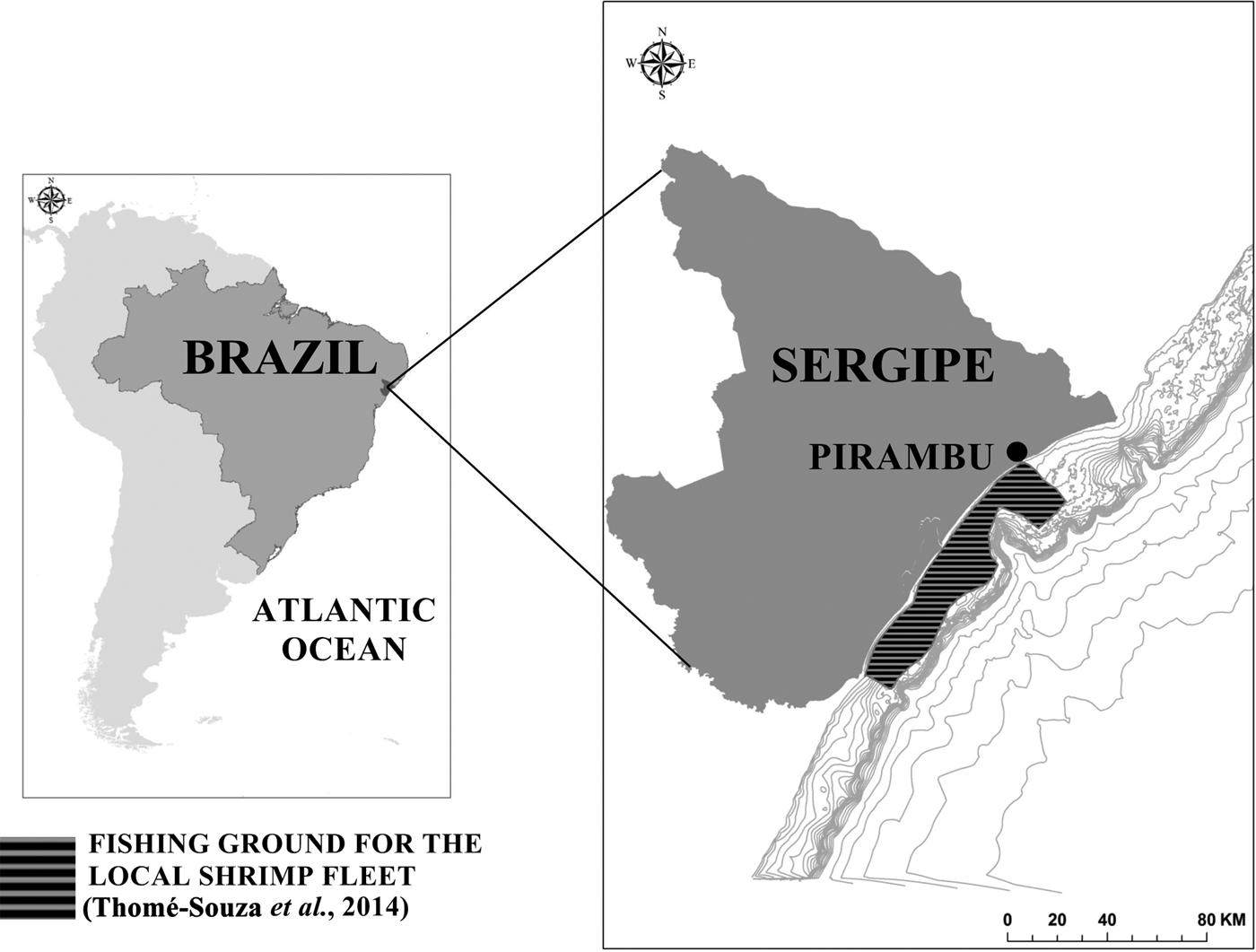
Samples were collected monthly from March 2015 to May 2016 from four different shrimp artisanal trawlers based in the municipality of Pirambu, in the state of Sergipe (Figure 1). All samples were obtained before any sorting by fishers and thus included both shrimps and by-catch. The samples were initially stored on ice and later kept frozen in the laboratory until processing. All shrimp species were identified according to Costa et al. (Reference Costa, Fransozo, Melo and Freire2003).
Study area off the state of Sergipe (Brazil), indicating the location of the municipality of Pirambu and the fishing ground for the local shrimp fleet.

Each specimen of X. kroyeri was measured in terms of their total length (TL, mm) and carapace length (CL, mm) and weighed (live weight; LW, g) with a digital calliper (precision: 0.01 mm) and a scale (precision: 0.0001 g). All individuals were sexed based on the external morphology; the maturation stage of the gonads was classified according to Natividade (Reference Natividade2006). Females were defined as immature (I), developing (II), mature (III) and spent (IV), and males as immature (non-linked petasma) and mature (linked petasma).
Statistical analyses
A chi-square test (χ2) with the Yates correction for continuity was applied to test if the overall sex ratio differed from 1:1, as well as in each month and length class (Zar, Reference Zar2010). The relationships between total length and carapace length were fitted using a linear model (TL = a + bCL) for males and females separately. An inflexion point (CLi) was observed in these relationships and was estimated according to Sant'Ana et al. (Reference Sant'Ana, Pol Mayer and Pezzuto2016). The relationships between live weight and carapace length were fitted with a linear version of the model LW = aCLb for males and females separately. The hypotheses of isometry were tested for the length-length relationships (b = 1) and weight-length relationships (b = 3) using the t-test (Froese, Reference Froese2006; Zar, Reference Zar2010). All relationships estimated for females and males were compared using covariance analyses (Zar, Reference Zar2010). For each test a significance level of 5% was used.
The reproduction period was defined based on the presence of mature and spent females (stages III and IV). The length at first maturity (CL50) was estimated fitting a logistic curve to the percentage of mature individuals (%mature) and carapace length (CL) for females and males separately, using the following equation: %mature = 100/(1 + exp(a + b·CL)) (Sparre & Venema, Reference Sparre and Venema1998). Parameters ‘a’ and ‘b’ were estimated using a non-linear fitting method (SOLVER in Microsoft Excel).
The parameters of the von Bertalanffy growth curve were estimated for females and males, separately, using ELEFAN in R (Pauly & Greenberg, Reference Pauly and Greenberg2013). Asymptotic length (CL∞) was obtained using the Wetherall method (Reference Wetherall1986), which was later used for estimation of the growth parameter (K) using the K-scan routine available in ELEFAN in R. For males, this routine was not able to estimate a biologically reasonable K value. Therefore, the growth performance index (Φ′ = logK + 2logCL∞) was estimated for females, which was then used to estimate the K value for males. The growth parameters obtained in this study were compared with other studies using an auximetric plot. The winter point (WP) and the amplitude of seasonal oscillation (C) were estimated based on temperature data given in Silva (Reference Silva2016), which identified October as the coldest month (i.e. WP = 0.8) and a winter-summer bottom temperature range of 6°C which approximately corresponds to C = 0.6 (Pauly, Reference Pauly2010). The longevity (years) for females and males was calculated using the inverse of the von Bertalanffy equation (D'Incao & Fonseca, Reference D'Incao and Fonseca1999). The total instantaneous mortality rate (Z) was derived from the Z/K estimate obtained from the Wetherall plot (Reference Wetherall1986) available in ELEFAN in R.
RESULTS
Sex ratio
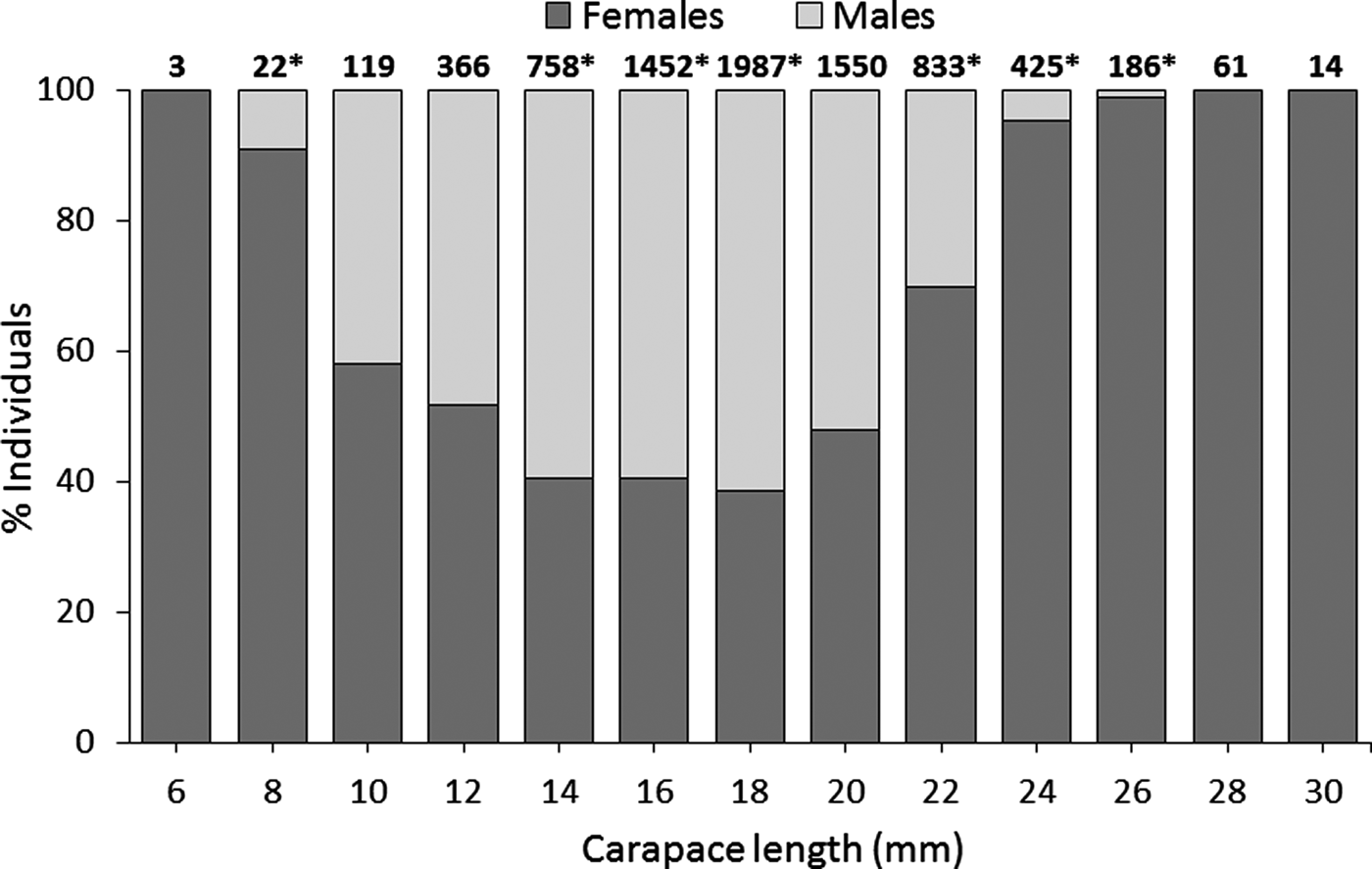
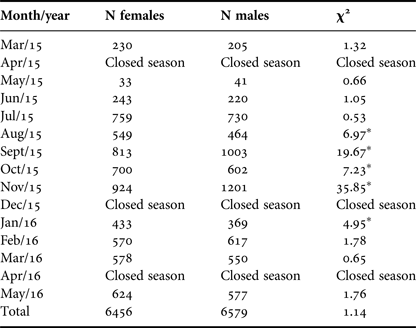
A total of 13,035 specimens of X. kroyeri were collected and analysed: 6456 females and 6579 males. The overall sex ratio was not statistically different from 1:1 (χ2 = 1.14; P = 0.2853). However, there was a statistically significant predominance of females in August, October and January, and of males in September and November (Table 1). Females were more abundant among the larger sizes (Figure 2). The small number of individuals did not allow for a statistical comparison in some length classes.
Proportion of females and males of Xiphopenaeus kroyeri in Sergipe for each length class from March 2015 to May 2016. *Statistically significant difference (χ2 > 3.84; α = 0.05).

Proportion of females and males of Xiphopenaeus kroyeri off the coast of Sergipe from March 2015 to May 2016.

N, number of specimens.
*Statistically significant difference (χ2 > 3.84; α = 0.05).
Biometric analyses
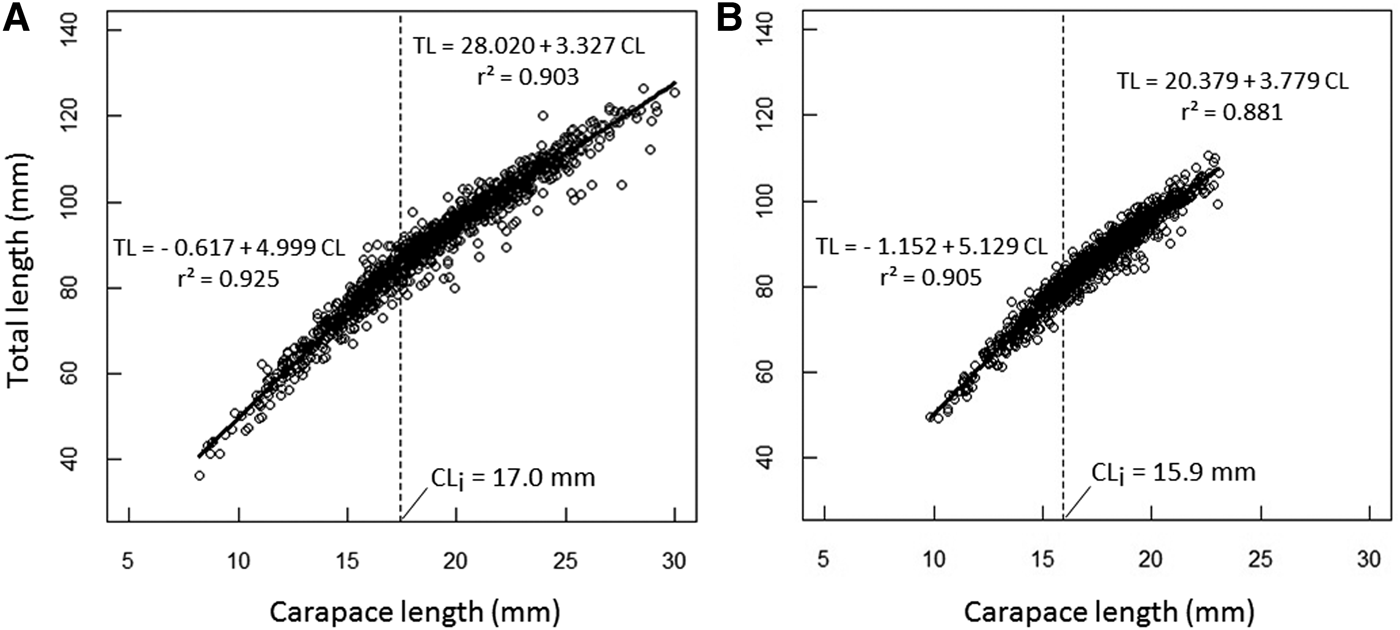
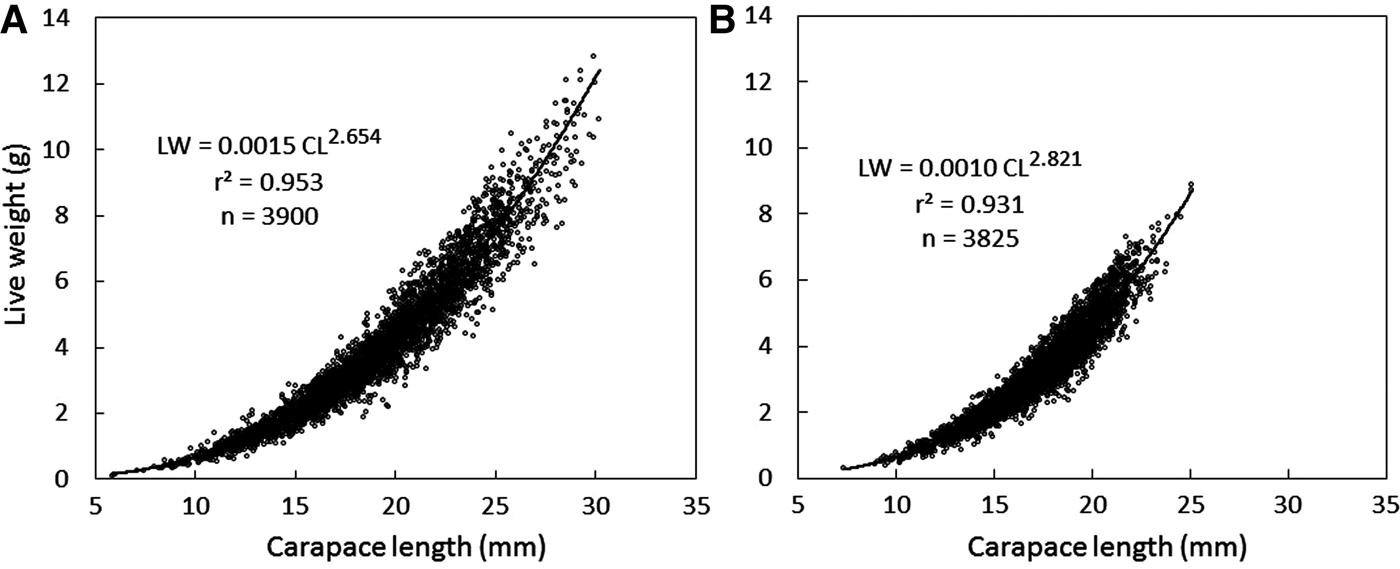
The length of the females ranged from 5.9 to 30.2 mm CL and the length of the males was 7.3–25.1 mm CL. The mean carapace length for females (19.1 ± 4.0) was statistically larger than for males (17.4 ± 2.6) (t = −21.55; P < 0.01). The live weight of the females ranged from 0.1 to 12.8 g (4.0 ± 2.1) and that of males ranged from 0.3 to 8.9 g (3.3 ± 1.3). Similarly, the mean live weight for females was larger than for males (t = 18.18; P < 0.01). The relationships estimated between total and carapace length indicated the existence of an inflexion point (CLi) at 17.0 mm for females and 16.0 mm for males (Figure 3). The slope of these relationships was higher for males both before and after the inflexion point. Moreover, the slope before this point was higher for both males and females.
Segmented regression between total length (TL) and carapace length (CL) for females (A) and males (B) of Xiphopenaeus kroyeri in Sergipe, indicating their respective inflexion points (CLi).

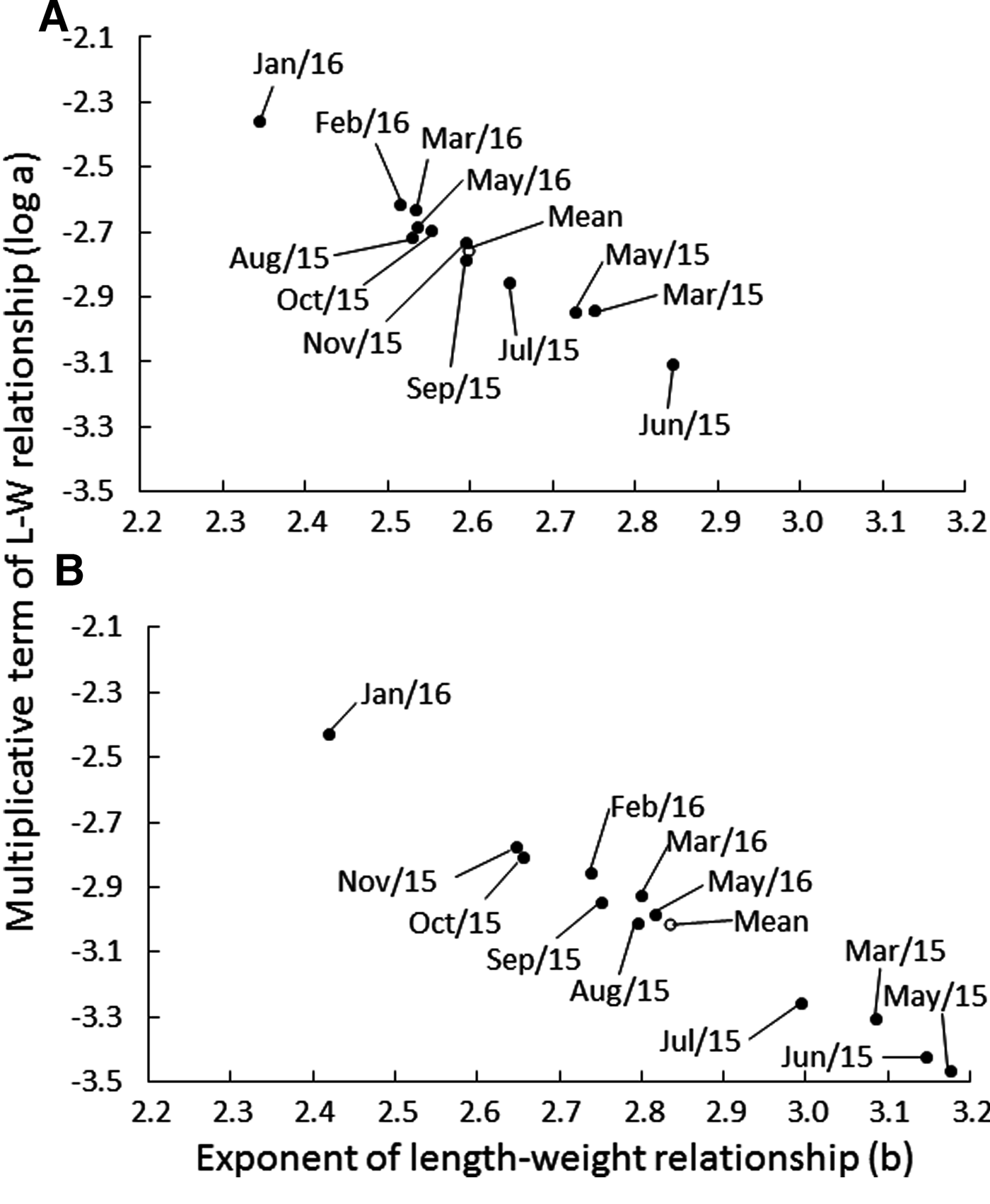
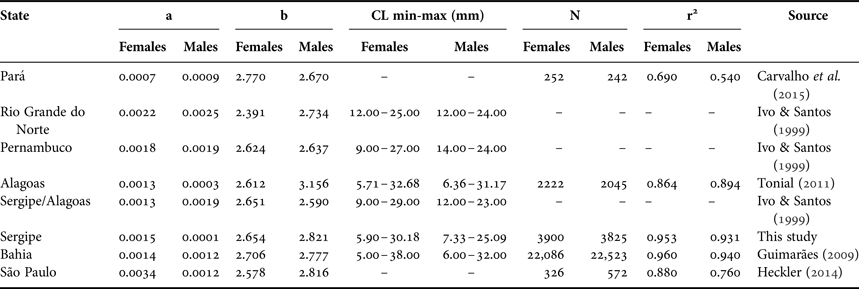
The relationships between the live weight and carapace length for females and males were LW = 0.0015CL2.654 (r 2 = 0.953) and LW = 0.0010CL2.821 (r 2 = 0.931), respectively (Figure 4). Values of b for females and males were statistically different (ANCOVA: F = 110.9; P < 0.01), and both indicated a pattern of negative allometry: females (t = 36.51; P < 0.05) and males (t = 14.35; P < 0.05). Seasonal oscillations in the values of a and b were observed for both sexes (Figure 5).
Relationship between live weight (LW) and carapace length (CL) for females (A) and males (B) of Xiphopenaeus kroyeri in Sergipe from March 2015 to May 2016.

Parameters a and b from the weight-length relationships estimated for each month for females (A) and males (B) of Xiphopenaeus kroyeri in Sergipe.

Reproduction
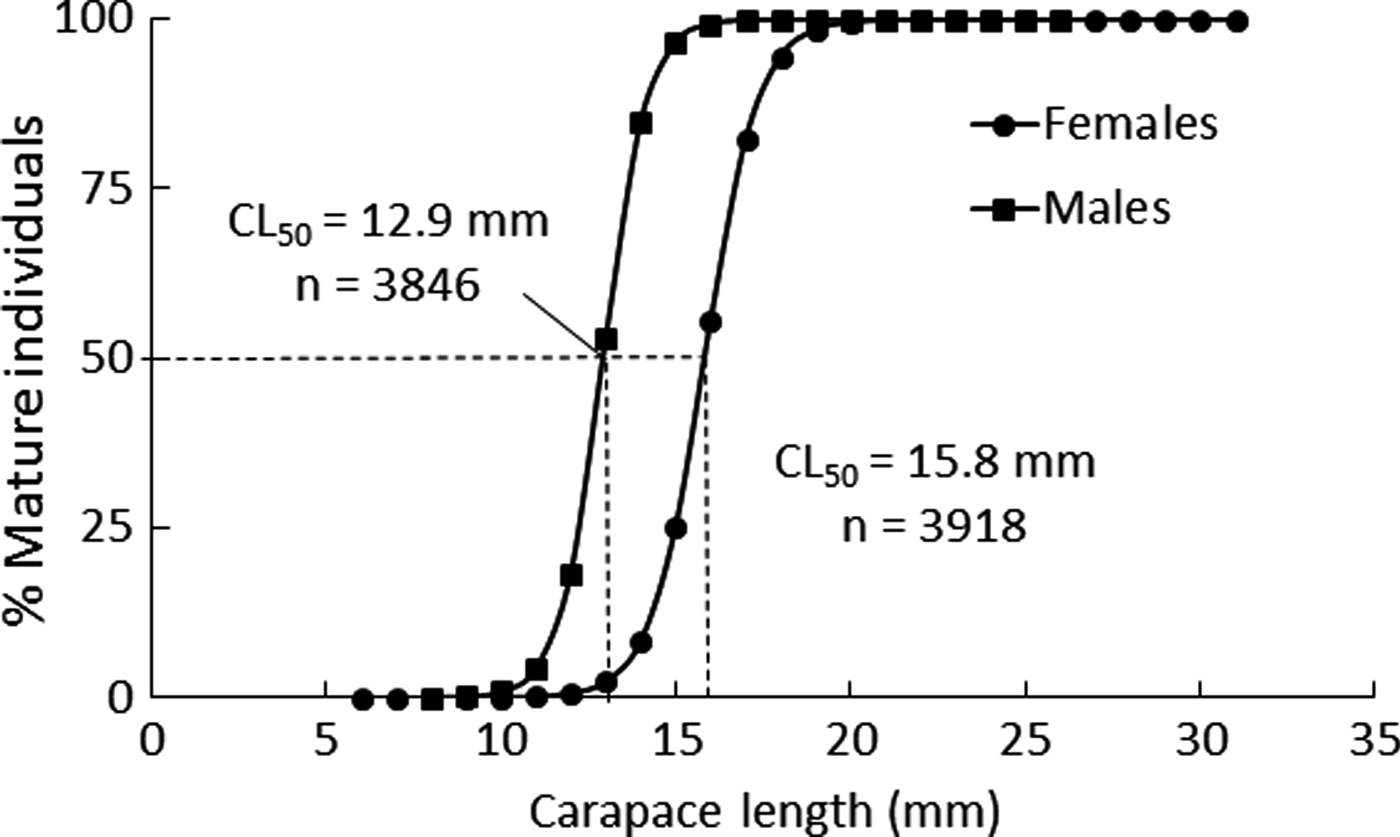
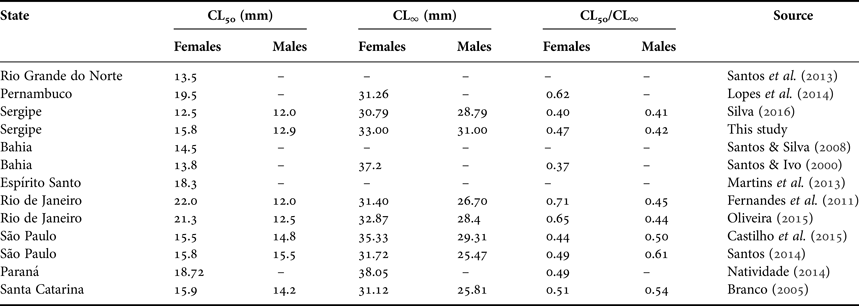
The smallest mature female was 12.5 mm CL long and specimens larger than 17.5 mm CL were all mature or spent. The smallest mature male was 11.3 mm CL and all males larger than 15.5 mm CL were mature. The length at first maturity (CL50) for females and males were 15.8 mm and 12.9 mm CL, respectively (Figure 6).
Size at first maturity (CL50) for females and males of Xiphopenaeus kroyeri in Sergipe from March 2015 to May 2016.

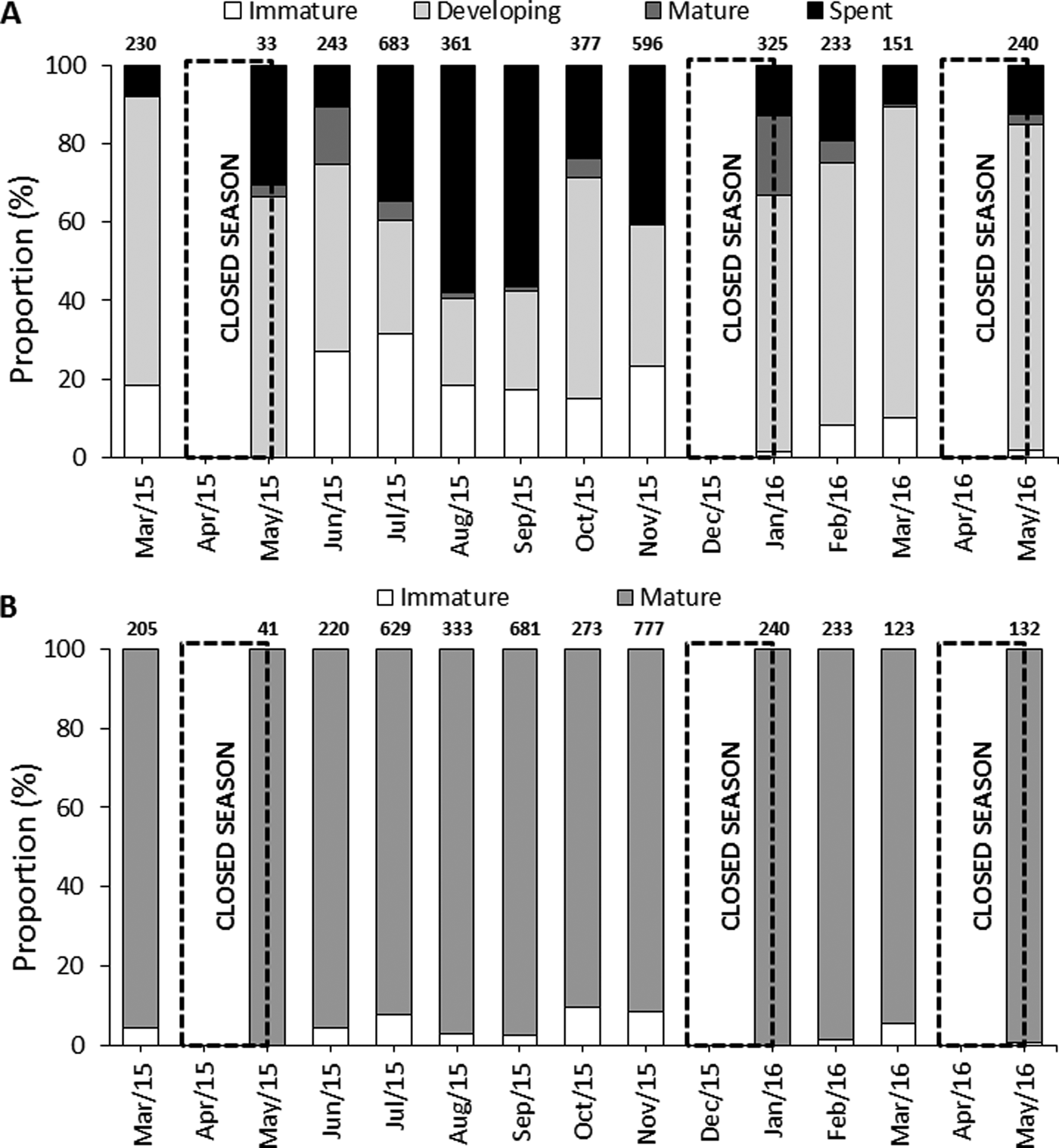
A continuous reproductive period was observed when analysing both females and males (Figure 7). However, a peak was evident in August–September, due to a large number of mature and spent females. During the closed season there was no sampling, and thus it was not possible to properly assess the occurrence of another reproductive period.
Stages of gonadal maturation by month for females (A) and males (B) of Xiphopenaeus kroyeri in Sergipe from March 2015 to May 2016.

Growth and mortality
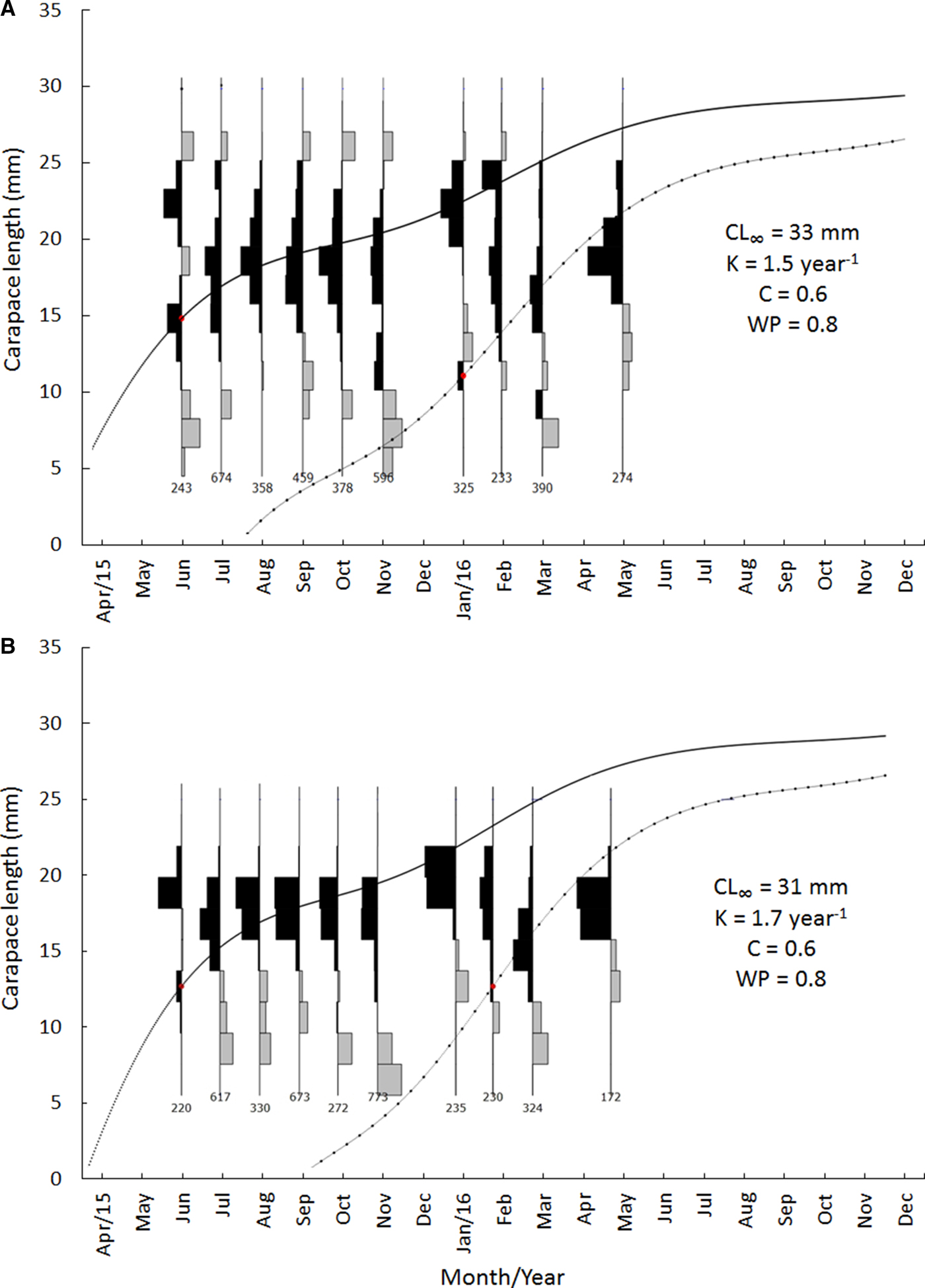
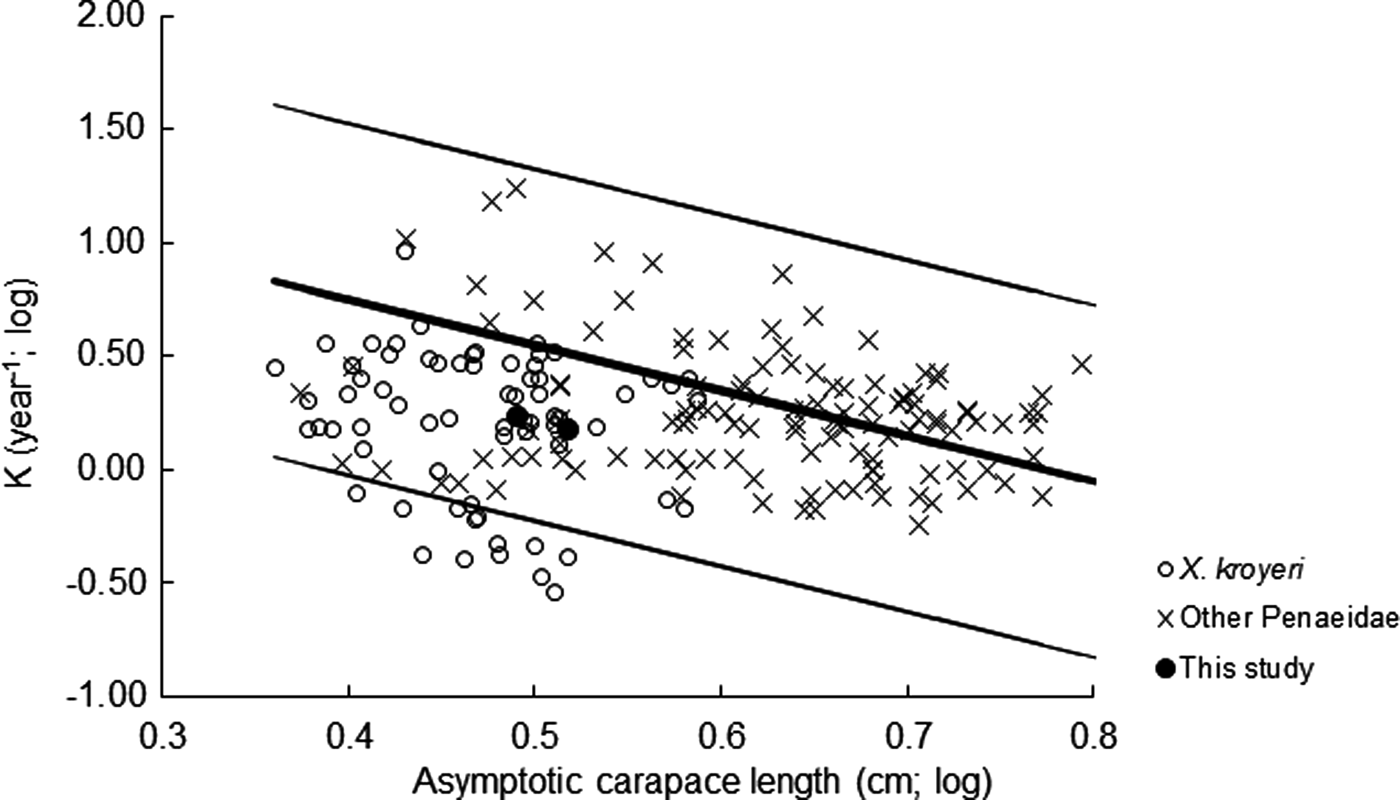
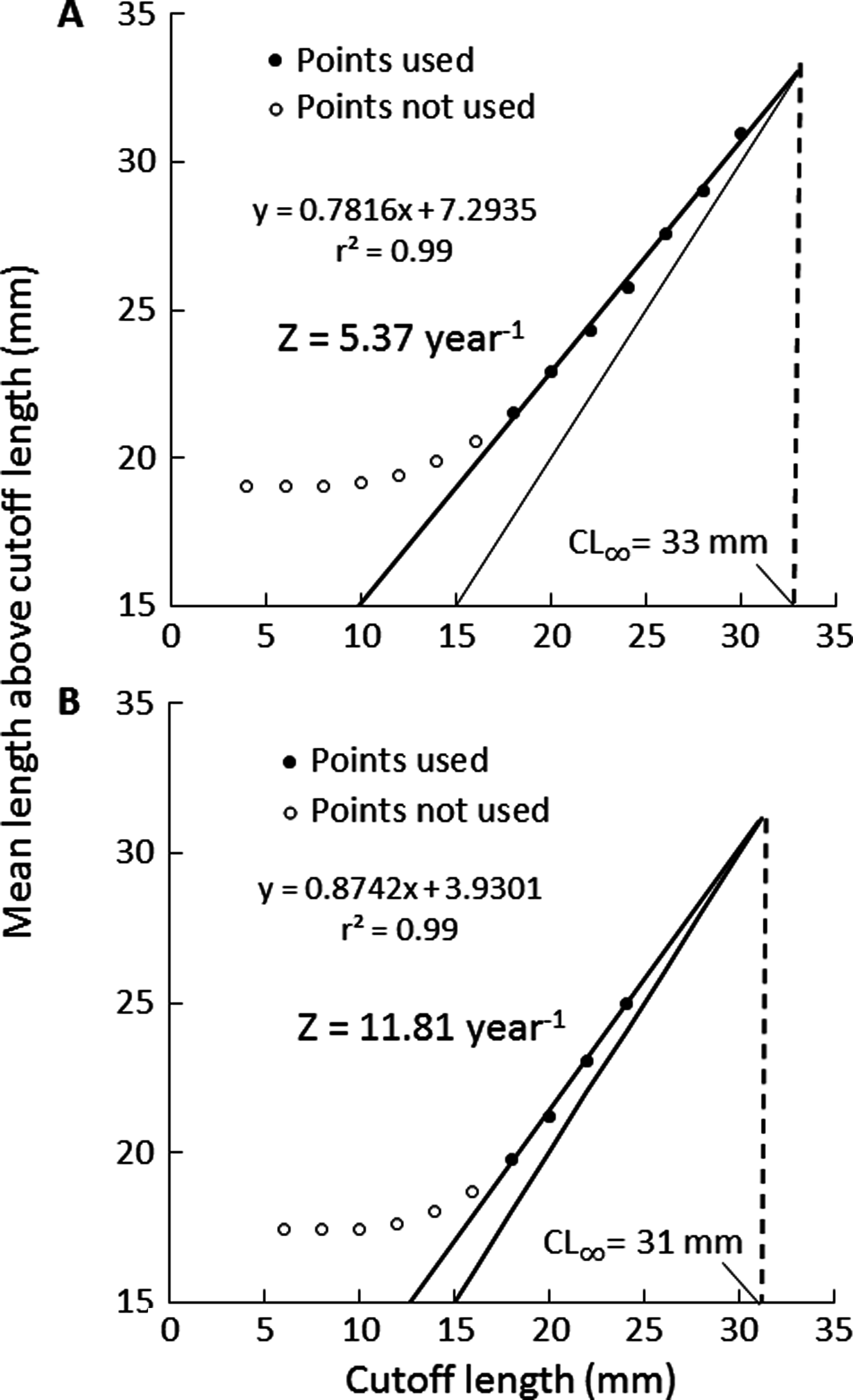
The asymptotic length (CL∞) and growth parameter (K) for females were 33 mm CL (138 mm TL) and 1.5 year−1, respectively, when C set at 0.6 and WP at 0.8 (Figure 8). For males, these values were 31 mm CL (137 mm TL) and 1.7 year−1, respectively, for the same values of C and WP (Figure 8). The auximetric plot showed that our growth parameter estimates were well within the range in CL∞ from 28.7–38.6 mm for females and 22.9–34.0 mm for males derived from several studies carried out for X. kroyeri along the Brazilian coast. This also applied for K, which has been reported to range from 0.29 to 3.65 year−1 for females and from 0.41 to 4.38 year−1 for males (Figure 9). The longevity estimated for females was 3.0 years and 2.7 years for males. The total instantaneous mortality rate (Z) calculated for females and males were 5.37 and 11.81 year−1, respectively (Figure 10).
Length frequency distribution and von Bertalanffy growth curve with seasonal oscillation for females (A) and males (B) of Xiphopenaeus kroyeri in Sergipe. CL∞ = asymptotic carapace length, K = growth parameter, C = amplitude of seasonal oscillation, and WP = winter point.

Parameters of the von Bertalanffy growth curve (K and CL∞) estimated for females and males of Xiphopenaeus kroyeri based on the compilation of the results of several studies carried out along the Brazilian coast, including this study, and of other Penaeidae around the globe. The lines represent a slope of 2 for Φ′ and the lower and upper limits corresponding to a 50% change in the slope value.

Total instantaneous mortality rate (Z) estimated by the model of Wetherall (Reference Wetherall1986) for females (A) and males (B) of Xiphopenaeus kroyeri in Sergipe from March 2015 to May 2016. CL∞ = asymptotic carapace length.

DISCUSSION
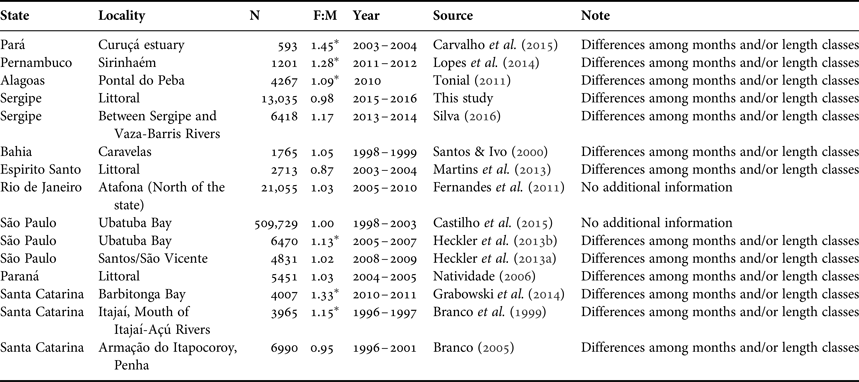
The sex ratio of Xiphopenaeus kroyeri has been studied throughout the Brazilian coast. Most of these studies indicated an equal proportion of males and females, but no latitudinal pattern was observed (Table 2). Even in the case of overall equal proportion, variation may occur among months and length classes. Other penaeids have a pattern that may vary from a 1:1 sex ratio to the predominance of females depending on the region: Artemesia longinaris (Costa et al., Reference Costa, Branco, Machado, Campos and Ávila2010), Litopenaeus schmitti (Santos et al., Reference Santos, Severino-Rodrigues and Vaz-dos-Santos2008), Farfantepenaeus paulensis (Branco & Verani, Reference Branco and Verani1998), F. brasilensis and Rimapenaeus constrictus (Wolf, Reference Wolf2014). Several factors may influence the sex ratio of crustaceans, such as different migration pattern, growth and mortality rates, and longevity (Wenner, Reference Wenner1972). Length-associated sexual dimorphism is common in X. kroyeri, with females reaching larger size (Branco, Reference Branco2005; Santos et al., Reference Santos, Branco and Barbieri2013; Lopes et al., Reference Lopes, Peixoto, Frédou and Silva2014; Castilho et al., Reference Castilho, Bauer, Freire, Fransozo, Costa, Grabowski and Fransozo2015). Other penaeids follow the same pattern: Farfantepenaeus subtilis (Silva, Reference Silva2016), F. brasiliensis and F. paulensis (Leite Jr & Petrere Jr, Reference Leite and Petrere2006), and Artemesia longinaris (Sancinetti et al., Reference Sancinetti, Azevedo, Castilho, Fransozo and Costa2015). This reflects a reproductive strategy, as larger size for females allows for larger gonads, higher fertility and production of more eggs (Gab-Alla et al., Reference Gab-Alla, Hartnoll, Ghobashy and Mohammed1990).
Sex ratio of Xiphopenaeus kroyeri along the Brazilian coast.

N, sample size; F:M, proportion of females to males.
*Statistically significant difference (χ2 > 3.84; P < 0.05).
The relationships between total length and carapace length for both sexes presented an inflexion point. For females, the inflexion occurred very close to the size at first maturity. The slope b estimated for males was higher than for females both before and after the inflexion point (CLi). Several authors found the same pattern of higher slope for males in other areas (Ivo & Santos, Reference Ivo and Santos1999; Natividade, Reference Natividade2006; Martins et al., Reference Martins, Pinheiro and Leite2013). This change in slope may be associated with the length at first maturity for both sexes, as it is observed after the first maturity. For females, this change occurs right after they mature for the first time (CL50 = 15.8 mm and CLi = 17.0 mm), as they spend more energy on the development of their gonads than males (Dall et al., Reference Dall, Hill, Rothlisberg, Sharples, Blaxter and Southward1990). Another factor that can explain the higher slope before the inflexion point in both sexes is the high growth rate of juveniles in relation to adults (Dall et al., Reference Dall, Hill, Rothlisberg, Sharples, Blaxter and Southward1990; Ocasio-Torres et al., Reference Ocasio-Torres, Crowl and Sabat2014).
The estimated weight-length relationship is characteristic of a negative allometric growth (b < 3). Several studies confirmed this pattern for X. kroyeri (Table 3). However, it is worth pointing out that changes in b occur throughout the year, reaching values higher than 3 in March–July 2015 for males (even though this changed between years). This can be explained in part by environmental conditions that change over time (Castilho et al., Reference Castilho, Pie, Fransozo, Pinheiro and Costa2008; Natividade, Reference Natividade2014). Indeed, a 6°C temperature range for Sergipe (Silva, Reference Silva2016) may be enough to result in changes in b. Unfortunately, no temperature data were collected in this study to assess the impact of this factor in the changes observed here from 2015 to 2016.
Intercept (a) and slope (b) for the weight-length relationship (LW = aCLb) for Xiphopenaeus kroyeri along the Brazilian coast.

LW, live weight (g); CL, carapace length (mm); CL min-max, minimum and maximum carapace length; N, sample size; r2, coefficient of determination.
The length at first maturity for females (CL50 = 15.8 mm) was higher than for males of X. kroyeri (CL50 = 12.9 mm) in Sergipe. Similar results were found for the same species in other states and also for other penaeids: Artemesia longinaris (Costa et al., Reference Costa, Branco, Machado, Campos and Ávila2010), Rimapenaeus constrictus (Costa & Fransozo, Reference Costa and Fransozo2004) and Farfantepenaeus subtilis (Silva, Reference Silva2016). The length at first maturity for X. kroyeri does not follow the latitudinal pattern described by Hines (Reference Hines1989) (Table 4). Other factors such as exploitation rates may have contributed to this non-compliance (King, Reference King2007). For instance, Couto et al. (Reference Couto, Guimarães, Oliveira, Vasques and Lopes2013) estimated lower length at first maturity for X. kroyeri in exploited areas off the coast of Bahia in relation to marine protected areas (i.e. no-take zones). This would also be reflected in the near constancy of the CL50/CL∞ ratio within the same taxonomic group as highlighted by Longhurst & Pauly (Reference Longhurst and Pauly2007). Available data for X. kroyeri indicated that the CL50/CL∞ ranged from 0.4 to 0.7, with an average of 0.5 for both sexes. Sergipe was in the lowest end (0.4 for both sexes). However, this ratio was different and even inverse in some studies: 0.71 and 0.45 (Fernandes et al., Reference Fernandes, Silva, Jardim, Keunecke and Di Beneditto2011) for females and males, respectively, and 0.49 and 0.60 (Santos, Reference Santos2014).
Length at first maturity (CL50), asymptotic carapace length (CL∞) and ratio between them for females and males of Xiphopenaeus kroyeri along the Brazilian coast.

The reproductive period was continuous due to the presence of females in stages III (mature) and IV (spent) throughout the year. However, a reproductive peak was observed in August–September. According to Longhurst & Pauly (Reference Longhurst and Pauly2007), tropical species have a longer breeding season, but always with peaks in certain periods, which is also generally expected for tropical penaeids (Dall et al., Reference Dall, Hill, Rothlisberg, Sharples, Blaxter and Southward1990) and was found here for X. kroyeri. Indeed, the growth curves for both females and males of X. kroyeri could be traced back to the same period, suggesting that this cohort may have been hatched in August–September. By December, when the fishing season is closed, both females and males are less than 10 mm CL, which is smaller than the size at first maturity for both sexes. Therefore, this second closing season would be protecting new recruits. Other studies found similar reproductive periods: in Piauí (Santos & Coelho, Reference Santos and Coelho1996), Sergipe (Santos & Coelho, Reference Santos and Coelho1998) and Rio de Janeiro (Oliveira, Reference Oliveira2015). The reproductive peak for X. kroyeri may vary over time in the same region (Guimarães, Reference Guimarães2009; Castilho et al., Reference Castilho, Bauer, Freire, Fransozo, Costa, Grabowski and Fransozo2015). However, overall reproductive peaks are observed when temperature is higher, which directly influences the maturation of gametes and spawning (Bauer, Reference Bauer1992). The highest bottom temperature in Sergipe was reported in May (Silva, Reference Silva2016). Unfortunately, April–May corresponds to the closed season in the region and no sample was collected in April or beginning of May. But here again, a second pair of growth curves could be traced back to April–May, suggesting that this may indeed correspond to the other reproductive peak observed for X. kroyeri off Sergipe, which is currently protected under the current management measure.
Females presented lower growth parameter (K) but reached larger sizes (CL∞), a pattern general in penaeids (Dall et al., Reference Dall, Hill, Rothlisberg, Sharples, Blaxter and Southward1990). Other authors found similar results for X. kroyeri (e.g. Branco, Reference Branco2005; Freire, Reference Freire2005; Grabowski et al., Reference Grabowski, Simões and Castilho2014). Most of von Bertalanffy growth parameters estimated for X. kroyeri used FiSAT or PeakFit. Freire (Reference Freire2005) highlighted that the ELEFAN routine available in FiSAT usually underestimates the asymptotic length due to the exclusion of larger length classes. However, Heckler (Reference Heckler2014) did not find any difference in the results obtained applying both methods to the same dataset. In fact, one of the major concerns should be the presence of smaller individuals in the samples, which strongly influence the shape of the growth curve, and hence its growth parameters. Our results indicate that seasonal oscillation should be considered when estimating growth parameters for X. kroyeri even in tropical waters such as found in Sergipe. The estimated parameters are within the range observed for Penaeidae in general (Figure 10). However, some outliers were observed in this figure, most of them corresponding to X. kroyeri, but which result in a lifespan that ranges from 6 to 10 years, which is unrealistically high for seabobs.
The estimated total instantaneous mortality rate (Z) was higher for males (11.81 year−1) than females (5.37 year−1), corresponding to longevity of 3.0 years for females and 2.7 for males. These mortality rates are very high and may suggest that the sampling scheme was biased against large (old) specimens, in addition to incorporating a high rate of fishing mortality. In other studies, longevity of females was estimated as ranging from 1.2 to 3.2 years and from 1.0 to 2.9 years for males (Heckler, Reference Heckler2014; Davanso, Reference Davanso2015; Oliveira, Reference Oliveira2015). Fernandes et al. (Reference Fernandes, Keunecke and Di Beneditto2014) pointed out that mortality rates estimated for males of X. kroyeri were always higher than for females (even when using different methods), as they are related to different growth rates (Dall et al., Reference Dall, Hill, Rothlisberg, Sharples, Blaxter and Southward1990). The same pattern of higher mortality for males was found in Rio de Janeiro and São Paulo (Freire, Reference Freire2005; Fernandes et al., Reference Fernandes, Silva, Jardim, Keunecke and Di Beneditto2011). An inverse trend was observed in the state of Pernambuco, with higher mortality for females (10.6 year−1) in relation to males (4.51 year−1; Lopes et al., Reference Lopes, Peixoto, Frédou and Silva2014). This result is doubtful, as it is the only study showing such an inverse pattern along the Brazilian coast. In the state of Paraná, mortality rates for both sexes were very similar (Natividade, Reference Natividade2014). Different levels of mortality rates estimated for X. kroyeri reflect different levels of exploitation for this species along the Brazilian coast. Atlantic seabob catches are the highest in the state of Sergipe (Thomé-Souza et al., Reference Thomé-Souza, Carvalho, Garciov Filho, Silva, Deda, Félix and Santos2014), which explains the high mortality rate estimated for this state. Overall, longevity estimated for Sergipe (low latitude) was higher than in higher latitudes, which is contrary to the latitudinal paradigm. This was also shown for observed maximum length, CL∞, and length at first maturity. High longevity (2.7 years for females and 2.3 years for males) had already been previously reported at a low latitude (17°S in Caravelas, State of Bahia; Santos & Ivo, Reference Santos and Ivo2000). Many authors attribute this counteracting pattern to methodological differences in the estimation process, e.g. FiSAT vs PeakFit (Freire, Reference Freire2005), but also to the possibility of occurrence of more than one species along the South-western Atlantic coast, bias in sampling larger individuals, and exploitation status of these stocks (Grabowski et al., Reference Grabowski, Simões and Castilho2014). Moreover, an unbalanced availability of local studies may contribute for this counteracting effect, as most of the studies are concentrated in larger latitudes where stocks are already overexploited.
The results presented here, referring to the period 2015–2016, show the possibility of using fishery-dependent data to estimate basic population parameters for X. kroyeri in Sergipe, and largely confirm the results of Silva (Reference Silva2016) who analysed fishery-independent data for 2013–2014 from an area close to the estuary of the Sergipe River. It is hoped that a monitoring system will be put in place that is able to continuously monitor the seabob population off Sergipe, at a low cost, to assess the efficiency of current management measures. This system should also include fishers in the management process, and lead to results that are widely discussed among scientists, fishers and managers.
ACKNOWLEDGEMENTS
The authors are grateful to Mrs Maria Morais and fishers from Pirambu (Sergipe) for the collection of samples used in this study, to Aline Alves dos Santos Dias, Ana Claúdia Gaspar and Sandra Lima for helping with sample processing, to Robson Rosa for the map of the study area, and to two anonymous reviewers for their valuable comments and corrections.
FINANCIAL SUPPORT
This study was supported by Projeto de Monitoramento Participativo de Desembarque Pesqueiro (PMPDP) and Fundação de Apoio à Pesquisa e Extensão de Sergipe (FAPESE) (Grant numbers 2600.0094374.14.4 and 2600.0099827.15.4). J. J. C. Reis Jr and T. M. R. R. Barreto thank FAPESE/PMPDP for their scholarships.