Clinical vignette: Mary
Mary is a 67-year-old Caucasian woman whose family is concerned that she is having trouble with her memory. Her daughter reports that she exhibits some difficulty “keeping up” in conversations and that she recently “lost track of her hand” while playing bridge. This was noted as especially distressing to Mary's daughter because Mary has been an avid bridge player for over 40 years and “quite the card shark.” In contrast to his sister, Mary's son reports that his mother's memory is “no different from other people (her) age.” When Mary is asked about her memory, she reports that “it is just fine.” Mary's primary concern is “feeling depressed” and “not being able to stay asleep at night because (she) worries too much.” After completing a neuropsychological battery, Mary was observed to exhibit average performance when compared to age- and education-matched peers on a test of general cognitive functioning (45th percentile). On this measure no subscale scores fell more than 1.5 standard deviations (SD) below the mean. However, on a more comprehensive test of memory, Mary exhibited below average immediate recall (20th percentile) and delayed memory (15th percentile). In regards to daily functioning, Mary's family reports that she is completely independent in both higher- and lower-order activities of daily living (ADLs), but a functional measure was not administered as part of her neuropsychological evaluation.
For clinicians working with older adults, Mary's case should sound familiar. Although her general cognitive functioning is intact, she is exhibiting mild decrements to verbal memory. Daily functioning was reported to be normal, but some difficulties were noted with a higher-order skill not considered part of daily functioning (i.e. playing cards). To further complicate the picture, conflicting reports from family members were obtained, and Mary is reporting clinically significant symptoms of depression. In sum, this commonly encountered case contains several factors that complicate the diagnostic process. In terms of diagnosis, two possible hypotheses can explain these data: Mary should be diagnosed with MCI because her memory is declining, and conversely, she should not be diagnosed with MCI because depression and anxiety are functioning as confounding variables that limit diagnostic accuracy.
When two distinct hypotheses are present that relate to a single diagnosis, a logical next step is to review the diagnostic criteria. But this step is not always helpful for MCI. As will be outlined in following sections, the current diagnostic criteria for MCI are not well standardized and can be applied in a number of different ways. This leads to a number of issues affecting not only clinical patients like Mary's but also research studies: (1) people will be misdiagnosed as having MCI or will not be identified until more pervasive cognitive decline is exhibited; (2) samples included in MCI research studies will be representative of different populations leading to the decreased generalizability of the findings and how they relate to MCI; (3) the prognosis of MCI remains unclear; and (4) reliable estimates of MCI prevalence, incidence, and conversion to dementia are difficult to obtain.
However, before issues with current MCI diagnostic criteria are discussed, the history of MCI as a diagnostic category will be reviewed.
Predementia: from “normal” cognition to dementia
As the brain ages, older adults experience changes in cognition. However, when changes exceed those that are expected, normal cognition is thought to be compromised. As many as one in seven adults over the age of 71 years is currently living with dementia (Plassman et al., Reference Plassman2007), and this number may triple by the year 2050 with older adults over the age of 85 years being most affected (Hebert et al., Reference Hebert, Scherr, Bienias, Bennett and Evans2003). But transition from normal cognition to dementia is a gradual process and “preclinical stages” (i.e. changes in the brain that occur prior to a dementia diagnosis) and “predementia syndromes” (i.e. observable functional and/or cognitive deficits sub-threshold to dementia) are thought to precede the disease. To date, a number of predementia syndromes have been proposed, but relatively few have thoroughly delineated research criteria that yield the opportunity for ongoing study and the examination of rates of progression to dementia (Panza et al., Reference Panza2005).
Mild cognitive impairment: the evolution of a diagnosis and its limitations
Of all the terms used to describe preclinical cognitive decline, MCI is the most well-known and extensively researched. MCI is used to describe cognitive decline that does not impair daily functioning and, therefore, falls short of dementia. Given this broad definition, the potential exists for MCI to be a term that unifies other terms used to classify predementia syndromes and declines in cognition not associated with normal aging.
MCI was originally conceptualized by a research group from New York University in 1991 (Flicker et al., Reference Flicker, Ferris and Reisberg1991) using the six stages from the global deterioration scale (GDS; Reisberg et al., Reference Reisberg, Ferris, de Leon and Crook1982) (Panza et al., Reference Panza2005): Stage 1 (no cognitive decline), Stage 2 (very mild cognitive decline), Stage 3 (mild cognitive decline), Stage 4 (moderate cognitive decline), Stage 5 (moderately severe cognitive decline), and Stage 6 (severe cognitive decline). Although the GDS was designed to assess degenerative dementia and describe its stages, it was noted by the group that a number of patients fell into stages 2 and 3 and that these patients were exhibiting mild cognitive impairment in contrast to dementia.
As can be seen, Flicker and colleagues did not propose diagnostic criteria when the term MCI was originally conceptualized because the label of MCI was only applied to patients scoring in a designated range on a single measure. In 1992, Michael Zaudig from the Max Planck Institute in Germany attempted to reclassify MCI according to existing diagnostic systems. After administering the structured interview for the diagnosis of dementia of the Alzheimer type, multi-infarct dementia, and dementias of other etiology (SIDAM: Zaudig et al., Reference Zaudig, Mittelhammer, Hiller, Pauls, Thora, Morinigo and Mombour1991; Zaudig and Hiller, Reference Zaudig and Hillner1991) to a sample of 150 randomly selected older adults living in Germany, patients with cognition and daily functioning consistent with dementia and MCI were identified.
Zaudig and colleagues identified two types of MCI using criteria from the Diagnostic and Statistical Manual of Mental Disorders, 3rd Edition Revised (DSM-III-R) (American Psychiatric Association, 1987). Type 1 patients (MCI Type 1) exhibited characteristics identical to the DSM-III-R diagnostic criteria for amnestic syndrome: memory impairment (short- and long-term memory) but no impairments in any other cognitive domain. The other type (MCI Type 2) exhibited impairments to memory and another cognitive domain. Using criteria from the International Statistical Classification of Disorders (World Health Organization, International Statistical Classification of Disorders and Health Related Problems, 10th revision (ICD-10), 1992), three “types” of MCI patients were classified. Type 1 and Type 2 patients were identical to those outlined by DSM-III-R criteria. Type 3 patients (MCI Type 3), on the other hand, could display characteristics of either MCI Type 1 or MCI Type 2 along with accompanying deterioration in emotional control, social behavior, or motivation. Optimal scores for characterizing patients as normal, MCI Type 1, MCI Type 2, MCI Type 3, and demented were developed from these definitions in combination with performance on the SIDAM. This work represented a critical step forward in advancing a standardized approach to diagnosing MCI. However, subsequent work did not capitalize on this.
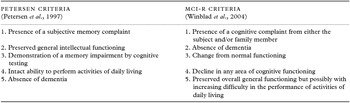
In what has become known as the “Petersen criteria” or “Mayo criteria” (Petersen et al., Reference Petersen, Smith, Waring, Ivnik, Tangalos and Kokmen1997; Petersen et al., Reference Petersen, Smith, Waring, Ivnik, Tangalos and Kokmen1999) a set of diagnostic/research criteria were first introduced: (1) memory complaint, (2) normal daily functioning, (3) normal general cognitive function, (4) abnormal memory for age, and (5) without dementia (Table 1). A number of issues were present with these criteria. First, primary memory impairment is necessary. However, by having this stipulation, MCI is more reflective of a pre-AD stage than a preclinical syndrome related to general cognitive impairment. Moreover, many older adults can present with impairment in other areas of cognition, such as executive dysfunction, and these can precede the onset of changes in memory (Carlson et al., Reference Carlson, Xue, Zhou and Fried2009). Second, a subjective memory complaint by the patient is necessary. This means memory impairment needs not only to be present but also judged and reported as present by the older adult patient. Third, normal daily functioning must be exhibited, but what constitutes “normal” is not clearly defined. Moreover, some declines in daily functioning are common even in without dementia older adults (discussed later). Finally, phrases such as “normal general cognitive function” and “abnormal memory for age” do not specify what constitutes normal from abnormal and, once again, are not clearly defined. Is 1.0 SD below the mean abnormal? Should age, education, and premorbid intelligence be taken into account? Answers to these questions are not clear from the criteria; therefore, this criterion can be applied in different ways.
MCI and MCI-R diagnostic criteria

Note. MCI-R = mild cognitive impairment-revised
The first issue (overreliance on memory) was addressed at the current concepts on MCI conference in 2001 (Petersen et al., Reference Petersen2001). To help facilitate advancements in MCI research, it was recognized that “it was theoretically possible to select a different subset of subjects with MCI by altering the core definitions and criteria” (Petersen et al., Reference Petersen2001, p. 1987). Alterations could include mild impairments to multiple cognitive domains without deficits to memory and impairment to a single cognitive domain other than memory. Moreover, Petersen and colleagues urged the use of modifiers to better represent the heterogeneity of MCI: amnestic-MCI (aMCI); multiple domains, slightly-impaired-MCI (mdMCI); and single, non-memory-domain-MCI (snMCI). These MCI subtypes, modifiers, and purported etiologies can be found in Table 2.
MCI subtype and etiology (Petersen et al., Reference Petersen2001)

Note. MCI = mild cognitive impairment.
As these MCI subtypes began to be scrutinized in research studies, it became apparent that the relationship between subtype and associated condition was not as linear as initially proposed. At the first key symposium in Stockholm, Sweden, it was acknowledged that each MCI subtype could have multiple etiologies that are not mutually exclusive and not always associated with a degenerative neurological disorder (Winblad et al., Reference Winblad2004) (see Table 3). Another recommendation from this consensus conference had to do with the second Petersen criteria of normal daily functioning. It was recommended that patients with early and subtle changes to daily functioning could still be considered for an MCI diagnosis. However, a concrete definition of “subtle” was not explicitly stated and a plan about how to assess these subtle changes was not offered. Consequently, the criterion about daily functioning remained largely unstandardized and open for divergent applications. Although some revisions were recommended (e.g. family member being able to report memory impairment), the diagnostic criteria as a whole remained largely unstandardized. Revised MCI criteria (MCI-R) can be found in Table 1.
MCI-R subtype and etiology (Winblad et al., Reference Winblad2004.)

Note. MC = mild cognitive impairment, MCI-R = mild cognitive impairment-revised
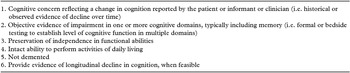
The most recent recommendations for diagnostic/research criteria for MCI come from a workshop organized by the National Institute on Aging and Alzheimer's Association (NIA/AA) (Albert et al., Reference Albert2011). Although the basic diagnostic criteria from the NIA/AA are very similar to the original Petersen criteria and many of the issues regarding standardization found in the original Petersen criteria remain, an important step forward was achieved through the inclusion of potential biomarkers (see Table 3).
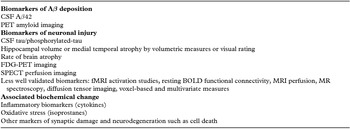
NIA/AA criteria are divided into two parts: one containing reference to biomarkers and imaging and one not containing reference to biomarkers and imaging. Biomarkers and imaging under examination and MCI criteria incorporating biomarkers and imaging are listed in Tables 4 and 5, respectively. Taken together, these criteria offer an exciting advancement in the diagnosis of MCI; however, the inclusion of biomarkers and imaging is only considered appropriate as part of clinical research protocols and not as part of standard clinical practice. As noted by Albert and colleagues, this inclusion is to “determine the likelihood of cognitive and functional progression for an individual MCI patient to a more severe stage of MCI or to dementia, and the likelihood that this progression will occur within a defined period” (p. 275). Albert and colleagues go on to note that imaging and biomarkers are not validated in MCI and that studies are largely confined to the examination of patients with Alzheimer's disease (AD). For studies examining MCI patients, few have compared biomarkers and imaging with each other or with histopathologic confirmation. Furthermore, studies combining multiple biomarkers and imaging data have not been conducted. Taken together, this means that predictive studies regarding imaging and biomarkers in relation to MCI are greatly needed to advance diagnostic accuracy.
NIA/AA recommendations (Albert et al., Reference Albert2011)

Biomarkers under examination for AD (Albert et al., Reference Albert2011)

Note. Aβ = beta-amyloid protein, CSF = cerebrospinal fluid, PET = positron emission tomography, FDG = fluorodeoxyglucose, SPECT = single photon emission tomography, MRI = magnetic resonance imaging, fMRI = functional magnetic resonance imaging, BOLD = blood oxygen level-dependent, MR = magnetic resonance.
The reference to biomarkers made by the NIA/AA expanded upon previous work. In 2007, Dubois and colleagues proposed that a set of biomarkers could potentially be useful in identifying an MCI cohort when the underlying pathology is due to probable AD. Although more potential biomarkers were outlined by the NIA/AA, the biomarkers included in the study by Dubois et al. (Reference Dubois2007) were all also included in the paper by Albert and colleagues. Thus, at least in certain aspects, the definitions of MCI and AD have been evolving in parallel and changes in the way MCI is characterized have been impacting diagnostic criteria for AD and vice versa.
Interestingly, the inclusion of biomarkers as a potential diagnostic tool reflects a general trend in MCI research to identify people with a primary progressive dementia as early as possible. This trend has been driven, in part, by the notion that treatment options may be more effective at early disease stages (i.e. MCI) when the brain has incurred less pronounced insult. However, at present, such treatment options do not exist. For example, a patient identified as MCI before being classified as AD will have the same treatment options and general prognosis as a patient not identified as MCI before being classified as AD. Regardless of this fact, the ability to identify MCI in its earliest stages offers an exciting opportunity to potentially study different treatment options in patients with preclinical dementia.
Limitations of current approaches to MCI
So far in this review, the concept of MCI has been introduced and traced from its conceptual underpinnings to the most current diagnostic criteria. Issues of poor standardization inherent in the current diagnostic criteria were briefly introduced and related to practice through a clinical vignette. In the sections that follow, a more in-depth examination of the current state of standardization of the MCI criteria will take place. The empirical evidence of including a cognitive complaint as a criterion for MCI will also be discussed.
Level of cognitive impairment required for diagnosis of MCI?
In the most recent recommendations given for MCI diagnostic criteria (Albert et al., Reference Albert2011), impairment can be present in one or more cognitive domains (see Table 4). The following description of impairment is given: “There should be evidence of lower performance that is greater than would be expected for the patient's age and educational background. If repeated assessments are available, then a decline in performance should be evident over time” (p. 271). One critique of this description has to do with a lack of standardization. Specifically, what constitutes “lower performance?” Since it is not explicitly stated, this question is open to interpretation. Moreover, reference is given to a “decline in performance over time” but no specifications as to what constitutes decline. Does this mean one, five, or ten percentage points in relation to age- and education-matched peers? Once again, this determination is open to interpretation. Another critique of this definition is that race was not mentioned along with age and education despite the use of inappropriate norms being associated with dementia misdiagnosis in some minority groups (Manly et al., Reference Manly, Byrd, Touradji, Sanchez and Stern2004). However, normative data corrected for race is often not available. Therefore, this issue will not be discussed in detail other than to urge clinicians to use measures with normative data corrected for race whenever possible.
Later in the Albert et al. (Reference Albert2011) paper, it is noted: “Cognitive testing is optimal for objectively assessing the degree of cognitive impairment for an individual. Scores on cognitive tests for individuals with MCI are typically 1 to 1.5 SD below the mean for their age and education matched peers on culturally appropriate normative data (i.e. for the impaired domain(s), when available). It is emphasized that these ranges are guidelines and not cutoff scores” (p. 273). The inclusion of this guideline is a clear improvement over previous diagnostic criteria and a step toward standardization. However, the difference between 1 and 1.5 SD below the mean is a wide range. In terms of percentiles, this places the range between the 7th and 16th percentile meaning the patient would have to score worse than either 84% or 93% of the population after correcting for age and education. Consequently, even for clinicians attempting to use a more standardized process by following the guidelines, differing applications of the same criterion are possible.
Another issue with this description of impairment is the failure to take into account premorbid intelligence (i.e. estimated intelligence before changes in cognition started to appear). This need to evaluate current cognition in relation to premorbid intelligence is highlighted by the guidelines for the evaluation of dementia and age-related cognitive decline (American Psychological Association, 1998). Although these guidelines are described as aspirational and not enforceable, guideline III-8 (i.e. when measuring cognitive changes in individuals, psychologists attempt to estimate premorbid abilities) is clear in relation to the subject. Without an estimate of premorbid intelligence, determining if a change in cognition is present is difficult. For instance, an older adult with an estimated premorbid intelligence quotient (IQ) falling into the 16th percentile would be demonstrating no decline in relation to peers using a 1.0 SD cutoff. However, the same older adult would be considered impaired using the recommendations from Albert et al. (Reference Albert2011). This situation would be reversed for an older adult with an estimated premorbid IQ falling at the 84th percentile. For this patient, performance on cognitive measures falling at the 50th percentile represents a fairly substantial decline in cognition, and performance falling into the 16th percentile represents a change of two SD. Without taking into account pre-morbid intelligence, the same impairment threshold would be used when, in reality, the first patient is exhibiting no changes in cognition while the second patient is exhibiting drastic changes in cognition.
Ideally, obtaining an estimate of premorbid IQ would be as easy as reading a report of an intellectual assessment that was administered to the patient sometime in the past. In reality, these kinds of records are almost never available. Instead, one basic and fairly accurate method is to evaluate a skill that is resistant to the changes in cognition associated with MCI and dementia. This is most easily accomplished by evaluating reading ability because reading ability does not significantly differ in relation to peers from childhood to adulthood even in older adults diagnosed with mild dementia (McGurn et al., Reference McGurn, Starr, Topfer, Partie, Whiteman and Lemmon2004). However, minor changes in reading have been noted early in the course of dementia, and these changes increase as the disease progresses (O’Carroll et al., Reference O’Carroll, Prentice, Murray, Van Beck, Ebmeier and Goodwin1995; Cockburn et al., Reference Cockburn, Keene, Hope and Smith2000). Consequently, for patients with moderate to severe dementia, reading ability cannot be relied upon to yield an accurate estimate of premorbid intelligence.
Measures such as the national adult reading test (NART: Nelson, Reference Nelson1982) provide a good example of how to best assess reading to gain an estimate of premorbid intelligence. The NART contains 50 low-frequency/irregular English words (e.g. ache and thyme), and the patient is instructed to read aloud each word with the number of words correctly pronounced comprising a total score. Normative data correcting for age, gender, and education are available (Kiely et al., Reference Kiely, Luszcz, Piguet, Christensen, Bennett and Anstey2011). Other techniques such as using a statistical model designed to estimate premorbid intelligence from demographic variables are also available (Crawford et al., Reference Crawford, Millar and Milne2001). Although reading tests such as the NART have been shown to yield the most accurate estimates of premorbid IQ, measures combining reading ability, best performance, and demographic variables are needed and have the potential to be more accurate than a test of reading ability used in isolation (Griffin et al., Reference Griffin, Mindt, Rankin, Ritchie and Scott2002).
Turning again to the patients example, it can be demonstrated how a lack of standardization of current MCI criteria affects the diagnostic process – even when following NIA/AA recommendations (i.e. 1 to 1.5 SD below the mean). Mary exhibited general cognitive functioning falling at the 45th percentile and immediate memory falling at the 20th percentile. These scores are clearly above both recommended cutoffs. However, she exhibited delayed memory falling at the 15th percentile, and this score lies in the gray area between 1 and 1.5 SD below the mean. Does this mean that impairment is present and a diagnosis of aMCI applicable? Unfortunately, the answer to this question is not clear. It is also difficult to ascertain the significance of Mary's scores because an estimate of premorbid intelligence was not obtained. Is Mary's premorbid intelligence average, below average, or above average? This information would certainly give a better perspective about her current scores. A judgment could be made by taking into consideration occupation and education. However, Mary wed her husband and became a homemaker shortly after graduating from high school. In this instance, enough information is not present for even educated clinical judgments to be made.
What extent of limitations to daily functioning is allowed in MCI?
As highlighted earlier, diagnostic criteria related to daily functioning in MCI are constructed in a manner that assumes delineation between virtually intact functional abilities for MCI and impaired functional abilities for dementia. However, the results of prior research do not support this delineation for a number of reasons (Goldberg et al., Reference Goldberg2010). First, it has been shown that although basic ADLs (e.g. eating, dressing, bathing) remain preserved in people with mild cognitive impairments, higher-order IADLs (e.g. financial and medication management, using public transportation, interacting with technology) are often subtly impaired (Winblad et al., Reference Winblad2004; Okonkwo et al., Reference Okonkwo2008; Triebel et al., Reference Triebel2009). Second, medical and psychiatric conditions that are reliably associated with cognitive changes are, in turn, also reliably associated with changes in everyday functioning (Goldberg et al., Reference Goldberg, Ragland, Torrey, Gold, Bigelow and Weinberger1990; Heaton et al., Reference Heaton1994). Third, given that cognitive decline is associated with changes in everyday functioning, the cognitive impairments characteristic of MCI should affect functional skills to some level (Goldberg et al., 2010). In sum, despite the dearth of research related to the topic, the view of preserved daily functioning in MCI appears problematic and further research is clearly needed.
In addition to issues with the current diagnostic criteria, the evaluation of daily functioning in MCI is flawed because standardized measures sensitive to minor functional changes are not commonly utilized (Goldberg et al., Reference Goldberg2010). At present, the most common method for garnering information about the everyday functioning of a patient is to interview a close relative. However, the reliability of this method suffers because of halo effects, memory lapses, and limited knowledge that can lead to an overestimation of the functional capacity of MCI patients (Loewenstein et al., Reference Loewenstein2001). One way to increase the utility of functional evaluations would be to introduce the use of performance-based measures into standard neuropsychological test batteries. Recent research has demonstrated that patients with MCI show significantly compromised functional abilities when evaluated with performance-based measures, and this trend extends to patients identified as having intact functioning by family members (Goldberg et al., 2010). Thus, it appears that simply asking the family about daily functioning is not a reliable method for determining functional abilities; subsequently, a quantitative representation of functional skills is needed for the purpose of diagnostic clarification.
Cognitive complaint as a criterion for MCI?
The evolution of subjective memory complaints as a diagnostic indicator for MCI is highlighted in Table 1. For the original Petersen criteria, the subjective memory complaint needed to come from the patient. Thus, a diagnosis relied on the patient's level of awareness and/or willingness to acknowledge memory changes. This requirement was changed in MCI-R criteria to include complaints by family members about functioning in other cognitive domains. For the most current MCI diagnostic recommendations (i.e. NIA/AA), reports can originate from the patient, the patient's physician, or other informants.
For older adults who are socially isolated and do not see their families or physicians except on rare occasions, the opportunities for others to notice changes in cognition are limited. This can also cause the family to disregard or not recognize signs of cognitive decline or to give more credence to extraordinary but low-frequency events (i.e. overreliance on salient data). Furthermore, many older adults receive medical attention in a primary care setting. However, the length of the average primary care visit does not leave much time for a nurse or physician to notice mild changes in the cognition of an older adult who is seen only a few times a year, even if that often (Flocke et al., Reference Flocke, Frank and Wenger2001). In fact, 50%–66% of all patients of dementia are missed in primary care, and patients with mild to moderate dementia make up the largest percentage of missed patients (Boustani et al., Reference Boustani, Peterson, Hanson, Harris and Lohr2003). Combined with the fact that detecting the mild changes in cognition associated with MCI is more challenging than detecting the changes associated with mild to moderate dementia, it is not difficult to see why relying on the judgment of family members or physicians may be problematic. Furthermore, although these issues have been highlighted in regard to cognitive complaints, it is not difficult to see how similar issues can influence the evaluation of a patient in relation to all of the individual MCI criteria.
Issues with the standardization of this criterion are also present and using terms such as “subjective” or “concern” means the definition of these terms will vary from person to person. In a review, Abdulrab and Heun (Reference Abdulrab and Heun2008) identified 44 studies that contained a clear reference to subjective memory impairment. Of these 44 studies, at least five different methods were used to assess for a cognitive complaint. In response, Abdulrab and Heun (Reference Abdulrab and Heun2008) called for a standardized set of criteria to be validated for use in future research. In addition, the practicality of collecting self- and informant-reports is questionable and up to 27%–34% of older adults without dementia or depression report memory impairments (Toblansky et al., 1995; Jonker et al., Reference Jonker, Launer, Hooijer and Lindeboom1996; Riedel-Heller et al., Reference Riedel-Heller, Matschinger, Schork and Angermeyer1999). In the general older adult population, these complaints have been noted to increase with age from 43% of adults aged 65–74 years to 88% of adults over 85 years (Larrabee and Crook, Reference Larrabee and Crook1994). Thus, cognitive complaints are likely more a function of normal aging than of objective impairment.
In addition to the previously mentioned issues, the incremental validity added to the diagnostic process by a cognitive complaint is questionable. In a review by Reid and Maclullich (Reference Reid and Maclullich2006), the ability of subjective memory complaints to predict objective deficits in performance on tasks of memory was examined. In this review, both cross-sectional and longitudinal studies examining the association between subjective memory complaints and actual memory impairment were selected for inclusion. Of the six cross-sectional studies discussed in the review, two used a single question to assess for subjective memory complaints. Positive associations were reported in these two studies. However, Reid and Maclullich (Reference Reid and Maclullich2006) noted that little can be inferred from these associations because a single question was used to assess for subjective memory complaints, and a comprehensive neuropsychological battery was not utilized in either study. In the other four cross-sectional studies, comprehensive measures were utilized, but weak associations were reported in two studies while no associations were reported in the remaining two studies. Consequently, associations between subjective memory complaints and actual cognitive impairments cannot be adequately examined using the cross-sectional studies available in the literature. Using available longitudinal studies, Reid and Maclullich noted that subjective memory complaints can be used to predict future impairment but not necessarily current impairment. Although more comprehensive measures of cognition were used in these studies, the evaluation and definition of subjective memory impairments varied considerably from study to study. Moreover, the majority of studies utilized measures of subjective memory impairment that have not been adequately scrutinized or validated.
The association between depression and subjective memory complaints was not explored in any of the six cross-sectional studies discussed in the Reid and Maclullich (Reference Reid and Maclullich2006) review. For the longitudinal studies “variable assessment of depressive and anxiety and personality variables” (p. 478) were noted. Clear associations were noted in the studies examining subjective memory complaints and depression, anxiety, and personality variables. In fact, these variables were more strongly related to the reporting of memory impairment than was performance-based cognitive functioning. This demonstrates that variables other than cognitive impairment can influence human judgment and calls into question the extent that psychological variables are affecting reports of memory impairments over and above actual cognitive impairment. Consequently, the value of including a cognitive complaint as a diagnostic indicator for MCI needs to be questioned.
The findings of the Reid and Maclullich (Reference Reid and Maclullich2006) review largely support an earlier review of the literature on the association of memory complaints and impaired cognition. In the earlier review, a weak association was noted between subjective memory complaints and objective cognitive impairment (Jonker et al., Reference Jonker, Geerlings and Schmand2000). Subjective memory complaints were, however, predictive of future decline. Noted in both the Reid and Maclullich (Reference Reid and Maclullich2006) review and the Jonker, Geerlings, and Schmand (Reference Jonker, Geerlings and Schmand2000) review, memory complaints had a consistently stronger association with depression than with cognitive impairment. Memory complaints were also associated with age, gender, and education.
To conclude, the issues with using a cognitive complaint as a diagnostic indicator are well demonstrated by the case of Mary. Recall that Mary reports her cognition and memory to be “just fine.” Consequently, using original Petersen criteria, she would not be a candidate for a MCI diagnosis. Contradictions are found in the reports of her family: her daughter reports her mother's memory has declined more than would be expected of someone her age, but her son reports an opposing opinion. Between the two family members, whose judgment is to be deemed as more valid? If a cognitive complaint was not part of the diagnostic criteria, this question would not require consideration.
Limitations reflected in the research literature
But these issues extend beyond the clinic and are well illustrated in the research literature. Thus, the extent that a lack of standardization of MCI diagnostic criteria has affected available estimates of incidence, prevalence, and conversion to dementia will be reviewed.
Effect #1: Inconsistent prevalence and incidence estimates
Earlier it was noted that one effect of the lack of standardization of diagnostic criteria could be that the samples used in MCI research may, in fact, be representative of quite different populations. This critique is well supported by current research on the prevalence and incidence of MCI in the general population. From 1995–2009, nine studies on MCI incidence rates were conducted in North America, South America, and Europe. Although each of these nine studies used similar diagnostic criteria, a lack of standardization led to the application of these criteria being varied from study to study. As noted in a review by Luck et al. (Reference Luck, Luppa, Briel and Riedel-Heller2010), MCI diagnostic criteria were modified in four of the nine studies. In three studies, a subjective report of cognitive impairment was not required, and in one study a subjective report of cognitive impairment and preserved daily functioning were not required (The definition of daily functioning used in this study was similar to the most recent NIA/AA recommendations.). Impairment thresholds also varied among studies, and performance <1.5 SD below the mean, <1.0 SD below the mean, and less than the 10th percentile in relation to age-, education-, and sometimes gender- and race-corrected scores were all used (Luck et al., Reference Luck, Luppa, Briel and Riedel-Heller2010).
Given how a lack of standardization has led to different applications of MCI diagnostic criteria in incidence studies for both original Petersen and MCI-R criteria, it is not surprising that the range of estimates of MCI incidence is quite large. For any MCI type, estimates range from 8.5–76.8 per 1,000 person-year (Larrieu et al., Reference Larrieu2002; Busse et al., Reference Busse, Bischkopf, Riedel-Heller and Angermeyer2003; Lopez et al., Reference Lopez2003; Solfrizzi et al, Reference Solfrizzi2004; Tervo et al., Reference Tervo2004; Verghese et al., Reference Verghese2006; Caracciolo et al., Reference Caracciolo2008; Manly et al., Reference Manly, Tang, Schupf, Stern, Vonsattel and Mayeux2008; Ravaglia et al., Reference Ravaglia2008; Chaves et al., Reference Chaves, Camozzato, Godinho, Piazenski and Kaye2009). Estimates for aMCI range from 8.5–40.6 per 1,000 person-year while estimates of non-aMCI range from 28–36.3 per 1,000 person-year. Higher estimates were noted in studies that did not require a subjective report of cognitive impairment. As can be seen from these estimates, the incidence of MCI in the population is not well understood and reflects a need for the standardization of the diagnostic criteria. Age, education, and vascular risk factors were consistently associated with increased incidence of MCI. No studies on the incidence of MCI using NIA/AA criteria have yet been conducted.
Several studies have been conducted comparing the prevalence of MCI in the population according to both MCI and MCI-R criteria. As with the incidence studies discussed above, the interpretation of the criteria vary from study to study and highlight the need for standardized criteria. For instance, in a sample of 3,327 older adults over the age of 75 years who were receiving care from a general practitioner, the prevalence of MCI was 15.4% using Petersen criteria and 25.2% using MCI-R criteria (Luck et al., Reference Luck2007). The SIDAM was used to evaluate cognitive impairment, and impairment was considered present if performance fell more than 1 SD below the mean using age- and education-corrected scores. The SIDAM-ADL scale was used to evaluate daily functioning, and patients with one or no impairments on the 14 SIDAM-ADL items were considered functionally unimpaired. Significant risk factors included age, vascular disease, depression, and APOE4 genotype.
In a study of 883 older adults over the age of 60 years receiving care from a general practitioner, the prevalence of MCI was 16.6% using MCI-R criteria but fell to 3% when using original Petersen criteria (Artero et al., Reference Artero, Petersen, Touchon and Ritchi2006). A computerized neuropsychological evaluation assessing a number of cognitive domains was used to evaluate for cognitive impairment. Patients were considered impaired if performance fell more than 1.5 SD below age- and education-corrected scores on a memory or other cognitive task. Daily functioning was required to be “essentially normal” (p. 467). However, specifics about evaluation of daily functioning were limited to the following quote: “A validated ADL scale with finely graded hierarchical subscales was used to assess alterations in everyday functioning in collaboration with both patients and caregivers” (p. 466).
The two studies outlined above were chosen to highlight how poor standardization can lead to differing estimates using both Petersen and MCI-R criteria in a similar sample (i.e. patients of general practitioners). In the study by Luck et al. (Reference Luck2007), the authors judged cognitive impairment to be present if scores fell <1 SD below the mean using age- and education-corrected scores on a neuropsychological test. In the Artero and colleagues’ study, the authors did not judge impairment to be present unless age- and education-corrected scores were <1.5 SD below the mean. Evaluation of daily functioning was also not uniform between the two studies. In Luck and colleagues’ study, a patient's daily functioning was judged as impaired if impairments in two or more areas were displayed. However, daily functioning was required to be essentially normal by Artero and colleagues. Although comparisons between the prevalence estimates noted in these two studies are not appropriate due to the difference in ages of the samples (75+ vs. 60+), it can easily be seen how a lack of standardization would lead to different prevalence estimates using even an identical sample. No studies on the prevalence of MCI using NIA/AA criteria have yet been conducted.
Effect #2: Varying estimates of conversion from MCI to dementia
As with estimates of incidence and prevalence, the lack of standardization of MCI diagnostic criteria has contributed to estimates of the rates of conversion from MCI to dementia to vary widely in the research literature. In a study using original Petersen criteria, 32.2% of patients diagnosed with MCI progressed to dementia within two years (Amieva et al., Reference Amieva2004). In this study, general cognitive functioning was judged to be intact for patients with at least a primary school education scoring >25 on the MMSE. For patients with less education, general cognitive functioning was judged as intact if scores were >23 on the MMSE. For both education groups, domain specific impairment was judged as present if scores were <1.5 SD below the mean using age- and education-corrected scores on either a test of working memory or semantic fluency. No dependency for basic ADLs and slight dependency for higher-order IADLs were also required for an MCI diagnosis. In another study in which a differing interpretation of original Petersen criteria was used (i.e. MMSE scores <25 regardless of education for intact general cognitive functioning, 1.0 SD cutoff for domain specific impairment, and normal daily functioning), a conversion rate of 27% was noted over the course of ten years, and only 15% of patients progressed to dementia over the first two years (Ganguli et al., Reference Ganguli, Dodge, Shen and DeKosky2004).
MCI-R criteria have been noted as exhibiting better predictive validity of conversion to dementia (i.e. sensitivity of 95% and specificity of 66%) than original Peterson criteria (i.e. sensitivity of 5% and specificity of 91%) when the same impairment cutoffs are used for both groups (Artero et al., Reference Artero, Petersen, Touchon and Ritchi2006). However, issues are also present with MCI-R criteria as their application can lead to strikingly different conversion estimates. For instance, when using cutoffs of <1 and <1.5 SD below the mean on the SIDAM for both Petersen and MCI-R criteria, the best predictive validity (i.e. sensitivity of 74% and specificity of 73%) was observed when MCI-R criteria were coupled with a 1 SD cutoff (Busse et al., Reference Busse, Hensel, Guhne, Angermeyer and Riedel-Heller2006). When using a 1.5 SD cutoff, specificity increased to 86.1% but at the expense of a decrease in sensitivity to 40.4%. Overall, conversion rates varied by 45% depending on which diagnostic criteria were used and how they were applied. No studies of rates of conversion from MCI to dementia using NIA/AA criteria have yet been conducted. Of course, given that MCI and dementia lie on a continuum and that progression from normal cognition to impaired cognition is a progressive process, a certain level of arbitrariness exists for any definition of MCI and is well illustrated by the debate over a cognitive cutoff. However, when cutoffs are used that best predict conversion and, thereby, best differentiate between possible underlying causes of MCI (i.e. degenerative vs. metabolic) (see Table 3) this arbitrariness is mitigated by the potential to identify patients with MCI due to a primary progressive etiology. This issue of the arbitrariness of cognitive cutoffs also extends to conversion from MCI to AD, given that both lie on a continuum and that progression is a slow process. However this discussion is beyond the scope of this paper.
Recommendations designed to increase the standardization of MCI criteria
As has been outlined in this review, the current MCI diagnostic systems are not well standardized. This leads to inconsistencies in the samples comprising research studies and, consequently, limits the current knowledge base on MCI. Even with increased standardization, however, making diagnostic determinations based on clinical symptoms will remain challenging. This had led some in the field to question whether a domain approach utilizing dimensions of observable behavior and neurobiological measures (i.e. National Institute of Mental Health Research Domain Criteria) would represent a better option for a brain-based disorder like MCI. But, at present, the diagnostic sensitivity of biological markers is not sufficiently robust as to afford serious discussion about requiring that data obtained from objective laboratory measures be included as MCI diagnostic criteria. Regardless, research examining potential MCI biomarkers needs to continue in the hopes that reliable biological markers are eventually found. At present, the best way to expand the knowledge base about MCI and to bring consistency to the research literature is for MCI diagnostic criteria, as currently written, to be standardized. The following recommendations are provided to help achieve this goal:
-
1. In addition to a lack of standardization, research has shown that the requirement of a cognitive complaint does not add incremental validity to the MCI diagnostic process. Thus, this part of the MCI diagnostic criteria is likely in need of discontinuation.
-
2. Objective evidence of impairment should be standardized and pre-morbid IQ taken into account. However, studies examining an optimal cutoff are not readily available in the research literature. Although Busse et al. (Reference Busse, Hensel, Guhne, Angermeyer and Riedel-Heller2006) found that a cutoff of 1.0 SD below the mean should be used to best optimize the number of older adults identified as at risk for conversion, more studies are needed to replicate this finding in other samples. Regardless, using a less restrictive cutoff is intriguing. Although a cutoff in this range would potentially inflate the number of false-positives to a degree, it could work to reduce the risk of not identifying patients who will later go on to develop dementia. Given the opportunity to study these predementia patients, the increased rate of false-positives may present an acceptable compromise, but this hypothesis is in need of further study.
-
3. Premorbid IQ is in need of further examination as it relates to MCI. Although it seems intuitive that an older adult with a larger cognitive capacity should have a lower impairment threshold, that may, in fact, not be the case. Alternatively, cognitive impairment may represent a universal value that is not dependent on premorbid abilities as it applies to the diagnosis of MCI. Thus, the skills needed to complete certain cognitive tasks may be more important than the level of personal decline, at least in the MCI diagnostic process.
-
4. The evaluation of and criterion related to daily functioning is in need of further study and consideration. As discussed in this review, daily functioning likely lies on a continuum with cognition in MCI, and the delineation between normal daily functioning for MCI and impaired daily functioning for dementia is overly simplistic. Thus, research is needed about functional skills in MCI, so clarification can be brought to this MCI diagnostic criterion. Moreover, the assessment of daily functioning is flawed, and the development of and research on performance based measures is clearly needed.
Using Mary's case as an example, the benefits of the standardization of MCI diagnostic criteria can be illustrated as well as the need for future research about daily functioning and premorbid intelligence. On a test of general cognitive functioning, Mary scored in the 45th percentile. This score indicates that her general cognitive functioning is not considered impaired using a 1 SD cutoff. On tests of memory, however, she scored in the 20th percentile for total recall and in the 15th percentile for delayed recall. This score on delayed recall is more than 1 SD below the mean, so domain specific impairment is indicated. Mary's daily functioning was reported to be normal by her family, but she is exhibiting declines in her ability to play cards. Not unlike many older adults completing a neuropsychological battery, Mary was not administered a performance-based measure of functional abilities. Thus, a quantitative representation of Mary's functional skills is not available and complicates the diagnostic process. Consequently, the reliability of Mary's final diagnosis remains suspect.
Conflict of interest
None
Description of author's roles
Dr. Gerstenecker conceptualized and wrote the article. Dr. Mast assisted with writing the article.