Introduction
Advances in surgical management have resulted in a growing population of adults with repaired Tetralogy of Fallot, most of whom now survive well into adulthood. Despite improved survival, these patients remain at risk for long-term complications, including pulmonary regurgitation, right ventricular dilation and dysfunction, arrhythmias, and the need for late reinterventions. Reference Rauch, Hofbeck and Zweier1–Reference Khan, Tufail, Afridi, Iqbal, Khan and Waheed3
Contemporary data report survival rates exceeding 90% up to 30 years after repair; Reference Rauch, Hofbeck and Zweier1 however, morbidity increases with time since surgery, particularly beyond the second and third decades of life. Reference Blais, Marelli and Vanasse4 Long-term outcomes are influenced by residual lesions, right ventricular remodelling, and the type of initial surgical repair. Reference Rauch, Hofbeck and Zweier1 As this population ages, structured surveillance and timely reintervention have become critical components of care.
Although survival after repaired tetralogy of Fallot has significantly improved, late morbidity remains substantial, particularly in adults who underwent repair in earlier surgical eras. Residual pulmonary regurgitation, right ventricular dysfunction, arrhythmias, and the need for reintervention represent major determinants of long-term outcomes. Reference Stout, Daniels and Aboulhosn5–Reference Chávez-Saldívar, Mego, Tauma-Arrué, Coronado, Luis-Ybañez and Bravo-Jaimes9 As this population ages, understanding real-world adult follow-up data has become increasingly important for optimising surveillance strategies and timing of intervention.
Most published studies have focused on early postoperative outcomes or paediatric populations. Data specifically addressing adult patients with repaired tetralogy of Fallot in Latin America remain scarce, and no published reports describe long-term outcomes in this population in Colombia. This lack of regional data limits the ability to contextualise international findings within local practice patterns and healthcare systems.
Therefore, the objective of this study was to describe the clinical characteristics and long-term outcomes of adults (≥18 years) with repaired tetralogy of Fallot who were followed at a quaternary-care institution between 2000 and 2024. Our aim is to provide a foundation for developing early intervention strategies, improving risk stratification, and optimising long-term follow-up to prevent future cardiovascular complications.
Methods
Study design, population, and data collection
We conducted a retrospective cohort study of adults with tetralogy of Fallot who underwent surgical repair at Clínica Cardio VID, a high-complexity tertiary cardiac centre in Medellín, Colombia, between January 2000 and December 2024.
Patients were identified through an institutional electronic medical record search using ICD-10 diagnostic codes Q21.3 (tetralogy of Fallot) and Q21.8 (tetralogy of Fallot with atrial septal defect, also referred to as pentalogy of Fallot). All medical records corresponding to patients aged ≥18 years during the study period were screened for eligibility.
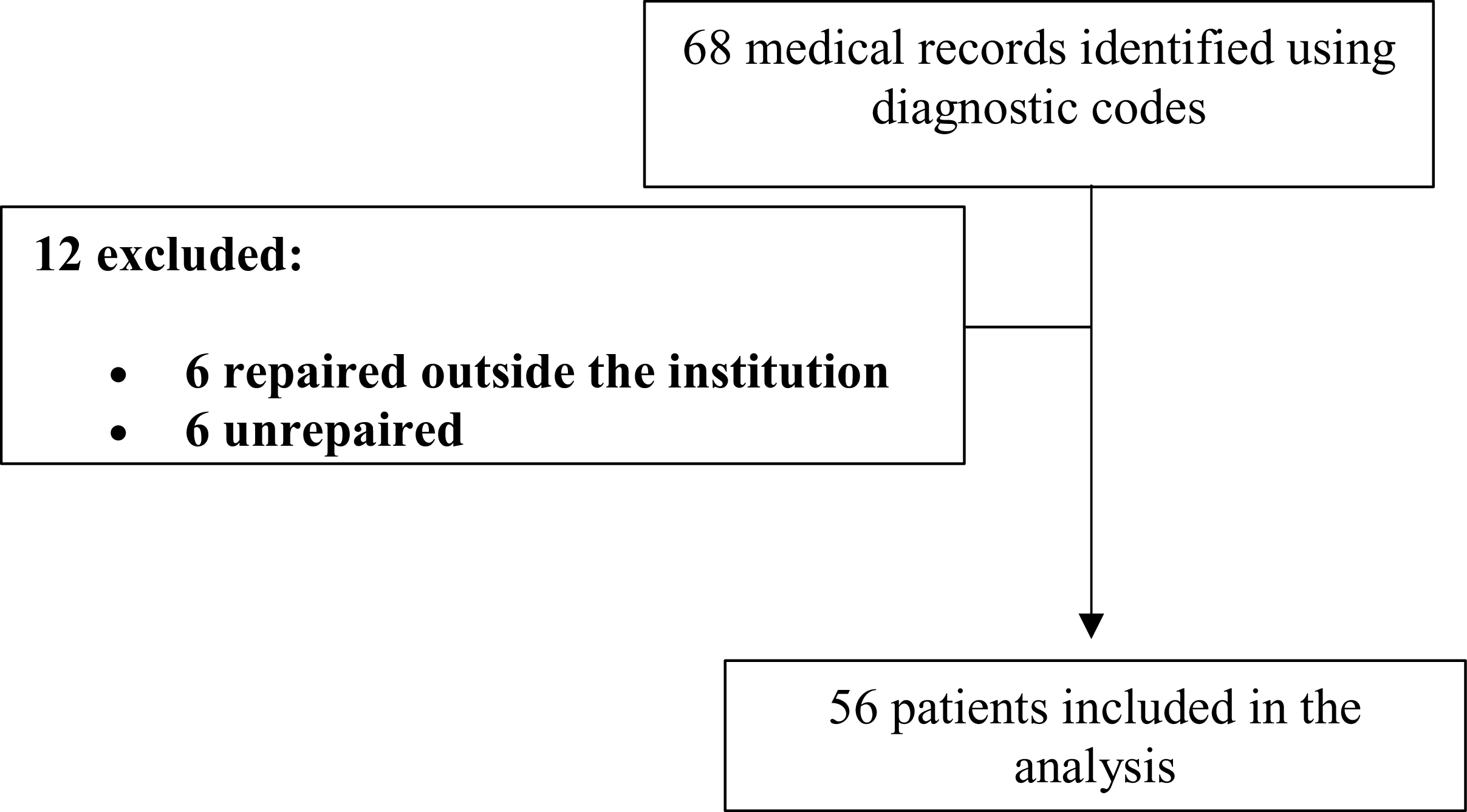
A total of 68 medical records were initially identified. Of these, 12 patients were excluded: 6 because their surgical repair had been performed at external institutions and 6 because they had not undergone surgical correction. The final study population therefore consisted of 56 adult patients who underwent surgical repair at our institution. (Figure 1).
Study participant selection process (n = 56).

All eligible adult patients meeting inclusion criteria during the study period were included in the analysis. Case identification was based exclusively on institutional electronic medical records; therefore, only patients with documented institutional follow-up were captured. No additional patients meeting inclusion criteria were excluded due to incomplete follow-up within the available institutional records. Due to the retrospective design and reliance on institutional databases, the number of patients potentially lost to follow-up outside the institution could not be determined.
Follow-up time was calculated from the date of surgical repair to the date of the last documented institutional clinical evaluation during the study period (censored on 31 December 2024).
After obtaining approval from the Institutional Research Ethics Committee of Clínica Cardio VID and Universidad Pontificia Bolivariana, a detailed chart review was performed. A standardised data-collection form was developed in Microsoft Excel using predefined and validated variables to reduce data-entry errors. Study personnel were trained in its use to ensure consistency in data extraction.
A pilot test was conducted using the first 10 medical records to evaluate the completeness of variables, identify missing data, and estimate the time required for chart review. These patients were retained in the final sample. After refinement of the data-collection process, systematic review of the remaining records was completed.
Statistical analysis
Statistical analyses were conducted using standard methods for observational clinical studies. An initial descriptive analysis of the cohort was performed. Categorical variables were summarised as absolute frequencies and percentages. Normality of continuous variables was assessed using the Kolmogorov–Smirnov test. Variables with normal distribution were expressed as mean ± standard deviation, whereas non-normally distributed variables were reported as median and interquartile range. Comparisons between categorical variables were performed using the chi-square test when appropriate. All analyses were performed using SPSS software, version 22.
Ethical considerations
This study was approved by the Institutional Research Ethics Committee of Clínica Cardio VID and by the Research Ethics Committee of Universidad Pontificia Bolivariana (Medellín, Colombia; meeting of February 14, 2022, Act No. 03-2022). The official approval letter is available as supplementary material upon request.
Patient Consent Statement: Given the retrospective cohort design based on medical record and institutional registry review, without additional intervention or direct patient contact, the Ethics Committee granted a waiver of individual informed consent. Confidentiality was ensured through data anonymisation and exclusive use for academic and scientific purposes.
Results
Study population
Between January 2000 and December 2024, 68 adult patients with diagnostic codes consistent with tetralogy of Fallot were identified. After applying exclusion criteria, 56 patients were included in the final analysis (Figure 1).
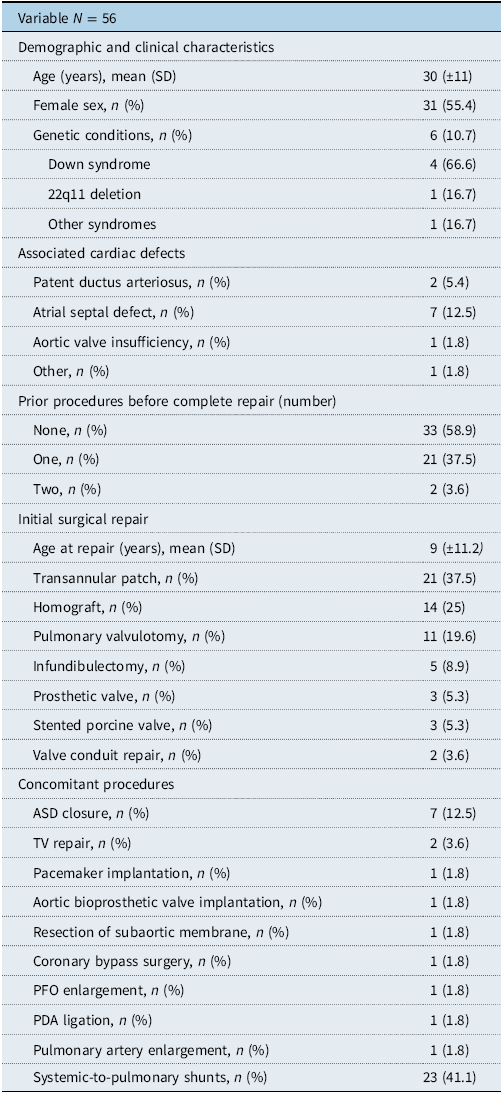
The mean current age was 30 years (SD ± 11), and the mean age at initial repair was 9 (SD ± 11.2 years), considering that 10 patients were diagnosed with tetralogy of Fallot during adulthood. A total of 55.4% of patients were female. Chromosomal abnormalities were present in 6 patients, including one with Orange syndrome, one with 22q11 deletion, and four with Down syndrome. Eighteen (32%) patients had additional congenital defects such as atrial septal defect, patent ductus arteriosus, and aortic valve regurgitation, compared with 38 (67.9%) patients without other malformations.
A prior systemic-to-pulmonary shunt was documented in 41.1% of cases. The most common repair technique was transannular patch (37.5%), followed by homograft repair (25%).
Baseline sociodemographic, clinical, and surgical characteristics are summarised in Table 1.
Sociodemographic, clinical and surgical characteristics of patients with tetralogy of Fallot

Notes: Data are presented as mean (SD) or n (%).
SD = standard deviation; TV = tricuspid valve; ASD = atrial septal defect; PFO = patent foramen ovale; PDA = patent ductus arteriosus.
Reinterventions
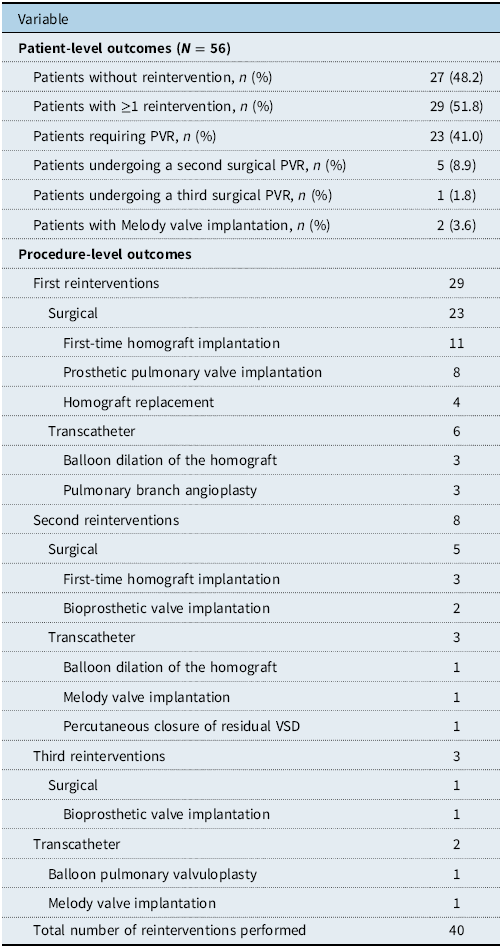
During follow-up, 27 patients (48.2%) remained free from any reintervention, whereas 29 patients (51.8%) required at least one surgical or catheter-based procedure. Overall, 23 patients underwent pulmonary valve replacement. Among these, five patients required a second surgical pulmonary valve replacement, and one patient underwent a third surgical pulmonary valve replacement. Two patients in the cohort currently have a transcatheter pulmonary valve prosthesis (Melody valve).
When considering all procedures performed during follow-up, a total of 40 reinterventions were recorded. The total number of procedures exceeds the number of patients undergoing reintervention because several patients required multiple procedures over time, and some underwent both surgical and transcatheter interventions. These outcomes are summarised in Table 2.
Reinterventions during follow-up: patient-level and procedure-level outcomes
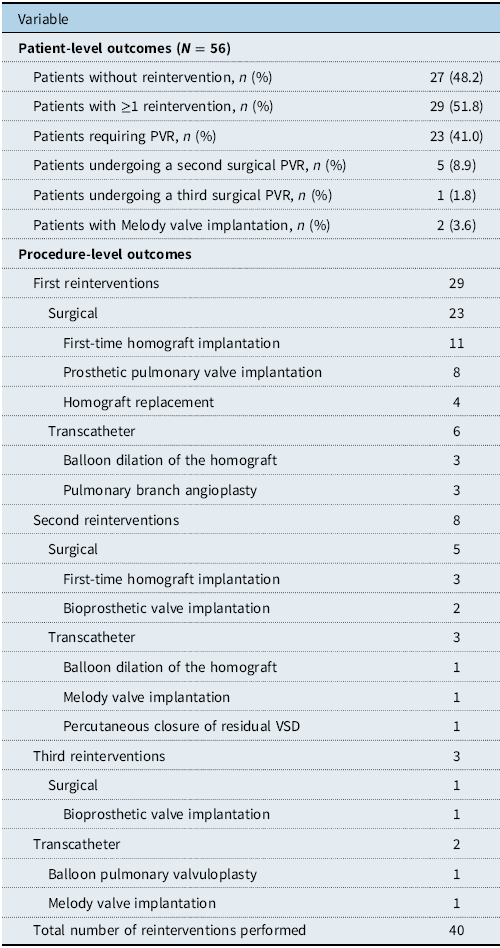
Notes: Percentages are calculated using the total cohort (N = 56). Procedure-level outcomes represent the number of procedures performed. The total number of procedures exceeds the number of patients undergoing reintervention because several patients required more than one intervention during follow-up.
PVR = pulmonary valve replacement.
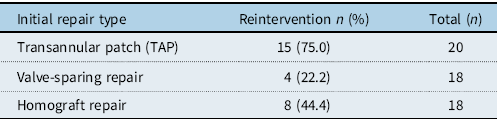
Surgical reintervention rates differed according to the type of initial repair. Reintervention occurred in 15 of 20 patients (75.0%) who underwent transannular patch repair, compared with 4 of 18 patients (22.2%) with valve-sparing repair and 8 of 18 patients (44.4%) with homograft repair. This difference was statistically significant (χ2 = 10.01, p = 0.007) (Table 3).
Surgical reintervention by type of initial repair

Chi-square test: χ2 = 10.01, p = 0.007.
Notes: Values are presented as number (percentage). Differences between groups were assessed using the chi-square test.
First reintervention
Twenty-three patients (41.0%) underwent a first surgical reintervention, and six (10.7%) required a catheter-based procedure, including one hybrid case. The mean age at first reintervention was 16 ± 10.7 years for surgical cases and 14.7 ± 11.8 years for catheter-based cases. The most frequent surgical procedure was pulmonary valve replacement with homograft (47.8%) or prosthetic valve implantation (34.7%). Catheter-based procedures included balloon dilation of the homograft in 3 (50%) patients and pulmonary branch angioplasty in 3 (50%), one of which was hybrid.
Detailed procedural characteristics are summarised in Table 2.
All measurements of right ventricular volumes and pulmonary regurgitation fraction were obtained by cardiovascular MRI. Imaging parameters before this reintervention showed mean right ventricular regurgitant fraction: 49.0% (SD ± 21.0%); right ventricular end-diastolic volume index: 173 mL/m2 (SD ± 44.0 mL/m2); right ventricular end-systolic volume index: 100.8 mL/m2 (SD ± 25.1 mL/m2); left ventricular ejection fraction: 59.5% (SD ± 11.8%); right ventricular fractional area change: 35% (SD ± 8.5%); and tricuspid annular plane systolic excursion: 18.2 mm (SD ± 7.3 mm). Right ventricular systolic dysfunction was found in 17 (73.9%) patients.
Imaging parameters prior to reintervention are summarised in Table 4.
Imaging findings prior to surgical and haemodynamic reinterventions (n = 28) Notes: Values are presented as mean ± SD unless otherwise specified. SD: standard deviation. For the third surgical reintervention (n = 1), SD was not calculated due to single-patient data. For catheter-based reinterventions, only the number of patients with right ventricular systolic dysfunction is reported. SD = standard deviation; RF = regurgitation fraction; RVEDVi = right ventricular end-diastolic volume index; RVESVi = right ventricular end-systolic volume index.
Subsequent reinterventions
A total of five patients (8.9%) required a second surgical reintervention, while three patients (5.3%) underwent a second catheter-based procedure. The mean age at the time of surgical reintervention was 20 ± 6 years. Surgical procedures consisted of homograft implantation in three patients and stented porcine valve implantation in two patients. Catheter-based interventions included balloon dilation of the homograft in one patient, Melody valve implantation in one patient, and percutaneous closure of a residual ventricular septal defect in one patient (Table 2).
Pre-procedure imaging by cardiovascular MRI showed a regurgitant fraction of 34% (SD ± 7.1%), right ventricular end-diastolic volume index of 160 mL/m2 (SD ± 50.9), right ventricular end-systolic volume index of 97.5 mL/m2 (SD ± 41.7), left ventricular ejection fraction of 60% (SD ± 10.5%), right ventricular fractional area change of 34% (SD ± 7.7%), and tricuspid annular plane systolic excursion of 21 mm (SD ± 6.1). Right ventricular dysfunction was present in 2 (40%) patients (mild in 1, moderate in 1) (Table 4).
One patient required a third surgical intervention, and two required a third catheter-based intervention, undergoing balloon pulmonary valvuloplasty and Melody valve implantation. Indications were primarily progressive PR, homograft dysfunction, or right ventricular outflow tract obstruction (Tables 2 and 4).
Current clinical status
The median follow-up duration from surgical repair to the last documented clinical evaluation was 23 years (IQR 18.8–29.3), with a mean follow-up of 23.7 ± 9.1 years. Follow-up duration ranged from 5 to 45 years and was administratively censored on 31 December 2024.
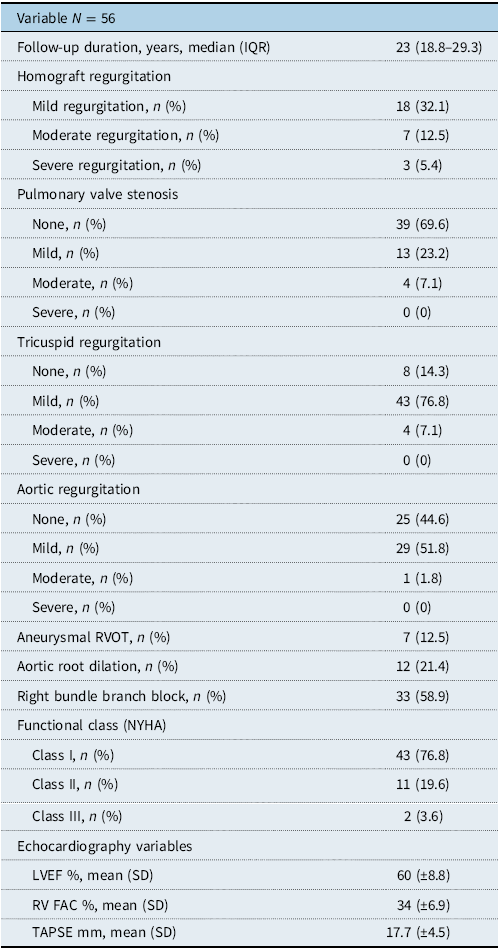
Homograft regurgitation was mild in 18 patients (32.1%), moderate in 7 (12.5%), and severe in 3 (5.4%). Aneurysmal right ventricular outflow tract dilation occurred in 7 patients (12.5%) and aortic root dilation in 12 (21.4%). Most patients were in NYHA functional class I (76.8%). The mean left ventricular ejection fraction was 60 ± 8.8%, and the mean right ventricular fractional area change was 34 ± 6.9%. Right bundle branch block was present in 58.9% of patients. Details are shown in Table 5.
Clinical and haemodynamic findings at most recent follow-up in patients with tetralogy of Fallot

Notes: Data are presented as mean (SD), median or n (%).
SD = standard deviation; IQR = interquartile range; RVOT = right ventricular outflow Tract; LVEF = left ventricular ejection Fraction; RV FAC = right ventricle fractional area change; TAPSE = tricuspid annular plane systolic excursion.
Regarding medical therapy, 5 patients (8.9%) were receiving angiotensin-converting enzyme inhibitors, 15 (26.8%) beta-blockers, 2 (3.6%) antiarrhythmic drugs, 21 (37.5%) aspirin, 6 (10.7%) oral anticoagulants, 8 (14.3%) diuretics, and 2 (3.6%) calcium channel blockers.
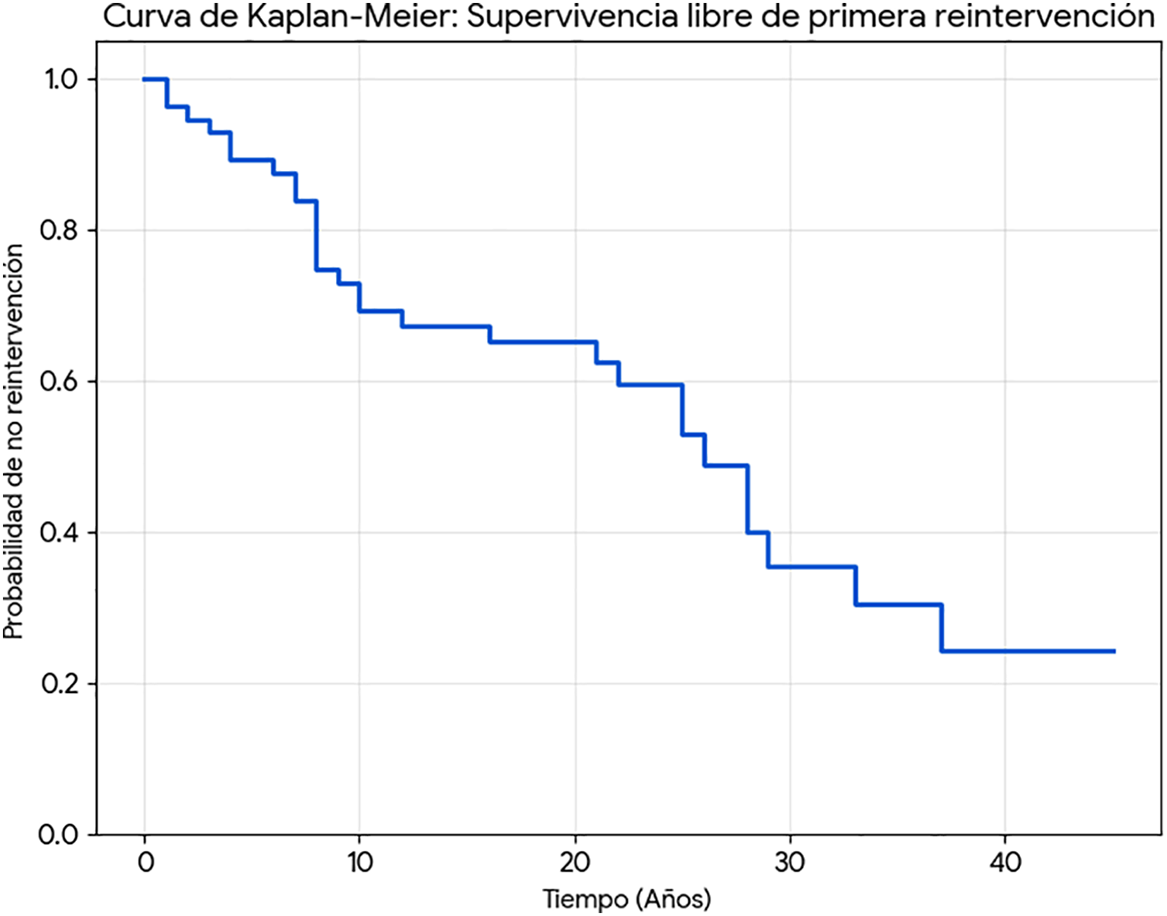
Kaplan–Meier analysis was performed to estimate freedom from first reintervention over time. The probability of remaining free from reintervention progressively decreased over time, with a greater accumulation of events observed after approximately 20 years following the initial repair (Figure 2).
Kaplan–Meier curve showing freedom from first reintervention after surgical repair of tetralogy of Fallot. Notes: Patients without reintervention were censored at the time of last follow-up.

Figure 2 Long description
A line graph titled 'Curva de Kaplan-Meier: Supervivencia libre de primera reintervención' displays the probability of no reintervention over time in years after surgical repair of tetralogy of Fallot. The x-axis represents time in years, ranging from 0 to 40. The y-axis represents the probability of no reintervention, ranging from 0.0 to 1.0. The graph shows a decreasing trend in the probability of no reintervention over time. Initially, the probability is high, close to 1.0, but it gradually declines with time. The decline becomes more pronounced after approximately 20 years. The graph indicates that the probability of remaining free from reintervention progressively decreases over time, with a greater accumulation of events observed after approximately 20 years. All values are approximated.
Complications
Overall mortality following first surgical reintervention was 3.6% (2 patients) due to cerebrovascular disease (50%) and myocardial infarction with cardiogenic shock (50%). Infective endocarditis occurred in 3.6% of patients. Arrhythmic complications included premature ventricular contractions in 35.7%, pacemaker implantation in 3.6%, and ICD implantation in 3.6% as primary prevention for ventricular tachycardia.
Discussion
In this retrospective cohort, we describe the long-term outcomes of adults with repaired tetralogy of Fallot, with postoperative reintervention emerging as the most frequent major event observed during long-term follow-up.
Regarding baseline characteristics, international series have reported a male predominance of approximately 56.5%. Reference Khalid, Mughal, Siddiqui and Haq2,Reference Khan, Tufail, Afridi, Iqbal, Khan and Waheed3 In contrast, most patients in our cohort were women (55.4%), which may be explained by the characteristics of our sample. Chromosomal abnormalities are reported in 20–25% of patients with tetralogy of Fallot, most commonly 22q11 deletion and trisomy 21. Reference Jernigan, Cunniff and Lin10–Reference Blais, Marelli and Vanasse12 In our cohort, genetic defects were identified in 10.7%, which likely reflects both the small sample size and historical differences in genetic testing practices that may underestimate the true prevalence compared with larger or more contemporary cohorts. Associated congenital lesions were present in 32.0% of patients, consistent with previous reports. Reference Khan, Tufail, Afridi, Iqbal, Khan and Waheed3 The relatively high proportion of prior palliative procedures in our cohort (41.0%), compared with contemporary series reporting a BT shunt in only 5.8% of patients, Reference Khalid, Mughal, Siddiqui and Haq2,Reference Al Mosa, Bernier and Tchervenkov13 likely reflects historical surgical strategies in which staged palliation was frequently performed before definitive repair. In contrast, many centres currently favour early complete repair protocols, which reduce the need for palliative shunts and may explain the lower rates observed in more recent series. Reference Al Mosa, Bernier and Tchervenkov13
The mean age at complete repair in our study was 9 years, influenced by the fact that tetralogy of Fallot was diagnosed in adulthood in 10 patients (17.8%). Transannular patch repair was the most frequently used technique (35.7%), particularly before 2001. These findings differ from other reports in which transannular patch repair was most common among patients born after 1985 (43.9%), whereas non-transannular repair predominated in those born before 1985 (66.1%). Reference Caruana and Grech14
Although approximately half of the cohort remained free from additional procedures, a substantial proportion required surgical or catheter-based reintervention during follow-up, most commonly pulmonary valve replacement. These findings are consistent with longitudinal series demonstrating that reintervention rates may approach 50% within 30 years after repair. Reference Ducas, Harris and Labos8,Reference Chávez-Saldívar, Mego, Tauma-Arrué, Coronado, Luis-Ybañez and Bravo-Jaimes9
Surgical strategy is an important determinant of long-term outcomes in patients with repaired tetralogy of Fallot. Transannular patch repair is well recognised to result in chronic pulmonary regurgitation and progressive right ventricular volume overload. This pathophysiological mechanism frequently leads to right ventricular dilation and dysfunction over time, ultimately increasing the likelihood of pulmonary valve replacement. Reference Ducas, Harris and Labos8 In our cohort, 41% of patients underwent pulmonary valve replacement, a proportion consistent with previously published series. Reference Blais, Marelli and Vanasse4 Importantly, we observed significant differences in reintervention rates according to the type of initial repair. Patients who underwent transannular patch repair had markedly higher rates of surgical reintervention compared with those who underwent valve-sparing repair (75.0% versus 22.2%), while homograft repair showed intermediate rates (44.4%) (p = 0.007). These findings are consistent with previous studies, including the report by Ducas et al., Reference Ducas, Harris and Labos8 highlighting the long-term impact of the initial surgical strategy. Together, these observations support current surgical trends favouring pulmonary valve preservation whenever anatomically feasible in order to reduce the long-term burden of pulmonary regurgitation and the need for later valve intervention.
Catheter-based reinterventions were required in a small proportion of patients (10,7%) and included pulmonary artery branch angioplasty and percutaneous pulmonary valve implantation using the Melody valve. However, the number of patients undergoing this procedure in our cohort was very limited, reflecting the relatively recent adoption of this technology in clinical practice. The first Melody valve implantation in our centre was performed in 2017, following regulatory approval and broader clinical availability of the device. As reported in previous series describing medium-to long-term experience with the Melody valve in the right ventricular outflow tract, Reference Cools, Brown and Budts15 transcatheter approaches have become an important component of contemporary management and may delay repeat sternotomy in selected patients.
In our cohort, right ventricular volumes and pulmonary regurgitation severity prior to reintervention were assessed using cardiovascular MRI, which is considered the reference standard for quantifying right ventricular size and pulmonary regurgitation in patients with repaired tetralogy of Fallot. According to current recommendations, Reference Baumgartner, De Backer and Babu-Narayan6,Reference Hickey, Veldtman and Bradley16–Reference Geva, Valente and Gauvreau18 pulmonary valve replacement is generally considered when the right ventricular end-diastolic volume index exceeds approximately 160 mL/m2 or when the right ventricular end-systolic volume index exceeds 80 mL/m2, particularly in the presence of significant PR.
In our series, the mean right ventricular end-diastolic volume index prior to the first surgical reintervention was 173 ± 44 mL/m2 and the mean right ventricular end-systolic volume index was 100.8 ± 25.1 mL/m2, with a mean pulmonary regurgitation fraction of 49 ± 21%. These values are consistent with the thresholds commonly cited for consideration of pulmonary valve replacement, suggesting that reinterventions in our cohort were generally performed after the development of significant right ventricular dilation and PR. These findings also indicate that many patients in our cohort reached advanced right ventricular dilation before reintervention, which likely reflects historical surgical strategies and the long follow-up period of the study.
Arrhythmias such as supraventricular tachycardia and sustained or non-sustained ventricular tachycardia affect 34% of adults with repaired tetralogy of Fallot, and approximately 19% develop sustained ventricular tachycardia, with risk increasing with age. Reference Egbe, Miranda and Madhavan19,Reference Atallah, Erickson and Cecchin20 This complication has been observed in patients repaired with both transannular patch and homografts. Reference Atallah, Erickson and Cecchin20 In our cohort, 35.7% of patients exhibited premature ventricular contractions, although no patient experienced arrhythmia-related death. Pacemaker implantation was required in 7.1% of our patients, consistent with current European guideline indications. Reference Baumgartner, De Backer and Babu-Narayan6 This lower rate, compared with series reporting rates between 21–41%, Reference Egbe, Miranda and Madhavan19,Reference Bassareo and Mercuro21 likely reflects a combination of surgical strategies that preserved atrioventricular conduction, the age and timing of repairs in our cohort, and adherence to guideline-based indications for device implantation.
Tricuspid regurgitation, associated with progressive right ventricular dilation and annular enlargement, was observed in 83.9% of our cohort, although most cases were mild, which is consistent with other reported series. Reference Daraban, Jurcut, Badila, Bartos and Dan22
Aortic root or ascending aortic dilation (≥40 mm) has been reported in 15–88% of patients with tetralogy of Fallot and in approximately 20% of those after repair. Reference Baumgartner, De Backer and Babu-Narayan6,Reference Bonello, Kempny and Uebing23 This corresponds to roughly one-third of cases and may lead to the development of aortic regurgitation. Reference Bedair and Iriart7,Reference Trojnarska, Grajek and Katarzynska24 In our study, aortic regurgitation occurred in 21.4% of patients, consistent with previous publications, while 53.5% had some degree of aortic regurgitation at follow-up, most commonly mild.
Long-term survival after repair of tetralogy of Fallot exceeds 80% at 30 years, Reference Tatewaki and Shiose25,Reference Bacha, Scheule and Meadows26 with annual mortality below 0.5% in most series. Reference Stout, Daniels and Aboulhosn5 Our mortality rate (3.6%) is consistent with these data. Reported causes of death include end-stage heart failure, ventricular fibrillation, sudden cardiac death, postoperative complications following cardiac surgery, sepsis with multiorgan failure, and unknown causes. Reference Khan, Tufail, Afridi, Iqbal, Khan and Waheed3 In our cohort, deaths were attributable to coronary artery disease and cerebrovascular disease.
Functional capacity, assessed by NYHA class and cardiopulmonary exercise testing, correlates with long-term outcomes. Patients with better NYHA class generally demonstrate higher exercise capacity, whereas reduced exercise tolerance is associated with increased mortality. Reference Buys, Van De Bruaene, De Meester, Budts and Vanhees27,Reference Sandström, Wikner and Rinnström28 In our cohort, 76.8% of patients were in NYHA class I, with only a small proportion in class III. These findings are comparable to other studies reporting that approximately 75% of patients remain in NYHA class I after repair. Reference Presbitero, Demarie and Aruta29,Reference Dennis, Moore, Kotchetkova, Pressley, Cordina and Celermajer30 Importantly, these observations underscore that significant anatomical deterioration and the need for reintervention may occur despite preserved functional status.
The Kaplan–Meier analysis illustrates the progressive need for late reinterventions in adults with repaired tetralogy of Fallot. As shown in the survival curve, the likelihood of remaining free from reintervention declines steadily over long-term follow-up, with a more pronounced increase in reintervention events after the second decade following surgical repair. These findings highlight the chronic and progressive nature of right ventricular outflow tract dysfunction in this population and reinforce the importance of lifelong surveillance.
The central finding of this study is that late reintervention, particularly pulmonary valve replacement, was the most frequent major event observed during follow-up in adults with repaired tetralogy of Fallot. Initial surgical strategy, especially transannular patch repair, may influence the subsequent burden of reintervention. Reference Ducas, Harris and Labos8,Reference Hickey, Veldtman and Bradley16,Reference Egbe, Crestanello and Dearani17 These findings reinforce the importance of lifelong surveillance in specialised adult CHD centres in order to optimise the timing of intervention and reduce the risk of late complications. Reference Caruana and Grech14,Reference Egbe, Crestanello and Dearani17,Reference Geva, Valente and Gauvreau18
Study limitations
This study has several limitations. First, its retrospective, single-centre design may limit the generalisability of the findings. Second, the sample size is relatively small, which could affect the precision of estimates and the representation of rare outcomes. Third, only patients with documented institutional follow-up were included, potentially introducing selection bias, and the number of patients lost to follow-up outside the institution could not be determined. Fourth, detailed data on early surgical techniques and postoperative management were limited for patients repaired at the beginning of the study period. Finally, although our study captures multiple clinical outcomes, the observational nature does not allow for causal inferences regarding predictors of late complications or reinterventions.
Conclusions
In this single-centre retrospective cohort of adults with repaired tetralogy of Fallot, long-term follow-up demonstrated that most patients maintained good functional status, although a substantial proportion required surgical or catheter-based reinterventions. Pulmonary valve replacement was the most frequent reintervention, while arrhythmias, device implantation, and residual valvular or right ventricular abnormalities were also common. These findings highlight the need for structured, lifelong surveillance in adults with repaired tetralogy of Fallot to enable early detection of late complications and timely intervention.
Supplementary material
The supplementary material for this article can be found at https://doi.org/10.1017/S1047951126112128.
Acknowledgements
We thank all members of the research team, Clinica CardioVID, and the Universidad Pontificia Bolivariana for their support.
Competing interests
The authors declare no conflicts of interest.