Introduction
TBI rehabilitation is a challenging field for health professionals to work in. The functional effects of TBI vary from mild deficits with little to no activity restrictions to more severe impairments with major activity restrictions (e.g., loss of independence, inability to drive and work). The diverse physical, cognitive, emotional and behavioural effects necessitate interventions involving unique knowledge and skills from a variety of medical and allied health specialties as part of a multidisciplinary approach to rehabilitation. Currently, there is little understanding of the barriers to practice and professional development needs perceived by clinicians working in this field. Such knowledge may guide initiatives to enhance the quality of brain injury rehabilitation services and improve outcomes for clients with TBI and their families (McDonald et al., Reference McDonald, Anderson, Ponsford, Tate, Togher, Morgan and Murdoch2012).
It is estimated that approximately 10 million people each year sustain a TBI of varying severity worldwide (Corrigan, Selassie, & Orman, Reference Corrigan, Selassie and Orman2010). In Australia each year, approximately 1,500 people sustain a moderate TBI and 1,000 people sustain a severe TBI (Access Economics, 2009). Overall, there are approximately 21,000 new cases of TBI each year which range in severity from mild to very severe (Australian Institute of Health & Welfare, 2007). The total annual cost of TBI in Australia for 2008 alone was estimated to be $8.6 billion, with a lifetime cost per incident case of severe TBI between $2.5 million and $4.8 million (Access Economics, 2009). The major costs include health system expenses (e.g., administration, ambulance, hospital, paramedical and medical), equipment and home modification costs, long-term care costs (e.g., accommodation, respite care, personal assistance), and productivity costs. Such costs are increasing over time due to improved survival rates (Jackson & Manchester, Reference Jackson and Manchester2001).
TBI Rehabilitation
In Australia, rehabilitation services for TBI have been established in some form for over 30 years (Tate, Reference Tate2008). After clients’ critical medical issues have been managed, inpatient rehabilitation programs may address issues with swallowing, mobility, speech and communication, self-care, independent living and cognitive, emotional and behavioural functioning. The focus of inpatient rehabilitation is on restoring, improving and maintaining clients’ functional abilities in preparation for discharge and community reintegration with multidisciplinary programs tailored according to individual needs (NSW Government, 2011).
Clients with moderate to severe TBI usually require outpatient rehabilitation to facilitate ongoing gains in the community and goal attainment. Outpatient programs often involve multidisciplinary therapies in relation to different functional goals (e.g., speech, occupational therapy), and may include a range of interventions such as individual therapy, group therapy, cognitive rehabilitation, psychotherapy, psycho-education and family therapy (Tsaousides & Gordon, Reference Tsaousides and Gordon2009). Common goals during the first few months post-discharge include improving independence (e.g., meal preparation, budgeting, community access), return to driving, return to school/work, parenting and family role functioning, and re-engagement in social and leisure activities (Turner, Ownsworth, Turpin, Fleming, & Griffin, Reference Turner, Ownsworth, Turpin, Fleming and Griffin2008). Once the client is able to live in the community with some degree of support, additional community services may provide long-term case management and rehabilitation to support clients and their families.
Disciplines involved in brain injury rehabilitation include, but are not limited to, specialist doctors and rehabilitation physicians, nurses, physiotherapists, speech pathologists, occupational therapists, social workers and psychologists. Multidisciplinary and interdisciplinary team approaches have been advocated for many decades in health care settings, particularly in neurorehabilitation (Booth & Hewison, Reference Booth and Hewison2002; Suddick & De Souza, Reference Suddick and De Souza2006). Multidisciplinary teams consist of professionals who work in parallel but have clear role definitions and tasks, whereas interdisciplinary teams collaboratively discuss and set treatment goals and jointly carry out treatment plans (Körner, Reference Körner2010). More generally, teams involving professionals from specialised disciplines collaborating on the shared goal of improving patients’ functioning are integral in brain injury rehabilitation (Wertheimer et al., Reference Wertheimer, Tresa, Roebuck-Spencer, Constantinidou, Turkstra and Pavol2008). Benefits of working in a multidisciplinary team in neurorehabilitation have been identified for patients (e.g., holistic care and continuity), team members (e.g., shared workload), the team (e.g., sharing of information and skills) and the service (e.g., improved efficiency and coordination) (Suddick & De Souza, Reference Suddick and De Souza2006). Both the clinical and cost-effectiveness of multidisciplinary approaches to brain injury rehabilitation have been demonstrated (Turner-Stokes, Reference Turner-Stokes2008).
Within this context, rehabilitation roles and activities often overlap between disciplines. For example, goal setting, education and assessment of adaptive function and assessment and rehabilitation of cognitive-linguistic abilities may be conducted by several disciplines within the team (Sander, Raymer, Wertheimer, & Paul, Reference Sander, Raymer, Wertheimer and Paul2009; Wertheimer et al., Reference Wertheimer, Tresa, Roebuck-Spencer, Constantinidou, Turkstra and Pavol2008). Cognitive rehabilitation has been identified as another common area of overlap, which may be provided by neuropsychologists, speech therapists and occupational therapists (Mazmanian, Kreutzer, Devany, & Martin, Reference Mazmanian, Kreutzer, Devany and Martin1993; Stringer, Reference Stringer2003). Role overlap is generally viewed as important to support the continuum of intervention, which in turn has a positive impact on client outcomes (Wertheimer et al., Reference Wertheimer, Tresa, Roebuck-Spencer, Constantinidou, Turkstra and Pavol2008). However, perceptions of role overlap can also create a sense of role insecurity, territorial feelings and unequal status (Booth & Hewison, Reference Booth and Hewison2002; Sander et al., Reference Sander, Raymer, Wertheimer and Paul2009). Further challenges related to working in multidisciplinary teams include misperceptions of the roles and practices of other disciplines and lack of communication or contact between team members (Booth & Hewison, Reference Booth and Hewison2002; Wertheimer et al., Reference Wertheimer, Tresa, Roebuck-Spencer, Constantinidou, Turkstra and Pavol2008). Conversely, facilitators of effective collaboration included physical proximity, team meetings, good communication, shared information and collegiality (Wertheimer et al., Reference Wertheimer, Tresa, Roebuck-Spencer, Constantinidou, Turkstra and Pavol2008).
Barriers to Providing Rehabilitation
Regardless of the team environment, clinicians working in TBI rehabilitation often face barriers to their practice. The complex physical, cognitive, behavioural and emotional effects of TBI may interfere with the process and outcomes of rehabilitation. For example, in a study of occupational therapists in New Zealand, memory deficits, disorientation, attention disturbance, lack of insight and limited problem solving skills were identified as client-related barriers to rehabilitation practice (Graham, Robertson, & Anderson, Reference Graham, Robertson and Anderson2013). Similarly, in a UK survey of psychotherapists working in the TBI field, Judd and Wilson (Reference Judd and Wilson2005) identified clients’ lack of insight, impaired memory, inflexible thinking, poor attention, language deficits, disinhibition and emotional lability as key challenges. Memory and learning impairments were considered the most significant barriers which can limit the ability to learn and generalise new skills in rehabilitation (see also Boosman, Visser-Meily, Ownsworth, Winkens, & Van Heugten, Reference Boosman, Visser-Meily, Ownsworth, Winkens and Van Heugten2014). As identified by speech-language pathologists (Hicks, Larkins, & Purdy, Reference Hicks, Larkins and Purdy2011), fatigue is another major barrier that needs to be actively managed to enhance intervention effectiveness.
Collaborative relationships between the client with TBI, family members and therapists are considered crucial to rehabilitation success (Bishop, Degeneffe, & Mast, Reference Bishop, Degeneffe and Mast2006). Poor self-awareness and unrealistic expectations may interfere with the therapeutic alliance due to lack of agreement on therapy tasks and goals between the client and the therapist (Sherer et al., Reference Sherer, Evans, Leverenz, Stouter, Irby, Eun Lee and Yablon2007). Family members may overestimate or minimise clients’ impairments which can interfere with goal setting and the rehabilitation process more broadly. McLaughlin and Carey (Reference McLaughlin and Carey1993) found that conflict between the rehabilitation team and family of TBI clients was associated with longer length of stay and lower program satisfaction. In contrast, having family members engaged in the rehabilitation process has been linked to improved client outcomes (Foster et al., Reference Foster, Armstrong, Buckley, Sherry, Young, Foliaki and McPherson2012), particularly for clients with families with stronger functioning (Barclay, Reference Barclay2013).
Focusing on contextual factors influencing intervention practices, Wong, McKay and Stolwyk (Reference Wong, McKay and Stolwyk2014) assessed the frequency in which psycho-education, cognitive rehabilitation, supportive counselling, behaviour management and psychological therapies were delivered by neuropsychologists (n = 114) to people with neurological disorders. The most common intervention delivered was psycho-education (84%), and the least common was psychological therapy (20%). Clinicians’ confidence in delivering interventions significantly predicted the frequency with which all interventions were delivered. Number of years of clinical experience and quality of training were not significant predictors of frequency of intervention delivery. However, number of years of clinical experience predicted clinicians’ confidence in delivering psycho-education and cognitive rehabilitation. Overall, frequency of current intervention delivery was the best predictor of confidence in delivering each intervention type. Other barriers to delivering interventions included lack of time, limited resources, and inadequate training (Wong et al., Reference Wong, McKay and Stolwyk2014).
The notion that professionals’ confidence can be a barrier or facilitator to effective clinical practice has been explored in a range of settings, including nursing and medicine (Ammentorp, Sabroe, Kofoed, & Mainz, Reference Ammentorp, Sabroe, Kofoed and Mainz2007; Ryan et al., Reference Ryan, Ross, Davey, Duncan, Fielding, Francis and Bond2013), social work (Pedrazza, Trifiletti, Berlanda, & Bernado, Reference Pedrazza, Trifiletti, Berlanda and Bernardo2013), occupational therapy (Wilding, Curtin, & Whiteford, Reference Wilding, Curtin and Whiteford2012), speech pathology (Hux, Walker, & Sanger, Reference Hux, Walker and Sanger1996) and neuropsychology (Wong et al., Reference Wong, McKay and Stolwyk2014). Professional confidence has been defined as a dynamic, maturing personal belief held by a professional or student. This includes an understanding of and a belief in the role, scope of practice, and significance of the profession, and is based on their capacity to competently fulfil these expectations (Holland, Middleton, & Uys, Reference Holland, Middleton and Uys2012, p. 222). Greater confidence has been found to be related to increased frequency of delivering neurorehabilitation interventions (Wong et al., Reference Wong, McKay and Stolwyk2014). Further, TBI specific education and training can enhance therapists’ confidence and willingness to provide therapy (Cook et al., Reference Cook, Gillespie, Kronk, Daugherty, Moody, Allen and Falcone2013; Hux et al., Reference Hux, Walker and Sanger1996). Such findings highlight the links between clinical experience, training opportunities and confidence.
Rationale and Aims of the Present Study
While a number of studies have examined clinicians’ perceptions of neurorehabilitation practice (e.g., Judd & Wilson, Reference Judd and Wilson2005; Sander et al., Reference Sander, Raymer, Wertheimer and Paul2009; Wertheimer et al., Reference Wertheimer, Tresa, Roebuck-Spencer, Constantinidou, Turkstra and Pavol2008; Wong et al., Reference Wong, McKay and Stolwyk2014), few studies have focused specifically on clinicians’ experiences in TBI rehabilitation. Further, despite the recognised importance of multidisciplinary approaches in rehabilitation, there are limited studies conducted from a multidisciplinary perspective. Accordingly, the first aim of this study was to investigate the profile of clinicians and their scope of rehabilitation practices in TBI. It was hypothesised that some core areas of rehabilitation practice would emerge as common to all disciplines, and that other more discipline-related areas of practice would also be identified. The second aim was to identify the most common barriers to providing TBI rehabilitation and to determine clinicians’ level of confidence in overcoming barriers. A third aim was to investigate factors related to the number of barriers and level of confidence. It was hypothesised that years of experience would be positively related to clinicians’ confidence. The final aim was to identify clinicians’ preferences for professional development to enhance the effectiveness of their rehabilitation practice with TBI clients.
Method
Participants
Clinicians from any health discipline who were currently working with clients with TBI and were based in Australia were eligible to participate. Participants were recruited from brain injury and rehabilitation conferences and national and international professional membership data bases (see Procedure). A total of 441 surveys were submitted, which included 97 surveys from clinicians living outside Australia. A further 39 surveys had excess missing data on key variables for an entire survey section (see Data Analysis). Overall, 305 participants met the inclusion criteria and completed sufficient sections of the survey. The characteristics of the clinician sample are described in the Results.
Materials
Parallel versions of the survey were developed in hard copy and online formats. The sections and items of the survey were designed in collaboration with members of the multidisciplinary NHMRC Centre for Research Excellence (CRE) in Brain Recovery (McDonald et al., Reference McDonald, Anderson, Ponsford, Tate, Togher, Morgan and Murdoch2012). This process commenced in 2013 and involved circulating an initial survey draft to nine Chief Investigators and post-doctoral researchers (with representation from psychology, speech pathology and occupational therapy disciplines) for feedback via email. Further feedback was sought from the CRE members during a teleconference. The survey was then piloted with two clinicians whose feedback (mostly minor wording changes) was incorporated into the final survey. The online survey was created and launched in Lime Survey (v1.9).
An information sheet was included in both versions (electronic and hard copy) of the survey. Consent was implied by completion and return or submission of the survey. The survey took approximately 10–15 minutes to complete and responses were anonymous. The majority of survey questions were designed as fixed-alternative items with the opportunity to add text in an ‘other’ section as relevant. The closed question and categorical response format was chosen to minimise time demands on participants, thus aiming to maximise the response rate. The survey consisted of four main sections, as follows:
1. Demographics: 14 questions regarding information on role title, country of residence, age, gender, discipline, nature of practice (e.g., part of a multidisciplinary team), highest level of qualification, years of experience and time per week engaged in practice with clients with TBI, location, practice setting*, client type* and client functional status (injury severity)*. In the electronic survey all questions in this section (excluding role title) prompted a mandatory response. Questions marked with an asterix (*) could receive multiple responses. Participants were able to respond in a free text box if they had an ‘other’ response.
2. Scope of practice: participants were asked how frequently they practice 21 listed rehabilitation activities using three response options: ‘always/frequently’, ‘sometimes’, ‘never’. Scope of practice was presented in five categories; assessment (1 item), rehabilitation planning (1 item), coordination of rehabilitation and support (1 item), intervention delivery (17 items) and evaluation (1 item). This was set up as a mandatory section in the electronic survey. A free text area allowed participants to list any other areas of practice with clients with TBI.
3. Barriers to practice and confidence ratings: participants were asked to identify if certain barriers were present in their rehabilitation practice (22 items total). For each item identified as a barrier (‘Yes’ response), they were then asked to rate their confidence in providing effective rehabilitation despite the barrier on a 10-point scale from 1 (not at all confident) to 10 (very confident). Barriers were grouped into five categories; client-related (8 items), family-related (2 items), client-therapist relationship (3 items), workplace context (5 items) and professional skill (4 items). A free text box allowed participants to list any other barriers experienced in rehabilitation with TBI clients.
4. Professional development preferences: participants were asked to indicate preferred topics for, and modes of professional development. Options for mode included ‘workshop’, ‘conference theme’, ‘resources’ or ‘other’. Topics were grouped into five categories: client functioning (6 items), client activity and role participation (6 items), client / therapist relationship (1 item), broader rehabilitation (5 items) and client specific (3 items). A free text box enabled participants to list any other preferences for professional development topics or suggested modes of delivery.
A final question asked participants to indicate the source from which they received the survey.
Reliability analysis of the clinician survey
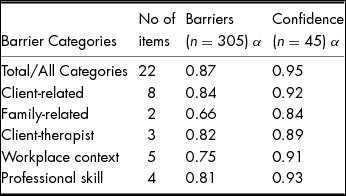
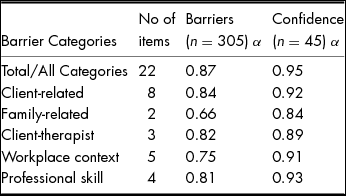
To enhance ease of completion of the survey, barriers were listed according to pre-established categories; client-related, family-related, client-therapist relationship, workplace context and professional skill. Internal consistency of the total scale and subscales based on these categories was examined using Cronbach's alpha. As shown in Table 1, the reliability analysis indicated satisfactory internal consistency for the total barriers section (α = .87) and subcategories in the survey (α = .66–.85). Similarly, internal consistency was high for confidence ratings (α = .84–.95), as calculated using a subsample of participants (n = 45) who provided confidence ratings for all barriers.
Internal Consistency of the Clinician Survey (Cronbach's Alpha)
Construct validity of the clinician survey
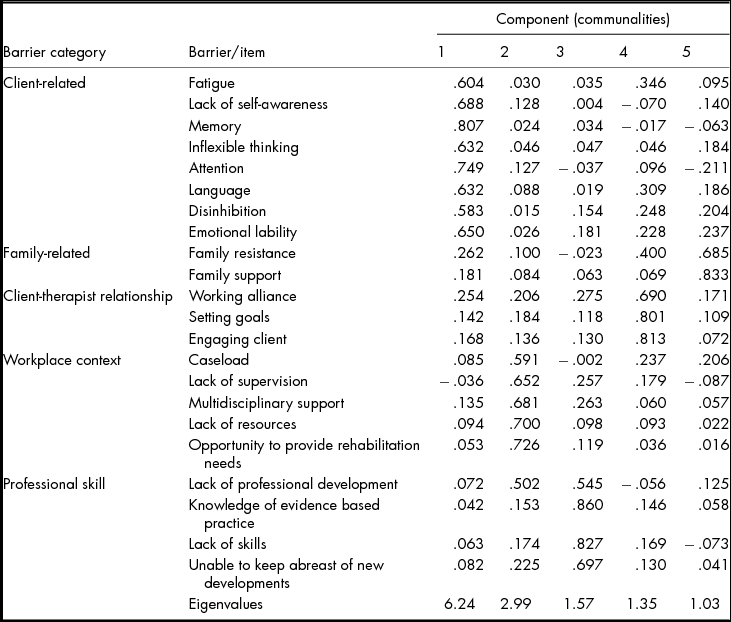
To determine the appropriateness of using subscale scores in the analysis, the 22 items in the barrier section were subjected to a principal components analysis (PCA) using varimax rotation with Kaiser Normalisation. As the confidence ratings were only completed by participants who experienced the respective barrier, the number of participants in this analysis was reduced from 305 to 45 for all 22 items. Therefore, PCA was not conducted for confidence ratings. The PCA on the barrier items revealed five components with eigenvalues exceeding 1.0; which explained 28%, 14%, 7%, 6% and 5% of the variance respectively (see Table 2). The item commonalities for each component were all greater than .50. The item ‘lack of professional development’ loaded onto two components (workplace context and professional skill); however, this item was retained in the original category of professional skill.
Principal Components Analysis of the 22 Barrier Items (Rotated Factor Solution)

Procedure
The study was approved by the Griffith University Human Research Ethics Committee (Reference Number: PSY/42/13/HREC). Participants were recruited through professional membership bodies and conferences using both hard copy (completed by 21%) and electronic survey dissemination (completed by 79%). Hard copies of the survey were distributed at the following forums (proportion of sample indicated):
1. The 36th Annual Brain Impairment Conference hosted by the Australian Study of the Society of Brain Injury (ASSBI) held in Tasmania May 2013 (13% of sample).
2. ‘Living Life to the Fullest’ Current Directions in Children's Rehabilitation Conference, Royal Brisbane and Women's Hospital, Brisbane, August 2013 (5% of sample).
3. Occupational Therapy Australia QLD Conference, Gold Coast, June 2013 (4% of sample).
In addition, an email with the survey link was sent to the Chair or Executive Officers of diverse professional organisations. These organisations and proportion of the sample represented were as follows: 1) ASSBI Members (27%); 2) Neuropsychological Rehabilitation Special Interest Group of the World Federation for NeuroRehabilitation (1%, note: the majority of these members are international and Australian members were likely to have received the survey from another source); Synapse Brain Injury Network (Queensland; 1.3%); Victorian Brain Injury Recovery Association (2.6%); QLD Physiotherapy Rehabilitation Network (2%); Occupational Therapy Australia (QLD Neuro Interest Group, 1%); and Speech Pathology in Brain Injury Interest Group (3%). The estimated total number of people to whom the survey or survey link was distributed was approximately 6,000.
A snow-balling method of recruitment was also employed in which participants were encouraged to forward the link for the electronic survey, or distribute hard copy surveys to their colleagues. This recruitment source yielded the highest proportion of participants (33%). A further 7% of the sample did not identify the source of the survey. Participants were alerted to the possibility of receiving the survey from more than one source, and were asked to complete the survey only once.
Data Analysis
Data were screened for accuracy of entry and missing data. Surveys were excluded in cases where responses were missing on key variables for an entire survey section (e.g., no responses made in the section on barriers to practice). However, participants were retained if they completed all survey sections with the exception of professional development requirements (the final survey section). Based upon these guidelines, 39 participants (11%) were excluded from the analysis due to excess missing data. Chi-square analyses or z-tests of independent proportions (for cell sizes <5) indicated no significant differences between excluded participants (n = 39) and those retained for analysis (n = 305) in terms of age, gender, discipline, team setting, qualification, work context, years of experience, level of client contact and client functional status.
In the scope of practice section, some participants (1%) did not respond to each item relating to whether they performed an activity ‘rarely/never’, ‘sometimes’ or ‘always/frequently’. In the barriers section, in cases (8%) where participants provided a confidence rating but did not tick ‘Yes, I experience this barrier’ this was assumed to indicate that the barrier was applicable. In cases (<1%) where participants ticked ‘Yes, I experience this barrier’ but did not include a confidence rating, this was treated as missing data for confidence ratings. In cases (12%) where participants selected more than one discipline, the discipline with the highest qualification was chosen for the purposes of analysis.
Non-parametric statistical analyses (i.e., z-tests for proportions-independent or proportions-dependent groups) were used for categorical data, with relevant assumptions (e.g., cell size >5) checked prior to analysis. For total number of barriers (yes responses out of 22) and average confidence ratings (1–10), data were screened for assumptions related to parametric analyses (i.e., t-tests, correlation and ANOVA). Transformations conducted to counter the impact of negative skewness (i.e., number of barriers) did not alter the significance of any results. Therefore, findings based on non-transformed data are reported.
A series of one-way ANOVAs was performed to investigate factors related to total number of barriers and average confidence rating. Significant results (p < .05) for average total confidence rating were further investigated using one-way ANOVAs for each barrier category (i.e., client-related, family-related, client-therapist relationship, workplace context and professional skill). Significant results for barrier category were examined using post-hoc tests with the Sidak correction. Effect sizes were interpreted using partial eta squared, as follows: .01 = small, .06 = medium, and .14 = large (Cohen, Reference Cohen1992).
Results
Client and Workplace Characteristics of the Clinician Sample
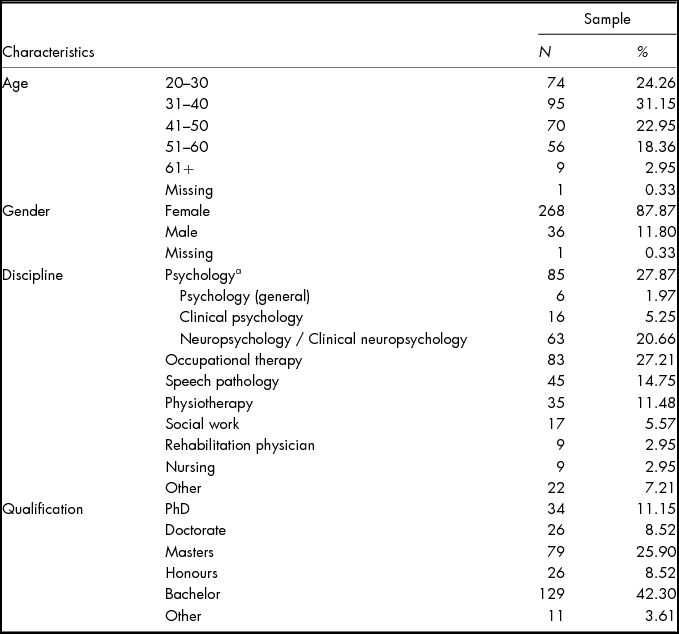
As shown in Table 3, the highest proportion of participants were aged 31–40 years (31%) and the majority were female (88%). Participants represented a range of disciplines including psychology (28%), occupational therapy (27%), speech pathology (15%), physiotherapy (11%), social work (6%), rehabilitation medicine (3%) and nursing (3%). A further 22 participants (7%) identified ‘other disciplines’ (mostly not specified). Most participants had a Bachelor Degree as the highest level of qualification (42%), and a further 54% had attained a higher qualification such as Honours (9%), Masters (26%), Doctorate (9%) or PhD (11%). As the survey originated in Queensland, most participants were from this state (31%). However, nearly half of the participant sample was based in New South Wales (24%) or Victoria (23%). There were relatively few participants from Western Australia (9%), South Australia (8%), Tasmania (5%), ACT (1%) and Northern Territory (<1%).
Demographic Characteristics and Discipline of Clinicians Working in TBI (n = 305)
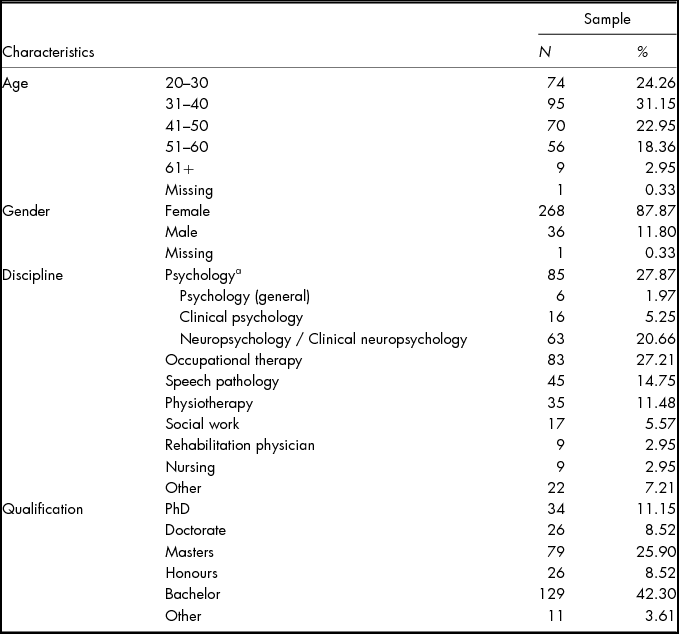
a Psychologists with General Registration have a Master's degree, five year accredited study sequence and one year internship, or a four year accredited sequence and two year internship. Clinical psychologists and clinical neuropsychologists have a Doctorate in clinical psychology or clinical neuropsychology & minimum of one year of supervision or Master's degree in clinical psychology or clinical neuropsychology & minimum of two years of supervision (Area of Practice Endorsements Registration Standard, 2010).
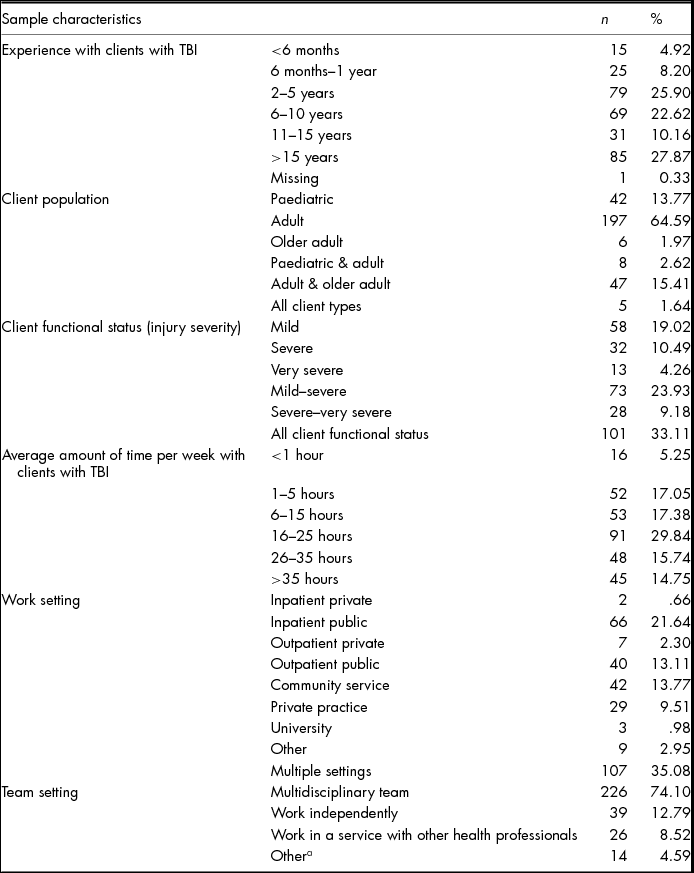
As shown in Table 4, the highest proportion of participants had >15 years of experience in working with clients with TBI (28%). Approximately 13% had one year or less experience and thus potentially represented new graduates or those new to working in TBI rehabilitation. The majority of participants worked with adults with TBI (65%). Approximately 14% worked in paediatric TBI and only a small proportion worked with older adults with TBI (2%). Just over 30% of the sample worked with clients across all functional status categories (mild to very severe). The next highest proportion of the sample (19%) worked only with clients with mild TBI and the remainder worked with clients with severe (10%) or very severe TBI (4%).
Client and Workplace Characteristics for the Sample (n = 305)
a For example, conducting clinical intervention research with members of other disciplines.
The amount of time spent per week working with clients with TBI varied from less than one day a week (<6 hours, 22%) to full time (>35 hours, 15%). The highest proportion of participants worked 16–25 hours per week with clients with TBI (30%). Approximately 45% of participants worked in public or government-funded settings including inpatient (22%), outpatient (13%), or community services (14%). Private work settings were identified by 13% of the sample, including community private practice (10%), outpatient private (2%) or inpatient private (<1%). A considerable proportion (35%) identified as working in more than one work setting, with the most common combination being inpatient public and outpatient public (15%).
The majority of participants identified as working in a multidisciplinary team with members of different health disciplines providing a service to the same client (74%). Approximately 13% of participants identified as working by themselves and contacting other health professionals as required (e.g., client referral or liaison) and a further 9% identified as working in a service with other health professionals, but not in a multidisciplinary team.
Scope of Practice
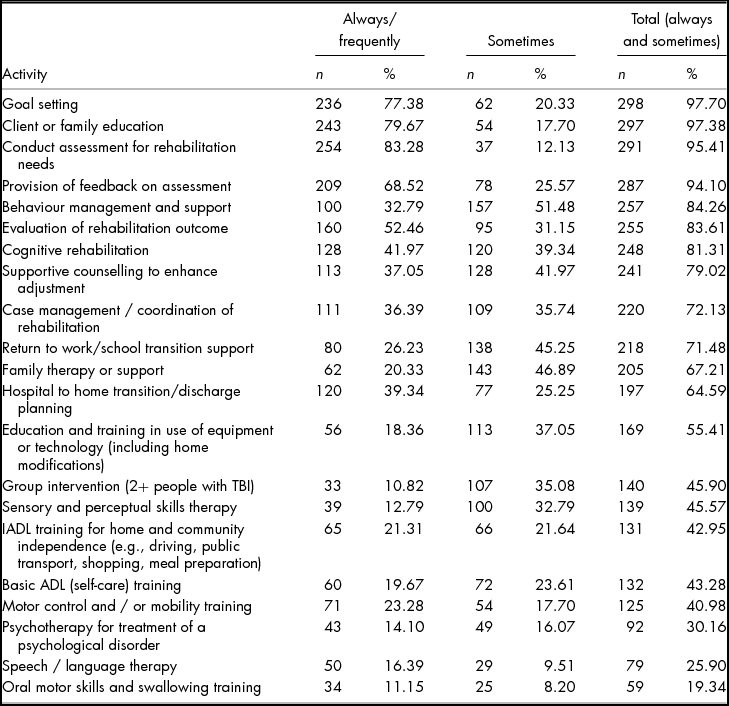
As shown in Table 5, the most common areas of practice across all disciplines included goal setting (98%), client or family education (97%), assessment for rehabilitation needs (95%) and provision of feedback following assessment (94%). Behaviour management and support (84%), evaluation of rehabilitation outcome (84%) and cognitive rehabilitation (81%) were also identified as common areas of practice. Other practice areas identified through free text included: driving assessment and rehabilitation, liaison and linkage with support services, return to general activities (e.g., sport, music, leisure), sexuality and substance abuse support.
Clinicians’ Scope of Practice in TBI Rehabilitation (n = 305)
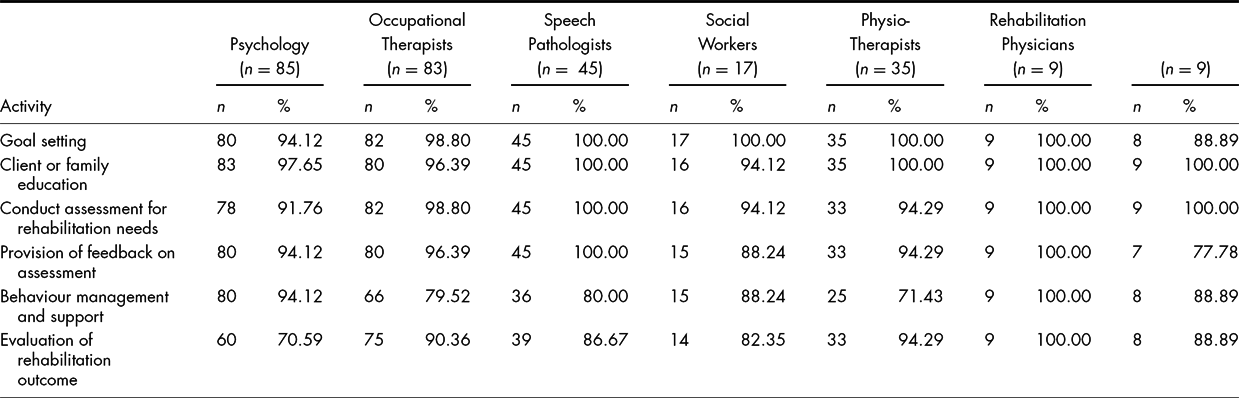
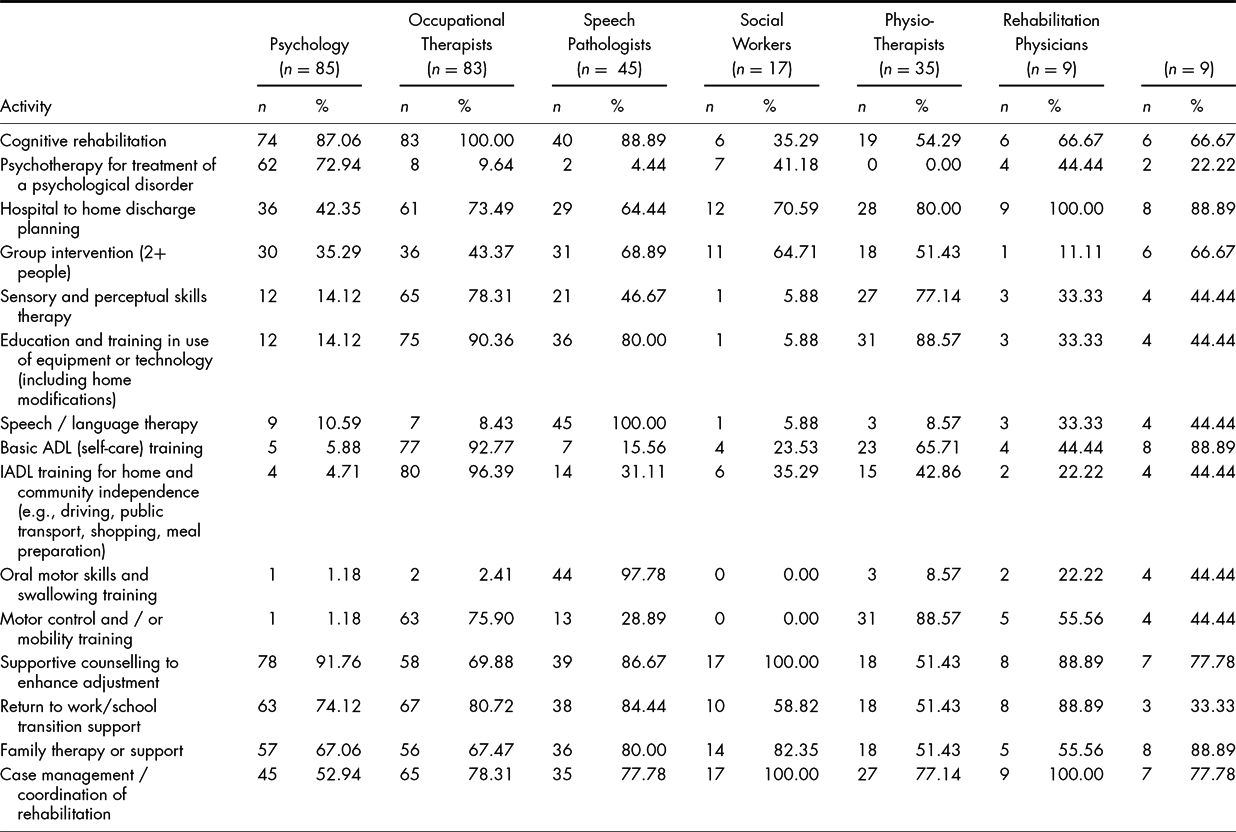
Table 6 presents the six rehabilitation activities that appear to be core or common to all disciplines, with at least 70% of participants from all disciplines reporting the activity as ‘always/frequently’ or ‘sometimes’ part of their practice. Table 7 depicts areas of practice that appear to be more discipline related. As shown, only a small proportion of psychologists identified that they ‘sometimes’ or ‘always/frequently’ perform activities that were predominantly performed by other disciplines. For example, approximately 14% of psychologists reported providing sensory and perceptual skills therapy and education or training in use of equipment or technology and only 11% reported providing speech or language therapy. Psychologists were found to perform less case management and coordination (53% vs. 77%–100%; p < .05) and be less involved in hospital to home transition/discharge planning (42% vs. 63%–100%; p < .05). Of all the health disciplines, occupational therapists appeared to have the broadest scope of practice; with 16 of the 21 rehabilitation areas selected by over 70% of the occupational therapy sample (see Tables 6 and 7).
Scope of Practice: Rehabilitation Activities Common to all Disciplines
Notes: This table presents activities selected by >70% of clinicians in all disciplines as ‘always’ or ‘sometimes’ part of their scope of practice.
Scope of Practice: Rehabilitation Activities Related to Discipline
Barriers to Practice and Confidence Ratings
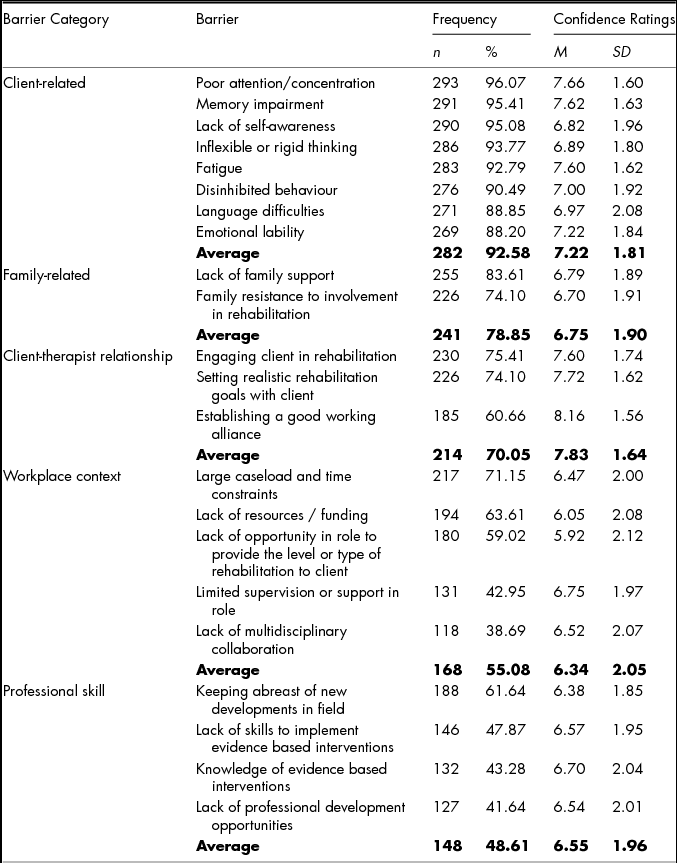
As shown in Table 8, the most common barriers reported by clinicians were client-related (88%–96%), with poor attention and concentration most frequently identified. The least common barriers were related to workplace context and professional skill. Lack of multidisciplinary collaboration (within the workplace context category) was the least common barrier identified (39%). Other barriers identified through the free text option included: specific funding obstacles, communication issues between services or disciplines, bureaucracy or administrative issues. Overall, client-related barriers, family-related barriers, and client-therapist relationship barriers were more frequently selected than workplace context and professional skill barriers (p < .05). Further, client-related barriers were more frequently identified than barriers relating to the client-therapist relationship (p < .05).
Frequency of Barriers and Average Confidence by Barrier Category
Table 8 also presents the mean confidence ratings for each barrier. Interestingly, although less commonly rated as barriers, clinicians were least confident in dealing with barriers relating to workplace context and professional skill. They were most confident in dealing with client–therapist relationship barriers and client-related barriers. Clinicians were most confident in overcoming barriers related to establishing a good working alliance (M = 8.16, SD = 1.56), and were least confidence in dealing with lack of opportunity in their role to provide the appropriate level or type of rehabilitation (M = 5.92, SD = 2.12). Overall, no significant differences in confidence ratings were found between the barrier categories (p > .05).
Factors related to number of barriers and confidence ratings
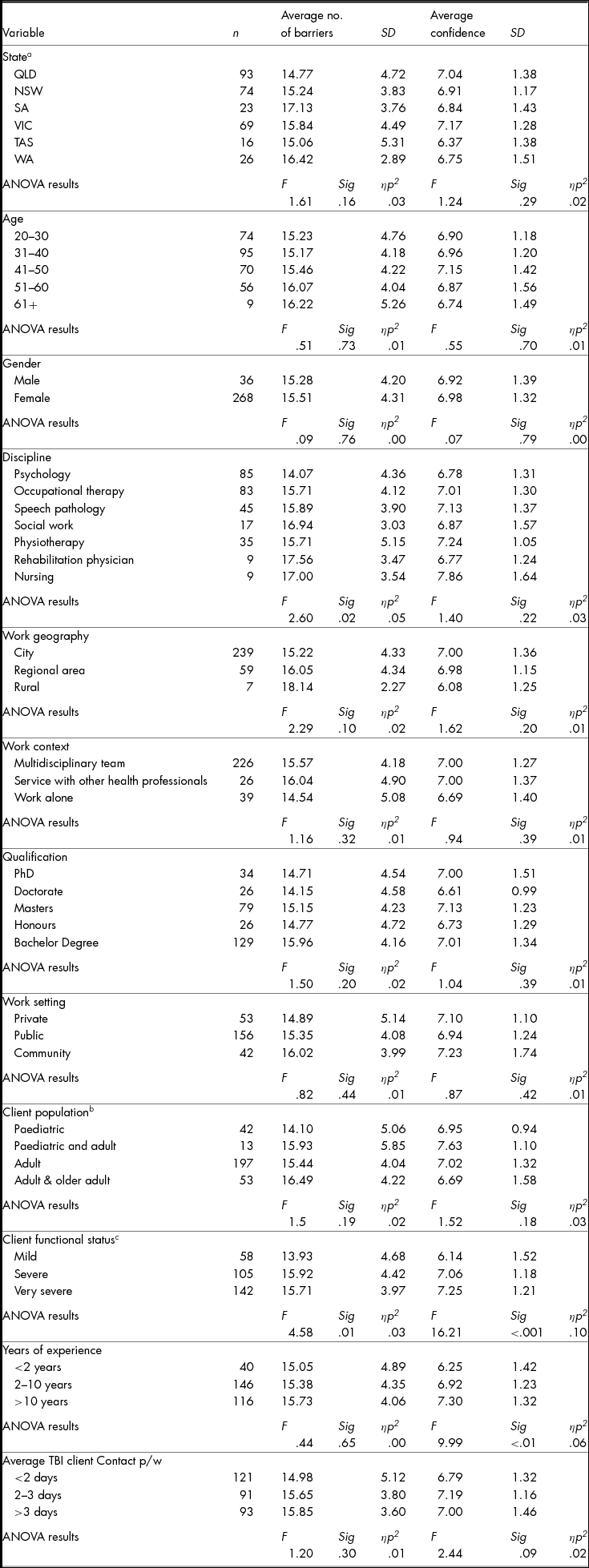
Table 9 presents the results of one-way ANOVAs investigating factors related to total number of barriers and average confidence ratings. Despite a significant overall difference in number of barriers according to discipline (p < .05), post-hoc tests were not significant (p > .01). However, a comparison between clinicians with a psychology background (n = 85) and those from a discipline other than psychology (n = 220) identified that psychologists perceived significantly fewer barriers (M = 14.07, SD = 4.36) than other clinicians (M = 15.98, SD = 4.20) (F = 12.38, p < .01). Further, there was a significant difference in number of barriers according to clients’ functional status. Post-hoc tests identified that clinicians working with clients with mild TBI perceived fewer barriers than those working with clients with severe TBI (p = .014) and very severe TBI (p = .024).
Results of ANOVA for Average Number of Barriers and Average Confidence Ratings
Notes: data for ‘other’ responses or n < 5 were removed from the analyses; aACT and NT were excluded from analysis due to insufficient sample size <5; bclient population was classified according to the oldest client group worked with; cclient functional status was classified according to the most severe injury status identified by the clinician.
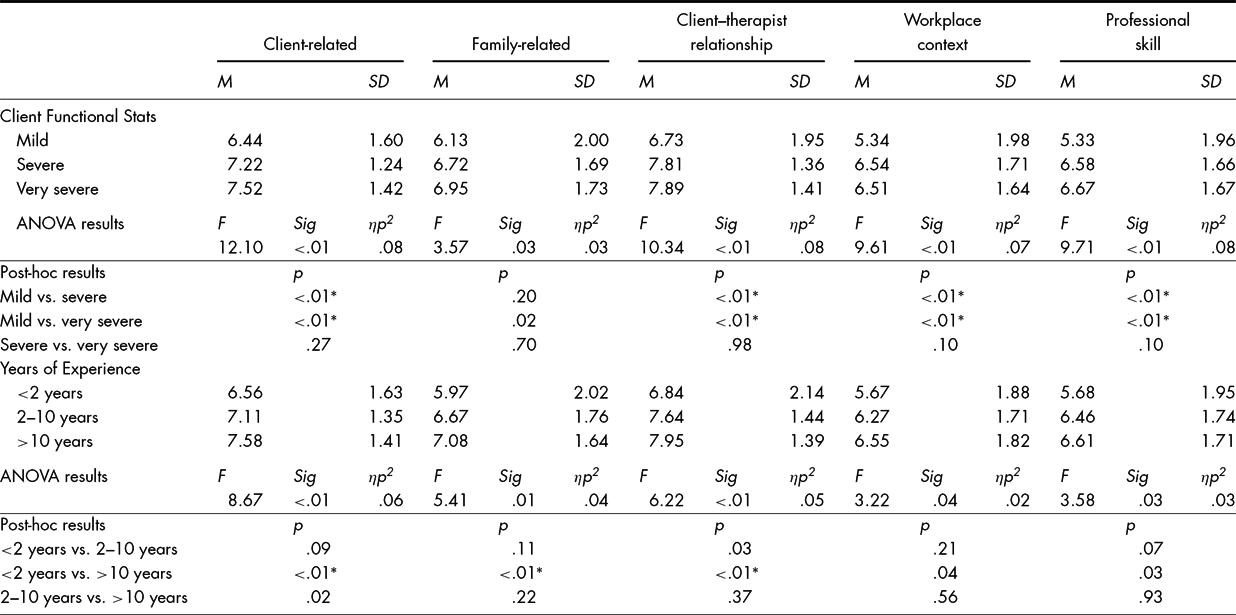
Confidence ratings were also found to significantly differ according to clients’ functional status (p < .001). Post-hoc tests identified that clinicians working with clients with mild TBI had significantly lower confidence ratings than clinicians working with clients with more severe TBI (p < .01) in all categories except the family-related category (see Table 10). Confidence ratings also significantly differed according to years of experience (p < .01). Post-hoc comparisons indicated that clinicians with <2 years of experience had lower confidence ratings than clinicians with 2–10 years of experience (p = .013) and clinicians with >10 years of experience (p < .01). Clinicians with 2–10 years of experience did not differ in average confidence ratings from clinicians with >10 years of experience. As shown in Table 10, clinicians with <2 years of experience reported lower confidence ratings than clinicians with >10 years of experience for client-related, family-related, and client-therapist relationship barriers.
Average Confidence Ratings According to Client Functional Status and Years of Experience for each Barrier Category
*Post-hoc significant p < .01.
Given the finding that clinicians working with clients with mild TBI (n = 58) had lower confidence ratings, it was relevant to determine whether these clinicians were more likely to have <2 years of experience. Frequency data indicated that this was not the case, as nine (16%) had <2 years of experience, 31 (53%) had 2–10 years of experience and 17 (29%) had >10 years of experience (1 participant did not report level of experience). Furthermore, a series of exploratory two-way ANOVAs were conducted to examine potential interactions between years of experience, amount of client contact and clients’ functional status in relation to confidence ratings. The results of these analyses were all non-significant. A standard regression analysis was also conducted to determine the unique contribution of clients’ functional status and years of experience in explaining average confidence ratings. These variables significantly accounted for clinicians’ confidence ratings (R2 = .13, F = 22.71, p < .001), with each variable making a significant independent contribution to confidence ratings (β = .23–.26, p < .001, sr2=.05–.07).
Professional Development Preferences
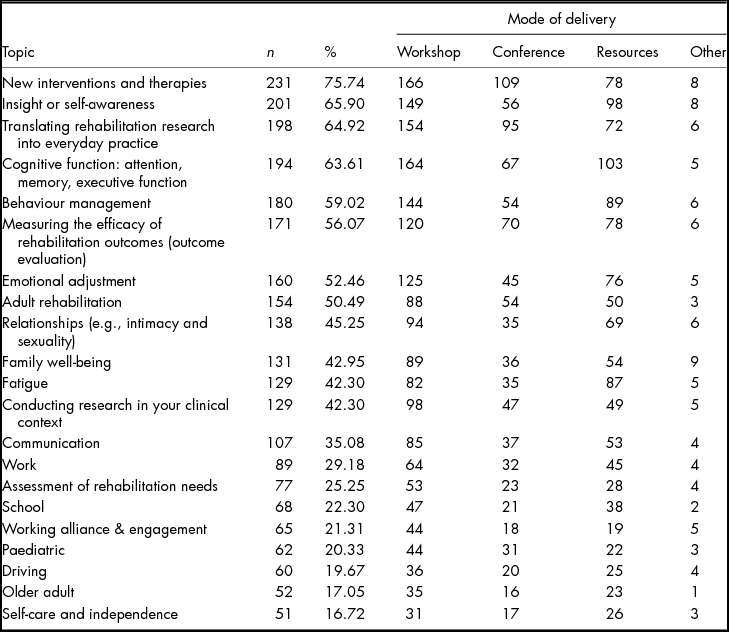
Clinicians’ preferred topics and modes of professional development to enhance the effectiveness of their practice are displayed in Table 11. The most common topics selected included: new interventions and therapies (76%); insight or self-awareness (66%); translating rehabilitation research into everyday practice (65%) and cognitive function (64%). Other topics selected by more than 50% of participants included: behaviour management, measuring the efficacy of rehabilitation outcomes, and emotional adjustment. In terms of delivery mode, workshops (71%) and resources (45%) were more commonly selected than a dedicated conference theme (34%). There were several comments in the free text section suggesting that online modes of delivery (e.g., webinars and podcasts) were popular. Reasons provided for these online modes of delivery included time constraints, greater accessibility and limited funding for professional development.
Professional Development Preferences
Discussion
This survey study of clinicians in TBI rehabilitation sought to identify clinicians’ scope of practice, perceived barriers and confidence, and professional development preferences from a multidisciplinary perspective. As hypothesised, both core and discipline-related areas of rehabilitation practice emerged across the disciplines represented in the survey. Client-related barriers to rehabilitation were most commonly perceived, although clinicians were relatively confident in overcoming these barriers. The main factors found to be related to perceived barriers and associated confidence ratings included the clients’ functional status and clinicians’ years of experience. Workshops on new therapies and interventions were most frequently selected as a preference for professional development.
The first aim of this study was to explore the profile and scope of practice of clinicians working with TBI clients. In terms of clinicians’ characteristics, the disciplines of psychology (28%), occupational therapy (27%) and speech pathology (15%) were better represented in the sample than physiotherapy (11.5%), social work (5.5%), nursing (3%) and rehabilitation medicine (3%). The majority of clinicians had worked in TBI rehabilitation for at least two years (87%), with over one third (38%) having more than 10 years of experience in this field. Clinicians predominantly worked with adults (86%), and a small proportion worked with both paediatric and adult clients (4%). Most clinicians worked with clients with severe to very severe TBI (81%), although approximately one third worked with clients across the spectrum of mild to very severe TBI. Clinicians typically worked with TBI clients for at least two days per week (60%) as part of a multidisciplinary team (74%).
As hypothesised, the survey identified both core and discipline-related activities performed by clinicians. In relation to core activities, goal setting, client or family education, and assessment for rehabilitation needs were performed by over 90% of clinicians from seven different disciplines working in the TBI rehabilitation. Goal setting has previously been found to be a core component of brain injury rehabilitation (Doig, Fleming, Cornwell, & Kuipers, Reference Doig, Fleming, Kuipers and Cornwell2009; Evans, Reference Evans2012). Similarly, assessment is well-established as a fundamental process for all rehabilitation clinicians (Sander et al., Reference Sander, Raymer, Wertheimer and Paul2009). The high proportion of clinicians providing client or family education (94–100%) reinforces previous findings that psycho-education is a core element of TBI rehabilitation practice (Barclay, Reference Barclay2013; Bishop et al., Reference Bishop, Degeneffe and Mast2006). Other common areas of rehabilitation practice included provision of assessment feedback (78–100%), behaviour management and support (80–100%) and evaluation of rehabilitation outcome (71–100%).
Previous research has documented the common experience of role overlap among clinicians on multidisciplinary rehabilitation teams, although studies have mainly focused on two disciplines (e.g., Booth & Hewison, Reference Booth and Hewison2002; Sander et al., Reference Sander, Raymer, Wertheimer and Paul2009; Wertheimer et al., Reference Wertheimer, Tresa, Roebuck-Spencer, Constantinidou, Turkstra and Pavol2008). While the nature of activities identified as core for all disciplines is perhaps unsurprising, such findings do not necessarily signify role overlap (i.e., clinicians performing the same activities in the same way). Rather, each discipline is likely to perform these activities in a manner relevant to their focus of rehabilitation, although this was not specifically investigated in the survey. Further research is needed to determine the process by which core activities such as goal setting, psycho-education and assessment are performed by each discipline in TBI rehabilitation.
In addition to core activities performed by each discipline, the survey identified those that are more discipline related. Overall, occupational therapists were found to select the most areas of rehabilitation practice (16 out of 21 activities performed by >70%), followed by speech pathologists (12 out of 21 activities performed by >70%). Such findings on the breadth of practice of these disciplines highlight the likely benefits interdisciplinary training and professional development in common practice areas (e.g., cognitive rehabilitation, supportive counselling and return to work/school transition). More generally, the findings support the need for rehabilitation professionals to have a good understanding of shared or complimentary areas of practice in addition to more discipline-related expertise (Brooks, Rhodes, & Tefft, Reference Brooks, Rhodes and Tefft2014). Further research evaluating the impact of interdisciplinary training on both the processes and outcomes of TBI rehabilitation would be beneficial.
A further key study aim was to identify the most common barriers perceived by clinicians and their confidence in providing effective rehabilitation despite these barriers. The barriers most commonly selected were client-related, with poor attention and concentration most frequently selected (96%), followed by memory impairment and lack of self-awareness (95%). Barriers related to workplace context were the least commonly selected, with lack of multidisciplinary collaboration receiving the lowest endorsement (39%). It is noteworthy that 74% of clinician sample identified as working in a multidisciplinary team, which may account for this finding. Although items related to workplace context were less commonly identified as barriers, the clinicians who endorsed such obstacles reported low confidence in overcoming these issues. In particular, clinicians who selected lack of resources/funding (63%) and lack of opportunity in the role to provide the level or type of rehabilitation to clients (59%) provided the lowest confidence ratings (5.9–6.1/10). As these barriers are likely to arise from broader organisational issues within the health care setting, clinicians may perceive less scope to overcome these barriers as compared to other barriers (e.g., managing issues with the client–therapist relationship). As previously discussed, prior studies have focused mainly on client-related barriers from a discipline specific perspective (e.g., Graham et al., Reference Graham, Robertson and Anderson2013; Hicks et al., Reference Hicks, Larkins and Purdy2011; Judd & Wilson, Reference Judd and Wilson2005). Hence, the current findings provide a more comprehensive perspective on barriers to practice in TBI rehabilitation from several disciplines.
In regards to factors influencing perceived barriers, participants working with clients with mild TBI identified significantly fewer barriers than those working with clients with severe or very severe TBI. This is perhaps not surprising given that clients with severe or very severe TBI typically have considerably more physical, cognitive and behavioural symptoms which can interfere with the rehabilitation process (Ponsford et al., Reference Ponsford, Downing, Olver, Ponsford, Acher, Carty and Spitz2014). Due to the typically long-term support needs of clients with more severe TBI, there are likely to be more demands placed on clinicians’ skills, time and resources (Turner-Stokes, Reference Turner-Stokes2008).
Clients’ functional status was also significantly related to clinicians’ confidence ratings, albeit in an unexpected way. Specifically, clinicians working with people with mild TBI reported significantly lower confidence ratings than those working with people with more severe TBI. This finding may be related to clinicians’ perceptions of their capacity to fulfil expectations of their role and experiences of success (Holland et al., Reference Holland, Middleton and Uys2012). For example, clinicians working with clients with severe TBI may not expect their clients to resume premorbid roles and activities, or at least not in the same capacity; hence, they may not define rehabilitation success according to these outcomes. In contrast, clients with mild TBI are typically expected to return to high levels of functioning within the home and community (Daneshvar et al., Reference Daneshvar, Riley, Nowinski, McKee, Stern and Cantu2011; Ponsford et al., Reference Ponsford, Willmott, Rothwell, Cameron, Kelly, Nelms and Ng2000). Lack of success in achieving these outcomes can mean that clients with mild TBI require longer-term support, which has implications for clinicians (e.g., caseload) and their service. Brain injury rehabilitation services may also be more geared to support clients with severe TBI, with fewer programs for managing the often more subtle deficits experienced by clients with mild TBI. Overall, the factors influencing the lower confidence ratings of clinicians supporting clients with mild TBI requires further investigation.
Another factor influencing clinicians’ confidence ratings (independent of clients’ functional status) was their years of experience in working with TBI clients. Clinicians with less than two years of experience had significantly lower confidence ratings than clinicians with over 10 years of experience. Interestingly, current weekly contact with TBI clients was not significantly related to confidence ratings; instead, the overall duration of time working with clients with TBI impacted on clinicians’ perceptions of their ability to provide effective rehabilitation despite obstacles. Wong et al. (Reference Wong, McKay and Stolwyk2014) also found that increased years of experience was related to greater confidence in delivering neurorehabilitation interventions. Greater years of experience may support clinicians to draw on their skills and expertise to manage a range of barriers, which in turn may sustain their career in this challenging field. In a study on work satisfaction in brain injury rehabilitation professionals, Wittig et al. (Reference Wittig, Tilton-Weaver, Patry and Mateer2003) found that client-related issues did not contribute substantially to clinicians’ stress levels. Rather, client-related challenges were perceived to promote professional growth and creativity. Professionals’ work satisfaction was related to feeling important, valued by the organisation and supported in the workplace; however, the best predictor of work satisfaction was level of training support. It was not possible to determine in the current study whether participants with less than two years of experience were new graduates, or had recently started working with clients with TBI. Nevertheless, the findings suggest the need to provide new graduates and those new to working in TBI rehabilitation with professional development and mentoring opportunities to enhance their emerging skills and confidence.
Clinicians’ top three topic preferences for professional development were new interventions and therapies (76%), insight or self-awareness (66%) and translating rehabilitation research into everyday practice (65%). Their desire to stay abreast of evidence-based approaches was also evident from comments in the free text field which referred to more practical application of research as opposed to ‘theoretical’ content. Other client-specific training topics selected by over half of the sample included: cognitive function (64%), behaviour management (59%) and emotional adjustment (52%). These findings indicate that the client-related issues most commonly perceived as barriers to rehabilitation practice map onto clinicians’ preferences for education and skill development. In terms of delivery mode, clinicians more frequently indicated a preference for workshops on each topic than conferences and resources (note: one exception related to a stronger preference for resources on fatigue). Responses in the free text indicated that some people preferred online training resources such as webinars and podcasts. Participants noted that time constraints, inaccessibility and lack of funding were all barriers to attending professional development events. These comments are consistent with the trend for an increase in computer-mediated professional development and training in the health care industry (e.g., Triola, Huwendiek, Levinson, & Cook, Reference Triola, Huwendiek, Levinson and Cook2012). Despite the potentially greater convenience of online training and professional development events, the quality of learning outcomes needs to be compared with face-to-face skills-based workshops.
There are a number of limitations of this study which relate to sampling and the survey design. Firstly, it cannot be assumed that the participants were broadly representative of clinicians working in TBI rehabilitation in Australia. The main sources of recruitment were the ASSBI member email distribution list and ASSBI conference delegates (2013 conference). Hence, the survey findings are likely to be most generalisable to clinicians involved in TBI rehabilitation who are affiliated with ASSBI. The findings are also more likely to reflect the experiences of clinicians working in metropolitan areas of Queensland, New South Wales and Victoria. This is an important issue due to variations in funding models and service delivery between states and geographic locations (e.g., rural and remote areas) which may influence clinicians’ scope of practice and barriers in rehabilitation (Government of South Australia, 2012; Mitsch, Reference Mitsch2011). Although there were no differences in total barriers or confidence ratings according to state and geographic location (see Table 9), due to low numbers from regional (19.4%) and rural (2.3%) areas further research is needed on clinicians’ experiences in these work settings.
There were also major discrepancies in sample size across disciplines (e.g., very low numbers for rehabilitation physicians and nurses); thus, the sample characteristics do not reflect the staff ratios of clinicians working in TBI practice (Australasian Faculty of Rehabilitation Medicine, 2011). The use of a broader range of recruitment options for each discipline would help to improve the representativeness of different disciplines involved in TBI rehabilitation and hence the generalisability of findings for these professions.
A key limitation of the survey design was the lack of definitions for activities listed within scope of practice and other survey sections. Descriptions were kept brief to ensure the survey was not too lengthy; however, the brevity may have resulted in misinterpretation of items. For example, 44% of rehabilitation physicians indicated that they provide psychotherapy for treatment of a psychological disorder. Feedback on the clarity of items was not gained from a member of each discipline included in the survey prior to distribution. A further design issue was apparent for the demographics section, in which participants were asked the length of time in which they had been working in TBI rehabilitation, but not the length of time since graduation. Therefore, it was not possible to distinguish recently graduated clinicians from more experienced clinicians who recently started working in the TBI field.
Importantly, in-depth data collection and analysis was not possible using the survey methodology employed, which for brevity purposes mainly entailed forced-choice responses rather than open-ended questions. It is recommended that qualitative methodology (e.g., focus groups and/or interviews) be employed in future research to gain a richer understanding of clinicians’ experiences in brain injury rehabilitation. Through such data collection methods it would also be possible to explore facilitators that help optimise rehabilitation practice and gain the perspective of other stakeholders (i.e., family, patients and hospital and service managers).
Summary and Implications
The findings of this survey of 305 multidisciplinary clinicians working in TBI rehabilitation may help guide the focus of professional development and training initiatives. In particular, the core and discipline-related areas of practice in TBI rehabilitation highlights the value of cross-disciplinary training and professional development initiatives. Despite reporting fewer barriers, clinicians working with clients with mild TBI were less confident in overcoming obstacles to provide effective rehabilitation. Such findings suggest the need for professional training and support initiatives specific to clinicians working with clients with mild TBI. Further, the finding that clinicians with less than two years of experience were less confident in overcoming barriers indicates the value of having training initiatives tailored to clinicians new to working in TBI rehabilitation. More generally, clinicians’ professional development preferences involved learning new interventions and therapies, translating research into practice and training regarding several client-specific topics. Workshops were the preferred delivery mode, with qualitative responses highlighting the importance of accessible and affordable options. A priority for future research is to evaluate the impact of professional training initiatives on clinicians’ confidence, practices and client outcomes in TBI rehabilitation.
Financial Support
This study was supported by the National Health and Medical Research Council Centre of Research Excellence in Brain Recovery (ID: 1083064).
Conflict of Interest
None.
Ethical Standards
The authors assert that all procedures contributing to this work comply with the ethical standards of the relevant national and institutional committees on human experimentation and with the Helsinki Declaration of 1975, as revised in 2008.
Acknowledgements
We would like to thank the clinicians who took part in the survey, and Margaret Eagers and other people who supported us to disseminate the survey.