Introduction
Liver transplantation is the standard of care for patients with end-stage liver disease but donor organ availability remains insufficiently low to meet the rising demand (Kim et al., Reference Kim2017). Waiting periods for liver transplantation can last 3 years or longer (Kim et al., Reference Kim2017), during which time patients confront poor physical quality of life (Derck et al., Reference Derck2015), deteriorating health (Lai, Reference Lai2016), and mortality. In the face of challenges to their physical health, many patients report anxiety around fears of transplant surgery, death, and the overall uncertainty of living with a life-threatening chronic illness (Santos et al., Reference Santos2012); this pretransplant anxiety predicts higher posttransplant anxiety and lower posttransplant quality of life (Miller et al., Reference Miller2013). Up to 80% of liver transplant candidates may experience depression (Mohamed et al., Reference Mohamed, Sabki and Zainal2014), which predicts higher posttransplant depression (Miller et al., Reference Miller2013) and is associated with posttransplant physical health outcomes including longer transplant length of hospital stay, discharge to a location other than home, and mortality (Rogal et al., Reference Rogal2016).
Despite significant advances in the basic sciences related to immunosuppressant therapies and transplant medicine, relatively little attention has been placed on the development of psychosocial interventions to address the psychological aspects of waiting for organ transplantation. Therefore, this pilot study sought to address the dearth of psychosocial interventions for end-stage liver disease patients by testing the feasibility, acceptability, and tolerability of an 8-week group-based cognitive-behavioral stress management intervention intended to alleviate stress-related symptoms of depression and anxiety for patients diagnosed with end-stage liver disease and awaiting liver transplant.
Few studies to date have tested the feasibility or efficacy of psychosocial interventions tailored specifically to patients waitlisted for liver transplantation. One group outside of the United States (Georgiou et al., Reference Georgiou2003) demonstrated the feasibility of a pretransplantation psychosocial intervention and another group found initial evidence that a coping skills group can enhance coping and decrease anxiety and depression in patients awaiting liver or kidney transplantation (Craig et al., Reference Craig2017). One randomized controlled trial (Sharif et al., Reference Sharif2005) indicated that a psycho-educational intervention enhances quality of life in patients awaiting liver transplantation. Within the United States, a randomized controlled trial of a telephone uncertainty self-management intervention did not find that the intervention group differed from the control group on outcomes including anxiety, depression, and quality of life (Bailey et al., Reference Bailey2017). Given the preliminary evidence from outside the United States that live psychosocial intervention groups are feasible and efficacious, research is needed to test whether a live group intervention is feasible and acceptable within the United States healthcare system.
Cognitive behavioral stress management was designed specifically to empower groups of medically ill patients with tools to regulate their mood and access the forms of social support they need (Antoni, Reference Antoni2003). Over the course of several weekly sessions, patients are taught a variety of relaxation techniques, learn to identify and restructure unhelpful thoughts that lead to negative emotions and maladaptive behaviors, and engage in discussion of interpersonal communication topics. Randomized controlled trials have found that women diagnosed with non-metastatic breast cancer randomized to a 10-week group cognitive behavioral stress management intervention reported greater reductions in intrusive thoughts about breast cancer, anxiety, and negative affect one year postintervention as compared with women in a control condition (Antoni et al., Reference Antoni2006). Furthermore, they reported lower depressive symptoms and higher satisfaction with physical and emotional quality of life than women in a control condition 11 years after the intervention commenced (Stagl et al., Reference Stagl2015). Even a shorter 5-week intervention enhanced emotional well-being and decreased intrusive thoughts about cancer postintervention (Gudenkauf et al., Reference Gudenkauf2015).
We hypothesized that an eight-session liver stress management and relaxation training (Liver SMART) cognitive-behavioral stress management group intervention program designed to decrease stress-related symptoms and increase social support would be feasible, acceptable, and tolerable for wait-listed patients with end-stage liver disease and would decrease depressive and anxious symptoms. We adapted sessions from existing coping skills manuals that were relevant for targeting the specific stressors and symptoms experienced by patients with end-stage liver disease and examined the feasibility, acceptability, tolerability, and preliminary efficacy of Liver SMART within a hospital-based transplant center.
Methods
Participants
The study included a subsample of participants from a prior psychosocial assessment of 125 patients with end-stage liver disease who were recruited during routine clinic appointments and/or by telephone, as previously described (Amoyal et al., Reference Amoyal2016; Fernandez et al., Reference Fernandez2015). All patients in the original study were age 18 years or older, spoke English fluently, and were wait-listed with the United Network for Organ Sharing for liver transplantation at Yale-New Haven Transplantation Center. Patients had been excluded if they lacked fluency in English or if the severity of their disease impeded participation in the assessment and intervention.
Procedures
This study was a stage IA (Carroll & Nuro, Reference Carroll and Nuro2002; Rounsaville et al., Reference Rounsaville, Carroll and Onken2001) pilot psychotherapy development project organized around psychotherapy development as well as feasibility, acceptability, and tolerability testing of the proposed intervention. The project was approved by the Yale University School of Medicine's Human Investigation Committee (#0807004087, approval date 11 August 2008) and all participants were required to provide informed consent before their participation in the study. The project was conducted in accordance with the Declaration of Helsinki. All assessment information was collected by supervised research assistants from Yale University School of Medicine's Department of Psychiatry between 2008 and 2011. Each Liver SMART group consisted of 8 weekly sessions lasting 60 minutes. Five groups were facilitated, each containing between two and six participants. Groups were facilitated face to face by therapists with prior training and experience in behavioral medicine and cognitive-behavioral therapy, including a licensed clinical psychologist and three supervised predoctoral psychology interns. Participants did not receive compensation for their participation.
Measures
Demographic and medical variables
Demographic variables including age, gender, race/ethnicity, number of children, marital status, occupational status, and household income were self-reported via a demographic questionnaire. Medical data including disease etiology and severity, functional impairment, and body mass index were recorded via medical record review.
Psychological measures
Psychiatric symptom severity was assessed at study entry and postintervention with the Beck Depression Inventory II (Beck et al., Reference Beck, Steer and Brown1996) and the Beck Anxiety Inventory (Beck et al., Reference Beck1988). Internal consistency of the questionnaires was adequate in this sample as indicated by Cronbach's alpha (α): Beck Depression Inventory II α = .91; Beck Anxiety Inventory α = .90.
Feasibility
Feasibility was operationalized as the rate of enrollment and as the rate of attendance, which was calculated as the average percentage of sessions attended out of eight. Self-reported reasons for not attending were recorded either when the participant informed the clinician that they would not attend a session or when a research assistant called the participant after a missed session.
Acceptability
An anonymous survey written by the principal investigator was administered at the last session of the intervention that assessed on a scale of “poor” to “excellent” how helpful patients found the intervention to be in teaching them relaxation skills and coping skills and making them feeling supported. The questionnaire also solicited qualitative responses regarding what participants found to be most and least helpful about the intervention and what additional topics participants wished had been included in the intervention.
Tolerability
The tolerability of the intervention was operationalized as the presence of adverse events reported to the Human Investigation Committee; dropout rate calculated as the percentage of patients who informed the study team that they were no longer participating in the intervention.
Liver SMART intervention
The Liver SMART program adapted the Stress Management and Relaxation Training for women with breast cancer (B-SMART) program (Antoni, Reference Antoni2003) to the needs of patients with end-stage liver disease. The overarching therapeutic model of the group stress management intervention applied cognitive behavioral therapy, including relaxation training, to provide participants with information and skills to monitor and cope with physical and emotional stress and to reduce adverse stress-related symptoms of depression and anxiety. Development of the Liver SMART group intervention was an ongoing iterative process that incorporated data collected through an initial needs assessment as well as participant feedback/data referable to the model's feasibility and efficacy (Carroll & Nuro, Reference Carroll and Nuro2002) and therapist experience.
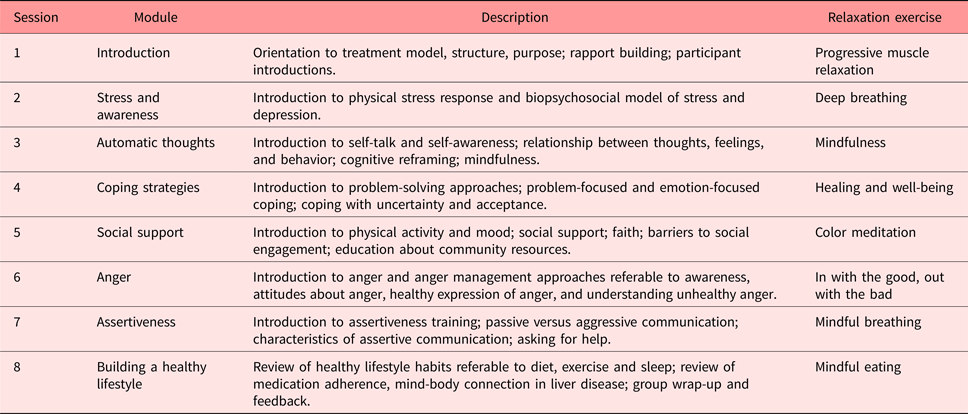
The preliminary version of the Liver SMART intervention consisted of the modules displayed in Table 1. Each session incorporated discussion, support, homework review, and agenda setting (10–15 minutes), coping skills training and psycho-education (20–25 minutes), relaxation training (10 minutes), and homework planning (5–10 minutes). Patients were exposed to a variety of relaxation techniques. After an introductory session, three sessions taught patients cognitive-behavioral therapy-based stress awareness and coping techniques to help with the identification and restructuring of unhelpful thoughts that contribute to negative emotions and maladaptive behaviors. The next three sessions focused on fostering interpersonal communication through engaging in discussion of social support, assertiveness, and anger management. Throughout these modules, patients learned to identify the types of support they lack, overcome barriers to requesting support from members of their social networks, and navigate disagreements with support sources. Finally, the last session provided healthy lifestyle information. Each week, patients were asked to complete a homework assignment that included practicing behavioral relaxation skills, cognitive reframing skills, interpersonal effectiveness skills, and daily stress ratings to encourage self-monitoring and self-assessment. Patients were provided with a printed intervention manual and a CD of recorded relaxation exercises.
Session modules for Liver SMART program

Data analysis
The sample was characterized according to demographic and medical variables using descriptive statistics including means, standard deviations, and frequencies. Chi-square tests and one-way analysis of variance were used to test whether those who participated in the intervention differed from those who did not on demographic, medical, and psychiatric variables. Frequencies were also used to characterize enrollment rate, attendance rate, prevalence of reasons for not attending study sessions and of acceptability ratings of the intervention, number of adverse events, and dropout rate. Paired samples t tests tested whether Beck Depression Inventory II and Beck Anxiety Inventory scores changed from preintervention to postintervention. All variables were checked for normal distribution (skewness < 3.0, kurtosis < 8.0; Kline, Reference Kline2011) before analysis.
Results
Sample characterization
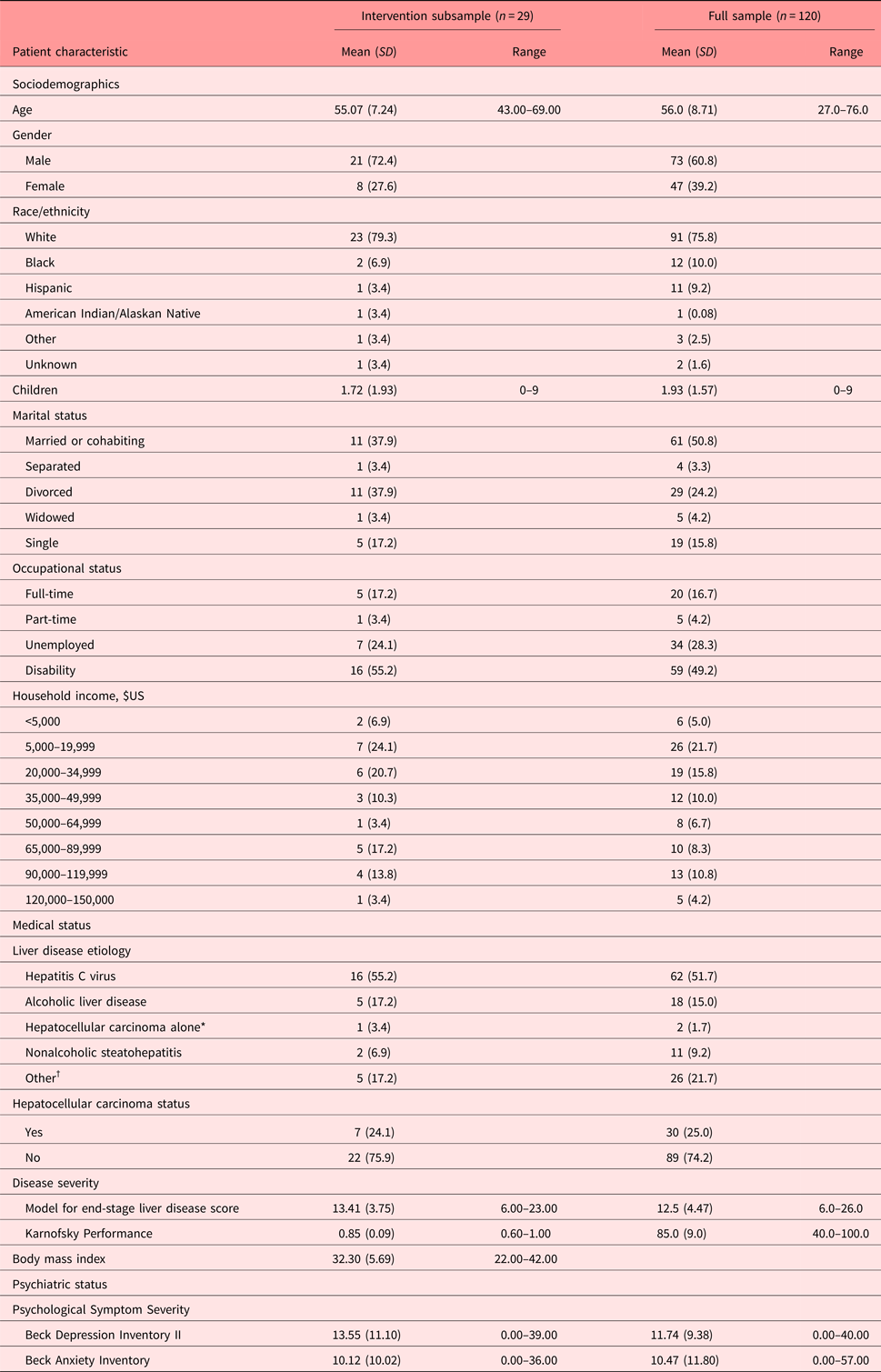
Table 2 shows the demographic, psychological, and medical characteristics of the 29 participants who consented to this pilot study and the 120 participants invited to participate. Participants who received the intervention were predominately white, married, and on disability. Liver disease etiology was primarily from hepatitis C (55.2%). On average, Model for End-Stage Liver Disease score was 13.41 (SD = 3.75). Mean Beck Depression Inventory II score was 13.55 (SD = 11.10), indicating minimal depression, but ranged from minimal (0), to severe depression (39). Mean Beck Anxiety Inventory score was 10.12 (SD = 10.02), indicating mild anxiety, and ranged from minimal (0) to severe anxiety (36).
Demographic, medical, and psychological characteristics of the intervention subsample (n = 29) and the full sample (n = 120)

*Giannini et al., Reference Giannini2013.
†Other diagnoses include genetic, metabolic, autoimmune, and unknown etiologies of liver disease.
Patients who enrolled in the intervention did not differ from those who declined to participate on demographic, medical, or psychiatric variables including age, gender, race/ethnicity, number of children, marital status, occupational status, income, liver disease etiology, hepatocellular carcinoma status, disease severity, functional impairment, body mass index, Beck Depression Inventory II score, or Beck Anxiety Inventory score (all p > 0.05).
Feasibility
Of the 120 patients invited to participate in the intervention, 29 (24.2%) enrolled. Participants attended an average of 5.6 of the program's 8 sessions; overall attendance rate was 69.40%. Nearly one-half of all absences (48.48%) occurred because the participant reported feeling too sick to attend the session. Nearly one-fifth (19.70%) of sessions missed were attributable to participants who dropped out. Participants also reported that they had missed sessions because of conflicting appointments (10.61%), lack of transportation (7.04%), being hospitalized (6.06%), weather (4.55%), going on vacation (2.82%), or other unspecified reasons (7.04%).
Acceptability
Of the 17 participants that completed the postintervention survey, 12 (70.59%) group participants reported that the intervention was “excellent” in its helpfulness in teaching new skills to relax, whereas 5 (29.41%) rated it as “good.” With regard to how helpful the intervention was in teaching new skills to cope with stress in life, nine (52.94%) rated it as “excellent” and eight (47.06%) rated it as “good.” Eight (47.06%) participants reported that the intervention was “excellent” in helping them feel more supported throughout the process of waiting for a liver transplant, eight (47.06%) reported that it was “good,” and one (5.88%) reported that it was “average.”
Qualitatively, 10 (58.82%) participants indicated that the relaxation exercises were the most helpful elements of the treatment. Eleven participants indicated that sharing with and listening to other group members coping with liver transplant was the most helpful element of the treatment. Seven participants stated that learning coping mechanisms for stress and worries was most helpful. One participant reported that learning to ask for help was most helpful; another reported that learning to identify emotions, behaviors, and thoughts was most helpful. One participant reported that the homework was not helpful and one reported that daily rating forms were not helpful.
With regard to what additional topics participants would have liked to address during the intervention, four stated that they would have liked to receive more medical information on liver transplantation. Of note, five expressed that they would have preferred longer sessions and one participant requested a posttransplant psychosocial intervention.
Tolerability
No adverse events that met criteria for reporting to the Human Investigation Committee occurred over the course of the intervention. Four participants (13.79%) dropped out of the study, although the reasons were not recorded.
Preliminary efficacy
A total of 17 participants completed the Beck Depression Inventory II and Beck Anxiety Inventory after the intervention. Preintervention symptoms of depression (M = 13.53, SD = 10.58) did not differ significantly from postintervention symptoms (M = 9.87, SD = 2.40 [t(16) = 1.456, p = 0.165]). Preintervention levels of anxiety (M = 11.53, SD = 10.42) did not differ from postintervention levels (M = 12.53, SD = 10.03 [t(16) = −0.601, p = 0.557]).
Discussion
Conclusions
This cognitive behavioral stress management group intervention was feasible, acceptable, and tolerable to a sample of participants with end-stage liver disease awaiting liver transplantation who were largely similar demographically to the national norms for patients awaiting liver transplantation at the time the study was conducted (Kim et al., Reference Kim2014). The need for psychological intervention in this medical population has been previously reported (Goetzmann et al., Reference Goetzmann2006), and clinically significant depressive and anxious symptoms were documented in this sample. Therefore, intervention components included specifically targeted psychosocial issues that have been previously reported in end-stage liver disease patients, including elevated depression and anxiety.
The percentage of patients invited to participate that began the intervention was comparable to the percentage of patients randomized in another study of end-stage liver disease patients (Bailey et al., Reference Bailey2017). It was also higher than the 19% enrollment rate in a pilot randomized controlled psychotherapy trial for patients with advanced cancer, a medical population that has been highly studied with regard to psychosocial intervention (Breitbart et al., Reference Breitbart2012). Attendance was slightly lower than in another psychosocial intervention study with end-stage liver disease patients (Bailey et al., Reference Bailey2017). The discrepancy in attendance may be attributable to the delivery method because the other intervention was carried out via telephone, thus eliminating some barriers to attendance, such as lack of transportation. Furthermore, that study provided monetary compensation for participating, which may have enhanced motivation to attend sessions and complete the intervention. The majority of patients reported that the group intervention helped them learn to relax, cope with stress, and feel supported. No adverse events were reported, and the 13.79% attrition was lower than rates documented in other psychotherapy trials of patients with advanced medical illness (Applebaum et al., Reference Applebaum2012).
Adaptations made to the B-SMART manual during the development of Liver SMART may have affected the feasibility, acceptability, and tolerability of the intervention. Although B-SMART is conducted during 10 sessions lasting 2 hours, Liver SMART was shortened to consist of eight sessions lasting one hour each. In light of the fatigue reported by a majority of patients with end-stage liver disease (Hansen et al., Reference Hansen2015), fewer and shorter sessions may have been easier for patients to commit to and attend, thereby enhancing enrollment and attendance (feasibility) while maintaining low dropout (tolerability). The addition of a Healthy Living module to Liver SMART that provided dietary and medication adherence information specifically tailored to liver disease may also have enhanced feasibility and tolerability by promoting buy-in and engagement.
At the same time, condensing the intervention and substituting Healthy Living content for B-SMART session material may have negatively affected Liver SMART's acceptability. Reducing the number and duration of sessions while adding new material required removal of some B-SMART exercises and also decreased the amount of time in which participants could get to know other group members and clinicians. It is possible that if participants had been given more opportunity to practice relaxation and coping skills and cultivate interpersonal relationships, they would have rated their mastery of relaxation and coping skills and their perceptions of support as higher.
Preliminary tests of efficacy did not reveal statistically significant changes in anxious or depressive symptoms pre- to postintervention; however, this pilot study was underpowered to detect an effect given the small sample size. Additionally, the design did not include a control group. It is possible that while anxiety and depressive symptoms remained stable in the participants receiving cognitive behavioral stress management, symptoms would have worsened (Corruble et al., Reference Corruble2010) in control participants due to increasing stress associated with lengthening duration of time on the waitlist (Silva et al., Reference Silva2014). Another possible explanation for the lack of significant effects is that there was no distress level cutoff required for inclusion. Participants reported only minimal depression and mild anxiety on average, and it is possible that Liver SMART would decrease symptom levels for patients reporting higher baseline psychological distress.
Strengths and limitations
This manuscript represents the first study in the United States to test the feasibility, acceptability, tolerability, and preliminary efficacy of a live evidence-based group stress management intervention tailored to the psychosocial needs of patients with end-stage liver disease awaiting liver transplantation. Of note, clinical psychology trainees were able to conduct the intervention, which suggests a potentially cost-effective mechanism for facilitating the groups, thus enhancing the intervention's potential to be widely and rapidly disseminated to transplant clinics in academic health centers.
Some limitations of this research should be taken into account when interpreting the findings. First, the sample size was small; therefore, the results may not be representative of the greater population of patients awaiting liver transplantation. However, small sample size is typical in feasibility studies (Tickle-Degnen, Reference Tickle-Degnen2013), and it is notable that the attrition rate was similar to that of prior studies in this population that provided financial incentives for participation. Some limitations to external validity and generalizability should also be considered. The data analyzed in this study were collected six years ago; advances in medical treatment (Kim et al., Reference Kim2017) since then may have altered the demographic and medical characteristics of transplant waiting lists. Follow-up ratings of the intervention and symptom severity are missing for almost one-half of the participants, and it is unknown whether they are missing at random or if those participants had a less positive experience, biasing the data toward positive evaluations and lower symptom levels. Additionally, data detailing specific reasons that some patients declined to participate in the intervention are missing, although analyses indicate that those who enrolled in the intervention did not differ on demographic or medical variables from those who declined. Last, the generalizability of the results to ethnically and racially diverse samples may be limited since participants were primarily non-Hispanic white, consistent with the demographics of waitlisted liver transplant patients in the United States at the time the study was conducted (Kim et al., Reference Kim2014). Despite these limitations, publication and dissemination of these findings is justified given the paucity of psychosocial intervention research in patients with end-stage liver disease awaiting liver transplant.
Implications and future directions
Although structured, empirically supported psychosocial interventions are lacking for patients who require liver transplantation, our findings suggest that the Liver SMART intervention is feasible, acceptable, and tolerable within a transplant clinic setting. Several patients actually requested more time in the intervention; therefore, future iterations of Liver SMART could include longer sessions or could transition into a posttransplant psychosocial intervention group (Ordin & Karayurt, Reference Ordin and Karayurt2016), possibly with booster sessions. Alternative methods of intervention delivery, such as via telephone or video, should also be tested given that feeling too sick to attend and lack of transportation were commonly reported barriers to attendance and that cognitive behavioral stress management has successfully been delivered via telephone to other medical populations (Hall et al., Reference Hall2017). Future randomized controlled trials with larger and more diverse sample sizes are needed to study the intervention's efficacy at reducing psychological distress and enhancing quality of life in this patient population both before and after liver transplantation.
Disclosures
This research received no specific grant from any funding agency in the public, commercial, or not-for-profit sectors. The authors declare that there is no conflict of interest. Devika R. Jutagir and Rebecca M. Saracino were supported by T32 CA009461.