In October 2000, a lawsuit relating to the playing of mahjong in the city of Chengdu – the first such lawsuit in China – drew national attention and generated widespread debate about individual rights, collective interests, and the city's image. Yu Yongjun, a twenty-eight-year-old woman, lived in an apartment in a residential complex. The windows of her apartment on the second floor faced an “activity room” (huodong shi 活动室) downstairs, facilitated by the local Residential Committee (Jumin weiyuanhui 居民委员会), where residents, mostly retired elders, came to play mahjong from morning to midnight every day. The noise made it difficult for her and her child to sleep, and resulted in nervous exhaustion for which she took sleeping pills. She complained to the Residential Committee repeatedly and even called the police several times, but the problem continued. Yu finally sued the committee, claiming that the noise had seriously undermined her health.
The case caused a dramatic reaction from local residents and the media. More than three hundred residents and twenty media outlets were present on the first day of the court hearing on November 16, 2000.Footnote 1 The reason the case drew such attention was because of the enormous part mahjong played in people's lives. Mahjong is one of the most popular forms of entertainment in China and people wanted to know what impact the case would have on their daily lives. The issue also affected Chengdu's reputation as a slow-paced, leisurely city: was this attachment to mahjong something to value and continue, or was there no place for this in today's modern world? Furthermore, what constituted “healthy” entertainment and lifestyles? Finally, and most importantly, how should society balance collective interests with individual rights? The socialist state had long emphasized the former, but in the wake of social and economic development, people increasingly pursued their own personal interests. This case directly addressed this issue.
Considering mahjong as a social issue is not a new phenomenon; it started during the late Qing urban reforms, when new elites and local authorities regarded mahjong as a vice that wasted time and encouraged gambling. Opium smoking and gambling became major targets of the police after these activities were criminalized in the first decade of the twentieth century. While the anti-opium campaign was relatively successful, at least before the 1911 Revolution, gambling persisted, mainly through mahjong playing, and the police searched homes, teahouses, and street corners, arresting and punishing players. This policy was not only a reflection of reformers' resentment against gambling but also a rejection of the nation's most popular recreational pastime. Despite all efforts, no reform could quickly supplant a lifestyle that had emerged over centuries, and mahjong gambling remained very popular in both public and private places in the Republican era because the game had deep and solid cultural roots as a private family leisure activity as well as a form of public recreation.Footnote 2
After the communist victory in 1949, the government continued the previous regimes' policy of prohibiting gambling, with much greater success. Playing mahjong was identified as a “backward” part of the “bourgeois lifestyle” and came under furious attack from the so-called “revolutionary culture.”Footnote 3 While mahjong was still played in some private homes, it was no longer seen in public. During the Cultural Revolution, mahjong was regarded as a symbol of the “old culture” and almost all mahjong paraphernalia was destroyed, either by the Red Guards or by the people themselves to avoid punishment.Footnote 4 In the post-Mao era, however, in the wake of economic reforms, social openness, and less government control of people's daily lives, mahjong playing revived throughout China. Despite the variety of new forms of entertainment available, mahjong remained the most popular; as one humorous proverb states, “Everywhere the mountains and rivers in this nation are grey” (quanguo shanhe yipian ma 全国山河一片麻), mimicking the popular phrase of the Cultural Revolution, “Everywhere the mountains and rivers in this nation are red.” Grey (ma) here means majiang (mahjong) in Chinese.Footnote 5
Chengdu – an inland Chinese city and capital of Sichuan province – has a reputation for mahjong, especially in the teahouses. In the past, teahouses in Chengdu were where all kinds of people engaged in all kinds of activities: talking and gossiping, conducting legal and illegal business deals, settling disputes, looking for a job, collecting information, complaining about life or criticizing politics, holding meetings, arguing, gambling, and playing games such as chess, cards, and mahjong.Footnote 6 After the communists took over the city, the number of teahouses plummeted, but they have made a comeback since China's reforms beginning in the late 1970s. More people play mahjong there than ever before.
Because the population in today's China, like that in most Western countries, is ageing, catering for the interests of the elderly has become a crucial task for local administrators. The living patterns of current residents have also exacerbated the struggle over public recreational space. In the past, Chengdu people lived along the streets or in residential compounds, so they had many opportunities for interaction and socializing and easy access to cheap entertainment.Footnote 7 Since the citywide reconstruction of the post-Mao reforms, people have increasingly moved into high-rise apartment buildings, where families have little opportunity to spend time with their neighbors. Therefore, public activity rooms have become important venues for socializing. Some Residential Committees, responding to this trend, began providing space for games and serving tea to players, ostensibly to provide a variety of activities for elder residents. These facilities become quasi-teahouses, but were tax exempt. The activity room in the Yu case was one such place, the social hub of the neighborhood.
This study, based on media reports about mahjong from the year 2000, explores changes in daily life and popular culture at the turn of this century and argues that these changes reflect political, economic, social, and cultural transformations, in which conflicts between individual rights and collective interests have become increasingly prominent. Anthropologist Paul Festa has published an excellent study of mahjong in contemporary China, approaching the issue of mahjong through the analysis of cultural phenomena such as nationalism, “Chineseness,” and civility. He discusses all of these issues within a national perspective by using the case of mahjong “to demonstrate the particular strategies by which the party-state appropriates a private leisure activity in order simultaneously to build the nation and the consumer economy.”Footnote 8
In China, playing mahjong often involves gambling, but this article will not address the issue of gambling, but rather the conflict between individual rights and collective interests, how the market economy in today's China coexists with a more traditional lifestyle, and how the changes shaped the image of the city. This article also examines the extent to which daily life has moved away from communist control and “socialist morality” because of this economic and social development. Furthermore, in this study I discuss how people and the government responded to the establishment of new standards of a so-called “healthy lifestyle” and improving the city's image. Through examining the issues emerging from playing mahjong I want to reveal how teahouses and teahouse culture reflected changes in the larger society and to explore the transformations of the economy, society, culture, and politics in Chengdu, which may also reflect China as a whole.
Whereas Festa treats mahjong from a national viewpoint, I provide an empirical study using a single city with a micro-historical perspective, and attempt to discuss mahjong issues from stories at four different levels: first, based on Yu's personal story, to look at conflicts among neighbors; second, at the level of the community, to examine the role of the Residential Committee in the neighborhood; third, to observe the responses of the municipal government and official media that considered more the image of the city; and fourth, from a national perspective, to reveal the dilemma confronting the socialist state when facing mahjong issues, on the one hand a need to provide a rich leisure life for residents, since playing mahjong had once been the most popular Chinese pastime, while at the same time concerned with how it should handle the problem of gambling.
THE PERSONAL STORY: INDIVIDUAL RIGHTS VERSUS COLLECTIVE INTERESTS
At the first court hearing on November 16, 2000, more details of the case were revealed: at 10:20 p.m. on October 7, 2000, the noise from residents playing mahjong in the activity room prevented Yu Rongjun and her young boy from falling asleep. She asked the players to stop, but nobody paid any attention to her. She grew so angry that she cut the power to the room. The next morning, members of the Residential Committee detained her and did not allow her to leave until she provided a full explanation of the incident. She called the police, and the police officer who arrived suggested that the Committee move the activity to a new location. The Committee decided to hold a meeting and to let the residents themselves decide. Seventy residents, mostly fifty- and sixty-year-old retirees, attended the meeting. The director of the Committee started the meeting by explaining the cause of the conflict and reviewing the relevant items of the “Law on the Urban Residential Committees in the People's Republic of China.” Then she asked residents to discuss the matter. An overwhelming majority supported the playing of mahjong. A seventy-two-year-old man made his point clear: “It is all right for elders to play mahjong, so the activity room for elders should be kept open.” One after another expressed the same opinion, although they agreed that the hours could be limited. As one of them said, “We cannot sacrifice our interests for her own personal interests.”Footnote 9 Clearly, there was a conflict between collective interests and individual rights. In China, people have been told that personal interests should be sacrificed for collective interests, but Yu's action obviously violated this principle. Such an action perhaps resulted from the awakening of an awareness of individual rights, which was challenging the conventional perception.
In the meeting, however, Yu repeated her predicament and asked the old citizens sincerely, “Elders can have many kinds of activities, and why can they only play mahjong? It is okay to play mahjong but one cannot disturb others' rest.” She complained that some people play mahjong from eight o'clock in the morning, continue it after lunch, and go on until near midnight. “How could it be alright for me to get some rest only after midnight?” She requested that the activity room be open from 10 a.m. to noon and from 2 to 6 p.m., with mahjong not permitted at noon and in the evening, when her child took naps and studied. The others scoffed and laughed at her request, asking why she should have the right to restrict when and where they played. They stated, “Over three hundred households in this residential compound do not oppose playing mahjong, only you. You are too bossy!” An old man angrily proclaimed, “If you want quiet, you should not live in this apartment, or even in Chengdu.” Yu's voice was buried by criticism. At the end of the meeting, the Committee director asked for a vote, and sixty-seven voted for and one against playing mahjong in the evening. As a compromise, residents agreed to close the room at 10 p.m. in winter and at 11 p.m. in summer, and that anyone being too loud would be asked to leave.Footnote 10
Yu felt that she had no option but to sue the Residential Committee. “I cannot call the police every night,” Yu said, “So I had no choice except to go to court.”Footnote 11 Yu presented the court with three demands: putting an end to the excessive noise; compensation of 5,000 yuan to cover medical costs and lost wages; and requiring the defendant to pay the costs of the lawsuit. The representative of the Residential Committee reiterated that the activity room was legally established according to the regulations of higher governmental authorities, and was not for profit. The room was smaller than ten square meters, so the noise of playing mahjong should not be loud enough to damage Yu's health, and there was no direct link between the noise and her symptoms. Yu, however, showed a letter from her doctor confirming that she was suffering from neurasthenia, as well as written confirmation from the police that acknowledged the noise issue. The court stated that the letters were not adequate support for Yu's claim and pointed out that the key to this case was proving that playing mahjong caused “noise pollution,” but neither party was able to provide conclusive evidence. The court decided to instruct the Bureau of Environmental Observation and Measurement in Chengdu (Chengdu shi huanjing jiance ju 成都市环境检测局) to measure the noise and resume the case after the data were available.Footnote 12
In fact, no matter what the verdict was, on the surface at least, Yu was the winner. After the lawsuit was launched, residents no longer played mahjong and the activity room was closed. It is hard to say, however, that Yu was the real winner. According to Yu, although the committee closed the room while the lawsuit was under way, some residents told her that as soon as the case was over, they would resume playing as before. Regardless of the outcome of the case, Yu said “I have become a sacrificial victim.” Not only did she have a feud with her neighbors but also the publicity and pressure surrounding the case had caused her to lose her boyfriend. “Of course, I will never compromise and will never leave this place,” she promised, because “people across the whole country support me.” She said that some people had offered emotional and financial support but others were hostile. For example, one man called her and asked, “Why do you want to go to court? You should first find your own man.”Footnote 13
After the high-profile hearing on November 16, 2000, which was widely covered by many newspapers and television stations, the case seems to have quickly dropped from sight, with no follow-up reports regarding future hearings, a trial, or a verdict. I tried to trace the result of this lawsuit for years. Finally, in March 2007, a report in the Sichuan Morning Paper (Tianfu zaobao) revealed what happened to Yu and the case. Before the second hearing, Yu quietly disappeared from public view. Six years later, when a journalist tried to find her at her residence, other residents there still remembered her and the famous case. One of them said, “Everybody in this complex disliked her; how could this woman live here after making such bad relations with her neighbors?” The journalist finally found Yu's new residence, a place just ten minutes' walking distance from her old place, and interviewed her. “I moved, got a new job, and remarried,” Yu smiled. As soon as she launched the lawsuit, the activity room was locked, but she remained unhappy. “It was impossible to continue to live there, with probably a thousand other residents. How can one person fight a thousand? Some people cursed me, some even spat at me, while my son was bullied and my boyfriend left me. Frankly, I even considered suicide,” she added. However, she said that she did not regret it, “Why should I? I did nothing wrong. How could a person live such a miserable and demeaning life? Nobody could put up with it for very long.” She told the reporter that she is now happy, especially with her marriage and new job.Footnote 14
THE NEIGHBORHOOD'S STORY: THE RESIDENTIAL COMMITTEE AND ITS DILEMMA
This case put the Residential Committee in a dilemma. The Residential Committees were the lowest-level organizations for neighborhood administration in the cities in the socialist period. They were established as soon as the CCP took power as a useful tool for urban control, and they played a very active role in various political movements in Mao's era. Such a system also helped in the formation of “the planned social life.”Footnote 15 They have grown into a large network that comprises about 119,000 neighborhood-based organizations. According to “The Law of the Urban Residential Committees in the People's Republic of China (Zhonghua renmin gongheguo chengshi jumin weiyuanhui zuzhifa 中华人民共和国城市居民委员会组织法),” they are “autonomous mass organizations for self-governing, self-educating, and self-serving.” Since their heads and members are chosen from among residents, most of whom are retirees, they often have personal relationships with other residents. As a kind of “quasi-official organization,” they became a bridge between the state and society, “to maintain a network of personal relations between the government bureaucracy and its constituents.”Footnote 16 Their functions include settlement of disputes among residents, neighborhood security, public interests, and so on, while actually playing a role as the representative of the state at the lowest level of urban society. Organizing leisure activities often becomes a task for the committees, especially for retirees, whose numbers have kept increasing.Footnote 17 In the current case, it was the Residential Committee that supported playing mahjong, in which gambling was often involved, an activity that the government had always prohibited. The Committee faced a dilemma: to provide a facility for mahjong, which violated socialist morality, while accomplishing the Committee's official mission of enriching its residents' leisure hours.
In the report issued by the lawyers of the Residential Committee during the court case, they pointed out that the Committee had won the “Excellent Residential Committee” award for six successive years. They denied that it was operating a “mahjong den.” They had undertaken extensive investigations among residents over the issue. When Yu was described as a “hero fighting mahjong” (fanma yongshi 反麻勇士), people forgot the legal case itself and discussed the issue as “a problem of whether people should play mahjong.” People did not realize, the report points out, that the real issue of the case was whether “the noise in the room caused ‘noise pollution’,” and the noise was created not only by mahjong but also by playing chess and playing the piano, which had nothing to do with the question of whether people should play mahjong or not. Would people and the media have paid so much attention to the case if the noise had been caused by playing the piano rather than mahjong? The report maintained that Yu cleverly exploited the antipathy against mahjong to gain widespread support and sympathy. On the basis of their investigation, the report claimed, they concluded that it was not true that “people played mahjong until midnight”; in fact, besides mahjong, there were other activities, such as Chinese and international chess. The Committee facilitating the room was doing so according to the regulations of higher administrative authorities. The goal was not to seek profit, but to enrich the life of retirees and to provide a space for them to socialize. Therefore, the defendants had not violated the plaintiff's rights. The accusations of the plaintiff about her neurasthenia and the drop in standard of her son's school grades had no direct relationship with mahjong playing in the activity room. Noise existed everywhere we lived, and the law could be applied only in cases where there were violations of environmental protection regulations. In this case, the noise from playing mahjong was a moral issue, not a violation of any law.Footnote 18
Media reports, however, indicate that most people supported Yu because they believed that “mahjong is a demon.” A woman criticized the Residential Committee for acting “under the flag of enriching elders' daily lives” but using the activity room as a way of earning money, thus encouraging gambling and affecting residents' quality of life and health. Therefore, activity rooms for mahjong should be banned. Another woman told a reporter that she got up early and came to court to support Yu, because, as she said, “playing mahjong wastes time and causes trouble.” A man expressed a similar point, “Mahjong is a kind of opium, which makes people lose spirit.” However, voices defending mahjong could still be heard. An old man said, “Playing mahjong is a good way to spend leisure time. Elders cannot engage in more athletic activities and what can they do if they do not play mahjong?” A young man agreed saying, “Playing mahjong for small stakes was a part of the lifestyle in Chengdu. Why should we oppose it now that it has been recognized as a competitive game for sport?”Footnote 19
From Yu's case, we can see a sharp contrast between her neighbors' views and the public response, between the personal right to do as one wishes and the common-sense understanding that one should not disrupt others' lives, as promoted and supported by the general public and mass media. Generally speaking, people agreed with this common-sense understanding, and there was no question Yu's neighbors would also have done so in principle. But, when faced with a restriction on their own personal interests (here in the name of “collective interests”), they intended to ignore it. As a result, an individual will find it very difficult to protect his/her own interest in any dispute with “collective interests.” Therefore, the Residential Committee received support within its neighborhood, in which more elders participated in playing mahjong, but faced more criticism from outside the community, in which people had no conflicts of interest with the case.
THE CITY'S STORY: HOW TO PRESENT ITS IMAGE?
This case also inspired people to consider the city's image and civic spirit. One of the major criticisms of mahjong was that the game damaged the city's reputation. As one scholar noted, “The social mood of playing mahjong should not be encouraged. Mahjong has become the symbol of the city, which we must be concerned about.”Footnote 20 Some officials believed that during the Grand Development of West China movement (Xibu da kaifa 西部大开发), Chengdu's reputation as a provincial capital where “all residents play mahjong” (quanmin jie ma 全民皆麻) damaged its image as a “modern economic city.”Footnote 21 It is interesting that Chengdu was defined as an “economic city,” just as it had been in Mao's era when modern industry replaced commercial activities. Actually, today more people would prefer to see Chengdu as a consumer, tourist, or leisure city. A writer, a Chengdu native, stated that people liked to say that Chengdu was a good place to live and he used to consider this as a compliment. However, he increasingly felt uncomfortable upon listening to such a categorization of the city because he never heard anyone talking about Chengdu as a good place for business. He was convinced that Chengdu people could only become “modern people” (xiandai ren 现代人) after they became dissatisfied with mere “good living.”Footnote 22 Such a sentiment indicates that in the minds of some people, developing business is more important for a city than the quality of life. A young journalist worried about visitors' impression of the city's leisure lifestyle when they see mahjong players in the parks, sidewalks, and teahouses. She did not like Chengdu people coming to national attention because of the first mahjong lawsuit in China.Footnote 23
A reader of the Sichuan Daily (Sichuan ribao), who was a Chengdu native and lived in Shenzhen, expressed her opinion of Chengdu people's lifestyle:
Chengdu people should reevaluate their lifestyle. I used to live in Chengdu, and what I did most each day was reading newspapers, seeing movies, and frequenting teahouses, basically a relaxing and satisfying life. Back then, I did not want to think about the future. Actually this is the lifestyle most Chengdu people have. During that time, I often worried that I could become a person with no goals and spirit. However, Shenzhen is different because people there make an effort to build their careers with energy and ambition. After work, they are busy studying new knowledge. Chengdu could have leaped forward if Chengdu people had had half the sense of urgency and crisis as Shenzhen people have.Footnote 24
These comments obviously take career success as the sole criterion, and therefore, in her eyes, Chengdu people were losers. In fact, as early as the 1920s, people started to argue about the slow-paced lifestyle in Chengdu. Prominent educator Shu Xincheng, for example, understood why Chengdu people loved the teahouse: “When I consider the leisurely lifestyle, I think of the men and women who spend their lives rushing around in the industrialized and commercialized society and of my own rushing about to make a living, without having a real life … We should feel lucky to see the agrarian life described by Zhang Shizhao and exhort our friends in Sichuan to cherish this life.”Footnote 25 Shu admired the slow-paced, traditional life found generations earlier and the cheap entertainment that going to the teahouse provided, directly the opposite of the attitude of many people today.
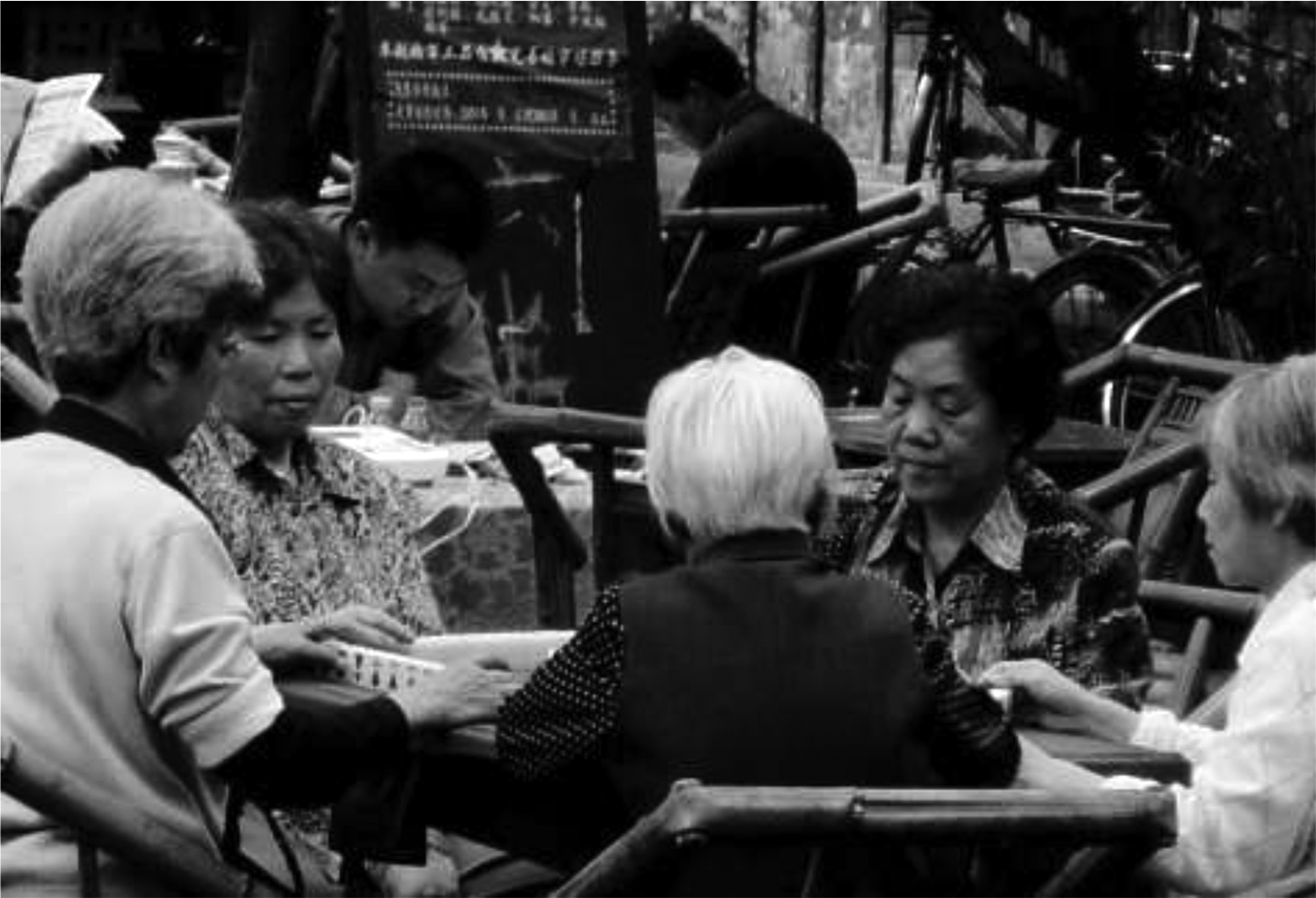
The introduction of the market economy led to the creation of more public places for leisure activities, and much less governmental control of people's personal lives. Mahjong quickly occupied people's time and space after work, spreading from living rooms, street corners, and sidewalks to teahouses and even workplaces. The mahjong craze reached unprecedented heights. In Chengdu, almost all games were forms of gambling, though most were for very small amounts of money. Mahjong plays a dual role in society, both as a popular pastime activity and a form of gambling.Footnote 26 For many people, including even government officials and college professors, playing small-stakes mahjong became the predominant pastime because gambling made the game more exciting.Footnote 27 A reporter estimated that there were five million people in Chengdu in 2000, 80 percent of whom would play mahjong during the Chinese New Year holiday, totaling one million “battlefields” (mahjong tables).Footnote 28 Although such an estimate might be exaggerated, it reflects the popularity of mahjong in everyday life. Ordinary people's life in Chengdu at the turn of this century was summed up as “playing mahjong for small stakes, eating spicy hot pots, drinking cheap wine, and watching pornographic videos” (Dadian xiao majiang, chidian malatang, hedian gendoujiu, kandian wailuxiang 打点小麻将,吃点麻辣烫,喝点跟斗酒,看点歪录像), a bit of doggerel (shunkouliu 顺口溜) that ordinary residents used to ridicule their own lives, and that shows their enjoyment of the cheap amusements available to them.Footnote 29 When a majority of commoners were unable to afford more luxurious entertainment, playing mahjong obviously for them was the best option. With the fast pace of modern life, people have today changed the game of mahjong so as to make it faster, simpler, and less skillful than traditional mahjong, which has made it more appealing to more people (See Figure 1).
Retired women playing mahjong in a teahouse. Photo taken by the author, Chengdu, May 2003.

The teahouse, already an ideal place for social gatherings, was quickly adopted as a place for playing mahjong. Eleventh Street, for instance, was regarded as a “mahjong street.” Being only about 150 feet long and 30 feet wide, it had five “old teahouses,” whose mahjong tables occupied one-third of the street. Bicycles and “elders' bikes” (laonian che 老年车, a three-wheel vehicle) blocked traffic outside the teahouses.Footnote 30 Every spring, Longquanyi 龙泉驿, the suburb of Chengdu in which spectacular views of peach blossoms were to be had, attracted many visitors and became a “battlefield for playing mahjong” (majiang dazhan 麻将大战). Local authorities estimated that over ten thousand people played mahjong there. According to a report in March 2001, the “Peach Blossoms Village” offered 107 tables for mahjong. Someone described the site as “heaven for playing mahjong, warm temperatures, fresh air, beautiful scenery, plus food and drinks and good service. I do not feel tired even after playing mahjong for a whole day.”Footnote 31
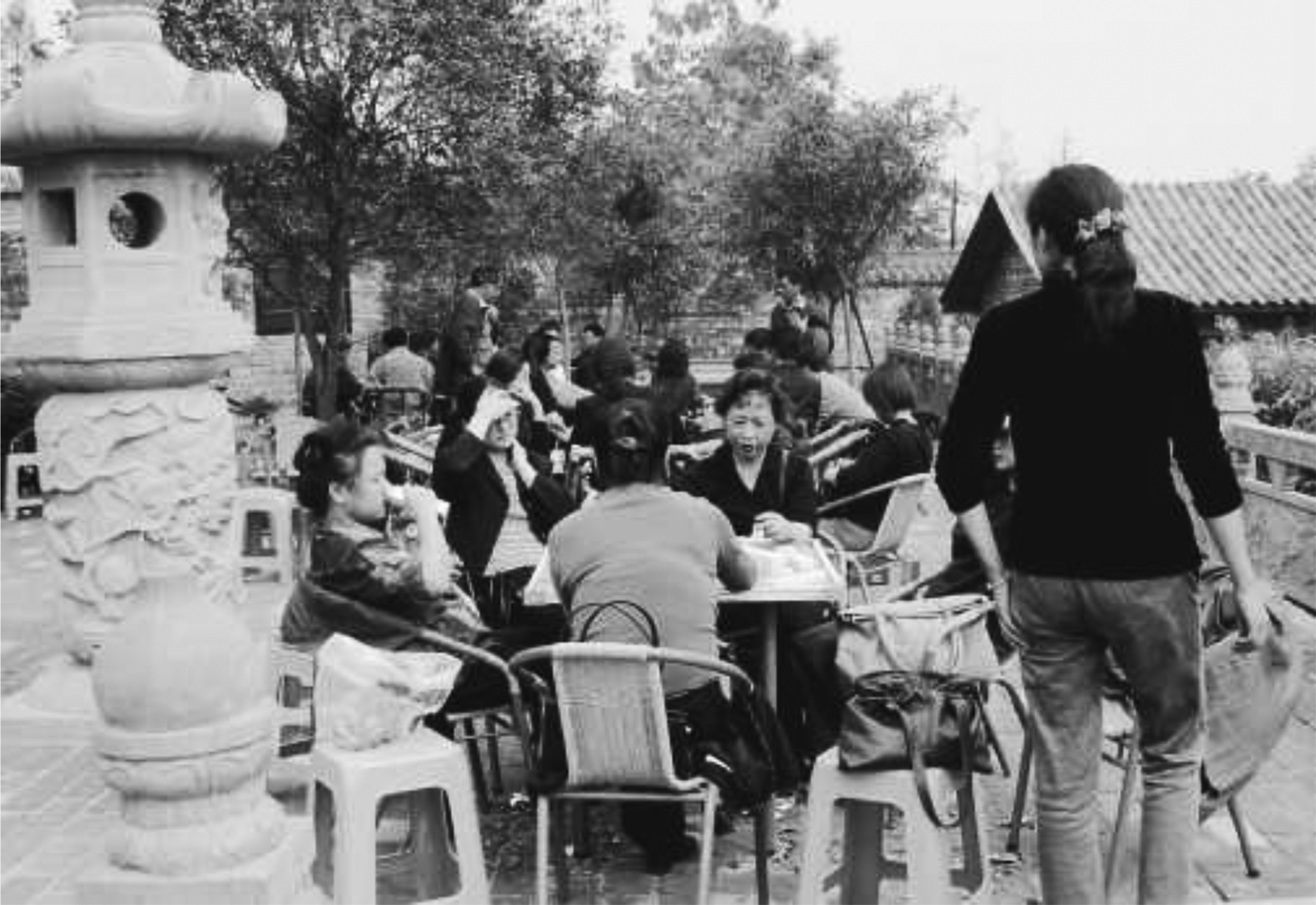
Although most mahjong gatherings were peaceful and joyful, some were problematic. People who lost money sometimes resorted to harsh words or even violence. It is easy to find accounts of such disputes in local newspapers. In one example, Liu and Cheng were in a group of five men playing mahjong on the sidewalk. Liu stood behind Cheng and constantly gave him advice, but Cheng lost the game by following Liu's suggestions. When Liu tried once again to give advice, Cheng struck Liu, breaking his nose.Footnote 32 In another case, when eight men were playing mahjong at a “farmer's happy house” (nongjia le 农家乐, a combination of teahouse, restaurant, and lodge in the rural area), they had a fight with another group over a table, using teacups and chairs as weapons and injuring two people.Footnote 33 Playing mahjong also caused problems within families. One afternoon, Fan and his wife went to a teahouse to play mahjong, and Fan saw that Zhao, the teahouse owner, placed his hand on the arm of his wife's chair. As soon as the couple returned home, Fan slashed his wife across her face. She did not know why Fan was angry and protested her innocence. At 3 a.m. that morning, Fan took his wife to Zhao's home to set the record straight. As soon as Zhao opened his door, Fan cut Zhao's face with a knife, an injury that required eight stitches. Although Zhao denied any wrongdoing, Fan forced Zhao to pay 2,000 yuan in “compensation.” Fan was arrested the next day.Footnote 34 Such incidents provide examples for elite and official criticism of the game of mahjong, and show that playing mahjong can indeed cause various disputes and conflicts (see Figure 2).
Playing mahjong in a “farmer's happy house.” Photo taken by the author, Chengdu, October 2003.

Some people became so addicted to mahjong that they neglected their work duties or caused accidents. A resident complained to a local newspaper about his experience in a clinic: he took his sick wife to the district clinic, but even after waiting for an hour no doctor appeared. When they finally found the on-duty doctor playing mahjong in the teahouse next door, the doctor said, “Don't be in such a rush; wait for me to finish this round.”Footnote 35 A four-month-old baby boy left alone was burned to death after mosquito-repellent incense set the mosquito net on fire while his mother was out playing mahjong.Footnote 36 Some mahjong players incurred medical emergencies: there were several reports of pregnant women who played mahjong for so long that they experienced serious medical problems, and in other cases, prolonged mahjong playing led to health problems, some of which proved fatal.Footnote 37 With the increasing appearance of such negative coverage in the local newspapers, people raised further concerns and criticisms. Therefore, the question of how to respond to such issues became a matter for local government and officials. These cases also prove that playing mahjong was so powerfully attractive to players that they could easily forget everything else, which also tells us that it would be difficult to keep such activities peaceful. Therefore, many social issues were explored in relation to mahjong playing, an activity which inevitably caused tension and sometimes led to violence.
In February 2000, during the annual meetings of the Municipal People's Congress and Political Consultative Conference in Chengdu, some members suggested that the government ban mahjong on the sidewalks because the activity had become “a devil on the street,” not only clogging streets and blocking traffic but also “damaging the image of Chengdu.” They complained that the popularity of the game had a negative impact on the city's business environment and that visitors “dislike very much people playing mahjong everywhere.”Footnote 38 As a result, in March 2000 the municipal government banned mahjong from the teahouses by the Funan River, a scenic area where throngs of people played the game, which gave “an impression of Chengdu people's idleness” and adversely affected the city's image. To get around the regulation, some teahouses conducted a strategy that “the outside is for drinking tea and the inside is for playing mahjong.”Footnote 39
Anti-mahjong activists pointed out that the game encouraged corruption. For instance, some people played so-called “work mahjong” or “business mahjong” (gongma 公麻) to establish a special relationship with officials who could provide favors for their business and deliberately lost money to them.Footnote 40 Although this practice was regarded as bribery, it was difficult to prove and rarely prosecuted. The government's response to such corruption was slow. In late 2000, the government finally set up rules prohibiting government employees from playing mahjong during work hours and introducing punishments for violators, including lowering their rank and reducing their year-end bonuses. These rules, however, were not applied to playing during non-work hours.Footnote 41 In 2003, the Sichuan Provincial Government finally carried out a serious measure to ban “business mahjong” by issuing four prohibitions for all levels of cadres: playing mahjong during work hours at offices, during business meetings in the local-level administrations, gambling with people they supervised, and all other forms of involvement in bribery and gambling. The authorities claimed that they did not intend to prohibit mahjong everywhere but simply to end gross violations by those in positions of authority. Soon after the government enacted the “four prohibitions,” over thirty cadres who violated them were punished. Experts in the Sichuan Academy of Social Sciences held a panel discussion of the “disease of playing mahjong,” which centered on the abuse of the game by officials with their subordinates and the detrimental effect this had had on the city's economic development.Footnote 42
To promote a good image for the city, the Committee of Millennium Tokens in Chengdu (Chengdu qiannian xinwu zuweihui 成都千年信物组委会) was established in late 2000, whose mission was to choose a token that represented the best character of Chengdu. The chosen item would be buried in an underground time capsule to be opened one thousand years in the future. On November 30, 2000, Sohu, one of the most popular websites in China, conducted a survey about the token in a special edition on Chengdu. Within a few hours, a large number of people had voted, 55 percent for mahjong, and only 25 percent for the giant panda. The media reported this result as “black humor on the people of Chengdu.” One scholar speculated that the vote might have been a deliberate expression of mockery toward the time and energy wasted because of mahjong, thus promoting an unhealthy social attitude.Footnote 43
Against this wave of anti-mahjong sentiment, however, some people held a more positive view. Some pointed out that mahjong was a part of Chinese cultural heritage that could help stabilize society. They believed that since mahjong was recognized by the Bureau of National Sports as a sport, it could be used to promote both Chinese tradition and a pastime that especially suited elderly people. They argued that although there were many alternatives for people's pastime activity, few served the needs of aged citizens. Golf and bowling, considered “high-level entertainment,” did not fit the needs of ordinary retirees.Footnote 44 Today's society should tolerate all kinds of lifestyles; some went to street corners for dancing and physical exercises while others chose to play mahjong. Also, many laid-off workers had nothing to do, and mahjong could help them cope with tough times. Moreover, mahjong could lead to harmonious relationships within families, help businesses, and enhance communication and friendship.Footnote 45 Therefore, playing mahjong should be allowed but players should not stray into addiction. As the pace of daily life increasingly escalated, mahjong could help people relax, which is a healthy thing as long as it did not involve gambling or interrupt other people's life. The government might consider delegating “mahjong areas” (majiang qu 麻将区) in places such as teahouses. From a moral perspective, these commentators sympathized with Yu but they also thought that she overreacted, making a small matter into a big incident that “damaged the image of Chengdu.”Footnote 46
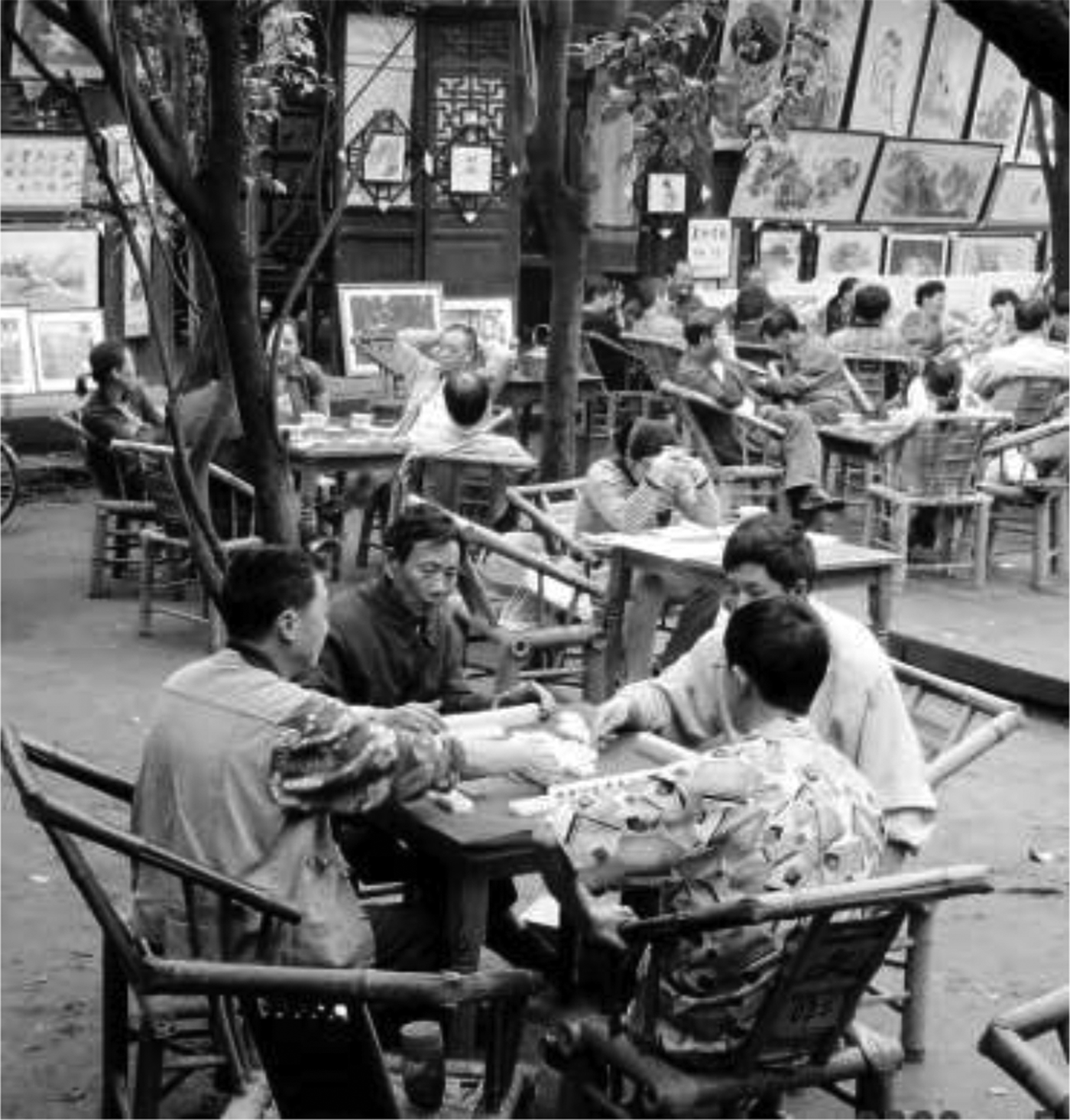
It seems that some officials hold a more open-minded view of the issue. In October 2001, in a meeting about tourism development in Chengdu, an official from the Bureau of National Tourism suggested making Chengdu “the City of Leisure” (Xiuxian zhidu 休闲之都) by promoting the city's “mahjong culture.” He even advocated building a “mahjong street” and publishing a “mahjong newspaper.” Some local intellectuals rejected these suggestions. A college professor pointed out that this approach did not fit the “development of modern civilization” because Chengdu residents' affinity for playing mahjong eight hours per day and on holidays, vacations, and other free time demonstrated nothing but “idleness.” He suggested holding a conference on leisure and tourism to discuss multiple approaches to leisure, such as sport leisure, art leisure, food leisure, garden leisure, and so on.Footnote 47 However, there was an obvious trend toward looking at Chengdu culture with a more positive attitude. For instance, the New Weekly (Xinzhoukan) in 2004 named Chengdu the Fourth City in China after Beijing, Shanghai, and Canton because of the “charm of the city.” Whereas Shanghai has a culture of “petty bourgeoisie” and Canton has a commercial culture, Chengdu has a “culture of townsfolk” (shimin wenhua 市民文化). In Chengdu, rich and poor alike can find their leisure, creating a “very harmonious society.” Just as most Chinese cities are anxious to pursue economic growth through hard work, Chengdu became a valuable place for leisurely pursuits. “Whereas Cantonese dearly pursue the good life, Chengdu people already live a good life,” as Chengdu people emphasize “one's spiritual and emotional life alongside economic development,” the journal says.Footnote 48 (See Figure 3)
Playing mahjong in the Daci Temple. Photo taken by the author, May 2003.
THE NATIONAL STORY: A LOCAL ISSUE OR CHINESE ISSUE?
After the post-Mao reforms, state control over everyday life was relaxed and mahjong revived.Footnote 49 Mahjong is not merely a Chengdu phenomenon but a nationwide one. As a humorous popular saying notes, “Of one billion people, 900 million are gambling [with mahjong] and 100 million are waiting for their turn” (Shiyi renmin jiuyi du, haiyou yiyi zuo houbu 十亿人民九亿赌,还有一亿做候补).Footnote 50 Although this is an exaggeration, it indeed reflects the fact that mahjong is the most popular pastime in today's China and that the nation deserves to be called a “nation of mahjong.” The criticisms of mahjong are numerous: mahjong wastes players' time, leads to corruption, and damages the city's image. From the late Qing, the teahouses and mahjong endured a constant stream of attack by social reformers and the government, who considered both to be vices.Footnote 51 Voices defending the teahouses and mahjong were buried in a tidal wave of criticism, and even advocates of teahouses considered them to be a vestige of “the old society” that would be replaced with new venues as society became more “progressive.” They never anticipated that more than half a century after the dramatic societal revolutions and reforms of the PRC, not only have teahouses and mahjong not been extinguished, but both are flourishing to an unprecedented degree. From the specific issue of mahjong, we can see how the market economy in today's China coexists with a more traditional lifestyle. Modernization has transformed social life but not to the extent that was generally thought, reflecting cultural continuity. The environment of playing mahjong has altered since the early twentieth century, but its core attractions – recreation, gambling, and socializing – remain the same.
Local authorities did not implement blanket sanctions against mahjong, yet the media constantly criticized it. Obviously, the government recognized mahjong's importance in people's daily lives, especially for elders. Even though officials knew that widespread gambling violated both socialist morality and government restrictions, they never attempted to carry out a harsh policy against it because they would rather allow people to pursue their favored forms of entertainment than draw their attention to social and political issues. They most likely implemented moderate policies, which neither encouraged nor opposed it, a conspicuous step back from the Mao era, when the state had tried to control all aspects of daily life. In theory, any gambling in a teahouse was illegal, regardless of whether the stakes were small or large, but the government ignored this activity as long as it did not cause any trouble.
Media coverage, however, was a part of the official discourse against mahjong, even though the government never banned the game itself, but only restricted it to certain groups of people at certain places and times. The targets of the restrictions were officials and government employees who played mahjong during working hours. In theory, gambling in China is illegal, but few people were prosecuted under this charge. It was not until December 2000, two months after the first lawsuit against mahjong discussed previously, that the first charge of gambling was brought to trial in Chengdu. A man named Chen did not have a decent job and set up a gambling business in a teahouse as an “easy way to earn money.” He was sentenced to five years in jail and fined 3,000 yuan.Footnote 52 Here what the government tried to control was not the participants in gambling but the people who ran a gambling business.
The significance of Yu's lawsuit extended far beyond the case itself, which launched a nationwide debate on the conflict between collective interests and individual rights as well as the relationship between lifestyle and the city's image.Footnote 53 The case inspired people to ask how society should balance collective interests and individual rights. The situation became very complex. Yu was actually in conflict only with the other residents of the apartment complex. When a reporter investigated the lawsuit, some anxious residents claimed that they violated no law in playing mahjong, a healthy activity. “Yu has become famous by damaging the reputation of this residential complex, and we are becoming famous countrywide for being mahjong crazy,” a woman complained. The Residential Committee had been a model and won many awards, but this case “erased all of that.”Footnote 54 In an interview on China Central Television (CCTV), a committee official described how difficult it was to deal with the situation: “If I had satisfied Yu's request, the majority of residents would object because we took away their freedom. Every citizen has a right to enjoy life, and neighbors should try to understand and tolerate each other. This is also an issue of attitude, I think.” After the initial hearing, CCTV devoted an episode of its well-known “Telling the Truth” program (Shihua shishuo 实话实说) to a discussion of the issue by invited experts, Yu Yongjun, and audience members. Regarding the protection of the interests of the majority, an expert told CCTV that it is a good principle for the minority to obey the majority, but this should only be applied to public affairs. The conflict over mahjong between Yu and her neighbors was one of civil rights, an issue which the committee had no authority to put to a vote.Footnote 55
Most members of the audience on the special CCTV program hoped that the issue could be solved through better communication, not legal means. Still, Yu maintained that she had no alternative but the lawsuit. “In our compound, you felt weird if you did not play mahjong.” Yu believed that many people who were not mahjong players were suffering in the same way, but they were too afraid to speak out. The CCTV host reminded her that the audience's suggestions might be useful and she might not have handled relations with her neighbors in the best possible way. Yu replied that she did not have any other disputes with her neighbors. A lawyer stated that it was her right to pursue her interests through the suit, but only as a last resort. The social pressure she was suffering was obviously much greater than the noise of mahjong. Even though she won the case, she still had to face the issue of how to mend relations with her neighbors.Footnote 56
The Chinese Youth Daily (Zhongguo qingnian bao 中国青年报) interviewed several people from different backgrounds in regard to this issue. A sixty-year-old retired woman stated that she and her husband were “crazy about playing mahjong.” After retiring, they felt isolated, but playing mahjong gave them great pleasure. However, “when we played mahjong, we were very careful not to disturb others.” She believed that the Residential Committee of Yu's residence was wrong not to consider Yu's personal interests and make no effort to maintain a quiet environment. Mahjong should only be played at an appropriate place and time and measures should be taken to accommodate others, such as putting a soft cloth on the table to muffle noise. Players should also control their behavior, not become too excited and not throw the tiles onto the table very hard. In addition, elders should not play mahjong for an extended time. People involved in the case should reach a mutual understanding, because it is not worth the effort to go to court for “such a little thing.”Footnote 57 Indeed, from a common perspective, it was a “little thing,” but for Yu and her family, it was a major matter because it affected the quality of their life at home where they spent most of their time. Therefore, it is plain that people viewed such matters differently depending on how much their personal interests were involved.
CONCLUSION
This study has shown how one individual case involving mahjong could cause a chain reaction, reflecting the complex relationships between the individual, neighborhood, the city, and the nation. By examining this case and putting it into a larger context, we have a better understanding of how and to what extent political transformation and economic development have shaped people's daily lives and changed the relationships between the different levels. We also find that the issues and questions raised by the mahjong lawsuit persist in today's China and are still waiting for answers.
At the individual level, how should we understand Yu's fate? We should consider the case in conjunction with political, social, and cultural factors. In China, people have often placed collective interests before individual rights. If conflict existed between collective and individual interests, the latter always surrendered to the former. Furthermore, Chinese society has always been more tolerant of the behavior of the elderly; in other words, older people have had greater liberty than younger ones in their public behavior. When the younger Yu came into conflict with her older neighbors, Yu did not get much sympathy from her community, although many people elsewhere offered moral support. Finally, the Chinese tradition seeks to keep civil disputes within the confines of the neighborhood and community to avoid public exposure through a lawsuit, so Yu's neighbors believed that she brought disgrace to the neighborhood by breaking the superficial harmony of daily life. The socialist state has always emphasized that individual rights should be subordinate to collective interests, but some people have begun to challenge this notion. Yu's lawsuit over the playing of mahjong is one excellent recent example of this.
From a neighborhood perspective, it is interesting to note the position of the members of the residential committee in the mahjong lawsuit. As we know, the committee represented the lowest level of state power, which carries out the policies promoted by the CCP and the government. The government neither clearly opposed mahjong nor encouraged it.Footnote 58 If the committee had adopted a tone of “political correctness,” it should have opposed mahjong. Ironically, the situation turned out to be just the opposite. From the lawsuit, we can see evidence of “capitalism with Chinese characteristics”: although playing mahjong had long been categorized as “backward,” “corrupt,” and indicative of a “capitalist lifestyle,” the residential committee as the lowest level of state control had inherited the tradition that the low-level unit (danwei) took care of everything, including daily life and entertainment. Most ordinary retirees, with few resources to pursue other pastimes, turned to mahjong as the perfect alternative. In addition to these residential activity rooms, Chengdu citizens could pay as little as ten yuan to spend a whole day in a teahouse or a “farmer's happy house,” with services including tea, lunch, and mahjong. From this point of view, mahjong played an important role in maintaining social stability. That is why the authorities overlooked the small-scale gambling most often associated with mahjong.
In a neighborhood, noise can often cause conflicts between residents. However, when we discuss the case of Yu, we have to distinguish carefully between “noise as a disturbance” and “noise as a renao 热闹 thing.” In China, renao has been a positive term, related to prosperity. This term can be used to evaluate a city, an event, a market, or a party. Without renao, it could be regarded as lack of an atmosphere of lively life (renqi 人气). For public life, renao could bring excitement to people, regardless of age, gender, or economic and educational background. But, when people are not in public but at home, they have a very different pursuit – quiet (qingjing 清静) is favored, a wish not to be disturbed. However, there is no absolute boundary between public and home and between renao and quiet, especially regarding noise, which travels easily between different spaces and causes disputes.
When we examine the relationship between the individual and neighborhood, we find that residents in Chengdu faced a dilemma. On the one hand, although many people liked to play mahjong, many also resented the use of the game by others to characterize their lifestyle. Few intellectuals, except those who were elderly, defended such a lifestyle. It seems they did not like to acknowledge their addiction to mahjong even though it was a reality for many of them. On the other hand, many people who disliked mahjong did not have the courage to confront such a popular practice because they recognized that they might face an army of opponents. When Yu Yongjun spoke out, people praised her as a “hero against mahjong” (fanma yongshi 反麻勇士) and condemned the “mahjong which disturbs residents” (raomin majiang 扰民麻将).Footnote 59 As soon as these kinds of terms were used to refer to mahjong, proponents of the game were put on the defensive. Some people, however, gave the issue deeper consideration and placed it into the discourse of the “democratic system of majority rule and protection of individual rights.” One article praises Yu for refusing “to be cheated by the flag of ‘democracy’ but going to the court for justice.” The author points out that majority rule in race, religion, and class has suppressed minority opposition even to the point of genocide, in many cases performed under the banner of democracy. Therefore, “a reasonable and limited democratic system of majority rule” (heli de youxian duoshu minzu zhi 合理的有限多数民主制) should be established, which can respect and protect the rights of the minority.Footnote 60
At the city level, we have seen that mahjong has caused a variety of debates within the city, especially among those who were concerned about the city's image and reputation. Is the game innocent entertainment or the work of the devil? Positive leisure or negative idleness? Symbol of a high quality of life or of economic stagnation? Dominance of the collective majority or the rights of the individual? The debate over and control of mahjong reveal how people responded to radical social changes and how they sought to balance traditional lifestyles with modern morality. The debate over mahjong also is a reflection of the value placed on popular culture. Mass media, which represented the notion of elite culture, like its predecessors in the late Qing and Republican periods, tried very hard to change popular culture by infusing elite values.Footnote 61 The media's eagerness to report the problems associated with mahjong, regardless of how trivial they were, was a reflection of the prevailing anti-popular culture sentiment and an attempt to warn people of the many horrible consequences associated with the game. From this, we can see that there is an obvious gap between society and official media. The former largely embraced mahjong while the latter fundamentally opposed it. The rise of mahjong also has a close association with the people's growing pursuit of money as influenced by the larger market economy and focus on attaining wealth. When ordinary people did not have the same opportunity as the elite to benefit from the economic development that surrounded them, playing mahjong became one way of pursuing their own dreams of wealth. Winning at mahjong depends heavily on luck, and therefore, the game is just like the lottery in that it gives people hope and a reason to think about the future. Value terms like “positive” or “negative” provide little help because mahjong functions so differently in the lives of different people.
From the national perspective, mahjong is a Chinese legacy, which has been constantly adapted to meet people's current needs. With the fast pace of modern life, playing contemporary fast-paced mahjong is simpler and less skillful than was traditional mahjong. That is why mahjong has fit all walks of life to become the most popular pastime in China. For people who did not have many resources, playing mahjong provided satisfying entertainment. Many families have fostered a habit of playing mahjong during gatherings of relatives or friends. As was not the case in Mao's era, the state is no longer a force that suppresses this activity, although media and social attitudes still play such a role. In fact, the government seemed to focus only on officials and government employees who played mahjong during working hours and ignored ordinary residents who did the same. The authorities worried more about mahjong as a tool for bribery. Unlike the policy in the late Qing and Republic, the current government has not imposed any overall anti-mahjong prohibition but restricted a certain group of people to certain times and places where mahjong could be played, even though such activities often involved gambling.
Yu's case took place in 2000, but more than a decade later, such conflicts over public activities happen even more often. For instance, two similar incidents occurred in October 2013 alone, attracting nationwide attention and debate. It has become an increasingly common sight in urban China for groups of people, mostly older women, to dance as exercise in street corners, parks, or public squares in the morning and evening with loudspeakers or cassette players. In one incident in Beijing on October 11, 2013, “a man fired a shotgun into the air and set loose three Tibetan mastiffs to scare away a group of women whose public dancing annoyed him.” Although the man was arrested, he received “much sympathy online.”Footnote 62 In another incident in Wuhan on October 24, 2013, when a group of old women were dancing in the public square of a neighborhood, an angry resident tossed human excrement on them from an upper floor of an apartment building. It was reported that a conflict between the dancers and residents in the building had lasted more than a month.Footnote 63 These incidents once again reveal that people in China are still facing the issue of how to understand and how to balance individual rights and collective interests. If government and residents fail to handle such issues well, disputes and conflicts could eventually create a negative image for a city.