Introduction
Most amino acids such as alanine, valine, and leucine are chiral, meaning that such molecules can occur in their left-handed and in their right-handed form. These mirror-image forms are non-superimposable to each other and they are called enantiomers. As chemists, we distinguish between d- and l-enantiomers of amino acids, with the d-enantiomer being chemically related to the dextrorotatory molecule of glyceraldehyde and l for the amino acid conformer that is chemically related to levorotatory glyceraldehyde. A typical and classic amino acid synthesis in the laboratory, such as Strecker synthesis, leads to the formation of a racemic mixture of amino acids. The racemic mixture is composed of 50% d-enantiomers and 50% l-enantiomers and is optically inactive. If we analyse amino acids in proteins, however, we detect optical activity. Proteins and enzymes are composed of 20 amino acids. The chiral amino acids in proteins occur exclusively in their l-configuration. d-amino acids do not exist in proteins. Symmetry is broken on the molecular level and the scientific explanation for this symmetry breaking is still unknown. We still do not know – and this is highly astonishing in the modern era of proteomics – how life selected l-amino acids for the molecular construction of proteins.Reference Cline1 Progress was made recently, (a) when the prebiotic formation of amino acids was reproduced in the laboratory depicting realistic scenarios and (b) when enantiomeric excesses could be induced into the former racemic mixtures in order to tip the chiral balance to l-amino acid enantiomers. The next section will describe new experimental data on the formation of amino acids in the icy surface of dust grains present in interstellar space.
Amino Acid Formation in Interstellar Environments
The physical space between stars is called interstellar space. This space is by no means empty; it contains molecular clouds that can beautifully be visualized with the help of the Hubble space telescope. Molecular clouds are composed of billions of silicate grains, each of them having the size of a tenth of a micrometer. According to the Greenberg-model,Reference Greenberg2 small molecules such as water and carbon monoxide condense on the surface of interstellar dust grains forming icy mantles. During condensation these molecules are subjected to irradiation of cosmic rays including photons.
In our laboratory we tried to simulate such interstellar processes. In an ultrahigh vacuum a mixture of five molecules composed of water, carbon monoxide, carbon dioxide, ammonia, and methanol was condensed on a surface at T = 12 K. These molecules did not contain any preformed carbon-carbon or carbon-nitrogen bond. We called them C1- and N1-units. After 24 h of condensation and irradiation, some micrograms of interstellar ice analogues formed on the cooled surface. In order to analyse these simulated interstellar ices the system was warmed to room temperature and vented. The simulated interstellar ice sample was extracted with water, hydrolysed in 6 M HCl, derivatized to form ethoxy carbonyl ethyl esters, and analysed using an enantioselective gas chromatograph coupled to a mass spectrometer. Astonishingly, we identified the formation of 16 different amino acids in the interstellar ice analogues.Reference Muñoz Caro, Meierhenrich, Schutte, Barbier, Arcones Segovia, Rosenbauer, Thiemann, Brack and Greenberg3 Amino acids such as glycine, alanine, valine, proline, aspartic acid, and serine were detected. Moreover, molecular structures of d,l-2,3-diaminopropanoic acid and d,l-2,3-diaminobutyric acid were found; we baptized these structures diamino acids, because these molecules – being diamino carboxylic acids – contain one carboxylic function and two amino groups.
Prior to publication of these data we had to exclude contamination processes that might have provoked the formation of the above described amino acids. Therefore, we repeated the experiment a second time, this time using the carbon-13 labelled reactants instead of the carbon-12 compounds used before. The condensed gas mixture was thus composed of H2O, 13CO, 13CO2, NH3 and 13CH3OH. Again we found 16 amino acids in the gas chromatogram. This time, however, the mass spectrometric analysis of the analytes revealed that each amino acid was exclusively composed of the carbon-13 isotopes. This is scientific evidence that all the identified amino acids were indeed produced out of the C1- and N1-units of the gas mixture. Contaminations could definitely be excluded.
The chirality of the formed amino acids was investigated by using a chiral stationary phase in the capillary column of the gas chromatographic system. This stationary phase, called Chirasil-Val allowed for the resolution of amino acid enantiomers. The so-called enantioselective gas chromatographic analysis allowed us to resolve the individual enantiomers of the chiral amino acids such as alanine, 2-amino butyric acid, proline, serine, and others. In the above-described experiment, chiral amino acids were shown to occur in a racemic ratio. This racemic occurrence of the amino acids was expected, since no chiral or asymmetric information had been induced into the system under high vacuum simulating interstellar ices.
Diamino Acids in Meteorites
Sixteen amino acids and diamino acids were detected in samples simulating interstellar ices. For the realistic simulation of these ices in the high vacuum chamber we had to select and set various parameters such as temperature, pressure, the molecular composition of the gas mixture, the photon-molecule ratio, the wavelength of the photons, the material on which the ices condensed, and many others. These parameters were selected to the best of our knowledge to represent typical interstellar and circumstellar conditions. Exactly these conditions had been used for many years in the Greenberg-laboratory at the University of Leiden in the Netherlands in order to produce interstellar ice analogues. After the spectacular finding of the formation of 16 amino acids in simulated interstellar ices, several research groups including ours changed these parameters. To keep it brief: Amino acids were detected, even if the interstellar ice analogues were produced under different physico-chemical conditions.
Nevertheless, we were asked to repeat the enantioselective amino acid analysis with real samples from extraterrestrial origin. We thus received a sample of the Murchison meteorite, a carbonaceous chondrite, from the fundus of the Max Planck Society in Mainz, Germany. A 1 g sample was carefully cut out of the interior of a fragment from the Murchison meteorite. This sample was stored under inert gas and delivered to the University of Bremen, where the enantioselective analyses were performed. In a clean-room, the meteoritic sample was crashed into small pieces that were then homogenized in a planetary micro-mill. The obtained powder was – in analogy to the above samples of interstellar ices – subjected to extraction with water, to hydrolysis with 6 M HCl, to derivatization forming ethoxy carbonyl ethyl esters, and the sample was finally analysed using the enantioselective gas chromatograph coupled to a mass spectrometer.
The Murchison meteorite is known to contain 90 different amino acids.Reference Bredehöft and Meierhenrich4 Therefore, our purpose was not at all to identify amino acids no. 91 and no. 92. Our aim in the analyses of the Murchison meteorite was to detect for the very first time diamino acids, as we found them in the samples of interstellar ice analogues. And indeed, using our enantioselective analytical method, six diamino acids were detected in the Murchison meteorite.Reference Meierhenrich, Muñoz Caro, Bredehöft, Jessberger and Thiemann5 Chiral diamino acids were resolved into their enantiomers. Probably, the Murchison meteorite belongs to the material on Earth that has been analysed in analytical laboratories more often than any other material. So why did we identify for the first time diamino acids in this prestigious sample of the carbonaceous chondrite? We assume that this is because, usually, the gas chromatographic analysis of amino acids targeting the resolution of amino acid enantiomers requires long capillary columns coated with a chiral stationary phase. Capillary columns with a length of up to 60 m had been used for the resolution of amino acid enantiomers in meteorite samples. We, on the other hand, designed the applied analytical method in analogy to the method that will by employed by the COSAC experiment on board the cometary Rosetta space mission (see later). Mass, energy, and the amount of carrier gas are limited for these types of space missions and therefore we used, as in the case of the COSAC experiment, a relatively short capillary column of 10 m length. As mentioned above, diamino acids contain an additional amino group and during the derivatization step an ethoxy carbonyl group was attached to this amino function. Based on this, diamino acid derivatives do not only have a higher molecular weight than amino acids, diamino acid derivatives also contain more functional groups that interact via hydrogen bonds with the stationary phase. These interactions affect diamino acids with a relatively long retention within the capillary column. Short capillary columns of 10 m length make diamino acids accessible to gas chromatography.
Diamino acids might have been of particular importance for the chemical evolution on Earth that triggered the appearance of life. We assume that DNA and proteins (Figure 1) that beautifully interact by the genetic-code-programmed and protein-driven replication of all living organisms today, were preceded by RNA. The model of the RNA-world, which is thought to have preceded today's DNA/protein world, is well-known and internationally accepted.Reference Gilbert6 RNA itself was – as assumed today – not the first genetic material on Earth. It is thought that RNA has been preceded by some type of oligonucleotide analoga. Promising candidates for these analoga are called peptide nucleic acids (PNA) that use backbones composed of either N-amino ethylglycine (in the case of aegPNA) or diamino acids (as for daPNA).Reference Nielsen, Egholm, Berg and Buchardt7, Reference Nielsen8 Diamino acids that compose the molecular backbone of daPNA structures were identified in simulated interstellar ices and in a sample of the Murchison meteorite. It will remain interesting to follow further scientific advances in the origin-of-life related research to see whether or not the proposed evolution of diamino acid formation in interstellar environments followed by daPNA synthesis in aqueous phase gave rise to RNA, which itself triggered the origin of DNA and proteins-based life forms.
We experimentally identified amino acids and diamino acids in samples of (a) interstellar ice analoga and (b) in a sample of the Murchison meteorite. We further investigated the chirality of the amino and diamino acids.
Irradiation of Amino Acids with Circularly Polarized Light
In 1998, an Australian team of astronomers identified the presence of infrared circularly polarized (cp) light in an interstellar cloud called the Orion Molecular Cloud (OMC-1).Reference Bailey, Chrysostomou, Hough, Gledhill, McCall, Clark, Ménard and Tamura9 Since then, the search for cp light has been expanded to other interstellar regions, in which chiral photons were also detected.Reference Buschermöhle, Whittet, Chysostomou, Hough, Lucas, Adamson, Whitney and Wolff10 Chiral light was thus proposed to have interacted under interstellar conditions with chiral organic molecules such as amino acids present in molecular clouds. We therefore investigated experimentally the interaction between chiral photons and racemic amino acids, an interaction that had interested generations of chemists before.Reference Kuhn and Braun11–Reference Flores, Bonner and Massey13
We became interested in the question of whether chiral photons can induce their asymmetry into a racemic mixture of amino acids. Our interest was fuelled by the finding that amino acids in meteorites show enantiomeric excesses of the l-enantiomer of up to 18.5%.Reference Glavin and Dworkin14 The simplest pathway under which chiral photons can transfer their asymmetry to racemic organic molecules is known as enantioselective photolysis.Reference Griesbeck and Meierhenrich15 Here, both enantiomers of the chiral molecule are considered to absorb different amounts of chiral photons of given handedness. The more absorbing enantiomer is assumed to photolyse faster than its optical antipode and thus an enantiomeric excess is created (in favour of the optical antipode). This model therewith depends on the different absorption of the two enantiomers, which itself is a function of the wavelength of the light. We therefore measured the differential absorption (ΔA) of selected amino acid enantiomers as a function of the wavelength (λ) of the chiral photons. The phenomenon is known as circular dichroism (CD) and we recorded CD spectra.
Literature data on CD spectra of amino acids were exclusively – and this is astonishing – recorded in aqueous solution. Water itself absorbs light with wavelengths below 190 nm making the vacuum ultraviolet spectral domain inaccessible to CD spectroscopy. We therefore moved to the ISA synchrotron centre at Aarhus University in Denmark and recorded CD spectra of condensed amino acid films. We avoided the use of aqueous amino acid solutions. These measurements revealed new and hitherto unknown CD-active transition in amino acids between 130 and 190 nm.Reference Meierhenrich, Filippi, Meinert, Bredehöft, Takahashi, Nahon, Jones and Hoffmann16 The CD spectra of l-alanine, l-valine, and l-leucine are characterized by maxima between 180 and 190 nm.The knowledge of this wavelength is important for irradiation experiments of amino acids with cp light aiming to induce high enantiomeric excesses. Corresponding experiments were performed at the synchrotron SOLEIL in Gif-sur-Yvette, France.
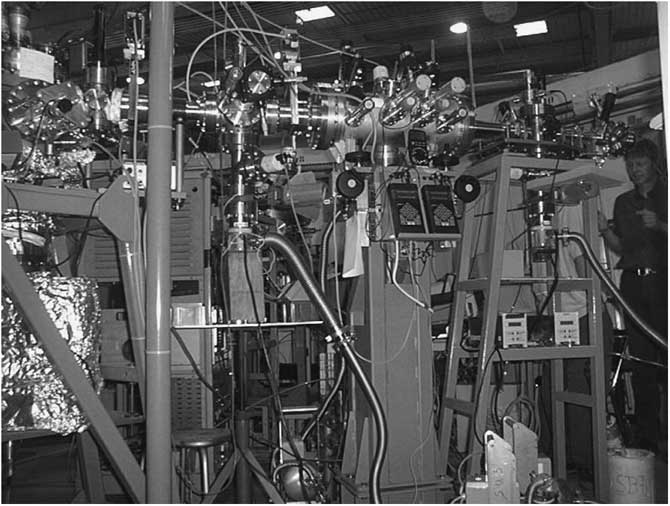
Using beamline DESIRS at the French synchrotron SOLEIL (Figure 2) we subjected amino acids in their condensed form to cp light. For the asymmetric irradiation of the amino acid leucine in its racemic form photons of a wavelength of λ = 182 nm were selected. This wavelength corresponds to the maximum of the CD spectrum of leucine (see above). After 3 h of irradiation the irradiated leucine sample was extracted with water and derivatized to form the ethoxy carbonyl ethyl ester of leucine. This derivative was injected into a gas chromatogram coupled to a mass spectrometer. The gas chromatogram was equipped with a chiral stationary phase that allowed for the resolution and quantification of the leucine derivatives. An enantiomeric excess of 2.6% of d-leucine could be determined after irradiation with right cp light.Reference Meierhenrich, Nahon, Alcaraz, Bredehöft, Hoffmann, Barbier and Brack17 As expected, irradiation with left cp light resulted in an enantiomeric excess of l-leucine. Recently these experiments were repeated using a more sophisticated technique for the preparation of the leucine films. Under such conditions enantiomeric excesses of up to 5.2% were induced by the use of chiral photons into rac-leucine.Reference Meierhenrich, Filippi, Meinert, Hoffmann, Bredehöft and Nahon18
These experimental observations show that in the vacuum UV spectral region cp light might indeed induce an enantiomeric excess into amino acids. Investigations on other amino acids such as isovaline, alanine, and diamino acids are currently planned.
A second mechanism to induce enantiomeric excesses into amino acids by the use of chiral photons was described as asymmetric synthesis. Here, amino acids are photochemically synthesized by irradiation with cp light. In order to elucidate this mechanism we synthesized amino acids as described earlier by condensing C1- and N1-units under interstellar conditions on a cooled surface. In this experiment, however, the unpolarized-light-emitting lamp that we used in the previous experiment was replaced by cp synchrotron light. Interstellar ice analogues formed in the synchrotron centre SOLEIL, and after irradiation with cp light the system was warmed up to room temperature and vented. The residue was extracted with water, hydrolysed and analysed by enantioselective multidimensional gas chromatography. We observed the production of non-racemic amino acids. In the case of alanine an enantiomeric excess of 1.34% was observed.Reference De Marcellus, Meinert, Nuevo, Filippi, Danger, Deboffle, Nahon, le Sergeant d'Hendecourt and Meierhenrich19 The theoretical interpretation of these data, however, remains difficult. We cannot yet distinguish whether this enantiomeric excess was induced by asymmetric synthesis or via enantioselective photolysis. Both experiments subject amino acids to cp photons in the vacuum UV range.
Will there be an ultimate experiment that will allow us to determine which pathway was used to induce a first tiny asymmetry into racemic molecular systems? The cometary Rosetta mission that was launched in 2004 may help in deciphering the origin of biomolecular asymmetry.
The Cometary Rosetta Mission and its Search for Chiral Organic Molecules
In 1986, the cometary mission Giotto took a picture of the nucleus of comet Halley. In the scientific literature this famous image is considered as the first picture of a cometary nucleus. Today it is assumed that comets, like ‘dirty snowballs’, contain a mixture of water ice, inorganic dust, and organic molecules. Comets were suggested to be composed of millions of interstellar dust grains that agglomerated.Reference Greenberg2 They are assumed to contain molecular information on the beginnings of our Solar System, frozen in their icy composition.
The cometary mission Rosetta was designed and constructed in order to decipher this important molecular information on the beginning of our Solar System. The Rosetta mission contains a lander called Philae that is on board and that will – after having approached the comet in 2014 – land on the comet's icy surface. Immediately after landing, two harpoons and a sophisticated drill system will attach the Lander to the cometary surface (Figure 3). Philae contains the cometary sampling and composition (COSAC) experiment, which uses a gas chromatograph coupled to a time-of-flight mass spectrometer for the envisaged in situ analysis of cometary ices.Reference Goesmann, Rosenbauer, Roll, Szopa, Raulin, Sternberg, Israel, Meierhenrich, Thiemann and Muñoz Caro20 COSAC will try to detect organic molecules in the cometary ices. Such molecules are assumed to have been delivered via cometary impacts to the Early Earth, where they might have contributed to molecular processes that triggered the appearance of life.
Furthermore, the COSAC instrument contains its chirality-module. This gas chromatographic module is equipped with 3 chiral stationary phases that will allow for the separation of different types of enantiomers. We do not only envisage separate enantiomers of amino acids, the instrument is also capable of resolving enantiomers of chiral hydrocarbons, alcohols, amines, diols, and carboxylic acids. If present in the cometary ices, these enantiomers will be separated, identified and quantified. Their quantification will allow for the enantiomeric excess calculation. Obtained data will then be interpreted by using all the different theories that have been developed in order to explain the origin of the molecular asymmetry of biological organisms.
These theories do not only include the interaction of racemic molecules with cp light under interstellar conditions, other theories are based on the weak nuclear interaction,Reference Yamagata21–Reference Quack23 on the interaction of chiral molecules with β-electrons,Reference Darge, Laczko and Thiemann24–Reference Garay and Ahlgren-Beckendorf26 asymmetric crystallization phenomena,Reference Kondepudi, Kaufman and Singh27 magneto-chiral effects,Reference Rikken and Raupach28 or even stochastic fluctuations that were amplified and evolved to a homochiral state. All these models and theories on the absolute asymmetric synthesis create small enantiomeric excesses. These excesses have to be amplified by suitable mechanisms often involving autocatalytic reactions far from thermodynamic equilibrium.Reference Meierhenrich29
The evolution of life is dictated by genetic coding, the precise sequencing and translation of nucleotide bases aligned along the DNA sugar-phosphate backbone. Genes contain the recipe on how to construct proteins. Proteins themselves exhibit enzymatic functions facilitating biological reactions, e.g. copying DNA. The question of whether genes or proteins evolved first on Earth has puzzled generations of scientists. It was compared with the hen or egg question. Photo: With permission of [SH]2, Bremen.

Beamline DESIRS at the synchrotron centre SOLEIL allows for the generation and detection of cp light in a wide spectral range. Here, racemic amino acids were subjected to cp synchrotron radiation for the study of a chirality transfer from the chiral (and massless) photons to racemic organics. The underlying mechanism of enantioselective photolysis was shown to induce enantiomeric excesses of up to a few percent.
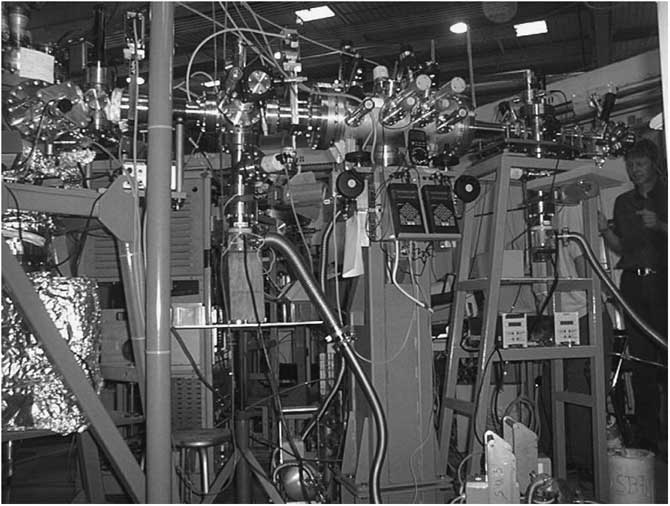
In 2014 the Lander Philae, on board of the cometary mission Rosetta, will land on the surface of comet 67P/Churyumov-Gerasimenko. Cometary ice will be put by a robotic drill system into an oven. After heating, organic molecules will be transferred into a gas chromatograph that is coupled to a time-of-flight mass spectrometer. This analytical instrument will identify and quantify any organics that are present in the cometary ice. It will resolve enantiomers to obtain clues on their molecular symmetry. If the molecular symmetry of the organic molecules in comets is broken, this might have far-reaching consequences for the origin of the molecular asymmetry of living organisms on Earth. Photo: ESA.

Uwe J. Meierhenrich is professor of Bioanalytical Chemistry at the University of Nice Sophia Antipolis. Meierhenrich's name is connected with the first identification of amino acids in samples of interstellar ice analogues. In preparation of the cometary Rosetta-Mission of the European Space Agency (ESA) the so-called interstellar ice was simulated in which 16 amino acids were identified. Further experiments at the French Soleil Synchrotron and the Danish ISA Synchrotron point to life's homochirality originating under interstellar conditions. In 2011, the Horst Pracejus-Prize of the GDCh was awarded to Meierhenrich's discoveries on chirality and the asymmetry of life. These discoveries – and in particular the advanced enantioselective analytical techniques – are applied in his laboratory in everyday work for the aroma and perfume chemistry industries located in Grasse, France.