Introduction
Transactional models of development suggest that characteristics of one member of the mother–infant dyad play an important role in shaping the emotions and behaviors of the other (Bell, Reference Bell1979; Sameroff, Reference Sameroff and Sameroff2009). Maternal emotions and behaviors have long been shown to have an impact on the development of their infants (Field, Reference Field2018; Goldsmith & Campos, Reference Goldsmith, Campos, Emde and Harmon1982; Jones et al., Reference Jones, Field, Fox, Davalos, Malphurs, Carraway and Schanberg1997). Symptoms of depression and greater avoidance traits in mothers are associated with more emotional reactivity and negative affectivity in infants as young as 3 months of age (Field, Reference Field2011; Jones et al., Reference Jones, Field, Fox, Davalos, Malphurs, Carraway and Schanberg1997). Researchers have also consistently observed a mirroring of maternal emotions and behaviors by infants whereby infant behaviors appear to mimic those of the mother while the two interact (Field, Reference Field1992; Tronick & Reck, Reference Tronick and Reck2009). These maternal influences can subsequently generalize to interactions that infants have with individuals other than the mother (Field et al., Reference Field, Healy, Goldstein, Perry, Bendell, Field and Healy1988), suggesting that maternal behavior can affect infant behaviors and interaction patterns across contexts. While it is clear that mother-to-infant effects are strong and persistent, infant-to-mother effects can also affect the relationship and the emotions and behaviors of both members of the dyad. For example, higher levels of negative affectivity in infants elicit more intrusive and reactive parenting and have been linked to anxiety and depression in mothers (Brooker et al., Reference Brooker, Neiderhiser, Leve, Shaw, Scaramella and Reiss2015; Pesonen et al. Reference Pesonen, Raiikkonen, Heinonen, Komsi, Jarvenpaa and Strandberg2008).
Since the vast majority of the studies that have examined Mother×Infant interactions have utilized behavioral observations of mothers and infants, the physiological mechanisms underlying these bidirectional interactions are not well understood. Assessing simultaneous Mother×Infant interactions on a psychophysiological level could complement findings from observed behaviors in at least two ways. First, it is logical to conclude that the same biases associated with observational coding of behaviors do not affect physiological analyses. Second, increasing our understanding of how the physiology of one member of the dyad can affect the physiology of the other (particularly during sensitive periods of brain development in infants) could inform research investigating ways to intervene on important bidirectional mechanisms involved in the transmission of affective and behavioral problems from parents to offspring.
A widely used approach to measure brain activity is quantitative electroencephalography (EEG). Asymmetric patterns of brain activity within the adult alpha band (8–13 Hz) and infant alpha band (6–9 Hz) measured using EEG at the left and right anterior cerebral hemispheres are known to reflect individual differences in emotional and motivational tendencies (Coan & Allen, Reference Coan and Allen2004; Davidson, Reference Davidson2000; Fox, Reference Fox1991, Reference Fox1994; Harmon-Jones & Gable, Reference Harmon-Jones and Gable2017). Positive emotions (e.g., happiness, joy) and approach-related motivational traits (e.g., extraversion, sociability) are thought to be organized and processed in the left frontal hemisphere. Conversely, negative emotions (e.g., sadness, fear) and behaviors (e.g., withdrawal, shyness) are thought to be organized and processed in the right frontal hemisphere (Davidson, Reference Davidson2000; Fox, Reference Fox1991). For decades, studies of individuals across the life span have observed greater relative left frontal alpha activity in individuals who are more sociable and outgoing, and exhibit more positive emotions, while those that display greater relative right frontal alpha activity tend to be more shy and withdrawn and exhibit more negative emotions (Schmidt, Reference Schmidt1999; see also Coan & Allen, Reference Coan and Allen2004, for a review), and may be at increased risk for psychopathology (see Allen & Reznik, Reference Allen and Reznik2015; Reznik & Allen, Reference Reznik and Allen2018, for reviews).
Frontal EEG asymmetry (FA) patterns examined in mothers and their infants have generally focused on the influence of maternal characteristics (e.g., withdrawn behavior, psychopathology) on the FA patterns of their infants. Multiple studies have observed greater relative right frontal EEG activity patterns in infants of mothers with symptoms of postpartum depression (Diego, Jones, & Field, Reference Diego, Jones and Field2010; Lusby, Goodman, Bell, & Newport, Reference Lusby, Goodman, Bell and Newport2014) and children of socially anxious mothers (Campbell et al., Reference Campbell, Schmidt, Santesso, Van Ameringen, Mancini and Oakman2007).
Other research has shown that specific maternal traits may also moderate infant FA patterns. For example, in depressed mothers who were more withdrawn, an increase in right FA was observed in infants aged from 1 week to 3 months, whereas the infants of depressed mothers with intrusive characteristics exhibited a decrease in right FA between these ages (Diego, Field, Jones, & Hernandez-Reif, Reference Diego, Field, Jones and Hernandez-Reif2006). These findings suggest that maternal traits known to affect dyadic interaction patterns may have a particular impact on the development of infant FA patterns.
Relatively less work, however, has observed the effect of infants on maternal FA patterns. In one study, FA shifted in mothers when they responded empathically to their infants (Killeen & Teti, Reference Killeen and Teti2012). Another study observed that negative behavior (assessed using a composite measure that included negative affect, noncompliance, and nonresponsivity) in 3-year-old children predicted maternal FA patterns (Atzaba-poria, Deater-deckard, & Bell, Reference Atzaba-Poria, Deater-Deckard and Bell2017). This study also reported that maternal negativity predicted FA patterns in their children (Atzaba-poria et al., Reference Atzaba-Poria, Deater-Deckard and Bell2017), suggesting that FA patterns in both mothers and infants appear to be sensitive to the behaviors of the other member of the dyad.
While studies have examined the dynamics of simultaneously assessed EEG patterns in mother–infant dyads as well as infants and other adults (Leong et al., Reference Leong, Byrne, Clackson, Georgieva, Lam and Wass2017; Wass, Reference Wass2018), relatively few studies have examined the relation between simultaneously assessed FA patterns in mother–child dyads (Atzaba-poria et al., Reference Atzaba-Poria, Deater-Deckard and Bell2017; Wang, Mai, Han, Hu, & Lei, Reference Wang, Mai, Han, Hu and Lei2018). While the study by Atzaba-poria et al. (Reference Atzaba-Poria, Deater-Deckard and Bell2017) did not set out to explicitly examine the relations between mother–child FA patterns, Wang et al. (Reference Wang, Mai, Han, Hu and Lei2018) observed that maternal FA patterns predicted FA patterns in their 10-year-old children, but only in dyads where mothers exhibited high psychological control characteristics (e.g., attempts to control the child's ideas and feelings). This latter study also suggests that accounting for maternal characteristics may reveal conditions under which brain activity in dyads is more likely to be “linked.” Given the time that infants spend with their mothers in the first postnatal year, assessing stable patterns of particular maternal emotions and behaviors should be accounted for to examine whether the affective climate created by mothers increases the likelihood that maternal brain activity may be transmitted to infants (Tronick & Beeghly, Reference Tronick and Beeghly2011; Tronick & Reck, Reference Tronick and Reck2009). However, particular maternal characteristics might also make certain women more susceptible to the emotions and behaviors of their infants. Therefore, testing potential moderator effects of maternal characteristics known to impact dyadic interaction patterns may reveal dyads that are particularly sensitive to the physiology of their partner. This could potentially shed light on whether FA patterns could be used to detect dyads at risk and guide interventions designed to prevent the intergenerational transmission of risk for adverse emotions and behaviors. Such research could also provide a deeper understanding of the physiological underpinnings of transactional models of development.
Socially avoidant characteristics in mothers have been shown to influence behavioral (Cooper & Eke, Reference Cooper and Eke1999; Coplan, Arbeau, & Armer, Reference Coplan, Arbeau and Armer2008; de Rosnay, Cooper, Tsigaras, & Murray, Reference de Rosnay, Cooper, Tsigaras and Murray2006; Degnan, Henderson, Fox, & Rubin, Reference Degnan, Henderson, Fox and Rubin2008) and brain measures (Campbell et al., Reference Campbell, Schmidt, Santesso, Van Ameringen, Mancini and Oakman2007; Jones et al., Reference Jones, Field, Fox, Davalos, Malphurs, Carraway and Schanberg1997; Miskovic et al., Reference Miskovic, Campbell, Santesso, Van Ameringen, Mancini and Schmidt2011) in offspring. While previous studies have examined associations between approach versus avoidance tendencies and FA patterns (Sutton & Davidson, Reference Sutton and Davidson1997), and of maternal approach versus avoidance on infant FA patterns (Diego et al., Reference Diego, Field, Jones and Hernandez-Reif2006), to date and to our knowledge, no studies have examined the impact of maternal approach versus avoidance characteristics on the relation between mother–infant FA patterns. Examining these effects could enable us to develop a more complete picture of the possible neural mechanism(s) underlying the transmission of emotions and behaviors within mother–infant dyads.
In the current study, frontal EEG data were collected simultaneously in 40 typically developing 9-month-old infants and their mothers at resting state, and during two subsequent emotion-eliciting conditions, a “happy” and a “fear” condition. These emotion-eliciting conditions differed on both affective valence (pleasant, unpleasant) and intensity (calm, intense), and were intended to elicit positive and negative emotions. Infants were seated in a high-chair facing their mothers for the resting state and both emotion-eliciting conditions, and so both dyad members experienced all conditions simultaneously. We chose to examine these patterns at 9 months of age as this age period is widely known to coincide with the onset of fear responses.
This study had two objectives: (a) to test the bidirectional effects of mother–infant FA patterns (i.e., the influence that maternal resting-state FA patterns have on infant FA patterns during two subsequent emotion-eliciting conditions; and the influence that infant resting-state FA has on maternal FA during the two emotion-eliciting conditions), and (b) to examine whether the bidirectional influence effects examined in Objective 1 differed depending on maternal social approach/avoidance characteristics.
While transactional models of development highlight the potential effects of infants on their mothers, it appears that the brain activity of mothers with high avoidant characteristics may be more likely to influence the brain activity patterns of their infants (e.g., Campbell et al., Reference Campbell, Schmidt, Santesso, Van Ameringen, Mancini and Oakman2007; Miskovic et al., Reference Miskovic, Campbell, Santesso, Van Ameringen, Mancini and Schmidt2011). Since infants spend the majority of their time in close proximity to their mothers in the first postnatal year, and given that neuroplasticity in infants is thought to be greater than that of adult mothers, elevated levels of maternal avoidant characteristics may create an affective climate under which brain activity patterns in mothers more strongly influence the development of consistent brain activity patterns in their infants (e.g., Atzil, Gao, Fradkin, & Barrett, Reference Atzil, Gao, Fradkin and Barrett2018). Therefore, in keeping with previous evidence, we hypothesized that maternal resting-state FA would significantly influence infant FA during both emotion-eliciting conditions (i.e., mothers would influence infants to a greater extent than infants would influence mothers), but only in mothers who were classified as temperamentally shy (i.e., high on social avoidance and low on social approach characteristics).
Method
Participants
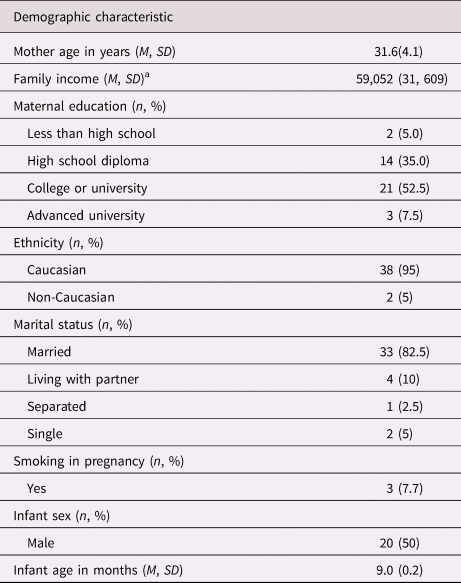
A sample of 40 healthy mothers (M age mother = 31.6 years, SD = 4.1) and their typically developing infants (M age infant = 9 months, SD = 0.22) was recruited from the Child Database in the Department of Psychology at McMaster University. The database contains the names of mothers who gave birth at the McMaster University Medical Centre and St. Joseph's Healthcare in Hamilton, Ontario, Canada and who consented to being contacted for future research studies. The sample was primarily Caucasian, 82% of the mothers were married, 53% were college educated, and 50% of the infants were female. All infants were born at term and experienced no complications of pregnancy, delivery, or the neonatal period. The demographic characteristics of the sample can be found in Table 1.
Sample demographics (N = 40)

a Income in Canadian dollars in 1998 when electroencephalography (EEG) data were collected, Median income of Canadian Families in 1998 was approximately $52,000 CAD (Statistics Canada, Reference Waters, West and Mendes2001)
Procedures
All mother–infant dyads were tested in the Child Emotion Laboratory at McMaster University. Upon arrival, mothers and infants were given 15–20 min to acclimatize to the laboratory setting. The study protocol was described and explained to the mothers and informed consent was obtained. Infants were then seated in a high-chair face-to-face with their mothers at an approximate distance of 24 inches for the duration of the protocol. Both mothers and their infants were simultaneously exposed to a resting state and two emotion-eliciting conditions (happy, fear) during which EEG data were collected. The first condition was a resting-state assessment. In the resting-state condition (which lasted 5 min, in keeping with standard resting-state EEG acquisition protocols (Allen, Coan, & Nazarian, Reference Allen, Coan and Nazarian2004)), mothers could interact with their infant but were encouraged to refrain from making larger, quick movements in order to minimize large EEG artifacts. Next, the dyad was exposed to two conditions during which musical pieces were played to elicit particular emotions. Frontal EEG asymmetry was examined during both conditions due to its sensitivity to both the emotional valence and intensity of stimuli (Coan & Allen, Reference Coan and Allen2004; Davidson, Reference Davidson2000; Diaz & Bell, Reference Diaz and Bell2012; Schmidt & Trainor, Reference Schmidt and Trainor2001). As in the resting-state condition, mothers and infants were permitted to interact, but mothers were again asked to refrain from making large movements.
Following the EEG assessment, EEG caps were removed and the mother and her infant were led to a playroom where the mother completed questionnaires assessing demographic and personality characteristics. A research assistant entertained the infant in the same room during this time. The mothers received a $20 gift certificate and their infants received an age appropriate toy for their participation. The University Research Ethics Board approved all study procedures.
Affective stimuli and emotion-eliciting conditions
The dyad was first exposed to a “happy condition” (calm, pleasant) (The Second Movement of Vivaldi's Spring) for 1 min followed by a “fear condition” (intense, unpleasant) (the Wolf excerpt from Peter and the Wolf by Prokofiev) for 1 min (reliable estimates of frontal EEG asymmetry can be derived from short time frames of 1 min in duration (Theall-Honey & Schmidt, Reference Theall-Honey and Schmidt2006)). These musical pieces have been previously shown to elicit happiness and fear in adults (Schmidt & Trainor, Reference Schmidt and Trainor2001) and positive and negative affect in infants of this age (Schmidt, Trainor, & Santesso, Reference Schmidt, Trainor and Santesso2003). If maternal resting-state asymmetry patterns (in mothers high in socially avoidant-related tendencies) were to influence the FA patterns of their infants, these mother-to-infant influence effects should be observed across emotion-eliciting contexts (i.e., infants should be impacted by their mothers and not the context). These conditions allowed for the examination of bidirectional mother–infant influences across emotional contexts that differed in both intensity and valence.
Simultaneous EEG data collection and reduction in mother–infant dyads
EEG data collection
Simultaneous, time-locked EEG data were acquired from mothers and their infants using two separate adult and infant Lycra® stretch caps (Electro-Cap Inc.). Both mother and infant EEG caps were placed in accordance with the International 10/20 Electrode Placement System. For both mothers and infants, EEG data were obtained from eight sites referenced to Cz: left and right mid-frontal (F3, F4), central (C3, C4), parietal (P3, P4), and occipital (O1, O2) brain regions. These sites represent the left and right anterior and posterior regions of the brain. To reduce the impedance of the electrodes, two research assistants gently abraded the surface of the scalp below each electrode using the blunt end of a cotton-tipped applicator and abrasive gel (Omni-Prep). Electrode impendences below <10 k ohms at each site and within 500 ohms between homologous sites for the mother and infant were considered acceptable. Electrolyte gel was applied at each electrode site to serve as a conductor. Each EEG channel was amplified by separate individual SA Instrumentation Bioamplifiers, with bandpass filters set from 0.1 (high pass) to 100 Hz (low pass). EEG data from each channel were digitized online at a 512 Hz sampling rate.
EEG data reduction and analyses
For both mother and infant, EEG data were scored visually for artifacts due to eye movements and blinks, as well as other motor movements using James Long Company (EEG Analysis Program, Caroga Lake, NY) analysis software. Data from all channels were removed if an artifact was observed in any one channel. Artifact-free data were converted into the frequency domain by discrete Fourier transform (DFT), with a Hanning window of 1 s and 50% segment overlap. For mothers, EEG power (microvolts squared (uV2)) was derived in the alpha (8–13 Hz) frequency range; and for infants, EEG power (uV2) was examined in the infant “alpha” frequency range (6–9 Hz; see Bell, Reference Bell2002.). To reduce skewness in the EEG power values, a natural log (ln) transformation was performed. Frontal EEG asymmetry was computed separately for the mother and infant using the natural log transformed difference between right and left frontal EEG power values [ln(right, F4 frontal power) minus ln(left, F3 frontal power)]. In total, 29 dyads had usable EEG data for both the mother and infant during the resting-state condition and during both the happy and fear conditions. Data were excluded if one member of the dyad had EEG power values exceeding 3 SD of the mean (n = 3 dyads), the father participated (n = 1), or a technical error/excessive noise occurred (n = 7). The dyads with and without useable EEG did not differ on any demographic measures (see Supplemental Table 1). Mean differences between FA assessed at baseline and during each of the conditions for mothers and infants are provided in Supplementary Table 2.
Maternal self-reported personality measures
Eysenck personality questionnaire-revised short form
The 48-item Eysenck Personality Questionnaire-Revised Short form (EPQ-RS) is designed to measure three dimensions of personality: (a) neuroticism – a predisposition to experience and express negative emotions such as anxiety; (b) extraversion – a predisposition for sociability and an enjoyment of novel experiences; and (c) psychoticism – linked to antisocial behavior. Mothers self-reported yes (1) or no (0) on each item of this scale. Sample items include: for neuroticism, “Are you a worrier?”; for extraversion, “Are you a talkative person?; and for psychoticism, “Do you enjoy co-operating with others?”. Scores are summed to derive totals for each subscale. The extraversion (12-items, Cronbach's α = 0.84) and neuroticism (12-items, α = 0.71) subscales were used in the composite measured described below.
Carver and White Behavioral Inhibition and Activation (BIS/BAS) scales
Dispositional tendencies of two motivational systems, behavioral inhibition (the withdrawn system) and the activation (approach system) were assessed using the 20-item Behavioral Inhibition System (BIS) scale /Behavioral Activation System (BAS) scale. Example items on the behavioral inhibition scale include (includes seven items, α = 0.80): “I worry about my mistakes,” and on the behavioral activation scale, “When I see an opportunity for something I like, I get excited right away.” Mothers self-reported the degree to which each item applied to them using a 4-point Likert scale (1 = very true of me to 4 = very false of me). Therefore, lower scores on the BIS scale indicate elevated levels of withdrawn-related behaviors in mothers, and higher scores on the BAS scale indicate greater behavioral activation. The BAS scale is further divided into three subscales, which include drive (four items, α = 0.82), reward responsiveness (five items, α = 0.75), and fun seeking (four items, α = 0.71).
Cheek and Buss Shyness and Sociability scale
The 10-item Cheek and Buss Shyness and Sociability scale contained the five highest load shyness (e.g., “I feel inhibited in social situations”) items (α = 0.93) from the original Cheek and Buss Shyness scale (Cheek & Buss, Reference Cheek and Buss1981), and the five items from the Cheek and Buss (Reference Cheek and Buss1981) sociability scale (e.g., “I like to be with people”) (α = 0.83). Mothers self-reported on how each question applied to them using a 5-point Likert scale that ranges from 0 = extremely uncharacteristic, to 4 = extremely characteristic.
Maternal social approach/avoidance composite variables
Data from the Eysenck Personality Questionnaire-Revised Short Form, the Carver and White BIS/BAS scales, and the Cheek and Buss Shyness and Sociability scale were used to create two conceptually and empirically derived composite variables: a social approach composite and a social avoidance composite. These composite scales were developed a priori to: (a) capture overall maternal approach and avoidant tendencies, and (b) to assess the characteristics in mothers that are likely to impact mother–infant physiological influence patterns. These scales were derived based on evidence that approach versus avoidance characteristics are independent dispositions, each comprising distinct behavioral, neural, affective, and personality profiles (Cacioppo, Gardner, & Bernston, Reference Cacioppo, Gardner and Bernston1999; Cheek & Buss, Reference Cheek and Buss1981; Schmidt & Fox, Reference Schmidt and Fox1995). Composite variables have been used previously in studies examining EEG asymmetry patterns in relation to emotions and behaviors in both mothers and infants (Atzaba-poria et al., Reference Atzaba-Poria, Deater-Deckard and Bell2017; Smith, Diaz, Day, & Bell, Reference Smith, Diaz, Day and Bell2016) and in studies aiming to comprehensively capture emotion regulatory characteristics in mothers with young children (Deater-Deckard, Li, & Bell, Reference Deater-Deckard, Li and Bell2015).
Maternal social avoidance composite
The social avoidance composite measure comprised the sum of the EPI neuroticism subscale, the Carver and White BIS, and the Cheek and Buss shyness subscale. Since lower scores on the BIS scale indicate elevated levels of behavioral inhibition, this scale was reversed. All scores were inter-correlated, and z scored before summing.
Maternal social approach composite
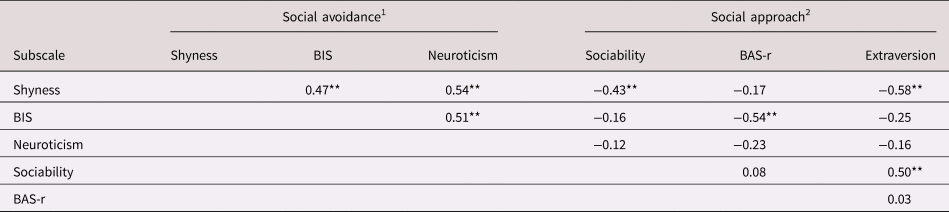
The social approach composite measure comprised the sum of EPI extraversion scale, the Carver and White Behavioral Activation Reward Sensitivity scale (BAS) and the Cheek and Buss sociability subscale. While the BAS reward sensitivity scale was not statistically linked to the other variables in the social approach composite measure (see Table 2), since evidence suggests that maternal reward sensitivity plays an important role in both maternal influences on the infant, and infant influences on the mother (Kim, Strathearn, & Swain, Reference Kim, Strathearn and Swain2016), we believed that it was important to include a maternal reward sensitivity component within this composite. Again, all scores were z scored before summing.
Correlations among subscale scores for each of the composite variables
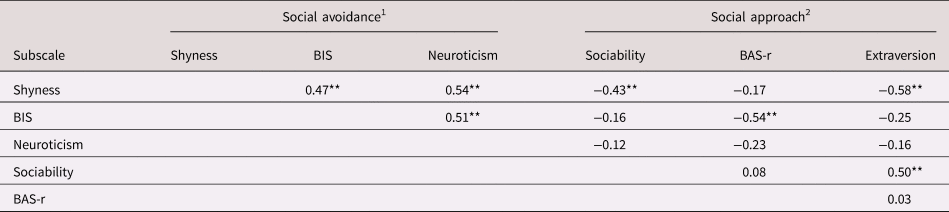
1 Social avoidance composite: combines scores on the shyness subscale [Cheek and Buss Shyness scale], behavioral inhibition (BIS) subscale (reversed) [Carver and White (BIS/BAS) scale], and neuroticism subscale [Eysenck Personality Inventory Revised Short Form])
2 Social approach composite: combines scores on the sociability subscale [Cheek and Buss Sociability scale), behavioral activation (BASr-reward sensitivity) subscale [Carver and White BIS/BAS Scale] and extraversion subscale [Eysenck Personality Inventory Revised Short Form])
Each composite score was grand-mean centered before inclusion in each model. Bivariate Pearson correlations between the subscales used in each composite measure are presented in Table 2. Finally, while the social approach and social avoidance composite measures were correlated (r = -.42, p < .05), the shared variance was 17%. Therefore, both scales appear to account for unique variance in maternal characteristics.
Data analyses
The actor–partner interdependence model (APIM) was used to examine: (a) relations between frontal EEG asymmetry patterns in mothers and infants, and (b) whether the maternal composites of social approach and social avoidance characteristics moderated these mother–infant frontal EEG asymmetry relations (Cook & Kenny, Reference Cook and Kenny2005; Garcia, Kenny, & Ledermann, Reference Garcia, Kenny and Ledermann2015). This model is considered a statistically and conceptually valid approach to assessing mother-to-infant and infant-to-mother effects (Bernard, Kashy, Levendosky, Bogat, & Lonstein, Reference Bernard, Kashy, Levendosky, Bogat and Lonstein2017), accounting for the potential interdependence of the data. Since mothers and their infants are not independent individuals, “the dyad” should be considered the unit of analysis rather than the individual (Cook & Kenny, Reference Cook and Kenny2005).
Prior to conducting analyses, the data were structured in a pairwise fashion (for an example of this data structure, see Figure 1 in Driscoll, Schatschneider, Mcginnity, & Modi, Reference Driscoll, Schatschneider, Mcginnity and Modi2012). This data structure allows for a single equation to be used to estimate actor (stability) and partner (influence) effects. Therefore, both the mother's resting-state FA and her infant's resting-state FA are considered independent variables in the model and are used to predict the FA values measured during the subsequent happy and fear emotion conditions in both mothers and infants. A distinguishing variable that denotes which data belong to the infant and which belong to the mother, is also used in the model (e.g., infants = −1; mothers = 1). Therefore, the APIM tests four effects: (a) actor effects (i.e., stability effects within individuals – the effect of both individuals’ resting-state FA on their own FA measured during the happy condition and then during the fear condition); (b) partner effects (i.e., influence effects – the influence of each individual's resting-state FA on their partner's FA measured during the happy and then fear conditions); (c) actor interaction (i.e., stability interaction – tests whether the FA of one member of the dyad is more stable from resting-state to the happy and then fear conditions relative to the other dyad member); (d) partner interaction (i.e., influence interaction – tests whether the FA of one dyad member has a stronger influence on the other dyad member from resting-state to the happy and then the fear condition [e.g., is the mother-to-infant effect stronger than the infant-to-mother effect]) (for a visual depiction of these effects, see Supplementary Figure 1). Finally, moderators can be added to the model to test whether actor and/or partner effects change depending on, for example, characteristics of the mother (Garcia et al., Reference Garcia, Kenny and Ledermann2015). Studies have examined mother–child physiological influence effects in the presence of moderator variables using a cohort of similar sample size (Thorson, West, & Mendes, Reference Thorson, West and Mendes2017). The APIM models used in Objectives 1 and 2 were analyzed in SPSS version 23.
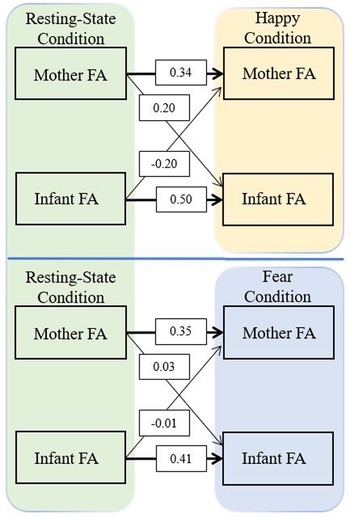
Resting-state frontal electroencephalography (EEG) asymmetry (FA) for both mothers and infants significantly predicted their own FA during the happy (top panel), and during the fear (bottom panel) conditions. Mothers FA did not predict infant FA, and infant FA did not predict mother FA. Bold lines indicate statistically significant effects.

Results
Objective 1: Testing the bidirectional effects of simultaneously measured frontal EEG asymmetry in mother–infant dyads
To assess the influence of one dyad member's frontal EEG asymmetry on the other dyad member, the partner (influence) effects and the partner (influence) interaction effects were examined. If the partner effect is significant, resting-state FA from both members of the dyad significantly influences their partner's FA measured during the happy and or fear condition. The partner interaction is used to test whether the partner effects differ between mothers and infants (i.e., does the mother's resting-state FA have a greater impact on her infant's FA measured during each condition, or does the infant's resting-state FA have a greater influence on their mother's FA during each condition?). There were no concurrent bivariate correlations in FA from mothers and infants at baseline (r = .002, p = .91), within the happy condition (r = −.22, p = .34) or within the fear condition (r = −.006, p = .97).
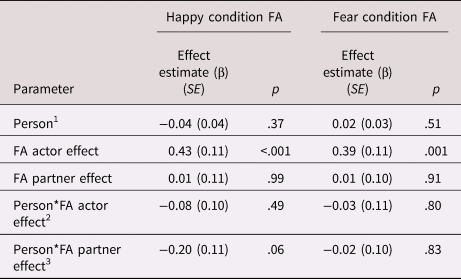
First, the partner (i.e., influence) effects of FA from resting state to the happy condition and resting state to the fear condition were examined. Only actor (i.e., stability) effects were statistically significant, suggesting that resting-state FA for both mother and infants was significantly linked to their own FA during the happy [B = 0.43 (0.11), p < .001] and fear [B = 0.39 (0.11), p < .001]. No partner effects were statistically significant, suggesting that the mother's resting-state FA did not predict their infant's FA during either emotion condition, and likewise, infants did not influence the mother's FA (see Table 3 for effect estimates, and Figure 1 for pathway effects). Finally, actor and partner interaction effects were not different between mothers and infants. Therefore, no bidirectional effects of mother–infant frontal EEG asymmetry were observed from resting state to emotion-eliciting conditions.
Relations between simultaneous mother–infant frontal electroencephalography (EEG) asymmetry (FA) from resting-state to each of the emotion-eliciting conditions.
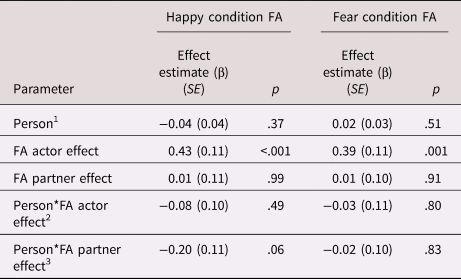
1 Mother or infant.
2 Actor (Stability) interaction.
3 Partner (Influence) interaction.
Objective 2: Examining the influence of maternal social approach and social avoidance characteristics on the bidirectional effects examined in Objective 1
We investigated whether certain maternal characteristics moderated the partner interactions (i.e., whether mothers’ resting-state physiology has a greater impact on infants’ physiology measured in the emotion-eliciting conditions, or if infants’ resting-state physiology had a greater impact on mothers’ physiology during the emotion-eliciting conditions depending on maternal social approach and social avoidance characteristics).
Maternal social avoidance composite
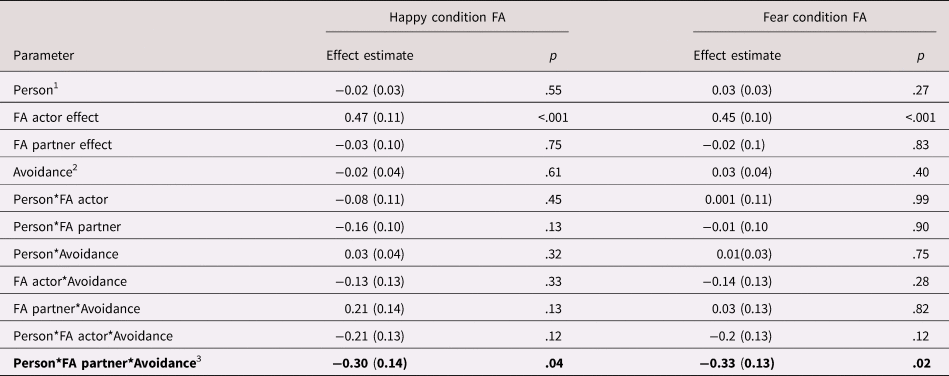
First, we tested the impact of the maternal social avoidance composite on the relations between mother and infant FA. These effects are summarized in Table 4.
Effect estimates for simultaneous mother and infant frontal electroencephalography (EEG) asymmetry (FA) from the resting-state condition to emotion-eliciting conditions (each condition moderated by maternal social avoidance composite)
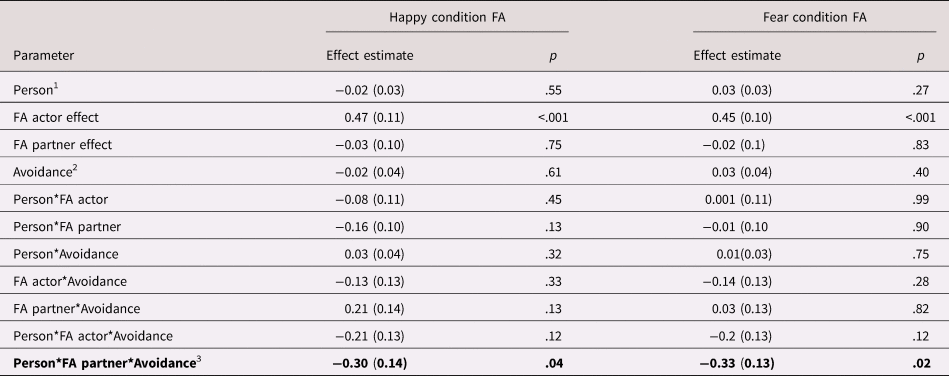
1 Mother or infant
2 Avoidance = Social avoidance composite score
3 This is the variable that tests Objective 2. This result shows that one person's resting-state FA has a significantly greater influence on the other person's FA during both the happy and fear conditions depending on the level of dispositional social avoidance in the mother.
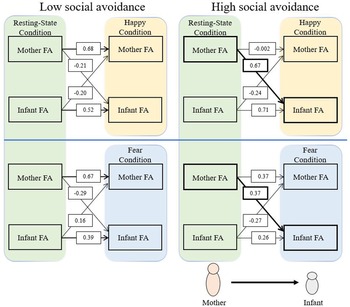
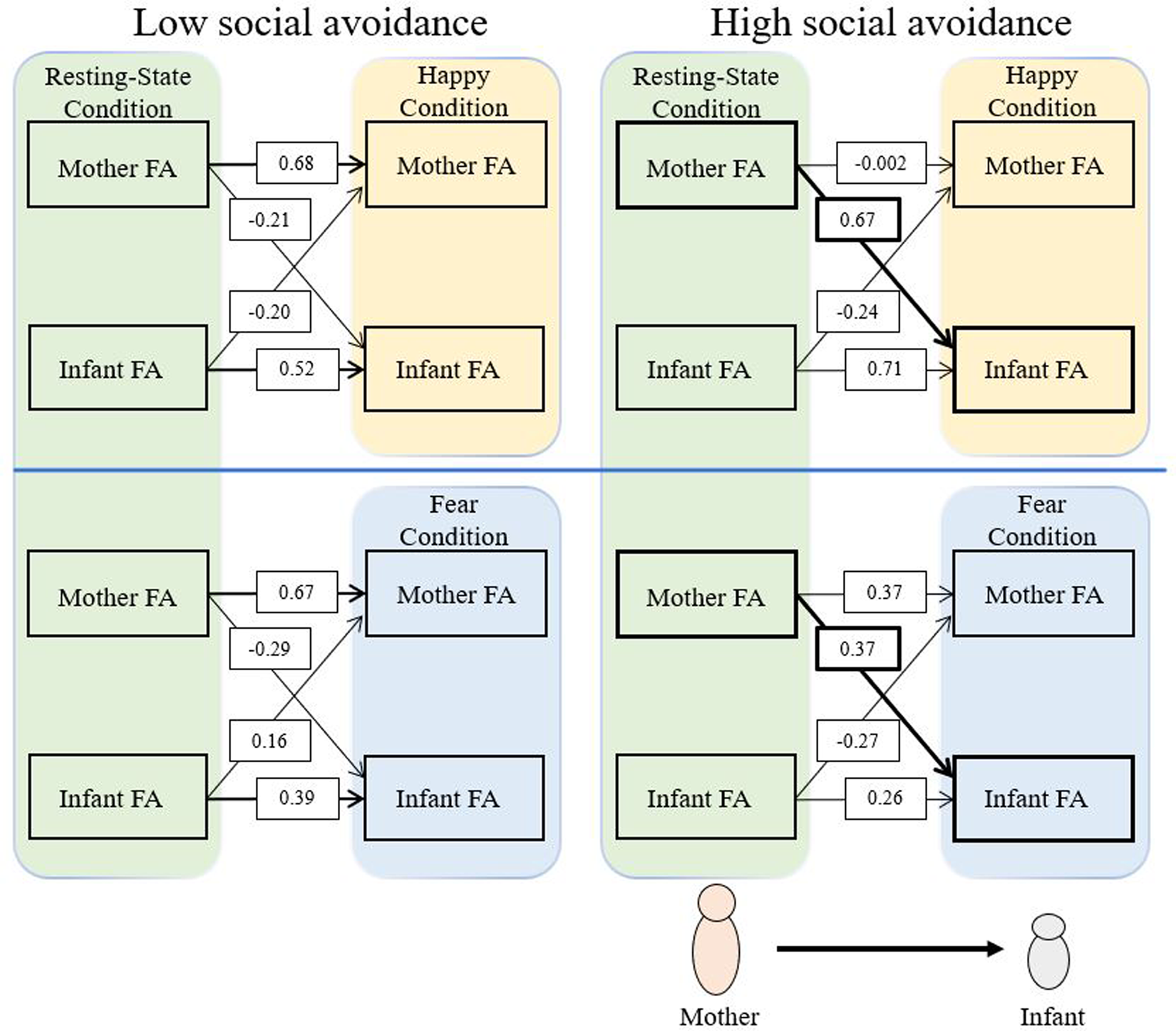
The analysis revealed a statistically significant three-way, Person × FA partner × Avoidance interaction for both the resting-state condition to happy condition [B = −0.30 (0.14), p = .04 and from resting state to the fear condition [B = −0.33 (0.13), p = .02]. Therefore, the next step was to determine which member of the dyad was primarily accounting for the interaction effect (i.e., depending on maternal social avoidance characteristics: does the mother have a greater influence on the infant, or does the infant have a greater influence on the mother?). A median split was used to dichotomize the moderator into low and high maternal social avoidance characteristics, allowing for the examination of the partner (influence) effects independently at each level of the moderator (maternal social avoidance). For both conditions, mothers scoring higher on the social avoidance composite variable appeared to account for the interaction effect (see Figure 2).
In mothers high in social avoidance characteristics, resting-state frontal electroencephalography (EEG) asymmetry (FA) significantly impacted their infant's FA during the happy and fear conditions. Bold lines indicate statistically significant effects.
Maternal social approach composite
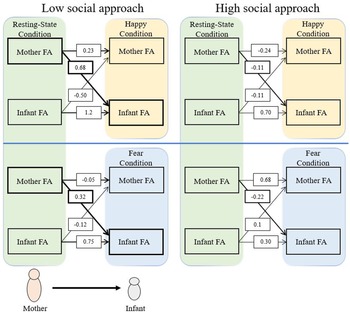
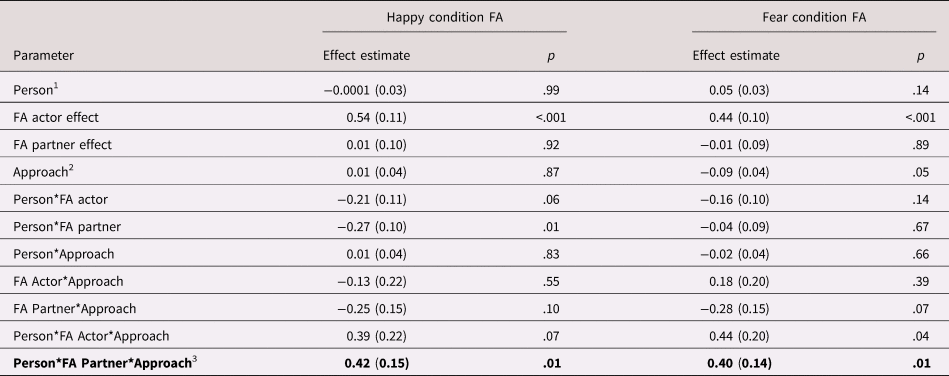
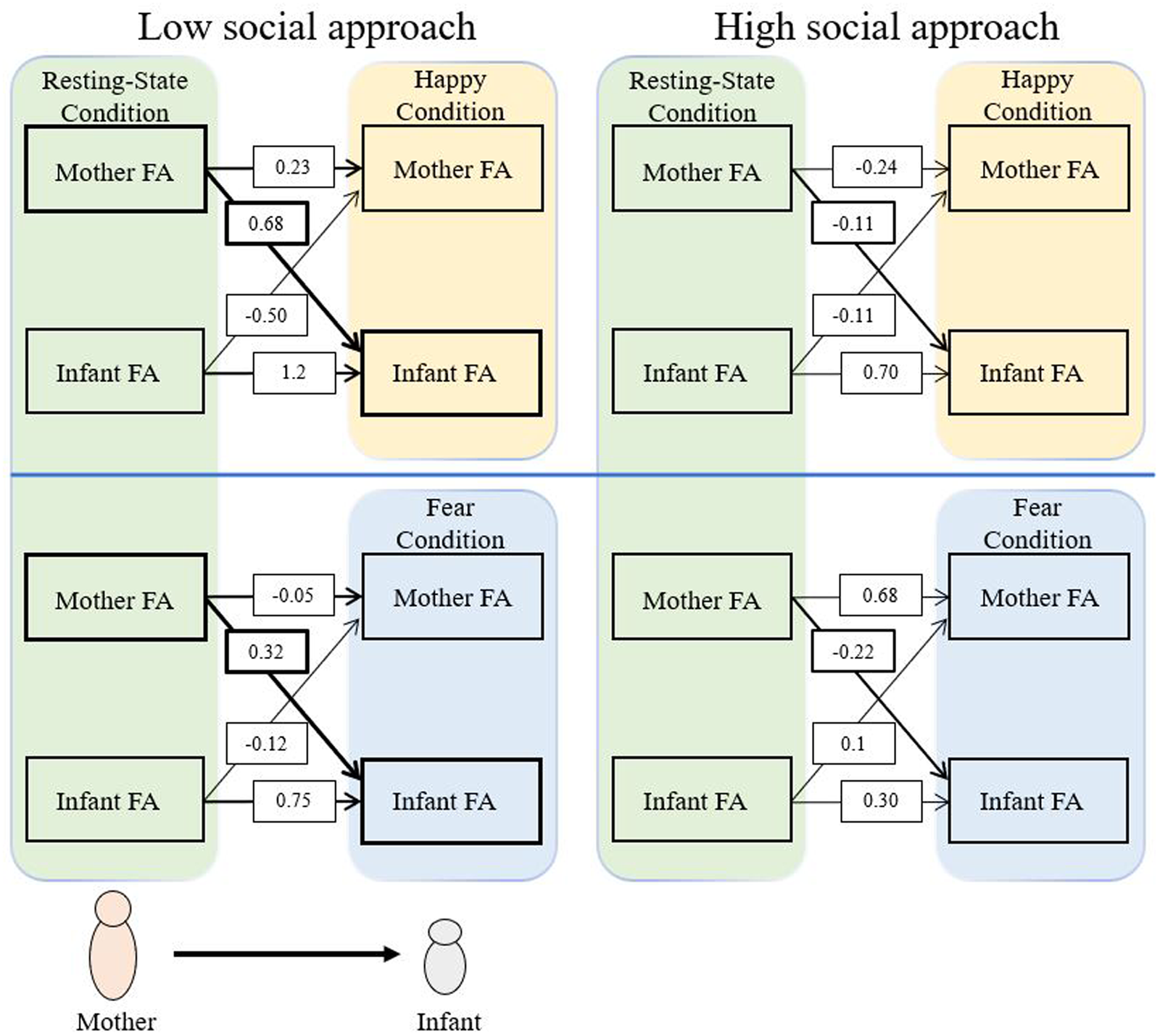
Next, the moderating effect of the maternal social approach composite variable was examined. Again, a statistically significant three-way Person × Influence × Maternal characteristic (social approach) interaction was observed for the happy condition [B = 0.42, (0.15), p = .01] and fear [B = 0.40(0.14), p = .01] (see Table 5). A median split was used to separate the maternal social approach composite into high and low levels. It was observed that resting FA in mothers low in approach behavior influenced their infant's FA during both the happy and fear conditions (Figure 3). Finally, since the variables used to comprise our approach and avoidance composite scores were correlated, we conducted a sensitivity analysis using a single overall approach + avoidance composite. This composite scale was calculated by reverse scoring the z scored social avoidance variables and adding them to the z scores social approach variables. Higher scores on this composite variable indicated greater social approach tendencies and lower scores indicated greater social avoidance tendencies. We again observed that resting frontal EEG asymmetry in mothers scoring at the “avoidance tendency” end of the composite influenced their infant's FA patterns during both happy and fear conditions (see Supplementary Table 3 and Supplementary Figure 2 for results).
In mothers low in social approach, resting-state frontal electroencephalography (EEG) asymmetry (FA) significantly impacted their infant's FA during the happy and fear conditions. Bold lines indicate statistically significant effects.
Effect estimates for simultaneous mother and infant frontal electroencephalography (EEG) asymmetry (FA) from the resting-state condition to the emotion-eliciting conditions moderated by maternal social approach composite
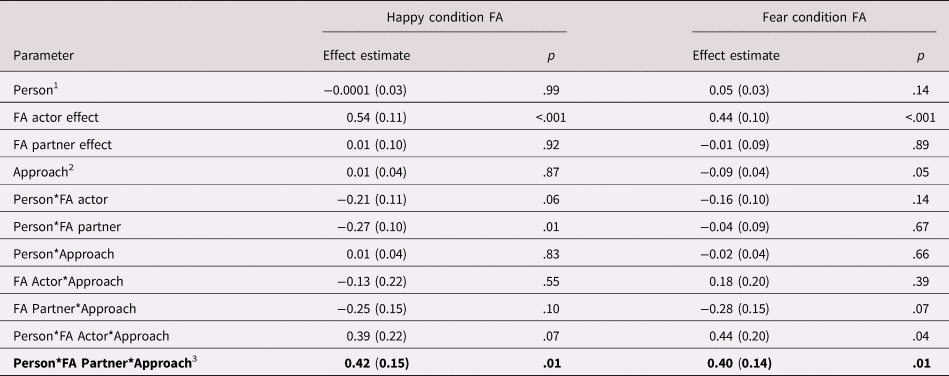
1 Distinguisher variable (Mother or infant)
2 Approach = Social approach composite score
3 This is the variable in the model that tests Objective 2. This result shows that one person's resting-state FA has a significantly greater influence on the other person's FA during both the happy and fear conditions depending on the level of dispositional social approach of the mother.
Discussion
This study examined the bidirectional mother–infant relationship in a cohort of healthy mother–infant dyads using simultaneously assessed frontal EEG alpha asymmetry, a reliable physiological marker of motivation and emotion at rest and during emotional processing. It is the first known study to use the APIM to examine frontal EEG asymmetry measures collected simultaneously in mother–infant dyads. Maternal FA patterns measured during a resting-state condition predicted infant FA patterns assessed during two subsequent emotions – happy and fear-eliciting conditions – but only in dyads led by mothers exhibiting relatively higher social avoidance and lower social approach characteristics. FA effects were positively associated: greater relative right maternal resting-state FA patterns predicted greater right relative FA in their infants during each emotion condition (and greater relative left maternal FA at rest predicted greater relative left FA in infants during each condition). By testing transactional models of development during a sensitive period of neurodevelopment in infants, and by considering the impact of individual differences in maternal characteristics known to impact Mother × Infant interactions, a potential mechanism was revealed by which mothers high in social avoidance characteristics may transfer affective and behavioral information to infants. This evidence sheds light on how these mothers may potentially impact the development of stable patterns of dysregulated emotion and behavior in their infants.
Previous studies have examined simultaneously assessed physiological relations in mother–infant dyads; however, these studies have largely examined mother–infant stress reactivity physiology using peripheral physiological measures (e.g., the hypothalamic–pituitary–adrenal axis and the autonomic nervous system) (Atkinson et al., Reference Atkinson, Gonzalez, Kashy, Santo Basile, Masellis, Pereira and Chisholm2013; Clauss, Byrd-Craven, Kennison, & Chua, Reference Clauss, Byrd-Craven, Kennison and Chua2018; Crockett, Holmes, Granger, & Lyons-Ruth, Reference Crockett, Holmes, Granger and Lyons-Ruth2013; Feldman, Reference Feldman2007; Hibel, Granger, Blair, & Cox, Reference Hibel, Granger, Blair and Cox2009; Hibel, Granger, Blair, & Finegood, Reference Hibel, Granger, Blair and Finegood2015; Laurent, Ablow, & Measelle, Reference Laurent, Ablow and Measelle2011; Ostlund, Measelle, Laurent, Conradt, & Ablow, Reference Ostlund, Measelle, Laurent, Conradt and Ablow2017). Interestingly, in most of these studies, physiological relations were stronger, or only detected after accounting for factors known to impact Mother × Infant interactions (e.g., postpartum depression, punitive parenting) (Atkinson et al., Reference Atkinson, Gonzalez, Kashy, Santo Basile, Masellis, Pereira and Chisholm2013; Clauss et al., Reference Clauss, Byrd-Craven, Kennison and Chua2018; Crockett et al., Reference Crockett, Holmes, Granger and Lyons-Ruth2013; Hibel et al., Reference Hibel, Granger, Blair and Cox2009; Laurent et al., Reference Laurent, Ablow and Measelle2011; Sethre-Hofsead, Stansbury, & Rice, Reference Sethre-Hofsead, Stansbury and Rice2002). These findings are consistent with the current study, since we also only observed a relation between mother–infant physiology after accounting for maternal characteristics. However, these studies did not utilize time-lagged models. Therefore, they were unable to assess whether the physiology of one member of the dyad predicted subsequent physiology of the other dyad member.
Other studies have used time-lagged approaches to examine whether a mother's physiology influences subsequently measured infant physiology and/or the effect of infant physiology on the physiology of their mother. In one study, maternal salivary cortisol significantly predicted subsequent infant cortisol across a maternal separation task, but infants did not influence mothers (Bernard et al., Reference Bernard, Kashy, Levendosky, Bogat and Lonstein2017). However, in two others, cortisol from both mothers and infants predicted their partner's subsequently assessed cortisol (Hendrix, Stowe, Newport, & Brennan, Reference Hendrix, Stowe, Newport and Brennan2018; Nofech-Mozes, Jamieson, Gonzalez, & Atkinson, Reference Nofech-Mozes, Jamieson, Gonzalez and Atkinson2018). Finally, in two experimental studies, mothers who were randomly assigned to participate in a task designed to increase sympathetic nervous system (SNS) activity subsequently influenced increases in infant sympathetic nervous system activity when the pair were reunited. This evidence suggests that during Mother ×Infant interactions, the mother's physiology can influence infant physiology (Waters, West, & Mendes, Reference Waters, West and Mendes2014; Waters, West, Karnilowicz, & Mendes, Reference Waters, West, Karnilowicz and Mendes2017). However, these previous studies have been limited to investigations of the relation between peripheral measures (e.g., mother–infant hypothalamic–pituitary–adrenal axis) and mother–infant autonomic nervous system activity. By investigating central measures and relations between mother–infant EEG asymmetry patterns, the present study extends prior work by moving beyond examinations of stress physiology to central systems that underly approach/avoidance motivational systems as well as positive/negative valence systems instantiated in the brain in Mother × Infant interactions. Therefore, investigating central systems could shed new light on the understanding of the development of more stable motivation and emotion characteristics instantiated in the brain that are known to affect multiple domains of adaptive functioning in an individual's life (e.g., social, emotional, occupational etc.).
Although there has been an increased interest in examining relations in mother–infant physiological systems, the vast majority of research examining the bidirectional mother–infant relationship has utilized observational measures of behavior. Results from the current study also appear to be consistent with these studies and extend them to brain-based measures. Dyads led by mothers exhibiting social avoidance-related behaviors have been observed to develop a more rigid, inflexible relationship with their infants characterized by a greater frequency of negative affect in both mothers and infants (Field, Reference Field1992; Tronick & Reck, Reference Tronick and Reck2009). Infants with withdrawn caregivers appear to learn to minimize engagement with the caregiver to maintain proximity, which is thought to increase the likelihood of developing an avoidant behavioral style in infants (Tronick & Beeghly, Reference Tronick and Beeghly2011) and its adverse long-term sequelae.
While elevated levels of withdrawn characteristics might explain our findings, it is important to acknowledge that elevated anxious behaviors could be also present in mothers scoring higher on the composite social avoidance variable. Evidence suggests that anxious mothers are more likely to display more intrusive parenting behaviors, which can reduce the infant's ability to explore their environments and stunt the development of autonomous exploratory behavior by infants (Granat, Gadassi, Gilboa-Schechtman, & Feldman, Reference Granat, Gadassi, Gilboa-Schechtman and Feldman2016; Stein et al., Reference Stein, Craske, Lehtonen, Harvey, Savage-McGlynn, Davies and Goodwin2012). There is also evidence that socially anxious parents may influence patterns of frontal brain activity in their children (e.g., Campbell et al., Reference Campbell, Schmidt, Santesso, Van Ameringen, Mancini and Oakman2007; Miskovic et al., Reference Miskovic, Campbell, Santesso, Van Ameringen, Mancini and Schmidt2011). Therefore, inflexible maternal FA across the resting-state condition may influence similar inflexible FA patterns in their infants during each emotion-eliciting condition. This may reflect a potential mechanism through which withdrawn, avoidant behaviors are transmitted from mother to infant; and how this inflexible, rigid dyadic interaction is developed and maintained in avoidant mothers and their infants.
The biobehavioral mechanisms that explain why maternal FA influences infant FA in dyads led by mothers with high avoidance characteristics are not known. However, evidence examining infant brain development in the context of Mother × Infant interactions might help to explain our findings. The infant brain gradually organizes maternal sensory information into concepts which then shape how the infant engages with their environment (Atzil et al., Reference Atzil, Gao, Fradkin and Barrett2018). Therefore, over time, the affect and behaviors of socially withdrawn mothers could influence the development of consistently withdrawn, avoidant infant responses to environmental stimuli (Tronick & Beeghly, Reference Tronick and Beeghly2011). As result, a mother's resting-state FA patterns might influence her infant's FA patterns in response to each emotion-eliciting context. This may be mediated by a mother-to-infant transmission of hyperactivation within brain regions that underly attention to threat, social anxiety, and behavioral inhibition (Miskovic & Schmidt, Reference Miskovic and Schmidt2012). For example, elevated activity in the amygdala over the course of the resting state in socially avoidant mothers may be transmitted to infants, resulting in subsequent hyperactivation of the amygdala in infants across contexts (e.g., during both emotion-eliciting conditions). In the context of infant emotion and behavioral development, given that the infant brain is thought to be more plastic than the adult maternal brain, this mechanism could explain how avoidant mothers shape the development of social avoidance and behavioral inhibition networks in their infants, which increases the likelihood that these infants develop stable, withdrawn, avoidant patterns of behavior in response to multiple contexts.
While the effects of maternal FA on subsequent infant FA in dyads led by mothers high in social avoidance/low in social approach characteristics were observed, no influence effects of FA were observed in dyads led by mothers who were low in social avoidance/high in social approach characteristics. Evidence from behavioral studies suggests that these dyads may be more flexible – exhibiting a greater ability to alter behaviors in response to affective and behavioral changes in their partners (Granat et al., Reference Granat, Gadassi, Gilboa-Schechtman and Feldman2016; Tronick & Beeghly, Reference Tronick and Beeghly2011). Adaptive Mother × Infant interactions are characterized by a constant matching and mis-matching of emotions and behaviors (Tronick & Reck, Reference Tronick and Reck2009). As result, this greater variability in affect and behavior might be driven in part by changes in FA in both mothers and infants as pairs work together to adjust to one another. Therefore, comparing a single, averaged measure of maternal resting-state FA to infant FA patterns averaged across each task might have made it possible to capture rigid, inflexible links in dyads led by mothers with high avoidant tendencies , but might have masked more dynamic ways in which mothers with high approach behaviors influence their infants. Taken together, it is possible that maternal characteristics might alter the time scale on which mothers influence their infants. Further, infants of mothers who display greater approach-related behaviors also appear to be more open to environmental stimuli. These infants exhibit physiological systems designed to take in more information from their environment (Perry, Dollar, Calkins, & Bell, Reference Perry, Dollar, Calkins and Bell2018). Therefore, we speculate that mothers with higher approach tendencies may provide a more secure base enabling their infant to explore the environment, but are also capable of quickly and dynamically regulating when needed. Accordingly, over the course of the emotion-eliciting conditions, stimuli from both the mother and from each of the conditions may both influence physiology in these infants relative to the infants of the mothers with greater levels of avoidance-related behaviors. The overall averaged FA score across the resting state and each condition may not have captured this behavioral variability; thus, no influence effects were observed in these dyads led by mothers high in approach and low in avoidance characteristics.
Limitations
This research should be interpreted in the context of the following limitations. First, for both mothers and infants, a single asymmetry score was calculated for the resting state and for each of the emotion conditions; therefore, it was not possible to assess instantaneous changes or potential nonlinear patterns and synchrony in FA within mother–infant dyads. This may have contributed to the null infant-to-mother effects since subtle infant cues that could affect maternal physiology may have been present, but could not be detected. Second, self-report measures were used to assess maternal personality characteristics, limiting reliability. Further, other maternal characteristics not measured in the current study, such as maternal sensitivity, may have moderated the infant-to-mother effects. Third, this study did not assess infants’ temperament/personality. Future studies should include measures of infant temperament to determine whether there are particular infant traits that increase the likelihood of observing infant-to-mother effects. Fourth, it is also important to note that while predictive relations were examined in these models, the study was cross-sectional in nature and caution needs to be exercised around implying any issues of causality. Fifth, because EEG activity was recorded at the surface of the scalp, we could not confirm the source and origins of the EEG signal. Finally, since infants are genetically related to mothers, we may be in part reporting on a shared gene–environment correlation. A genetic predisposition to exhibit withdrawal-related tendencies across contexts might also explain our findings.
Future studies should use measures of cortical activity to assess stability and influence effects as well as synchrony/attunement effects using dynamic moment-to-moment changes in the physiology within and between conditions to elucidate more subtle mother–infant physiological relationships. This fine-grained approach would allow for the examination of dynamic effects in mother–infant relationships. Studies should also examine whether the influence effects observed in the current study predict behavioral/emotional outcomes later in infancy and into childhood and whether measures of the infants’ temperament influence the mothers’ physiology and behavior. Future studies should also consider using digital recordings of mother–infant behavior to examine the impact of observed behavior on mother–infant physiological influence patterns. This might enable us to determine whether mother-to-infant EEG influence effects were driven by maternal characteristics assessed via composite measures, or by ongoing maternal behaviors during the emotion-eliciting conditions. Factor analytic approaches could also be used in future studies to tease apart unique variance in maternal and infant characteristics and examine their impact on physiological influence patterns in mother–infant dyads. Examining state versus trait-related effects on mother–infant physiological influence patterns could also be an important objective for future investigations. Researchers could acquire resting-state FA data across multiple days, then assess whether infant FA patterns in response to emotion-eliciting conditions are influenced by maternal resting-state FA measured immediately prior to the emotion-eliciting tasks versus those measured on a different day. Finally, whether these FA patterns change following behavior interventions in mothers also should be investigated.
Conclusion and implications
Bidirectional Mother × Infant interactions have long-term implications for infant development across a range of domains. However, the vast majority of evidence examining transactional models of development have utilized assessments of observed behavior. Examining the brain activity patterns underlying these interactions could provide a method to understand how important behavioral and affective information is transmitted within mother–infant dyads during this important period of development. . In addition, examining brain measures allows for the examination of subtle effects that may not be captured by behavioral coding protocols and/or cannot not be detected because of the developmental age (i.e., preverbal infants) or if the behaviors are masked (i.e., in older individuals). Using a well-validated biomarker of motivation and emotion processes measured simultaneously in a typically developing sample of infants and their mothers, this study observed that the brain activity of mothers with high social avoidance and low social approach personality characteristics appeared to impact the brain activity of their infants. This evidence suggests that FA patterns may play some role in the transfer of behavioral and affective information from mother to infant, and could underlie the development of stable traits in these infants across the life span that are predictive of emotional well-being and emotional problems.
Supplementary Material
The supplementary material for this article can be found at https://doi.org/10.1017/S0954579420001558
Acknowledgment
The authors wish to thank the mothers and their infants for their participation.
Funding Statement
This research was supported by operating grants from the Natural Sciences and Engineering Research Council of Canada (NSERC) and the Social Science and Humanities Research Council of Canada (SSHRC) awarded to LAS and a Vanier Graduate Scholarship awarded to JEK.
Conflicts of Interest
None