Nearly all patients with single ventricle congenital heart disease undergo a cardiac catheterisation prior to creation of a superior cavopulmonary connection and the systemic ventricular end-diastolic pressure is an important physiologic variable measured at that procedure. In a cohort of patients with hypoplastic left heart syndrome, Aiyagari et al reported the impact of haemodynamic data prior to the creation of a superior cavopulmonary anastamosis on 12 month outcomes in the Single Ventricle Reconstruction trial and showed that a higher systemic ventricular end-diastolic pressure was associated with worse 12-month transplant free survival.Reference Aiyagari, Rhodes and Shrader1 However, patient factors that are associated with an elevated systemic ventricular end-diastolic pressure prior to creation of a superior cavopulmonary anastomosis have not been clearly identified and little is known about its medium-term prognostic significance. At our institution, the superior cavopulmonary connection is established with a bidirectional Glenn operation in all patients. In a cohort of patients with various types of single ventricle congenital heart disease undergoing the bidirectional Glenn operation operation, we aimed to identify patient variables that are associated with the pre-bidirectional Glenn operation systemic ventricular end-diastolic pressure and to evaluate the medium-term prognostic significance of the pre-bidirectional Glenn operation systemic ventricular end-diastolic pressure.
Material and methods
Approval for the study was obtained from the Atrium Health Institutional Review Board. All patients with single ventricle congenital heart disease who underwent superior cavopulmonary connection at our centre between 1, 2007 and 3, 2017 were retrospectively identified. All underwent bidirectional Glenn operation operation. All patients had undergone a pre-operative cardiac catheterisation. The medical record was reviewed and various demographic, clinical, surgical, catheterisation and echocardiographic patient variables were extracted. All cardiac catheterisations were performed under general anesthesia and were performed in standard fashion at the discretion of the interventional cardiologist. Typically, patients received an inspired oxygen of 21% during catheterisation. Catheterisation-based variables were extracted from the dictated catheterisation reports. For echocardiographic variables, the most recent echocardiogram prior to bidirectional Glenn operation operation was identified and the report reviewed. The degree of systemic atrioventricular valve insufficiency and the degree of systemic semilunar valve insufficiency were extracted from the report. Based on the report’s description, for both of these variables, patients were categorised as having either trivial to mild insufficiency or moderate or greater insufficiency. The report’s description of systemic ventricular systolic function was also reviewed and patients were categorised as having normal systolic function or decreased systolic function based on the report’s description. For each patient, the immediate post-operative course after bidirectional Glenn operation operation was reviewed and variables extracted including death, total length of hospital stay, and need for reoperation or catheterisation within 30 days of the operation.
At the time of the study, some patients had undergone Fontan operation. All of these patients had undergone pre-Fontan catheterisation. For these patients, catheterisation-based data from the pre-Fontan catheterisation was extracted. The pre-Fontan catheterisations were all performed under general anesthesia in standard fashion at the discretion of the interventional cardiologist. These catheterisations are typically performed with an inspired oxygen of 21%. Also, the immediate post-Fontan course was reviewed variables extracted from the chart including death, total length of hospital stay, and need for reoperation or catheterisation within 30 days of the operation. Finally, for this subgroup of patients, the most recent clinical encounter was reviewed and, based on this review, it was determined if the patient was alive, had undergone heart transplant or listing for heart transplant, or had any heart failure symptoms noted at most recent follow up visit.
Study data were collected and managed using REDCap electronic data capture tools hosted at Atrium Health.Reference Harris, Taylor, Thielke, Payne, Gonzalez and Conde2 Once finalised, the data were imported to SAS for statistical analysis.3
Statistical analysis
Descriptive statistics were calculated for all variables, including means and standard deviations for normally distributed variables, medians and interquartile ranges for continuous but non-normal data, and the chi-square test for categorical variables. Univariate and multivariate analyses were performed to identify associations between patient variables and pre-bidirectional Glenn operation systemic ventricular end-diastolic pressure. Univariate analyses were performed using simple linear regression with pre-bidirectional Glenn operation systemic ventricular end-diastolic pressure as the dependent variable. Standardised beta coefficients, along with their p-values, were calculated to compare the strength of the effect of each independent variable on pre-bidirectional Glenn operation systemic ventricular end-diastolic pressure. The multivariate model for pre-bidirectional Glenn operation systemic ventricular end-diastolic pressure was attained using stepwise linear regression with entry and stay significance levels both set at 0.15. Independent variables included in the initial model were selected based on the results of the univariate analyses (i.e., p < 0.1). Unstandardised beta coefficients, along with their 95% confidence intervals and p-values, are reported for independent variables in the final model.
For patients who had undergone a Fontan operation at the time of this study, univariate analyses were conducted to identify associations between pre-bidirectional Glenn operation systemic ventricular end-diastolic pressure and relevant post-Fontan outcomes. For consistency with the above-described analyses and to allow comparability of effect sizes, simple linear regression was performed using pre-bidirectional Glenn operation systemic ventricular end-diastolic pressure as the dependent variable, with standardised beta coefficients calculated for each independent variable.
A cut-off value of pre-bidirectional Glenn operation systemic ventricular end-diastolic pressure for death, transplantation, or listing for transplant at most recent follow up after the Fontan operation was identified using the Youden Index (J), which is the maximum potential of effectiveness of a diagnostic test, and is defined as maximum of the quantity (sensitivity + specificity − 1).Reference Youden4 J was calculated from a receiver operating characteristic (ROC) analysis generated by a logistic regression model that included death (yes/no) as the dependent variable and pre-Stage 2 systemic ventricular end-diastolic pressure as the sole independent variable.
All statistical analyses were performed using SAS Enterprise Guide 7.1 (SAS Institute Inc., Cary, NC).
Results
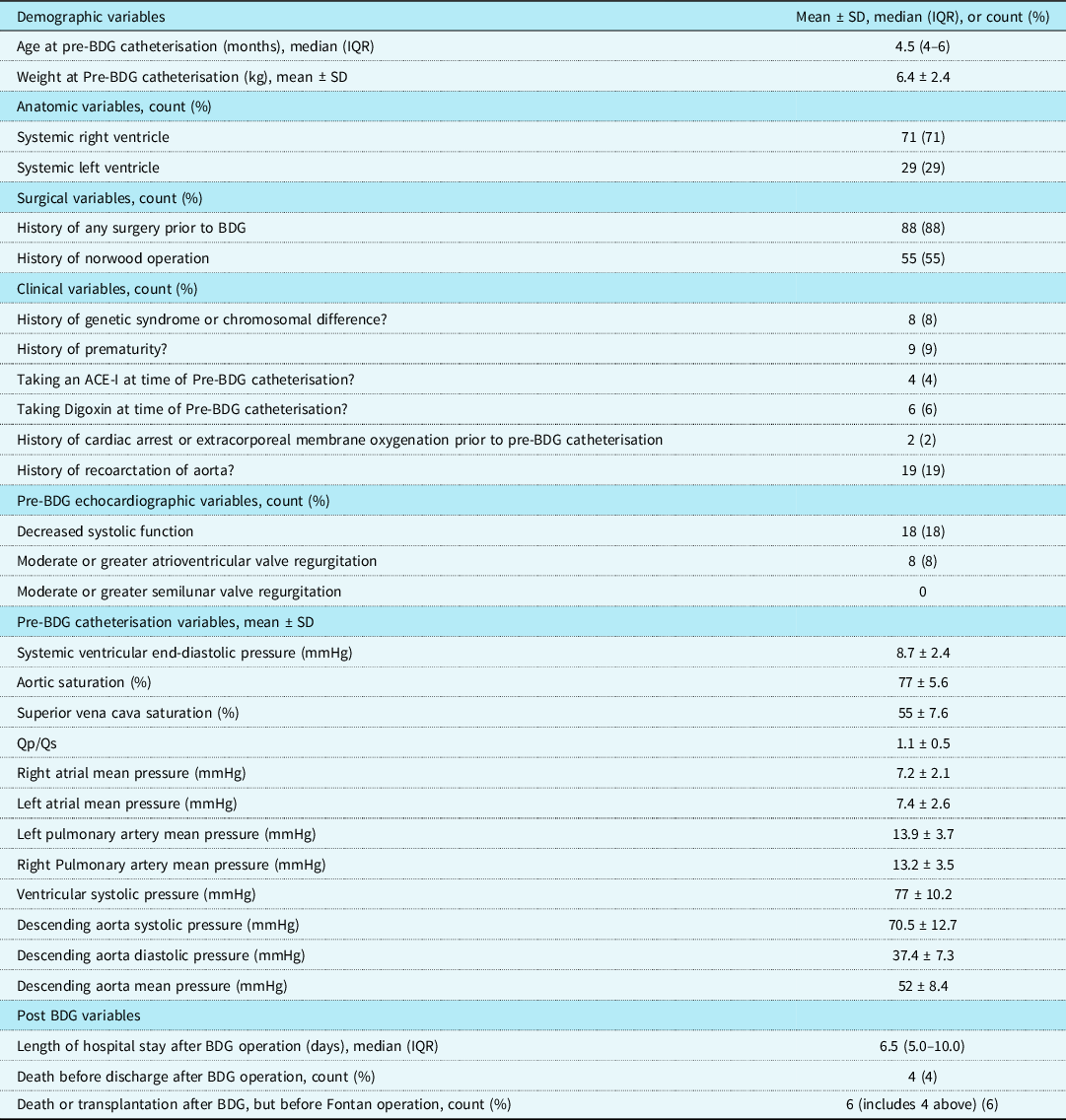
Table 1 shows the baseline characteristics for the 100 patients that were included in the cohort. The median age at pre-bidirectional Glenn operation catheterisation was 4.5 months (IQR 4–6 months). Of the 100, 71% had a systemic right ventricle and 55% had previously undergone Norwood operation. Various types of congenital heart disease were represented; the most common type with a systemic right ventricle was hypoplastic left heart syndrome or a related variant (53%), while the most common types with systemic left ventricle were tricuspid atresia (12%) and double inlet left ventricle (5%). Only 18% had decreased ventricular shortening and 8% had moderate or great atrioventricular valve regurgitation. At pre-bidirectional Glenn operation catheterisation, the mean aortic saturation was 77 ± 5.6% and mean descending aorta systolic pressure was 70.5 g ± 12.7 mmHg. For the entire cohort, the mean pre-bidirectional Glenn operation systemic ventricular end-diastolic pressure was 8.7 ± 2.4 mmHg. Those with a systemic right ventricle had a significantly higher pre-Stage 2 systemic ventricular end-diastolic pressure compared to those with a systemic left ventricle (9.1 ± 2.1 mmHg versus 7.7 ± 2.7 mmHg, p < 0.01).
Baseline characteristics of 100 patients with single ventricle heart disease undergoing bidirectional Glenn (BDG) operation

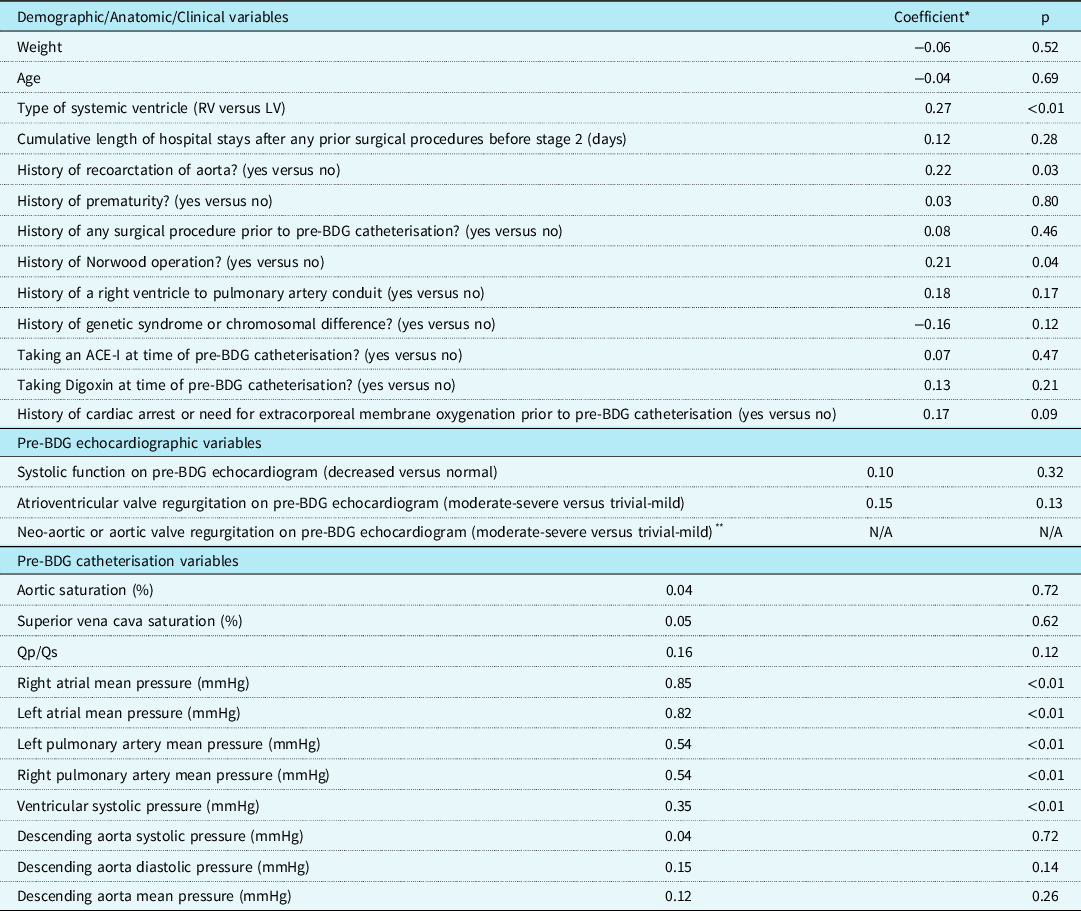
The results of simple linear regression analysis of the relationship between patient variables and pre-bidirectional Glenn operation systemic ventricular end-diastolic pressure are shown in Table 2. Pre-bidirectional Glenn operation systemic ventricular end-diastolic pressure was positively associated with the presence of a systemic right ventricle (p < 0.01), a history of recoarctation of the aorta (0.03), and a history of Norwood operation (0.04). As expected, pre-bidirectional Glenn operation mean right (p < 0.01) and left (p < 0.01) atrial pressures and mean pulmonary artery pressures (p < 0.01) were positively associated with systemic ventricular end-diastolic pressure. In addition, pre-bidirectional Glenn operation systemic ventricular systolic pressure was also positively associated with the systemic ventricular end-diastolic pressure (p < 0.01).
Univariate analysis of relationship between pre-bidirectional Glenn (BDG) systemic ventricular end-diastolic pressure and patient variables

* Standardised beta coefficient for simple linear regression with dependent variable pre-BDG systemic ventricular end-diastolic pressure.
** All patients had trivial-mild values for semilunar valve regurgitation on pre-BDG echocardiogram, so regression estimates are not available.
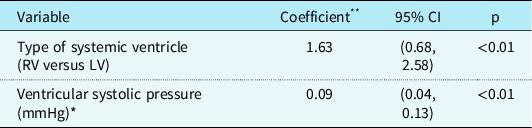
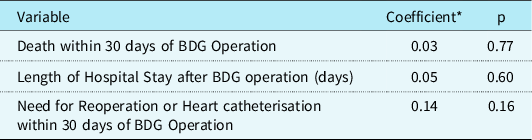
Table 3 shows the results of a stepwise linear regression of baseline variables on pre-bidirectional Glenn operation systemic ventricular end-diastolic pressure. The initial model included independent variables with p-values less than 0.10 in univariate analyses: type of systemic ventricle, history of recoarctation of aorta, history of Norwood operation, history of cardiac arrest or need for extracorporeal membrane oxygenation prior to pre-bidirectional Glenn operation catheterisation, and ventricular systolic pressure. The final model included only the presence of a systemic right ventricle and ventricular systolic pressure, both of which were positively associated with pre-bidirectional Glenn operation systemic ventricular end-diastolic pressure (p < 0.01 for each). Pre-bidirectional Glenn operation systemic ventricular end-diastolic pressure was not associated with important post-bidirectional Glenn operation outcomes as summarised in Table 4.
Results of stepwise linear regression of pre-bidirectional Glenn (BDG) systemic ventricular end-diastolic pressure on patient variables

* Initial model included: type of systemic ventricle, history of recoarctation of aorta, history of Norwood operation, history of cardiac arrest or need for extracorporeal membrane oxygenation prior to pre-BDG catheterisation, and ventricular systolic pressure.
** Coefficients are not standardised.
Univariate analysis of relationship between pre-bidirectional Glenn (BDG) systemic ventricular end-diastolic pressure and outcomes after the BDG operation

* Standardised beta coefficient for simple linear regression with dependent variable pre-BDG systemic ventricular end-diastolic pressure.
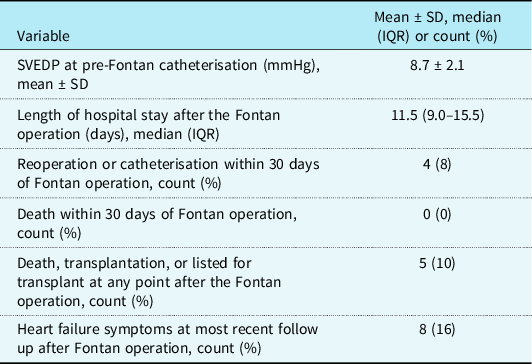
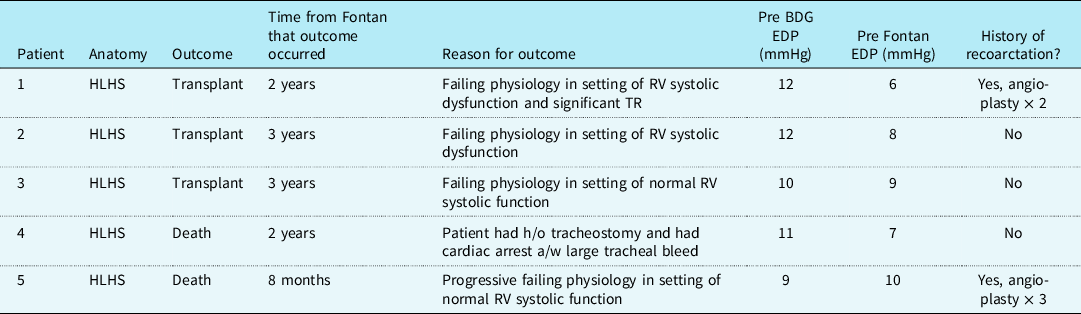
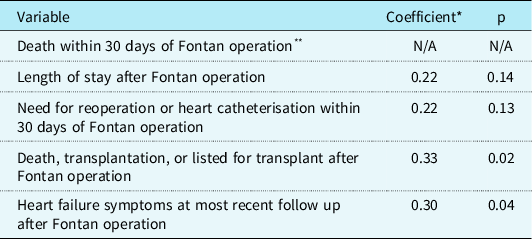
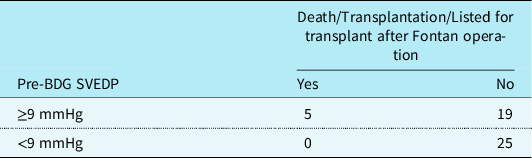
At the time of the study, 49 patients had undergone Fontan operation. All underwent extracardiac Fontan operation. Table 5 shows characteristics of these 49 patients. The mean systemic ventricular end-diastolic pressure at pre-Fontan catheterisation was 8.7 mmHg ± 5.6. At follow up after Fontan operation (mean 5.2 ± 1.3 years), five patients (10%) had experienced death, heart transplantation, or were listed for transplant. All five of these patients had hypoplastic left heart syndrome and three had undergone heart transplantation and two had died. The characteristics of these patients are described in Table 6. Among these 49 patients who had undergone Fontan operation, pre-bidirectional Glenn operation systemic ventricular end-diastolic pressure was positively associated with the composite outcome of death, heart transplantation, or listed for heart transplant and was positively associated with the presence of heart failure symptoms at most recent follow up (Table 7). Using the Youden Index (J), a pre-bidirectional Glenn operation systemic ventricular end-diastolic pressure of 9 mmHg was identified as the best cutoff for discriminating patients who experienced death, heart transplantation, or were listed for transplant at most recent follow up after the Fontan operation (Table 8). The sensitivity, specificity, positive predictive value, and negative predictive value are reported below Table 8. Notably, of the 25 patients with a pre-bidirectional Glenn operation systemic ventricular end-diastolic pressure < 9 mmHg, none had experienced death, heart transplantation, or were listed for transplant at most recent follow up (negative predictive value = 100%, 95% CI 87–100%).
Characteristics of 49 patients who had undergone Fontan operation at the time of the study.

Characteristics of the five patients who experienced death, heart transplantation or were listed for transplant at any point after Fontan operation amongst the subgroup of 49 patents in the cohort who had undergone Fontan operation at the time of the study

a/w = associated with, BDG = bidirectional Glenn, EDP = end diastolic pressure, HLHS = hypoplastic left heart syndrome, h/o = history of, RV = right ventricle.
Univariate analysis of relationship between pre-bidirectional Glenn (BDG) systemic ventricular end-diastolic pressure and outcomes after the Fontan operation in the 49 patients who had undergone Fontan operation at the time of the study

* Standardised beta coefficient for simple linear regression with dependent variable pre-Stage 2 systemic ventricular end-diastolic pressure.
** None of the patients died within 30 days of Fontan operation so regression estimates are not available.
Relationship between pre-bidirectional Glenn (BDG) systemic ventricular end-diastolic pressure and a composite outcome at medium-term follow up in the 49 patients who had undergone Fontan operation at the time of the study

Diagnostic test characteristics (95% CI): Sensitivity 100% (48%, 100%), Specificity 57% (41%, 72%), Positive predictive value 21% (5%, 37%), Negative predictive value 100% (87%, 100%).
Of note, the pre-bidirectional Glenn operation systemic ventricular end-diastolic pressure was not significantly associated with the pre-Fontan systemic ventricular end-diastolic pressure (p = 0.45) amongst the 49 patients who had undergone Fontan operation. Additionally, there were no associations between pre-Fontan systemic ventricular end-diastolic pressure and length of stay after Fontan operation (coeff −0.03, p = 0.85), the compositive outcome of death, heart transplantation, or listed for transplant at any point after Fontan operation (coeff −0.1, p = 0.49), or the presence of heart failure symptoms at follow up after the Fontan operation (coeff −0.1, p = 0.48).
Discussion
We describe a cohort of patients with single ventricle congenital heart disease undergoing a bidirectional Glenn operation operation and attempt to identify patient variables that are associated with pre-bidirectional Glenn operation systemic ventricular end-diastolic pressure and to understand the prognostic significance of pre-bidirectional Glenn operation systemic ventricular end-diastolic pressure. On multivariate analysis, pre-bidirectional Glenn operation systemic ventricular end-diastolic pressure was associated with the presence of a systemic right ventricle and with ventricular systolic pressure. Pre-bidirectional Glenn operation systemic ventricular end-diastolic pressure was not associated with post-bidirectional Glenn operation outcomes, but was associated with medium-term outcomes after the Fontan operation. However, this association should be interpreted with caution as we did not examine the relationship between other patient factors and post-Fontan outcomes.
The data obtained at the pre-bidirectional Glenn operation catheterisation in our cohort is similar to that reported in prior studies.Reference Aiyagari, Rhodes and Shrader1,Reference Lee, Aiyagari, Hirsch, Ohye, Bove and Devaney5–Reference Seckeler, O’Leary and Anitha Jayakumar7 For our entire cohort, the mean systemic ventricular end-diastolic pressure was 8.7 ± 2.4 mmHg and the mean pulmonary artery pressure was roughly 13 mmHg. Those with a systemic right ventricle had a significantly higher systemic ventricular end-diastolic pressure compared to those with a systemic left ventricle (9.1 ± 2.1 mmHg versus 7.7 ± 2.7 mmHg, p < 0.01). This data mirrors a prior report of hemodynamics prior to the creation of a superior cavopulmonary anastamosis in a group of 61 patients; in that cohort, those with a systemic right ventricle had an systemic ventricular end-diastolic pressure of 8.7 ± 2.6 mmHg and those with left ventricle had an systemic ventricular end-diastolic pressure of 7.8 mmHg, although the difference did not reach statistical significance (p = 0.2).Reference Schwartz, Brock, Nykanen and DeCampli6 At the pre-bidirectional Glenn operation catheterisation, the systemic ventricle is volume loaded and the diastolic function of a systemic right ventricle is likely inherently worse that a systemic left ventricle. Tissue Doppler indices are predictive of systemic ventricular end-diastolic pressure in those with single ventricle heart disease and these i01ndices suggest that the diastolic performance of a systemic right ventricle is impaired compared to left ventricle.Reference Kaneko, Khoo, Smallhorn and Tham8,Reference Menon, Gray and Tani9 Systemic right ventricle’s also have been shown to have a lower ratio of ventricular mass to end-diastolic volume compared to left ventricle’s; the systemic right ventricle may have inadequate hypertrophy to compensate for increasing ventricular volume.Reference Sano, Ogawa and Yabuuchi10 The pre-stage 2 volume loaded state may act as a test of diastolic function and may identify patients with underlying impaired diastolic capacity.
Pre-bidirectional Glenn operation systemic ventricular end-diastolic pressure was also positively associated with systemic ventricular systolic pressure. A prior study of patients at the pre-Fontan catheterisation showed that systemic ventricular end-diastolic pressure was positively associated with ventricular and aortic systolic pressure.Reference Schwartz, Brock, Nykanen and DeCampli6 The ventricular systolic pressure is a reflection of ventricular afterload. It is possible that unrecognised hypertension may contribute to diastolic dysfunction in patients with single ventricle congenital heart disease. At the pre-bidirectional Glenn operation catheterisation, the mean ventricular systolic and aortic systolic pressures were normal for age and size. However, these pressures are measured under anesthesia and hypertension may be present in some patients when they are awake. Also, in our cohort the mean ventricular systolic pressure was about 7 mmHg higher than the mean descending aorta pressure and, on univariate analysis, the systemic ventricular end-diastolic pressure was positively associated with ventricular systolic pressure, but not with descending aorta systolic or mean pressure. Thus, arch obstruction may explain the relationship between systemic ventricular end-diastolic pressure and ventricular systolic pressure and this observation may underscore the physiologic importance of coarctation, even if mild, in those with single ventricle congenital heart disease. In our cohort, recoarctation was defined as any need for transcatheter or surgical intervention to treat arch obstruction after the initial palliation (i.e., Norwood operation). On univariate analysis, a history of recoarctation was also associated with a higher pre-bidirectional Glenn operation systemic ventricular end-diastolic pressure, but this variable was not significantly associated with systemic ventricular end-diastolic pressure on multivariate analysis. Alternatively, it is possible that intravascular volume status at the time of catheterisation may explain the association between systemic ventricular end-diastolic pressure and ventricular systolic pressure. Patients who are more hypovolemic may have lower systemic ventricular end-diastolic pressure and blood pressure. However, all patients are given standard instructions pre-catheterisation instructions and, thus, intravascular volume status should be similar across the group of patients.
In our cohort, the pre-bidirectional Glenn operation systemic ventricular end-diastolic pressure was not associated with short term outcomes after the bidirectional Glenn operation operation including post-operative length of stay and death. Also, amongst the subset of 49 patients who had undergone Fontan operation, pre-bidirectional Glenn operation systemic ventricular end-diastolic pressure was not associated with short term outcomes after the Fontan operation such as length of stay. However, amongst these 49 patients, the pre-bidirectional Glenn operation systemic ventricular end-diastolic pressure was associated with death, transplantation, or listed for transplant as well as the presence of heart failure symptoms at a mean follow up of 5.2 years after the Fontan operation. Thus, the variable was not associated with immediate post-operative outcomes following bidirectional Glenn operation or Fontan operations, but was associated with medium-term outcomes after the Fontan operation.
Other studies have shown the prognostic significance of the pre-stage 2 systemic ventricular end-diastolic pressure and pre-Fontan outcomes. In the study by Aiyagari et al, a higher pre-stage 2 systemic ventricular end-diastolic pressure was associated with worse transplant-free survival at 1 year after the stage 2 operation among a subset of 389 patients enrolled in the Single Ventricle Reconstruction Trial.Reference Aiyagari, Rhodes and Shrader1 Similarly, in a retrospective evaluation of 557 patients undergoing superior cavopulmonary anastamosis, the mean systemic ventricular end-diastolic pressure was lower amongst those who survived to Fontan compared to those who did not (8.00 ± 3.5 mmHg versus 8.5 ± 2.7 mmHg, p = 0.04).Reference Lee, Aiyagari, Hirsch, Ohye, Bove and Devaney5 Our data shows an interesting association between pre-bidirectional Glenn operation systemic ventricular end-diastolic pressure and medium-term outcomes after the Fontan operation; however, the data has important limitations and the causal role of pre-bidirectional Glenn operation systemic ventricular end-diastolic pressure and post-Fontan outcomes is not clearly established by our study. Most importantly, we evaluated associations between pre-bidirectional Glenn operation systemic ventricular end-diastolic pressure and post-Fontan outcomes, but we did not evaluate associations between other variables and these outcomes. Other variables certainly also affect short and medium-term outcomes after the Fontan operation. Our study shows an intriguing association that can be used for hypothesis generation, but should not be used to draw firm conclusions about causality of pre-bidirectional Glenn operation systemic ventricular end-diastolic pressure and outcomes after the Fontan. We hypothesise that, prior to the bidirectional Glenn operation operation, the systemic ventricle is volume-loaded and an elevated systemic ventricular end-diastolic pressure may suggest abnormal diastolic function or underlying ventricular systolic function and atrioventricular valve regurgitation. An elevated pre-bidirectional Glenn operation systemic ventricular end-diastolic pressure may reflect abnormal ventricular health that could affect medium-term outcomes, but further, more rigorous, study is needed.
Of the 49 patients who had undergone Fontan operation at the time of the study, no patient with a pre-bidirectional Glenn operation systemic ventricular end-diastolic pressure < 9 mmHg had experienced death, transplantation, or were listed for transplant at medium term follow up after the Fontan operation. A pre-bidirectional Glenn operation systemic ventricular end-diastolic pressure < 9 mmHg had an excellent negative predictive value for events at medium term post-Fontan outcomes and is a reassuring value. However, it is important to recognise that the positive predictive value and specificity of having a pre-bidirectional Glenn operation systemic ventricular end-diastolic pressure ≥ 9 mmHg are poor. Of the 26 patients who underwent Fontan operation and had a pre-bidirectional Glenn operation systemic ventricular end-diastolic pressure ≥ 9 mmHg, only five had achieved the composite outcome after Fontan. Thus, having a pre-bidirectional Glenn operation systemic ventricular end-diastolic pressure ≥ 9 mmHg is not strongly associated with bad outcomes after the Fontan operation.
Of note, at the time of study, 49 of 100 patients had undergone Fontan operation. Our study included patients who underwent bidirectional Glenn operation operation between 2007 and 2017. The majority of the included patients were operated on between 2015 and 2017 and, thus, a significant portion of patients had not progressed to Fontan operation at the time of data collection. Also, in contrast to pre-bidirectional Glenn operation systemic ventricular end-diastolic pressure, pre-Fontan systemic ventricular end-diastolic pressure was not associated with important medium-term outcomes after Fontan operation and the reason for this lack of association is unclear. It is possible that the volume-loaded pre-bidirectional Glenn operation state may expose small differences in diastolic function as reflected in differences in the systemic ventricular end-diastolic pressure. These differences may become less apparent in the pre-Fontan state as the ventricular volume is lower in that state. In this regard, the pre-bidirectional Glenn operation state may be a “fluid bolus” equivalent for the single ventricle and a test of diastolic function. However, we would have expected the pre-Fontan systemic ventricular end-diastolic pressure to also associate with post-Fontan outcomes as the systemic ventricular end-diastolic pressure would strongly affect pulmonary artery pressures. Also, the pre-bidirectional Glenn operation systemic ventricular end-diastolic pressure was not associated with pre-Fontan systemic ventricular end-diastolic pressure. As patient’s transition from the volume-loaded pre-bidirectional Glenn operation state to the unloaded pre-Fontan state, the change in systemic ventricular end-diastolic pressure may not be uniform. Patients with a stiffer ventricle may get a larger decrease in systemic ventricular end-diastolic pressure. Also, systemic to pulmonary artery collaterals may affect the systemic ventricular end-diastolic pressure and these may increase after bidirectional Glenn operation; each patient will have a different collateral burden which is an independent factor that affects the pre-Fontan systemic ventricular end-diastolic pressure.
Additional limitations
Our study has several limitations in addition to those that have already been stated. First, we retrospectively extracted data from the pre-stage 2 catheterisation. These catheterisations were performed by two interventionalists over the time period of data acquisition. Presumably, these two interventionalists record hemodynamics in a standard, similar fashion, but small differences in acquisition technique may exist. Next, the echocardiographic variables were extracted retrospectively from reports. The studies were, thus, interpreted by different echocardiographers, which may limit the ability to identify associations between echocardiographic variables and pre bidirectional Glenn operation systemic ventricular end-diastolic pressure.
Acknowledgements
None.
Financial support
This research received no specific grant from any funding agency, commercial or not-for-profit sectors.
Conflicts of interest
None.
Ethical standards
Non applicable.