




No CrossRef data available.
Article contents
Increased levels of brain and atrial natriuretic peptides after the first palliative operation, but not after a bidirectional Glenn anastomosis, in children with functionally univentricular hearts
Published online by Cambridge University Press: 24 May 2005
Abstract
We evaluated the concentrations of the brain and atrial natriuretic peptides in the plasma as markers of ventricular function and volume load in children with functionally univentricular hearts. We studied 7 children aged from 0.5 to 0.7 years with functionally univentricular hearts who had undergone a first palliative operation, and 10 children aged from 1.8 to 3.7 years who had undergone a bidirectional Glenn anastomosis at ages ranging from 0.4 to 1.0 year. As a control group, we studied 14 children without heart defects aged from 0.1 to 4.5 years. Levels of the brain natriuretic peptide were measured at 8.3 to 122 ng/l, with a mean of 52.8 ng/l, after the first palliative operation, compared to 0 to 16 ng/l, with a mean of 7.3 ng/l, after a bidirectional Glenn anastomosis, and 0 to 13.8 ng/l, with a mean of 5.9 ng/l, in the children serving as controls. Corresponding values for atrial natriuretic peptide were 17 to 203 ng/l, with a mean of 103 ng/l, after the first palliative operation, compared to 16 to 54 ng/l, with a mean of 29 ng/l, after the bidirectional Glenn anastomosis, and 12 to 52 ng/l, with a mean of 32 ng/l in the controls. Echocardiography showed that all the children with functionally univentricular hearts had normal ventricular function. Blood presssure, pulmonary arterial pressure, and arterial saturations of oxygen did not differ between the groups. We conclude, that in children with functionally univentricular hearts, the volume overload imposed on the heart after the first palliative operation is associated with increased production of brain and atrial natriuretic peptides, while after ventricular unloading, levels of the natriuretic peptides return to control values.
Information
- Type
- Original Article
- Information
- Copyright
- © 2003 Cambridge University Press
Children with congenital cardiac malformations that do not allow for a circulation with two ventricles pumping in series undergo a staged procedure in order to achieve a Fontan circulation.1 The first stage is usually performed in the immediately neonatal period, and serves to ensure adequate systemic and pulmonary flows along with a low pulmonary arterial pressure. The precise procedure, therefore, differs depending on the individual defect, but results in a situation where the systemic and pulmonary circulations are connected in parallel, and consequently imposes a volume overload on the heart.2, 3 Subsequent stages relieve this overload, and establish a connection between the pulmonary and systemic circulations in series but with the pulmonary circulation driven by an increased central venous pressure and respiratory movements rather than a pumping ventricle.
Becuase of the variable anatomy of the ventricles in the individual hearts producing a functionally univentricular arrangement, the common echocardiographic estimates of systolic function, such as ejection or shortening fractions, and diastolic ventricular function are not always applicable. Instead, ventricular function is often simply graded by some arbitrary system of scoring. Evaluation of ventricular function, nonetheless, is essential during follow-up in patients with functionally univentricular hearts. An alternative measure would therefore be valuable.
Brain and atrial natriuretic peptides are synthesized in the atriums and ventricles of the heart, and released into the circulation in response to increased stretch of myocytes.4–6 In the circulation, they act as relievers of volume and pressure overload by inducing diuresis, natriuresis and vasodilation. Locally, in the myocardium they exhibit anti-hypertrophic and anti-fibrotic effects.6 The peptides, therefore, seem to increase in response to stimuluses induced by cardiac failure, and their actions counteract some hemodynamic consequences of failure. Accordingly, in the last decade, concentrations of these peptides in the plasma, particularly the brain natriuretic peptide and precursors of the atrial natriuretic peptide, have emerged as markers of left and right ventricular failure.7–12 They might also be useful, therefore, as a diagnostic tool when evaluating ventricular function in patients with functionally univentricular hearts. The levels of the peptides in patients with functionally univentricular hearts, however, is less well described. Increased levels have been found late after completion of the Fontan circulation, after a total cavopulmonary connection, or after a bidirectional Glenn anastomosis,13, 14 but the effects of the volume overload induced by the first palliative operation is not known. The present study was designed to evaluate the plasma concentrations of the natriuretic peptides in children with functionally univentricular hearts with apparently good ventricular function, and to evaluate the effect of the volume overload imposed by the first palliative operation on their levels in the plasma.
Methods
Patients
We included in the study 20 children with functionally univentricular hearts undergoing in-patient evaluation for future operations at our institution from July 2000 to January 2002. A first palliative operation had been undertaken in nine, who were investigated in preparation for a subsequent bidirectional Glenn anastomosis at an age of 5 to 6 months. A bidirectional Glenn anastomosis has already been constructed in the other 11 children, in addition to the first operation, the Glenn shunt being constructed at an age of 4.6 to 11.6 months, with a mean of 7.6 and a median of 7.0 months. The children were undergoing investigation 11.0 to 39.0 months, with a mean of 28.4 and a median of 30.5 months, after the bidirectional Glenn as evaluation for a subsequent total cavopulmonary connection. Their respective diagnoses, and the initial palliative procedures, are given in Table 1. All children underwent routine echocardiography with an Acuson 128XP or ATL HDI 5000 system. Ventricular function was assessed by an arbitrary scale from 1, considered poor, to 4 representing excellence. Atrioventricular valvar regurgitation, if present, was assessed by a similar scale from 1 representing mild regurgitation to 4 for very severe incompetence. The echocardiographic evaluation was done with the examiner blinded to the results for assay of the natriuretic peptides. Systemic arterial pressure was measured by sphyngomanometry, mean pulmonary arterial pressure was measured at cardiac catheterization during general anaesthesia, and arterial saturation of oxygen was measured with pulse oxymetry. We recruited 14 children without heart disease, aged from one month to 4.5 years, as a control group for the measurements of the natriuretic peptides. All the parents of the children received written information about the study and gave their consent for participation. The local medical ethics committee at Göteborg University approved the study.
Table 1. Diagnosis and primary palliative operations in the children with functionally univentricular hearts.

Measurements of the natriuretic peptides
Blood samples of 2 ml were drawn from a peripheral vein with the children awake. They were collected into plastic tubes with added disodium ethylenediamine tetraacetic acid and aprotinin (500 IU/ml blood). The tubes were immediately taken to the laboratory, centrifuged at 4°C for separation of plasma, and the plasma was then frozen and stored at −70°C until analysis.
The brain and atrial natriuretic peptides were measured using solid-phase immunoradiometric assays (IRMA) (Shionoria, Shionogi & Co. Ltd, Osaka, Japan) with a coefficient of variation for the atrial natriuretic peptide of 8.0% for a mean of 39.7 ng/l and 3.6% for a mean of 280 ng/l. For the brain natriuretic peptide, comparable values were 8.1% for a mean of 20.3 ng/l; 3.9% for a mean of 44.1 ng/l; 4.6% for a mean of 303 ng/l and 5.4% for a mean of 557 ng/l. Detection limits were 2.5 ng/l for the atrial natriuretic peptide, and 2.0 ng/l for the brain natriuretic peptide. The reference intervals for the brain natriuretic peptide were 0–18.4 ng/l, and 0–43 ng/l for the atrial natriuretic peptide.
Statistical methods
Values are expressed as mean and range. Levels of the natriuretic peptides were compared between groups with a one-way analysis of variance followed by Tukey's test for multiple comparisons. Measurements of pressure and saturation of oxygen were compared between the groups of children with different stages of the Fontan circulation with Student's t-test. All the calculations were made using Systat 7.0 for Windows® software (SPSS Inc., Chicago, IL, USA).
Results
All 20 children with functionally univentricular hearts underwent echocardiographic evaluation of ventricular function. In two children, however, one child after the first palliative operation and another after a bidirectional Glenn anastomosis, ventricular function was considered to be compromised. Furthermore, one child in the group studied after the first palliative operation was found to have a restrictive atrial septal defect, and consequently an elevated left atrial pressure. Because of the potential influence of the depressed function and increased atrial pressure on levels of natriuretic peptides independent of volume load, these three children were omitted from further comparisons between the groups. Thus, seven children were studied after the first palliative operation, and ten children after a bidirectional Glenn anastomosis.
Systemic arterial pressure, mean pulmonary arterial pressure, and arterial saturation of oxygen were all similar after the first palliative operation and after the bidirectional Glenn anastomosis, respectively (Table 2). Of seven children studied after the first palliative operation, and of ten studied after the bidirectional Glenn shunt, five and three respectively had morphologically right ventricles as the dominant systemic ventricle. In each group, two children exhibited moderate atrioventricular valvar regurgitation, graded at 2 out of 4, while the remaining children had none or trivial atrioventricular valvar regurgitation. As outlined above, all children had good function of the dominant ventricle. Angiotensin converting enzyme inhibitors in combination with frusemide were administered to two children studied after the first palliative operation, and to three children studied after a bidirectional Glenn shunt, while one additional child studied after the first palliative operation was treated with frusemide only. All children were free from symtoms of heart failure.
Table 2. Hemodynamic variables in children with functionally univentricular hearts.

Concentrations of the natriuretic peptides in the plasma are presented in Figures 1 and 2. Levels of the brain natriuretic peptide were significantly higher in children studied after the first palliative operation, at 8.3 to 122, with a mean of 52.8 ng/l, than in children studied after the bidirectional Glenn anastomosis, who had levels from zero to 16, with a mean of 7.3 ng/l. Comparable values in control children ranged from zero to 13.8, with a mean of 5.9 ng/l. The results for the atrial natriuretic peptide were similar, with the levels higher in children studied after the first palliative operation, being bewteen 17 and 203, with a mean of 103 ng/l. The comparable levels were from 16 to 54, with a mean of 29 ng/l, in the children studied after a bidirectional Glenn anastomosis, and from 12 to 52, with a mean of 32 ng/l, in the control children. Of the seven children studied after the first palliative operation, six had concentrations of the peptides that were higher than any of those encountered in the children in the other two groups (Figs 1 and 2). These six children studied after the first palliative operation all had concentrations of both peptides above the laboratory reference value. In the children studied after a bidirectional Glenn anastomosis, and in the control children, respectively, one and two children had levels of the atrial natriuretic peptide above the reference value, but no child in these two groups had concentrations of the brain natriuretic peptide above the reference value. Because earlier studies have suggested that levels of both natriuretic peptides are increased during the first three months of life, we included six children less than three months old in the control group in order to eliminate the potential influence of age in children studied after the first palliative operation compared to those studied after the bidirectional Glenn anastomosis. In this respect, there was no obvious correlation between levels of either the brain natriuretic peptide (r = 0.13, p = 0.66) or the atrial natriuretic peptide (r = 0.31, p = 0.28) and age within the children serving as controls.

Figure 1. Individual values of BNP in the three groups of children. Stage I refers to children, after the first palliative operation with a volume overloaded ventricle. Stage II refers to children who had undergone unloading of the ventricle by means of a bidirectional Glenn operation. Control refers to the control group with children without heart defects. The horizontal bars represent the mean value of each group.

Figure 2. Individual values of ANP in the three groups of children. Explanations are the same as in Figure 1.
The concentrations of the peptides were also determined in the three children omitted from statistical comparison. One girl with hypoplastic left heart syndrome had compromised ventricular function, at a grade of 2 out of 4, at the time of catheterization preceding construction of a bidirectional Glenn anastomosis. She was accepted for the shunt procedure, but within six weeks of catheterization, and prior to the planned surgery, her ventricular function was deemed normal. She has subsequently undergone the Glenn anastomosis, and her ventricular function has remained normal. Her levels of brain and atrial natriuretic peptipes were 19.3 and 34.6 ng/l, respectively. Another boy with double outlet left ventricle and mitral atresia had a restrictive atrial septal defect, and consequently underwent atrial septectomy at the time of construction of the Glenn anastomosis. His ventricular function was normal at all estimations, and the gradient between the atriums was relieved. His levels of the brain and atrial natriuretic peptipes were 153 and 301 ng/l, respectively. The final boy, with discordant ventriculo-arterial connections, straddling of the tricuspid valve, and hypoplastic right ventricle, was found to have compromised ventricular function at the evaluation preceding the proposed completion of the total cavopulmonary connection. He had no symptoms of heart failure. Based on the echocardiographic findings, the total cavopulmonary connection was not performed. The boy was treated with enalapril and frusemide, and the family was offered an evaluation for cardiac transplantation in case of intractable heart failure. The levels of the brain and atrial natriuretic peptipes were 144 and 76.8 ng/l, respectively.
Discussion
Our main findings are that children with functionally univentricular hearts have increased concentrations in the plasma of both the brain and atrial natriuretic peptides after the first palliative operation, when the systemic and pulmonary circulations are connnected in parallel. The levels of the peptides are higher when compared both to levels measured in children without cardiac defects, and when compared to children who had undergone ventricular unloading by means of a bidirectional Glenn procedure. The study group, however, was comparably small and the limited number of patients warrants further discussion regarding possible confounding factors when interpreting the results.
The most likely explanation for the increased levels of the natriuretic peptides after the first palliative operation seems to be the volume overload imposed by the palliative procedure. Increased levels of the brain natriuretic peptide have previously been found in premature babies with persistence of the arterial duct, and in children with congenital cardiac malformations associated with pulmonary regurgitation and right ventricular volume overload after repair.15, 16 Increased levels of the atrial natriuretic peptide were found in children with ventricular septal defects and patency of the arterial duct,17, 18 and were correlated to left atrial pressure in children with various defects with volume overload.19 Furthermore, adults with atrial septal defects had higher levels of both natriuretic peptipes, but this was exaggerated in the presence of pulmonary hypertension.20, 21 In our study, six of the seven children studied after the first palliative operation had flow to the lungs provided by means of a fixed modified Blalock-Taussig shunt, rendering the volume load on the dominant systemic ventricle similar for all children in this group. Prolonged ventricular overload after the first palliative procedure in children with functionally univentricular hearts has been associated with an increased risk for cardiac failure, and also a worse long-term prognosis even after unloading of the ventricle,2, 3, 22–24 Levels of the natriuretic peptides, therefore, seemed to function as early markers for ventricular volume load, even when the children appeared clinically well, had normal ventricular function and at most exhibited moderate atrioventricular valvar regurgitation.
On the other hand, in those children in whom ventricular unloading had been achieved by the bidirectional Glenn procedure, levels of the natriuretic peptides were very similar to those found in the control group. Furthermore, the levels observed in the children studied in both these groups were within the clinical reference values for our laboratory for the natriuretic peptides. They were also similar to the levels found in a group of 20 healthy adolescents studied in our laboratory (unpublished results). Yet, the boy with depressed ventricular function after the bidirectional Glenn anastomosis had levels of the brain natriuretic peptide higher than those found in the children studied after the first palliative operation, and almost 8 times higher than the rest of the children studied after the bidirectional Glenn shunt. Previous reports on the levels of the natriuretic peptides after a bidirectional Glenn shunt or a completed total cavopulmonary connection or Fontan procedure at older ages have described elevated levels in teenagers five years after surgery.13, 14 In the latter study, children with a total cavopulmonary connection or a Fontan procedure also displayed alterations in cardiac autonomic nervous function similar to those seen in patients with heart failure. Mildly elevated levels of the brain and atrial natriuretic peptides were also found 3 years after volume unloading by repair of ventricular and atrial septal defects in 10-year old children.25 This suggests that early ventricular unloading in children with functionally univentricular hearts, producing levels of the natriuretic peptides similar to those found in healthy children without heart defects, might be valuable for preserving ventricular function. It also seems possible that the finding of increased levels of either the brain or atrial natriuretic peptides in these patients should raise the suspicion of ventricular dysfunction, or increased ventricular load for other reasons, even in the absence of clinical symptoms.
The atrial and brain natriuretic peptides have both previously been associated with cardiac failure, and echocardiographic indexes pointing to both systolic and diastolic dysfunction.7, 11, 26 This has been shown for failure of both the left and right ventricles, and the levels of the brain natriuretic peptide have shown a correlation with ejection fraction for both ventricles when in failure.7–11 More specifically, in adults with congenital cardiac malformations of various types, increased levels of both natriuretic peptides were associated with clinical and echocardiographic signs of cardiac failure.12 Since we excluded children with echocardiographic evidence of depressed ventricular function, systolic dysfunction is not likely to explain the difference in levels of the natriuretic peptides between the children studied after the first palliative operation and those examined after the bidirectional Glenn shunt, respectively. Furthermore, the frequencies of atrioventricular valvar regurgitation and treatment with inhibitors of angiotensin converting enzyme and diuretics were similar in the two groups. The relatively small number of patients in our study, nonehteless, makes it difficult completely to rule out a possible influence of atrioventricular valvar regurgitation or medication on the levels of the natriuretic peptides.
Another possible difference between the children studied after the first palliative operation and those studied after the bidirectional Glenn shunt were the apparently higher proportion of children with morphologically right ventricles studied after the first palliative operation (Table 1). Both children with a dominant morphologically left ventricle among the children studied after the first palliative operation, however, had increased levels of both natriuretic peptides, and all children with morphologically right ventricles studied after the bidirectional Glenn shunt had low levels. Indeed, the only child studied after the first palliative operation with low levels of both natriuretic peptides had a morphologically right ventricle. Consequently, ventricular morphology did not seem to explain the higher levels of the natriuretic peptides in the children studied after the first palliative operation. Again, however, the small number of children in the study does not exclude the possibility that ventricular morphology may influence the levels of the natriuretic peptides to some degree.
It could be speculated that the influence of age on the concentrations of the natriuretic peptides in the plasma might have affected the levels observed in the children studied after the first palliative operation. Both types of natriuretic peptide have been reported to be increased during the first three months of life.27–29 But the children studied after the first palliative operation were all at least five months old, and the control group included six children less than three months of age. And six of the seven children studied after the first palliative operation had levels of the natriuretic peptides above the highest levels in the control group, speaking against age as a main factor for the increased levels found in the children studied after the first palliative operation. The fact that the concentrations of the peptides in the children studied after a bidirectional Glenn shunt, and in the control children, were very similar, despite the youngest child studied after a bidirectional Glenn shunt being 21 months old, also makes the age difference less likely as the cause for the increased levels of the peptides found in the children studied after the first palliative operation.
Thus, children with functionally univentricular hearts have increased concentrations of the natriuretic peptides in the plasma after the first palliative procedure that produces volume overload of the dominant systemic ventricle. These increased levels were seen even in the absence of echocardiographic evidence of cardiac failure. After ventricular unloading by a bidirectional Glenn procedure, the levels of the peptides were similar to those found in healthy children, making the brain and atrial natriuretic peptides potential markers for ventricular dysfunction in these children.
References
Hagler DJ, Edwards WD. Univentricular Atrioventricular Connection. In: Allen HD, Clark EB, Gutgesell HP, Driscoll DJ (eds). Moss and Adams' Heart Disease in Infants, Children, and Adolescents. Lippincott Williams & Wilkins, Philadelphia, PA, USA, 2001, pp 1027–1084.
Sluysmans T, Sanders SP, van der, Velde, et al. Natural history and patterns of recovery of contractile function in single left ventricle after Fontan operation. Circulation 1992; 86: 1753–1761.Google Scholar
Uemura H, Yagihara T, Kawashima Y, et al. What factors affect ventricular performance after a Fontan-type operation? J Thorac Cardiovasc Surg 1995; 110: 405–415.Google Scholar
de Bold AJ, Bruneau BG, Kuroski dBM. Mechanical and neuroendocrine regulation of the endocrine heart. Cardiovasc Res 1996; 31: 7–18.Google Scholar
Schrier RW, Abraham WT. Hormones and hemodynamics in heart failure. N Engl J Med 1999; 341: 577–585.Google Scholar
Suzuki T, Yamazaki T, Yazaki Y. The role of the natriuretic peptides in the cardiovascular system. Cardiovasc Res 2001; 51: 489–494.Google Scholar
Bettencourt P, Ferreira A, Dias P, Castro A, Martins L, Cerqueira-Gomes M. Evaluation of brain natriuretic peptide in the diagnosis of heart failure. Cardiology 2000; 93: 19–25.Google Scholar
Tulevski II, Groenink M, van Der W, et al. Increased brain and atrial natriuretic peptides in patients with chronic right ventricular pressure overload: correlation between plasma neurohormones and right ventricular dysfunction. Heart 2001; 86: 27–30.Google Scholar
Yasue H, Yoshimura M, Sumida H, et al. Localization and mechanism of secretion of B-type natriuretic peptide in comparison with those of A-type natriuretic peptide in normal subjects and patients with heart failure. Circulation 1994; 90: 195–203.Google Scholar
Nagaya N, Nishikimi T, Okano Y, et al. Plasma brain natriuretic peptide levels increase in proportion to the extent of right ventricular dysfunction in pulmonary hypertension. J Am Coll Cardiol 1998; 31: 202–208.Google Scholar
Muders F, Kromer EP, Griese DP, et al. Evaluation of plasma natriuretic peptides as markers for left ventricular dysfunction. Am Heart J 1997; 134: 442–449.Google Scholar
Bolger AP, Sharma R, Li W, et al. Neurohormonal activation and the chronic heart failure syndrome in adults with congenital heart disease. Circulation 2002; 106: 92–99.Google Scholar
Hjortdal VE, Stenbog EV, Ravn HB, et al. Neurohormonal activation late after cavopulmonary connection. Heart 2000; 83: 439–443.Google Scholar
Ohuchi H, Hasegawa S, Yasuda K, Yamada O, Ono Y, Echigo S. Severely impaired cardiac autonomic nervous activity after the Fontan operation. Circulation 2001; 104: 1513–1518.Google Scholar
Hayabuchi Y, Matsuoka S, Kuroda Y. Plasma concentrations of atrial and brain natriuretic peptides and cyclic guanosine monophosphate in response to dobutamine infusion in patients with surgically repaired tetralogy of fallot. Pediatr Cardiol 1999; 20: 343–350.Google Scholar
Holmström H, Hall C, Thaulow E. Plasma levels of natriuretic peptides and hemodynamic assessment of patent ductus arteriosus in preterm infants. Acta Paediatr 2001; 90: 184–191.Google Scholar
Dai ZK, Huang TY, Wu JR, Huang MY, Dai ZR. Relationship between hemodynamics and plasma atrial natriuretic peptide in children with ventricular septal defect or patent ductus arteriosus. Chung Hua Min Kuo Hsiao Erh Ko I Hsueh Hui Tsa Chih 1995; 36: 86–92.Google Scholar
Matsuoka S, Kurahashi Y, Miki Y, et al. Plasma atrial natriuretic peptide in patients with congenital heart diseases. Pediatrics 1988; 82: 639–643.Google Scholar
Huang TY, Dai ZK, Wu JR, Huang MY. Relationship between left atrial pressure and atrial natriuretic peptide in children with cardiac disease. Kao Hsiung I Hsueh Ko Hsueh Tsa Chih 1995; 11: 197–204.Google Scholar
Iivainen TE, Groundstroem KW, Lahtela JT, Talvensaari TJ, Pasternack A, Uusitalo A. Serum N-terminal atrial natriuretic peptide in adult patients late after surgical repair of atrial septal defect. Eur J Heart Fail 2000; 2: 161–165.Google Scholar
Nagaya N, Nishikimi T, Uematsu M, et al. Secretion patterns of brain natriuretic peptide and atrial natriuretic peptide in patients with or without pulmonary hypertension complicating atrial septal defect. Am Heart J 1998; 136: 297–301.Google Scholar
Berman NB, Kimball TR. Systemic ventricular size and performance before and after bidirectional cavopulmonary anastomosis. J Pediatr 1993; 122: S63–S67.Google Scholar
Forbes TJ, Gajarski R, Johnson GL, et al. Influence of age on the effect of bidirectional cavopulmonary anastomosis on left ventricular volume, mass and ejection fraction. J Am Coll Cardiol 1996; 28: 1301–1307.Google Scholar
Mahle WT, Wernovsky G, Bridges ND, Linton AB, Paridon SM. Impact of early ventricular unloading on exercise performance in preadolescents with single ventricle Fontan physiology. J Am Coll Cardiol 1999; 34: 1637–1643.Google Scholar
Ohuchi H, Suzuki H, Toyohara K, et al. Abnormal cardiac autonomic nervous activity after right ventricular outflow tract reconstruction. Circulation 2000; 102: 2732–2738.Google Scholar
Fruhwald FM, Fahrleitner A, Watzinger N, et al. Natriuretic peptides in patients with diastolic dysfunction due to idiopathic dilated cardiomyopathy. Eur Heart J 1999; 20: 1415–1423.Google Scholar
Weil J, Bidlingmaier F, Dohlemann C, Kuhnle U, Strom T, Lang RE. Comparison of plasma atrial natriuretic peptide levels in healthy children from birth to adolescence and in children with cardiac diseases. Pediatr Res 1986; 20: 1328–1331.Google Scholar
Holmström H, Hall C, Stokke TO, Thaulow E. Plasma levels of N-terminal proatrial natriuretic peptide in children are dependent on renal function and age. Scand J Clin Lab Invest 2000; 60: 149–159.Google Scholar
Yoshibayashi M, Kamiya T, Saito Y, et al. Plasma brain natriuretic peptide concentrations in healthy children from birth to adolescence: marked and rapid increase after birth. Eur J Endocrinol 1995; 133: 207–209.Google Scholar
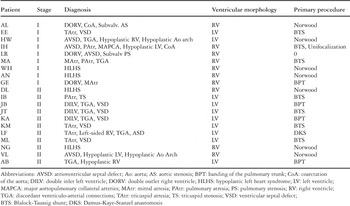
Table 1.
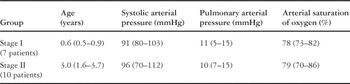
Table 2.

Individual values of BNP in the three groups of children. Stage I refers to children, after the first palliative operation with a volume overloaded ventricle. Stage II refers to children who had undergone unloading of the ventricle by means of a bidirectional Glenn operation. Control refers to the control group with children without heart defects. The horizontal bars represent the mean value of each group.

Individual values of ANP in the three groups of children. Explanations are the same as in Figure 1.
 You have
Access
- 28
- Cited by