

Introduction
An event that is not recorded and preserved in print or in oral form can often be forgotten, leaving later generations unaware of it ever having taken place. The process of ‘forgetting’ events has political roots and is used by ruling classes under capitalism to keep people ignorant about their history of resistance to capitalism and imperialism. The struggle of collecting, preserving and disseminating working class history is an aspect of the class struggle under capitalism. Information services, such as libraries and archives, are not neutral in the social struggles of their societies. They, and their workers and professionals, are either on the side of the bourgeois ruling class or on the side of working people. This then is reflected in the professional work they do; or don’t do.
It is not accidental that some historical records are deliberately allowed to be forgotten by ruling classes if such records show them in a negative light. The points raised by Durrani and Smallwood (Reference Durrani and Smallwood2006: 6) on ‘neutral librarians’ apply equally to publishers, archivists and other information workers:
Thus the myth of the ‘neutral’ librarian needs to be exploded. There is no way that librarians are or can be neutral in the social struggles of their societies. Every decision they make – how much to spend on books, which books to buy, what staff to appoint, how to manage the service – is a reflection of their class position and their world outlook.
The process of erasing memories is explained by Issa Shivji (Reference Shivji2025) thus:
Historical memories are extremely important. When memories are erased, you become anchor-less. You don’t know what happened; you don’t know where you are coming from. That is why the first thing that most right-wing and fascist regimes do is to erase memories. That’s why they attack the sites of knowledge production, like universities.
The past and the current situation in Kenya show the Kenya governments suppressing information about all resistance movements. Just as British colonialism destroyed the Mau Mau libraries and archives, as well as their own records of their atrocities, the governments of Kenya continued the colonial policies of suppressing and ‘forgetting’ acts of resistance by working people against its class warfare.
While there has been continuous resistance from peasants and working people to the capitalist rule imposed on Kenya at independence, three main resistance movements of major significance can be identified. These are the Mau Mau armed resistance in partnership with trade unions (1948–60s), the underground resistance of the December Twelve Movement and Mwakenya in the 1970s–90s, and the resistance by the socialist Kenya People’s Union (1966–69). The common demand of all these movements was the creation of a society based on the principles of justice and equality. All three rejected capitalism and sought to replace it with socialism. All three sought to restore stolen land to the original owners. All three were violently suppressed by the KANU-B party under Presidents Jomo Kenyatta and Daniel arap Moi. All three had their histories and documents destroyed or prevented from being collected and disseminated. The official history of Kenya has been wiped clean of their vision and actions.
Britain destroyed the archives and libraries maintained by the Mau Mau; it suppressed the history of the trade union movement that provided working class ideology and organizational support to the Mau Mau. The aim was not only to suppress these anti-imperialist movements, but to suppress information about them as well. The comprador government under Jomo Kenyatta and Daniel arap Moi then continued this colonial practice after independence. Today, there is no complete history of the movement, no Mau Mau archives anywhere, no celebration of the sacrifices made by the warriors who defeated the leader of imperialism in battles, armed and unarmed. The history is silent about their achievements and suffering.
The records of the December Twelve Movement could not be saved by activists because of the severe repression from the comprador government. However, some key documents were saved and are available in the Kenya Resistance Archives (KRA). Some records of the later years of Mwakenya did survive, thanks mainly to activists in the UK and USA. That leaves out the third strand of resistance – after Mau Mau and the underground December Twelve Movement/Mwakenya – the Kenya People’s Union (KPU). No records of the party are available in the public domain, although it is likely that the archives of Oginga Odinga, Bildad Kaggia and Achieng Oneko, among others, can provide valuable insight into the history of that period. The comprador governments destroyed not only the KPU, they ensured that all its records became unavailable openly. In the same way, they ensured that information about Pio Gama Pinto was also suppressed. It is only now that Paul Ogula’s (Reference Ogula2025) book provides a comprehensive record of the KPU.
In keeping with the comprador tradition, the current William Ruto government attacks even cultural workers to prevent them from documenting and disseminating government oppression and people’s resistance. No doubt, it ensures that public libraries, universities and archives do not collect or disseminate any events and activities that are against the status quo. The posters from the current RutoMustGo resistance are important historical records, but no library collects them. Some of these posters are reproduced in a new book edited by Shiraz Durrani and Ruo Kimani-Ruo (Reference Durrani and Kimani-Ruo2025).
In this situation, publishers, archivists and librarians, as all professionals under capitalism, have to follow the rules and politics imposed on the society by the dictatorship of the ruling bourgeois class. And that explains why the history of Kenya’s resistance to capitalism and imperialism under Mau Mau, the post-independence over-ground and underground history, as well as the history of trade unions and the socialist Kenya People’s Union remain in relative obscurity, actively and passively suppressed by the ruling class and its government. And yet, it is not impossible even under repressive governments to collect and disseminate working class resistance, provided the will is there. While the professional information workers may feel obliged to follow government orders not to collect and disseminate resistance material, political activists and progressive political parties and movements feel no obligation to abide by oppressive laws and government directives.
Political activism, as a form of resistance, exists in all (capitalist) countries. This article examines how activists established intellectual ‘liberated areas’ by preserving and making available some documents of the history of resistance in Kenya. This is the Kenya Resistance Archives established by Vita Books and the Ukombozi Library in Nairobi. The Kenya Resistance Archives have collected records from the December Twelve Movement, Mwakenya, Umoja and Release Political Prisoners. The archives of the Committee for the Release of Political Prisoners in Kenya are safe at the George Padmore Institute in London.
The Kenya Resistance Archives have been rescued, collected and established by political activists. They had to smuggle them out initially from Kenya to the UK to save them, and when conditions allowed, they were returned to Kenya. This perhaps demonstrates that it is possible to liberate some historical material from the fate of ‘forgetfulness’ that capitalism has charted for them. The lessons for librarians, archivists and, indeed, other professionals, is that it is possible to remain true to their professional values, but only if they take on the additional dimension of activism and work outside the capitalist framework.
Context
Kenya suffered cruel oppression under the colonialism of the British Empire. Among the losses imposed on the people were theft of land, resources and loss of homes through villagization, torture and murder of thousands of people. It did not end there. Among the losses were historical records of resistance that had been meticulously kept by the Mau Mau.
The Mau Mau’s own library in the forest was destroyed by British soldiers. At the same time, the records kept by the British colonial administration of its own actions were burnt, deleted and dumped in the Indian Ocean. Other records were sent to London and were hidden for years (Cobain, Bowcott and Norton-Taylor Reference Cobain, Bowcott and Norton-Taylor2012). Among the key information not shared after independence is the burial site of Dedan Kimathi, the leader of the Mau Mau, which the British government refuses to reveal even now. The loss of information on this major resistance movement has hampered the record keeping and prevented the correct interpretation of the history of Kenya.
The British practice of destroying and distorting information was passed on to the government of Kenya after independence. People’s resistance to the comprador government started soon after independence. The real facts about the underground and overground resistance to the Kenyatta government are little known today. Similarly, the actions and policies of the socialist-orientated Kenya People’s Union have remained in the shadows. The real historical background and significance of the assassination of the Mau Mau leader, Gen Marete Baimunge, in 1965 (Sicherman Reference Sicherman1990: 105) and that of Pio Gama Pinto in 1965 (Durrani Reference Durrani2018) by the Kenyatta government, as well as Karimi Nduthu in 1996 (Kamau Reference Kamau1998) by the Moi government are hardly known in the history of Kenya.
The survival of the Kenya Resistance Archives needs to be seen against this background of the destruction of historical documents that has been the reality in Kenya.
The official history of Kenya ignores or downplays resistance to capitalism and imperialism by the people of Kenya. Most ignored are the organizations of those who opposed the rule by the comprador bourgeoisie. Some examples of such downplaying can be seen in many public sources. None of these, including most of the texts used for teaching in Kenya, pays attention to the resistance to capitalism and to the struggle for socialism waged by many organizations and their members. Also ignored are class and ideological struggles waged by those resisting capitalism and the rule of the comprador class. In recent years, The Kenya Socialist, Communist Review and Vita Books have published a number of studies of Kenyan movements and personalities who have contributed to the struggle for liberation from colonialism and imperialism, both before and after independence. Many of these articles have challenged the traditional history of Kenya and added class and resistance dimensions which are missing from official history, as well as from history as taught in schools, colleges and universities in Kenya.
What may not be obvious at the first reading of such material is that the sources cited are available only at the KRA at Ukombozi Library in Nairobi. The KRA consist of material from the underground resistance in Kenya, mostly from the 1980s to the 1990s. Those movements, their ideology, leadership and activities do not feature in the mainstream history of Kenya. Their very existence is denied or passed over lightly.
The KRA and Ukombozi Library originated in the work of one of the cells of the underground December Twelve Movement (DTM) – the Kabete Cell (Durrani Reference Durrani2014), with its main sub-cells, Ngara and Nairobi. It thus does not include material collected by other DTM cells. Security considerations required minimum direct contact between the cells. The KRA also does not include publications from before the formation of the Kabete Cell, around 1975. It is known, however, that some earlier material is available with some founder members of the DTM. Similarly, material on the DTM’s successor organization, Mwakenya (MK), is available through former officials while much of the archives of Umoja, which merged into Mwakenya, was lost through administrative mishap, although some key documents are available in the KRA.
The archives
The KRA are a unique collection brought together and looked after by political activists and independent institutions, not funded or supported by public bodies. It is, indeed, part of the resistance which it documents. No public library, archive or research institute in Kenya has collected, disseminated or archived the material that is available in the KRA. This is an aspect of the class struggle in Kenya, where the ruling class decides what is ‘history’, which it sees from its own class perspective, while working people record and disseminate their version of history in their own ways. The former is consolidated through government policies, education and the mass media, while the latter is allowed to gradually die. However, it is stored in people’s memory and disseminated through oral and alternative media.
It was the British government which destroyed the archives and libraries of the Mau Mau before being forced to give independence to Kenya. The full story of the collection and the destruction of these records is available in various accounts. The comprador bourgeois government under Jomo Kenyatta and Kenya African National Union (KANU), handed power by the departing colonial power, made sure that the resistance and its documents were not allowed to see the light of day (Barnett and Njama Reference Barnett and Njama1966). President Daniel arap Moi then followed Kenyatta’s nyayo (footprints) in repressing resistance and not allowing the documents to be collected. It is then remarkable that the KRA have been preserved, having survived journeys to and from London in order to save them. They are stored in Nairobi at the Ukombozi (‘Liberation’) Library today. The lesson from this experience is relevant to resistance organizations in Kenya and elsewhere, to ensure that their documents are well preserved, otherwise their history will not be recorded or survive.
The Kabete Cell
Many of the documents of the December Twelve Movement (DTM) held by the Kabete Cell in 1984 were destroyed once one of its members was interrogated by the Special Branch of the Kenya Police. While it did not have all the underground publications of the DTM, the cell had some significant titles as well as many working papers and work in progress, together with the typewriter used for some underground publications, the DTM rubberstamp and other equipment. All this had to be destroyed. Yet some important material was saved and sent to London in 1978 by another member of the cell. In the late 1990s, this was then sent in small batches to the Mwakenya-December Twelve Movement (MK-DTM) in Nairobi. The material was passed on to Ukombozi Library once it was set up in 2017 by Vita Books, MK-DTM and the Mau Mau Research Centre.
The material included documents of the Kabete Cell and the main cells under it – the Nairobi Cell (based at the University of Nairobi but including many worker and peasant members under its sub-cells) and the Ngara Cell, where the DTM’s main library was located. The Kabete Cell split into a number of semi-independent cells after the suspension of its leader by members around 1983–84, and material from these cells is not included in the KRA. However, Kabete Cell members in London later re-established links with Upande Mwingine, formed from the earlier Ngara Cell. Some of its material was used for Mwakenya publications, and these are also part of the KRA.
The Kabete Cell also had, as its library, many Marxist and progressive Kenyan titles, as well as books from socialist and revolutionary countries around the world. While the main DTM Library at the Ngara Cell included many more titles, the Kabete Cell library also had a substantial collection which could not be sent to London. Other cells, now independent of the Kabete Cell, were reluctant to connect with it for security reasons once one of its members had been identified as ‘an enemy agent’ by the Special Branch police. It was therefore decided to pass on these key books to contacts at the University of Nairobi and among communities around Nairobi. A member of the Kabete Cell took great risks and deposited the books among those needing them. They were used and distributed among other cells and progressive individuals.
An important collection that the Kabete Cell had was the thirty-six carvings on Mau Mau by Akamba carver activists. Photos of some of these accompanied an article in the Communist Review (Durrani Reference Durrani2019). The carvings were too heavy to be transported to London when the Kabete Cell came under attack, nor was it possible to pass them onto other cells because of the security concerns already mentioned. A Kabete Cell member later contacted Willy Mutunga,Footnote 1 a trusted member of DTM who, despite having been previously detained, was willing to support the Cell by taking the carvings for safe-keeping. A small number of the carvings were taken to London after Moi left power and it became possible for Cell members to return to Kenya. The remaining carvings were distributed among various rural communities in Kenya as part of the people’s heritage.
An important DTM document that was saved and taken to London was Publishing, an Annotated Bibliography and Study Guide (Durrani Reference Durrani2014: 98–102). It was an internal document to inform DTM publishing activities, and a copy is included in the KRA.
An interesting feature of the work of the Kabete Cell was that it contributed a large number of articles to local and international journals. Some of these were later published by Vita Books, Nairobi, in a number of books. These include Information and Liberation: writings on the politics of information and librarianship (Durrani Reference Durrani2008). Some more articles written at a later period are included in Guerrilla Incursions into the Capitalist Mindset: essays with focus on Kenya, 1979–2023 (Durrani Reference Durrani2023b).
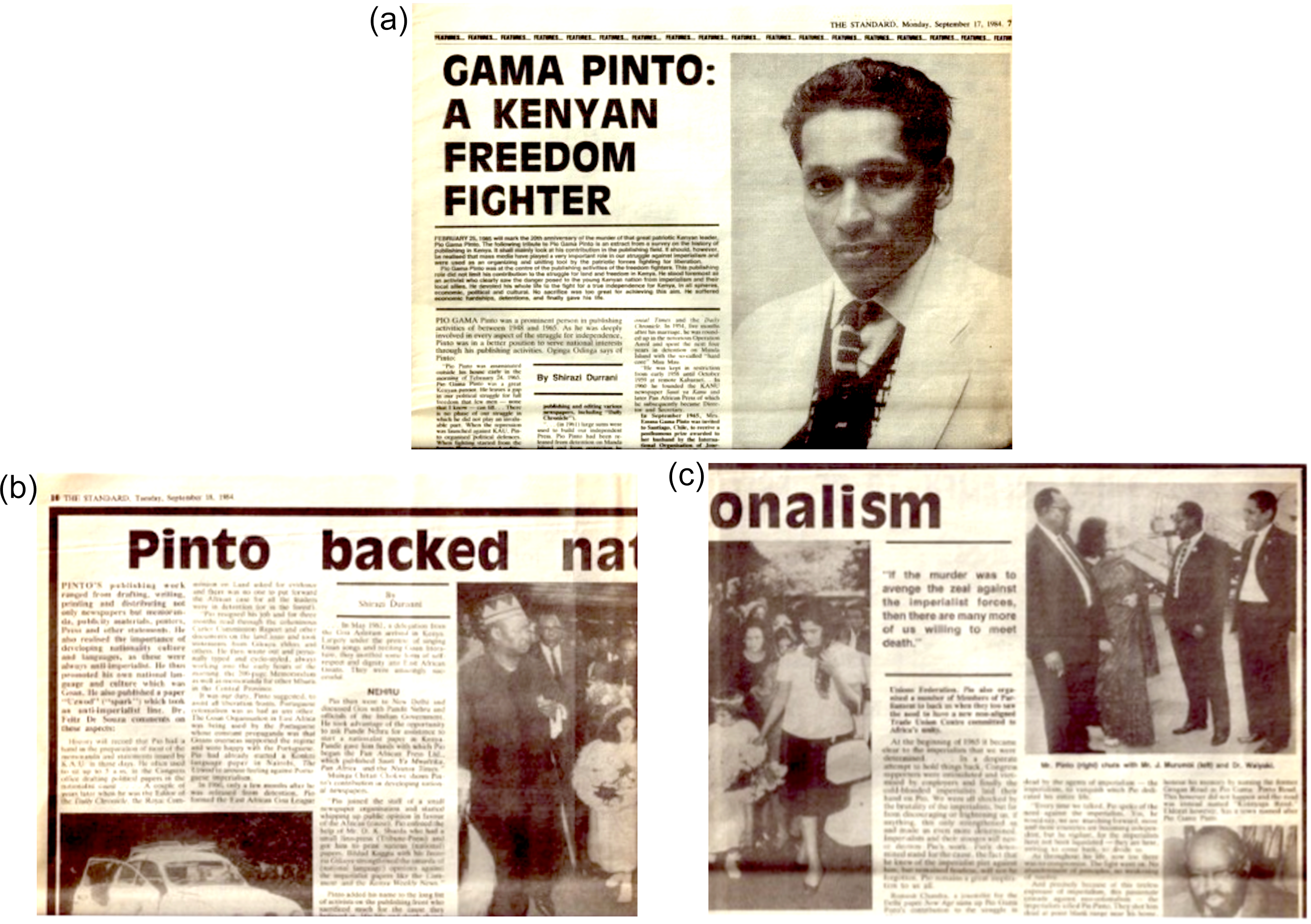
A decisive period for the Kabete Cell was set in train by a two-part article by Durrani (Reference Durrani1984a; Reference Durrani1984b) on Pio Gama Pinto, published in The Standard on two days in 1984 (Figures 1a-c). Events after this led to the exile of the writer and also to the formation of a DTM cell in London. But the early drafts of the material on Pinto, as well as other manuscripts on Makhan Singh, Mau Mau and the history of publishing, were all written in Kenya prior to his exile in 1984. They would have been published in Kenya but the intervention by the Special Branch interrupted this process. They were, however, all published later by Vita Books, initially based in London but moving to Nairobi in 2017.
Shiraz Durrani’s two-part article on Pio Gama Pinto published in The Standard in 1984.

The Nairobi Cell
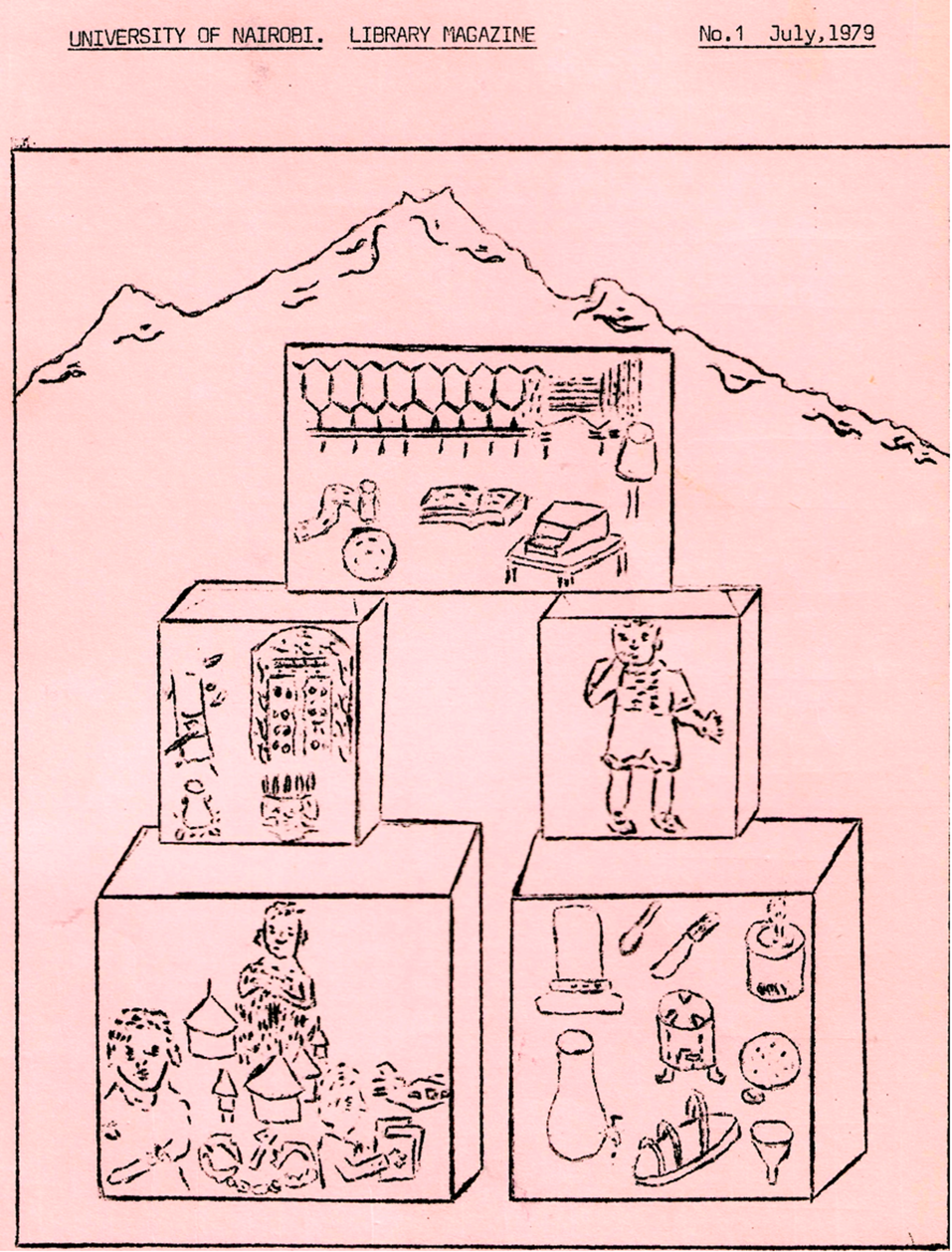
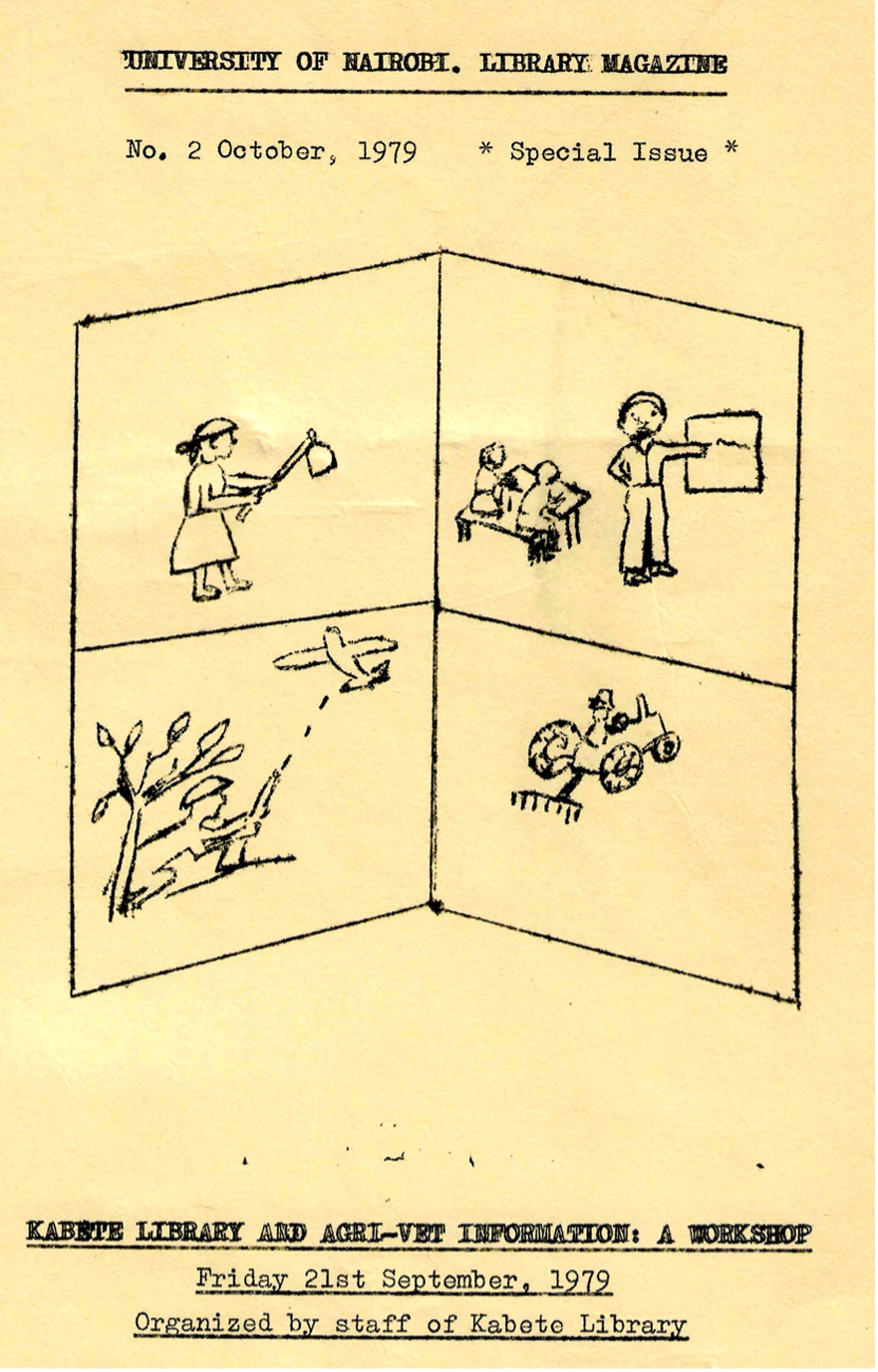
Among the materials saved from the work of the Nairobi Cell, now available in the KRA, are the proceedings of a number of workshops for working-class librarians at the University of Nairobi and other libraries in Nairobi. These were reproduced in the University of Nairobi Library Magazine, later Pinto Register, subsequently renamed Sauti ya Wakutubi. Four issues of the magazine were printed and published at the library (Figures 2a and 2b).
Cover of Issue No. 1 (1979) of the University of Nairobi Library Magazine.

Cover of Issue No. 2 (1979) of the University of Nairobi Library Magazine.

The Nairobi Cell created a Sehemu ya Utungaji – creative wing – for artwork and creative activities. It also co-produced the play, Kinjikitile, Maji Maji with Takhto Arts, a Nairobi drama group. The play ran at the University of Nairobi’s Education Theatre II in 1984 and was directed by a member of the Kabete Cell. The KRA has full documentation, including photographs, of the play.
The focus of material collected in the KRA moved to London where some former DTM members were active in Umoja and Mwakenya. The material they collected forms the rest of KRA. Brief histories of DTM, Umoja and Mwakenya have been documented in recent years (Durrani Reference Durrani2023a).
The Ngara Cell and Ukombozi Library
The Kabete Cell was formed around 1977/78. It soon began to expand and formed other cells under it. The first one to be set up, around 1978, was the Ngara Cell, which in time became one of the most productive cells in the Kabete ‘cell family’. Its publications are now at the Ukombozi Library.
Some details of the work of the Ngara Cell are mentioned by Nazmi Durrani in Liberating Minds (Reference Durrani, Durrani and Pereira2017: 176–80), which ‘consists of biographies of progressive South Asian Kenyans’. Originally published in Gujarati in the 1980s, they are available here in English for the first time, together with the original Gujarati texts. This was in the tradition that DTM activists write on the history of their nationalities. The cell member also wrote resistance poems in Kiswahili and translated them into English, with accompanying drawings. The poems are being published by Vita Books under the title Tunakataa! We say no! (forthcoming) There are many unpublished works by cell members, which are included in the KRA.
It is, however, the information and documentation work for which the Ngara Cell is better known. It produced a large number of regular publications which give a clear picture of the class struggle in Kenya. These are aspects that have been ignored by most historians and they indicate the political orientation of the DTM. The publications included the following:
-
• Article 5: a monthly journal inspired by Article 5 of the United Nations Declaration on Human Rights, which states that ‘No-one shall be subjected to torture or to cruel, inhuman or degrading treatment or punishment’. Article 5 collected newspaper cuttings highlighting the regime’s human rights abuses.
-
• Hali ya Nchi (‘State of the Country’): a fortnightly summary of events in Kenya, highlighting repression by the regime, acts of resistance by Kenyans and important events on economic, political and social fronts.
-
• Upande Mwingine (‘The Other Side’): a monthly summary of resistance to the regime by workers, peasants, students and generally by all democratic-minded Kenyans. It included strikes, demonstrations and other activities.
The Ngara Cell during this period adopted different aliases for its publications, but is known generally as Upande Mwingine. This is the name used here to distinguish its work from the earlier Ngara Cell. In the 1990s, the Kabete Cell members in London re-established links with Upande Mwingine and exchanged a large amount of information and activities.
Besides the publications mentioned earlier, Upande Mwingine started a photo-documentation work of the main resistance fighters against colonialism. Over 100 photographs, with details of sources and brief histories, were sent to London. The plan was for Vita Books to publish these in the 1990s as a pictorial history of resistance in Kenya, but this was forestalled by the death of the key member of Upande Mwingine as described in Liberating Minds (Durrani Reference Durrani2007: 176–80). Since then, lack of resources and other difficulties have prevented publication of the proposed book. However, all the material, photos and notes are available in the KRA, currently in London to be transported to the Ukombozi Library in due course.
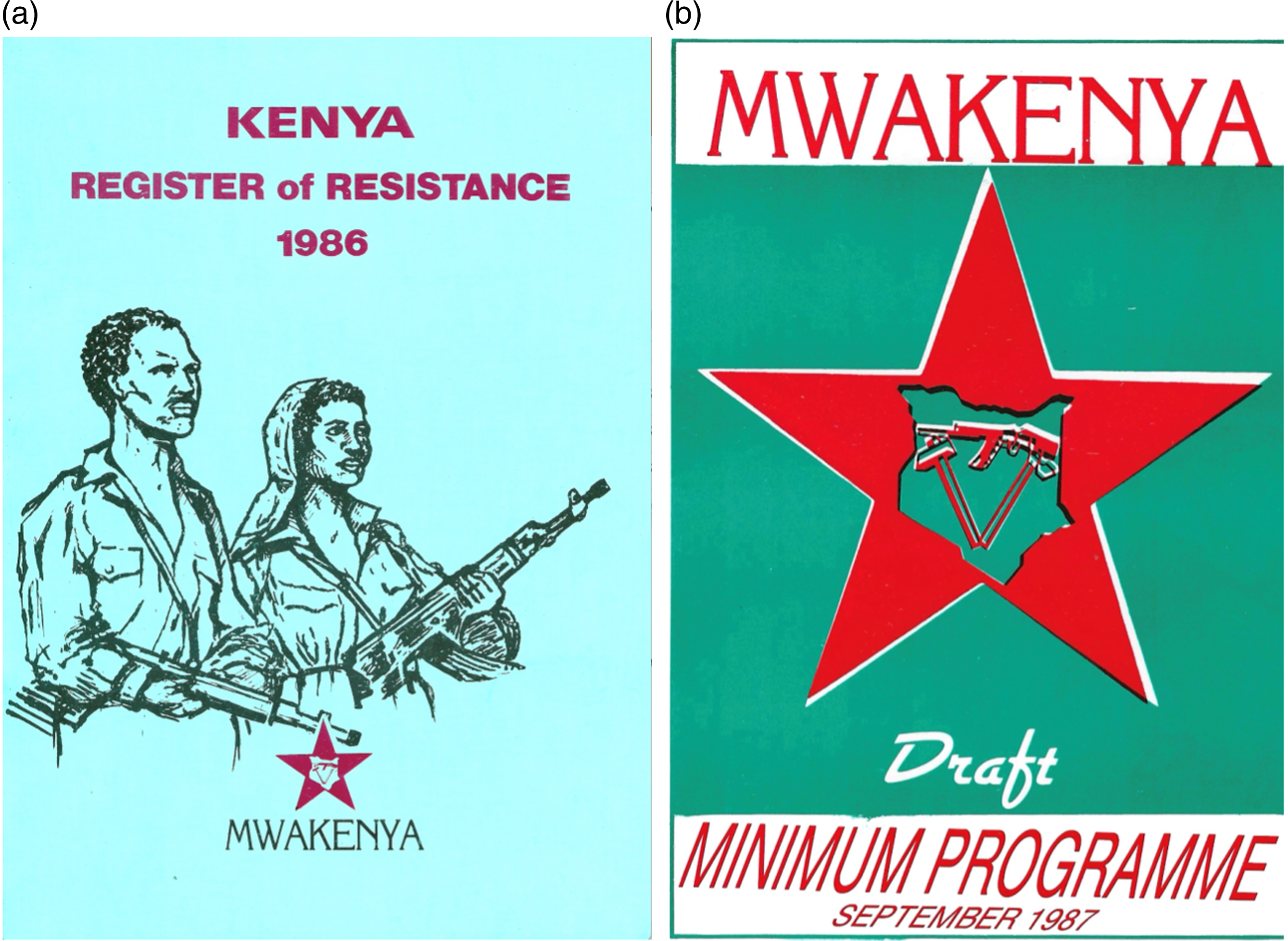
The work of Upande Mwingine was acknowledged by Mwakenya, which used the research by the group for its (1987) publication, Kenya Register of Resistance, 1986.
Upande Mwingine – Kenya Register of Resistance
We here present this analysis of the actions of the workers, peasants, students, and small traders for the year 1986, to expose the lies of the Moi-KANU regime. The analysis is based on the very brilliant, meticulous monthly and annual documentation of the resistance deeds and actions of workers, peasants, and students, etc, in industry, commerce, plantations, schools and colleges, carried out by Upande Mwingine, the underground workers’ organ. Upande Mwingine has systematically compiled this Kiswahili register of strikes and demonstrations by the working people over a number of years. But we have chosen 1986 deliberately: 1986 saw the heightening of repression in Kenya under the guise of hunting for MWAKENYA cadres. The Register shows quite clearly that it is the mass movement of Kenyans that is basically frightening the regime. The regime fears that Mwakenya will give the correct political direction to this mass unrest (Durrani Reference Durrani2023b).
All these documents, including Mwakenya’s Register of Resistance (Figures 3a and 3b) and many publications from Upande Mwingine are available at the KRA. The Archives are indeed an important resource for studying a period of resistance that would otherwise remain unknown to future generations.
Mwakenya’s Register of Resistance and its Draft Minimum Programme.

The library
Besides all the foregoing work, it is the Ngara Cell’s library that remains a lasting legacy to the Cell and the DTM. It was set up by teacher, librarian and DTM activist, Nazmi Durrani, and contained over 1,000 books, including complete sets of the selected works of Marx, Lenin, Stalin and Mao. Such publications were banned in Kenya, and anyone found with them was likely to be detained. In addition, the library included key works from resistance movements around the world. It was located in Nazmi’s house in the Ngara district of Nairobi, hence the name the Ngara Cell. After Nazmi’s death in a bicycle accident in 1990, the books were looked after by members of his family and later passed on to other members of the (reconstituted) Ngara Cell. The books were transferred to the Ukombozi Library when it was set up in 2017 by Vita Books, DTM-Mwakenya and the Mau Mau Research Centre.
Vita Books and the Ukombozi Library are the two organizations that continue to support the library and archival legacy of the DTM and move it forward to meet today’s needs. While the Ukombozi Library remains outside the scope of this article, the following interviews and articles provide some background to its work and history:
-
1. ‘Shiraz Durrani and Kimani Waweru, interviewed by Stephanie Kitchen’ (Durrani and Waweru Reference Durrani and Waweru2017).
-
2. Waweru, K. and L. Balhorn ([n.d.]) ‘Kenya’s first socialist library’; at https://www.rosalux.de/en/news/id/41361/kenyasfirstsocialist-library/, accessed 23 May 2025.
-
3. Waweru, K. (Reference Sicherman2022) ‘The Ukombozi Library’,
Kimani Waweru on the latest developments at KRA’s Digitization Project
Ukombozi Library, in partnership with African Digital Heritage (ADH), is implementing a digitization project of the Kenya Resist materials alongside the development of a dedicated website. The collection comprises print, audio, and video materials from the Mwakenya, December Twelve Movement (MKDTM) and the Release Political Prisoners (RPP) Pressure Group. All digitized materials will be hosted on the Ukombozi Library website to ensure long-term preservation and public access. The digitization process is scheduled to begin in February 2026 and conclude in November, with the official launch of the updated website planned for December. The project will be jointly implemented by Ukombozi Library and African Digital Heritage and carried out at the Library. This marks a significant breakthrough, particularly given the longstanding challenges the Library has faced over several years in trying to digitize these historically important materials.
Kimani Waweru
22 January 2026
Conclusion
While a number of public institutions, libraries and archives in Kenya have important documents on the country’s history, none, as far as can be ascertained, hold material held by the KRA. This is a reflection of the ongoing class struggle in Kenya, where the ruling class controls what information and documents should and could be collected by public institutions. It is possible that foreign libraries such as the US Library of Congress and the British Council Library hold such material. If so, they are not shared with the Kenyan public. This points to the importance of KRA as perhaps the only publicly available record of resistance material in the period.