


Introduction
The Yazidis are a Kurdish-speaking ethno-religious minority historically residing in the Sinjar district of Ninewa governorate in northern Iraq. Their faith, Yazidism, incorporates elements from Islam, Christianity and Zoroastrianism.Footnote 1 Misunderstandings about their beliefs have led to them being labelled as “devil worshippers”, and they are not recognized as “People of the Book”. This mischaracterization has resulted in their marginalization, discrimination and persecution throughout history.Footnote 2
The most recent atrocity against this community occurred in 2014, when the Islamic State of Iraq and Syria (ISIS) attacked them in their homeland, the Sinjar district. Approximately 50,000 Yazidis took refuge on Mount Sinjar, where ISIS encircled them.Footnote 3 Reports estimate that during the attack, more than 3,000 Yazidis were killed, and almost 7,000 were abducted.Footnote 4 Since the attack, more than 400,000 Yazidi civilians have fled the region, with the majority seeking refuge in the Duhok governorate in the Kurdistan Region of Iraq – inside and outside internally displaced persons’ (IDP) camps – as well as in Türkiye and Syria.Footnote 5
To protect persons who are not directly participating in armed conflicts, such as civilians, medics, wounded soldiers and prisoners of war, international humanitarian law (IHL), also known as the law of war, has evolved and been codified over time through a range of instruments, including the Hague Conventions and the Geneva Conventions of 1864, 1906 and 1929, and later the four Geneva Conventions of 1949 and their Additional Protocols.Footnote 6 IHL prohibits the recruitment and use of children under 15 years of age during armed conflicts.Footnote 7 Such compulsory recruitment and use are also prohibited under the Convention on the Rights of the Child (CRC),Footnote 8 adopted in 1989, which is the principal international human rights treaty protecting children’s rights worldwide and has been ratified by all United Nations (UN) member States except the United States. Specifically, Article 38 of the CRC states that “States Parties shall take all feasible measures to ensure that persons who have not attained the age of fifteen years do not take a direct part in hostilities”.Footnote 9 Complementing the CRC’s protection, the Rome Statute of the International Criminal Court (Rome Statute), adopted in 1998, defines the recruitment of children under 15 as a war crime.Footnote 10 Although the CRC is arguably the most influential hard-law document for the holistic protection of children, its limitations in addressing children in armed conflict led to the emergence of the Optional Protocol to the CRC on the Involvement of Children in Armed Conflict (OPAC) as the most significant enforceable legal instrument on the rights of children in armed conflict.Footnote 11 The OPAC, adopted in 2000 and ratified by 173 countries, including Syria and Iraq, raised the minimum age for compulsory recruitment and direct participation in hostilities from 15 to 18.Footnote 12 It also reinforced the obligation of States Parties to provide demobilization, physical and psychological recovery, and social reintegration for this group.Footnote 13
The official term for child soldiers or children in combat is “children associated with armed forces or armed groups” (CAAFAGs). The 2007 Paris Principles and Guidelines on Children Associated with Armed Forces or Armed Groups (Paris Principles), which emanate from the Free Children from War Conference that took place in Paris the same year, provide an important international framework for protecting children under 18 who have been recruited or used by armed forces or groups.Footnote 14 They offer a broad definition of CAAFAGs that includes not only children under 18 who are actively engaged in combat but also those who perform non-combat duties or are exploited for sexual purposes.Footnote 15
Despite these international legal protections, Yazidi children, in particular, have witnessed, participated in and endured extreme acts of violence.Footnote 16 During the attack on the Sinjar district, Yazidi boys aged 8 to 14 were kidnapped and forced into combat.Footnote 17 By 2020, approximately 300 to 400 male Yazidi former CAAFAGs had managed to escape captivity and return to their community, often residing in IDP camps in the Duhok governorate.Footnote 18 Nevertheless, in 2024, approximately 2,700 Yazidis, of whom 1,300 are children, were still missing.Footnote 19
The ISIS attack on the Yazidi community in Sinjar was characterized by executions, kidnappings, sexual violence, enslavement and forced displacement.Footnote 20 In 2016, the UN Independent International Commission of Inquiry on the Syrian Arab Republic issued its report “They Came to Destroy”: ISIS Crimes Against the Yazidis, concluding that ISIS was committing genocide against the Yazidis.Footnote 21 Formal international recognitions followed, including by the European Parliament, and the Yazidi community views this as their 74th genocide.Footnote 22
More than a decade after the genocide, approximately 200,000 Yazidis from the Sinjar district remain IDPs within Iraq.Footnote 23 The majority still reside in the Duhok governorate, where ∼205,700 IDPs were reported as of late 2025 – almost all from the Ninewa governorate, predominantly YazidisFootnote 24 (see Appendix). Of these, approximately 80,000 (∼39%) live in fifteen IDP camps in the Duhok governorate and the Zakho administration, with most Yazidi IDPs concentrated in four camps: Chamishku, Khanke, Rwanga Community and Shariya.Footnote 25 The remaining ∼125,700 (∼61%) reside outside camps, primarily in rented housing (∼100,500, ∼49%) or critical shelters (tents, abandoned buildings, public buildings) (∼14,800, ∼7%), with a minority residing in their own properties (∼10,300, ∼5%).Footnote 26
As of late 2025, ∼146,300 Yazidi IDPs have returned to the Sinjar district.Footnote 27 A July 2022 survey of 1,407 households in the Duhok governorate IDP camps found that 94% of IDPs were unwilling or unable to return to their area of origin, primarily the Sinjar district. The primary reasons were persistent insecurity, extensive property destruction, lack of basic services, ongoing militia presence, and fears of retraumatization and discrimination.Footnote 28
According to a 2023 systematic review, the ISIS atrocities have led to significant mental health problems among the Yazidis, including depression, anxiety, suicidal ideation, stress, and conversion disorders.Footnote 29 Limited research on male Yazidi former CAAFAGs has shown that these individuals have a higher prevalence of likely mental health disorder compared to non-CAAFAGs. Using standard screening tools, estimated rates of likely mental disorders include somatic disorders at 50.6%, post-traumatic stress disorder (PTSD) at 48.3%, anxiety disorders at 45.8% and depression at 45.6%.Footnote 30
Despite the high demand for mental health care among the Yazidi population,Footnote 31 the majority have not received any mental health and psychosocial support (MHPSS) services.Footnote 32 A recent study also pointed to a shortage of qualified mental health professionals and institutions as a key structural barrier to accessing care in northern Iraq.Footnote 33 Although some mental health programmes exist, they predominantly focus on female Yazidi survivors. Additionally, there is limited coordination among the region’s mental health providers and an absence of a standardized framework for delivering MHPSS to Yazidi child survivors.Footnote 34 This is further supported by a report on the psychosocial needs of child soldiers in northern Iraq which found that mental health services are available only to a limited extent and lack a coherent conceptual approach.Footnote 35 Consequently, most male Yazidi former CAAFAGs have never received any MHPSS.Footnote 36
Research on male Yazidi former CAAFAGs remains scarce. While studies and needs assessments document gaps in MHPSS services for the Yazidi population, including a lack of mental health professionals and insufficient financial resources,Footnote 37 little is known specifically about mental health services available to male Yazidi former CAAFAGs in northern Iraq. To address this knowledge gap, the present research conducted a mixed-methods study investigating the availability of mental health services for this population. The findings of this study could contribute to the scarce literature and inform improvements in evidence-based MHPSS delivery for male Yazidi former CAAFAGs.
Methodology
Study design
This study used a convergent mixed-methods design. Quantitative and qualitative data were collected simultaneously, with the aim of integrating findings from the two components. The quantitative component was a descriptive study that included male Yazidi former CAAFAGs and mental health providers serving Yazidi survivors, while the qualitative component involved semi-structured interviews with members of these same two groups.
Study setting
The study was set in two regions in northern Iraq: the Sinjar district and the Duhok governorate. The Sinjar district, a disputed territory claimed by both the federal government of Iraq and the Kurdish Regional government, is the historical homeland of the Yazidis and the site of the genocide that occurred in 2014. The Duhok governorate, part of the Kurdistan Region of Iraq, became the primary refuge for Yazidis during and after the genocide, with many settling both inside and outside IDP camps.Footnote 38
Sampling CAAFAG study participants remains challenging. In 2020, approximately 300–400 male former CAAFAGs escaped from captivity and returned to their communities in the Duhok governorate,Footnote 39 but much remains unknown about them, as many fear prosecution due to their involuntary associations with ISIS. This fear has made them cautious and reluctant to be identified or to participate in research, contributing to the limited knowledge about their experiences and needs.
Sampling and enrolment
To address the identification challenges and protect CAAFAGs’ anonymity, researchers asked local mental health providers to inform male Yazidi former CAAFAGs whom they already knew about the study. Interested CAAFAGs were then connected to the local research assistant for further details.
Thirty male Yazidi former CAAFAGs and ten providers of mental health services made up the study sample. Purposeful sampling, aimed at ensuring that a variety of perspectives were represented, was used to define the sample. Prospective CAAFAG participants were male Yazidi former child soldiers at least 18 years of age, sampled to include individuals from both the Sinjar district and the Duhok governorate, and individuals who had and had not received mental health care. Provider participants were purposefully sampled to include both men and women from the Sinjar district and the Duhok governorate. Snowball sampling, in which CAAFAG participants referred eligible acquaintances, was used to complete the purposeful sample. A subset of ten CAAFAG participants from the quantitative sample took part in the qualitative component. All ten provider participants took part in both the quantitative and qualitative components.
The local research assistant contacted thirty CAAFAGs by phone and provided them with information about the study and enrolment procedures. All thirty CAAFAGs agreed to participate in the survey, and a subset of ten agreed to participate in a qualitative interview. The primary author contacted ten mental health providers via email or phone, informed them about the study and invited them to participate. All ten providers agreed to enrol in the study.
Data collection
Quantitative data collection
Quantitative data collection consisted of completing separate survey instruments by CAAFAG and provider participants. The survey for CAAFAG participants elicited information on the following topics: personal background, life before and after captivity, experience with mental health care, and the SAFE Model, a questionnaire assessing safety/freedom from harm, access to health care and basic physiological needs, family/connection to others, and education/economic security.Footnote 40 The survey instrument was reviewed for cultural sensitivity by local researchers and mental health providers from the Yazidi community, plus a male Yazidi former CAAFAG living outside Iraq. The latter participated in a pilot interview to ensure that questions were appropriate and clear before administration. A trained local research assistant collected survey data from CAAFAGs during in-person, one-on-one study visits. The survey for providers was completed online via Qualtrics and elicited information on personal and academic background, workplace, and work. Survey data from both CAAFAGs and providers informed qualitative data collection during interviews by enabling the interviewer to ask individualized and contextually relevant open-ended questions.
Qualitative data collection
Both CAAFAG and provider study participants took part in a single, in-depth, semi-structured interview lasting forty-five to sixty minutes. CAAFAG interviews were conducted in person, in a confidential setting, by the local research assistant and were audio-recorded with permission. These interviews gathered information on CAAFAG participants’ mental health needs and their experiences with mental health services. All CAAFAG interviews were conducted in Kurmanji; audio recordings were then transcribed and translated into English for analysis.
Provider interviews were conducted online via Zoom, in English, by the primary author, and were video-recorded with permission. These interviews focused on mental health providers’ challenges, needs, and experiences with the (lack of) provision of mental health care for Yazidis, including CAAFAGs. Following each interview, the video recording was transcribed for analysis.
Data analysis
Quantitative data analysis
Descriptive statistics (frequency, percentage, mean and standard deviation) were used to report socio-demographic and other characteristics using the survey data. Analysis was conducted using Excel and Stata V.18.0.
Qualitative data analysis
An inductive, content-analytic approach was used to develop categories representing key constructs from the qualitative interview data. The first step in category development involved reviewing transcripts from all participants to identify relevant content. A subset of the data was open-coded and a codebook was developed, which was then piloted on a new subset of data and revised to create the final version. The final codebook was used to code all twenty interviews using the qualitative data management software Dedoose. The coded data were then subjected to inductive analysis to develop categories addressing the research questions.
Mixed data analysis
The last data analysis step involved merging the quantitative and qualitative data. This data integration was executed using a joint display technique, organized to reflect three topics: the availability and delivery of mental health care and services, the location of mental health care and services, and the need for and willingness to receive mental health care and services. The joint display, shown in Table 6, illustrates the convergence process, where data from the interviews were either supported or challenged by data from the surveys, followed by an interpretation.
Results
Quantitative results
CAAFAGs
The socio-demographic characteristics of CAAFAGs (n=30) are presented in Table 1. All participants were male (n=30), with a median age of 21 years (SD=2.0). All participants were born in the Sinjar district (n=30). Currently, the majority of respondents reside in the Duhok governorate (63.3%, n=19), with approximately equal representation between those living in Duhok city (30%, n=9) and those residing in an IDP camp (33.3%, n=10). The remainder live in the Sinjar district (36.7%, n=11). The overwhelming majority of participants (80%, n=24) did not return to school after captivity; those who did (20%, n=6) enrolled as high school students. All CAAFAGs were unemployed and relied on government assistance as their primary source of income, though some also received additional support from family (16.7%, n=5) or non-governmental organizations (NGOs) (6.7%, n=2).
CAAFAGs’ socio-demographic characteristics (n=30)

Table 1 Long description
Socio demographic characteristics are reported with columns for variables, n, and percent or mean with standard deviation. Age was reported for 30 participants as a mean of 20.8 years with a standard deviation of 2.0. Current residence included Duhok governorate, Iraq with 19 participants at 63.3 percent, Duhok city, Duhok with 9 at 30.0 percent, IDP camps, Duhok with 10 at 33.3 percent, and Sinjar district, Iraq with 11 at 36.7 percent. High school student was listed for 6 participants at 20.0 percent. Source of income had a footnote marker and included family support with 5 at 16.7 percent and NGO with 2 at 6.7 percent.
* Multiple responses possible; thus, the total does not add up to 100%.
In 2014, when ISIS attacked the Sinjar district and abducted Yazidi boys, the median age of the participants in the sample was 11 years (SD=2.1). They remained in captivity for an average of four years (SD=1.5). Following their captivity, all the boys returned to the Duhok governorate (n=30), where all but one (96.7%, n=29) resided in an IDP camp.
Table 2 summarizes the views and experiences of CAAFAGs regarding mental health care. One third (33.3%, n=10) expressed a desire to receive mental health care. Among the 70% (n=21) of participants who did not receive any care following captivity, the most common reasons cited were “Personal choice” (“I don’t want it”) (n=21) and “No need” (“I don’t need it”) (47.6%, n=10).
CAAFAGs’ experiences with mental health services (n=30)

Table 2 Long description
Variables are reported as counts and percentages for desire to receive mental health care after captivity, receipt of care, perceived need, service availability, current desire for care, awareness of MHPSS providers, and access to free health services. Desire to receive care after captivity was, No 20 at 66.7 percent and Yes 10 at 33.3 percent. Receipt of care after captivity was, No 21 at 70 percent and Yes 9 at 30 percent. Perceived need was, Not at all 0 at 0.0 percent, A little 0 at 0.0 percent, Some 1 at 3.3 percent, and A great deal 29 at 96.7 percent. Enough available mental health services was, No 4 at 13.3 percent and Yes 26 at 86.7 percent; currently wants to receive mental health care was, No 29 at 96.7 percent and Yes 1 at 3.3 percent. Awareness of MHPSS providers specifically serving CAAFAGs was 30 at 100.0 percent; access to free health services was, Never 29 at 96.7 percent, Sometimes 1 at 3.3 percent, and Always 0 at 0.0 percent. Among recipients of mental health care, n 9, locations were NGO community centres 9 at 100.0 percent, providers were NGOs 9 at 100.0 percent, and accessibility was Very accessible 6 at 66.7 percent, Moderately accessible 1 at 11.1 percent, and Not accessible 2 at 22.2 percent. Among recipients, barriers to accessing mental health care with multiple responses possible were Limited availability in the area 4 at 50.0 percent, Limited availability for Yazidi CAAFAGs 5 at 62.5 percent, and No barriers 1 at 12.5 percent. Among non recipients of mental health care, n 21, reasons for not receiving mental health care with multiple responses possible were Personal choice 21 at 100 percent, No need 10 at 47.6 percent, Afraid of exposure to trauma 1 at 4.8 percent, and Self care 1 at 4.8 percent.
* Multiple responses possible; thus, the total does not add up to 100%.
Notes: No participant had/has to pay for mental health care. Participants who answered “Self-care” stated, “I support myself.” One participant answered “Do not know” on “Barriers to accessing mental health care”; hence, n=8 for this category.
A total of nine CAAFAGs (30%) received care. Out of the ten CAAFAGs who indicated that they wanted care, most (80%, n=8) were able to access mental health care after captivity. Among the nine CAAFAGs who received care, 77.8% (n=7) resided in the Duhok governorate, and 22.2% (n=2) in the Sinjar district. Of those in the Duhok governorate, 57.1% (n=4) were living in IDP camps, while the remaining 42.9% (n=3) resided outside the camps. All CAAFAGs who received care (n=9) identified NGOs as their providers and NGO community centres as the locations for accessing mental health services. More than three quarters (77.8%, n=7) found the services moderately or very accessible, while two respondents (22.2%) reported inaccessibility of mental health services. Barriers to accessing care were identified, with the most common being the limited availability of mental health services for CAAFAGs (62.5%, n=5), followed by limited availability in the area (50%, n=4). Participants who received mental health care (30%, n=9) reported a mean satisfaction score of 6.3/10 (SD=4.8) and a mean perceived improvement score of 6.3/10 (SD=4.8) after receiving care.
Almost all CAAFAGs (96.7%, n=29) indicated a high need for mental health care (i.e., a “great deal” of “[p]erceived need for mental health care”), though this same percentage of respondents cited no desire to receive such care. The overwhelming majority of respondents (86.7%, n=26) believed that sufficient mental health services were available to them, with only 13.3% (n=4) citing these services as insufficient. Conversely, participants reported limited access to health care and related services. All participants (n=30) indicated that they had never had access to hospitals, health clinics, health-care professionals (such as doctors, nurses, community health workers or volunteers) or 24/7 health services (although one participant stated that they were sometimes able to access certain free health services, as shown in Table 2).
Finally, regarding current symptoms, 53.3% (n=16) sometimes experienced sleep issues, while 46.7% (n=14) never did. Similarly, 46.7% (n=14) sometimes felt tired during the day, whereas 53.3% (n=16) did not. Moreover, participants reported strong self-perceived support and comfort from their family and friends and from the Yazidi community, with mean scores ranging from 9.2 to 9.4 (SD=0.4–0.5) on a ten-point scale.
Providers
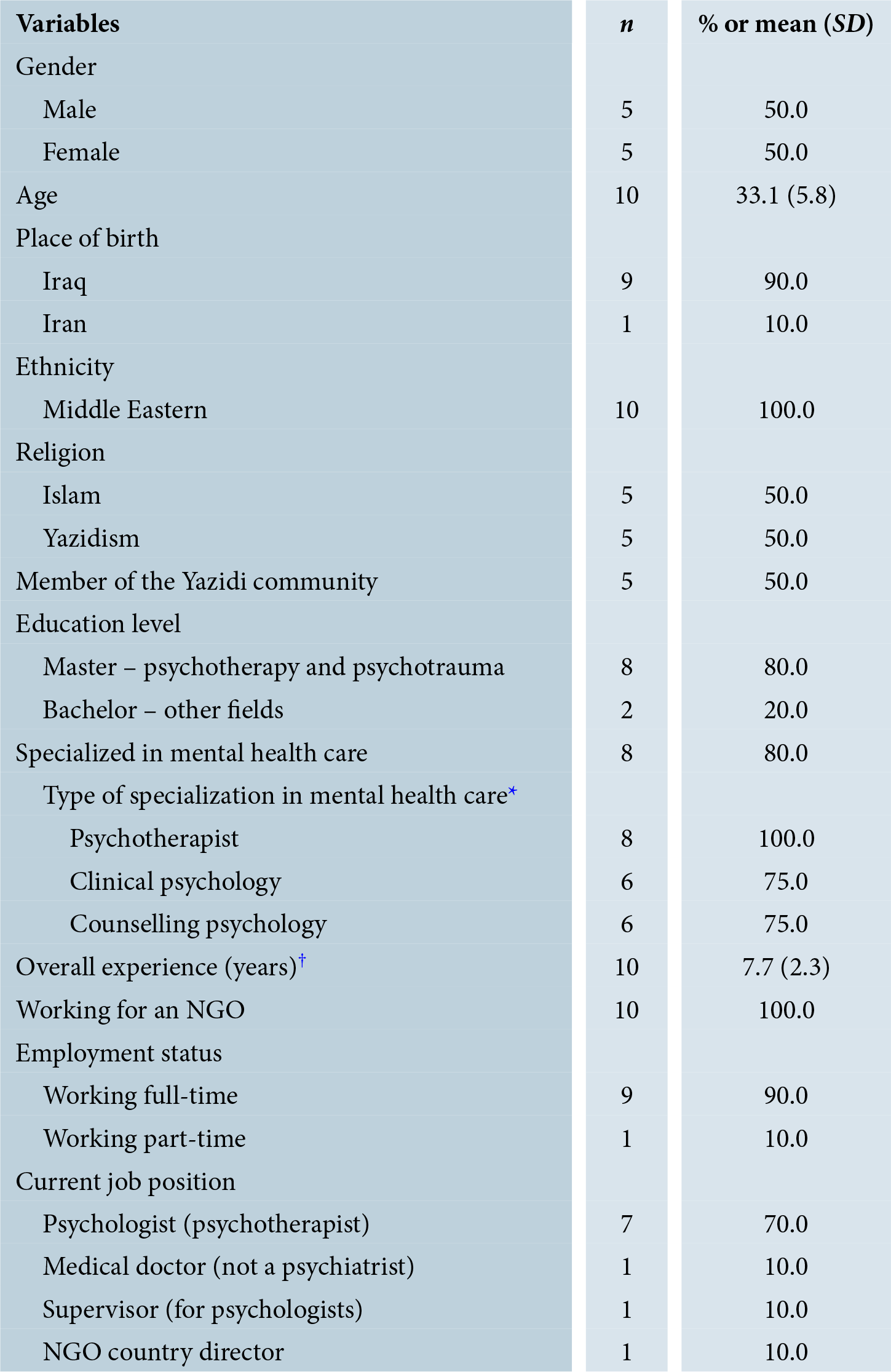
Table 3 presents the socio-demographic characteristics of the mental health providers surveyed for this study (n=10). The median age of participants was 33 years (SD=5.8), and there was equal representation by gender. All were born in the Middle East, with half identifying as Yazidis and the other half as Muslims. The majority (80%, n=8) specialized in mental health care, holding a master’s degree in psychotherapy and psychotraumatology, while 20% (n=2) held a bachelor’s degree in other fields. The providers had a median overall work experience of eight years (SD=2.3). All providers (n=10) were currently employed by NGOs, with 90% (n=9) working full-time, 70% (n=7) working as psychotherapists, 10% (n=1) working as medical doctors (not psychiatrists) and 20% (n=2) in director or supervisor positions.
Providers’ socio-demographic characteristics (n=10)

Table 3 Long description
Socio-demographic and work characteristics are reported for 10 providers using columns labeled n and percent or mean with standard deviation. Age is listed for 10 providers with a mean of 33.1 and standard deviation 5.8. Place of birth is Iraq for 9 providers and Iran for 1. Religion is Islam for 5 and Yazidism for 5, and 5 are members of the Yazidi community. Education level is Master, psychotherapy and psychotrauma for 8 and Bachelor, other fields for 2. Specialized in mental health care is 8 providers, and type of specialization in mental health care includes Psychotherapist for 8, Clinical psychology for 6, and Counselling psychology for 6, with multiple responses possible. Overall experience in years is listed for 10 providers with a mean of 7.7 and standard deviation 2.3. All 10 work for an NGO; employment status is full-time for 9 and part-time for 1. Current job position is Psychologist, psychotherapist for 7, and Medical doctor not a psychiatrist, Supervisor for psychologists, and NGO country director for 1 each.
* Among providers who specialize in mental health care (n=8). Multiple responses possible; thus, the total does not add up to 100%.
† Overall experience working as a mental health provider regardless of organization or health-care facility.
Participants reported providing mental health care to diverse groups. All providers reported offering services to Yazidi women (18 years or older) and Yazidi girls (under 18 years); additionally, 70% (n=7) provided care to Yazidi men (18 years or older), and 60% (n=6) offered services to Yazidi boys (under 18 years). Mental health providers reported various locations for their consultations with Yazidi patients. The most common locations were NGO offices (50%, n=5), community centres inside IDP camps (50%, n=5), and patients’ homes (50%, n=5), followed by community centres outside IDP camps (40%, n=4).
Regarding CAAFAGs, 70% of the providers (n=7) stated that their organization offered mental health services to CAAFAGs, and 60% (n=6) reported personally providing mental health care to this group (see Table 4). Among the latter group, one participant (16.7%) was unsure of the number of CAAFAG patients served, while the remaining five participants (83.3%) reported a median of fourteen current CAAFAG patients (SD=11.5). These providers highlighted several reasons for consulting with CAAFAG patients, with PTSD (100%, n=6), depression (83.3%, n=5) and aggressive behaviours (83.3%, n=5) being the most prevalent mental health issues identified within this group. The most delivered treatments were psychotherapy and support groups (83%, n=5), and psycho-education (67%, n=4).
Providers’ service areas and MHPSS provision for CAAFAGs (n=10)

Table 4 Long description
Variables include health care districts, IDP camp service location, specific IDP camps mentioned, whether organizations and providers offer MHPSS to CAAFAGs, and current number of CAAFAG patients, with columns for n and percent or mean with standard deviation. For IDP camp service location, 3 providers, 30.0%, worked exclusively inside IDP camps, 3 providers, 30.0%, worked exclusively outside, and 4 providers, 40.0%, worked both inside and outside. Among the most frequently mentioned IDP camps, Shariya was listed by 5 providers, 71.0%, Rwanga by 4 providers, 57.0%, Kabarto 1 by 3 providers, 43.0%, and Kabarto 2 by 3 providers, 43.0%. For whether the providers organization offers MHPSS to CAAFAGs, 7 providers, 70.0%, reported yes and 3 providers, 30.0%, reported no. For whether the provider personally offers MHPSS to CAAFAGs, 6 providers, 60.0%, reported yes and 4 providers, 40.0%, reported no. Current number of CAAFAG patients is reported for 5 providers, with a mean of 14.0 and a standard deviation of 11.5. Some sections allow multiple responses, so percentages may not sum to 100%.
* Multiple responses possible; thus, the total does not add up to 100%.
† Among the providers working inside IDP camps (n=7).
‡ Among the providers who personally provide MHPSS to CAAFAGs. One provider did not know the current number of CAAFAG patients; hence, n=5 for this category.
Note: All providers stated that they are paid for their work.
The locations where the providers offered mental health services to Yazidi survivors (not exclusively CAAFAGs) varied. As shown in Table 4, 50% of the providers (n=5) offered mental health care in Sinjar, while the majority (80%, n=8) also offered care in the Duhok governorate. Within the Duhok governorate, 30% (n=3) worked inside IDP camps, 30% (n=3) outside the camps and 40% (n=4) in both settings.
Qualitative results
Participants’ characteristics
The qualitative study involved interviews with twenty participants – ten CAAFAGs (see Table 5) and ten mental health providers (see Table 3). The CAAFAGs, all males born in the Sinjar district (n=10), had a median age of 21 years (SD=1.7). They were captured at a median age of 11 years (SD=1.8) and spent an average of four years (SD=1.2) in captivity. Most (60%, n=6) currently reside in the Duhok governorate (five in Duhok city and one in an IDP camp), while 40% (n=4) live in the Sinjar district. Only one participant (10%) reported being in school (a high school student). In terms of marital status, 80% (n=8) of these participants were single and 20% (n=2) were married. All were unemployed (n=10). Lastly, after their captivity, 50% of the CAAFAGs (n=5) wanted to receive mental health care, and 80% of those (n=4) received it; 10% (n=1) did not want to receive care but still received it. Currently, only 10% (n=1) desire mental health support.
Qualitative CAAFAGs’ socio-demographic characteristics (n=10)

Table 5 Long description
Socio demographic characteristics are reported as counts and percentages or as means with standard deviations for 10 participants. Age was 20.8 years on average with a standard deviation of 1.7. Age when captured averaged 10.7 years with a standard deviation of 1.8, and duration of captivity averaged 4.1 years with a standard deviation of 1.2. Desire to receive mental health care after captivity was split evenly, with 5 no and 5 yes. Ever received mental health care was also split evenly, with 5 no and 5 yes, while currently wants to receive mental health care was 9 no and 1 yes. Current residence included Duhok governorate, Iraq at 6, Duhok city, Duhok at 5, IDP camps, Duhok at 1, and Sinjar district, Iraq at 4. Marital status was 8 single and 2 married. Unemployed was 10, and high school student was 1. Source of income included government assistance at 10, family support at 3, and NGO at 1, with multiple responses possible.
* Multiple responses are possible; thus, the total does not add up to 100%.
Qualitative findings
NGOs play a crucial role in the delivery of mental health care in northern Iraq. From the qualitative interviews with CAAFAGs and providers, seven key concepts emerged. These concepts range from the challenges of locating care to the struggles faced by NGOs, providers and patients, ultimately highlighting the issue of individuals not receiving the care they seek.
Locating care
CAAFAGs complained that upon returning from captivity, they were unaware of what mental health services were available or where to find them. Providers confirmed that survivors found it unclear where to look for MHPSS and services. This confusion was particularly present shortly after the ISIS attack in 2014, when numerous NGOs and services were established. According to providers, the situation has somewhat resolved over time as many NGOs have withdrawn, leaving fewer NGOs that are better known among Yazidi survivors, including CAAFAGs, and have built relationships with them.
Providers and CAAFAGs noted that Yazidis who were aware of available services typically learned about them through word of mouth. They gained this information from others already in treatment or from family members, activities and courses organized in community centres, and sometimes from NGOs visiting survivors who had returned from ISIS.
Providers further elaborated that there was no centralized referral system; this means that there was no central facility to register Yazidi survivors for the purposes of locating care upon their return from captivity. They also mentioned the lack of a system for further referrals by providers to secondary or tertiary care. Lastly, providers and CAAFAGs emphasized the importance of establishing a central facility and system. These should be set up both inside and outside IDP camps, such as next to a hospital, to receive and register Yazidi survivors who have returned from captivity. This would ensure that these individuals are referred to the appropriate MHPSS, services, and other types of support that they need, and that no Yazidi survivor is left out.
After I came from ISIS captivity, my mother and others had already gone to mental health care, and they called that centre and told them about me. I didn’t know anything about the location of that centre or who they were, but my mother told them that her son would come and that he suffered from a psychological disorder. I went there and thanked them because I was sure they wanted to help me, but I didn’t see any benefits.Footnote 41
Before – not now, but at the beginning of the IDP camps – there were many NGOs. They provided support, case management, legal assistance, psycho-education, and mental health services. However, when people needed services, they didn’t know where to go.Footnote 42
Non-governmental organizations as a short-term solution
Providers and CAAFAGs reported that due to a lack of government-organized public mental health facilities, most mental health services and professionals are offered by NGOs. They noted that these NGOs were established in 2014 for short-term purposes and were not intended to remain in place for more than ten years; consequently, providers and CAAFAGs mentioned that the NGOs lack a long-term vision.
Providers also stated that some NGOs provided care for only a few months before leaving the region. They further mentioned that now, over a decade later, many of the remaining NGOs are facing funding issues and are withdrawing from the area, leaving their Yazidi patients, who are very dependent on these NGOs, feeling forgotten and uncared for. Providers concluded that this situation negatively impacts the relationship between survivors and the remaining NGOs. Both providers and CAAFAGs emphasized the importance of establishing long-term public mental health centres and programmes organized by the government.
They [Yazidis] are suffering a lot, and the lack of NGOs and the withdrawal of NGOs have affected them significantly. One of the clients told me, “Oh, you are leaving us as well, so nobody is here for us.” I had to explain that the work of NGOs is temporary and that there are issues with the government that need to be resolved. It’s a big concern for them; they truly need this support. However, NGOs cannot continue to provide it.Footnote 43
NGOs don’t actually have a vision. It’s about securing donations. When they get a donation, they need to bring someone [patients] in. Donors require a certain number of data points. That’s how it is.Footnote 44
Availability of care varies by location
Providers noted that the availability and delivery of mental health care vary by region and specific location. They explained that most care is available in the Duhok governorate, where NGOs offering services were established in 2014 due to the high influx of Yazidi IDPs and their urgent needs. Care is less available in the Sinjar district, mainly due to ongoing insecurity from the presence of active militias. Within the Duhok governorate, there is also a difference in delivered care inside and outside IDP camps, and even within the camps themselves. As there is a high need for care inside IDP camps, resources are limited, and access to distant formal health-care facilities is challenging; most NGOs deliver primary MHPSS within certain IDP camps rather than outside or across all camps, while more formal, specialized professionals (e.g., psychiatrists) and centres (the Centre for Mental Health Care or General Centre for Children) are located outside the camps and sometimes at a considerable distance. Providers recognized that it is particularly challenging for Yazidi survivors living in the Sinjar district who need to travel to Duhok, resulting in transportation barriers to accessing mental health care for many of those survivors, since psychiatrists in Sinjar are rare. Lastly, both providers and CAAFAGs noted that due to stigma, accessing MHPSS services inside the camps (in a tent or office) presents an additional barrier for some Yazidi patients, as they fear being seen by others while seeking these services.
So, it’s different, because access to services is less outside the camp. Inside the camp, you have access to participate in services. But outside the camp, it’s very difficult for them, in terms of reaching the services.Footnote 45
Prioritization of women’s care
Both providers and CAAFAGs noted that nearly all available mental health-care and support services were directed toward female Yazidi survivors rather than CAAFAGs and other male Yazidi survivors. Providers did not have a clear explanation for this. Some observed that focusing on women’s well-being and empowerment was simply part of the NGOs’ mission. Additionally, some providers mentioned that men were welcome to join existing programmes, but that their programmes were not specifically tailored for them. CAAFAGs explained that they often expressed their experiences of trauma and used the term “brainwashing” to describe their own thoughts and behaviours (e.g., refusing to speak to Yazidi community members whom they, the CAAFAGs, referred to as “infidels”, meaning non-believers according to ISIS ideology). They further noted that they were perceived as dangerous, and therefore needed care, but such care was mostly available “only for female survivors”. When they sought help, some organizations told them, “We don’t have programmes for male survivors”, resulting in CAAFAGs feeling overlooked and disappointed. These feelings contributed to CAAFAGs’ unwillingness to receive mental health care upon their return and later on, despite their high need for care (see concept “Seeking care but not receiving it”).
Honestly, when women and [female] child survivors arrive, they [NGOs] provide full support through psychologists and humanitarian aid, but boy survivors are not provided with anything because society says it is normal: “They are men and do not need help”, even though we were all in need of it when we first arrived. We were all in need.Footnote 46
No [I don’t work with Yazidi men]. All the NGOs that I was working with cared about women’s empowerment.Footnote 47
“When I returned and went to the market, I looked at people in a strange way because I was thinking, ‘These are infidels. How did I end up among these infidels?’ That’s how much they had brainwashed me with their ideology.”Footnote 48
Qualified mental health professionals needed
Providers and CAAFAGs expressed concerns about a shortage of qualified mental health professionals. For them, this meant individuals with formal credentials based on education and training in psychotherapy and psychotraumatology, such as psychotherapists, psychiatrists and counsellors. They believed these professionals to be essential to support the highly traumatized Yazidi population, including CAAFAGs, properly.
Providers complained that this shortage leads to an overwhelming workload for existing qualified professionals, who often lack adequate support in the form of supervision or therapy for themselves. This results in burnout and dropout among them. Dropout further reduces the availability of mental health services, lengthening waiting lists. Both providers and CAAFAGs believed that this lack of qualified professionals and services opens the door for individuals without formal credentials to claim to be mental health professionals. They saw this situation as creating a potential for harm to survivors seeking support, thereby increasing distrust in mental health services among Yazidis.
We don’t have enough psychotherapists. This is the biggest challenge for the community and for the government – to provide mental health to the community in general, and to the Yazidi community especially. This is because of the lack of academic [qualified, educated and trained] people.Footnote 49
For example, there was a shisha [water pipe] smoker sitting next to me in the cafeteria. He wasn’t a psychologist, but he worked in the mental health field. If I go to this person, trust him, and share all my secrets, and he does nothing to help me, I will never trust any psychiatrist [mental health professional] again. As a result, it’s crucial to have knowledgeable specialists who understand you because the issue of survivors is quite difficult.Footnote 50
My friend said, “This is your job as a psychotherapist to do it, but if you are not doing it, someone who doesn’t have any degree will come and do it.” This has an impact because when someone without a degree provides mental health care, they are, of course, not delivering it in the best way. This situation affects people’s perception, leading them to believe that psychotherapy is not good enough.Footnote 51
Medication crisis
Providers complained about a lack of psychotropic medication, either due to unavailability or financial constraints. They clarified that most medication for their patients is delivered by NGOs, making both providers and patients heavily dependent on these organizations. As a result, medication availability often depends on whether and where these NGOs are providing services, and whether they have the medication.
More specifically, providers explained that NGO services, including medication provision, are primarily offered in the Duhok governorate, where most NGOs are active, with fewer services in the Sinjar district due to ongoing militia-related insecurity (see concept “Availability of care varies by location”). Within the Duhok governorate, most NGOs operate primarily inside certain IDP camps, with less focus outside them, as needs are high and resources are limited. As a result, Yazidi patients residing in the Duhok governorate and within a specific IDP camp covered by an NGO have a higher likelihood of receiving medication, although it is not guaranteed.
Lastly, providers mentioned that if patients cannot obtain medication from NGOs, they must purchase it from pharmacies, which can be expensive. Alternatively, they can obtain it from hospitals, although hospitals are less likely to stock psychotropic medications than other medications. Providers concluded that the shortage of medication and dependence on NGOs negatively impact care and outcomes for their patients. This unpredictable situation, in which the availability and affordability of medication are not guaranteed (even by NGOs), sometimes leads to treatment dropout.
It [psychotropic medication] is not available in the hospitals like other medication, such as basic medication for primary health care centres or hospitals. Second, it’s very expensive. If there are no NGOs providing it, it’s really difficult. They [patients] cannot buy it. For example, we have experience with some NGOs that left the area after the project was finished, especially in [name of village/town]. Those people, all of them, relapsed because they could not buy medication for themselves.Footnote 52
Sometimes, patients drop out because they have a severe mental health condition and need medication to recover, but there is no medication available. This situation is also difficult for us because some patients don’t understand or accept it.Footnote 53
Seeking care but not receiving it
A discrepancy exists between the perceptions of CAAFAGs and mental health providers regarding the willingness of CAAFAGs to receive mental health care. On the one hand, CAAFAGs expressed that upon returning from captivity, they were (and some still are) traumatized, brainwashed and experiencing nightmares. They described a high need for mental health care, but explained that when they first returned, they were not approached by mental health organizations or professionals to offer MHPSS, which led to them feeling overlooked and disappointed. Over time, some became aware of existing MHPSS programmes, but they felt that these programmes were intended for female survivors rather than for male CAAFAGs (see concept “Prioritization of women’s care”). As a result, although CAAFAGs acknowledged that they needed mental health care upon their return, many no longer wanted to receive it: for some, it was disappointing that no care was offered or available when they returned, while others emphasized that they were “not crazy”, reflecting the stigma surrounding MHPSS.
On the other hand, some providers stated they were not aware of CAAFAGs, while others believed that stigma causes Yazidis, including CAAFAGs, to be reluctant to seek mental health care. Finally, both CAAFAGs and providers recognized the trauma and brainwashing to which survivors had been subjected and acknowledged the high need for mental health care among such individuals, but also confirmed the lack of specialized programmes or professionals available to address CAAFAGs’ specific needs.
Many times, my friends and I said it was like we [Yazidi boys/men] brought ISIS or created them. Many times, we went to organizations, and they said that they didn’t know that there were boys who survived ISIS. If my friends hadn’t been with me at the time, I would have cried because I saw all this suffering [during captivity], and they [the organizations] told us that they were not aware that there were boys who survived ISIS.Footnote 54
You know, CAAFAGs are not very common here, so most people don’t even know what CAAFAGs are. As a result, only a small number of NGOs are working with CAAFAGs.Footnote 55
I had a complex mental health disorder and needed mental health care, but I did not receive it. Afterward, I improved on my own, and now, I no longer want to receive it. A Yazidi saying goes, “If you do not hold my hand in the darkness, I don’t want you to hold my hand in the brightness.”Footnote 56
Joint display results
A joint display (see Table 6) was used to integrate the findings; the qualitative data were used to elaborate on and clarify the quantitative results. This integration led to multiple convergent and divergent findings across three main topics: the availability and delivery of mental health care and services, the location of mental health care and services, and the need for and willingness to receive mental health care and services.
Joint display

Table 6 Long description
Topics compare qualitative data, quantitative data, and an interpretation column about mental health care and services for caafags, including availability and delivery, location, and need and willingness to receive care. For availability and delivery, providers reported that 70 percent of their organizations offered care to caafags, and that 100 percent offered care to women and girls, 70 percent to men, and 60 percent to caafags; caafags reported enough care available for caafags at 86.7 percent, while those who received care reported limited services for caafags as a barrier at 62.5 percent. Another availability row reports that after returning from captivity caafags did not receive any mental health care, with 70 percent not having received care in the past and 0 percent currently receiving care; reasons for not receiving included personal choice at 100 percent and no need at 47.6 percent. For location, caafags said in interviews they initially did not know what services were available or where to find them, while the survey reported 100 percent awareness of organizations providing care; among those who received care, 66.7 percent rated services very accessible, 22.2 percent not accessible, and 11.1 percent moderately accessible, and 50 percent reported limited availability in the area as a barrier. Location coverage by providers included 80 percent offering care in the Duhok governorate and 50 percent in the Sinjar district; 30 percent offered care only inside camps, 30 percent only outside, and 40 percent both, and among caafags who received care, 77.8 percent lived in Duhok and 22.2 percent in Sinjar, with 57.1 percent inside and 42.9 percent outside camps in Duhok. Provider coverage of specific camps was listed as Shariya Camp at 71 percent, Rwanga Camp at 57 percent, and Kabarto 1 and 2 at 43 percent. For need and willingness, providers reported main reasons for consultation as post traumatic stress disorder at 100 percent, depression at 83.3 percent, and aggressive behaviours at 83.3 percent; caafags reported sleep issues sometimes at 53.3 percent and never at 46.7 percent, and tiredness during the day sometimes at 46.7 percent and never at 53.3 percent, and reported need for mental healthcare as a great deal at 96.7 percent and some need at 3.3 percent. Willingness measures show 33.3 percent wanted care after captivity, while currently 3.3 percent still want care and 96.7 percent do not, with interview text noting that care was not offered or available when they returned and that it now feels too late.
Availability and delivery of mental health care and services
An important divergent finding concerned the availability of mental health care for CAAFAGs. In the survey, both providers and CAAFAGs reported that MHPSS was available to CAAFAGs. However, interviews with both groups clarified that most mental health care was focused on female survivors, with less attention to male survivors, including CAAFAGs. Providers explained that while CAAFAGs were welcome to join existing programmes, no mental health programmes were specifically designed for them.
Location of mental health care and services
A divergent finding was that, in the survey, CAAFAGs reported being aware of organizations offering MHPSS to CAAFAGs. However, interviews added nuance by revealing that, after returning from captivity, many CAAFAGs initially did not know what mental health services existed or where to find them. Later, they learned about some organizations that were welcoming to CAAFAGs, though these did not offer care tailored to their specific needs.
A convergent finding was that the availability of mental health services depended on location. More mental health care was available in the Duhok governorate than in the Sinjar district, and more was available within IDP camps than outside of them. Availability also varied between camps depending on the activity levels of NGOs and providers, resulting in greater availability in some camps and limited availability in others.
Need for and willingness to receive mental health care and services
A convergent finding from both the survey and interviews was that, after captivity, CAAFAGs were traumatized and brainwashed and needed mental health care. However, a divergent finding emerged in the survey data: CAAFAGs reported that they did not want to receive mental health care after captivity, and nor do they want it now. Interviews helped clarify these responses. According to the interviews, CAAFAGs did want to receive mental health care upon their return, but they were unaware of what was available. Moreover, they were not approached or offered any form of support from providers, including NGOs and public mental health facilities. Over time, they realized that most available mental health care was focused on female survivors, with no specific MHPSS services designed for CAAFAGs. As a result of feeling overlooked and disappointed, many eventually no longer wished to receive mental health care. Additionally, CAAFAGs mentioned that mental health care is something for “crazy people, which they are not”, which may reflect the stigma surrounding mental health within the community. This led to a final convergent finding: currently, almost none of the male Yazidi former CAAFAGs want to receive mental health care.
Discussion
The quantitative findings of this study revealed that although almost all CAAFAGs in the sample acknowledged a high need for mental health care, only one third have received care. Currently, very few of the CAAFAGs express a desire to receive care. The qualitative study expanded on this by clarifying that upon CAAFAGs’ return from captivity, there was a desire for MHPSS but unawareness of available services, lack of outreach from providers, and an absence of tailored MHPSS programmes for them, leading to feelings of being overlooked and disappointed. These feelings, together with potential stigma surrounding mental health within the community, has contributed to past and current reluctance. Qualitative findings further explained the crucial role that NGOs play in providing mental health and psychosocial support to the Yazidis, primarily focusing on female Yazidi survivors. More than a decade after the genocide, these NGOs face multiple financial and logistical challenges, which have led to their withdrawal from the region. Both quantitative and qualitative data also showed a discrepancy between CAAFAGs and mental health providers regarding the reasons for CAAFAGs’ reluctance to receive mental health care.
Following the ISIS attack in 2014, many NGOs were established to provide services, including MHPSS, to Yazidi survivors. This was mainly due to the lack of public mental health facilities and professionals organized by the government; for example, Iraq had only about 100 psychiatrists in 2017.Footnote 57 Therefore, these NGOs have played – and continue to play – a crucial role in delivering MHPSS to Yazidis in northern Iraq. Importantly, they never intended to remain in the region over the long term. Currently, over a decade after the genocide, many of these organizations face significant challenges, such as financial constraints, a shortage of qualified mental health providers, and limited medication availability. The lack of financial support and qualified MHPSS professionals in northern Iraq has been highlighted in another article,Footnote 58 and a 2024 MHPSS assessment by the International Organization for Migration (IOM), conducted in West Ninewa, including Sinjar, further confirmed the financial challenges that organizations face and the need for well-trained mental health professionals.Footnote 59 This is not a recent phenomenon, as in 2019, Médecins Sans Frontières (MSF) reported a shortage of qualified psychiatrists and psychologists in Iraq, particularly in the Sinjar district, where MSF struggled to find sufficient providers for Yazidi survivors.Footnote 60 In the interviews conducted for the present study, providers concluded that these challenges have resulted in NGOs prioritizing operations in certain regions, leading to unequal access to services for Yazidis.
From the beginning, many NGOs have focused their efforts on female Yazidi survivors and less on male survivors, including CAAFAGs. This focus has been confirmed by a report from Amnesty International which suggests that donor priorities have favoured projects for female survivors.Footnote 61 According to providers in the present study, while CAAFAGs were welcome to join existing NGO programmes, there were no long-term MHPSS programmes specifically tailored for them; short-term programmes for CAAFAGs are known to be unsuccessful. Additionally, CAAFAGs consulted for the present study explained that over time they became aware of organizations offering MHPSS, but learned that those organizations’ target population was mostly female survivors, not male CAAFAGs, which affected their willingness to receive care. Furthermore, CAAFAGs were uncertain about the locations of mental health services, and the absence of a central referral system further hindered their ability to find care.
Another important finding was the discrepancy between former CAAFAGs and mental health providers regarding the reasons for CAAFAGs’ unwillingness to receive mental health care. After returning from captivity, CAAFAGs often remain traumatized and brainwashed. A study on Yazidi former child soldiers showed that they have a higher (though not significant) prevalence of PTSD, depression and anxiety than boys who were not child soldiers;Footnote 62 furthermore, according to the survey used in the present study, half of them continue to experience sleep issues and fatigue. Despite the pressing need for mental health care, however, only a minority have received it – but while CAAFAGs reported being unaware of mental health services for them and not being approached by providers, providers suggested stigma as a possible reason for their reluctance to receive care. This aligns with CAAFAGs’ statements that “they are not crazy and therefore don’t need MHPSS”. Supporting this claim, a study conducted with Yazidi adolescents and young adults in Iraqi IDP camps found that both community stigma and self-stigma hindered them from seeking mental health care and achieving better mental well-being.Footnote 63 The IOM has identified a lack of mental health awareness and understanding among the population in various regions of northern Iraq, including Sinjar, and has highlighted the need to destigmatize mental health issues.Footnote 64 However, in the present study, CAAFAGs reported that upon their return from captivity, they were neither approached nor offered any dedicated services, contributing to their current reluctance to seek care. Many now feel it is too late to receive mental health care. This discrepancy, together with the potential role that stigma may play within the community, may have contributed to the small number of CAAFAGs who have received care. Further research is necessary to understand these issues better. Beyond the limited availability of services, what, if any, additional barriers (such as stigma) do male Yazidi former CAAFAGs face in accessing MHPSS, and what are the facilitators? Moreover, how can MHPSS systems in northern Iraq be made more accessible and sustainable in order to support this population effectively?
The right to health, including mental health, is anchored in international frameworks. The 1946 Constitution of the World Health Organization (WHO) declares that “[t]he enjoyment of the highest attainable standard of health is one of the fundamental rights of every human being”,Footnote 65 and the 1948 Universal Declaration of Human Rights reinforces this in its Article 25, stating that “[e]veryone has the right to a standard of living adequate for the health and well-being of himself and of his family, including … medical care and necessary social services”.Footnote 66 These rights apply to all individuals, including CAAFAGs. More specific legal protections for CAAFAGs are the CRC (Article 39) and the OPAC (Article 6), which mandate States Parties to support the physical and psychological recovery and social reintegration of child victims of armed conflict.Footnote 67 The 2007 Paris Principles further guide the release, rehabilitation and reintegration of CAAFAGs, emphasizing a humanitarian, child-centred and trauma-informed approach.Footnote 68
Despite these international legal protections centred on the right to health – both physical and psychosocial – and the promotion of recovery, reintegration and rehabilitation, male Yazidi former CAAFAGs in northern Iraq have not had these rights adequately respected.
Iraq, as a State Party to both the CRC and its OPAC, is obligated to comply with the treaties’ provisions regarding the reintegration of male Yazidi former CAAFAGs.Footnote 69 In an important step to meet the high needs of the Yazidi survivors in financial aid, shelter, education, and medical and psychosocial support, the government of Iraq accepted the Yazidi Female Survivors Law (YSL) in March 2021.Footnote 70 This law establishes a reparation programme that includes monthly compensation, housing assistance, medical and psychological care, educational opportunities and employment quotas. The YSL applies to Yazidis, Christians, Shabaks and Turkmens who have survived ISIS captivity, as well as Yazidi children who were abducted under the age of 18, and those who have survived mass killings.Footnote 71
Despite these positive actions, various human rights organizations, such as Amnesty International, Human Rights Watch (HRW) and the Coalition for Just Reparations, have raised concerns that the YSL excludes children born of conflict-related sexual violence, boys or men subjected to sexual violence, and survivors belonging to other groups targeted by ISIS from the law, thus denying reparations access.Footnote 72 Further, the requirement to submit a criminal complaint and submit investigation documents in order to apply imposes stigmatizing and retraumatizing barriers, potentially deterring survivors – particularly male Yazidi former CAAFAGs – from seeking reparations. The Rome Statute, which considers the recruitment of children under 15 as a war crime, recognizes CAAFAGs as victims, not perpetrators, with criminal responsibility resting on their recruiters and commanders.Footnote 73 Nevertheless, male Yazidi former CAAFAGs who are eligible for the YSL must file a criminal complaint and thus fear prosecution by Iraqi and Kurdish authorities due to their affiliation with ISIS.Footnote 74
Rather than criminalizing male Yazidi former CAAFAGs for their compulsory associations, focus must be placed on providing mental and psychosocial support to facilitate their recovery, reintegration, and rehabilitation. Based on its findings and on conversations with CAAFAGs and mental health providers, this study offers the following recommendations.
Firstly, the federal government of Iraq and the Kurdistan Regional Government must establish a robust system of mental health facilities in the Sinjar district and the Duhok governorate, both inside and outside the IDP camps. These centres should be accessible – both structurally and in terms of distance – and should provide essential and varied mental health services for all Yazidi survivors, as proposed in other assessments,Footnote 75 with qualified mental health professionals.
Furthermore, implementing a centralized referral system near mental health-care facilities is highly recommended to ensure that Yazidis, including those returning from captivity, know where to go to access primary mental health care. This system should also facilitate referrals to more advanced care providers (secondary and tertiary care) as needed.
Additionally, governments and NGOs should collaborate closely, integrating NGOs into the national mental health facilities and services network, supported by a sustainable, long-term vision, financial backing, and adequate access to resources.Footnote 76 Specifically, the federal government of Iraq and the Kurdistan Regional Government should work closely with NGOs and partners such as WHO and the IOM to ensure sustainable, accessible mental health care with a long-term vision.Footnote 77
Another recommendation is to further investigate, develop and deliver evidence-based MHPSS programmes specifically designed for male Yazidi former CAAFAGs in order to support their successful rehabilitation and reintegration into the community.Footnote 78 In doing so, creating a secure environment without the threat of persecution or other dangers is crucial for the treatment and care of traumatized individuals.Footnote 79 Additionally, focusing on family and community acceptance and social support is key, as these have been associated with better outcomes in reintegration.Footnote 80 An intervention that can be considered, after adjustment to the social and cultural context, is the Youth Readiness Intervention (YRI), which was used with war-affected youth, including former CAAFAGs, in Sierra Leone after its civil war in 2002. The YRI is a closed-group, ten-session cognitive behavioural therapy-based programme that has shown promising results in improving emotion regulation, internalizing and externalizing of symptoms, and daily functioning.Footnote 81 Due to its trauma-informed, culturally adapted approach and feasibility in low-resource settings, this intervention might be suitable for former CAAFAGs in northern Iraq.
Finally, States, including Iraq and the Kurdistan Regional Government, must fully align their policies and practices with international legal frameworks, particularly the OPAC, which mandates physical and psychological recovery and social reintegration for children associated with armed forces.Footnote 82 States should ensure accessible, culturally adapted, trauma-informed physical, mental and psychosocial support services in order to facilitate the recovery, reintegration and rehabilitation of former CAAFAGs – as evidenced by their unmet needs identified in this study. In concretizing the provisions on recovery and reintegration in the OPAC, States should ensure that these efforts encompass broader social (re)integration goals, including access to education and long-term psychosocial support.Footnote 83 Coordination among different stakeholders, including governments, NGOs and the international community, is critical to upholding these rights.Footnote 84 Lastly, as recommended by the Coalition for Just Reparations, the YSL should clarify eligibility – explicitly including former CAAFAGs – and remove any barriers to access. This includes dropping the mandatory requirement to file a criminal complaint as part of the application process.Footnote 85
Only by recognizing and treating male Yazidi former CAAFAGs as survivors deserving of support and dignity can a brighter and more hopeful future be realized for them after enduring the atrocities and ongoing suffering to which they have been, and continue to be, subjected.
Limitations
As this research was conducted under challenging circumstances, several limitations should be acknowledged. Firstly, the findings of this study are not generalizable; however, they can inform future efforts to contribute to the availability, development and delivery of MHPSS for male Yazidi former CAAFAGs. Secondly, this study has focused exclusively on male Yazidi former CAAFAGs, leaving the experiences and needs of female Yazidi former CAAFAGs unrepresented. Thirdly, all mental health providers involved in this study were affiliated with NGOs, and insights from professionals working in other mental health facilities, such as public hospitals and private clinics, are therefore absent from the analysis. Non-NGO providers may operate in different contexts, with varying qualifications, training, supervision and financial resources – factors which are not captured here. Fourthly, the local research assistant in northern Iraq, who conducted surveys and interviews with male Yazidi former CAAFAGs, was a member of the Yazidi community, and while this facilitated community access and engagement with the CAAFAGs, it may have also introduced some social desirability bias. Finally, there is limited literature available on mental health and psychosocial support programmes for Yazidi former CAAFAGs to either support or challenge the arguments presented in the “Discussion” section of this study. The scarcity of existing research on this topic limits the contextualization of the findings.
Conclusion
This study suggests that despite international legal frameworks protecting and caring for child victims – including their physical and psychological recovery and social reintegration – there is a gap in mental health services available to male Yazidi former CAAFAGs in northern Iraq. Both the former CAAFAGs and the mental health providers recognize the urgent need for tailored MHPSS for these vulnerable individuals. The reliance on NGOs for delivering critical mental health services to the Yazidi community is substantial, but these organizations predominantly focus on female Yazidi survivors, leaving male Yazidi former CAAFAGs with limited access to the specific care they require for recovery, reintegration and rehabilitation. This discrepancy underscores the importance of developing targeted resources and interventions to support all Yazidi survivors effectively.
Appendix: Map of northern Iraq showing the geographic distribution of IDPs and IDP campsFootnote 86




 Open access

