1. Introduction
Agents seem to have had something of a gradual revival in the philosophy of action over the last thirty years or so. The Causal Theory of Action, according to which actions are to be thought of as bodily movements with distinctive sorts of mental causes, has been the target of a wide range of criticisms, at least some of which have been fuelled by the perception that this theory does not properly capture the role we normally take to be played by agents in the production and development of actions.Footnote 1 The charge has often been made, in different forms, that the agent in one way or another ‘disappears’ from the causal structures envisaged by this style of theory – that we cannot understand, on such theories, how the agent herself can be properly causally responsible, let alone morally responsible, for what takes place in action itself. On the Causal Theory, effectively, the causality we might have naively supposed to be inherent in agents belongs properly only to such things as events and states – the agent is involved in her actions only insofar as the right sorts of events and states occur or exist inside her and insofar as those events and states bear the right sorts of causal relations to certain movements of her body. An increasingly large number of philosophers, though, are beginning to appreciate that some aspects of the phenomenon of agency are not at all well-captured by this event-causal picture. And moreover, at the same time, what were once thought of as fatal failings of any possible alternative agent-based ontology have come to seem less fatal. Finally, it seems to be beginning to be more widely appreciated that to talk of agents need not to be to talk of mysterious Cartesian soul substances, or to embrace objectionable forms of dualism, but rather simply to recognise explicitly in our metaphysics what we of course all already recognise in daily life – the hugely important causal role played by animals – and perhaps most especially, as we enter the Anthropocene era, by human animals – in our world. Important attempts have been made to try to understand what the idea of something's being brought about by an animal – as opposed to having been triggered by a constellation of events and states inside one – might amount to.Footnote 2 In my estimation, there has been progress on this front. And this latter endeavour has been very significantly aided by ideas taken from parts of the philosophy of biology – including hierarchical conceptions of organisms; the working out of conceptions of top-down causation in biology; the recognition of the importance of understanding the difference between far-from-equilibrium systems, such as animals, which must do work if they are to maintain themselves in existence, on the one hand, and inanimate entities, on the other; and the interesting development of concepts such as autopoiesis as a means of understanding the distinctiveness of life.Footnote 3
For those of us who think these developments in philosophy of action have represented philosophical advances, it is disappointing, then, to find that just as agents have finally reasserted themselves in this branch of philosophy, sometimes with very explicit reliance on ideas borrowed from the philosophy of the life sciences, philosophy of biology itself, in some quarters, at any rate, seems to be considering dispensing with them, in favour, not, it is true, of the dull, unprepossessing and over-used categories of event and state, but rather to usher into the metaphysical arena another altogether deeper, richer and more important kind of occurrent, the category of process. In particular, a recent collection of papers by a range of distinguished philosophers of biology and metaphysicians, edited by Dan Nicholson and John Dupré, entitled Everything Flows, which came out in 2018, following a major conference, purports to showcase a number of arguments for the view that ‘scientific and philosophical progress in our understanding of the living world requires that we abandon a metaphysics of things in favour of one centred on processes’.Footnote 4 There is an interesting and growing literature on the category of process and it is a category that undoubtedly has an important part to play in philosophy of biology, philosophy of action and elsewhere.Footnote 5 Nevertheless, the idea that the metaphysics of things is under threat from an alternative metaphysics of would seem to imply that agents are in danger of disappearing once again, just as we thought we might have been starting to see how we might get them back, at any rate on the assumption that agents are a kind of thing, albeit of a rather special kind. In this paper, then, because I am an enthusiastic proponent both of agents and of processes, I want to examine some of the biologically-inspired arguments which have led some prominent philosophers of biology to propose the abandonment of the metaphysics of things; and to ask whether they are successful. I shall argue that the answer to this question is ‘no’.
The curious thing is that I have enormous sympathy with almost all the premises which are drawn upon in the main arguments that are offered in the volume for the conclusion that we need a processual understanding of organisms. I just don't think that the conclusion that organisms are processes (rather than ‘things’) follows from them. And moreover, I think there are very strong arguments for thinking that organisms couldn't be processes. In this paper, then, I want to try to outline some of the lines of thinking which have made the idea that organisms might be processes so tempting and explain why I think those arguments are resistable. My general view is that many of the arguments against substance-based views of organisms are based on uncharitably-chosen conceptions of substancehood which should never have been allowed to pass muster. I shall argue that it is to the heirs of Aristotle, and not, say, the heirs of the British Empiricist tradition, to whom one should look for the most workable and promising conceptions of substance – and that once those more promising conceptions are in view, many of the accusations levelled at substance-based metaphysics no longer seem compelling. This does not imply, of course, that Aristoteleian metaphysics can provide a general metaphysical underpinning for 21st century philosophy of biology. In particular, its deep essentialism seems inconsistent with things we now know about the realities of evolution and the structure and genealogy of living world. Nevertheless, because Aristotle's central examples of primary substances were animals, I believe elements of his ontological framework remain helpful in providing clues as to how a substance metaphysics might be formulated that is not only perfectly compatible with the importance of the category of process to the understanding of life, but, more than that, entails that the category of process is bound to be crucial to biological metaphysics.
2. The Arguments
In their introduction, Dupré and Nicholson consider three main empirical motivations for the adoption of a process ontology in biology. These motivations are alleged to stem from facts concerning metabolism; the life cycles of organisms; and ecological interdependence. I shall discuss each of the three arguments in turn and will conclude that none gives us any compelling reason to abandon the metaphysics of things. At best, they are arguments against a kind of caricature substance metaphysics that ought never to have been in the running in any case. Then, at the end of the paper, I shall go on to suggest that there may be more positive arguments for insisting on retaining things in our metaphysics, arguments which, perhaps ironically (given the opposed standpoint of Everything Flows) get their main impetus from the phenomenon of life.
2.1 Metabolism
The first empirical motivation for the abandonment of a substance ontology which is cited by Dupré and Nicholson is alleged to stem from the thermodynamic character of life. According to the Second Law of Thermodynamics, the amount of free energy in the universe (that is to say, energy which is capable of performing work) is constantly decreasing, while the amount of dissipated energy or entropy is constantly increasing at the same time. In layperson's terms, we can think of this picturesquely as the law that the universe increases steadily in the amount of disorder it contains; ordered things fall apart unless special efforts are made to keep them in an ordered condition. Unless we maintain our buildings, they sag, crumble and rot; unless we tidy our bedrooms, they tend to get messy again – and so on. The universe tends, without intervention, to move towards an equilibrium state in which disorder reasserts itself once again. But from the point of view of the Second Law, living systems can look like a strange anomaly. They are ‘eddies of order’, as Nicholson puts itFootnote 6, which persist, at least for a period, in a relatively ordered state, far from thermodynamic equilibrium. Of course, living things do not in fact contravene the Second Law of Thermodynamics - which is, after all, a law – and one which does not forbid the existence of ‘eddies of order’, provided the universe as a whole is increasing in entropy. The point is, though, that eddies of order come at a cost. The maintenance of the low-entropic steady state characteristic of life depends on the ability of an organism to exchange energy and matter with its surrounding environment. The ordered state cannot be maintained without a constant flow of materials into the cells, which means that all organisms must have nutrition to stay alive and they must do work in order to exist. Metabolism is the biological term which covers the ways in which organisms process materials taken from the environment to use for their own purposes; it also covers the excretion of waste materials and the dissipation of energy back into the environment. Metabolism is the basis of life itself and as Dupré and Nicholson note, it is dependent on processes which are occurring constantly at every level of the organism. The activity of a whole complex organism requires the co-ordinated activity of multiple systems, which in turn may demand the sub-systemic functionality of organs; the regeneration of tissues is dependent on the replacement of cells, which are in turn made stable by the perpetual replenishment of molecular constituents which are extracted for use from the breakdown of food – and so on. A hierarchy of processual activity, in other words, sustains the eddies of order until eventually sufficient order can no longer be sustained, and death moves our bodies back towards an equilibrium state.
Dupré and Nicholson claim that the facts of metabolism call for the adoption of ‘a processual view’. We can concur, perhaps, that the facts of metabolism, on the face of it, suggests the utility of an ontology of processes for their representation; but we need to recall at this point that Dupré and Nicholson mean by ‘a processual view’ something that would be inconsistent with the existence of organisms considered as things – and so the claim that the facts of metabolism require it is a correspondingly strong one. Surely no substance theorist needs to deny – or has ever denied – that processes go on within organisms; nor indeed does there seem any essential reason why a substance theorist must deny any of the specific metabolic facts on which Nicholson and Dupré lay emphasis, such as that those processes form hierarchies in which processes at higher levels are sustained and stabilised, kept in being, by those beneath them in the hierarchy. What, then, is it about the facts of metabolism that suggest that we need to abandon substance metaphysics for organisms?
One possibility is that Dupré and Nicholson believe that no substance theorist can properly accommodate the fact that living substances require processes to go on if they are to maintain themselves as living substances in the first place – that there is something about their very being which is processual in a way which no substance theorist can truly accept. At one point in their introduction, indeed, Nicholson and Dupré contrast organisms explicitly with cars, saying that although a car cannot function without fuel, any more than we can function without food, the structural integrity of a car is not compromised when it is deprived of fuel – whereas an organism must constantly replenish its reserves if it is to maintain itself in being. This suggests that the point is supposed to be that substance metaphysics is bound to assimilate organisms to such things as cars, that is, to machines, when the distinctive role that metabolism plays in self-constitution for organisms requires a different metaphysics altogether. That this is indeed intended to be a central part of Dupré and Nicholson's case against substance metaphysics seems to be confirmed by comments made by Dan Nicholson in his own paper in the edited volume, where he argues that uncritical acceptance of what he calls ‘the machine conception of the organism’ (or MCO) is ‘one of the major reasons for the persistence of substance metaphysics in biology’ and that ‘mechanicism has always served as the main vehicle for substance thinking in science’.Footnote 7
Perhaps it is true that the machine conception of the organism has played a crucial role in the persistence of substance metaphysics in biology – and let me say immediately that I am as opposed to the machine conception of the organism as anyone could be. (I am even opposed to the machine conception of the machine – but that's another story, probably). I won't therefore question for present purposes the idea that the machine conception of the organism is a mistake – since this is common ground between Nicholson and myself. But of course the fact that a false premise has been frequently used to support a conclusion doesn't show that the conclusion is itself false. And Nicholson's second claim – that mechanism has always served as the main vehicle for substance thinking in science – could be defended, at best, only on a rather narrow definition of what constitutes ‘science’. It is worth remembering that substance thinking long pre-dates the full-blown rise of mechanism as a mainstay of natural philosophy.Footnote 8 Even if it is true, then, that mechanicism has often served as support for substance-thinking, this cannot always have been so. For Aristotle, for example, animals were the primary substances and his hylomorphic and notably teleological account of their nature is distinctly non-mechanistic in character. Perhaps hylomorphism and teleological conceptions of organisms are in the end untenable – but the point I want to make at present is only that, plainly, substance-based conceptions of organisms have not always been supported by machine thinking and that thinking of something as a substance need not, therefore, mean thinking of it as a machine. Nor indeed, need thinking of something as a substance mean thinking of it as in any sense static. From time to time, in their writings, Dupré and Nicholson stress that living organisms are never static – that their matter is being constantly renewed, that dynamism is part of their way of being – as though this too were part of the case against a substance ontology. But once again, the view that substances are static is not obligatory – and indeed this idea has never been part of the hylomorphic tradition. The whole point of distinguishing form from matter, indeed, is arguably to accommodate the changes undergone by the substances we recognise (of which organisms are the central examples). This change, moreover, is sometimes of a quite radical kind; the hylomorphic tradition, for example, standardly insists, for instance, that the material composition of an entity may change entirely over a given period of time, without detriment to its identity. The point that the material stuff of which living things are made is in constant flux is raised by Dupré and Nicholson as though it were intended to count against substance metaphysics. But only a very impoverished and inadequate substance metaphysics would be unable to accommodate the fact of material flux – which is, after all, hardly a new piece of knowledge. The argument seems no strike at all against a substance metaphysics which has any chance of being satisfactory.
I am not persuaded, then, that the facts of metabolism are anywhere near sufficient to imply that we must replace the metaphysics of things with the metaphysics of processes. It is just not obvious why a substance theorist cannot accept all the premises of Dupré and Nicholson's argument – that processes are constantly occurring in organisms; that these processes are essential to the very integrity of those organisms as organisms; that they are arranged hierarchically; and so on – while still maintaining that the organism is a substance, an endurant whose parts are constantly changing and which is sustained in existence by processes occurring within it. These points merely highlight the rich interdependence between endurance and change which has always been part of the Aristotelian tradition. It perhaps highlights that the interdependencies are richer even than we thought – but I cannot see that it does enough to establish that we must forsake substance for process where the ontology of the life sciences is concerned. I turn now to Nicholson and Dupré’s second argument, from life cycles.
2.2 The Argument from Life Cycles
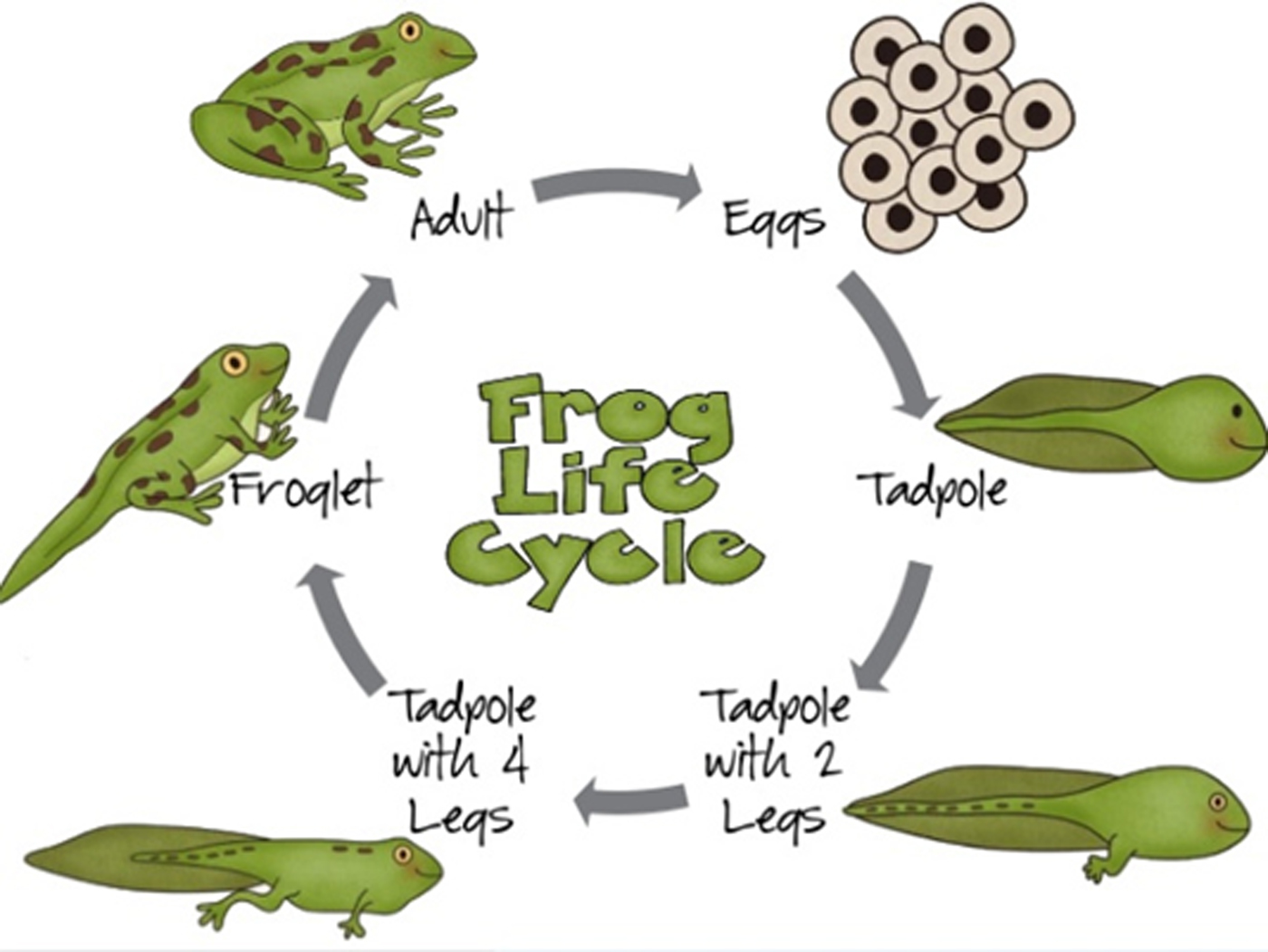
The second argument that is alleged to ‘compel’ us to embrace a process perspective is that all organisms undergo considerable morphological change over their course of their existence. Development is a feature of biology. In some species, indeed, the morphological changes are very drastic. Dupré and Nicholson ask us to consider, for example, the development of a frog from frogspawn to tadpole to fully-formed frog, as represented, for example, in Figure 1.
The Life-Cycle of a Frog (Source: kiddihouse.com).

This familiar example, say Dupré and Nicholson, ‘showcases some of the problems with the traditional understanding of organisms as things, or substances’.Footnote 9 No one, they say, could attempt to cling on to substance ontology here, by supposing that ‘despite the developmental transformations that organisms undergo, they nevertheless remain the same thing, or substance, throughout’.Footnote 10 But why not? Here is what they say:
‘The problem with this line of argument is that it is surprisingly difficult to specify what stays the same throughout the life cycle of an organism. To refer back to our example, when we consider a fertilised egg, an embryo, a tadpole, a froglet, and an adult frog, it is not clear what properties they all share beyond being temporal stages of the same individual process. In fact, there may well be no interesting properties shared by all’.Footnote 11
The clear assumption behind Dupré and Nicholson's argument here is that a substance metaphysician must accept the principle that the identity of an individual substance depends on the maintenance of some ‘interesting’ shared property throughout the life-cycle. But once again, one must question whether this is an assumption the substance theorist has to accept. What is the reason for thinking that is so?
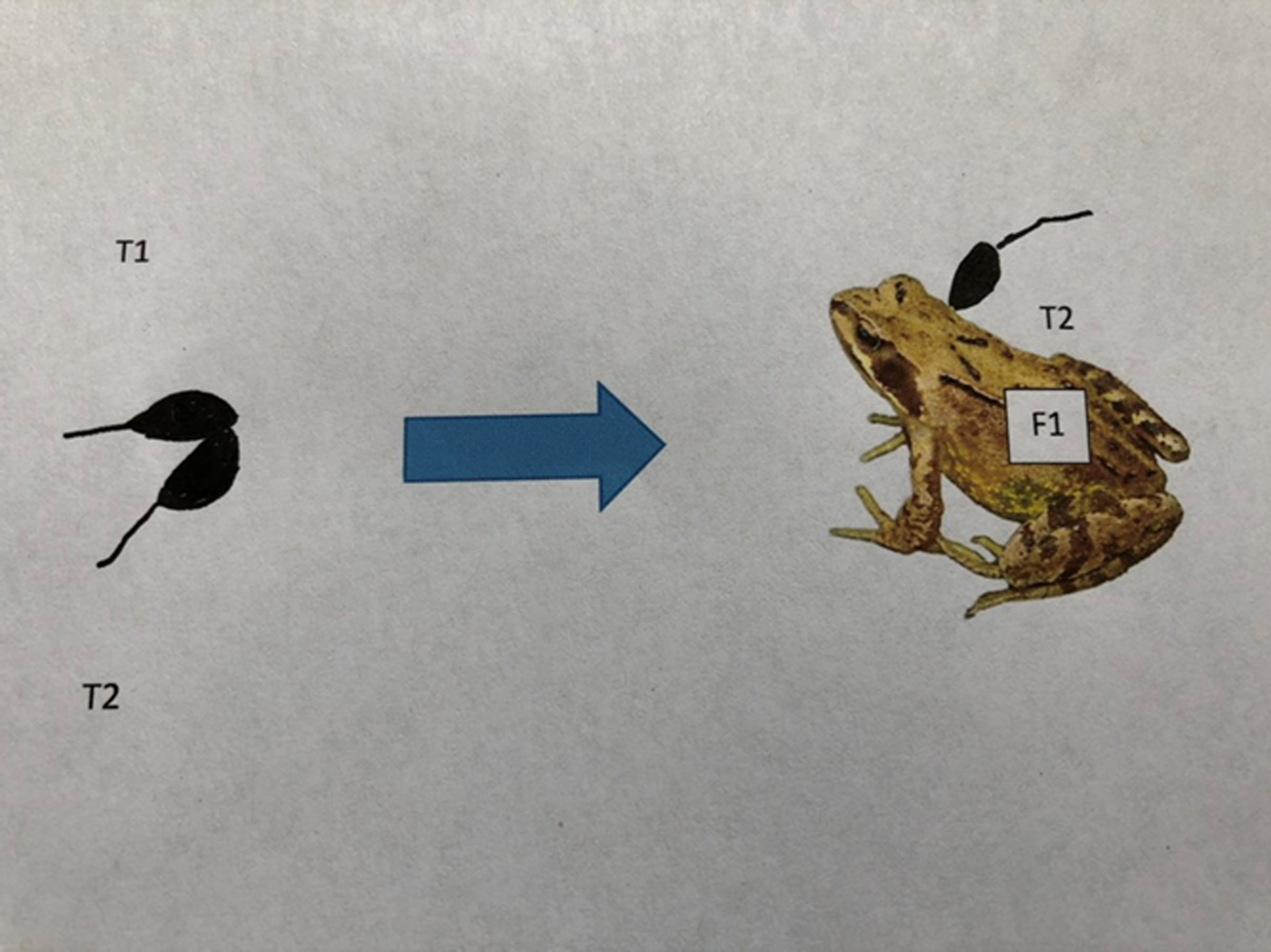
It might be said, quite reasonably, of course, that diachronic identity cannot be ‘brute’ – that we cannot just accept that a thing at one time just is numerically identical with a thing at another, without some explanation of what is supposed to be the ground for saying so. But it is not at all obvious that some ‘interesting’ property that remains predicable of that entity throughout is the only way of supplying such a ground (of course there are ‘uninteresting’ ones like ‘being organism O’ – but I am happy to accept the assumption that we are going to have to do a bit better than this). Here is an alternative suggestion: for living organisms, what supplies the ground of identity are facts not about the maintenance of static properties throughout the various processes of alteration and transformation, but rather facts about the regular structure and nature of the changes themselves, which those organisms tend to undergo. In particular, it is plausible that the relevant facts concern (i) the spatiotemporal continuity of the material elements involved in the changes; and (ii) the consistency of the form of these changes with those observed across some appropriate wider range of organisms, perhaps those of the species to which it belongs, but quite possibly either a broader or a narrower range, depending on how broadly or narrowly we describe the details of the transformative process.Footnote 12 We are permitted to regard an adult frog as the continuation of a tadpole, for example, because it emerges via a series of gradual changes from the portion of matter which constitutes the tadpole that preceded it – and moreover does so in a way which conforms to a pattern that we observe over and over again in frogs of a similar kind.Footnote 13 The second condition is needed as well as the first, because not just any old form of spatiotemporal continuity will do; it must be a form of spatiotemporal continuity we can recognise as characteristic in some way of the development of the kind of organism in question.Footnote 14 Suppose, for instance, a case of conjoined tadpoles, T1 and T2 which develop into a single frog with an attached unviable tadpole-part as shown in Figure 2. In a sense, T2, the tadpole which does not change into a frog, is spatiotemporally continuous with the eventual, viable frog. But we do not judge that T2 is F1, because it was not T2 which went through the predictable set of changes by means of which frogs emerge from tadpoles; and nor was it the single, conjoined entity which did that. It was T1 that became F1 – and in saying that tacitly rely upon facts about what tends to happen in the life-cycle of frogs (and indeed in life-cycles in general) to solve for identity – i.e. the second condition is required in order to help decide which kinds of spatiotemporal continuity are the ones that matter.
Development of Tadpole into Frog with Unviable Tadpole Part (frog taken from soil-net.com).

The role played by the second condition in supplying criteria for identity judgements in the case of living organisms of course implies that those criteria are receptive to empirical science. Perhaps before anyone had ever realised that frogs develop from tadpoles, these two very different frog-stages would have been assigned to different organism categories entirely, based on brute morphology. But this would have been, not a different and equally valid way of individuating things, but a mistake. As Aristotle notes:
‘animals and their organs and the elementary stuffs … differ from what is not naturally constituted in that each of these things has within it a principle of change and of staying unchanged, whether in respect of place, or in respect of quantitative change, as in growth and decay, or in respect of qualitative change … nature is a source or principle of change and staying unchanged in that to which it belongs primarily’.Footnote 15
It is these principles of change and of staying unchanged that we need in order to delineate the diachronic identity of a substance, and what they are for any given organism is not an a priori matter. We must frequently look to empirical observation – we must see what happens in the different kinds of case. But the crucial point here is that we do not need to find a single ‘interesting’ property or indeed any set of interesting properties that is retained throughout the existence of an organism in order to be able to single one out diachronically. What we need are rather certain predictable varieties of continuity and connectedness – and it is these that ground the judgement of diachronic identity.
Someone might worry that the facts of evolution might disrupt, in various crucial places, the inter-organismic consistencies of the form of change on which the above account of diachronic identity rests. It might be said that appealing to consistency of the form of life-cycle changes across a class of organisms, as I have done above, in order to try to characterise what changes are consistent with the diachronic identity of that organism, is bound to be dependent upon essentialist suppositions, inconsistent with the facts of evolutionary change. Suppose, for instance, a saltative mutation in some plant or animal gives rise to a creature whose life-cycle differs in some crucial respect from that of its parents – for the sake of making the point, we can imagine, for example, that a frog suddenly develops whose eggs develop directly into frogs without going through an intermediate tadpole stage. This imaginary creature's immediate offspring, we can suppose for argument's sake, will not now follow the precise life-cycle pattern of any extant animal. How then are we to utilise the second condition in order to judge that there is diachronic identity between parental eggs, on the one hand, and the frogs into which those eggs develop, on the other?
In practice, though, it does not seem difficult to answer that question, provided we do not fixate unhelpfully on the specific level of differentiation which we judge the mutation to have induced. Suppose, for instance, that biologists decided that this change should be considered to constitute speciation. Then it will be true that we will not be able to find a species-level type-identity in the ‘principles of change and of staying unchanged’ which now characterise this new organism-type (for by hypothesis, it is the first specimen of a creature which exhibits somewhat altered principles of development of this sort). Nevertheless, we are hardly going to be at a loss to know what to say about relevant diachronic identity questions concerning e.g which egg became which frog. It will remain plausible that at some lower level of specificity, sufficient commonalities to ground the relevant identity judgements will remain. There will still be spatiotemporal continuity, that is, between this frog's eggs and the frogs which develop from them, which will resemble the sorts of spatiotemporal continuities we are used to seeing between eggs and the oviparous creatures into which those eggs develop – and that is quite enough to enable criteria for the relevant diachronic identity judgements to be met.
At this point, indeed, there is an ad hominem point to be made against Nicholson and Dupré. So far as their own processual ontology is concerned, Nicholson and Dupré are at pains to insist that processes must not be conceived of as series of discrete temporal episodes – that this is ‘to overlook the very dynamicity that process philosophy is intended to emphasise’.Footnote 16 They reject the atomistic conception of processes as simple constructions out of instantaneous time-slices that they regard as characteristic of the Whiteheadean tradition.Footnote 17 But in that case, they, too, need an answer to the question of what permits them to appeal to individual processes, sustained over time, and that can be identified as the same individual process from one moment to another. In order to help with the task of providing such an answer, they point out the continuities in the processes by means of which frogspawn turns into tadpole and tadpole into frog – and note that there are in reality no sharp boundaries demarcating the different stages. But the question is why this very same dynamic continuity in processual development from egg to frog cannot be the principle which is appealed to by the substance theorist to ground the identity or organism throughout. Why is it the case that only the process theorist is permitted appeal to these continuities? There is a kind of metaphysical view, of course, which eschews numerical identity over time entirely, for entities of any kind, supposing that any judgement is always made for rather arbitrary reasons – and that the only way to avoid all possible risk of arbitrariness is to avoid judgements of diachronic identity completely. But this is emphatically not Nicholson and Dupré’s position. It is true of them, too, therefore, that they are going to need to rely on principles of continuity in order to individuate the processes which are to form the basis of their own ontology; and given that we shall apparently need them anyway, the mystery is why similar principles of continuity may not be invoked by the substance theorist.
I remain unpersuaded, then, that any facts about life cycles need trouble the substance metaphysician. In supposing that substance metaphysics requires that certain properties remain unchanged across the life of an individual, Dupré and Nicholson are simply attempting to pin a view on the substance metaphysician which is entirely non-obligatory – and which need by no means be embraced by the kind of theorist who hope to put substance metaphysics to work in the biological realm.
2.3 Ecological Interdependence
The third argument offered by Dupré and Nicholson – which I think is by some way the strongest of the three - contests two features that, they say, are often taken as defining characteristics of things or substances – their boundedness, on the one hand; and their autonomy, on the other. Their claim is that neither of these two characteristics can be squared with biological realities pertaining to the interdependence of organisms, interdependence which is sometimes so involved, intimate and crucial to the sustenance of life that it has been debated whether the interacting entities are really distinct organisms at all.
Boundedness first. Symbiosis is a good place in which to begin to think about the supposed issue with boundedness. Let us think for a moment about the relation between myself and my gut flora. Those gut flora fall spatially within the bounds of my body; and let us also suppose, for the sake of argument, that they are also utterly essential to my continued existence – that I cannot live without them and that their functioning could not be substituted for by any artificial means. Does this mean that there is an issue about my boundaries which the substance metaphysician cannot solve?
I am inclined to say that it does mean this: that it is unclear, for example, whether those gut flora are parts of me or not. My inclination would be to say that they are, so long as they are functioning essentially in the processes which keep me alive; others might have arguments for alternative views. But the question is what follows from the unclarity. Why does the substance metaphysician need to be committed to the view that all such questions about parts, wholes and boundaries must be clearly resolvable? It might be added that there are many other kinds of difficult question about spatial boundaries. Are my silver fillings part of me, for example? - or my prosthetic limb? What about warts and cancerous tumours? What about a foetus growing inside a pregnant woman? I accept that all these cases are unclear absent further probing of the sort that might deliver arguments for one conclusion or another; what I don't accept is that the substance metaphysician incurs any special responsibility to be able to resolve them. Once again, it is the Aristotelian tradition with its distinctively non-compositional way of thinking about substantial entities that helps us out here. On this tradition, it is crucial that substances are not identical with their material parts – this is what enables them to endure throughout replacement of the entirety of those parts, and to possess spatial boundaries which are flexible, so as to accommodate the unarguable facts of growth and morphological change and development. Why, then, should it be insisted that a substance metaphysician must be able to enumerate those parts precisely in order to insist that she is accurately able to single out a substance? The crucial question for singling out substances, for a substance metaphysician, is what the sortal concept is under which the substance is to be brought and what principles of change and being unchanged, to quote Aristotle, might be characteristic of that kind of thing. Attention to what those principles of change and being unchanged are might deliver the means of resolving some of these difficult cases. But we should also be open to the possibility that it might not do so, not definitively, not completely. So far as I can see, though, the substance theorist need not suppose it is otherwise. There need be no commitment in a substance metaphysics to the idea that we can resolve all questions about the spatial boundaries of a substance by appeal to the sortal concept under which that substance falls.
The point about independence is more difficult for the substance metaphysician to shrug off, I think, since substance metaphysics has undeniably long been bound up with claims about the independence of substances. But the question, I think, is what kind of independence is being envisaged here. The idea that substances might be causally independent of all others is plainly silly – quite apart from the deep interconnectedness between the lives of organisms and those of other organisms to which Dupré and Nicholson point, there are simpler facts which have been obvious for longer; each organism derives via reproduction from others (at any rate, once life has begun on earth); each organism requires nutrition to survive; and so on. Other organisms must produce each organism; each organism must be sustained by other organisms – these facts are incontrovertible and must be accepted. The question is, then, whether any role for the notion of independence may be retained within a substance metaphysics.
The best hope for the substance metaphysician here, I think, once again, is to return to Aristotle and to his original delineation of the notion of substance in the Categories. In the Categories, Aristotle is attempting to differentiate the category of substance from a number of other categories of entity – and in particular, I think, from the category of properties. The kind of independence being envisaged for substances here, then, is not causal or natural; broadly speaking, it is a logical distinction he is attempting to make, and hence it is a logical variety of independence which is at issue. Independence is supposed to help differentiate substances, specifically, from properties – the claim is that substances can exist ‘on their own’, while properties must inhere in something. This claim has long been found unsatisfactory by generations of commentators, for of course substances manifestly cannot exist without having some properties or other, and to that extent, the distinction Aristotle is trying to make might just look silly. Nevertheless, I believe there is something important to the thought that substances can (logically speaking) exist alone in a way that properties cannot. The thought is not that substances can exist without properties. No substance can be uncharacterisable – anything that exists is some way or other, and hence must have properties. But these properties that must be ‘had’ are not things additional to the individual substance in question. Callias, for example, is just Callias. He does not need to have properties added to him in order to exist – in singling out Callias, one has singled out a many-propertied individual already. Properties are not entities which must be added to a propertyless substratum in order to deliver a composite thing; for the concept of a propertyless substratum is senseless. No substance can be entirely uncharacterisable which implies that when one has got one in mind, one has already got a thing-with-properties, automatically, as it were.
Arguably, things are otherwise with properties; and certainly for Aristotle, who is famous for his cautious rejection of Platonism about universals, they are otherwise. I don't want here to enter the realism/nominalism debate about universals which would take me too far afield from my present purpose; but at any rate, I think we can say that it is not simply outrageous to allege that a property's mode of existence is inherence, which entails that it cannot exist outside a substance which possesses it; and hence that it has a kind of dependent status. There is, then, I think, a way of salvaging a notion of independence that can play a certain kind of role in a metaphysics of substance. But it is a way that takes a logical, not a causal or natural route to delineating the wanted notion of independence. Nothing living is independent of all other living things – and clearly, we must not accede to a notion of independence for substances that denies this.
3. A Positive Case for a Substance Ontology
Suppose then, that these various defences against the criticisms of substance metaphysics which are provided by Dupré and Nicholson are successful: where does that leave us? Clearly, responding to those criticisms is not enough to establish that a metaphysics of things ought to be embraced; and I want to make some quite large concessions to those who have worries about such an ontology, before indicating the grounds on which I believe we continue to need it. First: I am entirely happy to accept that various aspects of the theoretical frameworks current in fundamental physics provide other reasons for thinking that substances do not, at any rate ‘go all the way down’ to what might be thought of as the fundamental level – that there may be no enduring and spatially extended objects of the sort that substances are generally taken to be which feature in the ontologies appropriate to those theoretical frameworks. Perhaps, in fundamental physics, ‘everything must go’, to quote Ladyman and Ross.Footnote 18 Second: I am also entirely happy to accept, in fact, a claim made by Dupré and Nicholson in the course of their defence of the fundamentality of processes – namely, that there are processes which it is hard, or impossible, to ‘pin on’ any substance or even set of substances.Footnote 19 They mention rain, wind electricity and light as commonplace examples of subjectless or ‘unowned’ processes that are not the actions or undergoings of individual things – and while one might cavil about whether one or another of these examples might be shoehorned into a substance-based picture, I think the conclusion remains pretty much unavoidable that many processes are indeed best understood as subjectless: a good reason for thinking that we must be able to characterise the notion of process without reliance on the notion of substance, but not, I submit, a reason for thinking that there are no substances; or that living organisms are not good examples of such things. Third: it may not even be possible to argue safely that individual substances are basic to human cognition. There are intriguing arguments drawn from empirical data in linguistics and brought to prominence in the world of process philosophy by Johanna Seibt,Footnote 20 which seem to suggest that the category of individual substance is not linguistically fundamental for all languages but rather that its dominance is a distinctive feature only of the proportionately small subset of Indo-European ones. The jury is still out, I think, but I would not want to rule out the possibility that even an argument for the fundamentality of substances not to metaphysics, but to cognition might be an unrealistic prospect. Why then, do I bother? What is the point of defending the metaphysics of things against these rather specific arguments offered by Dupré and Nicholson, if there is no prospect of restoring its reign more generally, right across the whole of metaphysical reality?
The point that I do not to want to allow to be submerged by what, I allow, may be utterly devastating critiques of substance metaphysics considered as a general and all-encompassing view of reality is that the life sciences and the philosophy which pertains to those sciences might need substances in order to recognise something very important about what the evolution of life has eventually resulted in. There has always been a tradition in philosophy which has recognised that living things are the best examples of substances, as they were for Aristotle – think, for example, of Van Inwagen's suggestion that there is some y such that the xs compose y ‘if and only if the activity of the xs constitute a life’.Footnote 21 When the activity of the x’s constitutes a life, in Van Inwagen's view, there and only there do we have true reason to recognise a substance – because there and only there, arguably, is there the kind of cohesion and integration that could justify a non-reductive attitude. A rock, for example, has a certain unity, given it by its internal cohesiveness and its tendency to cohere together under a variety of common sorts of impact, pressure, motion, etc. ; but not much perhaps really rests on the question whether it is ‘really’ a separate thing in its own right, not reducible (at any given time) to a collection of atoms arranged rock-wise. I would myself allow the rock to be a thing of sorts – but though I disagree with van Inwagen about which entities we ought to recognise as entities, I accept the general idea that whatever one thinks it right to say, in the end, about the rock, there are additional reasons for thinking that living things need to be recognised as substantial individuals.
What are these reasons? The short answer is that living things are integrated and organised so that their unity as individuals, both synchronic and diachronic, amounts to a far more important kind of causal-explanatory structure than that made available by the mere cohesiveness of a rock, a causal-explanatory structure without appeal to which we would lack the resources to understand how a great many earthly events happen. The longer answer would consist of the list of emergent phenomena which seem to depend upon life and which appear to require substantial entities for their elucidation. Consciousness is the most widely-discussed of these – it has long been thought of as the paradigmatic emergent phenomenon, something which it seems utterly impossible to explain by reference only to the physical and structural properties of the creatures in which we tend to believe some form of it exists. And arguably consciousness requires a substance metaphysics – consciousness requires a subject of consciousness, and it is hard to accept that such a subject might itself be a set of processes. Can processes really have experiences? What is then to be the account of the synchronic unity of experience whereby, e.g. a tactile and a visual experience, a thought and an emotion can be present at the same time for the consciousness of a single subject? Distinct processes may of course be simultaneous, but how precisely are we to think of this simultaneity as represented to a conscious mind without reliance on the notion of a substantial subject in which the inputs from different processes are integrated together? These problems famously vexed Hume, who tried to account for experience without reference to any subject of experience.Footnote 22 I do not think these problems with the no-ownership view of experience have ever been solved.
But in fact it is not through reflections upon consciousness but rather through thinking about agency that I have reached my own conclusion that we require a substance ontology. No agency which reduces merely to deterministic processes involving the causal action of neuron on neuron, fibre on fibre is worth the name; and neither does the introduction of randomness into the relevant processes help one jot with the understanding of how agency is possible. There must, then, if there is to be such a thing as agency at all, be such a thing as the top-down exercise of power by a whole, integrated animal, capable of the integrated appreciation of information and the deployment of that information in action at its own discretion, so as to bring about movements and changes in its smaller parts.Footnote 23 That is, in my view, what evolution has produced – beings which deserve and indeed require to be recognised as causally potent realities over and above the realities constituted by their smaller parts, and over and above the realities constituted by the causal processes going on in those parts. Animals make things happen by exercising powers to initiate and direct processes within themselves; and if this is true, agency requires agents. That is why it would trouble me greatly if the philosophy of biology were to decide that it could or should dispense with a metaphysics of things – and why I hope and believe that nothing in Dupré and Nicholson's vision of the ontology appropriate to organisms precludes the recognition of the existence of enduring agents.