It is a very special honour for me to be speaking to you this morning at the opening plenary session of the 2017 World Congress for Pediatric Cardiology and Cardiac Surgery. I would like to thank Sertac Cicek and the meeting organisers for this opportunity and also to congratulate them on the meticulous organisation of this Barcelona World Congress.
My theme for today’s presentation is the theme of this meeting: the importance of teamwork in caring for patients and families impacted by CHD. We will examine not just the benefits of teamwork but in addition we will look at the very real risks, one in particular that the team approach involves.
But first, I want to introduce to you the Society that I represent here today, the World Society for Pediatric and Congenital Heart Surgery.
Some of you who have not had an opportunity to attend previous World Congresses may be wondering what organisation is responsible for this meeting. Almost all the national and international meetings we attend function as the annual meeting of a Society or Association. These societies, in addition to organising an annual meeting, play a key role in advocating on behalf of its membership. That is not the case for the World Congress, which is simply a gathering together of those of us who care for patients and families with CHD. For advocacy, congenital heart surgeons have relied in the past on the major national and international cardiac and thoracic organisations. However, these organisations are dominated by a focus on acquired heart disease. We have had little opportunity to influence major policy decisions, but that is changing.
The World Society for Pediatric and Congenital Heart Surgery
New organisations specifically focussed on the care of the individual with CHD have been formed. This gives us a stronger voice in matters of importance to our specialties. One of these organisations is the World Society for Pediatric and Congenital Heart Surgery, the only global organisation specifically focussed on heart surgery for CHD.
The origins of the society go back to the first joint meeting of the North American Congenital Heart Surgeons Society and the European Congenital Heart Surgeons Association in Montreal in 2004 (Fig 1). During that meeting a group of past presidents of the Aldo Castaneda Society discussed the idea of forming a global congenital cardiac surgical organisation and agreed that a meeting should take place at the World Congress of Pediatric Cardiology and Cardiac surgery in Buenos Aries in 2005 to discuss the concept further. There was enthusiastic support, and following an initial meeting of a constitutional council in Philadelphia in 2006 the first scientific meeting took place in Washington, DC, 3–4 May, 2007.
History of the World Society for Pediatric and Congenital Heart Surgery.

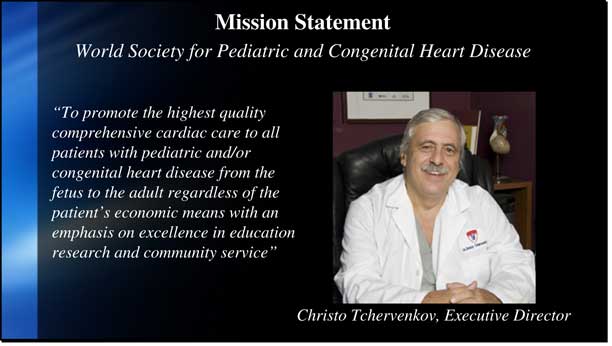
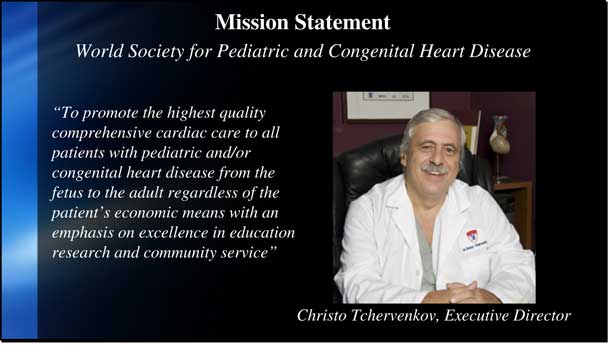
A mission statement was developed as follows: “To promote the highest quality comprehensive cardiac care to all patients with pediatric and/or congenital heart disease from the fetus to the adult regardless of the patient’s economic means with an emphasis on excellence in education, research and community service” (Fig 2).
Executive director of the World Society for Pediatric and Congenital Heart Surgery, Dr Christo Tchervenkov.
Accomplishments of the society have included highly successful biennial meetings in Cairns, Istanbul, Sao Paulo, and most recently in Abu Dhabi where over 600 attendees participated in 4 days of presentations and seminars designed to share cutting-edge advances from around the world.
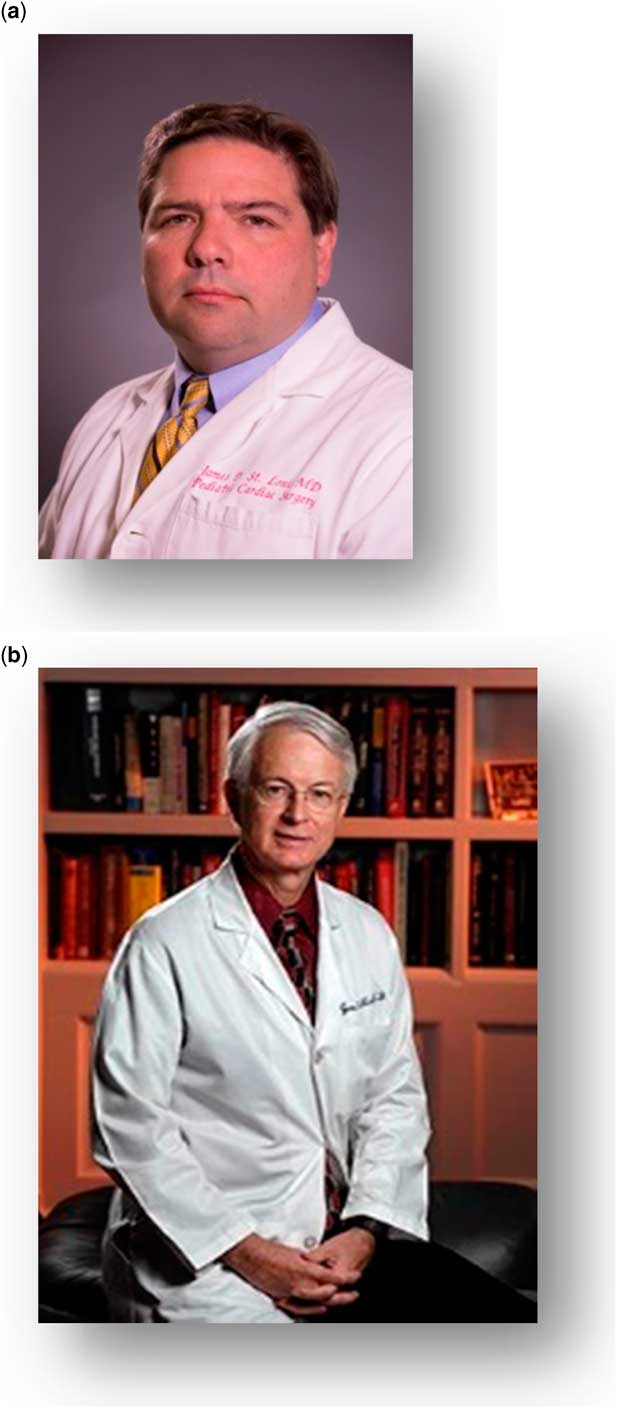
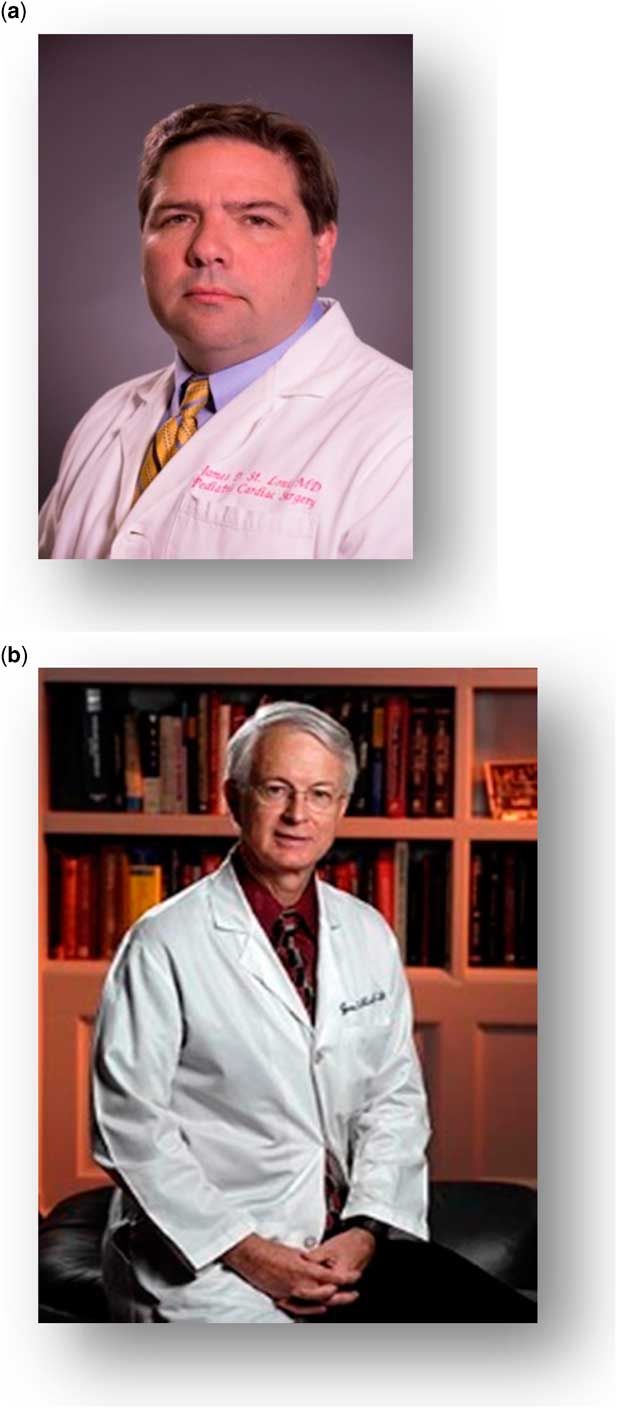
The Abu Dhabi meeting also was an important milestone in the development of a new Quality Improvement tool, the World Society database. The database has been established at the data centre at the University of Alabama under the very capable direction of Dr Jim Kirklin and Dr Jim St Louis (Fig 3).
Jim St Louis ( a ) and Jim Kirklin ( b ) have designed and developed the World Society database for the World Society for Pediatric and Congenital Heart surgery.
As a specialty, cardiothoracic surgeons like Dr John Kirklin pioneered the development of data collection. We embarked on the difficult challenge of risk adjustment to allow a fair comparison of outcomes from different centres with different populations of patients. However, there is a fundamental limitation of national or regional databases and that is the rarity with which certain lesions occur and the many surgical approaches that can be applied. It is the goal of the World Society to accumulate sufficient numbers of patients to allow more accurate comparison of outcomes and most importantly to look beyond the limited 30-day mortality outcome and instead pursue a 1-year survival outcome as an important yardstick for performance. In addition, the World Society database will have the advantage of the most up to date internet capabilities that were not available in the early formative years of databases such as the STS database. Most importantly the World Society database will be available in countries where cardiac surgery is expanding rapidly, such as India and China as well as throughout South America and Africa.
In addition to the World Society database, the World Society has established the only journal devoted to congenital heart surgery. Under the magnificent editorial leadership of Dr Marshall Jacobs the journal has maintained a remarkably high level of scholarship and literary consistency. The journal has already achieved indexing by Index Medicus.
During my early years as a congenital heart surgeon I was incredibly fortunate to have the opportunity to work with Project Hope in helping to develop cardiac surgery in China. The mantra of Project Hope is the well-known saying, “feed a man a fish and you feed him for a day, teach a man to fish and you feed him for a lifetime”. The World Society strongly supports this concept and believes that in order to achieve the goals of our mission statement, we cannot simply undertake surgical tourism with visits of surgical teams to developing countries. Our role should be to facilitate the education of surgeons and to facilitate the team building and resource recruitment that is an essential part of managing CHD today.
So let’s talk about teams.
The importance of cohesive teams in managing CHD
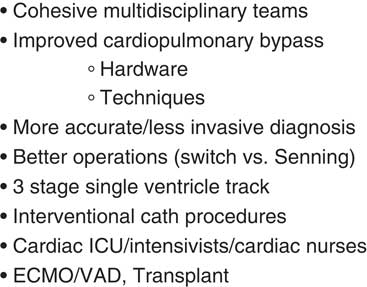
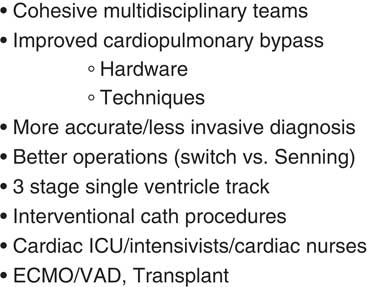
Cohesive multi-disciplinary teams have been the most important reason for improving outcomes for congenital cardiac surgery (Fig 4). You might wonder why I chose a clip of Australian football to illustrate the importance of teamwork in what we do. Well I chose it because as a young schoolboy growing up in Australia it was mandatory at my school and at many schools back in that century to play Australian football. The primary rationale was NOT … that it made you fit … or that it toughened you up to face the challenges that life would throw at you in the future. There was one rationale that we heard over and over again and that was that football taught you the importance of teamwork. I also chose Australian football to emphasize a key point about this meeting: this is not a Spanish meeting or a European meeting, it is the WORLD Congress. Our specialties are multinational and know no borders. We work together to achieve the best outcomes for our patients and families. We don’t put ourselves first, or our hospital first or our cities first or our countries first. Our teams always put the patient first.
Factors responsible for improved results for congenital heart surgery over the last three decades.
The American College of Surgeons has recognised the importance of physician-led team-based surgical care and published a statement to this effect in June, 2016. The statement reads that “coordinated surgical care provides the best outcomes, lowers costs and increases patient satisfaction”. The principles that are emphasised include
-
∙ Patient involvement with shared decision-making.
-
∙ Risk stratification, risk reduction, and optimisation of patients prior to surgery.
-
∙ Standard adherence to high reliability and safety standards.
-
∙ Evidence-based case to reduce variability and perioperative complications.
-
∙ Effective coordination of care among healthcare providers in the perioperative care of the patient.
The statement points out that there are important opportunities for ongoing improvement in the areas of consistency, reliability, and communications and handoffs. It concludes that while the roles and responsibilities of specialists are developed locally based on population needs and training and skills of physicians involved, models must recognise that for patients undergoing surgery the operative surgeon must shoulder the primary responsibility for coordination of care, which includes confirming the presence of a surgical condition, verifying the need for surgical treatment, and directing and partnering with others for perioperative care.
Challenges for congenital cardiac teams
As cardiac teams have been established at centres around the world, care has improved but there are also challenges that need to be recognised, analysed, and managed. The particular challenges of maintaining strong teamwork under demanding conditions have been emphasised by General Stanley McChrystal in his New York Times bestselling book “Team of Teams”Reference McChrystal 1 McChrystal is a retired four-star general and was commander of all coalition and American forces in Afghanistan. His earlier experiences in Iraq taught him that the traditional hierarchical structure of the army was overwhelmed by the agility of the numerous insurgent forces with various loyalties and agendas. The book emphasises that “McChrystal had to learn how to acquire the enemies’ speed and flexibility; he discarded conventional military wisdom and re-engineered the task force into a network that combined extremely transparent communication with decentralized decision-making authority. The walls between silos were torn down. He looked at the best practices of the smallest units and found ways to extend them to thousands of people on 3 continents using technology to establish a oneness that would have been impossible even a decade earlier. The taskforce became a team of teams, faster, flatter and more flexible”.
We in the congenital cardiac world can draw lessons from McChrystal’s experience because there is no question that the healthcare environment is constantly changing. These are not just changes in the technology, pharmacology, and practices but even more important are the rapid changes in the political landscape including the support of the healthcare sector by governments and private insurers. We must have a nimble team of teams which is going to be in a position to respond to these rapid changes. We should have independent decision-making for our intensive care teams, our cardiac anaesthesia teams, our nursing teams as well as cardiology and cardiac surgery teams while maintaining coordination, overall transparency, and communication. And while the mantra of team-based care is recited more and more often at hospital meetings and meetings like this, it is also important to recognise that there are limitations to team-based care. The columnist Schumpeter pointed out in the Economist that a good rule of thumb is that as soon as generals and hospital administrators jump on a management bandwagon, it is time to ask questions. Lee Thompson of the Kellogg School of Management has stated that “teams are not always the answer – teams may provide insight, creativity and knowledge in a way that a person working independently cannot; but teamwork may also lead to confusion, delay and poor decision making”. Another analyst of teamwork Richard Hackman of Harvard has pointed out that teams can be hampered by problems of coordination and motivation that chip away at the benefits of collaboration. High fliers forced to work in teams may be undervalued and free riders empowered. He concludes that organisations need to put a lot of thought into the overall management of teams. They need to rid their minds of sentimental egalitarianism: the most successful teams have leaders who set an overall direction and clamp down on dithering and waffle. As Jeff Bezos, the founder of Amazon and owner of my hometown newspaper, the Washington Post said “if I see more than 2 pizzas for lunch, the team is too big”.
Fragility of congenial heart teams
Not only are there limitations to team-based care. In addition congenital heart teams are fragile. There are a number of factors that threaten the stability of congenital heart programmes. One factor is the rapidly changing balance of power between cardiology and surgery that has occurred over the last three to four decades.
When I was a surgical registrar at Royal Children’s in Melbourne in 1979 there were three cardiologists and two staff surgeons. Today at Children’s National we have three staff surgeons and more than 40 staff cardiologists to manage a similar volume of cases.
The change in staff numbers is reflected also in the change in revenue generated by cardiac surgery versus cardiology over the last 30–40 years. Where surgical procedures used to generate by far the bulk of the hospital income, today cardiology generates substantially more income than cardiac surgery. This is a consequence of the multiple new subspecialist areas including the cardiac ICU and numerous new imaging modalities including echocardiography and cardiac MRI. The expansion of congenital teams has resulted in a risk that inadequate hospital resources will be allocated by hospital management to the congenital cardiac programme. This is a particular problem in combined adult and paediatric hospitals where the entire paediatric budget is insignificant relative to the adult budget. Within paediatric hospitals it can also be a consequence of a traditional administrative structure in which the chief of cardiac surgery answers to a chief of surgery who answers to the CEO and board of the hospital. Unless the chief of cardiac surgery has seniority within the hospital hierarchy he or she is likely to be just one of many voices to whom the chief of the surgery must respond. This can result in inadequate operating room time and personnel and inadequate ICU beds and nursing staff.
Another challenge is the many roles expected of the surgeon. While there are numerous cardiologists to fulfil each of the various roles including teaching, research, intensive care support, perfusion and anaesthesia oversight, administrator and personnel manager, fundraiser, marketer and hospital politics, there may be only two or three surgeons to manage all of these various roles.
All of these factors contribute to the fragility of congenital heart programmes and have unquestionably contributed to failure of many congenital cardiac programmes.
The best solution to managing this fragility in most institutions is the development of a heart institute structure in which there is co-direction by cardiology and surgery in conjunction with cardiac anaesthesia, cardiac ICU, and cardiac nursing. With this structure the most senior administrator within the group can advocate for a junior surgeon in a way that is not possible for the chief of surgery who has too many competing allegiances with other surgeons.
Challenges in recruiting skilled congenital cardiac surgeons as general cardiothoracic training contracts
Another equally important challenge to the stability of congenital heart programmes is the increasing threat of inadequate surgical manpower emerging in many countries and an overall maldistribution of well-trained surgeons internationally. In the United States of America the number of trainees entering general cardiothoracic training, which is the pipeline to the education of congenital cardiac surgeons, has been seriously underfilled for almost 10 years. The latter problem was highlighted in a study that the American Association for Thoracic Surgery commissioned when I was president of the Association. It was undertaken by the American Association of Medical Colleges in Washington, DC.Reference Grover, Gorman and Dall 2
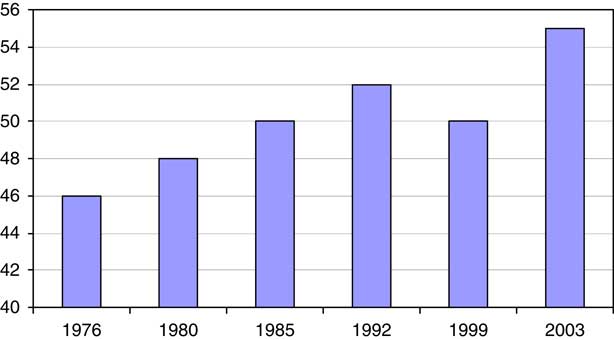
Figure 5 illustrates that by 2003 there had been a substantial increase to age 55 of the mean age of the cardiothoracic workforce in the United States of America. Thoracic surgery has been identified in this and other surveys as the surgical specialty practised by the oldest surgeons as a group. Eight years ago in 2009 42% of cardiothoracic surgeons were 55–69 years old and 12% were 70 years or older.
By 2003 there had been a substantial increase to age 55 of the mean age of the cardiothoracic workforce in the United States of America. Thoracic surgery has been identified as the surgical specialty practiced by the oldest surgeons as a group.
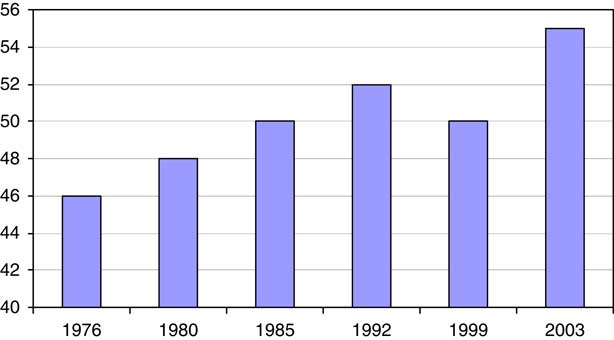
The number of active thoracic surgeons peaked in 2003 and has been declining ever since; 44% of surgeons indicate that they plan to retire from active full-time practice between ages 66 and 70 and more than one-fourth plan to retire before age 65.
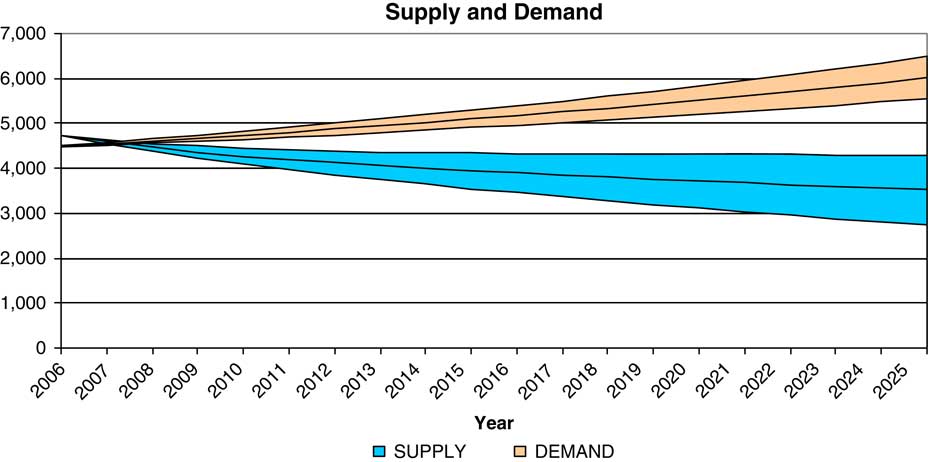
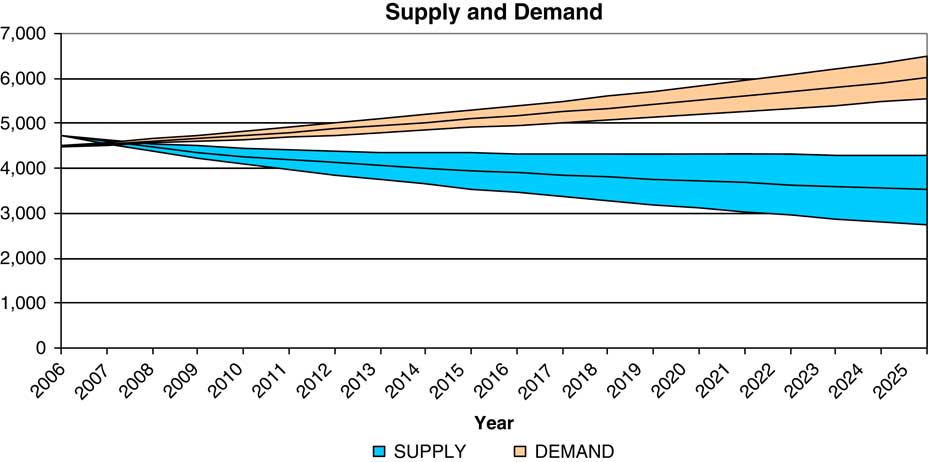
Figure 6 illustrates the disparity between the supply and demand for cardiothoracic surgeons. Even with complete elimination of coronary bypass and introduction of new technology such as catheter-delivered valves, all recent analyses have predicted a shortage of cardiothoracic surgeons.
An inadequate number of applicants for training positions in general cardiothoracic surgery is leading to an important gap developing between the number of general cardiac surgeons and the need for cardiothoracic surgical procedures.
Congenital cardiac surgeons require a wider range of skills and considerably greater depth of knowledge of physiology and cardiac anatomy than is required for adult cardiac surgery. Thus, only the most talented young surgeons graduating from general cardiothoracic surgery are equipped to achieve success as a full-service congenital cardiac surgeon. The accuracy of this statement is now being reflected in the salary levels of congenital cardiac surgeons in the United States of America relative to adult cardiac surgeons, where a factor of two or three times is not uncommon. Increasing salaries also reflect the shortage of fully skilled congenital surgeons able to achieve excellent results for the entire range of neonatal, infant, and older patient congenital cardiac surgery. Another relevant observation is that centres in the United States of America just in the last year or two as well as in other countries including the United Kingdom have found it necessary to recruit congenital surgeons from countries outside of their own borders. Unfortunately, barriers to international training and practice of congenital cardiac surgery are being strengthened in the United States of America and a number of other countries rather than being relaxed.
Barriers to international training and recruitment exacerbated by the American Board of Thoracic Surgery
In the past, trainee surgeons have benefitted enormously from the opportunity to undertake part of their training in international centres. Many of the senior leaders in congenital heart surgery in the United States of America spent time training in international centres such as Great Ormond Street London, Royal Children’s Hospital in Melbourne Australia, Green Lane Hospital in Auckland New Zealand, and the Hospital for Sick Children in Toronto. Unfortunately, today there are numerous forces at work to impede the international movement of trainees and which place barriers to the movement and certification of surgeons as they move from one country to another.
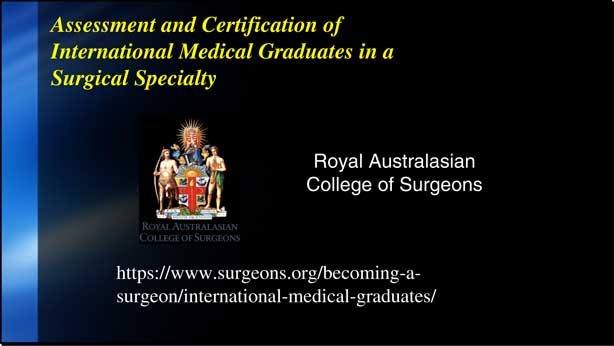
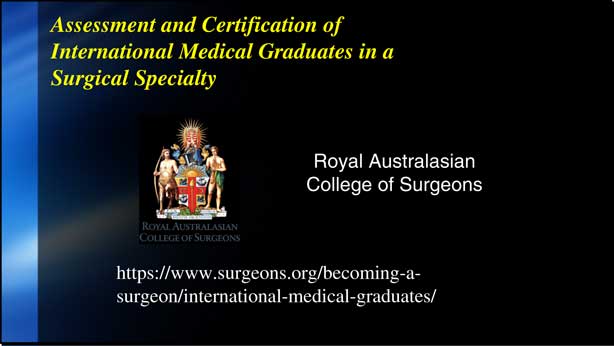
However, Australia and New Zealand are exceptions to this trend of excluding foreign-trained surgeons. These countries have developed an impressive system for admitting foreign-trained cardiothoracic surgeons, which includes processes that are parallel and similar to those that are used to license foreign-trained physicians in general (Fig 7).
The Royal Australasian College of Surgeons has been pioneering the assessment and certification of international medical graduates in surgical specialties.
Interestingly, this system of licensing of international surgeons was not a choice by the Australasian College of Surgeons but resulted from political and media pressure when understaffing in public hospitals became excessive. The College of Surgeons was accused of deliberately restricting the licensing of foreign surgeons in order to boost private practice incomes. I suspect it will take a crisis and subsequent political pressure in the United States of for the American Board of Thoracic Surgery to take similar steps.
But let us turn now to an even greater threat to quality care of our patients than inadequate manpower that has resulted from wide-spread adoption of team-based care. The most important challenge facing teams today is a loss of empathy.
The greatest risk of the team approach: a loss of empathy for the patient and family
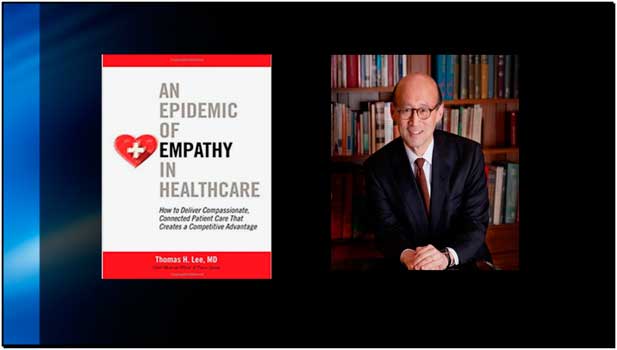
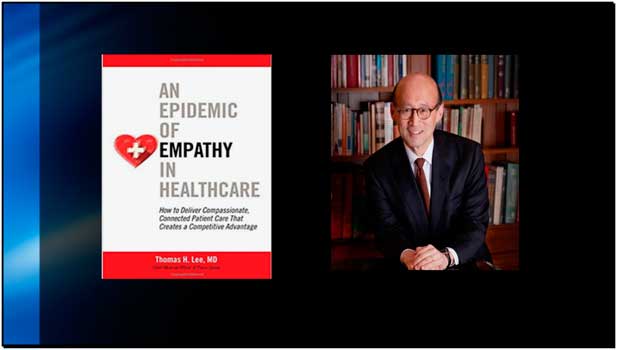
Tom Lee was a fellow in cardiology with me at the Brigham & Women’s Hospital in Boston in the early 1980s. He has written a wonderful book that I thoroughly recommend to you entitled “An epidemic of empathy in healthcare: how to deliver compassionate, connected patient care that creates a competitive advantage” (Fig 8).Reference Lee 3 He focusses on the subspecialisation that is an inevitable component of the team-based care of the patient. No longer is there is a single compassionate and caring Marcus Welby-like family physician who supports and encourages a patient through their illness. In place of the single-caring physician, we have a team of narrowly focussed subspecialists none of whom may bear the ultimate responsibility for truly caring for the patient. Tom quotes the old joke that “doctors today have a choice of learning more and more about less and less until they know everything about nothing; or they can know less and less about more and more until they know nothing about everything”. George Bernard Shaw and Sigmund Freud have pointed out … where there is humour, look for truth. The truth is that in most of medicine the trend towards specialisation has come at the expense of the holistic approach to the patient. Lee cites the case of his own patient, a 42-year-old man who died with chronic lymphocytic leukaemia. At his final complex hospitalisation many different physicians at the Brigham were involved. It was not clear whether the deterioration was being caused by metastatic cancer or infection and the family received various messages that were confusing and sometimes contradictory.
Dr Tom Lee was a cardiologist at the Brigham & Women’s Hospital who worked with the author in the early 1980s. Dr Lee has authored a textbook entitled “An Epidemic of Empathy in Healthcare”.
The patient’s primary nurse called a family meeting at which the patient’s wife opened by saying, “our family didn’t need this meeting. You did. I need all of you on the same page. You are telling us different things and it is scaring us”. When we in the congenital cardiac world have patients with complex and challenging problems, particularly those who have been in our ICU for several weeks with a series of problems, there is no question that we frequently hear a very similar complaint from families: “I am getting different messages from different carers and I am confused”.
We are learning that regular family meetings for the chronic and complicated patient are an essential part of the empathetic care for the family and the patient. We have also learned that daily meetings of all relevant caregivers are a critically important component of the safe and consistent management of all patients in our cardiac ICU and ward.
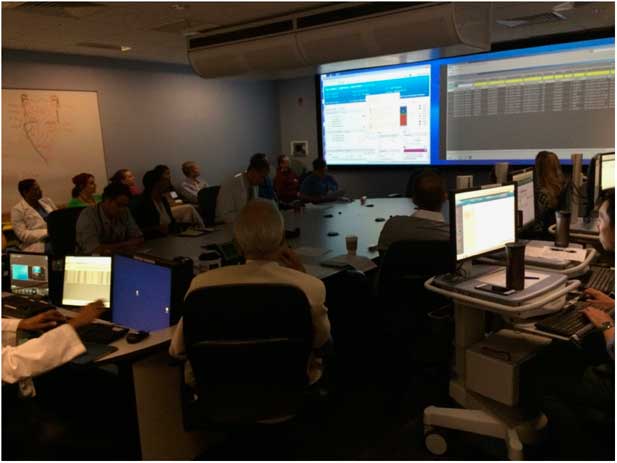
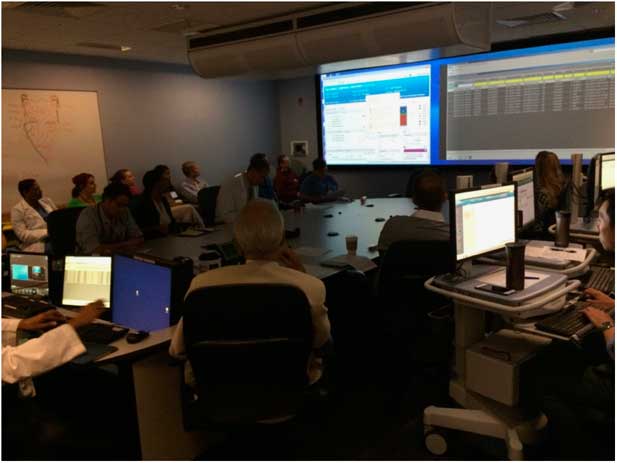
At Children’s National in Washington, DC we begin every morning with a multi-disciplinary team meeting that includes the ICU staff and fellows, surgical staff and fellows, a cardiologist, representatives of the interventional cardiology team and heart failure team as well as nursing staff and paramedical staff (Fig 9). In the past we undertook no more than one or two weekly meetings, particularly the preoperative cardiosurgical conference and pre-interventional catheter conference, to discuss upcoming patients. These multi-disciplinary weekly meetings continue to be just as important as the daily clinical progress meetings. Information is shared regarding not only the diagnostic findings of the patient’s congenital cardiac anomaly and the planned surgical or interventional catheter approach but in addition this is an important venue for sharing information regarding the expectations of the child’s referral cardiologist outside of the institution, and most importantly, expectations and information regarding the family and patient. The inevitable pressures of subspecialisation are regularly witnessed at such conferences where the presenting fellow may simply begin with an anatomical description of the patient’s anomaly followed by presentation of the echocardiogram. It is incumbent on the more senior clinicians to constantly preach the message of caring for the patient as a human being and member of a family and not simply a collection of diagnostic studies.
Morning multi-disciplinary rounds in the cardiac ICU at Childrens’ National Medical Center in Washington, DC include representatives from all components of the heart institute. This facilitates communication between caregivers and most importantly allows presentation of a uniform message to patients and families.
Tom Lee has emphasised the importance of this continuing education and emphasis on looking at the patient as a human being and not just a disease process through the title of his book “ An Epidemic of Empathy in Healthcare”. He points out that many healthcare organisations including our own have used “carpet bombing strategies, in which all personnel are simply urged to be more empathetic”.
Many of you have seen the wonderful Cleveland Clinic video that conveys this message.
Another approach rather than simply encouraging all employees to be more caring that Tom Lee emphasises in his book is the concept beautifully described by Malcolm Gladwell in his book “The Tipping Point”.Reference Gladwell 4 He points out that “the success of any kind of social epidemic is heavily dependent on the involvement of people with a particular and rare set of social gifts”. Certain individuals within a community who have broad social networks and strong communication skills can be responsible for more effective marketing of a concept than simply broadcasting a message at management and staff public meetings. He states, “the goal is to make well respected, connected personnel who understand empathic care become the drivers of its spread: in effect the typhoid Marys of the empathy epidemic”.
Tom Lee, who is now chief medical officer of the data gathering company Press Ganey, emphasises that data gathering by hospitals should not only focus on financial productivity but must focus on gathering data from patients and family. He states that that the basic question “Would you recommend this institution for care of a loved one to others?” is a fundamental and simple measure of how well an organisation is delivering empathic care. One survey after another has clearly documented that the answer to this question is rarely driven by factors such as quality of the cafeteria food and parking but is heavily dependent on the fundamental question: are the clinicians within a hospital comforting and caring?
Conclusion
In conclusion, ladies and gentleman, the future is bright for those of us who care for neonates, infants, and adults with CHD as well as their families. Major advances are occurring in the field of ventricular assist devices and our understanding of the genetic basis of cardiac development and CHD. Our bright future continues to be reflected in the job satisfaction that we are fortunate to derive from our daily efforts. Amongst cardiothoracic surgeons congenital surgeons rank consistently rank as the most satisfied even though their work hours are among the longest of any specialty.
There are many reasons for the job satisfaction of congenital surgeons. Certainly one of the most important is the joy of watching many of our challenging patients progress though life’s important milestones.
But another reason that sets us apart from many surgical specialties is that we have the pleasure of working within a team, a team that is symbolised by the theme of this meeting.
Acknowledgements
None.
Financial Support
This research received no specific grant from any funding agency, commercial or not-for-profit sectors.
Conflict of Interest
None.