INTRODUCTION
In the absence of control measures aimed at reducing exposure, successful treatment of intestinal helminth infections is followed by re-infection. The rate of re-infection following anthelmintic chemotherapy varies between helminth species and, at the population level, is related to the life expectancy of species (short-lived helminths re-infecting more rapidly), the intensity of transmission within a given community (higher intensity, faster re-infection), and the efficacy and coverage of treatment (poor efficacy and coverage, faster re-infection) (Anderson and Medley, Reference Anderson and Medley1985). Re-infection will also differ according to individual and household level differences in exposure and susceptibility to infection. For example, certain individuals and families are predisposed to re-acquire light or heavy infection (Bundy and Medley, Reference Bundy and Medley1992), whilst the rate of re-acquisition of helminth infection is often greatest among young children perhaps due to acquired immunity that has not fully developed (Bundy et al. Reference Bundy, Cooper, Thompson, Didier and Simmons1988; Kabatereine et al. Reference Kabatereine, Vennervald, Ouma, Kemijumbi, Butterworth, Dunne and Fulford1999). However, the extent to which re-infection rates vary by households or specific geographical location within communities is poorly understood, with few studies investigating the influence of individual, household, and environmental factors in determining re-infection rates (Saathoff et al. Reference Saathoff, Olsen, Sharp, Kvalsvig, Appleton and Kleinschmidt2005; Hesham Al-Mekhlafi et al. Reference Hesham Al-Mekhlafi, Surin, Atiya, Ariffin, Mohammed Mahdy and Che Abdullah2008) and to our knowledge none that investigate the influence on re-infection intensity.
In this paper, we report rates and intensity of re-infection with Necator americanus (hookworm) and Schistosoma mansoni from a longitudinal study, which forms part of a continuing programme investigating the immuno-epidemiology and dynamics of human helminth infection to guide current vaccine trials in Brazil (Fleming et al. Reference Fleming, Brooker, Geiger, Caldas, Correa-Oliveira, Hotez and Bethony2006; Brooker et al. Reference Brooker, Alexander, Geiger, Moyeed, Stander, Fleming, Hotez, Correa-Oliveira and Bethony2006, Reference Brooker, Jardim-Botelho, Quinnell, Geiger, Caldas, Fleming, Hotez, Correa-Oliveira, Rodrigues and Bethony2007; Geiger et al. Reference Geiger, Caldas, Mc Glone, Campi-Azevedo, De Oliveira, Brooker, Diemert, Correa-Oliveira and Bethony2007; Jardim-Botelho et al. Reference Jardim-Botelho, Brooker, Geiger, Fleming, Souza Lopes, Diemert, Correa-Oliveira and Bethony2008; Pullan et al. Reference Pullan, Bethony, Geiger, Cundill, Correa-Oliveira, Quinnell and Brooker2008). Understanding the rate and intensity of re-infection will help identify target populations, examine the role in the reduction in force of infection, estimate sample sizes and determine appropriate follow-up times in studies of vaccine efficacy. In addition, factors affecting the rate and intensity of re-infection may be used to guide activities to reduce exposure as well as inform strategies around integrated control measures for neglected tropical diseases. Here, we quantify the rate and intensity of re-infection, and investigate the influence of socio-economic, geographical and environmental factors.
MATERIALS AND METHODS
Study area and population
The study was conducted in Americaninhas in the state of Minas Gerais in southeastern Brazil. As previously described (Brooker et al. Reference Brooker, Alexander, Geiger, Moyeed, Stander, Fleming, Hotez, Correa-Oliveira and Bethony2006, Reference Brooker, Jardim-Botelho, Quinnell, Geiger, Caldas, Fleming, Hotez, Correa-Oliveira, Rodrigues and Bethony2007; Fleming et al. Reference Fleming, Brooker, Geiger, Caldas, Correa-Oliveira, Hotez and Bethony2006; Geiger et al. Reference Geiger, Caldas, Mc Glone, Campi-Azevedo, De Oliveira, Brooker, Diemert, Correa-Oliveira and Bethony2007; Jardim-Botelho et al. Reference Jardim-Botelho, Brooker, Geiger, Fleming, Souza Lopes, Diemert, Correa-Oliveira and Bethony2008; Pullan et al. Reference Pullan, Bethony, Geiger, Cundill, Correa-Oliveira, Quinnell and Brooker2008), the study site is divided by a high ridge of land running north-south, separating the study area into 2 distinct zones or catchments of a watershed (east/west). The houses are predominantly made from concrete or from a combination of wood and mud, and typically have poor sanitary facilities. Water is distributed by a series of ‘makeshift’ bamboo canals, and the most common water contact occurs during agricultural work or through water supply to the household. The majority of the population is involved in subsistence farming or cattle ranching.
Study design
A longitudinal study was conducted to investigate patterns and determinants of re-infection. A baseline household survey was conducted from June to September 2004, and a follow-up survey was conducted between November 2005 and March 2006. The individuals included in the follow-up survey were those aged 5 years and over in the baseline survey, consented to participate in the follow-up survey, and met the following inclusion criteria (which were also applied in the baseline survey): reported that they had not received anthelmintic treatment outside the study or participated in another helminth study within the last 30 days; worked or attended school inside the study area; were not severely anaemic (haemoglobin (Hb) concentration <80 g/L); and in the case of females of childbearing age, had a negative urine pregnancy test.
Each household was visited and individuals were asked to provide stool samples on 2 consecutive days (if possible). The presence of hookworm and S. mansoni infection was determined using the formalin-ether sedimentation technique. Intensity of infection was estimated as the number of eggs per gramme of feces (epg) using the Kato-Katz fecal thick smear technique. Two slides were made from each day's sample and the egg count multiplied by a factor of 24. This was then divided by the number of slides to adjust for differences in the number of stool samples provided; 76% of individuals had 4 slides from 2 stool samples while the remaining 24% provided just 1 stool sample and hence 2 slides. Slides were read within 1 h of preparation; any slides not read within an hour of preparation were discarded and a new slide prepared with fresh feces. Individuals infected with hookworm were treated with 400 mg albendazole and those infected with S. mansoni with 40 mg/kg praziquantel. Response to treatment was assessed by fecal examination 14 days post-treatment. If this first treatment did not result in cure (zero eggs in the feces) then they were re-treated with the same medication(s) as described above. Treatment continued until the fecal examination was found to be negative for public health reasons. The presence and intensity of infection were reassessed 12 (±3) months following efficacious chemotherapy, using the same methodology described above.
Interviews were held with the head of each household during the baseline survey to collect information on demographic, environmental, and socio-economic characteristics, including details about parental education, ownership of personal possessions and land, house structure, electricity, water supply and sanitation. Household locations were derived using a hand-held Trimble GeoExplorer global positioning system receiver, while elevation and the normalized difference vegetation index (NDVI), a proxy of vegetation density and soil moisture, were estimated from satellite data at 30 m spatial resolution available from May 2001 (Pullan et al. Reference Pullan, Bethony, Geiger, Cundill, Correa-Oliveira, Quinnell and Brooker2008).
Ethical considerations
The study was reviewed and approved by the ethical committee of the Centro de Pesquisas René Rachou-FIOCRUZ and the National Committee for Ethics in Research (Brazil), and the ethical review boards of George Washington University Medical Center (USA) and London School of Hygiene and Tropical Medicine (UK). Women infected with intestinal helminths who were pregnant received appropriate treatment only after delivery or the cessation of breast feeding. Severely anaemic individuals were excluded from the study but were provided with iron supplementation in accordance with the Brazilian Ministry of Health guidelines.
Data analysis
Participants were defined as being positive for infection with hookworm or S. mansoni if either the formalin-ether sedimentation technique indicated presence of infection or at least 1 egg was detected during the Kato-Katz assessment of stool samples. The sedimentation technique uses a larger volume of stool and is expected to be more sensitive than the Kato-Katz method; hence samples which were negative by sedimentation but had missing Kato-Katz results were assigned values of 0 epg. Samples positive by sedimentation but negative by Kato-Katz were assigned an intensity of 3 epg (equivalent to half an egg per 4 slides).
Age was divided into 3 categories: 5–9 years; 10–19 years; and ⩾20 years. Ownership of possessions (farm animals, television, car, motorcycle, fridge, bed, and radio) was used to construct a wealth index (Filmer and Pritchett, Reference Filmer and Pritchett2001), which was divided into tertiles such that households in the first tertile were classified as being the poorest. The number of people living in each household was used to categorize whether the household was overcrowded (<1 room/person). The spatial distribution of households was used to categorize the household location into either the eastern or western watershed, and each household as urban (>55 households located within a 1 km radius), rural (5 to 55 households) or isolated (<5 households), with cut-offs chosen to reflect the distribution of households within the study region (Pullan et al. Reference Pullan, Bethony, Geiger, Cundill, Correa-Oliveira, Quinnell and Brooker2008) (Fig. 1).
Map of Americaninhas, Minas Gerais State, Brazil. Location of the study site, and distribution of households within the study area.

The primary endpoint was newly detected infection at the 12 month follow-up, that is, a positive test in an individual who was negative for infection at baseline, either upon first testing or following efficacious treatment. For brevity we refer to this endpoint as re-infection. The exact times of re-infection are not known, only that they occurred at some point between baseline and follow-up. This is termed interval censoring. Incidence rates and rate ratios (RR) can be estimated from such data using a generalized linear model using the binomial distribution family, complementary log-log link function, and logarithm of the follow-up time as an offset (Collett, 2003a, b). Household was included in the model as a random effect in order to accommodate correlation between infection rates of individuals within the same household.
For analysis of the intensity of re-infection, we used negative binomial regression (Anderson, Reference Anderson1993). The negative binomial model accommodates the skewed distribution of fecal egg counts via its dispersion parameter, k. These models are fitted to the actual number of eggs counted with the logarithm of the number of grammes as an offset, and estimate arithmetic means and ratios of mean egg counts per gramme of feces (egg count ratio or ECR). Adjustment for the clustering of individuals within households (1 to 13 individuals per household) was carried out using robust standard errors (Hilbe, Reference Hilbe2007).
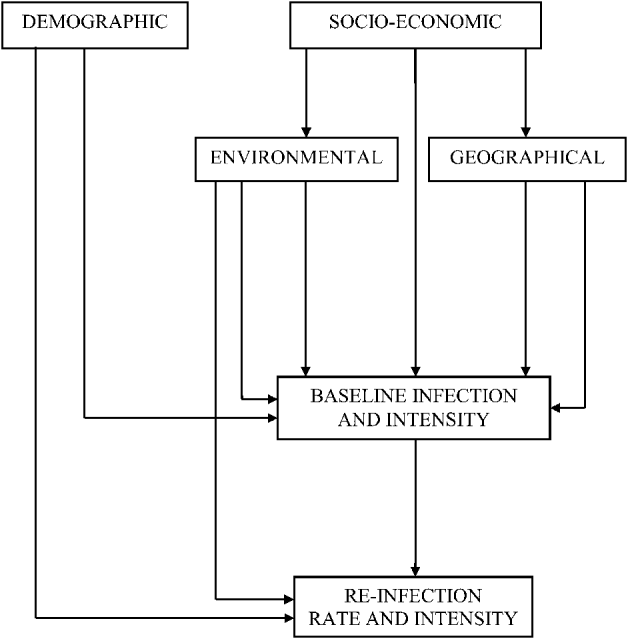
Potential risk factors of the rate and intensity of re-infection were measured at baseline and considered in 5 groups representing the hierarchical relationship between them (Victora et al. Reference Victora, Huttly, Fuchs and Olinto1997): demographic factors; socio-economic factors; environmental and geographical factors; and baseline hookworm or schistosome infection status (Fig. 2). This approach allowed us to examine the effect of these potential risk factors after controlling for confounding, and to assess whether effects were direct or mediated through other factors. Firstly, we determined the association with age and sex, and each socio-economic factor. Factors whose univariable association reached statistical significance at P⩽0·10, using the likelihood ratio or Wald test, or were strongly associated with the outcome (RR or ECR ⩾1·5 or ⩽0·5) were included in a multivariable model. All factors that remained significantly associated (P⩽0·10) in this multivariable model or with an adjusted ratio of ⩾1·5 or ⩽0·5 were retained. Next, the association between re-infection and factors on the next hierarchical level were assessed, in the presence of the factors independently associated with the outcome in the previous multivariable model. This procedure was repeated for all levels of the hierarchy. Analyses were carried out using STATA v10.0 (Stata Corp, LP, USA).
Proposed conceptual hierarchical framework describing the relationships between risk factors for the rate and intensity of hookworm and S. mansoni re-infections following chemotherapy.

RESULTS
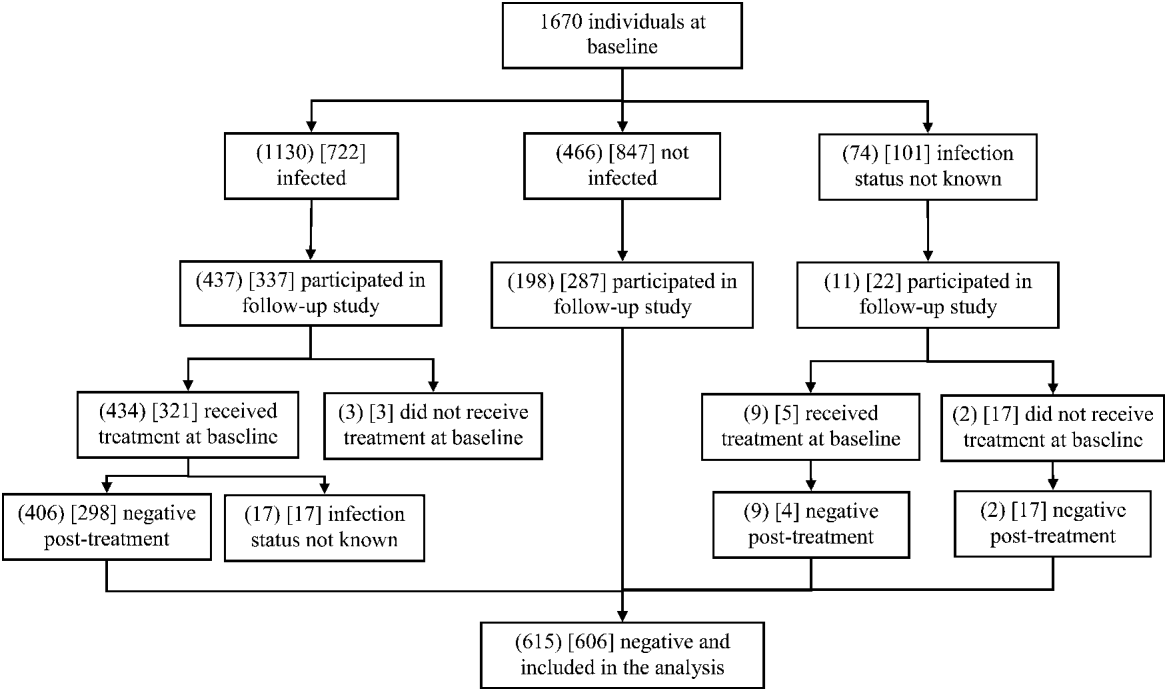
In total 1670 individuals in 403 households consented to participate in the baseline survey and of these, 646 (38·7%) in 242 households agreed to participate in the follow-up survey and provided stool samples (Fig. 3). Individuals who didn't consent to participate in the follow-up survey differed significantly from those who provided consent: refusers were significantly more likely to be initially infected with S. mansoni (41% vs 54%; P<0·001), and be male. No differences were found in household characteristics between those included in the follow-up and those who were not (data not shown).
Flow of participants through the baseline and follow-up studies and the number included in the analysis for hookworm (round brackets) and S. mansoni [square brackets].

Pre-treatment status and treatment
Among those individuals included in the follow-up survey, the baseline prevalence of hookworm was 68·8% and of S. mansoni it was 54·0%. The mean intensity of hookworm at baseline was 1444 epg (interquartile range (IQR): 0 to 846 epg) and 106 epg (IQR: 0 to 84 epg) for S. mansoni. Of those found to be infected, over 95% were successfully treated: 434 of 437 (99·3%) hookworm-infected individuals and 321 of 337 (95·3%) S. mansoni-infected individuals. Post-treatment infection status was missing for 17 (2·6%) individuals. Those individuals who were found to be negative at baseline (either upon first testing or following treatment) are included in the present analysis: 615 for hookworm and 606 for S. mansoni (Fig. 3).
Patterns of re-infection
At follow-up, 181 (29·6%) individuals were re-infected with hookworm and 70 (11·7%) with S. mansoni. The estimated crude rate of hookworm re-infection was 0·21 per year (95% CI 0·15 to 0·29) and that of S. mansoni was 0·06 per year (95% CI 0·03 to 0·10). The mean intensity of hookworm re-infection was 70·9 epg (95% CI 47·2 to 106·6; k=0·07) and S. mansoni 6·51 epg (95% CI 3·82 to 11·11; k=0·03).
Risk factors for rate of re-infection
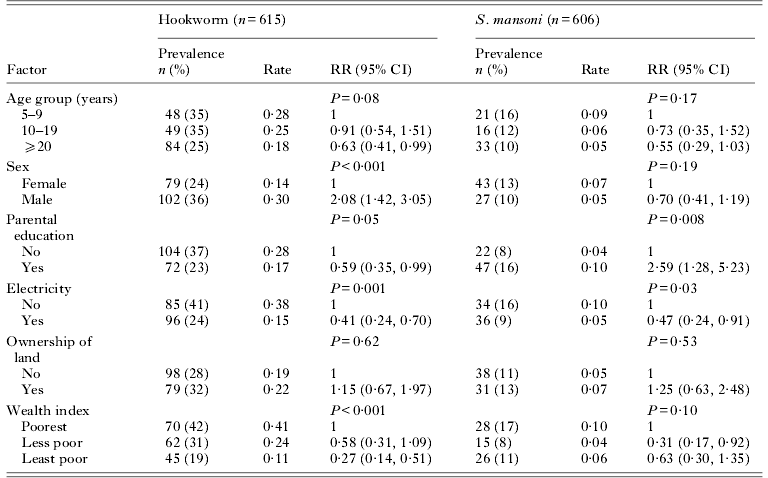
Table 1 shows the univariable associations of demographic and socio-economic factors with rates of hookworm and S. mansoni re-infections. Males (RR=1·94, 95% CI 1·31 to 2·86) and those with the least wealth (RR=2·88, 95% CI 1·32 to 2·86) remained independently associated with a higher rate after adjustment for all significant factors. Higher rates of S. mansoni re-infection were independently associated with parents having some formal education (RR=3·11, 95% CI 1·55 to 6·27) and living in a household without electricity (RR=2·40, 95% CI 1·11 to 5·18).
Univariable associations of demographic and socio-economic factors with the rate of hookworm and Schistosoma mansoni re-infection

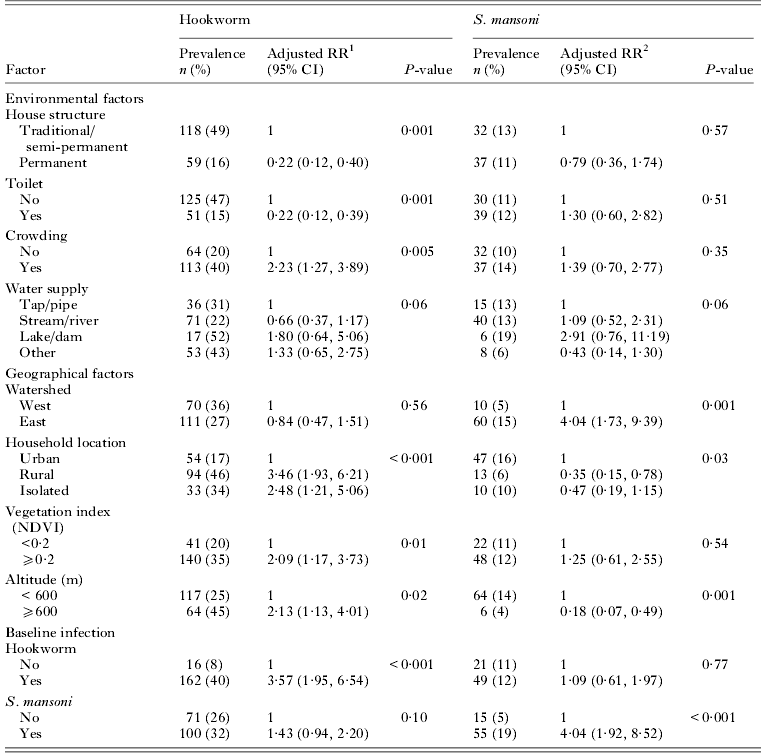
Table 2 presents the relationship between re-infection and environmental, and geographical factors. After adjusting for the confounding roles of sex and wealth, living in a house made of traditional or semi-permanent materials, with no toilet facilities and located in a rural or isolated area were independently associated with an increased rate of hookworm re-infection. The effect of wealth was no longer significant indicating that this association was mediated through these environmental and geographical factors (data not shown). Higher rates of S. mansoni re-infection were independently associated with living at an altitude of less than 600 m (RR=3·23, 95% CI 1·02 to 10·22) in the eastern watershed (RR=2·09, 95% CI 0·73 to 5·97), after adjusting for parental education and electricity.
Associations of environmental and geographical factors, and baseline infection status with rate of re-infection

1 Environmental and geographical factors are adjusted for sex and wealth index. Baseline infection is adjusted for sex, house structure, toilet and household location.
2 Environmental and geographical factors are adjusted for parental education and electricity. Baseline infection is adjusted for parental education, electricity, watershed and altitude.
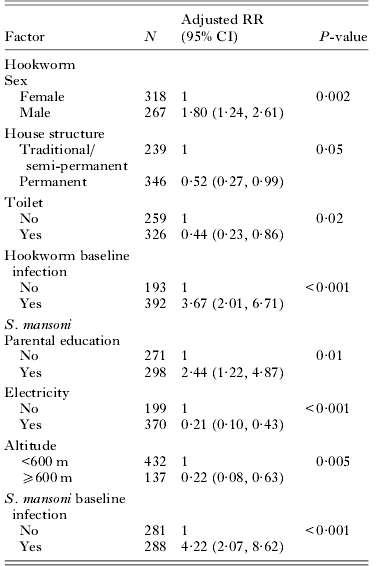
Baseline infection status was strongly associated with the rates of hookworm (3-fold) and S. mansoni re-infection (4-fold, P<0·001 for both parasites) (Table 2). There was no evidence of an association with intensity of baseline infection. After adjusting for baseline infection status, the association between the rate of S. mansoni re-infection and household watershed location was substantially diluted (RR=1·20, 95% CI 0·45 to 3·21) indicating that a large part of the effect of watershed is mediated through baseline S. mansoni infection. Table 3 describes the risk factors associated with the rate of hookworm and S. mansoni re-infections not mediated through more proximate factors on the hierarchical relationship.
Demographic, geographical, environmental, and baseline risk factors for the rate of hookworm and Schistosoma mansoni re-infections

Risk factors for intensity of re-infection
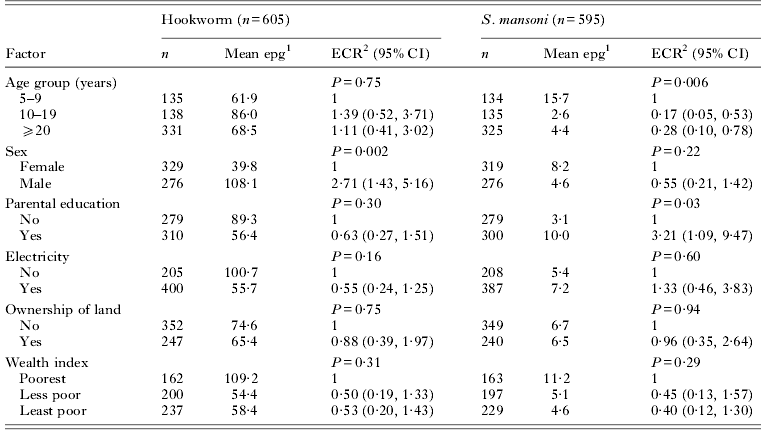
Table 4 provides the effect of demographic and socio-economic factors on the intensity of hookworm and S. mansoni re-infections. The intensity of hookworm re-infection was almost 3 times greater among males. Intensity of S. mansoni re-infections was highest among children aged 5–9 years and individuals with parents with some formal education.
Univariate associations of demographic and socio-economic factors with the intensity of hookworm and Schistosoma mansoni re-infections

1 epg abbreviation for eggs per gramme.
2 ECR abbreviation for egg count ratio.
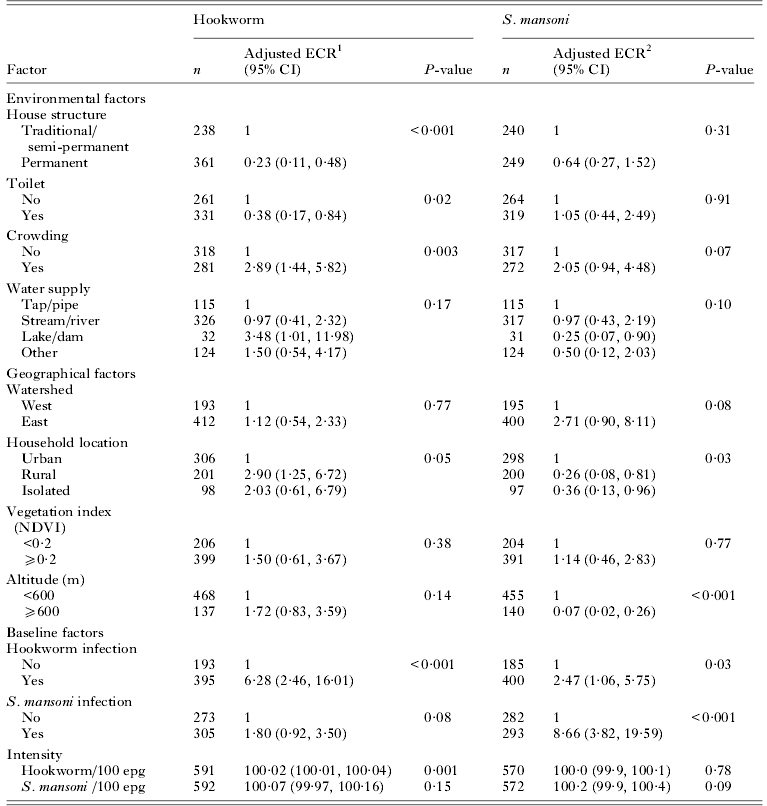
The effects of geographical and environmental factors on the intensity of re-infection, after adjusting for demographic and socio-economic factors are presented in Table 5. Higher intensities of hookworm re-infections were independently associated with living in a house made of traditional or semi-permanent materials, which was crowded and located in a rural or isolated area, after controlling for the confounding effect of sex. After controlling for age and parental education, living in a crowded house and at a low altitude remained independently associated with more than a trebling in intensity of S. mansoni re-infection.
Associations of environmental and geographical factors, and baseline infection status with intensity of hookworm and Schistosoma mansoni re-infections

1 Environmental and geographical factors are adjusted for sex; baseline factors for sex, house structure, household location and crowding.
2 Environmental and geographical factors are adjusted for age and parental education; baseline factors for age, parental education, crowding and altitude.
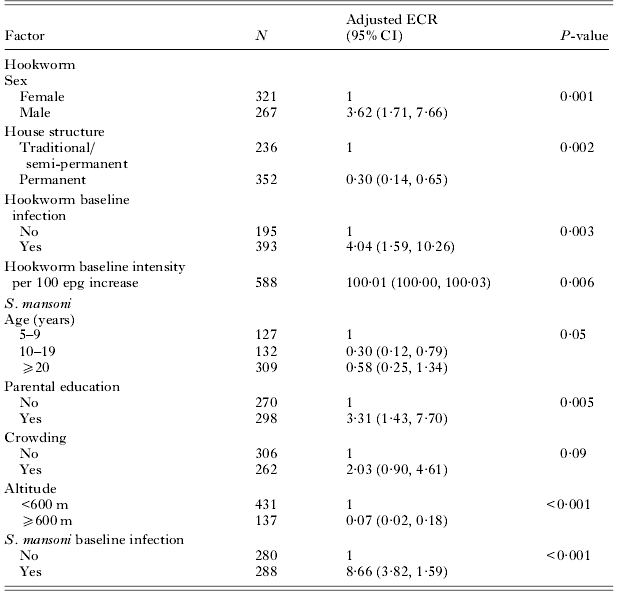
Baseline infection status was significantly associated with the intensities of hookworm and S. mansoni re-infections, after adjusting for demographic, environmental and geographical factors. Greater intensity of baseline hookworm infection was also independently associated with a higher mean re-infection egg count (Table 5). When including baseline infection into the model for hookworm, household location and crowding were no longer associated with the intensity of re-infection. This indicates that the residual effects of household location and crowding were mediated through baseline infection status. Table 6 describes the effect of each final risk factor associated with the intensity of hookworm and S. mansoni re-infections not mediated through more proximate factors on the hierarchical relationship.
Demographic, geographical, and environmental risk factors for the intensity of hookworm and Schistosoma mansoni re-infection

DISCUSSION
In this paper we examined the rate and intensity of hookworm and S. mansoni re-infection. We defined re-infection as a newly detected infection at the 12 (±3) month follow-up, that is, a positive test in an individual who was negative for infection at baseline, either upon first testing or following treatment. The results show that rate and intensity of hookworm and S. mansoni re-infection following treatment are significantly associated with initial infection status and with key environmental and household factors. Our study adds to the published literature in several ways. First, to our knowledge there are only 2 longitudinal studies (Saathoff et al. Reference Saathoff, Olsen, Sharp, Kvalsvig, Appleton and Kleinschmidt2005; Hesham Al-Mekhlafi et al. Reference Hesham Al-Mekhlafi, Surin, Atiya, Ariffin, Mohammed Mahdy and Che Abdullah2008) that examine the influence of individual, household and environmental factors on the rate of re-infection, our study builds upon these by exploring a more comprehensive range of potential factors. Second, although there are several studies which suggest that certain individuals are predisposed to infection (Haswell-Elkins et al. Reference Haswell-Elkins, Elkins and Anderson1987; Tingley et al. Reference Tingley, Butterworth, Anderson, Kariuki, Koech, Mugambi, Ouma, Arap Siongok and Sturrock1988; Quinnell et al. Reference Quinnell, Griffin, Nowell, Raiko and Pritchard2001; Holland, Reference Holland2009) we are not aware of any that have investigated factors associated with the intensity of re-infection. Finally, the conceptual hierarchical framework not only provides a strategy for assessing risk factors, but has the advantage of allowing us to examine the inter-relationships between the risk factors and possible mechanisms for how individual, household, and environmental factors assert an effect on the rate and intensity of re-infection. To our knowledge this is the first time that it has been applied in this context.
Pre-treatment prevalence of hookworm was 68·8% but only 29·6% 12 months after effective treatment, consistent with a study from Papua New Guinea which found that prevalence of hookworm infection returned to pre-treatment levels 2 years later (Quinnell et al. Reference Quinnell, Slater, Tighe, Walsh, Keymer and Pritchard1993). For S. mansoni the corresponding figures were 54% and 11·7%. We also found that intensity of re-infection was only 5% of pre-treatment intensity for hookworm and 6% for S. mansoni. The estimated rate of re-infection for hookworm was 0·21 infections per person-year while for S. mansoni re-infection was 0·06 per person-year. The rates for hookworm were comparable to those reported in Kenya (0·21 per person-year) (Olsen et al. Reference Olsen, Thiong'o, Ouma, Mwaniki, Magnussen, Michaelsen, Friis and Geissler2003) and India (0·24 per person-year) (Narain et al. Reference Narain, Medhi, Rajguru and Mahanta2004), but lower than those reported in Zanzibar and South Africa (Albonico et al. Reference Albonico, Smith, Ercole, Hall, Chwaya, Alawi and Savioli1995; Saathoff et al. Reference Saathoff, Olsen, Sharp, Kvalsvig, Appleton and Kleinschmidt2005), due presumably to lower transmission intensity, higher coverage (all ages) and efficacy of the treatment. The rate of S. mansoni re-infection is also lower than those from studies in Kenya (Olsen et al. Reference Olsen, Nawiri and Friis2000, Reference Olsen, Thiong'o, Ouma, Mwaniki, Magnussen, Michaelsen, Friis and Geissler2003) and Uganda (Kabatereine et al. Reference Kabatereine, Vennervald, Ouma, Kemijumbi, Butterworth, Dunne and Fulford1999).
Interestingly, we found no effect of age, not mediated through more proximate determinants in the hierarchy, on rates of re-infection which contrasts with previous findings in Uganda (Kabatereine et al. Reference Kabatereine, Vennervald, Ouma, Kemijumbi, Butterworth, Dunne and Fulford1999) and India (Narain et al. Reference Narain, Medhi, Rajguru and Mahanta2004), but we did observe a weak association between age and the intensity of S. mansoni re-infection, such that young children and adults have more intense re-infections than teenagers. We also observed a strong positive association between males and the rate and intensity of hookworm re-infection, which is in contrast to previous studies that reported either no differences by sex (Narain et al. Reference Narain, Medhi, Rajguru and Mahanta2004) or higher rates among females (Hesham Al-Mekhlafi et al. Reference Hesham Al-Mekhlafi, Surin, Atiya, Ariffin, Mohammed Mahdy and Che Abdullah2008). Such differences by age and sex across settings tend to suggest that differences in re-infection may be a function of exposure-related factors, such as occupational exposure, rather than some fixed characteristics of individuals.
The relationship between helminth infection and socio-economic status remains unclear and although our results show a strong overall effect of wealth index on the rate of hookworm re-infection this association appears to be entirely mediated through environmental and geographical factors. In contrast there remained a significant effect of parental education on the rate and intensity of S. mansoni that was not mediated through environmental or geographical factors. We observed that a poorer living environment (absence of toilet in the household, living in a household made of traditional or semi-permanent materials, and living in a rural or isolated area) increased the rate and intensity of hookworm re-infection, which is consistent with other studies (Saathoff et al. Reference Saathoff, Olsen, Sharp, Kvalsvig, Appleton and Kleinschmidt2005; Hesham Al-Mekhlafi et al. Reference Hesham Al-Mekhlafi, Surin, Atiya, Ariffin, Mohammed Mahdy and Che Abdullah2008) and most likely reflects the moist soil conditions required for transmission. We also observed higher intensities of S. mansoni re-infection among those living in crowded households that was not mediated through other environmental and geographical factors, or baseline infection, indicating that other unmeasured factors associated with poverty such as behaviours relating to hygiene, may have been useful to assess. Although there is a strong relationship between water and the transmission of schistosomiasis we did not observe any independent association between water supply and the rate or intensity of S. mansoni.
Baseline infection status displayed a strong positive direct effect on the rate and intensity of hookworm and S. mansoni re-infection; a finding previously documented for Trichuris trichiura (Bundy et al. Reference Bundy, Cooper, Thompson, Didier and Simmons1988) and Ascaris lumbricoides (Henry, Reference Henry1988). Further the effects of some geographical factors, such as watershed and household location, were entirely mediated through baseline infection status. However, the confidence intervals are wide and therefore should be interpreted with caution. There are numerous studies describing the correlation between intensity at baseline and intensity of re-infection with hookworm and S. mansoni after treatment (Haswell-Elkins et al. Reference Haswell-Elkins, Elkins and Anderson1987; Tingley et al. Reference Tingley, Butterworth, Anderson, Kariuki, Koech, Mugambi, Ouma, Arap Siongok and Sturrock1988; Quinnell et al. Reference Quinnell, Griffin, Nowell, Raiko and Pritchard2001) and although we observed a positive association for hookworm, there was no evidence of an association for S. mansoni. Those refusing to participate in the follow-up survey were more likely to be infected with S. mansoni at baseline and it may be that had these individuals been included in the analysis we would have observed a similar association to that seen with hookworm.
Anthelmintic drugs are effective at eliminating existing infections but, as our study shows, do not protect against re-infection, leading to concerns about the long-term sustainability of current deworming programmes. This has prompted development of vaccines against N. americanus (Loukas et al. Reference Loukas, Bethony, Brooker and Hotez2006), S. mansoni (Hotez et al. Reference Hotez, Bethony, Diemert, Pearson and Loukas2010) and S. japonicum (Wu et al. Reference Wu, Lu and Yu2005) , which have either begun clinical testing or are soon to do so. There are a number of advantages of developing a vaccine that simultaneously targets hookworms and schistosomes, including pathobiological similarities, such as anaemia, and the extensive overlapping distributions in sub-Saharan Africa and Brazil (Hotez et al. Reference Hotez, Bethony, Diemert, Pearson and Loukas2010). There is belief that a hookworm vaccine would most likely be integrated into existing school-based deworming programmes (Diemert et al. Reference Diemert, Bethony and Hotez2008). However, any future vaccine should be implemented alongside efforts to reduce exposure to infection, as our findings clearly indicate that certain individuals and households are at a greater risk of re-infection with hookworm and S. mansoni. The results further suggest that environmental exposure rather than some fixed characteristic of an individual determines re-infection. Our analytical approach provides a robust methodology to identify risk factors for re-infection in other settings, thus guiding activities to reduce exposure as well as inform strategies around integrated control measures for neglected tropical diseases (Baker et al. Reference Baker, Mathieu, Fleming, Deming, King, Garba, Koroma, Bockarie, Kabore, Sankara and Molyneux2010).
For most helminth infections, reduction in intensity of infection has been considered the goal of vaccine development since this should result in significant reduction in morbidity without requiring induction of sterilizing immunity or complete protection against infection (Diemert et al. Reference Diemert, Bethony and Hotez2008). Alexander et al. (Reference Alexander, Cundill, Sabatelli, Bethony, Diemert, Hotez, Smith, Rodrigues and Brooker2011) concluded that the mean parasite intensity, estimated by fecal egg counts, is a feasible endpoint for later phase vaccine trials and is often more powerful than just the presence or absence of infection or the incidence rate of infection following vaccination. Our results on the rate and intensity of re-infection will therefore assist with the study design of vaccine trials in terms of sample size calculations, study duration and target populations. These findings further indicate that it will be important to adequately control for environmental and household factors in evaluating the efficacy of vaccination.
ACKNOWLEDGEMENTS
We are grateful to inhabitants of Americaninhas who kindly participated in the study and to those individuals who were responsible for carrying out the fieldwork.
FINANCIAL SUPPORT
This work was funded by the Albert B. Sabin Vaccine Institute, which receives support from the Bill & Melinda Gates Foundation. S.B. is supported by a Career Development Fellowship (081673) from the Wellcome Trust. The Sabin Vaccine Institute ratified the decision by the authors to submit the report for publication, without seeking any changes to its content.