INTRODUCTION
Leishmania (Kinetoplastida, Trypanosomatids) are parasitic protozoa causing a spectrum of clinical forms in humans and animals. These organisms may be considered as very successful parasites, when considering the number of different ecological niches they have colonized. Leishmania life-cycle occurs in 88 countries, in biotopes ranging from primary forest to xerophytic biotopes, from sylvatic to domestic environment, from lowlands to highlands. More than 50 species of sandflies are reported vectors and many mammals may act as reservoir, including edentates, monkeys, rodents, canids and humans (Shaw and Lainson, 1987). The genetic mechanisms underlying such a successful adaptation and spreading deserve attention.
Sexual recombination, a major actor of innovation and adaptive evolution, can occur in Leishmania as demonstrated by the observation of hybrids in wild populations (Dujardin et al. 1995a; Bañuls et al. 1997). However, it is likely too rare to have implications on the parasite population structure, which is essentially clonal (Tibayrenc and Ayala, 1999). Besides point mutations, Leishmania have developed a series of asexual mechanisms that might contribute efficiently to parasite fitness. Many genes involved in host–parasite relationships are tandemly repeated and prone to mitotic recombination, which may occur between and within tandem repeats, amplifying genes and generating diversity of genotypes (Victoir and Dujardin, 2002). Under stress conditions, the parasites can also amplify sets of genes in the form of circular amplicons or small chromosomes (Segovia and Ortiz, 1997). Last but not least, it was shown during gene knock-out experiments that Leishmania – normally diploid parasites (Beverley, 2003) – can undergo polyploidy and aneuploidy (Cruz et al. 1993). It was hypothesized that this might constitute another mechanism leading to genetic polymorphism, during reversion to the normal ploidy. For instance, a heterozygote AB changed to AABB could generate AA, AB or BB offspring during reversion, having an effect similar to recombination (Cruz et al. 1993). However, to our knowledge, this hypothesis was never explored experimentally in Leishmania.
The objective of the present work was to study karyotype stability during long-term in vitro maintenance in cloned strains of Leishmania (L. (V.) peruviana, L. (V.) braziliensis and a hybrid between both species) characterized by homologous chromosomes of different size (heteromorphy) or similar size (monomorphy). Heteromorphic clones were chosen because they might allow easier visualization of problems affecting chromosome assortment during segregation. One of the heteromorphic strains showed an extremely unstable karyotype even after subcloning. Our attention was focused on the latter strain, and the influence of environmental conditions as well as total and partial ploidy were analysed.
MATERIALS AND METHODS
Parasites
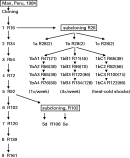
Three Leishmania cloned stocks were used in the present study: L. (V.) braziliensis MHOM/BR/75/M2904, L. (V.) braziliensis/L. (V.) peruviana hybrid MHOM/PE/91/LC1419 (Dujardin et al. 1995a), and L. (V.) peruviana MHOM/PE/84/LH78 (Dujardin et al. 1993b). Parasites were cultivated as promastigotes in GLSH (M2904, Le Ray, 1975) or blood agar medium (LC1419 and LH78, Tobie et al. 1950). Characterization of the parasites was performed by multilocus enzyme electrophoresis (MLEE), random amplified polymorphic DNA (RAPD) analysis and molecular karyotyping. For the three stocks, schemas of long-term in vitro maintenance were followed (see Fig. 1 for LH78) and, regularly, parasites were harvested for DNA extraction and cryostabilized in liquid nitrogen. In the case of LH78, additional subcloning was performed by the micro-drop method (Van Meirvenne et al. 1975), starting from cryostabilized samples. For one of these subclones (1b), 3 lines were derived and maintained under different conditions: (1bA) 26 °C, sub-inoculated 1×/week (1bB) 26 °C, sub-inoculated 3×/week, and (1bC) submitted to a succession of heat (37 °C, 5 h) and cold (4 °C, 24 h) shocks and, multiplication at 26 °C (Fig. 1). Procedures for cultivation, harvesting and preparation for orthogonal field alternating gel electrophoresis (OFAGE) have been described elsewhere (Dujardin et al. 1993a). For comparing growth curves of different parasite lines, the same inoculum was used, and parasites were fixed in 1% Formol and counted in a Bürker chamber.

Fig. 1. Flow chart showing the history of in vitro maintenance of Leishmania (Viannia) peruviana LH78 and its different lines. R, number of sub-inoculations since the initial cloning: this counting continues even after subcloning but in that case, a second counting since subcloning is reported (numbers in parentheses).
Molecular karyotyping, hybridization and densitometry
OFAGE electrophoresis using equipment described by Dujardin et al. (1987) were performed on 1·5% agarose gels in 0·4×TBE running buffer at 7–12 °C for 23 h. Resolution of the whole karyotype was achieved by 3 distinct runs with 45- 65- and 125-s pulses respectively. The karyotype of reference strain L. (V.) braziliensis M2903 was used to estimate the sizes of chromosomal bands. OFAGE-resolved chromosomes (numbered after Britto et al. 1998) were transferred to nylon membranes (Hybond-N, Amersham), processed and hybridized according to the manufacturer's instructions. The 4 chromosome-specific probes here used contain genomic fragments isolated from L. (V.) braziliensis M2904 (Dujardin et al. 1993b). Probes pLb-149G and pLb-168S2 are derived from pLb-149 and pLb-168 respectively, and correspond to single- or low-copy number sequences (unpublished data); pLb-149G is linked with the mini-exon genes on chromosome 2 (Kebede et al. 1999), while pLb-168S2 is a sequence presenting the highest identity with a portion of LM7_11b.1.Contig2 (chromosome 7 of L. (L.) major). Probe pLb-134Sp contains a highly conserved part of gp63 gene (Dujardin et al. 1994), present in multiple copies on chromosome 10. Probe pLb-22 contains a gene coding for a putative serine/threonine protein kinase (Dujardin et al. 1993b, and unpublished data), and is present as single copy together with rDNA genes on chromosome 27 (Inga et al. 1998). Probes were labelled with 32P-dCTP, by random prime labelling. Hybridizations were performed according to the manufacturer's instructions at 65 °C.The last wash after hybridization was performed at 1×SSC. Densitometry scanning of autoradiograms was performed in duplicate using a SHARP JX-330 scanner and the Pharmacia software Imagemaster Elite 1D programme.
Flow cytometry
Promastigotes were harvested at day 3 post-inoculation (logarithmic phase) and, prior to fixation, they were washed 3 times in ice-cold Hanks buffered salt solution HBSS (without Ca2+ or Mg2+, addition of 1 mM EDTA). After the last centrifugation, parasites were resuspended in 30 μl of HBSS, and ice-cold 70% ethanol/5% glycerol (v/v) was added stepwise under continuous vortexing. Fixed parasites (in concentrations ranging between 105 and 106 parasites/ml) were stored at −20 °C until DNA measurement. Parasites were stained with the DNA-specific YOYO-1 iodide (Molecular Probes Inc.), already applied to trypanosomes by Van den Abbeele et al. (1999). Fixed parasites were centrifuged and incubated in 200 μl of Tris-EDTA buffer (10 mM Tris-HCl, 1mM EDTA, pH 7·2)/0·1% Nonidet P-40 containing 30 μg/ml trypsin during 10 min at room temperature. Afterwards, 150 μl of TE buffer with 500 μg/ml trypsin-inhibitor and 50 μg/ml ribonuclease A were added. After 10 min at room temperature, 150 μl of TE buffer were added containing the YOYO-1 iodide. For the latter, a final concentration of 200 nM was obtained in a total sample volume of 500 μl. Parasites were incubated at 37 °C during 20 min. Afterwards, stained samples were stored at 4 °C and protected from the light until measurement. Fluorescence intensity from 2–20×103 cells was measured, digitized and stored after excitation at 488 nm using a Becton-Dickinson FACScan flow cytometer. Fluorescence signals from debris and aggregated cells were gated out using pulse shape analysis. Preliminary experiments showed that the reproducibility of the fluorescence measure was 5%.
Multilocus enzyme electrophoresis (MLEE)
MLEE experiments were performed on cellulose acetate plates (Helena Laboratories) according to the method described by Ben Abderrazak et al. (1993) with slight modifications (Bañuls et al. 2000). A total of 15 enzyme systems were performed, namely: aconitase (ACON: EC 4.2.1.3), glucose 6 phosphate dehydrogenase (G6PD: EC 1.1.1.49), glucose phosphate isomerase (GPI: EC 5.3.1.9), glutamate oxalo acetate transaminase (GOT: EC 2.6.1.1), glutamate pyruvate transaminase (ALAT: EC 2.6.1.2), isocitrate dehydrogenase (IDH: EC 1.1.1.42), malate dehydrogenase Nad+ (MDH: EC 1.1.1.37), malate dehydrogenase NADP+ or malic enzyme (ME: EC 1.1.1.40), mannose phosphate isomerase (MPI: EC 5.3.1.8), nucleoside hydrolases, substrate inosine and substrate deoxyinosine, I and D respectively (NHI and NHD: EC 2.4.2.*), 6 phosphogluconate dehydrogenase (6PGD: EC 1.1.1.44), and phosphoglucomutase (PGM: EC 2.7.5.1). The 13 enzyme systems used made it possible to study 14 different putative loci. Indeed 2 different loci could be distinguished with the NHI system, Nhi 1 and Nhi 2.
Random amplified polymorphic DNA (RAPD)
DNA was extracted according to the protocol communicated by Sambrook et al. (1989). Twelve primers of the Operon Technology kits (Alabama, California) were used: A10: GTGATCGCAG; B1: GTTTCGCTCC; F4: GGTGATCAGG, N18: GGTGAGGTCA; N20: GGTGCTCCGT; R7: ACTGGCCTGA; R13: GGACGACAAG; U2: CTGAGGTCTC; U10: ACCTCGGCAC; U12: TCACCAGCCA; U16: CTGCGCTGGA, U17: ACCTGGGGAG. For each sample and each primer the pattern reproducibility was tested twice.
RESULTS
Follow-up of M2904 and LC1419 clones
The clone of L. (V.) braziliensis M2904 was shown to be monomorphic for the 4 chromosomes considered (2, 430 kb; 10, 700 kb; 7, 640 kb and 27, 1300 kb), while the clone of the LC1419 hybrid was heteromorphic for each of the 4 chromosomes (2, 420/470 kb; 10, 640/700 kb; 7, 640/700 kb and 27, 1300/1150 kb). Clones of M2904 and LC1419 were maintained in vitro for a period of 87 (633 sub-inoculations, average frequency=1·8×/week) and 22 (127 sub-inoculations, average frequency=1·4×/week) months respectively. All over this period of time, no significant differences were observed in the whole molecular karyotype of the different samples (as seen after ethidium bromide staining, not shown), neither in the size of the 4 chromosomes under study: M2904 and LC1419 consistently presented monomorphic and heteromorphic chromosomes respectively. The only noticeable variation appeared in samples 5 and 6 of M2904, in which a 30-kb smaller size-variant of chromosome 10 appeared besides the 700-kb major band, but disappeared in later samples. Genotypic stability was also verified for M2904 clone, through the MLEE and RAPD analysis of 3 samples at different number of sub-inoculations (83, 292 and 323): no difference was observed (not shown).
Follow-up of LH78 clone and subclones
The clone of L. (V.) peruviana LH78 was also heteromorphic for the 4 chromosomes under study (see below). It was first maintained in vitro for a period of 16 months (127 sub-inoculations, average frequency=2×/week). During this period, patterns significantly varied for 3 chromosomes, however, variation was discrete. Chromosome 27 presented 3 variants (1100, 1420 and 1520 kb, respectively variants 1, 3 and 4) in sample 1, variant 4 disappeared in sample 2, and from sample 3, variant 3 was replaced by a new 1300-kb variant (numbered 2). With respect to chromosome 10, 2 size-variants (640 and 700 kb, respectively variants 1 and 2) were initially observed; in sample 5, the hybridization intensity of variant 1 was increased, and in sample 6 and later, variant 2 was never observed. Chromosome 2 was characterized by 4 variants (400, 435, 470 and 500 kb, respectively numbered 1–4) in sample 1, variant 4 disappeared in sample 2, and from sample 3, only variants 1 and 2 were observed. In contrast, the double banding of chromosome 7 (640 and 700 kb) remained constant until the end of monitoring.
Samples of LH78 presenting more than 2 size-variants for a given chromosome (e.g. samples 1 and 2), or – in the case of doublets – strong differences in hybridization intensity of single copy probes to one variant (e.g. sample 5) deserved particular attention. Indeed, such phenomena could be due to population heterogeneity (under a diploid hypothesis) or aneuploidy. In order to distinguish between both hypotheses, subcloning was performed starting from samples 1 and 5 (see Fig. 1). This clearly indicated that both samples were heterogeneous. On the one hand, the pattern 1/3/4 of chromosome 27 in sample 1 generated patterns 1 and 1/3 in subclones 1a and 1b-c respectively. On the other hand, the pattern 1/2 of chromosome 10 (with stronger hybridization intensity for variant 1) in sample 5 gave patterns 1 and 1/2 in subclones 5d and 5e respectively.
In all subclones presenting heteromorphic chromosomes, hybridization intensity of each variant was similar, except for subclone 1c, in which hybridization intensity of variant 3 of chromosome 27 was twice as high (as measured by densitometry) than that of variant 1. The observation of this pattern only 7 passages after subcloning might be an indication of aneuploidy for chromosome 27, but could also reveal the existence of heterogeneous populations (3/0 −haploid-+1/3) produced after subcloning. No differences were encountered in the MLEE and RAPD patterns of the 5 samples of LH78 here analysed (1, 2 and 5 from the initial clone and subclones 1b and 1c).
In order to determine whether variation of chromosome patterns (i) was a reproducible phenomenon, and (ii) could be modulated according to maintenance conditions, 3 lines were derived from subclone 1b and followed over 7 months. Significant differences were encountered according to the cultivation protocol (Table 1). Line 1bA was sub-inoculated 1×/week: at passage 47, chromosome 10 was already monomorphic for the small variant; at passage 76, the small variant 2 of chromosome 2 appeared to be dominant (on the basis of hybridization intensity). Line 1bB was sub-inoculated 3×/week: at passage 96, 3 variants of chromosome 2 were observed (addition of variant 4), and at passage 96, a monomorphic stage was reached with the presence of variant 2 only. Finally, line 1bC was submitted to a series of heat and cold shocks (see Materials and Methods section): at passage 82, an additional variant of chromosome 27 appeared, and the tri-variant pattern remained up to the end of the experiment.
Table 1. Variation of patterns of chromosomes 2, 10, 7 and 27 during in vitro maintenance of Leishmania (Viannia) peruviana LH78 (underlined and bold, chromosomal variants with higher hybridization intensity) (See Fig. 1 for details on sample designation.)

Flow cytometry
In order to determine whether variations in chromosome patterns of LH78 could have been associated with changes in total ploidy, the DNA content of subclone 1b and all stocks of the 3 derived lines A-C was measured by flow cytometry. A classical picture was observed with a major peak corresponding to parasites with 2N DNA content and a minor 4N peak, corresponding to replicating parasites. However, no significant differences were observed between the different samples (not shown).
Growth parameters
In order to have a first insight into biological changes that might accompany the differences in chromosome patterns here observed, we compared the growth curves of lines A-C of subclone 1b at the end-point of maintenance. Differences in doubling time were observed: 17·8 h for the line sub-inoculated once a week (1bA4) versus 13·3 h for the one sub-inoculated 3 times a week (1bB4). Interestingly, the line submitted to heat-cold shocks (1bC4) presented the lowest doubling time: 11·3 h.
DISCUSSION
The karyotype of Leishmania is considered to be generally very stable in vitro, as reported earlier (Giannini et al. 1990), and as demonstrated here for 2 out of 3 strains under observation. However, this contrasts with a very high chromosome size polymorphism in natural populations of the parasite (Dujardin et al. 2002). We described here a L. (V.) peruviana strain showing in vitro a similar level of karyotype instability as in the wild. The clone (LH78) was characterized by the presence of 4 heteromorphic chromosomes and we observed the rapid appearance of a mixture of parasites with rearranged chromosome patterns during in vitro maintenance. This phenomenon appeared again after subcloning, and thus could not be attributed to an initial cloning error. Four mechanisms might account for this variation of chromosome patterns. (1) Amplification/deletion of tandemly repeated genes is the most frequent mechanism responsible for chromosome size-variation (Victoir and Dujardin, 2002). This was shown among natural populations of Leishmania for 3 of the chromosomes here studied, involving genes coding for mini-exon (chromosome 2, Kebede et al. 1999), gp63 (chromosome 10, Dujardin et al. 1994; Victoir et al. 1995) and rDNA (chromosome 27, Inga et al. 1998). However, in natural populations, size-variation of these chromosomes had been shown to be continuous (Dujardin et al. 1995b), which was never observed in the present case. Thus, even if chromosome variants are characterized by different copy number of repeated genes, the discrete variation of patterns here observed is more suggestive of an effect of chromosome reassortment, and the amplification/deletion hypothesis should be rejected here. (2) Another mechanism, the subject of controversy (Bastien et al. 1992), is the occurrence of sexual exchange. While we have previously shown that this might happen (stock LC1419 is a putative L. (V.) braziliensis/L. (V.) peruviana hybrid, Dujardin et al. 1995a), it was also suggested to be exceptional (Bañuls et al. 2000; Tibayrenc and Ayala, 1999). In the present case, we believe that sexual exchange was not involved in the generation of rearranged patterns. Indeed, for each chromosome, 1 or 2 segregation genotype(s) were lacking: for instance, genotype 2/2 of chromosome 10 was never observed, and chromosome 7 was only represented by genotype 1/2. (3) One might also consider a change in the total ploidy of the parasite as described previously (Cruz et al. 1993), followed by a return to diploidy and the ‘clonal’ production of segregation and recombination-like patterns. In the present case, DNA content (as measured by flow cytometry) remained constant during in vitro maintenance. We cannot exclude that at certain stages, a minor proportion of the parasites went polyploid for a short time, being undetectable under our experimental conditions. (4) The last mechanism would be aneuploidy, caused by aberrant chromosome segregation during mitosis. This model would better fit with our data as it concerns individual chromosomes and is coherent with the absence of recombination-like patterns. It is supported by the observation, in freshly subcloned sample 1c, of pattern 1/3 for chromosome 27, with variant 3 hybridizing twice as high to a single copy probe as variant 1. However, in this particular case, we cannot exclude the possibility that between subcloning and chromosome analysis (7 passages), a mixture (3/0, haploid and 1/3 or 1/0, haploid and 3/3) of parasites would already have occurred.
Whatever the mechanism, these data show clearly that Leishmania may rearrange their karyotype at a very fast rate. Interestingly, this is not the case for all stocks; indeed, the putative hybrid LC1419 (showing the same heteromorphic patterns for chromosomes 2, 10, 7 and 27 as LH78) did not show any sign of rearrangement while kept in vitro for a longer period. Further work should be performed in order to determine whether this discrepancy is due to intrinsic factors affecting chromosome segregation, as observed in other organisms: mutations in hsp70 (Oka et al. 1998), actin (Kopecka and Gabriel, 1998) and chromosome segregation genes (Xiao et al. 1993) in Saccharomyces cerevisiae. In a recent study on L. (L.) donovani, a 30-kb region was reported to be involved in the mitotic stability of a linear extra chromosome, and it was hypothesized that it could contain elements participating in replication or centromeric function (Dubessay et al. 2001).
Our results provide some insight into the generation of karyotype diversity in natural conditions. The region of Peru, where LH78 was isolated, is characterized by parasite populations with extremely heterogeneous karyotypes (Dujardin et al. 1993a). In a previous study, we demonstrated that the same population could be in linkage equilibrium for chromosome size-variants (7 and 27) and in disequilibrium for RAPD markers (Bañuls et al. 2000). The contrast between these data was hardly explained by sexual exchanges, but more by pseudo-sexuality. According to our present work, a single stock like LH78 could spontaneously produce aberrant chromosome assortments, without affecting loci recognized by RAPD markers. At this stage, there is no evidence that the karyotype changes directly underly the observed differences in growth rate. We previously demonstrated that size-variation of 3 of the chromosomes here studied (2, 10 and 22) was associated with dosage of major genes (mini-exon, gp63 and rDNA) in natural populations of L. (V.) braziliensis and L. (V.) peruviana, with possible functional effects (Dujardin et al. 2002). It is equally possible that there are inducible genes whose activity was modified by the culture conditions. Nevertheless, in the case of variable selective pressure (2 different sandfly vectors, Lutzomyia peruensis and Lu. verrucarum (Villaseca et al. 1993), differences in altitude and temperature), the progeny of a strain like LH78 could rapidly generate a genomically heterogeneous population.
Our work has important implications concerning the relativity of the clone concept. It is obvious from data presented here that this concept is strongly limited in time, and that theoretically, the definition of clone is strictly valid for one generation only. Furthermore, the risk of selecting parasites with different karyotypes and different biological features may be increased by variations in maintenance conditions. Even if strains like LH78 are perhaps exceptional, this risk should be taken into consideration, and its potential consequences explored, in all experiments in which a ‘clone’ is chosen as a homogeneity criterion. This would be particularly recommended in any study on parasite phenotype, like virulence or drug resistance. A minimal precaution would be to cryostabilize large amounts of ‘cloned’ material and to start any biological experiment from it.
This study was financially supported by EC (Contract TS3-CT-92-0129) and the Belgian Agency for Co-operation to Development (D.G.C.D.)