Congenitally malformed hearts together represent the most common birth defectReference Dastgiri, Stone, Le Ha and Gilmour1–Reference Menacker and Martin3, occurring in approximately 8 of each 1,000 life birthsReference Hoffman and Kaplan4, Reference Moons, Sluysmans, De Wolf, Massin, Suys and Benatar5. The successful outcomes of cardiosurgical techniques, mainly developed in the 1960s, were a milestone in the treatment of these lesions. This has resulted in a spectacular increase in the life expectancy of afflicted patients. To date, more than nine-tenths of the children born with congenital cardiac disease reach adulthood. The prevalence of the disease, therefore, has also increased. Based on studies conducted in the second half of the 20th century, the prevalence was estimated to range from 2,600 to 5000 afflicted individuals for each 1 million inhabitantsReference Hoffman, Kaplan and Liberthson6. The better the life expectancy, the closer the true prevalence would be to the upper limitReference Hoffman, Kaplan and Liberthson6. Indeed, a recent study conducted in Quebec, Canada, revealed a prevalence of 5780 individuals for each 1 million inhabitantsReference Marelli, Mackie, Ionescu-Ittu, Rahme and Pilote7. Given a total population of 304 million inhabitants in the United States of America (http://www.census.gov/popest/estimates.html), there are now about 1.5 million patients with congenitally malformed hearts living in this country. For a population of 819 million living in Europe (http://epp.eurostat.ec.europa.eu/), the estimated number of patients with congenitally malformed hearts is 4 million.
The vast number of individuals with congenital cardiac disease now requires the availability of physicians who are able to provide expert care to these patients over their lifetime. Several reports, however, concluded that the available cardiologists, and the number of fellows who are receiving specialized training in congenital cardiac disease, are not meeting the estimated requirements for the workforce.Reference Wren and O’Sullivan8–Reference Gurvitz, Chang, Ramos, Allada, Child and Klitzner10 This problem can be partly solved by an interdisciplinary collaboration between doctors and nurses.
The number of nurses who are specialized in caring for patients with congenital cardiac disease has increased over the past decades, and it is still growingReference Moons, De Geest and Budts11. International professional organizations, uniting nurses involved in congenital cardiovascular care, have therefore been founded. The Society of Pediatric Cardiovascular Nurses was established for those nurses working in paediatric cardiology (http://www.spcnonline.com/). A few years later, the International Adult Congenital Heart Disease Nursing Network was founded, to address the needs of nurses working caring for adults with congenitally malformed hearts.Reference Moons, Canobbio and Harrison12 Recently, this network has become a part of the International Society for Adult Congenital Heart Disease (http://www.isachd.org/).
Irrespective of the important contribution provided to date by nurses in the care of patients with congenital cardiac defects, there are challenges that remain to be overcome if we want further to optimize the care for these patients. These challenges pertain either to care of the patients, or to education of the nurses and development of congenital cardiac nursing. The challenges to be addressed in this review, therefore, are first, the continuity of care and loss of patients to follow-up; second, the level of knowledge and abilities of the patients to achieve self-management; third, the education and the level of knowledge of the nurses themselves; and finally, the priorities for research. Our aim is to describe these issues in detail, and to provide recommendations for nurses as they prepare for the next decade.
Continuity of care and loss during follow-up
Except for patients with a ligated and divided arterial duct, all patients should continue to receive cardiac care in either a regional center or in a specialized programme dealing with congenital cardiac disease.Reference Warnes13 Several studies, however, have demonstrated that a substantial proportion of the patients are lost to follow-up.
A first study was performed at the German Heart Center in Munich, Germany.Reference Wacker, Kaemmerer, Hollweck, Hauser, Deutsch and Brodherr-Heberlein14 This center has a database of more than 10,500 patients with congenitally malformed hearts who were examined and/or treated at the center over the past decades. Of these patients, three-quarters have failed to appear for a follow-up visit at this specialized center during the last 5 yearsReference Wacker, Kaemmerer, Hollweck, Hauser, Deutsch and Brodherr-Heberlein14.
Another study, conducted in Denver, Colorado, investigated the length of time between leaving care at a paediatric institution and receiving subsequent cardiac care at any institution for adults.Reference Yeung, Kay, Roosevelt, Brandon and Yetman15 In this study, only patients with a cardiac lesion of moderate or great severity were included. Because the patients are recommended to have follow-up visits every 1 to 2 years, lapse of care was defined as the duration since the last visit greater than 2 years. This study found that two-thirds of patients with lesions of moderate to great severity suffered a lapse in their medical care. The median duration of the lapse was 10 years.
In the Hospital for Sick Children in Toronto, Canada, a study on the prevalence and correlates of successful transfer from paediatric cardiology to a programme for adults with congenital heart disease was undertaken.Reference Reid, Irvine, McCrindle, Sananes, Ritvo and Siu16 Overall, 360 patients with complex defects, in whom medical follow-up by a cardiologist specialized in the care of adults with congenitally malformed hearts is indispensable, were included in the study. Half of the patients in their sample failed to seek follow-up at a centre dealing specifically with adults with congenital heart disease after finishing their programme of treatment provided by the paediatric cardiologists.
At the University Hospitals in Leuven, Belgium, a programme of paediatric cardiology was started in 1960, and in 1995, a dedicated programme for adults with congenital heart disease was opened. Since 1960, more than 17,000 patients with congenitally malformed hearts have been examined or treated in this hospital. All patients are included in a computerized database. In October 2007, just over half of the patients in the database apparently had attended for their last outpatient visit at this tertiary care center more than 5 years previously.Reference Moons, Hilderson and Van Deyk17 Hence, these patients were no longer being actively followed up at that center. All types of lesion were represented in this group of patients.
A study focused on one specific lesion, namely aortic coarctation, was performed in the Norfolk and Norwich University Hospital, which is a large general district hospital in the United Kingdom.Reference de Bono and Freeman18 The investigators found that two-fifths of their cohort had, at some stage, been lost to follow-up, defined as “not being seen in any cardiac clinic for a period of at least 2 years”.
Taken together, these 5 studies suggest that about one-half to three-quarters of patients with congenitally malformed hearts are lost to follow-up. Patients lost in this way are not limited to those with mild defects, but include those with moderate or very severe lesions, patients in whom follow-up in specialized clinics is essential.
The consequences of the loss during follow-up are far-reaching. Lapse of care seems to be a predictor for morbidity. Those working in Denver found that three-fifths of the patients with a lapse of care presented with a new diagnosis of haemodynamic significance, including haemodynamically significant valvar regurgitation in two-fifths, obstructive lesions and ventricular dysfunction each in one-fifth, new anatomical lesions in one-tenth, and pulmonary hypertension and coronary arterial obstructive lesions each in one-twentieth.15 Patients with a lapse of care had a threefold greater likelihood of needing an urgent surgical or catheter-based intervention.
These findings have been confirmed by others.Reference Iversen, Vejlstrup, Sondergaard and Nielsen19 Iversen and colleagues found that just over half their patients with tetralogy of Fallot had moderate-to-severe pulmonary valvar regurgitation. In patients with an atrioventricular septal defect, three-quarters had a moderate-to-severe regurgitation of the common atrioventricular valve. Of the patients with coarctation of the aorta, one-fifth presented with significant recoarctation. In their entire group no longer undergoing active follow-up, further follow-up visits were imperative for one-third, either based on the primary diagnosis or on the presence of residual defects.
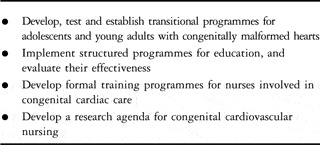
These studies all indicate that being lost to follow-up is associated with significant morbidity. Although empirical data are lacking, it can be assumed that some patients not under medical attention may have died due to residual lesions or their sequels. These deaths might have been preventable if the patients had remained under continued medical follow-up. Developing strategies to provide continuity of care is of paramount importance in order to avoid another lost generation. It is argued that the implementation of transitional programmes can prevent patients from interrupting their care.Reference Moons, Hilderson and Van Deyk17 Such programmes entail a “process by which adolescents and young adults with chronic childhood illnesses are prepared to take charge of their lives and their health in adulthood”.Reference Knauth, Verstappen, Reiss and Webb20 The importance of these programmes is confirmed by several professional organizations and international task forces, such as the European Society of Cardiology, the American Heart Association, the American College of Cardiology, and the American Academy of Pediatrics.Reference Deanfield, Thaulow, Warnes, Webb, Kolbel and Hoffman21–25 A recent survey among centres for paediatric cardiology across the United States of America and Europe, however, revealed that only three-tenths of the centres that transfer patients to facilities providing care for adults currently provide such a programme.Reference Hilderson, Saidi, Van Deyk, Verstappen, Kovacs and Fernandes26 The reason why only one-third of the centres have developed a sound transitional programme is the paucity of empirical evidence to underpin how this should be done.Reference Hilderson, Van Deyk and Moons27 Moreover, there is a dearth of descriptions on how transitional programmes in the field of congenital cardiac disease should be constructed.Reference Knauth, Verstappen, Reiss and Webb20, Reference Berg and Hertz28, Reference Hudsmith and Thorne29 Hence, a first recommendation to prepare for the next decade is that nurses and nurse researchers take up the task of developing, testing, and establishing transitional programmes for adolescents and young adults with congenitally malformed hearts (Table 1).
Recommendations for congenital cardiovascular nurses to prepare for the next decade.

The level of knowledge, and abilities for self-management, of the patients
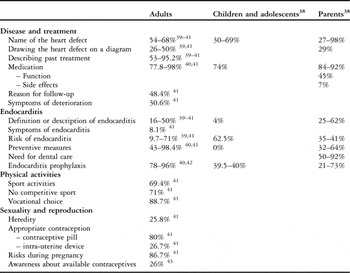
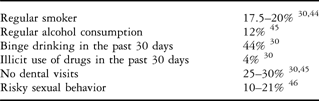
Studies have shown that adults, as well as children with congenital cardiac disease and their parents, have gaps in their level of knowledge with respect to the disease and treatment, particularly with regard to endocarditis, physical activities, sexuality, and reproduction. In Table 2, we summarize the range in proportions of correct answers on questionnaires assessing this knowledge. The results indicate that, in virtually all aspects, the level of knowledge of patients and their parents is moderate to poor. Not surprisingly, adolescents and young adults with congenitally malformed hearts do not always demonstrate the behaviour that is expected of them to avoid complications putting their health at risk. In Table 3, we summarise behaviours with respect to smoking, consumption of alcohol, illicit use of drugs, dental visits, and sexual behaviour. In general, one group found that almost three-tenths of the adolescents report abuse of substances with the past 30 days, with this proportion increasing to just over half in young adulthoodReference Reid, Webb, McCrindle, Irvine and Siu30. These findings demonstrate that a substantial number of young patients with congenital heart disease are engaged in behaviours that place their health at risk.
Knowledge of adult patients, children with congenital heart disease, and their parents.

Behaviour of young adults with congenital heart disease in respect to their health.
Strategies to improve the knowledge and behaviour of patients are available. At the Adult Congenital Heart Disease Program of the University Hospitals in Leuven, the effects of a structured programme for the education of the patients was evaluatedReference Van Deyk, Moons, Farroni, Dedroog, Pinxten and Troost31. Using a pre-post design, with an interval of 5 years, an improvement of more than one-tenth was observed for the name of the cardiac defect, the side-effects of the medication, the symptoms of deterioration, the risk factors for endocarditis, appropriate use of antibiotics, appropriateness of the contraceptive pill, appropriateness of an intrauterine device, the definition of endocarditis, and the characteristics of endocarditis.Reference Van Deyk, Moons, Farroni, Dedroog, Pinxten and Troost31 A second recommendation to prepare for the next decade, therefore, is to implement structured programmes for education, and to evaluate their effectiveness (Table 1).
Education and the level of knowledge in nurses
Several international guidelines explicitly recommended the involvement of nurse specialists in the care of patients with congenital heart disease.Reference Therrien, Dore, Gersony, Iserin, Liberthson and Meijboom32–36 It is not always clear, however, how nurses should be prepared for this role. The Working Party of the British Cardiac Society stated that, in addition to experience in adult or paediatric cardiology, nurses should receive instruction in basic physiology and anatomy of congenital cardiac malformations, understanding of effect of cyanosis and pulmonary hypertension, nursing adults, problems of adolescents, general issues affecting acquired cardiovascular disease, particular postoperative problems, and special problems affecting nursing and outcomes in adults with congenital heart disease.9
Despite such recommendations, most nurses involved in congenital cardiology are trained on the job. Formal courses in congenital heart disease nursing do exist, but are not widespread. Other important resources for education of nurses are sessions specifically designed for them and held at national and international conferences. Such educational initiatives allow nurses to improve their knowledge about congenital heart disease. There is still room for improvement. In 2007, a survey among general cardiac nurses and specialized adult congenital heart disease nurses was undertaken to investigate their level of knowledge regarding the haematological management of patients with Eisenmenger’s syndromeReference Moons, Fleck, Jaarsma, Norekval, Smith, Stromberg, Thompson and Budts37. This study found that the level of knowledge displayed by cardiovascular nurses is poor. About one-third of nurses not specialized in congenital heart disease recognized the definition of Eisenmenger’s syndrome, and knew what the normal levels for the haematocrit. With respect to the three cases presented, less than one-tenth of the nurses could give a correct answerReference Moons, Fleck, Jaarsma, Norekval, Smith, Stromberg, Thompson and Budts37. The level of knowledge of specialized nurses was significantly higher, but also here, important gaps in the level of knowledge could be observed. Less than two-thirds knew the reference values of haematocrit and knew the appropriate management in 2 cases. Less than half of the specialized nurses knew about the procedure of isovolumic phlebotomy.Reference Moons, Fleck, Jaarsma, Norekval, Smith, Stromberg, Thompson and Budts37
This study illustrates the need for thorough education for nurses in congenital heart disease. It is recommended, therefore, that formal programmes be developed for nurses involved in the care of patients with congenitally malformed hearts (Table 1).
Priorities in research
Over the past decade, nursing research in congenital heart disease has ascended. Issues that have been investigated by nurse researchers in adult congenital heart disease are, for instance, the quality of life, experiences of the illness and psychosocial issues, knowledge and education, health behaviour, and pregnancy and gynaecological issues. It is, however questioned what research is needed further to advance nursing for those with congenital cardiac disease. Hence, an agenda should be developed for research for congenital cardiovascular nursing (Table 1). Such an agenda is critical for setting the priorities for nursing research in the next decade. The International Adult Congenital Heart Disease Nursing NetworkReference Moons, Canobbio and Harrison12 has recently taken the lead in surveying nurses involved with adult congenital heart disease on their perceived priorities for research.
Conclusions
Nurses are increasingly involved in the care of patients with congenitally malformed hearts. Although the significance of their contribution is beyond dispute, some challenges remain. Among these challenges, we have focused on the lack of continuity of care and loss of patients to follow-up, a moderate-to-poor level of knowledge and abilities of the patients to achieve self-management, the lack of formal education for nurses and the gaps in their knowledge, and the need for an established list of research priorities. Nurses and nurse researchers should confront these issues, and implement the proposed strategies, in order to prepare for the next decade of congenital cardiovascular care.
Acknowledgements
Our review is based in part on: Moons P, Hilderson D, Van Deyk K. Implementation of transition programs can prevent another lost generation of patients with congenital heart disease. European Journal of Cardiovascular Nursing 2008; 7: 259–263, with kind permission of the European Society of Cardiology.