




No CrossRef data available.
Article contents
Fish macroparasites as indicators of heavy metal pollution in river sites in Austria
Published online by Cambridge University Press: 10 November 2003
Abstract
This paper describes two approaches to evaluate the use of fish macroparasites as bioindicators of heavy metal pollution at selected river stretches in Austria. Firstly changes in the diversity and richness of endoparasites of the cyprinid barbel, Barbus barbus (L.), were tested in relation to heavy metal contents in the aquatic system. Secondly, the bioaccumulation potential of cadmium, lead and zinc was assessed in the acanthocephalan, Pomphorhynchus laevis (Müller, 1776), and compared with that in the muscle, liver and intestine of its barbel host. The present results indicated that in order to validate the role of parasite community patterns related to heavy metal pollution, more investigations on food web dynamics, interelationships between parasites and the presence/absence of intermediate hosts will be essential. Heavy metal concentrations differed significantly between the organs of barbel and P. laevis (P=0·001) with levels up to 2860 fold in the parasite. The high level of heavy metal accumulation in P. laevis compared with that in its barbel host, suggests that despite variability in the parasite infrapopulation, host mobility and feeding behaviour, P. laevis is a most sensitive indicator of heavy metals in aquatic ecosystems.
Information
- Type
- Research Article
- Information
- Copyright
- © 2003 Cambridge University Press
INTRODUCTION
Heavy metals still play an important role as pollutants affecting aquatic systems (Merian, 1991). The number of quantitative studies on heavy metals in both fish and their parasites has recently increased (reviewed in Sures, Siddall & Taraschewski, 1999; Sures, 2001, 2003). The majority of investigations have focused either on parasite community changes subsequent to environmental stress (Koskivaara, 1992; Zharikova, 1993; Gelnar et al. 1994, 1997; Bagge & Valtonen, 1996; Zander & Kesting, 1996; D'Amelio & Gerasi, 1997; Dusek, Gelnar & Sebelová, 1998; Halmetoja, Valtonen & Koskenniemi, 2000), or on single measurements of heavy metal concentrations in fish and their parasites (Sures, Taraschewski & Jackwerth, 1994 a,b,c; Sures & Taraschewski, 1995; Sures, Taraschewski & Rokicki, 1997; Sures, Taraschewski & Rydlo, 1997; Sures, Taraschewski & Siddall, 1997; Siddall & Sures, 1998; Sures et al. 1999; Sures & Siddall, 1999; Sures, Siddall & Taraschewski, 1999; Zimmermann, Sures & Taraschewski, 1999 a,b; Sures & Siddall, 2001, 2003; Sures, 2002).
Kennedy (1997) suggested that if the use of parasites as indicators of pollution can be justified, the fish host species must be abundant and easily accessible and the species of parasite, despite their overdispersed distribution, must show a high prevalence and abundance in the fish population. Parasites should also be easily removed and counted, and details of the ecology and biology of both fish host and parasites should be available. In order to test these conditions outlined by Kennedy (1997), the present investigation will apply to approaches to evaluate heavy metal loads through bioindication. These approaches include investigating changes in diversity and richness patterns of endoparasites of barbel in relation to heavy metal concentrations in the aquatic environments and secondly the extent to which cadmium, lead and zinc accumulate in an acanthocephalan compared to the muscle, liver and intestine of its fish host.
MATERIALS AND METHODS
Study sites and collection of fish
The model fish host chosen for this study was the cyprinid barbel, Barbus barbus (L.). Barbel, apart from occurring in many European river sites, is one of the most abundant fish species in the River Danube in Lower Austria and the River Drau in Carinthia. Fish sampling was conducted at three sites, namely the inflow area of the River Pielach downstream of Melk at the Danube (Da/Pi), a river stretch nearby the inflow of the River Fischa into the Danube (Da/Fi) within the area of the National Park Donauauen and a stretch of the Drau near Rosegg (Dr/Ro) (Fig. 1). The sampling sites were selected on the basis of similar ecological conditions, fish fauna and heavy metal concentrations. Data on the physico-chemical characteristics and heavy metals from Da/Fi, Da/Pi and Dr/Ro were extracted from a river monitoring database provided by the Austrian countrywide monitoring system (WGEV) (Table 1). Fish samples were collected between April and November 2001 with bow netting at Da/Pi, drift netting at Da/Fi and electric-fishing at Dr/Ro because of differences in the habitat structure. A total of 83 fish were sampled including 33 from Da/Fi, 30 from Da/Pi and 26 from Dr/Ro. Only fish with a minimum size of 20 cm were investigated.

Fig. 1. Location of three sampling sites (Da/Fi, Da/Pi, Dr/Ro) at the River Danube in Lower Austria and the River Drau in Carinthia.

Endoparasite community structure
To investigate changes of diversity and richness patterns in relation to heavy metal pollution fish were examined using conventional parasitological techniques (Schabuss et al. 1997; Sures & Streit, 2001). Epidemiological terminology and definitions were those used by Bush et al. (1997). Measurements of parasite community structure and similarity followed those of Kennedy (1993). For measurement of the diversity and dominance characteristics of total and intestinal component communities and intestinal infracommunities and species richness, the Shannon index (loge, H′), Shannon Evenness (E), Simpson's index (D), Berger Parker index (d), the average number of individuals and helminth species per host, and the Brillouin index (loge, HB) were calculated (Magurran, 1988). Similarity measures between communities were calculated using the Sorensen index (quantitative) as described by Magurran (1988).
Heavy metal accumulation in barbel and Pomphorhynchus laevis
The second part of the study concentrated on an investigation of the acanthocephalan species Pomphorhynchus laevis (Müller, 1776) as an accumulation indicator of cadmium, lead and zinc. All fish organ/tissue and parasite samples were collected with stainless steel instruments that have been cleaned in 1% ammonium-EDTA solution and double distilled water (Sures et al. 1994 a). Accumulation was assessed by investigating the liver, intestine and muscle of barbel and pooled P. laevis samples recovered from individual fish as previously described. Samples were lyophilized, crushed and homogenised. Digestion was conducted in solutions of concentrated nitric acid and hydrochloric acids in closed high-pressure quartz vessels using microwave heating with a MULTIWAVE B30MC05A (Perkin Elmer). Following digestion the volume of samples was adjusted in calibrated flasks. Analyses were carried out using inductively coupled plasma emission spectrometry (Optima 3000 DV, Perkin Elmer) after Österreichisches Normungsinstitut (1998) or electro thermal atomic absorption spectrometry (SIMAA 6000 or AAnalyst 800, Perkin Elmer) after Österreichisches Normungsinstitut (1995) for cadmium and after Deutsches Institut für Normung e. V (1998) for lead. Concentrations were calculated in mg kg−1 dry weight. No account was taken of fish sex since the abundance of P. laevis was independent of host gender (Moravec et al. 1997). Ratios of heavy metal concentrations (C) in P. laevis and barbel CP. laevis/Corganhost (Sures et al. 1999) were calculated to evaluate the bioaccumulation capacities of P. laevis compared to barbel. For the calculation of ratios between P. laevis and the liver, intestine and muscle of barbel, a conservative approach was chosen as measured values below the detection limit were replaced by the detection limit itself.
Statistical analysis
Statistical analyses of background data, the number of helminths per barbel and heavy metal concentrations between river sites and the organ/tissues of barbel and P. laevis were conducted using the Mann–Whitney U-test and Kruskal–Wallis test. A one-way ANOVA (post hoc test: Bonferoni) was applied to compare the number of helminth species per barbel and the Brillouin index of intestinal infracommunities. Correlations between Brillouin indices and heavy metal loads in tissues of fish from the three river sites were calculated using the Spearman rank correlation. All statistical tests were performed using SPSS 8.0, and the Sorensen index was calculated with EstimateS 6.0b1 (Colwell, 1997).
RESULTS
Physico-chemical characteristics of the sampling sites
Monitoring data of total heavy metal concentrations from the water columns (1996–2001) revealed significant differences for lead and zinc between Dr/Ro and the two sites at the River Danube (P=0·001, n=198), with the highest values being found at Dr/Ro (Table 1). No significant changes over time were detected within each site. Data on heavy metals in sediments from 1996–2001 (n=6) indicated differences between the three sites, with the highest concentrations occurring at Dr/Ro.
Composition of the helminth community
Nine helminth species were identified (Table 2) including four species of digeneans (Aspidogaster limacoides, Allocreadium isoporum, Diplostomum spathaceum, Posthodiplostomum brevicaudatum), three cestodes (Caryophyllaeus brachycollis, Bathybothrium rectangulum, Proteocephalus torulosus), one nematode (Rhabdochona hellichi) and one acanthocephalan species (P. laevis).

Component community and infracommunity structures
Of the nine helminths recovered, eight species were found at Da/Pi, six at Dr/Ro and five at Da/Fi. On the other hand, the diversity characteristics (Shannon index, Evenness) for the total endo-helminth and intestinal helminth component communities were highest at Dr/Ro followed by Da/Pi and Da/Fi. The latter showed the lowest diversity (Table 3, Table 4). Dominance values (Simpson's index, Berger-Parker index) were highest at Da/Fi followed by Da/Pi and the lowest values at Dr/Ro.


The infracommunity richness and diversity displayed of intestinal helminths were similar to those of the total and intestinal component communities (Table 5). The barbel host harboured at least one parasite species. The mean number of helminths per barbel was significantly lower at Dr/Ro (P=0·001, n=83) compared with the two sample sites in the Danube. Furthermore, the mean number of helminth species per barbel was significantly higher at Dr/Ro compared with that in Da/Fi (P=0·01, n=53). Comparisons of the mean Brillouin index revealed significant differences between all three sites (P=0·001, n=83). Heavy metal loads in the liver, intestine and muscle of barbel and the infracommunity diversity patterns of helminths at the three sites showed no significant correlations.

Heavy metal accumulation in the host–parasite system
Heavy metal accumulation in the acanthocephalan P. laevis was only studied in two of the sampling sites i.e. the Da/Fi and Da/Pi, as the availability and hence the biomass of P. laevis from barbel sampled from the Dr/Ro was not sufficient for heavy metal analysis. The detection limit (3×S.D.) was 0·01 mg kg−1 for cadmium, 0·1 mg kg−1 for lead, and 0·01 mg kg−1 for zinc. The average recovery of heavy metals from the muscle, liver and intestine of barbel and P. laevis was in the region of 90%.
In the Da/Fi and Da/Pi sites, heavy metal concentrations differed significantly between the liver, intestine and muscle of barbel and between the organs/tissues of barbel and P. laevis (P=0·001, n=42). A comparison of the values between Da/Fi and Da/Pi (Fig. 2) showed that cadmium concentrations from Da/Pi where significantly higher in the muscle (P=0·01, n=63), liver (P=0·001, n=63), intestine (P=0·001, n=63), and P. laevis (P=0·01, n=42). Levels of lead from Da/Pi were significant higher both in the muscle (P=0·01, n=63) and liver (P=0·001, n=63). Zinc levels from Da/Pi showed significant higher values only in the muscle of barbel (P=0·05, n=63).

Fig. 2. Median (+75th percentile) cadmium, lead and zinc concentrations in muscle, liver, and intestine of barbel and the acanthocephalan Pomphorhynchus laevis from two river sites, Da/Fi and Da/Pi, in Austria.
Bioconcentration factors, expressed as ratios, (CP.laevis/Corganbarbel) of cadmium, lead and zinc concentrations in P. laevis were similar in both the Da/Fi and Da/Pi sites (Fig. 3). A significantly higher ratio for cadmium for P. laevis/muscle was found in the Da/Pi compared with the Da/Fi site (P=0·05, n=42) (Table 6). For lead, Da/Pi showed significantly higher values for parasite/intestine and parasite/muscle (P=0·05, n=42) while the parasite/liver ratio was higher at Da/Fi (P=0·01, n=42) (Table 7). Ratios for zinc were higher at Da/Pi but did not show any significant differences (Table 8). The highest values were measured for parasite/muscle at Da/Pi for cadmium (407) and lead (357) followed in site Da/Fi by lead (151) and cadmium (139).

Fig. 3. Ratios CP. laevis/Corgan barbel of cadmium, lead, and zinc from two river sites, Da/Fi and Da/Pi, in Austria.
Table 6. Calculated cadmium ratios for barbel and the acanthocephalan Pomphorhynchus laevis from 2 river sites, Da/Fi and Da/Pi, in Austria (N=number of hosts.)

Table 7. Calculated lead ratios for barbel and the acanthocephalan Pomphorhynchus laevis from 2 river sites, Da/Fi and Da/Pi, Austria (N=number of hosts.)

Table 8. Calculated zinc ratios for barbel and the acanthocephalan Pomphorhynchus laevis from 2 river sites, Da/Fi and Da/Pi, in Austria (N=number of hosts.)

A comparison of ratios in the muscle, liver and intestine of barbel to the concentrations in P. laevis showed that for cadmium the P. laevis/muscle ratio was 11 (Da/Fi) and 21 (Da/Pi) times higher than the P. laevis/liver ratio and 4·4 (Da/Fi) and 12 (Da/Pi) times higher than the P. laevis/intestine ratio (Table 6). Similar results could be shown for lead and zinc. Concerning lead, the P. laevis/muscle ratio was 2·5 (Da/Fi) and 26 (Da/Pi) times higher than the P. laevis/liver ratio and 1·9 (Da/Fi) and 4·9 (Da/Pi) times higher than the P. laevis/intestine ratio (Table 7). For zinc the P. laevis/muscle ratio showed 4·2 (Da/Fi) and 4·9 (Da/Pi) times higher values than the P. laevis/liver and 5·3 (Da/Fi) and 4·0 (Da/Fi) times higher values than the P. laevis/intestine ratio (Table 8).
DISCUSSION
Endoparasite community structure
Part of the present study included an evaluation of the responses of the total endoparasite and intestinal component communities and intestinal infracommunities to different heavy metal loads in the aquatic environment. The site chosen for its low heavy metal load, Da/Fi, showed the lowest parasite diversity but the highest dominance characteristics of all three sites. Site Da/Pi displayed a medium diversity and dominance but with the highest number of species i.e. eight parasite species. When investigating infracommunity measures, no significant correlation was detected between heavy metal loads and parasite diversity characteristics. Furthermore barbel from site Dr/Ro, the site with the highest heavy metal load, in contrast turned out to be the one which harboured the highest endoparasite diversity (Tables 3, 4).
Kennedy, Bush & Aho (1986) and Moravec et al. (1997) described barbel as quite specific in its choice of diet, suggesting that lower parasite diversities but higher abundances of one parasite species can be found. A variety of gammarid species (especially Gammarus pulex) can act as intermediate hosts for P. laevis (Rumpus & Kennedy, 1974; Moravec & Scholz, 1994). Moog, Nesemann & Waidbacher (1991) and Moog, Humpesch & Konar (1995) described 15 gammarid species inhabiting the Danube in Lower Austria. In the Drau the only two gammarid species encountered did not seem to play a major role in the food composition of barbel (Friedl & Kerschbaumer, 2000). Instead local populations of barbel may be feeding to a greater extent on caddis flies and mayflies. Larvae of the trichopteran Hydropsyche sp. serve as intermediate hosts of R. hellichi (Moravec & Scholz, 1995). This might explain why barbel at the Da/Fi and Da/Pi sites displayed such a high prevalence and intensity of P. laevis, in comparison with Dr/Ro (Table 2). On the other hand, R. hellichi demonstrated the highest prevalence of infection at the Dr/Ro. For a final interpretation of the effects of heavy metal pollution on parasite community studies it is necessary to include aspects of food web dynamics and trophic interactions of the fish host (Marcogliese & Cone, 1997), together with an understanding of the interrelationships between parasites (Overstreet, 1997), and the presence/absence of intermediate hosts. Nevertheless, direct and indirect influences on species richness, community composition and structure of fish parasites have been shown in relation to organic pollution (Gelnar et al. 1997; Yeomans, Chubb & Sweeting, 1997), pH (Marcogliese & Cone, 1997), or eutrophication (Valtonen, Holmes & Koskivaara, 1997).
Metal accumulation in the host–parasite system
The values of cadmium, lead and zinc in P. laevis compared to accumulation in its barbel host confirmed the results of previous studies on acanthocephalan species (Sures et al. 1994 a,b,c; Sures & Taraschewski, 1995; Sures, Taraschewski & Rokicki, 1997; Sures, Taraschewski & Rydlo, 1997; Sures, Taraschewski & Siddall, 1997; Siddall & Sures, 1998; Sures et al. 1999, 2002; Sures & Siddall, 1999, 2001, 2003; Sures, Siddall & Taraschewski, 1999; Zimmermann et al. 1999 a,b). In both the Da/Fi and Da/Pi sites, the variation in heavy metal concentrations in P. laevis infrapopulations was high between individual hosts (Tables 6–8), and this may reflect variability in the parasite age structure, together with the mobility and feeding behaviour of the host.
Values of the ratios of CP.laevis/Corganhost are comparable to those in previous studies on P. laevis, Acanthocephalus lucii and Paratenuisentis ambiguus (reviewed in Sures, Siddall & Taraschewski, 1999; Sures, 2001, 2003). Pomphorhynchus laevis accumulated significantly higher levels, up to 2860 fold, of heavy metals compared with the organs/tissues of barbel (Table 6). Cadmium levels in the liver, intestine and muscle of barbel were significantly higher at Da/Pi compared with Da/Fi. Lead showed higher values for liver and muscle at Da/Pi only, but values for lead were not significantly different for the intestine of barbel and P. laevis, whilst zinc levels differed only in the muscle of barbel. However, values for lead and zinc in the muscle of barbel were significantly higher in the Da/Pi than in the Da/Fi site.
Heavy metal analyses for P. laevis and barbel were in contrast with those in the local river sediments (Table 1). This discrepancy is due to the fact that data on metal levels in sediments do not necessarily reflect their bioavailability. In addition, this may also reflect the mobility of barbel within its home range. Although longitudinal migrations of barbel in the Danube itself are uncertain due to a chain of power stations, fish are still able to migrate into tributaries. In the area of Da/Pi (between the power stations Ybbs and Altenwörth) seven bigger rivers have their inflows into the Danube and this may form part of the home range of the barbel, whereas the area at site Da/Fi (between the power stations Wien Freudenau and Gabcikovo, Slovakia) is connected to four major rivers.
According to Kennedy (1997) fish parasites have major disadvantages compared to free living organisms such as macroinvertebrates when used as indicators of environmental pollution. These include being directly or indirectly influenced by the metabolism or immune status of the host, the distribution of intermediate and/or definitive hosts, overdispersion and aggregation of parasites in the environment, variation in parasite density and diversity in space and time, together with a lack of knowledge of the physiological responses to pollution by many parasite species. Nevertheless, when comparing heavy metal accumulation in P. laevis with that of its barbel host, there is little doubt that P. laevis is a very sensitive indicator of bioavailable heavy metals in aquatic systems. Adult acanthocephalans parasitising fish are able to accumulate heavy metals to a higher degree than any free living organism or parasite tested so far. Pomphorhynchus laevis is a frequently occurring parasite of fish, especially of barbel, in the Danube and connected river systems but the acanthocephalan is also found in fish in other aquatic environments in Europe (Konecny, Schabuss & Schiemer, 1996; Moravec et al. 1997). The parasite is easily identified and specimens can be readily removed and counted. Although more experimental approaches are desirable to validate the role of acanthocephalans in environmental biomonitoring (Sures, 2001; Sures & Siddall, 2003), the attributes of P. laevis suitably fit into the scheme of free living animals such as macroinvertebrates, which are often used as accumulation indicators to address ecotoxicological problems.
ACKNOWLEDGEMENTS
We wish to express our grateful thanks to the Austrian Science Fund (FWF) for financial support (Grant no. 14548 – BIO).
References
REFERENCES
BAGGE, A. &
VALTONEN, E. T.
(1996).
Experimental study on the influence of paper and pulp mill effluent on the gill parasite communities of roach (Rutilus rutilus).
Parasitology
112,
499–508.CrossRefGoogle Scholar
BUSH, A. O.,
LAFFERTY, K. D.,
LOTZ, J. M. &
SHOSTAK, A. W.
(1997).
Parasitology meets ecology on its own terms, Margolis et al. revisited.
Journal of Parasitology
83,
575–583.CrossRefGoogle Scholar
COLWELL, R. K.
(1997).
EstimateS: Statistical estimation of species richness and shared species from samples. Version 6.0b1. User's Guide and application published at: http://viceroy.eeb.uconn.edu/estimates.
D'AMELIO, S. &
GERASI, L.
(1997).
Evaluation of environmental deterioration by analysing fish parasite populations and communities.
Parassitologia
39,
237–241.Google Scholar
DEUTSCHES INSTITUT FÜR NORMUNG E. V (1998).
DIN 38406–6, German standard methods for the examination of water, waste water and sludge – Cations (group E) – Part 6, Determination of lead by atomic absorption spectrometry (AAS) (E 6).
Deutsches Institut für Normung e. V,
Berlin.
DUSEK, L.,
GELNAR, M. &
SEBELOVÁ, S.
(1998).
Biodiversity of parasites in a freshwater environment with respect to pollution, metazoan parasites of chub (Leuciscus cephalus L.) as a model for statistical evaluation.
International Journal for Parasitology
28,
1555–1571.Google Scholar
FRIEDL, T. &
KERSCHBAUMER, G.
(2000).
Forschungsprojekt Ökosystem Flusskraftwerk Rossegg – St. Jakob, Stand und Zukunftsperspektiven der Bewirtschaftung.
Kärntner Institut für Seenforschung.
GELNAR, M.,
KOUBKOVÁ, B.,
PLÁNKOVÁ, P. &
JURAJDA, P.
(1994).
Report on metazoan parasites of fishes of the river Morava with remarks on the effects of water pollution.
Helminthologia
31,
47–56.Google Scholar
GELNAR, M.,
SEBELOVÁ, S.,
DUSEK, L.,
KOUBKOVÁ, B.,
JURAJDA, P. &
ZAHRÁDKOVÁ, S.
(1997).
Biodiversity of parasites in freshwater environment in relation to pollution.
Parassitologia
39,
189–199.Google Scholar
HALMETOJA, A.,
VALTONEN, E. T. &
KOSKENNIEMI, E.
(2000).
Perch (Perca fluviatilis L.) parasites reflect ecosystem conditions: a comparison of a natural lake and two artificial reservoirs in Finland.
International Journal for Parasitology
30,
1437–1444.Google Scholar
KENNEDY, C. R.
(1993).
The dynamics of intestinal helminth communities in eels Anguilla anguilla in a small stream: long-term changes in richness and structure.
Parasitology
107,
71–78.CrossRefGoogle Scholar
KENNEDY, C. R.
(1997).
Freshwater fish parasites and environmental quality, an overview and caution.
Parassitologia
39,
249–254.Google Scholar
KENNEDY, C. R.,
BUSH, A. O. &
AHO, J. M.
(1986).
Patterns in helminth communities: why are birds and fish different?
Parasitology
93,
205–215.Google Scholar
KONECNY, R.,
SCHABUSS, M. &
SCHIEMER, F.
(1996).
Ecology of helminths parasitising barbel Barbus barbus L.
Proceedings of the Spring Meeting of the British Society of Parasitology 1996,
20–22.
KOSKIVAARA, M.
(1992).
Environmental factors affecting monogeneans parasitic on freshwater fishes.
Parasitology Today
8,
339–342.CrossRefGoogle Scholar
MAGURRAN, A. E.
(1988).
Ecological Diversity and its Measurement.
London,
Cambridge University Press.CrossRef
MARCOGLIESE, D. J. &
CONE, D. K.
(1997).
Parasite communities as indicators of ecosystem stress.
Parassitologia
39,
227–232.Google Scholar
MERIAN, E.
(1991).
Metals and their Compounds in Environment and Life. Occurrence, Analysis and Biological Relevance. New York, Verlag Chemie Weinheim.
MOOG, O.,
HUMPESCH, U. H. &
KONAR, M.
(1995).
The distribution of benthic invertebrates along the Austrian stretch of the River Danube and its relevance as an indicator of zoogeographical and water quality patterns, part 1.
Archiv Hydrobiology
100,
121–213.CrossRefGoogle Scholar
MOOG, O.,
NESEMANN, H. &
WAIDBACHER, H.
(1991).
Makrozoobenthos-Zönosen ausgewählter Standorte der Donau zwischen Strom-Km 2203 und 2170. Erweiterte Zusammenfassung, Deutsche Gesellschaft für Limnologie (DGL), Jahrestagung 1991, Mondsee,
290–294.
MORAVEC, F. &
SCHOLZ, T.
(1994).
Seasonal occurrence and maturation of Neoechinorhynchus rutili (Acanthocephala) in barbel, Barbus barbus (Pisces), of the Jihlava River, Czech Republic.
Parasite
1,
271–277.CrossRefGoogle Scholar
MORAVEC, F. &
SCHOLZ, T.
(1995).
Life history of the nematode Rhabdochona hellichi, a parasite of the barbel in the Jihlava River, Czech Republic.
Journal of Helminthology
69,
59–64.CrossRefGoogle Scholar
MORAVEC, F.,
KONECNY, R.,
BASKA, F.,
RYDLO, M.,
SCHOLZ, T.,
MOLNÁR, K. &
SCHIEMER, F.
(1997).
Endohelminth fauna of barbel, Barbus barbus (L.), under ecological conditions of the Danube basin in Central Europe.
Studie AV CR cislo 3/97.
Academia,
Praha.
ÖSTERREICHISCHES NORMUNGSINSTITUT (1998).
OENORM EN ISO 11885, Water quality – Determination of 33 elements by inductively coupled plasma atomic emission spectroscopy.
Wien,
Österreichisches Normungsinstitut.
ÖSTERREICHISCHES NORMUNGSINSTITUT OENORM EN ISO 5961 (1995).
OENORM EN ISO 5961, Water quality – Determination of cadmium by atomic absorption spectrometry.
Wien,
Österreichisches Normungsinstitut.
OVERSTREET, R. M.
(1997).
Parasitological data as monitors of environmental health.
Parassitologia
39,
169–175.Google Scholar
RUMPUS, A. E. &
KENNEDY, C. R.
(1974).
The effect of the acanthocephalan Pomphorhynchus laevis upon the respiration of its host, Gammarus pulex.
Parasitology
68,
271–284.CrossRefGoogle Scholar
SCHABUSS, M.,
KONECNY, R.,
BELPAIRE, C. &
SCHIEMER, F.
(1997).
Endoparasitic helminths of the European eel, Anguilla anguilla, from four disconnected meanders from the rivers Leie and Scheldt in western Flanders, Belgium, Folia Parasitologica
44,
12–18.Google Scholar
SIDDALL, R. &
SURES, B.
(1998).
Uptake of lead by Pomphorhynchus laevis cystacanths in Gammarus pulex and inmature worms in chub (Leuciscus cephalus).
Parasitology Research
84,
573–577.CrossRefGoogle Scholar
SURES, B.
(2001).
The use of fish parasites as bioindicators of heavy metals in aquatic ecosystems, a review.
Aquatic Ecology
35,
245–255.CrossRefGoogle Scholar
SURES, B.
(2002).
Competition for minerals between Acanthocephalus lucii and its definitive host perch (Perca fluviatilis).
International Journal for Parasitology
32,
1117–1122.CrossRefGoogle Scholar
SURES, B.
(2003).
Accumulation of heavy metals by intestinal helminths in fish: facts, appraisal and perspectives.
Parasitology (in press).CrossRefGoogle Scholar
SURES, B. &
SIDDALL, R.
(1999).
Pomphorhynchus laevis, the intestinal acanthocephalan as a lead sink for its fish host, chub (Leuciscus cephalus).
Experimental Parasitology
93,
66–72.CrossRefGoogle Scholar
SURES, B. &
SIDDALL, R.
(2001).
Comparison between lead accumulation of Pomphorhynchus laevis (Palaeacanthocephala) in the intestine of chub (Leuciscus cephalus) and in the body cavity of goldfish (Carassius auratus auratus).
International Journal for Parasitology
31,
669–673.CrossRefGoogle Scholar
SURES, B. &
SIDDALL, R.
(2003).
Pomphorhynchus laevis (Palaeacanthocephala) in the intestine of chub (Leuciscus cephalus) as an indicator of metal pollution.
International Journal for Parasitology 33,
65–70.CrossRefGoogle Scholar
SURES, B.,
SIDDALL, R. &
TARASCHEWSKI, H.
(1999).
Parasites as accumulation indicators of heavy metal pollution.
Parasitology Today
15,
16–21.CrossRefGoogle Scholar
SURES, B.,
STEINER, W.,
RYDLO, M. &
TARASCHEWSKI, H.
(1999).
Concentrations of 17 elements in the zebra mussel (Dreissena polymorpha), in different tissues of perch (Perca fluviatilis), and in perch intestinal parasites (Acanthocephalus lucii) from the subalpin lake Mondsee (Austria).
Environmental Toxicology and Chemistry
18,
2574–2579.CrossRefGoogle Scholar
SURES, B. &
STREIT, B.
(2001).
Eel parasite diversity and intermediate host abundance in the River Rhine, Germany.
Parasitology
123,
185–191.CrossRefGoogle Scholar
SURES, B. &
TARASCHEWSKI, H.
(1995).
Cadmium concentrations in two adult acanthocephalans, Pomphorhynchus laevis and Acanthocephalus lucii, as compared with their fish hosts and cadmium and lead levels in larvae of A. lucii as compared with their crustacean host.
Parasitology Research
81,
494–497.Google Scholar
SURES, B.,
TARASCHEWSKI, H. &
JACKWERTH, E.
(1994 a).
Lead accumulation in Pomphorhynchus laevis and its host.
Journal of Parasitology
80,
355–357.Google Scholar
SURES, B.,
TARASCHEWSKI, H. &
JACKWERTH, E.
(1994 b).
Lead content of Paratenuisentis ambiguus (Acanthocephala), Anguillicola crassus (Nematodes) and their host Anguilla anguilla. Diseases of aquatic Organisms
19,
105–107.Google Scholar
SURES, B.,
TARASCHEWSKI, H. &
JACKWERTH, E.
(1994 c).
Comparative study of lead accumulation in different organs of perch (Perca fluviatilis) and its intestinal parasite Acanthocephalus lucii.
Bulletin of Environmental Contamination and Toxicology 52,
269–273.Google Scholar
SURES, B.,
TARASCHEWSKI, H. &
ROKICKI, J.
(1997).
Lead and cadmium content of two cestodes, Monobothrium wageneri and Bothriocephalus scorpii, and their fish hosts.
Parasitology Research
83,
618–623.CrossRefGoogle Scholar
SURES, B.,
TARASCHEWSKI, H. &
RYDLO, M.
(1997).
Intestinal fish parasites as heavy metal bioindicators. A comparison between Acanthocephalus lucii (Palaeacanthocephala) and the Zebra Mussel, Dreissena polymorpha.
Bulletin of Environmental Contamination and Toxicology 59,
14–21.Google Scholar
SURES, B.,
TARASCHEWSKI, H. &
SIDDALL, R.
(1997).
Heavy metal concentrations in adult acanthocephalans and cestodes compared to their fish hosts and to established free-living bioindicators.
Parassitologia
39,
213–218.Google Scholar
VALTONEN, E. T.,
HOLMES, J. C. &
KOSKIVAARA, M.
(1997).
Eutrophication, pollution, and fragmentation: effects on parasite communities in roach (Rutilus rutilus) and perch (Perca fluviatilis) in four lakes in central Finland.
Canadian Journal of Fisheries and Aquatic Sciences
54,
572–585.CrossRefGoogle Scholar
WASSERWIRTSCHAFTSKATASTER/UMWELTBUNDESAMT (2001).
Wassergüte in Österreich – Jahresbericht 2000.
Bundesministerium für Land–und Forstwirtschaft, Umwelt und Wasserwirtschaft/Umweltbundesamt (ed.),
Wien.
YEOMANS, W. E.,
CHUBB, J. C. &
SWEETING, R. A.
(1997).
Use of protozoan communities for pollution monitoring.
Parassitologia
39,
201–212.Google Scholar
ZANDER, C. D. &
KESTING, V.
(1996).
The indicator properties of parasite communities of gobies (Teleostei, Gobiidae) from Kiel and Lübeck Bight, SW Baltic Sea.
Applied Parasitology
37,
186–204.Google Scholar
ZHARIKOVA, T. I.
(1993).
Effect of water pollution on ectoparasites of beam (Abramis brama).
Journal of Ichthyology 33,
50–62.Google Scholar
ZIMMERMANN, S.,
SURES, B. &
TARASCHEWSKI, H.
(1999 a).
Schwermetallanreicherung bei parasitischen Würmern in Abhängigkeit von verschiedenen Umweltfaktoren – ein Beitrag zum Einsatz von Endoparasiten als Bioindikatoren für den aquatischen Lebensraum. In
Ökotoxikologie – ökosystemare Ansätze und Methoden (ed. Oehlmann, J. & Markert, B.), pp. 335–340. Ecomed Verlag, Jena.
ZIMMERMANN, S.,
SURES, B. &
TARASCHEWSKI, H.
(1999 b).
Experimental studies on lead accumulation in the eel specific parasites Anguillicola crassus (Nematoda) and Paratenuisentis ambiguus (Acanthocephala) as compared with their host Anguilla anguilla.
Archives of Environmental Contamination and Toxicology
37,
190–195.Google Scholar

Fig. 1. Location of three sampling sites (Da/Fi, Da/Pi, Dr/Ro) at the River Danube in Lower Austria and the River Drau in Carinthia.
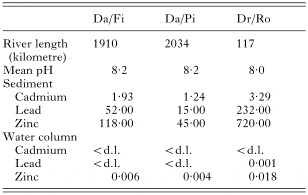
Table 1. Background data to the river sites at Da/Fi, Da/Pi, and Dr/Ro in Austria: median heavy metal concentrations from sediments (in 40 μm mg kg−1 dry weight, Wasserwirtschaftskataster/Umweltbundesamt, 2001) for the years 1999 to 2001; median heavy metal concentrations from water samples (mg L−1) for the years 1996 to 2001; d.l.=detection limit
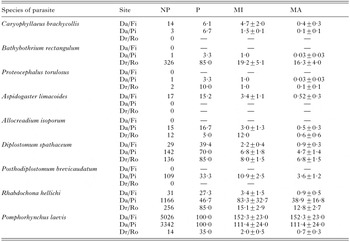
Table 2. Prevalence, mean intensity and mean abundance of endoparasite component communities of barbel from 3 river sites in Austria; NP=number of parasites; P (%)=prevalence; MI=mean intensity±S.E.; MA=mean abundance±S.E.
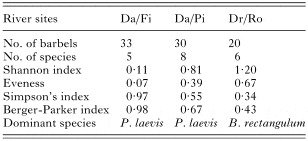
Table 3. Comparison of the helminth richness and diversity characteristics of the total helminth component communities in barbel from 3 river sites in Austria
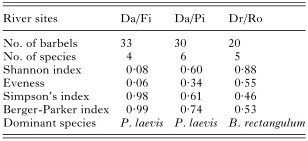
Table 4. Comparison of the helminth richness and diversity characteristics of the intestinal component communities in barbel from 3 river sites in Austria
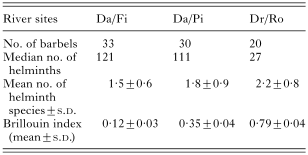
Table 5. Comparison of the helminth richness and diversity characteristics of the intestinal infracommunities in barbel from 3 river sites in Austria
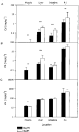
Fig. 2. Median (+75th percentile) cadmium, lead and zinc concentrations in muscle, liver, and intestine of barbel and the acanthocephalan Pomphorhynchus laevis from two river sites, Da/Fi and Da/Pi, in Austria.
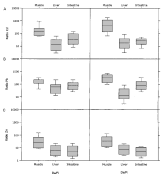
Fig. 3. Ratios CP. laevis/Corgan barbel of cadmium, lead, and zinc from two river sites, Da/Fi and Da/Pi, in Austria.
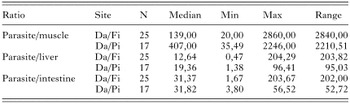
Table 6. Calculated cadmium ratios for barbel and the acanthocephalan Pomphorhynchus laevis from 2 river sites, Da/Fi and Da/Pi, in Austria
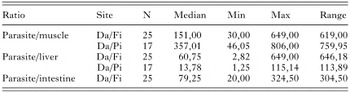
Table 7. Calculated lead ratios for barbel and the acanthocephalan Pomphorhynchus laevis from 2 river sites, Da/Fi and Da/Pi, Austria
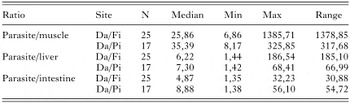
Table 8. Calculated zinc ratios for barbel and the acanthocephalan Pomphorhynchus laevis from 2 river sites, Da/Fi and Da/Pi, in Austria
 You have
Access
- 64
- Cited by