Previous studies have shown that cardiac MRI can be used to evaluate suitability for infants to undergo the Glenn operation after the Norwood procedure. Pre-Glenn diagnostic cardiac catheterisations may not always be necessary, saving the infant from invasive procedures and reducing radiation exposureReference Muthurangu, Taylor and Hegde 1 , Reference McMahon, Eidem and Bezold 2 . Brown et al showed that, excluding patients in whom catheterisation was necessary based on echocardiography, routine catheterisation rarely resulted in new information or intervention. Hence, these patients could be evaluated using exclusively non-invasive techniquesReference Brown, Gauvreau and Moran 3 . In the face of continuingly improving outcomes for Glenn proceduresReference Daudt and Zielinsky 4 , many institutions have continued a policy of routine pre-Glenn invasive cardiac catheterisation. The aim of this study was to retrospectively analyse our institution’s data to identify whether such a policy of rationalising catheterisation use would still be advisable in the current era and if such findings were generalisable to our institution. The primary hypothesis was that a rationalised approach to using catheterisation would not result in any difference in decision-making for these patients, but with fewer invasive procedures, through a decision tree using clinical history, echocardiogram, and cross-sectional imaging. We also proposed to evaluate the decision-making using this decision tree.
Materials and methods
This was a retrospective review of consecutive patients who underwent the Norwood procedure between 1 January, 2006 and 1 January, 2016, at our institution. Patients were identified using the Society of Thoracic Surgeons Database, and all research was done in compliance with the U.S. Good Clinical Practice Guidelines and Helsinki Declaration and approved by the Institutional Review Board of UT Southwestern. All patients undergoing evaluation for the Glenn procedure received clinical evaluation, echocardiography, and diagnostic cardiac catheterisation. All catheterisations were done primarily for diagnostic investigation. In all, 57 of them progressed to being interventional on the basis of findings at catheterisation. We assessed the success of a retrospective decision tree categorising the need for diagnostic imaging, as follows:
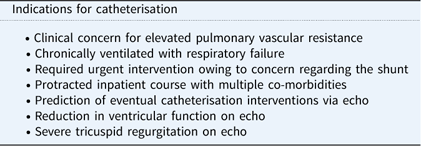
∙ We considered it appropriate to investigate a conservative approach that would require more catheterisation procedures than perhaps other centres would consider necessary. This was chosen to align with the cautious approach, which has been implemented more recently at our institution. Diagnostic cardiac catheterisation was designated to be required for the following patients: clinical concern for elevated pulmonary vascular resistance; chronically ventilated with respiratory failure; required urgent intervention owing to concern regarding the shunt; or protracted inpatient course with multiple co-morbidities. In addition, echocardiographic findings mandating cardiac catheterisation included prediction of eventual catheterisation interventions, reduction in ventricular function, or severe tricuspid regurgitation. The need for occlusion of aortopulmonary collateral arteries was not considered an absolute indication for cardiac catheterisationReference Banka, Sleeper and Atz 5 (Table 1).
∙ The remainder of the patients were deemed to have been suitable to undergo cross-sectional imaging – cardiac MRI or cardiac CT – to rationalise the use of catheterisation. For these purposes, it was assumed that cross-sectional imaging is able to identify any significant stenosis of the great vessels or vascular obstruction mandating cardiac catheterisation, where vascular obstruction was defined as a pullback gradient of 20–40 mmHg over the aortic arch or the words “significant, precipitous, dynamic, moderate, or severe” describing the degree of pulmonary artery stenosis in the catheter angiography reports. This assumption is supported by previous publication showing superior accuracy of cardiac MR to invasive cardiac catheterisationReference Brown, Gauvreau and Powell 6 .
Institutional indications for catheterisation.

We analysed data from patients deemed suitable to undergo cross-sectional imaging to determine whether cardiac catheterisation gave any incremental value, or whether haemodynamic measurements taken at catheterisation precluded the Glenn procedure. As part of our retrospective decision tree, we analysed the patients who were in actuality not cleared for Glenn to ensure that they would have received cardiac catheterisation.
Results
Retrospective decision tree
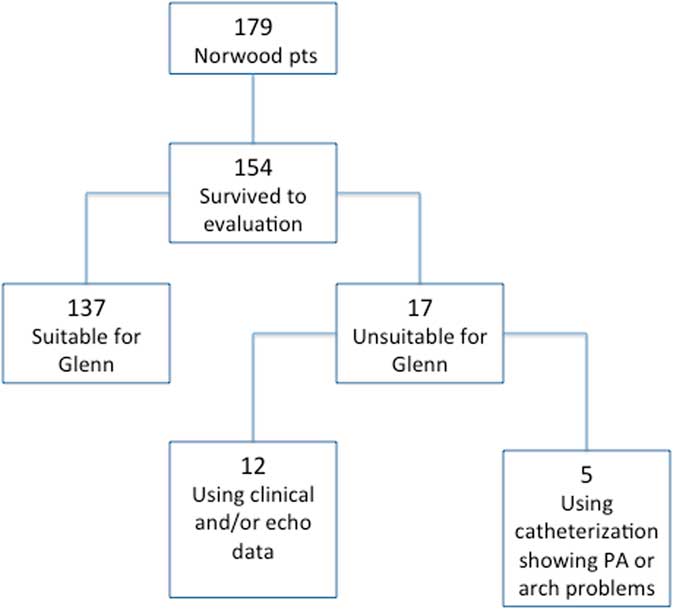
A total of 179 consecutive patients were identified; 25 (14%) patients died before pre-Glenn diagnostic catheterisation; and 154 (86%) patients underwent cardiac catheterisation.
Retrospective decision tree and catheter-based intervention
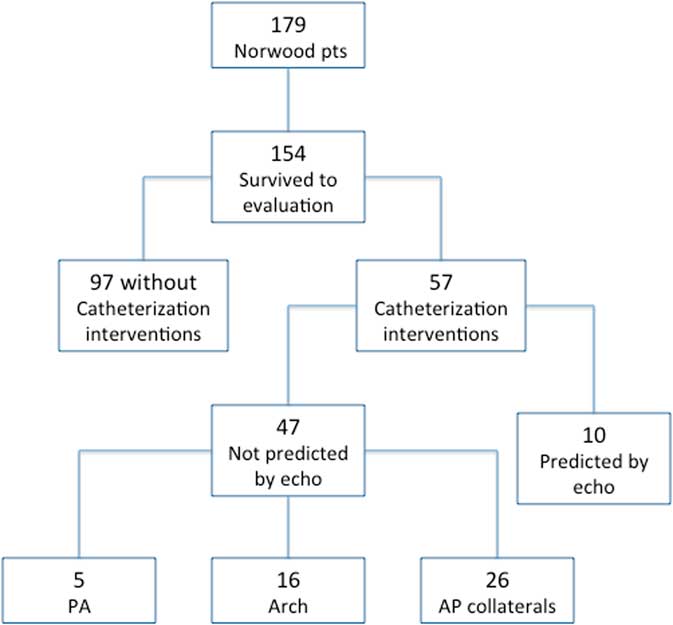
Once again all procedures were performed for diagnostic catheterisation. Once diagnostic catheterisations were complete, the need for interventional catheterisation was assessed and performed under the same anaesthesia. In all, 57 patients progressed to needing these catheter-based interventions. Of these interventions, 26 were cases of occlusion of aortopulmonary collaterals, and these were categorised as not absolutely indicatedReference Banka, Sleeper and Atz 5 . Of the 31 absolutely indicated interventions, all would have been correctly identified and would have received intervention before Glenn using the proposed decision tree:
∙ 10/31 were predicted by echocardiography to require intervention.
∙ 5/31 patients required pulmonary artery interventions that would have been identified only on cross-sectional imaging – cardiac CT or MRI.
∙ 16/31 patients required aortic arch interventions that would have been identified on cross-sectional imaging. There was no consistent indication for arch intervention; for example, many did not have a significant arch gradient and, upon catheter angiography, many only had mild abnormalities. In total, there were 21 aortic arch interventions, both those predicted by echo and those not predicted by echo: 13 patients had their interventions in the first 5 years of the time period studied, and eight patients had their intervention in the second 5 years (Fig 1).
Cohort and catheterisation interventions. AP=aortopulmonary; PA=pulmonary artery.

Cohort categorisation using retrospective decision tree
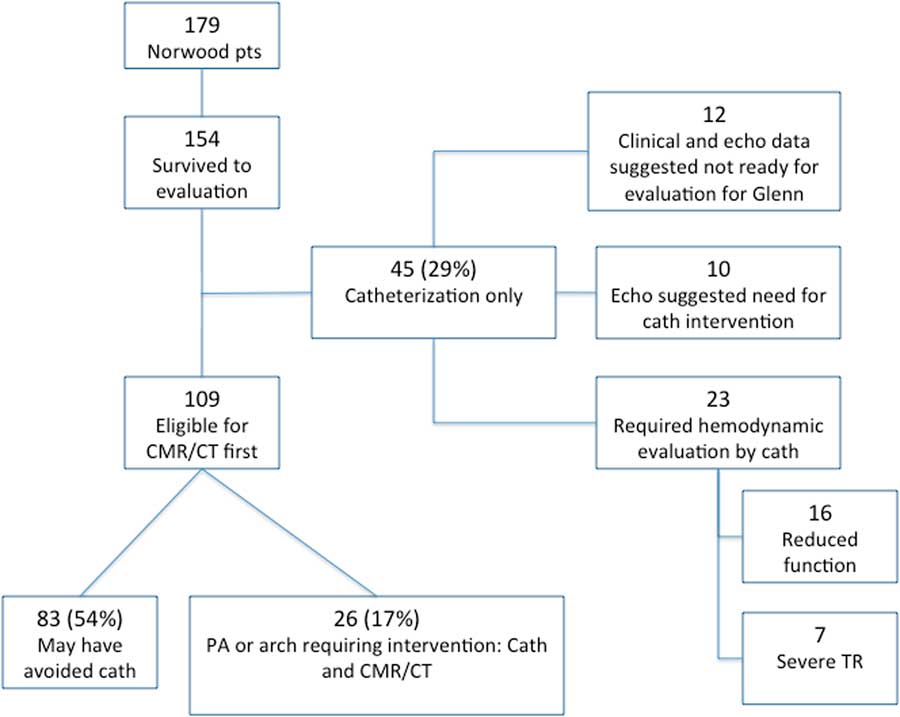
If the retrospective decision tree were used, 45 of 154 (29%) would have had catheterisation without getting any cardiac cross-sectional imaging. This includes 23 patients who would require catheterisation-acquired haemodynamic data owing to echocardiographic criteria – 16 with reduced function and seven with severe tricuspid regurgitation; 10 who had vascular stenosis on echo; and 12 who had clinical concerns requiring invasive catheterisation.
Using the decision tree, another 26 of 154 patients (17%) would require catheterisation after cross-sectional imaging was conducted and the vascular obstruction was identified.
In all, 83 of 154 patients (54%) would not have undergone an invasive diagnostic procedure before Glenn anastomosis (Fig 2).
Retrospective decision tree summary. TR=tricuspid regurgitation.

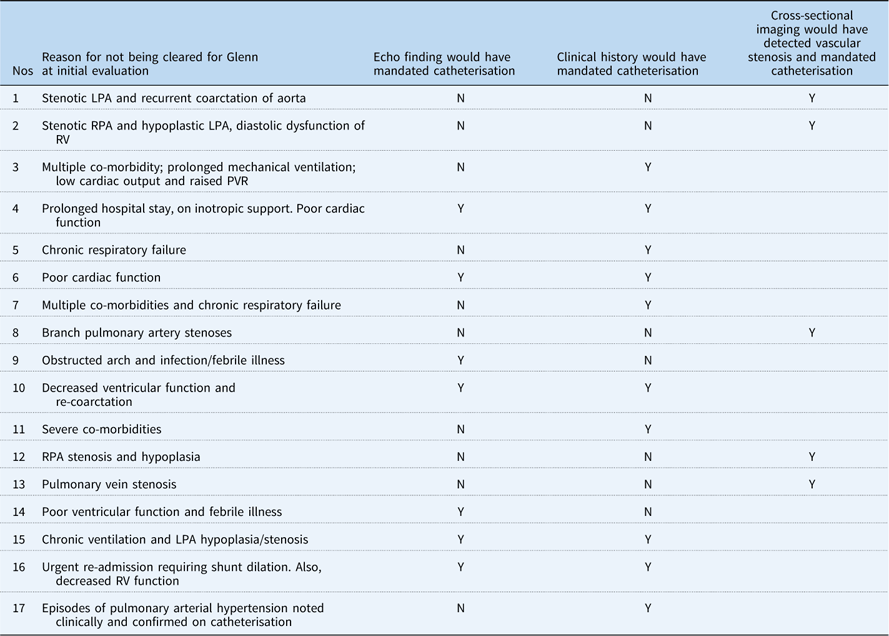
All patients who were deemed unsuitable for Glenn anastomosis would have undergone cardiac catheterisation under the retrospective decision tree protocol (Table 2).
Characterisation of patients not initially cleared for Glenn.

LPA=left pulmonary artery; PVR=pulmonary vascular resistance; RPA=right pulmonary artery; RV=right ventricle.
Abnormal findings in echo, catheterisation, and catheter angiographic data
Echo
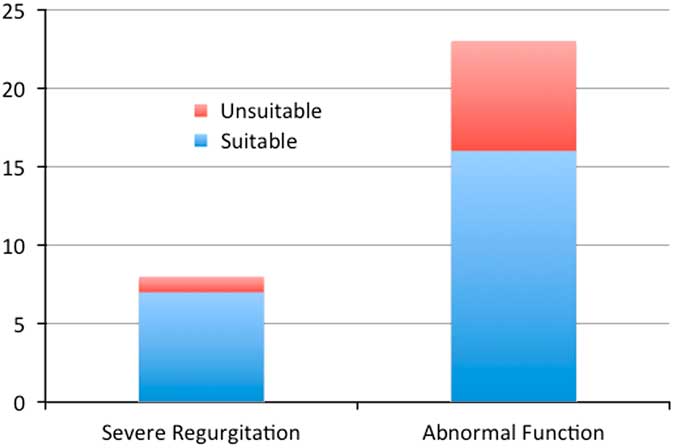
All of the patients evaluated received a clinical evaluation, echocardiography, and catheterisation. Of the 154 patients who were initially evaluated, cardiac catheterisation was indicated for 33 patients on the basis of echo findings alone: 23 had abnormal ventricular function on echo and 10 showed echo findings that suggested a need for an eventual intervention in the catheterisation lab. Of the 23 with abnormal ventricular function on echo, seven had severe tricuspid regurgitation and 16 were patients with reduced function on echo that would not receive any interventions during catheterisation. An additional patient was found to have severe tricuspid regurgitation but was part of the cohort of 12 identified as needing a catheterisation via the combined use of clinical evaluation and echocardiography (Table 2).
Catheterisation
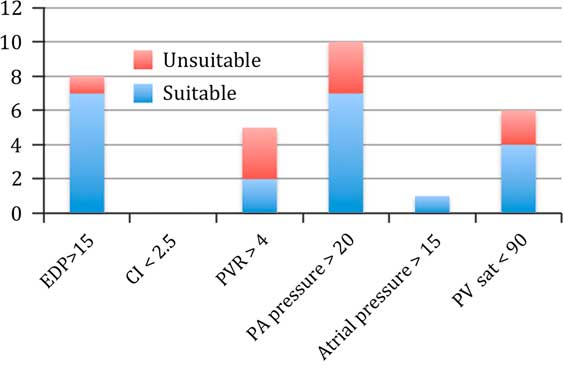
Of the 154 that were initially evaluated, eight had end diastolic pressure >15 mmHg. None of the evaluated patients had a cardiac index <2 L/min/m2. A total of five patients had a pulmonary vascular resistance >4 Woods U.m2; 10 patients had a pulmonary artery pressure >20 mmHg; one patient had an atrial pressure >15 mmHg; and six had pulmonary venous saturations that were below 90%.
Catheter angiography
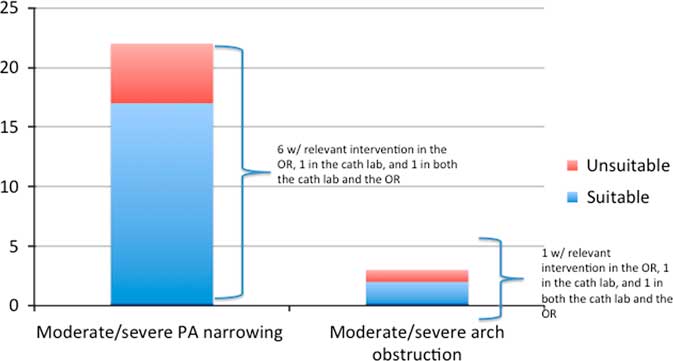
Of the 154 patients who were initially evaluated, 22 had moderate or severe pulmonary artery narrowing. Of these 22, six had a relevant intervention in the operating room, one in the catheterisation lab, and one in both the catheterisation lab and the operating room. In all, three had moderate or severe arch obstruction demonstrated by catheter angiography. All three had relevant interventions performed: one in the operating room, one in the catheterisation lab, and one in both the operating room and the catheterisation lab.
Outcome data
The data were screened retrospectively to see whether any extremely abnormal metrics precluded proceeding to the Glenn.
A total of 17 (10%) patients were deemed unsuitable to progress to the Glenn procedure; using the decision tree, all of these cases would have received cardiac catheterisation:
∙ 12 out of 17 of these were identified by the combined use of clinical criteria and echocardiography above and would have required primary catheterisation according to our retrospective decision tree; and
∙ the remaining five failed to be cleared owing to vascular issues with the pulmonary arteries or the aortic arch, lesions that would have been identified by cross-sectional imaging, therefore requiring catheterisation according to our decision tree (Table 2 and Fig 3).
Cohort and Glenn suitability. PA=pulmonary artery.

Out of eight patients with severe tricuspid regurgitation on echocardiography, one was not cleared for a Glenn. Out of 23 patients with abnormal ventricular function, seven were not initially cleared for Glenn (Fig 4). Out of eight patients with end diastolic pressure >15 mmHg, one was not initially cleared for the Glenn. Out of five patients with pulmonary vascular resistance >4 Woods U.m2, three were not cleared for Glenn. Out of 10 patients with pulmonary artery pressure >20 mmHg, three were not cleared for Glenn. The one patient with an atrial pressure >15 mmHg went on to have a Glenn after this evaluation. Four of six patients with pulmonary venous saturations that were below 90% went on to receive a Glenn after this evaluation, and regarding the other two patients who were not cleared for Glenn this was predicted by their clinical situation (Fig 5). All these patients not cleared for Glenn were predicted to need catheterisation, as indicated by the reasons in Table 2.
Outcomes for abnormal findings in echo.

Outcomes for abnormal findings in catheterisation. CI=cardiac index; PV=pulmonary vein.

Out of 22 patients with moderate or severe pulmonary artery narrowing on catheter angiography, five were not cleared for Glenn. Out of the three patients with moderate or severe arch obstruction, one was not cleared for a Glenn (Fig 6).
Outcomes for abnormal findings in catheter angiography. OR=operating room; PA = pulmonary artery.

Survival data
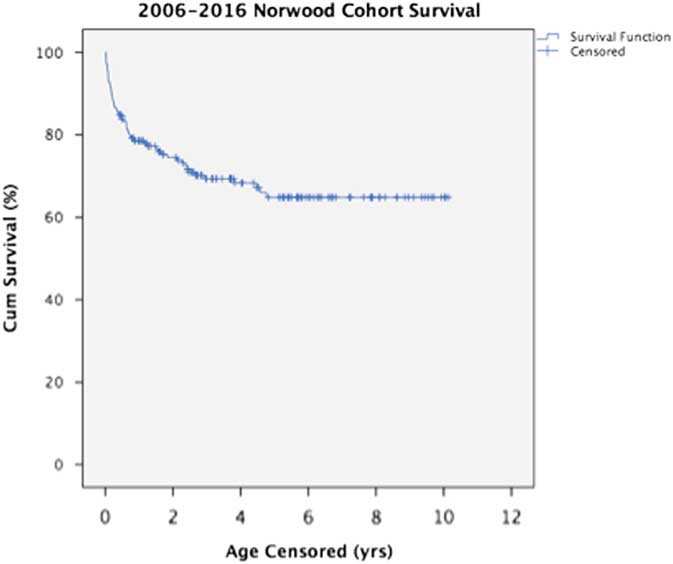
A total of 49 patients of the original 179 patients who received Norwood operations died, and 6 patients eventually received a cardiac transplant. Of the 6 patients who were transplanted, 1 eventually died (Fig 7).
Survival data.

Discussion
The study’s aim was to retrospectively analyse the cohort of patients being evaluated for a Glenn to determine whether it would be beneficial to rationalise the use of cardiac catheterisation in evaluating patients for their surgery. Cardiac catheterisation is not without its own risks because of the need for anaesthesia, risk of vascular occlusion or cardiac tamponade, and ionising radiationReference Vitiello, McCrindle, Nykanen, Freedom and Benson 7 – Reference Bartley, Metayer, Selvin, Ducore and Buffler 10 . While cross-sectional imaging such as MRI and CT also require anaesthesia, it lacks catheterisation-specific risks. Furthermore, CT angiography can be done without anaesthesia in our institution, using the so-called “feed and wrap” techniqueReference Sury, Harker, Begent and Chong 11 below four months of age. Thus, was cardiac catheterisation conveying information that precluded being cleared for the Glenn palliation, and would these reasons have been missed using a combination of echocardiography, clinical data, and cross-sectional imaging?
If the retrospective decision tree were used, 45 of 154 would have had catheterisation only (29%), and 26 of 154 patients (17%) would require catheterisation after the cross-sectional imaging was conducted and the vascular obstruction was identified. The remaining 83 of 154 patients (54%) would not have undergone an invasive diagnostic procedure before Glenn anastomosis and would have just undergone cross-sectional imaging. Using this tree, all patients who were deemed unsuitable for Glenn procedure would have correctly been identified as needing catheterisation. Similarly, all patients who had absolute indications for catheter-based interventions would have been correctly identified as requiring catheterisation before the Glenn procedure.
There is support in the literature for using a similar system to rationalise the use of cardiac catheterisation rather than mandating it in all patients being evaluated for both the Glenn and Fontan palliations.
Regarding evaluation for the Glenn specifically, which was what our cohort of patients were being evaluated for, CMR has previously been shown to be a plausible alternative to invasive catheterisation in certain patientsReference Brown, Gauvreau and Moran 3 . In a certain cohort that was randomised to either catheterisation or CMR as part of their pre-Glenn evaluation, operative course, frequency of postoperative complications, and proportion of patients who had a successful Glenn operation were similar between the two groupsReference Brown, Gauvreau and Powell 6 . Furthermore, the same cohort of patients had “equivalent clinical and haemodynamic profiles before Fontan and similar post-Fontan outcomes” at a median of 8 years after their Glenn operationReference Brown, Gauvreau and Powell 12 .
Regarding the Fontan, in one study it was found that “single ventricle patients not requiring an intervention can undergo successful Fontan completion with CMR and echo alone with similar short-term outcomes to [cath alone]”Reference Fogel, Pawlowski and Whitehead 13 . Routine catheterisation in the management of uncomplicated patients with single ventricles across staged Fontan reconstructions has been found to be unnecessaryReference Fogel 14 , correlating with other findings that cardiac catheterisation is not always necessary in evaluationsReference Muthurangu, Taylor and Hegde 1 , Reference McMahon, Eidem and Bezold 2 . Alternative algorithms, similar to the one outlined here, could help identify pre-Fontan patients who do not warrant catheterisationReference Yassin, Bhat, Tysarowski, Masud and Dilawar 15 .
However, there is literature maintaining that cardiac catheterisation before a Glenn or Fontan is necessary to detect the pulmonary artery distortion that echocardiography and MRI may miss, to measure pulmonary resistance, and to visualise and coil certain collaterals before an operation, thereby reducing morbidity and mortalityReference Nakanishi 16 . In our algorithm, cross-sectional imaging was postulated to be able to detect pulmonary artery distortion, and the pre-Glenn collaterals were not an absolute indication for coiling during catheterisation. Furthermore, cardiac catheterisation is also invasive and carries with it its own set of potential complications.
Limitations of the study include the fact that it is not known whether most of the interventions documented during catheterisation could have been undertaken during the Glenn palliation surgery. As these interventions were performed during catheterisation, they moved these patients to the category of those who definitely needed catheterisation, with the exception of AP collateral interventions (26). Thus, it is unknown whether the remaining 31 catheterisation interventions could similarly have been performed during surgery, possibly reducing the number of patients who actually need catheterisation. Another limitation inherent to the study design relates to the retrospective collection of data.
Although the cutoffs and/or parameters assigned for abnormal echo, haemodynamic, or angiographic data did not universally preclude corresponding patients from a Glenn, there are indeed cases in which the haemodynamic data are useful for deciding to refrain from Glenn. All such cases would have undergone invasive assessment using the proposed protocol. It would be useful to examine the long-term outcomes of patients who had abnormal echo, catheterisation, or angiographic findings and of all the patients who were not initially cleared for a Glenn palliation. Our data show that, even in the modern era with improved Glenn outcomes, the combined use of clinical assessment, echocardiography, and cardiac MRI or CT would be an effective method to rationalise the use of diagnostic cardiac catheterisation in these patients.
Acknowledgements
The authors thank the Pediatric Cardiology Department at Children’s Medical Center Dallas, the UTSW Summer Research Program, and Ms. Lizette Serrano-Ratley, Clinical Database Administrator.
Financial Support
This research received no specific grant from any funding agency, commercial or not-for-profit sectors.
Conflicts of Interest
None.
Ethical Standards
The authors assert that all procedures contributing to this work comply with the ethical standards of the U.S. Good Clinical Practice Guidelines and with the Helsinki Declaration of 1975, as revised in 2008, and has been approved by the institutional review board of UT Southwestern.