Introduction
Understanding the immediate fate of organic carbon (OC) deposited on the seafloor is crucial to gaining knowledge of both benthic ecosystem function and sedimentary C sequestration. Carbon cycling in methane-rich seafloor environments is of considerable interest, owing to the possibility of increased destabilisation of sub-seafloor gas hydrate deposits under warming climate conditions. This issue is particularly pertinent in shallow, high-latitude sediments, where gas hydrate deposits are larger, pressure is minimal, and where sediment warming is most likely to occur on century timescales (Ciais et al. Reference Ciais, Sabine, Bala, Bopp, Brovkin, Canadell, Stocker, Qin, Plattner, Tignor, Allen and Boschung2013). At the type of methane-rich sites which may result, methane flux can be low enough to be entirely consumed by sedimentary communities, preventing loss to the water column, but still sufficient to influence the composition and function of the resident biota (Bell et al. Reference Bell, Aquilina, Woulds, Glover, Little and Reid2016).
Increasingly, dark fixation of inorganic C is being observed in non-hydrothermal vent or methane seep settings, and may be an important and overlooked aspect of benthic C-cycling (Molari et al. Reference Molari, Manini and Dell'anno2013, Boschker et al. Reference Boschker, Vasquez-Cardenas, Bolhuis, Moerdijk-Poortvliet and Moodley2014, Pruski et al. Reference Pruski, Decker, Stetten, Vetion, Martinez and Charlier2017, Sweetman et al. in press). Methane can support a range of metabolic strategies within the sediment, including methanotrophy, aerobic and anaerobic oxidation of methane (e.g. Treude et al. Reference Treude, Boetius, Knittel, Wallmann and Jorgensen2003), and associated sulphide oxidation (Bernardino et al. Reference Bernardino, Levin, Thurber and Smith2012). Methane derived carbon and has been shown to sustain chemoautotrophy, in some cases resulting in unusually high infaunal density and biomass (Levin & Michener Reference Levin and Michener2002, Levin et al. Reference Levin, Gibson, Atkinson and Gordon2005, Bernardino et al. Reference Bernardino, Levin, Thurber and Smith2012). Thus, the occurrence of benthic C fixation and its role in seafloor C-cycling at methane rich and other sites requires considerable investigation.
Isotope tracing experiments (ITEs) have been used in a wide range of benthic environments to investigate carbon processing by benthic ecosystems, and thus the fate of organic carbon (OC) deposited in the sediment (e.g. Moodley et al. Reference Moodley, Middelburg, Boschker, Duineveld, Pel, Herman and Heip2002, Witte et al. Reference Witte, Aberle, Sand and Wenzhofer2003a, Woulds et al. Reference Woulds, Andersson, Cowie, Middelburg and Levin2009). A comparison of previous experiments (Woulds et al. Reference Woulds, Andersson, Cowie, Middelburg and Levin2009) shows that in the generally OC poor and low biomass deep-sea, C tends to be dominantly routed towards total community respiration, thus the majority of OC processed by the benthic community in such locations is returned to the water column as dissolved CO2. In shallower settings, such as estuaries and fjords, increased OC supply sustains a larger and more active faunal community, and thus a greater proportion of biologically processed OC is routed through the faunal biomass (Woulds et al. Reference Woulds, Andersson, Cowie, Middelburg and Levin2009). Methane-rich sites potentially exhibit benthic C fixation, which may support high biomass faunal communities, which would play a key role in short-term C-cycling. However, while the sources and turnover of OC has been investigated at some methane-rich sites (Pozzato et al. Reference Pozzato, Cathalot, Berrached, Toussaint, Stetten and Caprais2017, Pruski et al. Reference Pruski, Decker, Stetten, Vetion, Martinez and Charlier2017, Rabouille et al. Reference Rabouille, Olu, Baudin, Khripounoff, Dennielou and Arnaud-Haond2017), they have not previously been the focus of isotope tracing experiments. Here the authors present the first assessment, using stable isotope tracing, of C-cycling by the benthic ecosystem in methane-rich sediments.
The aim of this study was to characterize C-cycling by the benthic ecosystem and quantify process rates in methane-rich reducing sediments on the south-west South Georgia shelf. The present authors hypothesized that benthic C fixation would occur, and that a high biomass macrofaunal community related to benthic production would play a substantial role in the immediate fate of deposited organic C (Woulds et al. Reference Woulds, Andersson, Cowie, Middelburg and Levin2009, Bell et al. Reference Bell, Aquilina, Woulds, Glover, Little and Reid2016).
Methods
Field site
The continental shelf surrounding South Georgia has recently been found to be methane rich, with gas flares identified in fjords on the northern margin (Romer et al. Reference Romer, Torres, Kasten, Kuhn, Graham and Mau2014), and sites of weaker methane seepage in the south-west (Bell et al. Reference Bell, Aquilina, Woulds, Glover, Little and Reid2016). Benthic faunal communities from the south-west shelf are reported to be similar to those typically found in reducing sediments, and seep endemic fauna are absent (Bell et al. Reference Bell, Aquilina, Woulds, Glover, Little and Reid2016).
This study was conducted at a site 257 m deep on the south-west margin of South Georgia, at 54.1575°S, 37.9761°W (station JC55 111 in Bell et al. Reference Bell, Aquilina, Woulds, Glover, Little and Reid2016). Surface sediments (0–1 cm) were 1.6% (dry weight) organic C. Oxygen penetrated no deeper than 2 cm into the sediment. Porewater CH4 concentrations increased continually downcore, but particularly from ~ 15 cm downwards, at which point S2− also increased. Maximal CH4 concentrations of ~ 25 μM were observed at the maximum sampling depth (~ 27 cm, Bell et al. Reference Bell, Aquilina, Woulds, Glover, Little and Reid2016). Macrofaunal density and biomass were 25 402 ind m−2 and 2606 mg C m−2 respectively (Bell et al. Reference Bell, Aquilina, Woulds, Glover, Little and Reid2016, Bell, personal communication), and the community was dominated by polychaetes (particularly cirratulids), tubificid oligochaetes and thyasirid bivalves (Bell et al. Reference Bell, Aquilina, Woulds, Glover, Little and Reid2016).
Isotope tracing experiments
The isotope tracing experiments were conducted using replicate 10 cm diameter megacores collected from a single deployment, and treated as follows. Cores subjected to the ‘algae’ treatment were amended with 100% 13C and 15N labelled Chlorella cells (Cambridge Isotope Laboratories) at a dose of 392 mg C m−2, which were allowed to settle onto the sediment surface. The algal dose was chosen to represent a minimal addition to natural present organic C (~ 0.5% of that present in the surface 1 cm), and is similar to other published experiments (Woulds et al. Reference Woulds, Andersson, Cowie, Middelburg and Levin2009). Cores subjected to the ‘bicarbonate’ treatment had a 10 ml solution of 100% 13C labelled NaHCO3 and 100% 15N labelled NH4Cl injected into the porewater of the surface 5 cm of sediment, to give a final dose of 306 mg C m−2, and 2.52 mg N m−2.
Two cores were used for each treatment. This limited replication was necessary due to the time- and cost-intensive nature of sample processing and analysis, and is standard for such experiments. Thus, while there is limited scope for statistical analyses, and care must be taken with data interpretation, the replicates do indicate the extent of spatial variability, and in many cases allow firm conclusions to be drawn.
After labelling, cores were closed with caps that allowed stirring of the core top water throughout the experiment such that re-suspension of surface sediment did not occur, and incubated at local bottom temperature 1.2°C for ~ 60 h. Core top dissolved oxygen concentrations did not decline below ~ 60% saturation during incubations. At intervals during the incubation, samples of core-top water were withdrawn through sampling ports, and the volume was replaced with filtered bottom water. Water samples were preserved for dissolved inorganic carbon (DIC) analysis in 10 ml crimp cap vials, and poisoned with HgCl2.
At the end of the experiment, cores were sectioned at 1 cm intervals to 10 cm depth. Half of each section was frozen, and the other half was preserved in buffered formalin (10% in filtered seawater).
Analysis
Preserved sediment was sieved over a 300 μm mesh, and macrofaunal organisms were extracted under a binocular microscope. They were identified to broad taxonomic groups (family level for some polychaetes), and air dried at 50°C in pre-weighed silver boats. Reweighed fauna were decarbonated using 0.1 N HCl and air dried again at 50°C. A stronger treatment with 6N HCl was used for organisms with carbonate shells/tests (e.g. bivalves and foraminifera). Fauna were analysed for isotopic signatures using a Flash EA 1112 Series Elemental Analyser connected via a Conflo III to a DeltaPlus XP isotope ratio mass spectrometer (all Thermo Finnigan, Bremen). Carbon contents were quantified using the area under the mass spectrometer response curve, standardized using National Institute of Standards and Technology reference material 1547 peach leaves (repeat analysis gave precision ± 0.35%). Isotopic data were traceable to IAEA reference materials USGS40 and USGS41 (both L-glutamic acid), with a precision ± 0.13‰.
Time series core top water samples were analysed for 13C-enrichment of DIC and DIC concentrations, by injecting samples in triplicate on a Thermalox total organic carbon (TOC) analyser coupled to a Thermo Delta V Advantage IRMS via a Conflo IV interface, using a Thermo TriPlus autosampler. The reaction column was filled with H3PO4-coated beads. They were also analysed for 13C in DOC using a method similar to the setup used by De Troyer et al. (Reference De Troyer, Bouillon, Barker, Perry, Coorevits and Merckx2010) whereby a Thermalox TOC analyser was coupled to a Thermo Delta V Advantage isotope ratio mass spectrometer via a custom cryofocusing unit.
Frozen sediment samples were freeze dried and analysed for 13C in phospholipid fatty acids (PLFAs) following a modified Bligh-Dyer extraction (Main et al. Reference Main, Ruhl, Jones, Yool, Thornton and Mayor2015). Lipids were extracted in a 1:2:0.8 chloroform:methanol:citrate buffer solution, and separated on ISOLUTE SI SPE columns. Columns were washed with chloroform and acetone, and polar lipids were collected by elution with methanol. These were dried and then derivatized using KOH in methanol, following addition of the C19 internal standard nonadecanoic acid. The reaction was quenched with water and acetic acid, and the organic fraction was extracted in 4:1 isohexane:chloroform. Samples were dried, and taken up in isohexane prior to quantification using gas chromatography-combustion-isotope ratio mass spectrometry (GC-C-IRMS). This was performed on a Trace Ultra GC, connected via a GC Combustion III to a Delta V Advantage IRMS (Thermo Finnigan, Bremen). The δ13CVPDB values of each fatty acid methyl ester were measured with respect to a reference CO2 gas traceable to IAEA reference material NBS 19 TS-Limestone, with a precision of ± 0.31‰, and corrected for the C atom added during derivatization.
Data processing
Respiration rates were calculated using the volume of core top water, DIC concentration, and isotopic signature to calculate the total amount of 13C DIC in the chamber at each sampling time point. These values were corrected for removal and addition of 13C DIC during the sampling process. Linear regression was then applied to corrected 13C DIC quantities against time (R 2 > 0.9, see associated dataset for graphs), and the slope of the line gave the respiration rate for each of the algae treatment cores. Respiration rates were not calculated for bicarbonate treatment cores, as their treatment involved the addition of highly 13C labelled DIC to the surface porewater. DOC consumption rates were calculated in the same way, following subtraction of naturally present 13C DOC using data from the unlabelled replacement water.
Transfer of the added 13C and 15N labels into fauna was calculated by first correcting for naturally occurring 13C and 15N based on natural isotopic signatures from Bell et al. (Reference Bell, Aquilina, Woulds, Glover, Little and Reid2016). Corrected isotopic signatures were then multiplied by the C or N contents of each sample.
Bacterial uptake of 13C was calculated using the concentrations and isotopic signatures (after subtraction of naturally occurring 13C based on results from unlabelled sediment) of four bacteria-specific PLFAs (iso C14:0, iso C15:0, antiso C15:0 and iso C16:0), which are estimated to represent 14% of total bacterial PLFA, which in turn were assumed to constitute 5.6% of total bacterial biomass (Boschker and Middelburg, Reference Boschker and Middelburg2002). In the case of bicarbonate addition, uptake into bacterial biomass was scaled up to account for the fact that the quantity of NaHCO3 added would have resulted in a DIC pool that was 22% 13C labelled.
An attempt to measure bacterial N uptake by tracing 15N incorporation into D-alanine (Veuger et al. Reference Veuger, Middelburg, Boschker and Houtekamer2005) was made, but the level was below detection limits, thus the method is not given in full, and data are not presented.
Results
Algae treatment
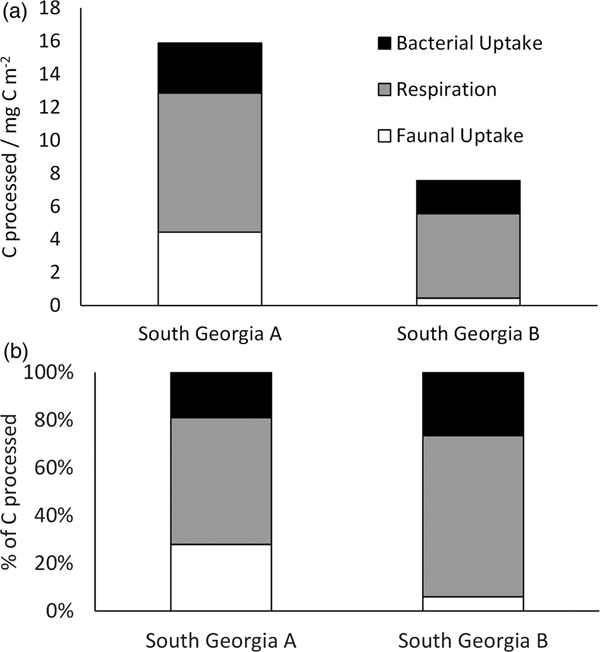
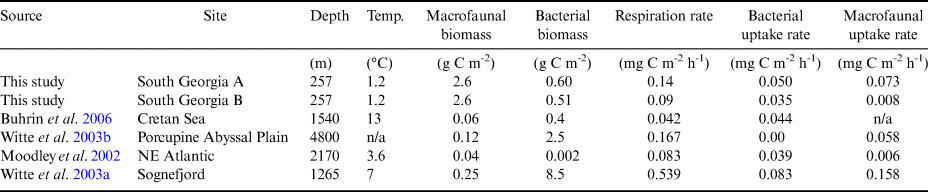
Algal C was respired to DIC at a rate of 0.11 ± 0.04 mg C m−2 h−1, meaning that 6.76 ± 2.34 mg C m−2 was respired during the experiment (Table 1, Fig. 1). Total bacterial uptake of added C was 2.51 ± 0.72 mg C m−2 (Table I).
Amount of C processed by the benthic community in the algae experiment with indication of the C pools from which it was recovered a. absolute quantities, and b. as percentages of total biological C processing.

Quantities of added C processed to carbon pools, and respiration rates.

* indicates data to be treated with caution, as value was close to detection limit.
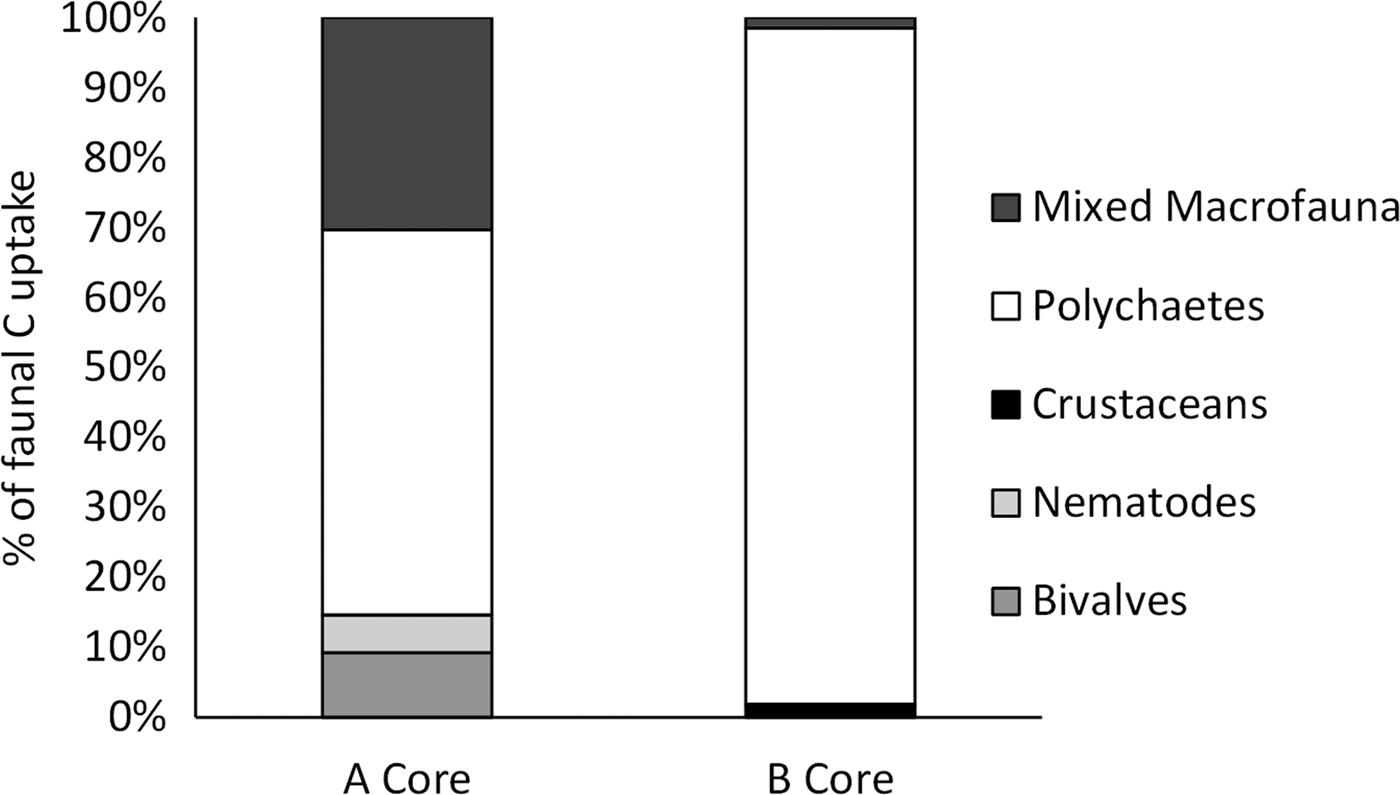
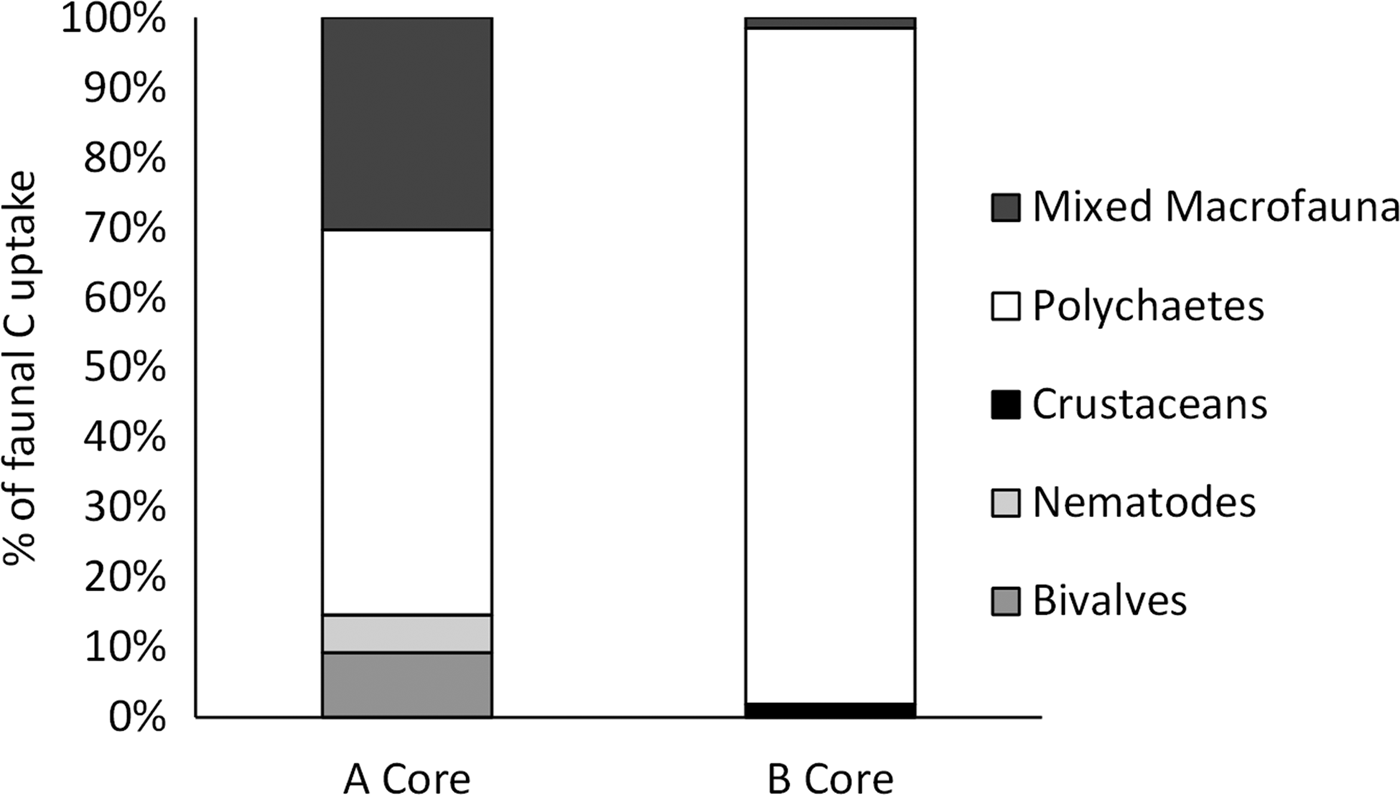
Faunal C uptake was particularly variable between the two replicate cores, ranging over an order of magnitude from 0.45 to 4.44 mg C m−2 (Fig. 1). Polychaetes were the most dominant taxonomic group, accounting for between 55% and 97% of total faunal C uptake (Fig. 2). Bivalves also played a role in the A core (9% of faunal C uptake), as did nematodes (5% of faunal C uptake), and in the B core crustaceans (amphipods and isopods) accounted for nearly 2% of faunal C uptake. To achieve sufficient sample masses, it was often necessary to pool multiple individual specimens, resulting in the category ‘mixed metazoans’, also accounting for significant proportions of total faunal C uptake (30% and 1.5% in the A and B cores respectively). It should be noted that some of the mixed metazoan C uptake will have been by individuals belonging to the other categories, but which had to be preserved and analysed along with other taxonomic groups.
Distribution of faunal C uptake between taxonomic groups.
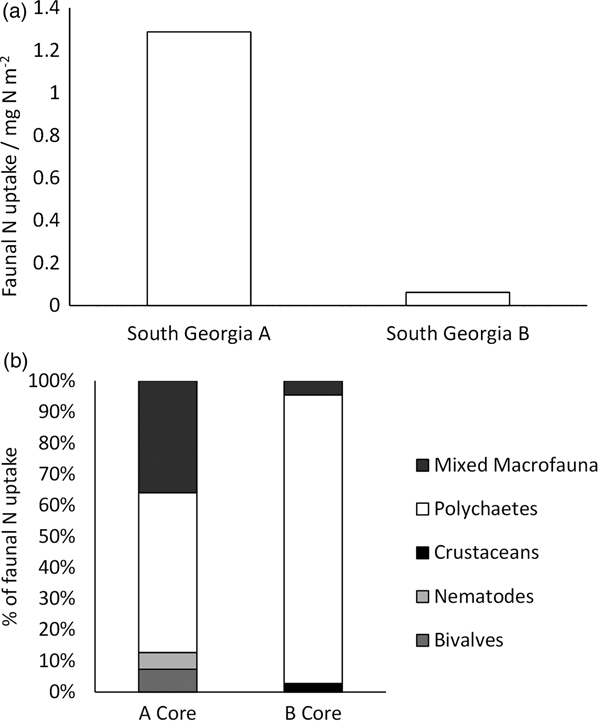
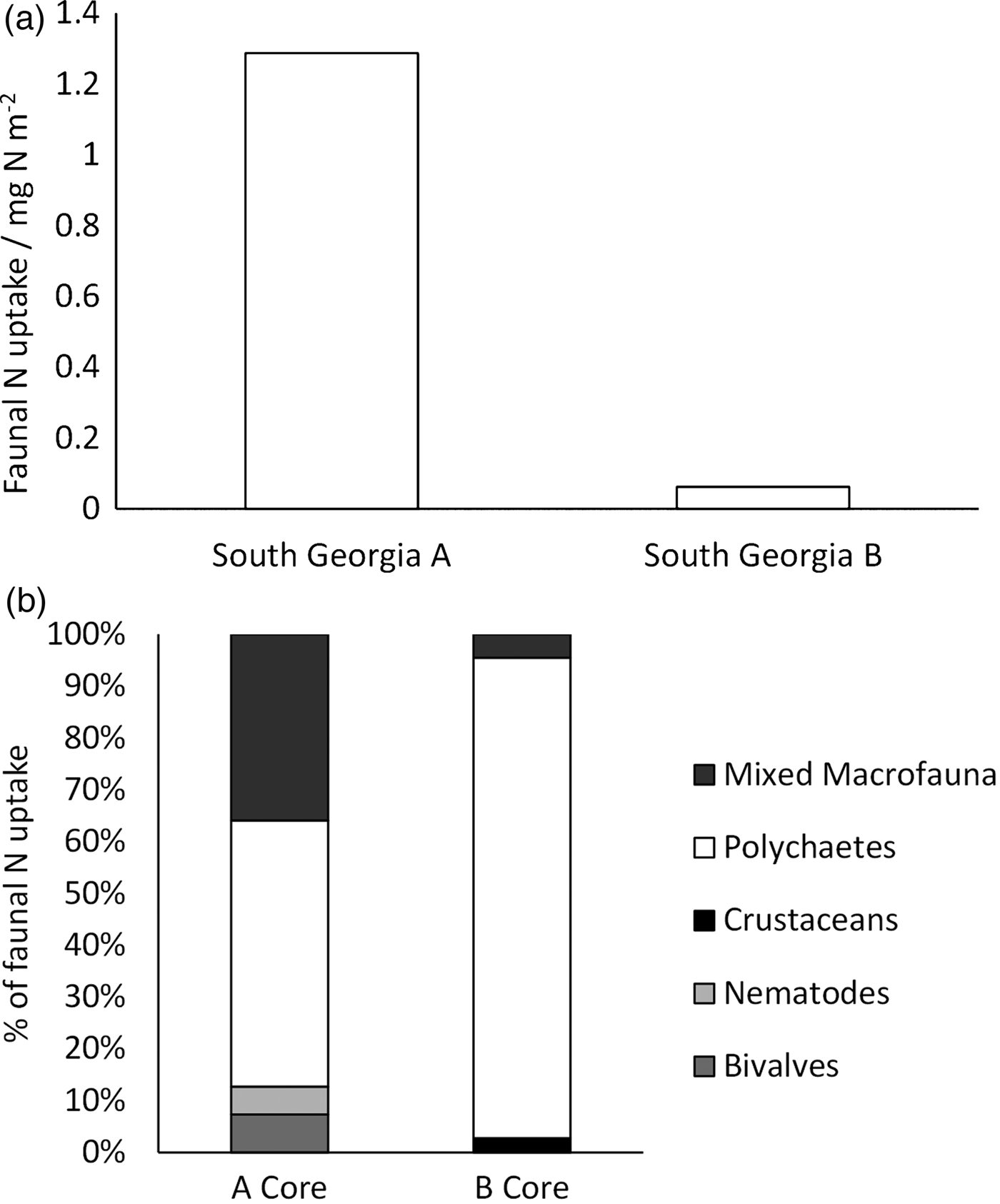
Faunal N uptake was similarly spatially variable, ranging from 0.06 mg N m−2 in the B core to 1.29 mg N m−2 in the A core (Fig. 3). The distribution of N uptake amongst taxonomic groups was similar as for C uptake, although in both cores the polychaetes accounted for less N uptake than they had for C uptake (by ~ 4%), and this was instead mostly accounted for by the mixed macrofauna (Fig. 3).
a. Faunal N uptake, and b. its distribution amongst taxonomic groups.
The mean molar C/N ratio of uptake into fauna was 4.7 ± 2.7, and showed a relatively wide range between 0.3 and 9.9. These values showed some patterning with taxon, with bivalves tending to have a C/N ratio of ~ 4–5, and polychaetes tending to show ratios between either 1–3 or 7–8.
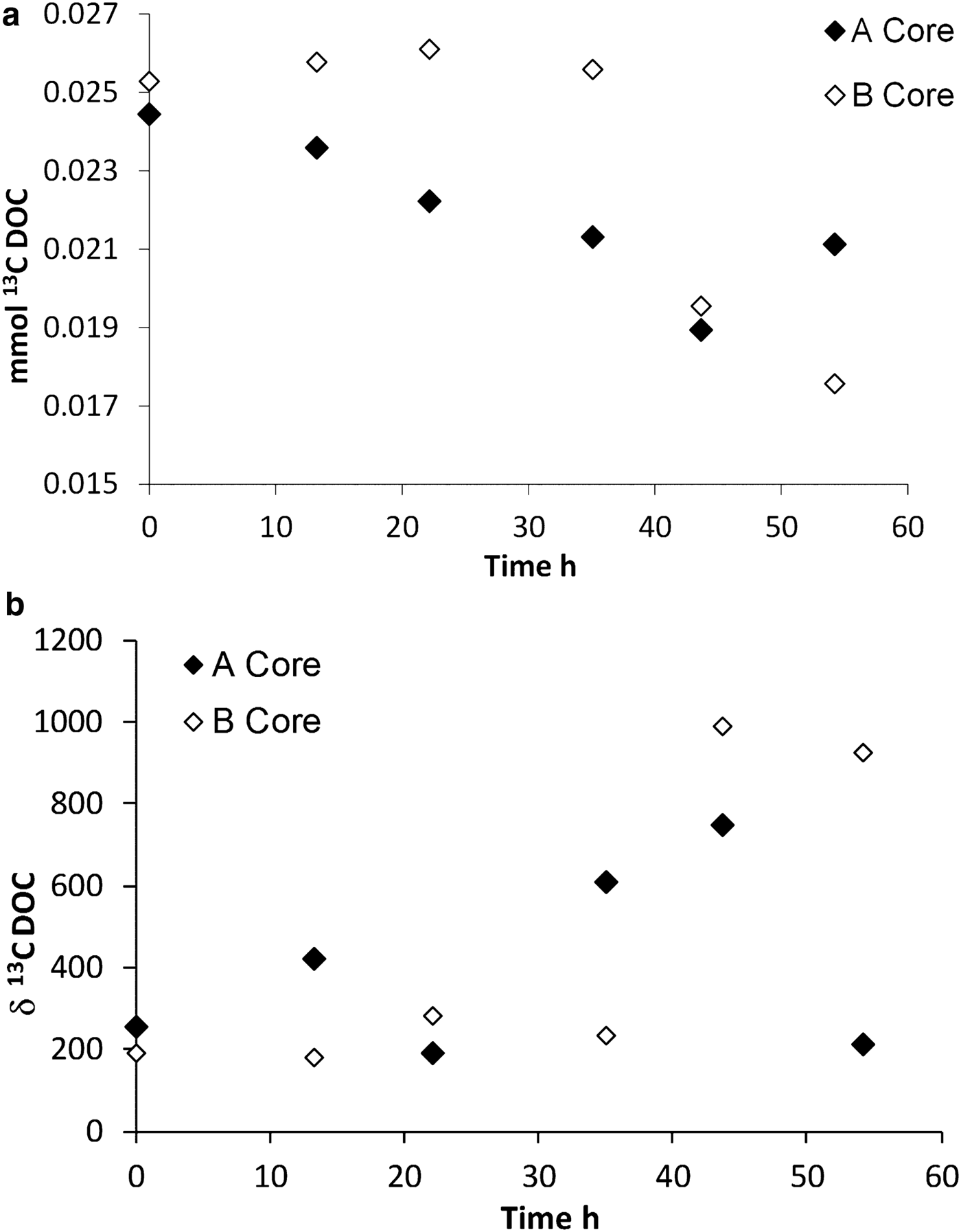
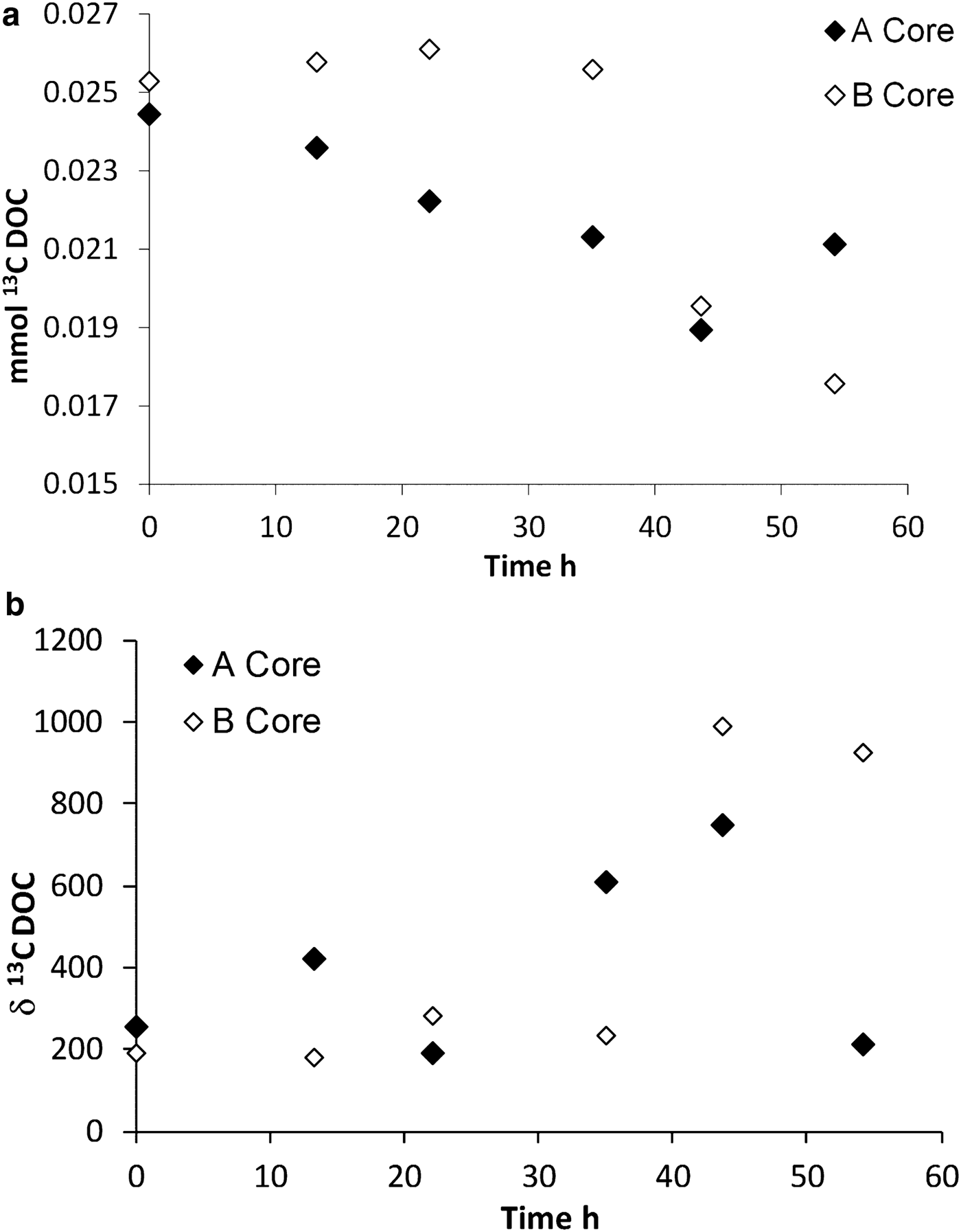
The amount of 13C DOC derived from the added algae present in overlying water tended to decrease through the experiment, due to initial release of DOC from the freeze-dried algal cells and subsequent uptake by the microbial community (Fig. 4). The mean DOC consumption rate was 0.14 ± 0.02 mg C m−2 h−1 (Table I). Despite overall DOC consumption however, the isotopic signature of DOC in the overlying water increased throughout the experiment up to a maximum of 986‰ in core B.
a. 13C DOC quantities in overlying water, and b. isotopic labelling of DOC in the algae experiment.
Respiration was the dominant fate of biologically processed added C, accounting for 53–68%. The fate of the remainder varied between the two replicates, with macrofaunal uptake being particularly important in one (28%), and bacterial uptake being the second most important fate (27%) in the other (Fig. 1b).
Bicarbonate treatment
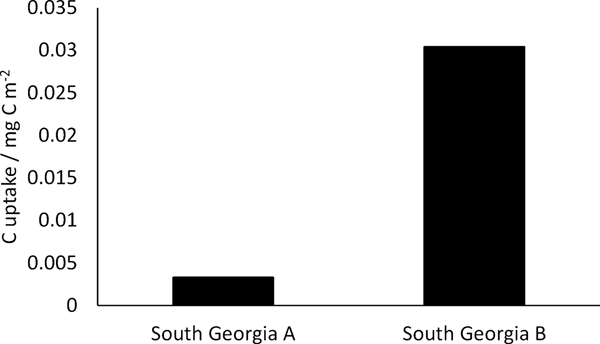
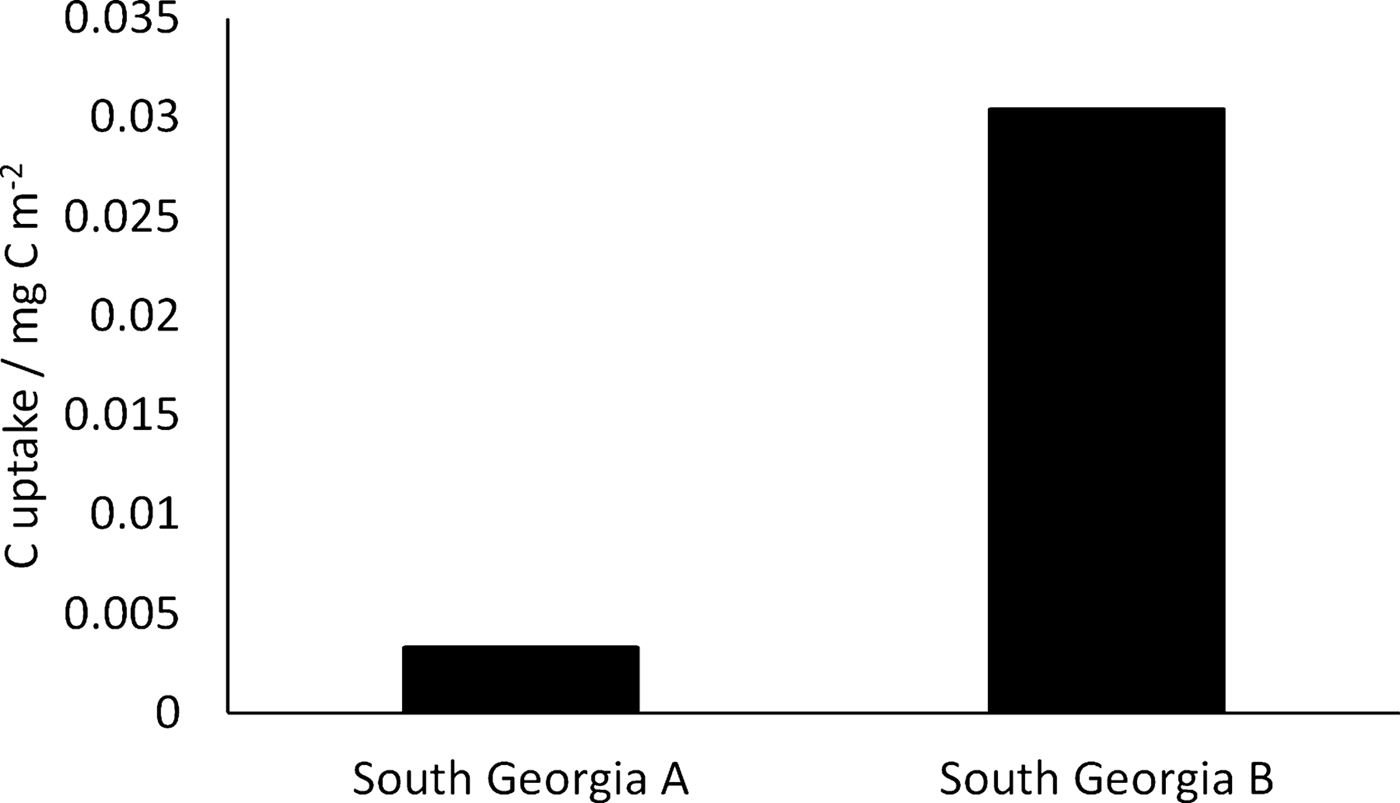
Measurable isotopic enrichment of all four bacterial-specific PLFAs was only present in the B core, where a value of 0.03 mg C m−2 bacterial C uptake was measured (Table I, Fig. 5). The lower value measured for the A core in Fig. 5 should be treated with caution, as one of the PLFAs was isotopically lighter than in the natural background sediment, and two were sufficiently close to the natural background value to be within the margin of error.
Bacterial C uptake in the bicarbonate addition treatment. Note that values for core A should be regarded with caution as they are very close to the detection limit.
Almost all faunal specimens from the bicarbonate treatment had isotopic signatures that were indistinguishable from natural background values. Three faunal samples (two of syllid polychaetes, and one of mixed polychaetes) were exceptions to this trend and showed δ 13C values that were 1–3‰ higher than natural background values (data not shown). Thus, although the rate of transfer of bacterial C into the macrofauna could not be confidently quantified, the data nonetheless showed that in some cases it had occurred.
Isotopic signatures of DOC were similarly close to natural background values as for other C pools. The baseline value was -26.6‰, and a δ 13C DOC value as high as -20.6 ‰ was measured at the end of the incubation in the B core. Therefore, there is evidence for cycling of chemosynthetically produced OC into the DOC pool, but this remains a tentative result.
Discussion
Benthic OC production and trophic support
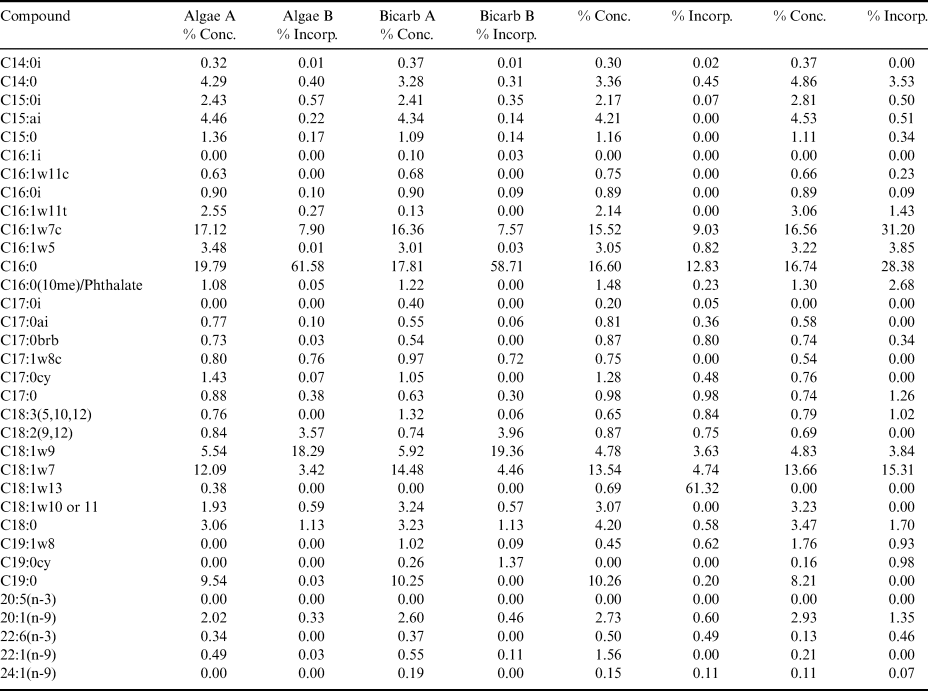
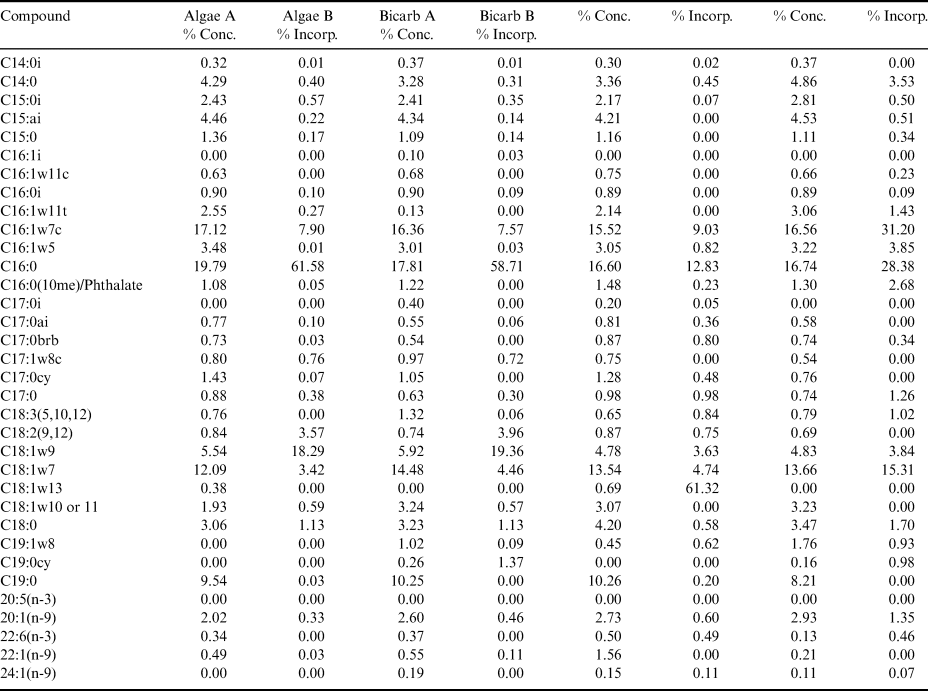
In the bicarbonate experiment there was direct observation of the incorporation of bicarbonate 13C into bacterial biomass, and subsequent transfer into faunal biomass and the DOC pool. In one of the two replicate cores that received bicarbonate addition, uptake of inorganic C into the bacterial biomass was detected (Table I, Fig. 5). Although rates were close to detection limits, this is direct evidence of benthic C fixation occurring in methane-rich sediments on the South Georgia margin. The most likely pathway for the observed benthic generation of OC is sulphide oxidation, and this conclusion is supported to some extent by the PLFA suite found in unlabelled sediment at the site (Bell et al. Reference Bell, Aquilina, Woulds, Glover, Little and Reid2016, supplementary data). These data showed that C16:1ω7 and C18:1ω7, which have been associated with sulphur oxidising chemoautotrophs (Guezennec & Fiala-Medioni Reference Guezennec and Fialamedioni1996, Pond et al. Reference Pond, Bell, Dixon, Fallick, Segonzac and Sargent1998, Yamanaka & Sakata Reference Yamanaka and Sakata2004, Boschker et al. Reference Boschker, Vasquez-Cardenas, Bolhuis, Moerdijk-Poortvliet and Moodley2014), together constituted a reasonably high 28% of total PLFAs. Further, although the observed rates of bicarbonate assimilation were very low, this may be due to the suite of compounds used in the calculation. The four generic bacterial PLFAs used (i-C14:0, i-C15:0, ai-C15:0 and i-C16:0) each accounted for a maximum of ~ 0.5% of total 13C incorporation into PLFAs. In contrast, the two PLFAs which are often associated with sulphur oxidation (C16:1ω7 and C18:1ω7; Guezennec & Fiala-Medioni Reference Guezennec and Fialamedioni1996, Pond et al. Reference Pond, Bell, Dixon, Fallick, Segonzac and Sargent1998, Yamanaka & Sakata Reference Yamanaka and Sakata2004, Boschker et al. Reference Boschker, Vasquez-Cardenas, Bolhuis, Moerdijk-Poortvliet and Moodley2014) together accounted for 13.8% and 46.7% of total incorporation of 13C into PLFAs in the A and B replicate cores respectively (Table II). Thus the apparently low C fixation rates may to some extent be an artefact of the established transfer function not being well suited to a chemosynthetic setting. They could also indicate that incorporation of 13C from DIC into organic compounds was via anaplerotic carboxylation. However, there is potential for this in all heterotrophs, therefore it is suggested that it would not produce the observed pattern of labelling amongst the PLFAs, for which 13C incorporation was focused on compounds associated with sulphide oxidizers.
The percentage contribution of each PLFA to total PLFA concentration, and total incorporation of 13C into PLFAs in each experimental core.
Bell et al. (Reference Bell, Aquilina, Woulds, Glover, Little and Reid2016) suggested a limited amount of methane derived C (MDC) was incorporated into the food web, based on low faunal δ 13C values, which may be indicative of some dietary contribution from MDC, and low faunal δ 34S values, which are indicative of sulphate reduction associated with anaerobic oxidation of methane (AOM). Further, they observed dolomite and aragonite structures consistently precipitated onto shells of the thyasirid bivalve Axinulus antarcticus Zelaya, which were probably authigenic, and thus indicative of AOM. However, in both the previous study and this one, PLFAs normally associated with methanotrophs (C16:1ω6, C16:1ω8, C18:1ω6 and C18:1ω8; Guezennec & Fiala-Medioni Reference Guezennec and Fialamedioni1996, Pond et al. Reference Pond, Bell, Dixon, Fallick, Segonzac and Sargent1998, Zhang et al. Reference Zhang, Huang, Cantu, Pancost, Brigmon, Lyons and Sassen2005) were not detected (Table III; Bell et al. Reference Bell, Aquilina, Woulds, Glover, Little and Reid2016, supplementary data). In the future, these findings could be expanded upon using experimental addition of 13C labelled methane. It is proposed that for best results these experiments would need to be run for 1–2 weeks and include observations down to 10–20 cm depth, where most porewater methane was apparently consumed (Bell et al. Reference Bell, Aquilina, Woulds, Glover, Little and Reid2016).
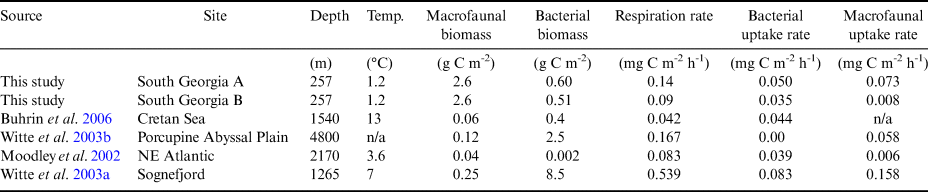
Biological C processing rates in algae addition experiments from this study, and other studies showing comparable rates.
Interestingly, the taxa which showed natural isotopic signatures indicative of some MDC contribution to their diets included syllids (Bell et al. Reference Bell, Aquilina, Woulds, Glover, Little and Reid2016), which also accounted for two out of the three faunal specimens from the bicarbonate treatment which were measurably 13C enriched compared to the natural background value. Thus, the two studies are consistent in suggesting that there may have been inclusion of chemosynthetic C in the diets of syllids.
Both this study and that by Bell et al. (Reference Bell, Aquilina, Woulds, Glover, Little and Reid2016) indicate the occurrence of benthic C fixation, through two different pathways, and in both cases it was a relatively minor process. This is consistent with the porewater geochemistry and natural faunal 13C isotopic signatures published by Bell et al. (Reference Bell, Aquilina, Woulds, Glover, Little and Reid2016), which showed that the dominant C source to the benthic food web was from surface-derived photosynthetic material. However, other studies have shown that benthic C fixation, including use of methane derived C, can be more important processes under different conditions. On the Congo fan, a high input of terrestrial OC in turbidites sustains a high biomass macrofaunal community, sediment community oxygen uptake and dissolved inorganic C fluxes (Rabouille et al., Reference Rabouille, Olu, Baudin, Khripounoff, Dennielou and Arnaud-Haond2017). That C is remineralized, fixed once more into biomass through anaerobic oxidation of methane, and transferred to the macrofauna (Pruski et al. Reference Pruski, Decker, Stetten, Vetion, Martinez and Charlier2017). In this case the methane flux is also sufficient to sustain Vesicomyid bivalves and microbial mats, which did not occur at the site studied by the present authors (Pruski et al. Reference Pruski, Decker, Stetten, Vetion, Martinez and Charlier2017, Rabouille et al. Reference Rabouille, Olu, Baudin, Khripounoff, Dennielou and Arnaud-Haond2017). Further, Sweetman et al. (in press) observed bacterial assimilation of dissolved inorganic C in the eastern equatorial Pacific at rates similar to that of bacterial assimilation of C from organic detritus. Therefore, the present authors suggest that benthic C fixation is a relatively widespread and important process, and can play a greater role in the benthic C cycle than they observed.
Macrofaunal OC uptake
In the algae experiment, metazoan macrofaunal uptake was responsible for up to ~ 30% of the total biological processing of the added C, and this substantial role was in line with the hypothesis of the present authors. Other sites which have shown this biological C processing pattern include estuarine and shelf sea sites and sites of a similar depth in the Arabian Sea oxygen minimum zone (Woulds et al. Reference Woulds, Andersson, Cowie, Middelburg and Levin2009 and references therein), all of which had relatively OC rich sediments compared to continental margin and deep-sea sites. Thus, the active role of macrofaunal uptake in 13C processing off South Georgia is likely to be attributable to the relatively high concentration of organic C in the surface sediments (1.6 wt%), supporting a high biomass macrofaunal community (Table III). However, the high concentration of OC in surface sediments is attributable to productivity in the photic zone, not benthic primary production, as hypothesized (Bell et al. Reference Bell, Aquilina, Woulds, Glover, Little and Reid2016).
It is worth noting that the macrofaunal community biomass was markedly higher than any previously studied sites which have shown similar macrofaunal C uptake rates (Table II). For example, in the Sognefjord, where macrofaunal biomass was an order of magnitude lower than on the South Georgia margin, Witte et al. (Reference Witte, Aberle, Sand and Wenzhofer2003a) observed a mean macrofaunal uptake rate of 0.158 mg C m−2 h−1, more than twice the maximum of only 0.073 mg C m−2 h−1 off South Georgia (Table II). In contrast, sites that showed similar macrofaunal uptake rates to the present study included the NE Atlantic (2170 m, Moodley et al. Reference Moodley, Middelburg, Boschker, Duineveld, Pel, Herman and Heip2002) and the Porcupine Abyssal Plain (~ 4800 m, Witte et al. Reference Witte, Wenzhofer, Sommer, Boetius, Heinz and Aberle2003b). Both of these sites had macrofaunal biomasses that were an order of magnitude lower than off South Georgia (Table II). Since faunal uptake is usually strongly related to biomass (e.g. Woulds et al. Reference Woulds, Cowie, Levin, Andersson, Middelburg and Vandewiele2007), the faunal biomass at South Georgia might have led to an expectation of much greater uptake of added C by the macrofauna. The low temperature of the South Georgia site (1.2°C compared to 7°C in the Sognefjord) may have contributed to this observation of comparatively low faunal activity.
The molar C/N ratio of the added algae was ~ 7.1, therefore the majority of fauna (mean molar C/N 4.7 ± 2.7) showed a decoupling of C and N. The lower C/N ratios of labelled material in the faunal pool indicates preferential retention of algal N versus preferential metabolism and loss of algal C. In a few instances this pattern was reversed, with single samples of maldanid, ampharetid and cirratulid polychaetes, as well as two samples of mixed polychaetes (largely unidentified) showing C/N ratios higher (~ 8–9) than the added algae. In general, the C/N ratio of material taken up from the added algae was similar to the C/N ratio of natural faunal tissues (mean 4.8 ± 0.4), with no systematic differences between these two parameters. Therefore the relative retention of algal C and N may be driven by organism needs, as indicated by their bulk composition (Hunter et al. Reference Hunter, Levin, Kitazato and Witte2012). The selective retention of algal N over C is consistent with observations of meiofauna (although not macrofauna) in sandy subtidal sediments, and in this case it was attributed to different feeding strategies (targeted grazing upon algae by meiofauna as opposed to bulk deposit feeding by macrofauna). Further, in the Whittard Canyon, Hunter et al. (Reference Hunter, Jamieson, Huvenne and Witte2013) observed strong demand for N over C, even compared to the biomass composition of the organisms concerned, and strong preferential uptake by macrofauna of macroalgal N compared to macroalgal C was observed in sandy intertidal sediments (Rossi Reference Rossi2007). The preferential retention of algal N seen here contrasts with C and N decoupling seen in Arabian Sea oxygen minimum zone macrofauna, which showed uptake of 13C and 15N with a ratio of between 10 and 60, from algae with a C/N ratio of 4.04 (Hunter et al. Reference Hunter, Levin, Kitazato and Witte2012). In that case, the retention of algal 13C was hypothesized to be due to a build-up in tissues of lactate from respiration in low oxygen conditions. Indeed, biomass-specific 13C/15N ratios in the same study also showed the preference for retention of algal N observed here.
Dissolved organic carbon (DOC)
This study is one of only a few to have quantified the role of DOC in a seafloor isotope tracing experiment and, to the knowledge of the authors, is the first to present direct measurements. It showed both a net consumption of the initial pulse of added DOC from the source algae (Fig. 4a & b), and also continual generation of labelled DOC throughout the experiment (Fig. 4c & d). This reflects substantial cycling of 13C between the bacterial and DOC pools, which has previously been identified using linear inverse modelling of isotope tracer experiments and natural isotopic data (Van Oevelen et al. Reference Van Oevelen, Soetaert, Middelburg, Herman, Moodley and Hamels2006, Gontikaki et al. Reference Gontikaki, Van Oevelen, Soetaert and Witte2011, Bell et al. Reference Bell, Woulds and Oevelen2017). Notably, the rate of labelled DOC consumption was of a similar magnitude to respiration measured as labelled DIC production (Table I). This is in line with results from another cold-adapted site, at 1080 m depth in the Faero-Shetland channel, where Gontikaki et al. (Reference Gontikaki, Van Oevelen, Soetaert and Witte2011) found that the DOC flux out of the sediment was equivalent to 39% of total sediment community oxygen consumption (a measure of respiration). They noted this was higher than the typical value for continental margins (10%, Burdige et al. Reference Burdige, Berelson, Coale, Mcmanus and Johnson1999), but that similarly high percentages had also been observed in the NE Atlantic and Arabian Sea. In contrast, an experiment using intertidal sandy sediment found that very little 13C fixed by microphytobenthos was lost to the water column as DOC, and that the DOC was presumably being bound to the sediment (Cook et al. Reference Cook, Veuger, Boer and Middelburg2007). Therefore, DOC production and consumption is undoubtedly an important aspect of sedimentary short-term C-cycling, however it appears to be particularly variable between sites. Further study is warranted to determine the factors responsible for this variability.
Respiration and bacterial uptake
Sediment community respiration rates are strongly controlled by temperature (e.g. Moodley et al. Reference Moodley, Middelburg, Soetaert, Boschker, Herman and Heip2005, Woulds et al. Reference Woulds, Bouillon, Cowie, Drake, Middelburg and Witte2016). Therefore, it is unsurprising that the respiration rates observed off South Georgia were most similar to those reported from previous experiments in relatively cold settings (Table II), such as at 2170 m depth in the NE Atlantic (Moodley et al. Reference Moodley, Middelburg, Boschker, Duineveld, Pel, Herman and Heip2002), and at 4800 m depth on the Porcupine Abyssal Plain (Witte et al. Reference Witte, Wenzhofer, Sommer, Boetius, Heinz and Aberle2003b). The respiration rates reported here are some of the lowest seen in this kind of ITE, since they are from the coldest experiment reported so far. Other experiments showing similar temperatures and respiration were from much deeper sites, whereas the low temperature off South Georgia was due to its high latitude. These low respiration rates may contribute to enhanced C storage in South Georgia margin sediments, and an abundant food supply for the benthic community.
Bacterial uptake rates were comparable with those at a 1540 m deep site in the Cretan Sea (Buhring et al. Reference Buhring, Lampadariou, Moodley, Tselepides and Witte2006), and a 2170 m deep NE Atlantic site (Moodley et al. Reference Moodley, Middelburg, Boschker, Duineveld, Pel, Herman and Heip2002). In the case of the Cretan Sea this corresponds to similar bacterial biomass (Table II), however the NE Atlantic site showed a similar bacterial C uptake rate despite showing bacterial biomass that was lower by two orders of magnitude. Similarly, the Porcupine Abyssal Plain showed much greater bacterial biomass, but much lower bacterial C uptake (Table II). These differences are characteristic of the fact that bacterial biomass and C processing are poorly coupled, since large fractions of bacterial biomass are often inactive, and bacterial growth efficiency (the balance between biomass production and respiration) is highly variable in space and time (Del Giorgio & Cole Reference Del Giorgio and Cole1998).
Conclusions
In summary, the fate of freshly deposited OC on the South Georgia margin is controlled by low bottom water temperature combined with high photic zone productivity. While benthic C fixation does occur, the extent of methane enrichment observed off South Georgia did not appear to have a major bearing on nutrition of the benthos or C-cycling.
The following specific conclusions were reached:
• Direct evidence was found for benthic C-fixation, and transfer of fixed C to the macrofauna and the DOC pool, although rates were very low.
• Macrofauna played an active role in benthic ecosystem carbon processing, which is attributable to the high biomass macrofaunal community supported by OC rich sediments. This is likely to be derived principally from high productivity in the photic zone, rather than to benthic primary production.
• Low bottom water temperatures on the South Georgia margin appeared to supress the rates of respiration and macrofaunal uptake of added 13C compared to similar ITEs conducted elsewhere.
• In common with other sites, macrofaunal uptake and retention of C and N were decoupled, with a tendency for macrofaunal to preferentially retain N.
• Both uptake and production of DOC were notable processes, deserving further study.
Acknowledgements
This work was funded by Antarctic Science Ltd and NERC (grant NE/J013307/1). The authors would like to thank Professor Paul Tyler, as well as the officers and crew of RRS James Cook, and the on-board scientific party on cruise JC 55. The authors would also like to thank Elisa Neame for assistance with extracting macrofauna, and three anonymous reviewers for comments which led to improvements of the manuscript.
Author contribution
CW designed and conducted the experiments with assistance from AG and wrote the manuscript. Sample processing and analyses were conducted by CW, JB, SB and LB, and all co-authors commented on the manuscript.