Over the last 2,000 years, a complex society developed in the southern Brazilian highlands. Southern proto-Jê people created a highly structured landscape in which monumental domestic and funerary earthworks were raised amid a regional mosaic of increased population densities and intensifying interactions (De Souza, Corteletti et al. Reference De Souza, Corteletti, Robinson and Iriarte2016). They occupied a well-established territory in the Araucaria Plateau, a hilly landscape crossed by deep river valleys and presently covered by forests and steppes (IBGE 2010; Veloso et al. Reference Veloso, Rangel Filho and Lima1991). This territory, extending from the highlands to the slope of the plateau, unfolded from southern Brazil to the Misiones Province in Argentina (e.g., Corteletti et al. Reference Corteletti, Dickau, De Blasis and Iriarte2015; De Souza and Copé Reference De Souza and Copé2010; De Souza, Corteletti et al. Reference De Souza, Corteletti, Robinson and Iriarte2016; De Souza, Robinson et al. Reference De Souza, Robinson, Corteletti, Cárdenas, Wolf, Iriarte, Mayle and Deblasis2016; Iriarte et al. Reference Iriarte, Copé, Fradley, Lockhart and Gillam2013; Saldanha Reference Saldanha2008).
In this scenario, pithouse complexes, open-air sites with lithic and ceramic assemblages, and rock shelters present evidence of domestic and artifact-making activities. Ceremonial and burial sites appear to be associated with complex earthwork in the form of mounds, enclosures, complexes, and, sometimes, rock shelters (e.g., Beber Reference Beber2004; Copé Reference Copé2006; Ribeiro Reference Ribeiro1999–2000; Saldanha Reference Saldanha2008; Schmitz and Becker Reference Schmitz and Becker2005). Proto-Jê people practiced a mixed economy combining horticulture, hunting, fishing, and gathering of the nutritious nuts of the Araucaria (Paraná pine). The consumption of a broad range of wild and domesticated plant foods is attested to by microarchaeobotanical analysis that has revealed the use of manioc (Manihot esculenta), beans (Phaseolus sp.), yams (cf. Dioscorea sp.), maize (Zea mays), squash (Cucurbita sp.), and other species (Corteletti et al. Reference Corteletti, Dickau, De Blasis and Iriarte2015).
The ubiquity of hearths in these sites points to the intrinsic role of fire in the proto-Jê society. Different types of hearths in domestic areas of pithouses and lithoceramic sites indicate that fires were probably used for warming, cooking, lighting, and potentially in the production of pottery and heat-treating stone tools. Hearths identified in ceremonial areas, such as the mounds and enclosure structures, were associated with burials and rituals related to the integration of different regional groups.
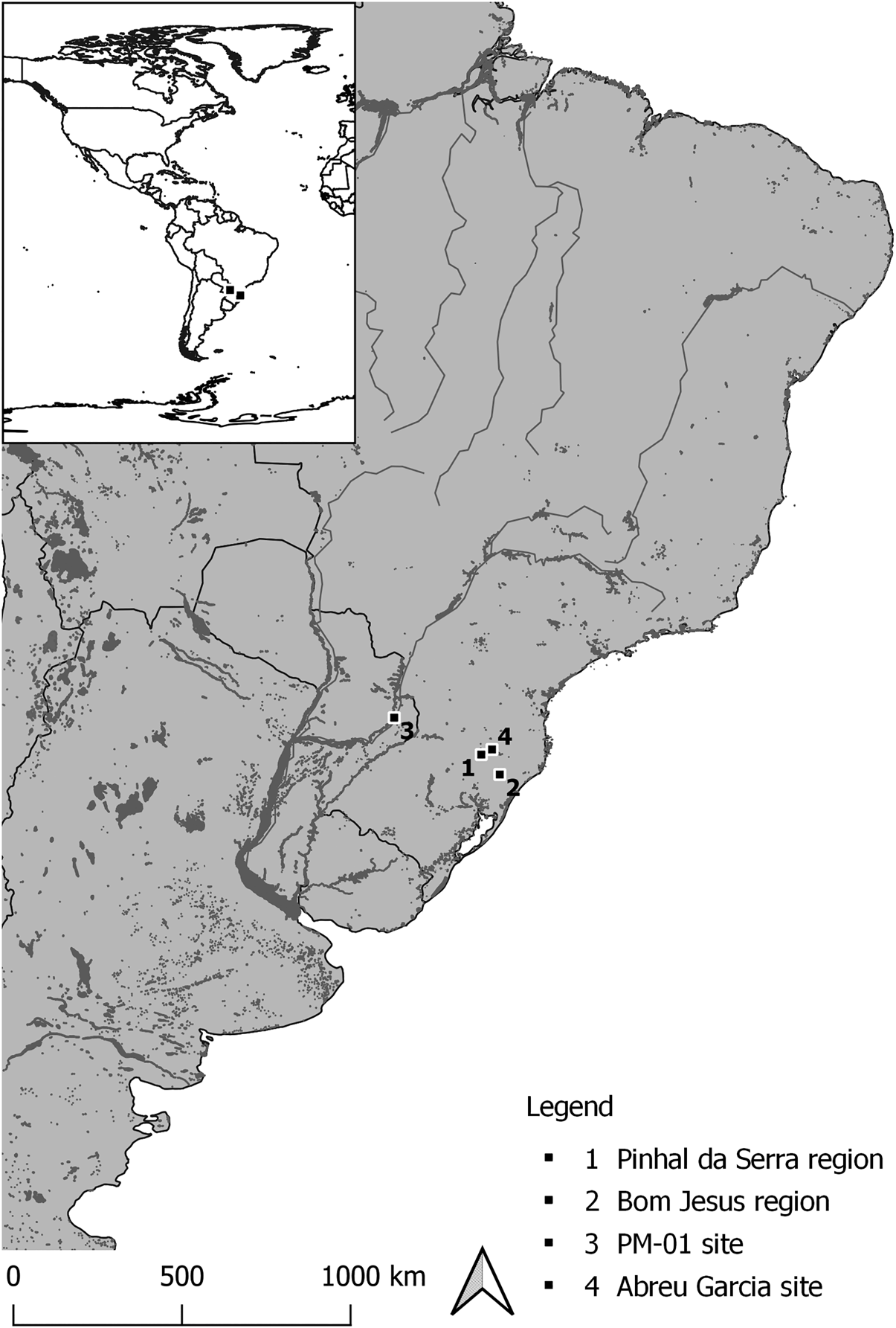
Those fires produced large quantities of wood charcoal, the study of which allows for the reconstruction of past vegetation and landscape and other aspects of human activity. In this article, we discuss evidence of landscapes and wood uses in proto-Jê contexts based on our consideration of some unpublished results and our reinterpretation of previously published data (Azevedo and Scheel-Ybert Reference Azevedo and Scheel-Ybert2016a, Reference Azevedo and Scheel-Ybert2016b) in light of the results of more recent research (Robinson, Iriarte, De Souza, Corteletti et al. Reference Robinson, Iriarte, De Souza, Corteletti, Ulguim, Fradley, Cárdenas, De Blasis, Mayle and Scunderlick2017; Robinson, Iriarte, De Souza, Marozzi, and Scheel-Ybert Reference Robinson, Iriarte, De Souza, Marozzi and Scheel-Ybert2017). We present data from four research areas in southern Brazil and Argentina (Figure 1). Through our contribution to southern highlands archaeology, we aim to expand the knowledge about fuel economy, fire technology, and social aspects related to these people.
Location of the four Proto-Jê archaeological contexts presented in this article: (1) Pinhal da Serra region, (2) Bom Jesus region, (3) PM-01 site (Robinson, Iriarte, De Souza, Marozzi, and Scheel-Ybert Reference Robinson, Iriarte, De Souza, Marozzi and Scheel-Ybert2017); (4) Abreu Garcia site (Robinson, Iriarte, De Souza, Corteletti et al. Reference Robinson, Iriarte, De Souza, Corteletti, Ulguim, Fradley, Cárdenas, De Blasis, Mayle and Scunderlick2017).

Pinhal da Serra Case Study
An important proto-Jê occupation occurred in northeastern Rio Grande do Sul state (southern Brazil) in the Brazilian Araucaria Plateau. Located in the Pinhal da Serra municipality, it was dated between about 1200 and 300 cal years BP. Several sites were excavated in this area within the framework of a research project coordinated by Silvia Copé from the Federal University of Rio Grande do Sul. The study area is situated along the left bank of the Pelotas River between 500 and 1,000 m asl. The climate is temperate hot, without a dry season (Cfb in the Köppen system); annual precipitation is 1,752 mm, and the mean annual temperature is 16°C, reaching below zero in the winter (IBGE 2010). Deciduous forests characterize the plant cover closest to the river, whereas mixed rain forests and Araucaria forests, interspersed among grasslands, are found in higher altitudes.
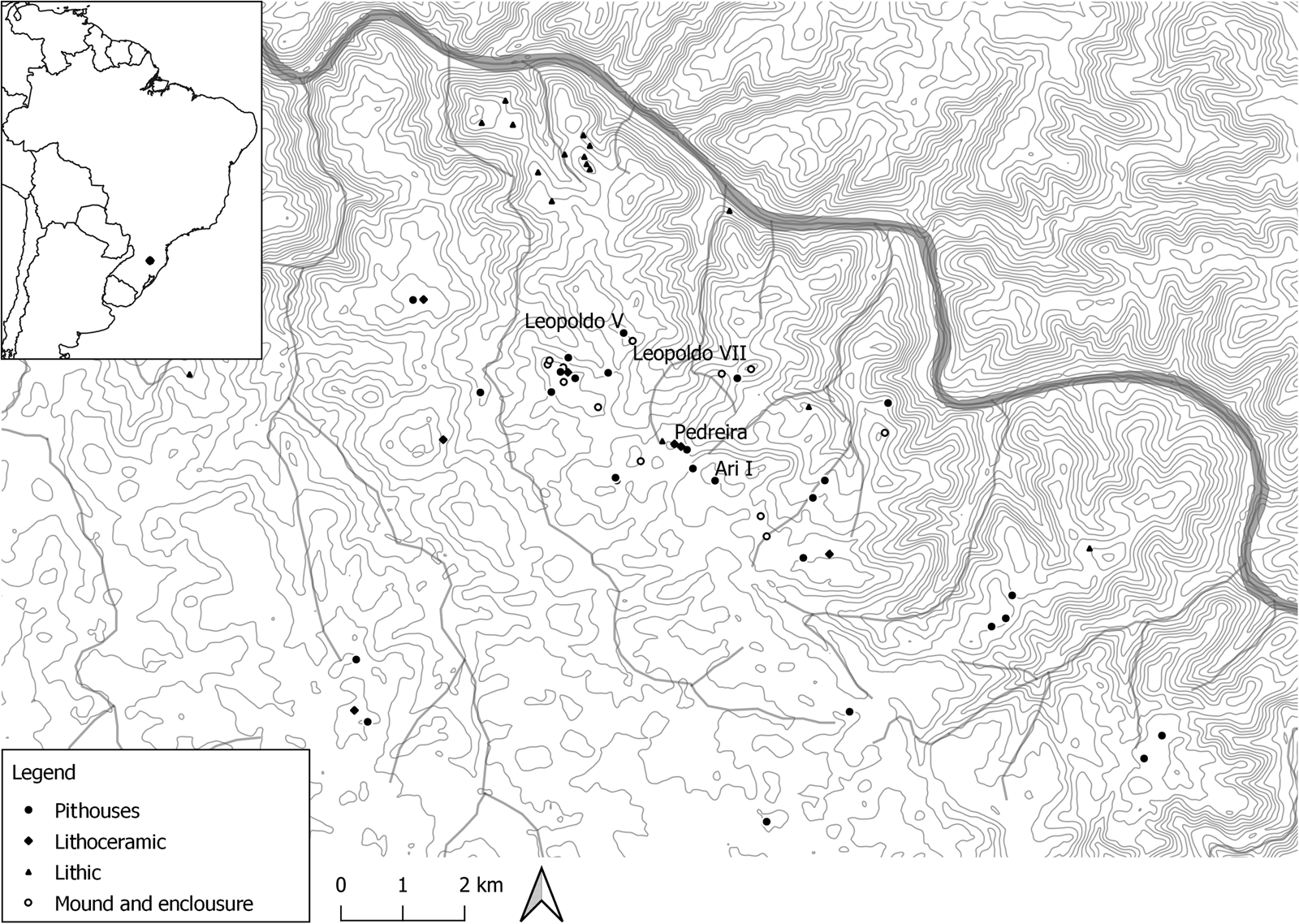
We studied charcoal samples from four of these sites (Figures 1 and 2), chosen as representatives of proto-Jê archaeological diversity: three domestic sites—two pithouses (Ari-I and Leopoldo-V) and one open-air site (Pedreira)—and one ceremonial site, an earth mound inside an enclosure structure (Leopoldo-VII). These archaeological contexts, dated from 1200 ± 40 to 350 ± 40 years BP, cover all the occupation period known to the region. The research was conducted by the first author (Azevedo and Scheel-Ybert Reference Azevedo and Scheel-Ybert2016a, Reference Azevedo and Scheel-Ybert2016b) and reported in a master's thesis developed in the Laboratory of Archaeobotany and Landscape of Museu Nacional in Rio de Janeiro (LAP/MN).Footnote 1
Proto-Jê archaeological sites in the Pinhal da Serra region, with the studied sites labeled (adapted from Azevedo and Scheel-Ybert Reference Azevedo and Scheel-Ybert2016b).

Ari-I (RS-PE-41) is a settlement composed of 10 pithouses, six earth mounds, surface concentrations of stone tools and pottery, and earthworks delineating the structures. We analyzed dispersed charcoal from the occupation layer of a pithouse (structure 01) dated to 1200 ± 40 years BP (1178–964 cal years BP).
Leopoldo-V (RS-PE-11) comprises pithouses linearly distributed on the top of a hill and limited by earthworks (Copé et al. Reference Copé, Saldanha and Cabral2002; Saldanha Reference Saldanha2008). The analyzed charcoal came from the central hearth on the floor of a pithouse (structure B) dated to 1140 ± 40 years BP (1066–930 cal years BP).
The Pedreira site (RS-PE-12) consists of a large circular patch of darkened soil containing dispersed stone tools and pottery, interpreted as the floor of a semicircular hut (Copé et al. Reference Copé, Saldanha and Cabral2002; Saldanha Reference Saldanha2008). We analyzed charcoal samples from a concave hearth probably located in the hut entrance, dated to 460 ± 40 years BP (535–328 cal years BP).
Leopoldo-VII (RS-PE-21) is a ceremonial site located near to Leopoldo-V. It comprises two mound structures of 15 m and 20 m in diameter; both contain central mounds associated with dispersed stone tools and pottery (Copé et al. Reference Copé, Saldanha and Cabral2002; Saldanha Reference Saldanha2008). A funerary pyre was excavated from one of these mounds (structure A), providing charcoal samples dated to 350 ± 40 years BP (486–300 cal years BP).
Anthracological analysis associated taxonomic identification with estimations of the firewood minimum diameter and state (whether sound or decayed). This careful description of the charred woods in the proto-Jê context aimed to provide data regarding firewood economy, landscape, and other aspects related to the human–plant relationship. Taxonomic identification was based on the description of charcoal anatomical features in reflected light brightfield–darkfield microscopes and comparison with reference samples. To enable that analysis, charcoal fragments were hand-split along the three fundamental wood sections (Scheel-Ybert Reference Scheel-Ybert2004b, Reference Scheel-Ybert2016). Their minimum diameter was estimated through the divergence of rays in transversal section, according to a method adapted by Rangel (Reference Rangel2009) from Marguerie and Hunot (Reference Marguerie and Hunot2007). The minimum diameter of the charred branches was classified as small (>2 cm), medium (2–10 cm), and large (<10 cm). The state of the firewood was observed through evidence of wood decay, such as fungal colonization or xylophagous insect attacks (Théry-Parisot Reference Théry-Parisot2001).
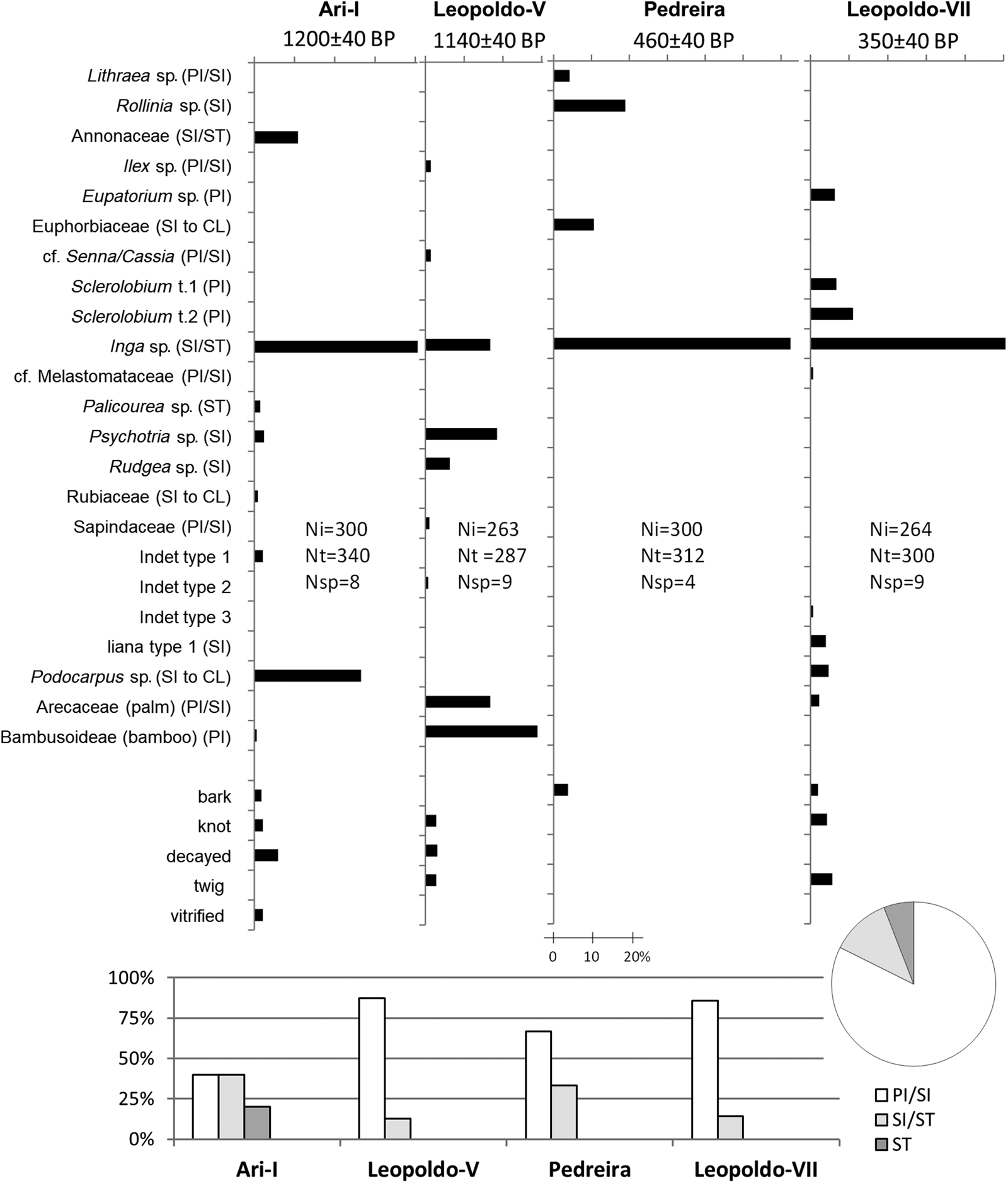
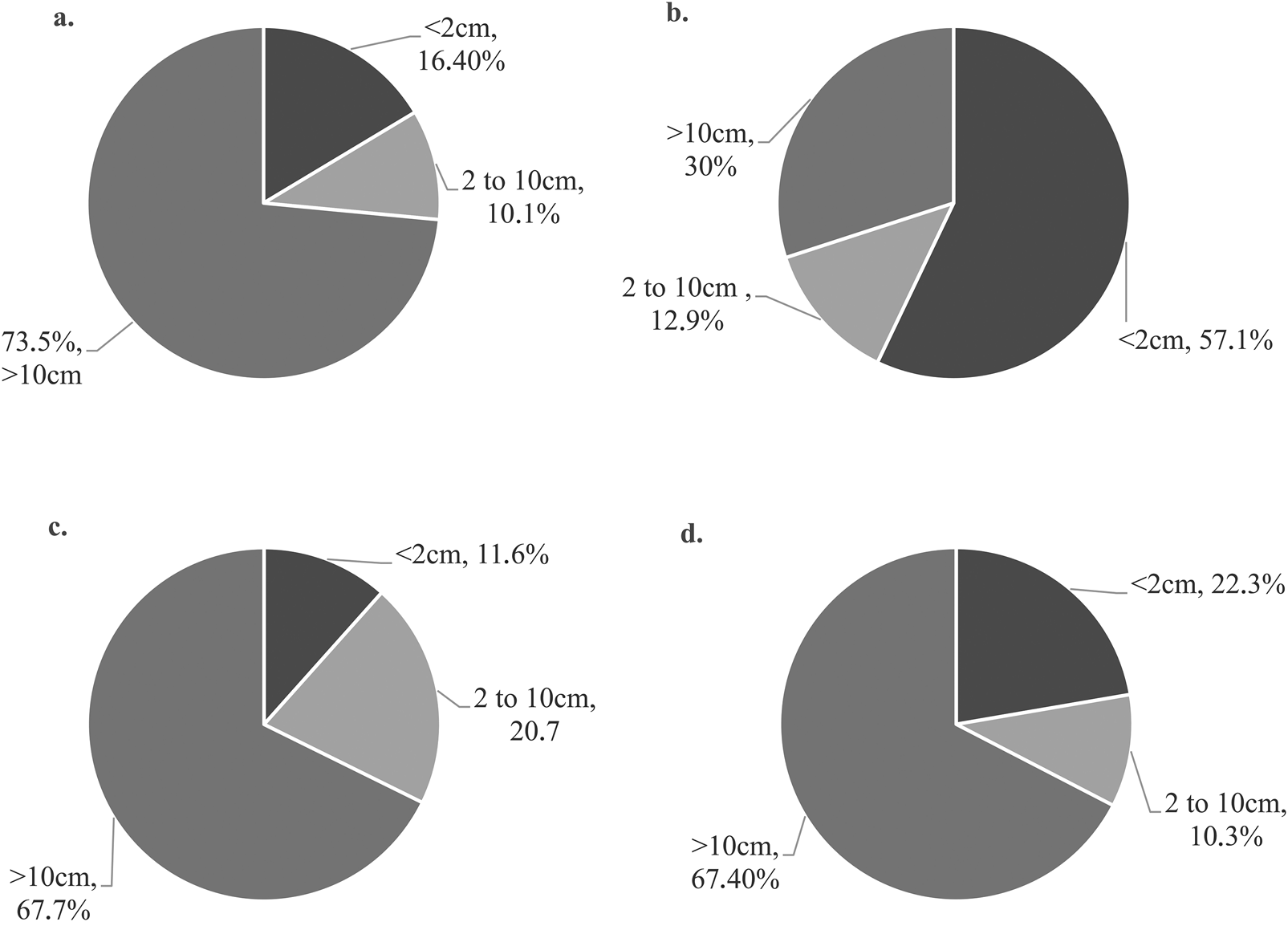
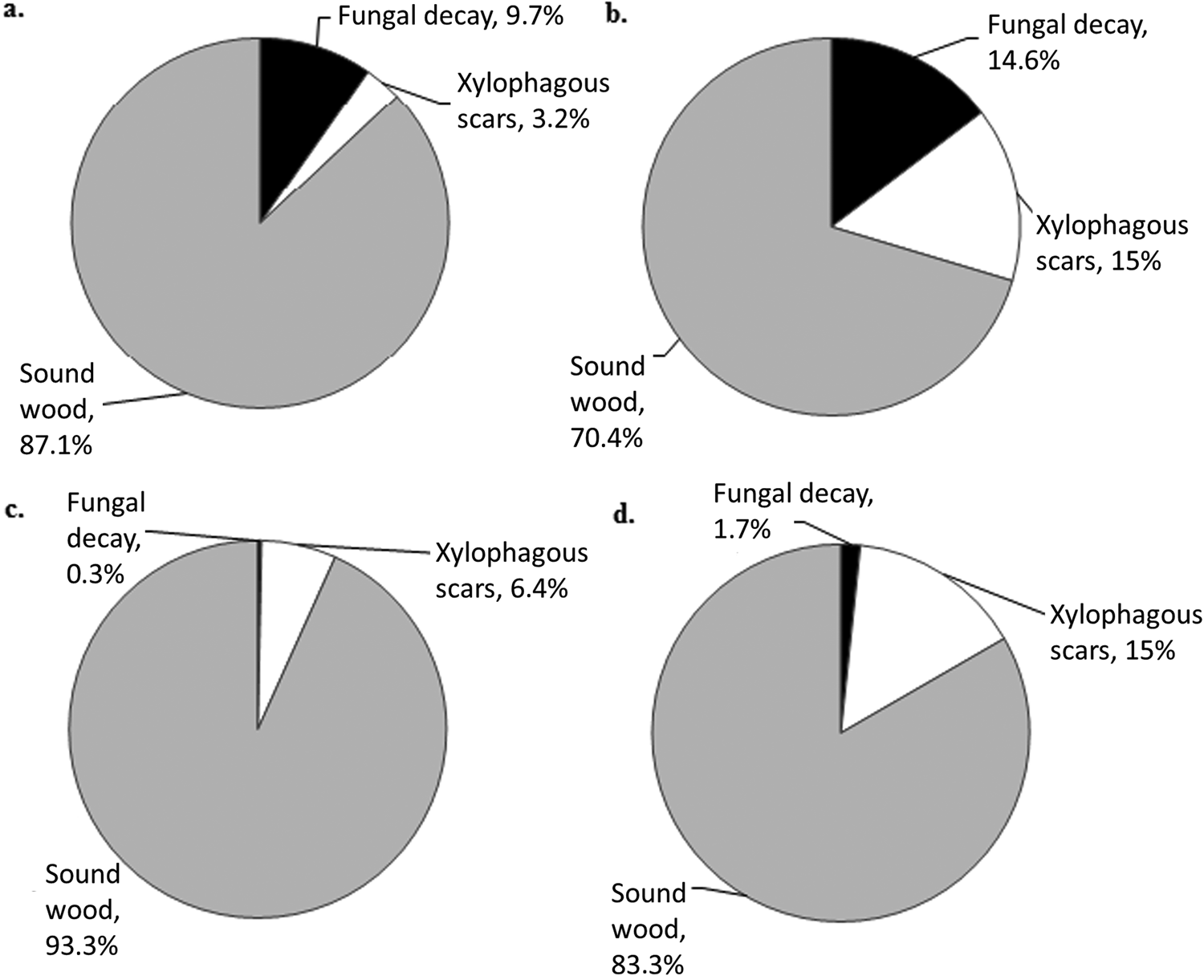
Altogether, 1,239 charcoal fragments were analyzed from the four sites, revealing 23 taxa (Figure 3). We identified 12 botanical families (Anacardiaceae, Annonaceae, Aquifoliaceae, Asteraceae, Euphorbiaceae, Fabaceae, cf. Melastomataceae, Rubiaceae, Sapindaceae, Arecaceae, Poaceae, Podocarpaceae), 12 genera (Lithraea, Rolinia, Ilex, Eupatorium, Sclerolobium, Senna/Cassia, Inga, Palicourea, Psychotria, Rudgea, Allophylus, Podocarpus), and four indeterminate Dicotyledoneae (liana type 1, indet 1, indet 2, and indet 3). Inga remains appear in high frequencies in all the analyzed samples; Podocarpus, bamboos, and palm stems are also prevalent in some sites (Figures 3 and 4). Minimum diameter estimations suggest that most of the firewood used was larger than 10 cm in diameter. The hearth sample from Leopoldo-V nevertheless yielded a large quantity of twigs less than 2 cm in diameter (Figures 4 and 5). Sound wood prevailed for most of the firewood used in all sites (Figures 4 and 6). Signs of intense decay (both fungal and insect attack) appeared in indeterminate pieces from Ari-I and in Arecaceae remains from Leopoldo-V and Leopoldo-VII.
Anthracological spectra and ecological sucessional data from Pinhal da Serra sites. (Nt = total number of charcoal fragments analyzed; Ni = number of identified charcoal fragments; Nsp = number of identified taxa. PI = pioneer; SI = early secondary; ST = late secondary; CL = climax).

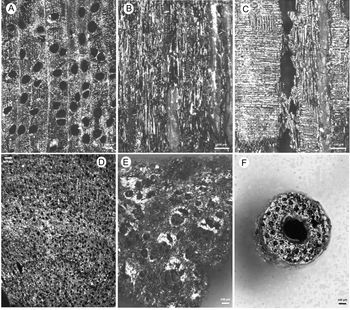
Charcoal photomicrographs obtained with Carl Zeiss Zen software and extended focus, using a reflected light microscope, Zeiss AxioScope: (a–c) Three anatomical sections of an Inga sp. fragment from Leopoldo-VII site; (d) transversal section of Rudgea sp.; (e) palm stem (Arecaceae) fragment; (f) bamboo stem (Poaceae Bambusoideae) fragment (d–f are from the Leopoldo-V site).

Firewood minimum diameter estimated for Pinhal da Serra samples: (a) Ari-I site, Nt = 298; (b) Leopoldo-V site, Nt = 140; (c) Pedreira site, Nt = 300; (d) Leopoldo-VII site, Nt = 273.

Firewood state verified in Pinhal da Serra samples: (a) Ari-I site, Nt = 340; (b) Leopoldo-V site, Nt = 287; (c) Pedreira site, Nt = 312; (d) Leopoldo-VII site, Nt = 300.

Bom Jesus Case Study
The Bom Jesus municipality, located in the watershed of Rio das Antas in the Aparados da Serra National Park, is situated about 150 km southeastern of Pinhal da Serra, in a very similar environment (Figure 1). This area was also studied as part of a research project coordinated by Silvia Copé.
The site RS-AN-03 comprises four pithouses and one mound, occupying an area of about 8,500 m2. One of the pithouses is much larger and deeper than the other three: this large pithouse is 18 m in diameter and more than 3 m deep (house A), whereas the other three measure around 6–7 m in diameter and are 1–2 m deep (houses B, C, and D). Excavation of houses A and C (the only two pithouses excavated) yielded evidence such as pottery, stone tools, hearths, postholes, and various features. In both houses, archaeological layers containing numerous and large charcoal fragments were interpreted as the remains of carbonized and collapsed roof logs (Copé Reference Copé2006; Copé and Saldanha Reference Copé and Saldanha2002).
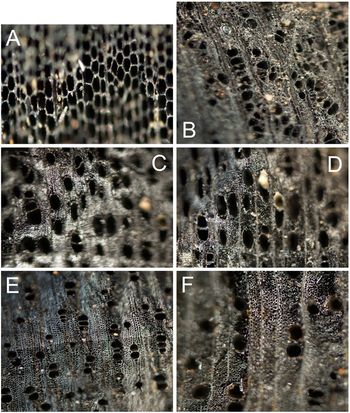
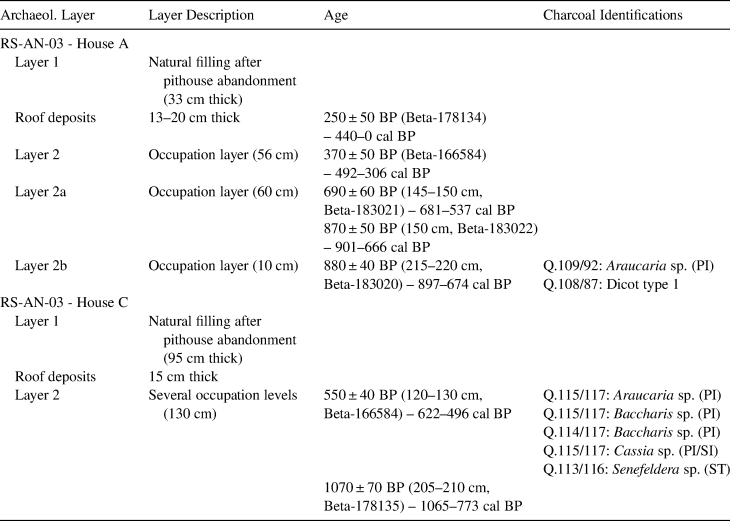
Charcoal fragments from both excavated pithouses were collected by hand; because only the larger fragments were collected, they do not indicate the totality of charcoal diversity in the archaeological context. All available samples were analyzed; they dated from 880 ± 40 years BP (897–674 cal BP) in House A to 550 ± 40 years BP (622–496 cal BP) in House C (Table 1). Taxonomic identification followed the same methods previously described. The analysis was carried out by Juliana Coelho, at the time an undergraduate student, under the supervision of the second author (Coelho Reference Coelho2010). Seven samples were analyzed, each one containing one or few charcoal pieces from a single taxon (Table 1; Figure 7). Of those, four taxa were identified to the genus or species level (Araucaria angustifolia, Baccharis sp., Cassia sp., and Senefeldera sp.), and one angiosperm remains indeterminate (Dicotyledoneae type 1).
Photomicrographs of transversal sections from charcoal fragments identified in the RS-AN-03 site, obtained with a reflected light microscope Zeiss AxioScope: (a) Araucaria angustifolia; (b) Baccharis sp.; (c–d) Cassia sp.; (e) Senefeldera sp.; (f) Dicotyledoneae type 1 (photomicrographs by Juliana Coelho).

Archaeological Information and Charcoal Identifications for Site RS-AN-03, in Bom Jesus.

Note: Site is in Rio Grande do Sul state, southern Brazilian highlands.
Other Proto-Jê Anthracological Studies
Charcoal samples recovered from a mortuary mound and enclosure complex in Misiones province, Argentina, were analyzed by Mark Robinson, using the LAP/MN facilities and reference collection (Robinson, Iriarte, De Souza, Marozzi, and Scheel-Ybert Reference Robinson, Iriarte, De Souza, Marozzi and Scheel-Ybert2017) as part of a research project of Exeter University coordinated by José Iriarte (Iriarte et al. Reference Iriarte, Christopher Gillam and Marozzi2008; Figure 1).
The site, named PM-01 and dated to between 760 ± 40 years BP (726–566 cal BP) and 480 ± 60 years BP (552–324 cal BP), consists of eight enclosures, two of which include central mounds. It was interpreted as a funerary monument. An individual, probably an important chief, was buried under the central mound in a single event that was followed by multiple feasting activities over several generations (Iriarte et al. Reference Iriarte, Christopher Gillam and Marozzi2008). Some discrete stone clusters retrieved in this site were interpreted as underground earth ovens. These features comprised clusters of pebbles overlying charcoal layers containing large fragments of burnt logs and associated with burnt clay, ceramic sherds, stone tools, and charred bones.
Charcoal samples were collected from four of these ovens. Fragments of varied sizes were analyzed, without exhausting the samples. All the identified fragments were attributed to Jacaranda sp. The selection of Jacaranda within this ritual context can be understood through its symbolic classification as part of the dual division of the cosmos framed by the moiety structure of proto-Jê societies (Robinson, Iriarte, De Souza, Marozzi, and Scheel-Ybert Reference Robinson, Iriarte, De Souza, Marozzi and Scheel-Ybert2017).
In another study, the same authors investigated a complex of mounds and an enclosure site in Santa Catarina in southern Brazil (Robinson, Iriarte, De Souza, Corteletti et al. Reference Robinson, Iriarte, De Souza, Corteletti, Ulguim, Fradley, Cárdenas, De Blasis, Mayle and Scunderlick2017; Figure 1): the Abreu Garcia site, dated between 400 ± 30 years BP (496–324 cal BP) and 230 ± 30 years BP (306–0 cal BP). It contained many cremation contexts. Although no anthracological analysis is reported, the authors mention a charcoal deposit of an ambiguous nature including multiple wood species, a charcoal deposit associated with cremation containing charred seeds, several pieces of charred bamboo, and other wood charcoal (Robinson, Iriarte, De Souza, Corteletti et al. Reference Robinson, Iriarte, De Souza, Corteletti, Ulguim, Fradley, Cárdenas, De Blasis, Mayle and Scunderlick2017). An unpublished report notes that Araucaria angustifolia is present in 72% of the 11 analyzed contexts in Abreu Garcia (quoted in Robinson, Iriarte, De Souza, Marozzi, and Scheel-Ybert Reference Robinson, Iriarte, De Souza, Marozzi and Scheel-Ybert2017).
The Contributions of Anthracology to Proto-Jê Archaeology
There are two possible approaches for anthracology in prehistoric archaeological contexts: paleoecological and archaeobotanical (Scheel-Ybert Reference Scheel-Ybert2004a). The paleoecological approach treats the taxonomic diversity and frequency of taxa identified in a sample as representative of the site catchment area. Reliable landscape reconstruction ideally requires an extensive and systematic sampling of the charred remains in the archaeological record (Chabal Reference Chabal1992, Reference Chabal1997; Scheel-Ybert Reference Scheel-Ybert2004b, Reference Scheel-Ybert and Smith2018). The archaeobotanical approach, in contrast, seeks to obtain information on plants’ use and cultural meaning. Although large systematic samples are always recommended, important data sometimes may be retrieved even from unsystematic sampling.
All the anthracological material analyzed earlier in proto-Jê contexts have come from opportunistic charcoal sampling of concentrated charcoal from combustion features or from the larger and most visible dispersed charcoal recovered during excavation. In consequence, the resulting analyses identified very low plant diversity, which certainly does not correspond to the vegetation structure in each studied period. Therefore, only floristic and qualitative environmental reconstructions of the vegetation in each studied area can be done. With these caveats in mind, anthracological data, even when originated from opportunistic charcoal sampling, provide information on different cultural aspects related to wood uses, such as social, economic, and technological practices and even symbolic meanings.
Landscape
Proto-Jê settlements from southern Brazil were clearly associated with the Araucaria Forest, which is part of the Atlantic rainforest biome. Not only were all the identified taxa typical to this flora but key taxa, such as Podocarpus, Ilex (Pinhal da Serra), and Araucaria (Bom Jesus), were also identified. This makes possible a qualitatively reliable landscape reconstruction, attesting that the Araucaria Forest dominated the landscape throughout the occupation period. These results were consistent with those expected of the region and agree with previous paleoenvironmental reconstructions (e.g., Gessert et al. Reference Gessert, Iriarte, Ríos and Behling2011; Guarino Reference Guarino2010; Iriarte and Behling Reference Iriarte and Behling2007; Saueressig Reference Saueressig2012).
Both in Pinhal da Serra and in Bom Jesus, most of the identified taxa are potentially pioneer and early secondary plants (Figure 3). In Pinhal da Serra, pioneer and early secondary taxa are as follows: Lithraea sp., Rollinia sp., Ilex sp., Eupatorium sp., Sclerolobium sp., Senna/Cassia, Melastomataceae, Psychotria sp., Rudgea sp., Sapindaceae, liana, Arecaceae (palms), Poaceae (bamboos), and possibly Inga sp. (cf. Galvão et al. Reference Galvão, Kuniyoshi and Roderjan1989; Klauberg et al. Reference Klauberg, Paludo, Bortoluzzi and Mantovani2010; Lorenzi Reference Lorenzi1992; Sawczuk Reference Sawczuk2009). Late secondary taxa (Palicourea sp.) only occur in Ari-I, the earlier site dated to 1178–964 cal years BP. In Bom Jesus, Baccharis and Cassia species are pioneer or early secondary plants, whereas Araucaria angustifolia is a long-lived pioneer species that occupies forested ecosystems as emergent (Souza et al. Reference Souza, Forgiarini, Longhi and Brena2008) and therefore does not behave as a typical pioneer species.
These results attest the occurrence of secondary formations around the settlements throughout the occupation period. Secondary vegetation is the kind of plant association that establishes in any ground following a disturbance (Lorenzi Reference Lorenzi1992). Secondary formations can be transient states occurring in the initial and intermediate stages of forest development or recovery, such as those associated with complete deforestation or tree-fall gaps. But these states can also be continuously maintained through human activity or landscape management, which can be considered as continued disturbances.
Many authors have already pointed to the fact that the southern proto-Jê landscape was intensively managed by human activity, with various elements of transformation of space and vegetation carried out by proto-Jê people. They not only built earthworks, pithouses, enclosures, and mound structures but also practiced food production: maintaining house gardens, crop fields, and slash-and-burn horticulture. In addition, they were possibly responsible for the management and expansion of the Araucaria Forest in the highlands. The Araucaria Forest is presently considered to be managed vegetation, a product of environmental conditions combined with anthropogenic practices. Some researchers argue that despite a favorable climate, forest expansions depended on human-perpetuated seed dispersal and fire management to create open areas favorable to araucaria growth (e.g., Bitencourt and Krauspenhar Reference Bitencourt and Krauspenhar2006; Copé Reference Copé2006; Iriarte and Behling Reference Iriarte and Behling2007). This is logical given that this pioneer, shade-intolerant species cannot successfully multiply itself in the mature forest (Souza et al. Reference Souza, Forgiarini, Longhi and Brena2008).
We argue that the changes that resulted in secondary vegetation were the outcome of continued human activities around the settlements (earth building, plant cultivation, landscape managing). The proto-Jê people were themselves the disturbance element that transformed the vegetation and the local landscape, producing this extremely modified secondary landscape.
Wood and Firewood Procurement
The anthracological data demonstrate that in all studied cases, firewood gathering took place in the Araucaria Forest and in secondary plant formations within the impact area of the occupations around the settlements, along the paths, or in fallow or swidden fields but not in the mature forest. The domesticated spaces surrounding the settlements might have been favored for firewood gathering because of their proximity, structure, or social significance, as already suggested by Scheel-Ybert and colleagues (Reference Scheel-Ybert, Caromano and de Azevedo2016) regarding southern proto-Jê and different ceramic societies in Brazil.
The relatively high plant diversity (especially considering the unsystematic opportunistic sampling) and the high frequency of sound wood point to random gathering of fallen deadwood for firewood, especially in Pinhal da Serra, but probably also in Bom Jesus samples. The identification of Araucaria angustifolia as firewood also points to fallen deadwood gathering. Araucaria trees produce large quantities of necromass, because their lower branches progressively fall as the tree grows taller, resulting in a radial crown in the chandelier. Fallen araucaria branches are still today largely used as firewood. A recent study on the use of the Araucaria Forest by traditional communities in southern Brazil showed that araucaria trees stand out as used in the most diverse ways: their seeds are used as food, fallen branches as firewood, and wood as construction material, and there are other uses as well (Ansolin et al. Reference Ansolin, de Aguiar, da Silva, Higuchi and Neto2017).
The practice of logging is also attested, if not for firewood, most certainly for technological purposes, such as making posts, construction material, and other structutres. Ethnohistorical reports on historical Jê populations confirm that logging was performed in many circumstances; Lavina (Reference Lavina1994) describes logging as a masculine activity. Based on the analysis of proto-Jê material culture, Noelli (Reference Noelli1999) argues that common artifacts such as lithic axes and large chipped bifacial pieces could have been used in logging activities in the past.
Logging is compatible with the large charcoal remains reported both in Bom Jesus and in Pinhal da Serra contexts, which are interpreted as roof remains, and with extensive evidence of timber used as construction material for the pithouses, including for large postholes (Copé Reference Copé2006; Copé and Saldanha Reference Copé and Saldanha2002; Copé et al. Reference Copé, Saldanha and Cabral2002). Along with the material evidence, the architectural model proposed for pithouses structures suggests a substantial use of large logs (Copé Reference Copé2006). We can hypothesize that wood shards and the remains of logging activities were used as firewood.
Wood Choices and Symbolic Meanings
Although the many contexts where multiple wood species were retrieved point to the lack of or low selectivity for firewood, there is also evidence of cultural choice in firewood selection. Despite appearances, these two statements are not contradictory.
First, one must consider the multiple functions of fire in traditional societies: fire was used for heating, cooking, lighting, drying, smoking, transforming raw materials, keeping animals away, ceremonies or ritual practices, and other purposes (Scheel-Ybert Reference Scheel-Ybert and Smith2018). The choice of fuel is directly related to the use intended for that particular fire; for instance, whether the goal is to produce flames, embers, smoke, heat, and the like, or only to keep a fire burning. Special activities, such as pottery making, smoking, or ceremonial practices, might require special firewood, whereas daily activities, such as cooking or heating, might just use all the firewood that was available. Occasionally, daily fires might use diverse forms of firewood but still favor some special plant considered to be a good fuel or bearing cultural significance or both.
Therefore, a wide range of wood choices might be associated with each function of fire in a human settlement. Remains of those different choices may eventually be found in the same samples, especially in the case of dispersed charcoal or long-lasting hearths (Scheel-Ybert Reference Scheel-Ybert and Smith2018).
Cultural choices are clear in ceremonial contexts, such as the ones analyzed by Robinson, Iriarte, De Souza, Corteletti et al. (Reference Robinson, Iriarte, De Souza, Corteletti, Ulguim, Fradley, Cárdenas, De Blasis, Mayle and Scunderlick2017), Robinson, Iriarte, De Souza, Marozzi, and Scheel-Ybert (Reference Robinson, Iriarte, De Souza, Marozzi and Scheel-Ybert2017). These authors report the exclusive use of Jacaranda sp. in earth ovens from northern Argentina and high frequencies of Araucaria angustifolia in cremation deposits from southern Brazil. In both cases, they argue that firewood selection stems from cultural choices oriented by cosmological parameters inherent to Jê people. The authors associate the dual nature of this culture, which divides the world into two opposed moieties, with the specific use of certain wood types in activities related to each moiety. They explain the identification of Jacaranda sp. and Araucaria angustifolia in these two sites as part of the same cosmological moiety but with different regional choices.
Conversely, cultural choices may be easily overlooked in domestic contexts, especially when the remains of multiple activities tend to blur the record of special usages. In such cases, the overrepresentation of certain taxa, in levels that cannot be explained by phytosociological criteria, may point the researcher to the possibility of positive species selection (cf. Scheel-Ybert Reference Scheel-Ybert2000, Reference Scheel-Ybert and Smith2018).
In Pinhal da Serra, particularly high percentages of Inga sp. were retrieved both in domestic and in ceremonial contexts over a long occupation period. This taxon is the only one that occurs in 100% of the analyzed samples, in clear contrast with all the other taxa, which often appeared as single occurrences. It makes up 44% of the number of charcoal pieces by count in the domestic dispersed charcoal of the Ari-I pithouse (1178–964 cal years BP), 17% in the domestic hearth of the Leopoldo-V pithouse (1066–930 cal years BP), 62% in the domestic hearth of the Pedreira open-air site (535–328 cal years BP), and 52% in the funerary pyre inside an earth mound of the Leopoldo-VII ceremonial site (486–300 cal years BP).
Ecological aspects argue in favor of a positive selection. Inga species are never among the most important taxa of the Araucaria Forest domain in terms of frequency or density (Barddal et al. Reference Barddal, Roderjan, Galvão and Curcio2004; Cordeiro and Rodrigues Reference Cordeiro and Rodrigues2007; Curcio et al. Reference Curcio, Bonnet, Pestana, Souza, Socher, Galvão and Roderjan2006; Galvão et al. Reference Galvão, Kuniyoshi and Roderjan1989; Klauberg et al. Reference Klauberg, Paludo, Bortoluzzi and Mantovani2010; Sawczuk Reference Sawczuk2009; Seger et al. Reference Seger, Dlugosz, Kurasz, Martinez, Ronconi, De Melo, De Bittencourt, Brand, Carniatto, Galvão and Roderjan2005; Silva and Marconi Reference Silva and Marconi1990). As a result, Inga wood was probably not available in such abundance as to justify extensive use of it as fuel in the studied hearths, if acquired through random collection of fallen deadwood—especially considering the long duration of the occupation. Clearly, the dominance of this taxon in the different contexts was not accidental. These plants were specially valued and intentionally selected for some purpose. Following the arguments presented by Robinson, Iriarte, De Souza, Corteletti et al. (Reference Robinson, Iriarte, De Souza, Corteletti, Ulguim, Fradley, Cárdenas, De Blasis, Mayle and Scunderlick2017), Robinson, Iriarte, De Souza, Marozzi, and Scheel-Ybert (Reference Robinson, Iriarte, De Souza, Marozzi and Scheel-Ybert2017), these results suggest that Inga might have been a meaningful actor in the cosmological dual system that organizes the world into moieties for proto-Jê groups.
Systems of dual social organization have been ethnographically documented throughout South America, with many examples from archaeological contexts, as extensively presented by Robinson, Iriarte, De Souza, Corteletti et al. (Reference Robinson, Iriarte, De Souza, Corteletti, Ulguim, Fradley, Cárdenas, De Blasis, Mayle and Scunderlick2017), Robinson, Iriarte, De Souza, Marozzi, and Scheel-Ybert (Reference Robinson, Iriarte, De Souza, Marozzi and Scheel-Ybert2017). We next present some relevant aspects of this belief system, but we refer the reader to their work for a thorough discussion on this topic.
Moiety systems are found in virtually all known branches of the Macro-Jê linguistic family, which extends from central to southern Brazil; some systems even present the same associations with specific plants and landscape divisions. The two remaining modern southern Jê groups, the Kaingang and the Xokleng, exhibit such a dual social organization revolving around exogamous, asymmetrical, patrilineal moieties (Robinson, Iriarte, De Souza, Corteletti et al. Reference Robinson, Iriarte, De Souza, Corteletti, Ulguim, Fradley, Cárdenas, De Blasis, Mayle and Scunderlick2017; Robinson, Iriarte, De Souza, Marozzi, and Scheel-Ybert Reference Robinson, Iriarte, De Souza, Marozzi and Scheel-Ybert2017).
In spite of the difficulties of linking the archaeological record to any particular historically defined population, most archaeologists now agree that southern proto-Jê people are culturally related to the modern historical southern Jê groups, to which they are associated through their material culture of the Taquara/Itararé Tradition and through several aspects of their social organization. Patterns of dual social organization were observed in the southern proto-Jê landscape, architecture, and sites internal organization (Iriarte et al. Reference Iriarte, Copé, Fradley, Lockhart and Gillam2013).
Modern moiety systems shed some light on what may have been a similar system for southern proto-Jê. In arguing so, we do not assume that the archaeological contexts are the same, but instead that they reflect a shared culture that likely provided the foundation from which later southern Jê societies were at least influenced (Robinson, Iriarte, De Souza, Corteletti et al. Reference Robinson, Iriarte, De Souza, Corteletti, Ulguim, Fradley, Cárdenas, De Blasis, Mayle and Scunderlick2017; Robinson, Iriarte, De Souza, Marozzi, and Scheel-Ybert Reference Robinson, Iriarte, De Souza, Marozzi and Scheel-Ybert2017).
The moiety system of the Kaingang, which is better known ethnographically, is rooted in the lineages originating from two mythological twin brothers, Kamé and Kairu. Everything in the cosmos is directly attributed to one moiety or the other in a complementary but opposing classificatory system. In this classification, plants with long, thin leaves including pinnate forms, such as Araucaria angustifolia, Jacaranda sp., Cedrela sp., and Inga sp., are assigned to Kamé, whereas plants with rounded leaves, such as Symplocos sp., Ipomoea batatas, Echinodorus grandiflorus, and Annona crassiflora, are assigned to Kairu. Moiety affiliation is materialized through various social behaviors. For instance, it is marked through body designs: members of the Kamé moiety would paint their bodies with black stripes, lines, and open shapes using burned pine chips (Araucaria angustifolia), whereas Kairu members would paint red circles and closed shapes using Symplocos sp. (the roots and leaves of which produce a red pigment). According to this system, branches of each of these species are placed on the grave of the deceased from the relevant moiety during burial ceremonies; ceremonial fires adhere to an east–west division, with the fires in the east assigned to Kairu and those in the west to Kamé (Robinson, Iriarte, De Souza, Corteletti et al. Reference Robinson, Iriarte, De Souza, Corteletti, Ulguim, Fradley, Cárdenas, De Blasis, Mayle and Scunderlick2017; Robinson, Iriarte, De Souza, Marozzi, and Scheel-Ybert Reference Robinson, Iriarte, De Souza, Marozzi and Scheel-Ybert2017).
Robinson, Iriarte, De Souza, Marozzi, and Scheel-Ybert (Reference Robinson, Iriarte, De Souza, Marozzi and Scheel-Ybert2017) argue that the identification of Jacaranda sp., a tree species assigned to Kamé in the Kaingang symbolic flora classification, in features with Kamé characteristics, within a highly charged ritual location (the underground earth ovens from site PM-01), support a potential specific wood-selection strategy rooted in a dual social structure.
As presented earlier, Inga species are assigned to the Kamé moiety (Robinson, Iriarte, De Souza, Marozzi, and Scheel-Ybert Reference Robinson, Iriarte, De Souza, Marozzi and Scheel-Ybert2017). Following the same reasoning, we propose that the high frequencies of Inga sp., not only in the funerary pyre of the Leopoldo-VII ceremonial site earth mound but also in domestic contexts in sites Ari-I, Pedreira, and Leopoldo-V, might be associated with this same dual social structure.
Kindling and Fire Making
The high frequencies of charred bamboo and palm stems identified in some of the studied sites are quite unusual. Both bamboos and palms not only produce fragile charred remains that typically are only poorly preserved but also are poor firewood and not commonly used as fuel.
Charred bamboo remains appeared in the Ari-I and Leopoldo-V sites, both of which are pithouse settlements with well-developed domestic contexts. They dominate the charcoal record in the Leopoldo-V site. In the Abreu Garcia site, Robinson, Iriarte, De Souza, Corteletti et al. (Reference Robinson, Iriarte, De Souza, Corteletti, Ulguim, Fradley, Cárdenas, De Blasis, Mayle and Scunderlick2017) reported numerous charred bamboo remains in a cremation deposit.
Usually, bamboo is not considered to be good firewood. It has high calorific power, but it burns extremely fast and can explode in the fire, projecting sparks and embers that might be unpleasant or even cause an accident. Nevertheless, it is an excellent material with which to start a fire, because it gives out high heat quickly and thus helps the other wood catch fire faster.
Bamboo fire saws are reported to have been widely used in the East Indies, Malay Archipelago, Philippines, India, and Australia as fire starters (Balfour Reference Balfour1914; Davidson Reference Davidson1947; Hough Reference Hough1890a, Reference Hough, Brown and Langley1890b; Watson Reference Watson1939). A notch is cut on the convex side of a split section of bamboo, and another piece of bamboo with a sharp edge is sawed or rubbed rapidly back and forth in the notch. The heated dust falls through the notch; smoke and then a glowing ember appear in the pile of dust (Watson Reference Watson1939). Even though bamboo was used as kindling in proto-Jê contexts, this method of fire making was probably not employed in those contexts. It seems that, in the Americas, the two-stick fire drill method was the most common method and the only one reported for South America (Hough Reference Hough1890a; Watson Reference Watson1939). Therefore, we believe bamboo was possibly used as kindling when a source of fire was already available.
Abundant charred bamboo remains identified in the late Holocene of a central Brazilian archaeological site were also interpreted as kindling. In Santa Elina (Mato Grosso), bamboo was also largely used as construction material (Bachelet and Scheel-Ybert Reference Bachelet and Scheel-Ybert2017).
Charred remains of palm stems were retrieved from a domestic hearth in Leopoldo-V and a funerary pyre in Leopoldo-VII, with higher frequencies in the former. All the identified palm fragments showed signs of fungal decay or xylophagous insects attack or both.
Palm stems may have been used in the fire-making process. Ethnohistorical and ethnographic reports describe modern Jê groups as producing fire through the two-stick fire drill method. They rubbed two pieces of wood together, one of which was a piece of dry rotten palm stem (Lavina Reference Lavina1994; Mabilde Reference Mabilde1897–1899; Métraux Reference Métraux and Steward1946). The decayed palm stems fragments identified in the anthracological record perfectly match these accounts.
The association between palm trees and fire is also present in Jê mythology and reported ethnographically. A traditional myth describes how men received fire from a mythical ancestor on a piece of burning palm stem. The myth tells the adventures and dangers faced by the mythical ancestor in his conquest of fire (Cardoso et al. Reference Cardoso, Splinder and Martins2011; Métraux 1946). Fire is an active element in the social life of the Jê and is always linked to obtaining the powers of nature through the transformation of forest elements (Silva Reference Silva2001).
Difficulties in the acquisition and control of fire are a constant in the creational myths of different cultures. For Freud (Reference Freud1932), the Greek myth of Prometheus illustrates the clashes that occur when man abandons an instinctive and primitive condition and exchanges it for the benefits that fire brings to civilization. Leroi-Gourhan (Reference Leroi-Gourhan1988) argues that fire, from the moment people learned to make it, became a necessary element in most fabrication and consumption techniques of human activities. Fire is always an intermediary between nature and culture, whereas hearths play a vital role in the daily activities of prehistoric societies.
Considering the conquest of fire as a key milestone in human social development, we may argue that the palm stems present in the archaeological record and used as a fire-making element are representative of the proto-Jê ontology. The usage of palm to create fire may refer to a cosmogonic myth that is part of the origin of Jê societies and describes the abandonment of a primitive state during mythological times. The choice of palm for fire making would be, in this sense, a way of continually re-creating those mythological times and reaffirming their identity.
Conclusion
Anthracological analyses in southern proto-Jê domestic and ceremonial contexts illuminate important aspects of the landscape, fire technology, firewood economy, social organization, and wood usages by these groups.
The Araucaria Forest dominated the regional vegetation around southern Brazilian highlands settlements throughout the studied period, from about 1200 to 350 years BP (1178–300 cal years BP). Southern proto-Jê people built the landscape in the areas in which they lived not only through the active construction and experience of their domestic and ceremonial places but also through vegetation management practices. The establishment of the settlements that included huge earthworks (pithouses, enclosures, mounds), crop fields, and horticultural practices created spaces of domesticated secondary vegetation. Daily activities around dwelling and ceremonial places implied long-term practices of environmental manipulation in a landscape people had been visiting and slowly transforming for many centuries.
Timber and firewood were procured through logging and gathering fallen deadwood, mostly in the intensely modified areas around the settlement, which possibly included roads, pathways, orchards, swiddens, and fallows. These secondary domesticated spaces might have been preferred for firewood gathering because of their proximity, structure, or social significance.
Multiple wood species were identified in many contexts, suggesting a lack of or low firewood selectivity for daily fires, although particularly valued or symbolic plants were probably selected for specific usages. Inga sp., Jacaranda sp., and possibly Araucaria angustifolia were repeatedly selected for different domestic and ceremonial circumstances over a very long period of time. These plants appear to have been meaningful actors in the cosmological dual system that organizes the world into moieties for proto-Jê groups.
This possible demonstration of a system continuously based on dual social structures, along with the evidence of the use of rotten palm wood for fire making from more than a thousand years BP up to the nineteenth century, serve as a testament to the long-term continuity of southern proto-Jê practices. Exploring those questions proved to be a very fruitful approach to understanding cultural aspects of southern proto-Jê groups. These results are an important contribution to a better understanding of the proto-Jê occupation and to cultural continuities up to historical times.
Acknowledgments
We thank the archaeologists from the Laboratory of Archaeobotany and Landscape of Museu Nacional in Rio de Janeiro (LAP) and the Federal University of Rio Grande do Sul (UFRGS) for their scientific contributions and for the knowledge and professional experiences shared during the research years, as well as the Exeter University researchers for providing access to their published data and their important insights. We also thank the Foundation for the Coordination and Improvement of Higher Level or Education Personnel (CAPES) for funding and the National Counsel of Technological and Scientific Development (CNPq) for Masters’ (L. Azevedo), Scientific Initiation (J. Coelho), and Productivity (R. Scheel-Ybert) fellowships. We acknowledge two anonymous reviewers for their comments and suggestions that greatly improved the article.
Data Availability Statement
The data that support the findings of this study are available from the corresponding author upon request.