INTRODUCTION
Hydrocarbon seeps are widespread in the North Atlantic (Hovland, 1992) and some have attracted considerable research efforts notably those off northern Norway, the Gulf of Cadiz and the eastern Mediterranean (Vanreusel et al., Reference Vanreusel, Andersen, Boetius, Connelly, Cunha, Decker, Hilario, Kormas, Maignien, Olu, Pachiadaki, Ritt, Rodrigues, Sarrazin, Tyler, Van Gaever and Vanneste2009). Distinctive chemosynthetic communities have been discovered at many locations, such as those at the Håkon Mosby mud volcano (Gebruk et al., Reference Gebruk, Krylova, Lein, Vinogradov, Anderson, Pimenov, Cherkashev and Crane2003), the Nyegga Pockmark (Krylova et al., Reference Krylova, Gebruk, Portnova, Todt and Haflidason2011); the Skagerrak Pockmark (Dando et al., Reference Dando, Austen, Burke, Kendall, Kennicutt, Judd, Moore, O'Hara, Schmaljohann and Southward1991), the Gulf of Cadiz mud volcanoes (Oliver et al., Reference Oliver, Rodrigues and Cunha2011) and the eastern Mediterranean cold seeps (Olu Le-Roy et al., Reference Olu-Le Roy, Sibuet, Fiala-Médioni, Gofas, Salas, Mariotti, Foucher and Woodside2004). Wide areas of smaller pockmarks are known from the North Sea, but the fauna is either not distinctive from the surrounding seabed or may have a low diversity of chemosynthetic taxa (Dando, Reference Dando2001). In the northern Rockall Trough, in the area south of the Darwin Mounds there is a dense field of pockmarks but no chemosynthetic communities have been associated with them (Masson et al., Reference Masson, Bett, Billett, Jacobs, Wheeler and Wynn2003). Evidence of fluid venting is widespread over the Porcupine Sea Bight and Rockall Plateau and has been implicated in the development of carbonate mounds and deep-water coral reefs (Hovland, Reference Hovland1990, Reference Hovland, Freiwald and Roberts2005). Despite the frequent co-occurrence of coral reefs and evidence of fluid venting, no direct evidence of active venting or of chemosynthetic communities has been reported in the Rockall or Porcupine regions (Roberts et al., Reference Roberts, Wheeler, Freiwald and Cairns2009).
In 2012 Marine Scotland Science undertook a research cruise (FRV ‘Scotia’ cruise 0712S) to the north-west of Rockall as part of the Scottish Government funded OFFCON project. This project provides data underpinning advice for marine spatial planning in offshore areas with both commercial fishing and conservation interests. A transect west down Rockall Bank into the Hatton–Rockall Basin was explored utilizing a series of trawling stations on soft sediments between the 400 m and the 1200 m isobaths at depth intervals of approximately 100 m.
MATERIALS AND METHODS
Sampling of the fish and invertebrate assemblages at each station was undertaken with a Jackson 460 otter trawl incorporating 400 mm groundgear fished in combination with a small bag-net designed for macrobenthos retention. This bag-net was attached to the footrope of the Jackson 460 so as to be positioned behind the groundgear and directly underneath the bottom panel of the larger net. Fitted with 100 mm discs on its footrope and a 20 mm blinder in the cod end, the bag-net was designed to pick up material that the groundgear of the larger net would pass over. Athough the cod end of the Jackson trawl also utilized a 20 mm blinder there were no bivalves retained by this gear; all specimens listed were retained by the bag-net only. All bivalve material was transferred into 70% ethanol for further examination.
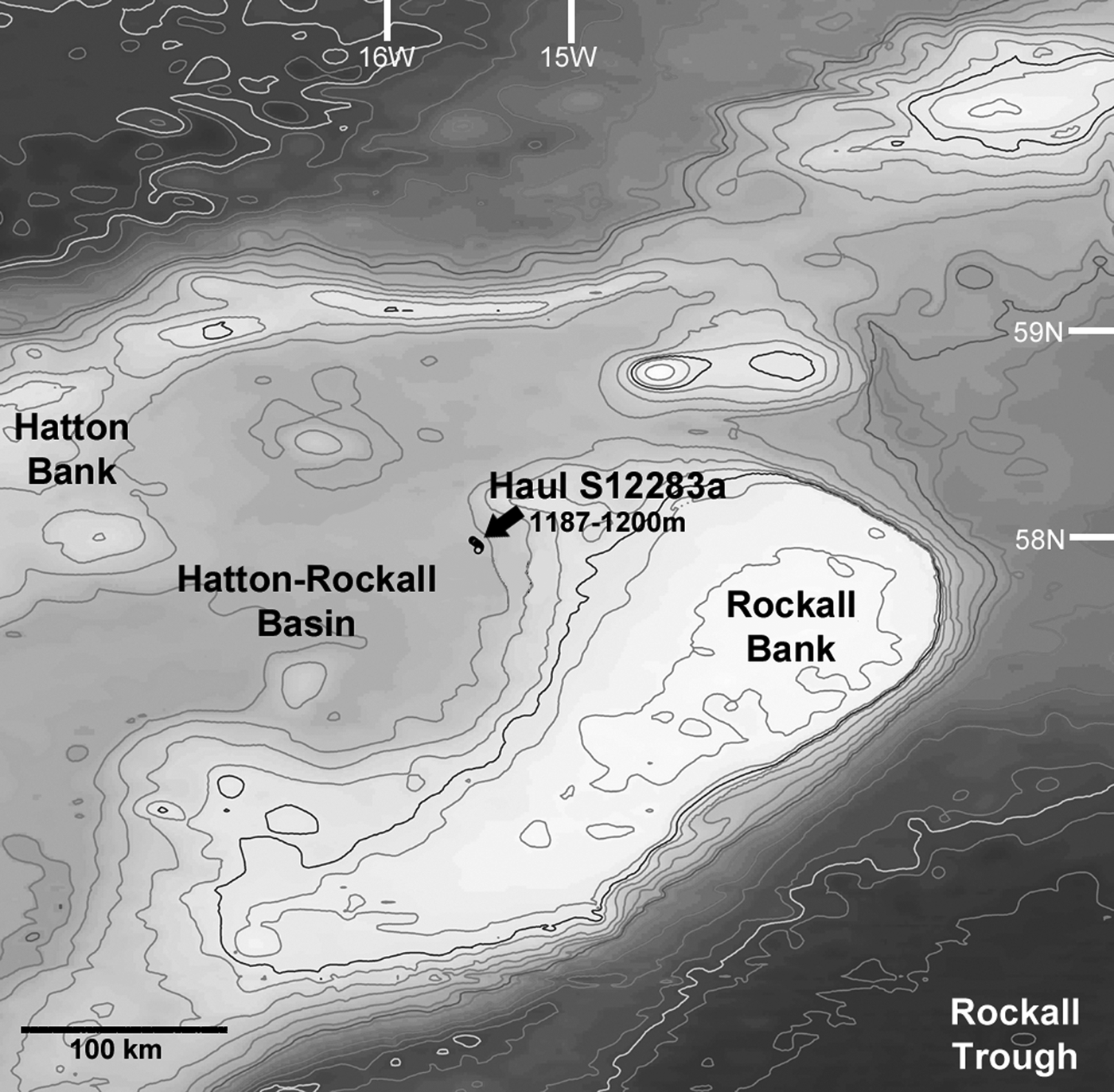
The westernmost station in the transect, from where the bivalves were collected, was placed in a distinct seabed low of over 1200 m depth centred at approximately 57°57.3′N 15°32.8′W at the base of the Rockall high and just into the Hatton–Rockall Basin (Figure 1). Due west of this point the seabed gently rises and undulates to meet the base of the Hatton high some 55 nautical miles away.
Map of the Hatton–Rockall area indicating the location of the FRV ‘Scotia’ trawling station S12283a.

The sampling gear was deployed at vessel position 57°58.5′N 15°34.5′W, with a sounding of 1188 m, and towed into the deeper water of the low to the south-east. The gear did not settle on the seabed, an occasional occurrence attributed to benthic tidal influences. ‘Scotia’ continued south-east, turning due south at 57°56.5′N 15°32.2′W, with a sounding of 1155 m, and then south-west to keep the sampling gear deployed in the deepest zone. With no evidence of settling after a further period the haul was declared void at position 57°55.8′N 15°32.2′W and the gear was retrieved for a second attempt. Some 3.7 nautical miles (6800 m) were covered during this sampling attempt over a period of a little under one hour.
As with all trawled specimens, there is an inherent uncertainty in the locality that any specimens taken thereby can be assigned to. The positions detailed here are of the vessel; the sampling gear itself in this case being an estimated 2000–2500 m further behind the vessel. With the vessel towing in a straight line and tidal influences minimal the gear can be expected to largely follow the line of the vessel. With deviations from a straight line and unknown tidal influences, as in this case, the postion of the gear is subject to further uncertainty.
On retrieval there was evidence that the gear had briefly touched down with both cod ends having retained a small amount of macrobenthos and fish. A depth sensor attached to the headline of the gear showed a maximum depth of 1200 m. An examination of the contents of the bag-net showed that in addition to the clupeiforme fish Baird's smooth-head (Alepocephalus bairdii), the elasipodid Laetmogone violacea and the echinothuroid Calveriosoma hystrix, there were two genera of unrecognized living bivalves present. A second attempt at the station on a reciprocal course was undertaken, with ‘Scotia’ covering a line very close to the initial section of the first attempt, but also including ground further into the north-west. The attempt was sucessful, with samples obtained from a maximum depth of 1210 m. In this case, however, no bivalves were found in either cod end of the sampling gear.
Bivalves were sent to David McKay for identification; these were subsequently sent on to Graham Oliver for comment. They were recognized as a thyasirid and a vesicomyid, indicating that they were part of a chemosynthetic community and, as such, previously unknown from the Hatton and Rockall areas. Within the mantle of the thyasirid inquiline polychaetes of the genus Antonbruunia were found (Mackie & Oliver, in press). This genus is only known from chemosymbiotic bivalves, and further supports the premise that this sample came from a sulphidic habitat, perhaps an active cold seep. Both bivalves are considered to be new to science, and this paper considers both taxonomy and morphology.
SYSTEMATICS
Class BIVALVIA Linnaeus, 1758
Subclass HETERODONTA Neumayr, 1884
Order VENEROIDA H. & A. Adams, 1856
Family VESICOMYIDAE Dall & Simpson, 1901
Subfamily PLIOCARDIINAE Woodring, 1925
Genus Isorropodon Sturany, Reference Sturany1896
Isorropodon Sturany, Reference Sturany1896: 17.
Isorropodon, Cosel & Salas, Reference von Cosel and Salas2001: 343.
TYPE SPECIES
Isorropodon perplexum Sturany, Reference Sturany1896 (by monotypy).
TYPE LOCALITY
North of Alexandria, Egypt, eastern Mediterranean at 2420 m.
DIAGNOSIS
Shell from small to medium-sized, length to 70 mm, thin, subovate to elliptical in outline, with prosogyrate beaks. Escutcheon weak to distinct, lunular incision indistinct or missing. Pallial sinus slight or absent. Hinge with three dental elements in each valve, the anterior pair in the left valve and the posterior pair in the right valve fused, sinuous and subparallel with the hinge plate. Ctenidia of inner demibranchs only, with descending and ascending lamellae. Foot with paired lateral keels.
COMPOSITION
Isorropodon perplexum Sturany, Reference Sturany1896; I. striatum (Thiele & Jaeckel, 1931); I. bigoti Cosel & Salas, Reference von Cosel and Salas2001; I. curtum Cosel & Salas, Reference von Cosel and Salas2001; I. atalantae Cosel & Olu, Reference von Cosel and Olu2009; I. megadesmus Oliver et al., Reference Oliver, Rodrigues and Cunha2011; I. sp. indet. Oliver et al., Reference Oliver, Rodrigues and Cunha2011; I. nyeggaensis Krylova, in Krylova et al., Reference Krylova, Gebruk, Portnova, Todt and Haflidason2011.
DISTRIBUTION
South-eastern Atlantic: from off Namibia to off Mauritania; north-eastern Atlantic: Gulf of Cadiz, Rockall Plateau; Mediterranean; Arctic: Norwegian Sea;
Isorropodon mackayi sp. nov.
TYPE MATERIAL
Holotype: 1 specimen, FRV ‘Scotia’, cruise 0712S, Station S12283a, 57°57′N 15°33′W, 1187–1200 m, 23 June 2012. National Museum of Wales (NMWZ). 2012.074.1. 15.5 × 10.4 × 6.8 mm.
Paratypes as holotype: 5 specimens NMWZ. 2012.074.2/3; 2 specimens in collection of David McKay; 2 specimens in National Museum Scotland and Marine Scotland Marine Laboratory.
COMPARATIVE MATERIAL EXAMINED
Isorropodon nyeggaensis Krylova, Reference Krylova, Gebruk, Portnova, Todt and Haflidason2011. Holotype: paired valves (RV ‘G.O. Sars’, Cruise GS-08-155, Station 10, BC, 64°40.826′N 05°815.710′E, 720 m, 1 August 2008) (Zoological Muséum of Bergen, Norway (ZMBN) 86309).
Isorropodon bigoti Cosel & Salas, Reference von Cosel and Salas2001. Holotype: 1 specimen in alcohol, Muséum national d'Histoire naturelle (MNHN), eastern Atlantic, off Pointe-Noire, Congo (Brazzaville), N'Kossa oilfield (58°53.54′S 118°38.79′E, 150 m); 1 specimen in alcohol from the same locality (IORAN).
Isorropodon megadesmus Oliver et al., Reference Oliver, Rodrigues and Cunha2011. Holotype: one complete specimen, live collected, MSM01.03, Station 218, deep-water field, Captain Arutyunov MV, 35°39.642′N 07°20.049′W, 1321 m, 30 April 2006, NMWZ. 2010.4.8.
Paratypes: ten specimens, four shells and one valve, same data as holotype, NMWZ. 2010.4.9.
TYPE LOCALITY
North-east Atlantic, Hatton–Rockall Basin (57°57′N 15°33′W) 1187–1200 m.
DIAGNOSIS
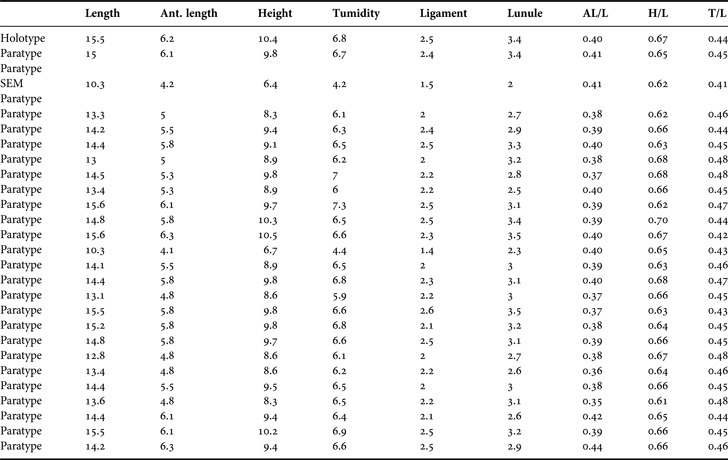
Largest known specimen 15.6 mm in length, fragile, subelliptical, umbos small, dorsal margins subparallel with ventral margin, escutcheon indistinct, lunule narrow weakly demarcated, beaks situated in anterior 38–40% of valve, hinge plate and nymph weak, ligament small.
DESCRIPTION OF SHELL
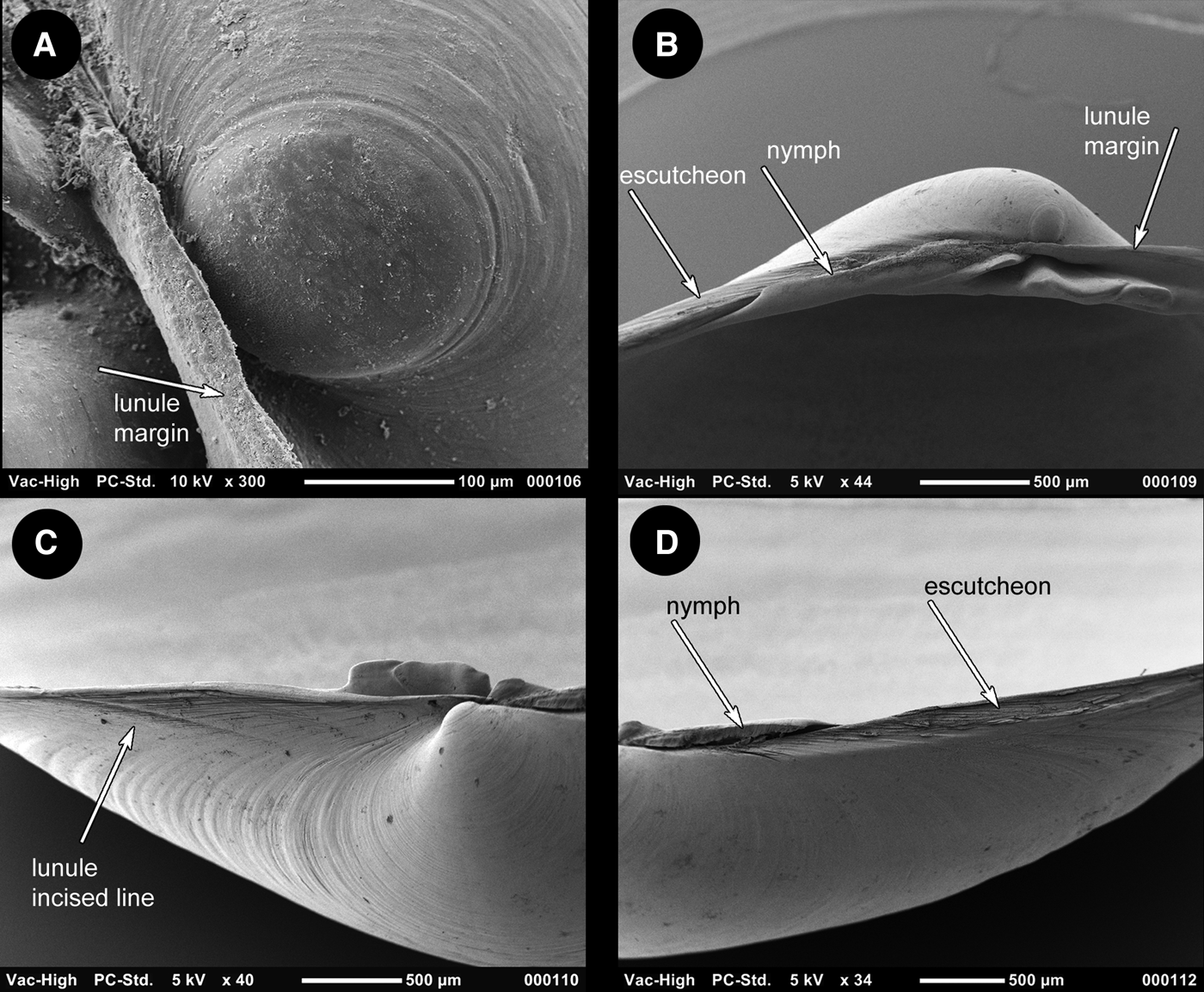
(Figures 2A–F; 3A–D; 4A–D) To 15.6 mm in length, fragile, rather slender tumidity/length = 0.45, subelliptical, height/length = 0.65, dorsal margins gently sloping, anterior bluntly rounded to subtruncate, posterior more pointed, ventral margin broadly curved. Umbos low, beaks situated in anterior 38–40% of valve, anterior length/length = 0.39. Lunule narrowly cordate, medially projecting (Figure 3A, D) defined by a weak incised line visible only close to anterior end (Figure 3C). Escutcheon very shallow and very narrow, indistinct, obliquely striated (Figure 3B, D). Prodissoconch I, circular, 180 μ in diameter, rim well defined, mostly smooth but minutely pitted in parts (Figure 3A); PII absent.
(A–F): Isorropodon mackayi sp. nov. (A, B), holotype, NMW.Z. 2012.074.1. (A) from left side; (B) dorsal; (C–E), paratype, NMW.Z. 2012.074.2. (C) external left valve; (D) external right valve; (E) internal left valve; (F) internal right valve; all Rockall Bank, 57°57′N 15°33′W, 1195 m.
(A–D): Isorropodon mackayi sp. nov. SEMs. (A) Prodissoconch, diameter, 180 μm; (B) showing escutcheon, nymph and raised lunule margin in lateral view; (C) showing incised line demarcating lunule from a dorsal view; (D) showing narrow, striated escutcheon from a dorsal view.
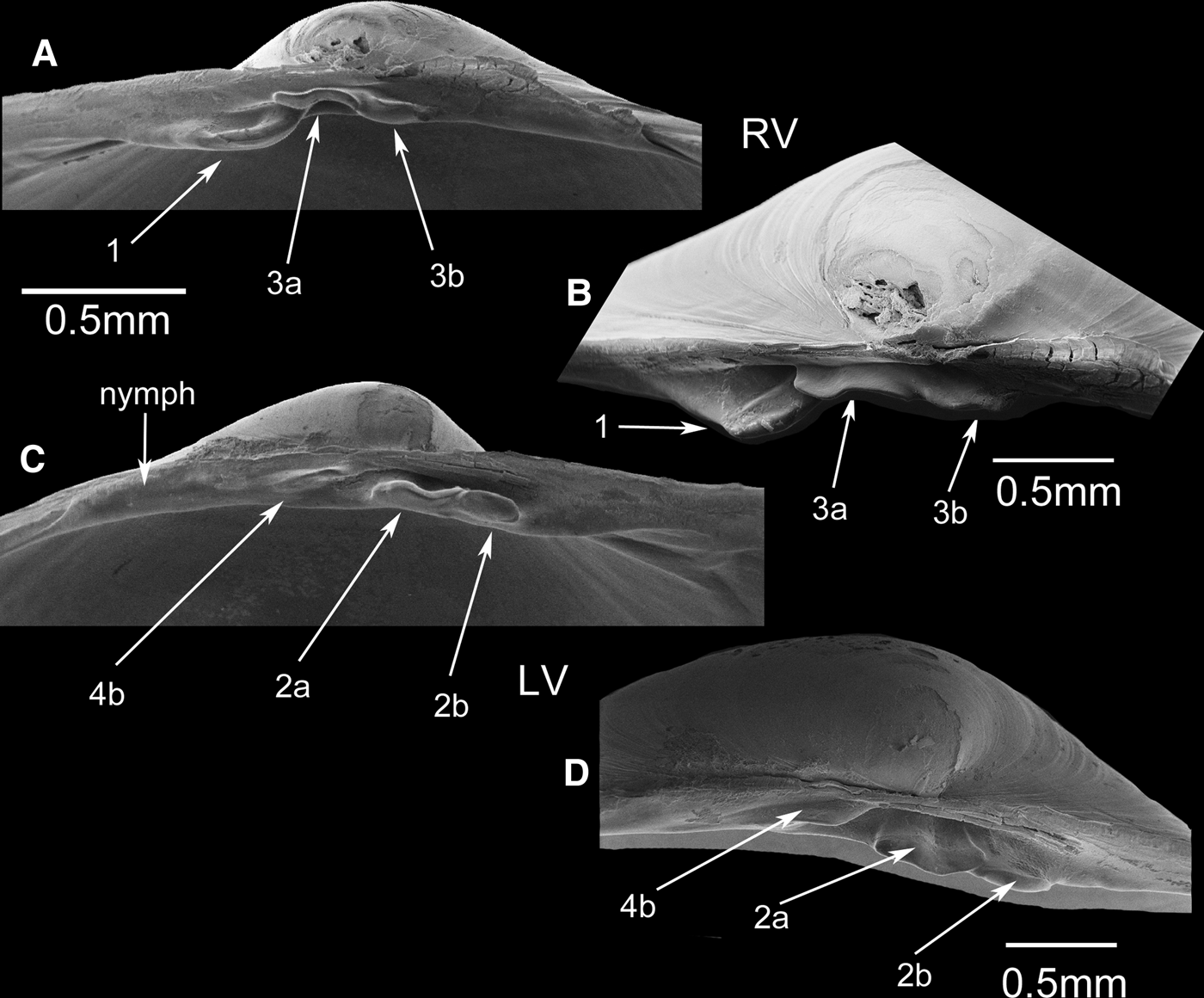
(A–D) Isorropodon mackayi sp. nov. SEMs of the hinge. (A) Right valve lateral view; (B) Right valve oblique dorsal view; (C) left valve lateral view; (D) left valve oblique dorsal view.
Exterior shiny, smooth except for very weak commarginal lines and more distinct undulating growth stops most visible on the posterior area, periostracum transparent, not apparent, shell off-white, appears grey when valves are joined with tissue inside.
Muscle scars feeble, pallial line not impressed, anterior adductor scar elongate with a small anterior pedal retractor scar attached to its dorsal extremity, posterior adductor scar subcircular with the posterior pedal retractor scar as a joined dorsal extension.
Hinge plate thin, nymph shallow (Figure 4A–D). Three small teeth in each valve (Figure 4A–D), RV with a prominent spoon shaped 1 projecting ventrally, 3a and 3b joined, parallel with hinge margin, 3a ~ -shaped, 3b simple; LV with a simple 4b at an angle to the hinge plate, 2a and 2b joined, parallel with hinge margin, 2a ~-shaped, 2b simple.
DESCRIPTION OF ANATOMY
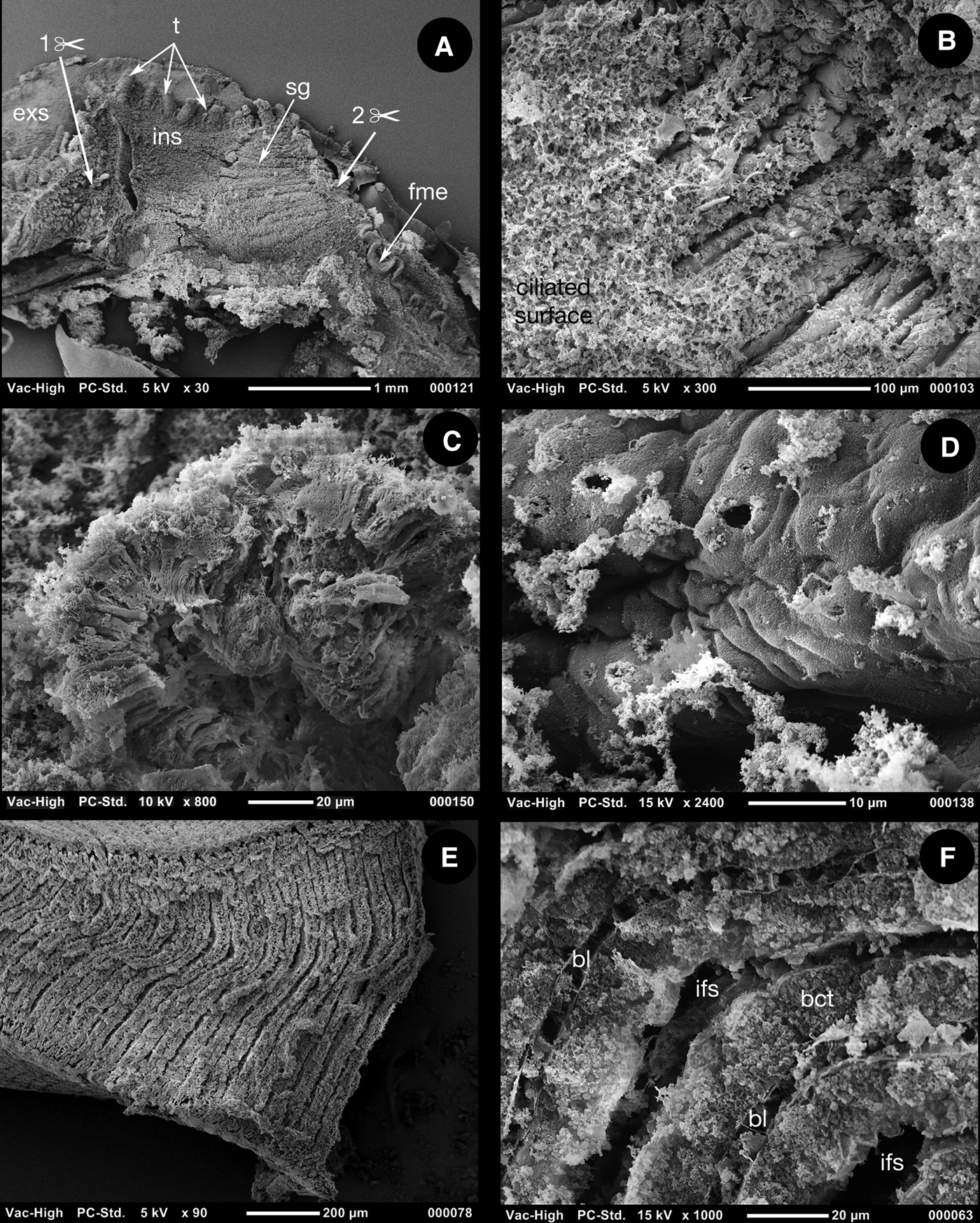
(Figures 5A–G, 6A–F) The mantle is thin except for a medial glandular area corresponding with the pedal aperture; mantle edge well developed, rather thick, unfused over its entire length except posteriorly where both inhalant and exhalant apertures are formed (Figure 5A). Inhalant aperture slightly extended to form a very short siphon, the outer edge fringed with tentacles these increasing in size dorsally (Figure 5F). A raised, triangular shaped, transversely ridged, cushion lies on each of the lateral ventral faces of the inhalant siphon (Figures 5G, 6A); the ridges are hollow (Figure 6C), highly convoluted (Figure 6D) and densely ciliated (Figure 6C). Exhalant aperture small fringed with short tentacles (Figure 5F); inner edge with a valvular flap (Figure 5G). Anterior adductor muscle elongate oval in section, anterior pedal retractor small inserted adjacent to the anterior adductor; posterior adductor subcircular, posterior pedal retractor much larger than anterior. Foot trunk-like with a small smooth terminal toe, heel very small, lateral extensions prominent close to the heel (Figure 5B). Ctenidia large and swollen of single demibranchs with descending and ascending arms (Figure 5D, E); filaments lamellar (Figure 6E); microstructure of numerous bacteriocytes packed with bacteria (Figure 6F); ctenidia with massive solid inclusions appearing as off-white crystalline bodies (Figure 5D, E). Labial palps very small, lacking sorting ridges (Figure 5B). Gut present, oesophagus short leading to an elongate stomach that is not greatly swollen (Figure 5C), digestive diverticula ducts close to the stomach oesophageal junction, mid-gut a simple s-shaped loop leading the straight hind gut (Figure 5C).
(A–G): Isorropodon mackayi sp. nov. Aspects of the gross anatomy after staining with methyl green. (A) Gross anatomy from the left side after removal of the mantle; (B) as A, but with ctenidium removed; (C) dissection of the visceral mass to reveal the alimentary system; (D) inner face of an excised ctenidium; (E) transverse section of the ctenidium showing reflected filaments; (F) posterior mantle edge showing arrangement of siphonal apertures; (G) inner surfaces of the siphons after cutting through fused edges and removing upper portion. Scale bar for whole specimens only.
(A–F): Isorropodon mackayi sp. nov. SEMs of tissues after critical point drying. (A) Inner surface of the inhalant siphon; (B) Convoluted ridges of the secondary gill partially denuded of their ciliated surface; (C), TS view of a ridge of the secondary gill; (D) detail of a convoluted ridge denuded of cilia; (E) TS of the ctenidium showing closely packed filaments; (F) TS of two filaments showing dense bacteriocytes.
ETYMOLOGY
Named for David McKay, a long time expert on the Mollusca of Scotland and for his recognition of the novelty of the bivalves used in this study. His name has been latinized to mackayi in accordance with the Code of the International Commission on Zoological Nomenclature.
COMPARISONS
In this paper we consider there to be only six other described species of Isorropodon. Adopting the diagnosis of Cosel & Salas (Reference von Cosel and Salas2001) we exclude two species included in Isorropodon by Krylova et al. (Reference Krylova, Gebruk, Portnova, Todt and Haflidason2011), Vesicomya elongata Allen, Reference Allen2001 and Calyptogena fossajaponicum Okutani, Fujikura & Kojima, Reference Okutani, Fujikura and Kojima2000 on the basis that both taxa have more than three teeth in each valve. Oliver et al. (Reference Oliver, Rodrigues and Cunha2011) reports a small 4b in I. elongatum and the illustrations of I. fossajaponicum in Okutani et al. (Reference Okutani, Fujikura and Kojima2000, figure 8), show the presence of an AI and AII and also that 3a and 3b are parallel to the hinge margin. This latter conclusion is supported by the molecular data of Decker et al. (Reference Decker, Olu, Cunha and Arnaud-Haond2012) where Isorropodon perplexum is very distant from I. fossajaponicum.
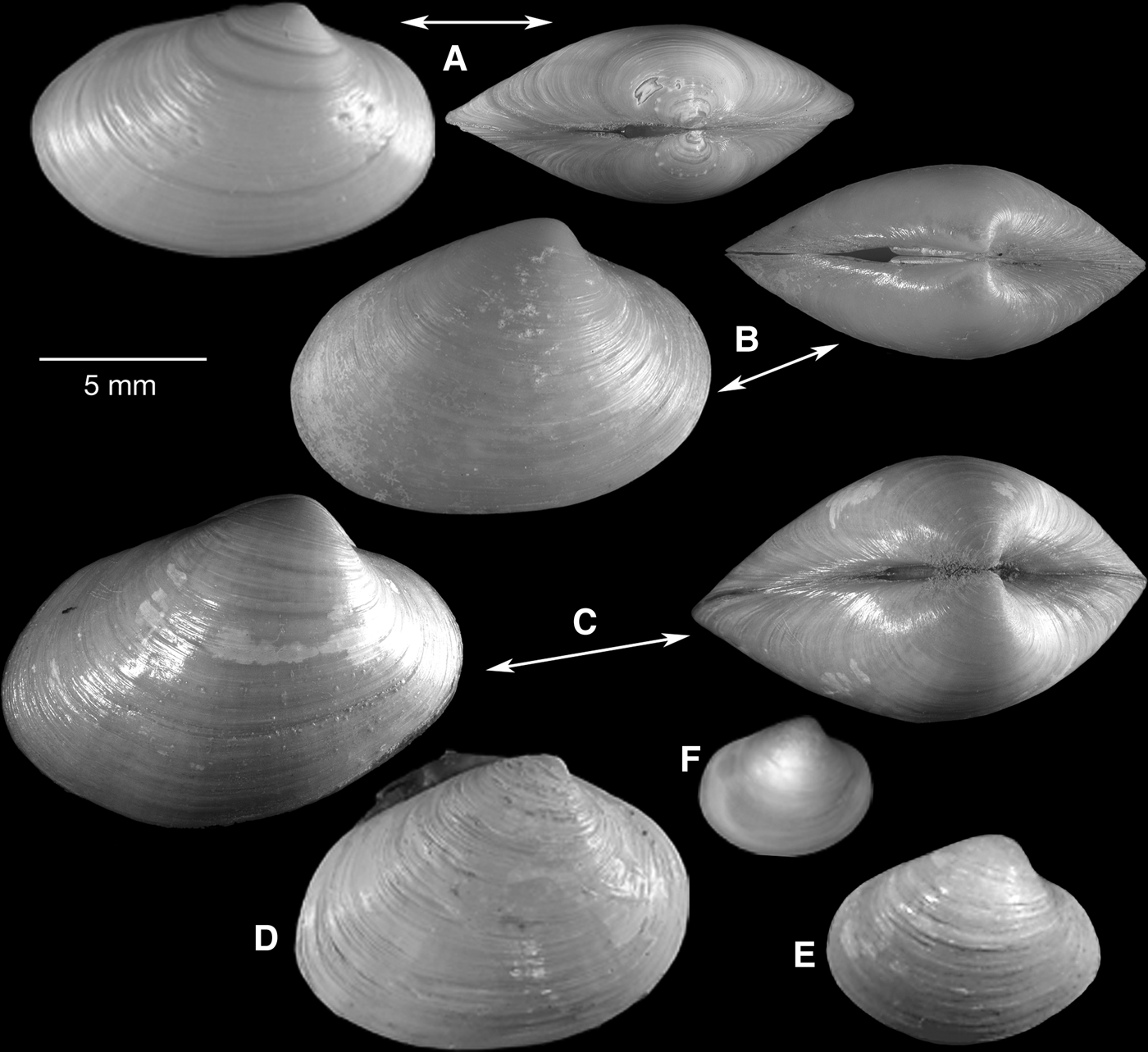
The species in closest geographical proximity are I. nyeggaensis from Norway and I. megadesmus from the Gulf of Cadiz. Isorropodon nyeggaesis (Figure 7F) is a strongly umbonate form with the beaks further to the anterior and a more steeply sloping posterior dorsal margin. Isorropodon megadesmus (Figure 7B) has broader and more prominent umbos, a steeply sloping posterior dorsal margin, is relatively deeper in outline and has a massive ligament. Isorropodon bigoti (Figure 7C) from off the Congo has a similar slope to its posterior dorsal margin, but it is strongly umbonate, deeper in outline and more tumid. Isorropodon perplexum (Figure 7E) from the Mediterranean, like I. bigoti, is strongly umbonate and has a steeply sloping posterior dorsal margin. The larger West African species, I. curtum, I. striatum and I. atalantae all have strongly inequilateral, subovate, shells quite unlike the elliptical form of I. mackayi, and warrant no further comparison; all are well illustrated in Cosel & Olu (Reference von Cosel and Olu2009).
(A–F): the smaller species of Isorropodon from the Atlantic Ocean. (A) Isorropondon mackayi, Hatton–Rockall ~57°N, 1195 m; (B) I. nyeggaensis, Norway 64°N, 720 m; (C) I. bigoti, Congo, ~5°S, 150 m; (D) I. megadesmus, Cadiz, ~35°N, 1323 m; (E) I. perplexum from eastern Mediterranean, ~35°N, 2030 m; (F) Isorropodon sp., Cadiz, ~35°N, 1323 m.
FUNCTIONAL MORPHOLOGY
Two of the extant species are known from shells only (I. atalantae, I. nyeggaensis), and of the remainder, only I. perplexum, I. bigoti and I. megadesmus have been described anatomically (Cosel & Salas, Reference von Cosel and Salas2001; Oliver et al., Reference Oliver, Rodrigues and Cunha2011). Chemosymbiosis has been confirmed in these three species, each harbouring chemoautotrophic sulphur oxidizing bacteria (Rodrigues et al., Reference Rodrigues, Cunha, Olu and Duperron2012). The ctenidial structure of I. mackayi is similar to that of the above three, and the presence of dense bacteriocytes indicates that I. mackayi is also chemosymbiotic.
The description of the foot varies: in I. mackayi and I. megadesmus the general form is cylindrical with a small heel, no distinct toe and no ventral keel; and in I. perplexum and I. bigoti the toe is demarcated from the main body of the foot and described as having a ventral keel. All species share the presence of a pair of lateral keels. In the larger vesicomyids such as Calyptogena magnifica (Boss & Turner, Reference Boss and Turner1980) the heel of the foot is reduced but the toe although elongated is compressed and not cylindrical. Many of these larger species inhabit vent sites, where the substrates are hard; here they extend the foot into fluid filled spaces enabling sulphide to be absorbed in to the tissues of the foot (Arp et al., Reference Arp, Childress and Fisher1984; Goeffredi & Barry Reference Goffredi and Barry2002). The cylindrical foot of I. mackayi is reminiscent of that seen in the Thyasiroidea and Luciniodea; in these groups the foot creates inhalant currents from the sediment and uptake of sulphides occurs across the gills (Taylor & Glover, Reference Taylor, Glover and Kiel2010). Taylor & Glover (Reference Taylor, Glover and Kiel2010) suggest that this may also occur in vesicomyids. Isorropodon species living at seeps are infaunal and the cylindrical foot may be a parallel adaptation to that of the Lucinoidea and Thyasiroidea.
The ridged and ciliated cushion lying in the inhalant aperture has not been described for other vesicomyids, and its function is uncertain. The deeply convoluted ridges give a large surface area, and it is proposed that this may be a secondary gill. Secondary gills are found widely within the Lucinoidea and are thought to supplement oxygen uptake where hypoxic conditions exist or where the capacity of the gill is curtailed by the dense aggregations of bacteria (Taylor & Glover, Reference Taylor, Glover and Kiel2010).
Class BIVALVIA Linnaeus, 1758
Subclass HETERODONTA Neumayr, 1884
Order VENEROIDA H. & A. Adams, 1856
Superfamily THYASIROIDEA Dall, 1900
Family THYASIRIDAE Dall, 1900
Genus Thyasira Leach in Lamarck, 1818
TYPE SPECIES
Tellina flexuosa Montagu, 1803
TYPE LOCALITY
Falmouth, England.
GENERIC DEFINITION
Fragile shells, subcircular, ovate to ovate–polygonal in outline with a posterior sulcus; escutcheon variably expressed, absent to deep, with or without an auricle producing a submarginal sulcus. Hinge teeth lacking or as a single ‘cardinal’ tubercle, ligament sunken. Anterior adductor scar elongate, posterior adductor scar ovate, pallial line entire. Ctenidium with two demibranchs, lateral body pouches large and multilobed, foot vermiform, heel obsolete, toe developed.
SPECIES COMPOSITION AND REMARKS
The current taxonomy of the Thyasiroidea is unclear as it rests on few morphological characters and is not supported by molecular data (Oliver & Sellanes, Reference Oliver and Sellanes2005). Of the 103 species recognized almost half (49) are assigned to Thyasira s. l. (Oliver, Reference Oliver2013). However, Oliver & Sellanes (Reference Oliver and Sellanes2005) and subsequently Oliver & Holmes (Reference Oliver and Holmes2006) and Rodrigues et al. (Reference Rodrigues, Oliver and Cunha2008) all suggested that there is a small clade of rather large species that are restricted to cold seep habitats. This clade includes T. oleophila Clarke, 1989; T. methanophila Oliver & Sellanes, Reference Oliver and Sellanes2005; T. southwardae Oliver & Holmes, Reference Oliver and Holmes2006; T. vulcolutre Rodrigues et al., Reference Rodrigues, Oliver and Cunha2008; and T. scotiae this paper. Thyasira sarsi (Philippi, 1845) also appears to fall into this clade, but it is mostly associated with areas of organic enrichment, and has only been found at a single seep site in the Skagerrak (Dando et al., Reference Dando, Austen, Burke, Kendall, Kennicutt, Judd, Moore, O'Hara, Schmaljohann and Southward1991). These species tend to have weak posterior and submarginal sulci and there is some supporting molecular data from Taylor et al. (Reference Taylor, Williams and Glover2007) where T. sarsi and T. methanophila appear as sister taxa. The relationship of these to the New Zealand Maorithyas marama is unresolved (Oliver & Sellanes, Reference Oliver and Sellanes2005). This group is distinct from the very large species belonging to Conchocele, also considered to be restricted to cold seep habitats, in having shells with a weak posterior sulcus and retaining the symmetrical outline rather than the more elongate, oblique form of Conchocele.
DISTRIBUTION
Cosmopolitan.
Thyasira scotiae sp. nov.
TYPE MATERIAL
Holotype: 1 specimen, FRV ‘Scotia’, cruise 0712S, Station S12283a, 57°57′N 15°33′W, 1187–1200 m, 23 June 2012. NMWZ. 2012.074.4.
Paratypes as holotype: 3 specimens NMWZ. 2012.074.5; 1 specimen in collection of David McKay.
COMPARATIVE MATERIAL EXAMINED
Thyasira vulcolutre Rodrigues et al., 2008. Holotype and paratypes: MSM01-03 Station 217 GKG10, Captain Arutyunov mud volcano, Gulf of Cadiz, 35°39.643′N 07°20.046′W, 1321 m, 30 April 2006, M.R. Cunha (NMWZ. 2007.3.1-3).
Thyasira southwardae Oliver & Holmes, Reference Oliver and Holmes2006. Holotype and paratype, Logatchev Vent Site, Mid-Atlantic, 14°45.189′N 44°58.829′W, 3038 m (Zoological Museum Moscow University (ZMMU) Ld-29999, NMWZ. 2006.6.1).
Thyasira oleophila Clark, 1989. Louisiana slope, Bush Hill GC-185, 27°46.941′N 91°30.479′W, 1738 ft (529 m) (Field Museum of Natural History, Chicago, FMNH 307755).
Thyasira insignis (Verrill & Bush, Reference Verrill and Bush1898). Syntype, off Nova Scotia, ‘Albatross’ Station 2499, 44°46′30″N 59°55′45″W, 238 m (United States National Museum, Washington, USNM 52596) (from photographs only).
Thyasira sp. western North Atlantic, Laurentian Fan, RV ‘Hudson’, Cruise 87-0003, Station 13, 43°34.46′N 55°38.35′W–43°35.32′N 55°38.23′W, 3718–3720 m (from photographs only courtesy of Professor Rose Petrecca).
Thyasira sarsi (Philippi, 1845). In excess of 100 specimens from the North Sea, including shells from the Skagerrak methane seep and Norwegian fjords (Bokn) (all in National Museum of Wales).
Thyasira sp. A single damaged shell. Storrega Pockmark, off Norway, 64°38.58′N 04°53.02′E, 745 m. Collected by ROV ‘Victor’, Campagne Vicking, 31 May 2006. Image courtesy of Anders Warén, Swedish Natural History Museum.
TYPE LOCALITY
North-east Atlantic, Hatton–Rockall Basin (57°57′N 15°33′W) 1187–1200 m.
DIAGNOSIS
A relatively large, tumid fragile thyasirid, subcircular with a low auricle and weak posterior sulci; ligament relatively short; anterior adductor scar separated from pallial line for over half its length. Anterior and ventral mantle edge opaquely glandular; exhalant aperture muscular.
DESCRIPTION OF SHELL
(Figure 8A–F), To 19.8 mm in length, fragile, beaks slightly prosogyrate; somewhat inflated (Figure 8E) T/MaxD = 0.65, subcircular, slightly higher than long to slightly longer than high, height/length = 0.99–1.06, lunule margin concave, relatively short, Lun/MaxD = 0.26; posterior margin weakly bisinuate; ventral and anterior broadly rounded. Posterior dorsal area weakly bisulcate; submarginal sulcus shallow demarcating a long low auricle; posterior sulcus shallow. Lunule distinct as a smooth area defined by change in sculpture but lacking any defining ridge or groove (Figure 8E). Ligament deeply sunken not rising above the shell margin; relatively short ligament/MaxD = 0.30. Sculpture weak of weak undulations, fine commarginal lines and occasional raised threads especially over posterior and anterior areas; shell white in colour. Hinge plate narrow, lacking teeth. Muscle scars indistinct, hardly visible in most shells; anterior adductor scar elongate separated from the pallial line for over half its length (Figure 8D).
(A–F): Thyasira scotiae sp. nov. (A–E) holotype, NMWZ. 2012.074.4; (A) external right valve; (B) external left valve; (C) internal left valve; (D) internal right valve with enlargent showing outline of anterior adductor scar, false coloured; (E) paratype, in coll. D. McKay; (F) paratype NMWZ. 2012.074.4. All Hatton–Rockall Basin, 57°57′N 15°33′W, 1195 m.
DESCRIPTION OF ANATOMY
(Figures 9A–C), Anterior adductor muscle elongate, oval about 2× longer than oval posterior adductor muscle (Figure 9B). Ventral side of anterior adductor muscle with a sensory papilla. Posterior pedal retractor (Figure 9B; ppr) muscle narrow; anterior pedal retractor muscle small. Mantle edges free except posteriorly where there is fusion with the termination of the gill axis; exhalant siphonal opening simple but distinctly muscular (Figure 9C; exs). Anterior and ventral mantle edge distinctly glandular showing as a dense opaque band (Figure 9B). Labial palps small, lacking sorting ridges (Figure 9C; lp). Ctenidium large, of outer and inner demibranchs, both as fleshy lamellae. Outer demibranchs about half the depth size of inner demibranchs. Foot elongate, vermiform (Figure 9C); heel indistinct. Lateral body pouches large, extensively lobed; lobes flat-ended, roughly cuboidal. Lobes arise from large, single orifice at base of stomach. Stomach cylindrical in a transverse longitudinal orientation; mid-gut a simple tight loop and lies over stomach before looping posteriorly into the straight hindgut and rectum.
(A–D): anatomy of Thyasira scotiae sp. nov. (A) right valve and mantle removed revealing commensal polychaetes between the lobes of the lateral body pouch (arrowed); (B) right valve and mantle removed; (C) as B but with ctenidium removed; (D) anatomy of Thyasira sarsi from the North Sea, right valve, mantle and ctenidium removed.
ETYMOLOGY
Named after the fisheries research vessel ‘Scotia’.
COMPARISONS
Thyasirids are taxonomcally difficult in that there are few shell characters on which to base a diagnosis; however, most are small and can thus be eliminated from this discussion. In the Atlantic, larger species include Thyasira sarsi, T. sarsi insignis, T. southwardae and T. vulcolutre. An additional large species T. oleophila is found in the Gulf of Mexico. This latter species can be excluded as it has a coarse pustulose microsculpture (see Oliver & Holmes, Reference Oliver and Holmes2006 figure 9.11). Thyasira vulcolutre has a more rhomboidal outline (Figure 10C) and T. southwardae lacks any surface pustular microsculpture (Figure 10B). Thyasira sarsi (Figure 10D–F) does bear a close resemblance to T. scotiae, but is distinguished by the relatively shorter ligament (Table 3) and greater inflation of the valves. All the examined T. sarsi had a height greater than the length whereas in T. scotiae height and length are generally equal. Unfortunately there are insufficient specimens of T. scotiae to apply statistical methods to this morphological data set.
(A–H): shells of the larger North Atlantic thyasirids. (A) Thyasira scotiae, Rockall; (B) T. southwardae, Logatchev vent site, Mid-Atlantic; (C) T. vulcolutre Gulf of Cadiz; (D) T. sarsi, Bokn, Norway; (E) T. sarsi North Sea; (F) T. sarsi Skagerrak methane seep; (G) T. insignis, holotype; (H) Thyasira sp. Storrege Pockmark (courtesy of Anders Warén); (I) Thyasira sp. Laurentian Fan (courtesy of Rose Petrecca).
Comparive dimensions of Thyasira scotiae and T. sarsi.

Anatomically there are also differences, notably in the extensive glandular tissue in the anterior and ventral mantle edge and the well developed exterior siphonal aperture (compare with T. sarsi, Figure 9D).
Ecologically T. sarsi does not overlap, bathymetrically, with T. scotiae in that in the north-east Atlantic it has not been recorded below 340 m. Thyasira sarsi is widespread in reducing sediments in Norwegian fjords, but extended its range into the North Sea by colonizing hydrocarbon sources in drill cuttings around oil wells (Oliver & Killeen, Reference Oliver and Killeen2002). It has been found at the methane seeps in the Skagerrak at a depth of 340 m but it has not been recorded from the Nyegga Pockmark at depths of around 700 m or from the Håkon Mosby mud volcano at 1250 m. It would appear, then, that T. sarsi is not a deep-water species and is largely restricted to continental shelf depths. This conclusion is in keeping with the current observations of species bathymetric segregation within seep faunas (Olu et al., Reference Olu, Cordes, Fisher, Brooks, Sibuet and Desbruyères2010).
Although thyasirids are not reported from the Nyegga Pockmark, a large (33 mm in height) thyasirid has been found from within the adjacent Storrega Pockmark at a depth of 745 m. This species is known from a single, damaged shell and has not been described. It is not conspecific with T. scotiae, having more the appearance of a Parathyasira in having a long steeply sloping anterior margin (Figure 10H).
Thyasira insignis from off Nova Scotia (western Atlantic) is regarded as no more than a subspecies of T. sarsi by Ockelmann (Reference Ockelmann1961) and as a synonym of it in the WoRMS database. The type specimen of T. insignis is 32 mm and of an oblique form (Figure 10G), apparently similar to large specimens of T. sarsi (Ockelmann, Reference Ockelmann1961) and the ‘monstrose’ variety illustrated by Sars (1878). There appears to be a tendency for increasing obliqueness with growth in T. sarsi (Figure 10D), and this is not apparent in T. scotiae. Since its description in 1878 T. insignis has only been recorded once, but from 3850 m (Mayer, Reference Mayer, Shor, Hughes Clarke and Piper1988; Blake, Reference Blake1990) and not the shelf depths given by Verrill & Bush (Reference Verrill and Bush1898). Attempts to locate these abyssal specimens have so far failed, making comparison difficult, but the size (46 mm in length) and the photographs taken by Rose Petrecca while at sea (Figure 10I) suggest a species of Conchocele rather than Thyasira.
It is of interest that a species of inquiline polychaete was described from the abyssal T. insignis, as the Rockall thyasirids also host polychaetes, but not of the same genus. Petrecca thyasira was described for the abyssal T. insignis, whereas a new species of Antonbruunia is present in T. scotiae (Mackie & Oliver, in preparation). No inquline polychaetes have been recorded from T. sarsi, and none were found in the many specimens examined here.
DISCUSSION
The two bivalves described here are typical of chemosynthetic taxa harbouring chemoautotrophic bacteria. Isorropodon mackayi has a ctenidial structure identical to that seen in I. megadesmus, I. perplexum and I. bigoti, the three species shown by Rodrigues et al. (Reference Rodrigues, Cunha, Olu and Duperron2012) to host sulphide oxidizing bacteria. The genus Isorropodon has typically been found associated with cold seeps (Cosel & Salas, Reference von Cosel and Salas2001; Cosel & Olu, Reference von Cosel and Olu2009; Oliver et al., 2012). Thyasira species are associated with a range of reducing settings (Taylor & Glover, Reference Taylor, Glover and Kiel2010), but the gill structure and relatively large gills of Thyasira scotiae confers most similarity to other species inhabiting cold seeps (this paper). Taken together, the co-occurrence of these bivalves gives the strongest suggestion that they originate from a sulphidic habitat and that there is active seepage in the Hatton–Rockall Basin.
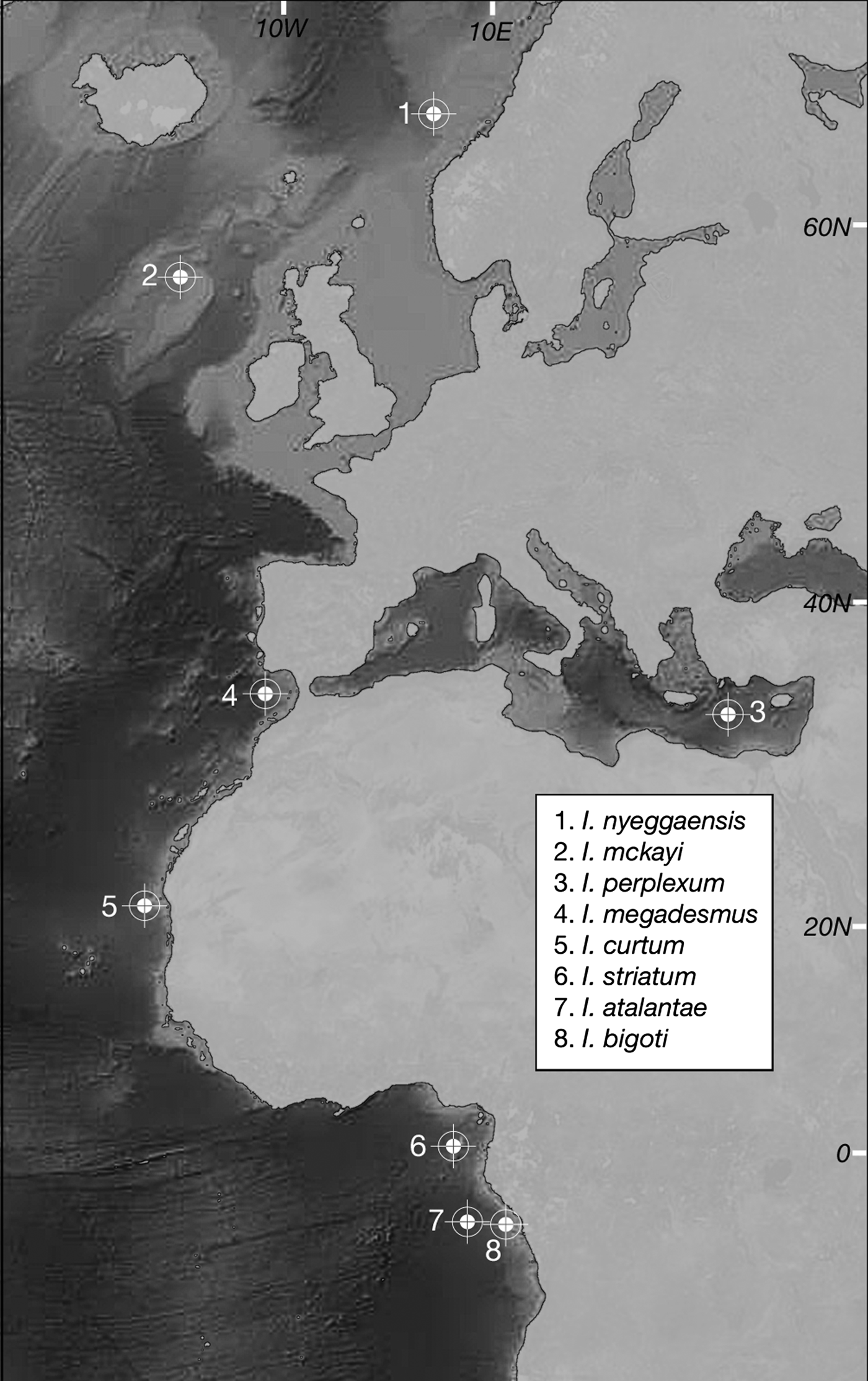
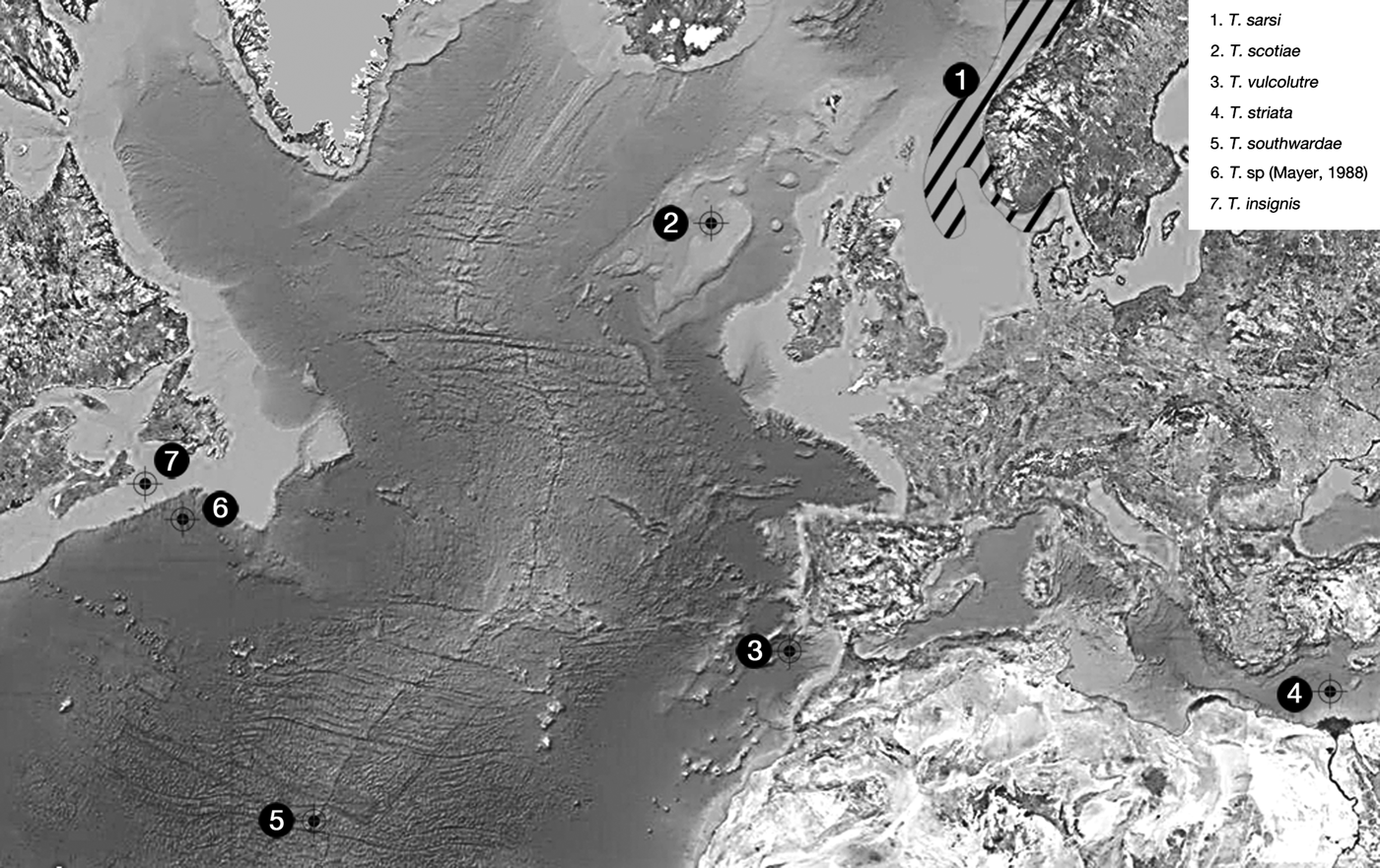
There is a strong degree of endemism within Isorropodon, with no species being recorded from more than one seep site (Figure 11). Isorropodon mackayi is morphologically quite distinct from its nearest neighbours: I. megadesmus from the Cadiz mud volcanoes and I. nyeggaensis from the Nyegga Pockmark. A similar pattern is shown for the thyasirids (Figure 12). For such endemism to evolve suggests that the cold seep areas are geologically persistent and biologically isolated from each other. Geological studies to date have not found active seepage in the Rockall area (Masson et al., Reference Masson, Bett, Billett, Jacobs, Wheeler and Wynn2003; Mienis et al., Reference Mienis, Weering, de Haas, de Stigter, Huvenne and Wheeler2006) and suggest that such activity, prevalent during the Tertiary, was sealed off during the Pleistocene. A similar scenario for the Porcupine area was proposed by Van Rensbergen et al. (Reference Rensbergen, Rabaute, Colpaert, Ghislain, Mathijs and Bruggeman2007). Given this evidence of extensive seepage during the late Tertiary, there was ample time to evolve an endemic seep fauna and, although widespread activity ceased in the Pleistocene, some seepage has persisited, and with it the associated fauna. Cold seeps need not be large, as evidenced by the ‘unit’ pockmark field described by Hovland et al. (Reference Hovland, Jensen and Indreiten2012). Such Pockmarks, that are less than 5 m in diameter, could easily have been overlooked before the advent of modern geophysical mapping techniques.
Distribution of Isorropodon species in the eastern Atlantic.
Distribution of the larger Thyasira species in the North Atlantic.
The dispersal capabilities of the larvae may influence biogeographical patterns and, if poor, may result in endemism. The larval shell of I. mackayi is 180 μm and lacks any PII, suggesting that it is lecithotrophic (Ockelmann, Reference Ockelmann, Cox and Peake1965). This does not imply that larval life span is short or dispersal is limited, only that the larva does not feed (Tyler & Young, Reference Tyler and Young1999). However in vesicomyids, which have predominantly lecithotrophic larvae, none are amphi-Atlantic, whereas in Bathymodiolus, which have planktotrophic larvae, there are amphi-Atlantic species (Olu et al., Reference Olu, Cordes, Fisher, Brooks, Sibuet and Desbruyères2010). Combining widely separated habitats with limited dispersal can explain the distribution pattern seen in the eastern Atlantic seep faunas.
VULNERABLE MARINE ENVIRONMENTS
The discovery of the bivalves described here was reported to the Northwest Atlantic Fisheries Organization Working Group on Deep-water Ecology (ICES, 2013). Cold seeps are considered to be a vulnerable marine environment, and once the exact position of the seep is discovered it is likely that some protection from damage by bottom trawling will be given (ICES, 2013;3.2.3). This proposal is supported here as the fauna has unique elements not known from other sites in the north-east Atlantic.
MORPHOLOGICAL ABBREVIATIONS USED
- aa
anterior adductor muscle
- asc
ascending arm of gill filament
- bct
bacteriocyte
- dsc
descending arm of gill filament
- ex
exhalant aperture
- exs
exhalant siphon
- f
foot
- f(h)
heel of foot
- f(le)
lateral extension of foot
- f(t)
toe of foot
- fme
folded mantle edge
- gme
glandular mantle edge
- hg
hind gut
- id
inner demibranch
- ifs
inter filamental space
- in
inhalant aperture
- k
kidney
- lbp
lateral body pouch
- lp
labial palps
- lv
left valve
- me
mantle edge
- me(uf)
unfused mantle edge
- mg
mid-gut
- od
outer demibranch
- oe
oesophagus
- pa
posterior adductor scar
- ppr
posterior pedal retractor muscle
- rv
right valve
- sg
secondary gill
- bl
blood lacuna
- st
stomach
- t
tentacles
- vm
visceral mass.
ACKNOWLEDGEMENTS
We would like to thank Marine Science Scotland and David McKay for making the specimens available to us. To John Hartley of Hartley Anderson Ltd, Aberdeen, for his help in refining the manuscript. To the staff of the museums in Bergen, Paris and Chicago for the loan of comparative material; to Elena Krylova for discussion on Isorropodon; to Rose Petrecca and Larry Mayer for discussion on the Laurentian Fan fauna.