In Hygienic Modernity: Meanings of Health and Disease in Treaty-Port China, Ruth Rogaski suggests that many Chinese experiences of modernity were centered on the transformation of the concept of weisheng in modern Chinese cities. She points out that “weisheng” was traditionally a concept associated with diverse regimens of diet, meditation, and self-medication. By the late nineteenth century, the term was borrowed to translate a new Western concept, hygiene, and thus moved to encompass state power, scientific standards of progress, the cleanliness of bodies, and the fitness of races, categories in which the Chinese were often deemed lacking by foreign observers and Chinese elites alike. The new concept was therefore associated with the image of a modern state and the questions of China's place in the modern world.Footnote 1
Though based on excellent research, this book focuses mainly on how the new weisheng concept was promoted by urban reformers under foreign imperialism, paying insufficient attention to the role of businessmen. But in reality, business elites played a critical role in educating the public as they tried to sell their products by utilizing the modern interpretation of the traditional concept of weisheng. When modern hygiene was introduced to China during the late nineteenth century, a wide range of foreign imports and their Chinese substitutes, including beverages, soap, cigarettes, patent medicine, and perfumery and cosmetics, also started to fill the Chinese market. To promote these novelties in this market, their manufacturers and wholesalers often labeled them “hygienic,” thereby associating these imported goods with the changing concept of weisheng. Through purchasing and consuming these products, the public gained firsthand experience of this changing concept and gradually learned what weisheng was, how to practice it, and what a modern life with weisheng standards should be. As Frank Dikötter has pointed out, “while ideas on hygiene were widespread in modern China, commerce rather than propaganda turned them into an everyday practice.”Footnote 2
On the one hand, a study of newspaper advertisements can help reveal the weisheng concept perceived by the general public. On the other hand, a focus on consumption activities involving products that were associated with the weisheng concept will expand the scope of the existing study of consumer culture in modern China, which has focused primarily on advertising of medicine and cigarettes.Footnote 3 This article therefore chooses to study the advertisements in the Dagong bao from 1902 to 1911 that adopted the term or the concept of weisheng, hoping to explore how commerce and consumption shaped the public perception of the weisheng concept and how the notion of weisheng reshaped the emerging consumer culture of twentieth-century Chinese cities.
This choice is based on three concerns. First, founded in 1902 in the French concession of Tianjin, the Dagong bao was the largest newspaper based in the city. By choosing a Tianjin-based newspaper, I hope to make better comparisons with Ruth Rogaski's study on “hygienic modernity,” which was primarily based on the society of Tianjin.
Second, the Dagong bao advertisements reflect mostly how businessmen saw the world and what values they wanted their consumers to accept. According to a 1948 study of China's advertising industry, there were usually three parties involved in advertising design in early twentieth-century China. The print advertisements could be designed by the advertising department of the manufacturer, the in-house advertising department of the media company, or the advertising agency that worked as a middleman between the manufacturer and the media company.Footnote 4 Given that the Dagong bao was a new newspaper and print advertisements were still a novelty in the first decade of the twentieth century, the newspaper probably did not have a strong advertising design team, although it may have had one or two part-time employees who were in charge of soliciting advertisers and occasionally helping customers write their own advertisements. Moreover, since the first advertising agency in Tianjin, the New China Advertising Agency owned by Li Sanren 李散人, was not established until 1920, the advertisements under discussion here were probably not designed by local advertising agencies either.Footnote 5 But the big manufacturers, especially the foreign companies such as the British American Tobacco Company, already had their own advertising departments as early as 1902.Footnote 6 Therefore, except for a few designs created by the newspapermen or early advertising agencies in other cities such as Shanghai, the majority of the Dagong bao advertisements between 1902 and 1911 were presumably designed by the advertising departments of the manufacturers under the supervision of business managers. Sometimes, the managers themselves even created the advertising ideas. Huang Chujiu 黃楚九, the owner-manager of the Great China-France Drugstore (Zhongfa da yaofang 中法大藥房), for example, personally created the advertising ideas for his Ailuo Brain Tonic during an advertising campaign in the late 1900s. When he promoted this new Western-style drug, he accommodated popular unfamiliarity with Western medicine, but at the same time selectively adapted Chinese intellectuals’ advocacy of Western medicine. The resulting advertisements were a reflection of both reality and ideals – through the eyes of this businessman.Footnote 7
Third, the Dagong bao was widely circulated in Tianjin during the early twentieth century, and therefore the ideas in the newspaper advertisements could have a strong impact on public opinion within the local society. According to contemporary statistics, in 1906 there were 149,819 households in Tianjin (including Tianjin city and Tianjin county).Footnote 8 According to Song Yunpu's estimates, in 1918, 30,000 issues per day of the Dagong bao were distributed.Footnote 9 Except for a small amount of mail order from out of town, newspapers at that time only circulated locally.Footnote 10 It is safe to infer that in early twentieth-century Tianjin, the Dagong bao was widely read in the city – almost one out of every five households possessed an issue. The existence of public newspaper reading rooms in late Qing Tianjin further enlarged the audience of this local newspaper.Footnote 11 With such a wide readership, the Dagong bao could exert a powerful influence on local popular culture.
Therefore, this article has chosen the Dagong bao advertisements involving products that were associated with the weisheng concept as its research target, and aims to explore the economic and social life centered on its construction in late-Qing Tianjin. Through some textual analysis of the advertisements, the article will first explain what the weisheng concept was as it appeared in the newspaper advertisements. It then explores the consumption activities involving products that were associated with the weisheng concept and discusses three questions: What did weisheng products include? Who were the consumers of weisheng products? And what kind of role did gender play in weisheng consumption?
THE WEISHENG CONCEPT IN THE DAGONG BAO ADVERTISEMENTS
The term “weisheng” literally means ‘guarding life’. According to Rogaski's research, the term first appeared in the Zhuangzi 莊子, an ancient Taoist text, which contains a passage emphasizing the importance of following the way of nature in order to maintain health. For the next two millennia of China's imperial history, weisheng was associated with techniques the individual could employ to preserve and strengthen his or her own health – whether it was eating the right foods, taking the appropriate health-giving medicines, or practicing a healthy bodily discipline.Footnote 12 By the early twentieth century, the term was borrowed to translate a new Western concept, hygiene, and thus expanded to define areas of public health. Facing threats from Western nations, Chinese urban political machines took the concept of weisheng “both as a powerful discourse of Chinese inadequacy, and an essential ‘skill’ necessary for joining the ranks of the modern.”Footnote 13 With local government's increasing involvement in the public construction of a healthy nation, the weisheng concept was no longer limited to the narrow realm of one's body; it was expanded to “public hygiene” and directly associated with the image of a modern state, what Rogaski has termed “hygienic modernity.”
Through my study of early twentieth-century Dagong bao advertisements, I have found out that the term “weisheng” was frequently used to promote the sale of advertised products. However, at the time when it appeared in these advertisements, the term was still fundamentally a phrase concerning the health of the individual, rather than a reference to the public hygiene primarily focused on by Rogaski. Sometimes, the advertised product was claimed to be beneficial to personal health (yu weisheng youyi 於衛生有益).Footnote 14 Sometimes, it became the “number one recipe to guard one's life” (weisheng diyifang 衛生第一方).Footnote 15 Sometimes, the advertisements spoke to a person who cared about his health (liushen weisheng de ren 留神衛生的人) or “a person who valued himself and guarded his own life” (weisheng zizhong zhi shi 衛生自重之士).Footnote 16 Sometimes, the advertisements described “an expert in ways of guarding life” (weisheng jia 衛生家).Footnote 17 Overall, the term “weisheng” is either used to refer to personal health or the action of maintaining one's health. And in either case, the term had not yet moved into the realm of public health or the new state-building process.
In early twentieth-century Tianjin, weisheng might represent a modern state for social reformers who sponsored the first Chinese hospitals and for politicians who established the new epidemic prevention office and a municipal weisheng bureau. But for a broader public, which was represented by the advertisers and consumers, weisheng was still a matter of personal health, associated with methods of guarding one's life. The fundamental meaning of the term had not changed.
At the same time, when weisheng continued to be used as a reference to private health in the Dagong bao advertisements, new meanings such as a fear of germs and an emphasis on cleanliness had been grafted onto this old concept. These new ideas originally came from the Western concept of hygiene, which had not only expanded to the realm of public health since the eighteenth century but had, further, become associated with cleanliness and germs when it went on to be used in the private domain.Footnote 18 Although the ideas had Western origin, they were often transformed drastically to fit into Chinese medical tradition, which resulted in a new weisheng concept that differed from hygiene even in the context of private health.
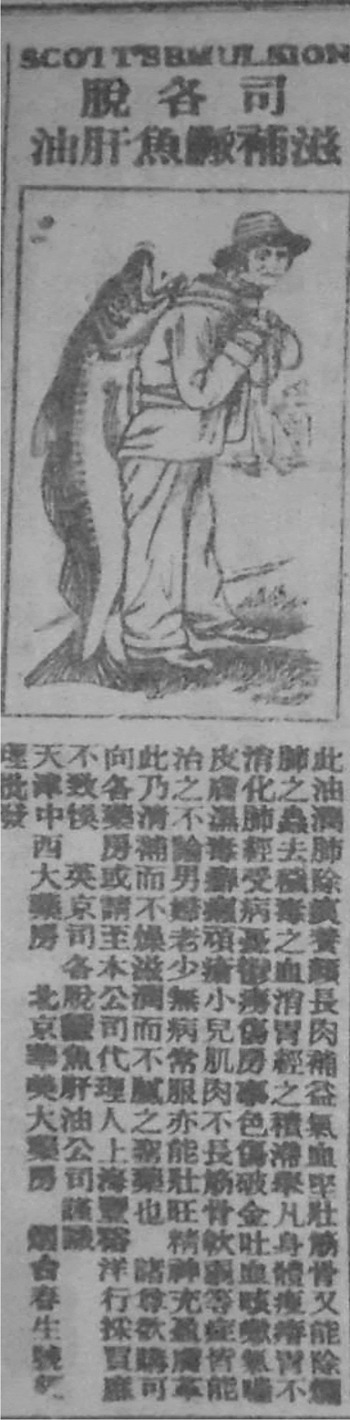
For example, when the advertisers borrowed the germ theory of diseases – a new microbiological theory that had come to reshape people's understanding of health and disease in Europe and America since the late nineteenth century – to explain the origin of diseases and techniques to remain in good health, they gradually modified the theory to make it understandable to Chinese readers. As bacteria are not visible to the naked eye, it was difficult for the public to accept the concept of germs until advertisers made use of some tangible analogy. Coincidentally, traditional Chinese medicine blames a variety of worms (chong 虫) for certain diseases. For example, it was believed that tooth cavities are caused by a mining “tooth-worm” (yachong 牙虫), that tuberculosis comes from the “wasting worms” (laochong 痨虫), and that indigestion should be blamed on roundworm (huichong 蛔虫), a parasite which lodges inside one's belly. Therefore, advertisers made a convenient analogy between the new invisible bacteria or germs of Western medicine and the old tangible worms of Chinese medicine. When advertisers explained germ theory to their audience, the words for “bacteria” and “germ” were often replaced by chouchong 臭虫 (‘stinking insect’), duchong 毒虫 (‘toxic insect’), or echong 恶虫 (‘disgusting insect’). Repeatedly, advertisers alleged that their products could prevent diseases by killing various types of “insects” (chong). Scott's Emulsion, for example, announced it could effectively eliminate the chong that festered in the liver (see Figure 1). Diamond Tooth Power declared it could kill chong inside the mouth, with the added promise of longevity.Footnote 19 Advertisements for insecticide repeatedly claimed their products were good for your health because they could kill various bad bugs. Here, we need to understand that none of the above-mentioned “worms” or “insects” can be equated with the Western sense of germ or bacteria. The advertisers simply translated the germ theory into the old language of traditional Chinese medicine, and then reinvented the Chinese concept of disease-causing worms by adding a new Western label.Footnote 20
Advertisement from Dagong bao, Jul. 30, 1903.

Influenced by Western hygiene theory, the advertisers also associated a pleasing odor and cleanliness with the weisheng concept, an association absent in the pre-twentieth-century Chinese context. Repeatedly, the word “scented” (xiang 香) came to represent “healthy.” With its secret formula, the “Magic Medical Powder for Stinking Bugs” (mizhi shenxiao chouchong yaofen 秘制神效臭虫藥粉) was effective not only because it could kill insects, but also because it was so pleasing to the nose.Footnote 21 Many cigarette and soap advertisements referred to their products as scented cigarettes (xiangyan 香煙) and scented soap (xiangzhao 香皂). Advertisements for toiletries, including tooth powder and face-washing water, all provided exhaustive depictions of how sweet their products smelled and how effective they were at eliminating bad odors.
The clean appearance or the clean nature of the products, such as the cleanliness of soda water, was also sometimes emphasized in the advertisements.Footnote 22 More interestingly, many blood tonic advertisements highlighted their products’ effect of cleaning the blood and attributed various diseases to contaminated blood. A June 28, 1910 advertisement for a product called “Dr. Williams’ Pink Pills for Pale People” began with a persuasive epidemiological analysis. The advertisement stated that during an fever epidemic, some people became sick while others remained healthy. Why the discrepancy? The answer offered was cleanliness of the blood. When someone's blood was impure, their body was not strong enough to resist disease. Clean blood was the most effective weapon to combat contagions. While the directions for the same medicine in the Canadian market only emphasized its primary function of building up blood, the purification function was probably an invention to appeal the Chinese consumers.Footnote 23 Chinese medicine sees blood as a dense form of body fluids, so in the minds of the Chinese readers, it could be cleaned up in the same way as any other fluid. Here the new association of cleanliness derived from Western hygiene theory was once again explained in the familiar language of traditional Chinese medicine, and thus departed from its Western origin.
In sum, as it appeared in the Dagong bao advertisements, “weisheng” was a concept very different from Western hygiene. It was still understood as a basic means of guarding one's life, regardless of the effort of Chinese social reformers to connect it to public health and the state-building process. Even in the context of private health, early twentieth-century Chinese “weisheng” was still different from Western hygiene although it fell under a strong Western influence. Oftentimes, ideas originating from Western hygiene, like the germ theory of diseases and an emphasis on cleanliness, were modified to fit into the context of Chinese traditional medicine, resulting in a hybrid of Chinese medical tradition and Western hygiene theory, whose inner core retained the old Chinese ways, but whose outer appearance had already begun to appear Western. To borrow a Chinese phrase, this is like old wine in a new bottle (xinping zhuang jiujiu 新瓶裝舊酒).Footnote 24
THE ADVERTISED WEISHENG PRODUCTS AND THEIR USE
If an early twentieth-century consumer in Tianjin wanted to live a healthy life and follow a new weisheng standard, which everyday commodities would he/she purchase and how would he/she consume these products? To answer this question, I have searched all the Dagong bao advertisements from 1902 to 1911 and found that eight commodities were frequently associated with the term “weisheng” and the claim of being beneficial to one's health. They include medicines, beverages, tooth-washing products, face-cleansing products, perfumes, insecticides, clothing, and cigarettes. Obviously, these advertisements were designed to appeal to consumers who wanted to live a healthy life and were willing to pay to maintain a high weisheng standard. To a certain degree, these advertisements shaped, and at the same time reflected, what weisheng products were and how to consume them to achieve good health in the eyes of a modern consumer in Tianjin. The article therefore will first introduce weisheng products and their use based on the textual analysis of the advertisements of these eight commodities. Then, efforts will be made to move beyond newspaper advertisements and discover to what degree the language and images of the advertisements reflected Tianjin reality.
Compared to other commodities, medicines appear most frequently associated with the weisheng concept in the Dagong bao advertisements. Most of the medicines in the Dagong bao were promoted as magical panaceas, designed to treat everything from headaches to piles. Yet despite claims of being “cure-alls,” most medicines suggested that their optimum efficacy could only be realized by following sometimes elaborate procedures. Within the instruction for Humane Elixir, for example, it is written that one must swallow a few pills after every meal in order to unlock the medicine's’ power to aid in digestion. But if a consumer wished to use Humane Elixir to avoid epidemic diseases and prolong his life, two or three pills had to be consumed on a regular basis, in the morning before breakfast and at night before sleep. The instructions also recommended extra pills before or after drinking and smoking if the consumer wished to eliminate the potentially toxic effects of alcohol and opium. Lastly, the product could refresh one's mouth if two or three pills were chewed when needed.Footnote 25
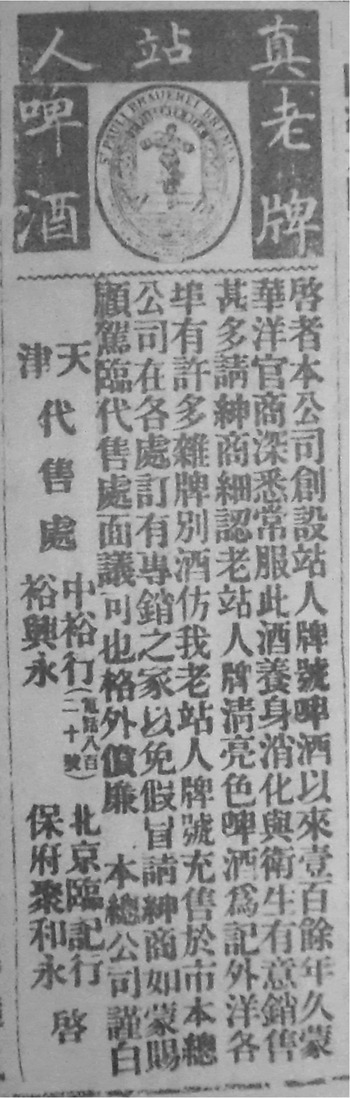
Oftentimes, Western-style beverages such as soda and coffee were also labeled as healthy. Among these “weisheng” drinks, soda-water was commonly seen in the advertisements of the Dagong bao from 1901 to 1911. Made of boiled water, soda-water was presented as extremely clean and therefore healthy. It could provide relief for people in hot summer weather, quench thirst, and alleviate a hangover.Footnote 26 Besides soda-water, coffee was also sold as a healthy beverage. A June 29, 1910 advertisement for coffee is titled “something beneficial to weisheng.” In this advertisement, coffee appears more like a medicine than a beverage. It was even said to have the ability to improve digestion. Sometimes, alcoholic drinks such as beer and brandy could also be sold with the weisheng concept. A German beer, for example, claimed it was beneficial to weisheng because it, again, helped to improve digestion and thus could keep one in good health (see Figure 2).
Advertisement for Standing Men Beer (zhen zhan ren 真站人), Dagong bao, May 7, 1908.

Another product put in the mouth, but not digested, was tooth powder. Although refined salt was itself sometimes advertised, most advertisements for tooth-washing products featured specially designed tooth powders. The primary function of tooth powder was to “strengthen one's teeth, freshen one's breath, and eliminate the disease-causing worms in the mouth” (chigen jiangu, shachong chuchou 齒根堅固殺虫除臭).Footnote 27 It could also whiten teeth, leaving them as beautiful as jade,Footnote 28 and even strengthen one's body.Footnote 29 What did tooth powder at that time look like? It was packed in an ornate, circular tin, as shown in the illustrated advertisement for Two Girls Rose Tooth Powder.Footnote 30 It was a fine powder with a cooling nature, and scented to give a sweet flavor (weigan xingliang zhixi 味甘性涼質細).Footnote 31 An advertisement for Lion Tooth Powder points out that the correct use of this delicate toiletry included scrubbing the teeth with it twice daily, once in the morning and once at night.Footnote 32
Just as teeth became a new target of cleansing products and personal hygiene, so did the face. There are scattered advertisements for soap in the Dagong bao. They often appear in the inventory of pharmacies and groceries, and are afforded no more description than a simple name, “soap” (yizi 胰子 or yizao 胰皂). Other face-cleansing products advertised in the Dagong Bao, such as waters or powders, were introduced with a fanfare of promises. Beautifying Water (hua yan shui 花顏水), for instance, claimed that the product could remedy facial blemishes, such as acne, pimples, and even freckles. To use the product, consumers were advised to place several drops of Beautifying Water into their washbasins and dilute it with fifty times as much water. The mixture would then turn milky white with a pleasant smell. If used on a daily basis, consumers were guaranteed a more beautiful face.Footnote 33
Just as important as a whiter color of the face was a more fragrant body. Advertisements for perfume and floral water also appeared in the Dagong bao. Two Girls “fragrant water” (xiang shui 香水), for example, had a wide variety of scents including rose, magnolia, jasmine, and narcissus. The fragrance was claimed by advertisers to endure for several days if sprayed on clothes.Footnote 34 Two Girls “floral water” (hua lu shui 花露水) was also aromatic but, unlike its perfume counterpart, it did not come in a variety of scents. Floral water had other functions. First, it was hailed by advertisers as being able to cure most skin diseases. Second, it could be used as an ointment to treat mosquito, ant, and snake bites. Third, advertisers wrote that bathing in floral water could immunize a consumer from epidemics and plagues.Footnote 35
Another weisheng product that related to one's appearance is clothing. In the Dagong bao, there are ads for cotton knitted clothes, referred to as “weisheng clothes.” These are Western-style thick sweat clothes with narrow sleeves and form-fitting pants.Footnote 36 Although these advertisements only informed their audience of the name of the products, the term “hygienic clothes” (weisheng yi 衛生衣) itself indicates that Western-style clothing would be viewed as healthy, due to its narrow sleeves (to protect against chilling breezes), and form-fitting pants (which allow for more vigorous movements than would a scholars’ gown).
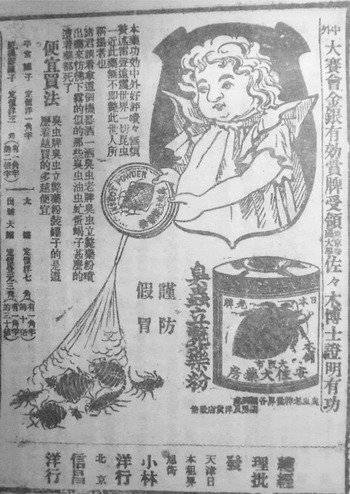
In addition to these clothing and grooming products, insecticides too were represented as a weisheng product because of their ability to kill stinking chong, an analogy that was often used to refer to germs. Advertisements claimed that most insecticides could kill all kinds of noxious insects, including ants, lice, mosquitoes, gadflies, and scorpions: “It will kill all the stinking bugs after two or three days of continuous application,” and suggested that the product be sprinkled in the bed, and around the quilts, mats, and mosquito nets.Footnote 37 Aside from being packaged in an ordinary tin, insecticides were sometimes sold in a special duster designed for convenient sprinkling. A 1910 advertisement taught its potential consumers how to use this sprinkling “machine”: the duster was to be depressed, its head facing the insect. Air would be forced through the tiny holes of the machine's lid, resulting in a deadly powder raining down on the unfortunate bug (see Figure 3).
Advertisement for Japanese Insecticide Powder, Dagong bao, Jun. 26, 1910.

The last, and most ironic, weisheng product was cigarettes. Repeatedly, the product was claimed to be good for one's health, being “weisheng cigarettes.”Footnote 38 Made with carefully selected tobacco leaves and sometimes “mysterious” weisheng ingredients, this product was often presented as having a mild nature and pure taste (xing ji wenrun, wei yi chunliang 性既溫潤味亦純良),Footnote 39 and therefore would do no harm to one's brain, lungs, or teeth.Footnote 40 It is well known that cigarettes are unhealthy. This view may not have been completely unfamiliar to citizens in early twentieth-century Tianjin. A 1910 article in the Dagong bao, for example, specifies opium, foreign alcohol, and cigarettes as the three most harmful things for the Chinese people.Footnote 41 So, how was a cigarette advertisement able to pitch cigarettes as weisheng? A thorough study of these advertisements in the Dagong bao shows, surprisingly, that few of them made the effort to justify this unhealthy product as weisheng, although the cleanliness of the product was often emphasized to stress its high quality.Footnote 42 It seems it was self-evident to the advertisers that cigarettes were a weisheng product because they were advertised as hygienic in the West. For example, a 1907 Russian cigarette advertisement claimed its product was the “most hygienic” because it was manufactured “without the touch of hands; only with machines.”Footnote 43 Therefore, for the Chinese market and Chinese consumers, as long as the product reflected Western standards of hygiene, it should be considered weisheng. This is probably why the Beiyang Cigarette Company claimed it had recently improved its products to a quality comparable to Western ones, in order to “conform to the weisheng standard.”Footnote 44
Overall, products in Dagong bao advertisements that had been associated with the weisheng concept shared two common features. First, they were all novel luxuries. Second, most of them were foreign imports or their Chinese substitutes. But it would be misleading to understand weisheng consumption as an entirely luxurious foreign experience for modern Chinese consumers. In their everyday life, Tianjin citizens continued to guard their lives through eating the right foods – food with the right flavors (wei 味), with the right natures (xing 性), and in a healthy combination – and using the traditional Chinese medical recipes (fang 方) to treat diseases and supplement deficiencies.Footnote 45 But gradually, a Westernized modern lifestyle filled with luxurious novel commodities became a new way of guarding one's life, and its methods could probably be adopted at the same time as using these old techniques.
THE CONSUMERS OF WEISHENG PRODUCTS
In early twentieth-century Tianjin, who purchased and consumed the weisheng products advertised in the Dagong bao? To search for the actual consumers of weisheng products, we can start by a discussion of newspaper advertisements’ target readership. To illustrate the benefits of the product, advertisements for weisheng products often contained stories of former consumers, thus providing us with an opportunity to discover who were its target audience. In advertisements for Dr. Williams’ Pink Pills for Pale People, for example, the described current consumers mainly included two kinds of people: scholar-officials and businessmen. As for scholar-officials, we find stories about an official assistant working for the county government in Bobai County of Guangxi Province, a candidate county magistrate in Anhui Province, and a consul general in the consulate of Singapore. Businessmen were sometimes depicted as owners of such varied enterprises as grocery stores, hardware stores, rice shops, banks, and tea shops. In other cases, these businessmen appeared as senior executives in foreign companies. Some stories the audience would have read focused on the chief editor of a popular newspaper in Chengdu, a treasurer in a British steamship company, and a chief accountant in a foreign hardware shop in Hong Kong.
In the 1890s, N. W. Ayer & Son, an advertising company in the United States, dropped the Dr. Williams’ Pink Pills for Pale People account because of the “outrageous claims” made by the vendors.Footnote 46 Therefore, it is safe to infer that most of these stories appearing in the Dagong bao were created by the advertisers. Nonetheless, these stories respected and made as much use as possible of verisimilitude to sell their products. In early twentieth-century Chinese cities, there was a tangible upper class composed of scholar-officials and businessmen, whose circles often overlapped.Footnote 47 For example, some scholar-officials were also businessmen. From 1904 to 1911, in Tianjin's chamber of commerce, twenty-eight of the thirty directors had a rank no lower than a candidate county magistrate, and twelve had a rank higher than a fifth-rank prefectural magistrate.Footnote 48 It is therefore safe to infer that this emerging urban upper class was a major target of the weisheng advertisements under discussion.
Moreover, the fact that newspaper advertisements of this period tended to include more textual information, unlike the highly visual ones of the 1930s, indicates that the intended readers and target consumers of these advertisements were literate.Footnote 49 This was further confirmed by frequently relayed stories of people regaining their ability to read and write after using the advertised medicine. For example, a Dr. Williams’ Pink Pills advertisement from 1910 alleges that the medicine was of benefit to a ninety-year-old man, who for the previous ten years had required presbyopic glasses in order to be able to read.Footnote 50 Given the fact that the civil service exam system was only abandoned in 1905, and before the reform education served almost exclusively for the selection of bureaucratic officials, being literate in the first decade of the twentieth century often meant one was either a scholar-official, a family member of a scholar-official, or at least an unsuccessful/unready candidate who, likely from a family of rich merchants, had studied to become a scholar-official. This again limited the target consumer mostly to a relatively small upper class.
Examining the prices of several weisheng products, we can further discover that the majority of weisheng products advertised on the Dagong bao targeted affluent people. A box of Two Girls Rose Tooth Powder retailed for 0.2 yuan;Footnote 51 for the same amount of money two people could enjoy dinner in a fancy restaurant.Footnote 52 Dr. Williams’ Pink Pills sold for 1.5 yuan per bottle,Footnote 53 which was equivalent to a month's salary for an apprentice in a factory or grocery.Footnote 54 A bottle of Two Girls Perfume sold for two yuan,Footnote 55 one-fifth of a month's salary for an ordinary female cotton mill worker.Footnote 56 Therefore, most weisheng products were luxurious goods that could be afforded only by a small privileged class in society, including the new upper class composed of scholar-officials and businessmen.
In sum, the main target of the weisheng advertisement in the Dagong bao was an emerging urban upper class that combined scholar-officials and successful businessmen. Given the high prices of these products, it is very likely that the actual consumers were also limited to this privileged social group. However, weisheng consumption did not keep the lower class completely outside. Even though the lower class could hardly afford the products advertised in the Dagong bao and read the texts used in these advertisements, they could still consume – indirectly through observing the language and behavior of the upper class – the cultural message delivered by them: the desire for a modern lifestyle centered on the consumption of advertised weisheng products.
The public's desire for this modern lifestyle was fictionalized in 1924 in Lu Xun's short story Soap: an uneducated woman from a better-off town family joyfully anticipates unwrapping her first-ever olive-scented bar of soap, a gift that represented the sophistication and luxury of a modern lifestyle, and was bought in a big downtown shop frequented by modern students who likely came from upper-class families.Footnote 57 The same desire was also shared by female textile workers in early 1930s Shanghai, who saved up their salaries to purchase face powder and cream, items which represented a dream life to the young girls but which were considered unnecessary luxuries by their parents.Footnote 58 Having the benefit of daily vegetable markets and the secondhand goods market where stolen goods were often sold,Footnote 59 the lower class gradually started to see this modern lifestyle as their new dream, and thus were eager to imitate the upper class through the consumption of weisheng products whenever their finances permitted.
GENDER AND THE CONSUMPTION OF WEISHENG PRODUCTS
What kind of role did gender play in the consumption of weisheng products advertised in the Dagong bao? In a revealing study of the advertisements in two 1930s magazines, Dongfang zazhi 東方雜誌 and Liangyao huabao 良友畫報, Leo Ou-fan Lee has concluded that advertisements in Shanghai tell a story of a modern family for whom marital happiness is based on good health. This domestic comfort and state of health was created and maintained by the wife.Footnote 60 My own preliminary findings drawn from advertisements in the Dagong bao confirm the existence of this prototype family with good health as its central element in early twentieth-century Tianjin. But unlike the model family in 1930s Shanghai, the health, and subsequently, marital happiness of the 1900s Tianjin family was brought home by the husband and then maintained by the wife.Footnote 61
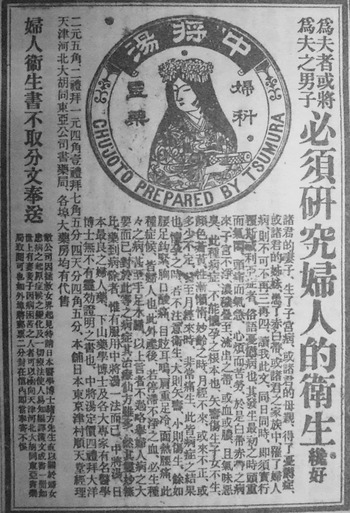
In medicine advertisements in the Dagong bao, we find a picture of how the male householder actively brought weisheng products and the weisheng notion back home. As a husband, he was expected to gain a knowledge of women's hygiene through advertisements in order to be able to educate his illiterate wife. The advertisement for Chujoto Herbal Supplement Tea (zhong jiang tang 中將湯), a women's medicine, appearing on September 11, 1911, put the following message in oversized characters: “It's the duty of all husbands and future husbands to learn women's hygiene.” The same advertisement also informs men that they can obtain a free pamphlet on women's diseases with every purchase (see Figure 4). As a father, the man was supposed to ensure the health of his children, especially his daughters. A November 15, 1910 advertisement for Dr. Williams’ Pink Pills tells a touching story: A teenage girl became ill during puberty. Her father was worried about her health and took her to see various doctors, all of whom failed to help her. The young lady did not recover until the father read a pamphlet about Dr. Williams’ Pink Pills and purchased the medicine for his beloved child. The medicine cured the girl's disease, and obviously brought happiness to the family. Advertisements illustrating stories about modern husbands who bring home weisheng products for their parents and in-laws demonstrate similar outcomes of domestic happiness. In another advertisement for Dr. Williams’ Pink Pills, a story tells of a husband who bought the medicine for his mother-in-law after he had a positive experience with the pill himself. The medicine then cured the chronic disease of this old woman, already in her seventies.Footnote 62 In all these cases, the consumption of weisheng products is divided into two parts: purchasing by the husband and consumption by wives and other family members.
Advertisement for Chujoto Herbal Supplement Tea (zhong jiang tang 中將湯), Dagong bao, September 11, 1911.

After the modern and healthy lifestyle was purchased and brought back home, the wife's duty was to adjust to this new lifestyle by consuming weisheng products, of course under her husband's instruction. A healthy wife was the symbol of a happy family. In the stories appearing in medicine ads, we can easily find evidence that both spouses worried about the wife's health in case she were too weak to do housework and raise children. A 1910 advertisement for Chujoto Herbal Supplement Tea, for example, tells a story about how the herb, by curing the wife's chronic health problems and then enabling her to produce a healthy male baby, helped to bring the ultimate domestic happiness to Mr. and Mrs. Zhang.Footnote 63
To compare this 1900s Tianjin image of an ideal family with the 1930s Shanghai image of the modern family in Lee's earlier research, we can see that there were different expectations of women's roles in society. Although in both cases good health was considered the key to marital happiness and the wife took responsibility for maintaining domestic health and consequent happiness, 1900s Tianjin women seemed to be excused from the burden of selecting and purchasing modern commodities that were used for domestic health. The difference was probably not an issue of locale because the Dagong bao advertisements under discussion were not always designed locally. As was previously discussed, the majority of the Dagong bao advertisements between 1902 and 1911 were designed by the advertising departments of the manufacturers. But the manufacturer did not hire an advertising team for each of its branches in China. With a few exceptions, the only advertising department was often located in their headquarters outside Tianjin. The advertisements could be designed there, and then sent to the Tianjin branch to fill in the space purchased in the Dagong bao.Footnote 64 For example, an identical advertisement for Ailuo Brain Tonic appeared in the Shen bao 申報, a Shanghai-based newspaper, and the Dagong bao in 1910, both using the same customer's letter to confirm the benefit of the medicine.Footnote 65 Presumably, the Tianjin branch borrowed the advertisement design from its headquarters in Shanghai.Footnote 66 Another example would be Two Girls Floral Water, which uses similar language to advertise in both the Shen bao and the Dagong bao.Footnote 67 Given that the product was manufactured by Kwong Sang Trading Company in Hong Kong, it is likely this advertisement was first designed there. When the texts and images of the advertisement were not locale-specific, they therefore reflect more of a uniform treaty port culture shared by early twentieth-century Chinese cities, including both Shanghai and Tianjin.
The difference between the model family depicted by the advertisements in 1900s Tianjin and 1930s Shanghai should lie in time-dependent changes. Early twentieth-century China was a very dynamic society. With the introduction of Western ideas and modern industries, women's social roles had changed dramatically. The emergence of women's schools and magazines targeting female readers, such as Funü zhazhi 婦女雜誌 initiated by Commercial Press of Shanghai in 1915 and Jiating yu funü 家庭與婦女 published by Dagong bao as a bi-weekly supplement between 1927 and 1930, offered Chinese women necessary knowledge of selecting and purchasing modern commodities for their households. The new professional job opportunities ranging from school teachers and clerks to cotton mill workers and department store salesgirls further prepared them financially as consumers in an expanding market. How exactly Chinese women transformed themselves from passive recipients into active consumers within such a short period – between the 1900s and 1930s – requires separate research that goes beyond the scope of article. But the transformation itself is clearly evident here.
CONCLUSION
By focusing on advertising and consumer culture, this article complements Ruth Rogaski's early research and suggests that despite social reformers’ efforts to link weisheng with public health and state building in Tianjin, the same weisheng concept interpreted by the businessmen and thus understood by the consumers was otherwise still a matter of individual health, and was gradually commodified and closely associated with a Westernized modern lifestyle. Furthermore, the article suggests that although under strong Western influence, the “weisheng” concept was still different from Western “hygiene” even in the context of private health. New ideas, such as the germ theory of diseases and a particular focus on the need for cleanliness and aversion to foul odors, have been added to this old Chinese concept. But these new Western ideas were often transformed drastically to fit into the Chinese context, resulting in a hybrid of Chinese medical tradition and Western hygiene theory, whose inner core retained the old Chinese ways, but whose outer appearance had already begun to appear Western.
At the same time, this study of advertisements reveals aspects of consumption activities involving products that were associated with the weisheng concept. It finds that in the last decade of the Qing dynasty, a weisheng concept and a modern healthy lifestyle were often associated with luxurious foreign imports and their Chinese substitutes that were consumed almost exclusively by an emerging upper class, although the same desire for health and modernity could be gradually shared by the lower class. The article further suggests that, unlike the modern consumerism promoted in the 1930s, while the products were selected and purchased by the male consumers, often as a patriarch on behalf of the family, then consumption in the first decade of the twentieth century was still gendered masculine.