1. INTRODUCTION
After widespread suffering due to starvation, malnutrition and infectious disease, about one million people are estimated to have died as a direct consequence of the Great Famine in Ireland between 1845 and 1852. Of these deaths, almost half were children less than 10 years of age.Footnote 1 Despite this fact, relatively little research has explored how famine-induced conditions affected the youngest generation of Ireland during this period.Footnote 2 The high proportion of child deaths not only represents and reflects the particular vulnerability to famine-related stress experienced by the youngest members of society, but also provides insight into how the Famine substantially altered family structures and relations. The resulting societal transformation would have affected those who survived, with life-long psychological consequences.Footnote 3
For hundreds of thousands of the Irish poor during the middle of the nineteenth century, the suffering of the Great Famine would be synonymous with first-hand experience of the much despised union workhouses. Approximately 250,000 people suffered death in these institutions between 1846 and 1851, and 200,000 of these are believed to have been directly related to famine-induced conditions.Footnote 4 Mortality rates in the workhouses were exceptionally high during these years, and they came to be perceived as ‘death houses’. The majority of those who entered the workhouse would nevertheless have survived it. Despite this, there is a noticeable lack of recorded stories of workhouse experiences in the archives of the Irish Folklore Commission.Footnote 5 One reason for the silence of former workhouse inmates may relate to the perceived social shame of having been forced to apply for indoor relief. Another reason could be a psychological response in which it may have been easier for survivors to cope with post-traumatic stress by not talking openly about what they had experienced and witnessed in the workhouse during the Famine.
New insights into the reality and experience of the workhouse institution during the Famine have been made possible by the discovery of a large assemblage of human remains on the grounds adjacent to the former union workhouse in Kilkenny City (52°39″N, –7°15″W) in 2005. A full archaeological excavation was undertaken during the first half of 2006 revealing a mass burial ground for nearly 1,000 individuals.Footnote 6 The physical remains of these inmates of the workhouse had been interred in coffins stacked on top of each other within a minimum of 63 sub-rectangular pits. The burial ground, which was never consecrated or marked on any Ordnance Survey map, dates to between August 1847 and March 1851, and includes the worst years of the Famine crisis.Footnote 7 More than half of the skeletons within the mass burial pits were remains of children and adolescents.Footnote 8
The human remains from the Kilkenny mass burials provide a unique and exclusive insight into how the Famine was experienced by those who did not survive. The Kilkenny burials have enabled the implementation of bioarchaeological methods to shed new light on the experience of the Famine on both an individual and population level; in essence, the story of the workhouse inmates in Kilkenny during the Famine can be told. In this article, the potential causes for the high non-adult mortality rates in the Kilkenny Union Workhouse are explored through a biocultural analysis where skeletal and archival sources are combined and discussed as part of a ‘dialogue of evidence’.Footnote 9 The aim of the study is to provide an insight into the child mortality rates in the Irish workhouses during the Famine with the Kilkenny institution as a specific case study, and to discuss which factors, particularly those that relate to institutionalisation, are likely to have influenced mortality. By combining the historical and bioarchaeological evidence as equal parts of a broader narrative, the value of interdisciplinary approaches to famine studies is highlighted.
The archival sources of data are comprised primarily of the weekly population and mortality statistics that were recorded in the Workhouse minute books and also occasionally published in the local newspapers, as well as the Table of Deaths data from The Census of Ireland for the Year 1851.Footnote 10 While these data provide a great deal of insight into the general pattern and various factors that influenced the mortality in the institution, the skeletal evidence provides a more detailed dataset from which morbidity, co-morbidity and age-specific mortality patterns can be assessed.
2. FAMINE, DEATH AND BURIAL AT KILKENNY UNION WORKHOUSE
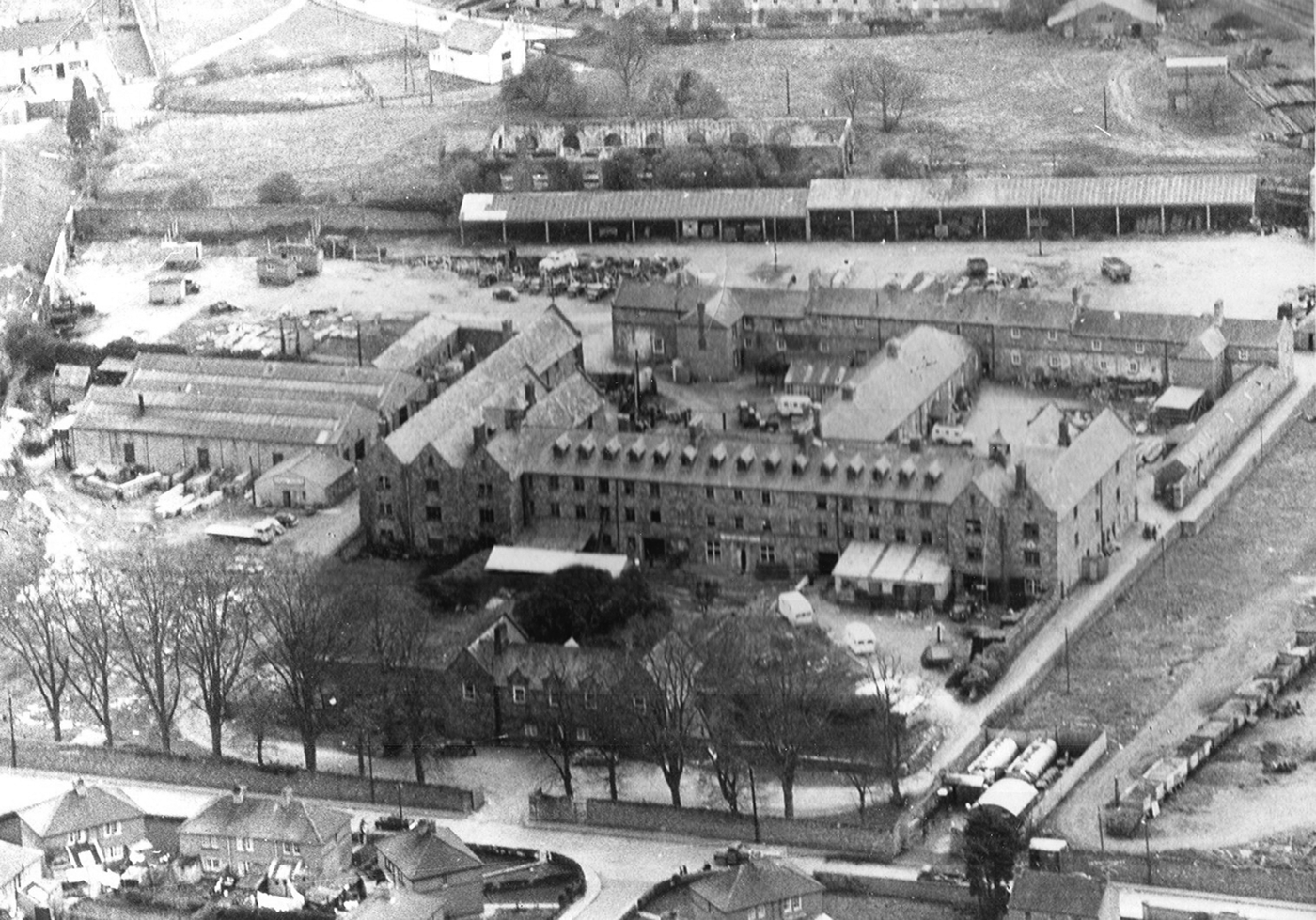
Although it was considered a relatively prosperous city, mid-nineteenth century Kilkenny suffered from high unemployment rates and an often extreme level of poverty and destitution in parts of its surrounding countryside.Footnote 11 As a reflection of those circumstances, the Kilkenny Union Workhouse was the fifth largest of such institutions in Ireland when it was opened in April 1842. It had been constructed to provide indoor relief (i.e. food and accommodation in return for unpaid work) for up to 1,300 inmates (Figure 1), and was intended to serve the poorer and destitute populace belonging to the city and the northern districts of the county. The institution was erected on the eastern outskirts of the city on an elevated site, and had a substantial local architectural presence. Like most of the workhouses that were constructed in Ireland during this period, it followed the standard plan by architect George Wilkinson (1814–1890), with an administration building located in front of an H-shaped accommodation and infirmary block. The architecture reflected and responded to the policy of age and gender segregation of the workhouse inmates into four main classes: men, women, and boys and girls less than 15 years of age.Footnote 12 On the first day of admission, 30 applications were accepted.Footnote 13
Aerial photograph of the Kilkenny Union Workhouse complex, during the early 1960s. Photograph copyright: Karen Deegan, via the Kilkenny County Library.

The union workhouses were introduced to Irish society following the enactment of the Poor Law Act of 1838, and they were part of a measure put in place to provide a ‘more effectual Relief of the Destitute Poor in Ireland’.Footnote 14 This was a reflection of a social and economic circumstance of major political concern; the often extreme deprivation and poverty endured by many of the Irish during this period were notorious.Footnote 15 The complicated political and cultural relationship between Ireland and England, an underdeveloped economy, an industrialisation that lagged behind Britain and substantial population growth are some factors that are considered to have contributed to this situation.Footnote 16 Approximately one-third of the population, about 2.7 million people, lived in fourth-class accommodation, which according to the 1841 census generally comprised ‘mud cabins having only one room’.Footnote 17 In Kilkenny, the general conditions relating to housing were in comparison much better than the average for the island. Within the city, fourth-class dwellings were the homes for about one-fifth (20.3 per cent) of a total population of 19,071 in 1841, while for the county the proportion was just over a quarter (26.8 per cent) of a recorded population of 133,349 individuals.Footnote 18
The fundamental ideological background to the implementation of the workhouse system was the concept that the poor were lazy by nature, and that poverty in most cases was self-inflicted.Footnote 19 By making the conditions within the workhouses as unattractive and harsh as possible, it was believed that the poor would be encouraged to improve their economic situation by themselves. This idea was expressed via the so-called workhouse test-theory, whereby relief applicants would have ‘weighed the “pleasures” of staying outside the workhouse with the “pain” of entering it’.Footnote 20 Access to indoor relief was granted based on selective criteria that differentiated between the ‘deserving’ and ‘undeserving’ poor; that is, between those considered unable to take care of themselves – such as the young, the elderly, the infirm and the mentally ill – and the able-bodied of relatively good health. Children of the lower social classes would generally have been considered as deserving of indoor relief, and a substantial proportion of those housed in the workhouses would therefore be individuals under 15 years of age. They had entered these institutions either as members of complete families deemed eligible for relief, as orphans, or – not uncommonly – on their own having been abandoned by their parents.Footnote 21 Several children were also born in the workhouses, often to women who had found themselves in dire social circumstances.Footnote 22 This contextual background, as well as the fact that the Kilkenny workhouse burial ground was in use for a relatively short period of time, is important to consider when discussing the characteristics of the individuals interred in the mass burial pits. A number of biases were at play in the composition of this assemblage in terms of mortality and social structure. Another factor contributing to the structuring of the assemblage is that some bodies were claimed by relatives or friends for burial elsewhere.
A vast majority of the Irish poor in the middle of the nineteenth century were completely dependent on the potato crop for their subsistence. The tuber grew well in the Irish climate, and the monotonous diet of potato and dairy products was relatively beneficial in terms of nutritional and caloric intake. However, this complete dependency on a single crop made the population vulnerable during periods of crop failure, and regional famines and periods of starvation were common across Ireland during both the eighteenth and nineteenth centuries.Footnote 23 When a potato blight (Phytophthora infestans) swept through the Irish countryside from August 1845 onwards, the consequences were catastrophic, with famine and distress affecting a large proportion of the population. With an increasingly malnourished and weakened populace, infectious diseases took hold and widespread occurrences of typhus, typhoid fever, smallpox, tuberculosis and cholera resulted in mass deaths. These epidemics, in combination with emigration, resulted in the depopulation of whole communities in some parts of the country.Footnote 24
The workhouse in Kilkenny was one of 130 such institutions that were initially established following the 1838 Act.Footnote 25 Unlike many of the Poor Law unions in the west and north-west of Ireland, the Kilkenny institution managed to function fairly well during the Famine.Footnote 26 It was nevertheless operating under severe economic difficulties.Footnote 27 Despite this, the Kilkenny Board of Guardians, who were responsible for the administration of the establishment, allowed on occasion for the distribution of outdoor relief, even though it was illegal.Footnote 28 The Union managed to provide coffins and shrouds for each deceased inmate. However, it was common practice that anything of value belonging to an inmate was sold after death to pay for the expense of the coffin.Footnote 29
As elsewhere across Ireland, the workhouse in Kilkenny became severely overcrowded. Large congregations of malnourished people resulted in the workhouse becoming a hotspot of infectious disease, and the death rates of its inmate population became exceptionally high. The mass deaths in both the workhouse and the fever hospital nearby resulted in substantial logistical difficulties for the Board of Guardians to the extent that by August 1847, the previously used cemeteries in the city had become so critically full that there was no other option than to resort to burial within the confines of the workhouse premises.Footnote 30 These were undertaken at both the workhouse and the fever hospital up until March 1851 when a plot of land for an official workhouse cemetery was finally procured. The intramural burials at the Kilkenny workhouse were placed in the north-eastern corner of the workhouse grounds. The location is likely to have been intentionally chosen as it is located as far as possible from both the workhouse complex and the residential areas of the city.Footnote 31
3. ASSESSING CHILD MORTALITY RATES IN THE KILKENNY UNION WORKHOUSE
The Kilkenny Board of Guardians met weekly to discuss the running of the establishment, to make decisions on tenders and financial procurements, and to respond to letters and reports from the Poor Law Commissioners, Workhouse physicians, the general public and others. For each meeting, an updated ‘State of the House’ was compiled, which recorded summary statistics on the number of inmate admissions, discharges, births, deaths (that also included those that took place in the Kilkenny Fever Hospital) and number of inmates remaining by age group for each week ending on Saturday. These statistics are available in the surviving minute books from the middle of September 1844 onwards. In relation to the non-adult proportion of the population, they were initially only subdivided between infants aged less than 2 years, and children between 2 and 15 years of age. From September 1849 (or possibly earlier) a further subdivision was made into children of both sexes between 2 and 5 years of age, both sexes 5 to 9 years of age, and boys and girls aged between 9 and 15 years separately.
In demographic studies, infant mortality is generally assessed by ratios expressing the number of deaths per 1,000 births within a specified time.Footnote 32 The institutional aspect of the Kilkenny workhouse makes it impossible to estimate mortality in relation to number of births. Therefore, a relative weekly mortality rate was calculated by dividing the number of recorded deaths at the end of each week with the reported number of inmates at the beginning of the same week. Each age class was assessed separately and in the aggregate, and the values were adjusted to be expressed as a rate per 1,000 inmates.Footnote 33 Unfortunately, the minute book archive of the Kilkenny Union during the Famine period is incomplete as the books for the periods mid-July 1846 to mid-March 1847, mid-November 1848 to mid-September 1849 and June 1850 to February 1851 are missing. The local newspapers in Kilkenny – The Kilkenny Journal and the Kilkenny Moderator – did, however, publish summaries of the weekly meetings of the Board, and these usually included the number of inmates and deaths within the institution for each given week. Based on these data, it has been possible to partly reconstruct the mortality rates of the Kilkenny institution during the Famine years. For weeks with missing data (n = 14), the mean value of the preceding 4 weeks was used. These values enable consistent and comparable relative mortality rates within the Kilkenny workhouse population, but which are not comparable with the non-institutionalised population.
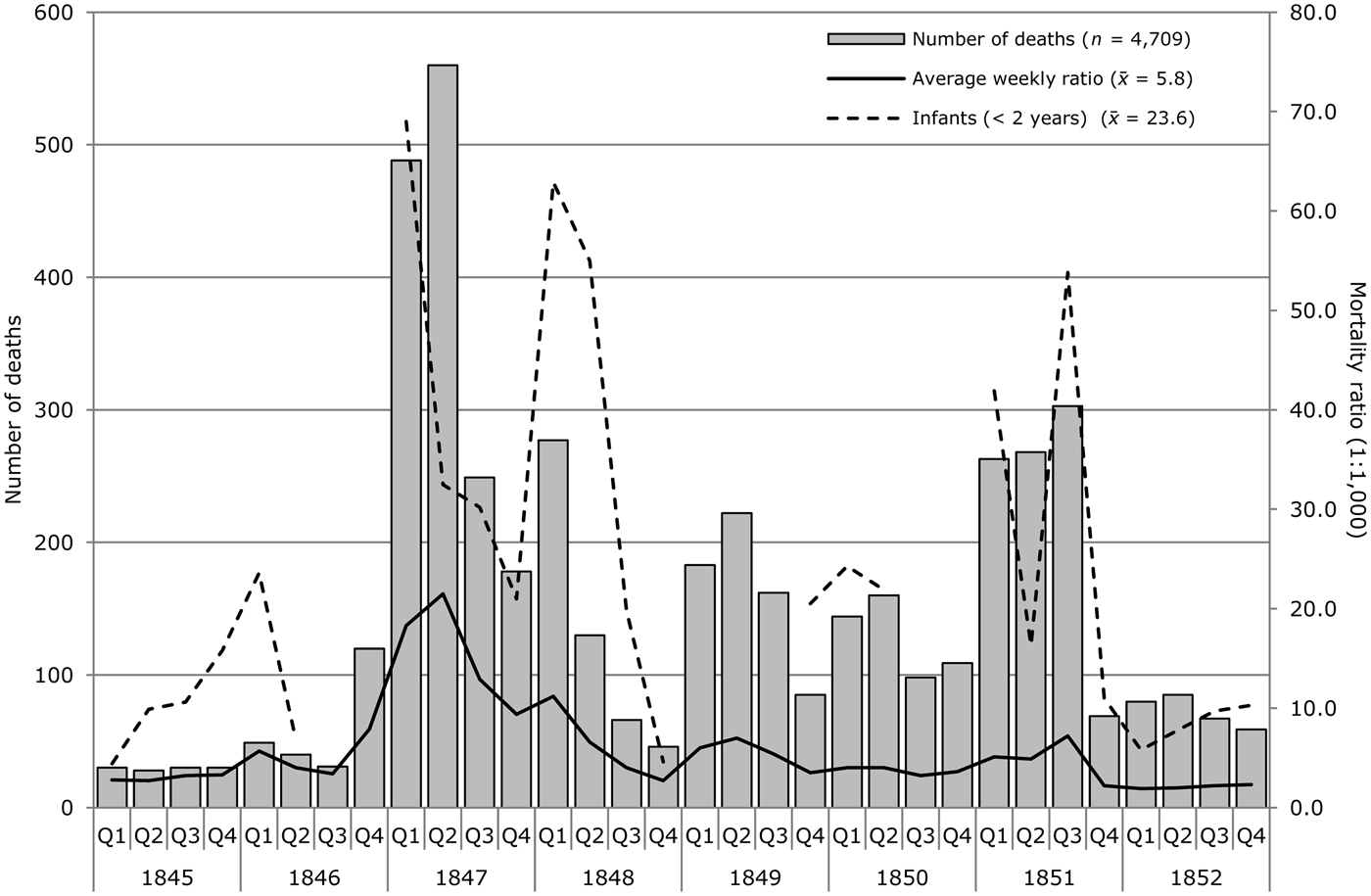
How the chronological period of the Great Irish Famine should be defined is not entirely clear and it has been defined differently by scholars throughout its historiography. Much of the early research defined the period as between 1845 and 1848/49, which were the worst years of the blight.Footnote 34 However, Famine-induced suffering did not cease entirely as the potato crop began to recover, and it has been argued that 1852 is a more suitable end-year of the Famine as it was then that most government relief programmes were terminated.Footnote 35 The blight first appeared in the autumn of 1845, but it was not until around the summer of 1846 that the most severe suffering resulting in mass deaths began to appear. Studies of mortality statistics pertaining to the Famine have generally only considered the period of 1846 to 1851. The choice of end date is primarily due to the fact that this is when the population census, from which famine mortalities have been estimated, was taken.Footnote 36 For the purpose of this study, the Famine in Kilkenny is defined by the period of excessive mortality in the workhouse, which occurred between October 1846 and September 1851. During these months, the average mortality rate in the institution was twice its pre-Famine level (see Figure 2).
Estimated number of deaths and mortality rates by quarter (Q) in the Kilkenny Union Workhouse between 1845 and 1852.
While the minute books' mortality statistics enable calculations of mortality rates by age class, the skeletal remains from the mass burials allow more in-depth insight into the mortality of workhouse children during the height of the crisis because age at death can be estimated for each individual, based on skeletal development. The remains were analysed following standard osteological protocol, and age at death was estimated from methods assessing dental mineralisation and eruption (n = 438) and epiphyseal fusion (n = 9).Footnote 37 Generally, the skeletal estimation of age at death from teeth is relatively accurate (±2–30 months depending on age and which teeth are assessed), while approximations based on skeletal maturity and epiphyseal fusions can only be done within age ranges of about 5 years. Despite these methodological limitations, the biological age-at-death estimations, as indicated from the skeletal remains, are more accurate and detailed than the age-at-death ranges assessable from the mortality statistics available in the surviving minute books.
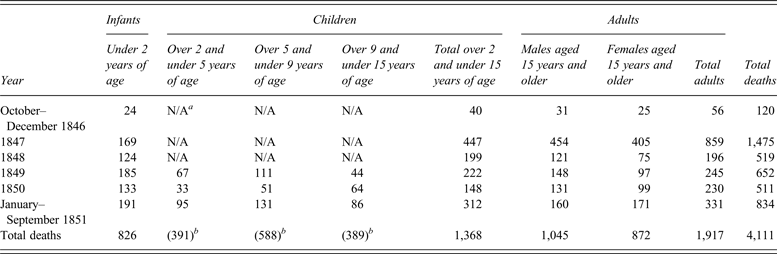
Based on the archival records, an estimated 4,111 individuals died in the Kilkenny Workhouse and Fever Hospital during the Famine (Table 1). From January 1847 to the end of 1850, the number of deaths is estimated to have been 3,157. According to the Tables of Death in the census of Ireland for 1851, the same period saw a total of 3,621 reported deaths in public institutions in Kilkenny City, which other than the workhouse and fever hospital also included the infirmary, lunatic asylum and city gaol.Footnote 38 During the 32-month period when the intramural burial ground at the workhouse was in use, an estimated 2,234 individuals died in the workhouse and fever hospital. A minimum of 970 skeletons of this group were discovered during the archaeological excavation of the mass burial ground, although this site was not completely investigated; approximately 5 per cent of the burial ground currently remains in situ beyond the limit of the archaeological excavation. It is nevertheless evident that a majority of the dead were buried elsewhere. An unknown proportion of deceased inmates who were treated at the fever hospital were interred in intramural mass burials at that premises, and bodies of deceased inmates were also likely to have been claimed by friends and relatives outside the institution.
Estimated number of deaths by age class in the Kilkenny Union Workhouse and Fever Hospital between October 1846 and September 1851
a Not available.
b The estimations in parentheses for the total period are based on relative proportions of available data between 1846 and 1851.
Sources: Minutes Kilkenny Union; The Kilkenny Journal; Kilkenny Moderator.
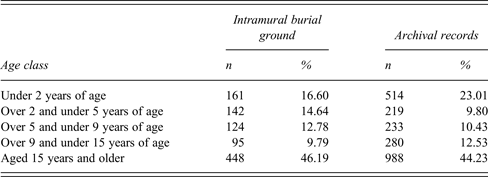
It is uncertain how representative the skeletal assemblage from the workhouse is of the deceased population in the institution. A comparison between workhouse age-class distribution in the skeletal population and the archival records of death between August 1847 and March 1851 indicates a statistically significant disparity in relative frequencies (Table 2) (χ 2(4) = 35.511, P < 0.001), although the archival data are incomplete and lack much information. A disparity between these frequencies is, however, expected: the mortality in the workhouse included both those who died in the infirmary and the accommodation wards whereas the deaths in the fever hospital are presumed to include exclusively those who were treated for disease there. Although the historical sources do not allow for any solid confirmations, the archaeological context would suggest that the individuals interred in the intramural burial ground represent the deaths within the workhouse only.
Relative proportion of deaths by age class in the intramural burial ground (skeletal data) and estimated data from the archival records (August 1847 to March 1851)
Sources: This study; Minutes Kilkenny Union; The Kilkenny Journal; Kilkenny Moderator.
4. RELATIVE CHILD MORTALITY RATES BY AGE CLASS
The number of infants in the Kilkenny workhouse between October 1846 and September 1851 ranged from only 34 individuals in the last week of August 1848 to 197 children in the third week of February 1851, with a mean weekly average of 102 children.Footnote 39 As discussed above, weekly mortality rates were calculated by age group. For children less than 2 years of age, the average of these weekly rates was 32.9 per 1,000 infant inmates with a median value of 25.6 (n = 157; standard deviation (SD) = 28.0). This rate was 4.5 times higher (Z = –9.749, P < 0.001; r = –0.780) than for the remaining proportion of the population during the same period (mean = 7.1; median = 4.9; n = 158; SD = 6.3). The highest incidence of infant deaths during a single week was recorded at the end of February in 1851 when 14 infants died. The greatest relative mortality rate (200.0), however, occurred during the first week of May 1848 when, of 40 children aged less than 2 years, 8 died. During the period in which the intramural burial ground at the workhouse was in use, the deaths of 514 children aged less than 2 years were recorded. This is substantially higher in both the actual number and in the relative frequency compared with the skeletal population from the mass burials (see Table 2), and suggests that many infants were buried elsewhere. This disparity may, however, be partly because infant remains are less likely to be preserved; skeletons of infants are most fragile, and therefore more likely to fully fragment or decompose in the ground.Footnote 40 Indeed, amongst the Kilkenny skeletons, remains of children belonging to this age class displayed the poorest preservation, with nearly half (41/161 or 46.0 per cent) being in ‘very poor’ or ‘poor’ condition.Footnote 41
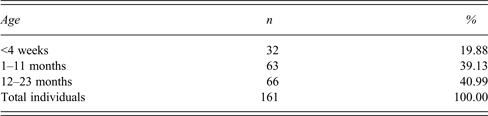
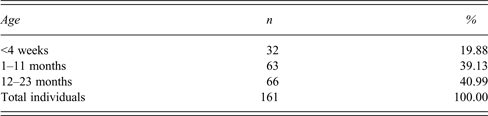
The children that were attributed to the youngest age class in the workhouse system include three age classes that are generally used by paediatricians today: neonatal (from birth to 28 days), infant (from birth to the age of 12 months) and early childhood (1 to 5 years).Footnote 42 The minute book records do not give any indication of the specific age distribution of those recorded as less than 2 years of age, but this can be discerned from the skeletal data for the population interred in the intramural mass burials. Of 161 skeletons of children estimated to have died before the age of 2 years, 32 were of neonates (Table 3). The crude prevalence or proportion of perinates (less than 41 weeks' gestation) and those between 41 and 48 weeks indicates that 84 per cent (n = 26) died due to endogenous factors that affected the child as a foetus when it was developing in the womb and only 16 per cent (n = 5) due to exogenous factors that would have occurred after birth.Footnote 43 The high proportion of deaths due to endogenous factors is interesting, because they reflect the impact of maternal factors on the survival of a child after birth. In the context of the Famine, one can presume that many of these factors were related to the mother's poor health. However, socio-economic and environmental circumstances were likely to have played a significant role as well. Amongst populations in modern developing countries, a number of such reported factors equally relevant to mid-nineteenth-century Ireland include poverty and level of education, the age of the mother, length of time between births, breastfeeding practices, sanitation and hygiene.Footnote 44 The latter two factors were evidently of considerable concern for the Kilkenny Board of Guardians during the Famine. Overcrowding of the female block of the workhouse had resulted in inadequately drained cesspools, and in March 1849 the Kilkenny Journal reported ‘poisonous effluvia’ being discharged from the ‘monster cess pool’ in the women's section, and that concerns were expressed that the discharge could be the reason for cholera being present in the house.Footnote 45
Age-at-death distribution within the infant age class amongst the individuals buried in the intramural burial ground at the Kilkenny Union Workhouse
Source: This study.
Although incomplete, the records pertaining to the workhouse population in Kilkenny indicate that the slightly older children aged between 2 to 5 years comprised, on average, 3 per cent of the total population and 8 per cent of the child population during the Famine. Of the recorded deaths during the same period, they represented about 9 per cent of all deaths and 16 per cent of all child deaths. Their relative mortality rate can only be calculated from the end of September 1849 onwards, with an average weekly value of 14.2 (median = 11.8; n = 69; SD = 16.3). The greatest mortality rate (76.9) was observed in the second week of July 1851 when 28 children out of a population of 156 died.
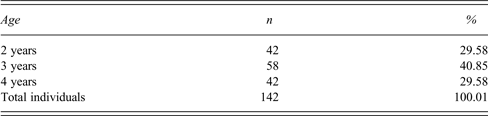
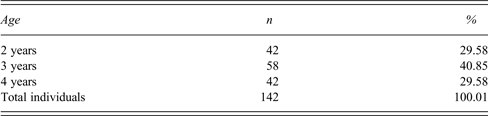
In the mass burial ground, there were remains present of 142 children belonging to the 2 to 5-years age class, of which most were about 3 years of age at the time of death (Table 4). A sharp rise in deaths of 3-year-olds is of particular interest, as it seems most likely to relate to the segregation policy between child and mother in the workhouse (see Discussion below). The relative frequency of this age group is higher in the intramural burial ground compared with the archival records (see Table 2), which may suggest that most of the deaths of children between the ages of 2 and 5 years took place in the workhouse rather than in the fever hospital. It is also possible that a smaller proportion of bodies of children from this age class were claimed by relatives and friends outside the institution for burial elsewhere.
Age-at-death distribution within the 2- to 5-year age class amongst the individuals buried in the intramural burial ground at the Kilkenny Union Workhouse
Source: This study.
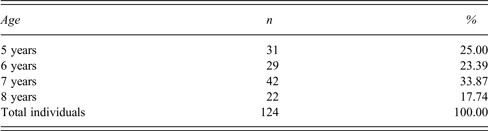
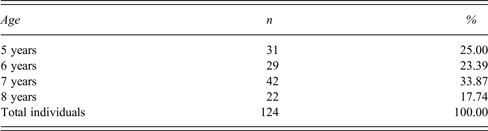
Children who were aged between 5 and 9 years comprised 14 per cent of the total population and 34 per cent of all children, based on the available data from the workhouse minute books during the period of the Famine, which include the weeks from September 1849 to September 1851. During the same period, children in this age group represented 14 per cent of all deaths and about one-quarter of all child deaths, which suggests that they had a slightly better chance of survival compared with the preceding age class. The weekly death rate ranged from 0.0 to 33.7, with a mean value of 6.7 deaths per 1,000 inmates of this age class. The greatest number of deaths of children belonging to this age category took place in the second week of July 1851, when 14 children out of a population of 416 died. The intramural burial ground included 124 children at least 5 years old and less than 9 years old at death, which comprised about a quarter of all children aged less than 15 years of age (see Table 2), which is the same proportion of deaths suggested from the archival records. The skeletal age-at-death profile suggests that the highest mortality occurred for 7-year-olds, and thereafter rapidly decreased (Table 5).
Age-at-death distribution within the 5-to 9-year age class amongst the individuals buried in the intramural burial ground at the Kilkenny Union Workhouse
Source: This study.
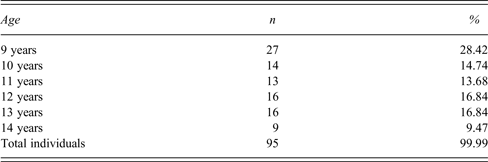
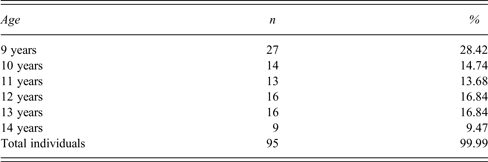
As with the preceding two age classes, it is only possible to partly reconstruct the population data for the children aged between 9 and 15 years from between September 1849 to September 1851. These children comprised on average about 8 of 10 in the non-adult population each week, and one-third of the total population. During the Famine, they represented about 28 per cent of all child deaths, and only 9 per cent of the total number of deaths in the workhouse and fever hospital (Table 1). The weekly relative mortality rates ranged from 0.0 to 10.5, with an average of 1.8. The highest rate occurred in the second week of April 1850 when 7 out of 666 children died.Footnote 46 The intramural burial ground included 95 children belonging to this age class (Table 6) which comprised 18 per cent of all individuals less than 15 years of age. According to the minute books, this age class comprised 19 per cent of all child deaths during the period the cemetery was in use (see Table 2), and the skeletal data appear to represent the population well. This age class had a very low proportion of 14-year-olds; however, this may be a reflection of the admission policies of the workhouse institution. Even though a skeleton may suggest an age at death of 14 years, an individual may very well have been 15 years of age. For applicants in such a situation, he or she would have been assessed as an adult, and if considered able-bodied by the Board of Guardians most likely refused admission.
Age-at-death distribution within the 9- to 15-year age class amongst the individuals buried in the intramural burial ground at the Kilkenny Union Workhouse
Source: This study.
5. EXPLAINING MORTALITY: SEASONAL MORTALITY RATES, UNDERLYING HEALTH CONDITIONS AND DISEASE
Seasonal mortality peaks during the winter half-year were a feature in Irish society in the nineteenth century, but these rates were considerably accentuated during the Famine.Footnote 47 In the Kilkenny workhouse, it is evident that monthly mortality rates varied significantly for the child age classes during the Famine years (χ 2(11) = 40.741, P < 0.001), but not during the period before October 1846 (χ 2(11) = 7.786, P = 0.732) and after September 1851 (χ 2(11) = 11.530, P = 0.400). The highest mortality rate for children during all the years of the Famine period occurred between December and April (mean = 6.8; n = 136; SD = 7.6) with an additional peak that occurred in July 1851 (mean = 15.4; n = 4; SD = 3.9). A significant variation in mortality rate was not evident for the adult proportion of the population, either before (χ 2(11) = 5.954, P = 0.876), during (χ 2(11) = 5.420, P = 0.909), or after the Famine (χ 2(11) = 19.119, P = 0.059), which suggests that children were more sensitive to seasonal mortality. Generally, on a global scale, the most frequent causes of peaks in mortality during the winter months are cardiovascular, cerebrovascular and respiratory disease,Footnote 48 and it can be assumed that the latter was most influential in the Kilkenny workhouse child inmate population. The peak in July 1851 was probably related to a measles epidemic that affected the children's wards that month.Footnote 49 The main cause of death for these children would, however, have been other febrile diseases, such as relapsing fever, typhus and typhoid fever. Other infectious maladies, such as tuberculosis, smallpox and dysentery, became more common during the Famine, and are other possible causes of death.Footnote 50 In November 1848, when the population had begun to recover from the worst fever epidemics, Asiatic cholera reached Ireland via Belfast harbour, and resulted in somewhere between 20,000 and 30,000 deaths nationwide.Footnote 51 In Kilkenny City in 1849, cholera is estimated to have resulted in about 500 deaths.Footnote 52
The cause of death of the individuals buried in the Kilkenny workhouse graves cannot be determined from their skeletons. The frequency of diagnosable disease does, however, provide an insight into underlying health conditions, most likely primarily a reflection of their health status as they entered the institution, and the influence of these underlying conditions on mortality. Interpreting palaeopathological manifestations of disease in archaeological populations is not straightforward. Evidence of disease in the skeleton generally occurs at a severe or chronic stage. This means that skeletons displaying severe pathological changes are likely to be of individuals of relatively good health as they were evidently strong enough to survive the disease process to such an advanced stage that it had begun to manifest itself skeletally.Footnote 53 The manifestation of disease, as marked in the skeleton, is therefore likely to be a substantial underrepresentation of the true occurrence of the disease. Nevertheless, the skeletal evidence of disease represents true manifestations of pathogens that enable analysis of empirical data, and trends can be discerned from these analyses which reveal insights into both disease and mortality patterns.
An insight into recovered health insults can be gained from analyses of enamel hypoplasias, which are permanent defects noticeable on the teeth as linear bands, pitting across the crown surfaces or as malformed cusps. They occur during periods of critical health insults when the enamel matrix of the teeth is forming, and these defects are therefore good indicators of childhood health conditions in individuals who survived. From the skeletons of the individuals buried in the Kilkenny mass burials, it was evident that children who had experienced episodes of stress severe enough to result in enamel hypoplasia survived longer than those who had not.Footnote 54 It suggests that underlying health conditions were greatly influential, i.e. that individuals who had survived periods of stress prior to the Famine most likely had built up a greater immune defence. The difference was statistically significant on an overall scale (Z (Gehan) = 8.402(1), P = 0.004), but only for the 2- to 5-year-olds when analysing data by age classes (Z (Gehan) = 4.837(1), P = 0.028).
Scurvy was identified at high frequencies in this population.Footnote 55 This is a metabolic ailment which became very common during the Famine, and it was directly related to the crop failure, as the potato had been the main source of vitamin C in the diet of the poor.Footnote 56 The survival rate between children that displayed skeletal indicators of scurvy and those who did not differed significantly in the overall population (Z (Gehan) = 14.326(1), P < 0.001), but only in the infant age class (Z (Gehan) = 24.741(1), P < 0.001) when analysing by age class. As the manifestation of vitamin C deficiency in the skeleton is generally considered to represent bone remodelling in an individual who is recovering from scurvy, the high frequency of the disease in the skeletons of these children suggests that they are unlikely to have died directly as a consequence of scurvy. It is, however, evident that the disease had a certain degree of influence on the mortality rate. Metabolic disease would have reduced the immune defence of these children, and probably contributed to premature deaths due to infectious diseases which would have been the immediate cause of mortality.Footnote 57
The only other skeletal pathological changes observed in this population that appeared to influence the mortality structure significantly were layers of new bone formed on the visceral surface (facing the lungs) of the ribs. These indicate a pulmonary infection, such as acute pneumonia or possibly tuberculosis, which had developed to a severe enough extent that it had resulted in skeletal involvement.Footnote 58 Respiratory disease was described as a common ailment amongst the poorer populace in County Kilkenny in a survey conducted in 1800–1801, and was not only a reflection of exposure to disease but also poor living conditions and indoor environments.Footnote 59 In the overall population, children with rib lesions survived slightly longer than those who did not (Z (Gehan) = 4.804(1), P = 0.028). This, as in the case of enamel hypoplasia, is likely to reflect the influences of the osteological paradox; skeletons with evidence of respiratory disease are likely to be remains of the strongest individuals in this population who therefore survived longer. It also suggests that respiratory disease may have contributed to the deaths of many of these children.
The skeletal age-at-death profile of the children interred in the mass burials provides a more detailed insight into specific mortality ratios than available from the workhouse minute book records. The skeletal evidence indicated a higher increase in mortality of infants after 6 months of age. While this may relate to weaning,Footnote 60 it seems most likely that it reflects the fact that the majority of children would have been born outside the institution. During the Famine period, a minimum of 281 births took place in the workhouse, giving an average of only one birth per week. In August 1846, it was reported that a total of 464 children had been born in the house since it had opened in April 1842.Footnote 61 The mortality rate of the infant class is nevertheless exceptionally high, but whether the mortality rate was influenced by admission to the workhouse is difficult to assess. The infant mortality rate during the Famine period showed a stronger correlation with adult female deaths (Spearman's rank correlation (r s) = 0.174, P = 0.029) than with male deaths (r s = 0.167, P = 0.037), and although the difference was not statistically significant (Z = 0.060, P = 0.476) it may suggest that maternal death rates influenced the mortality rate of the infants. Several case studies have indicated that the relationship between maternal health and perinatal survival is complex (see discussion of endogenous factors above), and that it in many cases relates more to the lifestyle and health status of the mother pre-conception than during the pregnancy itself.Footnote 62 During severe nutritional stress, however, birth weights decrease significantly with a higher perinatal mortality risk as a result.Footnote 63 In comparison with the older age classes, the skeletal evidence indicates that the Kilkenny infants were severely affected by growth retardation, probably related to their mothers' nutritional stress.Footnote 64
6. MORTALITY AND THE INSTITUTIONALISATION FACTOR
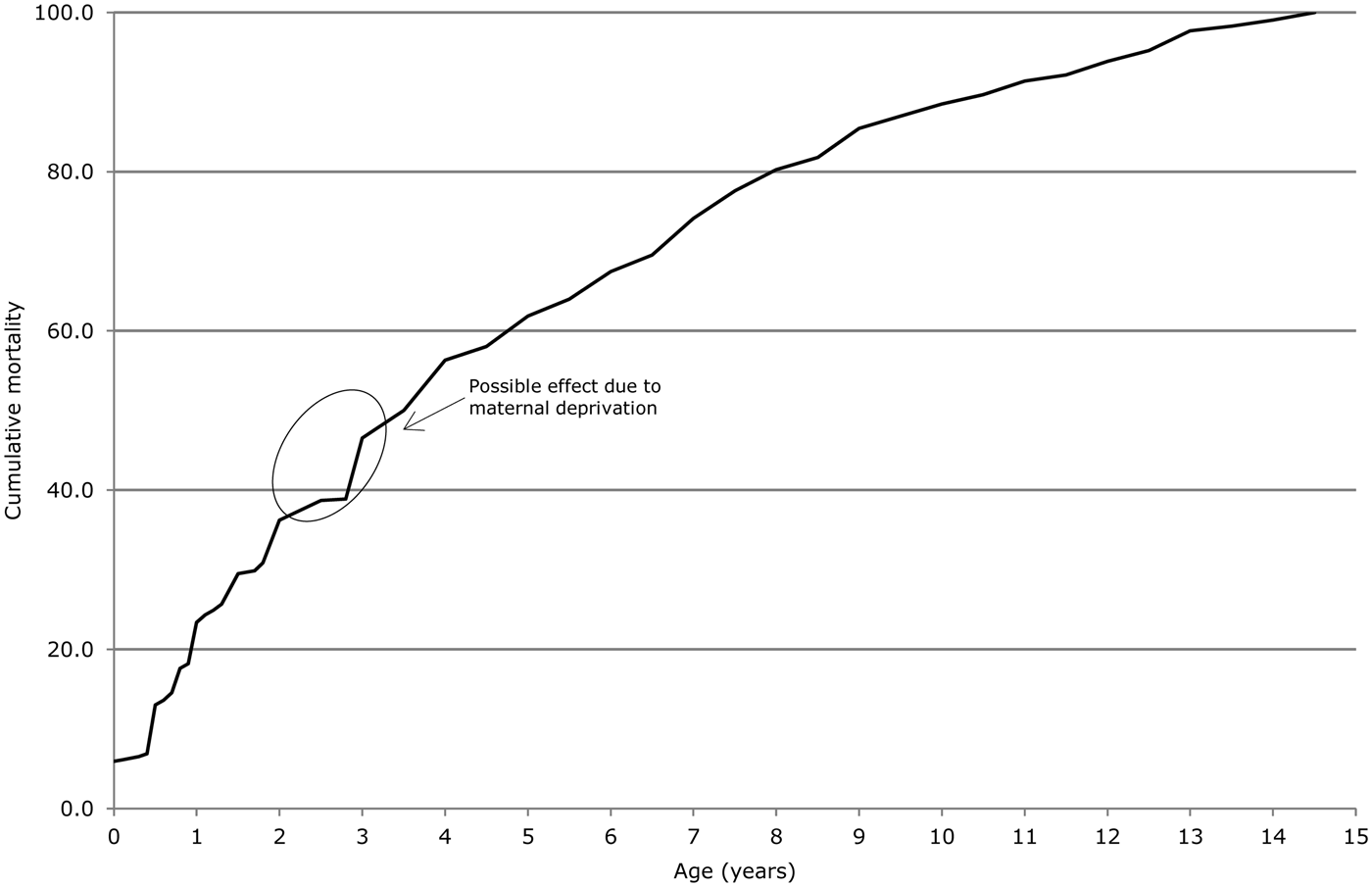
A very interesting observation from the skeletal age-at-death profile of the children who survived infancy is the noticeable increase in mortality after 2 years of age; the cumulative discrepancy between 2 and 3 years is the highest in the post-infant population group (Figure 3) . This considerable increase is unlikely to be a coincidence; children who had reached the age of 2 years were – in accordance with the workhouse policies – taken from their mothers and placed with the child age class in separate wards, a separation that without doubt would have been immensely difficult for both mother and child. The short- and long-term consequences of psychosocial stress due to maternal/parental deprivation, particularly in the context of hospitalisation, have for a long time been discussed and debated by child health professionals.Footnote 65 However, it is generally accepted that it has a considerable negative impact on both the psychological and physical health of a small child, particularly between the ages of 6 months and 4 years.Footnote 66
Mortality profile of the non-adult skeletal population in the Kilkenny Union Workhouse intramural mass burial ground by cumulative frequency.
The relationship between psychological state and immune change is a combination of central nervous system innervation, hormonal secretion imbalance and behavioural change induced by psychological stress. Various models have been put forward to explain how psychosocial stress affects neuroendocrine and immune mechanisms. The biological response to stress influences the hormonal secretion pattern, and in particular that of cortisol which in turn affects and potentially weakens the immune system.Footnote 67 Psychosocial stress has also been shown to greatly influence the balance of activity of the T-helper cells, which play an important role in the adaptive immune system, which in turn helps to regulate the response to infectious agents.Footnote 68 The T-helper cells are comprised of two main subgroups that are activated by different types of stress: Th1 cells are more responsive to acute stress, while Th2 cells respond to chronic stress.Footnote 69 Over-activity of one subgroup results in under-activity of the other and vice versa, and this imbalance may have serious consequences for the body's ability to combat infectious agents. Children aged less than 5 years are biologically adapted towards focused activity of Th2 cells, which combat gastrointestinal nematode infections amongst others. As a consequence, young children are more at risk of succumbing to pathogens against which the Th1 cells are activated. Such pathogens include intracellular bacteria that would have been the cause of famine diseases such as relapsing fever, typhus, typhoid fever and tuberculosis.Footnote 70 When taking this current knowledge of the mechanisms of human immunology into account, it seems likely that maternal deprivation as implemented through the workhouse segregation policy influenced the mortality rate of the smallest children in the Kilkenny institution.
An additional potential factor relating to institutionalisation that may have influenced the mortality rate of the children in the Kilkenny workhouse was the daily food rations and diet in the workhouse. Unfortunately, the incomplete archival records make it impossible to ascertain what kinds of food and in what quantities children were fed. The diet varied throughout the Famine years, and was directly related to the dire economic situation and food availability.Footnote 71 In October 1842, the allocated daily food ration for the infant age class was 12 ounces (340 g) of bread and one pint (570 ml) of new milk, and the older children were allocated three and a half ounces (100 g) of an oatmeal stirabout (gruel) and half a pint (280 ml) of new milk for breakfast, two pounds (910 g) of potatoes and one pint of skimmed milk for dinner, and six ounces (170 g) of bread for supper. This was probably the first diet allocated to the child age classes of the workhouse, and with an estimated value of 1,200 calories for infants and 1,800 calories for 2- to 15-year-olds; it would have been adequate for the youngest children, but probably deficient for the older children.Footnote 72 An altered diet was part of the medical treatment of the inmates; children under medical care received an additional ration of bread and 10 ounces (280 g) of meat for their supper by order of the medical officers.Footnote 73 The workhouse physicians had also in January 1848 expressed concern about the feeding and care of the infant children, which they believed greatly contributed to their high mortality rate.Footnote 74
7. DISCUSSION
The surviving archival records pertaining to the Kilkenny Union Workhouse give only a little insight into the physical and psychological conditions of its child inmates and the care they received. In a comment noted in the Minute Books dating to November 1843, the Master reported that he found the children to be ‘in a ragged state’.Footnote 75 In October 1848, Dr Joseph Lalor, one of the medical officers, reported one of the nurses to the Board for having neglected a young child by the name of Catherine Nowlan. Lalor had found the girl in ‘a state of great filth’.Footnote 76 A case of child physical abuse was reported in the Minute Books dating to the second to last week of February 1850. This case involved a 10-year-old boy named Edmund Brenan, who had been ‘cruelly beaten by a male adult with a leather belt’. The boy had been ‘stripped naked and beaten hard on the back and thighs’ to the extent that ‘blood [was] brought from him’.Footnote 77 Before the Famine, in March 1843, there had also been a report by the medical officers of the Kilkenny Union on the death of a 2-month-old infant named Mary Maguire Mahon. She had died of starvation seemingly due to neglect by her mother who had given birth to her in the workhouse, and the Coroner had been called to undertake an inquest into the incident.Footnote 78
It is clear that the famine-induced stress experienced by the workhouse children did not only relate to exposure to disease and malnutrition, but also to the fact of institutionalisation. The impact that hospitalisation – particularly that relating to maternal/parental deprivation – had on the morbidity and survival of small children first began to be understood in the mid-twentieth century.Footnote 79 Much of this insight can be attributed to paediatrician Harry Bakwin (1894–1973) who in the early 1940s started to address what he referred to as ‘psychological neglect’ of children. By changing hospital policies and encouraging nurses to mother, cuddle and play with the children, Bakwin observed drastic reductions in their mortality rates.Footnote 80 The following two decades saw an increasing interest in this type of research and studies in Britain and the United States, and hospital policies in relation to child care were eventually changed as a result.
Orphan or deserted infants in the Kilkenny workhouse were cared for by entrusted female inmates, and this responsibility was considered part of the women's compulsory requirement in order for them to receive indoor relief.Footnote 81 The extent to which these infants' emotional needs were met, or whether a bond of affection was formed between the infants and their caretaker, is impossible to ascertain. A tantalising further thought on the impact of institutionalisation on the children in the Kilkenny workhouse is the long-term psychosocial consequences of those who survived the Famine. Some of the reported effects of hospitalisation on young children include difficulties in adjusting to new environments, insecurity, behavioural and emotional dysfunctions, poor parental relationships, anxiety, concentration difficulties and delayed psychosocial skill developments.Footnote 82 None of these potential consequences are, however, conclusive, and how a child would experience or cope with psychosocial stress during institutionalisation does vary greatly. Nevertheless, from the bioarchaeological study of the Kilkenny Union Workhouse during the Great Famine, it seems probable that the workhouse experience would have been a substantial stress factor for the children who resided in it. An increased mortality in children after they had been separated from their mothers, as indicated from the skeletal evidence from the mass burials, suggests that was very much the case, and this psychosocial trauma had also been experienced by the children who survived. This may be one of the reasons why personal recollections of the workhouse were seemingly repressed.
The workhouse children in Kilkenny came from families with no, or very limited, financial means. The fact that they had been born into poverty and to socio-economically marginalised and disenfranchised families was in reality the most decisive factor that determined their risk of death during the Famine.Footnote 83 The relative mortality in County Kilkenny was less than that in the west of Ireland, but the sheer number of deaths recorded in the workhouse minute books testifies to the severe impact of the Famine on the poor and destitute populations in the east of Ireland.Footnote 84 The main cause of death for these children would have been febrile diseases, such as typhus and typhoid fever. Other infectious diseases, such as tuberculosis, smallpox and dysentery, became very common during the Famine, and were other possible causes of death. The children who were granted indoor relief may have – to a certain degree – been considered fortunate, but the risk of death when entering this institution was well known by people and their entry to the institution reflected a response to a desperate situation of severe deprivation and ill health.
ACKNOWLEDGEMENTS
The author would like to thank the three anonymous reviewers, the editors, and Dr Barra O'Donnabhain of the Department of Archaeology at University College Cork for valuable help, comments and suggestions, and Damien Brett and Declan Macauley of the Kilkenny County Library for being very helpful with providing access to archival material. The archaeological excavation of the Kilkenny Union Workhouse mass burials was directed by Brenda O'Meara (licence no. 05E0435) of Margaret Gowen & Co. Ltd in 2006. This research is funded by the Irish Research Council (GOIPD/2013/36).