





Autism is a lifelong neurodevelopmental condition that is characterised by differences in social communication and social interaction and restricted or repetitive patterns of behaviour, interests or sensory processing. Current estimates suggest a prevalence of approximately 1–1.75% in the general population, Reference Tromans, Clery, Randall, Morris, Gullon-Scott, Morgan, Morris, Hill, Brugha and McManus1,Reference Roman-Urrestarazu, van Kessel, Allison, Matthews, Brayne and Baron-Cohen2 with substantially higher prevalence among people accessing mental health services. Reference Nyrenius, Eberhard, Ghaziuddin, Gillberg and Billstedt3 Autistic people experience disproportionately high rates of mental illness, including anxiety, depression, psychosis, eating disorders and suicidality. Reference Lai, Kassee, Besney, Bonato, Hull and Mandy4,Reference Hirvikoski, Mittendorfer-Rutz, Boman, Larsson, Lichtenstein and Bölte5 Despite this, many autistic adults remain undiagnosed, even those in long-term contact with mental health services. Reference O’Nions, Petersen, Buckman, Charlton, Cooper and Corbett6,Reference Fusar-Poli, Brondino, Politi and Aguglia7
Although autism itself is not considered to be a mental illness, autistic people make up a high proportion of mental healthcare patients. According to conservative estimates, the rate of autism in UK community mental health team case-loads is at least 5%, and that in acute adult psychiatric in-patient wards is at least 10%. Reference Brugha, Tyrer, Leaver, Lewis, Seaton, Morgan, Tromans and van Rensburg8,Reference Tromans, Chester, Kiani, Alexander and Brugha9 Despite this, surveys and reports have highlighted limitations in mental healthcare service access, environment and treatment for autistic people. Reference Murdoch, Cahill and Worrall-Davies10 Long wait times for diagnostic assessment, diagnostic overshadowing, misdiagnosis (notably as personality disorder), inappropriate risk management, environments that trigger sensory overload and inflexible service structures all contribute to suboptimal experiences and outcomes. Reference Crane, Adams, Harper, Welch and Pellicano11–Reference Doherty, Neilson, O’Sullivan, Carravallah, Johnson, Cullen and Shaw14 National policy in England, including the Autism Act 2009 and subsequent statutory guidance, places clear duties on healthcare services to improve access, make reasonable adjustments and develop autism-informed care. However, surveys of psychiatrists and other mental healthcare professionals have identified gaps in autism training, particularly in adult services. Reference Crane, Davidson, Prosser and Pellicano15
In mental healthcare systems, psychiatrists have critical roles in diagnostic formulation, medical leadership, Mental Health Act assessments and shaping of service culture. Improving psychiatrists’ autism-related knowledge, skills and confidence is therefore a key lever for system-wide change. The National Autism Training Programme for Psychiatrists (NATPP) was commissioned by NHS England and delivered by the Royal College of Psychiatrists to address this need at scale. This article provides a descriptive account of the programme, as well as evaluation findings that are relevant to clinical practice, education and policy.
Programme rationale and objectives
The NATPP was designed in response to several converging drivers: long waiting lists for adult autism diagnosis, increasing recognition of unmet need and poorer outcomes among autistic people already known to mental health services, and evidence of significant variation in psychiatrists’ confidence and practice. The programme sought to move beyond a narrow focus on diagnosis alone, instead addressing autism as a cross-cutting issue that interacts with and modulates mental health presentations and is relevant to mental state examination, risk assessment, treatment planning and therapeutic engagement.
‘Brilliant course. Life changer as a general adult psychiatrist. I feel more confident in my knowledge around autism and this has helped me a lot in my clinical practice.’ (Learner, foundation course)
After the recent revision of the nine RCPsych curricula to bring them in line with the GMC generic professional capabilities, ability to work with neurodivergent patients was included in the clinical capability statements. However, autism is specifically referenced only within the Psychiatry of Learning Disability and Child and Adolescent Psychiatry curricula. The NATPP was designed to fill this gap and was thus aimed primarily at psychiatrists working in general adult settings. As it was commissioned by NHS England, the programme was only open to psychiatrists working in England. It was initially funded for three cohorts over an 18 month period, but has since been recommissioned for further cohorts.
The overarching objectives of NATPP were to:
-
(a) reduce health inequalities for autistic people using mental health services by improving psychiatrists’ skills in recognition, diagnosis and therapeutic approaches;
-
(b) improve community mental health support by enabling general psychiatrists to recognise and potentially diagnose autism in adults;
-
(c) create a pipeline of psychiatrists with enhanced autism expertise to support specialist autism teams and act as local clinical leaders;
-
(d) raise awareness and understanding of autism across psychiatric specialties to improve patient experience and outcomes.
The programme was explicitly mapped to the Health Education England Core Capabilities Framework for Supporting Autistic People, 16 ensuring alignment with national workforce expectations.
Programme structure and content
Tiered course design
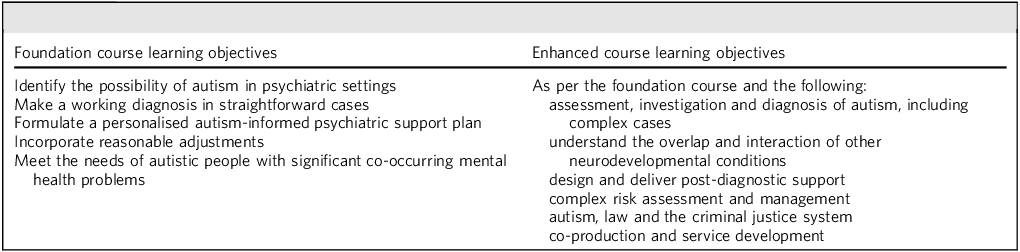
NATPP comprised two linked but distinct educational offers: a foundation course and an enhanced course. The learning objectives of the two courses are shown in Table 1.
Learning objectives of the foundation course and enhanced course

Table 1 Long description
A table comparing learning objectives of foundation and enhanced courses on autism. The table has two columns and eight rows. The first column lists the learning objectives of the foundation course, and the second column lists the learning objectives of the enhanced course. Row 1: Foundation course learning objectives, Identify the possibility of autism in psychiatric settings; Enhanced course learning objectives, As per the foundation course and the following. Row 2: Foundation course learning objectives, Make a working diagnosis in straightforward cases; Enhanced course learning objectives, Assessment, investigation and diagnosis of autism, including complex cases. Row 3: Foundation course learning objectives, Formulate a personalised autism-informed psychiatric support plan; Enhanced course learning objectives, Understand the overlap and interaction of other neurodevelopmental conditions. Row 4: Foundation course learning objectives, Incorporate reasonable adjustments; Enhanced course learning objectives, Design and deliver post-diagnostic support. Row 5: Foundation course learning objectives, Meet the needs of autistic people with significant co-occurring mental health problems; Enhanced course learning objectives, Complex risk assessment and management. Row 6: Empty; Enhanced course learning objectives, Autism, law and the criminal justice system. Row 7: Empty; Enhanced course learning objectives, Co-production and service development.
The foundation course was designed as a large-scale intervention to reach psychiatrists across all specialties and career stages. It consisted of a full-day webinar, supplemented by an online learning module and guided reading, with a total estimated learning time of approximately 12 h. The target audience included consultant psychiatrists, specialty and associate specialist doctors, and psychiatry higher trainees (resident doctors) working in community, in-patient, liaison, forensic and addiction services.
The enhanced course was designed to develop deeper specialist expertise in smaller cohorts. It comprised a full-day face-to-face event, 16 online learning modules, guided reading, reflective assignments, mentoring and participation in a community of practice. The total learning time was approximately 60 h. The enhanced course targeted psychiatrists working in specialist autism teams and other defined neurodevelopmental-focused roles.
‘For me, this was probably the most impactful and inspiring training day I have experienced in my 32 years of being a psychiatrist.’ (Learner, enhanced course cohort 3)
Curriculum content
Foundation course content focused on practical competencies relevant to everyday psychiatric practice, including:
-
(a) recognising autism in psychiatric presentations, including differences in presentation by gender and across the lifespan;
-
(b) understanding diagnostic overshadowing and overlap with other neurodevelopmental and mental disorders;
-
(c) screening, referral pathways and working diagnosis;
-
(d) risk and capacity assessment in autistic people;
-
(e) adapting pharmacological, psychological and social mental health treatments for autistic patients;
-
(f) implementing reasonable adjustments and accessible communication.
Enhanced course content extended these themes, with additional focus on:
-
(a) epidemiology and behavioural phenotypes of autism;
-
(b) differential diagnosis and co-occurring mental and physical health conditions;
-
(c) autism and trauma;
-
(d) formulation-based approaches and long-term outcomes;
-
(e) autism and the law, including the Mental Health Act and criminal justice system;
-
(f) post-diagnostic support and service design.
Psychiatrists who completed the enhanced course were expected to have the skills and expertise to assess and diagnose autism, including in generalist settings if necessary.
Educational approach
The programme was underpinned by adult learning principles, emphasising clinical relevance, problem-based learning and respect for learners’ professional expertise. Delivery used a blended learning model combining live events, asynchronous online modules, case-based discussions and reflective practice.
The specification from NHS England did not include an end-point summative assessment. We reported on course completion and on the qualitative reports from attendees on the practical applications and impact of their learning with respect to their clinical role. For the enhanced course, ‘completion’ referred to completion of all required educational components (face-to-face event, eLearning modules and specified learning activities). Participants who completed only part of the programme (for example, some but not all eLearning modules or mentoring activities) were recorded as partial completers and received a certificate describing the learning undertaken.
A defining feature of NATPP was its commitment to co-production. Experts by experience, including autistic people who had used mental health services and autistic clinicians, were involved in all stages of programme design, delivery and evaluation. Lived experience videos were embedded throughout the curriculum, and experts by experience contributed directly to teaching sessions and community discussions. This approach aimed to challenge traditional biomedical frames of reference and promote neuro-affirmative practice.
Governance and delivery
The programme was overseen by an executive steering group comprising representatives from the Royal College of Psychiatrists and NHS England, as well as experts by experience. A dedicated content development group of nationally recognised experts led curriculum design, supported by the education and eLearning teams of the Royal College of Psychiatrists. NHS England specified high-level headings for the topics to be included for both levels of the course as part of its invitation to tender for the project. The content development team reviewed and refined these, putting them into a sequence in which it would be most logical for an adult learner to consume them. However, all modules were stand-alone and could be consumed in any order if the learner chose not to follow the recommended pathway. Three autistic experts by experience contributed to all aspects of course design, as well as providing lived experience contributions to course delivery. The content was also informed by the College’s 2020 report on psychiatric aspects of autism. 17
An online learning management system was used to host course materials, discussion forums and assignments. The enhanced course incorporated mentoring, with psychiatrists and multidisciplinary team members (including autistic mentors) supporting small groups of learners.
‘I think the one-to-one mentoring has been the most impactful experience. Talking to someone who has 20 years of experience and talking through cases has been invaluable from a clinical point of view.’ (Learner, enhanced course cohort 2)
The programme was delivered across three cohorts, beginning in March 2023 for cohort 1, September 2023 for cohort 2 and March 2024 for cohort 3.
Nearly as popular as Glastonbury
In 2023, one of the authors managed to secure tickets to Glastonbury Festival and was impressed by the autism-friendly adaptations evident across the festival site (Fig. 1). Glastonbury famously sells out in a matter of hours. The NATPP was nearly as popular. After places were made available, 600 learners were recruited within 36 h. Demand for both the foundation and enhanced courses substantially exceeded available places, reflecting the growing importance of neurodevelopmental understanding in the practice of psychiatry and providing indirect evidence of a previously unmet training need among UK psychiatrists.
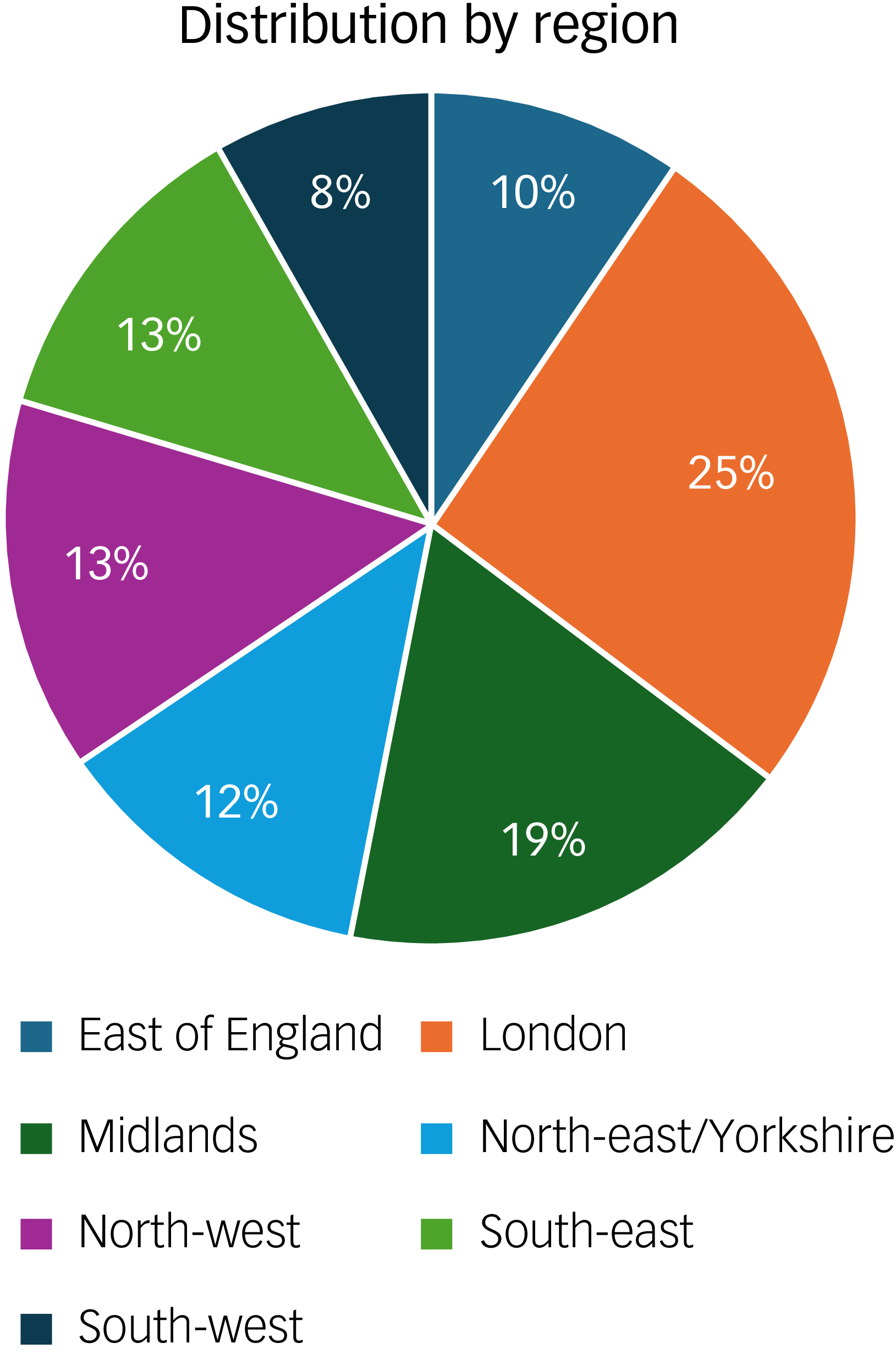
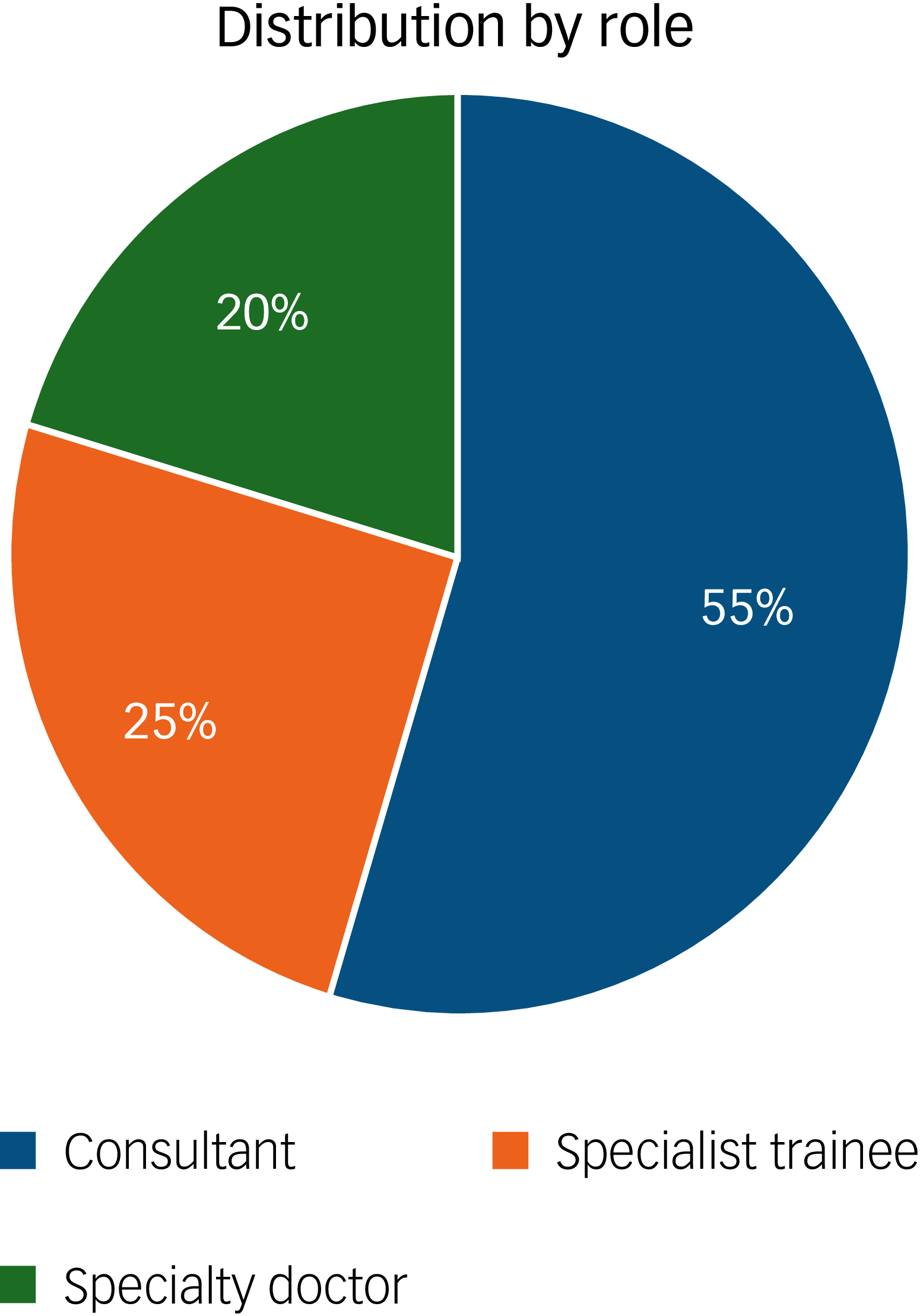
The NATPP reached psychiatrists from all regions of England and across a wide range of subspecialties (Figs 2 and 3). Approximately 1500 psychiatrists attended the foundation course webinars, and more than 250 psychiatrists completed or partially completed the enhanced course across multiple cohorts. The number of participants represented about 17% of the total UK psychiatric workforce of ∼10 000.
Sensory calm space at Glastonbury festival 2023. Image: author’s own (the woman in the picture is C.D.’s wife).

Distribution of participants in the National Autism Training Programme for Psychiatrists by region.

Distribution of participants in the National Autism Training Programme for Psychiatrists by role.

Co-production
‘Just in general I thought it was just brilliant that …[we]… were so well supported through the process and the fact that we actually got involved like, we weren’t just pulled along to like one meeting: “Ah, they’re there. OK, we’ve got the lived experience element. Great. They don’t talk at all. They don’t really get involved in anything. All right, bye. Go away now.”’ (Expert by experience)
‘[In this project] [we] were there from the start. We’ve reviewed every single module, we wrote this content. We made the videos. We were there at the presentations and that was that was amazing. I wish the college … for a method of co-production, I think this project is like the pinnacle of excellence.’ (Expert by experience)
The golden thread running through the entire NATPP was meaningful involvement from autistic people (Fig. 4). Two autistic patients and one carer were core members of both the executive steering group and the content development group. Experts by experience provided training content in the form of filmed lived experience, delivered presentations in webinars and training days, advised on eLearning content and contributed to the community of practice discussions: ‘ask an autistic person anything’. Several of the eLearning modules and presentations were written by doctors with lived experience of neurodiversity.
‘Looking through a neurodiverse lens has made me more compassionate with my patients.’ (Learner, foundation cohort 2)
Co-production and engagement spectrum. Five levels of public involvement are shown, from informing to co-production, with people at the centre. This figure was adapted from the NHS England Co-Production Resource Toolkit. 18

Language and terminology in the autism space is contested. Reference Monk, Whitehouse and Waddington19 By working closely with the experts by experience, we aimed to achieve a balanced tone of respectful and neuro-affirming language while preserving clinical accuracy and rigour.
The NATPP was designed to be as accessible as possible for learners with additional needs. For example, all videos were closed-captioned, and the learning management system met WCAG 2.2 AAA standards, which are the international standards for making web content more accessible to people with disabilities.
Evaluation
Evaluation methods
The evaluation was embedded within programme delivery. Learners were invited to complete surveys at four time points: pre-course, immediately after a webinar or face-to-face event, mid-course (enhanced) and at course completion. Response rates varied by cohort and time point, but in all instances, they were sufficient to be representative of the opinions of the cohort.
A core outcome measure comprised ten statements assessing learners’ confidence in key autism-related knowledge and skills (e.g. recognising autism, differentiating it from other disorders, implementing reasonable adjustments). Learners rated confidence on a ten-point Likert scale. For reporting purposes, the proportion rating confidence at six or above was used to track change over time.
Qualitative data were collected through free-text survey responses and email feedback, with a focus on perceived impact on clinical practice and service delivery. Quotations included in this manuscript were selected purposively to illustrate the range of themes identified across responses, including changes in clinical practice, service development, attitudes towards autism and participant experiences of the programme. Comments were anonymised before analysis and edited only to remove identifying information or improve readability where necessary, without altering the meaning.
Evaluation findings
Completion rates
Approximately 250 psychiatrists participated in the Enhanced programme. 62% of learners completed all programme requirements (learning events, eLearning, mentoring, and community of practice) and received full completion certificates. 20% attended learning events and undertook some eLearning modules and were awarded partial completion certificates documenting the components completed. 18% only attended the learning events.
Confidence outcomes
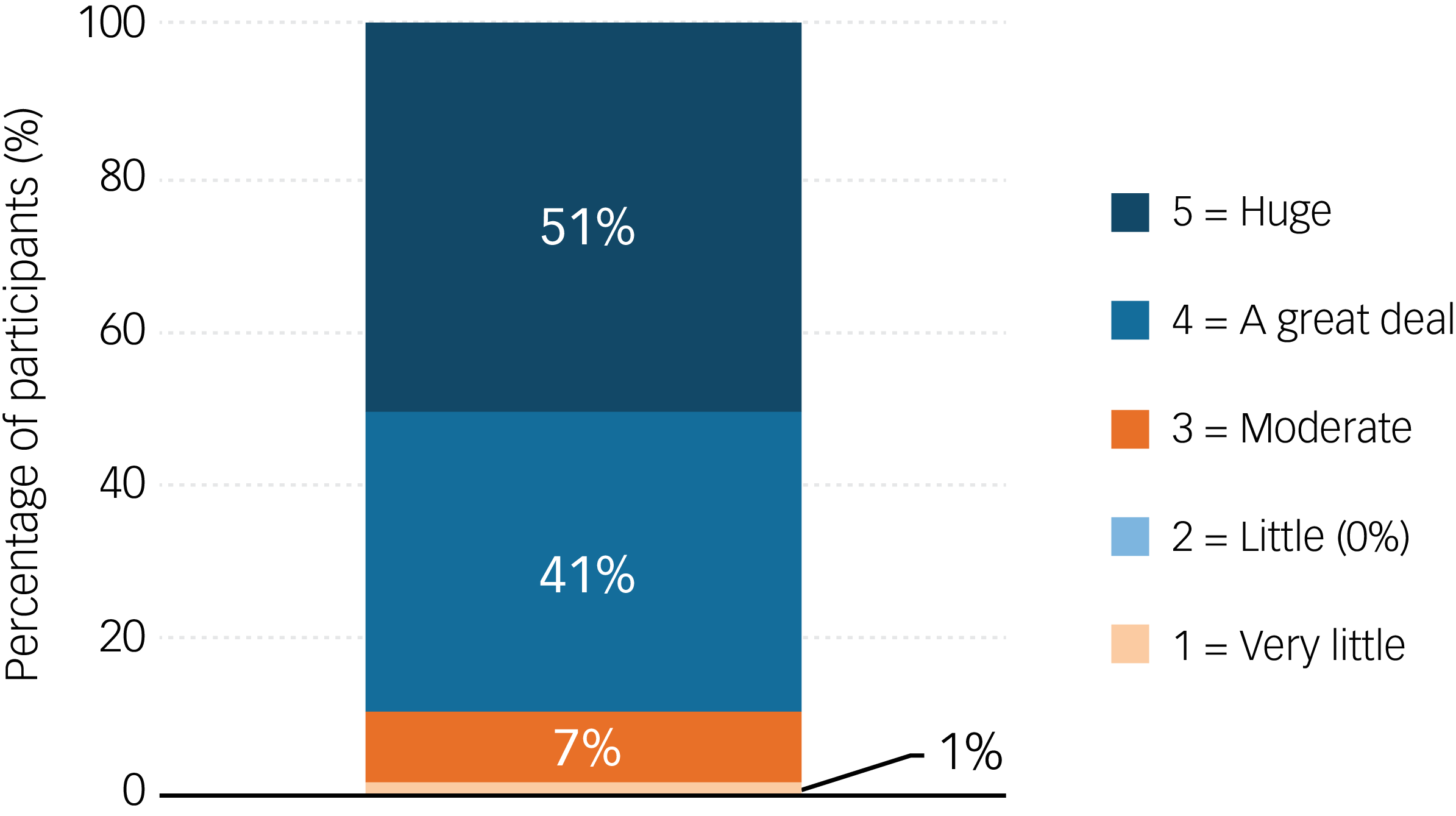
Across all foundation and enhanced cohorts, large increases were observed in self-rated confidence across all ten competency statements. Pre-course, between approximately 40% and 60% of learners typically rated themselves as confident (≥6/10) across domains. Post-course, this proportion rose to between 97% and 100% across nearly all competencies (Fig. 5).
Autism practice confidence (averaged across ten competency domains) before and after participation in the National Autism Training Programme for Psychiatrists.

Improvements were seen in areas often reported as challenging by psychiatrists, including recognition of autism in women, differentiation from personality disorder and psychosis, assessment of risk and capacity, and implementation of reasonable adjustments. Notably, later cohorts demonstrated similar post-course confidence levels despite varying baseline confidence, suggesting consistent programme effects.
Reported changes in clinical practice
Learners across both courses reported extensive changes to their clinical practice (Fig. 6). Common themes included:
-
(a) increased consideration of autism as part of routine psychiatric formulation;
-
(b) greater confidence in making working diagnoses and initiating appropriate support without waiting for formal specialist assessment;
-
(c) adoption of neuro-affirmative communication styles;
-
(d) increased attention to sensory needs and environmental adjustments;
-
(e) more cautious and individualised prescribing;
-
(f) revised approaches to risk assessment, capacity evaluations and Mental Health Act work.
Participant-reported impact of the National Autism Training Programme for Psychiatrists on the clinical practice.

Many respondents described service-level changes, such as redesign of appointment letters, creation of sensory-friendly spaces, adaptation of ward routines, and development of autism-informed pathways in emergency and in-patient settings. Participants frequently reported sharing learning with colleagues and leading local training or quality improvement initiatives.
‘Accessibility is a key area. We have adopted the SPACE framework to guide the redesign of information, administrator and clinician method of contact, how written information is created and shared with the patient, appointment information now includes a map and a description of where the appointment is and how to get there, requesting a room that is a large free space with natural lighting and asking the person if they have any meticulous sensory needs that require adjustment prior to the appointment. Giving clear instructions in terms of what will happen during the appointment and clear information about what to expect next.’ (Example of service-level changes provided by a participant)
Although this work was not designed as a patient outcomes study, the programme team also received unsolicited feedback from autistic patients describing improved experiences of psychiatric care, including feeling heard, respected and understood.
Satisfaction and acceptability
Overall satisfaction with NATPP was high. Net promoter scores were rated as excellent for the Foundation course and world class for the Enhanced course. The programme was shortlisted for a national learning technology award and winner of Project of the Year at the 2024/2025 RCPsych Awards.
‘It is one of the best pieces of CPD I have ever done. Just brilliant and so helpful. Recommending it to everyone.’ (Learner, foundation cohort 2)
Challenges and lessons learned
Learners identified several challenges, including the substantial time commitment required for the enhanced course, difficulties navigating the online learning platform and variable engagement with the community of practice. Some participants identified a need for clearer eligibility criteria, greater upfront clarity about course requirements, and additional content on specific topics such as catatonia in autism and diagnostic report writing. A substantial minority of learners on the enhanced course did not complete all course elements; possible reasons for this include underestimation of the time commitment involved, and less external incentive to complete every component because the programme was free of charge.
From a delivery perspective, running training events and releasing eLearning modules in parallel with ongoing content development over a tight timescale posed logistical challenges. A longer lead-in time would have been preferable to allow curriculum content to be fully developed before roll-out. The appointment of a dedicated full-time instructional designer/project manager (K.Q.) was essential to the success of the programme.
Future directions
The NATPP has been recommissioned by NHS England in spring 2026 and will be opening to further cohorts, with updated course content to reflect new developments in the field. The success of the NATPP has also contributed to a new training project: a neurodevelopmental credential has been commissioned by NHS England, with the Royal College of Psychiatry as the primary delivery organisation. This credential is broader in scope than the NATPP; it incorporates the full range of neurodevelopmental conditions across the lifespan and is aimed at not only psychiatrists but also general practitioners (primary care doctors) and community paediatricians with an interest in neurodevelopmental medicine. The pilot launch of the neurodevelopmental credential is expected in September 2026.
Discussion
The NATPP represents a significant national investment in psychiatric workforce development. More than 1500 UK psychiatrists are now trained to: recognise and diagnose autism; treat mental health problems in autistic patients, and implement reasonable adjustments and treatment adaptations. Evaluation findings suggest that structured, autism-specific education can produce large and consistent improvements in psychiatrists’ self-rated confidence and catalyse meaningful changes in clinical practice.
Several aspects of NATPP are noteworthy. It is aimed specifically at psychiatrists, who have crucial roles in leadership, delivery and improvement of mental healthcare services. The focus on working diagnosis and reasonable adjustments aligns with an emerging consensus that waiting for formal diagnosis should not be a prerequisite for autism-informed care. Integration of lived experience throughout the programme has been central to its impact, supporting arguments for co-production as a core educational principle rather than an adjunct. 20 Finally, the reported service-level changes suggest potential system-wide effects beyond individual learning. It is reasonable to conclude that the programme has led to improved clinical outcomes and patient experience for the approximately 300 000 autistic people who access mental health services each year.
The evaluation had limitations. The programme was commissioned as an educational intervention rather than a competency-based accreditation programme. Consequently, completion reflected participation in the educational activities rather than demonstration of predefined clinical competence, and no summative assessment or pass/fail standard was specified within the NHS England service specification. Improvements therefore relate to participants’ knowledge, confidence and reported practice rather than measured competence or objective patient outcomes. Nonetheless, the consistency of findings across cohorts, triangulation with qualitative data and the scale of reported changes provide a compelling indication of impact.
In the context of rising demand, long diagnostic waiting lists and persistent health inequalities for autistic people, such workforce interventions represent an important component of system-level improvement. Lessons from NATPP are likely to be relevant to future training initiatives within psychiatry and across the wider mental health workforce, both within the UK and internationally. Specifically, future work should examine the sustainability of practice change, impact on patient outcomes and cost-effectiveness of national training programmes of this type. The success of the NATPP has led to commissioning of a broader-based neurodevelopmental credential for doctors, in which consideration should be given to more explicit assessment of gained competencies. In the further future, a more sustainable model may involve integration of a higher level of neurodevelopmental training into standard psychiatric curricula instead of relying on time-limited programmes.
Acknowledgements
We thank Ashok Roy, Chris Ince, Elen Cook, Harm Boer, Jane McCarthy, Janine Robinson, Jessica Eccles, Lucille Legiewicz, Mary Barrett, Peter Carpenter, Raja Mukherjee, Rebecca Harnett, Rhiannon Hawkins, Sam Tromans, Terry Brugha, Tim Devanney, Tom Berney, the Events Team and eLearning Team of the Royal College of Psychiatrists, and many others. The ChatGPT 5.3 was model used for figure design and minor editing of some text elements. The authors critically reviewed and edited all material and take full responsibility for the final content.
Author contributions
All authors contributed to the conception of the work, analysis of the results and writing of the paper.
Funding
This research received no specific grant from any funding agency, commercial or not-for-profit sectors.
Declaration of interest
None.




 Open access


eLetters
No eLetters have been published for this article.