Introduction
Since the majority of living organisms are adapted to small or moderate amounts of nutrients, large depositions of nitrogen (N), phosphorus (P) and other nutrients disrupt natural biological systems, change biodiversity patterns and undermine ecosystems over vast regions (Brasseur et al. Reference Brasseur, Prinn and Pszenney2002; Zhang et al. Reference Zhang, Liu, Bai, Zhang and Han2011). Excess levels of nitrogen, especially reduced N compounds, were shown to be an important and generally detrimental factor affecting lichen floras (Søchting Reference Søchting1996; Van Herk Reference Van Herk1999; Gordon et al. Reference Gordon, Wynn and Woodin2001; Van Herk et al. Reference Van Herk, Mathijssen-Spiekman and de Zwart2003; Wolseley et al. Reference Wolseley, James, Theobald and Sutton2006; Frati et al. Reference Frati, Santoni, Nicolardi, Gaggi, Brunialti, Guttová, Gaudino, Pati, Pirintsos and Loppi2007, Reference Frati, Brunialti and Loppi2008), but the impact of P on lichens was found to be more complicated and apparently depended upon photobiont type (Benner & Vitousek Reference Benner and Vitousek2007; Makkonen et al. Reference Makkonen, Hurri and Hyvärinen2007; McCune & Caldwell Reference McCune and Caldwell2009; Johansson et al. Reference Johansson, Olofsson, Giesjler and Palmqvist2011).
Colonies of piscivorous birds are known to introduce large amounts of biomass and chemical substances from aquatic to terrestrial ecosystems (Ellis et al. Reference Ellis, Fariña and Witman2006). Day-to-day activities of the colony, especially in the breeding season, add to the amounts of biomass in the form of excrement, broken tree branches, fallen nests, eggs, dead bodies of birds, remnants of fish and shells (Heatwole Reference Heatwole1971; Sanchez-Piñero & Polis Reference Sanchez-Piñero and Polis2000). Large amounts of nutrient-rich guano accumulate in breeding and roosting areas, causing extremely high concentrations of nutrients in soils and other substrata (Anderson & Polis Reference Anderson and Polis1999; Abbot et al. Reference Abbot, Marchant and Cranfield2000; Ligeza & Smal Reference Ligeza and Smal2003; Kameda et al. Reference Kameda, Koba, Hobara, Osono and Terai2006; Adamonytė et al. Reference Adamonytė, Iršėnaitė, Motiejūnaitė, Matulevičiūtė and Taraškevičius2013). In turn, habitat changes caused by bird colonies transform vegetation within the colony area. This phenomenon has been observed and described mostly from maritime and oceanic islands, as well as coastal areas of different parts of the world, but several studies have also been undertaken in forest ecosystems (Maesako Reference Maesako1991, Reference Maesako1999; Ishida Reference Ishida1996; Mun Reference Mun1997; Źółkóś & Markowski Reference Źółkóś and Markowski2006; Źółkóś & Meissner Reference Źółkóś and Meissner2008; Garcia et al. Reference García, Ramo, Aponte, Moreno, Domínguez, Gómez-Aparicio, Redondo and Marañón2011). Lichen diversity, community or competition studies in bird-influenced sites have been carried out in saxicolous habitats (Grönlie Reference Grönlie1948; Armstrong Reference Armstrong1984, Reference Armstrong1994, Reference Armstrong2000; Sancho Reference Sancho1988; Valladares & Sancho Reference Valladares and Sancho1993; Kotlov Reference Kotlov1994), but there is only one study pertaining to lichens in forests affected by bird colonies (Źółkóś et al. Reference Źółkóś, Kukwa and Afranowicz-Cieślak2013).
The dynamic colonies of piscivorous birds, especially those of the continental subspecies of the great cormorant (Phalacrocorax carbo sinensis) that have recently expanded in the Baltic region, provide experimental material to study lichen changes under the influence of eutrophication. In 1989, continental subspecies of the great cormorant started to nest on the Curonian Spit (western Lithuania) and expanded into what is now the largest breeding colony in Lithuania. At present it occupies, together with a small, stable colony of grey herons (Ardea cinerea), over 3300 nests in an area of coniferous forest more than 700×370 m in size. The colony is located in an old-growth forest, part of a Juodkrantė Landscape Sanctuary in Kuršių Nerija (Curonian Spit) National Park. Trees there quickly die, being affected by the excrement of cormorants, and the colony expands accordingly to occupy new trees, thus increasing the area of the destroyed forest (Žydelis et al. Reference Žydelis, Gražulevičius, Zarankaitė, Mečionis and Mačiulis2002). This rapidly expanding colony has an ambiguous effect on general public opinion: it is an attraction site for tourists and simultaneously a concern to the local fishing industry, foresters, environ-mentalists and the local municipality because of the colony's impact on forest stands of conservational value, fish resources in the Curonian Lagoon, and the close proximity to a popular resort. Strong public reaction stimulated a research project aimed at investigating changes in the biotic and abiotic components of a forest ecosystem affected by a cormorant colony, and lichens were among the study objects. The purpose of the research presented in this paper was to study epiphytic and epixylic lichen diversity and distribution patterns under the influence of increased nutrient loads, as well as the rate and nature of the change from an oligotrophic to a highly eutrophic habitat.
Materials and Methods
Site description
The study was carried out in the northern part of the Curonian Spit peninsula in western Lithuania (55°31′N, 21°06′E). The peninsula is an elongated stretch of sand dunes extending over 98 km, surrounded by brackish water bodies: the Baltic Sea in the west and Curonian Lagoon in the east. The width of the Spit varies from 400 m at its narrowest point to 3·8 km at its widest. The climate is an intermediate between marine and continental, with a mean annual precipitation of 725 mm, and mean annual air temperatures ranging from 16·6 to 16·8°C in June and August to −2·8 to −2·6°C in January and February (Galvonaitė et al. Reference Galvonaitė, Misiūnienė, Valiukas and Buitkuvienė2007). Seventy percent of the Spit land is covered by forests with conifers prevailing (80%). Small fragments of old growth Pinus sylvestris forest can be found on parabolic dunes, and only at Juodkrantė settlement (Morkūnaitė et al. Reference Morkūnaitė, Baužienė and Česnulevičius2011).
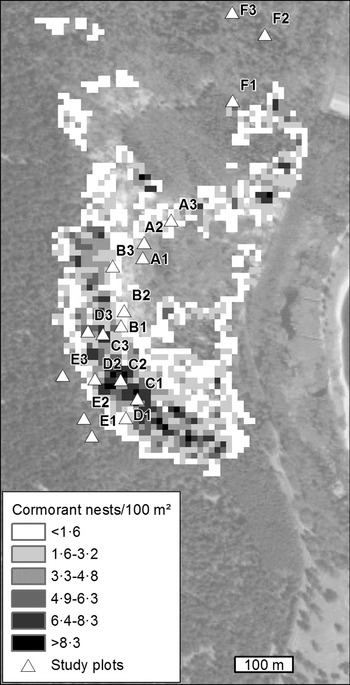
The study was performed between 2010–2012 in the great cormorant colony (Fig. 1) located on an upper part of the dune ridge (up to 34 m alt.), and on east-facing (leeward) dune slope terraces and in dune hollows (0–12 m alt.). Dune ridges and terraces are characterized by dry conditions and dry arenosol soils, while dune hollow soils are wetter, turning swampy in the lowest elevations (Mader Reference Mader1995; Gudelis Reference Gudelis1998; Peyrat Reference Peyrat2007). The upper part of the cormorant colony was originally c. 110 year-old pine forest and the slope terraces c. 230 year-old pine forest of Empetro nigri–Pinetum (Libb. & Siss. 1939 n.n.) Wojt. 1964 association, growing on nutrient-poor sandy soil, while dune hollows were formerly occupied by a 230 year-old pine and spruce forest developed on temporarily wet mesotrophic soils (Jončys & Paulaitis Reference Jončys and Paulaitis1987). Today, the P. sylvestris trees on the dune slope are dead or dying, and in the dune hollows P. sylvestris and Picea abies trees are also perishing. Six study zones were identified differing in their forest type, slope and aspect, nesting densities and exposure to bird activities, and in each a c.300×15 m quadrat was established. The six zones are described as follows:
The cormorant colony with an indication of nest density (in 2011) and points of specimen collection for analysis. Letters refer to transect type.

A) The oldest part of the colony in the dune hollow (0–2 m a.s.l.): formerly a pine and spruce forest on mesotrophic temporarily wet soil; coniferous trees are dead, a few young Picea abies, Quercus robur and Betula pubescens are still alive, but of reduced vitality; a large part of the area is overgrown with tall mesophilic, and in places hygrophilic mesotrophic and eutrophic herbs, as well as alien eutrophic Sambucus nigra and S. racemosa shrubs; standing and lying barkless deadwood is abundant, but in places overshadowed with herbs and shrubs. Cormorant nests are absent, or very few (less than 1·6/100 m2 on average), but birds constantly fly over it to feed in the Curonian Lagoon.
B) The oldest part of the colony on the leeward dune terraces (20–23 m a.s.l.): no living trees, but a few standing dead Pinus sylvestris are mostly barkless; large amounts of fine and coarse woody debris (CWD), lying and standing; nitrophilic plant communities are becoming established with sparse mesotrophic Calamagrostis epigeios that is supplemented by mesoeutrophic ruderal herbs and Sambucus spp.; a moss layer is absent; CWD is exposed to direct sunshine, dries out fast and is covered by a thick layer of algae (especially fallen ones). Nests are absent or few (1·6–4·8/100 m2 on average).
C) The most active part of the colony in the former oligotrophic pine forest, with the highest concentration of nests (more than 8/100 m2 on average); pine trees are dead or dying, but still with bark; sparse Juniperus communis individuals are dying; shrub layer is formed by mesotrophic Sorbus aucuparia and eutrophic Sambucus spp, but their projection cover is low; herb layer cover is up to 10% with predominantly nitrophilic species; moss layer is absent; CWD is sparse, but fallen smaller branches broken by birds are numerous. The transect is on the upper leeward terrace of the dune ridge (27–29 m a.s.l.), and because of dying trees is more exposed to direct sunlight.
D) An edge of the colony with the most recent and still rather few nests (1·6–4·8/100 m2 on average) in an oligotrophic pine forest on the upper leeward terrace of the dune ridge (22–32 m a.s.l.); trees are alive but their vitality is reduced, crowns are thinner; shrub layer is thickened with Sorbus aucuparia, Sambucus spp.; herb layer is depauperized due to extinction of some oligotrophic herbs characteristic of the Empetro nigri–Pinetum association; despite abundant meso- to eutrophic and eutrophic herbaceous plants, patches of bare soil appear; moss layer is thin; CWD is very sparse, but a number of smaller branches have been broken by birds. Influence of this zone extends c. 80 m into the forest from the newest nests and is characterized by a more frequent presence of eutrophic and mesotrophic plants, as well as an absence of living thalli of Hypogymnia physodes in epiphytic communities.
E) Relatively undamaged oligotrophic pine forest (association Empetro nigri–Pinetum) on the upper part of the dune ridge (28–34 m a.s.l.) with solitary mesotrophic and eutrophic plants, outside of the colony; CWD is sparse. This transect may be somewhat influenced by very few birds flying to feed in the Baltic Sea.
F) Undamaged mesotrophic mixed forest in dune hollow (11–15 m a.s.l.) outside the colony with predominant Pinus sylvestris and Picea abies trees with an admixture of Betula pubescens and Quercus robur; shrub layer consists of mesotrophic Frangula alnus, P. abies and Sorbus aucuparia, and the herb and small shrub layer consists of oligotrophic and mesotrophic plants; CWD is sparse. The transect was almost uninfluenced by birds, except occasional flying over or roosting, until 2011 when the colony started to expand into it.
Field and laboratory work
For lichen diversity analysis, lichens were recorded in the transects (A–F) on all available substratum types in 2010. A substratum was considered to be available if at least one occurrence of lichen was recorded on the substratum type in any transect. Fifteen units of every substratum type were examined in every transect. One unit was considered to be: CWD – every discrete stump, snag, log and large tree limb ≥15 cm in diam., fallen branch (<15 cm in diam. and ≥1 m length), one discrete trunk of the investigated phorophyte species (pine, oak, birch, 15 of each), branches, twigs and young trunks of one discrete spruce, juniper, rowan, alder buckthorn and elder (15 of each). The uncolonized substrata were recorded if the same type was colonized in the other transects. Occurrence of species per substratum type per transect was from 0 to 15.
For calculating lichen change dynamics, an additional survey was performed in 2012. It employed marked pine trees with cormorant nests (N, 310 nest-trees in total) with an additional 72 unmarked trees: dead, abandoned by birds, without nests (A, 21 trees in total): living trees in the transitional zone, between the newest nests and unaffected forest (T, 25 trees): and living trees in unaffected forest on an upper part of the dune ridge (C, 26 trees). A and N trees were examined in the whole territory of the colony. A tree trunk (from base to 1·5 m height) was examined circumferentially for all lichen species. Lichen and algal abundances were evaluated as follows: abundant (2), numerous thalli and/or occupying area(s) over 10 cm2; sparse (1), one or few thalli and/or occupying area(s) less than 10 cm2. Tree condition (1 – unaffected, 2 – partly defoliated, 3 – dead with bark, 4 – dead with part of the bark shed, 5 – barkless) and exposure to light (1 – shade under unaffected tree crowns, 2 – semi-shade of strongly thinned crowns, 3 – open situations) were noted. For every tree, the number of nests on it and density of nests in a 100 m2 square where the tree is situated were evaluated with Trimble GeoExplorer 2008 GeoXM handheld. Data obtained were documented, analyzed and mapped with ArcGIS ArcPad 10 and ArcGIS ArcMap software. Ten bark samples were collected randomly from the trees investigated inside the colony for identification of epiphytic algae. One bark sample with conspicuous cover of algae was examined from the unaffected part of the forest.
The lichen specimens that were difficult to identify in the field were collected for further analysis using a stereomicroscope, light microscope, UV light and standardized thin-layer chromatography (following Orange et al. Reference Orange, James and White2001) in the laboratory. For morphologically very similar Lepraria spp., Lecanora expallens s. lat. and Cladonia chlorophaea s. lat., five specimens of every taxon group from every transect were collected, if present. For further analysis, the three complexes were each treated as one species. The reference material is deposited in the lichenological collection of the herbarium at the Institute of Botany, Nature Research Centre, Vilnius (BILAS). The nomenclature of lichens mostly follows Smith et al. (Reference Smith, Aptroot, Coppins, Fletcher, Gilbert, James and Wolseley2009). Algae were identified following routine phycological methods, using light microscopy; their nomenclature follows Ettl & Gärtner (Reference Ettl and Gärtner1995). Ecological characteristics of the lichen species follow classification by Wirth (Reference Wirth2010).
Bark and wood (Pinus sylvestris only) samples were collected at three points in every transect (Fig. 1) in 2010–2011. At every point, c. 0·5 cm thick pieces of bark were collected from five pine trunks of similar diameter. Bark was collected circumferentially at c. 1·5 m height. Wood (surface layer, c. 0·5 cm, of coarse and fine deadwood) was collected randomly. Contents of 37 elements were analyzed in pine bark and wood. Except for total P, total N and calcium (Ca), most of the elements did not show clear distribution tendencies and were therefore not employed in the interpretation of lichen community patterns. For reference, bark samples of Quercus robur, Juniperus communis and Sambucus spp. were taken when present and their pH was measured.
For pH measurement, a single layer of bark or wood pieces was placed in a Petri dish (441 samples in total). Following the method of Stephenson et al. (Reference Stephenson, Estrada-Torres, Schnittler, Lado, Wrigley de Basanta, Ogata, Gómez-Pompa, Allen, Fedick and Jiménez-Osornio2003), distilled water, adjusted with KOH to pH 7·0, was added to cover the bark completely. After 24 h, water was poured off and the pH of the bark was measured with ThermoRussel flat-head electrode KDCEF11.
For P and Ca analysis, a surface layer of Pinus sylvestris bark was air-dried and crushed by hand in an agate mortar, then pre-concentrated by dry ashing at 240°C. A surface layer up to 0·3 cm thick of wood debris was scraped with a ceramic knife and prepared in the same manner as bark. From each sample, two independent subsamples of 5 g were taken and ground by an MM 400 mill with zirconium oxide grinding jars and grinding balls. Ground material (2g) was mixed with 0·45 g of Licowax binder and homogenized for 20 h. Two pellets of 20 mm diam. were prepared by pressing from each mixture and used for analysis. A mean value of both measurements was used for further calculations.
Measurement of total P and Ca was performed with EDXRF equipment SPECTRO XEPOS using the Turboquant method for the pressed pellet calibration procedure elaborated by the manufacturers (software “X-LabPro 4.5”). Within the International Plant-Analytical Exchange program (organized by Wageningen University, exchange years 2009–2010), samples and standards BCR 060 and BCR 482 were prepared pari passu and used for preparing calibration curves.
Contents of total N were measured following the Kjeldahl method at Labtarna Chemical Laboratory, Vilnius. The samples were prepared following standard ISO 6498:1998, and the total nitrogen content was determined following standard LST EN ISO 5983-1:2005. Tecator 2200 Kjeltec Auto Distillator and titrator Schott TitroLine 96, respectively, were employed for distilling and titrating the sample solutions.
Data analysis
To compare lichen communities on various substratum types in different transects, non-metric multidimensional scaling (NMS) was run with all lichen species occurring on all available substrata in all transects, excluding the substrata bearing only one species (matrix of 22 substratum types and 82 lichen species). NMS was also employed to determine the relationship between lichen species' composition on trees under varying ornithogenic influence and environmental variables related to such influence [matrix of 382 trees and 20 lichens (including algae, counted as one species) with a second matrix of tree environment variables (matrix of 382 trees and 4 environmental variables: number of nests in tree, density of nests in 100 m2, tree condition, sun exposure)]. Species occurrence (on each substratum type) or abundance (on pine trees) was used for the calculation in respective NMS analyses, with all species included. Pearson correlation coefficient was calculated to find the correlation between lichen community patterns and environment variables. The autopilot mode of NMS, with the Sørensen distance measure, suggested two dimensional solutions. The final stable solution was obtained with a maximum 400 iterations. A Monte Carlo test of 250 runs with randomized data was used to evaluate the strength of patterns in the NMS solutions.
Canonical correspondence analysis (CCA) was employed to examine the relationship between lichen species numbers and occurrences on CWD and characteristics of dead wood. CCA with a matrix of 5 transects (A, B, C, E, F) and 47 lichen species as the main matrix, and a second matrix consisting of 5 transects and 4 variables (concentrations of N, P and Ca, and pH values of wood) was undertaken. The CCA was run using axis scores centred and normalized to lichen variance and the results were plotted on a diagram using scores derived from lichen species.
All statistical analyses were performed with PC-ORD version 6 (McCune & Mefford Reference McCune and Mefford2011).
Results
Environmental characteristics of the study site
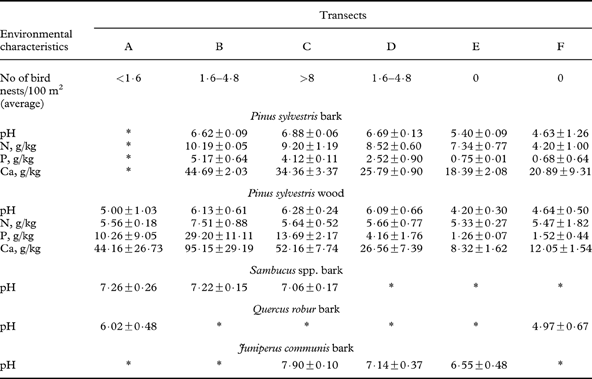
The characteristics of lichen substrata in the cormorant colony showed strong deviations from those in the unaffected stands. The highest values of pH for Pinus sylvestris bark and wood were found in transect C, while peaks of N, P and Ca amounts were reached in transect B, where P content in wood was up to 23 times higher than in transect E. Bark of other woody plant species studied also showed pH elevations in the territory of the colony and, notably, the highest pH for Sambucus spp. bark was noted in transect A. The characteristics of all lichen substrata in the study site are summarized in Table 1.
Environmental characteristics of the transects studied: number of cormorant nests and chemical properties of wood and bark. For pH and element concentrations, mean values and standard deviations are presented.
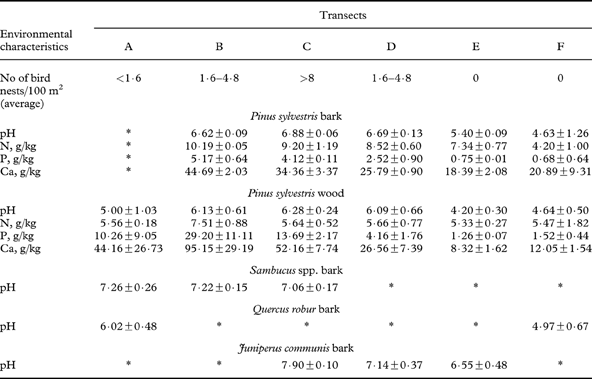
* respective substratum was absent or not present in sufficient amount for evaluation
Species composition and distribution patterns
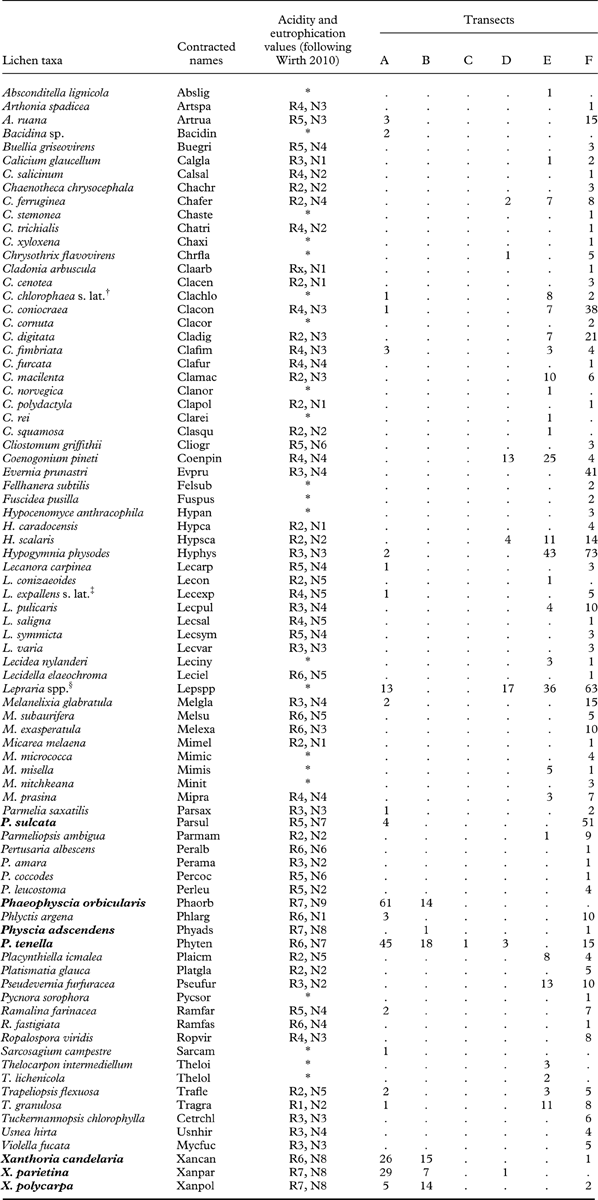
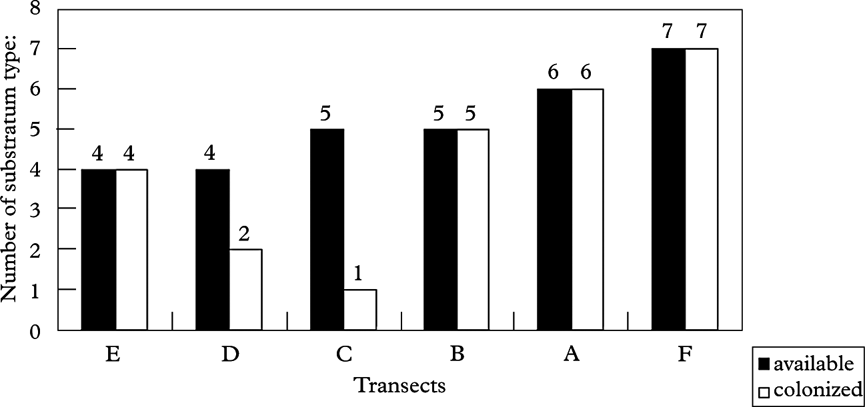
In total, 82 lichen species were recorded from all substrata, in all transects studied (Table 2). The highest number of species (72) and their occurrences (564) were recorded in transect F, where the highest variety of substrata available to lichens was found (Fig. 2). In both control transects (E and F), the most common species was Hypogymnia physodes (43 and 73 occurrences, respectively). In the colony transects, total species numbers and occurrences were obviously lower than outside the bird influenced areas. In transect C, only Physcia tenella growing on Sambucus sp. was recorded. In transect B, exceptionally nitrophilous lichens of the genera Xanthoria, Physcia and Phaeophyscia were found. Transect A harboured mixed communities containing both nitrophilous species and lichens typical of mixed forests, such as Hypogymnia physodes, Phlyctis argena, Arthonia ruana and Cladonia spp. At the colony edge (transect D), depauperized communities containing a few lichens typical of pine forests, such as Chaenotheca ferruginea, Hypocenomyce scalaris and Coenogonium pineti were found, intermixed with sparse nitrophilous species and free-living algae.
Frequency of all lichen taxa found in each transect on all substrata (data from 2010). Names of nitrophytic species (N7–N9), according to classification by Wirth (Reference Wirth2010) are printed in bold.
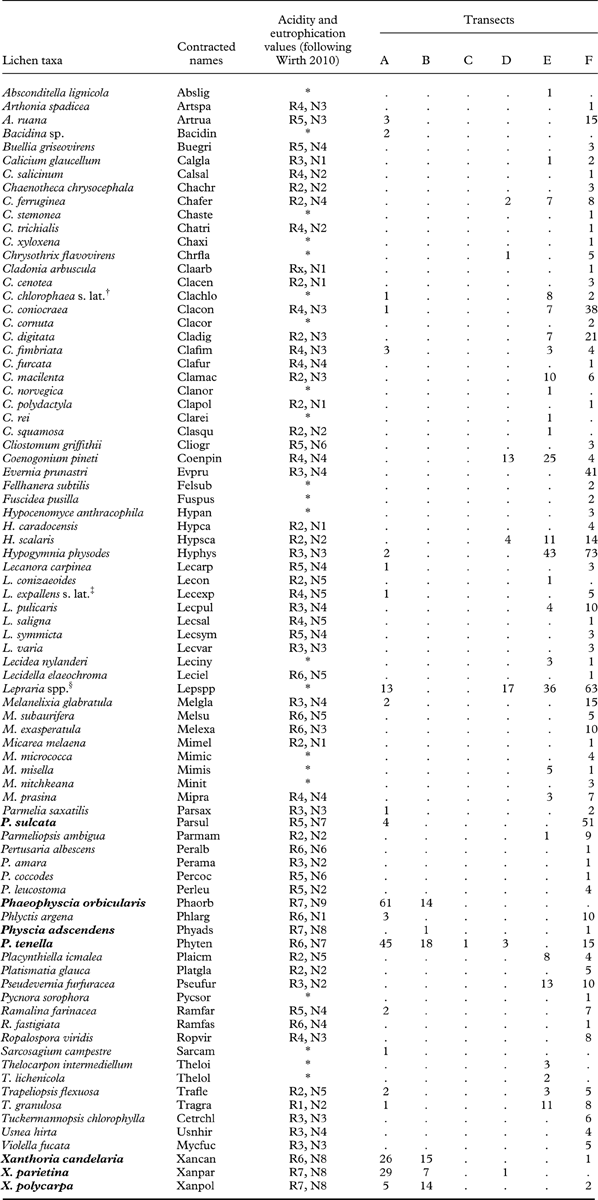
* ecological preferences not provided by Wirth (Reference Wirth2010).
† in transect E, Cladonia chlorophaea s. lat. included C. chlorophaea and C. merochlorophaea, in other transects—only C. chlorophaea.
‡ in transect F, Lecanora expallens s. lat. included L. expallens and L. compallens.
§ in transect E, Lepraria spp. included L. incana, L. elobata and L. jackii, in other transectss—only L. incana.
Diversity of lichen substratum types within (transects A–D) and outside (transects E, F) the area of the bird colony (data from 2010).
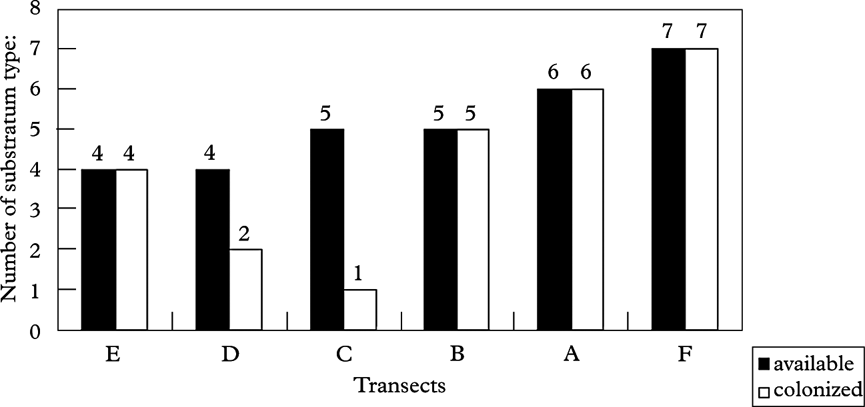
Numbers of substratum types (ST) available to lichens were similar between transects E and B–D, and between F and A, but the degree of substratum colonization and lichen occurrence was conspicuously lower in transects D and C (Fig. 2, Table 2).
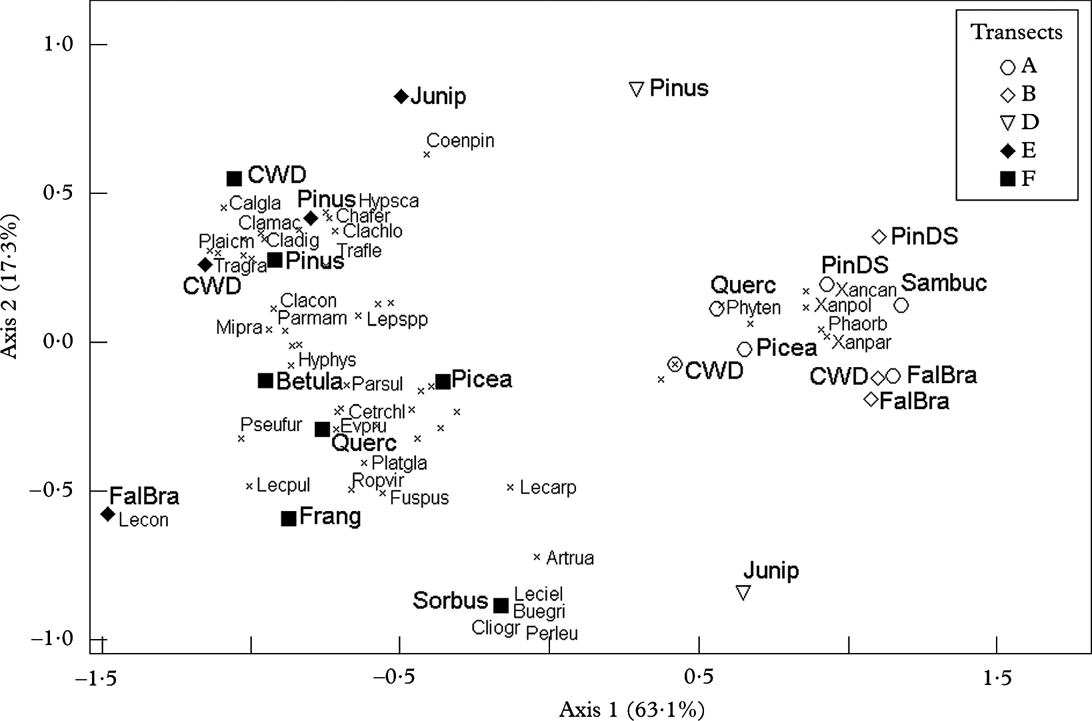
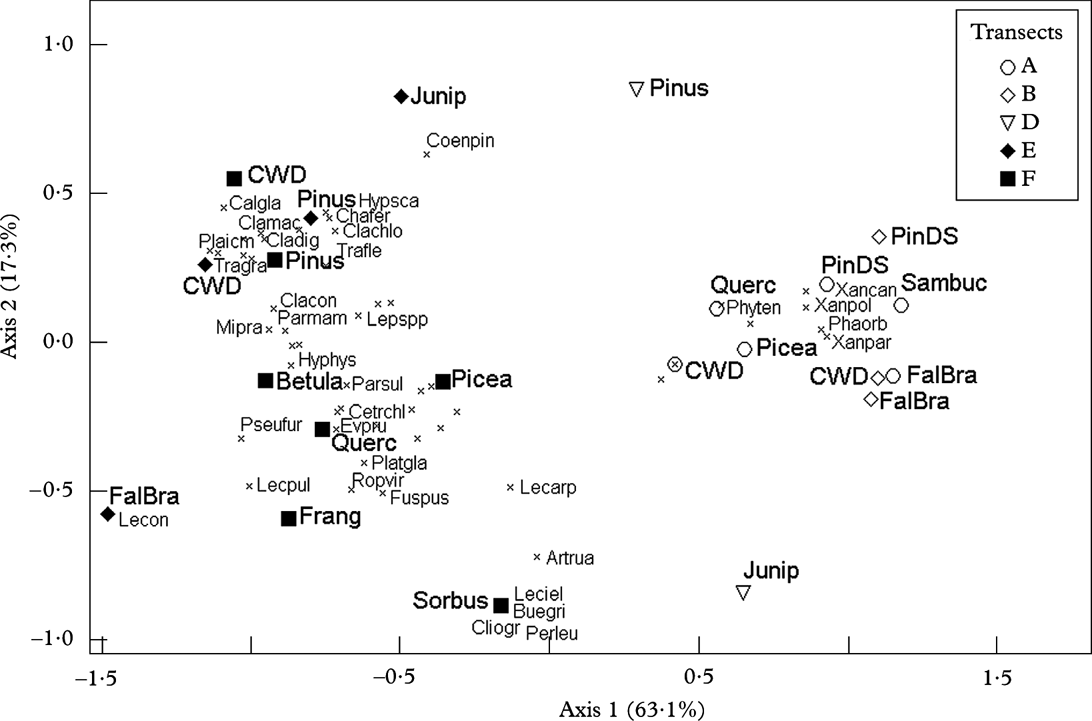
The NMS ordination run to compare lichen taxa distribution on various ST in different transects (Fig. 3) stabilized with a final stress of 12, a final instability less than 0·00001, and optimal dimensionality of two axes. Axis 1 accounted for 63·1% of the variation among the ST, and Axis 2 for 17·3% of the variation, resulting in a total of 80·4% captured by the ordination. The two clusters representing aggregation of substrata in the transects A–D (C transect was excluded from the ordination because only one occurrence of one species was recorded in it) and E–F, ranged along Axis 1 and reflected changes in lichen communities affected by the bird colony. The cluster of substrata from A and B transects showed the highest homogeneity compared to the other transects. This can be explained by the longest exposure of these transects to bird activity. Axis 2 apparently had only a low correlation with colony-induced changes in the environment, as it mainly represented differences between the two control transects (see transect description). Species having a significant positive correlation with Axis 1 were all nitrophytes, such as Xanthoria spp. Species having a negative correlation were all acidophytes, such as Hypogymnia physodes, Pseudevernia furfuracea and Cladonia spp. In this analysis, Parmelia sulcata showed more acidophytic tendencies, contrary to the classification by Wirth (Reference Wirth2010). Species with a strong negative correlation to Axis 2 were mostly lichens characteristic of deciduous and mixed forests, subneutrophytes to acidophytes, such as Lecidella elaeochroma, Ropalospora viridis, Platismatia glauca and Buellia griseovirens [R2–5, N2–5, according to Wirth (Reference Wirth2010)]. Significant positive correlations with Axis 2 were noted for species characteristic of oligotrophic pine stands.
NMS ordination comparing species composition and occurrence between various substratum types in the transects studied (data from 2010). Contracted names of substrata: Betula=trunks of Betula spp.; CWD=coarse woody debris (stumps and lying logs); FalBra=fallen branches of Pinus sylvestris; Frang=branches of Frangula alnus; Junip=Juniperus communis; Picea=trunks and branches of Picea abies; PinDS=dead, standing barkless trunks of Pinus sylvestris; Pinus=trunks of living and dead (with bark) P. sylvestris; Querc=trunks of Quercus robur; Sambuc= branches of Sambucus spp.; Sorbus=branches and trunks of Sorbus aucuparia. For lichens, only the species (x) with a correlation of r≥0·35 with either of the axes are named. Contracted names of species as in Table 2. Only one occurrence of one species was recorded in transect C, therefore it was excluded from the ordination.
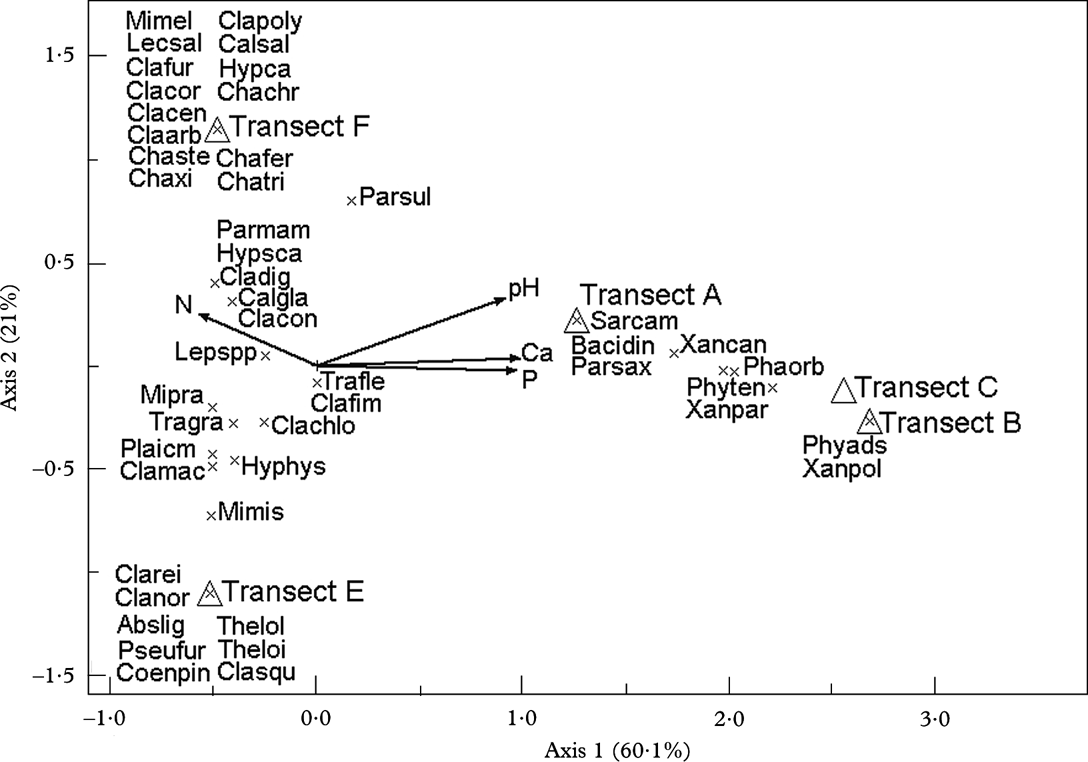
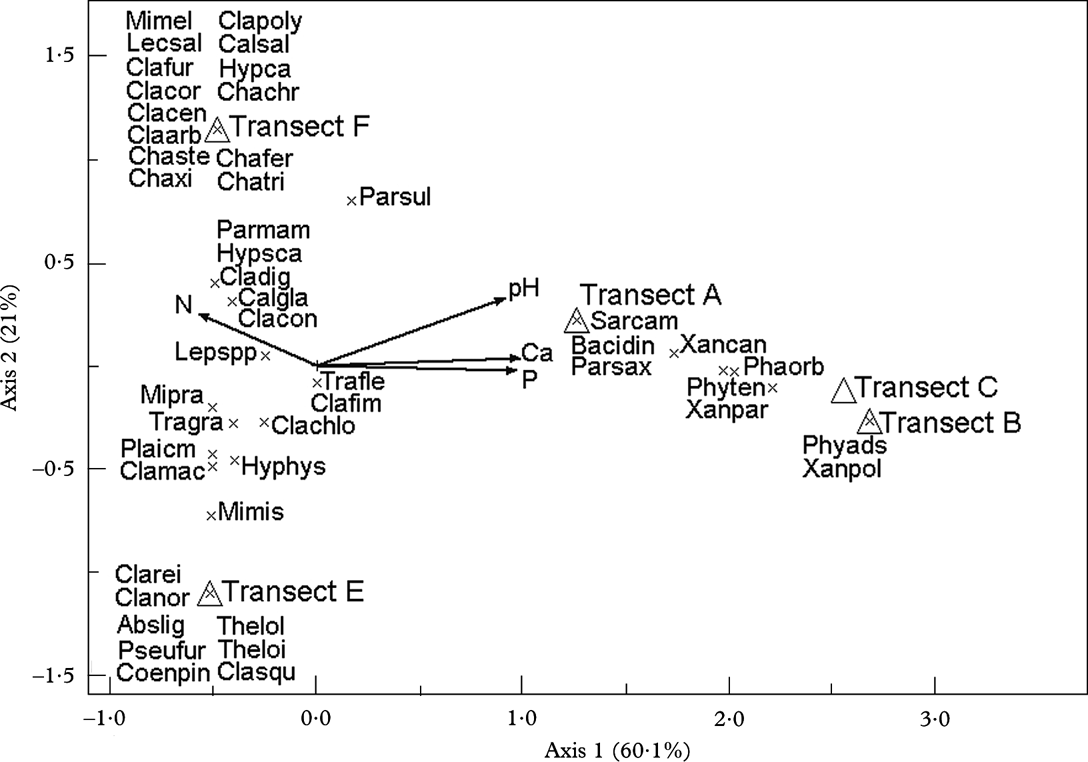
None of the substratum types was present in all transects, and only one type (CWD) was found in five transects, therefore CCA was run with respect to its chemical properties (variables are reported in Table 1) and the lichen species inhabiting it (Fig. 4). The first canonical axis explained 60·1% of the variation in lichen species data and was strongly associated with concentrations of Ca (r=0·914), P (r=0·886) in CWD, and its pH (r=0·961). Axis 2 explained 21% of variation in species data but showed no strong association with any variable employed, the highest association (r=0·225) being for quantity of N, but otherwise it was mainly associated with characteristics of the two control transects. Nitrophytic physcioid lichens (r≥0·567) and Xanthoria spp. (r≥0·341) were associated most strongly with the CWD in transects under the oldest and/or strongest influence of birds (transects A, B, C), where concentrations of Ca and P, and pH values, were the highest. Sarcosagium campestre and an unindentified Bacidina species, found only in transect A, showed a positive relationship with Axis 1, but their occurrence was low and the correlation insignificant. In the transects outside the bird colony, lignicolous species characteristic of coniferous forests were found; these were significantly negatively (r≥−0·500) correlated with Axis 1. With respect to Axis 2, the distribution of lignicolous species depended on the transect characteristics (Fig. 4).
CCA ordination diagram with a biplot showing lichen species composition on CWD and characteristics of CWD: pH values and concentrations of N, Ca, P. Contracted names of lichens as in Table 2. D transects had no CWD, so they are not included in this analysis.
Analysis of epiphytic communities on pines with respect to bird nesting influence
As neither lichen and substratum variability in different zones of ornithogenic influence nor analysis of chemical properties of the substratum versus lichen diversity could reveal the crucial point of acidophilous lichen communities or the species involved in different stages of the transformation, lichens occurring on trees with nests, abandoned dead trees, trees in unaffected forest and in the transitional zone were analyzed. This was undertaken with respect to the number of nests, nest concentration, tree condition and exposure to sun, all of which were indices for nesting history, while exact nest dating was not performed until 2010.
In total, 19 lichen taxa were identified; most of these were found during the transect study in 2010 (Table 2), except Physcia dubia and an unindentified sorediate lichen. Lecanora species found in the unaffected forest and in the transitional zone (mostly L. pulicaris and occasional L. conizaeoides, also damaged thalli of Lecanora sp.) were united under Lecanora spp. Cladonia species, represented by difficult to identify primary thalli were united under Cladonia spp. for further analysis. Two species of alga were identified from the bark samples, namely Desmococcus olivaceus and Stichococcus bacillaris; the former was dominant in the cormorant colony, being found on all bark samples from the nest trees, and the latter was only observed on two samples from the recently nested trees and from a sample in the unaffected forest.
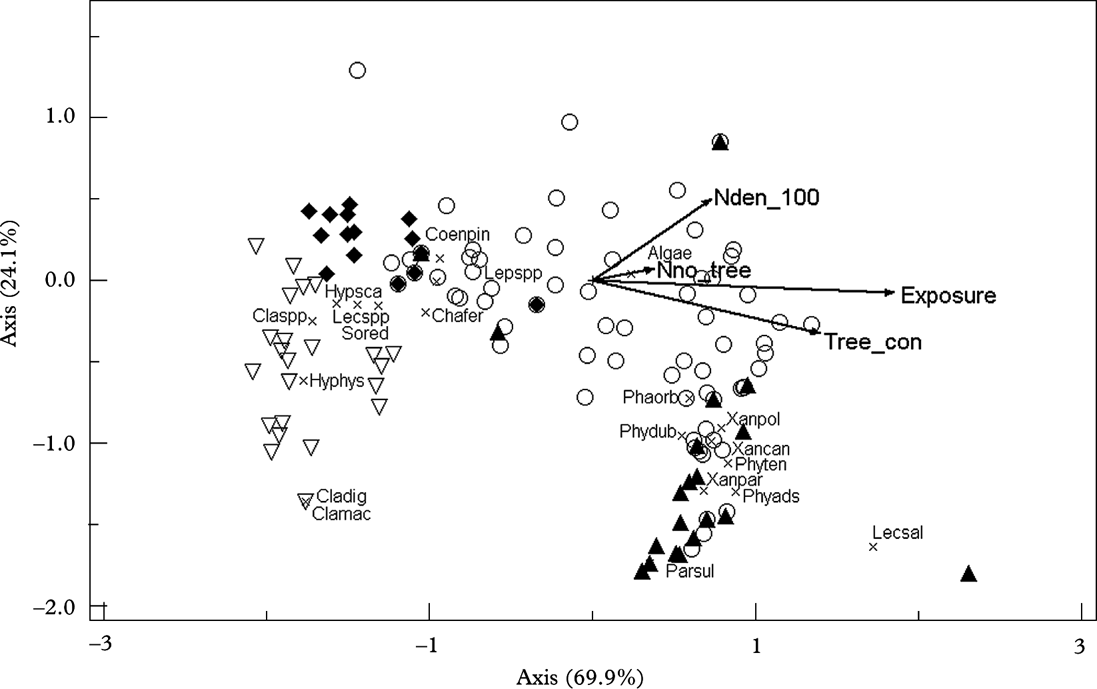
The NMS ordination stabilized with a final stress of 8, a final instability less than 0·00001, and optimal dimensionality of two axes. Axis 1 accounted for 69·9% of the variation and Axis 2 additionally for 24·1% of the variation, resulting in a total of 94·1% captured by the ordination. All variables measured, tree exposure to light (r=0·788), tree condition (r=0·682) and nest density (r=0·503), were most strongly associated with Axis 1 (Fig. 5). This Axis can be interpreted as representing increasing environmental changes related to bird activities and long-term ornithogenic influence. Only nest density had the strongest association with Axis 2 (r=0·405) and could be interpreted as an indicator of intensive short-term ornithogenic influence.
NMS ordination of lichen diversity on pine trees under varying ornithogenic influence (data from 2012). ○, trees with nests; ▴, dead trees, abandoned by birds, without nests at present; ▿, trees in unaffected forest; ♦ trees in transitional zone. Factors: Nden_100=nest density (number of nests in 100 m2); Nno_tree=number of nests in the tree; Exposure=tree exposure to light (for explanation see Materials and Methods); Tree_con=condition of a tree (for explanation see Materials and Methods). Acronyms of lichens as in Table 2, except for Lecspp=Lecanora spp., Phydub=Physcia dubia, Sored=unindentified sorediate crust.
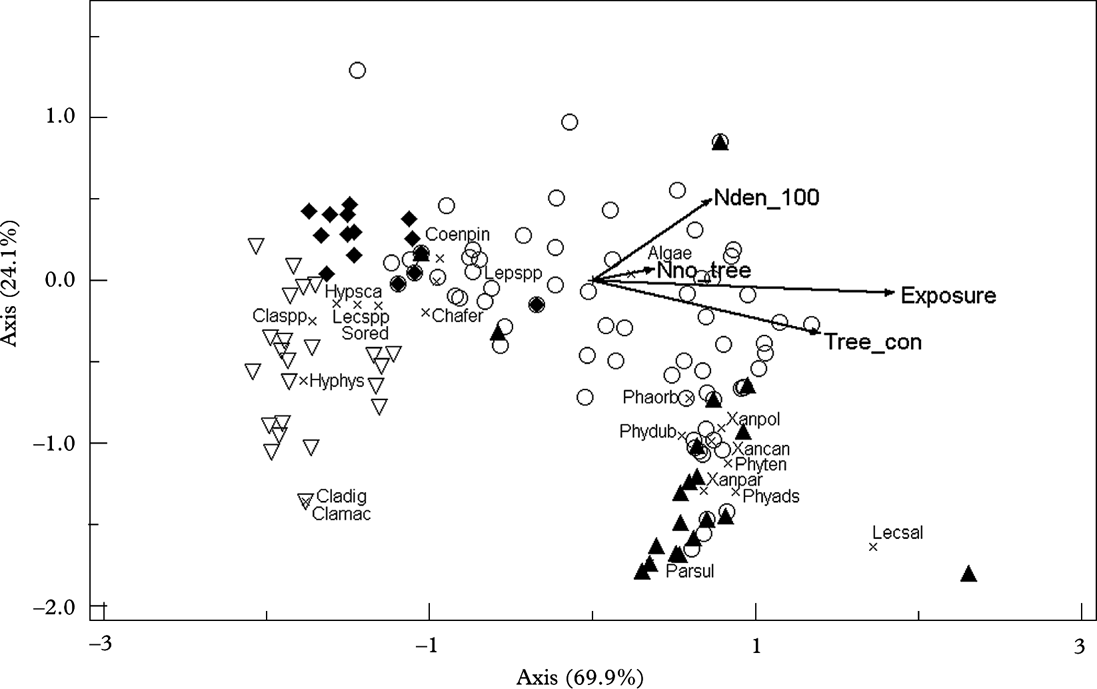
Some of the acidophytes, such as Hypogymnia physodes and Cladonia spp. clustered in the control tree group, showed a negative relationship with both long-term (deteriorated tree condition and increased exposure to light) and short-term (high nest density) ornithogenic influence (Fig. 5). Other acidophytes (Chaenotheca ferruginea, Lepraria incana, Coenogonium pineti) clustered with transitional zone and recently occupied trees, and one of them, C. pineti, showed a negative association with long-term and a positive association with short-term ornithogenic influence. All nitrophytic species reacted positively to a long-term influence and negatively to a short-term influence. Only algae clearly clustered with nest trees (N) (Fig. 5), and their occurrence showed affinities with both a long-term and short-term ornithogenic influence.
Discussion
Piscivorous bird colonies established in forests provide a model example to investigate lichens under rapid and intensive eutrophication through increases in both N and P compounds. In our study, as in the study by Źółkóś et al. (Reference Źółkóś, Kukwa and Afranowicz-Cieślak2013), an obvious difference was found between lichen communities on the trees in older parts of the colony and the trees in the unaffected pine forest. This difference, however, was more clearly expressed in the more xerophytic parts of the study area, located on the higher elevations of the dune forests (transects B–D), but the moister conditions and humidity-related differences in vegetation of the dune hollows appeared to slightly mitigate the impact of eutrophication. Therefore, transect A (dune hollow) harboured nitrotolerant to slightly acidophytic species, along with typical nitrophytes (Table 2). A similar effect has been noted for other organisms studied, such as myxomycetes (Adamonytė et al. Reference Adamonytė, Iršėnaitė, Motiejūnaitė, Matulevičiūtė and Taraškevičius2013). At the edge of the colony, rapid depauperization of acidophytic lichen communities was observed, but the shift to nitrophytic species did not occur immediately. Due to lack of data, it was not possible to establish a nesting history of the trees investigated with precision and therefore to connect it to the moment of lichen community shift. Furthermore, it was difficult to define the exact starting time of lichen decline because the impact of cormorant faeces extended beyond the edge of the colony. In our case, the visible impact zone was c. 80 m from the newest nests, being manifested by an absence of living, healthy thalli of Hypogymnia physodes. Our observations on the most recently nested trees showed that only several months after the start of a single nest construction, growth of algae was enhanced, and a rapid die-away of remaining acidophytic lichens was observed, together with a spreading of Coenogonium pineti which was soon replaced by free-living algae, among which Desmococcus olivaceus predominated, with occasional intermixture of Stichococcus bacillaris. Interestingly, Trentepohlia spp., the photobiont of Coenogonium pineti, were not detected in the free-living algal crusts.
The results of two studies on the influence of bird-droppings on saxicolous lichens differed from ours. Valladares & Sancho (Reference Valladares and Sancho1993) found rich lichen communities on bird-influenced rocks, where the peripheral zone had a higher lichen diversity compared to the zone where excreta had accumulated. Our peripheral zone (transects D & C) had similar or lower numbers of lichen species than the accumulation zone (transects A & B). Armstrong (Reference Armstrong1984), having applied bird droppings to saxicolous lichen communities, found an increase in growth of the nitrophilous Xanthoria parietina and an inhibition of the acidophilous Melanelixia fuliginosa, the inhibitory effect becoming significant after only eight months. Lichen community changes at the edge of our cormorant colony were more pronounced and more rapid. The reason for this may be due to several factors, one of which is the quality and quantity of bird excreta involved. The chemical composition of excreta largely depends upon bird diet (Asman et al. Reference Asman, Ridder, Reijnders and Slanina1982), and therefore the bird droppings of the non-piscivorous birds studied by Valladares & Sancho (Reference Valladares and Sancho1993) and employed by Armstrong (Reference Armstrong1984) cannot, apparently, be compared to cormorant excreta. Another factor is the amount of faeces: it is estimated that cormorants produce 2·2 t ha–1 month–1 of excreta in areas of high nest density during the breeding season, which corresponds to c. 10 000 times and 120 000 times that of the normal input via precipitation of N and P, respectively (Kameda et al. Reference Kameda, Koba, Yoshimizu, Fujiwara, Hobara, Koyama, Tokuchi and Takayanagi2000). The third factor is light. Obviously, earlier studies were performed under stable light conditions, but in our study exposure to light gradually increased from the unaffected forest towards the colony centre. Since nitrophytic species are photophytic (Frati et al. Reference Frati, Brunialti and Loppi2008) and adaptation to shade correlates with intolerance to eutrophication (Hauck & Wirth Reference Hauck and Wirth2010), the not-so-rapid switch to the nitrophilous communities was apparently related to light which increased gradually, following defoliation and death of trees and, additionally, to the instability of the substratum, since dying or dead trees lose their bark together with pioneer nitrophilous colonizers which had to re-establish on denuded wood.
The dominant and, in places, the only member of epiphytic and epixylic communities inside the cormorant colony was algae. Both species identified, Desmococcus olivaceus and Stichococcus bacillaris, are among the most common terrestrial algae (Rindi et al. Reference Rindi, Allali, Lam, López-Bautista, Rescigno and Maletta2010), as well as being common as lichen photobionts. In three bark samples (two from the colony edge and one from unaffected forest), association with fungal hyphae was observed for both algal species. On the bark samples from areas with a stronger ornithogenic influence, only free-living Desmococcus olivaceus was found, a species known to colonize bark and other plant substrata under increased N loads (Søchting Reference Søchting1997; Grandin Reference Grandin2011).
Substratum diversity is known to be one of the key factors influencing lichen diversity in natural conditions (Lõhmus et al. Reference Lõhmus, Lõhmus and Vellak2007). As our study confirmed, eutrophication, often associated with exposure to sun and dust impregnation, affects diversity of the substrata by rendering their chemical properties uniform, for example, turning normally acid-bark trees into those suitable for nitrophilous species (Loppi et al. Reference Loppi, Pirintsos and De Dominicis1997; Frati et al. Reference Frati, Brunialti and Loppi2008). Substrata inside the colony shared more species compared to the same substrata outside the colony (Fig. 3). On the other hand, under different bird activity, the same substratum types harboured different lichen communities. Large nutrient loads not only obliterated differences between lichen substratum qualities, but also diminished the effect of microclimate; differences between the lichen species occurring on the same substratum type in transects E and F were more pronounced than in transects A and B (Figs 3 & 4). Furthermore, ornithogenic changes in the substratum type numbers did not influence lichen diversity as they did, for example, myxomycetes (Adamonytė et al. Reference Adamonytė, Iršėnaitė, Motiejūnaitė, Matulevičiūtė and Taraškevičius2013).
Most of the studies on lichens subjected to eutrophication deal with N, especially reduced N compounds from agricultural sources, and only some with P, and even fewer with both elements. Cormorant faeces contain large amounts of P and Ca, namely 7·9(±2·2) and 19·2(±4·7) g/kg (n=6), respectively, in our study, and N (not measured) in the form of uric acid which, in a natural environment, breaks down to ammonia (Bachrach Reference Bachrach1957) resulting in an environment with both a high pH and a high nutrient status (Table 1). The average pH of pine bark reached 6·88 in the most active part of the colony and in the breeding season it was sometimes as high as 8·0, which significantly exceeds, for example, the pH of Quercus bark in the close proximity of a pig stock farm in Tuscany (Frati et al. Reference Frati, Santoni, Nicolardi, Gaggi, Brunialti, Guttová, Gaudino, Pati, Pirintsos and Loppi2007). Although Johansson et al. (Reference Johansson, Olofsson, Giesjler and Palmqvist2011) found that P supply can both mitigate and intensify the negative effects of N on epiphytic lichens, in our study it was apparent that large amounts of P did not have this effect, especially in the case of high environmental pH. Besides, the mitigating effect of P found by Johansson et al. (Reference Johansson, Olofsson, Giesjler and Palmqvist2011) may stem from both the low levels of the element and from the short-term investigation that did not include the effect of P accumulation. The P cycle is one of the slowest biogeochemical cycles (Oelkers Reference Oelkers2008), therefore phosphates are slow to move through the soil and, as our study has shown (Table 1), through deadwood as well. This is also corroborated by soil studies: Ellis et al. (Reference Ellis, Fariña and Witman2006) found that P concentrations were high in both active and abandoned cormorant colonies.
Conclusions
As with phanerogamic plants (Źółkóś & Meissner Reference Źółkóś and Meissner2008) and myxomycetes (Adamonytė et al. Reference Adamonytė, Iršėnaitė, Motiejūnaitė, Matulevičiūtė and Taraškevičius2013), lichens in piscivorous bird colonies suffer changes in species diversity and community structure, but to a larger degree. High pH, coupled with high levels of P, Ca and N in the substrata, caused rapid changes in normally acidophilous communities of the pine forest. The acidophilous community crucial point species were found to be Chaenotheca ferruginea, Lepraria incana and especially Coenogonium pineti, which were the most resistant to a rapid increase in pH and nutrient levels. Hypogymnia physodes was found to be an indicator for early changes towards eutrophication. Large concentrations of P were found to have no mitigating effect on the detrimental impact of increased amounts of N and higher pH levels.
The authors are grateful to Professor Mark R. D. Seaward (Bradford) for valuable comments on, and two anonymous reviewers for helping us to improve, the manuscript. The research was funded by grant no. LEK-03/2012 from the Research Council of Lithuania.