Clostridium difficile is an anaerobic, gram-positive, spore-forming bacterium accounting for up to 12% of healthcare-associated infections in the United States.Reference Magill, Edwards and Bamberg 1 The incidence of C. difficile infection (CDI) in Hong Kong markedly increased over the last few years, from 73.9 per 100,000 population in 2009 to 194.9 per 100,000 population in 2013.Reference Wong, Ip and Hawkey 2 This increase has been partly attributed to switching from toxin enzyme-linked immunoassay (EIA) to the more sensitive nucleic acid amplification test (NAAT) in 2010. Other contributing factors included increased use of broad-spectrum antibiotics and the emergence of C. difficile ribotype 002 with increased sporulation.Reference Cheng, Yam and Lam 3
The importance of asymptomatic carriers contributing to the transmission of CDI in healthcare facilities was highlighted by a genetic analysis suggesting that 29% of C. difficile isolates from hospital-associated infection were highly related to those from carriers.Reference Curry, Muto and Schlackman 4 In particular, carriers in long-term care facilities (LTCFs) were implicated as potential sources of transmission due to the high prevalence (>50%) and the high percentages of skin and environmental contamination.Reference Riggs, Sethi, Zabarsky, Eckstein, Jump and Donskey 5 , Reference Jinno, Kundrapu, Guerrero, Jury, Nerandzic and Donskey 6 Previous studies have shown that ~30%–40% of healthcare-associated CDIs had onset of infection >4 weeks after admission to an LTCF.Reference Kim, Toy and Muder 7 , Reference Mylotte, Russell, Sackett, Vallone and Antalek 8 Furthermore, by performing serial rectal swab cultures on admitted patients, Ponnado et alReference Ponnado, Guerrero and Jury 9 demonstrated that the incidence of C. difficile acquisition in a LTCF was 27% over a 6-week follow-up. In fact, local studies have shown that the isolation of epidemic C. difficile ribotype 002 is significantly associated with nursing home residence.Reference Wong, Ip and Hawkey 2 , Reference Cheng, Yam and Lam 3 Nevertheless, little is known about the burden and molecular epidemiology of C. difficile colonization in LTCFs in Hong Kong. We evaluated the factors associated with C. difficile colonization and acquisition. The C. difficile isolates identified were further characterized by polymerase chain reaction (PCR) ribotyping to determine their genetic relationship.
METHODS
Study Design
We conducted a prevalence study involving 8 nursing homes in the Kowloon West region of Hong Kong, China, between October 2, 2012, and August 15, 2014. We obtained verbal informed consent from all enrolled residents or from the next-of-kin or the legal guardian. The institutional review boards of the Department of Health and the Hospital Authority of Hong Kong approved the study.
Screening Procedure
Baseline stool samples were collected to determine the prevalence of C. difficile colonization among nursing home residents. In addition, we conducted a prospective study in 4 nursing homes to determine the acquisition of C. difficile colonization. Only residents who had a minimum of 90 days of follow-up were included. Stool samples were collected every 90 days, and additional stool samples were obtained for residents who had been discharged from hospitals. Residents who were C. difficile positive during the study period were included in the Kaplan-Meier estimate of median carriage duration. The C. difficile–positive residents who turned negative but became positive again until the end of the study (N=6) were excluded because intermittent carriage could not be differentiated from a new acquisition.
Microbiological Procedure
Stool samples were plated directly onto ChromID C. difficile agar plates (CDIF, bioMérieux, Marcy-l'Étoile, France), which were then incubated in an anaerobic chamber for 48 hours. Suspected flat and irregular colonies were confirmed to be C. difficile using mass-assisted laser desorption ionization–time of flight (MALDI-TOF) mass spectrometry (Biotyper 3.0, Bruker Daltonik, Germany). All C. difficile isolates were tested for the presence of toxin gene using real-time polymerase chain reaction (PCR, LightMix C. difficile kit; TIBMOLBIOL GmbH, Germany).Reference Luk, To and Ng 10 The PCR ribotyping and slpA typing were performed for all first isolated C. difficile strains at the baseline sampling or sampling upon nursing home residence, as described previously.Reference Bidet, Lalande and Salauze 11 , Reference Joost, Speck, Herrmann and von Müller 12
Definitions
A resident who had no history of hospitalization within the past 90 days was defined as having newly acquired C. difficile in the nursing home if a negative baseline stool culture was converted to positive on subsequent sampling. A resident who had been discharged from a hospital was defined as having newly acquired C. difficile in the nursing home if both a negative baseline stool culture and a negative stool culture collected after the last hospitalization turned positive on subsequent sampling. Residents at risk were those whose stool cultures were C. difficile negative. Resident days at risk were the number of days of residence of the residents at risk in the nursing homes. For residents who died or left the nursing homes between visits, the resident days up to the last visit were included. For residents whose specimens converted from negative to positive, the resident days up to the specimen collection date were included.
Underlying diseases included cancer, cardiovascular diseases, chronic lung diseases, diabetes mellitus, chronic skin lesions, hepatic diseases, renal failure, and immunodeficiency. Devices included urinary catheters, nasogastric tubes, percutaneous endoscopic gastrostomy tubes, tracheostomy tubes, and Tenckoff catheters for peritoneal dialysis.
Data Collection
General data regarding the facilities (ie, the resident-to-staff ratio; the number, type, and training frequency of infection control staff; the proportion of residents >75 years of age, the environment cleansing agent used; and the number of handwashing facilities) were collected (Table 1). The following variables were recorded prospectively on a standardized data collection form at the time of stool collection for the residents who participated in the follow-up study, with supplementation from the electronic hospital medical record system: demographic characteristics, underlying diseases, the functional status (Barthel index),Reference Mahoney and Barthel 13 the date of residence, the number of residents sharing the room, presence of devices and skin lesions, contact history of C. difficile and history of diarrhea, hospitalization, antibiotics, acid suppressive therapies, and diarrhea within the previous 12 weeks.
Characteristics of 8 Nursing Homes in Hong Kong

Statistical Analysis
The associations of the residents’ characteristics were compared using the χ2 test, the Fisher exact test, the t test, and the Mann-Whitney test as appropriate. Odds ratios (ORs) with accompanying 95% confidence interval (CI) were calculated to determine which characteristics were associated with C. difficile colonization and acquisition. Results were considered statistically significant when the 2-sided P value was <.05. Statistical analyses were performed using SPSS version 16.0 software (IBM, Armonk, NY). Univariate analyses were performed on single characteristics for C. difficile colonization and acquisition cases. A multivariable logistic regression analysis was then performed on significant characteristics identified in the univariate analysis. We examined the OR and the adjusted odds ratio (aOR) for the effect size.
RESULTS
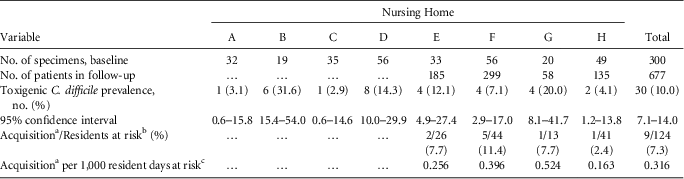
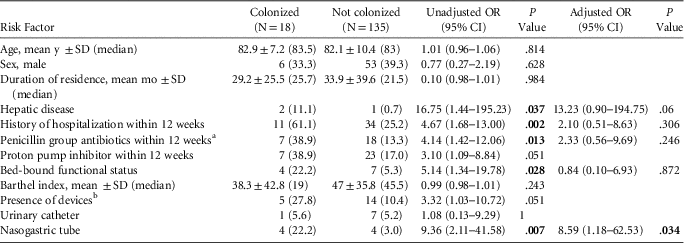
Of the 375 residents, 300 (80.0%) participated in the study. We detected C. difficile isolates in 39 residents (13.0%; 95% CI, 9.7–17.3); of these, 30 isolates (76.9%) were toxigenic. The prevalence of toxigenic C. difficile colonization ranged from 2.9% to 31.6% (95% CI, 3.0%–54.4%; P=.010) among different nursing homes (Table 2). In the follow-up study, the demographic data of 153 residents from 4 nursing homes were collected. The univariate analysis showed that factors associated with C. difficile colonization were presence of hepatic disease (11.1% vs 0.7%; P=.037), history of hospitalization (61.1% vs 25.2%; P=.002), use of penicillin-group antibiotics within 12 weeks (38.9% vs 13.3%; P=.013), bedbound status (22.2% vs 5.3%; P=.028), and presence of nasogastric tube (22.2% vs 3%; P=.007) (Table 3). In a multivariable logistic regression model, the presence of a nasogastric tube was a risk factor for C. difficile colonization (aOR, 8.59; 95% CI, 1.18–62.53; P=0.034).
Prevalence of Toxigenic Clostridium difficile Colonization and Acquisition Among Nursing Home Residents in Hong Kong

a Only residents who had a minimum of 90 days of follow-up were included. A resident was defined as having new acquisition of C. difficile in the nursing home if a negative baseline stool culture was followed by a positive culture on subsequent visit. The resident should have no history of hospitalization within the past 90 days of acquisition, or the stool culture after last hospitalization was negative.
b Residents at risk were those whose stool cultures were C. difficile negative.
c Resident days at risk included the number of days of residence of the residents at risk; For residents who died or left the nursing homes between visits, the resident days up to the last visit were included. For residents whose specimens converted from negative to positive, the resident days up to the specimen collection date were included.
Univariate Analysis and Multivariable Logistic-Regression of the Risk Factors Associated With C. difficile Colonization

NOTE. C. difficile, Clostridium difficile; SD, standard deviation. Data are no. (%), unless otherwise indicated. Bold P values indicate statistical significance.
a Penicillin group antibiotics included penicillins, aminopenicillins, carboxypenicillins, ureidopenicillins and β-lactam/β-lactamase inhibitor combinations (ie, amoxicillin-clavulanate, ticarcillin-clavulanate, ampicillin-sulbactam, and piperacillin-tazobactam).
b Devices included urinary catheters, nasogastric tubes, percutaneous endoscopic gastrostomy tubes, tracheostomy tubes, and Tenckoff catheters for peritoneal dialysis.
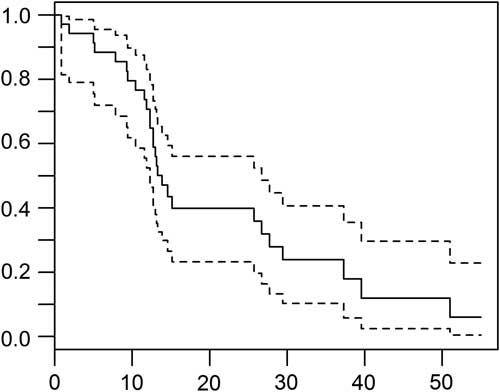
For the 141 residents having a minimum of 90 days of follow-up, the median duration of residence in the nursing home was 2.6 years (range, 0.5–19.7 years), of which 7 residents were newly admitted. Moreover, 124 residents (87.9%) were at risk of C. difficile acquisition in the nursing homes. Furthermore, 16 residents (12.9%) acquired C. difficile (9 of whom acquired toxigenic C. difficile) over a median follow-up duration of 29 weeks. The incidence of acquisition of C. difficile and toxigenic C. difficile were 0.56 per 1,000 resident days at risk and 0.32 per 1,000 resident days at risk, respectively. No factors were associated with C. difficile acquisition. Overall, 41 residents were carrying C. difficile during the study period: residents who were C. difficile positive at baseline (N=17); residents who acquired C. difficile in nursing homes (N=16); and residents who became C. difficile positive after hospitalization (N=8). We excluded 6 residents due to intermittent positive specimens. Of the 35 residents with positive C. difficile culture included in the analysis, the Kaplan-Meier estimate of median carriage duration was 13 weeks (Figure 1).
Kaplan-Meier estimate of the duration of Clostridium difficile carriage for the 35 nursing home residents with a follow-up duration ≥90 days with positive cultures at baseline sampling or sampling upon nursing home residence. The dotted lines show the 95% confidence interval of the curve.

The C. difficile strains first isolated from 71 residents were subjected to PCR ribotyping. The most common ribotypes identified were 002 (N=29, 40.8%), 014 (N=12, 16.9%), 029 (N=7, 9.9%), and 053 (N=6, 8.5%).
DISCUSSION
The prevalence of toxigenic C. difficile carriage among nursing home residents ranged from 3.8% to 51.5%. High rates of carriage were invariably associated with CDI outbreaks.Reference Ziakas, Zacharioudakis, Zervou, Grigoras, Pliakos and Mylonakis 14 The prevalence in Hong Kong was 10%, which was higher than that reported in Germany (3.8%), the United States (4%), and Ireland (7%) in the absence of a recognized outbreak.Reference Arvand, Moser, Schwehn, Bettge-Weller, Hensgens and Kuijper 15 – Reference Ryan, Murphy and Twomey 17 The lack of handwashing facilities was a possible explanation. In 4 nursing homes, >20 residents shared a single handwashing facility. This condition may have prevented healthcare workers from performing hand hygiene after diaper changes and before nasogastric tube feedings. Healthcare workers in the nursing home with the highest prevalence of C. difficile colonization did not undergo regular infection control training. In this context, the gaps in the current infrastructure emphasize the need to improve infection control management in nursing homes.
For the residents (N=36) who had toxigenic C. difficile isolated in this study, 8 (22%) had been admitted to hospitals with the presentation of acute diarrhea within 1 year of positive culture. This finding is in agreement with a previous study.Reference Riggs, Sethi, Zabarsky, Eckstein, Jump and Donskey 5 However, stool specimens of only 2 patients were sent for toxigenic C. difficile testing. Clinical suspicion for CDI should not be limited to patients who present with hospital-onset diarrhea; in fact, nursing-home–onset CDI contributed a significant disease burden.Reference Wong, Ip and Hawkey 2 This finding is further supported by the predominance of epidemic C. difficile ribotype 002 strains among colonized nursing home residents (40.8%) in this cohort.
The frequent movement of patients between nursing homes and hospitals presented another challenge for the control of C. difficile transmission. In Hong Kong, up to 20% of admitted patients in the medical units are nursing home residents.Reference Luk, Ho and Ng 18 Together with residents with undiagnosed CDI, they serve as reservoirs for continuous C. difficile transmission in healthcare settings. The process is dynamic and is amplified in these relatively resource-deprived nursing homes. In this study, recent hospitalization was a risk factor for C. difficile colonization. We identified 8 episodes (5 isolates were ribotype 002) and 16 episodes (5 isolates were ribotype 002) of possible C. difficile acquisition in hospitals and nursing homes, respectively.
Other significant factors associated with C. difficile colonization included bedbound state, presence of hepatic diseases, and prior exposure to penicillin-group antibiotics. Because of the relatively small sample size, the use of a proton pump inhibitor did not reach statistical significance (P=.051). Notably, the presence of a nasogastric tube was an independent risk factor for C. difficile colonization, which was also associated with CDI and the colonization or infection caused by other multidrug-resistant organisms.Reference Luk, Ho and Ng 18 – Reference Luk, Wong, Ho, Yu, To and Ng 20 Some have postulated that disruption in normal gut flora and dependence on nursing home staff for enteral feeding led to an increased risk of acquiring colonization through the fecal–oral route.Reference Na’amnih, Adler, Miller-Roll, Cohen and Carmeli 19 Our findings are only partially in agreement with those of a recently published meta-analysis which demonstrated that a history of CDI, prior hospitalization, and antimicrobial use were significant factors linked to C. difficile carriage.Reference Ziakas, Zacharioudakis, Zervou, Grigoras, Pliakos and Mylonakis 14 The different study settings might account for the discrepancy. In contrast to our study, which included multiple facilities in a nonepidemic setting, most of the studies included in the meta-analysis were performed in single facilities, and half of these were preceded by CDI outbreaks.Reference Ziakas, Zacharioudakis, Zervou, Grigoras, Pliakos and Mylonakis 14 Our data, therefore, are useful for formulating infection control policies targeted at asymptomatic C. difficile carriers in a nonoutbreak, long-term care setting.
In the prospective part of the study, we showed that a moderately high rate of toxigenic C. difficile acquisition (7.3%) occurred over a median period of 29 weeks in a nonepidemic setting. The C. difficile isolates acquired in nursing home H (N=4), nursing home F (N=3), and nursing home E (N=2 each) belonged to ribotypes 029, 014, 053 and 002, respectively. Considering the high degree of genetic relatedness with the same ribotype,Reference Rodriguez, Taminiau and Korsak 21 intrafacility transmissions were indicated. This finding contrasts with that of another study performed more than 20 years ago in which a similar rate of C. difficile acquisition was reported but with little evidence of cross infection.Reference Simor, Yake and Tsimidis 22 This difference could be due to the changing characteristics of residents and the epidemiology of C. difficile in LTCFs over time.
Our study provides additional data about the extended duration over which C. difficile colonized individuals may revert to a noncolonized state. The Kaplan-Meier estimate of median carriage duration was 13 weeks; nevertheless, 2 residents (5.7%) had persistent positive cultures beyond 10 months. The marked variation in duration of colonization has also been shown in other longitudinal studies; colonization for >3 months ranged from 0 to 19%.Reference Simor, Yake and Tsimidis 22 , Reference Johnson, Homann and Bettin 23 In facilities where standard measures fail to control C. difficile transmission, screening and performing contact precautions on colonized residents should be considered.
Our study has a few limitations. First, 75 residents did not consent to the study. The sample size was relatively small; and the multivariable analysis included only 18 outcome events, namely, C. difficile colonized residents of the 4 nursing homes at baseline. The 95% CI of the only significant independent variable—presence of nasogastric tube—was very wide, which indicates that our data might not be representative. Second, the CDI history of residents could not be reliably obtained because C. difficile toxin testing was requested for a minority of diarrheal patients. Third, molecular typing was performed for the first C. difficile strain isolated from each resident. For residents with persistent carriage, repeated acquisition could not be excluded. Finally, our sampling frequency might not have been great enough to accurately determine the duration of C. difficile carriage and the origin of acquisition.
In summary, our study demonstrates that nursing home residents in Hong Kong are at substantial risk of C. difficile colonization and acquisition. Carriage could be prolonged for >3 months for most patients. The presence of a nasogastric tube was an independent risk factor associated with carriage. This finding underscores the importance of adherence to hand hygiene in procedures such as diaper change and nasogastric tube feeding. The predominance of C. difficile ribotype 002 confirms that nursing homes are epicenters of sustained transmission across the continuum of care.
ACKNOWLEDGMENTS
We are grateful to the nursing home staff who helped collect the stool samples. We thank Ms Eleanor Ma for liaison with the nursing home staff.
Financial support: No financial support was provided relevant to this article.
Potential conflicts of interest: All authors report no conflicts of interest relevant to this article.