Introduction
Protecting and safeguarding children have been of high importance for policy-makers over the past 30 years in the United Kingdom, resulting in ever-increasing levels of surveillance of workers in this area. Latterly, adult protection has emerged as a key concern in social care policy and practice, and has new prominence in the regulatory and modernising framework (Lathlean et al., Reference Lathlean, Goodship and Jacks2006). Successive legislation increasingly regulates the social care workforce in order to reduce the risks of abuse and neglect among people using services.
This article explores the implementation of one part of adult protection policy within a context of wider regulatory systems in England and Wales. Specifically, the article reports on recently completed research investigating referrals to the Protection of Vulnerable Adults (POVA) List and the subsequent decision-making process concerned with whether or not to place individuals accused of harming vulnerable adults on the List. Once placed on the POVA List, a referred person is barred from working with or volunteering with vulnerable adults for ten years, although there is a right of appeal. The existence of the POVA List has been widely applauded by representatives of people using services and pressure groups concerned with adult protection.
To chart the operationalisation of the policy goal of raising the quality of social care for adults, this article describes the processes of investigation leading up to and following referrals of care staff to the POVA List. The analyses identify the level of involvement of different agencies, the pattern of organisations' own investigations, the involvement of the police, the time taken to reach a decision, and the outcome of referrals according to characteristics of referred staff, type of employment and characteristics of service users. Other analyses examining the prevalence of being accused of different types of abuse as well as the relationships of such probabilities with different characteristics, such as gender and age of workers as well as type of care setting, are presented elsewhere (Hussein et al., in press), as are the views of people using services and practitioners (Rapaport et al., Reference Rapaport, Stevens, Manthorpe, Hussein, Harris and Martineau2008).
Policy and legislation
As part of the implementation of the Care Standards Act 2000 in England and Wales, the Department of Health (DH) introduced the Protection of Vulnerable Adults (POVA) List in July 2004. This is administered on its behalf by the Department for Children, Schools and Families (DCSF, formerly the Department for Education and Skills, DfES) (DH, 2004). The POVA List is part of the increasing regulation and professionalisation of the social care workforce, underpinned by checks and mandatory disclosure of criminal convictions. Two similar schemes exist in relation to children: the Protection of Children Act (POCA) List, which contains the names of staff barred from working with children in care roles, and the long-established List 99, which contains names of teachers deemed unfit to practise on the grounds of misconduct or ill health (Cornes et al., Reference Cornes, Manthorpe, Huxley and Evans2007; Gillespie, Reference Gillespie2006).
Although the Care Standards Act was passed in 2000, implementation took time in respect of the administrative scheme it established, and in specifying the groups of staff that would be affected. With the scope of its responsibilities determined, as from July 2004 employers of staff working directly with vulnerable adults in England and Wales in registered social care services have been required to refer workers (and volunteers) dismissed or likely to have been dismissed for harming vulnerable adults or placing them at risk of harm to the Protection of Vulnerable Adults (POVA) List.
The key goals of the POVA List were outlined during the Parliamentary process and followed the white papers Modernising Social Services (DH, 1998) and Building for the Future (DH, 1999). During the second reading of the Care Standards Bill (Hansard, 2000, col. 481), the Secretary of State for Health (Alan Milburn) outlined the government's wish to reassure the public about the quality of social care:
In this day and age, the public should know that those who provide crucial services are competent and well trained, that clear quality standards will be set and enforced and that those most in need of protection are properly safeguarded.
The Care Standards Bill further proposed the establishment of a professional regulatory body for social care (as yet mainly in operation for social workers). The Secretary of State argued that this proactive approach contrasted favourably with the previous Conservative government's record of ‘neglect and complacency’ in the system of regulation (Hansard, 2000, col. 482). The new system for regulation of staff would be ‘rigorous and coherent’ (ibid., col. 491) and care providers themselves would benefit from ‘a streamlined and consistent regulatory system’ (ibid., col. 560). Murray and Convery (Reference Murray and Convery2000) noted that this would involve addressing inconsistencies of regulation as well as its extension.
As the Care Standards Act 2000 moved to the implementation phase, details of the vetting and barring scheme were drafted and consulted upon, and the extent to which employers would be responsible for checking and referring was made more explicit. Government aspirations for the scheme remained: that there will be ‘no hiding place in the care workforce’ for professionals who abuse (Ladyman, Reference Ladyman2004: 4), but it became clearer that the onus would be on employers to refer ‘unsuitable’ staff, to make pre-employment checks and to pay for such checks (Social Care Institute for Excellence, 2006).
The scheme is to undergo reform when the Safeguarding Vulnerable Groups Act 2006 is implemented as from 2009. This Act introduces a new National Information System for Police Intelligence, to combine information from the Criminal Records Bureau (CRB), the POVA and POCA lists and List 99. A single registration scheme for anyone wanting to work or volunteer with children or adults in vulnerable situations is also to be established. Ultimate responsibility for the Independent Safeguarding Authority (ISA) is to be assumed by the Home Office, although the DH and DCSF will continue to be involved in developing the system.
This new body will further enlarge the scope of regulation to an extent that is unique to the United Kingdom (in Scotland, the Adult Support and Protection Act 2007 will also establish a unified vetting and barring scheme, covering people working with children and adults, and there is a parallel scheme in Northern Ireland). The period 2004 to 2008 thus forms a natural policy ‘laboratory’ with potential to determine the effects and effectiveness of this innovatory policy in England and Wales.
There is opportunity to learn from the implementation of this policy, in order both to inform the regulatory framework of social care (Waine, Reference Waine2004) and to consider the impact of a policy that has extensive implications for the human rights of people using social care services and also of staff employed in such work. The vetting and barring scheme has the potential to criminalise job applicants and cancel registration of a care service for failing to comply with the legal duty to make a referral. This is in an area where staff shortages are common, and workforce and organisational turnover is high (Commission for Social Care Inspection, 2006), while government policy simultaneously promotes maximum employment and the value of work (Freud, Reference Freud2007) as well as the rehabilitation of offenders (Cowburn and Nelson, Reference Cowburn and Nelson2007; Madoc-Jones et al., Reference Madoc-Jones, Bates, Facer and Roscoe2007; Harris and Keller, Reference Harris and Keller2005; Ruddell and Thomas Winfree, Reference Ruddell and Thomas Winfree2006). There is also much to glean about the implementation of policy among disparate types of employer (see Kendall, Reference Kendall2001), operating in settings where work is human- and relationship-centred and where human resources responsibility may be centralised or highly delegated (Whittaker and Marchington, Reference Whittaker and Marchington2003). Putting safeguards into place may be easier to speak of than to enact. The government (Lewis, Reference Lewis2007) has recently announced a review of the national guidance on adult protection in England (No Secrets, DH, 2000) in the light of concerns about the continued occurrence of abuse and of the possible limitations of permissive guidance (Lathlean et al., Reference Lathlean, Goodship and Jacks2006).
Method and data
This study was commissioned by the Department of Health in 2005–7 to investigate the decision-making of the POVA scheme and to make recommendations for policy. A multi-method approach was undertaken, including re-analysis of information held by the POVA team, and interviews and discussion groups with members of the POVA team, older people, and care staff and managers (the results of the latter are reported elsewhere: Stevens et al., Reference Stevens, Hussein, Martineau, Harris, Rappaport and Manthorpe2008).
The study received ethical permission from King's College London. The civil service team set up to administer the POVA scheme, based at the then Department for Education and Skills, provided the researchers with records of all referrals from 21 May 2004 to 17 November 2006. These comprised 5,294 cases where referrals to the POVA scheme from employers were concerned with ‘adults’ and had not been cross-referred from the Protection of Children Act (POCA) List. The records included the following information: country (England or Wales), date of birth of referred staff, job role of referred staff, type of care provider and alleged type of abuse (coded as physical, emotional, sexual, financial and other). They also held information on the outcome of the referral as well as the dates of both the referral and the ultimate decision (where one had been reached): these dates enabled the calculation of time taken to reach a decision as well as the time that open referrals had been ongoing.
Although the census data of all referral records offered a unique opportunity to investigate the whole population rather than a sample, the information included in the records was somewhat limited and also uneven. To substitute for some gaps, further data relating to the investigation process were provided through drawing on all material supplied with a purposively selected sample of 298 referrals. These records contained additional basic demographics, such as gender and ethnicity (although the latter had a very high missing rate at 89 per cent, mainly because employers were not asked to supply this information on the POVA forms), but, importantly, detailed information on the process of the referral and agency investigations, as well as information about the misconduct of the worker. The detailed sample also enabled the coding of a further category of abuse as ‘neglect’ in addition to the five listed above.
Both the full dataset of all records and the sample contained information as to country (England or Wales), and certain of the characteristics of the referred person: that is, their age (classed as less than 35, 35–49 and 50 years or more) and job role (broken down into frontline staff including direct team leaders and supervisors, nurses working in social care and staff without care responsibilities, such as administrators, cooks or cleaners). From the sample data the team extracted information on different characteristics of service users, such as physical disability and learning disability. The richness of the data over a two-year period provided a unique opportunity to consider how a policy aim of improving care standards may be translatable into care work.
The data were analysed using SPSS version 15 and applying different bivariate, multivariate and regression techniques. Initial cross tabulations were used to examine a theoretical framework of analyses that was based on previous literature as well as the qualitative elements of the research. Binary logit regression models were used to examine any significant variations in the probabilities of police investigations and the case being confirmed. Differentials in the duration of referrals were examined using One Way Analysis of Variance (ANOVA). A brief summary of the different methods used is given in the appropriate section of this article.
Findings
This section reports on findings from the study in two key areas. First, we explore the interaction between the POVA List system and existing regulatory processes in the social care field (disciplinary proceedings and the involvement of other agencies). The second section outlines the operation of the POVA List and the difficulties in establishing the facts of a case.
The interfaces of the POVA scheme with existing regulation
All social care employers have to develop and operate disciplinary procedures, which are used to respond to workers who abuse or otherwise harm people using services. Other regulatory bodies, such as the Commission for Social Care Inspection (CSCI) in England or the parallel body in Wales (the Care and Social Services Inspectorate in Wales, CSSIW), have adult protection responsibilities in respect of regulating provider organisations. Furthermore, some of the misconduct leading to referral to the POVA List is serious enough to involve the police as it is potentially criminal in nature. In order to explore the articulation of the POVA scheme with these other forms of regulation, findings relating to employers' investigations and disciplinary hearings, the involvement of other agencies, and any police investigations of referred people are reported in this section.
Due process: how does the POVA process relate to employers' disciplinary action?
Social care providers in England in the main are businesses or charities that act under employment law. Human resources or employment functions are becoming well-developed among larger employers, although personnel management capacity among smaller organisations is often limited (Jackson et al., Reference Jackson, Cunningham and Dutton2001). The care sector is an increasingly regulated sector, but so too are labour market relationships (Donohue and Strawbridge, Reference Donohue and Strawbridge2006). Scrutiny of the POVA referrals revealed that almost all employers had undertaken inquiry and disciplinary processes prior to the referral. In only 6 per cent of the sample of referrals had there been no employer's investigation. In over three quarters (77 per cent) of referrals employers' investigations had resulted in some form of disciplinary action, resulting in almost two thirds (65 per cent) of referred people having been dismissed before the referral, while in 14 per cent of cases this process had resulted in no action and in 3 per cent of the sample the investigation was still ongoing.
Responding to abuse and neglect in partnership
Among the detailed sample of 298 cases, the most commonly involved organisation in the investigation process was the regulator of social care services, the Commission for Social Care Inspection (CSCI) or the Care and Social Services Inspectorate in Wales (CSSIW), which was cited in about two thirds (67 per cent) of referrals. Such involvement could be a matter of reporting an untoward incident and did not necessarily signify engagement with the process of ‘discovery’ of abuse or dealing with allegations, although these were possible types of involvement. Social Services Departments (the local authority adult services departments), that often funded placements in the care home or of the home care services in question, were informed in 58 per cent of the sample of referrals. However, Adult Protection Units (or similar) in the local authority concerned were involved in only 25 per cent of cases.
Police involvement
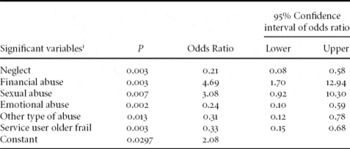
The police had been involved in about half of cases (51 per cent). Of those involving some police investigations, 34 per cent had resulted in no criminal charges, while 26 per cent had resulted in either a criminal charge or conviction. To examine the association between different background variables and the involvement of the police, we created a binary variable that took the value one if the police had been involved. Using all staff characteristics (gender, age, job role), type of care provider, different service users' characteristics and all types of alleged abuse as predicting variables in a binary logit regression model, we were able to explore any relationships between each of the characteristics and the probability of involving the police, while controlling for the rest of the characteristics.
Table 1 shows the results of this analysis. These indicate that alleged financial or sexual abuse significantly increased, the likelihood of the case being investigated by the police (OR = 4.7 and 3.1; p-value = 0.003 and 0.007 respectively). In contrast, when the type of abuse was neglect, emotional or ‘other’ type of abuse, this significantly reduced the probability of the case being investigated by the police (OR = 0.08, 0.24 and 0.31; p-value = 0.003, 0.002 and 0.013 respectively). When service users were classified as ‘older frail’, this also reduced the probability of a case being investigated by police (OR = 0.33 and p-value = 0.003), (see results in Table 1).
Significantly associated characteristics with the probability of police involvement (sample dataset)

1Omnibus chi-square = 70.9, p < 0.001; Nagelkerke R2 = 0.39.
How is the POVA scheme operating?
This section presents the analysis of data relating to the outcomes of referrals, and the time taken for final decisions to be reached. Such parameters give a good picture of the processes involved in the handling of referrals to the POVA List and raise issues of natural justice for staff in providing a timely conclusion to the matters raised.
What happens to referrals?
Examining all 5,294 referrals records revealed that a large proportion of all referrals (58 per cent) were removed (closed and the worker not placed on the List). In particular, 43 per cent of referrals were removed at the pre-provisional stage, which means either that the referrals were not eligible for consideration, perhaps because of the service context, or that the POVA team had decided at this early stage that the harm or misconduct was not serious enough to warrant a judgement that the referred person was unsuitable to work with vulnerable adults. For many staff this may, nevertheless, have meant suspension from work, possible distress or at least uncertainty (see Jones', Reference Jones2007, case series illustrating the distress experienced by care staff subject to false allegations of abuse). Only 7 per cent of all referrals had been confirmed on the POVA List. An additional 28 per cent had been provisionally listed while investigations were being completed.
The proportion of referred people whose appeals against decisions made by the referrals team were ongoing at the date of receiving the data file was small at only 0.3 per cent (N = 16). However, a further 23 referrals had gone to an appeal that had been heard. Eleven of these had been upheld, with the referred person being removed from the POVA List, and 12 had been dismissed, resulting in confirmation on the POVA List. These referrals are included in the ‘removed at other stages’ and ‘confirmed’ categories. Overall, 37 referrals out of 5,294 had either been taken to appeal or were at appeal at the time of receiving the data files, which represents about 10 per cent of the confirmed cases (N = 342).
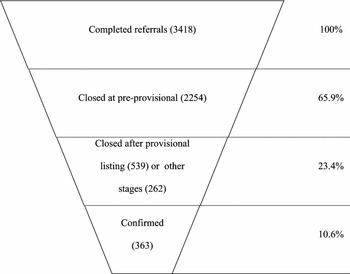
Figure 1 shows the different outcomes of the two thirds (65 per cent) of cases in which a final decision had been taken either to confirm a referred person on the POVA List or to close the case without confirmation; the other 35 per cent of cases were still ongoing at the time of analysis. Of these 3,418 cases, about one tenth (11 per cent) had been confirmed, and nearly a quarter (24 per cent) had been removed after being provisionally listed (16 per cent) or at other stages, including after appeal (8 per cent). Almost two thirds (66 per cent) of referrals where a decision had been taken had been removed at the pre-provisional stage.
Outcomes of completed referrals* (full dataset)
Note: * Where decision date was available.

As discussed, the sample of 298 referrals was purposively selected to represent relatively more confirmed cases. This was to allow enough numbers in each of the main outcome groups for comparison in relation to the different detailed background characteristics. The sample divides approximately equally between: confirmed cases, where the referred person had been confirmed on the POVA List; provisionally listed cases, where they were currently provisionally listed; and closed cases, where they had not ultimately been placed on the POVA List.
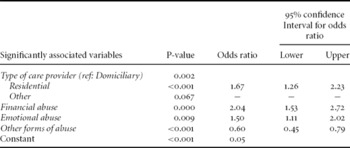
To examine the association between different characteristics and the probability of a case being confirmed, two binary logit regression models were performed, one considering characteristics available on the full dataset and the other related to those available only in the sample. The results of the logit regression model for the full dataset are summarised in Table 2. Within the sample data, the second regression model showed that referrals of alleged sexual abuse (from the sample) were found to be four and a half times more likely to be confirmed (OR = 4.53 and p-value = 0.002). No other background characteristics of the sample dataset variables were significantly associated with being confirmed on the POVA List. In summary and taking both datasets into consideration, referrals from residential care settings and those relating to financial, emotional or sexual (from the sample) forms of alleged abuse were more likely to be confirmed. In contrast, referrals from domiciliary care and those containing ‘other’ forms of alleged abuse were less likely to be confirmed (see Table 2 for details).
Significantly associated variables with the probability of a referral being confirmed, logistic regression model (full dataset)

How long does it take to reach a decision?
The time taken to reach a decision was calculated as the difference in months from the date the referral was received by the POVA team and the date by which the case was closed by communicating or making the decision. Ongoing referrals included all those records with a missing closing date: that is, where the outcome was not coded as confirmed or removed. Ongoing time was calculated as the amount of time from the date the referral was received until 17 November 2006 (when the study data file was last edited). In cases where the closing date was missing while the referral outcome was available, either ‘confirmed’ or ‘removed’, they were coded as ‘decision made but time is unavailable’. In 22 per cent of all the 5,294 cases, a decision was made in less than three months, while in 14 per cent of referrals it took at least nine months to reach a decision. Moreover, around 17 per cent of cases were still ongoing more than nine months after the referrals had been received. In 16 per cent of referrals a decision had been made, but details of the timing were not available.
Out of referrals where a decision had not been reached (N = 1,888), almost half (48 per cent) had been ongoing for at least nine months, at which point a referred person is entitled to have the case decided by the Care Standards Tribunal. When examining the relationship between time taken to reach a decision and the outcome of the referral, not surprisingly the longer the time, the more likely the referral was to be provisionally listed rather than at the pre-provisional stage. Only one in ten (10 per cent) of provisionally listed referrals had been ongoing for less than three months, compared with about four fifths (80 per cent) of referrals at the pre-provisional stage. However, about three fifths (60 per cent) of provisionally listed referrals had been open for over nine months, compared with just 2 per cent of referrals at the pre-provisional stage.
Among the cases where a decision had been reached and duration was available, of 2,566 cases about a fifth (21 per cent) of such decisions had taken over nine months. However, the proportion of cases that took over nine months for a decision to be reached was much higher: 77 per cent among confirmed cases, and for those removed at the provisional stage, 68 per cent. As these figures indicate, higher percentages referrals were closed more quickly at the pre-provisional stage compared with those that had been provisionally listed.
In relation to the time taken to reach a decision according to the different types of alleged abuse, the highest proportion of ongoing cases taking at least nine months was among those of financial abuse (22 per cent), while the lowest was among referrals with sexual abuse (15 per cent). The highest proportion of referrals where a decision was made in less than three months involved ‘other’ forms of abuse (26 per cent). Referrals involving emotional and financial abuse were least likely to have been completed in three months (14 and 15 per cent respectively). In terms of job role, the proportion where a decision had been made in less than three months was highest for referrals involving ancillary staff (such as cooks and cleaners who do not generally undertake care work) (34 per cent) but it was lowest for referrals involving managers or deputy managers (16 per cent). The proportion of referrals that had been ongoing for at least nine months was highest where team leaders and supervisors were involved (22 per cent), and lowest for those concerning nurses and ancillary staff (16 per cent of each group). Moreover, referrals where a decision was made in less than three months were more prevalent when they came from domiciliary compared with residential care services (24 versus 20 per cent). A higher proportion of referrals from residential services compared to domiciliary care services (15 versus 11 per cent) took at least nine months for a decision to be made.
To summarise and examine any association between different background characteristics and time taken to reach a decision, we focused on referrals where a decision had been made (had been confirmed, or removed at the pre-provisional, provisional or other stage) and where time taken was available (2,566 cases). We examined the variation in the mean time taken to make a decision arising from different characteristics using ANOVA (One Way Analysis of Variance). The set of independent variables included: different types of alleged abuse, country (England or Wales), age of referred worker, job role and type of care provider. As noted above, gender and ethnicity information was not available for the main data set, thus we were not able to include these characteristics in this particular analysis.
Among referrals where a decision had been made, it took the POVA team an average of 5.8 months to be in a position to reach that decision either to confirm (place on the List) or close the case (without placing the referred worker on the POVA List). The results show that mean time taken to reach a decision among referrals relating to either sexual or ‘other’ forms of abuse was significantly less than those without either of these elements (4.8 months in each compared with 5.9 and 6.6 months; F = 4.4 and 49.8 respectively). On the other hand, referrals of alleged financial and physical abuse took significantly longer than those with no element of such allegations (7.4 and 6.4 months versus 4.5 and 5.5 months; F = 37.7 and 12.3 respectively).
It is worth noting that the time taken to reach a decision presented here might be an underestimate of the true duration, particularly since nearly half of those open cases were ongoing for at least nine months.
Discussion
The POVA scheme has been superimposed on a regulatory system involving employers' disciplinary processes, which are required by the Employment Act 2002 (Department of Trade and Industry, 2004), criminal justice systems covering offences such as theft and sexual abuse of vulnerable adults (for example, the Sexual Offences Act 2003) and public sector organisations, such as CSCI/CSSIW and local authorities, which have statutory responsibilities in respect of adult protection (DH, 2000). This research suggests that the POVA scheme is articulating with these processes and agencies, albeit to a limited extent, although further work would be needed to establish how the different agencies are involved with referrals and to what effect. Records of investigations and disciplinary hearings might usefully accompany referrals, notwithstanding that this requirement may be burdensome for some employers or human resources departments. Earnshaw et al. (Reference Earnshaw, Marchington and Goodman2000) suggested that discipline and dismissal processes in small establishments, common in the social care sector, present managers with responsibilities that are onerous and for which many are ill prepared. This may particularly apply to social care enterprises that are voluntary based (Jackson et al., Reference Jackson, Cunningham and Dutton2001).
The government's policy goal of enhancing trust in care services suggests that it considers Criminal Record Bureau checks alone do not filter out ‘unsuitable’ workers, and it was evident that police involvement generally focused on acts of physical and sexual abuse and financial abuse, rather than neglect and emotional abuse. However, decisions about whether to confirm referred people on the POVA List took longer for cases of alleged financial abuse than other cases. This may suggest that the POVA scheme provides safeguards for staff in enabling the case against them to be properly examined, but it may be variously experienced as an essential or burdensome double-testing of the evidence against them. The standard of proof for placement on the POVA List is lower, at the level of balance of probability, than the criminal standard. As we recount elsewhere (Rapaport et al., Reference Rapaport, Stevens, Manthorpe, Hussein, Harris and Martineau2008), some members of the POVA team reported that police investigations rightly took precedence, though this sometimes delayed the team's access to information and to the referred person's side of the story. This may mean that the status of a person who has been cleared of criminal wrong-doing or against whom the case is thought unlikely to succeed if it were to go to trial, remains indeterminate until the evidence is again investigated, much later, by the POVA team.
This study has revealed the limited involvement of local authority (adult services) personnel with responsibility for safeguarding vulnerable adults in cases referred to the POVA List, and that those responsible for the funding and regulating of care, adult services departments and CSCI/CSSIW, did not appear to be routinely informed and involved in many cases. This was reflected in the analysis of the sample referrals of which 33 per cent had no involvement with CSCI/CSSIW. This may mean that the monitoring of care funded by adult services may not yet tie closely to other parts of regulatory and inspection surveillance, the coherence of which was a central aim of the Care Standards Act 2000.
In respect of the rights of care staff, the fact that nearly nine out of ten of the referrals were removed at the pre-provisional stage within three months suggests a fairly rapid turnover for referrals that are not seen as warranting further investigation by POVA. However, decisions took over nine months in over three quarters (77 per cent) of confirmed cases and over two thirds (68 per cent) of cases were removed at the provisional stage. Further, almost half (48 per cent) of open referrals, had been ongoing for at least nine months, the time when the referred person is entitled to have the case decided by the Care Standards Tribunal. This means that about a quarter (25 per cent) of referred people had been or, in the case of open referrals still were, provisionally listed for over nine months before being removed from or confirmed on the POVA List. These individuals were unable to work with vulnerable adults in care work for that time (and were possibly unable to work at all with such a shadow cast over their employment history). Such points were raised by appellants supported by the Royal College of Nurses (Unison, 2006; Court of Appeal, 2007) who focused on the right to fairness and the right to continue work while a case is being investigated. We have little information on the effect on employers and care services of mandatory referrals, and it is not known how much resources are taken up with seeking evidence, arranging alternative staffing and making decisions (Parsons, Reference Parsons2007).
We do not have information about the effects of provisional listing on care staff apart from cases that have gone to tribunal or court hearings, but it is possible that other aspects of life were affected: for example, involvement in adoption or fostering activities, volunteering or public service, or application for professional training (Madoc-Jones et al., Reference Madoc-Jones, Bates, Facer and Roscoe2007; McLaughlin, Reference McLaughlin2007). In the case of Wright and others, 26 October 2007, the Court of Appeal overturned the High Court judgment, which had declared provisional listing to be incompatible with Articles 6 and 8 of the European Convention on Human Rights. The Court of Appeal ruling (Court of Appeal, 2007) indicated that it is permissible to provisionally list someone immediately on referral where it is clear that vulnerable adults are at serious risk of harm. However, where it is not clear there is such a risk, or the evidence is not available with the referral, then the Court of Appeal's ruling requires that the referred person must be given an opportunity to make representations before being provisionally listed.
More work on the impact of vetting and barring schemes on those affected would be a balance to the work on the process of listing outlined here, and might be compared with the experiences of those who have been suspended from employment for other reasons or in other contexts. The ratio of the overall number of referrals to those confirmed (about ten to one) raises a question about whether the criteria and definitions of harm, while meeting policy goals to ensure safety, are too broad. The time and effort taken to consider referrals concerning a very large number of workers who are not eventually barred perhaps increase the likelihood that some referred people may be barred unnecessarily (false positives), or allowed to carry on working with vulnerable adults when they should have been barred (false negatives).
The new ISA scheme (see above) will be extended to professionals and other staff in health and education, which may lead to higher proportions of referrals involving staff who have professional or union representation and/or who are advised by legal practitioners. Concerns about the wider circulation of ‘soft’ or unproven information are also emerging on the basis of potential threats to civil liberties (Wasik, Reference Wasik2006). Different guidelines about which care workers should be referred to the ISA are being devised, and increased levels of training and support may assist managers responsible for making referrals. The study reported here indicates the value of training for managers and human resources staff in order to improve the quality of the material they supply when making referrals, for example increasing the proportion supplying a record of any disciplinary hearing. The analysis showed that referrals from residential care and those with some element of financial abuse were more likely, while those with elements of other forms of abuse were less likely, to be confirmed in the POVA list. Possible explanation of the latter may be due to the difficulties in establishing facts and severity of ‘other’ forms of abuse. The fact that referrals from residential services were significantly more likely to be confirmed may be due to different procedures among the two settings or to matters of ‘visibility’. However, further investigations are required to understand the reasons behind such disparities.
The mean time taken to reach decisions was significantly longer among cases of alleged financial, physical and emotional abuse, while it was significantly shorter among cases of alleged sexual or ‘other’ forms of abuse, where decisions about suitability may be more straightforward. This was also highlighted in the qualitative interviews with the POVA team which were undertaken as part of the study (Stevens et al., Reference Stevens, Hussein, Martineau, Harris, Rappaport and Manthorpe2008). Physical and emotional abuse may be more difficult to interpret in terms of the seriousness of the misconduct, the harm caused and the likelihood of repetition. Sexual abuse appears to be generally more unambiguous and perhaps receives greater attention from employers' and police investigations, both in terms of speed and quality of evidence gathered. This may explain the shorter decision-making times for these kinds of referrals. It may be that police investigations in financial abuse cases, which were more commonly involved in such referrals, may add unavoidable time to the POVA decision-making due to the nature of evidence required to establish a case. In light of recent research highlighting the prevalence of financial abuse among older people (O'Keeffe et al., Reference O'Keeffe, Hills, Doyle, McCreadie, Scholes, Constantine, Tinker, Manthorpe, Biggs and Erens2007), there are possibly wider policy issues to address about prevention of financial abuse, rather than simply giving attention to the catching of miscreants.
Conclusion
The Care Standards Act 2000 aimed to increase the quality of social care through a variety of means, including registration of social care workers and the implementation of the POVA List. The POVA scheme was implemented well before registration of social care employees. To some extent, POVA referrals have been integrated into the context of multi-agency adult protection procedures, as required by the No Secrets (DH, 2000) guidance in England and In Safe Hands in Wales (National Assembly for Wales 2000). However, this study found that while the majority of referrals were made with some reference to other agencies, particularly CSCI/CSSIW, levels of integration were patchy. There may be a need for more consistency and clarity regarding the roles of different actors within any process that leads to the decision to bar a potential member of the workforce. The DH guidance (DH, 2006) simply states that employers should consider notifying the police, the local authority and CSCI/CSSIW when a crime has occurred. More detailed advice about when and how to involve other agencies may improve communications in this area and has the potential to result in those commissioning care services being better informed about the quality of services being procured.
Employers have been complying with the statutory duty to refer those alleged to have harmed adults in vulnerable situations, where they have been or would be likely to be dismissed. This seems to confirm the success of government policy in that the scheme has helped promote social justice by reducing the risk of abuse, and has not adversely affected economic efficiency (Dickens and Hall, Reference Dickens and Hall2006), something that might have been indicated by employer resistance to the scheme. By November 2006, 5,294 referrals to the POVA List had been made, of which final decisions had been made in 3,418 cases, resulting in the barring of 363 people from working with vulnerable adults. Without the POVA List, all of these people would have been free to apply for similar work in the future, although many of those with criminal convictions would have been identified through Criminal Record Bureau checks, and good practice in the taking up of references might have resulted in decisions not to appoint certain staff. Given similar cooperation from employers by their not employing those placed on the List (which would be a criminal offence), on the face of it many ‘abusers’ have been removed from the social care workforce, thus fulfilling the government's goals of increasing protection and assuring the public of the quality of care services. However, the ratio of referrals to confirmations as well as the recent case ruling on provisional listing on the POVA list in relation to article 6 of the European Convention on Human Rights (Court of Appeal, 2007) may lead to further examination of the criteria for referral to the new ISA scheme, particularly given the broadening of the scheme to include NHS staff. The question for policy-makers therefore will remain one concerned with the balances between a focus on proven or suspect ‘bad apples’ or on improving wider employment and care practices in human services agencies.
Acknowledgements and disclaimer
This study was funded by the Department of Health (DH) and the research team was assisted by members of the DH and of the then Department for Education and Skills (DfES). We are most grateful to them for their assistance and cooperation at all stages. The views expressed in this article are those of the authors alone and should not be interpreted as the views of the DH or the former DfES.