Introduction
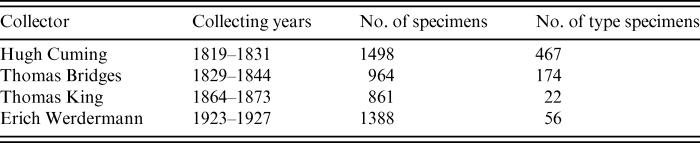
The herbarium of the Royal Botanic Garden Edinburgh (E) has its origins in a combination of the collections of the Botanical Society of Edinburgh and the University of Edinburgh in the 1840s and moved from the University of Edinburgh to the Royal Botanic Garden Edinburgh (RBGE) in 1863 (Fletcher & Brown, Reference Fletcher and Brown1970; Royal Botanic Garden Edinburgh, in press). Since its inception the herbarium has increased greatly in size with the addition of collections made by members of staff, acquisitions from other botanic gardens and by incorporating private collections. Today the herbarium comprises more than three million specimens with 10,000 new items being added each year (Royal Botanic Garden Edinburgh, in press). The Werdermann collection held at E numbers 1388 specimens and represents around 10% of the Chilean preserved collection. The Royal Botanic Garden Edinburgh was one of 16 subscribers to Werdermann’s four-year collecting trip to Chile and southern Peru (Mattick, Reference Mattick1962) but, interestingly, this did not include any of his Bolivian collections made in 1926. Certainly Werdermann’s specimens were purchased at a time when RBGE was subscribing to other plant collecting expeditions from temperate South America, including Harold Comber’s visit to Argentina and Chile from 1925 to 1927. During this period a relatively small herbarium set (310 specimens) was acquired from the nurseryman Clarence Elliott who collected in Chile from 1927 to 1930. Other major collections which were not only numerically significant but made a considerable addition to our knowledge of the Chilean flora are detailed in Table 1. These collections came from Walker-Arnott’s herbarium via Glasgow University herbarium.
Major historical collections of Chilean plants held at E

Erich Werdermann (1892–1959) was a German botanist based at the Botanischer Garten und Botanisches Museum Berlin-Dahlem (BGBM). Initially working on fungi and lichens, he developed an interest in the systematics of higher plants, particularly cacti and succulents. He would later become an authority on this latter group, travelling to Africa and North and South America to make new collections to study (Mattick, Reference Mattick1962).
Werdermann’s first overseas collection, and indeed the first from the BGBM since the Great War, was his ‘Plantae Chilenses’, made between 1923 and 1927 in Chilean and Peruvian territory (BGBMBD, 2013). Werdermann undertook his first collections in September 1923 and worked throughout the summer season until April 1924. During the winter months he was able to sort, identify, label and distribute his collections from Santiago, and plan his itinerary for the following season (Mattick, Reference Mattick1962), a pattern which continued for the remainder of his visit. On arrival in Chile, Werdermann’s focus was to have been on fungi, a group from which he made a number of collections (Sydow, Reference Sydow1928, Reference Sydow1932), but these seem not to have been distributed to the subscribing herbaria along with his other collections. Only one fungus from this trip is known to be held at Edinburgh, an isosyntype of Puccinia antucensis Syd., Werdermann s.n. (at E) but no. 1724 in the protologue (Sydow, Reference Sydow1928). At an unknown time his focus changed to collecting angiosperms.
The visit to Chile was funded by subscriptions from 12 leading botanical institutions: the Arnold Arboretum of Harvard University (A); the Botanischer Garten und Botanisches Museum Berlin-Dahlem (B); the British Museum (BM); the Royal Botanic Garden Edinburgh (E); the Field Museum of Natural History in Chicago (F); Conservatoire et Jardin botaniques de la Ville de Genève (G); the Gray Herbarium of Harvard University (GH); the Royal Botanic Gardens, Kew (K); the Missouri Botanical Garden (MO); the New York Botanical Garden (NY); the Swedish Museum of Natural History (S) and the Museo Botánico (Darwinion) (SI). Of these, all but Kew and Darwinion subscribed to the full set (Looser, Reference Looser1959). Werdermann was able to gift a small number of specimens to the Museo Nacional de Historia Natural (SGO) which was at the time unable to subscribe to the full series (Mattick, Reference Mattick1962). Other specimens are also deposited at the Universidad de Concepción (CONC) (Davies, Reference Davies2010), the Fundación Miguel Lillo (LIL) (JSTOR Global Plants, 2013), and Nationaal Herbarium Nederland (U) (Leuenberger & Eggli, Reference Leuenberger and Eggli1996) now held at Leiden (L) (Nationaal Herbarium Nederland, 2013).
The information on the labels used by Werdermann almost always includes a traceable locality and an approximate altitude. The collections are from almost all the regions of Chile, covering not just the coastal areas, which at that time were relatively accessible and therefore had been visited by many other collectors, but also numerous less accessible inland locations. It is this broad geographical coverage that makes Werdermann’s collections so important. The herbarium specimens are of very high quality, having been carefully sun-dried and where possible including all the key characters necessary for accurate identification. The specimens held at E have been carefully mounted and they remain well preserved.
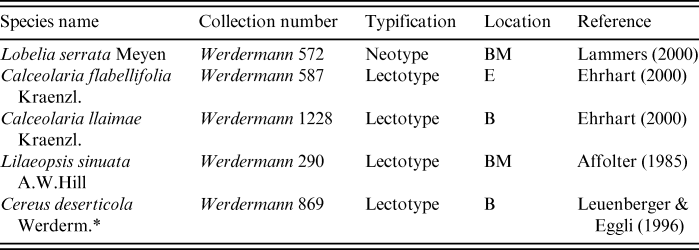
Werdermann’s ‘Plantae Chilenses’ collection is an important set for the study of the Chilean flora and they are frequently used as reference specimens for checklists (Zuloaga et al., Reference Zuloaga, Morrone and Belgrano2008) and monographs (Ehrhart, Reference Ehrhart2000; Klingenberg, Reference Klingenberg2007; Davies, Reference Davies2010). The set has also provided type material for the description of 56 new taxa, many described in Berlin and published in Notizblatt des Botanischen Gartens und Museums zu Berlin-Dahlem between 1927 and 1929 (e.g. Werdermann, Reference Werdermann1927). Most recently Oriastrum werdermannii A.M.R.Davies was described in 2010 from Werdermann 96 (holotype CONC) (Davies, Reference Davies2010). With the Edinburgh collection now fully georeferenced, databased, imaged and accessible on Edinburgh’s virtual herbarium (RBGE Herbarium Catalogue, 2012), and with duplicates available online at other herbaria, they will continue to provide useful information for researchers working on the flora of Chile. Many of the specimens in Berlin, which would appear to be the original material on which the species names were based, were destroyed during a bombing raid on the night of 1st/2nd March 1943 during the Second World War (BGBMBD, 2013). Lectotypification of the duplicate herbarium specimens held in other herbaria would clarify any remaining uncertainty concerning these taxa, with only four known lectotypifications and one known neotypification, given in Table 2.
Known lectotypifications and neotypifications made from Werdermann’s ‘Plantae Chilenses’ collections
* Pro parte. Lectotypification as of flowers only, excluding stem parts. Isolectotypes at BM, G, K and U (other specimens not seen).
Materials and Methods
About 350 specimens of Werdermann’s ‘Plantae Chilenses’ had previously been added to BG-BASE (the collections management software used by RBGE), prior to a concerted effort to locate and database this collection in its entirety. The total number in this collection held at E was unknown beyond the fact that RBGE’s paper herbarium records (RBGE, n.d.) indicated that 300 had arrived in 1924, a further 376 in 1925 and an unknown number in 1927. The new search for these specimens was initially based on names published in the Catálogo de la flora vascular de Chile (Marticorena & Quezada, Reference Marticorena and Quezada1985). The folders containing the cited species were located and the relevant specimens were extracted, databased and imaged. These data are now presented in the online RBGE herbarium catalogue.
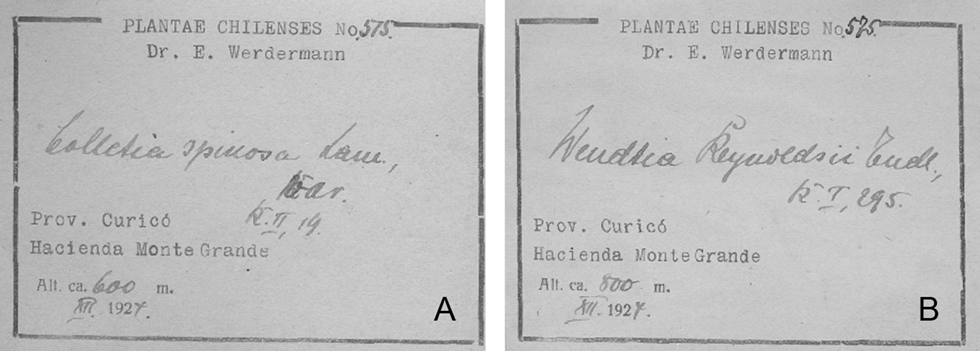
The distribution numbers were sorted and duplicate numbers recorded. The majority of duplicate numbers, about 30, had arisen as a result of misinterpretation of the digits (Fig. 1), which helped to reduce the number of missing collections, although in four instances there really are duplicate sheets of the same collection numbers.
Example of labels which were originally recorded as duplicate numbers. A: number 515. B: number 575. In this case, both specimens had been recorded under the number 575.
The result of online searches of herbaria known to hold Werdermann’s ‘Plantae Chilenses’ ended with 1325 specimens accounted for. The remaining missing specimens were located by searching for specimens filed under synonyms at E. The key resources used in this search were the Catálogo de las Plantas Vasculares del Cono Sur (Zuloaga et al., Reference Zuloaga, Morrone and Belgrano2008), the World Checklist of Selected Plant Families (WCSP, 2012), Missouri Botanical Garden’s online database (Tropicos.org: Missouri Botanical Garden, 2013), the International Plant Names Index (2012) and the Plant List (2010). This search yielded the majority of the specimens missing from the set. On-going curation of Chilean specimens led to the discovery of a few further missing specimens.
Werdermann’s travel itinerary can be roughly calculated using the raw data on the labels but, in order to map the specimen localities, it was necessary to determine the latitude and longitude of each. The geographical coordinates of each site were extracted from the following sources: Instituto Geográfico Militar [Chile] (1983), Diccionario Geográfico de Chile (Risopatrón, Reference Risopatrón1924) and the GeoNames Database (www.geonames.org). These data points also allowed for the correction of the Chilean region where the specimens were collected. Specimens labelled ‘Departamento de Tacna’ have been assigned to Peru, to reflect changes in the border limits between Chile and Peru in 1929.
Results and Description of the Collection at RBGE
This process resulted in about 1250 of the ‘Plantae Chilenses’ set being fully databased (including those still on loan to other research institutions) with numbers ranging from 1 to 1396. This first search for specimens fell short of the final total by more than 100 numbers due to recent changes in taxonomic treatment (since the publication of Marticorena & Quezada, Reference Marticorena and Quezada1985) and as a result of the Edinburgh herbarium linear sequence changing from the Bentham & Hooker system of classification (Bentham & Hooker, 1862–1883) to the linear sequence of angiosperms (Haston et al., Reference Haston, Richardson, Stevens, Chase and Harris2007) based on the second Angiosperm Phylogeny Group classification (APG II, 2003) which was made in 2007.
The known number of specimens housed at E of Werdermann’s ‘Plantae Chilenses’ currently stands at 1388, all of them collected within the four-year period from September 1923 to March 1927. Of these, 1363 specimens (98.2%) were collected in Chile, and the remaining 25 (1.8%) collected in Peruvian territory (Departamento de Tacna). The collections include specimens from 123 different localities, between the Departamento de Tacna in Peru (17° 38′ lat. S) and the region of Aysén in southern Chile (44° 55′ lat. S).
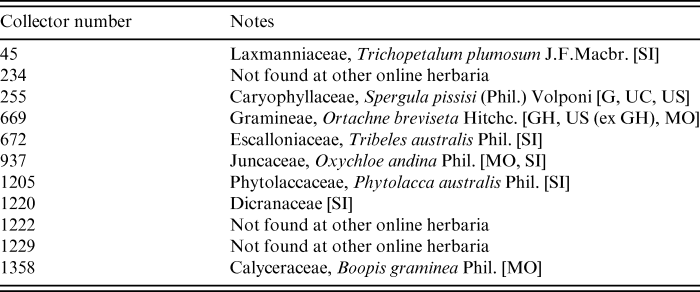
There are 1385 collection numbers represented at E, three fewer than the number of specimens: Werdermann 56, the fern Lophosoria quadripinnata (J.F.Gmel.) C.Chr., is held on two herbarium sheets; Werdermann 418 and 1178 are mixed collections. Of the collection numbers ranging from 1 to 1396 there are just 11 numbers which have not been accounted for at E, of which three numbers were not represented on any other online herbarium (Table 3).
Missing numbers of the ‘Plantae Chilenses’ collection at RBGE
Although the majority of the collections were numbered chronologically as they were collected, there is a small amount of inconsistency. Number 253 was collected in the mountains of Laguna Chica in February 1924, while numbers 252 and 254 were collected in the mountains of Laguna Grande in January of the same year.
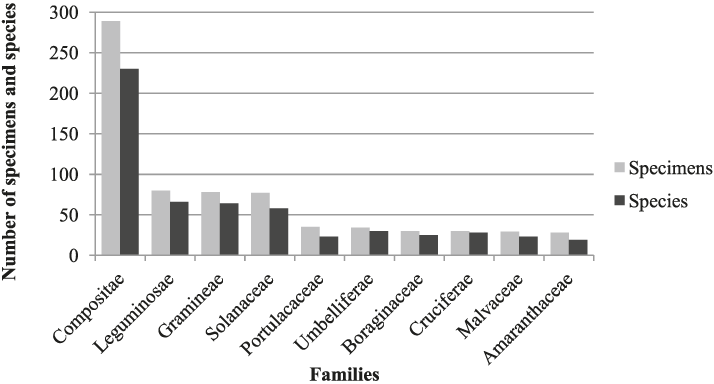
Divided into major botanical groups, the collection consists of one alga, 24 ferns, nine conifers and 1354 flowering plants. Of these, the 10 families with the largest number of specimens and species are shown in Fig. 2. The families with the most collections are Compositae, Leguminosae and Gramineae respectively.
Number of specimens and species in the ‘Plantae Chilenses’ collection.
A total of 1359 of the specimens (98%) have been identified to species or subspecies level, and these can be separated into the following groups: one cultivated species (Hollermayer 1204, Cupressus arizonica Greene); four Peruvian species (Werdermann 717, Tillandsia werdermannii Harms; Werdermann 726, Oxalis lomana Diels; Werdermann 728, Nolana spathulata Ruiz & Pav.; Werdermann 729, Orobanche tacnaensis Mattfeld); and 1059 Chilean species. The flora of Chile comprises about 4295 species (Moreira-Muñoz, Reference Moreira-Muñoz2011) so Werdermann’s specimens represent 24.5% of the total.
Although Werdermann was responsible for collecting the majority of the herbarium specimens (1216, 87.61%), the labels also bear the names of three other collectors. Padre Athanasius Hollermayer (1860–1945) collected 161 numbers (11.60%) and 11 were collected between Frau Ilse Francke and Art. Schultes about whom little is known.
Specimens collected by Werdermann
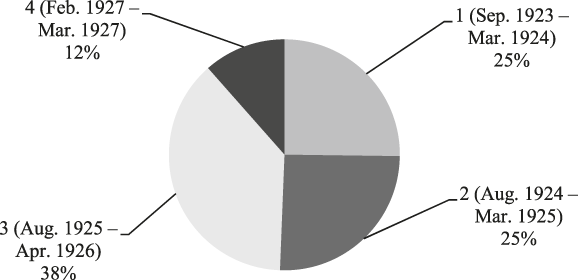
Werdermann collected most of his specimens during the spring and summer seasons of the southern hemisphere. His most prolific period was between August 1925 and April 1926 when he collected 38% of his specimens, with 25% of his total collection made in each of the first and second collecting windows. In the last year he collected fewer specimens, however he was in the field for a shorter period of time, just two months (Fig. 3), as he had been collecting in Bolivia in the latter half of 1926 (Tropicos.org: Missouri Botanical Garden, 2013).
Percentage of specimens collected in different collecting periods by Werdermann.
Werdermann visited 99 localities between the Departamento de Tacna in Peru and the region of Aysén in the south of Chile. He made collections in almost every region in Chile, except for the regions of Libertador General Bernardo O’Higgins (VI), Los Ríos (XIV) and Magallanes y de la Antártica Chilena (XII). Werdermann (Reference Werdermann1927) states that he visited the province of Valdivia (currently Los Ríos region) in April 1924, but none of our specimens from there were collected by him, all records from this region having been collected by Hollermayer.
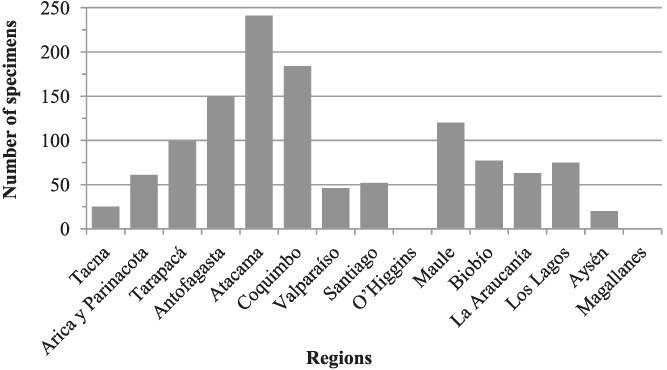
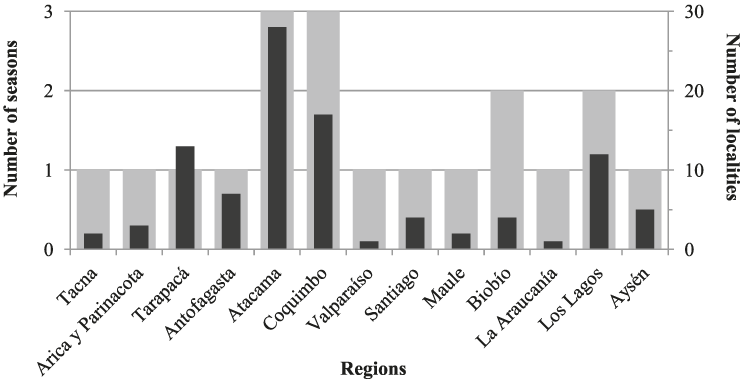
The majority (47%) of the collections were made from Atacama, Coquimbo and Antofagasta. The most northerly and southerly regions, Departamento de Tacna and Aysén respectively, are where the fewest collections were made (Fig. 4). In some cases this difference could be explained by the number of localities visited within a region, or the number of visits to each region. For example, the Atacama region was visited during the first three seasons with collections made at 28 different localities (Fig. 5). In other instances regions were visited only in one season, or collections made from a single locality, as in the case of La Araucanía, from which 65 specimens were gathered. This figure is much greater than in other regions with collections from more than one locality; for example, five localities were collected from in Aysén yet just 20 specimens gathered in total from them. Figure 5 shows the low number of localities visited by Werdermann in the central regions, between Valparaíso and La Araucanía, despite them being more accessible.
Number of specimens collected by Werdermann, by region. The regions are in order from northernmost on the left, Tacna, to southernmost on the right, Magallanes y de la Antártica Chilena.
Number of seasons (pale grey) and localities visited (dark grey) by Werdermann, presented by region. The regions are in order from northernmost on the left, Tacna, to southernmost on the right, Magallanes y de la Antártica Chilena.
Specimens collected by Hollermayer, Francke and Schultes
All the specimens from the region of Los Ríos were collected by Athanasius Hollermayer, between May 1924 and March 1927. He collected 161 specimens from 21 localities, all in the north of the region. None of these specimens has been cited as type material.
The only information found for both Ilse Francke and Art. Schultes is the name on Werdermann’s herbarium labels. Ilse Francke collected eight specimens in the region of Antofagasta. She visited three localities, two of them in November 1925 and the other one in February 1926. One of the specimens collected by her, no. 1043, is cited as the type of Cryptantha werdermanniana I.M.Johnst. (Johnston, Reference Johnston1928). Art. Schultes’s name appears on just three labels on which ‘leg. P. Ath. Hollermayer’ has been crossed through in the printed heading and ‘leg. Art. Schultes’ added in pen at the bottom of the label (‘Art.’ may be a derivative of the name Arthur or Arturo). These specimens were collected in one locality in the Maule region.
Collecting localities
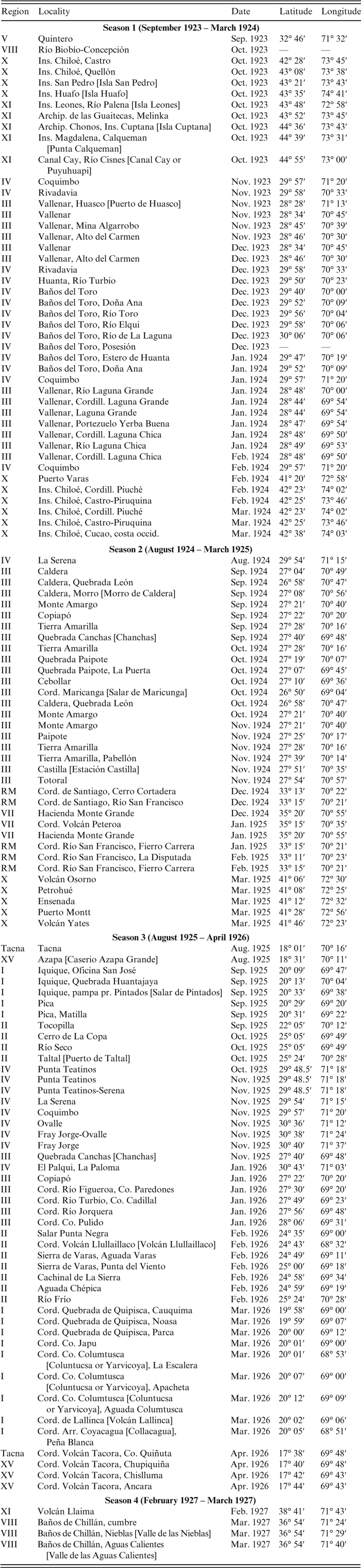
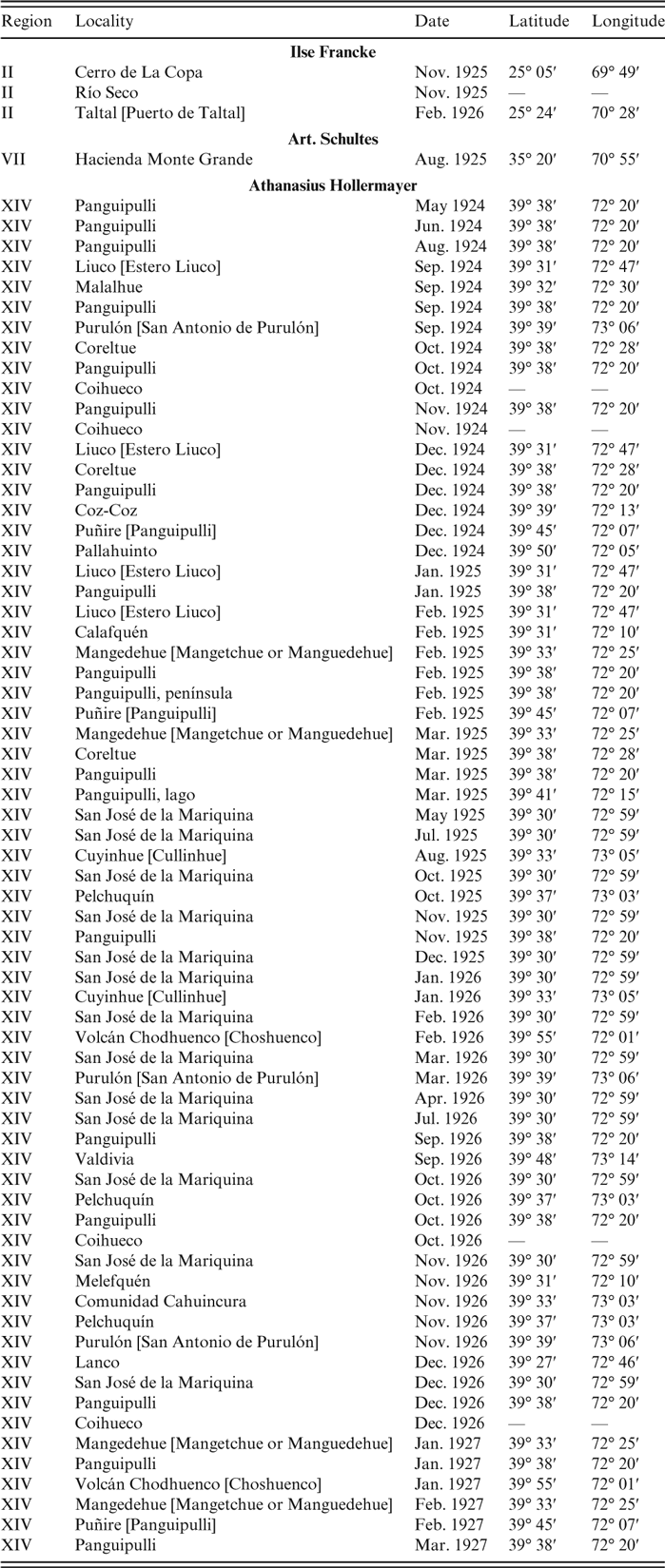
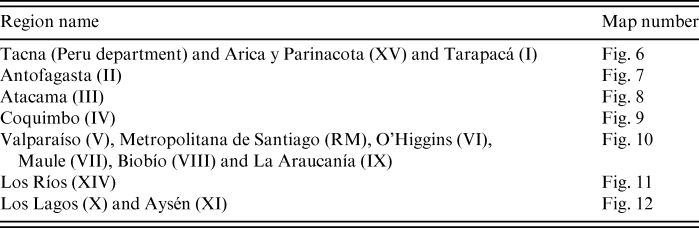
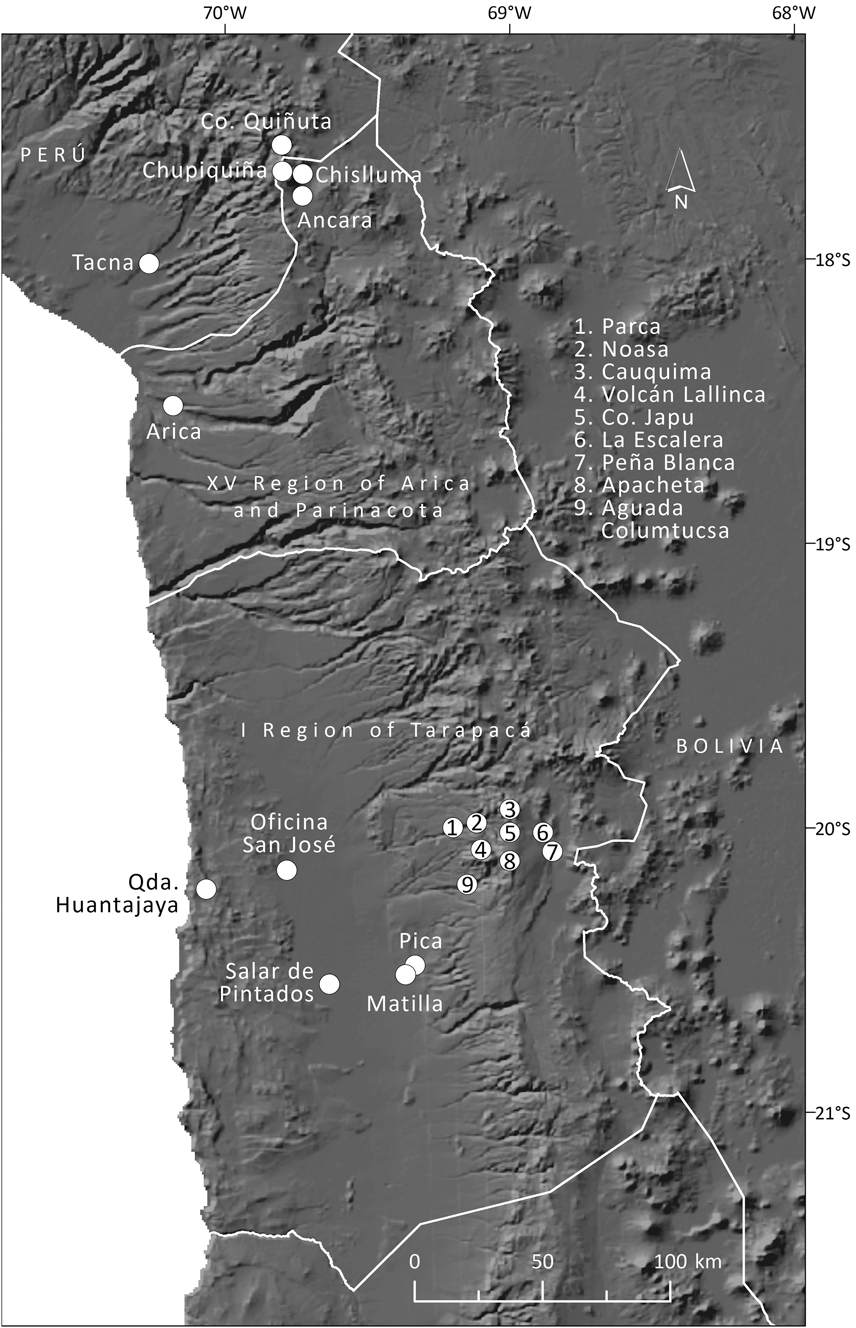
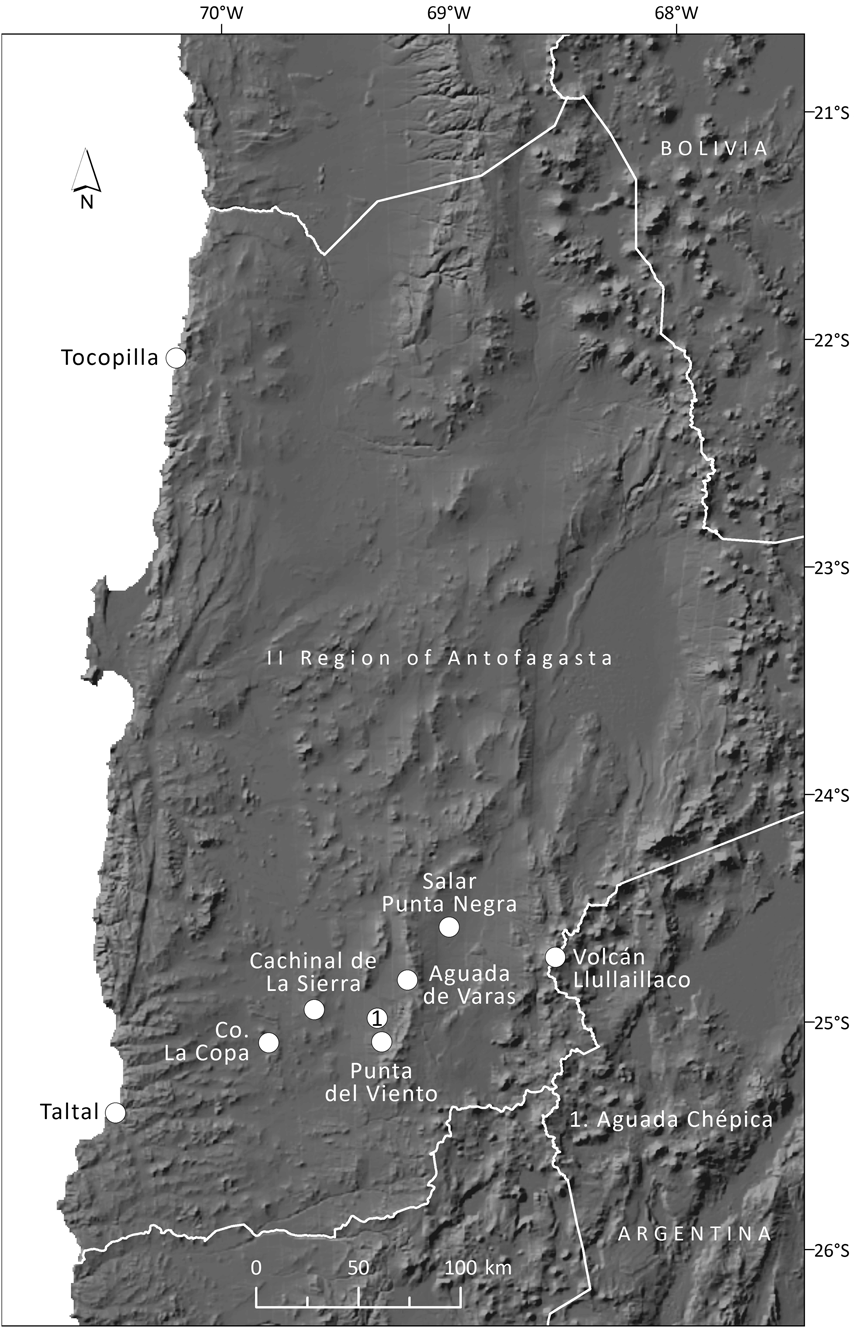
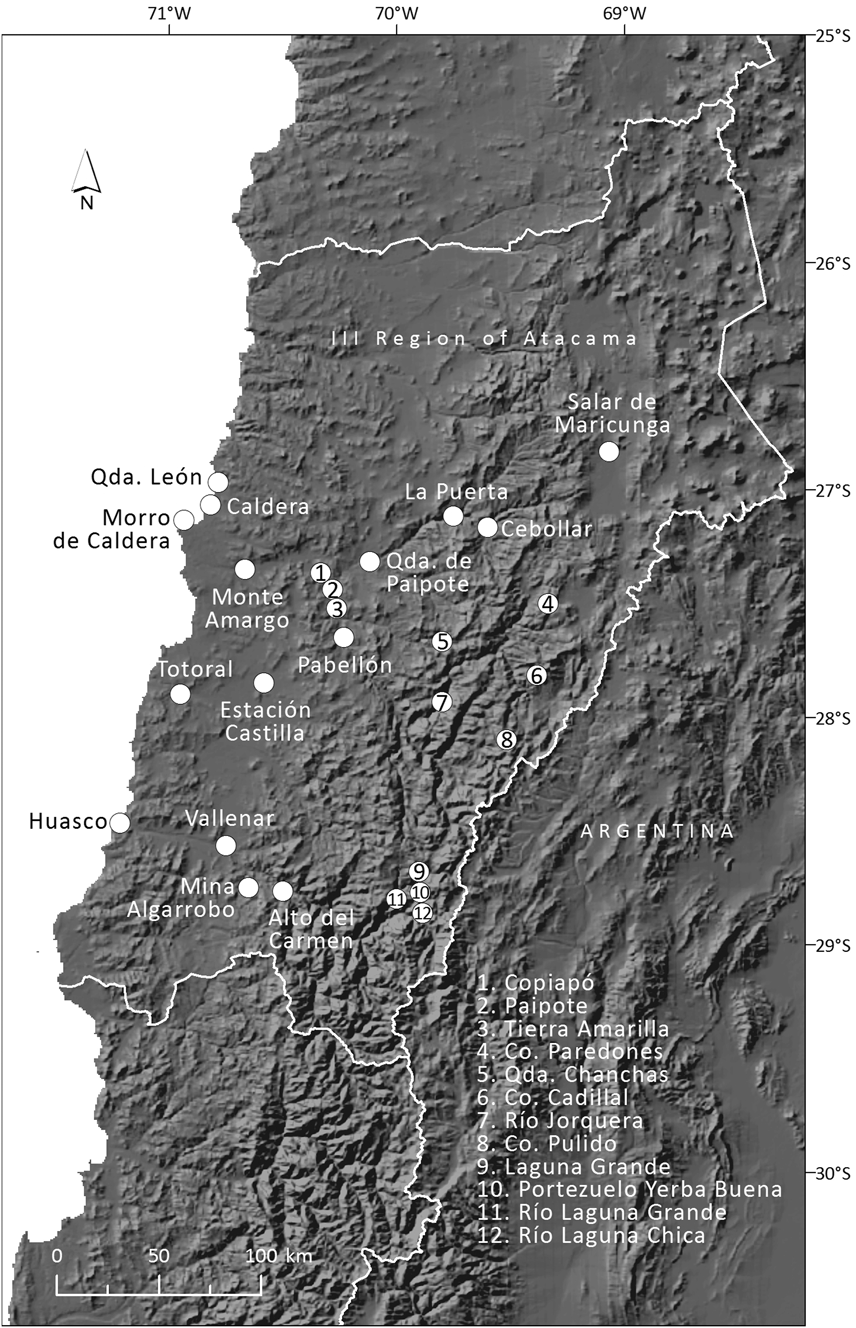
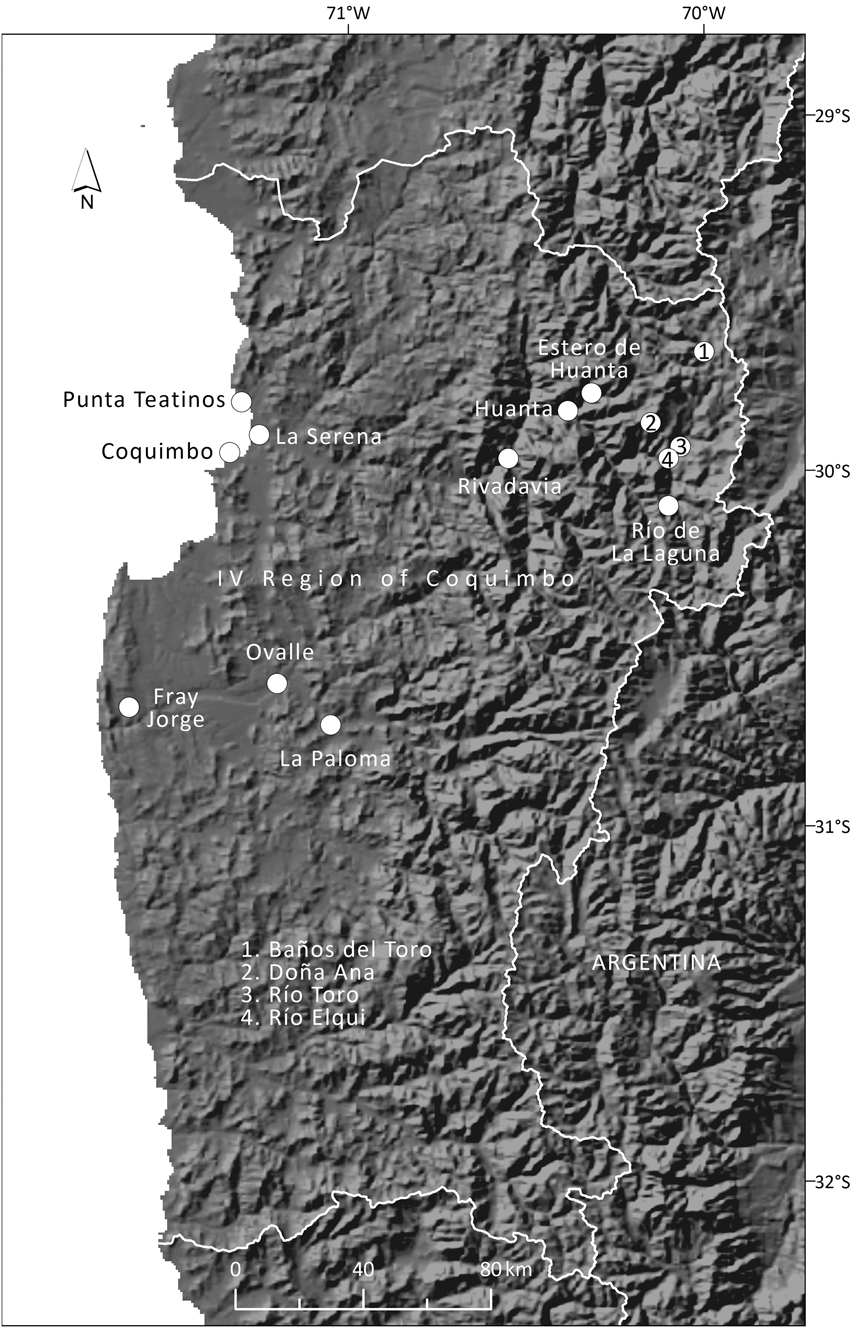
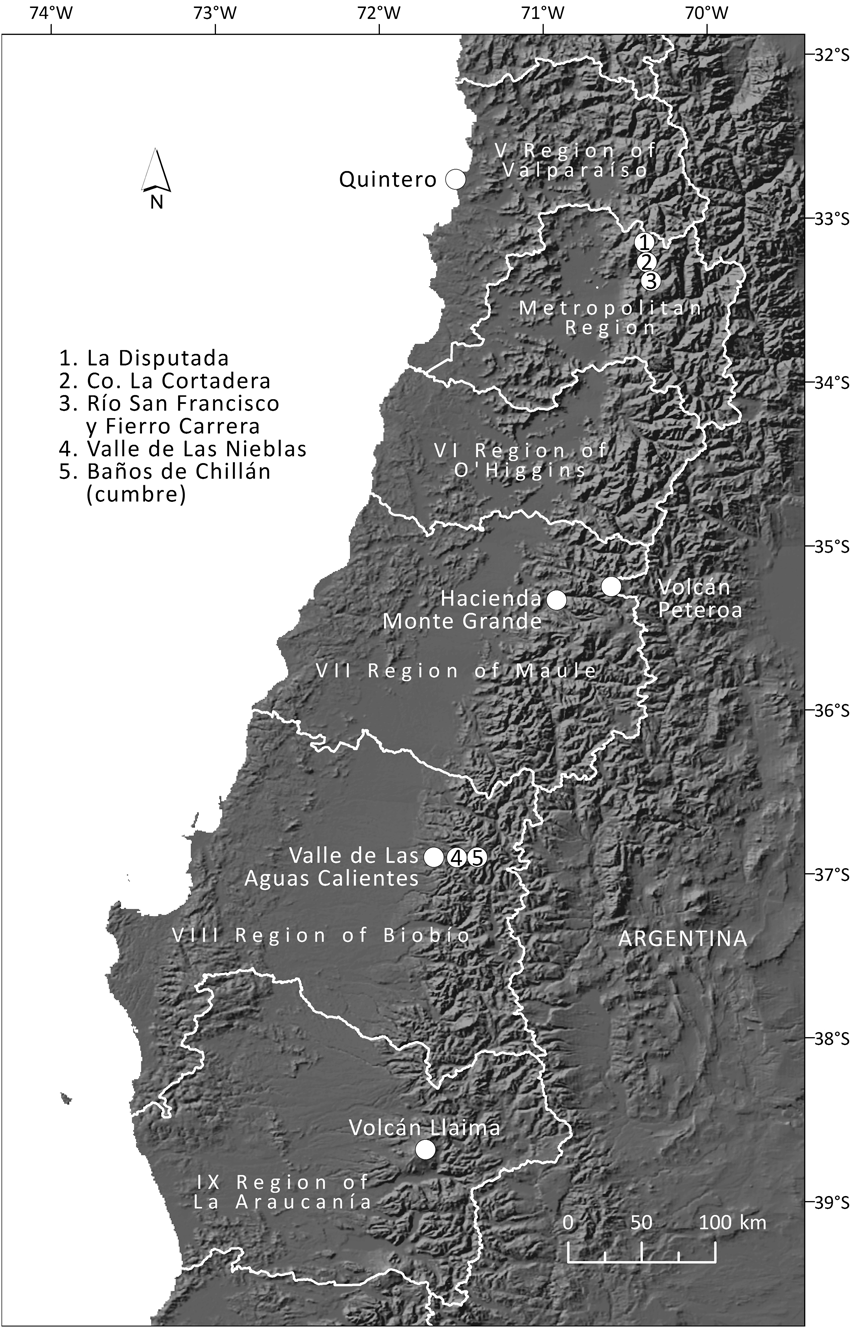
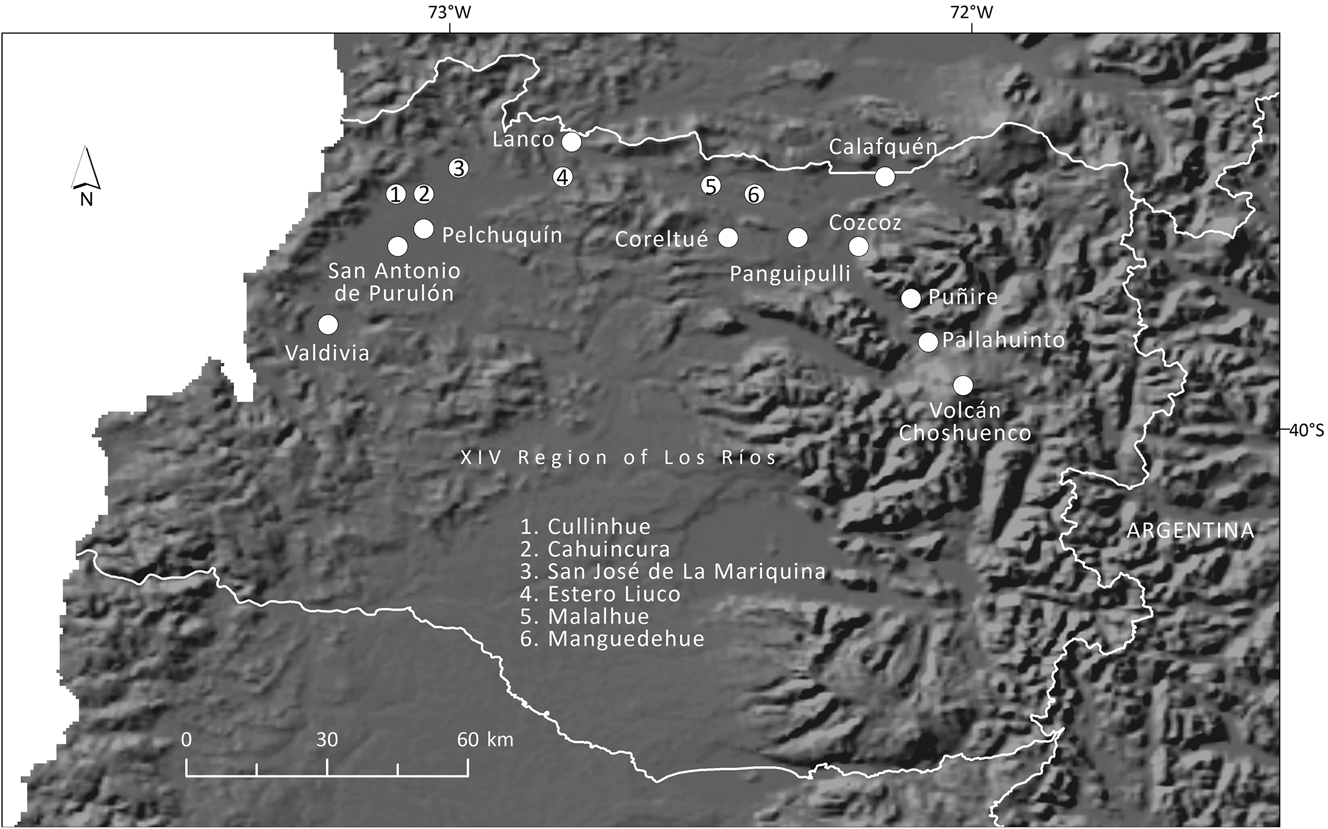
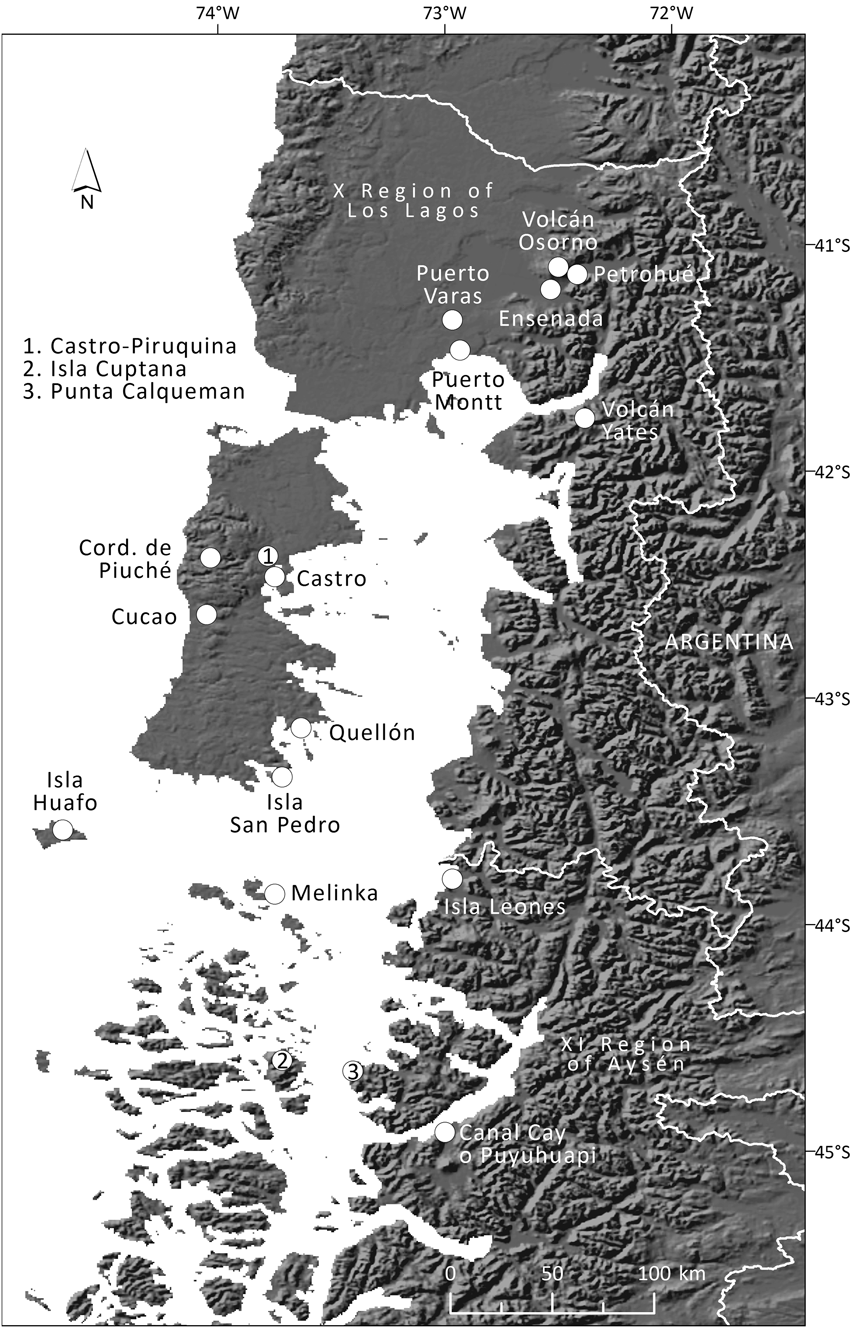
Tables 5 and 6 list in order of date all the localities visited by Werdermann and his co-collectors. Only 10 records, representing four collecting localities, were not georeferenced due to the lack of specific information necessary to determine an exact location. The four localities are: (i) Baños del Toro, Posesion; (ii) Río Biobío-Conception; (iii) Coihueco (too large an area); and (iv) Rio Seco, Antofagasta (there are two locations with this name). The names of the regions used in these tables have been abbreviated using the Roman numeral associated with the name (Table 4). The maps showing the places mentioned in the tables are shown in Figures 6–12.
List of localities visited by Werdermann (by date)
List of localities visited by other collectors, sorted by date
Region numbers, names and associated map
Collecting localities, from north to south, in Tacna (Peru department) and Arica y Parinacota (XV) and Tarapacá (I).
Collecting localities in Antofagasta (II).
Collecting localities in Atacama (III).
Collecting localities in Coquimbo (IV).
Collecting localities, from north to south, in Valparaíso (V), Metropolitana de Santiago (RM), O’Higgins (VI), Maule (VII), Biobío (VIII) and La Araucanía (IX).
Collecting localities in Los Ríos (XIV). Collections by Hollermayer only.
Collecting localities, from north to south, in Los Lagos (X) and Aysén (XI).
Concluding Remarks
Plant exploration in Chile dates back as far as 1520 when Hernando de Magallanes made the first botanical excursion to the country. Since that date, very many notable collectors such as Charles Darwin, Joseph Banks, Joseph Dalton Hooker, Claudio Gay, Karl Reiche, Federico Philippi, Rudolph Amandus Philippi, Hipólito Ruiz and José Pavón, to mention just a few, have scoured the countryside in search of plants. When Werdermann embarked on his travels to Chile in the early 1920s, there must have been some concern that little was left to be discovered but this proved not to be the case. He managed to travel to many poorly known areas at high altitude in northern Chile, including the Cordillera Volcán Llullaillaco, which even today is difficult to reach, where he discovered many of his 56 new species. Although Werdermann re-collected many known species, his collections add greatly to our knowledge of the distribution of the Chilean flora because of his relatively well-detailed specimen data. For the research community, the Werdermann specimens, which are of very high quality, have proved to be an extremely useful working reference collection and are frequently consulted in the preparation of monographic studies. In the case of the Royal Botanic Garden Edinburgh, the specimens have been particularly valuable for the determination of recently collected material from Chile and for the verification of our extensive living collections of Chilean plants. It is hoped that this paper will have clarified the ambiguities concerning this important collection and that this information will greatly assist researchers when they come to consult the Werdermann specimens.