The incidence of d-transposition of the great arteries is ~2.5/10,000 live births and is one of the most common causes of cyanotic CHD.Reference Botto, Correa and Erickson 1 d-Transposition of the great arteries accounts for ~5–7% of all CHD.Reference Khairy, Clair and Fernandes 2 Most frequently, in this form of CHD, the karyotype is normal and extracardiac abnormalities are relatively unusual.Reference Quartermain 3 The expected prognosis for d-transposition of the great arteries is poor, with 50% of infants dying within 1 month and 90% dying before the age of 1 year.Reference Liebman, Cullum and Belloc 4
Prenatal diagnosis was proposed as an effective strategy to improve outcomes for CHD, especially for critical CHD such as d-transposition of the great arteries.Reference Van Velzen, Haak and Reijnders 5 , Reference Calderon, Angeard, Moutier, Plumet, Jambaque and Bonnet 6 In a report from Boston Children’s Hospital, over a 20-year period, rates of prenatal diagnosis of d-transposition improved, but remained imperfect.Reference Escobar-Diaz, Freud and Bueno 7 Traditional ultrasound screening for CHD, which included the four-chamber view, but not the examination of the great arteries, showed the prenatal diagnosis rate for d-transposition of the great arteries was low and ranged from 10% in the United States to 50–70% in Europe.Reference Khoshnood, De Vigan and Vodovar 8 – Reference Blyth, Howe, Gnanapragasam and Wellesley 11 Introducing an outflow tract view into the screening protocol, a 20–30% improvement in the detection rate of CHD in general, and d-transposition of the great arteries in particular, has been demonstrated.Reference Sklansky, Berman, Pruetz and Chang 12 – Reference Levy, Pretorius and Rothman 15
Evidence concerning the impact of prenatal diagnosis on perinatal maternal–fetal and early postnatal fetal outcomes is scarce. Limited sample size and difficulty in following up are the main barriers.Reference Yang, Li, Lu and Liu 16 With these limitations, currently published results are contradictory. In addition, data on the effect of a strategy to standardise prenatal consultation on the outcomes of d-transposition of the great arteries are limited. To fill this gap, we conducted a prospective cohort study to explore the perinatal and early postnatal outcomes for fetuses after prenatal diagnosis of d-transposition of the great arteries and compared the outcomes before and after initiation of a standardised prenatal consultation.
Materials and methods
Standardised prenatal consultation
In our centre, a formalised Outpatient Consultation Service for fetal CHD has been established and a standardised prenatal consultation procedure has been carried out for mothers with a diagnosis of fetal CHD, including d-transposition of the great arteries, since 2013. The prenatal consultation standard for fetal CHD in Guangdong province has been previously described. 17 A multidisciplinary team including experts on Prenatal Diagnosis, Genetic Counseling, Pediatric Cardiology, Cardiac Surgery, Obstetrics, Neonates and Pediatrics, Cardiac Imaging, and Epidemiology was established. Two senior specialists of Pediatric Cardiology were responsible for face-to-face consultation. During every consultation, consultants need to fulfil the following comprehensive criteria: inform the diagnosis of fetal CHD according to the results of echocardiography and the difference from the normal fetal heart using an imaging technique; explain the impact of fetal CHD and the potential associated other birth defects and genetic anomalies on intrauterine fetal growth, pregnancy outcomes, delivery, neonates’ symptoms, and development after birth; provide current treatment options such as medications, interventional therapy, cardiac surgery, and more, as well as provide information on the short- and long-term prognostic outcomes after treatments; and provide prenatal consultation suggestions for the affected family. According to the 2016 report of European Association of Cardio-Thoracic Surgery, which our centre joined in 2009, the 30-day mortality was 10.10% for arterial switch operation and 10% for arterial switch operation and ventricular septal defect repair in our centre. This mortality rate was higher than that in Europe (3.69 and 6.48%), but was comparable to the results from other large cardiac centres in China. On the one hand, during consultation, the specialists for consultation emphasise the continuous improvement of arterial switch operation technique; on the other hand, a mortality risk is introduced. Mothers with a prenatal diagnosis of fetal d-transposition of the great arteries were generally counselled to continue their pregnancies based on improved treatment techniques, decreased mortality, and better postoperative outcomes for d-transposition of the great arteries in the current era. Recommendation for elective termination of pregnancy was suggested only for extremely complex cases of d-transposition of the great arteries: for example, for cases in which it was coexisting with other chromosomal anomalies. For mothers who chose to continue the pregnancy, follow-up echocardiography was conducted every 4 weeks. Repeated prenatal consultation was conducted according to the results of echocardiographic and obstetric examination. Live births with d-transposition of the great arteries were followed up annually for their prognostic outcomes with or without treatments.
Study design
This was a prospective cohort study from a major tertiary referral centre for maternal–fetal medicine and CHD treatment in southern China. All fetuses with prenatally diagnosed d-transposition of the great arteries in the Department of Maternal-Fetal Cardiology from December, 2011 to October, 2015 were enrolled.
Prenatal diagnosis of CHD was made using echocardiography according to the fetal cardiac ultrasound technology standard in Guangdong province. 18 Standard views include four-chamber, right and left ventricular outflow tract, and long-axis views of the aortic arch. Echocardiography was performed using ALPHA 7 and ALPHA 10 equipment (HITACHI-ALOKA Co., Japan). Experienced paediatric cardiologists were responsible for the initial examination. The final diagnosis of CHD in fetuses was confirmed by the Senior Director of the Department of Maternal-Fetal Cardiology. Re-examination of any suspected lesion was performed if images were inadequate for diagnosis.
d-Transposition of the great arteries subtypes were coded according to the International Classification of Diseases, 10th Revision (Q20.000–Q28.000). Fetuses with prenatal diagnosis code Q20.302 were selected as our study population. We excluded patients with a prenatally diagnosed single ventricle combined with d-transposition of the great arteries.
Consequently, the study population was divided into two groups: before standard consultation (2011–2013) and after standard consultation (2014–2015). Outcomes were compared between these two groups.
Within the two cohorts, simple and complex d-transposition of the great arteries were further subcategorised. d-Transposition of the great arteries cases with an intact ventricular septum and no associated cardiac defects other than a patent oval window and a patent ductus arteriosus were classified as simple d-transposition of the great arteries. In contrast, complex transposition included all the cases with coexisting malformations, such as ventricular septal defects, left ventricular outflow tract obstruction, aortic arch anomalies, and anomalous venous systemic return.Reference Martins and Castela 19
Perinatal outcomes of our study included live birth – including neonatal death in 7 days after birth – elective termination of pregnancy, spontaneous fetal demise or abortions, and stillbirths. Live births were defined as when a fetus, at any gestational age, exits the maternal body and subsequently shows any sign of life, such as voluntary movement, heartbeat, or pulsation of the umbilical cord, however, briefly and regardless of whether the umbilical cord or placenta are intact.Reference Oganization 20 Elective termination of pregnancy, referred to as induced abortion, was undertaken when the fetus was prenatally diagnosed with d-transposition of the great arteries. Spontaneous fetal demise and abortion were defined as fetal death in utero without intervention before 28 weeks of gestation and stillbirth was defined as fetal deaths occurring after 28 weeks of gestation. Early postnatal outcomes included referral for surgery and survival.
Questionnaires, clinical records, and telephone surveys were used as the data sources for this prospective cohort study. As the referral centre for fetal echocardiographic examination, our centre accepted fetuses with suspected cardiac anomalies found on basic screening using obstetrical ultrasound. A structured, standardised questionnaire with basic maternal demographic characteristics was filled by the mother with prenatally diagnosed fetal CHD. The Secretary of the Department of Maternal-Fetal Cardiology completed the prenatal diagnosis section of the questionnaire according to the echocardiographic examination report, and copies of the report were attached. According to the expected date of delivery, perinatal outcomes were obtained by a research coordinator from the Division of Epidemiology, Department of Cardiac Surgery. Hospital outcomes were initially assessed from the Hospital Information System. Once the patient was confirmed in the Hospital Information System, clinical records were obtained to gather additional information on outcomes. Finally, the outcome information for those not followed up at our hospital was obtained through phone calls. Annual follow-up examination was performed thereafter for all live births.
Statistical analysis
Quantitative variables were expressed as mean ± standard deviation or median (range), as appropriate. Qualitative variables were expressed as percentage or numbers. The Student’s t-test was used for comparison of normally distributed data, whereas the Mann–Whitney U-test was used for non-normally distributed data. The χ2 test was used for categorical variables. SPSS® 22.0 (IBM Co. Ltd) was used for all computation.
Ethics statements
This study was approved by the Ethics Committee of Guangdong General Hospital. Informed consent was acquired from every mother with an affected fetus.
Results
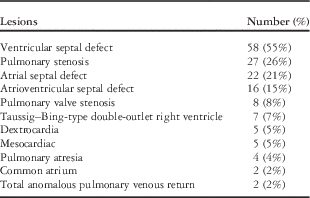
From December, 2011 to October, 2015, 185 fetuses were prenatally diagnosed with d-transposition of the great arteries. Excluding 39 cases with single ventricle combined with d-transposition of the great arteries, the enrolment rate was 100% of eligible patients. Thus, 146 patients were enrolled in the study, 64 (44%) in the before standard consultation group and 82 (56%) in after standard consultation group. Overall, there were 26 (18%) fetuses with simple d-transposition of the great arteries and 120 (82%) with complex d-transposition of the great arteries (Table 1).
Associated lesions of the 120 patients with complex d-transposition of the great arteries.

Maternal sociodemographic characteristics
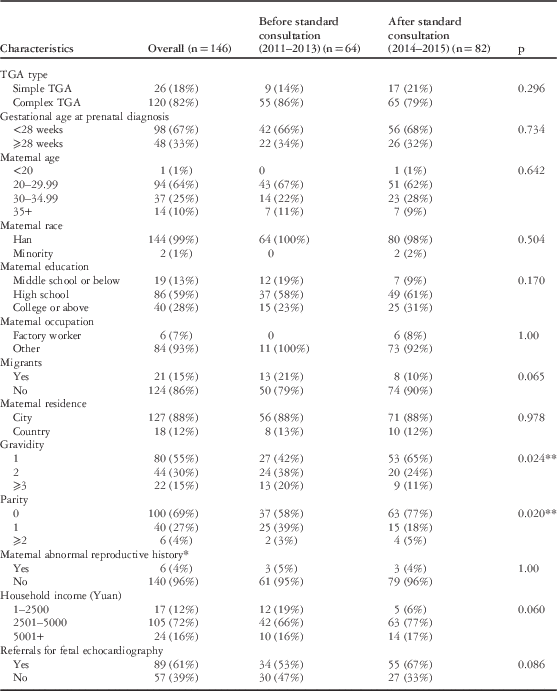
Maternal sociodemographic characteristics are presented in Table 2. No significant difference in maternal sociodemographic characteristics were found between the before standard consultation and after standard consultation groups, except in gravidity and parity. There were more singly gravid women in the before standard consultation cohort (65 versus 42%, p=0.024), and the proportion of nulliparous mothers was higher in after standard consultation group (77 versus 58%, p=0.020). Notably, 61% of the subjects – 53% in the before standard consultation and 67% in the after standard consultation groups – were transferred from other health providers for fetal echocardiography.
Maternal sociodemographic characteristics, before standard consultation and after standard consultation in Guangdong, China 2011–2015.

TGA=d-transposition of the great arteries
* Included stillbirth, spontaneous abortion, or baby with any congenital abnormality
** Statistically significant
Perinatal outcomes of fetuses with prenatally diagnosed d-transposition of the great arteries
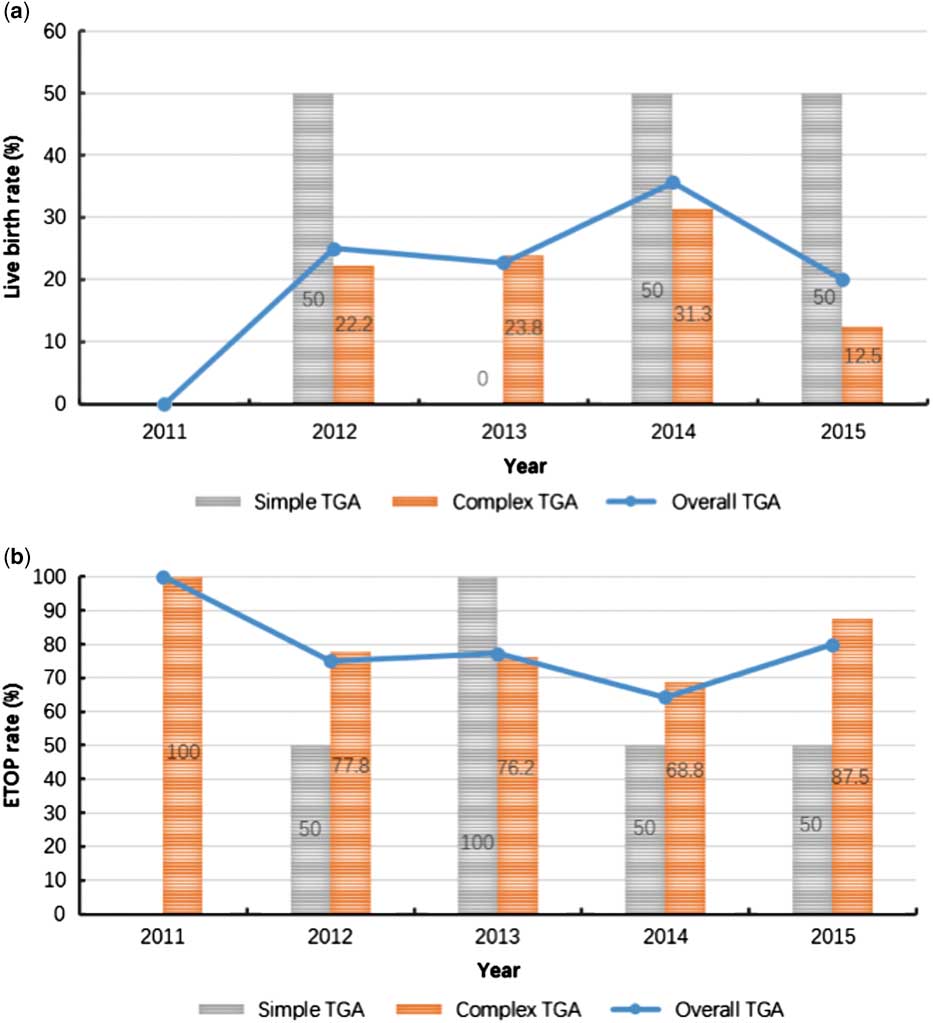
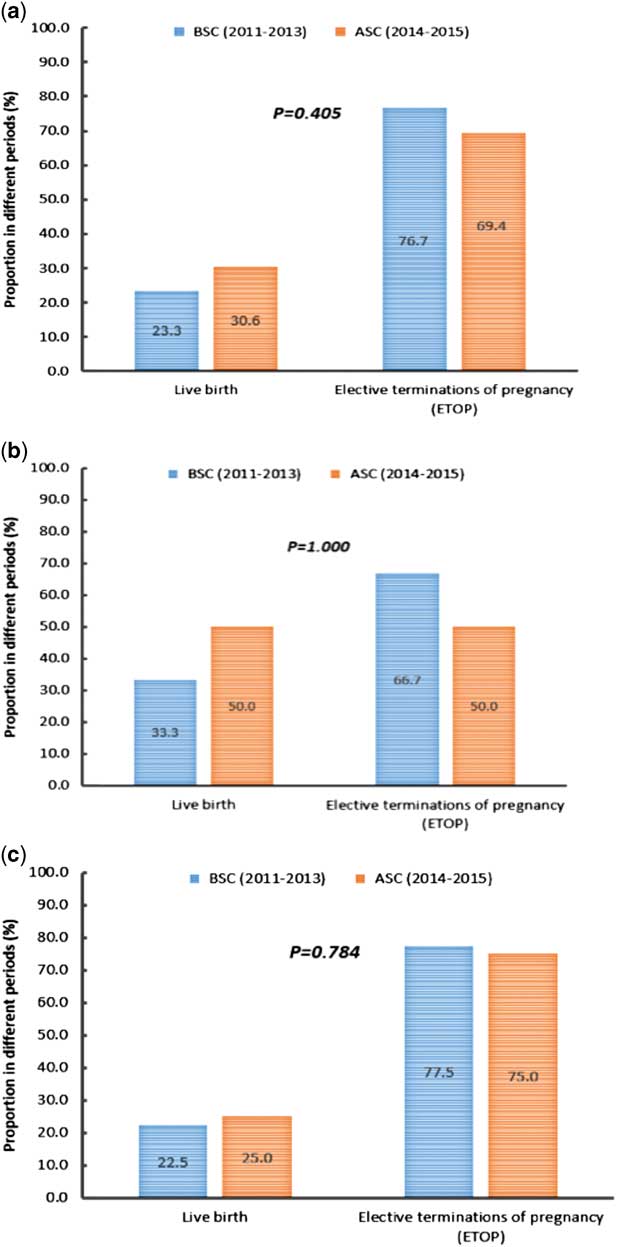
Among the 146 enrolled fetuses, 41 (28%) were lost to follow-up after prenatal diagnosis of d-transposition of the great arteries. The basic maternal demographic characteristics and anatomic diagnosis – that is, simple and complex d-transposition of the great arteries type – were compared between fetuses lost to follow-up and those not lost, and no significant differences were found. The anatomic distribution of the 41 patients lost to follow-up between before standardised consultation (2011–2013) and after standardised consultation (2014–2015) was also compared and there was no significant statistical difference (χ2=0.819, p=1.000). Therefore, outcomes of the remaining 105 fetuses who were followed up are likely representative of the entire enrolled population. The potential risk for results being biased because of loss to follow-up was minimal when comparing the perinatal outcomes between the before standardised consultation (2011–2013) and after standardised consultation (2014–2015) groups. In total, there were 29 (28%) live births and 76 (72%) cases of elective termination. No spontaneous fetal demise and abortions or stillbirths were observed. There were no trends over time from 2011 to 2015 for either live birth or elective termination rate when considering overall, simple, or complex d-transposition of the great arteries (Fig 1). The rates of live birth and elective termination were compared for before standard consultation and after standard consultation group, and for overall, simple, and complex d-transposition of the great arteries (Fig 2). Overall, there were no differences detected in rates of live birth or elective termination between the various groups.
Perinatal outcomes for fetuses with prenatally diagnosed d-transposition of the great arteries (TGA) by year in Guangdong, China during 2011–2015. ( a ) Live birth rate of overall, simple, and complex TGA from 2011 to 2015. ( b ) elective termination of pregnancy (ETOP) rate of overall, simple, and complex TGA from 2011 to 2015.

Perinatal outcomes for fetuses with prenatally diagnosed overall, simple, and complex d-transposition of the great arteries (TGA), before standardised consultation (BSC) (2011–2013) versus after standardised consultation (ASC) (2014–2015) in Guangdong, China during 2011–2015. ( a ) Perinatal outcomes for all fetuses with prenatally diagnosed TGA. ( b ) Perinatal outcomes for fetuses with prenatally diagnosed simple TGA. ( c ) Perinatal outcomes for fetuses with prenatally diagnosed complex TGA.

Importantly, only 7% (5/76) elective termination occurred in our centre, and it was significantly lower than the proportion of live births of 76% (22/29, p=0.000). In our centre, there were no significant differences between before standard consultation and after standard consultation groups in the proportion of elective termination (6 versus 7%, p=1.000) or live births (90 versus 68%, p=0.367).
Postnatal outcomes for live births
There were 29 live births following prenatal diagnosis of d-transposition of the great arteries. Of these live births, three were found to have postnatal diagnoses other than d-transposition of the great arteries and were excluded. Among the remaining 26, five (19%) were male, five (19%) were one of twins, five (19%) weighed less than or equal to 2.5 kg, three (12%) were premature – that is, gestational age <37 weeks – and eight (31%) had simple d-transposition of the great arteries.
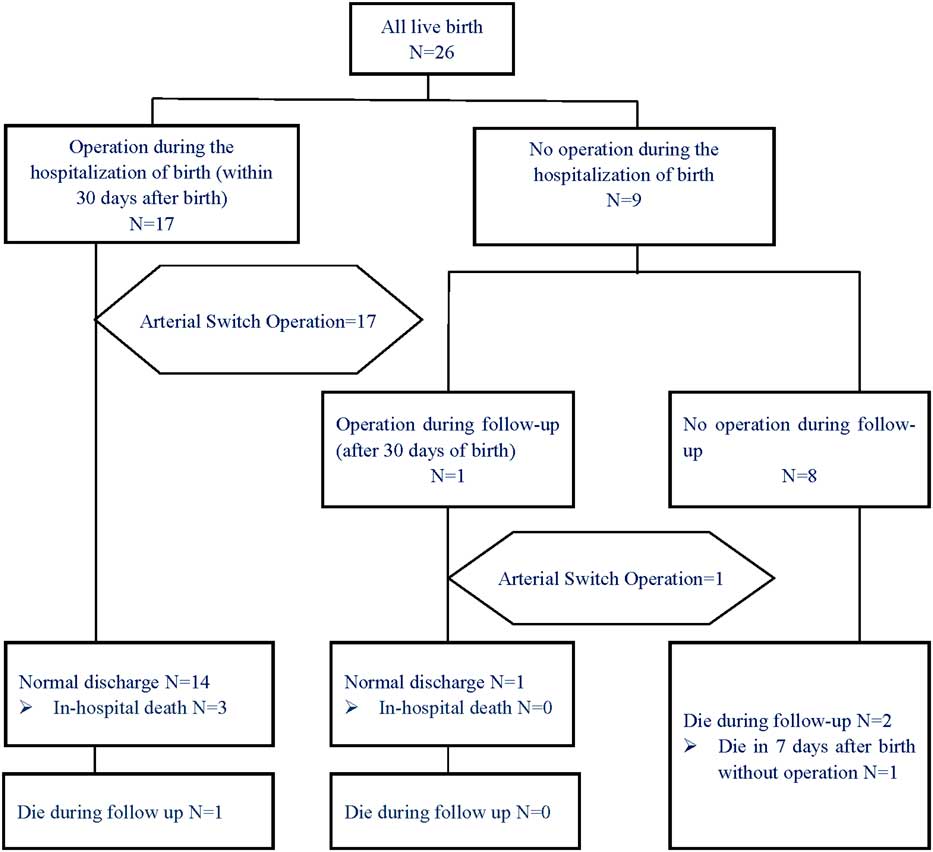
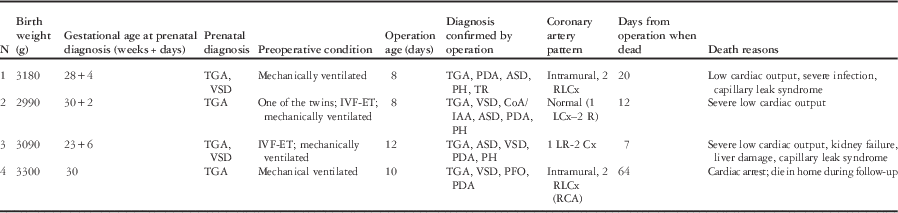
Of the 26 lives births, the overall mortality was 23% (6/26). There was no significant difference between infants with simple and complex d-transposition of the great arteries [13% (1/8) versus 28% (5/18), p=0.628] or when comparing before standard consultation and after standard consultation periods [38% (3/8) versus 17% (3/18), p=0.330]. The flow chart of the operative status and survival of the 26 live births with prenatally diagnosed d-transposition of the great arteries is illustrated in Figure 3. Among the 26 live births, 17 (65%) underwent arterial switch operation during the same hospitalisation period as for their birth and within 30 days of age. There were three in-hospital deaths (18%, 3/17). During a median follow-up of 10 months (range, 2–53), one additional death was observed in the operative cohort. The four postoperative deaths are detailed in Table 3. An additional infant underwent arterial switch operation at 13 months of age and was alive at the last follow-up instance.
Flow chart of the early postnatal outcomes and intermediate follow-up of the 26 live births with prenatally diagnosed d-transposition of the great arteries in Guangdong, China during 2011–2015.

Details of the four postoperative deaths.

ASD=atrial septal defect; CoA=coarctation; IAA=interrupted aortic arch; Cx: left circumflex; IVF-ET=in vitro fertilisation and embryo transfer; L=LAD, left anterior descending; PDA=patent ductus arteriosis; PFO=patent foramen ovale; PH=pulmonary hypertension; R=RCA, right coronary artery; TGA=d-transposition of the great arteries; TR=tricuspid regurgitation; VSD=ventricular septal defect
In all, eight patients have declined surgery and, at the last follow-up instance, two have died. Of them, one died at 7 days of age without surgery, for a total non-operative mortality of 25% (2/8).
Discussion
To our knowledge, this is the first cohort of prenatally diagnosed d-transposition of the great arteries prospectively studied to evaluate the effects of a standardised prenatal consultation on perinatal and postnatal outcomes.
For the overall study duration from 2011 to 2015, there were no differences in the measured perinatal and postnatal outcomes for fetuses prenatally diagnosed with d-transposition of the great arteries, including in rates of live birth and elective termination. Comparing the before standard consultation (2011–1013) and after standard consultation periods (2014–2015), there were no changes in the rates of live births and elective termination. The overall live birth rate was relatively low at <30%, whereas the elective termination rate was over 70%, even after standardised consultation was initiated. There was no difference in elective termination rate comparing simple with complex d-transposition of the great arteries. However, for simple d-transposition of the great arteries, the live birth rate was higher and the elective termination rate was lower in the after standard consultation period, although no statistical significance could be shown because of small numbers.
Reports on perinatal outcomes of fetuses with prenatally diagnosed d-transposition of the great arteries are limited. Dhanardhono et al reported a single-centre experience from Singapore. Among 9834 fetuses, three were diagnosed with d-transposition of the great arteries; one of them was terminated and the other two were live births.Reference Dhanardhono, Thia, Wei, Saktini, Dewi and Yeo 21 Khoo et al published the outcomes for 103 fetuses who were prenatally diagnosed with CHD. Neither elective termination nor stillbirths were observed in the overall cohort, and of the four fetuses with d-transposition of the great arteries, one neonatal death occurred.Reference Khoo, Van Essen, Richardson and Robertson 22 Yang et al presented the results of a study from Beijing in 2009. In the 14 fetuses with prenatally diagnosed d-transposition of the great arteries, 11 (79%) were terminated.Reference Yang, Li, Lu and Liu 16 This finding was comparable to the elective termination rate in our study.
Several reasons could potentially account for the higher rate of elective termination in China compared with other countries, including ethical and religious issues, insurance system, and unique social policies. For example, elective termination is legal in China, whereas in most regions of the United States of America, termination of pregnancy is only legal before 24 weeks of gestation and in Japan, elective termination is forbidden by law after the 22nd week of gestation. Religious objections are also less common in China where there are few Catholics. In addition, medical expenses for treating CHD are not totally covered by the current Chinese insurance system, which results in the affected families being responsible for most of the medical expenses related to treating their CHD-afflicted children. This factor is especially important in extremely damaging lesions such as d-transposition of the great arteries. Finally, from 1979 to 2015, a strict policy of family planning that allowed each couple only one child was in effect in China, placing great emphasis on giving birth to a healthy baby. For all of the above reasons, elective termination is considered to be an acceptable consequence of a prenatal d-transposition of the great arteries diagnosis.
With this specific culture and social background, it may be difficult to vary the outcomes after prenatal diagnosis and decrease the elective termination rate;Reference Khoshnood, De Vigan and Vodovar 8 , Reference Khoshnood, Lelong and Andrieu 23 , Reference Lee, Jung, Kim, Nam, Choi and Oh 24 however, the fact that the live birth rate in cases of simple d-transposition of the great arteries in the current study was higher after standardised consultation is encouraging. This was particularly true for patients followed up throughout their prenatal course at our centre, rather than for those returning to their local providers. Indeed, continuous professional care and follow-up examinations have been identified as critical components in a family’s decision regarding elective termination.Reference Donofrio, Moon-Grady and Hornberger 25 Therefore, collaborating with local hospitals to develop standardised consultation and education for the care and follow-up of prenatally diagnosed d-transposition of the great arteries cases, especially of simple d-transposition of the great arteries cases, could potentially achieve a lower rate of elective termination and higher live birth rates. Another factor that may aid in decreasing elective termination rates would be the availability of funds to support affected families, which should be alluded to during the prenatal consultation. In addition, a universal two-children-per-family policy was enacted in China in November, 2015. All these changes could impact the outcomes for fetuses prenatally diagnosed with d-transposition of the great arteries and could increase the live birth rate.
Theoretically, prenatal diagnosis may impact not only the incidence of surgery, but also the survival. Termination can affect neonatal outcomes by decreasing the number of complex patients with multiple congenital anomalies, thus creating a bias towards more favourable outcomes in postnatal results. Prenatal diagnosis also allows optimisation of pregnancy management by allowing tailoring of the timing, location, or mode of delivery; however, results regarding the effect of prenatal diagnosis on the preoperative mortality or early postoperative outcomes among neonates with d-transposition of the great arteries have not been consistent. Some studies reported the positive protective effects of prenatal diagnosis on the preoperative and postoperative mortality of patients with d-transposition of the great arteries, whereas others reported negative results.Reference Bonnet, Coltri and Butera 26 Calderon et al found that prenatal diagnosis of d-transposition of the great arteries was associated with better neurocognitive outcomes and that time of diagnosis might influence the development of early complex cognitive skills, such as executive functions.Reference Calderon, Angeard, Moutier, Plumet, Jambaque and Bonnet 6
The mortality in our study was higher than that in some previously reported studies. Several reasons could account for this. Previous studies only included patients with d-transposition of the great arteries operated on at a single institution or at multiple tertiary referral cardiac centres. It is possible that the population at these centres was subject to selection bias. For example, extremely complex cases may not survive to be transferred to the centre, or families may elect not to seek treatment. In contrast, all the neonates with d-transposition of the great arteries delivered in our hospital were offered surgical treatments. Indeed, the four postoperative deaths were in complex cases of d-transposition of the great arteries; however, there is still ample room for improvement in the management of and treatments for neonates with d-transposition of the great arteries.
There were several limitations to our study. First, postnatal outcomes of patients with d-transposition of the great arteries without prenatal diagnosis were not acquired. Hence, the effect of prenatal diagnosis on the postnatal outcomes of d-transposition of the great arteries could not be explored. Second, the number of patients lost to follow-up was relatively high. In order to improve the rate of follow-up, we will be developing a system for specialised follow-up and consultation at the time of initial registration and provide the patients with a streamlined system for their follow-up visits. Finally, d-transposition of the great arteries follow-up information on the perinatal and postnatal outcomes occurring in other hospitals relied on oral reports, which may not be totally accurate. Collaboration with other health providers to get more accurate outcome information will be necessary. This information gathering will be improved by our Guangdong Registry of Congenital Heart Disease network, which will also provide a basis for collaboration in future studies.Reference Qu, Liu and Zhuang 27
With an overarching goal of improving the outcomes for fetuses diagnosed with d-transposition of the great arteries, there is an important chain of prenatal diagnosis, consultation, preparation for pregnancy, and postnatal treatments. Any institution or department in the chain will impact the prenatal choices made by the family and postnatal outcomes of the baby, and thus multidisciplinary and inter-institutional cooperation are crucial. We remain optimistic, that in concert with these collaborations, establishment of a policy of standardised consultation will achieve better perinatal and postnatal outcomes after fetal diagnosis of d-transposition of the great arteries.
Acknowledgement
We thank every paediatric cardiologist from the Department of Maternal-Fetal Cardiology for their great work in prenatal diagnosis of congenital heart defects, including d-Transposition of the great arteries cases.
Financial Support
This work was supported by research grants from the National 12th Five-Year Support Projects of China (grant number 2011BAI11B22, 2012BAI04B05), Guangdong International Cooperative Project of China (grant number 2014A050503048), the National Natural Science Foundation of China (grant number U1401255) and Guangdong Province Science and Technology Planning Project of China (grant number 2013B030400001).
Conflicts of Interest
None.
Ethical Standards
The authors assert that all procedures contributing to this work comply with the ethical standards of the relevant national guidelines on human experimentation in China and with the Helsinki Declaration of 1975, as revised in 2008, and has been approved by the Ethics Committee of Guangdong General Hospital.