


Introduction
This article examines burial goods from 63 graves at the Xichagou site in Liaoning, China, to investigate mortuary patterns and their role in expressing social identities on the northern frontier of the Western Han (202 bc–ad 9). Discovered in 1955, the site covered an area of 1.2 ha and originally comprised approximately 500 graves dating to c. 200–1 bc; however, it had suffered extensive disturbance and looting prior to excavation. The publication of the excavation report in 2022 marked a major milestone, as it documented a number of intact burials and enabled systematic analysis of mortuary assemblages (Liaoning Provincial Museum et al. 2022). Methodologically, this study employs multi-dimensional scaling and k-means clustering to identify patterns in the distribution of burial goods. These patterns are interpreted in relation to the display of identity and status, as well as to the intertwined processes of intragroup social differentiation and intergroup exchange along the steppe–forest transition zone.
The Xichagou site has attracted sustained scholarly attention, particularly among researchers in China and South Korea, where the ethnic affiliation of its occupants remains contested. Several historically documented groups—including the Xiongnu, Xianbei, Wuhuan and Fuyu (Puyŏ or Buyeo)—have been proposed as possible affiliations for the site’s inhabitants (Fan Reference Fan2012; Kudinova & Nesterkina Reference Kudinova and Nesterkina2025; Lee Reference Lee2025; Liaoning Provincial Museum et al. 2022; Pak Reference Pak2023). Located at the intersection of northern pastoral communities and the agricultural Central Plains in China, Xichagou has yielded a highly heterogeneous assemblage of bronze, iron and ornamental artifacts that reflect a wide range of stylistic and technical traditions. Some artifacts—especially bronze plaques decorated with animal motifs, which are typically regarded as belonging to the northern steppe and Ordos traditions (Bunker Reference Bunker1997; Rawson & Bunker Reference Rawson and Bunker1990)—have been interpreted as reflecting an ethnic identity distinct from that of the people of the Central Plains (Han & Kang Reference Han and Kang2023). However, debates over the site’s ethnic affiliation have not been particularly productive. Anthropological research has demonstrated that there is no direct correspondence between material culture and ethnic boundaries (Barth Reference Barth1969; Emberling Reference Emberling1997; Hodder Reference Hodder1982; Shennan Reference Shennan1989). As is widely recognized, the problems associated with attributing archaeological cultures to historically documented groups are substantial (Falkenhausen Reference Falkenhausen, Kohl and Fawcett1996; Insoll Reference Insoll2007; Shelach-Lavi Reference Shelach-Lavi2009).
In contrast to earlier efforts to establish ethnic affiliations, this study advocates approaching issues of identity and mortuary assemblages from an alternative perspective. This reorientation arises from the following line of reasoning.
First, ethnicity—or any single collective identity shared by members of a community—should not be treated as the sole relevant axis of identification. Rather, social life was likely structured through multiple, intersecting affiliations—such as gender, age, lineage, kinship, local groups, and differences in prestige, wealth and power—whose salience shifted across contexts. Individuals simultaneously inhabit multiple social identities (McGuire Reference McGuire and Schiffer1983). Some dimensions of identity are primarily, though not invariably, categorical (e.g. sex, kinship, ethnicity), whereas others are graduated and rank-ordered (e.g. power, status, wealth). Because these dimensions are numerous and intersect with one another, the range of possible identities within any society is correspondingly expansive (Díaz-Andreu et al. Reference Díaz-Andreu, Lucy, Babic and Edwards2005; Voss Reference Voss2015).
Second, while individual identity can exist independently of material dimensions, it is often materialized through personal belongings (DeMarrais et al. Reference DeMarrais, Castillo and Earle1996; Shelach-Lavi Reference Shelach-Lavi2009). Identity is fundamentally rooted in self-perception and, in many instances, remains unmaterialized, leaving little to be inferred from archaeological data. However, identity is also frequently symbolized through the human body. Individuals may manipulate their physical appearance—through hairstyles, piercings, or tattooing—or use portable objects such as clothing and ornaments to differentiate themselves (Gleba Reference Gleba, Gleba, Munkholt and Nosch2008; Mattson Reference Mattson2021; Sciama & Eicher Reference Sciama and Eicher1998). These items are oriented outward toward observers, serving as material expressions through which identity is constructed and negotiated—not only in relation to outsiders, but also within their own groups (Fisher & Loren Reference Fisher and Loren2003; Hansen Reference Hansen2004; Robb Reference Robb1998).
Third, given these considerations, we questioned whether previous research on the Xichagou site, which has largely focused on correlating archaeological cultures with ethnonyms recorded in ancient Chinese texts, is sufficient to account for the complexities of past social life. The majority of artifacts found in the Xichagou graves consist of small objects worn on the body, attached to clothing, or carried by individuals, such as ornamental beads and tubes, buttons, rings, pendants, arrowheads and knives (Liaoning Provincial Museum et al. 2022). The practice of depositing objects with the deceased may stem from diverse motivations, and funerary rites become arenas in which the identities of the deceased are displayed and remembered by the living (Härke Reference Härke2014; Parker Pearson Reference Parker Pearson and Hodder2007). Accordingly, burial goods may provide insights into the multi-layered identities of buried individuals, which can be inferred contextually through mortuary data (Bai Reference Bai2022; Brück Reference Brück2004; Jaffe Reference Jaffe2012; Reference Jaffe2020; Jaffe & Cao Reference Jaffe and Cao2018).
To identify multi-layered social identities within the mortuary record, this investigation proceeded through the following steps. First, burial goods from 63 unlooted graves at the Xichagou site were classified and coded. Artifacts were categorized by material (e.g. gold, silver, iron, bronze and glass) and by form and function (e.g., knives, mirrors, beads and tubes). These data were compiled into a database in which the quantity of each artifact type was recorded for every burial. Second, multi-dimensional scaling (MDS) and k-means clustering were employed to organize the burials according to the degree of similarity in their assemblages. MDS served as a visualization technique, plotting burials in a low-dimensional space such that assemblages with greater similarity appear in closer proximity, whereas k-means clustering partitioned the burials into k clusters by minimizing within-cluster variation. Third, a more qualitative examination of the Xichagou mortuary assemblages was conducted to elucidate the internal variations among graves within the same group. Finally, the results were interpreted in light of their broader social implications, with particular attention to the expression of individual identity and status and to the mutually reinforcing dynamics of social differentiation and exchange networks.
Study region, site and previous research
The Xichagou site
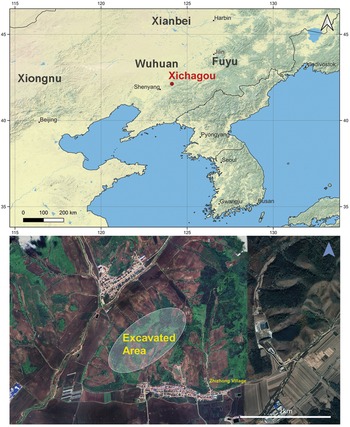
The Xichagou site (42.7572°N, 124.6822°E) is located in Xifeng County, Liaoning Province, in the foothills on the western flank of the Changbai Mountain Range (Fig. 1, upper). It lies west of Zhizhong Village, about 3 km northwest of Xifeng Town in eastern Liaoning Province (Fig. 1, lower). A small ridge (235–274 m a.s.l.) northwest of Zhizhong Village runs in a northeast–southwest direction and is locally known as Xichagou, from which the site derives its name. The cemetery extends across a southeast-facing ridge terrace and covers approximately 1.2 ha.
Location of the Xichagou site. The upper panel shows the location of the site and the distribution of historically documented groups during the Western Han period. The lower panel shows the excavated area of the site.

The site originally contained approximately 500 burials, but had suffered extensive destruction. During the 1940s, there were sporadic looting activities, as local villagers accidentally discovered tombs and gold and silver artifacts while clearing land for cultivation. By the 1950s, news had spread that the tombs contained gold and silver treasures, and the failure of local authorities to intervene allowed looting to escalate on a much larger scale, reaching its peak in 1955. In 1956, the Liaoning Provincial Bureau of Culture recognized the severity of the situation, and a team from the Northeast Museum was dispatched to recover looted artifacts and conduct salvage excavations. Reportedly, approximately 14,000 artifacts were recovered through excavation and restoration efforts involving local villagers. Nevertheless, a substantial portion of the assemblage is believed to have been lost, along with information about the context of the restored objects. Publication of the excavation results was initially limited to a brief report; a complete excavation report was not published until 2022.
The primary focus of this study is the 63 unlooted graves at Xichagou, for which detailed excavation data have been published (Liaoning Provincial Museum et al. 2022). The burials consist of rectangular earthen pits without coffins. Unfortunately, skeletal remains are poorly preserved, making it impossible to determine biological characteristics of the deceased, such as sex, age and health status. Nevertheless, given the pit dimensions, which typically measure approximately 1.64 × 0.83 m, the graves most likely represent single primary inhumations, with the deceased laid in a supine position and oriented to the northwest. The cemetery layout reflects a high degree of planning: the burials are arranged in rows along a northeast–southwest axis, and no graves overlap. The absence of superimposition suggests that those responsible for each burial were aware of the locations of earlier graves. This pattern, together with the lack of clear temporal variation in artifact styles, implies that the cemetery was used over a relatively short and continuous period.
Among the recovered artifacts, certain items provide critical evidence for establishing calendrical dates. Notable among these are Han bronze mirrors and coins, which have well-established chronologies in the Central Plains of China. For example, 23 Banliang coins were recovered, likely circulating c. 221–118 bc. In addition, 25 Wuzhu coins were found, likely minted c. 118–87 bc. Accordingly, these coins provide a terminus post quem for the site. Based on these diagnostic materials, the site is dated to c. 200–1 bc, centred on the middle phase of the Western Han period (Pak Reference Pak2023; Sun Reference Sun1995).
Material culture and ethnonyms
Since the earliest reports on the Xichagou site, scholarly attention has focused on the ethnic affiliation of the Xichagou people. Interpretations have relied on historical accounts (e.g. Shiji, Hanshu, and Houhanshu) of northern nomadic pastoralists as well as on artifacts regarded as characteristic of these groups. Historically, several groups occupied the northern frontier of the Western Han (202 bc–ad 9), including the Xiongnu, Wuhuan, Xianbei and Fuyu (Di Cosmo Reference Di Cosmo2004). The Xiongnu were the dominant political power on the eastern Eurasian steppe, establishing a nomadic empire that rivalled the Han dynasty. The Wuhuan and Xianbei inhabited the eastern frontier, while farther east lay the state of Fuyu, a relatively sedentary agricultural polity in which animal husbandry complemented crop cultivation (Fig. 1).
Historical texts further suggest that these groups differed in dress and personal ornamentation. The Xiongnu are described as wearing clothing made of hides, felt and fur, in contrast to the silk and hemp garments of the agricultural Han (Di Cosmo Reference Di Cosmo2004; Kim Reference Kim2013). The Wuhuan and Xianbei shared distinctive hairstyles and headgear: both men and women shaved their heads for convenience, while women grew their hair after marriage, braided it into a topknot and wore an ornament called the jujue, decorated with gold and jade (Duthie Reference Duthie2019). Historical accounts of Fuyu describe its people as wearing plain white clothing at home, whereas when travelling abroad they favoured garments of embroidered fabrics and sable furs. Aristocrats also decorated their caps with gold and silver (Byington Reference Byington2016).
Based on archaeological evidence, various hypotheses have linked the Xichagou site to different groups inhabiting the northern frontier (Kudinova & Nesterkina Reference Kudinova and Nesterkina2025; Lee Reference Lee2023; Pan Reference Pan2013). Artifacts frequently cited in this discussion include bronze plaques decorated with animal combat and hunting motifs, bronze-hilted iron swords, gold and silver earrings, iron agricultural tools and hand-made coarse earthenware distinct from that of the Central Plains (Bae Reference Bae2024; Han & Kang Reference Han and Kang2023; Lin Reference Lin1993; Pak Reference Pak2023). Sun (Reference Sun1960) identified the site as Xiongnu, whereas Zeng (Reference Zeng1961) attributed it to the Wuhuan, arguing that the region was not under Xiongnu control at the time and citing both historical accounts of Wuhuan agricultural practices and the discovery of agricultural implements at Xichagou. The Wuhuan hypothesis remains the dominant interpretation (Fan Reference Fan2012; Lee Reference Lee2025; Liaoning Provincial Museum et al. 2022; Pan Reference Pan2013). Tian (Reference Tian1984), however, noted morphological similarities between artifacts from Xichagou and those from sites in the presumed Fuyu territory. The Fuyu affiliation has likewise been supported by several Korean researchers (Han & Kang Reference Han and Kang2023; Oh Reference Oh2018; Pak Reference Pak2023).
Attempts to link Xichagou with ethnonyms recorded in Chinese historical texts often rely on selectively emphasizing diagnostic artifacts while marginalizing more abundant, mundane items, such as beads, tubes and small metal objects. By framing the site as a single, essentialized category, such interpretations tend to portray the community as a monolithic entity. In this study, we propose an alternative approach: by comparing mortuary assemblages within the site, we aim to reveal its internal heterogeneity and more nuanced social distinctions.
Materials and methods
Mortuary assemblages
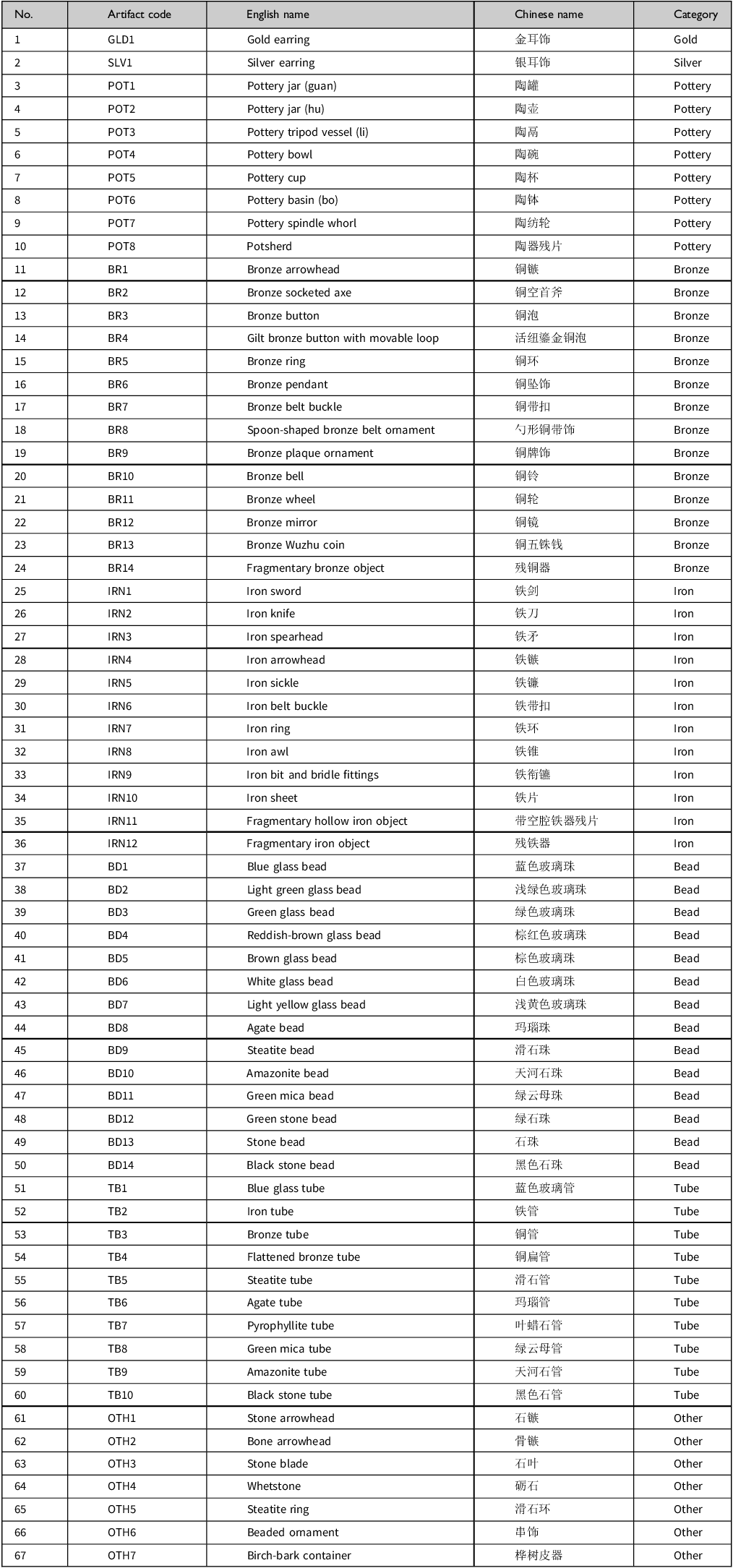
The burial goods excavated from 63 Xichagou graves are diverse in material and functional composition, reflecting a wide range of domestic, productive and symbolic activities (Fig. 2; Liaoning Provincial Museum et al. 2022). In this study, these artifacts are classified into major categories according to the combination of raw material (e.g. gold, silver, clay, bronze, iron, glass and stone) and object type (e.g. jar, arrowhead, axe, earring, button, tube, bead and buckle). We adopt the material identifications established in the excavation report, which are based on macroscopic observation and visual comparison with diagnostic artifact types. The artifacts recovered from these burials comprise a total of 67 artifact categories, with an aggregate count of 2,035 items. These 67 artifact categories and their corresponding numeric codes with prefixes are listed in Table 1. Burial numbers are prefixed with ‘M’ and assigned consecutively, following the numbering system used in the site excavation report (Supplementary Material 1).
Classification of burial goods from the Xichagou site.

Table 1 Long description
A table categorizing burial goods from the Xichagou site. The table has 67 rows and 4 columns. Column headers are No., Artifact code, English name, Chinese name, and Category. Each row lists an artifact’s number, code, English name, Chinese name, and category. The artifacts are categorized by material (e.g., gold, silver, clay, bronze, iron, glass, stone) and type (e.g., jar, arrowhead, axe, earring, button, tube, bead, buckle).
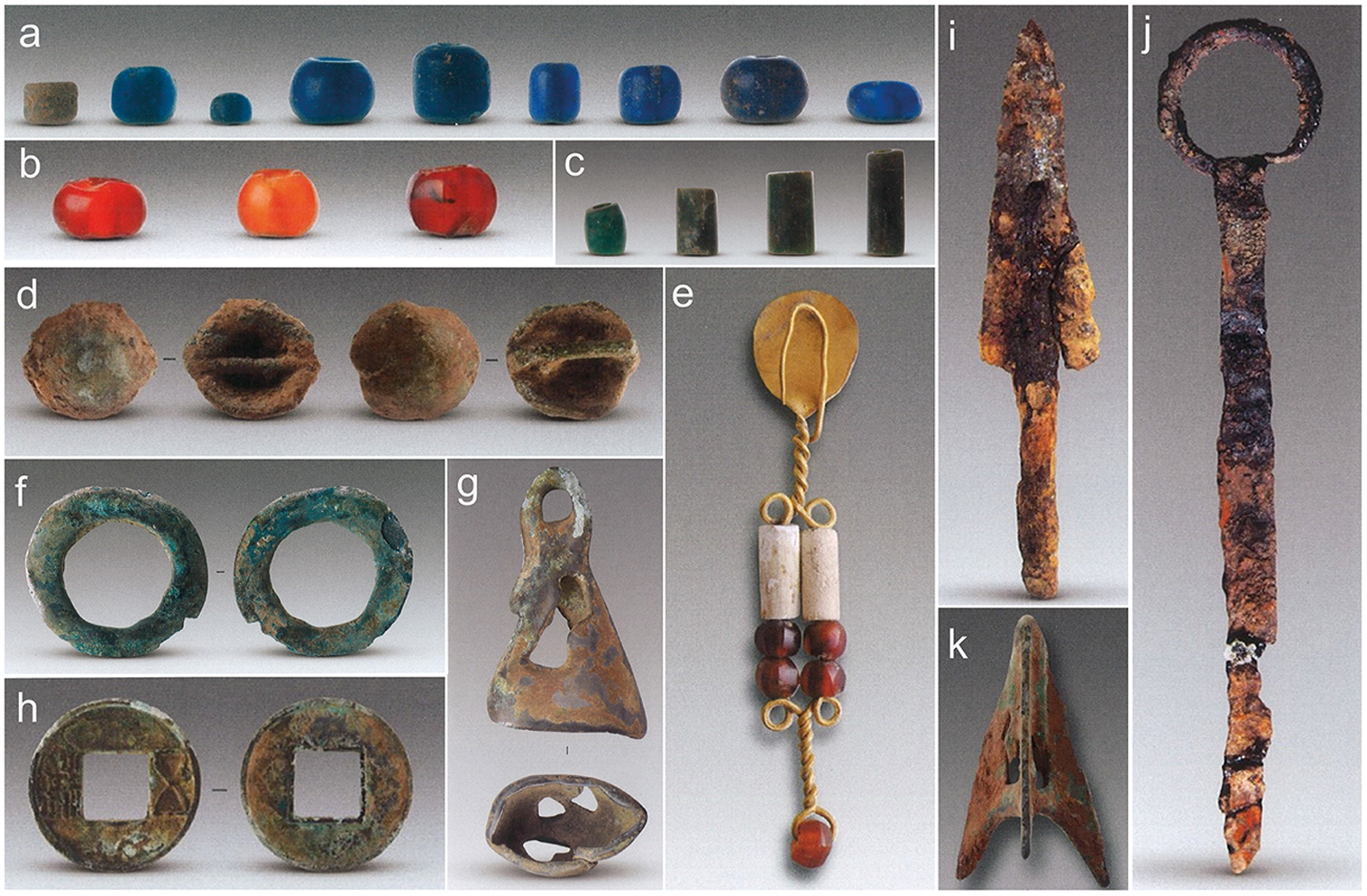
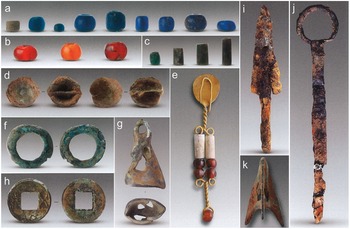
Selected artifacts from the Xichagou graves: (a) blue glass beads; (b) agate beads; (c) green mica tubes; (d) bronze buttons; (e) gold earring; (f) bronze ring; (g) bronze bell; (h) Wuzhu coin; (i) iron arrowhead; (j) iron knife; and (k) bronze arrowhead. (Photographs reproduced from Liaoning Provincial Museum et al. 2022. Scales vary.)
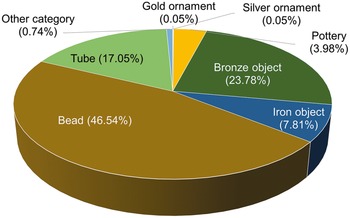
Gold and silver artifacts are widely recognized as strong indicators of high social standing. However, the Xichagou burials yielded only one gold earring and one silver earring (from M16 and M26, respectively). By contrast, beads and tubes constitute a substantially larger proportion of the grave goods assemblage, collectively accounting for 64% of the total (n=1,294; Fig. 3). These artifacts were manufactured from a variety of materials, including glass, agate, steatite, amazonite and green mica. Within individual burials, beads and tubes tend to occur in clusters, typically in the area corresponding to the upper body of the deceased. This pattern suggests that they were likely strung together and worn as composite ornaments on the head, around the neck, or on the upper body. Their abundance indicates that they played an important role in personal adornment.
Proportions of different artifact categories at the Xichagou site.
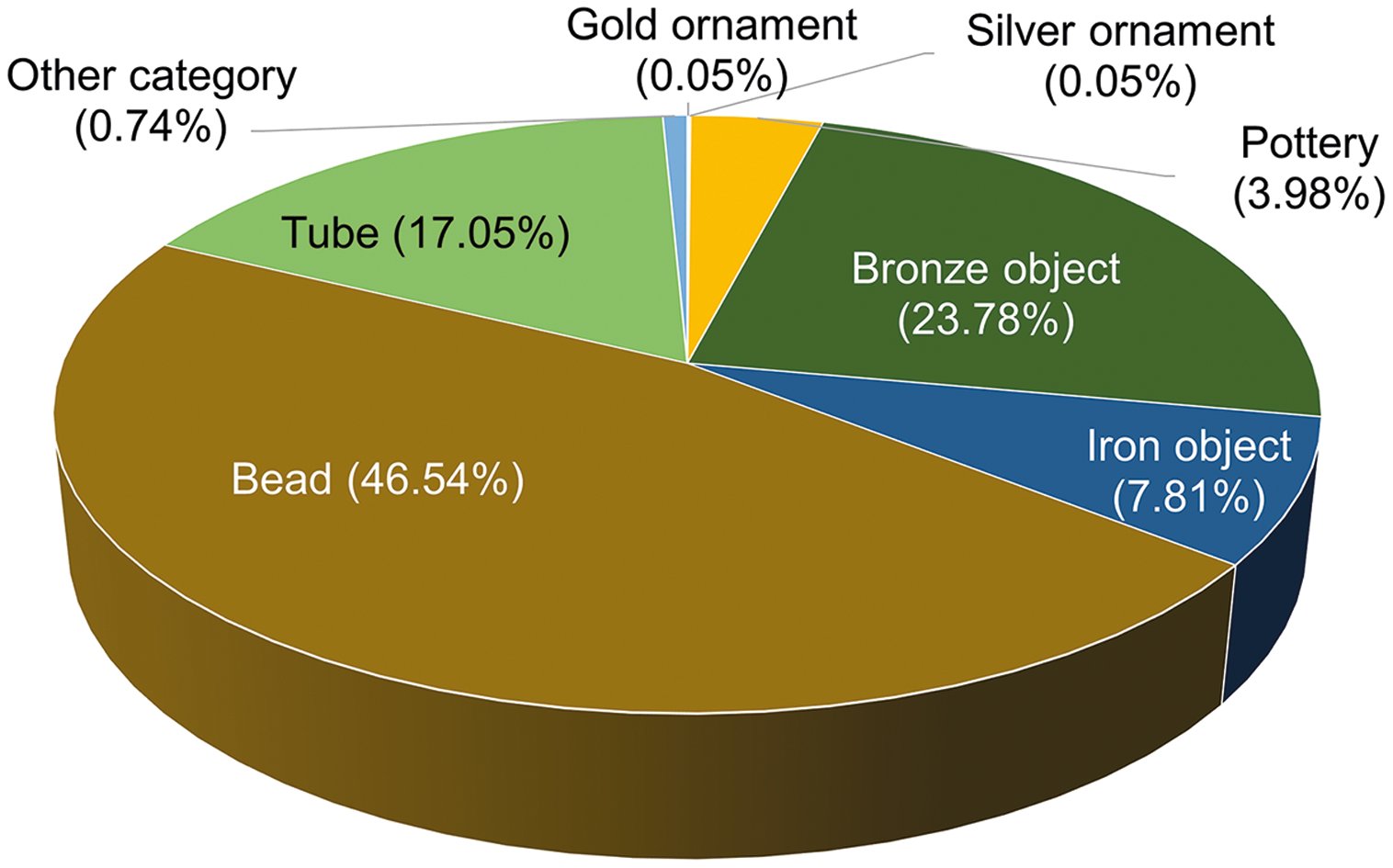
Bronze artifacts make up 24% of the assemblage (n=484), underscoring the material’s significance in the production of tools, weapons and decorative objects. Iron artifacts comprise 8% of the assemblage (n=159). Pottery is represented by 77 vessels (4%), including jars, bowls, cups and basins, reflecting practices related to food storage and consumption. In addition to pottery, four spindle whorls were also made of clay. Finally, the ‘other’ category includes 15 items that do not fall into the primary classifications, such as stone and bone arrowheads, stone blades and whetstones (Fig. 3).
The artifact count was based on the principle of calculating the minimum number of artifacts present. Most artifacts were recovered intact and complete; however, some—primarily pottery and certain bronze and iron objects—were found in fragments. While these fragments may have originated from multiple original items, in many cases they were interpreted as representing a single artifact, regardless of the number of pieces. Due to their fragmentary condition, it was often impossible to determine the exact form or function of the original objects. In such cases, the fragments were counted as a single artifact and classified under general or indeterminate categories, such as potsherd (POT8), fragmentary bronze object (BR14), and fragmentary iron object (IRN12). Overall, this study adopts the classification framework established in the site excavation report to ensure consistency with regional archaeological research.
Multivariate analyses
Following dataset compilation and preliminary data screening, multidimensional scaling (MDS) and k-means clustering were employed to classify burials based on similarities in their mortuary assemblages. MDS is a multivariate ordination technique that visualizes similarity among objects—here, burials—by projecting them into a low-dimensional space (Drennan Reference Drennan2009; Legendre & Legendre Reference Legendre and Legendre2012; Shennan Reference Shennan2008). Distances among burials were calculated from artifact count data using quantitative Jaccard dissimilarity (also known as Ružička dissimilarity), which measures the degree of dissimilarity between assemblages based on differences in their shared abundances (Drennan Reference Drennan2009; Legendre & Legendre Reference Legendre and Legendre2012). To estimate an appropriate number of clusters, the elbow method was applied to the MDS coordinates using the within-cluster sum of squares (WSS) criterion (Baxter Reference Baxter1994). In k-means clustering, data points are partitioned into k non-overlapping clusters by iteratively assigning each point to the nearest of k centroids and recalculating the centroids until the within-cluster sum of squares is minimized (Drennan Reference Drennan2009; Kaufman & Rousseeuw Reference Kaufman and Rousseeuw2005; Shennan Reference Shennan2008).
In this research, Jaccard distances were computed using the ‘vegdist’ function from the vegan package (Oksanen et al. Reference Oksanen, Simpson and Blanchet2022) in R (ver. 4.5.1; R Core Team 2025). The optimal number of clusters (k) was determined using the elbow method via the ‘fviz_nbclust’ function of the factoextra package (Kassambara & Mundt Reference Kassambara and Mundt2020). K-means clustering was performed using the ‘kmeans’ function in base R. The full R code is provided in Supplementary Material 2. To assess whether the clustering results are driven by artifact composition, artifact quantity, or a small number of unusually rich burials, we conducted a series of sensitivity analyses, the results of which are presented in Supplementary Material 3.
Results
Preliminary data screening
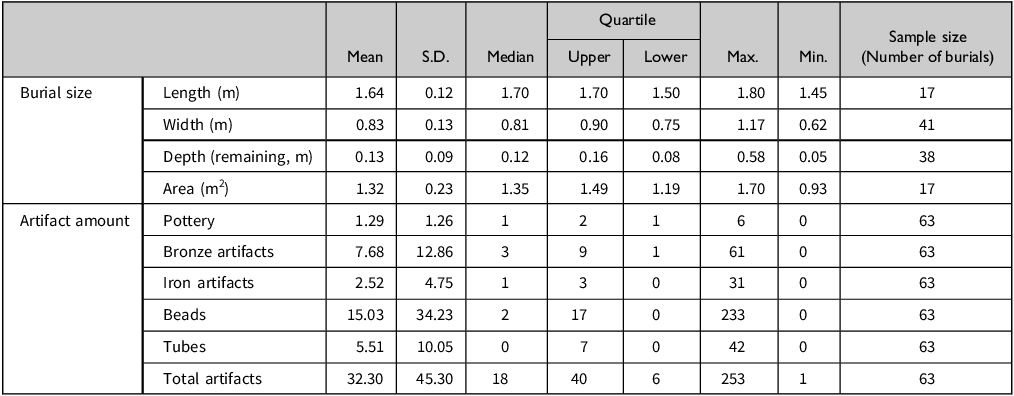
Table 2 summarizes the data screening results and metric characteristics of the 63 burials. In terms of burial dimensions, the burials are modest and relatively uniform, typically measuring 1.64 m in length and 0.83 m in width. The burials at Xichagou are rectangular earthen pits without coffins, each presumably containing a single individual. Among the 17 burials with measurable length and width, the average area is 1.32 m2 (SD=0.23), ranging from 0.93 to 1.70 m2. Although many burials were partly destroyed and their full dimensions were not restorable—especially depth, affected by erosion—the burials appear modest and simple in construction. Their relatively uniform size suggests that burial dimensions are not a reliable indicator of wealth differentiation, labour mobilization capacity, or subgroup distinctions.
Summary of burial dimensions and artifact counts for 63 Xichagou graves.
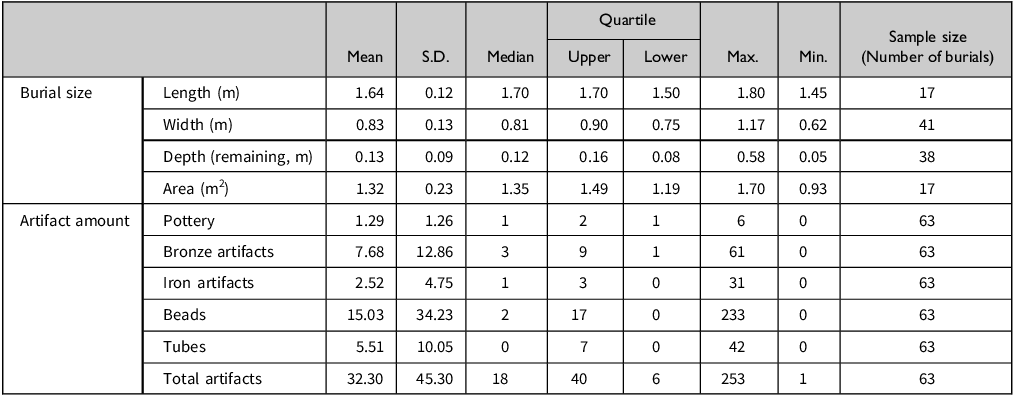
Table 2 Long description
The table presents data on burial dimensions and artifact counts for 63 graves. It has 11 rows and 8 columns. The columns are labeled Mean, S.D., Median, Quartile Upper, Quartile Lower, Max., Min., and Sample size (Number of burials). The rows are grouped under two main categories: Burial size and Artifact amount. Burial size includes Length (m), Width (m), Depth (remaining, m), and Area (m2). Artifact amount includes Pottery, Bronze artifacts, Iron artifacts, Beads, Tubes, and Total artifacts. Each row provides specific values for Mean, Standard Deviation (S.D.), Median, Quartile Upper, Quartile Lower, Maximum (Max.), Minimum (Min.), and Sample size (Number of burials).
By contrast, the quantities of grave goods exhibit considerable variation. Pottery is modest in number, with a mean of 1.29 vessels per burial. Iron artifacts are also relatively limited, with a mean of 2.52 per burial. By comparison, other artifact categories are present in much larger quantities, with means of 7.7, 15.0 and 5.5 for bronze artifacts, beads and tubes, respectively. More significant than the average quantity is the pronounced degree of variation across the sample. Large differences between mean and median values for several artifact categories—especially bronze objects, beads and tubes—suggest right-skewed distributions driven by a small number of richly furnished burials (Table 2). In short, while burial construction was modest and followed relatively standardized norms, the distribution of grave goods was highly uneven, pointing to differentiation expressed through the quantity of grave goods.
Three burial groups
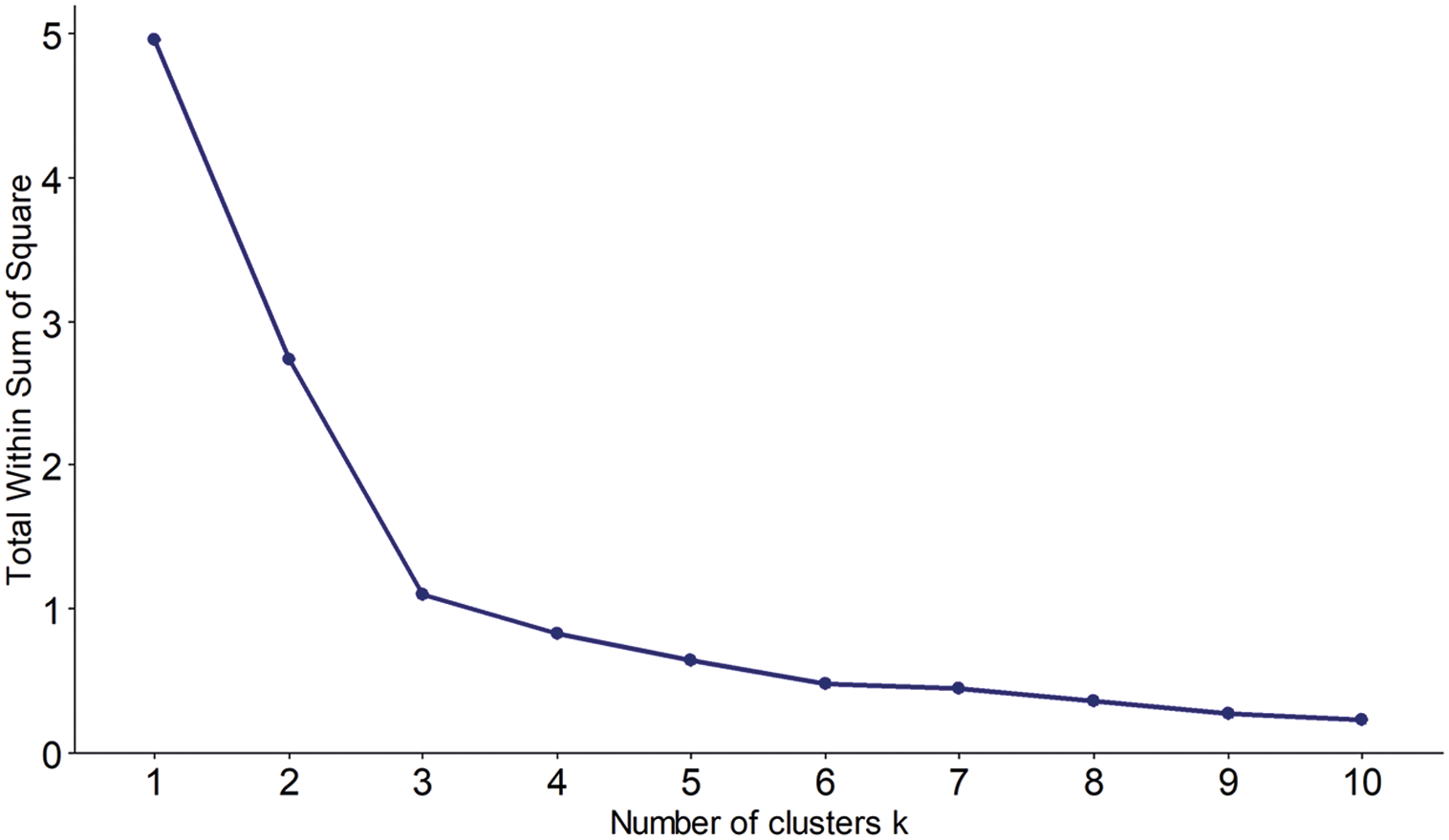
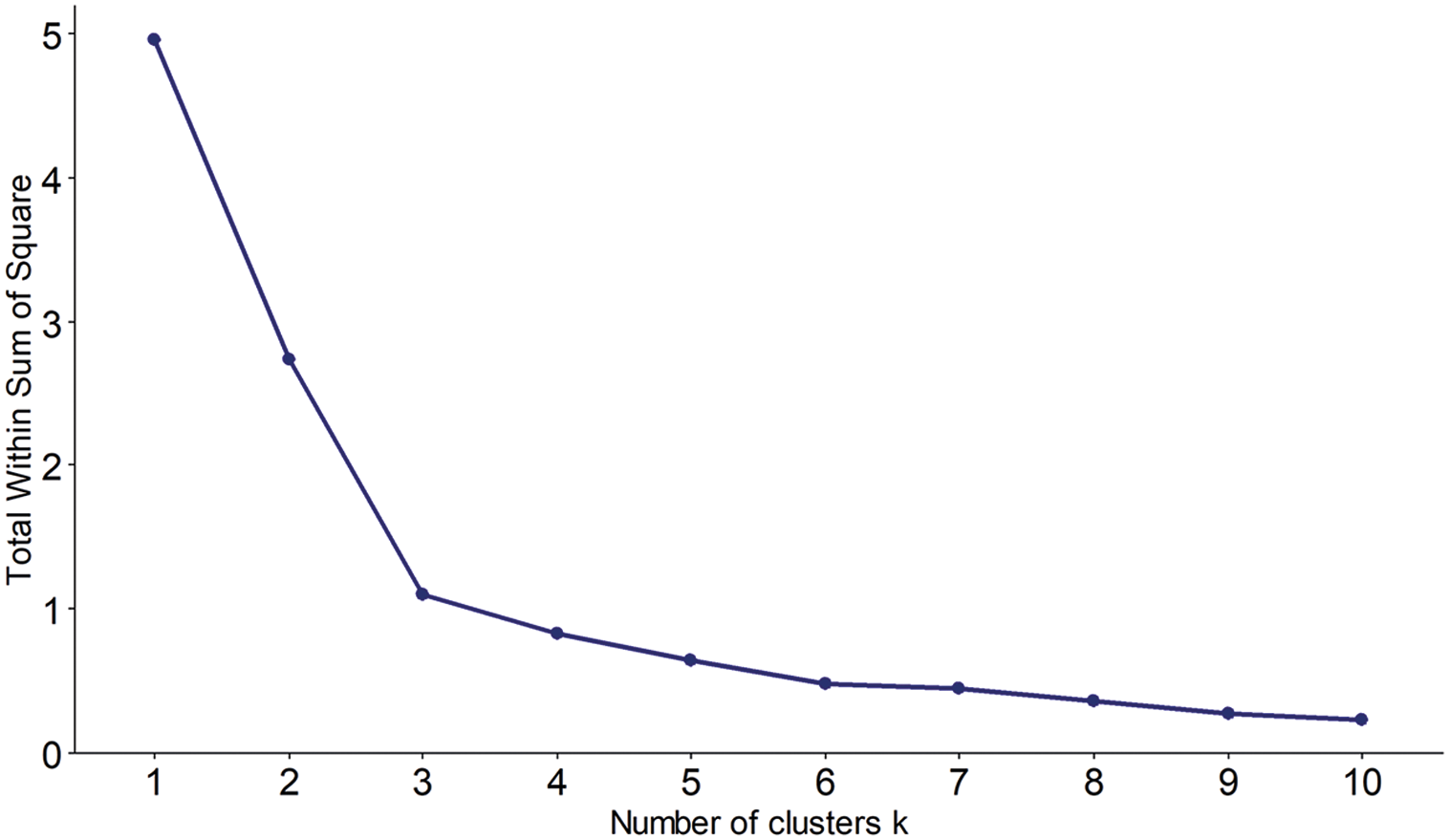
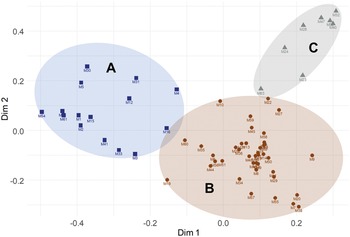
Application of the elbow method to the mortuary assemblages suggests that the burials are best classified into three groups (Fig. 4). On this basis, multi-dimensional scaling (MDS) was used to visualize the 63 burials in two-dimensional space, and k-means clustering of the MDS coordinates further divided them into three distinct groups—A, B and C—comprising 15, 40 and 8 burials, respectively (Fig. 5).
Elbow plot of the Xichagou mortuary assemblages.

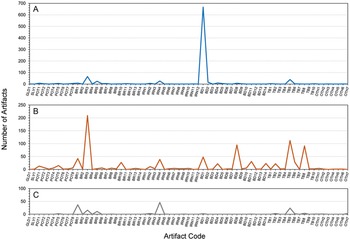
Comparison of the three groups reveals marked differences in burial goods composition (Fig. 6). Group A is characterized by high quantities of blue glass beads, with an average of 44 beads per grave and counts ranging from 7 to 233. Blue glass beads are small, perforated ornaments typically 3–10 mm in diameter and coloured by cobalt or copper oxides; they were likely used as personal adornments such as necklaces or bracelets, or sewn onto garments (Fig. 2). Group A burials also contained other types of ornaments and weapons, including bronze buttons (or loop-backed bronze bosses) and iron arrowheads. Bronze buttons occur at an average of four per grave, with counts ranging from 0 to 13. Despite the presence of these additional artifacts, blue glass beads overwhelmingly dominate the assemblages.
Counts of 67 artifact categories across the three burial groups (A, B & C) at the Xichagou site. Artifact codes match those listed in Table 1.

Group B burials are notable for their relatively high numbers of bronze buttons, whereas blue glass beads—the most dominant category in Group A—occur only in modest quantities. On average, Group B burials contain five bronze buttons per grave, with counts ranging from 0 to 54. Bronze buttons are circular, concave objects approximately 2–5 cm in diameter, with a loop on the back that allows them to be attached to other objects (Fig. 2). Importantly, the significance of Group B does not lie solely in the prominence of bronze buttons, but rather in the overall diversity of its mortuary assemblages. These burials include a wide range of artifacts, such as pottery (jars and cups), weapons (bronze and iron arrowheads), ritual items (bronze bells) and ornaments (agate beads, steatite tubes and green mica tubes). This diversity contrasts sharply with Group A, which is largely dominated by blue glass beads.
Finally, Group C is characterized by a paucity of grave goods and appears to represent relatively modest burials. Despite the generally limited quantity of burial goods, Group C burials commonly include weapons—such as bronze and iron arrowheads—along with small quantities of steatite tubes.
Although Groups A and B are distinguished by different artifact assemblages—especially the abundance of blue glass beads in Group A and bronze buttons in Group B—the distinction is not absolute. Some Group A burials contain bronze buttons and other bronze artifacts, whereas some Group B burials contain blue glass beads; nevertheless, the relative abundances of these artifacts remain clearly different (Fig. 6). Moreover, some Group B burials lack bronze buttons but contain abundant other bronze artifacts and ornaments, placing them within Group B and distinguishing them from Group C. Thus, the boundary between the groups is somewhat blurred, and certain graves occupy an intermediate position. Accordingly, these groups should be regarded as analytical clusters based on similarities in mortuary assemblages rather than as sharply bounded social categories.
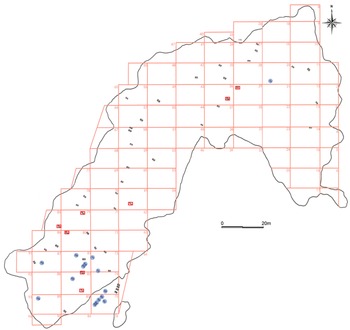
Notably, the distinctions observed among the three burial groups correlate with the spatial distribution of the graves (Fig. 7). All Group A burials, except for M54, are located on the lower western ridge in the western area of the site. Of the eight Group C burials, six are also found in the western area, while only two are located in the northeastern area. In this sense, Groups A and C are largely confined to the western area, although this pattern is not absolute. By contrast, Group B burials are distributed across the site and display a much broader spatial spread. Because the clustering analysis relied solely on mortuary assemblages and did not incorporate spatial information, the correspondence between cluster membership and spatial location provides independent support for the validity of the identified clusters. This suggests that variation in mortuary practices was structured by both differences in artifact assemblages and the spatial organization of the cemetery.
Distribution of the Xichagou graves. Group A graves are marked with blue circles, and Group C graves are marked with red rectangles. The remaining graves belong to Group B. (Modified from the site map in Liaoning Provincial Museum et al. 2022.)

Variation within each group
The preliminary data screening revealed considerable variation in the number of grave goods across individual burials (Table 2). Multivariate analysis of the 63 graves further identified three distinct burial groups, each characterized by a unique artifact composition (Figs 5 & 6). These findings raise questions about the extent of internal variation within each burial group. Boxplots for the three groups confirm that such variation is indeed present (Fig. 8). In each boxplot, the mean typically exceeds the median, indicating that a few richly furnished graves raise the average and suggesting differences in social status and wealth within each group. Notably, the boxplots also reveal several outliers—graves whose assemblages far exceed those of others within the same group.
Boxplots of artifact counts per grave for three burial groups (A, B & C). Red diamonds indicate the mean number of grave goods in each group.

M16, measuring 1.7 m (L)×0.91 m (W), is the most richly furnished burial in Group A (Fig. 9). The grave goods comprise a total of 257 items, the most luxurious being a gold earring found at the northwest end of the grave—the presumed location of the head. In addition, 233 blue glass beads were discovered in clusters near the head, neck and waist of the deceased. Other artifacts include a horse-shaped bronze plaque, ten bronze rings, two ring-pommel iron knives, two bronze buttons and an iron tube.
Most richly furnished graves in Groups A (M16 and M12), B (M59), and C (M63). (Redrawn from Liaoning Provincial Museum et al. 2022.)

M12 (1.7×0.75 m) is another Group A burial containing abundant grave goods (Fig. 9). A total of 145 items were recovered, mainly from the central and northwestern parts of the grave. The assemblage includes a gilt bronze button with a movable loop, along with knives, arrowheads and belt buckles made of bronze or iron, as well as bronze buttons and more than 120 glass beads and tubes.
M59 (1.8×0.75 m) yielded the largest assemblage in Group B (Fig. 9), totalling 216 items, the most numerous being 31 bronze buttons. Altogether, 63 bronze objects and 31 iron objects—including arrowheads, knives, a spear, a bit, belt fittings, rings, buttons and tubes—were identified. Although 121 beads and tubular ornaments were found, only four were blue glass beads; the remainder were made from other materials, including agate, amazonite, talc and green stone.
Finally, M63 (1.7×0.7 m) belongs to Group C, generally characterized by modest assemblages with few blue glass beads and bronze buttons (Fig. 9). M63, however, stands out for its relatively large number of artifacts. A total of 72 items were recovered, including an iron sword, an iron sickle, iron knives and arrowheads made of both bronze and iron, as well as ornaments such as beads, tubes, and rings made of bronze, carnelian, steatite and green mica.
Taken together, within each of the three groups (A, B, and C), the quantity of grave goods varies considerably. The presence of graves containing more luxurious materials—such as bronze ornaments, glass beads and semi-precious stones—than others points to graded differentiation among the burials, possibly correlated with differences in the wealth and social status of the deceased. Notably, despite these disparities in the quality and quantity of grave goods, grave architecture remains relatively uniform across the site. This suggests that status was expressed primarily through the display of grave goods rather than through monumental tomb construction.
Discussion
Preservation, looting and reconstructing identities
Although this study aims to explore the articulation of identity and status at the Xichagou site, several limitations must be acknowledged. Most importantly, preservation conditions significantly constrain the available data. The original grave assemblages likely included a range of organic and inorganic materials, as suggested by the recovery of a small number of organic artifacts—such as leather fragments and birch-bark remains—from the Xichagou graves (Liaoning Provincial Museum et al. 2022). However, the surviving archaeological assemblages are likely biased toward stone, metal and glass objects, resulting in the loss of information that might otherwise have been preserved in perishable organic materials. Furthermore, skeletal remains are rarely preserved, and those that have been recovered are highly fragmented, severely limiting information on sex, age, and health profiles.
In addition, the examined burials may not fully capture the range of social identities present at the site. As previously noted, Xichagou has suffered extensive disturbance and looting, leaving only 63 graves with reliable contextual information. Artifacts of unknown archaeological context nevertheless suggest the existence of social identities not represented within the excavated assemblage. For instance, these decontextualized finds include iron weapons such as swords, spearheads and axes, as well as horse equipment, which point to warrior or equestrian identities (Lin Reference Lin1993). Similarly, luxury items—including gold and silver earrings, gilt bronze ornaments and bronze mirrors—indicate individuals of considerable wealth and high status (Lee Reference Lee2023; Sun Reference Sun1995). However, this contextual information is irretrievably lost, and we can only acknowledge that additional social identities—e.g. high-level elites associated with martial, economic, or ideological power—likely existed beyond those represented in the 63 burials.
Despite these limitations, this analysis reveals aspects of social dynamics that have not previously been recognized. First, a distinction emerges between Group A, on the one hand, and Groups B and C, on the other (Fig. 6). Arrowheads—possibly indicating activities such as hunting or warfare—occur almost exclusively in Groups B and C, whereas they are very rare in Group A, which is characterized by an abundance of blue glass beads. Group A contains no bronze arrowheads, although a few iron examples have been identified. By contrast, Groups B and C contain both bronze and iron arrowheads, which make up a considerable portion of their assemblages. These distinctions should not be regarded as absolute, as some graves occupy an intermediate position; nevertheless, when viewed collectively, the evidence points to two contrasting modes.
This pattern suggests that the burial groups reflect distinct social identities structured around activity, role, and possibly status expression. Although the precise identities represented by these groups remain unclear, we interpret them as indicating social differentiation along two or more dimensions. Groups B and C may represent individuals associated with hunting, warfare, or other martial activities. By contrast, the prominence of blue glass beads in Group A points to an emphasis on social display through ornamental or symbolic items, with little evidence of outdoor or martial pursuits. These groups therefore appear to represent contrasting identities oriented toward display and embellishment, on the one hand, and toward functional or martial activities, on the other.
Beyond reflecting social identities associated with specific roles and activities, the artifact assemblages of Group A and Groups B/C may also indicate differences in wealth and status. In northern China during the first millennium bc, glass ornaments were important status markers, typically acquired from distant regions through far-reaching exchange networks (Li & Zheng Reference Li and Zheng2010; Liu & Cao Reference Liu and Cao2025). As highly prestigious items, glass ornaments may in some cases have been regarded as more luxurious than bronze. Blue glass was likely associated with prestige because it imitated highly valued imported gemstones, particularly beryl (liuli), whose brilliance and exotic origin made them desirable among Han elites (Gan Reference Gan2005; Zheng & Guo Reference Zheng and Guo2025). This does not mean that bronze objects lacked intrinsic value; rather, they embodied privileged access to raw materials and specialized craftsmanship that developed in northeastern China since the second millennium bc (Yang Reference Yang2008). However, given the vast geographic range and extensive exchange networks involved in the circulation of glass, the glass-bead-rich assemblages of Group A may represent a higher-status echelon. If this assumption is correct, the distinction between Group A and Groups B/C may reflect both horizontal social differentiation based on roles and activities and vertical social hierarchy based on wealth and status.
Comparison of Groups B and C indicates a relationship of addition rather than categorical difference (Fig. 6). Group C is the more modest of the two, yet its graves consistently contain iron and bronze arrowheads. Group B shares this characteristic, but also includes additional artifact types that are scarce or absent in Group C, such as bronze buttons and bells, as well as beads and tubes made of glass, agate, steatite, and green mica. In other words, Group B is defined not by a fundamentally different set of objects, but by a richer and more diverse assemblage: it builds upon Group C by retaining its core elements while incorporating additional, less common artifact types.
Given these observations, the relationship between Groups B and C reflects a degree of hierarchy. The items more common in Group B signal the ideological and wealth-based power of their owners. Particularly noteworthy is the abundance of bronze buttons in Group B, an artifact type that is rare in Group C. A bronze button is a small, shiny, circular object with a loop on the back, allowing it to be attached to garments or other everyday items (Fig. 2). Because such objects are highly visible and easily recognizable, they serve as effective markers of identity and status, functioning in a manner similar to insignia and badges that display rank or affiliation in modern contexts (Zhao & Yang Reference Zhao and Yang2019). The prevalence of these items suggests ranked differentiation, with Group B representing a higher-status subset within the same broader social category as Group C.
Considered together, the three groups indicate multiple dimensions of social differentiation operating simultaneously, encompassing both vertical and horizontal forms of social structure. The distinction between Group A and Groups B/C is based on different sets of items (e.g. blue glass beads versus bronze buttons and arrowheads). This relationship appears to reflect differences in roles and activities, and possibly also in wealth and status. The key question is whether a hierarchical relationship existed between Group A (glass-bead-rich assemblages) and Group B (bronze-button-rich assemblages). Although the artifact types defining these groups do not lend themselves to a straightforward hierarchical comparison, we suggest that Group A may have held higher social standing, given the substantial amount of social capital (Bourdieu Reference Bourdieu and Richardson1986) required to participate in and manage exchange networks for glass-bead acquisition. Finally, the distinction between Groups B and C appears to reflect a degree of ranking, as it is marked by the presence or absence of certain luxury or symbolic materials, particularly bronze buttons.
Identity signifiers and external exchange
Multivariate analysis indicates that the Xichagou graves reflect distinctive social identities, structured along both categorical and hierarchical dimensions defined by specific artifact types and their quantities. Building on these findings, we incorporate published chemical composition analyses of bronze and glass artifacts from Xichagou to understand better the practices associated with identity display and social distinction (Ling Reference Ling2022; J. Liu et al. Reference Liu, Dong and Li2022; S. Liu et al. Reference Liu, Dong and Li2022). This integration points to an important pattern: many of the objects used to signal identity and status within the community were acquired through external interactions, presumably as gifts, tribute, or traded items. Consequently, the capacity to reproduce intragroup social distinctions depended, at least in part, on access to externally derived symbolic capital that could be appropriated to legitimize one’s position within the local social structure.
The metallurgical examination of 38 bronze artifacts indicates that the assemblage is dominated by copper-tin-lead ternary alloys, consistent with the bronze-alloying tradition of the Central Plains of China, while a subset of artifacts contains arsenic (J. Liu et al. Reference Liu, Dong and Li2022). The addition of arsenic is a feature often associated with metallurgical conventions in the Eurasian steppe and northwestern China (De Ryck et al. Reference De Ryck, Adriaens and Adams2005; Hansen Reference Hansen2022; Wan Reference Wan2011). The coexistence of these distinct metallurgical traditions within the assemblage suggests that the bronzes were not uniform in origin but instead were sourced from different geographical regions and manufacturing traditions.
Similarly, glass ornaments suggest the operation of extensive exchange networks (Ling Reference Ling2022; S. Liu et al. Reference Liu, Dong and Li2022). Compositional analysis of 106 glass beads, including 76 blue specimens, indicates that the assemblage comprises three principal glass types: sodium-aluminium, potassium and soda-lime, represented by 51, 49 and 6 samples, respectively. Sodium-aluminium glass, characterized by high aluminium content and sodium derived from plant ash, is associated with glass-making traditions in northern India and Pakistan (Freestone Reference Freestone, Pollard, Armitage and Makarewicz2023). Potassium-based glass cannot be attributed to a single production region but has been linked to multiple areas, including India, Southeast Asia and southern China (Bao et al. Reference Bao, Tian, Huang, Su, Zhang and Wu2025; Freestone Reference Freestone, Pollard, Armitage and Makarewicz2023; Gan Reference Gan, Gan, Brill and Tian2009; Gan et al. Reference Gan, Cheng and Li2006). Some of these beads may have been produced locally, while others may have originated farther south. Finally, soda-lime glass constitutes only a small portion of the Xichagou assemblage but is typically associated with glass-making traditions of the Near East and the Mediterranean (Gan Reference Gan, Gan, Brill and Tian2009).
Overall, the compositional analysis of the Xichagou beads demonstrates that artifacts classified within a single visual category (e.g. ‘blue glass beads’) may, in fact, derive from geographically distant regions or from different manufacturing traditions. Including ornaments of uncertain but evidently non-local origin (e.g. agate, steatite, amazonite and green mica) would further expand the geographic scope of these connections and point to the involvement of multiple production sources.
Notably, many of the artifact categories through which the Xichagou people expressed their identities—whether horizontal or vertical—were non-local and acquired through external exchange networks. In other words, the recognition of social distinctions within this community depended, at least in part, on the circulation of exotic materials. A useful modern analogy is the wedding ring, which can signal both categorical identities (married versus single) and hierarchical distinctions (e.g. wealth), yet is often made from materials sourced elsewhere. Similarly, many artifacts expressing identity in Xichagou graves were small, exotic objects easily transported, displayed and exchanged across social boundaries. These objects can be understood as forms of symbolic and economic capital (Bourdieu Reference Bourdieu and Richardson1986): their value derived not merely from their material worth, but from their capacity to confer social recognition, thereby enabling individuals to validate and reproduce their social positions.
Given the relationship between the signifiers of subgroup distinctions and non-local objects at Xichagou, we propose that processes of social differentiation and participation in exchange networks were mutually reinforcing (cf. Thomas Reference Thomas and Mattson2021): as individuals sought to differentiate themselves more elaborately within their own community, demand for luxurious, non-local objects likely intensified, while access to such networks simultaneously enabled and structured these distinctions. Conversely, reduced external interaction would have constrained opportunities to acquire foreign materials for the display of identity and status, potentially reshaping the forms that such displays could take. The former scenario appears more applicable to Xichagou. The mortuary assemblages—an arena in which the identities and statuses of the deceased were displayed—reveal less about the historical group to which these individuals belonged (e.g. their ethnic affiliations) than about the scope of their social interaction, whether direct or indirect. This interaction is reflected in the geographic reach and the number of exchange nodes involved in the circulation of these objects.
Much anthropological research emphasizes the operation of heterarchical political systems among pastoral nomadic societies, as well as their reliance on extensive social networks, distributed authority, and negotiation among multiple groups and leaders (Honeychurch Reference Honeychurch2014; Kradin Reference Kradin2011; Reference Kradin, Bondarenko, Kowalewski and Small2020; Makarewicz et al. Reference Makarewicz, Winter-Schuh, Jackson, Johannesson, Amartuvshin and Honeychurch2024). Small luxury objects that can be easily circulated and exchanged play an important role in such socio-political settings, effectively signalling social status and reinforcing political alliances (Schortman Reference Schortman2014; Schortman & Urban Reference Schortman and Urban2012). In this regard, the Xichagou site appears to represent a node within a far-flung exchange network, where people actively used small ornaments and tools to express their identities and reproduce intragroup hierarchy.
The contrasts in small burial goods observed at Xichagou, through which the multi-layered identities of the deceased were represented, find parallels in mortuary studies across Eurasia. Contemporaneous cemeteries in China, such as Laoheshen and Cailan, similarly combine weaponry with portable ornaments of diverse origins (Lin Reference Lin1993). Small ornaments, tools and weapons were also important media for expressing social identities during the Lower Xiajiadian (2100–1600 bc) and Upper Xiajiadian (1100–600 bc) periods (Shelach Reference Shelach2002). Mortuary assemblages from the Liulihe and Tianma-Qucun cemeteries of the Western Zhou period (1046–771 bc) likewise indicate that small valuables served as key media of social distinction (Jaffe Reference Jaffe2012; Jaffe & Cao Reference Jaffe and Cao2018). This pattern is not geographically confined. In Neolithic Europe, for example, combined analyses of grave-good technology, use-wear and skeletal sex have revealed patterned associations between particular toolkits and male or female burials, pointing to a sexual division of labour materialized in death (Masclans et al. Reference Masclans, Hamon, Jeunesse and Bickle2021). Accordingly, Xichagou exemplifies a broader pattern in which small, portable objects encoded social distinctions at death.
Conclusion
This study examines the mortuary assemblages of 63 graves from the Xichagou site in Liaoning, China, dated to approximately 200–1 bc, and highlights the material expressions of multiple intersecting social identities. Previous research has tended to focus on a few diagnostic artifacts and to identify the Xichagou people in relation to ethnonyms recorded in ancient Chinese historical texts. Without diminishing the importance of this line of inquiry, the present study seeks to illuminate another aspect of their identity by demonstrating internal variation and nuanced expressions of identity that may have differentiated individuals and groups within the community itself.
Rather than demonstrating that the Xichagou people constituted a homogeneous social entity, this examination reveals differentiation along both horizontal and vertical dimensions. The burials are uniformly simple, coffinless pit graves of similar size and structure, suggesting that a common protocol governed burial construction and that grave architecture itself was not a means of expressing intragroup distinction. However, a contrast is evident between bead-rich graves (Group A) and weapon-rich graves (Groups B & C), which may reflect different social roles, activities, or forms of status commemorated in death. A vertical relationship is particularly evident between the more richly furnished Group B burials and the more modest Group C burials. Moreover, considerable variation within each group indicates that social differentiation also operated internally, with wealth and status expressed through differences in the quantity and quality of burial goods.
The prominence of portable, easily circulated and symbolically charged items suggests that expressions of social identity at Xichagou were closely tied to participation in networks of exchange and redistribution. Compositional analyses indicate that many ornaments—particularly glass beads and certain bronze objects—originated from widely dispersed regions, situating Xichagou within an interaction sphere spanning northern China, Inner Asia and beyond. These findings imply that the articulation of social standing within the Xichagou community depended on access to and engagement with such exchange networks, with processes of identity display and this network-based social system mutually reinforcing one another. In this light, the mortuary evidence from Xichagou suggests that these individuals, regardless of the ethnonym we apply to them, actively sought to acquire objects from beyond their social boundaries and aligned themselves with external material culture in order to enact social distinction within their own group and position themselves better within local status competition.
Supplementary material
To view supplementary material for this article, please visit https://doi.org/10.1017/S095977432610078X
Acknowledgements
This work was supported by the Ministry of Education of the Republic of Korea and the National Research Foundation of Korea (NRF-2025S1A5A2A01006255). We thank Jinson Cho and Juho Kim for drawing our attention to the Xichagou mortuary data and for encouraging further analysis of the material.


 Open access

