INTRODUCTION
The joint action of humans and nature can lead to the formation of interesting natural-anthropogenic objects, one of which is a cultural layer (CL) of archeological sites. Due to its genesis, a CL is an object of not only archeological study, but also paleogeography, geomorphology, geophysics and pedology. A cultural layer is an artificial pedolithological horizon formed at a site of an ancient settlement and represented by substances of artificial origin (artifacts) and organomineral material (filler), the latter consisting of both natural and artificial components (Sycheva Reference Sycheva1994). Cultural layers are formed on natural as well as anthropogenically transformed and/or created substrates. The complex genesis of a CL results in its special morphological features, which provide distinctions not only between CLs and undisturbed soils, but also between CLs of ancient settlements from different natural zones and different archeological epochs, as well as between CLs of different functional zones within a settlement (Kaidanova Reference Kaidanova1991; Sycheva Reference Sycheva1999; Alexandrovskaya et al. Reference Alexandrovskaya, Alexandrovskiy, Gaidukov and Krenke2001; Zazovskaya and Bronnikova Reference Zazovskaya and Bronnikova2001; Goldberg and Macphail Reference Goldberg and Macphail2006; Alexandrovsky et al. Reference Alexandrovskiy, Dolgikh and Alexandrovskaya2012a).
The composition and properties of CLs differ significantly from the composition and properties of natural background soils developed near an archaeological monument under similar geomorphological conditions. As a rule, CLs are characterized by increased contents of microelements, phosphorus and organic carbon, different organic matter composition and microbiological characteristics and a higher percentage of clay in the particle-size distribution, as compared to background soils (Limbrey Reference Limbrey1975; Holiday Reference Holliday1992; Sedov et al. Reference Sedov, Zazovskaya, Bronnikova, Kazdim and Rosov1999; Arzhantseva et al. Reference Arzhantseva, Turova, Bronnikova and Zazovskaya2001; Iakimenko et al Reference Iakimenko, Trofimov, Stepanov and Vorontsova2001; Trofimov et al. Reference Trofimov, Yakimenko, Sedov, Dorofeeva, Gorshkova, Zazovskaya, Oleinik and Demin2004; Dolgikh et al. Reference Dolgikh and Alexandrovskiy2010; Dolgikh and Alexandrovsky Reference Dolgikh and Alexandrovskiy2010; Alexandrovsky et al. Reference Alexandrovskiy, Voronin, Dolgikh, Kovalukh, Skripkin and Glavatskaya2012b; Murasheva et al. Reference Murasheva, Bronnikova and Panin2012).
Radiocarbon (14C) dates of organic matter (OM) of CLs are usually difficult to interpret, because they do not always correspond to the timings of archeological events, e.g., site creation and existence. For dating of such events scientists prefer to use, when possible, more reliable materials including wood, charcoal, or bones of humans and animals. However, in cases where there is either absence or poor preservation of such materials, sufficiently precise information on the site age can be obtained from 14С dating of organomineral materials from the CL and buried soils beneath it. In general, organic matter of a cultural layer can include several components of different ages:
-
1. The OM inherited from soil, on which the CL was formed;
-
2. The OM formed from organic residues produced during the use of the site;
-
3. The OM formed after abandonment of the settlement in cases where the CL remained exposed or the OM introduced from overlying soil layers in cases where the CL was buried.
Modern techniques of organic matter fractionation do not allow reliable separation of OM pools of different ages from a CL. However, the organomineral substrate of a CL can reflect its geomorphological location and particular use by ancient people, which therefore allows 14С dating to be applied in archeological studies.
This paper illustrates such opportunities by presenting examples of dating of CLs from differently aged settlements located within the European part of Russia.
MATERIALS AND METHODS
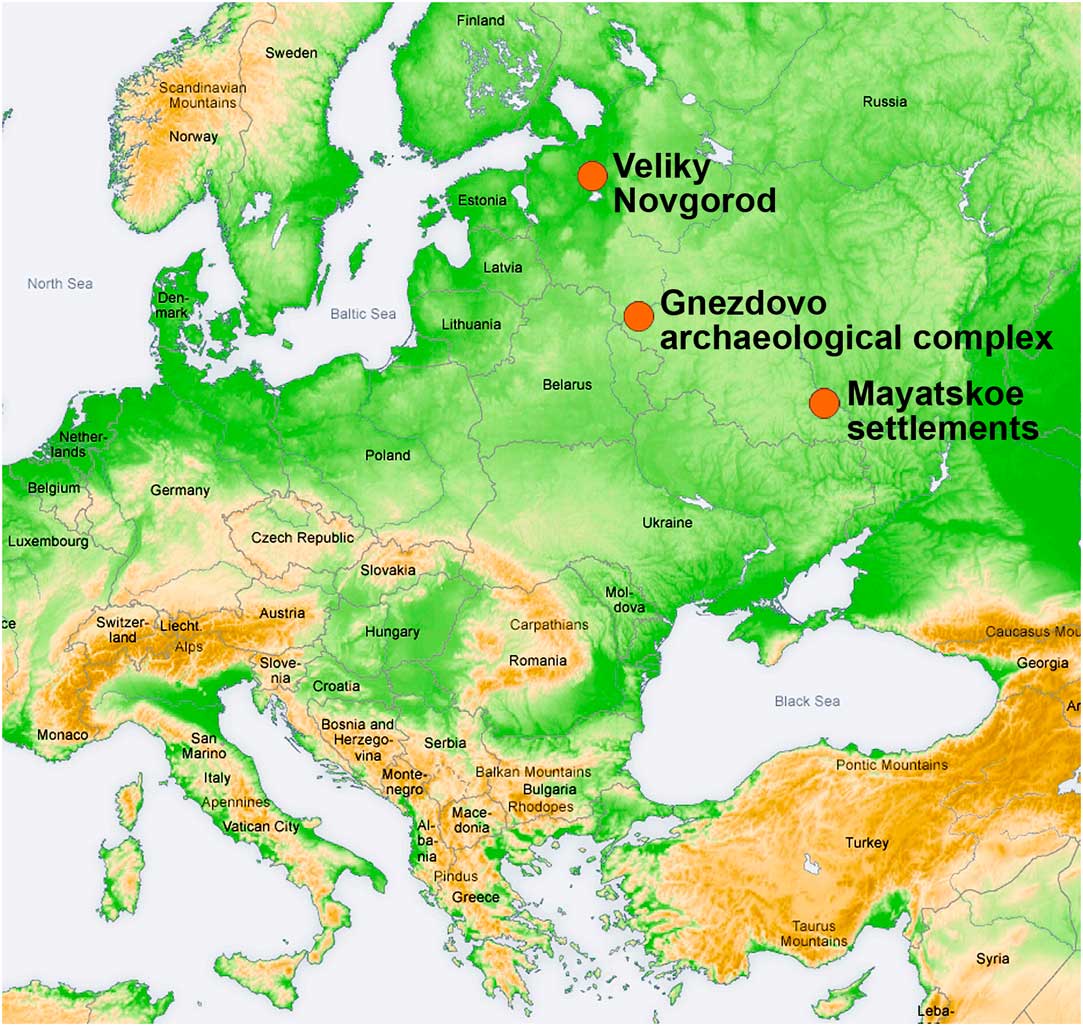
14C dates were obtained and analyzed for organic matter, charcoal, wood and peat samples from cultural layers of three archaeological sites (Figure 1), which are described below.
-
1. The Gnezdovo archaeological complex (54º46′N, 31º52′E) is located within the southern taiga zone, on the first terrace and adjacent elevated part of the floodplain of the Dnieper River. This is one of the largest archaeological monuments from early Russian history dating back to the period between the late 9th–early 10th centuries to the first half of the 11th century, when it was a major station on the trade route from the Varangians to the Greeks (Pushkina et al. Reference Pushkina, Eniosova and Murasheva2012). The Gnezdovo site comprises a “citadel” (gorodishche) and a ring of rural ancient settlements with evidence of the presence of well developed ancient crafts (iron-working, jewelry-making, pottery, etc.). The modern background soils are represented by Umbric Albeluvisols (soddy-podzolic soils) on sandy and sandy-loamy parent rocks.
-
2. The Mayatskoe site (50º97′N, 39º29′E) is located at the boundary of typical and southern forest-steppe zones, on a high bank at the confluence of the Don and Tikhaya Sosna Rivers. The site dates back to the the 7th–9th centuries and represents an Alani-influenced Saltovo-Mayaki archaeological culture. The site comprises an ancient citadel, rural settlement, graveyard and pottery works (Afanasyev et al. Reference Afanasyev, Zotko and Korobov1999). The modern background soils are represented by Chernozems on loessic parent rocks.
-
3. Novgorod Velikiy (58º31′N, 31º16′E) is located within the southern taiga natural zone, on terraces of postglacial lakes and flat modern valley of the Volkhov River characterized by poor natural drainage. Novgorod Velikiy, or Novgorod the Great, or just Novgorod, is one of the most important medieval historic cities in Russia. UNESCO recognized Novgorod as a World Heritage Site in 1992. The city is first mentioned in 859 AD in historic documents, but its cultural layers excavated to date are only as old as the early 10th century (Yanin Reference Yanin2001). There are particularly thick (2–5 m) medieval urbo-organic cultural layers consisting of peatlike material saturated with wood remains (Alexandrovskiy et al. Reference Alexandrovskiy, Dolgikh and Alexandrovskaya2012a). The modern background soils are represented by Stagnic Regosols on loamy and clayey parent rocks.
Locations of the investigated sites.

14C dating of the samples was conducted in the Laboratory of Radiocarbon Dating and Electronic Microscopy of the Institute of Geography of the Russian Academy of Sciences (laboratory index IGAN) and the Institute of Environmental Geochemistry of the National Academy of Sciences of Ukraine (laboratory index Ki). The activity of 14C was determined using a Quantulus 1220 liquid scintillation counter (LSC method). There were two dated fractions from the organomineral material of the cultural layers, which included (1) humic acids separated by alkaline extraction and (2) the total organic carbon (TOC). For the TOC dating the samples were placed in 1.0 M HCl and heated to 80ºC for 20 min, centrifuged, decanted, rinsed in deionized water and dried at 105ºC. For dating of the charcoal and peat samples we applied a standard acid-base-acid (АВА) technique, i.e., treated the samples in sequence with 1M HCl (at 80ºC for 1 hr, centrifuged and decanted), 0.1 M NaOH and diluted HCl, then washed with deionized water and dried at 105ºC. Dating of wood samples involved cellulose extraction using the BABAB technique (Gaudinski et al. Reference Gaudinski, Dawson, Quideau, Schuur, Roden, Trumbore, Sandquist, Oh and Wasylishen2005). All the radiocarbon dates obtained were calibrated according to IntCal13 (Reymer et al. Reference Reimer, Bard, Bayliss, Beck, Blackwell, Ramsey, Buck, Cheng, Edwards, Friedrich, Grootes, Guilderson, Haflidason, Hajdas, Hatté, Heaton, Hoffmann, Hogg, Hughen, Kaiser, Kromer, Manning, Niu, Reimer, Richards, Scott, Southon, Staff, Turney and van der Plicht2013) with the use of the Calib 7.1. program (http://calib.qub.ac.uk/calib/).
The separate study of the organic matter of the CLs of the Gnezdovo site involved a combined use of morphological investigations and analytical methods. A hierarchical order of morphological investigations included macromorphological descriptions in the field and meso-, micro- and submicromorphological analyses in the laboratory. The mesomorphological analyses were conducted in reflected light using a Stemi 2000-C Karl Zeiss binocular stereo microscope. The micromorphological analyses were conducted using an Axioplan 2 Karl Zeiss polarizing microscope. The submicromorphological analyses were performed using a JEOL jsm-6060A scanning electron microscope equipped with an EX-2300BU X-ray microanalyzer. The meso- and submicromorphological analyses were undertaken using (1) undisturbed monolith samples, (2) samples treated with 3% Н2О2 in steam bath for removal of plant residues, and (3) samples ignited at 750–800ºС for estimating the content of weakly oxidizing compounds in the OM of the CLs studied. Observations at all morphological scales included registration of color, degree of aggregation, types of organic matter compounds, contents and distribution patterns of finely dispersed humus.
RESULTS AND DISCUSSION
Gnezdovo Archaeological Complex
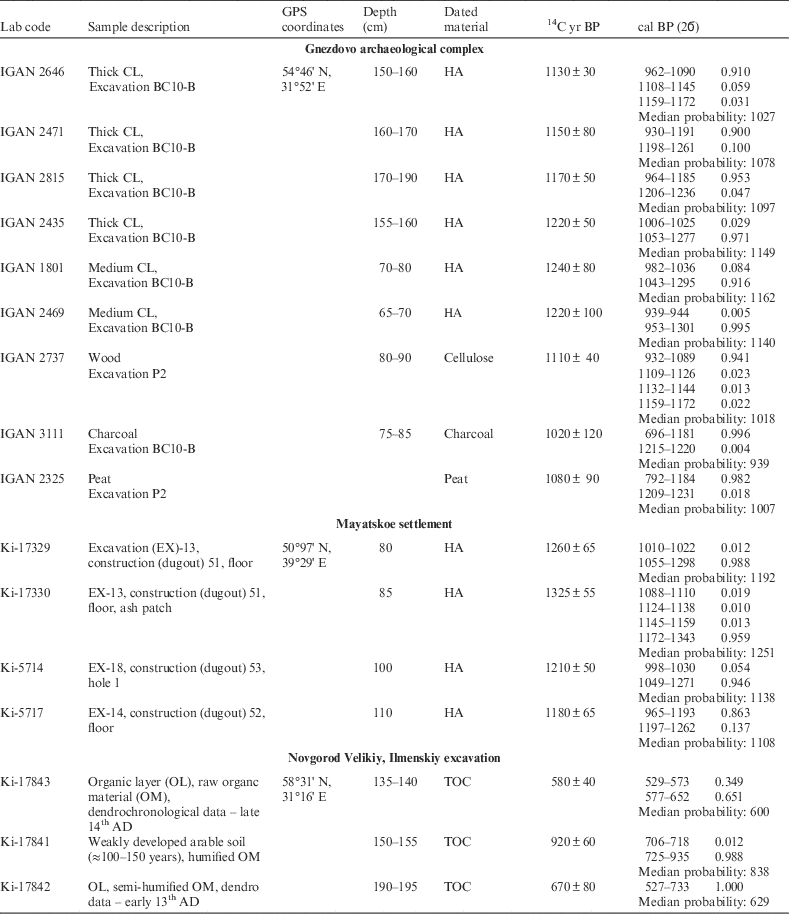
The Gnezdovo archaeological complex has previously been dated using archaeological methods (Pushkina et al. Reference Pushkina, Eniosova and Murasheva2012). 14C dating has also been undertaken earlier for different carbon-containing materials to confirm the time of the existence of various archaeological objects within this ancient site (Bronnikova et al. Reference Bronnikova, Zazovskaya and Bobrov2003; Bronnikova et al. Reference Bronnikova, Panin and Sheremetskaya2012; Panin et al. Reference Panin, Bronnikova, Filippov and Sheremetskaya2012). We obtained and analyzed 14C dates for the following cultural layers: (1) thick (1–1.9 m) and medium (80 cm) CLs exposed to modern soil-forming factors; (2) CLs buried under 1-m-thick alluvial sediments within the Dnieper River floodplain. The best agreement between the 14C dates measured for the OM and other carbon-containing materials (charcoal and wood) from the same archaeological contexts of the CLs studied was observed in the lower parts of the thick CLs (deep domestic waste pits, according to archaeological interpretation) and occasionally in the CLs buried under alluvial sediments (Table 1).
14C ages of cultural layer.

These CLs can be considered as closed systems, where the OM was formed as a result of transformation of organic residues that were produced during the past human occupation of the site (so-called anthropogenic matter). Such transformation implies humification of the OM—a bio-abiotic alteration of the structure of organic residues resulting in the formation of supramolecular polymer compounds of humic substances as well as physical stabilization of the OM, i.e., its accumulation within micro- and macroaggregates, which generally makes it unavailable for microorganisms and enzymes.
The content of organic carbon inherited from soil (SOC) was negligible or zero near the bottom of deep domestic waste pits that reached the Bs horizon or even the parent rock of soils (with the SOC content of 0.12% in the Bs horizon of background soil). Part of the anthropogenic organic residues produced during the past human occupation of the site underwent mineralization, whereas other parts of the OM were stabilized by either humification or physical processes. It is generally known that a high alkalinity typical of CLs favors the formation of OM that differs from the OM of background soils, e.g., by forming stable organomineral compounds with calcium phosphate. Following on from our colleagues (Alexandrovskiy et al. Reference Alexandrovsky, Dolgikh and Skripkin2013) we suggest that such organic matter should be referred to as archaeological humus, which is the OM formed within CLs during the past use of the archaeological site from the anthropogenic matter in closed or semi-closed systems without (or with negligible) participation of OM inherited from previous stages of pedogenesis.
The stability and preservation of archaeological humus following the abandonment of settlements can be related to several factors, which are as follows: depths of CLs, pedogenic conditions favoring formation of sedentary organic compounds, prevalence of the input of silt-sized anthropogenic matter due to the fact that silt-sized organic particles are particularly stable (Christensen Reference Christensen1987), microbiological stability of OM implying that it is inedible or indigestible by soil microorganisms (Marfenina et al. Reference Marfenina, Ivanova and Kislova2005; Ivanova et al. Reference Ivanova, Marfenina, Kislova and Zazovskaya2006).
In the CLs of medium thickness and in the middle parts of very thick CLs, the dated OM was 100–150 14C yr older than other dated carbon-containing materials. We suggest that this can be explained by two possible reasons:
-
1. Dilution of archaeological humus by older carbon from pre-anthropogenic stage. It means that the archaeological humus, i.e., the organic matter, which was formed during the period when the ancient settlement was occupied, can be contaminated by older organic matter inherited from the soil, which existed before the period of human occupation. Medium and thin CLs contained some inherited material from the humus horizons of the soils, upon which they developed. Thick CLs, which occurred within the Bs horizons of native soils, were very insignificantly contaminated or completely free from inherited SOC;
-
2. Dated fractions (humic acids) extracted by alkaline reaction were formed in natural soils during the pre-anthropogenic period.
The latter explanation would agree with the 14C dates obtained for humus horizons of buried soils in the banks of the Dnieper River, which presumably correspond to the beginning of development of the Gnezdovo archaeological complex, as well as with the data obtained in studies on the morphology of OM at this site.
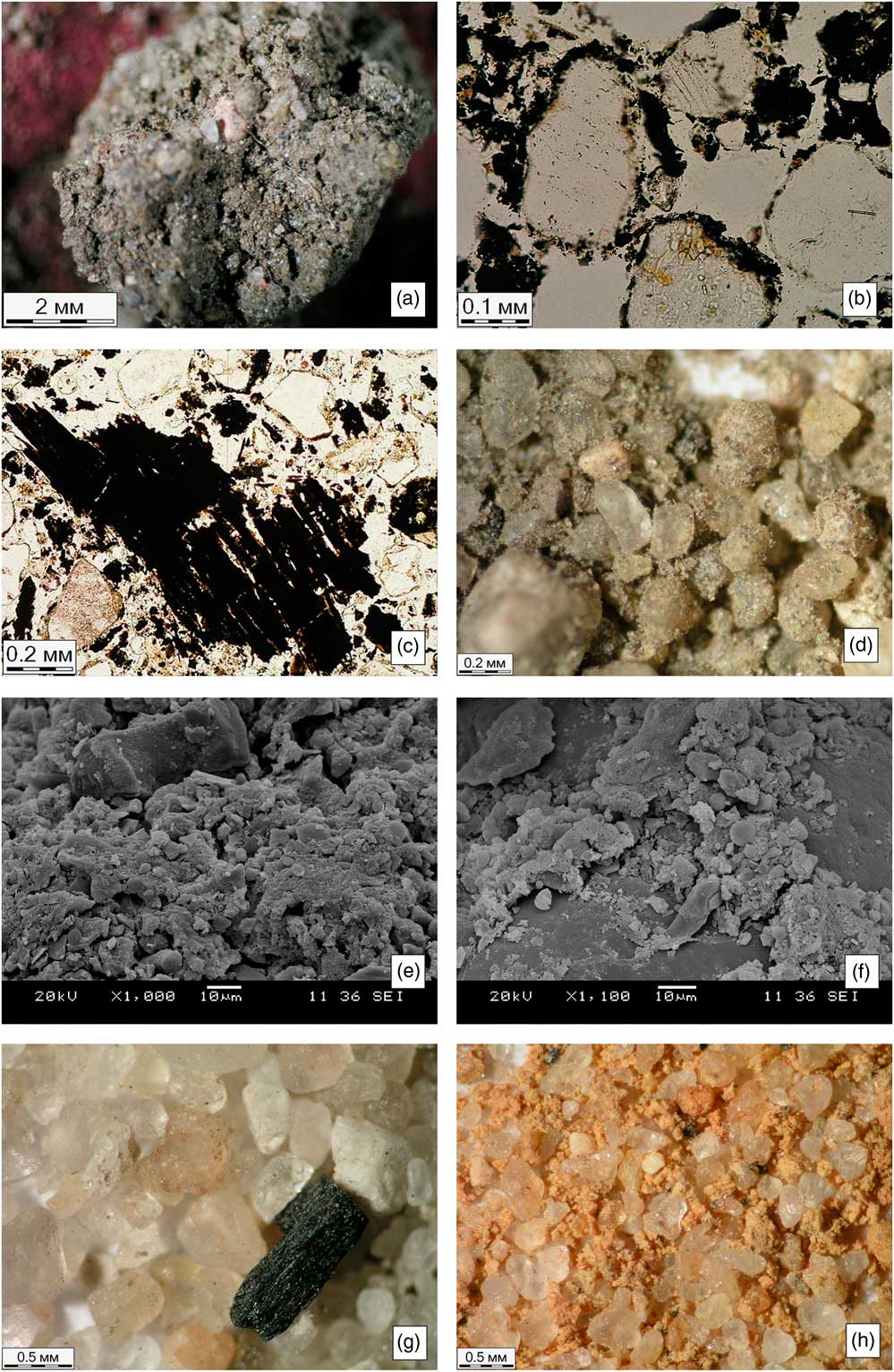
The mesomorphological analysis of organomineral material from the CL showed that it consisted of first-order aggregates and non-aggregated grains. Most of the aggregates were round, fragile, 0.7–1.2 cm in diameter, and consisted of sand- and silt-sized skeleton grains cemented by dark gray organogenic (humus) films (Figure 2a). As a result of micromorphological observations the CL was characterized by loosely aggregated microstructure with large pores between aggregates and “sandy-silty” coarse-to-fine related distribution. Skeleton grains were represented by quartz, feldspars and mica, sand and coarse silt (very rounded). Fine material was dark gray, isotropic, of humus or humus-ferruginous composition, represented by films on single skeleton grains as well as by cementation within aggregates of skeleton grains (Figure 2b).
Morphology of organic matter at the cultural layer of Gnezdovo. (а) Aggregate from organomineral material of the CL: sand- and silt-sized skeleton grains cemented by dark gray humus films (magnification ×20); (b) fabric of the thick CL: films of isotropic organic fine material in the lower part of the CL—thin, fragmented, flake-like; the composition of fine material is supplemented by clayey material with granostriated b-fabric (plane polarized light, magnification ×250); (c) charcoal particles in the CL: disintegration of charcoal into smaller fragments (plane polarized light, magnification ×100); (d) material of the CL following treatment with 3% Н2О2 in steam bath: the absence of aggregates, finely dispersed material on mineral grain surfaces (magnification ×40); (e) compact consistency of a humus film in the CL with sand-size skeleton grains inside this film (SEM, secondary electrons, magnification ×1000); (f) material of the CL following treatment with 3% Н2О2 in steam bath: fragmented humus film of loose consistency (SEM, secondary electrons, magnification ×1100); (g) material of the CL following oxidation with potassium dichromate: clean surfaces around skeleton grains and large particles of charcoal (magnification ×30); (h) material of the CL following ignition at 750ºC: the absence of charcoal particles, the material consists of sand- and silt-sized non-aggregated grains (single-grain microstructure) covered by thin, irregularly shaped, rusty-brown films of iron (hydro)oxides (magnification ×30).
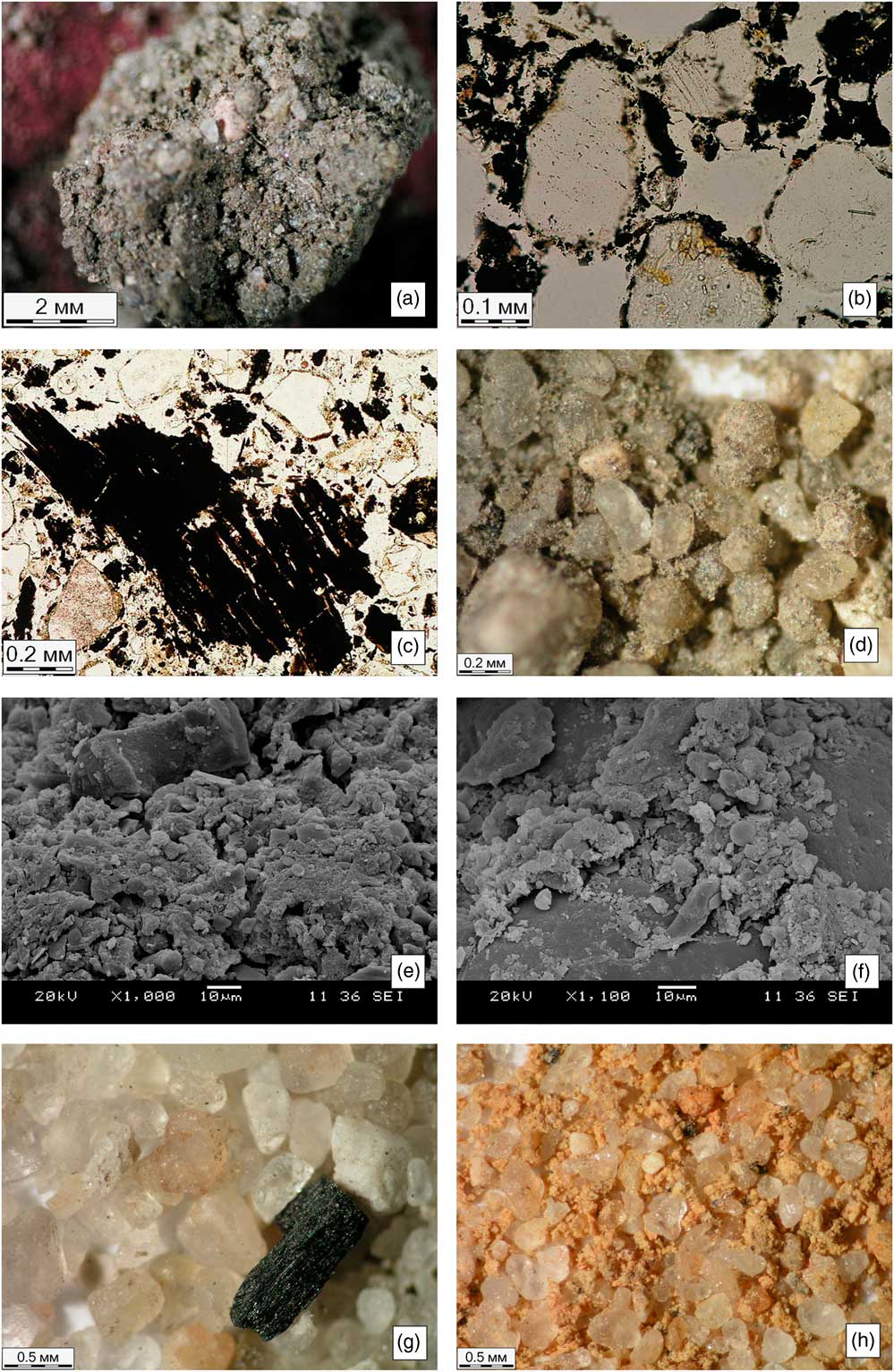
Non-aggregated (single-grain) material of the CL consisted of sand- and silt-sized mineral grains usually covered by humus films, but occasionally with clean surfaces as well as fine particles of charcoal (Figure 2c) and dark gray microaggregates. The morphological analyses of different structural OM components separated by different chemical treatments showed that treatment with 3% Н2О2 in steam bath (commonly used as sample pretreatment before palynological and biomorphic analyses) removed most of fine debris of plants and caused disintegration of large aggregates into single silt-sized skeleton grains and varied-sized charcoal particles. Humus films on the surfaces of aggregates and mineral grains were characterized by smaller areas, lighter color, decreased thickness and compactness, as compared to non-treated material (Figures 2d and 2f). Fungal mycelium was removed by the treatment. Humus films, similar to those in nontreated samples, were preserved inside fissures in rock fragments and sand grains. Oxidation with potassium dichromate, treatment used for determination of humus content by Tyurin method in the Russian school of soil science (Vorob’eva Reference Vorob’eva2006), resulted in disintegration of aggregates into sand- and silt-sized skeleton grains represented by quartz, feldspars, biotite, and muscovite with clean surfaces. The OM was represented by large (0.5–1.5 mm) charcoal particles, whereas organic fine material disappeared (Figure 2g). Upon ignition at 750ºC, the organic matter was completely removed. The treated material consisted of sand- and silt-sized non-aggregated grains (single-grain microstructure) covered by thin, irregularly shaped, rusty-brown films of iron (hydro) oxides (Figure 2h).
The age of humic acids (HA) extracted from the middle part of the thick CL is 1220 ± 50 BP (IGAN 2469). The meso- and submicromorphological analyses of different structural components of OM separated by different chemical treatments showed that the HA fraction for 14C dating was extracted mainly from humus films that covered mineral grains. It is likely that this fraction of the OM was formed during the pre-anthropogenic stage. The 14C dates obtained showed that there was almost no exchange between the carbon of humus films and the carbon pool of soil, in spite of the exposure of this CL to environmental factors. Therefore, the carbon of humus films can be considered as being inert under modern conditions. This conclusion is supported by numerous data on the diagenetic stability and accumulative character of humic acids (Fedeneva and Dergacheva Reference Fedeneva and Dergacheva2003; Tikhova et al. Reference Tikhova, Shakirov, Fadeeva, Dergacheva, Kallas and Orlova2001) and also by recent studies on renewal, regeneration and loss of organic matter that have demonstrated the prevalence of decomposition of young labile substrates in soils. For example, work by Trumbore (Reference Trumbore2000) showed that average SOC ages of forest litters and organogenic soil horizons within different types of biomes range from 200 to 1250 14C yr, while its turnover periods detected from the rates of soil OM decomposition or CO2 emission are no longer than 3–30 and 1–16 yr. Gaudinski et al. (Reference Gaudinski, Trumbore, Davidson and Zheng2000) found that up to 80% of the total amount of С-СО2 produced by soil originates from plant debris decomposition with turnover periods of 2–10 yr, while only 20% of the humified OM pool has longer turnover periods of a few decades. For this reason, the exposure of the CLs to modern soil-forming factors is actually favoring preservation of “anthropogenic humus” by supplying fresh OM, which is the first to undergo decomposition. The microbiological studies on the CLs have established the absence of macromycetes, the main decomposers of lignin (Marfenina et al. Reference Marfenina, Gorbatovskaya and Gorlenko2001). This fact accounts for the low rate of OM mineralization during the existence of the archaeological monument and thereafter.
Mayatskoe Settlement
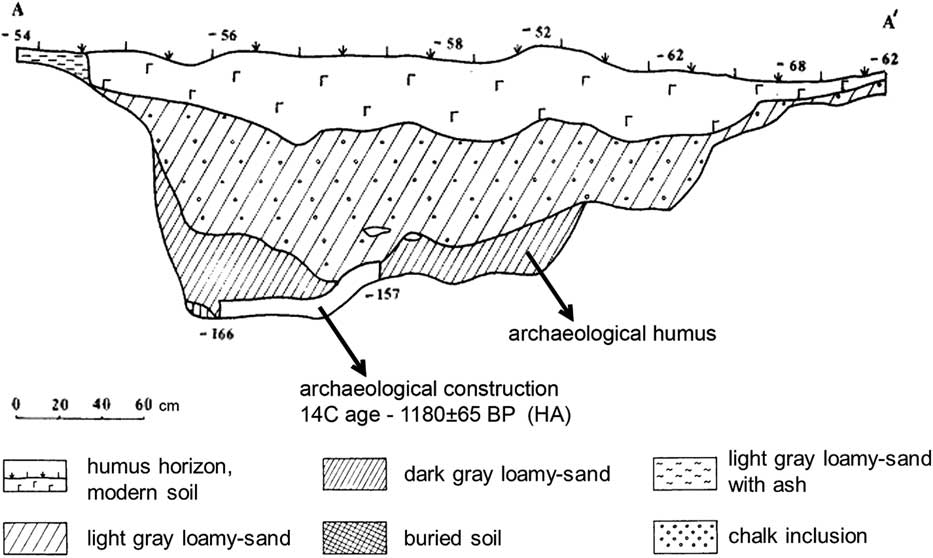
14C dating of samples taken from the Mayatskoe site during archaeological excavations in 1994–1995 showed that the site buildings are dated back to the 7th–9th centuries (Afanasiev et al. Reference Afanasyev, Zotko and Korobov1999). The samples for 14C dating were taken from the bottom of the buildings (110–120 cm depth) and consisted of dark gray sandy loam, weakly structured, with occasional inclusions of rock (chalk) fragments (Figure 3).
Mayatskoe site. Excavation 14, construction (dugout) 52. The 14C age of soil organic matter from the lower parts of the pits (depth of up to 1 m) filled with dark gray sandy loam. These dates were close to the dates determined by the archeological dates, 8th–9th centuries AD.
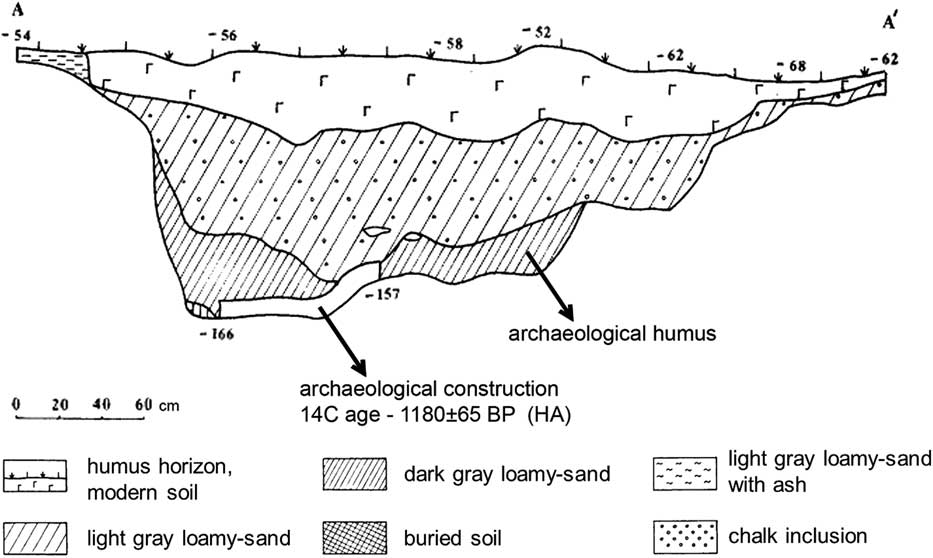
The 14C dating was performed on humic acids extracted from samples, with results presented in Table 1. All 14C dates corresponded to the archaeological age of the ancient rural settlement, which also confirms our thesis on the accumulation of “archaeological humus” in closed and semi-closed systems during the period of the past human occupation. It should be mentioned that these results were obtained in the region, where background (natural) soils are represented by chernozems, which are known to have the “characteristic time of soil profile formation” of about 7000 years and more (Ivanov et al. Reference Ivanov, Khokhlova, Galitskii, Chichagova and Zazovskaya2012). From this we can assume that none of the OM was inherited from the pre-anthropogenic stages of pedogenesis. Similar data were obtained in the Chernozemic Region by S.A. Sycheva and coauthors (Sycheva at al. Reference Sycheva, Uzyanov and Chichagova2005), who reported that humic acids from the organic-rich lower parts of CLs of domestic waste pits were preferred substances for 14C dating (i.e., by providing best correlation with archaeological dates) of Early Slavic sites of the Kursk “Posemie” region. The same authors also suggested that the OM of such pits was formed from domestic waste at the time of the past use of the site.
Novgorod Velikiy
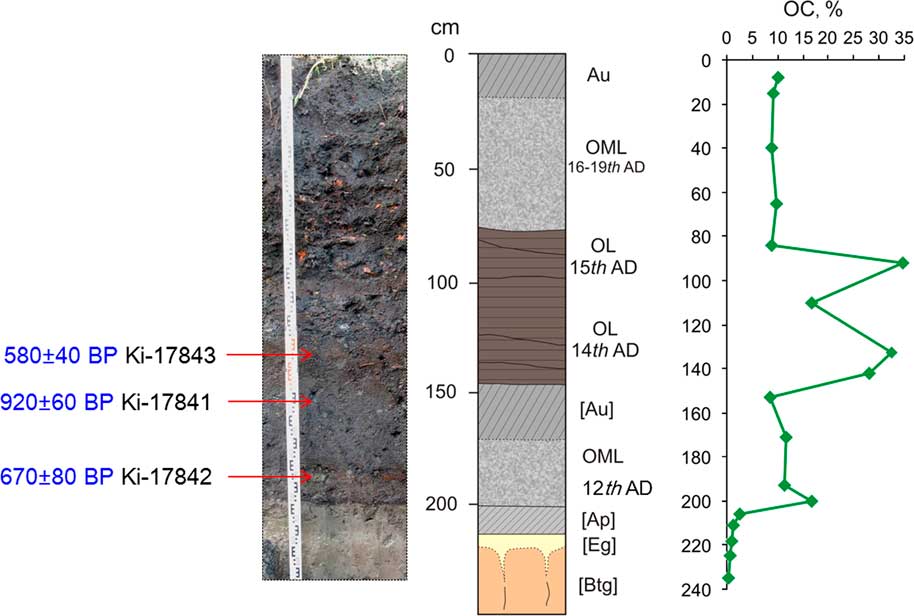
The soils buried under the habitation deposits in historical center often included a plow horizon (Ap) with a thickness of up to 12–15 cm. The organic layers overlying the buried natural soil (OL, Figure 4) were saturated with water during a large part of the year. The raw organic material (peat-like material) consisted of the remains of herbs and straw (manure) and well-preserved wooden chippings. They consisted mainly of the remains of buildings constructed from wood, stones, bricks, or other materials and may also include traces of manure and diverse municipal wastes. In the central part of the city the thickness of this waterlogged layer reached 3–4 m, up to 5–6 m in paleodepressions. The proportion of organic matter in the organic layer varied from 50 to 90% (by volume). The thickness of the organic layer in the periphery of historical center was 0.5–1.5 m and was less than that in the middle of the historical center. The overlying dark gray organic mineral layer of urban origin (OML) was accumulated during the 18th–20th centuries AD. It was much richer in mineral material, although the content of humified organic matter was also high. This layer was relatively dry and contained strongly decomposed wooden chippings, fragments of limestone and bricks, sand and clay interlayers, with lime also present (Dolgikh and Alexandrovskiy Reference Dolgikh and Alexandrovskiy2010).
Novgorod Velikiy, Ilmenskiy excavation, 14C data of organic layers, content of soil organic carbon.
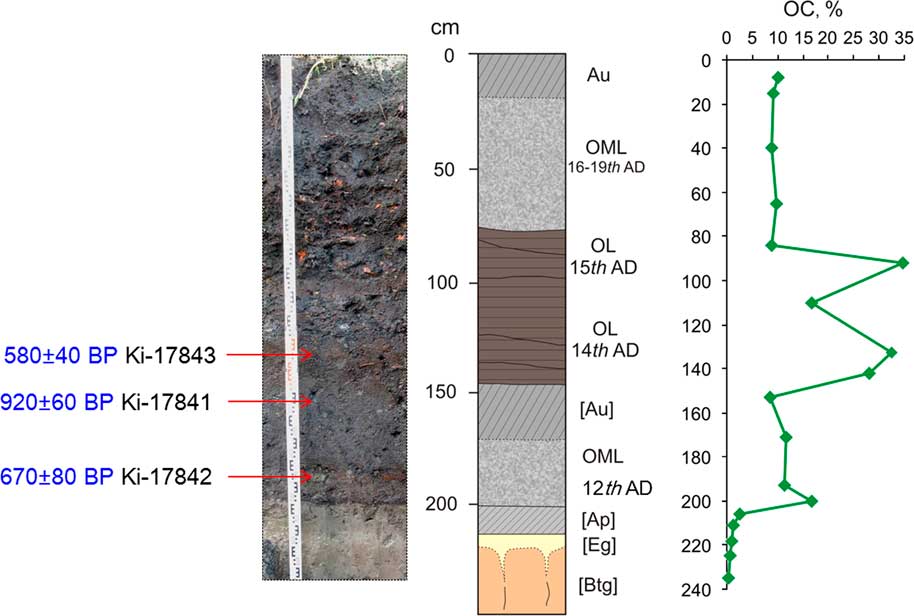
The lower part of the organic stratum (175–205 cm) was represented by semi-humified organic matter, which consisted of decomposed wooden chippings and manure (Figure 4). Surviving timber of wooden buildings from this stratum was dendrochronologically dated to the early 13th century AD. The 14C date of the lower part of this stratum is 670 ± 80 BP (Ki-17842, Table 1). The upper part of the organic stratum (75–145 cm) was represented by raw organic matter with well-preserved wooden chippings and manure. The dendrochronological date for timber from a building at this depth (130–140 cm) was the late 14th century AD, the 14C date is 580 ± 40 BP (Ki-17843). The 14C age of the upper and lower parts of the organic waterlogged stratum showed good agreement with the dendrochronological age. The middle part of the organic stratum (145–175 cm) was represented by weakly developed arable soil. This soil was characterized by a homogeneous structure, with a lower organic carbon content in comparison with a typical organic layer. The formation of this soil occurred after the abandonment of this area, as a garden plot was there for 100–150 yr. During this time period, there was an accumulation of new cultural layers and transformation of previously accumulated deposits (due to aeration, intensive decomposition of organic matter, spot erasing, and layering). The 14C age of the upper part (150–155 cm) of this soil is 920 ± 60 BP (Ki-17841, Table 1), which is older than that of a lower soil at 190–195 cm, due to a possible presence of older OM from surrounding background soils, because the ancient people probably improved the agronomic properties of the original waterlogged strata by adding soil material with higher contents of organic matter (earth mulching).
CONCLUSIONS
-
1. The best agreement between the 14C dates obtained for OM and other carbon-containing materials (charcoal and occasionally wood) and the archaeological dates of CLs exposed at the surface of the ancient sites was observed near the bottom of such CLs—within closed and semi-closed systems such as deep domestic waste pits and house foundation pits containing specific “anthropogenic matter,” i.e., organic residues that were produced during the past human occupation of the site.
-
2. Transformation of “anthropogenic matter” involves humification processes (similar to those in natural soils) and physical stabilization of OM, i.e., its accumulation within micro- and macroaggregates generally makes it unavailable for microorganisms and enzymes. Factors such as the physical stabilization of OM, formation of relatively immobile organic substances, silt-dominated particle-size composition of “anthropogenic matter” and its location at significant depths—all predetermine the stability and preservation of the OM of CLs after the abandonment of ancient settlements.
-
3. It is suggested that such OM should be referred to as “archaeological humus,” which is the OM formed within CLs from the “anthropogenic matter” in closed or semi-closed systems without (or with negligible) contribution of OM inherited from pre-anthropogenic stages of pedogenesis.
-
4. The hierarchical (from macro- to submicro-) morphological analysis of OM of CLs of one of the sites (Gnezdovo archaeological complex) demonstrated that different components of the OM were formed at different stages of the site’s existence: supramolecular compounds of humus were formed during the pre-anthropogenic (in medium CLs) and anthropogenic stages (in lower parts of thick CLs); charred material was formed during the intensive anthropogenic use of the site; there were no significant changes in composition of OM components following the abandonment of the ancient settlement.
ACKNOWLEDGMENTS
Investigations were partly financially supported by the Russian Science Foundation, project No.14-27-00133 (in part of the investigations SOM in the Gnezdovo site); by the Ministry of Education and Science of the Russian Federation the Agreement No.02.A03.21.0008 (in part of the investigations in the Novgorod Velikiy site); by state assignment project No.0148-2016-0003 (in part of investigations in the Mayatskoe site). We are grateful to Tamara Pushkina, Veronika Murasheva, Dmitriy Korobov, and Mikhail Petrov for the opportunity to perform field studies on the archaeological objects and for their assistance and valuable comments during the soil sampling.