Extensive research has focused on identifying the markers of heterogeneity in children of alcoholics’ (COAs') development of internalizing and externalizing symptoms (Hussong, Curran, & Chassin, Reference Hussong, Curran and Chassin1998; Hussong, Flora, Curran, Chassin, & Zucker, Reference Hussong, Flora, Curran, Chassin and Zucker2008; Wong, Zucker, Puttler, & Fitzgerald, Reference Wong, Zucker, Puttler and Fitzgerald1999; Zucker, Reference Zucker2008); however, most studies have not explicitly addressed that these children often live in heterogeneous family structures (i.e., intact, single-parent, or stepfamilies) at different points during their childhood. At the same time, research has shown that alcoholism is one of the major causes of marital dissolution (Amato & Previti, Reference Amato and Previti2003). In fact, alcohol consumption predicts divorce even after controlling for confounding variables including demographic characteristics, mood, and marital dissatisfaction, indicating that alcohol problems are robust and independent predictors of marital dissolution (Collins, Ellickson, & Klein, Reference Collins, Ellickson and Klein2007). Waldron et al. (Reference Waldron, Bucholz, Lynskey, Madden and Heath2013) examined history of alcoholism and parental separation using 1,849 Caucasian families and found that 58% of families in which only the father was alcoholic and 75% families in which both parents were alcoholic had separated by the time COAs were age 18 (compared with 24% in nonalcoholic families). These studies suggest that COAs are at high risk for living in separated and/or divorced families. Despite the multiple findings that implicate the negative consequences of divorce on children's adaptation (Amato, Reference Amato2000, Reference Amato2010; Kelly & Emery, Reference Kelly and Emery2003; Magnuson & Berger, Reference Magnuson and Berger2009; Sands, Thompson, & Gaysina, Reference Sands, Thompson and Gaysina2017; Strohschein, Reference Strohschein2005; Weaver & Schofield, Reference Weaver and Schofield2015), to our knowledge, no studies have made a direct comparison of the adjustment outcomes of COAs living in divorced/separated and intact families. In addition, no studies have examined whether COAs’ adaptation problems existed before divorce, or whether living in heterogeneous family structures was associated with higher behavioral outcomes among COAs. More importantly, only two studies by Waldron and colleagues have compared the early substance involvement among COAs in these families. Waldron, Grant, et al. (Reference Waldron, Grant, Bucholz, Lynskey, Slutske, Glowinski and Heath2014), and Waldron, Vaughan, et al. (Reference Waldron, Vaughan, Bucholz, Lynskey, Sartor, Duncan and Heath2014), studied monozygotic and dizygotic twin families and found that twins in separated families with at least one alcoholic parent were at higher risk of early substance involvement compared with those in nonalcoholic and alcoholic but intact families. They also found that parental separation was a risk factor for early substance use over and above genetic and environmental influences of parental alcoholism. A logical extension of these findings is that COAs following parental divorce are at a greater risk for the development of externalizing behaviors. But even here, no work has examined whether variations in postdivorce family structure could have an incremental effect on children's adaptation.
At the same time, although COAs have been identified as a high-risk group for later psychopathology, a majority do not show elevated problems (Zucker & Wong, Reference Zucker, Wong, Galanter, Lowman, Boyd, Faden, Witt and Lagressa2005). From a developmental psychopathology perspective, to understand COAs’ heterogeneous behavioral adjustment following divorce/separation, it is essential to first understand the behavioral outcomes in developing children among heterogeneous family structures in nonalcoholic families; this will permit an understanding of how COAs living in various family structures deviate from those living in nonalcoholic families. Second, it is critical to examine mechanisms and processes that precede and result in either adaptive or maladaptive outcomes and to recognize multiple influences on COAs’ behavioral adjustment by examining multiple risks and pathways within a more mechanistically complete model (Cicchetti & Lynch, Reference Cicchetti and Lynch1993).
Using this perspective, the current study has four objectives: (a) to understand how contextual, parental, and familial risk factors differed among separated (single-parent, step) versus intact alcoholic families before and after separation; (b) to understand how internalizing and externalizing problems differed among children living in heterogeneous family structures before and after separation in alcoholic families; (c) to simultaneously examine how multiple risk factors contributed to the development of internalizing and externalizing problems in COAs, with an emphasis on the role of family structure and whether it serves as an aggregated risk factor that contributes to COAs’ maladaptive behavioral outcomes; and (d) to understand potential mechanisms (mediators) that explain the transmission of risk through different family structures. In what follows, we briefly describe prior studies on divorced families’ outcomes among children in nonalcoholic families, and the ecological–transactional framework that guides our study hypotheses.
Divorce and remarriage as risk for children
Although few studies have investigated the behavioral outcomes of children living in divorced alcoholic families, findings from nonalcoholic samples have shown that children living in divorced families have elevated risks for adjustment problems compared with children living in intact families (Amato, Reference Amato2010). For instance, children in divorced families have lower academic achievement and more externalizing problems including substance use and delinquency (Amato, Reference Amato2001; Cherlin et al., Reference Cherlin, Furstenberg, Chase-Lansdale, Kiernan, Robins, Morrison and Teitler1991; Gennetian, Reference Gennetian2005; Kelly, Reference Kelly2000; Kelly & Emery, Reference Kelly and Emery2003; Strohschein, Reference Strohschein2005; Sun & Li, Reference Sun and Li2001; Weaver & Schofield, Reference Weaver and Schofield2015). They are also more likely to have social adjustment and internalizing problems when compared with children living in intact families (Amato, Reference Amato2001; Kelly, Reference Kelly2000; Kelly & Emery, Reference Kelly and Emery2003; Sands, Thompson & Gaysina, Reference Sands, Thompson and Gaysina2017; Strohschein, Reference Strohschein2005; Weaver & Schofield, Reference Weaver and Schofield2015).
Developmentally, externalizing symptoms typically peak at around age 3 and then steadily decline across the school-age years (Tremblay, Reference Tremblay2010), whereas internalizing symptoms tend to increase over time and peak at adolescence (Fanti & Henrich, Reference Fanti and Henrich2010). Boys tend to show higher levels of externalizing problems earlier in childhood, whereas girls tend to develop more internalizing problems in adolescence (e.g., Zahn-Waxler, Shirtcliff, & Marceau, Reference Zahn-Waxler, Shirtcliff and Marceau2008). Magnuson and Berger (Reference Magnuson and Berger2009) found that children living in single-mother and stepfather families showed less decline in externalizing problems when compared with children living in intact families from age 6 to 12, and children experiencing family structure transition into a single-mother family displayed increased behavior problems during middle childhood.
Studies also found that the influence of parental separation on children's adjustment varies by the timing of the divorce/separation, with more pernicious and longer impact seen in younger children (Lansford et al., Reference Lansford, Malone, Castellino, Dodge, Pettit and Bates2006; Malone et al., Reference Malone, Lansford, Castellino, Berlin, Dodge, Bates and Pettit2004). The effect may also depend on child's gender, albeit with mixed findings showing more adjustment problems in boys (Malone et al., Reference Malone, Lansford, Castellino, Berlin, Dodge, Bates and Pettit2004), girls (Allison & Furstenberg, Reference Allison and Furstenberg1989), and no differences between genders (Lansford et al., Reference Lansford, Malone, Castellino, Dodge, Pettit and Bates2006; Sun & Li, Reference Sun and Li2002). Moreover, remarriage does not necessarily alleviate the increased risk of behavioral problems for children (Hetherington & Kelly, Reference Hetherington and Kelly2003; Magnuson & Berger, Reference Magnuson and Berger2009). In fact, some studies have shown that children from stepfamilies are twice as likely to exhibit emotional and behavioral problems than children in intact families (Cherlin & Furstenberg, Reference Cherlin and Furstenberg1994).
At the same time, although research confirms that divorce increases the risk for adjustment problems in children and adolescents, the majority of children show resilience to divorce rather than dysfunction (Kelly & Emery, Reference Kelly and Emery2003; Lansford, Reference Lansford2009). Divorce is a dynamic process, and a decline of well-being can be seen before marital breakup (Cherlin et al., Reference Cherlin, Furstenberg, Chase-Lansdale, Kiernan, Robins, Morrison and Teitler1991; Kelly, Reference Kelly2000; Strohschein, Reference Strohschein2005), suggesting that divorce per se may not be the culprit for the increase in adjustment problems. Rather, the underlying family processes before and after divorce/separation contribute to the variability in a child's adjustment outcomes (Amato, Reference Amato2000). Indeed, Robbers et al. (Reference Robbers, Bartels, van Beijsterveldt, Verhulst, Huizink and Boomsma2011) found that children in divorced families had preexisting elevated behavior problems at age 3; it was demonstrated that for girls, behavior problems at age 3 were associated with parental separation at age 12. These findings highlight the importance of examining risk factors before and after divorce/separation that are associated with children's adjustment outcomes (Lansford, Reference Lansford2009).
Ecological–transactional model of maladjustment
The ecological–transactional model (Cicchetti and Lynch, Reference Cicchetti and Lynch1993) posits that children's adjustment outcomes are influenced by the reciprocal interactions among environment, the caregiver, and the child. This model recognizes the ongoing dynamic interplay that occurs among multiple risk and protective factors to understand the complex processes underlying developmental outcomes.
Separate efforts in research on divorced and alcoholic families have independently identified multiple risk factors pertaining to children's behavioral outcomes. These risk factors include (a) lower economic resources including lower socioeconomic status (SES) and parental education (Weaver & Schofield, Reference Weaver and Schofield2015); (b) higher parental symptomatology, particularly parental antisocial problems and maternal depression (Chassin et al., Reference Chassin, Rogosch and Barrera1991; Hussong et al., Reference Hussong, Wirth, Edwards, Curran, Chassin and Zucker2007; Hussong, Flora, et al., Reference Hussong, Flora, Curran, Chassin and Zucker2008; Wong, Zucker, Puttler, & Fitzgerald, Reference Wong, Zucker, Puttler and Fitzgerald1999; Zucker, Ellis, Fitzgerald, Bingham, & Sanford, Reference Zucker, Ellis, Fitzgerald, Bingham and Sanford1996); (c) higher levels of family stressors (Hetherington & Stanley-Hagan, Reference Hetherington and Stanley-Hagan1999; Hussong, Bauer, et al., Reference Hussong, Bauer, Huang, Chassin, Sher and Zucker2008; Kelly & Emery, Reference Kelly and Emery2003; Weaver & Schofield, Reference Weaver and Schofield2015); and (d) higher marital aggression (Eiden, Molnar, Colder, Edwards, & Leonard, Reference Eiden, Molnar, Colder, Edwards and Leonard2009; El-Sheikh, Cummings, Kouros, Elmore-Staton, & Buckhalt, Reference El-Sheikh, Cummings, Kouros, Elmore-Staton and Buckhalt2008; Fuller et al., Reference Fuller, Chermack, Cruise, Kirsch, Fitzgerald and Zucker2003). Moreover, lower economic resources and higher family stressors (e.g., decline in household income, strain of solo parenting) have also been found in divorced/separated families (Amato, Reference Amato2000; Bartfeld, Reference Bartfeld2000), and these postseparation cumulative stress outcomes are cooccurring risks of higher parental psychopathology (Wood, Goesling, & Avellar, Reference Wood, Goesling and Avellar2007); however, a combined effort to examine multiple risks among alcoholic families that are divorced/separated is lacking.
Moreover, the complex relations of how these multiple early risk factors interact and contribute to marital separation in alcoholic families and how living in divorced/separated (single-parent and step) families may serve as an aggregated risk for the development of COAs’ internalizing and externalizing problems have not been empirically studied, especially using a longitudinal approach that begins in early childhood. Moreover, to our knowledge, no study has identified unique risk factors and pathways that contribute to different family structures (i.e., single-parent, step family), and whether COAs living in single-parent versus step families have differentiated risk of developing higher levels of internalizing and externalizing problems.
The current study
The aim of this study is to understand the impact of parental separation on the development of internalizing and externalizing symptoms among COAs using a longitudinal approach from early childhood (age 3) to the beginning of adolescence (ages 12–14). Studying the impact of divorce/parental separation and underlying family processes on COAs’ behavioral adjustment during preadolescence is particularly important because (a) this is a developmental risk period that marks the onset of alcohol, drug use, and other risky behaviors. COAs with elevated internalizing and externalizing are also at elevated risk for the development of alcoholism (Zucker, Reference Zucker, Cicchetti and Cohen2006); (b) prior studies have shown that younger children may be more sensitive to the detrimental consequences of divorce (Lansford, Reference Lansford2009); and (c) by child age 12–14, about 29% of the families in our sample have separated, thus allowing us to conduct meaningful statistical comparisons between single- and stepparent families.
Using a developmental psychopathology perspective, our first aim is to investigate how multiple risk factors differ among alcoholic and nonalcoholic families with different family structures (intact, single-parent, and step) at baseline (T1: child age 3) and following separation, during ages 12–14 (T4) period. These risk factors included: family social status (family SES, parental education and income), parental psychopathology (parental drinking, antisocial and maternal depression), marital aggression (mother-to-father and father-to-mother aggression), and family stressors (indexed by serious family crises).
Second, we compare internalizing and externalizing symptoms among COAs living in different family structures before and following parental separation. Including baseline behavior problems allows us to understand children's behavior before separation and how that is related to changes following the separation (Robbers et al., Reference Robbers, Bartels, van Beijsterveldt, Verhulst, Huizink and Boomsma2011). Including COAs from intact families allows us to draw inferences about how COAs in separated/divorced families differ from COAs in intact families.
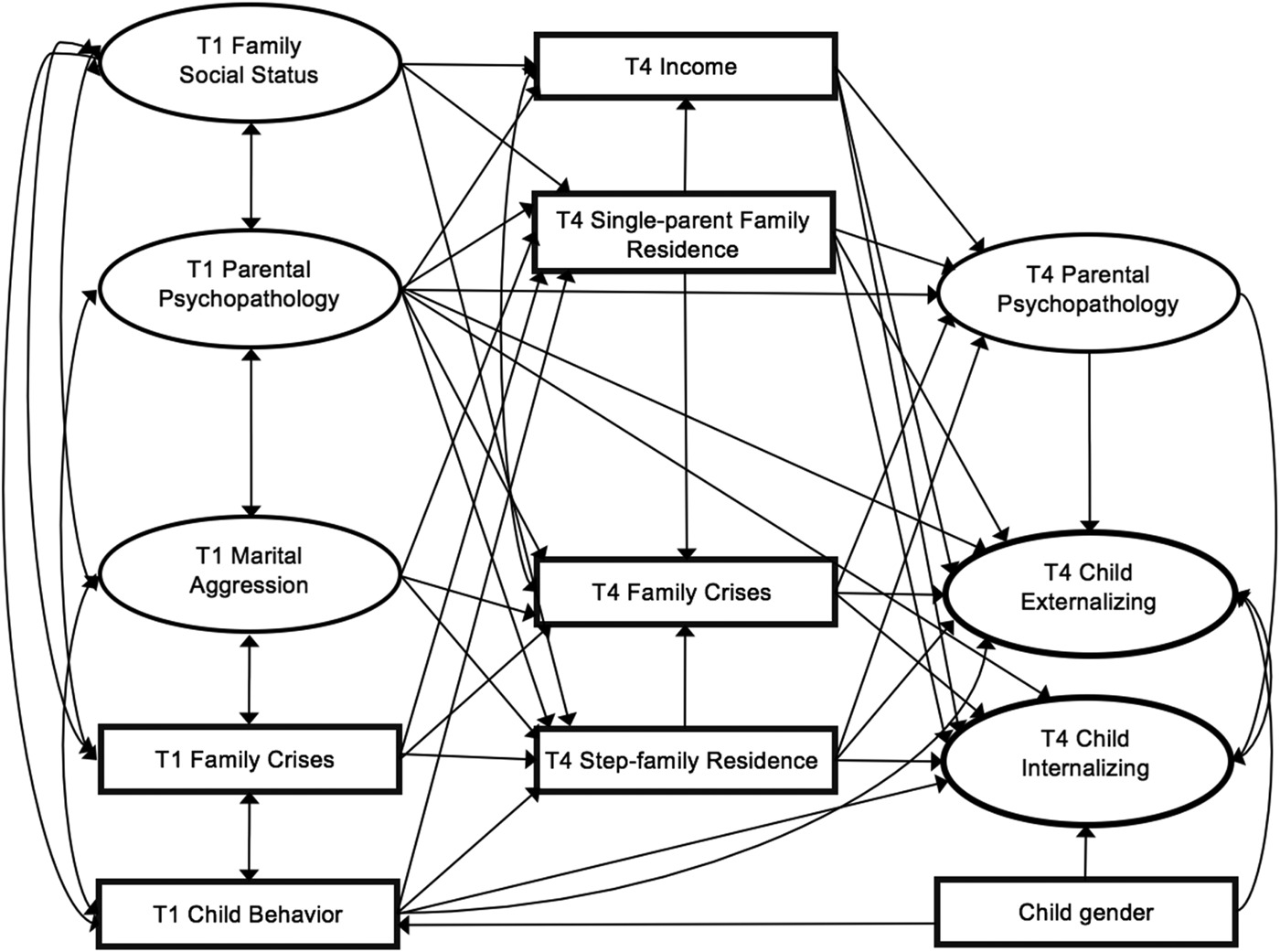
Third, using an ecological–transactional framework (Figure 1 shows the conceptual model), we use structural equation modeling (SEM) to understand (a) how multiple risk factors (family social status, parental psychopathology, marital aggression, family stressors, and child behaviors) contributed to the formation of different family structures among alcoholic families; (b) the role of family structures and other risk factors on the development of COAs’ internalizing and externalizing problems; (c) the underlying mechanisms (using mediation analyses) that explain the link between living in heterogeneous family structures and COAs’ internalizing and externalizing problems; and (d) the role of gender on COAs’ internalizing and externalizing problems. Because research has found that different reporters vary on rating children's problems (Achenbach, McConaughy, & Howell, Reference Achenbach, McConaughy and Howell1987; Bingham, Loukas, Fitzgerald, & Zucker, Reference Bingham, Loukas, Fitzgerald and Zucker2003), we incorporated parent, teacher, and child reports to gain multiple perspectives of COAs' problems.
Conceptual model of the influence of multiple risk factors and child's outcomes. T1, child age 3; T4, child ages 12–14.

Based on previous work involving children in nonalcoholic and alcoholic divorced/separated families (see previous section), we first hypothesized that separated alcoholic families would have lower family resources, higher parental psychopathology, marital aggression, and family stressors before separation, and that these factors would contribute to later marital dissolution. Second, we hypothesized that COAs from separated families, including both single-parent and stepfamilies, would exhibit higher levels of behavioral problems than those from control and intact alcoholic families, both before and following separation (Amato, Reference Amato2001; Kelly & Emery, Reference Kelly and Emery2003; Magnuson & Berger, Reference Magnuson and Berger2009; Robbers et al., Reference Robbers, Bartels, van Beijsterveldt, Verhulst, Huizink and Boomsma2011; Strohschein, Reference Strohschein2005). Particularly, we hypothesized that single-parent and stepfamily structures, which comprise an aggregated risk structure of higher parental, familial, and child risk, would predict elevated internalizing and externalizing problems among COAs. Third, we hypothesized that parental psychopathology and family stressors would mediate the link between heterogeneous family structures and COAs’ internalizing and externalizing problems after parental separation (Weaver & Schofield, Reference Weaver and Schofield2015). Mixed findings in the literature (Lansford et al., Reference Lansford, Malone, Castellino, Dodge, Pettit and Bates2006; Sun & Li, Reference Sun and Li2002) precluded hypotheses about gender effects of parental separation, although these will be important to examine.
Method
Participants and procedure
Participants for the present study were drawn from the longitudinal study by Zucker et al. (Reference Zucker, Ellis, Fitzgerald, Bingham and Sanford1996; Reference Zucker, Fitzerald, Refior, Puttler, Pallas, Ellis, Fitzgerald, Lester and Zuckerman2000), an ongoing multiwave study tracking children being raised in high-risk environments characterized by alcohol abuse and related comorbidities. Alcoholic fathers convicted of drunk driving with a blood alcohol content of ≥0.15% (or ≥0.12% with a previous drinking-related arrest) were recruited. Families were required to (a) have fathers who met the Feighner Diagnostic criteria (Feighner et al., Reference Feighner, Robins, Guze, Woodruff, Winokur and Munoz1972) for probable or definite alcoholism; (b) have at least one male target child who was 3–5 years old and showed no evidence of fetal alcohol syndrome, and (c) be intact so that the target child was living with both parents at the initial recruitment stage of the study. Alcoholic status of the mother was free to vary. A more detailed description of the method is provided in Zucker et al. (Reference Zucker, Fitzerald, Refior, Puttler, Pallas, Ellis, Fitzgerald, Lester and Zuckerman2000).
The present study used data from Wave 1 and Wave 4 in which the children were at age 3–5 and 12–14, respectively. The study included 503 children (including children from both alcoholic and nonalcoholic families) and their parents from non-Hispanic white families. (Although an ethnic minority sample was also assessed, the sample was not included in this study because of the low number of divorced families at Wave 4 [n = 9]). Every three years, families completed extensive self-report instruments and were interviewed at participants’ homes by trained project staff blind to family alcoholism status. In addition, at each wave of data collection following school entry, a teacher who had significant contact with the child rated the child's behavior problems. Because of National Institutes of Health funding restrictions, the first recruitment phase included boys only. Later data collection phases did not have this restriction and we were able to include both a female target child and other siblings of both genders, when present.
As previously noted, all target children were living with two biological parents at Wave 1. Family structure was coded based on child's household status at Wave 4. To ensure the reliability and accuracy of our family structure coding system, we used three different sources of Wave 4 information: (a) children's self-report of demographic background reporting whether they were living with both of the biological parents in the prior year, as well as the list of people they were living with at this assessment point; (c) biological parents’ report of Wave 4 marital status (married, separated, divorced from target child's biological parent) and living situation (living with/without original partner and child); and (c) case notes written by interviewers following data collection at participants’ homes if there were discrepancies between reporters or if no self-reported information was provided. Families were coded as intact if the biological parents of the target child stayed together in the same household. Families were coded as single-parent families if the target child resided with a divorced parent who remained single and did not cohabit with a partner at Wave 4 (this included three target children in joint custody in which both parents remained single). Families were coded as stepfamilies if the target child was living in a family in which their biological parent remarried or was cohabiting with a partner (this included four target children in joint custody in which both parents remarried or were cohabiting with a partner). We eliminated five children who lived alone or with siblings, and six children who were in joint custody in which they resided alternatively in a single-parent and a stepfamily household (e.g., single mother, father and stepmother). Because of the small number of participants from nonalcoholic families residing in stepfamilies (n = 9) and single-parent homes (n = 10), we reported descriptive statistics for these children but did not conduct statistical comparison. Thus, our sample included a total of 503 children (371 COAs and 132 control children). Among the 371 COAs from alcoholic families, 262 COAs (76 females) were from 154 intact biological families, 59 COAs (19 females) were from 38 stepfamilies and 50 COAs (21 females) were from 33 single-parent families. Among the 132 children from control families, 113 children (37 females) were from 56 nonalcoholic intact families, 9 children (4 females) were from 6 step control families, and 10 children (2 females) were from 7 single-parent control families. For COAs living in stepfamilies, the majority (96.7%) resided with their biological mothers and stepfathers. For COAs living in single-parent families, the majority (80.0%) resided with their biological mothers.
For alcoholic families, the average age at parental separation for COAs living in step versus single-parent families was 6.93 (standard deviation [SD] = 3.24) and 8.78 (SD = 3.5) years, respectively. For control families, the average age at parental separation for children living in stepfamilies versus single-parent families was 6.90 (SD = 2.17) and 10.66 (SD = 2.20) years, respectively. Regardless of alcoholic status, children whose parent(s) later remarried were younger at parental separation compared with those whose parent(s) later remained single (alcoholic: t (103) = 2.81, p = .006; control: t (17) = 3.73, p = .002).
Measures
Parent alcoholism diagnosis
Diagnostic and Statistical Manual of Mental Disorders-IV lifetime alcoholism diagnosis was used to classify families into different subtypes (alcoholic and nonalcoholic). Positive diagnosis of alcohol abuse or dependence was assessed using the Drinking and Drug History Questionnaire (Zucker, Fitzgerald, & Noll, Reference Zucker, Fitzgerald and Noll1990), the National Institute of Mental Health Diagnostic Interview Schedule-Version IV (Robins, Helzer, Croughan, & Ratcliff, Reference Robins, Helzer, Croughan and Ratcliff1981), and the Short Michigan Alcoholism Screening Test (Selzer, Vinokur, & Rooijen, Reference Selzer, Vinokur and Rooijen1975) at the first wave of data collection. For the purposes of analysis, either parent's diagnosis at any point in their lifetime was sufficient for a family classification of “alcoholic.” Overall, there were 225 families that met the definition of family alcoholism, 84 in which both biological mother and father had an alcoholism diagnosis, 134 families with only the biological father meeting alcohol diagnosis, and 7 families with only the biological mother having alcohol diagnosis.
Family sociodemographics
Family demographics information was measured from a questionnaire assessing parental education and occupation at Wave 1 and family annual income of the custodial parent at Wave 4. Family SES at Wave 1 was calculated using the Duncan TS12 Socioeconomic Index based on occupational prestige (Mueller & Parcel, Reference Mueller and Parcel1981).
Parental drinking problems
The Drinking and Drug History Questionnaire (Zucker, Fitzgerald, & Noll, Reference Zucker, Fitzgerald and Noll1990) assessed onset of drinking and drunkenness as well as symptoms covering all Diagnostic and Statistical Manual of Mental Disorders-IV alcohol use disorder criteria over the past year. This instrument incorporates items from national epidemiologic studies of drugs and alcohol (Johnston, Bachman, & O'Malley, Reference Johnston, Bachman and O'Malley1979) and from a structured clinical symptom questionnaire (Schuckit, Reference Schuckit1978). All items have been extensively used in a variety of survey and clinical settings. The total number of problems endorsed was used as a continuous measure to assess the numbers of parental drinking problems over 12 months at Waves 1 and 4.
Parental antisocial behavior
Adult symptoms and retrospective reports of childhood antisocial behavior, a precursor to substance use and abuse (Zucker, Heitzeg, & Nigg, Reference Zucker, Heitzeg and Nigg2011), were assessed via self-report on the Antisocial Behavior Checklist (Zucker et al., Reference Zucker, Ellis, Fitzgerald, Bingham and Sanford1996). At Wave 1, participants were asked about any lifetime occurrences of antisocial behaviors; at Wave 4, they were asked about occurrences in the previous 3 years. A series of reliability and validity studies of this checklist has shown adequate test-retest reliability (.91 over 4 weeks) and internal consistency (Cronbach's alpha = .67 to .93) (Ham, Zucker, & Fitzgerald, Reference Ham, Zucker and Fitzgerald1993). The instrument differentiates between individuals with histories of antisocial behavior (e.g., convicted felons) versus individuals with minor offenses versus university students. The instrument also distinguishes alcoholic from nonalcoholic adults (Fitzgerald, Jones, Maguin, Zucker, & Noll, Reference Fitzgerald, Jones, Maguin, Zucker and Noll1991).
Maternal depression
Depression was assessed at Waves 1 and 4 with the self-report Beck Depression Inventory (Beck, Ward, Mendelson, Mock, & Erbaugh, Reference Beck, Ward, Mendelson, Mock and Erbaugh1961), which enquires about depressive symptoms over the past week. In a meta-analysis, this instrument has been shown to have adequate reliability (coefficient alpha = 0.81) for nonpsychiatric subjects (Beck, Steer, & Carbin, Reference Beck, Steer and Garbin1988).
Marital aggression
The Conflict Tactics Scales (Straus, Reference Straus1979) were used to measure both mother-to-father and father-to-mother marital aggression at Wave 1. Following Fuller et al.’s (Reference Fuller, Chermack, Cruise, Kirsch, Fitzgerald and Zucker2003) scoring procedure, ordinal-level variables were created to assess the highest level of aggression for conflicts that escalated over the past 12 months before data collection. These scales had 12 potential values between 0 and 11 (0 = no aggression, 1 = insulted or swore at other person, to 11 = threatened to use or actually used a knife or gun on other person; see Fuller et al., Reference Fuller, Chermack, Cruise, Kirsch, Fitzgerald and Zucker2003, for full scale). Both parents were asked separately about disputes with the father as the aggressor (father-to-mother aggression) and with the mother as the aggressor (mother-to-father aggression).
Family stressors
A modified version of the Family Crisis List (Patterson, Reference Patterson1982) was used to measure the parental report of serious family crises in the past 6 months at Waves 1 and 4. The entire Patterson's Family Crisis list was presented, but only items that had face validity as serious crises were chosen to create the scale. For instance, in the household crisis subscale, “meal burned/ruined” was discarded and “got evicted” was retained as a serious crisis. Twenty-eight items were summed (yes/no) to provide a Family Crisis Score. Six of the items explicitly involved behavior of the child (e.g. “child suspended from school”).
Child symptomatology
The Child Behavior Checklist (Achenbach, Reference Achenbach1991a) was used to evaluate children's internalizing and externalizing behaviors. For most children, maternal reports at Waves 1 and 4 were used as the parental reports to have a consistent reporter among intact families, single-mother families, and stepfamilies. For children who resided with single-parent or stepfamilies headed by biological father, however, we used paternal report (n = 13) at both Waves 1 and 4. Additional information was obtained from (a) the Teacher Report Form at Wave 4 (Achenbach, Reference Achenbach1991b) rated by the child's academic teacher and (b) Youth Self Report Form at Wave 4 (Achenbach, Reference Achenbach1991c), in which the child reported on his or her own behaviors. Teacher reports and youth self-reports were unavailable at Wave 1 because of the children's age.
Data analysis and missing data
First, Pearson correlation was conducted among study variables. Second, analysis of variance and post hoc comparisons with Tukey–Kramer adjustment were used to compare sociodemographic characteristics, parental and family problems, and child's symptomatology at Waves 1 and 4. Finally, SEM with latent factors using Mplus 7.2 (Muthén & Muthén, Reference Muthén and Muthén2012) was conducted to examine the complex relations among study variables in alcoholic families. Specifically, confirmatory factor analysis (CFA) was first conducted for all latent variable analyses, including family social status at Wave 1, parental psychopathology at Waves 1 and 4, marital aggression at Wave 1, and COAs’ internalizing and externalizing problems at Wave 4. To account for the complex sampling effect of siblings within a family cluster, all CFA and SEM models were estimated using Taylor-series linearization using Type = Complex in Mplus. Mediation effects were tested using MODEL INDIRECT in Mplus on all possible paths that were associated with T4 COAs’ internalizing and externalizing problems to examine potential mediators. The percentage of missing variables ranged from 0% to 26.5%. Missing data were handled using the Mplus Full Information Maximum Likelihood feature (Muthén & Muthén, Reference Muthén and Muthén2012).
Multiple-fit statistics are reported and interpreted as outlined by Kline (Reference Kline2015): (a) Pearson χ2 for which nonsignificant values signify good fit and a χ2/df ratio <3 is acceptable; (b) Comparative Fit Index (CFI) for which a value >.90 is considered a good fit; and (3) root mean square error of approximation (RMSEA), for which a value ≤.08 is considered acceptable and ≤.05 is considered good.
As explained previously, the original funding precluded the inclusion of girls; therefore, girls were recruited into the study only later, and many girls do not have data from Wave 1. For some siblings (younger than the male target child), parents were already separated at Wave 1; therefore, there was no baseline measure for these children. For children in alcoholic families, n = 336 of 371 had baseline (before parental separation) measures, therefore, only this subset was included in the baseline comparison and subsequent SEM analysis. This subset consisted of 262 COAs (76 females) from intact families, 40 COAs (4 females) from stepfamilies, and 34 COAs (12 females) from single-parent families.
Results
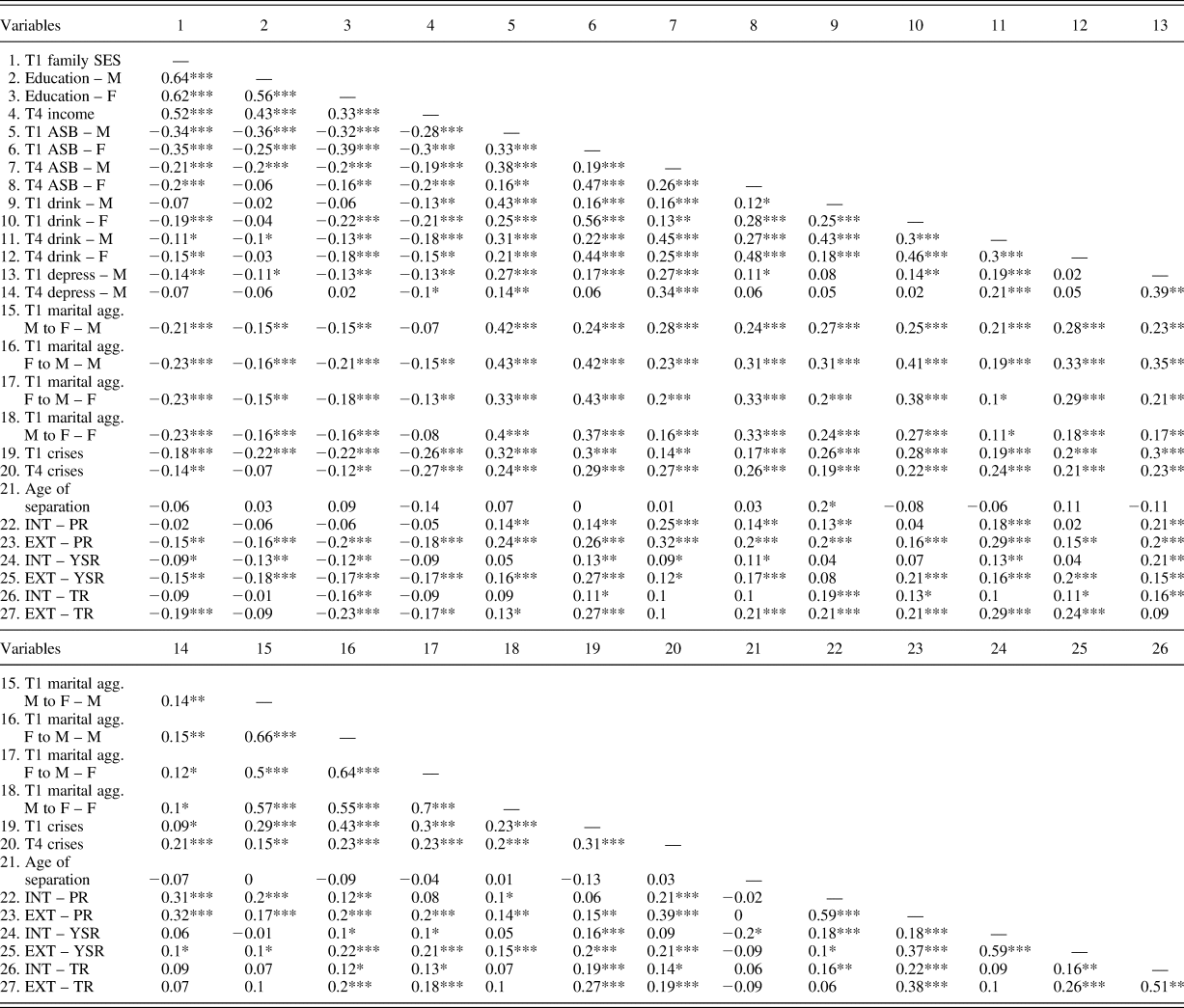
Table 1 presents the Pearson correlations among all study variables. Sociodemographic characteristics, parental psychopathology, marital aggression, and family crises were intercorrelated at Waves 1 and 4. Risk factors were associated with internalizing and externalizing problems at Wave 4 in the expected directions. Children's age at parental separation was inversely associated with child report of internalizing symptoms at Wave 4.
Intercorrelation of all study variables

Not e. Agg, aggression; ASB, antisocial behavior; depress, depression; EXT, externalizing symptoms; F, female; F to M, female to male; INT, internalizing symptoms; M, male; M to F, male to female; PR, parent report; SES, socioeconomic status; T1, child age 6; T4, child ages 12–14; TR, teacher report; YSR, Youth Self Report Form.
* p < .05
** p < .01
*** p < .001
Sociodemographic characteristics of the sample
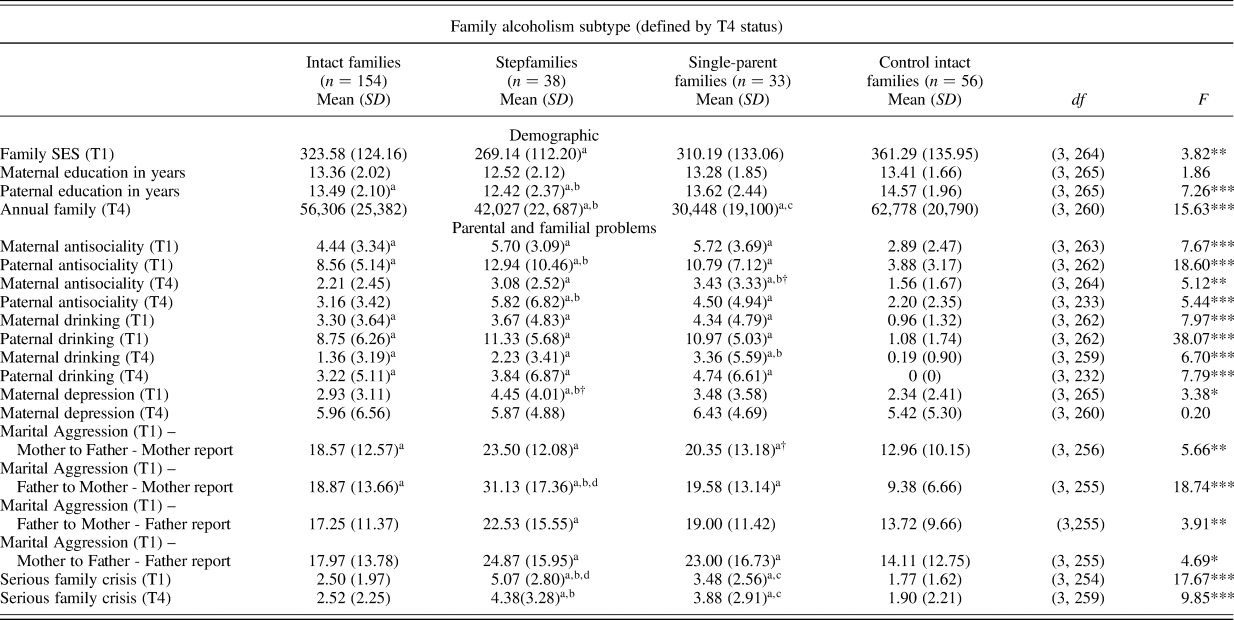
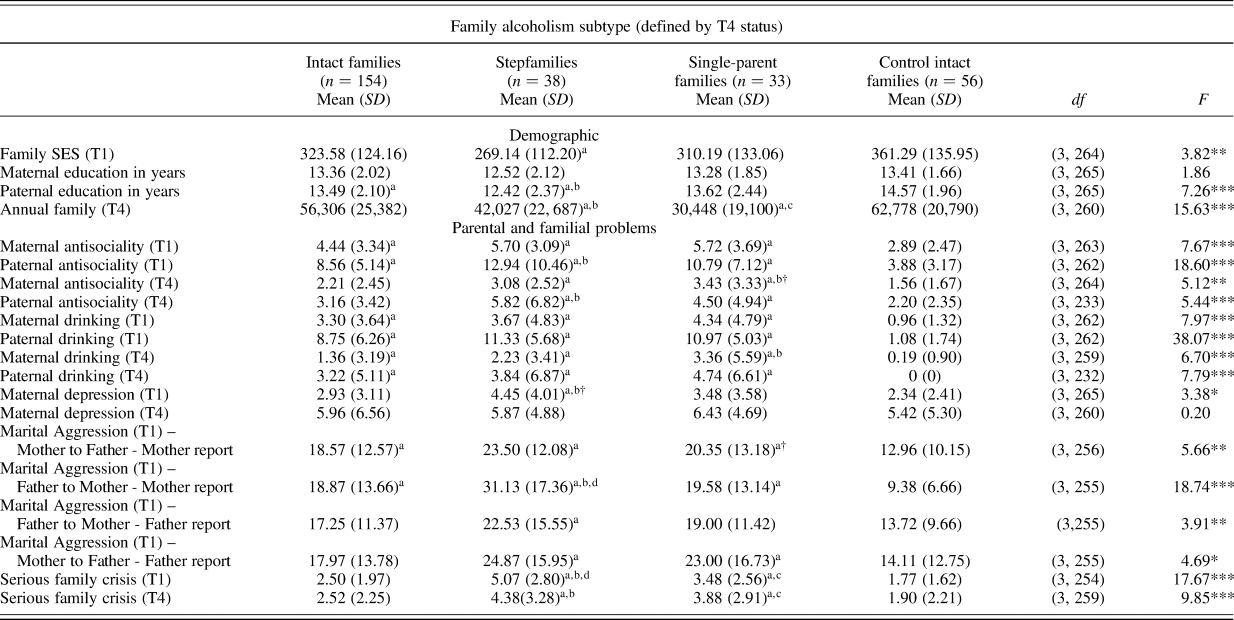
Table 2 presents the mean (M), SD, and the univariate F for the sociodemographic characteristics among nonalcoholic (control) families, intact alcoholic families, step alcoholic families, and single-parent alcoholic families. Analysis of variance indicated that significant differences were found on Wave 1 (before separation) family SES, Wave 1 paternal education, and Wave 4 (after separation) annual family income among familial subtypes.
Background characteristics, parental symptomatology and family problems of intact alcoholic, step alcoholic, single- parent alcoholic, and control intact families prior to and after separation (N = 281 families)
Note: Control stepfamilies had a similar background characteristics and parental and familial problems relative to control intact families, except for higher T4 income (M = 75,000; SD = 30,619) and more serious family crises (M = 3.17; SD = 2.23). Control single-parent families had a higher level of Wave 1 SES (M = 400.43; SD = 145.75) and parental education (maternal: M =14.13; SD = 2.10; paternal: M = 16.14; SD = 2.67), but lower T4 income (M = 47,600; SD = 30,803). They had similar parental psychopathology relatively to control intact families, except for lower T1 paternal drinking (M = .14, SD = .44) and higher T4 maternal depression (M = 8.20, SD = 6.14) and more T1 and T4 serious family crises (T1: M = 2.86; SD = 1.57; T4: M = 3.05; SD = 2.13).
df, degrees of freedom; T1 = Wave 1; T4 = Wave 4; M = mean; M = mother; F = father; SD, standard deviation; SES, socioeconomic status; T1, child age 6; T4, child ages 12–14; †p < .08; *p < .05; **p < .01; ***p < .001.
aAlcoholic families (including intact, single-parent, or step alcoholic families) differed from control families.
bAlcoholic stepfamilies differed from alcoholic intact families.
cAlcoholic single-parent families differed from alcoholic intact families.
dAlcoholic stepparent families differed from alcoholic single-parent families.
Baseline (before separation) differences
Step alcoholic families had significantly lower family SES at Wave 1 than control intact families. Biological fathers from future alcoholic stepfamilies had significantly less education at Wave 1 than those in control families and alcoholic intact families.
Postseparation (Wave 4) differences
Step and single-parent alcoholic families had significantly lower annual family income at Wave 4 than control intact families. Single-parent alcoholic families had the lowest annual family income at Wave 4, followed by step alcoholic families, and were significantly lower than intact alcoholic families.
Parental symptomatology and familial problems
Baseline differences
At Wave 1 (before separation), all types of alcoholic families (intact, step, and single-parent families) had significantly higher levels of maternal and paternal antisocial and drinking problems, and higher levels of mother-reported marital (mother-to-father and father-to-mother) aggression than control intact families. Future alcoholic stepfamilies had significantly higher levels of maternal depression than control families. Moreover, future step alcoholic families had significantly higher paternal antisocial and marginally (p =. 06) higher maternal depression than alcoholic families that would remain intact. Future step alcoholic families also had significantly higher mother-reported marital (father-to-mother) aggression compared with alcoholic intact and alcoholic single-parent families, and higher father-reported marital aggression than control families. Future single-parent families had significantly higher maternal antisocial problems than alcoholic families that would remain intact. Future stepfamilies had the highest serious family crises among control, intact alcoholic, and single-parent alcoholic families. Future single-parent families exhibited significantly higher serious family crises than control and intact alcoholic families.
Postseparation differences
Regardless of family structure, alcoholic families showed significantly higher levels of maternal and paternal drinking than control intact families. Step alcoholic families showed significantly higher biological maternal and biological paternal antisocial problems than control families and higher paternal antisocial problems than intact alcoholic families. Single-parent alcoholic families showed marginally (p = .06) higher maternal antisocial and significantly higher drinking problems than control and intact alcoholic families. Both single-parent and step alcoholic families exhibited more serious family crises than control and intact alcoholic families.
Children's symptomatology: Cross-sectional comparisons
Baseline internalizing and externalizing symptoms
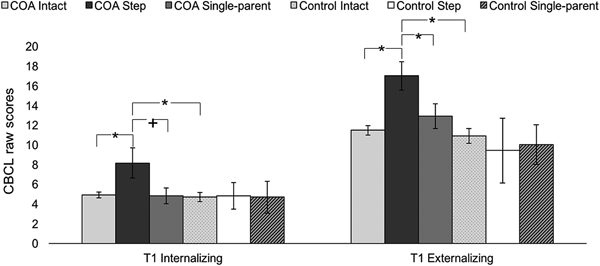
Figure 2 shows baseline parent-reported internalizing and externalizing problems at Wave 1 among children in different family structures. Because this is before school entry and children are not old enough to rate themselves, there are only parent report data for this time point. There were preexisting differences at baseline in parent-reported measures of internalizing, F (3, 292) = 5.04, p = .002, and externalizing symptoms, F (3, 292) = 7.98, p = .0001. Specifically, COAs who later resided in stepfamilies had the highest levels of parent-reported internalizing and externalizing symptoms at preschool age when compared with children from control families, COAs who later remained in intact, and COAs who later resided in single-parent families. Although we did not undertake statistical comparisons because of low sample sizes, COAs in stepfamilies also appeared to have higher baseline internalizing and externalizing problems than children in control stepfamilies (Figure 2).
Parent-reported internalizing and externalizing problems among preschool-age children from control and alcoholic intact, future step, and single-parent families at wave 1 (before parental separation). †p < .07, *p < .05, with Tukey–Kramer adjustment. Bars are standard error of the means. Only children with baseline T1 data were included in the analysis. Children living in future control step (n = 5) and control single-parent (n = 6) situations were shown but not statistically compared be of the low number of available data. CBCL, Child Behavior Checklist; COA, children of alcoholic; T1, child age 3.

Internalizing and externalizing symptoms at Wave 4
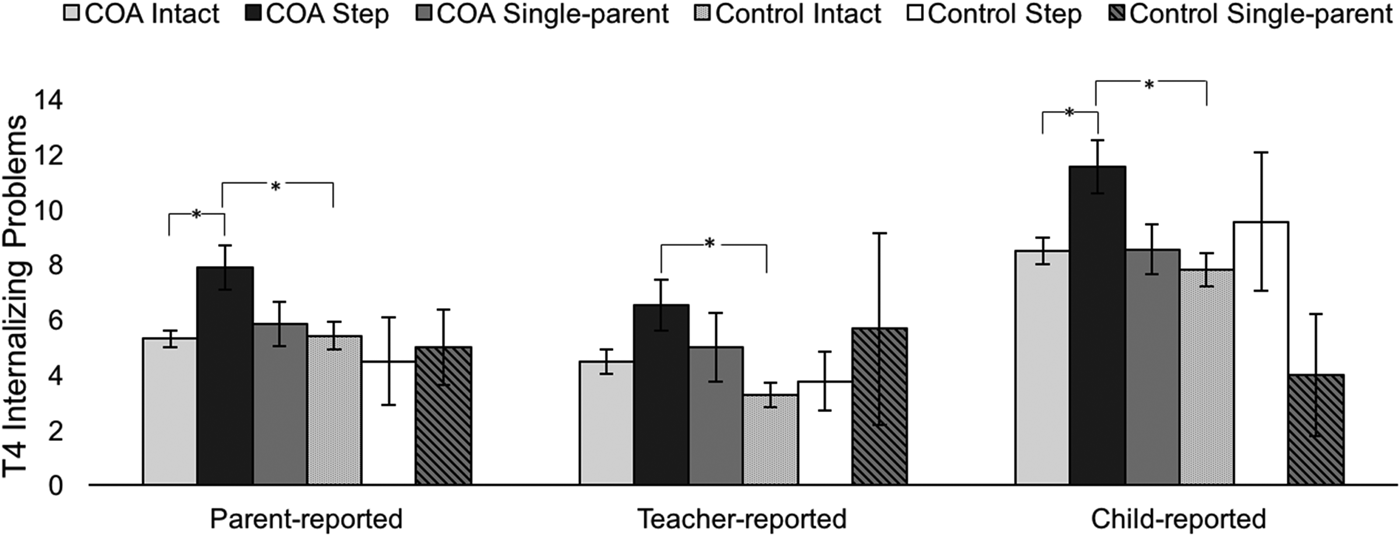
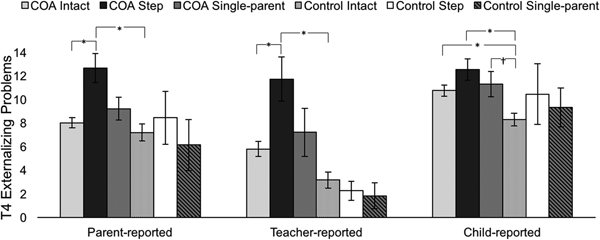
Figures 3 and 4 show the internalizing and externalizing behavior problems for the three reporters at Wave 4 among children in different family structures. Children in different family structures significantly differed in internalizing and externalizing symptoms at Wave 4 according to all reporters (internalizing problems: parent report [F (3, 446) = 4.10, p = .007], teacher report [F (3,352) = 3.16, p = .02], and child report [F (3,471) = 3.70, p = .01]; externalizing problems: parent report [F (3,446) = 8.02, p < .0001], teacher report [F (3,355) = 8.19, p < .0001], and child report [F (3,471) = 5.41, p = .001]).
Internalizing problems among children (ages 12–14) from control and alcoholic families based on the parent, teacher, and child reports at Wave 4. *p < .05, with Tukey–Kramer adjustment. Bars are standard error of the mean. Children living in control step (n = 8) and control single-parent (n = 10) situations were shown but not statistically compared because of the low number of available data. COA, children of alcoholic; T4, child ages 12–14.

Externalizing problems among children (ages 12–14) from control and alcoholic families based on the parent, teacher. and child reports at Wave 4. †p < .07, *p < .05, with Tukey–Kramer adjustment. Bars are standard error of the mean. Children living in control step (n = 8) and control single-parent (n = 10) situations were shown but not statistically compared because of the low number of available data. COA, children of alcoholic; T4, child ages 12–14.

Internalizing symptoms
Parent report of internalizing behavior indicated that COAs from stepfamilies had significantly higher levels of internalizing problems than children from control families and COAs from intact families. Teacher report indicated that COAs from stepfamilies had significantly higher levels of internalizing than children from control families. Child self-report, which has been found to be a more reliable source for internalizing symptoms than parent or teacher report (Bingham, Loukas, Fitzgerald, & Zucker, Reference Bingham, Loukas, Fitzgerald and Zucker2003), replicated the results from parent report. Although we did not perform statistical comparisons, COAs in stepfamilies appeared to have higher parent- and teacher-reported internalizing problems than children in control stepfamilies and single-parent families, whereas COAs in single-parent families appeared to have higher child reported internalizing problems than children in control single-parent families (Figure 3).
Externalizing symptoms
Similar to internalizing behavior problems, children in step families had the highest level of externalizing problems, generally followed by those in single-parent families then those in intact alcoholic families (Figure 4). Parent report indicated COAs from stepfamilies had significantly higher levels of externalizing problems compared with children from control families and those from intact alcoholic families. Teacher report replicated the results from parent report. Child report indicated that COAs from intact and stepfamilies had significantly higher levels of externalizing problems than those from control families, whereas COAs from single-parent families had marginally (p = .068) higher levels of externalizing problems than those from control families. Although we did not undertake statistical comparisons, COAs in stepfamilies also appeared to have higher parent- and teacher-reported externalizing problems than children in control stepfamilies, whereas COAs in single-parent families appeared to have higher teacher-reported externalizing problems than children in control single-parent families (Figure 4).
SEM
Data reduction
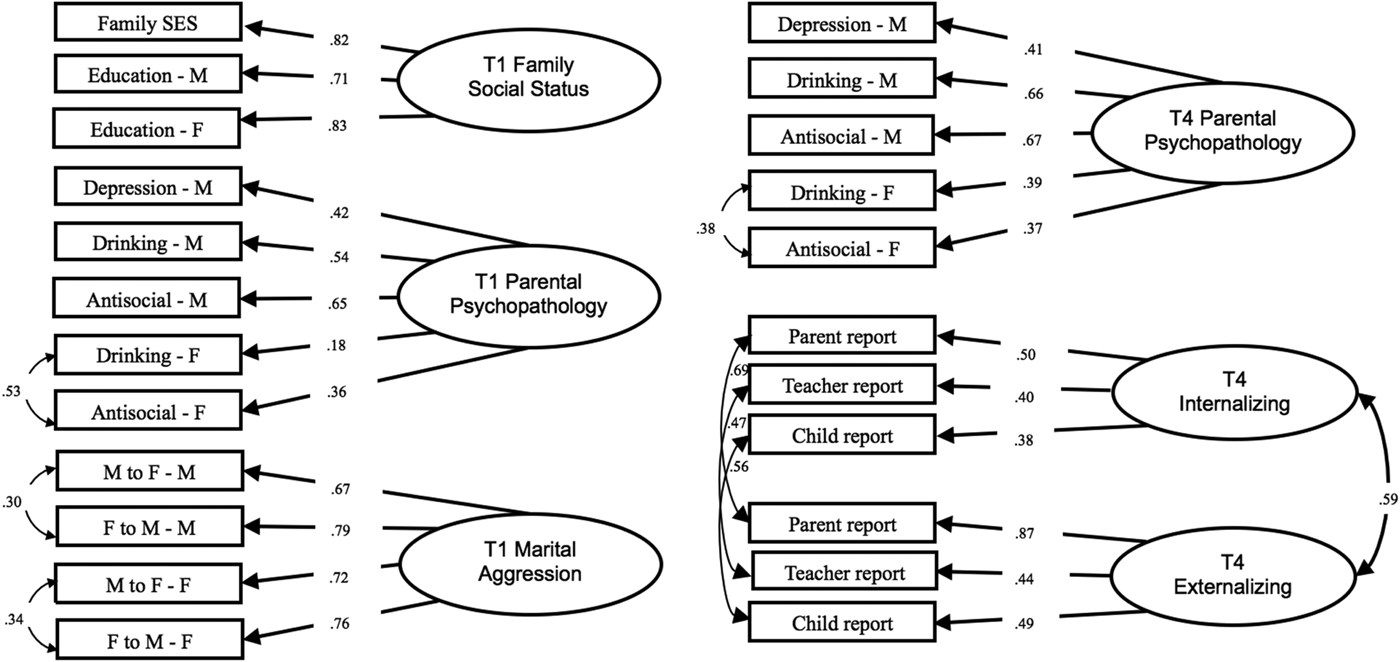
As shown in Figure 5, CFA were first conducted to create latent variables. Specifically, family social status as a latent construct was composed of family SES and maternal and paternal education. Parental psychopathology latent constructs were composed of maternal depression, maternal and paternal drinking, and antisocial problems. The marital aggression latent construct was composed of father-to-mother aggression and mother-to-father aggression, obtained through mother and father self-report separately. COAs’ internalizing and externalizing latent constructs were each composed of parent (Child Behavior Checklist), teacher (Teacher Report Form), and child report (Youth Self Report Form), and the two latent constructs (and residual errors within each reporter) were allowed to covary with each other. Results indicated that all CFA models had a good fit and all factor loadings in each model were significant. Because of the low factor loading of father drinking at Wave 1, alternative CFA (and subsequent SEM) models without paternal drinking were also conducted. Results indicated no significant change in terms of model fit (CFA: Δχ2 (2) = .21, p = .90; SEM: Δχ2 (27) = 39.6, p = .06); therefore, for theoretical reasons, paternal drinking was included in the latent construct of parental psychopathology at Wave 1 (Figure 5). All the latent variables were included in the subsequent SEM model. Because we only had parent report at Wave 1, child behavior at this point was modeled as the sum of parent-reported internalizing and externalizing problems.
Confirmatory factor analyses for all T1 and T4 latent variables. Model fit statistics for family social status: χ 2 (0) = 0, p = .000, CFI = 1, RMSEA = 0.00; T1 parental psychopathology: χ 2 (3) = 45, p = .93, CFI = 1, RMSEA = 0.00; T1 marital aggression: χ 2 (0) = 17.15, p = .000, CFI = .93, RMSEA = 0.00; T4 parental psychopathology: χ 2 (3) = 4.78, p = .19, CFI = .98, RMSEA = 0.04; T4 child internalizing and externalizing problems: χ 2 (5) = 2.66, p = .75, CFI = 1, RMSEA = 0.00. All factor loadings were significant (p < .05). Standardized coefficients were reported. CFI, Comparative Fit Index; F, father reported; F to M, father to mother; M, mother reported; M to F, mother to father; RMSEA, root mean square error of approximation; SES, socioeconomic status; T1, child age 5; T4, child ages 12–14.

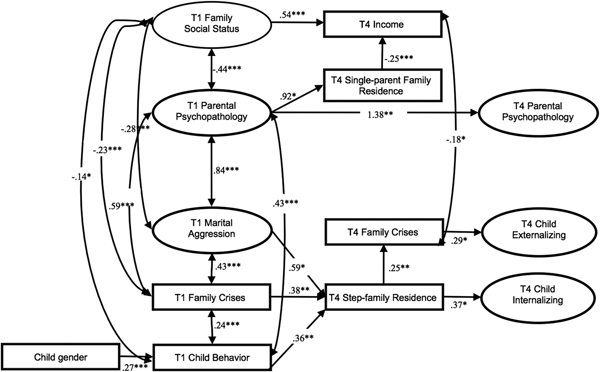
SEM was conducted to examine the complex relations among all study variables. Figure 6 shows the significant and marginally significant effects. The model had a good fit: χ 2 (338) = 537, p = .000, CFI = .90, RMSEA = 0.04. Specifically, we examined the bidirectional associations among family social status, parental psychopathology, marital aggression, family crises, and child behavior problems (sum of parent-reported internalizing and externalizing problems) at Wave 1. To examine the predictive role of Wave 1 factors on family and parental outcomes at Wave 4, all Wave 1 factors were used to predict income, family structure (single-parent, stepfamily residence), parental psychopathology, and family crises at Wave 4. To examine the predictive role of family structures on family and parental outcomes, single-parent and step membership were regressed onto income, parental psychopathology, and family crises at Wave 4. To examine the predictive role of Wave 1 and Wave 4 factors on child's outcomes, all factors were used to predict the development of latent internalizing and externalizing problems at Wave 4. Child's gender was also regressed onto child's problems at Waves 1 and 4 (Figure 1).
Structured equation modeling of T1 and T4 child, parental, and family factors related to the development of children of alcoholics’ internalizing and externalizing problems among alcoholic families. The model had a good fit: χ 2 (338) = 537, p = .000, CFI = .90, RMSEA = 0.04. Standardized coefficients were reported. Single-parent and step-family residence are dummy coded with the reference group of intact family. Female is the reference group. CFI, Comparative Fit Index; RMSEA, root mean square error of approximation; T1, child age 5; T4, child ages 12–14.

All Wave 1 risk factors (family social status, parental psychopathology, marital aggression, and family crises) were intercorrelated with each other in the expected direction (Figure 6). Lower family social status, higher parental psychopathology, and family crises at Wave 1 were associated with higher child behavior problems at Wave 1. Males had a higher number of behavior problems than females at Wave 1.
Direct effect of Wave 1 factors on Wave 4 family and parental outcomes
Family social status at Wave 1 predicted higher income at Wave 4. Parental psychopathology at Wave 1 predicted higher parental psychopathology at Wave 4 and higher odds of residing in single-parent family at Wave 4, whereas marital aggression, family crises, and child behaviors at Wave 1 all predicted higher odds of residing in a stepfamily at Wave 4.
Direct effect of family structure on Wave 4 family and parental outcomes
Single-parent membership predicted lower income at Wave 4, whereas step membership predicted higher family crises at Wave 4.
Direct effect of Wave 1 and Wave 4 factors on child's outcomes
Only family crises at Wave 4 had a direct effect on higher child's externalizing problems, whereas only step membership directly related to higher child's internalizing problems. There was no gender effect on internalizing and externalizing problems at Wave 4 in the model.
Indirect effect of Wave 1 and Wave 4 factors on child's outcomes
Family crises at Wave 4 mediated the relations between step membership and higher child externalizing problems, but the effect was marginal (b = .07, p = .089, 95% confidence interval = –.01 to .16).
Discussion
Our study objectives were fourfold. First, we sought to investigate how heterogeneous alcoholic family structures (intact, single-parent, and stepfamilies) differed in terms of sociodemographic characteristics, family problems, and parental psychopathology before and after divorce/separation. Second, we examined internalizing and externalizing problems among COAs living in different family structures before and after parental separation. Third, we investigated how multiple risk factors contributed to the formation of different family structures among alcoholic families, and the role of family structures on the development of COAs’ internalizing and externalizing problems. Fourth, we examined the role of different risks factors as mediators linking heterogeneous family structures to COAs problems.
Alcoholic families: Before separation
Overall, our findings suggest that alcoholic families at Wave 1 that transitioned into stepfamilies were at the highest risk of economic, parental, and familial problems. At baseline, before separation, these families in our sample were characterized with lower family resources (lower SES and paternal education), higher levels of parental psychopathology (higher paternal antisocial and drinking problems), marital aggression, serious family crises, and child behavior problems when compared with control families and alcoholic families that remained intact. Lower family resources have been linked to economic hardship and unemployment. Parents with lower levels of economic stability and higher levels of psychopathology may be less equipped with adaptive coping strategies to deal with family stress. Higher levels of chronic stress can, in turn, increase marital aggression (Frye & Karney, Reference Frye and Karney2006; Langer, Lawrence, & Barry, Reference Langer, Lawrence and Barry2008; Figure 6). These families may also encounter more difficulties in rearing a child with behavioral problems, which may also intensify family stress (i.e., more serious crises; Figure 6). These factors subsequently relate to lower marital satisfaction, which leads to marital dissolution (Karney & Bradbury, Reference Karney and Bradbury1995). Prior studies have found that higher levels of marital aggression and family stress were associated with marital dissolution (Lawrence & Bradbury, Reference Lawrence and Bradbury2007; Rogge & Bradbury, Reference Rogge and Bradbury1999). Our findings extend the previous literature by showing that these factors were also associated with alcoholic families who later remarried.
Future alcoholic single-parent families exhibited higher maternal antisocial problems and more family crises before divorce/separation than alcoholic intact families. These families also showed relatively high levels of maternal and paternal alcohol problems (albeit not statistically different from alcoholic intact families). Our findings indicate that parental psychopathology related to increased incidence of single-parent families. This is in line with prior studies showing that parental psychopathology is one of the most robust predictors of marital dissolution (Amato & Previti, Reference Amato and Previti2003).
Most generally, our findings suggest that various subtypes of divorced/separated alcoholic families can be characterized by different risk factors. This sheds light on the importance of identifying “risk profiles” underlying heterogeneous family structures. Future research would benefit from the use of latent class analyses to identify risk profiles underlying the formation of heterogeneous alcoholic family structures (Sturge-Apple, Davies, & Cummings, Reference Sturge-Apple, Davies and Cummings2010).
Alcoholic families’ adjustment outcomes after separation
After divorce/separation, although alcoholic stepfamilies (mostly composed of biological mothers and stepfathers) continued to have lower family income, single-parent alcoholic families (mostly supported by biological mothers) had the lowest family income among all familial subtypes. This is convergent with previous findings suggesting that divorce often leads to a drastic decline in the economic stability of single-mother families (Bartfeld, Reference Bartfeld2000; Hetherington, Bridges, & Insabella, Reference Hetherington, Bridges and Insabella1998). Our SEM model further indicated that living in single-parent households directly related to lower concurrent family income, whereas living in step families directly related to higher levels of concurrent family crises (Figure 6). In addition, stepfamilies and single-parent families continued to show significantly higher levels of family stress/crises than nonalcoholic families and intact alcoholic families (Table 2).
One of the contributors to the adverse environment found in stepfamilies may be assortative mating, which is the tendency that individuals are more likely to mate with others with similar traits and characteristics. Because of assortative mating, biological mothers (or fathers) might be more likely to remarry or cohabit with spouses similar to themselves or their ex-spouses, who are also characterized by having low SES, and more drinking and antisocial problems (Cherlin et al., Reference Cherlin, Furstenberg, Chase-Lansdale, Kiernan, Robins, Morrison and Teitler1991; Kelly, Reference Kelly2000; Strohschein, Reference Strohschein2005). One piece of evidence supporting this can be seen by custodial stepfathers’ high levels of antisocial (M = 3.19, SD = 4.87, n = 15) and drinking problems (M = .91; SD = 1.83; n = 21) at Wave 4. Although not statistically significant (because of high variability and limited power in detecting the effect of interest), custodial stepfathers appeared to show higher levels of antisocial and drinking problems than fathers in control families (antisocial: M = 2.20, SD = 2.35, n = 55; drinking: M = 0, SD = 0, n = 52; Table 1). In addition, their antisocial problems are highly correlated with concurrent maternal antisocial problems (r = .61, p =.015), whereas their drinking problems are marginally correlated with concurrent maternal drinking problems (r = .43, p = .056). These findings suggest that mothers in stepfamilies may be likely to find spouses with similar antisocial and drinking problems. The relatively high levels of antisocial problems together with other risk factors (i.e., financial instability) may subsequently create more adverse family environments.
COAs' problems in divorced/separated families
Overall, our findings suggested that COAs living in stepfamilies are the most vulnerable group for elevated internalizing externalizing symptoms when compared with nonalcoholic children and COAs residing in intact families. Relative to COAs living in single-parent families, COAs residing in stepfamilies experienced parental separation at a younger age, and younger age at parental separation was associated with higher levels of internalizing problems at age 12–14 years reported by the child (Table 1). Our finding provides the first longitudinal evidence that the pernicious impact of parental separation is related to COAs’ age at separation, which is consistent with studies of children in nonalcoholic divorced families (Lansford et al., Reference Lansford, Malone, Castellino, Dodge, Pettit and Bates2006; Malone et al., Reference Malone, Lansford, Castellino, Berlin, Dodge, Bates and Pettit2004). Further research is needed to understand the influence of age on COAs’ behavioral adjustment before and following parental separation beyond pre-adolescence.
Consistent with our hypothesis, measures at Wave 1 indicated that COAs who would later be residing in stepfamilies showed higher levels of baseline externalizing and internalizing behaviors when compared with controls and intact alcoholic and single-parent alcoholic families, even before parental separation. This suggests that the elevated internalizing and externalizing problems found in COAs from alcoholic stepfamilies at age 12–14 are in part due to higher behavioral problems at age 3 that exists before parental separation (Robbers et al., Reference Robbers, Bartels, van Beijsterveldt, Verhulst, Huizink and Boomsma2011). Our findings suggest that this early behavioral risk may be attributed to lower family resources, higher levels of paternal psychopathology, and marital aggression and stress found in these alcoholic families before separation. Findings are consistent with previous research showing that children living in families with higher parental psychopathology, lower family resources, and higher adverse environments are the highest risk group for externalizing and internalizing symptoms (Chassin et al., Reference Chassin, Rogosch and Barrera1991; Zucker, Reference Zucker, Cicchetti and Cohen2006). Moreover, genetic research has indicated that alcoholism and divorce are correlated, in part because of shared genetic factors (Salvatore et al., Reference Salvatore, Larsson Lönn, Sundquist, Lichtenstein, Sundquist and Kendler2017). It is therefore likely that COAs in separated families have higher genetic risk for alcoholism and psychopathology, and that intergenerational transmission of genetic risk may explain, in part, the early adjustment problems of COAs. The preexisting genetic risk may manifest as difficult temperament, which further strengthens the link between parental psychopathology and COAs' internalizing and externalizing symptoms (Loukas, Zucker, Fitzgerald, & Krull, Reference Loukas, Zucker, Fitzgerald and Krull2003). Studies have shown that COAs are more likely to have difficult temperaments if they come from families where the alcoholic fathers are lower in SES and higher in antisocial comorbidity (Zucker et al., Reference Zucker, Ellis, Fitzgerald, Bingham and Sanford1996).
Our SEM model further supported our hypothesis that stepfamily membership is an aggregated risk factor (characterized by lower family resources, higher parental psychopathology, marital aggression, and family crises) that directly related to the development of children's internalizing problems and indirectly related to children's externalizing problems, as mediated through higher family crises (Figure 6). Our findings indicate that there are differences in COAs’ adjustment outcomes based on family structure that are not explained by their preexisting problems. In other words, residing in a step household is a unique risk factor for COAs' elevated internalizing problems, whereas COAs’ elevated externalizing problems in stepfamilies can be partially explained by the high levels of family stressors found in these households.
Previous studies have also suggested other factors that may explain elevated problems found in COAs living in stepfamilies. First, research on remarried families has suggested that the increase in negativity may be in part explained by the decrease in quality of parent–child relationships and authoritative parenting found after parental separation and the formation of stepfamilies (Amato & Gilbreth, Reference Amato and Gilbreth1999; Hetherington, Reference Hetherington1990). Some studies have also suggested that stepfathers often provide less warmth and support (Pasley, Dollahite, & Ihinger-Tallman, Reference Pasley, Dollahite and Ihinger-Tallman1993), and children often reported less positive interaction with stepfathers compared with biological fathers (Dunn, Deater-Deckard, Pickering, O'Connor, & Golding, Reference Dunn, Deater-Deckard, Pickering, O'Connor and Golding1998; Hetherington et al., Reference Hetherington, Bridges and Insabella1998). Moreover, studies have found that children living in stepfamilies are at a greater risk for abuse (Daly & Wilson, Reference Daly and Wilson1985, Reference Daly and Wilson1994), which in part may be explained by the nonbiological relationship between children and stepfathers (O'Connor & Boag, Reference O'Connor and Boag2010). Further research is needed to understand the custodial parent's impact on COAs’ behavioral adjustment.
In contrast, the differences between children in single-parent and intact families were not as robust as those observed in stepfamilies. Specifically, COAs residing in single-parent families did not show higher levels of parent-reported baseline and concurrent problems than those from alcoholic intact families. This effect was observed from all three reporters.
There are several ways to understand the lower level of behavioral symptomatology of COAs in single-parent families. First, COAs living in single-parent families experienced parental separation at a relatively older age when compared with COAs living in stepfamilies, which may buffer the detrimental effect of parental separation on their behavioral outcomes (Lansford, Reference Lansford2009). Second, the fathers of future single-parent families had less antisocial problem behavior at baseline compared with those in stepfamilies, thus reducing the effect of parental psychopathology on COAs’ early behavioral maladjustment and later development. Third, these families did not exhibit higher marital aggression at baseline, suggesting that COAs living in single-parent families may have been subjected to fewer marital or interparental conflicts after the separation. It is possible that the mothers avoided new relationships for the explicit purpose of limiting their children's exposure to an antisocial partner.
It is also important to note that prior studies suggest that the influence of parental alcoholism may differ across parent gender (Ohannessian et al., Reference Ohannessian, Hesselbrock, Kramer, Kuperman, Bucholz, Schuckit and Nurnberger2005). Although in our sample the majority of nonintact alcoholic families were composed of biological mothers, mothers may or may not have been alcoholic. Moreover, paternal psychopathology at Wave 1 (including father drinking and antisocial problems) had relatively lower (but significant) factor loadings in our CFA model. This suggests that the association between our latent parental psychopathology construct and single-parent family formation (and the lack of direct relations between parental psychopathology construct at Wave 1 and COAs’ behavioral outcomes at Wave 4) in our results are mostly driven by the maternal factors that have higher factor loadings (e.g., maternal drinking, antisocial problems). Although it is beyond the scope of our study, further research is needed to understand the differentiated impact of paternal versus maternal alcoholism/psychopathology on the formation of heterogeneous family structures and COAs’ behavioral adjustment before and after parental separation. Another important issue to examine is COAs’ adjustment among nonintact families that are headed by biological fathers (and stepmothers).
Strengths and limitations
To our knowledge, this is the first study to investigate how heterogeneous alcoholic family structures (intact, single-parent, and stepfamilies) differ in terms of sociodemographic characteristics, parental symptomatology, family problems, and children's internalizing and externalizing problems. Because of its prospective design, this study was also able to examine alcoholic family adjustment before and after parental separation. These and other features provide a number of strengths for the study. First, to better understand family and child adjustment outcomes, the study included both cross-sectional and longitudinal data and also used three different reference groups (i.e., nonalcoholic single, nonalcoholic step, and alcoholic intact families). Including baseline measures of symptomatology for these families before divorce/separation provides a better understanding of family problems before and after separation, thus allowing us to eliminate selection bias. Second, we used three different reporting sources to provide a more objective assessment of the children's outcomes. Third, we included unmarried cohabiting parents (thus, “separation” included moving out of a cohabitation relationship); these families are often overlooked in research on divorce/separation.
Some limitations of the current study must be acknowledged. First, although some studies have suggested that the involvement of resident stepfathers and noncustodial fathers are important predictors for children's adjustment outcomes (Amato & Gilbreth, Reference Amato and Gilbreth1999; Hetherington & Stanley-Hagan, Reference Hetherington and Stanley-Hagan1999; King & Sobolewski, Reference King and Sobolewski2006), this study does not address the interactive roles that noncustodial and resident fathers play in explaining COAs' externalizing and internalizing symptoms. Second, although our sample was overseeded with minority families (6%) beyond the level that existed in the area where the study took place (4%), the low percentage still yielded an insufficient N for analysis; thus, our sample was restricted to Caucasians, and findings may not generalize to other ethnic or racial groups. Third, because parental separation was defined at Wave 4, we are unable to look at how parental separation predicted COAs’ onset and change of internalizing and externalizing growth trajectories using multiple time points. Further research using growth mixture modeling is needed to address this gap. One important future direction will be to examine the impact of parental separation on COAs’ change of internalizing problems during adolescence, given that this is a high-risk period for the development of anxiety and depressive disorders, especially in girls. Fourth, we can only draw descriptive inferences on separated families in our nonalcoholic (control) group because of low numbers of separated control families in our sample. Further, we have only a limited number of families with female offspring with baseline measures, which resulted in diminished statistic power for gender comparison. Fifth, as a function of the initial study design, all children aged 3–5 were living in an intact family at the time of first contact. We therefore are unable to examine the impact of parental separation on early childhood or the risk profiles of alcoholic families that are separated at or before child age three. Sixth, our study categorizes alcoholic versus nonalcoholic groups using lifetime alcoholism diagnosis at Wave 1; this may not fully capture parental alcoholism variations at Wave 4. The study did incorporate a continuous measure of parental drinking over the past year as an indicator of drinking severity, however. In particular, parents in the control group had close to zero drinking problems at both Waves 1 and 4, whereas those in the alcoholic group had higher levels of drinking problems at both time points, suggesting that the categorization based on lifetime diagnosis at Wave 1 is robust.
Conclusion
Researchers have suggested that families who are the most vulnerable for transmission of risk are also households with a higher incidence of family conflicts and violence, low family resources (SES and educational attainment), and more parental psychopathological comorbidity (ASB; Zucker, Reference Zucker, Cicchetti and Cohen2006). Our study is consistent with previous findings in showing that COAs living in stepfamilies are the group at highest risk for these occurrences. Our study found that COAs in separated families (especially those living in stepfamilies) are at highest risk for behavioral problems. To some extent, these problems existed long before divorce, suggesting that COAs' postseparation adjustment difficulties may be attributable, at least in part, to earlier family processes and childhood maladjustment. However, we also found that COAs’ behavioral problems after parental separation were partly due to the direct effect of the family structure, an indirect effect of increased family stress, suggesting that family structure provides an additional marker to identify the heterogeneous vulnerable phenotypes among COAs. Divorce/separation may be seen as a reflection of destructive family outcomes or the culprit for COAs’ behavioral problems (or both). The high levels of risk in stepfamilies should alert researchers and practitioners to specifically target COAs living in separated/remarried families for early intervention because they are at significant risk for elevated internalizing and externalizing symptoms, which in turn have the potential to lead to later alcoholism.
One final point: the findings of this study starkly illustrate the developmental unfolding of risk structure over time, as a dynamic process, influenced by early vulnerability, by intermediate experiences that are necessary to sustain the vulnerable continuity, and by damaged outcomes that in turn sustain the initial vulnerable diathesis. This dynamic process is not able to be described without the utilization of a prospective research methodology that is in place for a considerable period of developmental time. Without such methodology, much of the nuance of structural interactions would be lost or incorrectly attributed to more proximal influences.