The issue of global warming and climate change (GWCC) is one of the most complicated and challenging facing the world today. Mostly driven by greenhouse gas (GHG) emissions from the combustion of fossil fuels, GWCC are having a growing detrimental impact on the environment and society.Footnote 1 China, the world's largest GHG emitter since 2006, has pledged to reduce its GHG emissions and increase non-fossil energy sources under the 2009 Copenhagen Accord and the 2016 Paris Agreement.Footnote 2 In recent years, the Chinese government has passed strategic plans and specific policies to address GWCC through national programmes aimed at climate change mitigation and adaptation.Footnote 3 Policy implementation and success largely depend on public support. Studies have shown that public perception and concern about GWCC risk are strong predictors of citizens’ willingness to support climate policies.Footnote 4
Despite the importance of the link between public opinion and policy outcomes, only a limited number of studies have explored Chinese citizens’ attitudes towards GWCC. These studies are primarily area-specific and non-representative, based on data collected from a self-administered survey of tourists in Beijing, Fuzhou and Hangzhou;Footnote 5 face-to-face interviews conducted in Chengdu and Xi'an;Footnote 6 an online survey of residents in Beijing;Footnote 7 and a field study conducted in Beijing.Footnote 8 In another study, a national sample of 516 respondents was analysed, but the survey was conducted online with a nonprobability-based sample “skewed toward higher education, younger generations, and people with an above-median income.”Footnote 9 While these studies have improved our understanding of the complexity of GWCC concern, they are non-representative and thus difficult to generalize across China.
In this study, we utilize data from a national representative public opinion survey conducted in 2016 as well as regional statistics collected from China Statistical Yearbooks to investigate the variations and determinants of the Chinese public's GWCC concern. Drawing insights from extant literature, we develop theoretical expectations and employ both descriptive statistics and regression models for data analysis. Our descriptive statistics show that the average GWCC concern in China, compared to other countries, is relatively low, and that the levels of GWCC concern vary greatly among Chinese citizens, across different provinces and between coastal and inland areas. Our regression models reveal that the varying levels of individual Chinese GWCC concern are significantly driven by certain individual-level characteristics and regional-level variables. More specifically, we find that women and younger people with higher post-materialist values are more concerned about GWCC than their counterparts. We also find some evidence linking regional carbon economic dependency to people's GWCC concern, as our data show that people from provinces with a higher economic dependency on carbon-intensive industries tend to be less concerned about GWCC than people from provinces with a lower carbon economic dependency.
Our study makes several contributions to the literature. First, to our knowledge, this is the first study to examine public concern about GWCC in China based on a national representative survey. Our data from the 2016 public survey reflect the recent state of how Chinese citizens perceive the seriousness of GWCC, and our findings are expected to be more generalizable than those based on non-representative and area-specific data. Second, we further examine how the variations of individual Chinese GWCC concern are shaped by several key individual-level variables such as respondents’ social characteristics and personal post-materialist values. Third, in modelling the determinants of GWCC concern, we expand on extant literature and incorporate several regional-level variables (such as local vulnerability to climate change and regional carbon economic dependency) that are thought to be potentially important predictors for individual GWCC concern.
In what follows, we first provide a brief review of the relevant literature to identify the key factors in explaining individual citizens’ concern about GWCC. We then discuss the data sources, data collection procedures and variable measures. Next, we show the distributions of Chinese GWCC concern and analyse the data using correlation and regression methods. In conclusion, we summarize our findings, discuss policy implications and make suggestions for future research.
Literature Review and Theoretical Expectation
Public concern about GWCC is an important force shaping social and policy responses to climate change. Widespread and strong concern typically corresponds to people's decisions and their willingness to support climate change mitigation and adaptation policies.Footnote 10 GWCC have had a huge impact and inflicted much damage to China,Footnote 11 especially in coastal areas vulnerable to sea-level rises and storm surges.Footnote 12 In recent years, the Chinese government has passed various climate mitigation and adaptation policies to reduce GHG emissions and encourage a low-carbon economy and lifestyle. Successful policy implementation not only requires consensus from the public in perceiving the dangerousness of climate change but also depends on people's voluntary choice. Thus, studying GWCC concern is important in the China case. While there are extensive studies on the general environmental concerns of the Chinese public,Footnote 13 and a few insightful but non-random sampling-based studies on Chinese climate change attitudes,Footnote 14 research using a national representative survey to systematically probe Chinese citizens’ concern about GWCC has been lacking.
In contrast to the scant research on this topic in China, the literature on public GWCC concern in Western countries has grown rapidly in recent years. For example, there are numerous studies on public GWCC concern in countries such as the United States,Footnote 15 United Kingdom,Footnote 16 GermanyFootnote 17 and Australia.Footnote 18 There are also studies that compare climate change and related views cross-nationally.Footnote 19 Generally, the extant literature suggests that variations in public GWCC concern are associated with two groups of variables: individual-level factors, such as socio-economic status and personal beliefs or values;Footnote 20 and regional-level place-based characteristics, such as local physical vulnerability to climate change.Footnote 21
Research on the relationship between individual-level factors and GWCC concern usually focuses on standard socio-economic characteristics (such as gender, age, education, income, place of residence, race, etc.). While some personal-level variables such as household income and place of residence (for example, urban versus rural) are found to be not regularly associated with the variation in citizens’ GWCC concern,Footnote 22 several other individual-level social characteristics, discussed below, have a consistent effect on individuals’ GWCC concern in existing studies.
Among the individual-level social variables, past research reveals that the most consistent predictor for citizens’ GWCC concern is gender: women tend to have greater GWCC concern than do men.Footnote 23 Based on a review of more than 100 studies, Aaron McCright and his colleagues report that “in no reviewed study did we find that men report stronger pro-climate views than do women.”Footnote 24 Theoretical reasons for this gender gap in GWCC concern (and other environmental concerns) can be found in the literature that explains how individuals in any society learn about gender-based expectations, division of labour and value-formation processes.Footnote 25
The next most consistent social predictor for GWCC concern seems to be the age of the respondent. Much past research finds that younger adults usually report higher GWCC concern and tend to support GWCC policies more than do older adults.Footnote 26 A theoretical explanation for this age effect is that as countries make the transition to postmodern nations, a growing cohort of citizens will experience shifts in personal values, have more educational opportunities, and then develop greater concern for environmental and ecological issues such as climate change.Footnote 27 Robert Jones and Riley Dunlap analysed 11 sociodemographic and sociopolitical factors and found that age was the best predictor of environmental concern, with younger people expressing greater concern than older people about the environment.Footnote 28 Nevertheless, there are a few studies that find that age has mixed effects on GWCC concern.Footnote 29
Past studies also find that education often exhibits a positive effect on GWCC concern, since a higher level of education facilitates the understanding of the phenomenon and enhances the likelihood of believing that global warming has already begun.Footnote 30 Although a few studies find an inverse association between education and GWCC concern in the United States,Footnote 31 evidence from many other studies seems to suggest a positive relationship between education and GWCC concern.Footnote 32 For example, using an extensive dataset, gathered from 26 countries, on topics surrounding environmental concern, Emilia Tjernström and Thomas Tietenberg find that a higher level of education is associated with a higher likelihood of expressing GWCC concern.Footnote 33 Similarly, in another study, which was based on data gathered from 119 countries, Tien Ming Lee and colleagues find that educational attainment is the single strongest predictor of climate change awareness worldwide.Footnote 34
In addition to the three social base variables (gender, age and education), the extant literature finds that personal post-materialist values are another important individual-level predictor for citizens’ GWCC concern. Starting with the theory of a hierarchy of human needs,Footnote 35 scholars contend that humans begin to emphasize and pursue higher needs once they are satisfied with basic physiological and security needs (such as food, shelter and safety). In a series of influential studies, Ronald Inglehart described this shift as a pursuit of “post-materialist” values.Footnote 36 Emphasizing a greater desire for quality of life, civil rights, autonomy and self-expression, instead of economic gains and material possessions, post-materialist values have been credited with the rise in environmentalism and individuals’ concern about non-material objects.Footnote 37 Recent empirical studies find that post-materialist values exert a positive impact on citizens’ GWCC concern. Thomas Dietz, Amy Dan and Rachael Shwom together report that individuals with stronger post-materialist values (i.e. placing democracy and freedom of speech above maintaining order and fighting rising prices) tend to exhibit a higher GWCC concern.Footnote 38 Similarly, Berit Kvaløy, Henning Finseraas and Ola Listhaug, using data from the 2005–2009 World Values Survey across 47 countries, also demonstrate that perception of the seriousness of the GWCC problem is positively correlated with post-materialism.Footnote 39
While most of the studies on public concern about GWCC discussed above tend to focus on individual-level social base and personal value factors, there are a few exceptions that show that regional context characteristics (for example, environmental pollution) can also affect citizens’ environmental concern.Footnote 40 To explain citizens’ GWCC concern, scholars contend that regional factors such as local climate vulnerability and exposure to climate-related physical risks should be taken into account.Footnote 41 As people exposed to climate change stressors are more likely to experience and understand climate change consequences, or know someone who has personal experience of the consequences of global warming, they are more likely to be concerned about GWCC.Footnote 42 Similarly, So Kim and Yael Wolinsky-Nahmias find that a general measure of climate vulnerability correlates with higher commitment to climate policies, including greater willingness to pay and stronger support for pro-climate energy polices.Footnote 43 Patrick Egan and Megan Mullin find that heatwave exposure has a positive effect on GWCC concern because it increases the likelihood of believing that there is solid evidence that the earth is getting warmer.Footnote 44 Samuel Brody and his colleagues find that public perceptions of the potential negative impacts of climate change increase when the threat or sense of climate vulnerability is most overt.Footnote 45
In addition to climate vulnerability, we extend the current literature to consider another regional-level factor that may potentially condition individual citizens’ GWCC concern – regional economic dependency on carbon-intensive industries. Theoretically, it is reasonable to expect that people from regions where the local economy is more dependent on carbon-intensive and fuel-burning industries would be less likely to care about GWCC owing to their strong carbon-based economic self-interests. Empirically, past studies have presented some evidence that economic conditions shape public environmental attitudesFootnote 46 and climate change concern.Footnote 47 A recent piece of research on the geographic variation in public GWCC opinions in the United States finds “lower levels of belief that global warming is happening in some Midwestern and Western counties with large greenhouse-gas-producing industries, such as coal-fired power plants.”Footnote 48 Studies on Appalachia also find that coal miners tend to support the mining industry while caring less about the impact of coal production on the climate.Footnote 49 However, how regional economic factors such as carbon economic dependency affect public GWCC concern has not been systematically examined, and this is one of the contributions of this study.
Informed by these theoretical explanations and past empirical studies, we investigate how Chinese GWCC concern is affected by both individual-level variables and regional-level characteristics. Specifically, for individual-level characteristics, we expect that in China, based on the best available empirical evidence from past research, women, younger people, the better educated and those with stronger post-materialist values will be more likely to express greater GWCC concern compared to their counterparts. For regional-level factors, we expect that Chinese citizens who are located adjacent to the coastline, where climate risk is relatively higher than for non-coastal areas, will have higher GWCC concern than people living in inland areas. We also expect that Chinese citizens living in higher carbon economic dependency regions will exhibit less GWCC concern than their counterparts, owing to their carbon-vested interests.
Data Sources and Variable Measures
To examine Chinese public GWCC concern and its determinants, we use data from two sources: the China Governance and Public Policy Survey (CGPPS) and the official China Statistical Yearbook.
All individual-level data (such as respondents’ GWCC concern and socioeconomic status information) are drawn from the CGPPS, which is a research project of the Bush School of Government and Public Service at Texas A&M University. The CGPPS consists of multiple surveys conducted during the second half of 2016. In this paper, we use the data from a survey carried out between 28 October and 5 December 2016. All of the CGPPS surveys were conducted by the Survey and Research Center for China Households at the Southwestern University of Finance and Economics in China using its random-dialling computer-aided telephone interviewing system. The surveyors employed a stratified, three-stage probability proportion-to-size random sample design to draw a representative sample of Chinese adults aged 18 and older in mainland China (excluding Tibet, Xinjiang, Hong Kong and Macau).
As of 2016, China administers 33 provincial-level regions (called province, autonomous region, municipality or special administrative region) and 2,854 county-level divisions (called county/autonomous county, district, county-level city, or banner/autonomous banner). The GCPPS survey covered 29 provincial-level regions and 353 county-level divisions. For this survey, a total of 7,298 respondents were sampled and 3,972 interviews were completed, yielding a response rate of 54.43 per cent. After data cleaning, the final survey dataset includes 3,748 valid cases. All interviews were conducted in Chinese, with the median survey completion time of 14.5 minutes.
All regional provincial-level data are drawn from the China Statistical Yearbook, which is published annually by the National Bureau of Statistics of China. From the year books, we collected the past five years’ data (2011–2015) on each province's GDP, population, land size and the share of carbon-intensive industries in the province's GDP. In the statistical yearbooks, China's GDP is contributed by three broad sectors or industries – primary industry (agriculture), secondary industry (construction and manufacturing), and tertiary industry (the service sector). Since the primary and secondary industries depend heavily on fossil fuel burning and produce a great amount of GHG emissions, together they are considered as carbon-intensive industries. The data from the five years prior to the 2016 CGPPS survey were averaged and merged with the CGPPS opinion survey data.
The dependent variable in this study is GWCC concern, which is measured by a survey participant's perception of the seriousness of this issue in China. In the GCPPS survey, respondents were asked, “on a 0–10 scale, with 0 being not serious at all and 10 being very serious, how serious do you think the problem of global warming and climate change is in China?” Participants’ responses to this question are coded accordingly, so the higher score indicates a higher level of GWCC concern.
Through the GCPPS survey, we collected respondents’ sociodemographic background and economic status information, including the three individual-level variables that we are mainly interested in when explaining Chinese citizens’ GWCC concern: gender, age and education. Gender_female is measured as 1 for female and 0 for male. Age is the respondent’s actual age in 2016. Education is coded with 9 levels (1 = no schooling; 2 = elementary school; 3 = middle school; 4 = high school; 5 = vocational school; 6 = advanced vocational school; 7 = college; 8 = masters; 9 = doctoral).
As discussed in the literature review, another important individual-level predictor for GWCC concern is expected to be the extent to which people hold personal post-materialist values. A standard way of measuring post-materialist values in the extant literature is to construct a post-materialism index based on respondents’ answers to a relatively large number of questions regarding the issues they are most concerned about or what they perceive to be the top priorities facing the country.Footnote 50 Some studies suggest a simplified, but still valid, approach to measure post-materialism: those respondents who put democracy (for example, giving people more say in government decisions) and civil liberty (for example, protecting freedom of speech) above maintaining order in the nation and fighting rising prices are considered to have stronger post-materialist values.Footnote 51 In this study, we follow this approach and use participants’ responses to a question that measures the extent to which people hold post-materialist values with respect to political democracy and civil liberty in China. The question asks respondents to indicate how serious they think the issues of political democracy and civil liberty are in China, ranging from 0 to 10, with 0 being not serious at all and 10 being extremely serious. The variable of post-materialist values is thus measured on a 0–10 scale, with a higher score indicating a stronger need for political democracy and civil liberty and thereby stronger post-materialist values.
Additional individual-level social background information was also collected in the survey. Income is measured as logged household per capita income in 2016. The type of residence, Urban residence, is measured as 1 for urbanite and 0 for rural resident. As past research indicates that political orientations can shape individual GWCC concern, we also collected the respondent's political party membership information in the survey.Footnote 52 Although the left–right or liberal–conservative political ideology division does not apply to China, one previous study found that being a Chinese Communist Party (CCP) member positively affects one's concern about the environment.Footnote 53 In this study, CCP member is measured as 1 for being a CCP member and 0 being otherwise. These variables are used as control variables in our regression analysis later.
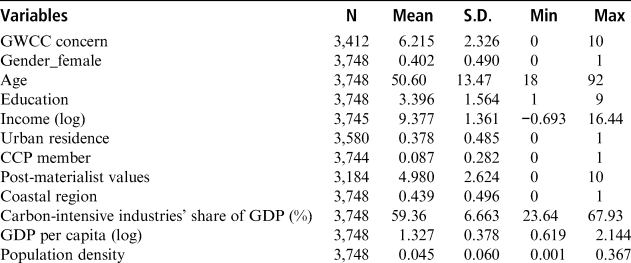
At the regional level, we are interested in how different contextual conditions, particularly regional climate vulnerability and carbon economic dependency, affect respondents’ GWCC concern. We measure climate vulnerability based on a province's geographical location. We create a dummy variable, Coastal region, to indicate whether the province is located in a coastal region. Because these areas are low in elevation and more likely to be stressed by rises in sea level and storm surges, they are more vulnerable to GWCC. We use Carbon-intensive industries’ share of GDP in each province to measure provincial economic dependency on fossil fuel-burning, greenhouse gas-producing industries. A higher percentage of the share indicates that the province's economy relies more on carbon-intensive industries. We also use the province's GDP per capita (log) to reflect the variations in regional economic affluence, and Population density (measured by 10,000 people per square kilometre) to capture different demographic concentrations across provinces. These two regional-level variables are used as control variables in later regression models. Summary statistics of all the variables at both individual level and province level are reported in Table 1.
Summary Statistics

Data Analyses and Results
We conduct data analysis in three steps. First, we begin with descriptive statistics and distribution graphs to show the general patterns and variations of Chinese GWCC concern. Second, we compute bivariate correlations between GWCC concern and each of the individual-level and regional-level variables to examine the possible associations between them. Third, we further employ multiple regressions with different specifications to estimate the conditional and overall effects of these variables on Chinese GWCC concern.
Descriptive statistics and distributions
We begin with descriptive statistics and basic distributions. As reported in Table 1, the mean GWCC concern for the Chinese respondents is 6.215. Recall that GWCC concern is measured on a 0–10 scale, with 0 being completely unconcerned and 10 being extremely concerned. This average concern of 6.215 is just moderately above the mid-point 5 (neither unconcerned nor concerned) – a level similar to that which has been found in the United States in a study using the same 0–10 scale to gauge the American public's GWCC concern.Footnote 54 We consider this level of average GWCC concern in China to be relatively low because the intensity of public GWCC concern in many other countries around the world appears to be much greater.Footnote 55 Recent public opinion polls across multiple nations show that China, along with several other countries including the United States, is among the least GWCC-concerned countries in the world, and our data here provide corroborating evidence supportive of these studies.Footnote 56
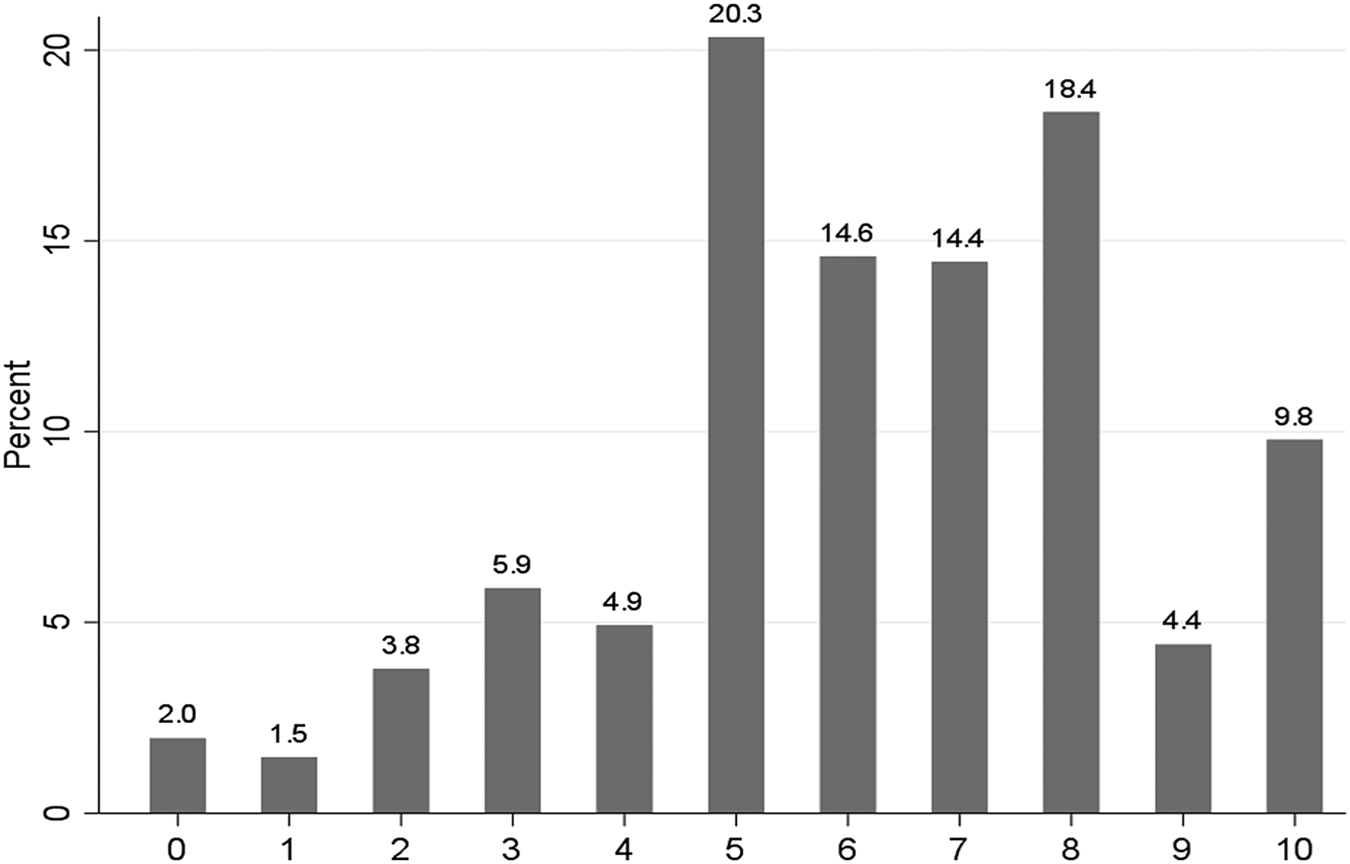
The relatively low intensity of Chinese GWCC concern is even more evident in Figure 1, which reports the distribution of the survey participants’ GWCC concern levels across the 0–10 scales. As shown in Figure 1, only 14.2 per cent (aggregated percentage from scales 9 and 10) of Chinese respondents report that they are very seriously concerned about GWCC, compared to the global median of 54 per cent who believe that GWCC is a very serious problem.Footnote 57 Given the fact that China is the top GHG emitter in the world, this relatively low level of Chinese GWCC concern is alarming, suggesting there is substantial room for China to improve citizens’ awareness and enhance their understanding of the risks associated with GWCC.
Distribution of Chinese Citizens’ GWCC Concern

The distribution of the survey participants’ GWCC concern in Figure 1 also indicates a substantial variation in Chinese citizens’ GWCC concern. While over half of the respondents (61.6 per cent, aggregated percentage from scales 6 to 10) expressed that they were concerned about GWCC, a significant percentage of the respondents (20.3 per cent) reported their concern level at the mid-point 5, yet the remaining portion (18.1 per cent, aggregated from scales 0 to 4) showed little or no concern at all about GWCC.
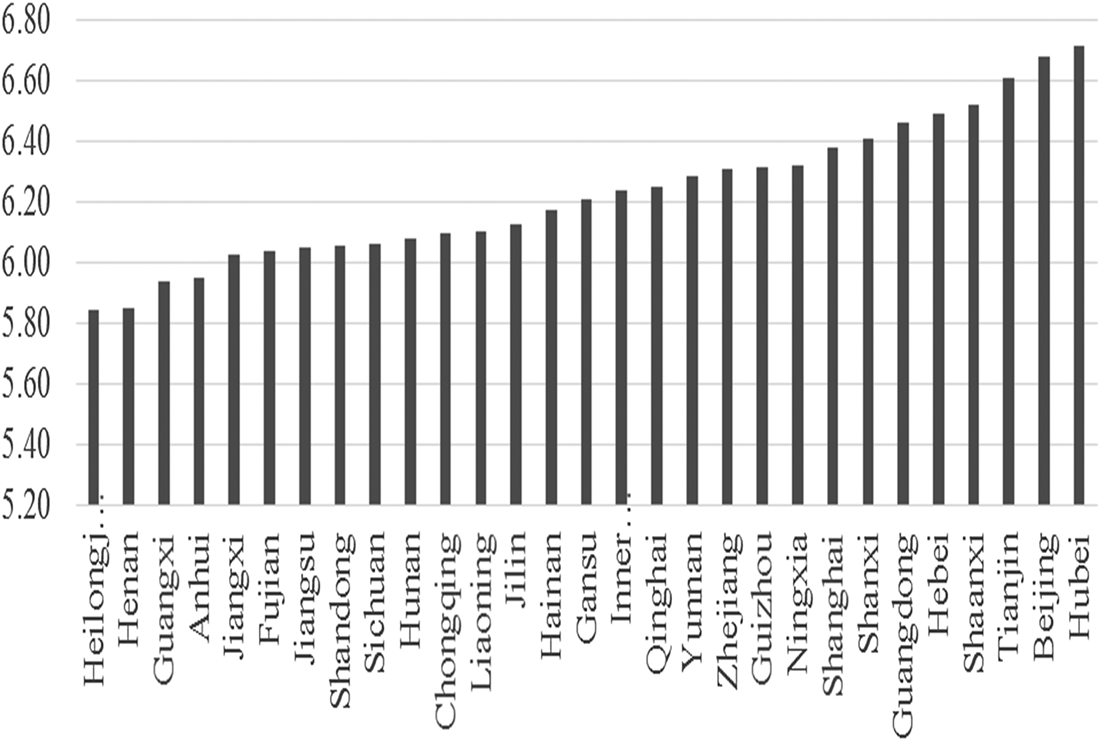
Still, the intensity of Chinese GWCC concern varies greatly across regions. Figure 2 displays the average GWCC concern of citizens in each province. Hubei (6.714), Beijing (6.680), Tianjin (6.613), Shaanxi (6.521) and Hebei (6.494) ranked at the top of the list, while Heilongjiang (5.848), Henan (5.850), Guangxi (5.942), Anhui (5.952) and Jiangxi (6.027) showed the lowest average GWCC concern among all provinces.
GWCC Concern across Provinces

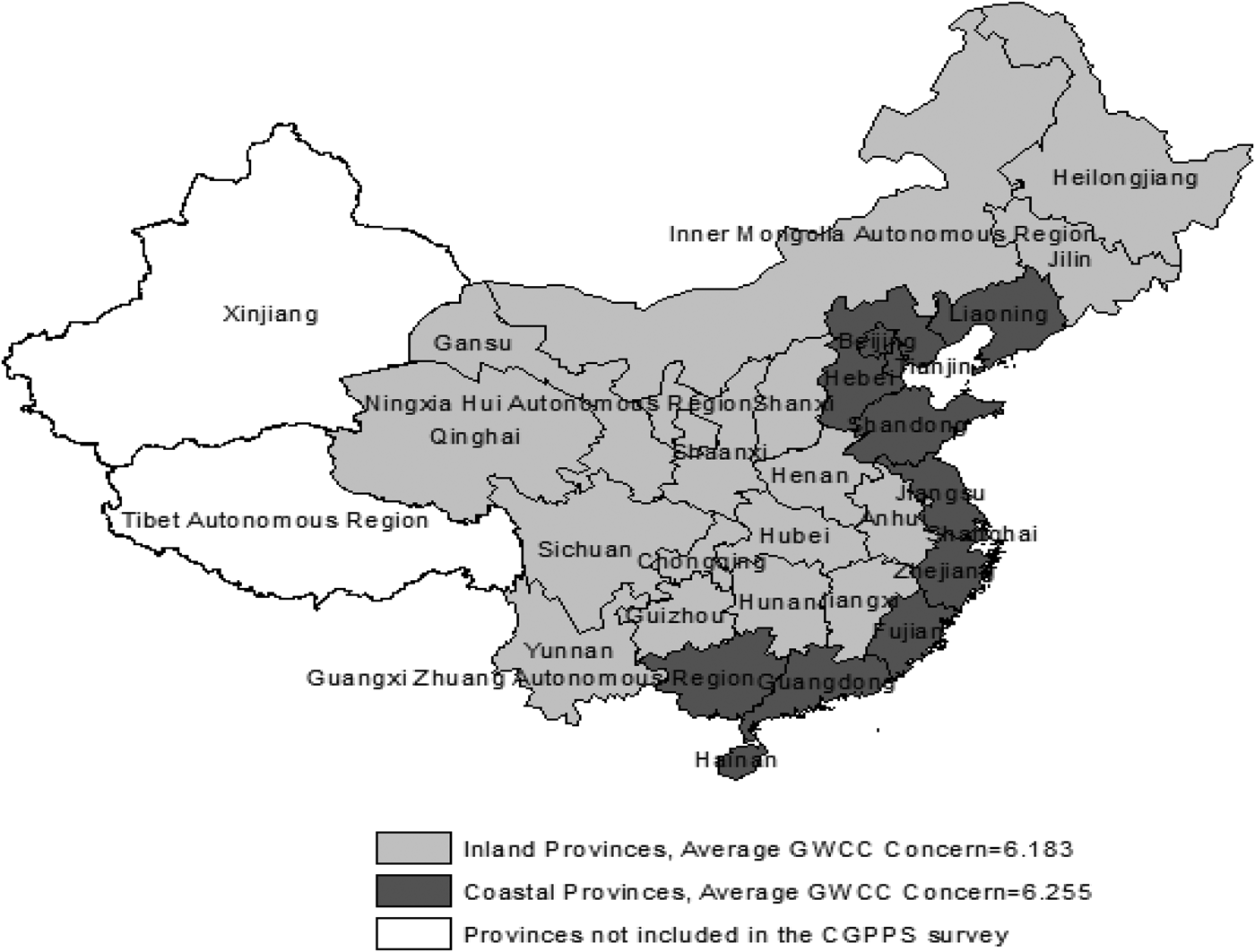
In addition to the variations in GWCC concern among Chinese citizens and across provinces, there also appears to be a difference in the average GWCC concern between coastal provinces and inland provinces. Figure 3 presents the average GWCC concern scores for coastal provinces (dark grey area) and inland provinces (light grey area).Footnote 58 The average GWCC concern score for respondents from coastal provinces (6.255) is slightly higher than that for respondents from inland provinces (6.183). This difference might be attributed to two factors. First, as the coastal provinces have advanced levels of economic development, respondents from these areas tend to have less economic pressure and more environmental concern, including concern about GWCC. Second, this difference might also be attributed to different levels of vulnerability to climate change, as the coastal provinces, owing to their lower elevations, are more vulnerable and prone to GWCC risks (sea-level rises, storm surges, etc.) than inland provinces.
Average GWCC Concern between Coastal and Inland Provinces

Bivariate correlations
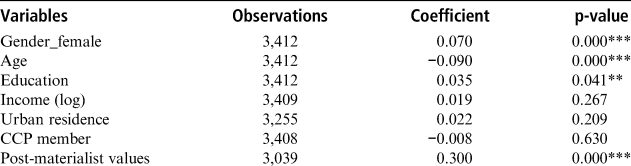
To show the relationship between GWCC concern and each of the explanatory variables, we first report the bivariate correlations between GWCC concern and each of the individual-level factors. As shown in Table 2, four individual characteristics are significantly correlated with GWCC concern. GWCC concern is positively associated with Gender_female (r = 0.070, p < 0.01) and Education (r = 0.035, p < 0.05), indicating that Chinese women and better-educated Chinese tend to express higher GWCC concern than do their counterparts. Age is negatively correlated with GWCC concern (r = 0.090, p < 0.01), suggesting that younger Chinese are more concerned about GWCC than are older Chinese citizens. GWCC concern is also positively correlated with personal Post-materialist values (r = 0.300, p < 0.01). In comparison with the coefficients between GWCC concern and Gender_female, Age and Education, the coefficient between GWCC concern and Post-materialist values is much higher, suggesting that post-materialism is a relatively stronger predictor for individual citizens’ GWCC concern in China. In addition, GWCC concern appears to be positively related to Income and Urban residence, and negatively associated with CCP Membership, but the effects are not statistically significant.
Correlations of Individuals' GWCC Concern with Individual Characteristics

Notes:
*** p < 0.01, ** p < 0.05, * p < 0.1.
The bivariate correlations between GWCC concern and regional-level variables, including Coastal region, Carbon-intensive industries’ share of GDP, GDP per capita and Population density are reported in Table 3. Respondents located in coastal provinces (Coastal region) with better economic affluence (GDP per capita) and higher population density (Population density) seem to have higher GWCC concern than do their counterparts, but none of the correlations are statistically significant. Nevertheless, the bivariate correlation between GWCC concern and Carbon-intensive industries’ share of GDP shows a significantly negative relationship (r = −0.042, p < 0.05), suggesting that people located in provinces with higher dependency on a carbon-intensive economy are less concerned about GWCC. This significant and negative correlation between regional carbon economic dependency and individual GWCC concern seems to be consistent with our expectation.
Correlations of Respondents’ GWCC Concern with Regional Characteristics

Notes:
*** p < 0.01, ** p < 0.05, * p < 0.1.
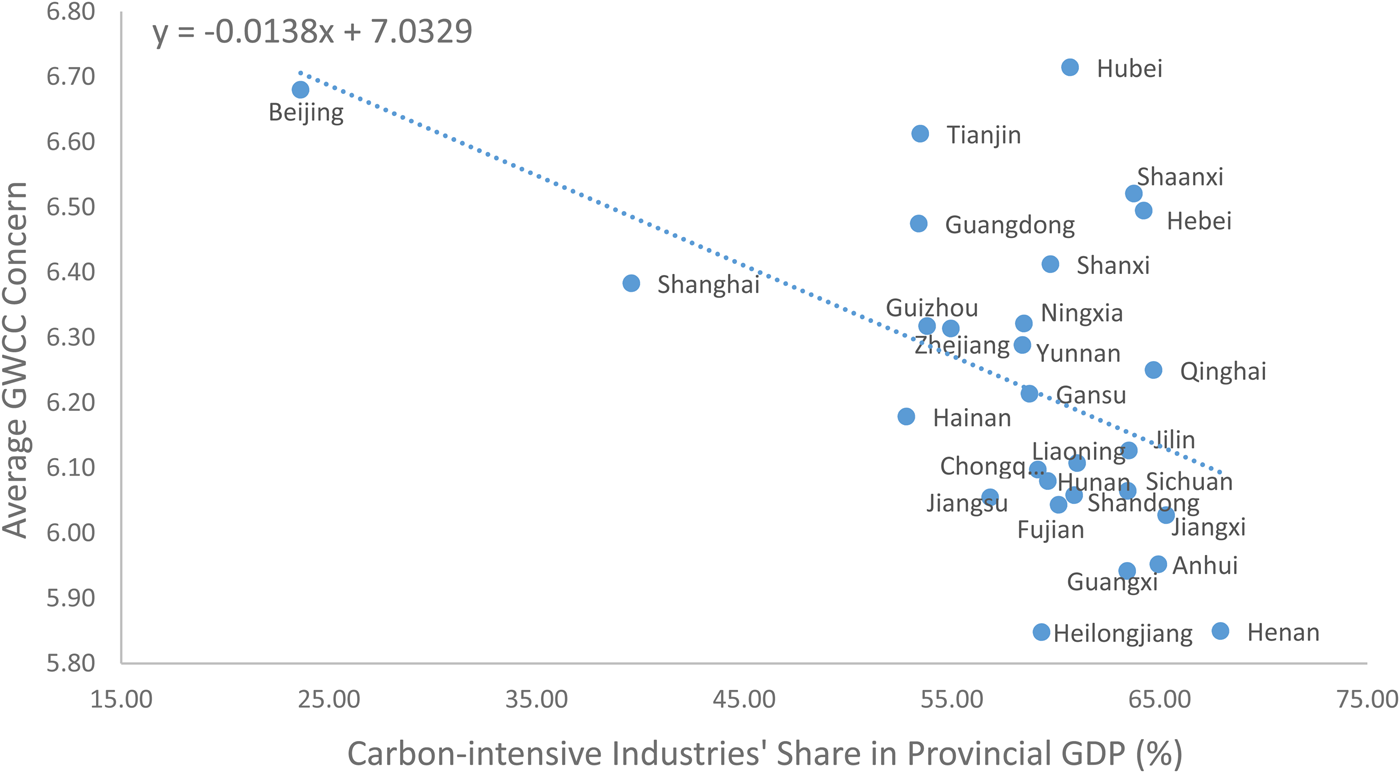
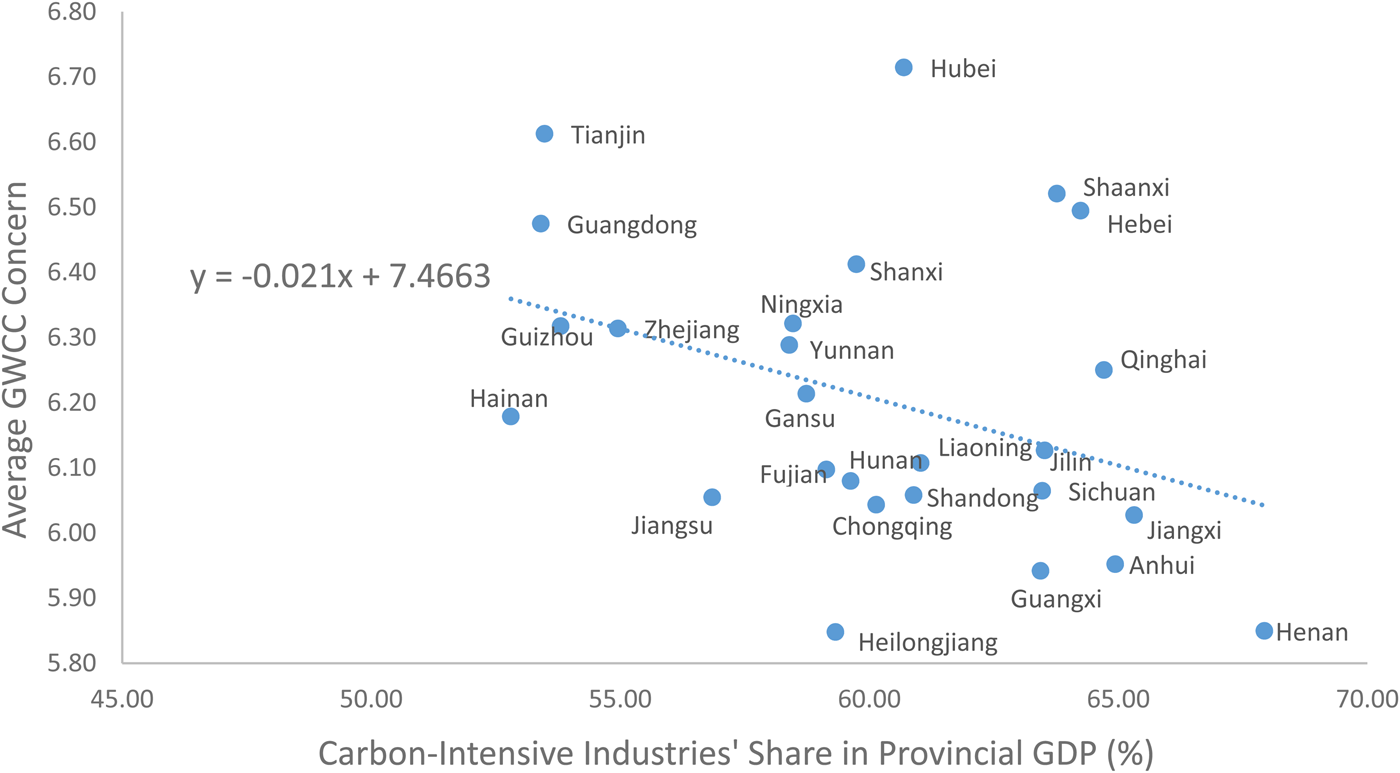
To visually illustrate the negative correlation between regional carbon economic dependency and respondents’ GWCC concern, we use scatter plots in Figure 4 in which each spot represents a province (or a province-level administrative unit). The vertical axis is the average provincial GWCC concern, which is the mean of all respondents’ GWCC concern scores in a province. The horizontal axis is the carbon-intensive industries’ share of GDP in a province. Despite the two outliers in the data (Beijing and Shanghai), the fitted value (dotted line) in Figure 4 clearly shows a downward trend, suggesting that when the degree of a province's carbon-intensive industries’ share of GDP increases, the average GWCC concern decreases. After the two outliers (Beijing and Shanghai) are removed from the data, the scatterplot with the linear trend line, as shown Figure 5, still displays a negative relationship between regional economic dependency on carbon-intensive industries and a province's average GWCC concern.
Provincial Average GWCC Concern and Carbon-intensive Industries’ Share of GDP

Provincial Average GWCC Concern and Carbon-intensive Industries’ Share of GDP (excluding Beijing and Shanghai)

Multivariate regressions and results
The bivariate analyses above suggest that GWCC concern is significantly correlated with individual respondents’ gender, age, education level and post-materialist values, as well as a province's carbon economic dependency. However, these relationships need to be further assessed with rigorous methods. In this section, we conduct multivariate regression analysis to model the conditional and overall effects of the individual-level factors and provincial-level variables on individual Chinese GWCC concern.
Based on the discussions in the literature review and theoretical expectation section, we first propose the following equation to assess the explaining power of individual-level variables and provincial-level characteristics for respondents’ GWCC concern:
 $${\rm GWC}{\rm C}_{ijk} = {\rm} {\rm \beta} _0 + {\rm \beta} _1{\rm IC}^{\prime}_{ijk} + {\rm \beta} _2{\rm PC}^{\prime}_k + {\rm \varepsilon} _{ijk}$$
In Equation 1, GWCCijk denotes the GWCC concern of respondent i in county j of province k. The vector IC’ijk stands for individual-level characteristics, which include the social base variables (i.e. gender, age, education, household income, urban residence status and CCP membership) and the social values variable (i.e. post-materialism score). The vector PC’k represents the provincial-level characteristics, which contain the four regional variables discussed earlier (province's physical vulnerability, carbon economic dependency, economic affluence and population density).
Since estimations of individual-level variables may be biased by omitted local variables (for example, local policies and regulations) that could affect both individual characteristics and GWCC concern, we further consider location-fixed effects and perform county-fixed effects estimates to assess the impacts of individual characteristics on respondents’ GWCC concern with the following equation:
 $${\rm GWC}{\rm C}_{ijk} = {\rm \beta} _0 + {\rm \beta} _1{\rm IC}^{\prime}_{ijk} + {\rm \beta} _2{\rm Count}{\rm y}_{\,jk} + {\rm e}_{ijk}$$
As discussed above, the CGPPS survey interviewed representative respondents from 353 counties across China. By including location-fixed effects, defined by the county dummies Countyjk, Equation 2 directly controls for the average differences across these counties, reduces the threat of omitted variable bias, and therefore can obtain better estimations of the impacts of individual characteristics on GWCC concern.
Based on Equations 1 and 2, we perform four separate regressions with different model specifications. In Model 1, GWCC concern is regressed only on respondents’ individual-level social base variables – i.e. Gender_female, Age, Education, Income, Urban residence and CCP membership. In Model 2, we add the Post-materialist values variable to Model 1 to examine how personal post-materialism conditions respondents’ concern about GWCC. In Model 3, we introduce the regional-level variables to Model 2. The four provincial-level variables include physical vulnerability (Coastal region), carbon economic dependency (Carbon-intensive industries’ share of GDP), economic affluence (GDP per capita) and population concentration (Population density). In Model 4, we perform county-fixed effects estimates.
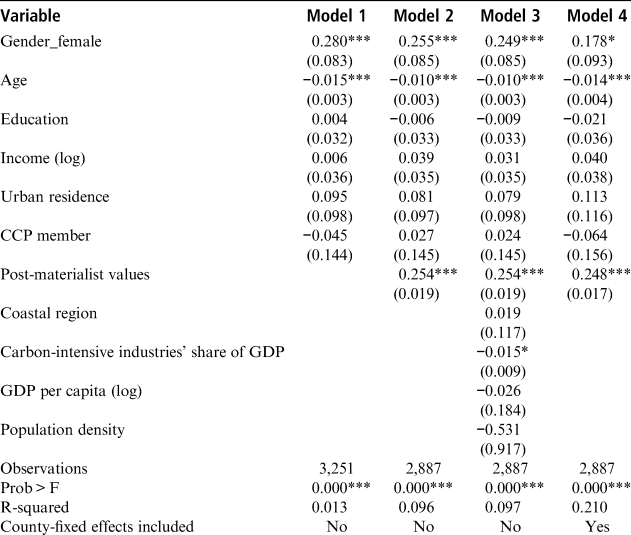
Since GWCC concern was recorded in 11 scales running from 0 to 10, we consider the dependent variable as a continuous variable and thus opt for OLS regression. The results of the four OLS models are reported in Table 4. We include all the models in a single table to allow comparison across different specifications. As survey data tend to have heteroscedasticity issues, we use a robust estimation of the standard errors in all regressions. Post-estimation diagnostic tests for multicollinearity indicate few multicollinearities among the independent variables (all VIFs < 3Footnote 59).
Determinants of GWCC Concern

Notes:
*** p < 0.01, ** p < 0.05, * p < 0.1. Robust standard errors in parentheses.
In Model 1, the results show that two social base variables, Gender_female and Age, are significantly correlated with individuals’ GWCC concern: Gender-female shows a positive effect, indicating that women tend to have higher GWCC concern than men (β = 0.280, p < 0.01). Age shows a negative association with GWCC concern, suggesting that relative to older people, younger Chinese citizens are more concerned about GWCC (β = −0.015, p < 0.01). Both effects are consistent with our expectations. However, Education does not have a significant influence on individuals’ GWCC concern. With respect to other social base variables, Income (household per capita income), Urban residence (urban resident status), and CCP membership do not exert significant effect on Chinese GWCC concern.
In Model 2, we add the variable of Post-materialist values to the first model. Consistent with our expectation, the level of GWCC concern is positively correlated with post-materialism (β = 0.254, p < 0.01), indicating that Chinese citizens with stronger Post-materialist values are more concerned about GWCC. More importantly, adding Post-materialist values substantially increases the R-square from 0.013 in Model 1 to 0.096 in Model 2. This suggests that post-materialist values are an important driver for Chinese people's GWCC concern and far more influential than sociodemographic variables. The effects of Gender_female and Age remain statistically significant in the model, while all other social base variables do not show significant influence on respondents’ GWCC concern.
In Model 3, we add the regional-level characteristics and regress respondents’ GWCC concern with all individual-level and regional-level variables. Consistent with the bivariate correlation analysis earlier, the results show that individual GWCC concern is negatively and significantly shaped by regional Carbon-intensive industries’ share of GDP (β = −0.015, p < 0.1). This finding is supportive of our expectation, suggesting that residents located in provinces with more economic dependency on fossil fuel-burning and greenhouse gas-producing industries tend to have less GWCC concern than residents in provinces with lower carbon economic dependency. While the results show that other regional-level variables, including Coastal region, GDP per capita and Population density, have non-significant impacts on GWCC concern, the three individual-level variables, Gender_female, Age and Post-materialist values, which were found to be significant predictors for GWCC concern in previous models, remain statistically significant and influential in Model 3.
In Model 4, the county-fixed effects estimates of individual characteristics demonstrate very similar results to previous estimations. The R-squared statistic substantially increases from 0.096 in Model 2 to 0.210 in Model 4, suggesting that the location-fixed effects account for more than half (54.29 per cent) of the explained variations in Chinese citizens’ GWCC concern. Consistent with previous estimations without the county-fixed effects, the three individual-level variables – Gender_female, Age and Post-materialist values, maintain statistically significant effects on Chinese GWCC concern.
Taken all together, the regression results with different specifications shown in Table 4 indicate that Chinese GWCC concern is affected by both individual-level and regional-level variables. Across the models, three individual-level variables, Gender_female, Age and Post-materialist values, are significantly and consistently correlated with individual Chinese GWCC concern. Under the four different specifications, the coefficients of these three variables are all statistically significant, and the signs all point in the same direction. This pattern indicates that there is a common social base and a post-materialist values base underlying the Chinese public's GWCC concern: compared to their counterparts, Chinese women and younger people with stronger post-materialism tend to be more concerned about GWCC. In addition, the regression results also suggest that regional economic dependency on carbon-intensive industries exerts an inhibiting effect on local residents’ GWCC concerns – that is, residents in provinces that depend more on carbon-intensive and fuel-burning industries tend to be less concerned about GWCC than residents in provinces where carbon-intensive industries account for a smaller percentage of the province's GDP. We discuss the key implications of our findings in the next section.
Conclusion and Discussion
Along with other environmental and ecological problems such as pollution, biodiversity loss and human-induced natural disasters, China faces the great challenges of global warming and climate change. While the Chinese government has formulated numerous climate mitigation and adaptation polices in recent years, it is not clear in the extant literature how Chinese citizens perceive the threat of GWCC and what factors shape the Chinese public's GWCC concern.
This study is the first of its kind to examine the variations and determinants of Chinese GWCC concern through an analysis of both nationally representative survey data and data collected from China's official statistical yearbooks. Our data reflect the recent state of Chinese GWCC concern and our study contributes to the scholarship on this topic. Since our survey is based on a nationwide representative sample, the findings presented in this study are more generalizable than previous studies that either use non-representative data or focus on Chinese climate change attitudes in selected areas.Footnote 60
Our data indicate that in China, compared to other countries, overall average public concern for GWCC is relatively low, and the levels of GWCC concern vary greatly among Chinese citizens, across different provinces and between coastal and inland areas. With regard to the individual-level determinants of GWCC concern, similar to the findings of most studies in Western countries, we find a gender gap and an age gap in China: Chinese females care more about GWCC than Chinese males, and younger Chinese are more concerned about GWCC than older Chinese. Also consistent with previous findings in a non-Chinese context, our data demonstrate that people with greater post-materialist values tend to express a higher concern for GWCC in China. More importantly, our data show that post-materialist values exert substantially greater impact in shaping Chinese GWCC concern than any other individual-level variables.
One unique contribution of our study is that we incorporate several regional-level factors in our analysis. In both correlation and regression analyses, we find that carbon-intensive industries’ share of provincial GDP has a significant inhibiting impact on Chinese citizens’ GWCC concern – a finding consistent with our expectation on the negative effect of regional carbon economic dependency. Most existing studies on Chinese environmental concern focus on analysing individual-level influential factors such as income, education and gender.Footnote 61 One exception is Xinsheng Liu and Ren Mu's Reference Liu and Mu2016 study, which finds that provincial-level economic development and environmental risk can affect public environment concern.Footnote 62 Thus, our finding about the impact of carbon-intensive industries’ share of provincial GDP contributes to the literature of Chinese environmental concern research. We complement previous studies by showing that differences in GWCC concern may stem not only from variations in personal characteristics but also from variations in context at the aggregate level, such as a province's dependency on carbon-intensive industries. Future research should continue to examine the influence of regional context factors, as their community's circumstances may affect people's concern just as much as their personal circumstances do.Footnote 63
While the findings contribute to the accumulation of scholarly knowledge about Chinese citizens’ GWCC concern, this study also has some important policy implications. First, we find that the overall level of Chinese citizens’ GWCC concern is relatively low, thus large-scale and nationwide awareness-raising efforts are needed to elevate Chinese citizens’ understanding about the risks, causes and consequences of GWCC. It is true that many political actions, particularly in an authoritarian regime like China, can be taken without strong public support. It is also true that the Chinese government has passed a number of strategic plans and policies to address GWCC in recent years without much popular input. But successful implementation of these plans and policies still largely depends on the public's attention to GWCC issues and how people perceive the seriousness of the GWCC problem. Existing studies in other countries indicate that successful implementation of environmental policies largely depends on people's willingness to make sacrifices for the environment.Footnote 64 For the GWCC issue, intense public concern and strong support are essential for climate policies.Footnote 65 Research in China also suggests that higher concern about the environment leads to pro-environmental behaviour (for example, joining environmental NGOs, participating in protests and expressing grievances about environmental problems), which in turn has an impact on government decision making.Footnote 66 Recent studies also show that Chinese governmental behaviour and policies, although authoritarian in nature, at least partly respond to public concerns about the environment.Footnote 67 More importantly, research on China's environmental civil society organizations demonstrates that public concern can promote the development of civil environmental organizations, and that these organizations and their activities in turn can facilitate and reshape governmental environmental policies.Footnote 68 Certainly, there are many other factors that can foster China's climate plans and programmes, but one important driver for the effectiveness of China's climate policies is Chinese citizens’ GWCC concern. For these reasons, it is important for China to develop more awareness-raising programmes and allocate more resources to enhance the public's understanding of GWCC risks and hazards. While a high level of public attention to GWCC is critical to policy success, growing GWCC concern is also helpful and often accompanied by subtle changes in personal attitudes and behaviour, which in turn can have long-term environmental benefits.
Second, the variations and gaps in Chinese GWCC concern across provinces and between coastal and inland provinces suggest that in addition to nationwide programmes to promote GWCC concern, some specialized local awareness efforts, particularly in provinces with lower GWCC concern and in inland areas, also need to be coordinated and promoted. Recent empirical studies show that information exposure can significantly raise public awareness and concern about GWCC and other environmental issues, thus one way to effectively enhance public awareness is to increase local media coverage on climate change risks and global warming consequences.Footnote 69 In addition, other types of information campaigns (such as the documentary Under the Dome) depicting the severity of environmental problems and their causes and consequences can also appeal to citizens, both raising concerns and promoting responsive behaviour.Footnote 70
Third, we find that education attainment exerts no statistically significant impact on Chinese individuals’ GWCC concern in our regression models. This is surprising, and in contrast to findings in many other countries where a positive education–GWCC concern link has been found.Footnote 71 However, despite the insignificant regression coefficient, a positive association between education and GWCC concern is revealed in our bivariate correlations analysis (r = 0.035, p < 0.05), showing a potential of increased education level in raising individual's GWCC concern. Moreover, some recent empirical studies demonstrate that the overall intensity of Chinese environmental concern is increased along with education attainment.Footnote 72 Considering the potential (albeit not definitive) influence of education in promoting Chinese environmental concern, we suggest that China should incorporate more environmental knowledge and GWCC information into schools’ curriculum design and other educational activities to strengthen the links between education level and GWCC-related environmental concern.
Fourth, the gender gap and age gap found in our study suggest that environmental awareness campaigns and GWCC education programmes should give more attention to the groups of people who are less concerned about GWCC, such as Chinese men and older citizens. Moreover, our findings indicate that post-materialist values substantially promote citizens’ GWCC concern, suggesting that development of post-materialism will contribute to a higher level of public concern about GWCC. At present, economic development in China is conducive to promoting the dissemination of post-materialist values, and as long as China maintains its rapid development, Chinese citizens are expected to experience a shift in values from materialism to post-materialism.Footnote 73 However, the relationship between the growth of the economy and the development of post-materialism is not always automatic and linear; the changing pattern of post-materialist values may also start to decline after China's development reaches a cut-off point.Footnote 74 Thus, actively promoting post-materialist values such as environmentalism and civic engagement is not only beneficial for China's future development but also helpful in enhancing Chinese citizens’ GWCC concern.
Fifth, China needs to direct more efforts to restructuring its economy so it is less dependent on carbon-intensive industries. This is good for China's economic transition and sustainable growth in the long term,Footnote 75 and can be achieved through local efforts with carbon emission reduction policies and technological innovations.Footnote 76 It is also helpful in raising Chinese citizens’ GWCC concern, as our study finds that people living in provinces with less economic dependency on carbon-intensive and GHG-producing industries tend to express more concern about GWCC. Currently, carbon-intensive industries account for 59 per cent of China's GDP. A more balanced economic structure and increased share of tertiary industry in GDP will allow citizens to be less carbon-vested and more willing to pay attention to environmental quality and protection.
Sixth, while many studies on other countries have found a clear link between climate vulnerability and citizens’ GWCC concern, we did not find this to be the case in China. The coastal region in China is crucial because of its contribution to the national GDP and its large share of the population. Most financial, high-tech and information industries are located in coastal cities such as Shanghai, Tianjin and Shenzhen. However, the coastal region is exposed to severe climate change risks such as inundation from rises in sea level. Our findings indicate that, compared to people living in inland provinces, people living in coastal regions do not have a significantly higher recognition of the potential dangers of GWCC that could affect them. Thus, it is our recommendation that the communities and local governments along the coastline work together to start educational campaigns and programmes that highlight the region's GWCC vulnerability in order to raise awareness and concern about GWCC among its populations.
As one of the first of its kind, the present study can serve as a starting point for subsequent research to expand the literature on the Chinese public's GWCC concern. We recommend some directions for future research. First, we used a single question to gauge respondents’ general GWCC concern, which may or may not be an adequate measure. While using a single item to measure people's perceived seriousness of climate change is a common approach to operationalize GWCC concern,Footnote 77 future research may consider to explore more specific aspects of GWCC (for example, temperature increase, rising sea levels, climate-induced flooding and drought) to complement the current measurement. Second, although we included several regional-level variables in our analysis and conducted location-fixed effects estimates, subsequent studies should consider additional regional factors when data are available. Those factors might include physical environmental and climate conditions, local media coverage of GWCC, the strength and influence of citizen environmental groups and organizations, and government regulations related to carbon-intensive industries and alternative energies. Third, scholars should continue to conduct public surveys on a regular basis and examine the changes and determinants of Chinese citizens’ GWCC concern over time. This is important because tracing public attitudes over time with up-to-date data will help scholars improve their theories and models, and with trending patterns detected from multiple surveys over time, policymakers can also make adjustments to existing GWCC policies.
Acknowledgements
The material used in this study is based on the research project, China Governance and Public Policy Survey (CGPPS), which is supported by the Bush School of Government and Public Service and the Institute for Science, Technology and Public Policy at Texas A&M University. The findings, statements and conclusions are solely those of the authors. We thank the anonymous reviewers for helpful suggestions. We also thank the participants of the Ninth Sino-US International Conference for Public Administration and the 31st Association of Chinese Political Studies Annual Meeting and International Symposium for their comments.
Biographical notes
Xinsheng LIU is a research scientist and assistant director of the Institute for Science, Technology and Public Policy in the George Bush School of Government and Public Service, Texas A&M University. He is also Changjiang scholar chair professor of Inner Mongolia University's School of Public Administration and a senior research fellow of Peking University's Institute of State Governance Studies.
Feng HAO is assistant professor of sociology in the department of social sciences, University of South Florida Sarasota-Manatee.
Kent PORTNEY is director of the Institute for Science, Technology and Public Policy, and professor and Bob Bullock Chair of Public Policy and Finance of the George Bush School of Government and Public Service, Texas A&M University.
Yinxi LIU is professor and dean of the School of Public Administration, Inner Mongolia University.