Introduction
Memory and communication difficulties resulting from dementia have been identified as causing particular distress for both caregivers and people with dementia themselves (Smith et al., 2011). These features of dementia have the potential to impact directly on the relationship between the caregiver and care recipient, the effort required in facilitating everyday tasks, and the enjoyment or distress associated with daily life (Brodaty et al., Reference Brodaty, Green and Koschera2003; Australian Institute of Health and Welfare, 2007a; Smith et al., 2011). Helping carers to reach an understanding of dementia and develop strategies to facilitate coping with its effects (Rosa et al., 2010) are important aims of interventions designed to reduce the burden of dementia (Brodaty et al., Reference Brodaty, Green and Koschera2003; Vernooij-Dassen et al., Reference Vernooij-Dassen, Draskovic, McCleery and Downs2011). Facilitating better coping has the potential to improve the quality of life of both the caregiver and the care recipient through enhancing interactions and reducing conflict, as well as contributing to a delay in the need for residential care (Brodaty et al., Reference Brodaty, Green and Koschera2003; Schulz and Martire, Reference Schulz and Martire2004; Parker et al., Reference Parker, Mills and Abbey2008; Vernooij-Dassen et al., Reference Vernooij-Dassen, Draskovic, McCleery and Downs2011).
There has been a range of approaches targeting caregivers of people with dementia with the aim of reducing burden and prolonging their ability to provide care (Bourgeois et al., Reference Bourgeois, Schulz and Burgio1996; Smits et al., Reference Smits, de Lange, Droes, Meiland, Vernooij-Dassen and Pot2007; Parker et al., Reference Parker, Mills and Abbey2008; Spijker et al., 2008; Vernooij-Dassen et al., Reference Vernooij-Dassen, Draskovic, McCleery and Downs2011). A number of large reviews and meta-analyses have concluded that caregiver programs can be effective in reducing caregiver distress (Brodaty et al., Reference Brodaty, Green and Koschera2003; Parker et al., Reference Parker, Mills and Abbey2008; Vernooij-Dassen et al., Reference Vernooij-Dassen, Draskovic, McCleery and Downs2011) and delaying the need for institutional care (Brodaty et al., Reference Brodaty, Green and Koschera2003; Spijker et al., 2008). Although reviews have concluded that well-designed, evidence-based psychoeducational approaches and multifaceted support programs are effective (Parker et al., Reference Parker, Mills and Abbey2008), the focus now is on determining as to which aspects and for whom these programs are effective (Smits et al., Reference Smits, de Lange, Droes, Meiland, Vernooij-Dassen and Pot2007; Van Mierlo et al., Reference Van Mierlo, Meiland, Van der Roest and Droes2011; Vernooij-Dassen et al., Reference Vernooij-Dassen, Draskovic, McCleery and Downs2011). There is increasing recognition of the need for interventions to be cost effective and targeted, with minimal time, travel and energy requirements from already burdened caregivers (Lewis et al., Reference Lewis, Hobday and Hepburn2010; Vernooij-Dassen et al., Reference Vernooij-Dassen, Draskovic, McCleery and Downs2011).
Relatively few approaches to supporting caregivers and people with dementia have specifically targeted the communication and memory difficulties commonly reported (Smith et al., 2011). A recent survey of the needs of family caregivers of people with moderate to severe dementia indicated that many felt they had specific educational needs, with 83% stating they needed education about effective communication strategies (Rosa et al., 2010). Other common areas of educational need included managing memory or cognitive difficulties and behavioral issues (Rosa et al., 2010). Although there is now a sizable body of research into the nature of memory and communication difficulties in dementia and potential approaches to help with these, there has been only limited application of the research findings in practice (Draper et al., Reference Draper, Low, Withall, Vickland and Ward2009; Smith et al., 2011).
Existing approaches to caregiver training on communication issues have demonstrated some success in improving knowledge or awareness of communication strategies (Done and Thomas, Reference Done and Thomas2001; Haberstroh et al., Reference Haberstroh, Neumeyer, Krause, Franzmann and Pantel2011), reducing distress related to communication issues (Done and Thomas, Reference Done and Thomas2001) and improving the quality of life of the care recipient (Haberstroh et al., Reference Haberstroh, Neumeyer, Krause, Franzmann and Pantel2011). Done and Thomas (Reference Done and Thomas2001) compared a workshop and booklet as the media used to impart communication strategies to caregivers. Those who attended the two workshop sessions demonstrated higher levels of improvement in knowledge of communication skills than those receiving the booklet; however, broader measures of burden and well-being did not show significant improvement for either group (Done and Thomas, Reference Done and Thomas2001). More intensive approaches to communication training have also been developed. Haberstroh and colleagues (2011) evaluated a training program based on the TANDEM model. This required caregivers to attend five group sessions led by a trainer, with each session taking two and a half hours. The intervention demonstrated improvement in the care recipients’ quality of life, as well as increased use of targeted communication strategies (Haberstroh et al., Reference Haberstroh, Neumeyer, Krause, Franzmann and Pantel2011). Approaches to reducing the impact of memory difficulties in daily life, which have shown some effectiveness, have tended to take the form of direct cognitive rehabilitation approaches (Droes et al., Reference Droes, Van der Roest, Van Mierlo and Meiland2011) or training professional staff members in strategies (e.g. Cross et al., Reference Cross, Broomfield, Davies and Evans2008) rather than training family caregivers (Smith et al., 2011).
Using a knowledge-translation approach (Draper et al., Reference Draper, Low, Withall, Vickland and Ward2009), and recognizing the impact of memory and communication difficulties and the need for caregiver support in this area, a multidisciplinary team developed a set of research-based strategies for caregivers (Smith et al., 2011). The team involved clinicians, researchers, and educators in neuropsychology, psychogeriatrics, nursing, speech pathology, and communication, and sought input from experienced professional and informal caregivers. The strategies were called the RECAPS memory strategies in dementia and the MESSAGE communication strategies in dementia. Each letter in these two acronyms stands for a research-based strategy, which is summarized in Figure 1. A DVD presentation was developed that described and demonstrated the use of the strategies with people with dementia through explanation and vignettes. Accompanying written material summarized the content in the form of a booklet and display cards.
MESSAGE and RECAPS strategies.

The RECAPS and MESSAGE program was developed for use with both professional and informal (family or friend) caregivers, with the aim of improving knowledge about strategies and reducing the negative impact of caregiving (Smith et al., 2011). A pre-test/-post-test controlled trial of the program was conducted with caregiving staff in nursing homes in Queensland, Australia (Broughton et al., 2011). The trial showed a significant improvement in knowledge of support strategies for staff receiving the training compared to the control group, and this was maintained at three months follow-up. The caregiving staff expressed high levels of satisfaction with the training's usefulness and relevance to their work (Broughton et al., 2011).
While this approach was effective with formal caregiving staff, it was not known whether a brief multimedia training approach focusing on memory and communication would be effective with informal caregivers of people with dementia at home. In response, the present study addressed the following research questions:
RQ1. Does participation in the training program improve the caregiving experience by increasing knowledge, reducing burden, increasing positive perceptions of caregiving, and decreasing distress associated with problem behaviors compared to a control group?
RQ2. What indirect impact does participation in the training program have on the person with dementia in terms of depression and subjective well-being?
RQ3. How do family caregivers experience the training and how satisfied are they?
Methods
Design
The study was a pre-test/post-test controlled trial of the training program conducted in metropolitan and regional Queensland, Australia. Dyads consisting of an informal caregiver (family member or friend) and a person with dementia living at home, were randomly allocated to receive either the MESSAGE and RECAPS training or to receive no training (control) and data were collected at baseline and three months later. Given the brief nature of the intervention and concern about the time pressures of the caregivers, training was compared to treatment as usual (TAU). Following terms of the agreements with the participants, the intervention was provided to the TAU group following final data collection.
The study formed part of a larger project which involved development of communication and memory training approaches for people caring for someone with dementia (i.e. the MESSAGE and RECAPS programs: Smith et al., 2011), and the evaluation of the training with paid caregivers in residential aged care facilities (Broughton et al., 2011). Preliminary power analyses for the whole project based on published effect size and standard deviation scores found in communication (Bourgeois et al., Reference Bourgeois, Dijkstra, Burgio and Allen-Burge2001) burden and behavior change literature (Teri et al., Reference Teri, McCurry, Logsdon and Gibbons2005) indicated that approximately 50 participants would be required in each group. Data collection continued for as long as project resources allowed. The current study involved evaluating the effect of training on the family caregivers of people with dementia who live in their own home (as opposed to a residential care facility). Conversations between the dyads, which allow exploration of the application of taught strategies, were also collected at each timepoint, but analysis and description of these are beyond the scope of the current paper and will be reported elsewhere.
The study was approved by the Human Research Ethics Committees of The University of Queensland, as well as a local community nursing and domiciliary service provider. All dyads (caregiver and person with dementia) provided written informed consent. The legally authorized guardian provided written informed consent on behalf of the person with dementia and assent was obtained from all participants.
Participants
Informal caregivers were recruited through local community organizations (e.g. dementia support groups and agencies providing nursing and domiciliary services) and newspaper advertisements. Caregivers were required to live with and be the primary caregiver of a person with a medically diagnosed dementia, including Alzheimer's disease. The person with dementia needed to have sufficient communication to provide responses to direct assessment measures. Gross levels of cognitive functioning in both caregivers and care recipients were screened using the Mini-Mental State Examination (MMSE; Folstein et al., 1975), a widely used cognitive screening tool. Data collection took place in participants’ homes, between July 2009 and February 2011.
Outcome Measures
Caregivers
Caregivers provided demographic information for themselves and the care recipient, including age, gender, educational level, relationship to the person with dementia, and health. They also completed outcome measures related to the caregiving experience, including an assessment of knowledge of strategies for supporting communication and memory in dementia, a measure of caregiver burden, a measure of positive aspects of caregiving, and ratings of problem behaviors encountered. They also completed a measure of depression on behalf of the care recipient. Those receiving the training program provided feedback on their satisfaction and suggestions for the program and completed the knowledge of strategies assessment one additional time, immediately after training. All instruments used in the study were either developed or adapted for the study (i.e. the demographic questionnaire, assessment of knowledge, and faces scale) or had been previously used in dementia research and possessed well-established psychometric properties.
Knowledge of support strategies: communication and memory support in dementia
The Communication and Memory Support in Dementia (CMSD) knowledge test was designed to assess caregivers’ knowledge of strategies to support memory and communication in dementia. This test was designed to cover a range of strategies congruent with those covered in the training, but did not require knowledge exclusive to the training materials. The CMSD was divided into two sections: Communication and Memory. The participants were required to provide a total of 17 brief responses on practical ways to facilitate communication and memory. The communication items included, for example: What are the three ways of getting the person's attention before you start speaking? The memory items included, for example: The person keeps misplacing his/her glasses. What could you do to help? The CMSD responses were deidentified and blind-marked by a researcher unaware of the identity or group of the caregiver, and each response was scored according to pre-specified criteria. The maximum obtainable score was 17, with higher scores indicating greater knowledge. This instrument had previously been used successfully with caregiving staff undergoing the same training (Broughton et al., 2011).
Experience of caregiving: caregiver burden
The short version of the Zarit Caregiver Burden Interview (Zarit et al., Reference Zarit, Reever and Bach-Peterson1980; ZBI: Bedard et al., Reference Bedard, Molloy, Squire, Dubois, Lever and O'Donnell2001) was used to measure the level of burden caregivers experience when caring for person with dementia. The ZBI is a self-report scale with a maximum obtainable score of 48; higher scores indicate greater burden. The questionnaire investigates the extent to which caregivers of people with dementia feel burdened by their role as caregiver, and has been shown to have good internal consistency (0.83–0.92) (Hebert et al., Reference Hebert, Bravo and Preville2000; reliability: Bedard et al., Reference Bedard, Molloy, Squire, Dubois, Lever and O'Donnell2001) and validity (Hebert et al., Reference Hebert, Bravo and Preville2000).
Experience of caregiving: positive aspects of caregiving
The Positive Aspects of Caregiving (PAC) questionnaire (Tarlow et al., Reference Tarlow, Wisniewski, Belle, Rubert, Ory and Gallagher-Thompson2004) was used to measure caregivers’ positive appraisals and satisfaction with aspects of their caregiving experiences. The PAC is a self-report measure with a maximum obtainable score of 45; higher scores indicate high levels of caregiver satisfaction. This questionnaire was specifically developed for use with people who provide care to people with dementia, and demonstrates moderate to high convergent validity (Cronbach's α = 0.64–0.94) and high internal consistency reliability (Cronbach's α = 0.89) (Tarlow et al., Reference Tarlow, Wisniewski, Belle, Rubert, Ory and Gallagher-Thompson2004).
Experience of caregiving: revised memory and behavior problems checklist (RMBPC)
The Revised Memory and Behavior Problems Checklist (RMBPC) is a measurement tool listing 24 observable, problematic behaviors commonly associated with dementia (Teri et al., Reference Teri, Truax, Logsdon, Uomoto, Zarit and Vitaliano1992). It measures both the frequency of the behaviors in the past week (on a five point scale) and the impact on the caregiver via their reaction. Higher scores on the frequency scale indicate more frequent behavior, and higher scores on the reaction scale indicate higher levels of caregiver distress. The behaviors are grouped into three subscales: memory, disruption, and depression. The scale has good overall reliability (0.84–0.9) (Teri et al., Reference Teri, Truax, Logsdon, Uomoto, Zarit and Vitaliano1992) and a more recent study has shown evidence for the convergent and discriminant validity (Roth et al., 2003), as well as the suitability of the three subscales via factor analysis (Roth et al., 2003).
Depression for person with dementia: Cornell Scale for depression in dementia (CSDD)
The Cornell Scale for Depression in Dementia (CSDD) measures aspects of depression including mood-related signs, changes to behavior, and physical signs across 19 items (Alexopoulos et al., Reference Alexopoulos, Abrams, Young and Shamoian1988). Although it was developed to be administered following observation, and then after two interviews (one with the family member and one with the person with dementia), in this study, only the family member was interviewed to reduce participation burden. A higher score indicates a higher level of depressive symptomatology (Alexopoulos et al., Reference Alexopoulos, Abrams, Young and Shamoian1988; Royal Australian College of General Practitioners, 2006). The scale has been validated for use for both people with and without dementia and has reasonable inter-rater reliability (weighted κ = 0.67) and internal consistency (coefficient α = 0.84; Alexopoulos et al., 1998)
Training survey: satisfaction and suggestions
Surveys about the training experience were completed by the training group immediately after training and at three months follow-up. The surveys, developed for the study and also used with the staff evaluation (Broughton et al., 2011), consisted of questions to be answered on 3-point Likert scales, with an option for caregivers to write additional comments about their experiences and any suggestions for improvement.
Person with dementia
Faces scale for well-being
There was a need to measure the current well-being or mood of the person with dementia directly. There was concern about the potential participation burden and validity if a standard well-being or depression scale was used. Given the abstract nature of many measures of subjective well-being and their usual requirement of recall of feelings during the past week or longer length of time (Bowling, Reference Bowling2005), a simpler method was required that focused on simple language and immediate feelings. A 5-point Likert scale was developed using faces ranging from unhappy to happy, with the anchors 1 = very good, 3 = neutral, and 5 = very bad. The participants were asked to point to the faces to indicate how they were feeling at the moment. This scale has not been validated. The use of face scales and single items measures of current status have been used previously, most commonly in the areas of pain and mood measurement (Lorish and Maisiak, Reference Lorish and Maisiak1986) and with participants with dementia, although in the instance of pain, only moderate reliability was found (Pauteux et al., Reference Pauteux, Herrmann, Le Lous, Fabjan, Michel and Gold2005).
Procedure
Caregiver Intervention
Training group
At baseline, participants in the training group completed the demographic questionnaire, MMSE, ZBI, PAC, RMBPC, CSDD, and the CMSD. Within one week of baseline, caregivers participated in two 45-minute training sessions based on the RECAPS memory support strategies and the MESSAGE communication support strategies described by Smith and colleagues (2011). The training DVD was delivered to each caregiver individually at their home. The first training session consisted of presentation of the MESSAGE training (communication strategies) DVD, while the second training session consisted of presentation of the RECAPS training (memory strategies) DVD. Training sessions were overseen by two researchers with either psychology or speech pathology qualifications. The research staff were present to monitor how the training was received, encourage discussion, answer any questions the caregivers had regarding the training, and collect outcome measure data.
To assist the caregivers in remembering the training information, they kept the DVDs and were each given a summary booklet and a reminder card listing the strategies. Immediately after each training session, caregivers completed the relevant section of the CMSD. After the completion of training, the caregivers also completed the training satisfaction and suggestions survey. At 3-month follow-up, caregivers completed the outcome measures ZBI, PAC, CSDD, RMBPC, CMSD, as well as the follow-up training satisfaction and suggestions survey. The person with dementia completed the faces well-being scale.
Control group
Similarly, the caregivers in the control condition completed the demographic questionnaire, MMSE, ZBI, PAC, RMPBC, and the CMSD at baseline and the ZBI, PAC, RMBPC, and the CMSD again at 3-month follow-up. For ethical reasons, the training DVD was given to the caregivers in the control group after the follow-up assessment was completed.
Statistical analysis
Analyses were conducted using STATA version 10 (StataCorp, 2007). Data were examined and no outliers were identified. The distributions of data were examined using histograms, plots, and tests of skewness and kurtosis (Portney and Watkins, Reference Portney and Watkins2009; Juul and Frydenberg, Reference Juul and Frydenberg2010). Differences in the demographic characteristics between the training and control group were analyzed using independent groups t-tests or Mann-Whitney U tests for continuous data and Pearson's χ2 or Fisher's exact test for categorical data (Portney and Watkins, Reference Portney and Watkins2009; Juul and Frydenberg, Reference Juul and Frydenberg2010). Data from outcome measures were not adjusted for potential differences between the groups at baseline, however, analyses examined changes in scores over time, between groups rather an absolute scores.
Where outcome variables had normal distributions or data could be transformed into a normal distribution, mixed-design ANOVAs were used to analyze change between baseline and follow-up (repeated measure) and between groups. ANOVAs included only group, time, and interaction between group and time, as sample size and distribution did not allow for inclusion of other potentially relevant covariates. Where distributions could not be normalized with transformation, data were dichotomized according to some improvement occurred between baseline and follow-up, and analyzed using logistic regression, where there were sufficient cases, or χ2 where there were not (Portney and Watkins, Reference Portney and Watkins2009). Differences in knowledge scores were compared for the training group between baseline and immediately after training using Wilcoxon matched pairs signed rank tests.
As the literature suggests that a marked worsening in the dementia severity, the health of the person with dementia, or the health of the caregiver could affect the experience of caregiving (e.g. Schulz and Martire, Reference Schulz and Martire2004), these factors were included in the logistic regression models. Due to the small sample size, there was a limitation to the number of variables that could be included within a logistic regression model. Therefore, a dichotomous health change scale, which indicated whether or not the dyad had experienced a worsening in severity of dementia or a decline in the overall health of either the caregiver or the person with dementia, was included in logistic regression models. Caregiver satisfaction and feedback data were described using percentages.
Setting the α for the study involved consideration of the fact that multiple comparisons were used on the same data in this study, which would generally lead to using a more conservative α to avoid Type I errors. However, the study also involved exploration of a new training program with a small clinical sample. This meant that it was equally important to avoid Type II errors, possibly missing information about the potential effectiveness of the program. Therefore, Bonferroni's adjustment (Portney and Watkins, Reference Portney and Watkins2009) was made to the α level for statistical significance, noting 13 analyses on outcomes likely to be correlated (0.05/13), setting it at 0.00385 throughout. p values will be reported for each analysis to allow the reader to evaluate the results. Given the exploratory focus of the current analysis, analyses that result in p values between 0.000385 and 0.005 will also be described, explored, and discussed.
Results
Participants
Forty-one dyads volunteered to participate in the study. Five dyads were excluded for the following reasons: the person with dementia being unable to verbally participate (two dyads), the person not having dementia as the primary diagnosis (e.g. brain tumor; two dyads), or the carer not living with the person with dementia (one dyad). Thirty-six dyads completed baseline measures. Seven dyads withdrew prior to follow-up due to ill health (four dyads), death (one dyad), and displacement by a natural disaster (two dyads). The final sample consisted of 29 dyads, 13 dyads in the training group and 16 dyads in the control group.
Caregivers
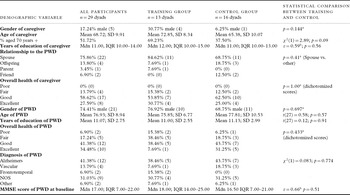
The caregiver sample was predominantly female (83%, N = 24), most commonly spouses (76%, N = 22), reported good to excellent health, and scored in the cognitively intact range on the MMSE (Median 30 out of a possible 30). Demographic details are reported in Table 1, as are statistical comparisons on baseline demographic variables between the training and control groups. As a continuous variable, differences between the groups in age approached significance (t(27) = 2.14, p = 0.041), with the caregivers in the training group tending to be slightly older than the control group. When age was dichotomized at 70 years according to the distribution of data, to allow potential inclusion in analyses to account for baseline demographic differences between groups, the proportion of older and younger caregivers did not differ significantly between the groups, and therefore it was not required to be included within the models.
Participant demographic variables of caregivers and people with dementia (PWD): comparison between training and control groups

a = Fisher's exact; b = Mann Whitney U
People with dementia
Similarly, at baseline there were no significant differences in the demographic characteristics of people with dementia receiving training compared to those in the control condition (Table 1). The participants with dementia were predominantly male, with a range of types of dementia and MMSE scores reflecting moderate to severe cognitive impairment (Mdn = 17).
Outcomes
Summary scores and the statistical comparisons between groups over time are summarized in Table 2 for knowledge, Table 3 for experience of caregiving outcomes, and Table 4 for outcomes for the person with dementia.
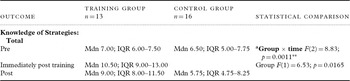
Comparison of knowledge of strategies between training and control groups

a = Statistical test: Repeated measures ANOVA ** indicates p< = 0.00385, statistical significance.
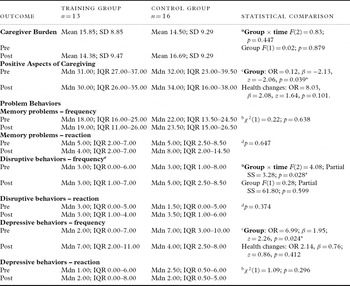
Comparison of experience of caregiving outcomes between training and control groups

a = Statistical test: Repeated measures ANOVA b = Statistical test: Pearson's χ2 c = Statistical test: Logistic regression
d = Statistical test: Fisher's exact χ2 e = data transformed (square root) *indicates p values between 0.05 and 0.00385, approaching statistical significance
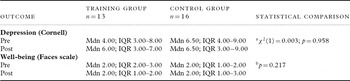
Comparison of outcomes for person with dementia between training and control groups

a = Statistical test: Pearson's χ2 b = Statistical test: Fisher's exact χ2
Carer: knowledge of strategies scores (CMSD)
Training and control group participants were compared on their CMSD scores at pre- and 3-month post-training. Training group participants also had CMSD scores collected immediately post-training. These were compared statistically to pre-scores for the training group.
For the total knowledge of strategies scores, there were significant differences between pre- and immediately post-training scores for the training group (z = −3.19, p = 0.0014). To evaluate whether or not participation in the training affected knowledge of strategies scores, a repeated measures ANOVA was conducted on knowledge scores, which is summarized in Table 2. The group by time interaction was significant (p = 0.0011), while the group main effect approached significance (p = 0.0165), indicating that while both groups changed over time, the rate and amount of change differed between groups. The effect size for the ANOVA was calculated for the interaction between group and time (η2 = 0.134), indicating a medium effect (Cohen, Reference Cohen1992). Improvement in knowledge scores was calculated as any increase from the baseline score. The training group showed a median improvement of four points and 85% of the group showed improvement from baseline, while the control group showed a significantly lower amount of improvement (median of 0.5 points, with 56% of the group improving from baseline) in their knowledge of strategies. These results support the effect of the training program.
Experience of caregiving: caregiver burden
Neither the main effects in the ANOVA for group or time nor the interaction between group and time showed significant differences in changes to ZBI scores (p = 0.447). While 62% of the training group, compared to 38% of the control group, experienced improvements (reduction) in burden scores, this difference was not statistically significant. A small effect size was calculated (η2 = 0.011).
Experience of caregiving: positive aspects of caregiving
The data from PAC were collapsed into categorical variables of improved or not improved and a logistic regression model was fitted. The logistic regression model indicated an improvement approaching significance in the perception of caregiver experiences in the treatment group compared to the control group (p = 0.039). Nearly half (46%) of the training group, compared to 13% of the control group, showed any improvement. The group factor approached significance in predicting improvement (p = 0.039), and the health changes variable, also included in the model, did not predict improvement significantly (p = 0.101). Adjusted R2 for the model was 0.11, indicating a relatively low proportion of variance was explained by participation in training and health changes.
Experience of caregiving: revised memory and behavior problems checklist (RMBPC)
ANOVA analysis of the frequency of disruptive behaviors showed that the interaction between group and time had an effect approaching significance (p = 0.028), while group alone did not have a significant effect (p = 0.599), the effect size for the group and time interaction was small to medium (η2 = 0.0428) (Cohen, Reference Cohen1992). Both groups had a median score of 3 at baseline, which was maintained for the training group but increased by 2 points (worsened) for the control group. χ2 square analysis on dichotomized reaction data indicated that there were no significant differences between groups for whether improvement occurred in caregiver reaction to disruptive behaviors (p = 0.374; ϕ = 0.140).
The frequency of memory impairment and depressive behavior subscales were dichotomized due to non-normality. χ2 analyses indicated no statistical differences between groups over time for the memory subscales, on either frequency or carer reaction data. The effect sizes were calculated for memory problem frequency (ϕ = 0.087) and reaction to memory problems (ϕ = 0.0052), indicating a weak effect. A logistic regression model was fitted for the dichotomized depressive behaviors data. The group variable approached significance in influencing whether or not improvement occurred (p = 0.024). The training group showed a median increase (worsening) of two points, whereas the control group showed a median reduction (improvement) of two points. The health changes variable was included in the model, and did not significantly predict improvement (p = 0.412). Adjusted R2 was 0.173 indicating a fairly low proportion of variance was accounted for by participation in training and health changes. χ2 analyses indicated there were no significant differences between the groups in whether improvement occurred in caregiver reaction to depressive behaviors (p = 0.296; ϕ = 0.194).
Given the unexpected direction of the changes to depressive behaviors, post hoc analyses were conducted on the depressive behavior frequency subscale to identify as to which behaviors were differing in frequency between the groups. Subscale items were categorized according to whether they were related to expression via verbal communication or by other observed behaviors. In the depressive behaviors scale, those relating to direct communication included, for example, “Expressing feelings of hopelessness or sadness about the future” and “Comments about feeling like a failure or about not having any worthwhile accomplishments in life.” Those relating to other observed behavior included, for example, “appears anxious or worried” and “crying and tearfulness.” Change scores (from pre to post) on communication-related items on the depressive subscale were compared between the groups using a Mann-Whitney U test. Findings indicated that differences approaching significance existed between the groups for communication-related depressive behaviors (z = 2.50, p = 0.0126), but not for the other observed depressive behaviors (z = 1.86; p = 0.0623). The training group showed a median increase of 1, and the control group showed a median decrease of 0.5 in frequency of communication-related depressive behaviors. The pattern of change for non-communication-related depressive behaviors was different, with the intervention group showing a median change of 0, and the control group showing a median decrease of 1.
Cornell depression scale in dementia
Data were dichotomized, and Pearson's χ2 analysis was conducted. The results indicated no significant difference between the groups and a weak effect size (p = 0.958; ϕ = 0.01), with similar rates of participants experiencing improvement for the training group (38%) and the control group (37%). A cut-off score of 8 or more was used as indicating clinically important levels of depressive symptomatology (Royal Australian College of General Practitioners, 2006). The control group had 38% (n = 6) of participants with scores above the cut-off at both time points, whereas the training group had 31% (n = 4) at pre-training and 23 % (n = 3) after training.
Well-being faces scale
Data were dichotomized and a Fisher's exact χ2 analysis was conducted. Although it appeared that more of the training group (44%) showed improved subjective well-being scores between baseline and follow-up compared to the control group (18 %), this difference did not reach significance (p = 0.217; ϕ = 0.285).
Summary
A significant difference and medium effect size was found between the training and control groups over time in knowledge of memory and communication support strategies (p = 0.0011). Differences approaching significance were found in frequency of depressive behaviors (p = 0.024), frequency of disruptive behaviors (p = 0.028), and positive aspects of caregiving (p = 0.039), though effect sizes were small. No significant differences were found in caregiver burden, caregiver reactions to any categories of problem behaviors, frequency of memory problems, depression, and well-being.
Training: satisfaction and suggestions
The satisfaction and suggestions survey was administered immediately post-training and at follow-up to the caregivers in the training group. Positive results were obtained on all survey questions at both time points. Specifically, the training was perceived to be very useful (85%, n = 11) or fairly useful (15%, n = 2). The usefulness of the training was further supported by the finding that all of the carers would recommend the training to others (100%, n = 13) and that 85% (n = 11) reported they had learned a lot from the program. At follow-up, participants continued to feel positive about the program: 100% (n = 13) of the group indicated it was fairly or very helpful, and all had found it easy or moderately easy to remember the strategies (100%, n = 13). In addition, 92% (n = 12) reported that they had been able to apply the strategies either sometimes or frequently in their everyday setting.
The additional written comments made by the 13 home caregivers were analyzed inductively for content (Elo and Kyngas, Reference Elo and Kyngas2008) and identified the following positive aspects of the training. Participants commented that the way in which the training was presented was accessible and relevant, particularly through the use of role plays and examples. The program was perceived as positive, clear, informative, and useful, with one participant describing it as “useful, enlightening and easy to follow.” The participants particularly highlighted a feeling of increased awareness following participation, and suggested that they felt they now had options. As one participant reported, “It made me aware that there are other ways of doing things to reduce stress on both people.” Feedback also referred to the issue of the timing of the delivery of the program, with participants indicating that it should be available to caregivers as early as possible.
Discussion
This study explored the effect of a training program on a small sample of informal, community caregivers. The findings indicated that the RECAPS memory strategies in dementia and MESSAGE communication strategies in dementia, when presented in a brief DVD-based training program, led to change in the experience of caregiving for carers of people with dementia. Specifically, those completing the program had significantly more knowledge of facilitative strategies. There was also a trend toward observing less frequent disruptive behaviors, increased perceptions of positive aspects of caregiving, and reporting more frequent depressive behaviors, particularly those communicated verbally. There were no significant differences in depression on the Cornell Scale of Depression in Dementia, well-being, caregiver reaction to problem behaviors, frequency of memory problems, or caregiver burden. Caregivers participating in the program were highly satisfied with the training and reported finding it useful and easy to apply. Given the sample size, caution should be taken when applying the findings to the broader informal caregiving population.
Before discussing the implications of the findings of this study, it is important to examine the participant population compared to the broader caregiving population and those involved in other dementia caregiving research. National Australian statistics on dementia caregiving indicate that most family caregivers are older, female, and a spouse or partner of the person with dementia (Australian Institute of Health and Welfare, 2007b), which is congruent with the sample of the current study and other studies of caregiver interventions (Brodaty et al., Reference Brodaty, Green and Koschera2003; Teri et al., Reference Teri, McCurry, Logsdon and Gibbons2005).
The characteristics of the participants with dementia in the current study differed somewhat from the national statistics, which state that 64% of people with dementia are female and 81% are aged 75 years or older (Australian Institute of Health and Welfare, 2007b). While the age characteristics were comparable, 74% of the current sample were male. This is likely to be a reflection of the study requirement that participants co-resided and lived in the community rather than residential care settings, along with the high proportion of female spousal caregivers who participated. The severity of dementia, as indicated by MMSE scores (Mdn 17), suggests that most participants had a moderate level of dementia, (Perneczky et al., Reference Perneczky, Wagenpfeil, Komossa, Grimmer, Diehl and Kurz2006), again reflecting the community-dwelling sample.
Improvements in knowledge, disruptive behaviors, and positive aspects of caregiving
The training program led to significant improvements in knowledge, and trends towards improvement in frequency of disruptive behaviors and positive perceptions of caregiving. Participation in the training significantly improved the caregivers’ knowledge of both memory and communication-related strategies. It is likely that having a broader awareness of strategies could enhance feelings of competence and self-efficacy in the caregiver role (de Vugt et al., 2004; Lewis et al., Reference Lewis, Hobday and Hepburn2010). Self-efficacy is believed to play a key role in determining whether caregivers are able to perceive positive aspects of caregiving (Semiatin and O'Connor, 2012).
Enhancing caregivers’ knowledge of strategies thus may improve outcomes in a number of ways. Applying the strategies may lead to more successful management of daily interactions and care tasks, thereby reducing frequency of conflict and disruptive behaviors including aggression or distress (de Vugt et al., 2004; Lewis et al., Reference Lewis, Hobday and Hepburn2010). The psychoeducational approach taken in the training materials, which involved explaining both what the strategies were and why they would be helpful, could also act to change perceptions of challenging behaviors (Lawlor, Reference Lawlor2002), as might be understanding why behaviors occur (Lawlor, Reference Lawlor2002; Lewis et al., Reference Lewis, Hobday and Hepburn2010). Finally, feeling more confident about having options could enhance self-efficacy in the caregiving role, with associated impact on burden, depression, and positive perceptions of caregiving (Gallagher et al., 2011; Semiatin and O'Connor, 2012), as suggested by the trend in the current study of improvement in positive aspects of caregiving. Future research could measure caregiver self-efficacy and investigate the potential relationships between care recipient needs, self-efficacy, burden, and caregiver well-being (Semiatin and O'Connor, 2012).
The training did not significantly change memory-related challenging behaviors, caregiver reactions to problem behaviors, or caregiver burden. This is not altogether surprising, as it is unlikely that a caregiver training program will substantially change memory-related functioning for people with dementia, particularly in only a 3-month period. Other dementia caregiver research has also indicated that caregiver burden may be a construct that is relatively insensitive to change (Cooke et al., Reference Cooke, McNally, Mulligan, Harrison and Newman2001). These measures may therefore not be the best indicators of effectiveness for brief caregiving training programs.
Depressive behaviors, depression, and well-being
While most differences between groups in the current study reflected expected changes to the caregiving experience, the increase in frequency of depressive behaviors was unexpected. When introducing a new intervention or training method, a cautious approach is important in ensuring that the intervention itself is not causing harm. Thus the finding that the training group recorded a significant increase in frequency of depressive behaviors is examined in more detail.
It is possible that a program training the caregiver in strategies to alleviate difficulties related to dementia could indirectly make the care recipients more aware of their limitations. Increased awareness of the losses associated with dementia could act to heighten grief related to the illness process (Rentz et al., Reference Rentz, Krikorian and Keys2005). While the experience of grief and mourning for people with dementia is not well understood (Gataric et al., Reference Gataric, Kinsel, Currie and Lawhorne2010), it could present in a similar way to the depressive behaviors described in the RMPBC subscale (Rentz et al., Reference Rentz, Krikorian and Keys2005). In a study of levels of depression for people with dementia in residential care settings, the direct communication of grief and dementia-related loss by residents, as noted by staff, indicated the possible presence of depression (Snowdon and Fleming, Reference Snowdon and Fleming2008).
Being aware of indicators of depression can be challenging, particularly with people with dementia (Snowdon and Fleming, Reference Snowdon and Fleming2008). Bourgeois and colleagues found that providing communication training to care staff in a residential care setting improved the accuracy of the staff's rating of residents’ depression (Bourgeois et al., Reference Bourgeois, Dijkstra, Burgio and Allen-Burge2001), making ratings more aligned with those of the residents themselves. It is therefore likely that the RECAPS and MESSAGE training enhanced the caregivers’ awareness of and sensitivity to expressions of sadness and depression. This would suggest that the reported increase in frequency of depressive behaviors may reflect increased sensitivity to their expression rather than an absolute change in behaviors.
This is supported by the finding that although carers were reporting increased frequency of behaviors, they were not reporting increased distress associated with the behaviors. Furthermore, the direct measure of well-being used with the person with dementia did not show any significant changes. This suggests that there was not a substantial worsening in mood following training, but rather there was an increase in recognition of pre-existing depressive behaviors, that did not seem to cause increased distress for either the person with dementia or the caregiver.
It should be particularly noted that although frequency of depressive behaviors showed a significant difference between the groups, depression measured on the Cornell Depression Scale did not. This suggests that the scales, both scored by the caregivers, may be measuring somewhat different constructs in our sample.
Due to its focus on direct expression of behaviors, the impact of the quality of communication between the caregiver and care recipient could influence RMPBC scores and not Cornell scores. The post hoc analysis of subscale items indicated an increase for the training group in depressive behaviors expressed through verbal communication, but no change in other depressive behaviors. This would suggest that the observed increase in frequency of depressive behaviors in the care recipient may relate more to increased quality of communication between the caregiver and recipient, rather than solely a change in mood. This could relate to enhanced sensitivity and understanding of verbal communication on the part of the caregiver, as was a focus of the training. It may also suggest increased expression on the part of the person with dementia, possibly due to a more supported communication environment, or a combination of these factors.
After examining the nature of the results for depressive behaviors, depression, and well-being, it seems that while caregivers who have undergone the training report more frequent depressive behaviors, this may be more related to improved communication and sensitivity to direct communication of depressive ideas. As this study investigated a new training tool, future research could monitor its impact with more objective measures of depression, including direct measures from the person with dementia (Alexopoulos et al., Reference Alexopoulos, Abrams, Young and Shamoian1988) and observational measures of mood and well-being (Ready and Ott, Reference Ready and Ott2003). Although the increased frequency of depressive behaviors did not apparently cause heightened concern for caregivers, nor show an associated decrease in well-being for the person with dementia, those using the training approach may wish to educate carers about the possibility of the caregiver noting more frequent expressions of mood or ideational disturbance after training, and how to cope with this. Responding carefully and appropriately to their family members’ communication of depressive ideas may facilitate ongoing communication and feelings of support (Rentz et al., Reference Rentz, Krikorian and Keys2005) and enhance positive and reciprocal communication, which has been shown to be beneficial in protecting caregiver well-being (Braun et al., Reference Braun, Mura, Peter-Wight, Hornung and Scholz2010). They may also wish to provide information about approaches to monitoring depression and facilitating the mourning process that can be associated with dementia (Gataric et al., Reference Gataric, Kinsel, Currie and Lawhorne2010).
Satisfaction with the training
The findings indicate that participants were highly satisfied with the training and found it relevant and easy to apply. It is known that satisfaction ratings can be influenced by a social desirability bias and that participants may be reluctant to provide negative feedback, particularly when a service has been provided. However, considering satisfaction and providing opportunities for making suggestions is regarded as an important way to evaluate and develop health-related services, particularly when using a client-centered approach (Hoffman and McKenna, Reference Hoffman, McKenna, McKenna and L.2006). The high levels of satisfaction and positive feedback support the use of the training program in its current form and are likely to reflect the application of recommended strategies for caregiver education interventions (Smith et al., 2011). The training program was brief and did not require leaving the home or arranging alternative care for the care recipient (Lewis et al., Reference Lewis, Hobday and Hepburn2010), and contained research-based practical strategies focused on areas of caregiver concern (Rosa et al., 2010; Smith et al., 2011).
Limitations
In considering the potential application of findings of a research project, the limitations should be acknowledged. This study involved a smaller sample than aimed for due to difficulties in recruiting and maintaining participation of this clinical sample and is therefore likely to be underpowered. Given the importance of meeting the needs of people with dementia and their caregivers, carer intervention studies have been published with relatively small participant numbers, enabling systematic reviews and meta-analyses to be conducted (e.g. Brodaty et al., Reference Brodaty, Green and Koschera2003; Pinquart and Sörensen, Reference Pinquart and Sörensen2006). The design of the study did not incorporate a control training option to provide comparable attention to that received by the training group, which means the results may reflect a possible Hawthorne effect. The current study also used a volunteer sample in metropolitan and regional areas of South East Queensland, and could only involve co-resident, informal caregivers of people with dementia who were able to communicate in English. This meant that it was unable to evaluate the effectiveness of the training for caregivers who do not co-reside, those living in rural areas, or communicating in languages other than English. It is also possible that through use of a volunteer sample, participants may have tended to be caregivers with sufficient time and energy to participate in a research study, and that some subgroups of caregivers were therefore not included. The study also used some unvalidated measures to attempt to measure variables specific to the study (e.g. knowledge test) and to attempt to include a direct perspective from the person with dementia (e.g. faces well-being scale). Future research may seek to validate these measures or explore the validity of a self-assessment of well-being for people with dementia. From the sample size and scope of the current study, it is unknown whether these findings could be generalized to the wider informal caregiving population.
Future directions
Future research could address the limitations of the current study by involving a larger, broader sample and by monitoring depression, well-being, and depressive behaviors using additional measures. A control training program giving general information about dementia or caregiving should also be incorporated to reduce the likelihood of a Hawthorne effect impacting on outcomes of the study. A larger sample size would also potentially allow inclusion of possibly relevant covariates, such as health status, in models exploring outcomes. Longer term evaluation of the effectiveness of the training, beyond the three months in this study, may also provide a more thorough understanding of how the training may be applied over time and with further progression of the dementia. Future research may expand the focus of the study and apply the training with new caregiving groups. It would be of interest to determine whether the training would be useful and effective for paid caregivers in a community setting. Exploring whether the strategies were directly applied by caregivers within their caregiving tasks and communication with the care recipient will also assist in understanding how training involving strategies may act to improve outcomes for caregivers and care recipients.
At the present time, a revised version of the training DVD is available free of charge via a YouTube channel http://www.youtube.com/UQDementiaCare, allowing caregivers and care staff to watch the videos via the Internet. Future research could also investigate the experience and effectiveness of online education and support for caregivers, as a flexible, low-cost way of introducing potential memory and communication strategies.
Conclusions
The MESSAGE and RECAPS DVD-based training in communication and memory strategies for family caregivers of people with dementia significantly improved knowledge of strategies. It also trends toward increasing communication of depressive ideas, decreasing disruptive behaviors, and increasing positive perceptions of caregiving. Satisfaction with the program was high and feedback was positive. This type of brief, strategy-based training for caregivers of people with dementia, though in this study exploratively investigated on a small scale, seems to be effective and to provide real potential for improving the lives of people with dementia and their family caregivers living at home.
Conflict of interest declaration
Nancy A. Pachana is a Deputy Editor of International Psychogeriatrics.
Description of authors’ roles
Helen Chenery, Michael Humphreys, Nancy Pachana, Cindy Gallois, Anthony Angwin, David Copland, Gerard Byrne, Rosemary Baker, and Erin Smith-Conway contributed to study design, were involved in supervision of data collection, supervised data analysis and were involved with writing and editing of the paper. Jacki Liddle analyzed data. Jacki Liddle and Erin Smith-Conway conducted the literature review and wrote the paper.
Acknowledgments
The authors gratefully acknowledge the funding for this project provided by the J.O. and J.R. Wicking Trust (managed by ANZ trustees) and the National Health and Medical Research Council (Grant ID:511208). The authors warmly thank Blue Care, Alzheimer's Australia (Qld) and Alzheimer's Association Qld for their collaboration in this project. The authors are grateful to the participants for their time and effort. The authors thank Asad Khan, Statistician at the School of Health and Rehabilitation Sciences, The University of Queensland, for statistical advice. The authors also acknowledge research assistance by Kathryn Havas, Catherine Mak, Katharine Vearncombe, Polly Warburton, Kathryn Healey, and Megan Broughton.