While promoting a seemingly progressive “civilizing mission” and an adherence to the rule of law, British colonial rule in India could be quite coercive and oppressive. Indeed, the British had a long history of enacting repressive emergency legislation in India. The peculiar nature of such legislation has attracted the attention of historians. For instance Radhika Singha and Kim Wagner have examined the Thuggee Act of 1836, while the Murderous Outrages in the Punjab Act of 1867 has been analyzed by Elizabeth Kolsky and Mark Condos. The character and significance of the Criminal Tribes Act of 1871 has been assessed by, among others, Anand Yang, Sanjay Nigam, Mark Brown, and Jessica Hinchy.Footnote 1 Under these penal laws the British sought to regulate, arrest, and punish behavior that they believed to be a threat to their rule. Such dangers emanated from within criminal fraternities such as the Thugs, from “turbulent” Muslim communities, from individual Muslim “fanatics,” and from members of vagrant or migratory Indian tribes and castes.
Set apart from such legislation, in terms of the potential scale of its severity and its geographical reach, was the martial law Regulation 10 of 1804, later also known as the Bengal State Offences Regulation (hereafter Regulation 10; see appendix).Footnote 2 This regulation remains one of the most significant yet little-studied pieces of repressive colonial legislation. The importance of Regulation 10 for the maintenance of British rule in India accounted for its long-standing presence on the colonial statute books with its statutory powers remaining in force for more than a century. As an extreme and well-entrenched instrument of state violence, it had the capacity to inflict widespread death and destruction, because it seemingly combined both law (Regulation 10's legal powers that overrode ordinary criminal law) and lawlessness (the physical operation of martial law as carried out by the military).Footnote 3 In addition, state sanctioned violence authorized under this regulation could in theory proceed without any time limit until an act of rebellion had been defeated. The practical implementation of martial law was to prove to be far from straightforward, and over time, colonial government officials considered Regulation 10's legal powers to be too harsh and yet not comprehensive enough to deal with all the various types of criminality associated with insurrection. And, as we shall see, the operation of martial law under the regulation had the tendency to generate friction and dissension between British civil officials and military officers as to who should oversee the administration of such a regime. Nevertheless, an examination of the character and application of Regulation 10 allows us to address the following question: did law facilitate or restrain British colonial counterinsurgency violence in India?
The first section of the article will set the stage by outlining several theoretical concepts that are useful for explaining martial law's place in the colonial state's repertoire of repressive powers, before looking at how martial law was defined by the British during the nineteenth century, a period in which Regulation 10 was most frequently enacted. This will be followed by an overview of the specific historical context in which the regulation was enacted, together with a summary and assessment of its key legal provisions, before moving on to the core part of the article: the presentation of three case studies—the Cuttack Uprising of 1817, the Indian Revolt of 1857 and the Punjab disturbances of 1919. In response to each of these uprisings the British invoked the statutory martial law powers of Regulation 10. These case studies highlight the various legal difficulties associated with implementing martial law under the regulation. The article will conclude a concise overview of how martial law was exercised by the British in India after Regulation 10 had been repealed.
Theoretical Concepts of Colonial State Violence
The concept of a colonial “coercive network,” as articulated by Taylor Sherman in her book State Violence and Punishment in India, is of value for explaining how martial law fit in with other punitive measures deployed by the British in India. According to Sherman, such a network consisted of various components of the colonial state—the law, the judiciary, the army, the police, and the penal institutions—working together to construct legislation and procedures to dispense exemplary acts of state violence against all those identified as posing a threat to the suzerainty of the British Raj. The emphasis on the use of physical force to achieve this goal was entirely at odds with the British self-proclaimed allegiance to the rule of law.Footnote 4 Indeed, as Sherman has asserted, “the extensive use of spectacular and arbitrary violence” by functionaries of the colonial state, of which martial law was the most extreme example, “was a routine way in which state power was exercised.” The operation of a coercive network was not a uniform one, given that the colonial components it encompassed did not always work in harmony with one another. Moreover, the operation of such a network did not reflect the actions of an all-powerful state, but rather of one prone to weakness and fragility.Footnote 5 While Sherman's focus was on historical events that took place in India during the twentieth century, the presence of a coercive network, and in particular the interconnection of colonial law with martial law, can be traced back to the enactment of Regulation 10 at the beginning of the nineteenth century.Footnote 6
Nasser Hussain has posited that, given that the British in India were a foreign conquering power, the need arose for the colonial state to possess a high degree of discretionary emergency authority to consolidate and safeguard its rule from internal dissension and external threats. Colonial law, Hussain argues, sought to satisfy this requirement by creating special emergency legislation. Thus to Hussain, a state of emergency, such as the proclamation of martial law, was not external to or an exception from law, but rather was a feature of the legal system for both “law and emergency shaped the conceptualization and practice of colonial rule.” Referencing Walter Benjamin's theory of the lawmaking and law-preserving functions of violence, Hussain goes on to claim that the object of martial law was the former, and that it in effect led to the “restoration of the general authority of the state.”Footnote 7
Also of relevance to any assessment of the nature of martial law in colonial India is the theory of lawfare in which law could, at times, represent a mode of warfare. In the colonial setting, according to John Comaroff, this consisted of the efforts made by European powers “to conquer and control indigenous peoples by the coercive use of legal means.”Footnote 8 Regulation 10 was a prime example of just such a warlike legal instrument in that it sanctioned the use of excessive military force in order to reassert British sovereign domination over the colonized. This article seeks to make use of these theoretical insights to highlight the coupling of colonial law with the absence of law once martial law had been triggered by the British under Regulation 10.
What Is Martial Law?
In England up until the eighteenth century, martial law was considered to relate the rules governing the punishment of members of the armed forces for breaches of military discipline in times of war or peace.Footnote 9 By the early nineteenth century, a distinction began to be made between transgressions against the British articles of war and the mutiny acts, and martial law as implemented in conquered or occupied territories, or undertaken to suppress internal rebellion. With regard to insurrection, the consensus among jurists was that martial law could only be invoked when civilian rule could no longer function, and in particular, when the criminal courts could no longer operate.
Charles Napier, in his book Remarks on Military Law and the Punishment of Flogging, published in 1837, declared that “military law” should be set apart from “social law,” the latter comprising non-military law, while the former, in reality, constituted an act of military despotism. As the British East India Company'sFootnote 10 (EIC's) military governor of the newly conquered Indian province of Sindh, Napier exercised his authority in precisely the manner of a “despotic English general.”Footnote 11 When the civil judge advocate general of Sindh sought to establish a system of civil legislative rule, he received a hotly worded letter from Napier reminding him that Sindh would continue to be administered under a state of martial law.Footnote 12 Fourteen years later in 1851, the Duke of Wellington (Arthur Wellesley) reiterated Napier's definition of martial law during a House of Lords debate on the use made of martial law to suppress an uprising in the crown colony of Ceylon (Sri Lanka) in 1848.Footnote 13 Wellington declared martial law to be beyond the law and to reside in “the will of the general”Footnote 14
The absence of legal clarity as to what martial law was and how it should be managed continued to perplex British civil officials and military officers throughout the remainder of the nineteenth century. A former civil official of the EIC remarked that he had “never been able to make out what it means, unless it be a general leave to any military person to kill any one, take any property, or do anything he pleases.”Footnote 15 The absence of martial law's codification within English law contributed to its status as an illegal executive emergency measure that once set in motion required the passing of an indemnity act to ensure that legal protection was extended to all those who enforced it.Footnote 16 The lawyer William Finlason, writing in the 1860s, ascribed to this view of martial law, believing it to be “essentially a matter for military authority and military judgement.”Footnote 17 A contrary view was put forward in the 1880s by the jurist Albert Dicey, who argued that promulgation of martial law resulting in the suspension of law and its replacement by military rule was unknown in English law. However, a species of martial law was recognized by Dicey that was associated with the common law right to repel force with force.Footnote 18
Despite the lack of clarity as to the true nature of martial law, it did possess certain readily identifiable preconditions and operational characteristics. A key feature was its reactive nature: it was a radical measure to be deployed in response to a pre-existing danger to state governance. It was also designated a measure of last resort, with the only justification for its use based on the legal necessity of using it. This justification was itself a tautology, but it did derive from a state of emergency such as an outbreak of rebellion.Footnote 19 Another notable characteristic of martial law once it had been activated was the army's reliance on terror tactics. To Finlason “terror is the very nature of martial law—and deterrent by means of terror—are of its very essence.” Measures that inspired terror, such as summary executions or the burning of villages, according to Finlason, were warranted, even essential, especially when British forces were numerically inferior to rebel forces.Footnote 20 In the late 1860s, the British government advised the governors of its colonies not to resort to martial law since it contravened “the spirit of English law.” But its use, however, could be justified “under the stress of great emergencies.”Footnote 21
Regulation 10: Its Context and Character
Regulation 10 was enacted at a time when the British were in the process of consolidating their hold over India and were fast becoming a powerful de facto state, while the Muslim Mughal emperors of India residing in the city of Delhi remained the nominal de jure sovereign rulers.Footnote 22 It was during this period—the late eighteenth and early nineteenth centuries—that the EIC was engaged in a series of protracted military campaigns against various native Indian powers, most notably with the formidable Hindu warriors of the Maratha Confederacy, while at the same time having to deal with civil unrest among sections of the Indian population within its own territories who were willing to fight alongside or aid such enemy forces, or to engage in their own acts of rebellion.Footnote 23 There also remained a possibility of France or Russia, independently or in combination, advancing by land or sea to drive the British out of India.Footnote 24 In 1804—the year Regulation 10 was enacted—the EIC was in the midst of fighting the second of three wars with the Marathas, and it was not until 1818 that the British would emerge the victors. As the British continued to acquire territory through voluntary cessation or military annexation, while simultaneously building up their own vast military armed forces, the danger posed to their governance from autonomous internal Indian state powers or external European powers receded and ceased altogether by the late 1840s following the British defeat and annexation of the powerful Sikh kingdom of the Punjab in north west India.
It was these internal and external threats that prompted the EIC to establish a legal basis for the exercise of martial law. Specific reference was made in the preamble to Regulation 10 to the ongoing wars that the British were fighting with “native powers of India” as well as to any future war that “may be engaged with any power whatsoever” or “ open rebellion.” Section two of the regulation identified those subject to trial and punishment as being all those born or residing in the EIC's territories who had taken up arms in open acts of rebellion, or who had overtly aided and abetted those engaged in such acts. It is clear that the regulation enabled the invocation of sweeping authoritarian legal powers. In response to any future military conflicts or outbreaks of insurrection, the governor general and his legal council based in the city Calcutta (Kolkata), the capital of the Bengal Presidency and administrative headquarters of the EIC, could suspend, either totally or partially, the functions of the criminal courts, and could impose martial law. Those charged with overt acts of warfare or rebellion were to be tried by military court martial. If convicted, their personal property and belongings were to be seized and they were to suffer immediate death by hanging. These provisions replicated those found in the English Treason Act of 1351, and in particular the contents of the British colony of Ireland's Suppression of Rebellion Act of 1799. This provides further evidence of the portability of emergency legislation applied in Ireland that was held up as a model to be emulated elsewhere in the British Empire. Like Regulation 10, the Suppression of Rebellion Act provided for the trial of those charged with rebellion by summary court martial, including all those “taken in open arms against his Majesty, or shall have been otherwise concerned in the said rebellion, or in aiding, or any manner assisting the same.”Footnote 25
Regulation 10 was not, however, entirely draconian in character. Its martial law powers could be enforced only within the Bengal Presidency and not in the EIC's other two presidencies of Bombay and Madras.Footnote 26 This jurisdictional restriction was not quite the handicap it seems for officials in Madras and Bombay introduced similar martial law regulations, the texts of which were almost verbatim reproductions of the Bengal regulation.Footnote 27 However, another legal caveat that was to have serious ramifications on how martial law could be exercised in the future was the insistence on restricting those liable to be arrested, tried, and convicted of rebellion to those engaged in open opposition to the British. The setting of such a high bar for complicity in acts of rebellion meant that individuals implicated in covert acts of rebellion, such as the promotion of sedition or the concealment of weapons could not be arrested and tried under the regulation.
Besides resisting external enemy forces and suppressing internal dissent, Regulation 10 had two further legal objectives. The British sought to override customary Muslim law in force at the time throughout northern India relating to bugawati (rebellion). While the punishment for rebellion could be severe, such severity was usually reserved for non-Muslims. Rather than being subject to capital sentences, Muslim rebel prisoners remained incarcerated until they had seen the error of their ways and repented, whereupon they would be released.Footnote 28 The British, however, favored the sentence of death as provided in Regulation 10 for the crime of high treason, something which was not authorized under Muslim law.Footnote 29 The severity of the sentence should, the British believed, match the severity of the crime with exemplary punishments serving to act as a deterrent or “terror by example.”Footnote 30 The other defect that needed to be rectified was the inability under Muslim law to confiscate the property of rebels. Section three of the regulation did just that by authorizing the forfeiture of the property and possessions of those convicted of offenses under the regulation. The final section of the regulation—section four—added yet another legal qualification by enabling those charged with offenses against the state to be brought to trial before ordinary criminal courts or special civil courts created for the trial of those charged with such offenses under Regulations 4 of 1799 and 20 of 1803 in instances in which trial by courts martial was not considered absolutely necessary. Precursors to the 1804 martial law regulation, these regulations arose out of the de facto political status of the British in the Bengal province, which in turn generated the need for such legal mechanisms to try individuals for acts of rebellion and other crimes against the colonial state.Footnote 31 While the penalties for rebellion under Regulation 10 appear to have been modeled on the English Treason Act of 1351, including restricting punishment to actus reus, or open acts of treason, the insistence on trial by courts martial derived from the English Mutiny Acts that were introduced in the late eighteenth century and subsequently renewed on an annual basis by Parliament.Footnote 32 These acts set out in some detail the composition and procedural dimensions of such trials. The caveat that individuals could only be tried by court martial under the regulation was also to prove troublesome because, oddly enough, no details were provided as to how these trials should be conducted.
The executive legislative assent granted to Regulation 10 by Governor General Richard Wellesley on December 14, 1804 was followed up by a government circular sent to magistrates in the Bengal Presidency in early April 1805 providing guidance on how to administer their districts should they be placed under martial law. Those seized by the military while not engaged in open acts of rebellion were to be handed over to the local civil authorities, and the magistrates were charged with the task of bringing such prisoners to trial on the charge of treason. Magistrates were also assigned the purely administrative task of managing attached property, including any property that had been confiscated by the military. This circular articulated the executive government's desire for the law and the military, as facets of a colonial coercive network, to join together to suppress and punish acts of insurgency. It also set an early precedent for the armed forces to be solely responsible for the actual exercise of a martial law, with Wellesley leaving it entirely up to the discretion of military officers to oversee such a regime.Footnote 33
Cuttack, 1817
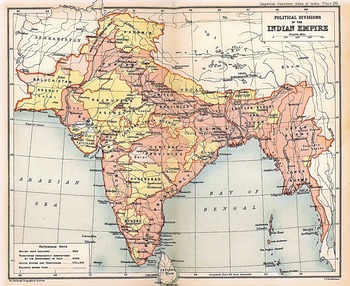
Rebellion erupted in the coastal district of Cuttack (see Figure 1) and surrounding districts in early March 1817. This region formed part of the province of Orissa (modern-day Odisha). The revolt was the product of simmering discontent among the local population over the harshness of the initial British land revenue settlement that had resulted in many traditional landholders losing their lands, concern over changes in the way that tax was paid, the adverse impact caused by an escalation in the price of salt after the EIC assumed control of the distribution of this essential commodity, and widespread resentment over the corrupt practices of local Indian police officers and civil officials, as well as unscrupulous Bengali landlords who sought to secure landed estates by fraud. The rebellion was led by Paiks, the local armed militia of the region, and was supported by the peasantry and members of the region's tribal population. Indian historians have labelled the uprising a popular freedom movement, with some even referring to it as India's first freedom movement against British rule.Footnote 34
British Indian Empire 1909, Imperial Gazetteer of India.

The scale of the uprising prompted the government of Bengal to declare a state of martial law in April 1817 and to send additional troops to the region under the command of Major General Gabriel Martindell. Martial law was imposed and then withdrawn in various areas according to the timing of local outbreaks of revolt and the ability of British troops to crush such resistance. By late 1817, the rebellion had been all but suppressed, the beginning of the rainy season halting British efforts to confront, defeat, and disperse the remaining rebel forces. In April 1818, the region was once again in a state of upheaval. However, due to the inability of the insurgents to defeat in open battle the disciplined Indian soldiers deployed by the EIC, resistance degenerated into sporadic acts of guerilla warfare and banditry. By late 1818, things had begun to finally settle down. The British issued a proclamation in April 1819 providing a general pardon for all offenses committed by the rebels. Only a handful of the senior rebel leaders were excluded from the terms of this amnesty. No indemnification was required for the measures taken by the army since at this time, and during the period up to India becoming a crown colony of the British Empire in 1858, the governor general of the EIC and his council remained the “paramount legal authority in [British] India.”Footnote 35
While it seems that the actions of the EIC's army on the battlefield did generally adhere to the legal stipulations of Regulation 10 in that the Paiks and others captured with weapons were tried and hanged, what is of particular interest as to how this martial law regime functioned were the sentences imposed on prisoners tried by court martial. These trials, which took place in the town of Cuttack between mid-September 1817 and early March 1818, became the subject of a formal judicial review carried out by Robert Spankie, the Advocate General of the Bengal Presidency.Footnote 36 In his report, Spankie set forth his conception of the purpose behind Regulation 10 and his legal opinion on its functionality. According to Spankie, the regulation limited punishment of offenses against the state to those “clearly and indisputably of the highest species of guilt” and of cases “of the most obvious and dangerous criminality.” By doing this, the regulation sought to “prevent military severity in the field becoming absolute massacre.” More complex legal cases requiring the careful weighing up of factual or circumstantial evidence should, Spankie affirmed, be left in the hands of the criminal courts, because Regulation 10 served a very different purpose: out of “extreme necessity” it subverted ordinary criminal law, the object being “self-preservation, by the terror and the example of speedy justice.”
Yet what Spankie found when examining the proceedings of the army's court martial trials was that the sentences exceeded those that should have been adhered to under the legal stipulations of Regulation 10. Indeed, it was Spankie's opinion that the sentences passed should be set aside entirely, given that the military officers presiding over these trials contravened the legal mandate that such trials should be confined to prisoners taken in flagrante delicto in acts of treason or rebellion. Several prisoners were tried and sentenced to death for possessing weapons found in dwellings. Another received the same sentence for exciting sedition. Charges made of having taken up arms or having aiding and abetting rebellion either proved extremely vague as to when such crimes were supposedly committed or lacked the crucial qualification that such individuals had been seized while engaging in open acts of rebellion or were complicit in aiding such behavior. The sentences imposed indicated to Spankie a certain “laxity in the charge, and indeed in the conception of the nature of the crime” and reinforced his belief of the need to limit the jurisdictional purview of such trials.
While Regulation 10, as an instrument of colonial lawfare, provided the necessary legal framework for a martial regime to be set in motion in Cuttack, it appears that the military quickly took matters into their own hands. They did so under the assumption that they possessed carte blanche authority under martial law to seize and punish all those identified as having engaged in any act of rebellion or sedition. In doing so they breached the legal remit of Regulation 10 for, as Spankie observed, the sentences imposed by the military courts were clearly illegal because they failed to satisfy the regulation's criteria for the establishment of such military courts in the first place. It is significant that, while the civil authorities criticized the army's actions, they took no concrete steps to see such sentences overturned. Instead it was Marindell, with the approval of the commander-in-chief of the EIC's armed forces, who ensured that all the capital sentences imposed were commuted. The extralegal and essentially lawless behavior that the British military displayed when enacting martial law in Cuttack was to be repeated again but on a far grander scale during the Indian Revolt of 1857.
The Revolt of 1857
This famous historical event, regarded by many Indian historians as India's First War of Independence, was by far the largest rebellion that the British ever had to face during their rule in India. Like the 1817 Uprising, it too was the product of a wide range of grievances. These included unease among the Hindu and Muslim troops of the EIC's Bengal Presidency army over persistent rumors that new rifle cartridges, in an act of deliberate religious defilement by the British, had been greased with beef and pig fat. Adding to the fear that these rumors were true was discontent over recent changes made by the EIC to the conditions of their military service, as well as the perceived threat to their religion posed by actions of European missionaries and the proselytizing efforts of British military officers. Within the wider civil population, resentment had arisen over the heavy-handedness of the EIC's land revenue system, with many prominent landholders, and even entire agricultural communities, losing their traditional land-holding rights because they were unable or unwilling to pay land taxes. Other grievances included the annexation of the northern Indian Kingdom of Oudh (Awadh). This was significant for two reasons: it took place in February 1856, a little over a year before the revolt itself broke out, and for the fact that Oudh was a major recruiting ground for the high-caste Hindu sepoys who made up the bulk of the Bengal Presidency military forces. After the initial outbreak of mutiny throughout northern and central India during the summer months of 1857, many Indians residing in the towns and in the countryside believed that the British Raj had gone for good and took steps to establish their own local systems of administration and rule.Footnote 37
The initial reaction of the British to the uprising was one of surprise and shock. That the EIC government was completely blindsided by the scale of the rebellion was apparent from the decision taken to quickly implement martial law. The first call to do so came from John Colvin, the Lieutenant Governor of the North Western Provinces (NWP), in a telegram sent to Charles Canning, the Governor General of India, on May 15, 1857. Canning responded on the same day ordering Colvin to “proclaim martial law at once.” A proclamation to this effect was issued for the district of Meerut on May 16, the text of which was a virtual reproduction of the relevant sections of Regulation 10.Footnote 38 By this date, the geographical extent of martial law had to be extended to match the rapid spread of the rebellion after the initial outbreak of mutiny among Indian troops stationed at the town of Meerut on May 10, 1857. Martial law was proclaimed to be in force not only in the district of Meerut itself but in the neighboring districts of Bulandshahr and Muzaffarnagar, and in the territory surrounding the city of Delhi east of the Yamuna River. As the tidal wave of insurrection swept through northern and parts of central India, the districts in the Rohilkhand Division were placed under martial law on May 28, followed by all those in the Meerut Division on June 1, those of the Allahabad and Benares Divisions on June 9, the Patna Division of the Bihar Province on July 30, and the districts of the Chota Nagpur division of southern Bengal by the end of August 1857.
Soon after invoking martial law, Canning and his senior advisers became aware of the legal limitations of Regulation 10. In a letter sent to the Court of Directors of the EIC in London informing them of the steps taken to suppress the rebellion, it was stated that “the country was put under martial law whenever it was necessary, and as soon as it could answer any good purpose, to do so.” This was then followed by a recital of what were deemed to be the regulation's legal flaws. It was pointed out that it could only be applied within the territorial boundaries of the Bengal Presidency and not in the non-regulation provinces such as the recently annexed ex-Kingdom of Oudh or the Punjab province where British rule was enforced on a more informal basis and where judicial and executive powers resided in individual military officers or civil officials. This restriction was circumvented by civil officials and the military in the non-regulation territories, who moved quickly to enact a state of de facto martial law. Subsequently, senior civil officers and military commanders in these regions sought and received from Canning plenary military powers that matched the de jure martial law powers provided for under Regulation 10.Footnote 39
One would have thought that within the Bengal Presidency itself, such military regimes could not have existed in 1857, because the civil authorities had shown no hesitation in enforcing the martial law powers of Regulation 10. Yet there were instances in which individual officers created their own martial law regimes. One officer to do this was Major James Holmes, commander of the Twelfth Irregular Cavalry, stationed at the town of Sugauli in Bihar Province's Champaran district. Holmes’ regime is a classic example of a personalized de facto martial law regime activated before the government of the EIC, citing Regulation 10, declared de jure martial law to be in force in Bihar. Holmes set his martial law regime in motion in mid-June 1857. The magistrate of the Saran district, William MacDonald, was informed by the major that “as a single clear head is better than a dozen in these times,” he had “assumed absolute military rule” over Saran and the districts of Champaran and Tirhut in Bihar, as well in the neighboring districts of Azamgarh and Gorakhpur in the Benares Division. Local magistrates were instructed to guard the river ports, seize and detain anyone acting suspiciously, arrest mutineers, and raise irregular militia units.Footnote 40 In a letter Holmes had sent to Canning, he signaled his intention to embark upon even more extreme measures: his Muslim cavalry troopers would “punish with instant death” those spreading sedition or encouraging others to do so. Those complicit in concealing insurgents, or caught in the act of looting property, and even those hearing of others talk of treason but failing to report it, would face death. Needless to say such draconian measures far exceeded Regulation 10's punitive powers. Holmes admitted his actions contravened the law but he did not care if they did because, as he himself stated, “there are times when circumstances are above the law.”Footnote 41
MacDonald felt that Holmes had brazenly overstepped his military authority during what was a period of relative tranquility in this part of Bihar, and dispatched a letter to the government of Bengal reporting what had taken place. In reply, Andrew Young, the Secretary to the Bengal Government, informed MacDonald that the major's instructions were “illegal and unauthorized” and he was not to act upon them.Footnote 42 On July 24, 1857 Holmes and his wife were murdered by members if his own Muslim cavalry force. Six days later martial law was formally proclaimed to be in force throughout all the districts of northern Bihar's Patna Division. While it could be said that Holmes’ military regime certainly had its own unique features, it was in reality no different in nature to the violent and brutal measures that other British military commanders were enforcing at the very same time elsewhere in northern India under the rubric of martial law. In fact, had the major's actions taken place under the legal umbrella of de jure martial law, they would not have been subject to censure nor would they have been overturned.
As in 1817, British civil officials in 1857 once again had to confront Regulation 10's stricture that punishments be limited only to overt acts of rebellion. Concern was also voiced over procedural aspects of the court martial trials which, as has been noted, remained undefined in the regulation. It was assumed that they could only be overseen by military officers, but this remained an assumption only. This lack of clarity in turn raised a further vital issue: the dearth of military personnel available to oversee such trials. Not only were the number of British troops to hand far less in number than those of Indian mutineers ranged against them, but also these troops remained scattered in various cantonments throughout northern India. In summing up the dire situation they were confronted with, Canning and members of his legislative council informed the EIC's directors that “the Government might have been much embarrassed had Indian martial law alone been relied upon.”Footnote 43
Given these concerns, Canning's government decided to introduce a series of punitive emergency legislative acts. The purpose of this was to create a parallel suite of coercive and repressive measures that matched the emergency powers of martial law. The arguments put forward in support of these measures were in fact identical to those used by the British to justify the proclamation of martial law throughout their empire. Barnes Peacock, the Legal Member of the EIC's Legislative Council, declared that such legislation was vital on the grounds of “necessity,” given the grave nature of the threat that the uprising posed to British rule. Thus there was a need for “prompt and vigorous” action to confront this emergency for “extraordinary times required [sic] extraordinary measures.” And, as with martial law, the aim was to provide “speedy and exemplary punishment upon offenders, with the view of deterring others from following their example.”Footnote 44
The first of these acts to be assented to by Canning was Act 8 on May 16, 1857, a day after the initial declaration of martial law. Under this act, the number of army officers presiding over court martial trials could be adjusted to fit the local circumstances and the proceedings of such trials were made more summary. It could be argued that the vagueness of Regulation 10 with regard to how court martial trials should proceed allowed for just such a degree of flexibility, but this provision was now explicitly spelled out in legislation. Act 8 was followed by the passing, on May 30, 1857, of Act 11. Offenses subject to punishment under this act were far broader in range than those contained in Regulation 10, because they included not only acts of war or rebellion but conspiring to instigate or abet such acts, as well as harboring or concealing such individuals. The act also enabled the executive to issue commissions for the trial of such offenses against the colonial state and for the punishment of “heinous” criminal offenses such as arson and robbery. These commissions could be issued not only to military officers and civil officials, but also to “independent English gentlemen not connected with the East India Company, indigo planters and other persons of intelligence and influence.” Section one of the act specified the punishments that could be handed down. These included capital punishment, transportation of life, imprisonment for up to 14 years, and the forfeiture of an individual's property. A significant feature of Act 11 was that the courts of the commissioners did not require the issuing of a customary fatwa (Muslim legal ruling) or the presence of Muslim law officers or assessors. The sentences of these courts were to be “final and conclusive” and thus not subject to review by a higher court. It was also made clear under section six of the act that only Indianş not Europeans, could be tried and convicted by such courts. Under the temporary special Act 14 of 1857, in force from June 6, the list of those subject to trial by court martial or before the special commissioners was lengthened still further to include individuals accused of attempting to incite mutiny or sedition among the EIC's military forces. If found guilty, those convicted would face the severe punishments specified in Act 11. Another temporary act, Act 16, provided a more comprehensive definition as to what constituted a “heinous offence.” This definition was an extremely broad one that encompassed the crimes of murder, rape, and robbery, but also relatively minor criminal acts such as breaking and entering. The act could, if needed, be enforced in areas not subject to martial law.Footnote 45
Rudrangshu Mukerjee has argued that the presence of these acts meant that “something much more than martial law was imposed all over north India” in 1857.Footnote 46 Yet it could be argued that these acts simply conferred upon British civilians despotic and authoritarian powers that paralleled or at the very least complemented those resorted to by the army when exercising de facto or de jure martial law. Canning and his officials were well aware that this legislation gave “enormous powers” to “civil officers and trustworthy persons not connected with the Government, who, under martial law properly so called, would have had no authority.”Footnote 47 This situation has led one legal scholar to suggest that the special acts constituted “a form of statutory martial law.”Footnote 48 Moreover, the use of martial law powers alongside or in combination with special emergency legislation conformed to the multi-layered approach to rebellion adopted by the British in other parts of their empire during the nineteenth century, such as in Ireland or South Africa.Footnote 49
The decision taken to recruit non-official Europeans as special commissioners proved to be somewhat of a mixed blessing. It was soon discovered that frequent sentences of death had been imposed for a range of petty offenses. This was particularly the case within the Allahabad Division. Here one special commissioner, James Irving, an assistant civil surgeon, sentenced Indians to be hanged for plundering salt, stealing cattle, or being found in the possession of stolen property. Another commissioner, John Sandy, a railway contractor, imposed similarly severe sentences. William Russell, correspondent for The Times newspaper, sent to India to cover the Indian Revolt, in a private conversation with Colin Campbell, the Commander-in-Chief of the British military forces, was informed of the actions of yet another of the Allahabad commissioners: “You doubtless heard what he did?” “No” “Well he was much in debt to native merchants when the Mutiny broke out. He was appointed special commissioner, and the first thing he did was hang all his creditors.”Footnote 50
While the extensive extra-judicial powers bestowed upon the military and the temporary repressive legal powers provided to the special commissioners closely mirrored one another as components of a coercive network, they comprised two quite distinct modes of counterinsurgency. This is not to say that there was not some degree of overlap between the two, as military officers employed on secondment in civilian positions could be appointed special commissioners, and civil officials acting as commissioners often accompanied the advancing British army columns. But what separated the two was the capacity of the executive government to alter and ultimately curtail the judicial powers of the special commissioners.Footnote 51 This process began as early as July 1857 with the release of an official circular instructing the civil authorities on the trial and punishment of rebels. Where possible, moderation and discrimination was advised. It was made very clear that these instructions did not apply to the military and that the only real check on the behavior of the troops rested solely upon “the humanity and discretion of the commanding officers.”Footnote 52
Let us now turn to how the regular military forces of the British applied de jure martial law during the uprising. It seems that the military assumed that they alone possessed the authority to suppress the rebellion by whatever means necessary. Summary executions and floggings were resorted to on an extensive scale to deter Indians from engaging in acts of plundering and rebellion. For example, while carrying out punitive raids into the countryside surrounding the city of Benares, British troops seized and executed “without mercy” all those they believed to be mutineers or rebels. These terror tactics were intended to invoke “a wholesome fear” among the wider rural population. One such raid gives us some idea of the severity of such measures. In this raid alone twenty-three male villagers were “hung on the spot,” fifty more were flogged in order to “cool their thieving propensities” and, after being thoroughly looted, some fifty villages were burnt to the ground.Footnote 53
This level of brutality reflected British perceptions of the nature of the conflict. It was regarded to be a “war of extermination” in which no quarter was given or expected.Footnote 54 Wounded insurgents captured by the British on the battlefield were often summarily executed, but not before, according to the mood of the soldiers, being roughed up beforehand. On occasions, partly for their own amusement, the ordinary rank and file would hold their own mock trials of Indian civilians whom they suspected of being rebels. The verdict passed was invariably one of death.Footnote 55 Not every British officer condoned or was party to such acts. One young lieutenant wrote that he was “almost tired with soldiering, after seeing men hanged, and villages on fire.” Another, a firm advocate of martial law, remarked that it was “vile, dirty, unsoldierly work” but hastened to add that “at the present moment I should hang or shoot my own brother under similar circumstances.”Footnote 56 The burning of villagers and indiscriminate executions of civilians, and other equally harsh reprisals such as the blowing of Indian mutineers from the mouths of cannons, were resorted to not only for their shock value alone, but also because they served as a public display of British military might, performing what Clare Anderson has called a “theatre of execution.” Kim Wagner has argued that such exemplary violence was a sign of weakness and anxiety.Footnote 57 As such, the presence of martial law was a stark reminder that the authority of the colonial state had been shaken, perhaps not fatally, but shaken nevertheless.
Those prisoners who were seized but not summarily executed did receive some form of trial. However, the army's preference was not to endeavor to replicate the proceedings of formal military courts martial, but instead to make use of drum-head court martial trials. Essentially these were battlefield trials, the emphasis being on speed of deliberation combined with severe and exemplary punishment. The freedom of the army to determine trial procedures and punishments was one conceded by Canning and his senior advisers. It was acknowledged that martial law in its more expensive sense amounted to “no law at all, or as it has been described, the will of the General” and this being so “where military force was available everything was left to the discretion of the commanding officer.”Footnote 58 This impression of the nature of martial law was one later shared by Edward Eyre, the Governor of Jamaica, when enforcing martial law in this colony in 1865 in response to an uprising among its black peasantry. According to Eyre, the administration of those districts where martial law had been imposed was “vested entirely with the military authorities.”Footnote 59
This is not to say that civil officials did not question the merits of imposing martial law or how such a regime should be administered. Henry Tucker, the Commissioner of the Benares Division, was of the view that civil officials should have the sole right to exercise emergency powers. In June 1857, Tucker had sought Canning's approval for districts in his division to be placed under such an arrangement. The commissioner preferred this arrangement to that of martial law because he did not trust the military with the power of life and death. Tucker's proposal was overtaken by events, as it was suggested at the very time when the EIC government had authorized martial law to be enforced within the districts of his division.Footnote 60 Once martial law was fixed in place, the civil authorities attempted yet again to intervene in its running. In a letter sent to the chief of staff of the army in January 1858, Charles Thornhill, the Secretary to the Government of the NWP, conceded that operationally “martial law is the will of the officer commanding the army.” Despite this admission, Thornhill proposed on behalf of the lieutenant governor of the NWP that military officers should be guided by civil officials on local district matters, and suggested that the commander-in-chief of the army should issue a notification to this effect. The army would have none of this. D.M. Stewart, the Assistant Adjutant General, informed Thornhill that it would not be “advisable to weaken the hands of the military officers” and that martial law should continue to be enforced by the army until it was formally revoked and civil rule once again restored.Footnote 61
By mid-1858, as the geographical extent of the rebellion began to contract as its strength slowly ebbed away, the British began to suspend martial law. This process was a staggered one, as British military forces moved against the last remaining pockets of rebel resistance in central India and in the districts of Oudh bordering Nepal. However, it was not until mid-August 1859 that the British felt confident enough to lift martial law in the districts of the Chota Nagpur and Patna divisions of Bihar.Footnote 62 In August 1860, Canning gave his assent to an indemnity act extending indemnification to all those involved in the suppression of the insurrection. This act— Act 34 of 1860—provided one of the legislative bookends to the martial law regime established in 1857, the other being obviously the statutory powers provided by Regulation 10 that enabled martial law to be proclaimed. Indemnification was backdated to May 10,1857, the date of the first outbreak of mutiny at Meerut. Typically such legislation within the British Empire came with a proviso that legal protection would be extended only to those who had acted in “good faith” in undertaking measures required to quell an uprising. This qualification was absent from the 1860 act. Why was this so? The answer has a great deal to do with the bitter and uncompromising nature of the conflict in which both British and Indian insurgent forces committed atrocities against unarmed combatants and civilians. In England there was little appetite to investigate or censure what their countrymen had done in India. As The Times newspaper put it, the military had done what needed to be done to suppress the rebellion “and there was the end of it.”Footnote 63
During 1857, Regulation 10's warfare legal powers were resorted to once again by the British in order to provide the legal justification for the introduction of martial law. And once again we see the problematic nature of the regulation's narrow criteria for overseeing how such a regime should function. Canning's government all too soon became aware that these legal restrictions would seriously hamper its efforts to respond to the crisis. Meanwhile, once martial law had been proclaimed, the military pressed ahead with its own improvised and arbitrary acts of counterinsurgency. This meant that the British counter-response to the insurrection played out very differently in reality from the theoretical constraints placed upon it in legislation. Yet law too played a part in this separation of legal theory from reality, because the steps taken by Canning and his officials to circumvent Regulation 10's legal caveats led to the creation of a succession of emergency acts that provided European civilians with judicial powers that all but reproduced the extralegal powers that the British military had simply taken for granted that they could and should make use of to enforce martial law.
The Punjab, 1919
In early 1919 the British sought to enact the Rowlatt Bills that were intended to counteract acts of sedition and revolutionary violence by extending wartime restrictions into postwar India.Footnote 64 Mass strikes by Indians were held to protest against the sweeping powers of search and arrest that this legislation gave to the police under the Anarchical and Revolutionary Crimes Act of 1919. On March 20, 1919, protests and rioting broke out in the city of Delhi, but it was in the Punjab province, and in particular the cities of Amritsar and Lahore, where the protests and violence reached their greatest intensity. In Amritsar, mass rioting broke out in early April following the arrest of local political leaders and in response to the police firing into crowds of protesters. This violence culminated in the murder of several Europeans and the widespread looting and destruction of British property.Footnote 65
The scale of the unrest in Amritsar prompted local civil officials to establish a de facto martial law regime. A.J.W. Kitchin, the Commissioner of Lahore, upon his arrival in Amritsar on the evening of April 10, informed Amritsar's senior British military commander that “the situation was beyond civil control, and that he, as senior military officer, was to take such steps as the military situation demanded.” This was followed up by an official letter written by the Deputy Commissioner of Amritsar, Miles Irving, dated April 11, calling upon the army “to restore order in Amritsar and to use all force necessary.” When Irving was later asked to explain his actions he claimed that he had relied upon the common law principle of the right to repel force with force. However, he admitted that he was “speaking as a layman,” and when pressed further replied, somewhat sarcastically, that “we were threatened with the greatest calamity since the mutiny. Frankly, I did not at the time get out my law books and look at the precedents of the High Court.” It was Irving's belief that at the time “Martial Law ipso facto existed” but not de jure martial law as enforced under Regulation 10, whose statutory powers had been extended to include the Punjab province under the Punjab Laws Act of 1872.Footnote 66
On April 12, General Reginald Dyer arrived at Amritsar and assumed command of the local military forces. He too agreed with the civil authorities that a state of de facto martial law existed in the city and in the surrounding district. On the same day, Kitchin informed Michael O'Dwyer, the Lieutenant Governor of the Punjab, that the proclamation of de jure martial law was all but “inevitable.” The following day, General Dyer, along with a small contingent of troops, proceeded to an enclosed space in the city of Amritsar known as Jallianwala Bagh, where a political meeting was being held, allegedly in contravention of his proclamation issued earlier that day banning such assemblies. Upon his arrival there, Dyer ordered his soldiers to fire into the large crowd gathered there. At least 379 people were killed and more than 1,000 were wounded in what would later become known as the infamous “Amritsar massacre.”
On the afternoon of April 13, O'Dwyer, after consulting with the chief justice and senior commanding officer of the Punjab, sent a telegram to the government of India requesting that the functions of the criminal courts in Lahore and Amritsar be suspended and that martial law be activated under Regulation 10.Footnote 67 Senior government officials in the Punjab believed that the regulation not only provided the appropriate statutory authority for “speedy and summary trials,” but also removed the legal vagueness and uncertainty associated with the pre-existing state of de facto martial law.Footnote 68 The request made to activate the powers of Regulation 10 was approved by the Governor General, Lord Chelmsford (Frederic Thesiger), on the same day. The formal proclamation of martial law in Amritsar and Lahore was, however, delayed by two days due to disruptions to the government channels of communication.Footnote 69 British officials in the Punjab welcomed this decision, with one official calling it an “untold blessing” that would serve as a check to “anarchy of a widespread and most destructive nature.” Another considered it to be “simply the best and quickest way of restoring and maintaining law and order.”Footnote 70 Once triggered there was no going back, because as George Lowndes, the Law Member of the Governor General's Legislative Council, admitted “we have taken our stand upon the Regulation of 1804 and must, I think, abide by it.”Footnote 71
From the very onset of the regulation's activation, dissension arose between the military and civil officials over how martial law should be managed. Kitchin acknowledged later that the striving to avoid any such tension placed “a very real strain” on civil and military officers in the constant effort made by each to “exercise tact and urbanity in their mutual dealings” with one another. The commissioner believed that the martial regime imposed in the Punjab would have functioned far more smoothly if the Punjab government had had the final say on any decisions made, and that the district officials had continued to remain in “undisputed charge of their districts with the assistance of military support.”Footnote 72 Initially O'Dwyer had sought to secure civilian oversight over the martial law regime by proposing that Punjab's civil authorities oversee the macro-management of martial law while the army dealt exclusively with military matters. O'Dwyer went as far as to produce draft ordinances and proclamations to this effect. These were sent to the government of India for approval on April 16, 1919. The government of India's response was to declare that there could be “no half measures,” because the “military authorities consider it impossible to place officer [sic] with executive military authority under orders of the Lieutenant-Governor.” This being so, martial law powers were to be “vested in the General Officer Commanding.” Civil officials would only be able to offer suggestions and advice; they possessed no authority to instruct the military on how martial law should be enforced.Footnote 73
With the proclamation of Regulation 10, British officials once again had to grapple with the legal technicalities and limitations of the statute. In effect, the lessons of 1857 had to be relearned. Government officials in the Punjab were the first to admit that the regulation was “antiquated” and that its application in 1919 “gave rise to some difficulties in detail.” Senior officials were of the opinion that court martial trials, especially those conducted by junior military officers, “might be unduly severe and hasty,” and that the exercise of the regulation without modification would have been far too sweeping, because it “practically transfers all civil power to military hands, and enables the military to establish any courts they like.”Footnote 74 The Punjab government requested and was granted approval for court martial trials to be replaced by judicial trials by commissions overseen by experienced civil judges as per the legal provisions laid down in the Government of India Act of 1915. Under section 72 of this act, the governor general in council could respond to an emergency by issuing executive ordinances of up to six months in duration, which possessed the same legal force as legislative acts.Footnote 75 Local officials felt that a martial law campaign based on executive government-generated ordinances would be better suited and much more responsive to the local conditions that they were faced with in the Punjab.
Ordinance One of 1919, issued by the government of India on April 14, 1919 under the legal authority of Regulation 10, proclaimed martial law to be in force in the districts of Amritsar and Lahore. A second ordinance released two days later extended the jurisdiction of the martial law regime to the district of Gujranwala. It was during this inaugural phase of martial law that questions were raised over the wording of these ordinances, given that the commissions established under the regulation could try and convict only those caught “red-handed” with arms in their hands or in the act of openly aiding rebellion. It was believed that the imposition of less severe punitive measures would be better suited to the times. As a result of these concerns, the government of India scrambled to issue a third ordinance, to give the commission judges the discretion to impose penal sentences of varying lengths. The requirement to forfeit property and possessions were also made non-mandatory.Footnote 76
Despite the enforcement of this additional ordinance, British officials in the Punjab continued to express their concern over what they considered to be the ambiguous wording of the Bengal regulation. The word “taken” in text of the regulation could, it was argued, be interpreted as “found,” thereby allowing the commissions greater scope to try and convict individuals than if it were defined more narrowly as “seize” or “arrested,” in which case its application would be confined to the “worst offenders, most of whom were only arrested subsequent to acts of violence.” The wording of the initial ordinance was also a source of concern, because although it had backdated the commencement of martial law to April 13, the authorities in the Punjab believed that it should be pushed back still further to March 30, 1919, the date when protests over the Rowlatt bills first took place in the city of Delhi. The government of India responded with yet another ordinance—Ordinance 4 of April 21—under which commissions could “try any person charged with any offence committed on or after the 30th March 1919.”Footnote 77
Senior government officials admitted later that it had been a mistake to proceed with the martial law under Regulation 10, and that it would have been better to have based the introduction of emergency measures solely on the legislative powers embodied in the Government of India Act. It was also suggested that Act 11 of 1857 could have been invoked during the Punjab crisis, since not only would it have avoided the negative political connotations of proclaiming martial law and its associated legal issues, but also its coercive and repressive powers would have replicated those of Regulation 10 in their breath and severity. Furthermore, it was pointed out that symbolically for the British Raj, this act possessed the “incidental advantage of marking by its date [1857] the character of the events it is directed against.”Footnote 78 The options of utilizing Act 11 and other special emergency acts conceived during the Indian Revolt of 1857 had been explored previously by the British in 1910 in response to an upsurge in Indian revolutionary violence. It was felt at the time that the existing political circumstances precluded the use of such extreme measures, and that while Act 11 of 1857 remained a “valuable reserve power,” it could, if enforced, have led to a conflict of legal opinion between the executive and the judiciary as to what constituted a state of open rebellion.Footnote 79
The decision taken by the British in 1919 to move away from the strict application of Regulation 10 toward a more finely calibrated response to civil unrest came in for criticism from prominent members of the Indian community. Echoing the legal arguments and even at times the legal language of Spankie, it was alleged that the British had deviated too far from the legal parameters of martial law. The Indian members of the Disorders Inquiry Committee, or Hunter Committee as the inquiry into the disturbances in the Punjab was commonly known, claimed that the Bengal regulation “carefully limited the jurisdiction of the courts-martial to cases clearly, and indisputably of the highest criminal act of easiest proof.” Ordinance 4 of 1919 came in for particular condemnation because it “swept away the limitations and restrictions to be tried by courts established under martial law.”Footnote 80 With the gradual lifting of martial law from early June 1919 onwards, Chelmsford approved the passing of an indemnity act on September 25, 1919. Under section two of this act, all those who had acted in “good faith” would be indemnified. However, section six of the act warned that this indemnification would not “prevent the institution of proceedings by or on behalf of the Government against any person in respect of any matter whatsoever.” This proviso was included in all subsequent martial law ordinances.
The events that took place in the Punjab in 1919 marked a sea change in the way that martial law was to be administered by the British in India. After 1919 there was a shift away from the enforcement of “pure” or “unadulterated” form of martial law as seen in 1857 toward one involving extensive civilian bureaucratic oversight. Ordinances issued by the executive government now shaped the overall structure and procedural aspects of a martial law regime. In spite of the enhanced degree of executive guidance, direction and oversight, the operation of martial law in the Punjab in 1919 was acknowledged to have been excessive. Orders issued by several of the British military commanders had been “injudicious and irresponsible,” and had amounted to an “abuse of power.”Footnote 81
Martial Law after 1919
In the years following the tumultuous events of 1919, the British sought to moderate the harshness of any future martial law regime. As one senior civil official opined, it was now “expedient to administer Martial Law in a manner which would not provoke bitterness and a burning sense of deep injustice.” To reduce or possibly even eliminate such excesses, the government of India ordered that a martial law manual be produced. Draft versions of this manual produced during the first half of 1920 reaffirmed the assumption that martial law entailed the “supersession of ordinary law in any part of the country by military authority,” a circumstance arising from “necessity.” But from now on, military officers, especially junior and inexperienced officers, needed to be carefully instructed on how to “avoid measures which may lay them open to blame.” Any acts of excessive severity were to be avoided, as well as those that “humiliate individuals or classes” or “were likely to offend religious sentiment.”Footnote 82
Regulation 10 continued to remain on the colonial state's statute books after 1919, but its days were numbered. As early as May 1920, British officials had affirmed that the regulation would not be used again. Instead, whenever martial law might be required, it would be imposed via “self-contained” executive ordinances capable of being enforced throughout British India.Footnote 83 In 1921, a committee was appointed to examine whether or not repressive laws such as Regulation 10 should be retained. Members of the committee felt that the 118-year-old martial law regulation was “inconsistent with modern ideas” and that in regard to future emergencies, the government should instead turn to the legislature for such powers.Footnote 84 The governor general accepted the committee's recommendations and subsequently gave his assent to the Special Laws Repeal Act of 1922 (Act 4), which repealed Regulation 10 and several other emergency acts including the State Offences Act of 1857 (Act 11). Prior to making this decision, the opinions of civil officials throughout India had been canvassed as to whether or not such legislation should be preserved. With regard to Regulation 10, the majority were in favor of its repeal. Perhaps not surprisingly, those in favor of its retention came from regions more prone to political unrest, such as the North-Western Frontier Province and Delhi. Officials from Bengal, while supporting its annulment, were of the view that its emergency powers should be included in a modern act.Footnote 85
The willingness to resort to a more diluted and modulated form of martial law was evident in the British response to the uprising of the Mappilla Muslims directed against the colonial state and local Hindu landlords in the Malabar region of the Madras Presidency in 1921. The martial law regime proclaimed in this region under an executive ordinance issued in late August 1921 was intended to be “free from the blemishes which had distinguished it in certain parts of the Punjab province in 1919.” These blemishes included the public flogging of suspected rioters and the infamous “crawling order,” in which Indians were forced to crawl along a street in Amritsar where an English woman had been assaulted. While the military commanders charged with the suppression of this uprising accepted the need to change with the times, and that their actions under martial law would now be subject to much tighter civilian regulatory control, such an arrangement remained a strained one. The senior commander, Major General John Burnett-Stuart, voiced his frustration at having to oversee what amounted to “a mere shadow of Martial Law” and claimed that the insurrection could not be “stamped out by military force unless the Military Commander is entrusted with the fullest powers of punishment.”Footnote 86 The government of India responded to the general's complaint by providing an ordinance giving the military more extensive powers of punishment.
By the 1930s, what has been termed “civil martial law,” had become the norm in India under which the army acted as an auxiliary force to be called out in support of police units if required during instances of rioting or outbreaks of communal violence.Footnote 87 According to one contemporary military historian, “real martial law seems to have become a thing almost of the past, ruled out for sub-war and reserved, presumably, for some great upheaval like the Indian Mutiny.”Footnote 88 This adds weight to John Collins's assertion that within the British Empire, martial law was continually being “re-made to fit new circumstances.”Footnote 89 Martial law on a more extensive scale was still on occasions imposed in India during the 1930s and 1940s; for example, in the city of Sholapur in the Bombay Presidency in 1930, and for an extended period of time in the Sindh province during World War Two.Footnote 90
Conclusion
For the British, the utilization of Regulation 10 had both its advantages and its disadvantages. Apart from the fact that within the Bengal Presidency, and subsequently in a number of other regions, it was the only piece of warlike legislation that could inaugurate a state of martial law and one that did so in an expedited manner. However, its implementation proved to be problematic, because a disjunction soon emerged between the legal construction of martial law and its practical application as a part of the colonial state's arsenal of counterinsurgency measures. Once activated, the legal inflexibility of Regulation 10 soon became all too apparent. In the eyes of the British military officers and civil officials, the regulation's insistence on targeting for punishment only those caught in flagrante delicto in acts of rebellion hindered the effectiveness of any martial law regime. A strict adherence to such a directive would have prevented the seizure and conviction of those engaged in acts that fanned the flames of insurrection, such as inciting mutiny among the Indian forces of the colonial state or those implicated in actively promoting acts of sedition. This perceived legal defect should not be taken to mean that Regulation 10 was a poorly written piece of legislation. Its purpose was very clear: punishment for rebellion was to be confined to crimes of “the simplest and most obviously criminal nature” in order to curb the severity of the military's response to an uprising.Footnote 91 However, as the case studies of martial law in 1857 and 1919 reveal, this caveat led to the creation of special emergency legislation and executive government ordinances that were designed to neutralize and override the legal deficiencies of Regulation 10, a colonial statute that by the early twentieth century was regarded by senior government officials and by leading members of the Indian community as an anachronism, its penal severity now deemed to be ill suited to the political temper of the times. Here then, we see law moving to extend rather than inhibit the emergency powers that the colonial state could draw upon if it felt itself threatened.
Once martial law was promulgated under Regulation 10, military officers believed that they possessed the necessary authority to quash an insurrection by whatever force they considered was warranted, a perception that, during the Indian Revolt of 1857, senior civil officials of the EIC government to some degree shared, or at least conceded, out of a belief that the will of the general ultimately determined the essential character of a martial law regime. Even so, such a regime was fraught with tension and friction as civil officials and the army clashed over who should oversee the local operation of martial law.
As this article has demonstrated, law formed an intrinsic part of the martial law regimes established by the British in India in 1817, 1857, and 1919. Indeed, the very functioning of these regimes was facilitated and buttressed by law. The statutory powers of Regulation 10 initiated a state of martial law, while the passing of an indemnity act signified martial law's cessation. In fact the connectivity between law and colonial state-driven violence in British India shared a close symbiotic relationship with another: one linked to and often dependent for its effectiveness upon the other. Colonial law initiated martial law while the inability to apply martial law in an effective manner prompted a legislative response from the colonial state that in turn expanded the punitive emergency measures available to suppress an insurrection. Moreover, whether legally sanctioned or not, the discretionary authority wielded by military officers when enforcing martial law aligned with those deployed by those of other colonial agencies that formed part of the colonial state's coercive network. The utilization of such power and authority was, of course, the very embodiment of how martial law was enforced within the British Empire, and was precisely how martial law was exercised by the British in India.
Appendix
Regulation 10 of 1804, also Known as the Bengal States Offences Regulation
Preamble: Whereas during wars in which the British Government has been engaged against certain of the native powers of India, certain persons owing allegiance to the British Government have borne arms, in open hostility to the authority of the same, and have abetted and aided the enemy, and have committed acts of violence and outrage against the lives and properties of the subjects of the said Government; And whereas it may be expedient that, during the existence of any war in which the British Government in India may be engaged with any power whatever, as well as during the existence of open rebellion against the authority of the Government, in any part of the British territories, subject to the government of the presidency of Fort William [the Bengal Presidency], the Governor General in Council should declare and establish martial law, within any part of the territories aforesaid, for the safety of the British possessions, and for the security of the lives and property of the inhabitants thereof, by the immediate punishment of persons owing allegiance to the British Government, who may be taken in arms, in open hostility to the said Government, or in the actual commission of any overt act of rebellion against the authority of the same, or in the act of openly aiding and abetting the enemies of the British Government, within any part of the territories above specified; the following regulation has been enacted by the Governor General in Council, to be in force, throughout the British territories immediately subject to the Government of the presidency of Fort William, from the date of its promulgation.
Section 2: The Governor General in Council is hereby declared to be empowered to suspend, or to direct any public authority, or officer, to order the suspension of, wholly or partially, the functions of the ordinary criminal courts of judicature, within any zillah [an administrative division or province], district, city, or other place, within any part of the British territories, subject to the government of the presidency of Fort William, and to establish martial law therein, for any period of time, while the British Government in India shall be engaged in war with any native or other power; as well as during the existence of open rebellion against the authority of the Government, in any part of the territories aforesaid; and also to direct the immediate trial, by courts martial, of all persons owing allegiance to the British Government, either in consequence of their having been born, or of their being resident, within its territories, and under its protection, who shall be taken in arms, in open hostility to the British Government, or in the act of opposing by force of arms the authority of the same, or in the actual commission of any overt act of rebellion against the state, or in the act of openly aiding and abetting the enemies of the British Government, within any part of the said territories.
Section 3: It is hereby further declared, that any person born, or residing, under the protection of the British Government, within the territories aforesaid, and consequently owing allegiance to the said Government, who, in violation of the obligations of such allegiance, shall be guilty of any of the crimes specified in the preceding section, and who shall be convicted thereof, by the sentence of a court martial, during the suspension of the functions of the ordinary criminal courts of judicature and the establishment of the martial law, shall be liable to the immediate punishment of death, and shall suffer the same accordingly, by being hung by the neck, till he is dead. All persons who shall, in such cases, be adjudged, by a court martial, to be guilty of any of the crimes specified in this regulation, shall also forfeit to the British Government all property and effects, real and personal, which they shall have possessed within its territories, at the time when the crime of which they may be convicted shall have been committed.
Section 4: The Governor General in Council shall not be precluded, by this regulation, from causing persons charged with any of the offences, described in the present regulation, to be brought to trial, at any time, before the ordinary courts of judicature, or before any special court appointed for the trial of such offences, under Regulation IV. 1799, and Regulation XX. 1803, instead of causing such persons to be tried by courts martial, in any cases wherein the latter mode of trial shall not appear to be indispensably necessary.
The Regulations and Laws Enacted by the Governor General in Council for the Civil Government of the whole of the Territories under the Presidency of Fort William in Bengal, Vol. 5 (Calcutta: Baptist Mission Press, 1828), no page number.